When I started looking at sleeve tattoo ideas for men, I realized there were really only two directions I could take. I could commit to one big design that covered my entire arm, or I could collect separate tattoos over the years until they naturally became a sleeve. Both approaches work. The better choice comes down to my budget, pain tolerance, job, arm shape, and how much open skin I actually want between the artwork.
- Key takeaways
- How to choose a sleeve tattoo design for men
- Best sleeve and arm tattoo ideas for men
- Full sleeve vs half sleeve vs forearm sleeve
- Minimalist, patchwork, and sticker sleeve ideas
- Sleeve tattoo filler ideas
- Tattoo placement, pain, and arm flow
- Choosing the right tattoo artist
- Cost, sessions, and aftercare
- Common sleeve tattoo mistakes
- Fresh sleeve tattoo trends for 2026
- Sleeve tattoo FAQ
- Sources and further reading
This guide is the same checklist I use before thinking about a new tattoo. I’ll compare full sleeves, half sleeves, forearm designs, minimalist and patchwork styles, filler ideas, choosing the right artist, aftercare, and a few planning mistakes that are much easier to avoid before the first session than after the ink is already there.
Key takeaways
- A full sleeve is not the only option. Half sleeves, forearm sleeves, patchwork sleeves, and negative-space sleeves can look just as strong.
- Plan the biggest visual anchors first: shoulder, outer forearm, elbow, wrist, and any existing tattoos.
- For a cleaner result, choose an artist whose healed work matches the style you want, not just fresh studio photos.


How to choose a sleeve tattoo design for men
Start with coverage, then style. A sleeve tattoo is a large tattoo or a group of connected tattoos that covers a major part of the arm. It can run from shoulder to wrist, stop at the elbow, sit mostly on the forearm, or use scattered pieces with open skin between them.
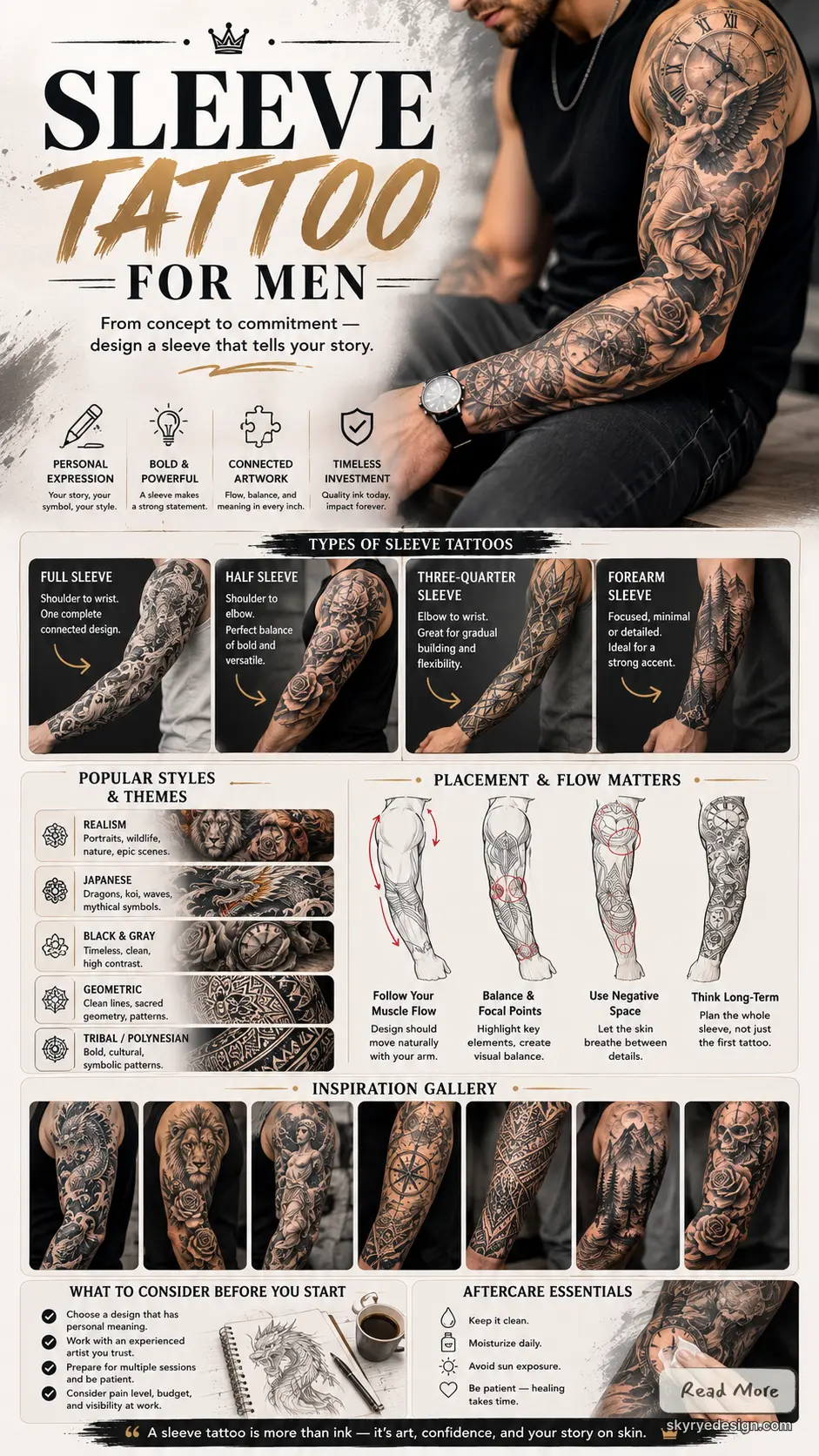
If you already have tattoos, do not try to force everything into one theme. Look at line weight, black density, color palette, and the direction each image points. Those details matter more than whether every symbol has the same meaning.
| Sleeve type | Coverage | Best for | Watch out for |
|---|---|---|---|
| Full sleeve | Shoulder to wrist | Large themes, realism, Japanese, blackwork, biomechanical designs | High cost, long healing schedule, hard to hide |
| Half sleeve | Shoulder to elbow or elbow to wrist | First big arm tattoo, easier concealment, bold central image | Needs a clean stopping point |
| Forearm sleeve | Elbow to wrist | Visible designs, script, geometric work, florals, animals | More visible at work and in photos |
| Patchwork sleeve | Many smaller tattoos | Collectors, gradual planning, mixed subjects | Spacing and scale can get messy |
| Minimalist sleeve | Light coverage with simple linework | Subtle arm tattoos, fine-line symbols, negative space | Tiny details may soften as they heal |
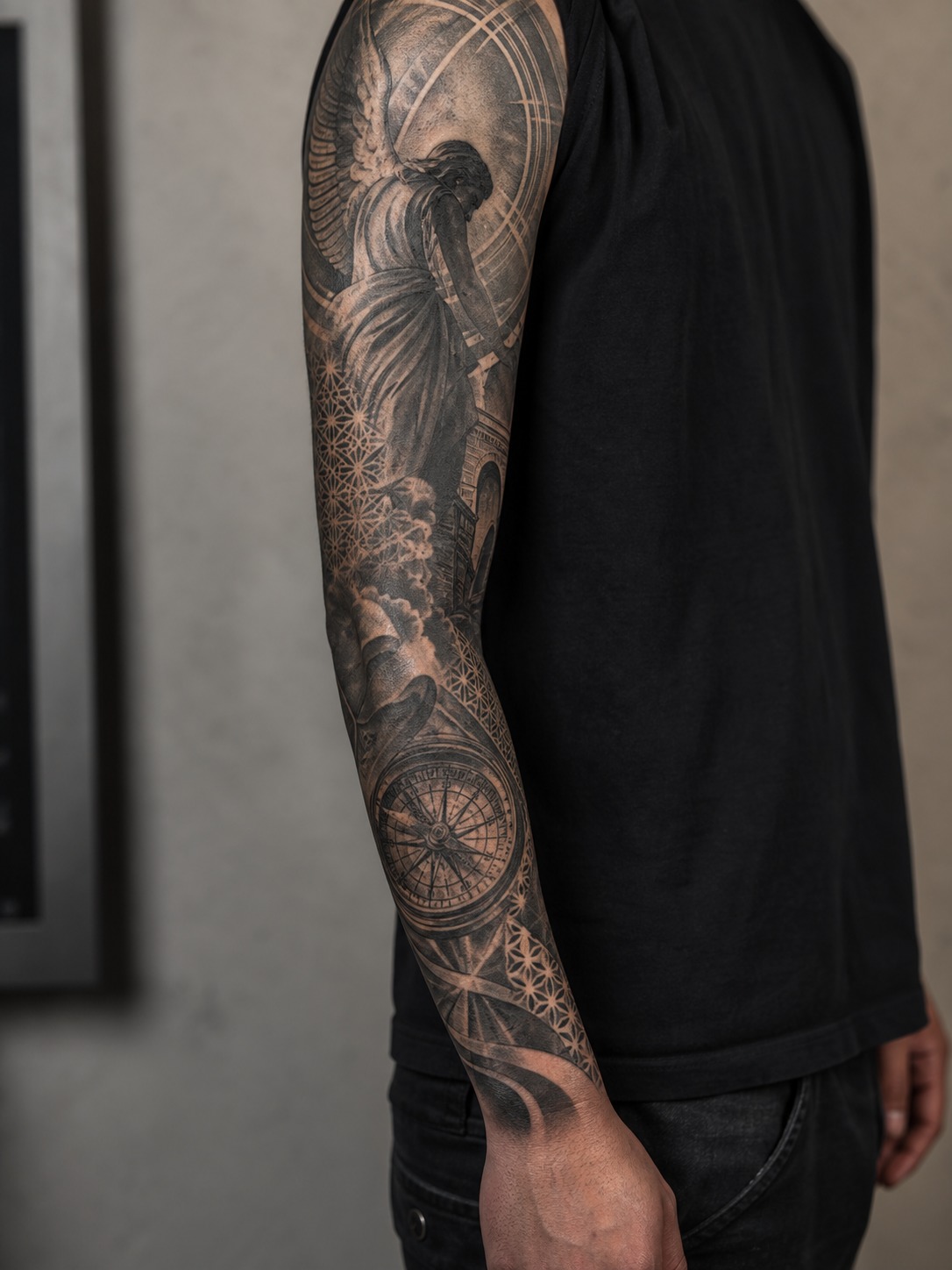
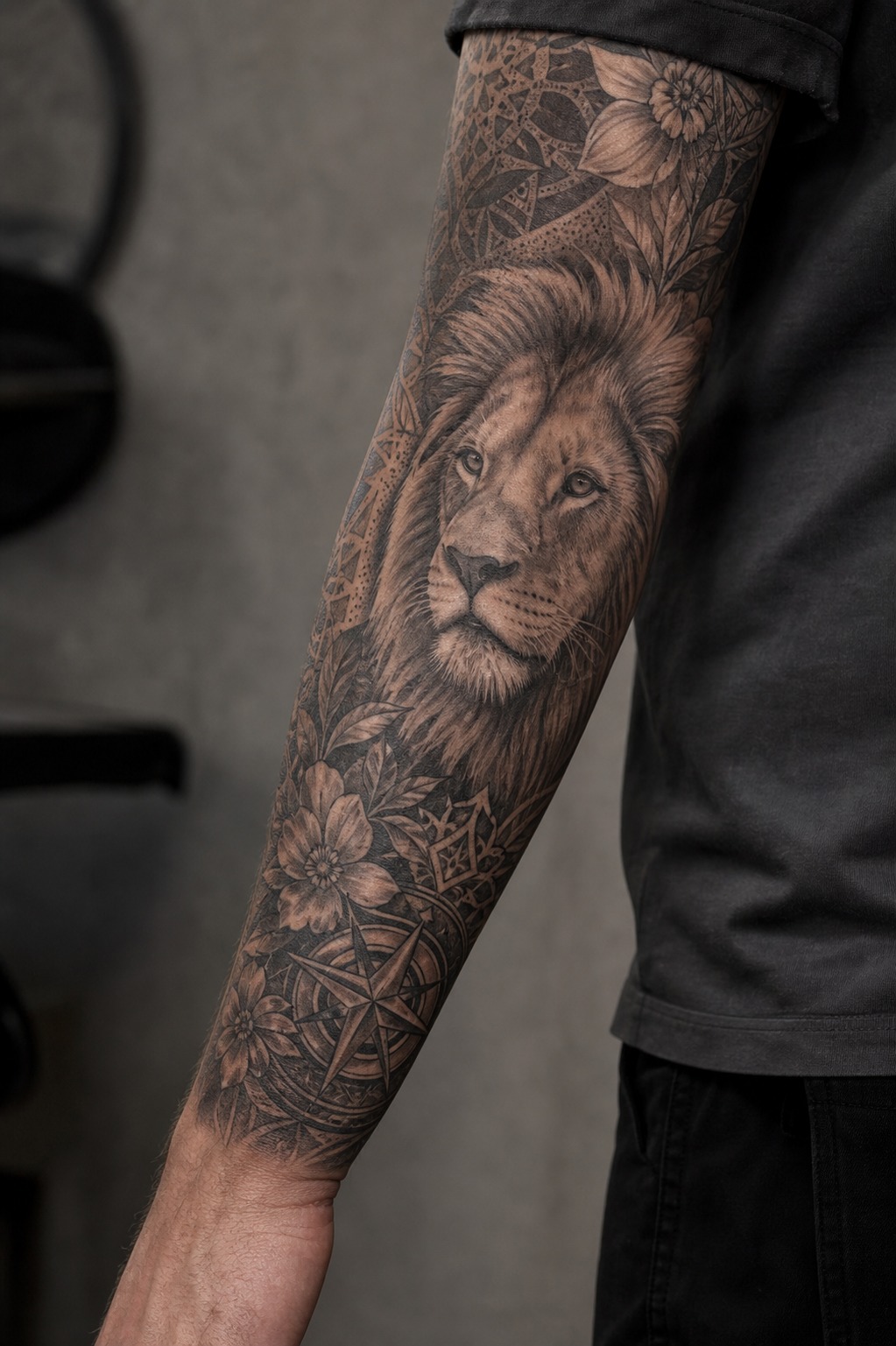
A good sleeve should follow the arm instead of sitting on it like stickers. Put the most important design on a place people actually see: outer forearm, upper arm, shoulder cap, or the broad outside curve of the bicep. Save narrow filler for the inner arm, elbow ditch, and spaces between larger pieces.
Best sleeve and arm tattoo ideas for men
Most men searching for arm tattoos are not only looking for one symbol. They want to know what will look good on a real arm after it wraps, bends, fades a little, and shows under a T-shirt. These categories are the most useful starting points.
Blackwork sleeves
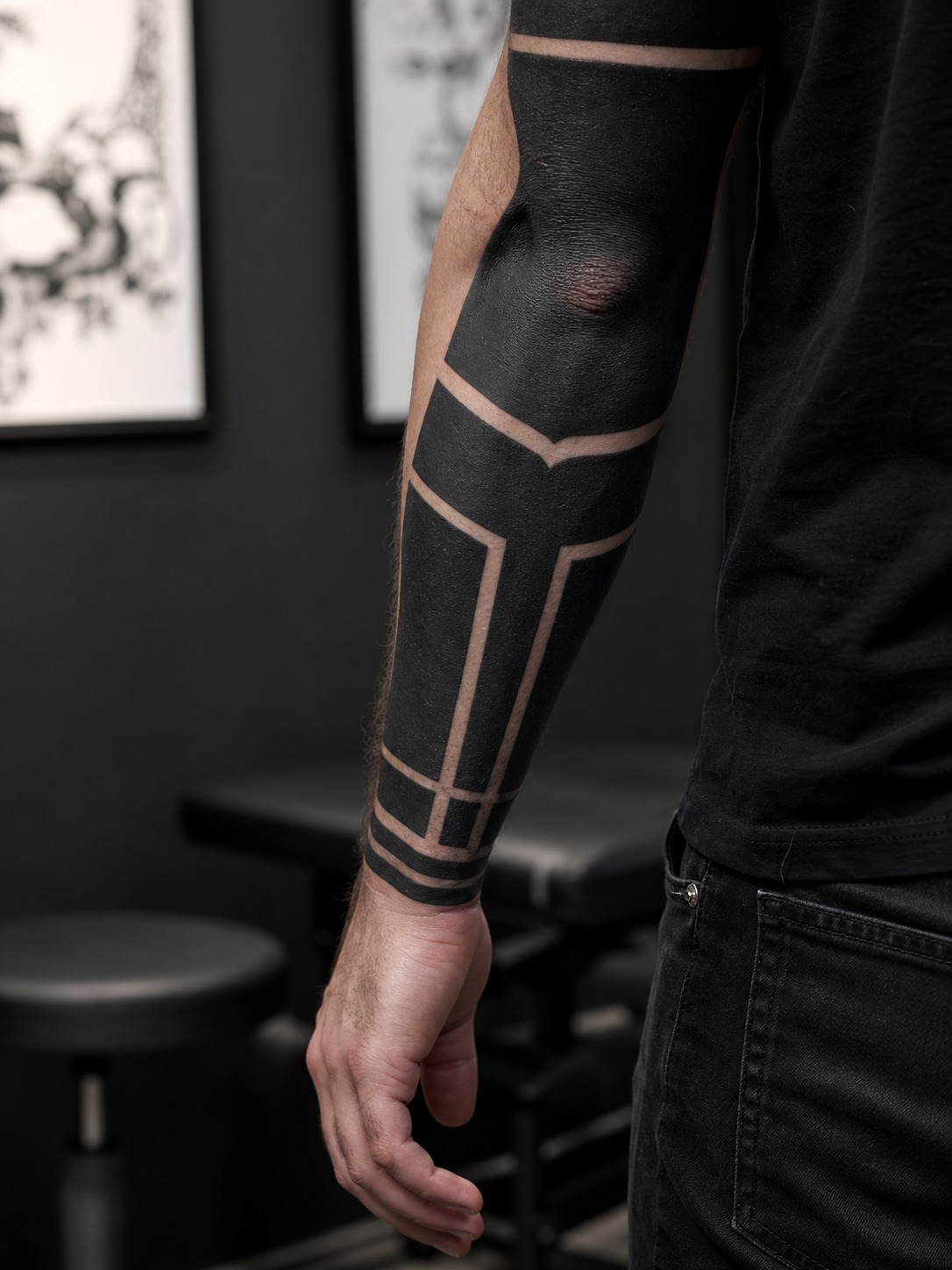
Blackwork uses bold black shapes, pattern, negative space, and heavy contrast. It is strong from a distance and photographs well, which is why it works for full sleeves and forearm sleeves. The risk is going too dense too early. Leave some skin breaks unless you are deliberately choosing a blackout or near-blackout style.
Realism and portrait sleeves
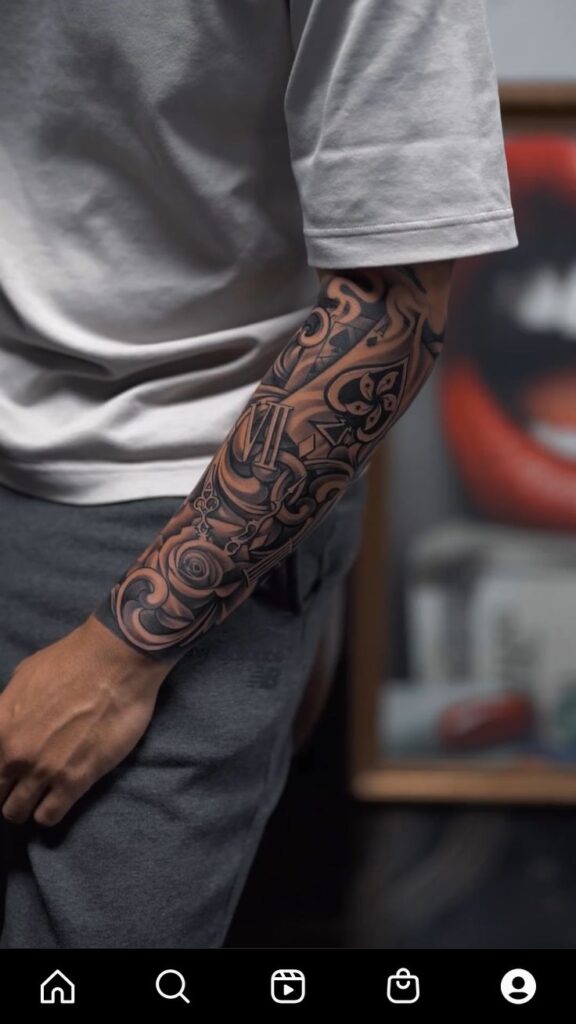
Realism sleeves need a specialist. Faces, animals, clocks, statues, religious scenes, and film references can look impressive, but they depend on smooth shading and strong composition. Ask to see healed portraits, not only fresh ones. Fresh realism can look sharp on day one and lose contrast later if it was built too softly.
Geometric and ornamental sleeves
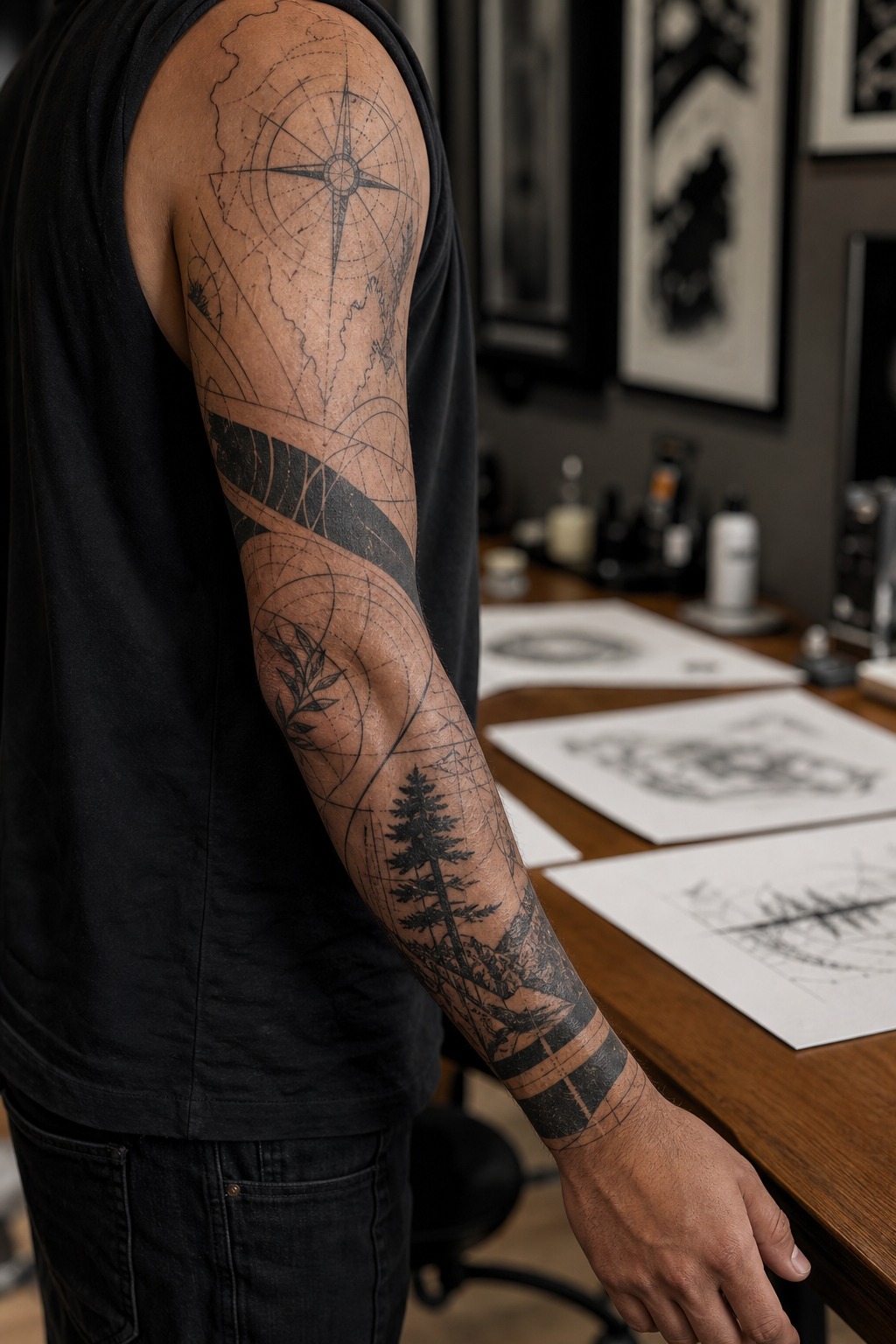
Geometric sleeve tattoos suit the arm because lines can follow muscle, wrist taper, and shoulder curve. Mandalas, sacred geometry, dotwork, and ornamental borders work best when the artist maps the arm first. If a design has cultural or spiritual roots, check the meaning before using it as decoration.
Japanese and traditional sleeves
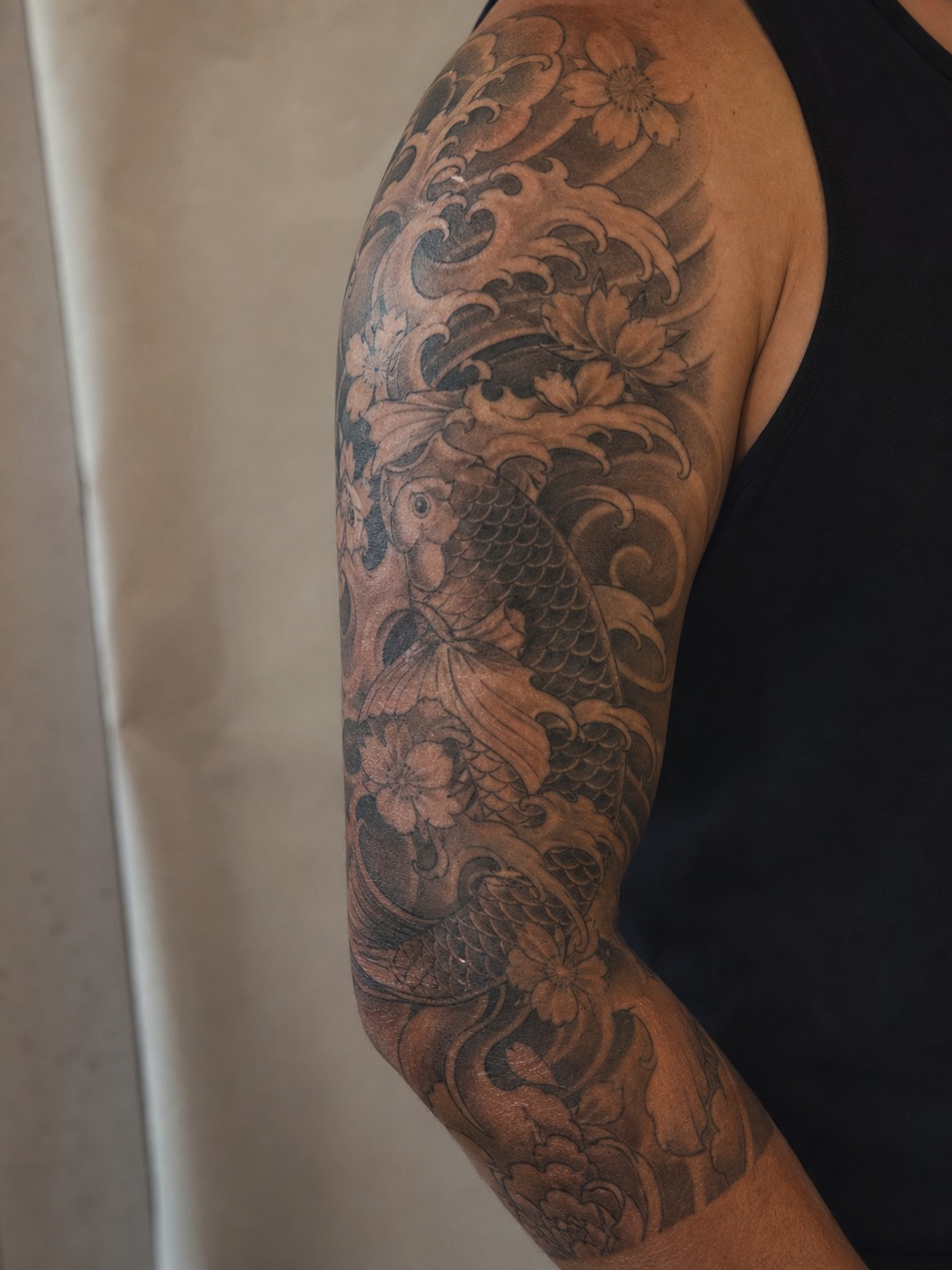
Japanese-inspired sleeves often use koi fish, dragons, waves, wind bars, masks, flowers, and background flow. American traditional sleeves use bolder icons, heavy outlines, limited palettes, and classic filler. Both can age well because the shapes are clear and readable.
Nature, animal, and floral sleeves
For a landscape sleeve that feels warmer and more symbolic, sunrise and nature tattoo ideas can give the arm a clear horizon, light source, and sense of movement between animals, florals, or mountain elements.
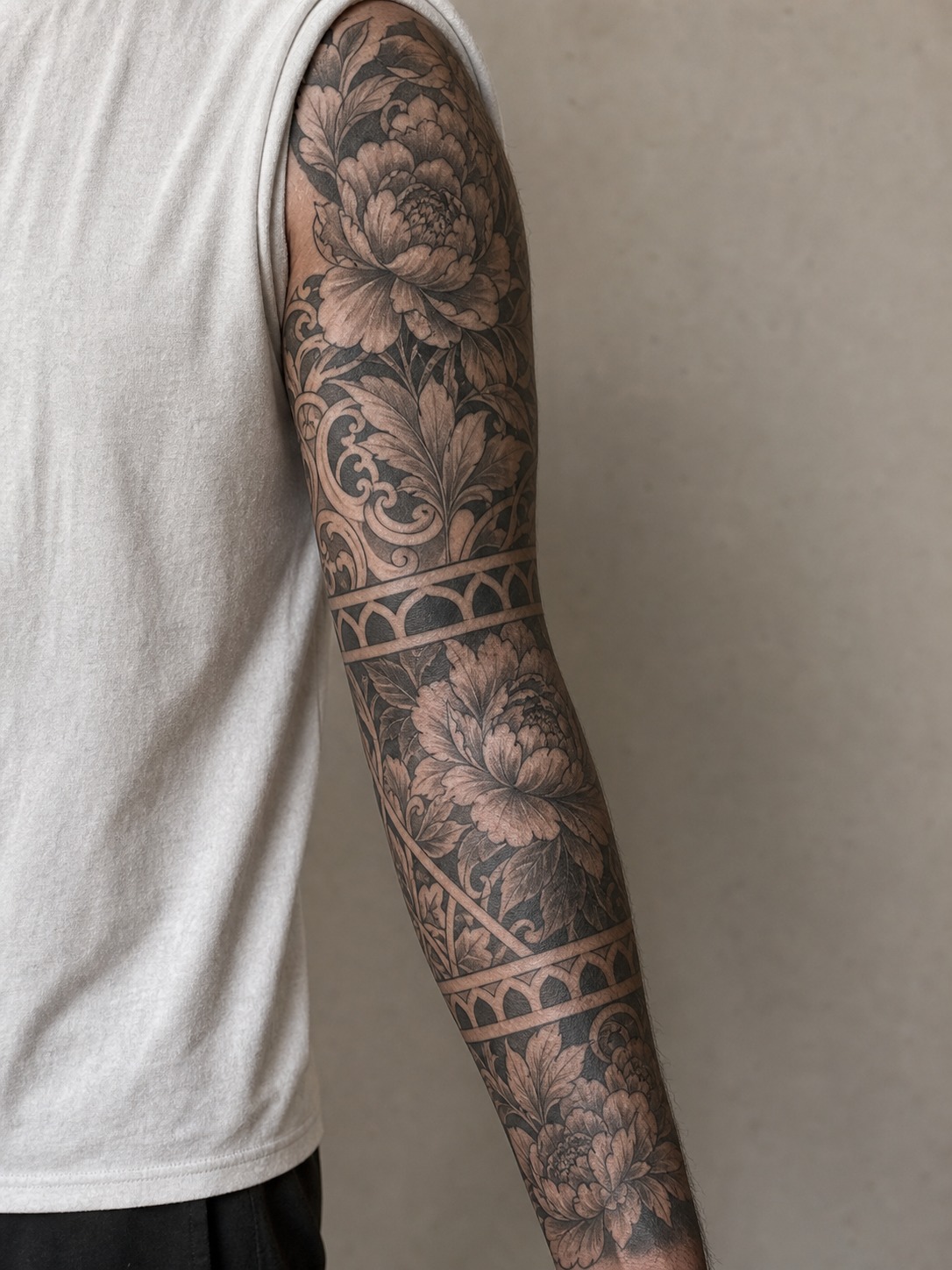
A floral arm sleeve can also work for men when the flowers are paired with blackwork, geometric filler, snakes, skulls, or heavier shading instead of delicate fine-line details only.
Full sleeve vs half sleeve vs forearm sleeve
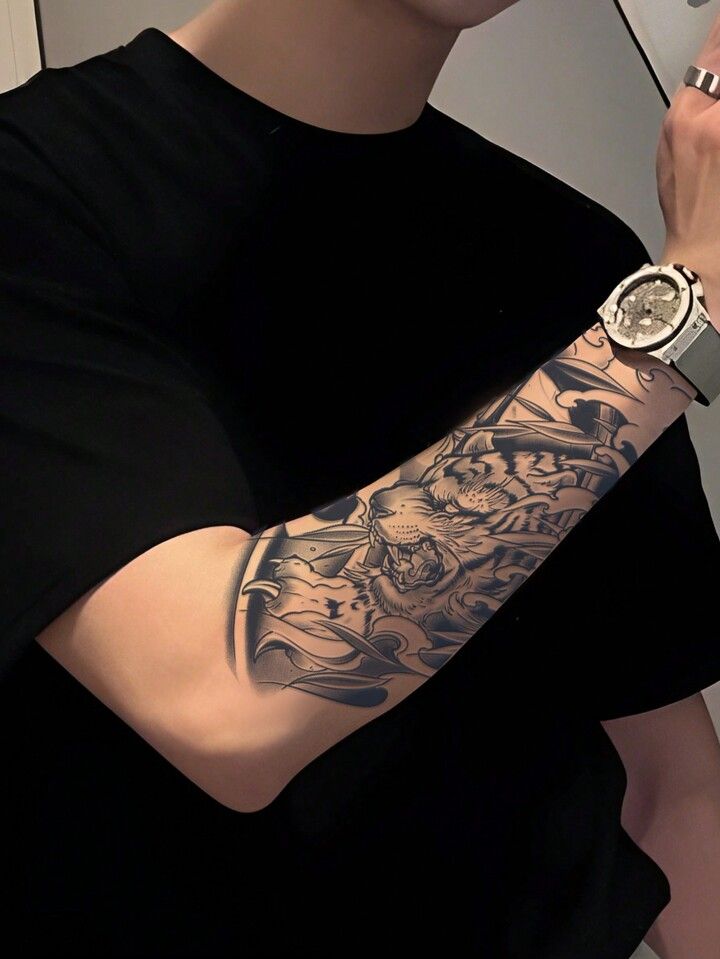
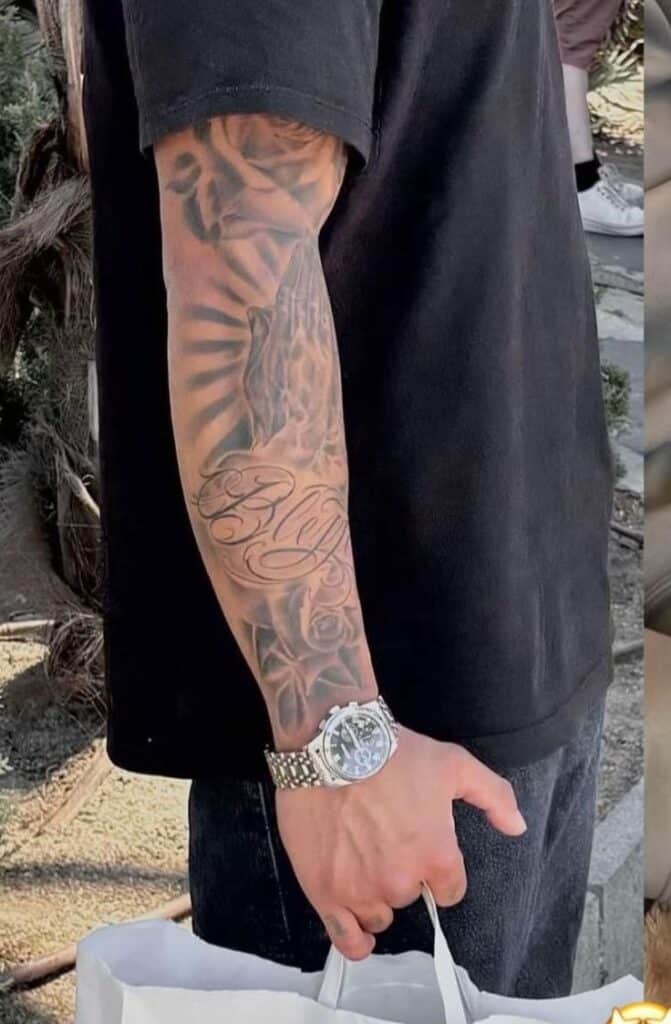
A full sleeve gives you the most space, but it also locks in the biggest commitment. A half sleeve is easier to hide and often easier to finish. A forearm sleeve is the most visible, which makes it great for artwork you want to see every day, but less ideal if your workplace is strict.
If you are unsure, start with a half sleeve or forearm design that can grow later. Look at half sleeve tattoo ideas for ways to create a finished piece that still leaves room for a full sleeve later.
| Decision | Choose this if… | Skip it if… |
|---|---|---|
| Full sleeve | You want one connected story or a complete arm transformation | You need easy concealment or a lower first budget |
| Half sleeve | You want impact without covering the whole arm | You hate visible stopping lines at the elbow or bicep |
| Forearm sleeve | You want the tattoo visible and easy to photograph | You need it hidden in short sleeves |
| Patchwork sleeve | You like collecting smaller tattoos over time | You want one smooth background scene |
Minimalist, patchwork, and sticker sleeve ideas
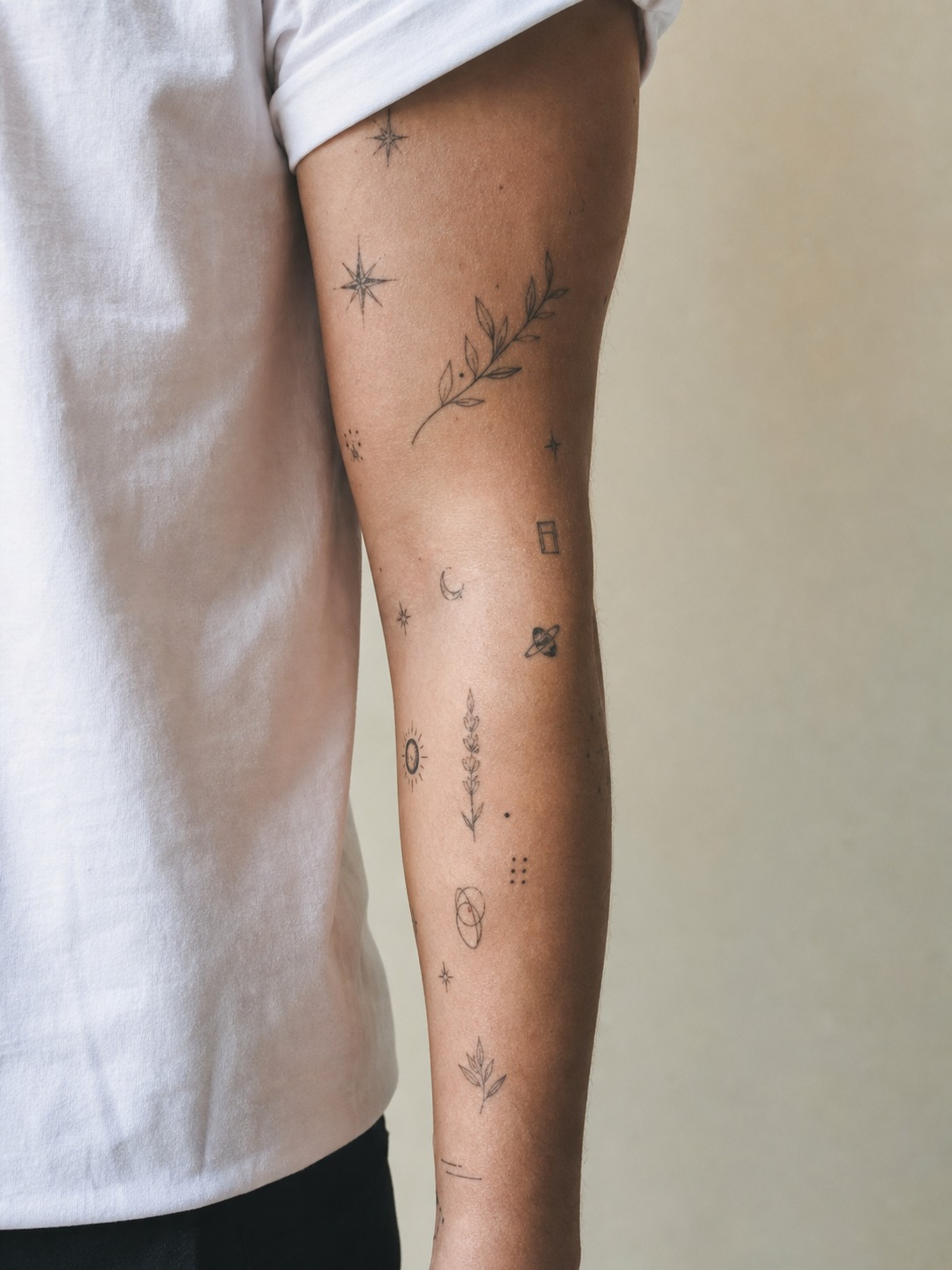
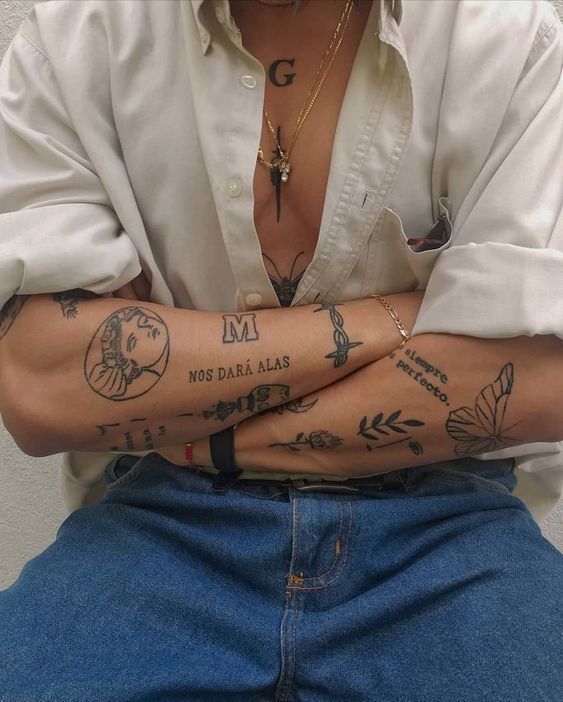
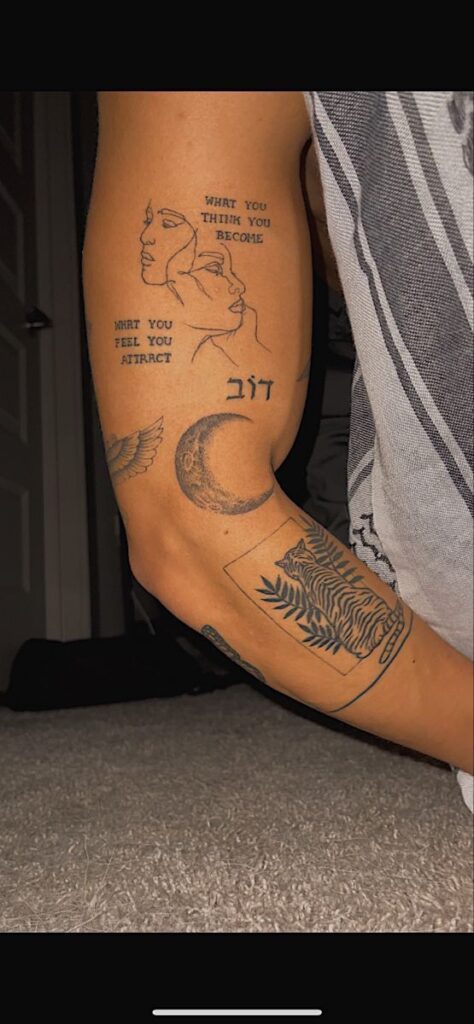
Not every sleeve has to be dark, heavy, or fully connected. Minimalist and patchwork sleeves are especially useful if you want visible arm tattoos but still like negative space. The trick is consistency: similar line weight, similar black density, or a repeated spacing system.
A patchwork sleeve can mix symbols, text, tiny animals, stars, hands, tools, flowers, or personal objects. Keep the largest pieces on the outer arm and use small filler only where the arm naturally narrows. For lighter ideas, compare nearby small tattoo ideas for men and decide which ones deserve sleeve space.
Minimal sleeves also work well with fine-line florals, ornamental frames, simple geometric marks, and clean script. Tiny tattoos can blur if they are packed with detail, so ask your artist which lines need to be simplified before they go on skin.
Sleeve tattoo filler ideas
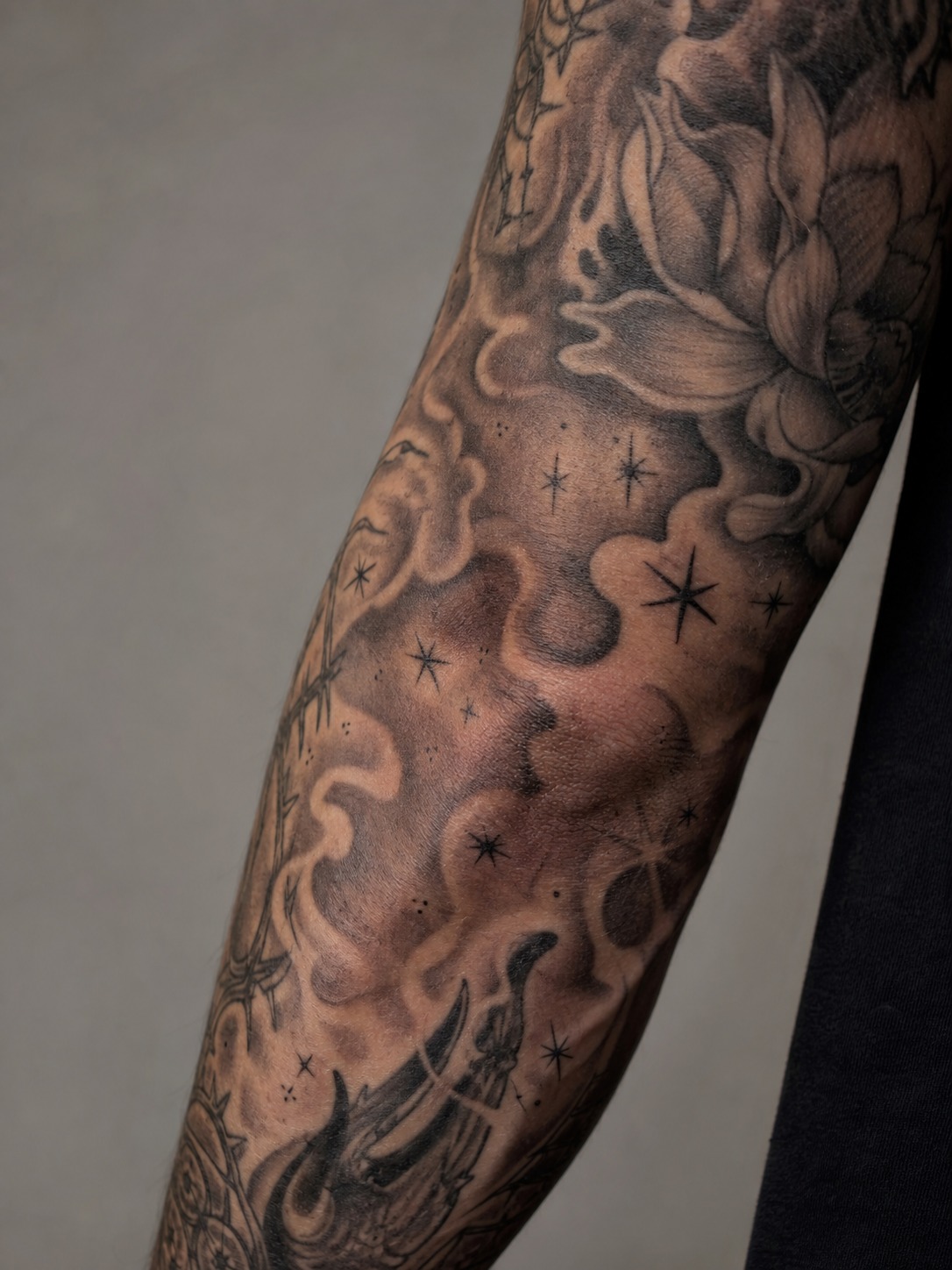
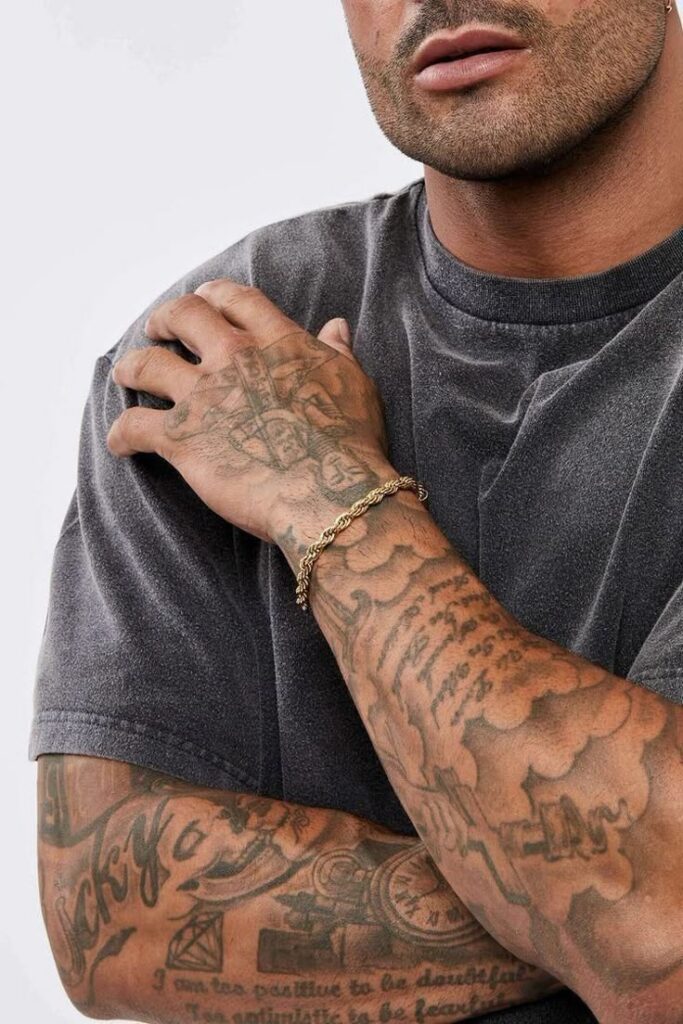
Filler should connect the sleeve without stealing attention from the main tattoos. The safest options are simple shapes that bend around the arm: smoke, clouds, dots, stars, small leaves, waves, geometric repeats, light shading, and negative-space borders.
| Filler type | Works best with | Why it helps |
|---|---|---|
| Stars and dots | Patchwork, traditional, small symbol sleeves | Easy to fit between uneven shapes |
| Smoke or clouds | Realism, religious, skull, dragon sleeves | Adds movement without hard borders |
| Leaves and florals | Nature, animal, ornamental sleeves | Softens gaps and follows the arm naturally |
| Geometric pattern | Blackwork, mandala, cyber, abstract sleeves | Creates order between unrelated pieces |
| Negative space | Minimalist, blackout, ornamental sleeves | Keeps the design readable from a distance |
Tattoo placement, pain, and arm flow
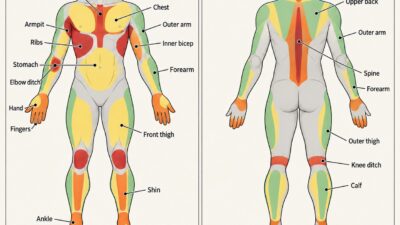
Outer forearm and upper arm are usually easier areas for many people. The inner arm, elbow ditch, wrist, and areas near the armpit tend to feel sharper. Pain is personal, but placement still matters because long sleeve sessions can last several hours.
Think about how the design moves when your arm bends. A face placed too close to the elbow can distort. A straight sword, arrow, or script line can look crooked if it ignores the natural twist of the forearm. For more placement-specific ideas, compare forearm tattoos for men and hand tattoo designs before extending the sleeve below the wrist.
Choosing the right tattoo artist
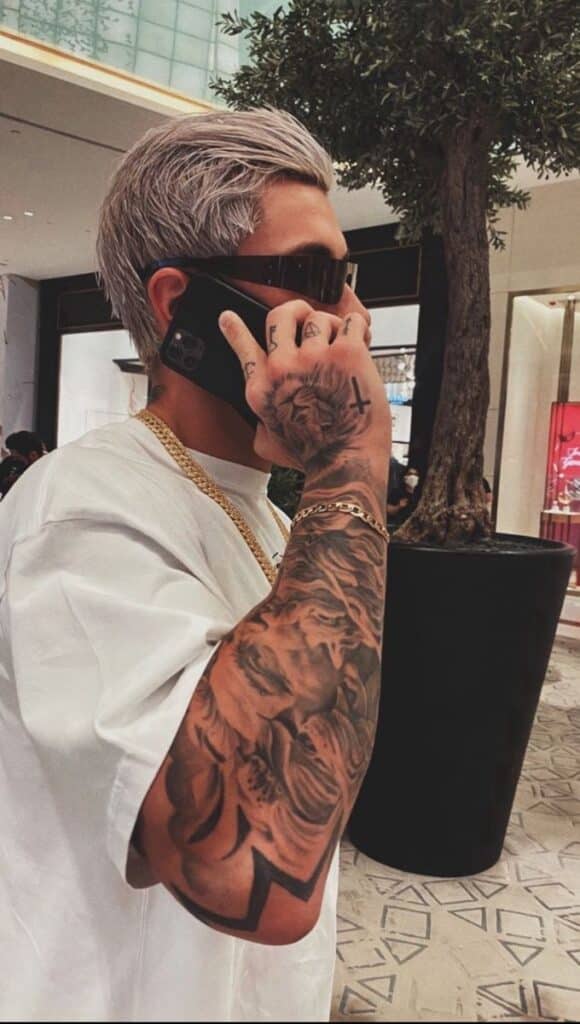
Choose the artist for the style, not only the shop location. Realism, traditional, blackwork, Japanese, fine-line, and geometric sleeves need different skills. A strong artist should be able to show healed work, explain the order of sessions, and tell you when an idea is too detailed for the size you want.
Bring references, but leave room for the artist to design around your arm. In visual design, a strong silhouette usually matters before small details. Tattoo sleeves are the same: if the main shapes do not read from a few steps away, extra texture will not save the composition.
- Ask whether the artist prefers one large sleeve plan or separate sessions.
- Check healed photos with similar skin tone, placement, and ink density.
- Discuss what happens around the elbow, wrist, and inner arm before the first appointment.
- Ask how many sessions the sleeve may take and how far apart they should be.
- Use a first consultation if this is your first big tattoo. This first tattoo guide covers the basics that are easy to overlook.
Cost, sessions, and aftercare
A sleeve tattoo is usually a multi-session project. Small patchwork sleeves can grow slowly over months or years. A planned full sleeve may need outlining, shading, color, background, and touch-up sessions. The total cost depends on artist rate, complexity, size, city, and how much detail you want.
Do not bargain-hunt a full sleeve. A cheap sleeve that needs a cover-up can cost more than waiting for the right artist. If your budget is tight, start with a half sleeve or one strong forearm piece and leave space to expand later.
For aftercare, follow your artist’s instructions first. In general, keep the new tattoo clean, avoid soaking and swimming while it heals, avoid heavy sun exposure, and use fragrance-free products. Once healed, daily sunscreen matters because UV exposure fades ink and makes fine details soften faster.
Common sleeve tattoo mistakes
The biggest mistake is collecting arm tattoos without thinking about scale. One tiny piece, one medium portrait, and one heavy black shape can all be good tattoos separately, but they may fight each other once they sit on the same arm.
- Too many focal points: pick one or two large anchors, then support them with smaller details.
- No plan for the elbow: elbows need flexible patterns, negative space, webs, circles, or design breaks.
- Over-detailed tiny images: small details blur faster than bold shapes.
- Ignoring cultural meaning: research tribal, religious, sacred, or heritage motifs before using them.
- Choosing a blackout sleeve only for trend: large solid-black tattoos are intense, hard on the skin, and can complicate future changes.
Fresh sleeve tattoo trends for 2026
For 2026, the strongest tattoo direction is personal rather than just tough. Nostalgic symbols, fine-line florals, microrealism, ornamental geometry, soft color, and doodle-style pieces are showing up more often in trend coverage. For men’s sleeves, that means a lighter mix: one bold anchor, a few personal symbols, and enough open skin to let each piece breathe.
That does not mean every sleeve needs to chase a trend. If you like tribal, lions, clocks, skulls, or religious imagery, make the idea more specific: choose a real reference, a cleaner composition, a better placement, or a detail that connects to your life instead of copying the first image you find.
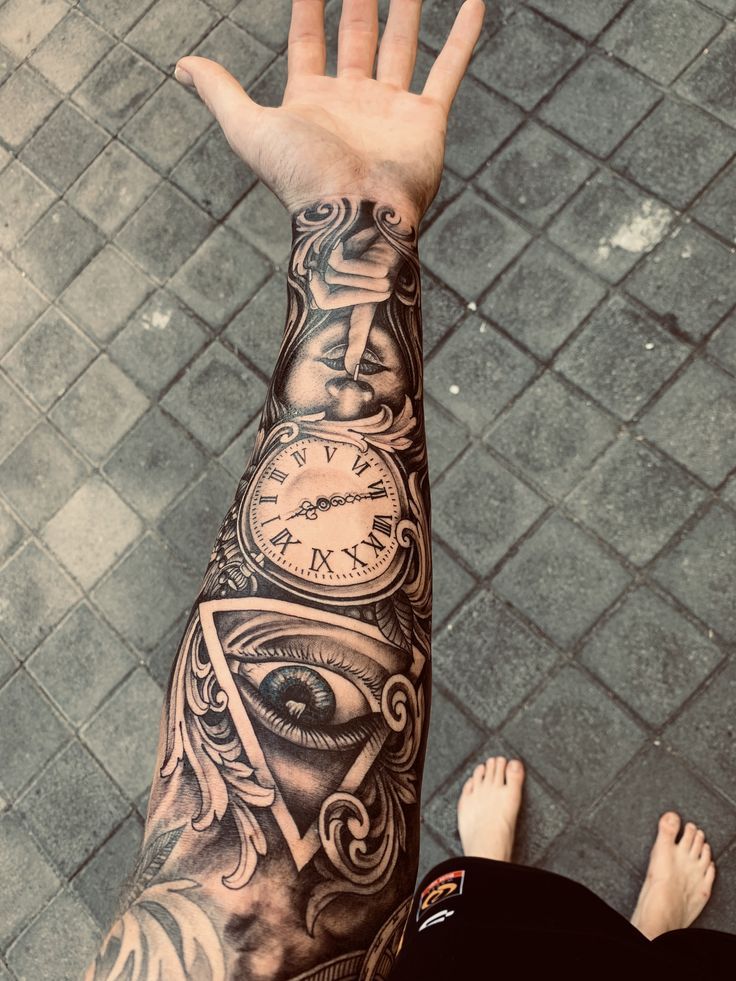
For a sleeve with a stronger rebirth theme, compare phoenix sleeve tattoo ideas for men before deciding how much space the wings, flames, and background should take.
When building an arm sleeve, plan the main symbols first; these crown tattoo sleeve ideas can help you decide whether the crown should be the anchor, a filler emblem, or part of a lion, rose, or lettering scene.
For a sleeve with movement, a koi fish tattoo sleeve gives the artist room for waves, scales, lotus shapes, and a clear swim direction instead of disconnected filler.
Sleeve tattoo FAQ
What is a sleeve tattoo?
A sleeve tattoo is a large tattoo or a group of smaller tattoos that covers a major part of the arm. A full sleeve usually runs from shoulder to wrist, while a half sleeve covers the upper arm or forearm. Patchwork sleeves use separate pieces with open skin between them.
How much does a sleeve tattoo cost?
The cost depends on artist rate, city, size, detail, color, and number of sessions. A small patchwork sleeve can grow gradually, while a full sleeve from a specialist can become a major investment. Ask for a session estimate during consultation instead of shopping only by price.
How long does a full sleeve tattoo take?
A full sleeve usually takes several sessions. Simple blackwork can move faster than realism, portraits, color, or detailed background work. Many artists space sessions weeks apart so the skin can heal before outlining, shading, color, and touch-ups continue.
Is a half sleeve better than a full sleeve?
A half sleeve is better if you want strong visual impact with less cost, less time, and easier concealment. A full sleeve is better if you want one complete arm composition. If you are unsure, a half sleeve can be designed so it expands later.
What are good sleeve tattoo filler ideas?
Good sleeve filler includes smoke, clouds, dots, stars, small leaves, waves, geometric repeats, soft shading, and negative-space borders. The filler should connect the main pieces without becoming the loudest part of the sleeve.
Do sleeve tattoos hurt more than smaller tattoos?
The pain is not only about size. A sleeve hurts more because sessions are longer and the design reaches sensitive areas like the inner arm, elbow, wrist, and near the armpit. Outer forearm and upper arm areas are often easier for many people.
How do I make a sleeve tattoo age well?
Choose clear shapes, readable contrast, and an artist with strong healed work. Avoid packing tiny detail into small spaces. After healing, protect the sleeve from sun, keep the skin moisturized, and follow your artist’s advice for touch-ups.
Sleeve compositions often need a consistent visual language across portraits, lettering, and symbolic details For a deeper visual breakdown, see this guide to black and gray Chicano artwork.
Before committing to a full sleeve, it can help to test one athletic motif first. These running tattoo designs for men show smaller marathon, trail, and shoe ideas that can later grow into a larger arm composition.
Sources and further reading
These external references are useful if you want a second opinion before booking: Allure’s custom sleeve planning guide, Byrdie’s sleeve tattoo guide, GQ’s full sleeve advice, Men’s Health tattoo aftercare tips, and Allure’s 2026 tattoo trend notes.
While many opt for mechanical elements in sleeves, weaving a bold leaf vine tattoo around structural geometric designs creates an organic, highly striking contrast.
For more visual starting points, browse the Sky Rye Design tattoo ideas hub, or compare this guide with broader tattoo ideas for men if you are still deciding between sleeve, chest, hand, or forearm placement.
If the sleeve will continue toward the hand, plan the wrist-to-sleeve tattoo placement early. A clean wrist detail can act like a visual ending instead of an awkward leftover strip.
For a larger sleeve or upper-arm plan, bold turtle tattoo ideas can bring in blackwork, compass details, waves, or geometric shell patterns.
A cherry blossom tattoo sleeve can break up heavy blackwork with petals, wind bars, and lighter negative space through the arm.
- 3.0Kshares
- Facebook0
- Pinterest3.0K
- Twitter3
- Reddit0