Gary Brecka’s name comes up constantly in wellness conversations right now. His routines — structured sleep, morning sunlight, deliberate hydration — have found a wide audience among people who want to feel more functional through the workday. I’m not going to tell you to build a biohacking stack. But one part of his thinking is genuinely worth adapting for studio life: the idea that water needs to be intentional, not reactive.
- Why hydration matters in creative work
- What designers can learn from Gary Brecka's hydration approach
- Building a studio hydration ritual
- Hydration tips for artists during long work sessions
- Hydration for architects, site visits, and studio days
- Designing your workspace around better habits
- Final thoughts: small rituals, better creative flow
- FAQ
- How much water should a designer drink during a workday?
- Does hydration actually affect creative focus?
- What's the best water vessel for a studio desk?
- Should I add salt or electrolytes to my water?
- How do I remember to drink water during a long drawing session?
- Does coffee count toward daily hydration?
- Any specific tips for client presentation days?
- Is sparkling water as effective as still?
After fifteen years working across design studios, architecture offices, and my own workspace in Kyiv, I’ve noticed a pattern. The sessions that fall apart (the ones where your line quality drops, color decisions drag, and a simple proportion call takes twenty minutes) often trace back to something you forgot to do since noon. Drink water.
This isn’t a wellness article. Think of it as a desk setup guide — one of the things you’re setting up happens to be a glass of water.
Why hydration matters in creative work
Creative work looks like sitting still from the outside. From the inside, it’s continuous visual problem-solving — holding proportions in working memory, resolving color relationships, catching errors in a render that needs to go out in forty minutes. That kind of sustained attention has a real cost.
Designers and artists are notoriously good at ignoring their bodies during a productive session. A focused stretch can feel like twenty minutes while the clock says four hours. I’ve done five-hour timelapse drawing sessions (Ferrari F40 sketches, botanical illustrations, architectural linework) and realized afterward I hadn’t touched my water bottle once. The work itself felt fine. The two hours after were slow and foggy.
That sluggish, off-focus feeling that follows a long creative sprint often coincides with a long stretch without water. Whether it’s dehydration, fatigue, or both is hard to separate precisely — but the pattern is consistent enough that I’ve started treating water as part of the workflow, not a background detail.
The attention-rhythm connection
Think of hydration less as a health goal and more as a pacing device. When you drink consistently through the day, you naturally build in micro-breaks. You refill the glass. You look up from the screen. You reset. That rhythm supports longer, more consistent focus than simply pushing through until you hit a wall.
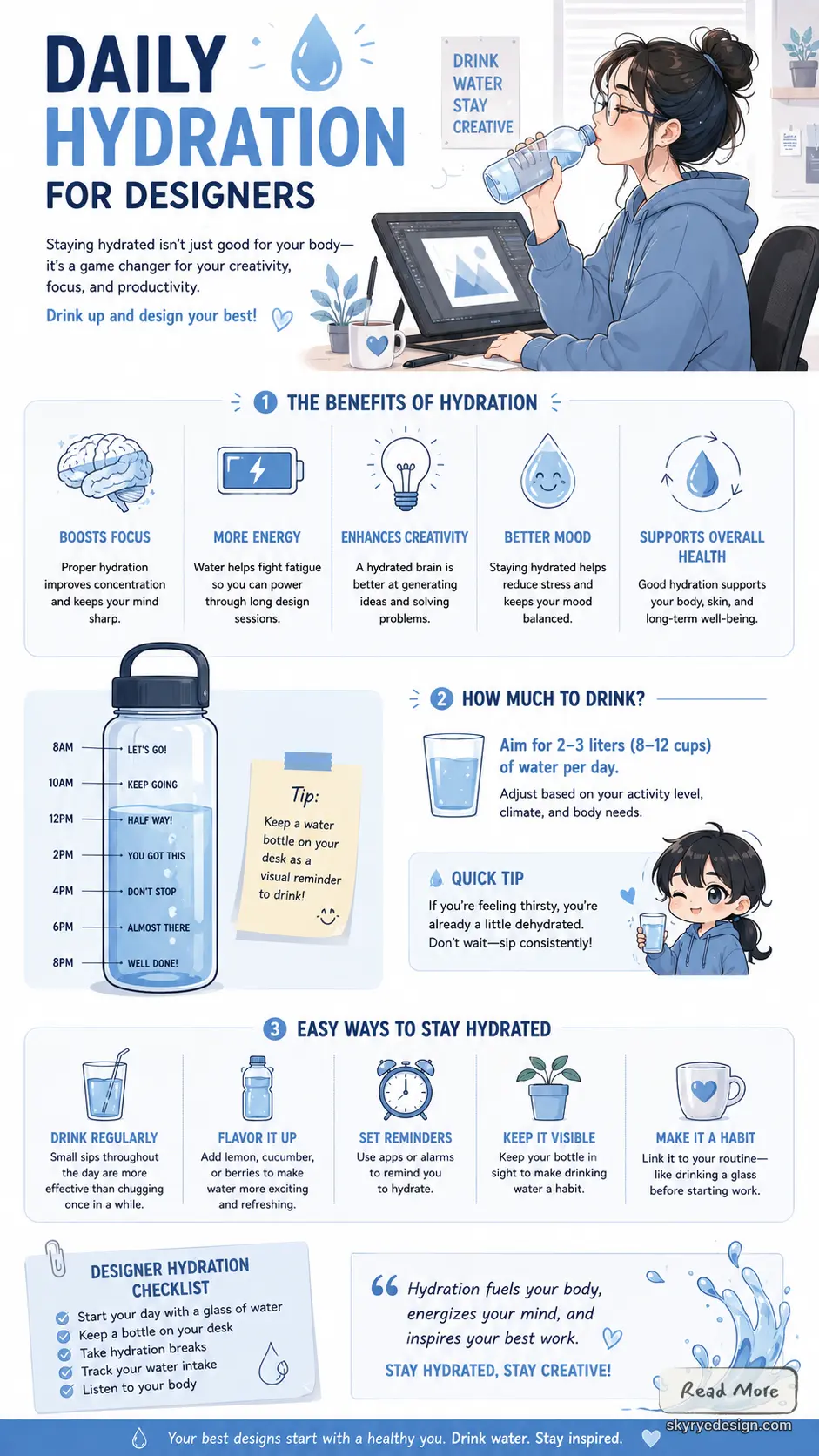
The mistake most studio people make is waiting for thirst. By the time you notice it, you’ve already been running low for a while. Scheduled intake — water attached to specific points in the day rather than to how you feel — works better for long creative sessions.
What designers can learn from Gary Brecka’s hydration approach
Brecka’s core argument isn’t really “drink more water” — it’s about quality, timing, and absorption. He starts the day with water before coffee, often with minerals added, so the body actually takes it in rather than passing it through. He treats hydration as the first structured decision of the morning.
For creative professionals, that framing maps well. Not the biohacking vocabulary, but the underlying idea: water works better as a deliberate habit than as a reaction to feeling dried out.
One thing Brecka has talked about is the role of mineral salt in hydration — the argument being that plain water without electrolytes moves through quickly without full absorption. A pinch of quality salt in your morning water, before coffee, is something many people in his audience have adopted as a starting ritual. If you want the specifics, there’s a detailed breakdown of Gary Brecka recommended salt covering exactly what he uses and why.
That particular habit (morning water with minerals, before anything else) is easy to fit into a studio morning. I do it before my first cup of Shu Pu-erh. The combination feels like a cleaner start than going straight for caffeine, and it’s simple enough to stick.
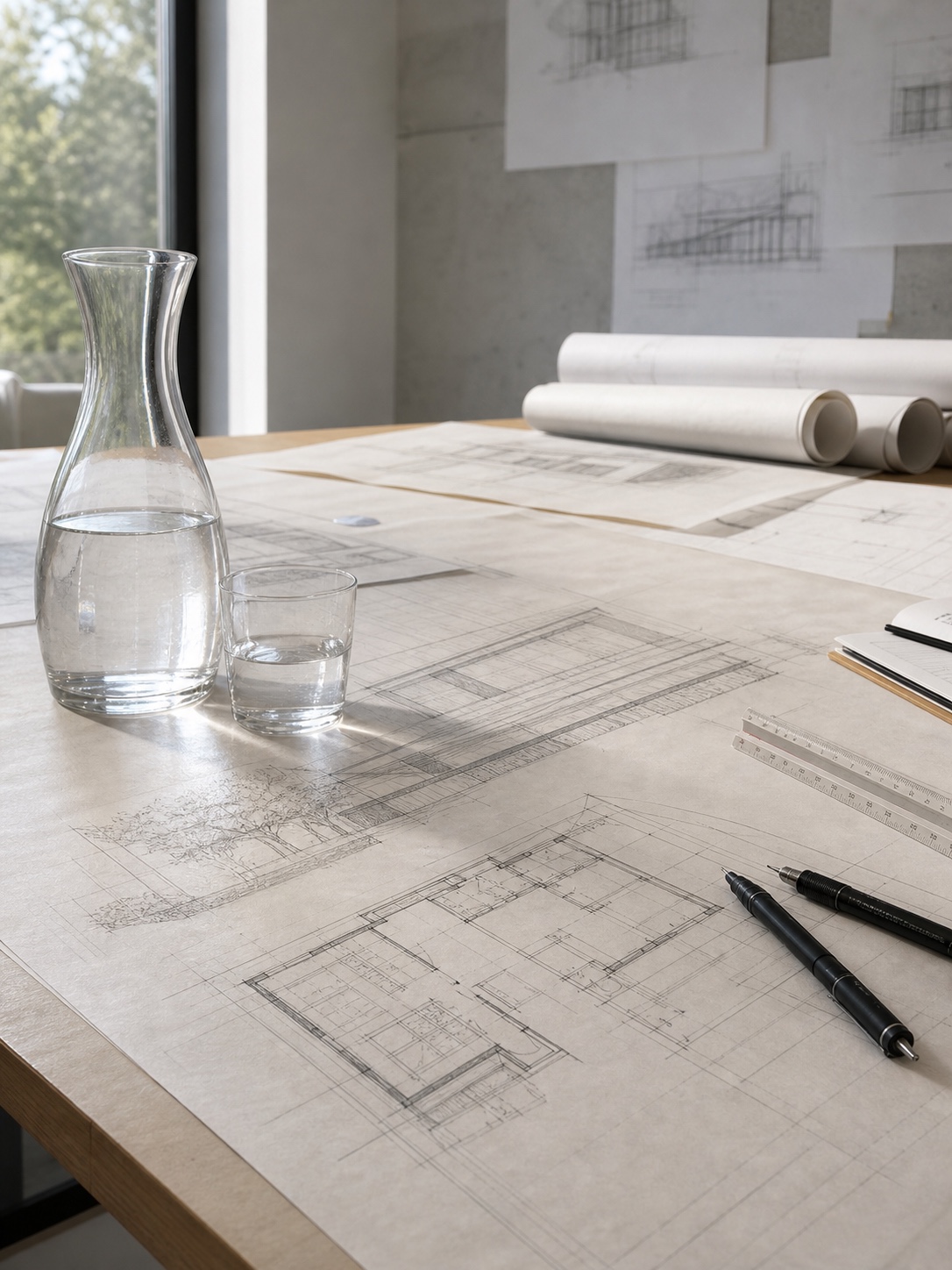
Translating biohacking into a studio routine
The other part of Brecka’s approach that makes practical sense for designers is front-loading hydration early in the day. Coffee and tea are diuretics. If your morning starts with two cups of coffee and nothing else, you’re beginning the studio session in a deficit.
One glass of water before coffee. That’s the whole adjustment. Not a protocol with fifteen steps — just one glass, before the first coffee.
When electrolytes matter during long sessions
If you’re working a full studio day — especially during a deadline push or an architecture competition phase — plain water may not be enough. A small amount of mineral salt or an electrolyte supplement during very long sessions helps more than just adding another glass. It’s the same logic runners use, applied to a different kind of sustained output.
Building a studio hydration ritual
Rituals stick where rules fail. A rule says “eight glasses a day” — a ritual says: water before the sketchbook opens, water when you switch tasks, water before any big decision. One is a number to track and miss. The other is part of how you work.
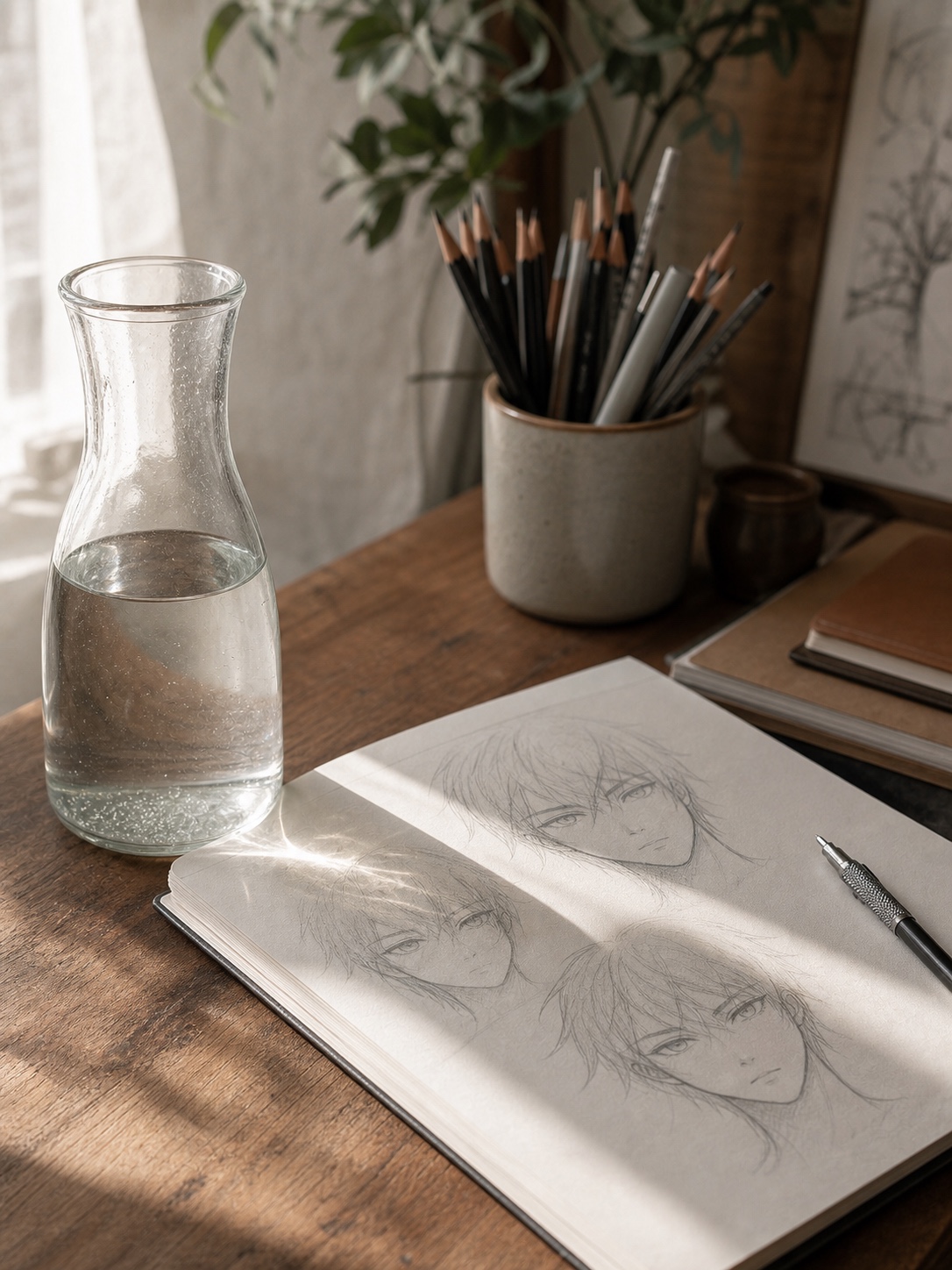
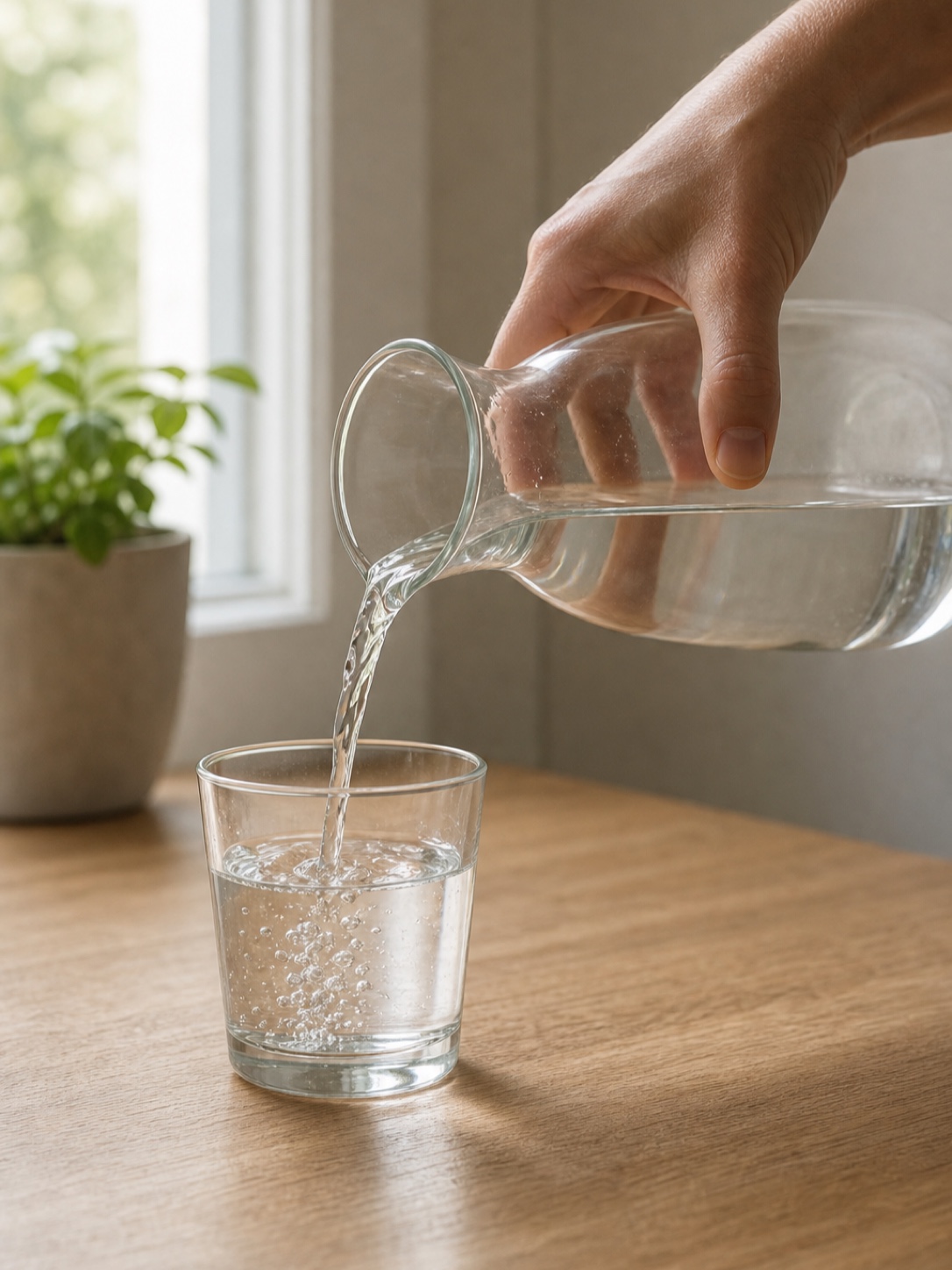
My desk setup is intentional. The water carafe (usually a simple glass one from IKEA’s Korken line, or a Klean Kanteen bottle when traveling) sits left of the sketchpad, in constant sightline. Not across the room. Not in the kitchen. Right there, where I’ll see it all session.
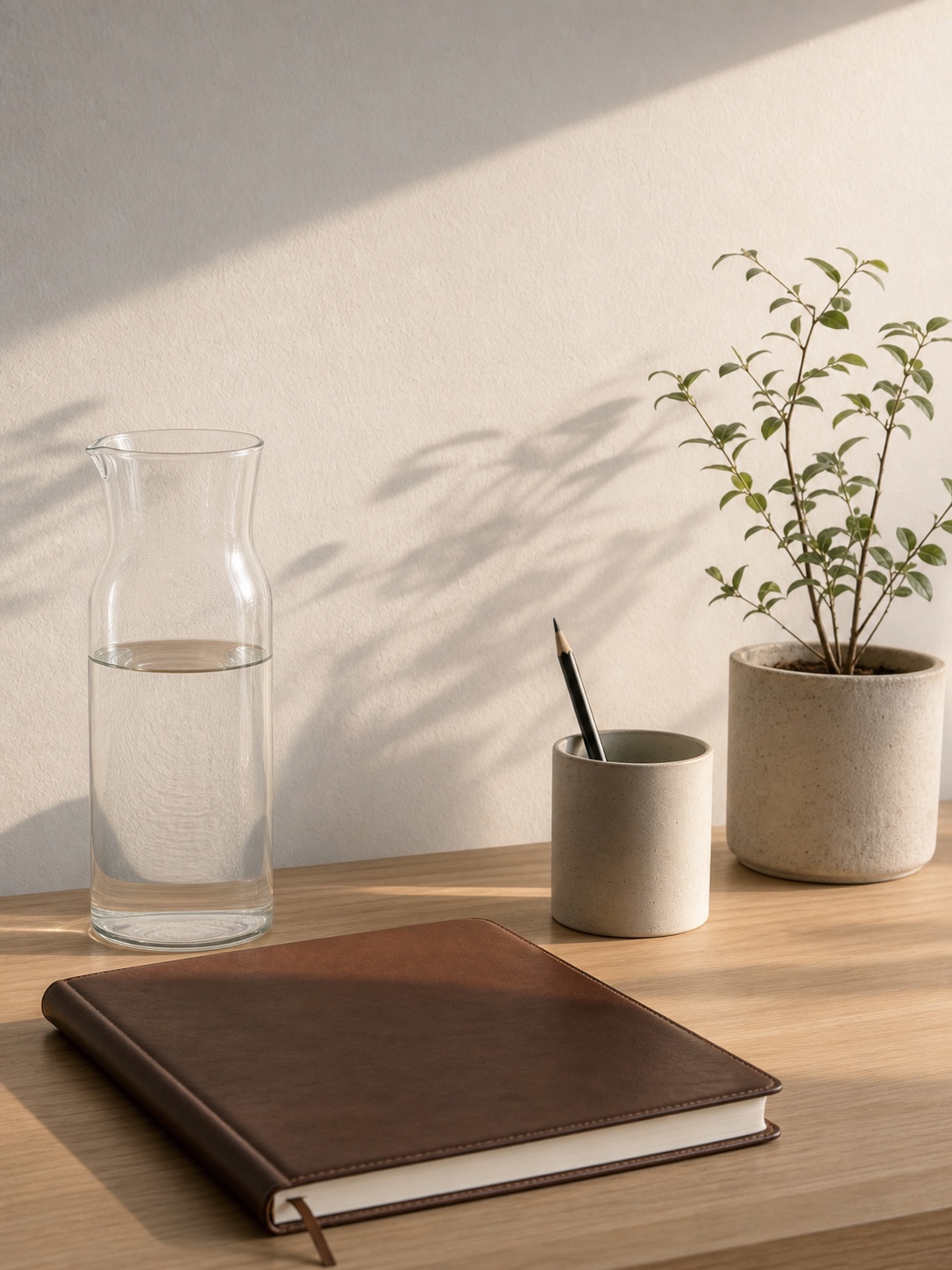
Three natural checkpoints
Morning setup: before touching the Wacom tablet, opening a reference file, or picking up a pen, I drink a glass of water. Thirty seconds. It genuinely shifts the texture of the next hour.
Task transitions: finishing a sketch session and moving to client emails — water. Moving from emails to 3D modeling — water. These transitions are natural breaks anyway. The glass makes them a small ritual.
Before complex decisions: color selection, proportion checking, choosing between two design directions. I treat these as natural pause points. The ten-second stop alone helps.
What to keep on the desk
If the bottle still disappears into clutter, treat it as part of the setup: a cozy desk setup keeps it visible, while neat desk inspiration helps you remove the small obstacles that make good habits easy to ignore.
Glass carafes look considered and stay visible. Insulated stainless bottles (Hydro Flask 32oz or Klean Kanteen — both reliable) hold temperature through a full studio session. The vessel matters more than it sounds: if you like the object, you’ll use it. Some designers I know add a pinch of pink Himalayan salt to the carafe for long sessions — a simple way to add minerals without buying supplements.
Hydration tips for artists during long work sessions
For the physical side of long studio days, pair water breaks with passive recovery for creatives so wrists, back, eyes, and attention all get a little maintenance before the session collapses.
Long drawing sessions have one specific problem: time disappears. Flow state is genuinely one of the best things about this kind of work. But flow doesn’t care about your maintenance schedule.
During timelapse sessions (I’ve done quite a few, from DeLorean sketches to Ferrari F40 marker work to detailed architectural elevations), the time I don’t drink is usually the time my linework gets inconsistent in the final third. Whether that’s dehydration or accumulated fatigue is hard to separate. The correlation is consistent enough to take seriously.
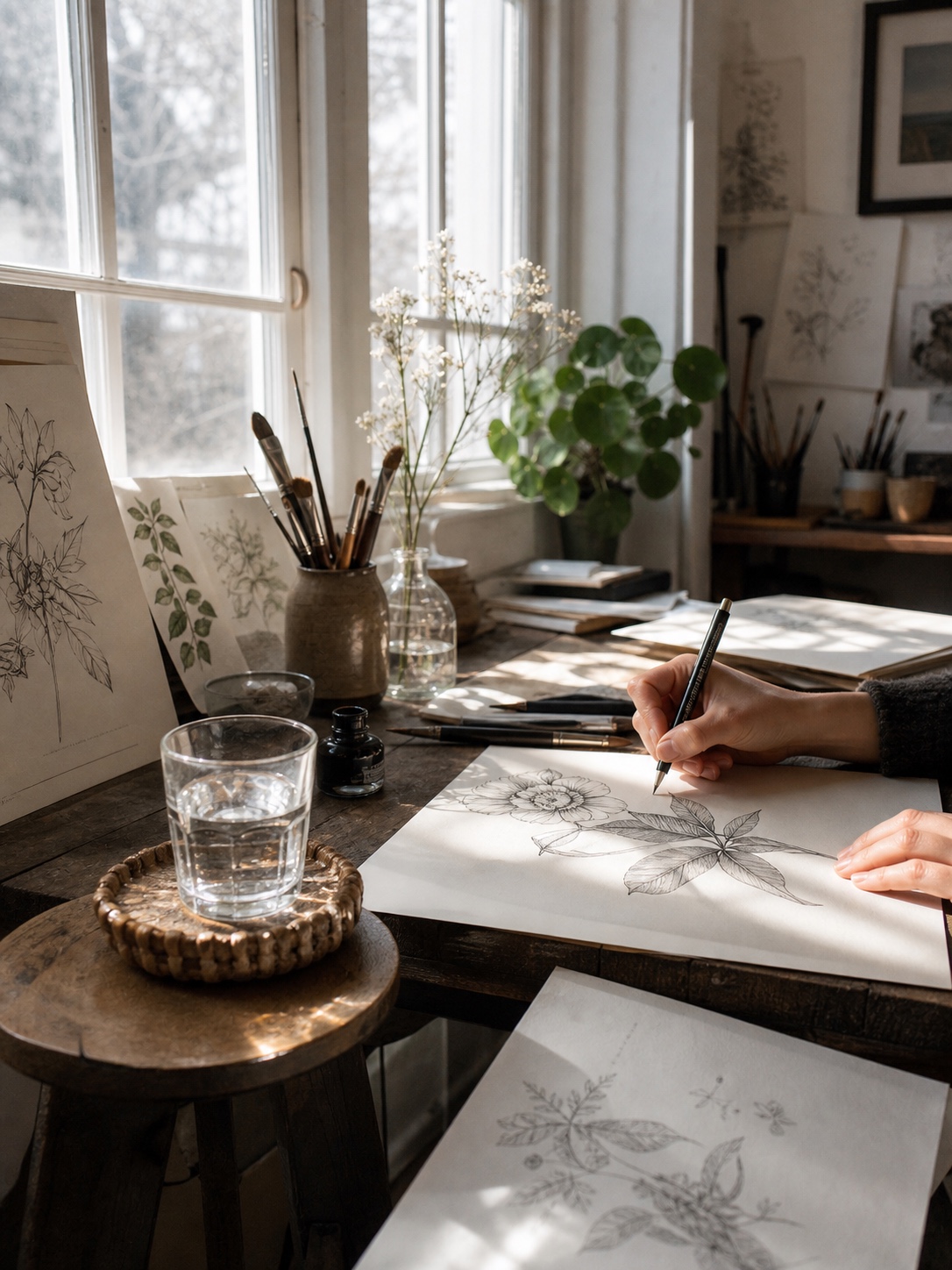
Set a timer instead of trying to remember
A repeating 45-minute phone timer — active only during work sessions — removes the need to remember. When it goes off: stop, look away from the drawing, drink, reset. The combined effect of a focus break and hydration tends to push the session’s useful range further out before quality starts to drift.
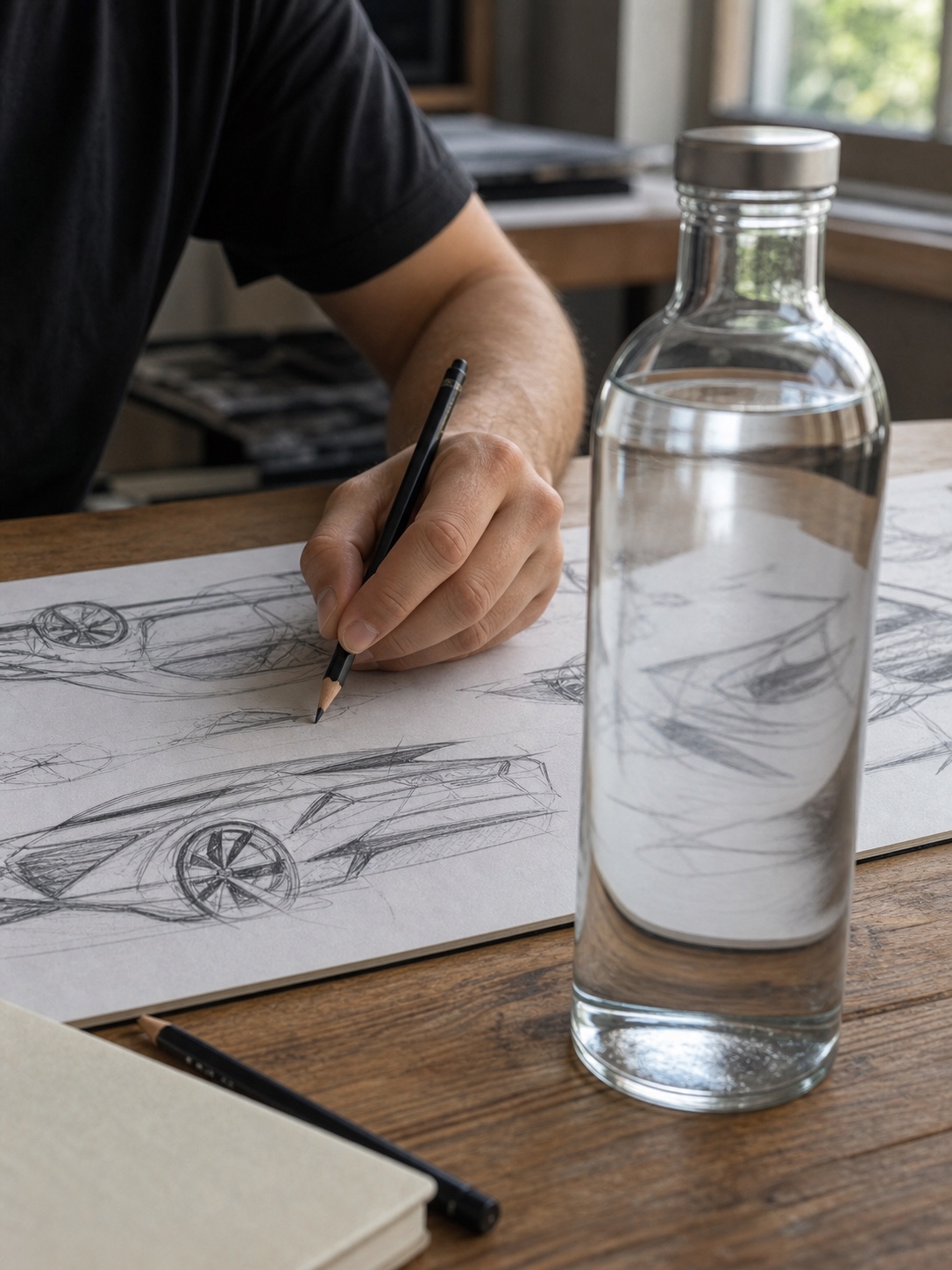
Eye fatigue during fine detail work
Artists doing close-focus work — fine linework, color-sensitive rendering, intricate hatching — often notice eye fatigue building through a long session. Many find a correlation between consistent hydration and how long their eyes hold up. The evidence is mostly anecdotal, but the reports from illustrators and draftspeople are consistent enough to test for yourself. My own experience: sessions where I’ve kept water going tend to go longer before I need to stop and rest my eyes.
Color decisions and fatigue
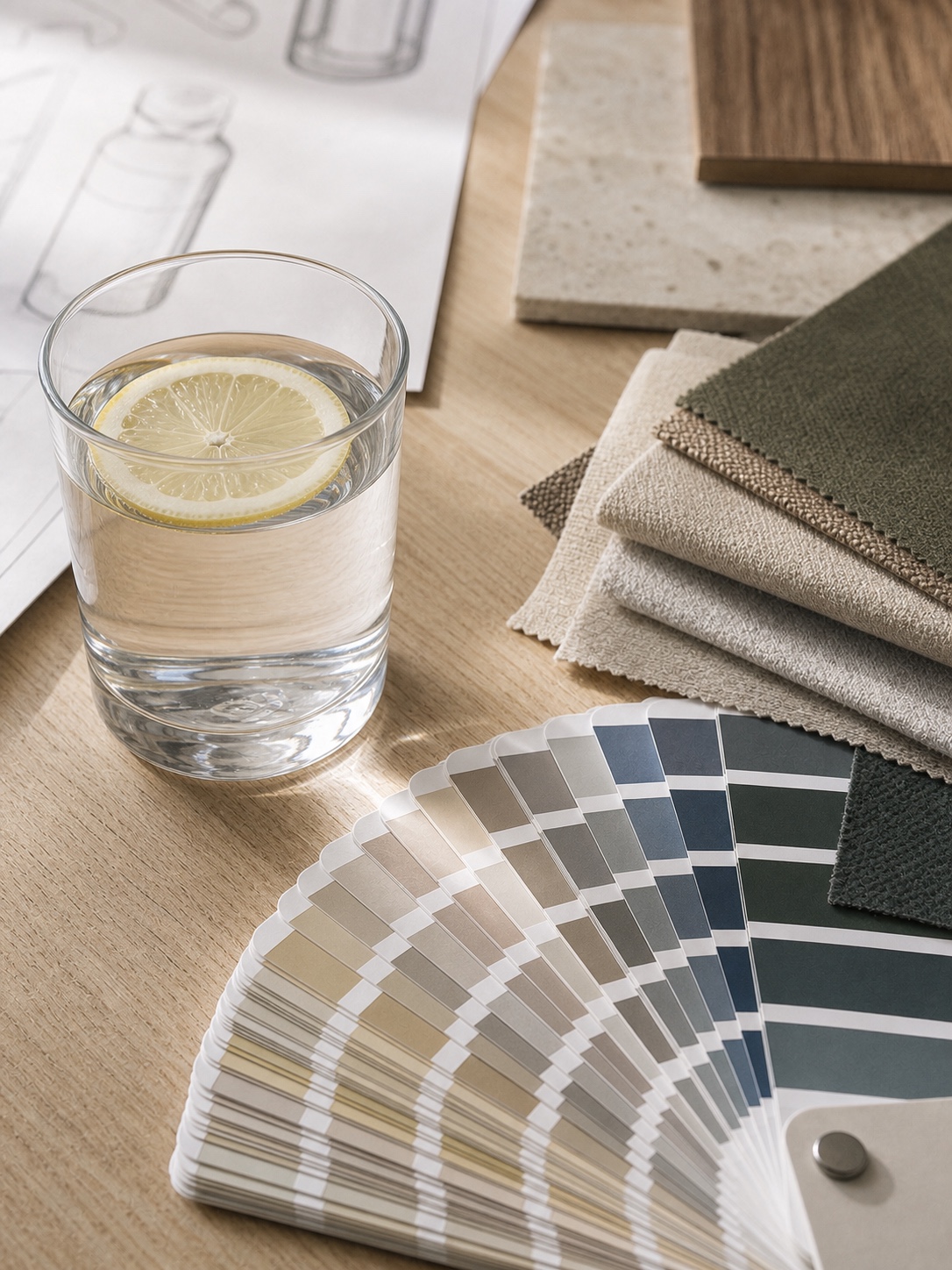
Your ability to read color accurately seems to degrade as the session gets long. This is why work done in the last hour of a marathon session often needs correction in the morning. Keeping attention fresh through regular breaks, good lighting, and water helps maintain color consistency through longer sessions. Gouache and colored pencil illustrators who do single-session pieces mention this specifically.
What to avoid during long sessions
Heavy food slows you down. Too much coffee makes you jittery and then crashes you. Cold sugary drinks create a spike-and-drop pattern. Plain water, with occasional tea or an electrolyte drink for very long sessions, gives a steadier energy curve across a six-hour studio day.
Hydration for architects, site visits, and studio days
If your workday moves between desk, client meeting, and tablet sketching, a mobile creative studio setup makes it easier to keep water, charger, stylus, and reference material in the same working rhythm.
Architecture is one of the few design disciplines where the working environment changes dramatically within a single day. Morning: studio, screen, model-building, espresso. Afternoon: site visit in August heat, standing on an unfinished concrete floor for ninety minutes, reviewing material samples with a contractor. Evening: client presentation with twelve slides and a Q&A that runs past nine.
That range makes consistent hydration harder than for studio-only work. You can’t keep a glass carafe on a construction site.
The site visit problem
Site visits are where hydration most visibly fails. You’re outdoors, often longer than planned, and the bottle you brought ran out forty minutes ago. I started keeping a dedicated insulated bottle in the bag I take to every site visit, pre-filled before leaving. Stupidly simple. It works.
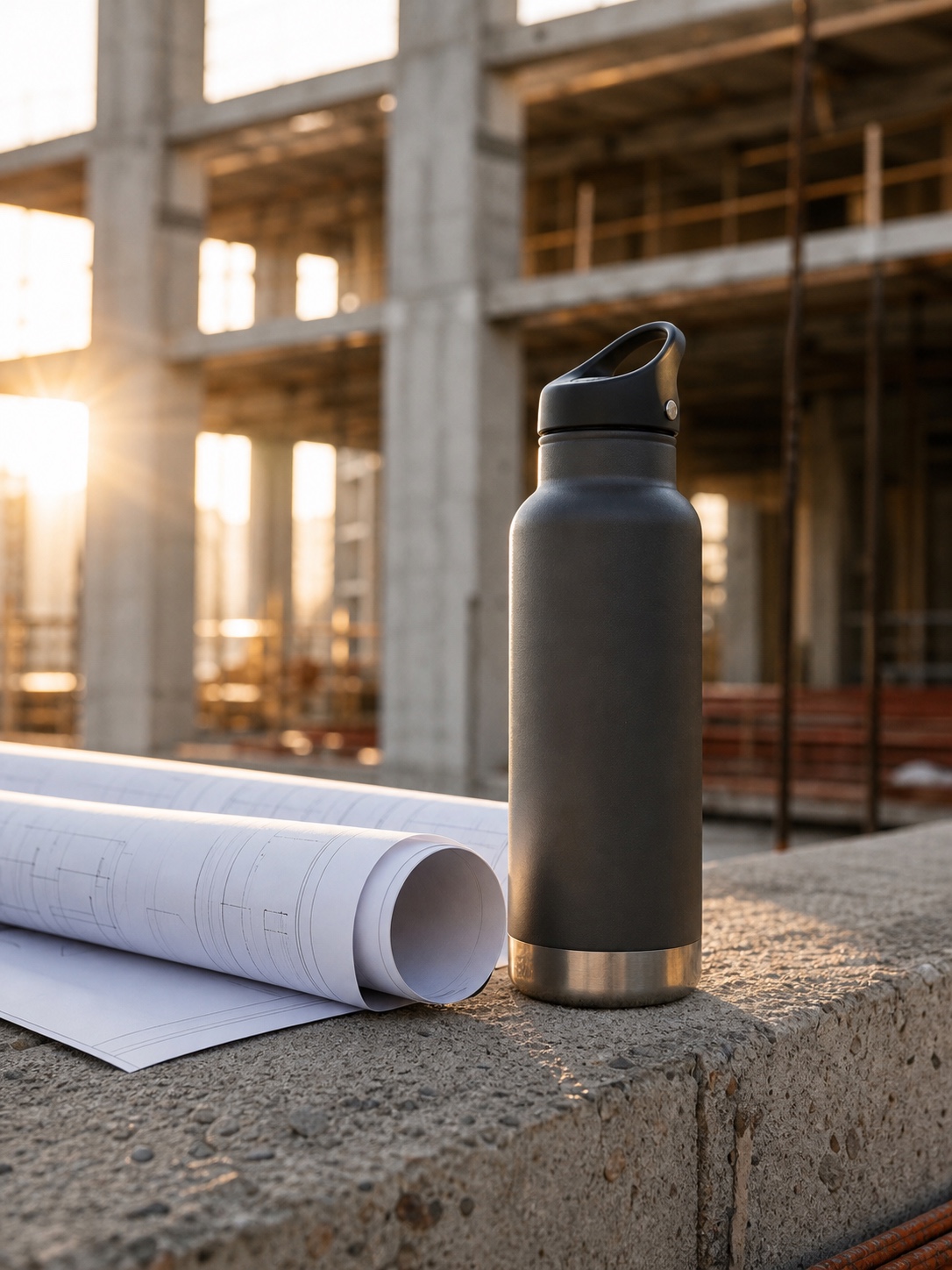
After a long summer site visit, even mild underhydration makes the afternoon studio work noticeably harder. Drafting needs precision. Material decisions need clear attention to proportion. These tasks don’t benefit from being done in a slightly foggy state.
Marathon studio phases
Architecture studios during competition deadlines run twelve-hour days. During those phases, the first thing to deteriorate isn’t the concept work — it’s the quality of detail decisions at the section level. The 1:200 detail that gets proper attention at hour three gets approximated at hour eleven.
Building water breaks into a studio culture helps. One approach from a firm I worked in years ago: when someone makes fresh coffee, everyone drinks a glass of water first. A shared habit is easier to maintain than a private one.
Presentation days
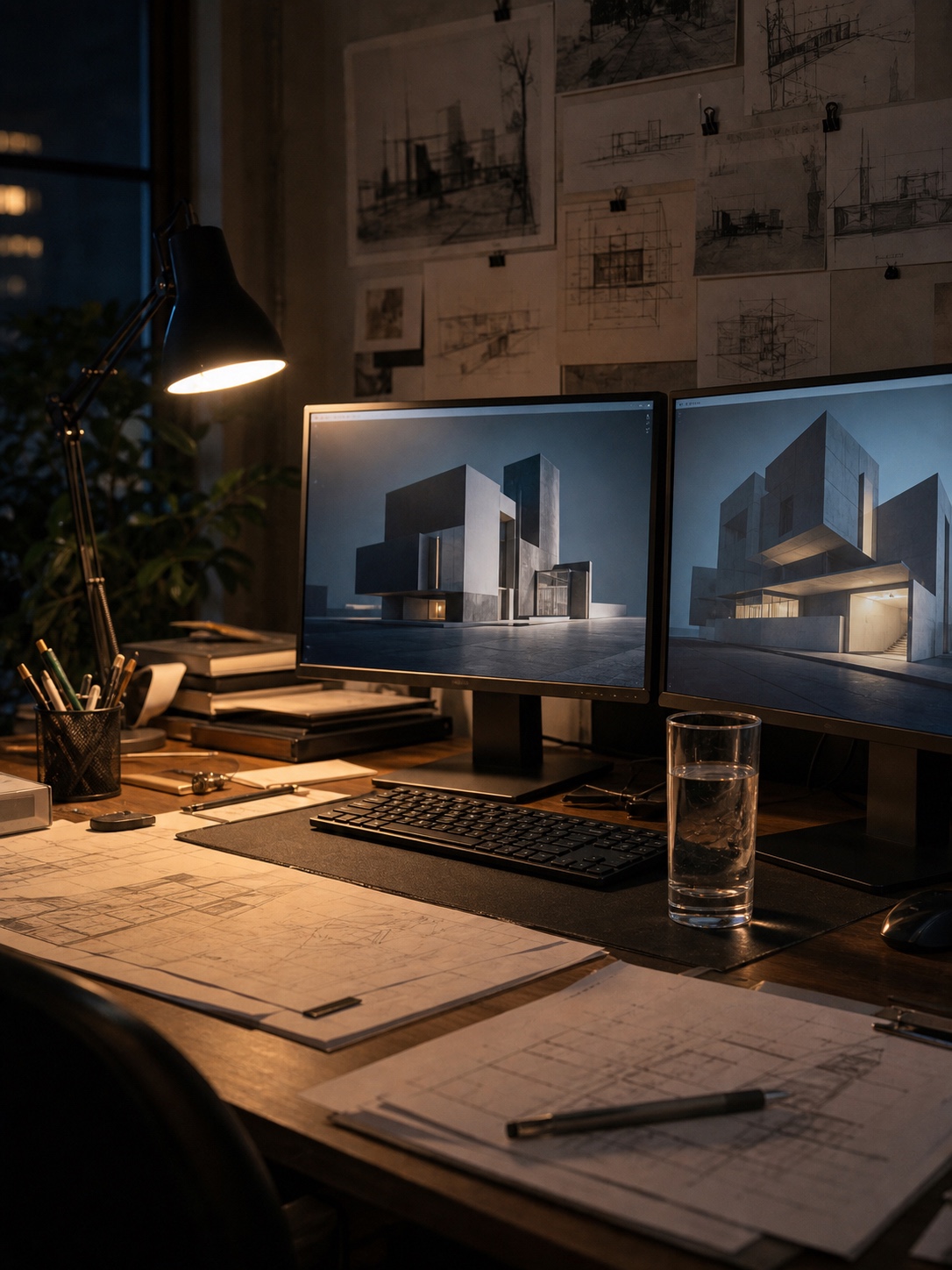
Long presentations with Q&A create their own physical drain — dry mouth, scattered attention, losing your thread mid-explanation. Keeping water visible on the table is practical, and it also signals composure. A pause to drink is a natural transition, not a gap. Keep a glass at hand during every client meeting.

Designing your workspace around better habits
The wider room matters too: creative home office design ideas and office decor ideas for productivity can turn the hydration habit into part of the environment instead of another task to remember.
The principle in environmental design is that behavior follows environment. If your workspace makes good habits easy and bad habits invisible, you make better choices without expending willpower. This applies to ergonomics, lighting, tool placement — and water.
Visibility is the whole game
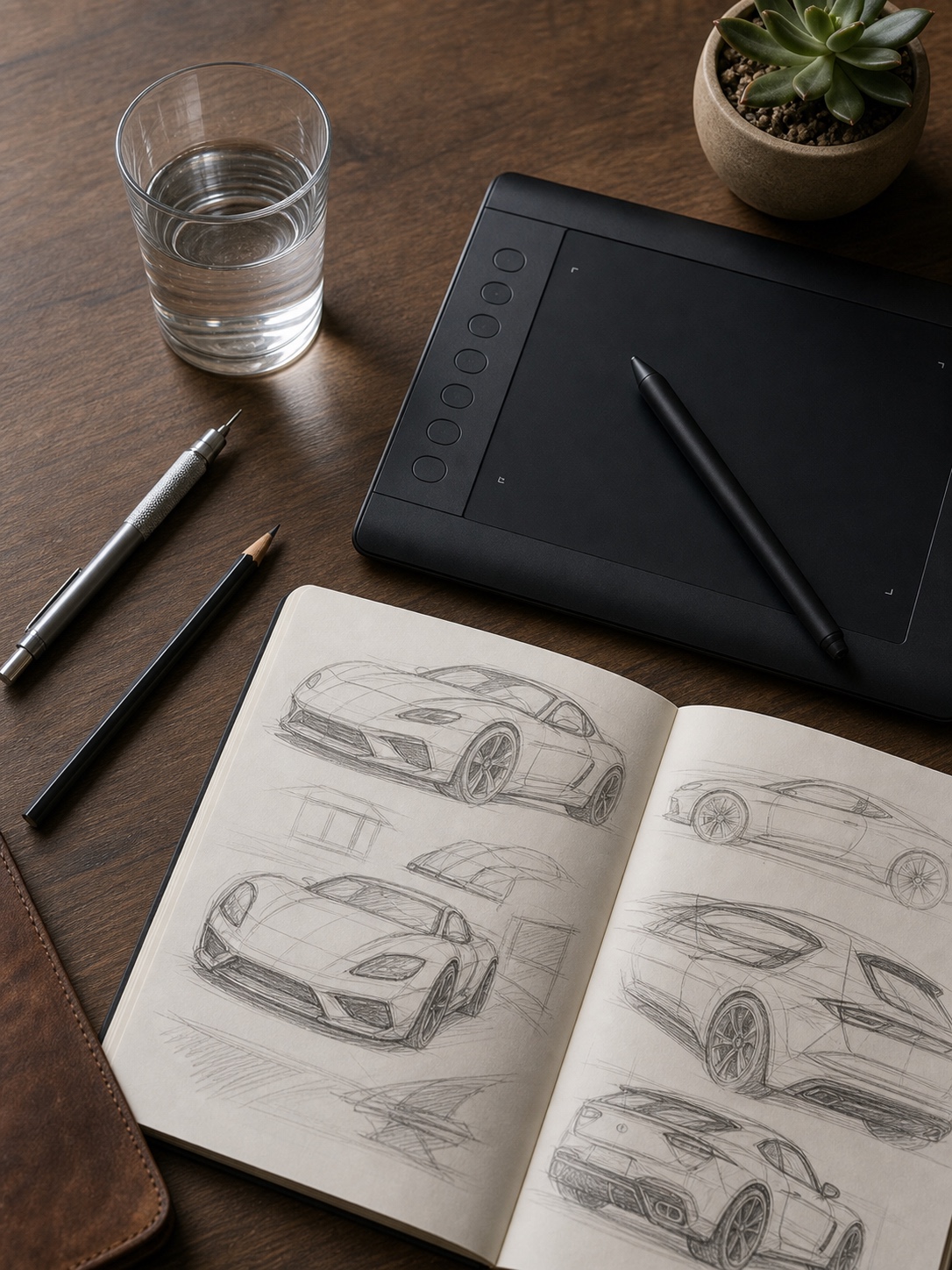
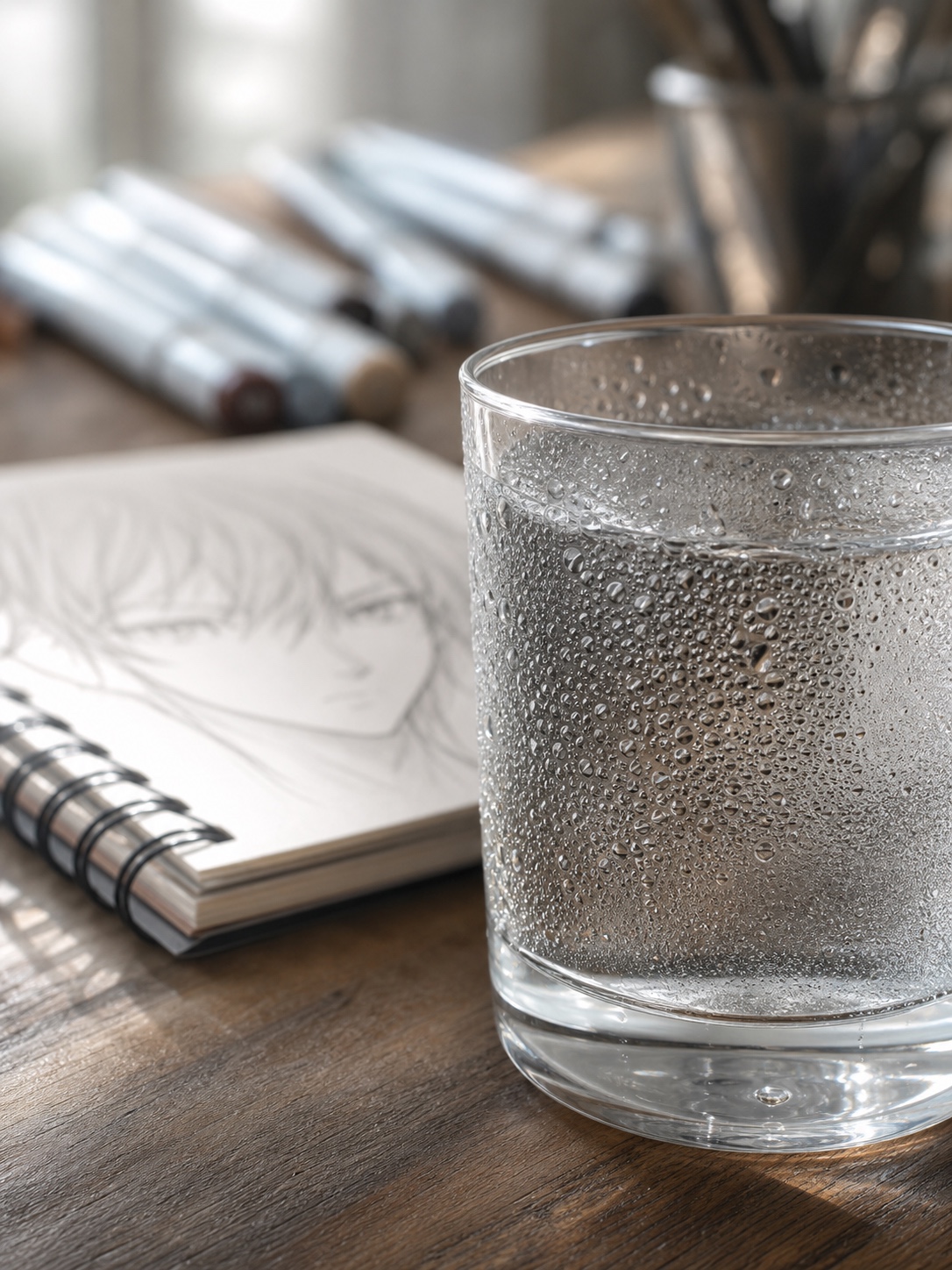
If the water bottle is across the room, you won’t reach for it during flow state. On the desk, in your sightline, you’ll grab it automatically. Behavioral design at its most basic. My desk arrangement stays consistent: sketchbook, pencil cup, Wacom tablet, water carafe. Always in that order.
Choose a vessel you actually like
Generic plastic bottles feel disposable, so I forget them. A glass carafe you’d be happy to have in a desk photo will actually get used. For travel and site visits, both Hydro Flask and Klean Kanteen have survived construction sites and late-night model reviews. The criterion is simple: if you like the object, you’ll use it more.
Stack hydration onto existing habits
The easiest new habits piggyback on existing ones. You already make coffee in the morning — fill the glass before starting the machine. You already sit down at a certain time — put the bottle down before opening a file. You already take calls during the day — keep water in your hand during calls.
This is what productivity designers call habit stacking. No new willpower required; just new anchors on existing actions.
Treat the desk as a system
Every element on a well-designed desk either supports the work or creates friction. Good light, the right tools within reach, a clear surface, and a water source in the visual field: that’s a system running quietly in the background while you focus. That’s good design — functionally and aesthetically.
Final thoughts: small rituals, better creative flow
For more small systems around work, energy, and studio life, the practical design and lifestyle tips hub keeps the habit-building side of creative practice in one place.
Nothing here requires a supplement protocol or a morning routine with eighteen steps. The most effective hydration habits for creative professionals are deliberately plain: water before coffee, a visible carafe on the desk, a short break every 45 minutes during long sessions.
The Gary Brecka idea that translates best to studio life is treating hydration as intentional rather than reactive. Not “drink when thirsty” — that’s already too late. Drink on a schedule that fits the work. That shift takes about two weeks to feel automatic, and after that you stop thinking about it.
Start with the morning glass. One glass before the first coffee, for two weeks. Then decide whether it’s worth building on.
FAQ
How much water should a designer drink during a workday?
The eight-glasses target is a rough starting point, but total volume matters less than consistency. Spreading intake across the full workday — timed around task transitions rather than taken all at once — supports steadier focus than front-loading or backloading. For most studio professionals, 6–8 glasses spread through the day is a workable range.
Does hydration actually affect creative focus?
Sustained underhydration makes sustained attention harder — that’s a pretty consistent finding. Regular water intake supports the kind of stable energy that long studio sessions need. The effect isn’t dramatic on a normal day, but it accumulates across a six- or eight-hour session. Many illustrators and architects report that their late-session work quality improves when they’ve kept up with water throughout the day.
What’s the best water vessel for a studio desk?
A glass carafe for desk work — IKEA’s Korken line is inexpensive and looks clean; the Menu Norm collection is worth it if you want something more intentional. For travel and site visits, Hydro Flask 32oz wide mouth and Klean Kanteen both hold temperature for eight hours or more. Main criterion: it should be visible and within arm’s reach.
Should I add salt or electrolytes to my water?
A small pinch of mineral salt in morning water is something many people find useful, especially before coffee. For a standard studio day, it’s optional. For very long sessions, hot site visits, or deadline pushes, adding electrolytes makes a noticeable difference. Some people use a commercial electrolyte tablet; others just add a pinch of pink Himalayan salt directly to the carafe.
How do I remember to drink water during a long drawing session?
Set a repeating timer at 45-minute intervals, active only during work sessions. After a couple of weeks it becomes background rhythm rather than an interruption. Alternatively: drink every time you switch from one type of work to another. No tracking required.
Does coffee count toward daily hydration?
Coffee has a mild diuretic effect, so it doesn’t fully replace water. The practical fix: treat coffee as supplementary, water as baseline. One glass of water before the first coffee of the day makes the rest easy to manage — you’re not calculating net fluid intake, just making water come first.
Any specific tips for client presentation days?
Keep a full glass of water on the table, visible to you and the client. Use drink pauses deliberately as transition moments between sections — it creates natural pacing and signals composure. Avoid starting a long client meeting on coffee alone; the peak tends to fade at the worst moment.
Is sparkling water as effective as still?
For most people, yes. Carbonated water hydrates comparably to still, and some people find it easier to drink more of it — a practical advantage. The only thing to avoid: flavored sparkling water with added sugars, which doesn’t help and tends to increase cravings for more.
- 238shares
- Facebook0
- Pinterest238
- Twitter0
- Reddit0