Learning how to draw fall leaves is easier when you build the leaf from the center vein instead of tracing the outside edge first. Start with the main vein, block in the broad shape, add side veins, then let the jagged maple points, rounded oak lobes, or simple birch outline grow around that structure.
- What is the easiest way to draw fall leaves?
- How to draw fall leaves step by step
- Key takeaways
- Materials needed for fall leaves drawing
- Fall leaf drawing process in detail
- Common mistakes when drawing fall leaves
- A quick practice drill
- Tips for improving fall leaves drawing
- Final thoughts
- Frequently asked questions about drawing fall leaves
- Q: What is the easiest fall leaf to draw?
- Q: How do you draw fall leaves step by step?
- Q: How do you draw a maple leaf for beginners?
- Q: What colors should I use for autumn leaf drawing?
- Q: How do you make a fall leaf drawing look realistic?
- Q: Can I draw fall leaves with markers?
- Q: How should beginners practice easy fall leaves to draw?
This guide keeps the process practical for beginners: pencil outline first, vein map second, light shading third, then warm autumn color. You can draw one fallen leaf, a maple leaf sketch, or a full page of overlapping leaves without needing perfect symmetry.
Use the steps below for colored pencil, graphite, markers, or watercolor. The same structure works for fall leaves drawing studies, seasonal cards, sketchbook practice, and classroom-friendly autumn art.
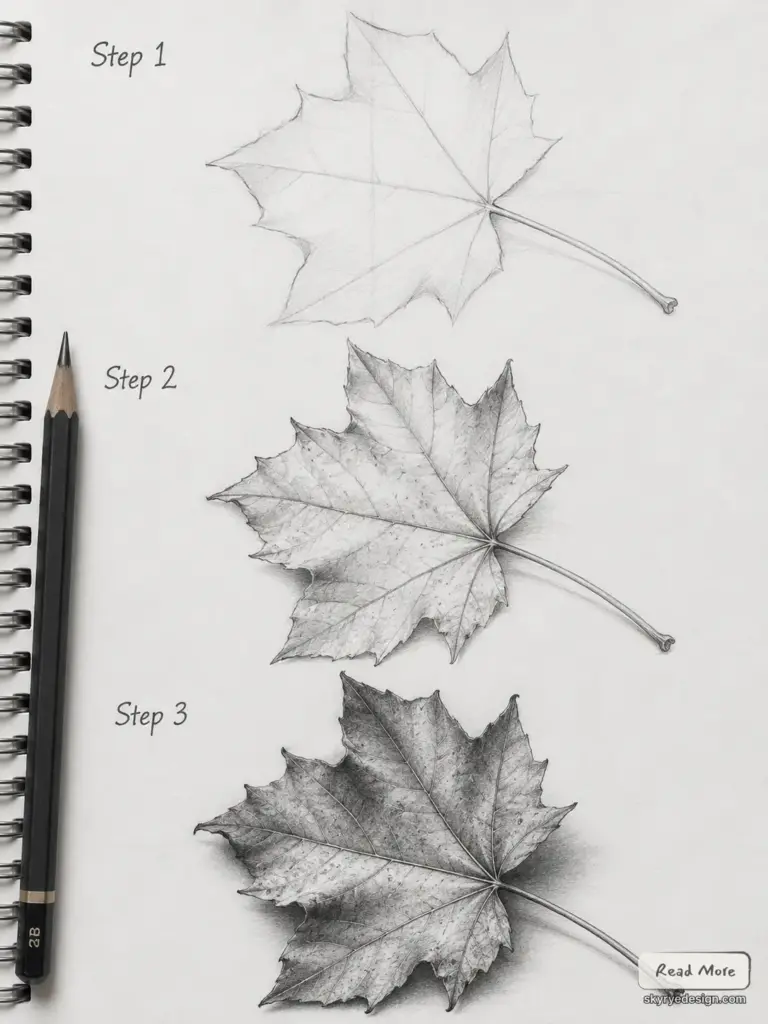
What is the easiest way to draw fall leaves?
The easiest way to draw fall leaves is to sketch the center vein first, then build the leaf around it in light stages. Draw a slightly curved midrib, add angled side veins, and place the outside edge last so the points, lobes, or serrations follow the vein map.
For a maple leaf drawing, fan five to seven veins from the stem and connect them with uneven pointed edges. For an oak leaf, keep the same center vein but round the side lobes instead of making spikes. For a simple autumn leaf drawing, use a teardrop or oval shape with tiny broken edges.
Once the outline feels balanced, add darker lines only where the leaf folds, curls, or dries at the tip. Finish with thin layers of yellow, orange, red, brown, and muted green, keeping the first color light so later shading does not turn muddy.
How to draw fall leaves step by step
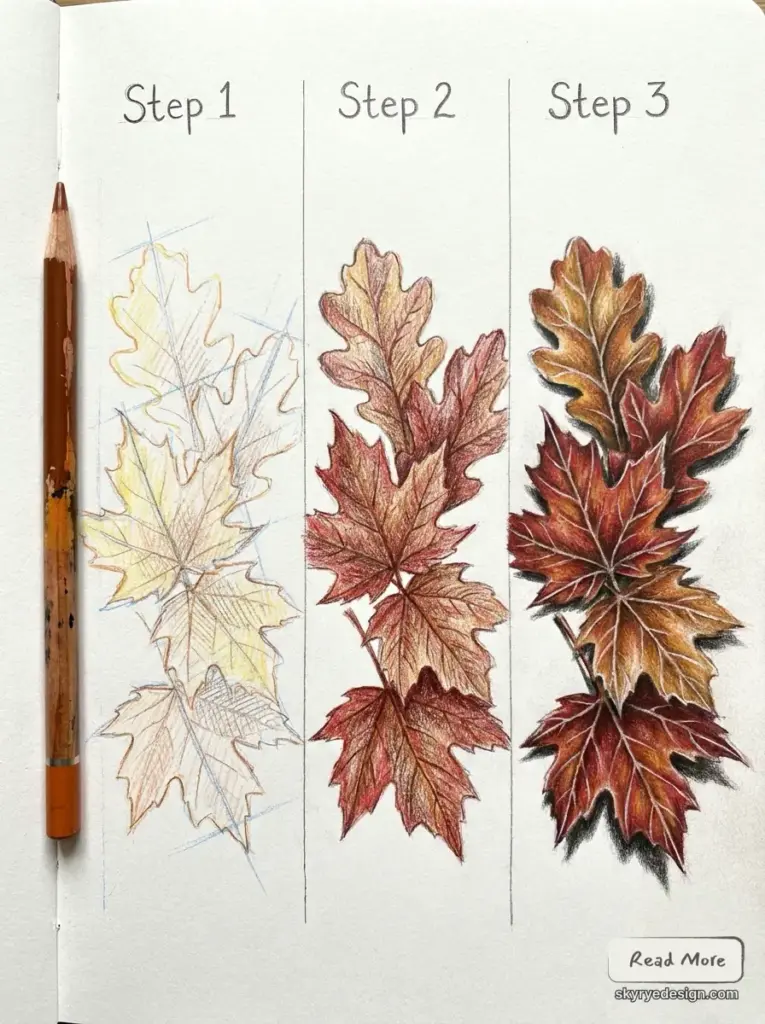
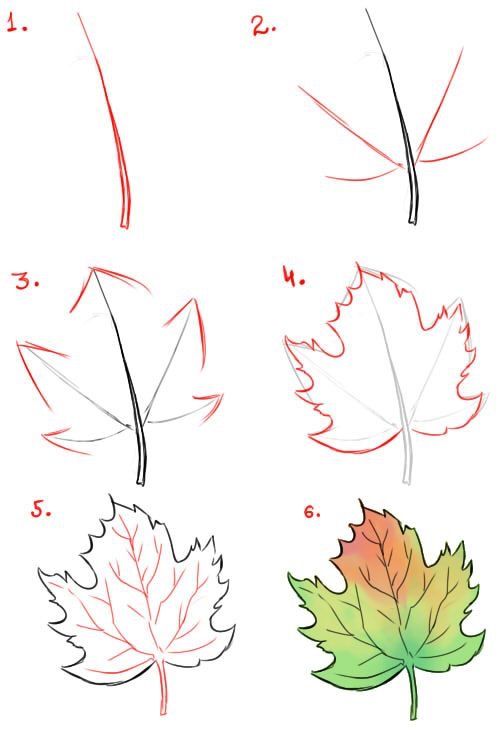
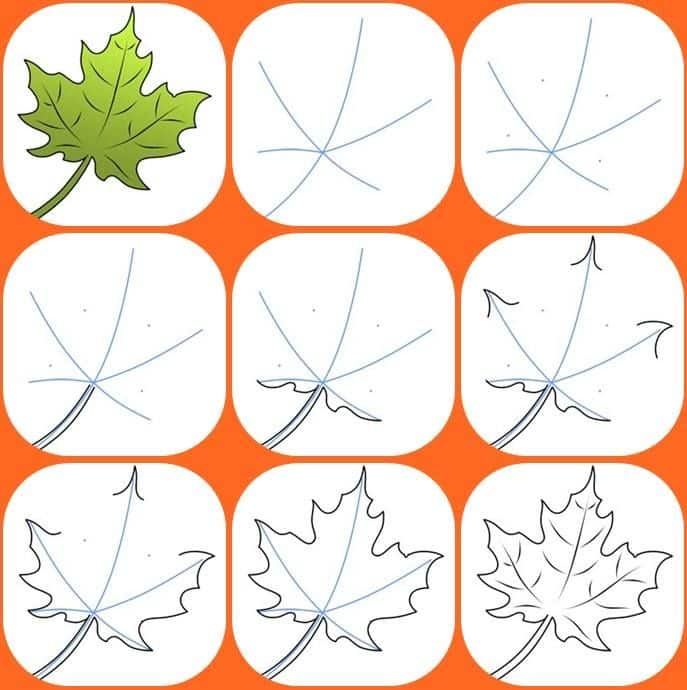
To draw fall leaves step by step, keep the construction light until the shape is solved. First place the midrib, then the side veins, then the edge. That order makes an easy fall leaf drawing look natural because every point, lobe, and torn edge has a reason to be there.
- Draw a light center vein, slightly curved instead of ruler-straight.
- Add five to seven side veins for maple leaves, or fewer softer veins for oak and birch leaves.
- Block the outer leaf shape around those veins with loose, uneven marks.
- Refine the edge with points, rounded lobes, small tears, or serrations.
- Clean the sketch and keep only the lines that describe the leaf structure.
- Shade under curled edges, along the main vein, and near dry tips.
- Layer autumn colors from light yellow or ochre into orange, red, brown, and muted green.
| Leaf type | Start with | Watch for |
|---|---|---|
| Maple leaf | A central vein with five to seven pointed lobes | Sharp angles and uneven points |
| Oak leaf | A long center vein with rounded side lobes | Soft curves instead of spikes |
| Birch leaf | A simple oval or teardrop shape | Tiny serrated edges and a clear tip |
| Loose fallen leaf | A bent center vein | Curled edges, tears, and dry brown spots |
Key takeaways
- Build fall leaves around the center vein first; it keeps the shape believable.
- Use maple, oak, and birch leaves as separate practice subjects because each one has a different edge rhythm.
- Layer autumn color lightly. Too much red, orange, and brown at once can make the leaf look flat and muddy.
Materials needed for fall leaves drawing
Drawing fall leaves requires the right materials to bring out the colors and details. The choice of paper and basic tools affects how well the leaves look. Using the right colored pencils or markers helps capture autumn shades accurately. Adding optional supplies can create extra textures for a more realistic effect.
Best paper and tools
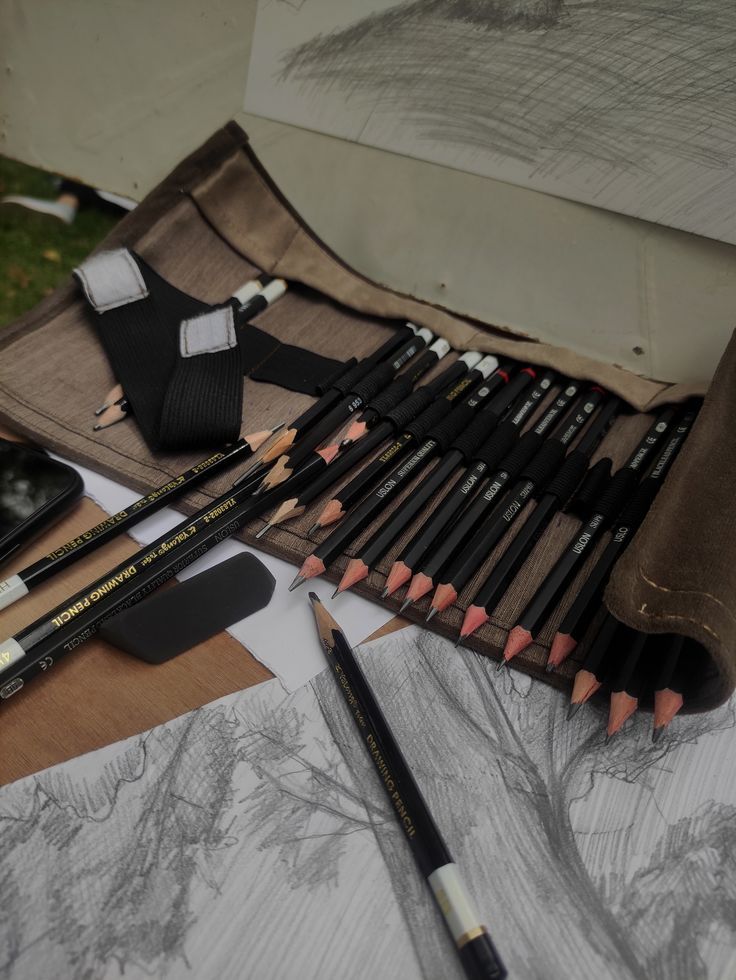
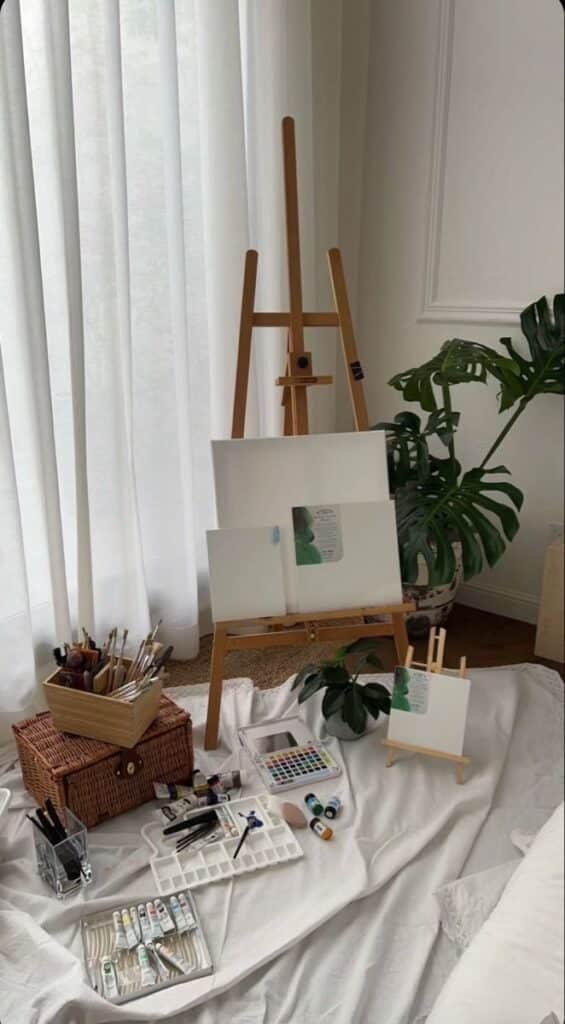
Using smooth but sturdy paper works best for leaf drawings. A medium-weight drawing paper, around 80-100 lb (120-150 gsm), is ideal because it holds color well without warping. A sketchbook or loose sheets of this paper are both good options.
For tools, a sharp pencil for sketching outlines is key. A 2B or HB pencil is a good choice because it draws clear lines without being too dark. An eraser is important to fix mistakes gently without tearing the paper. A pencil sharpener keeps the tip fine for detailed work.
Recommended colored pencils and markers
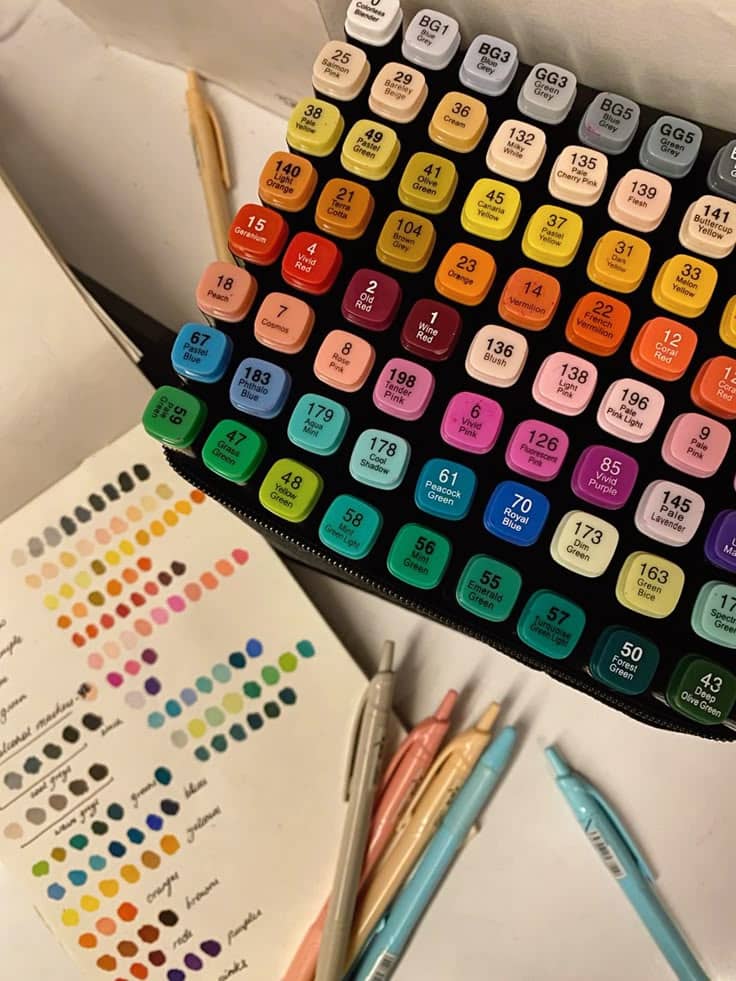
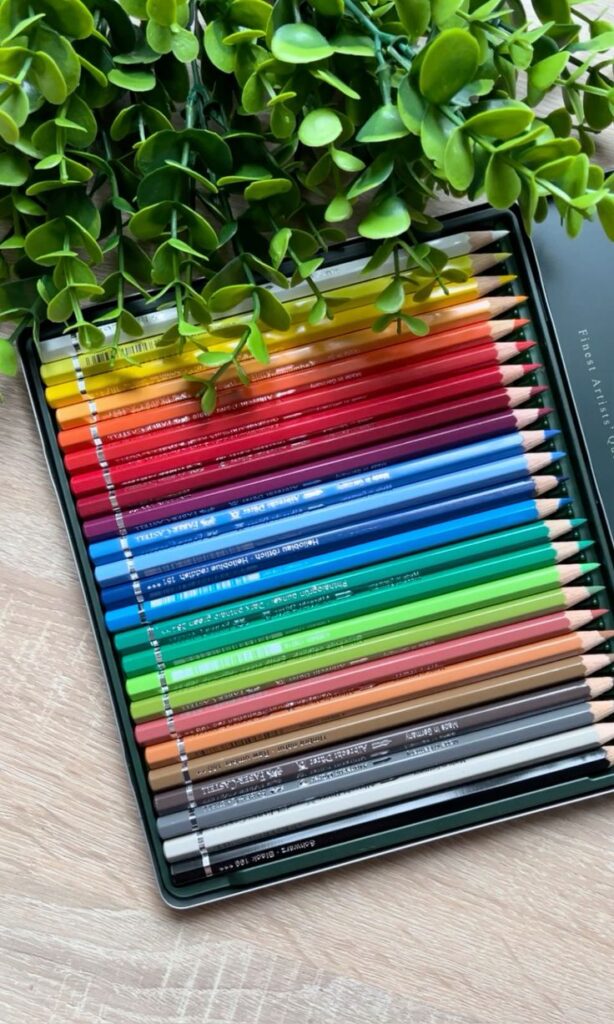
Colored pencils that blend colors smoothly work well for fall leaves. Brands that offer a wide range of reds, yellows, oranges, and browns allow for natural autumn shades. Soft or wax-based pencils are easier to layer and mix.
Markers with fine tips can enhance fall leaves with bold, vivid colors. Alcohol-based markers give smooth coverage and rich color but may bleed through thin paper. Using marker paper or layering markers over colored pencils can improve results.
A basic color set might include:
- Red shades (scarlet, crimson)
- Yellow (golden, mustard)
- Orange (burnt orange, amber)
- Brown (sepia, rust)
- Green (olive, dark green)
Optional Supplies for Texture
Adding texture to fall leaves can make drawings more interesting. Using a blending stump or tortillon helps smooth colored pencil layers for soft shading.
White gel pens or colored pencils can add highlights and details like veins. For rough or aged leaf surfaces, lightly scraping the paper with a craft knife can create bark-like texture.
Some artists use watercolor pencils or light washes of watercolors for extra depth. However, that needs thicker paper designed for wet media. Using these extras depends on the style and effect the artist wants to achieve.
Fall leaf drawing process in detail
Drawing fall leaves starts with simple shapes and builds up with lines and texture. Paying attention to the veins and details makes the leaves look natural. Shading adds depth, and coloring brings out the rich, warm tones of autumn.
Sketching basic fall leaf shapes
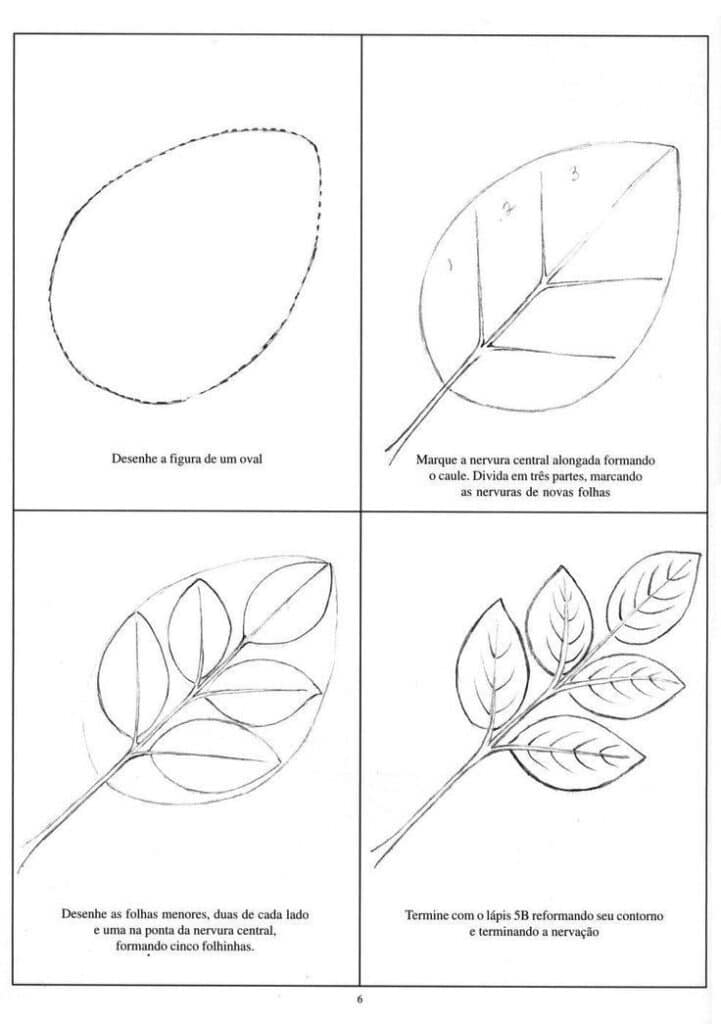
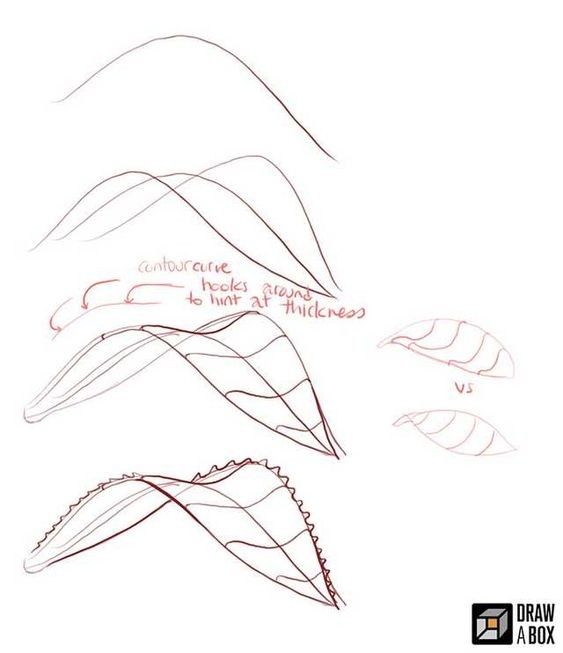
He or she begins by choosing the type of leaf to draw, such as maple or oak. Using light pencil strokes, they sketch the overall shape. Most fall leaves have a broad outline with pointed or rounded edges.
It helps to break the leaf into simple shapes like ovals, circles, or triangles first. Once the basic shape is laid out, the artist adjusts the outline by adding small bumps or smooth curves. This stage is about creating the structure without heavy detail.
Adding veins, jagged edges, and dry tips
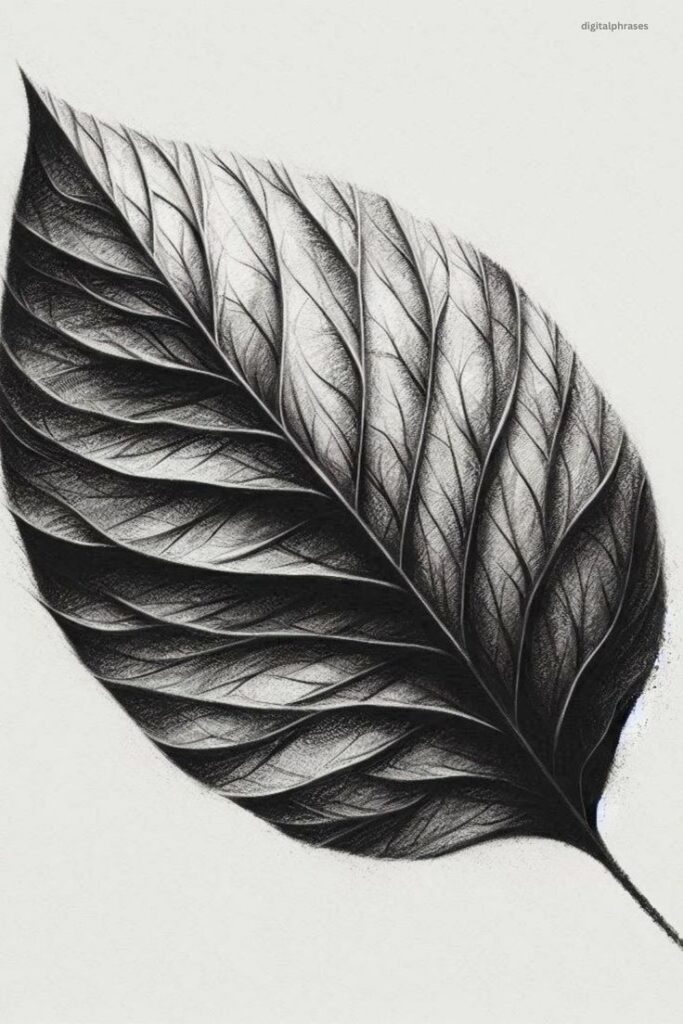
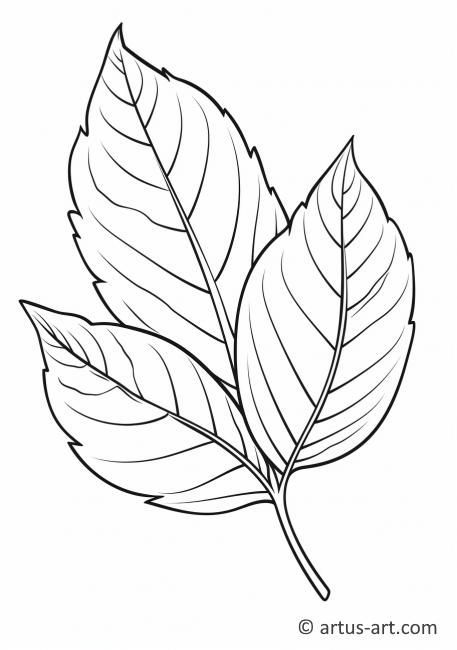
Next, they add veins starting from the center of the leaf, which is called the midrib. The main veins branch out from this line toward the edges. Smaller secondary veins fill in between the main veins.
Adding small irregularities, like tiny tears or spots on the leaf edge, makes the drawing more realistic. Light, fine lines show the texture without overpowering the leaf’s shape. This step gives the leaf its character.
Shading fall leaves for realism
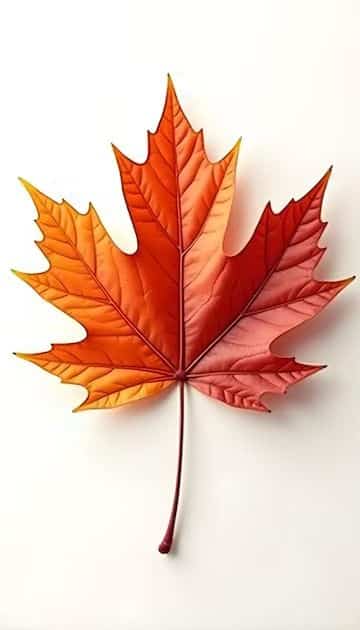

Shading brings the leaf to life by showing where light and shadow fall. He or she uses soft pencils or shading tools to darken the areas near the veins and under folds. Lighter parts show where the light hits the surface.
Shading should follow the natural curves of the leaf to create volume. Blending helps smooth transitions between light and shadow. This adds a 3D effect, making the leaf look less flat.
Coloring techniques for autumn leaf drawing
To capture autumn colors, they use warm tones like red, orange, yellow, and brown. Layering colors lightly builds a rich blend. Using colored pencils or markers, the artist starts with a base color and adds darker shades on the edges or veins.
Blending colors softly is key to mimicking real leaf color changes. Some artists add small spots of a contrasting color to show leaf aging. Bright highlights or white spaces give the leaf a fresh look.
Common mistakes when drawing fall leaves
- Drawing the outline too early: place the center vein and main side veins first, then wrap the edge around them.
- Making both sides perfectly symmetrical: real leaves usually bend, tear, curl, or shrink unevenly.
- Using one orange color everywhere: start with yellow or light ochre, then add orange, red, brown, and muted green in thin layers.
- Ignoring the cast shadow: even a small shadow under a curled edge makes the leaf feel like it is sitting on the paper.
Quick fixes for cleaner autumn leaf drawing
| Problem | Fix |
|---|---|
| The maple leaf drawing looks stiff | Curve the center vein and vary the length of each point. |
| The oak leaf looks like a cloud | Add a clear midrib and make each rounded lobe connect back to a side vein. |
| The color looks muddy | Start with yellow or ochre, then add orange, red, and brown in thin layers. |
| The leaf looks flat | Place a small shadow under one curled edge and darken one side of the main vein. |
A quick practice drill
Draw the same leaf three times on one page. First, use only line. Second, add veins and edge texture. Third, add color and shadow. This drill shows you exactly which stage needs work, and it is much faster than trying to finish one perfect autumn leaf drawing on the first attempt.
Tips for improving fall leaves drawing
To make fall leaf drawings look more lifelike, attention to color, texture, and background is key. Using smooth color transitions, adding layers for depth, and placing leaves in a setting all help bring the artwork to life.
Blending colors smoothly
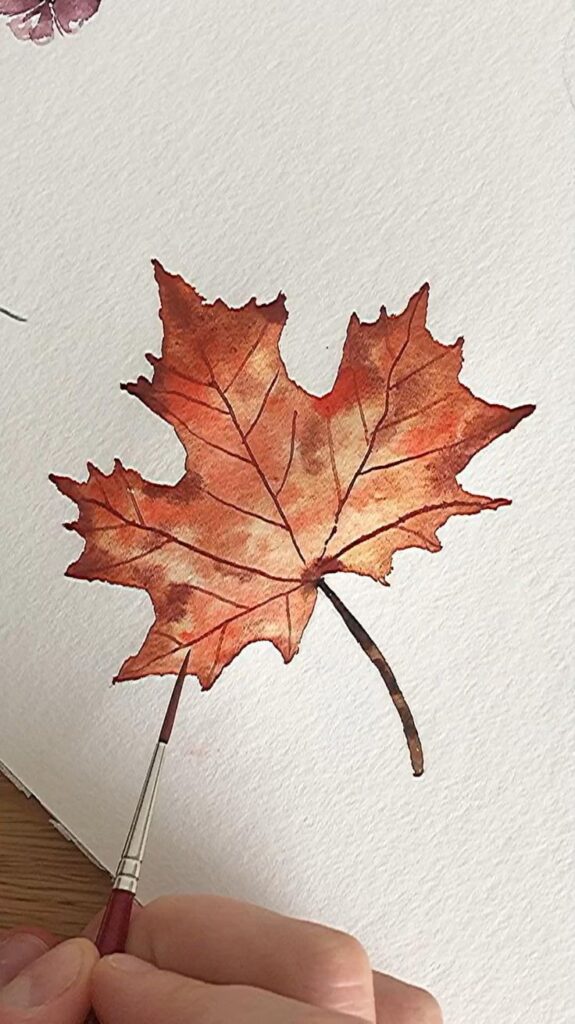
Smooth color blending helps show the natural color changes in fall leaves. Artists often use soft pencils, pastels, or colored pencils to gently mix colors where one shade fades into another.
To blend, start with light colors and build layers slowly. Use a blending tool like a stump or a soft cloth to smooth out harsh lines. This creates a softer, more realistic effect.
Colors like red, orange, yellow, and brown should overlap naturally. Small touches of green or dark brown add variety, showing parts of the leaf that are still changing or drying out.
Creating depth with layering
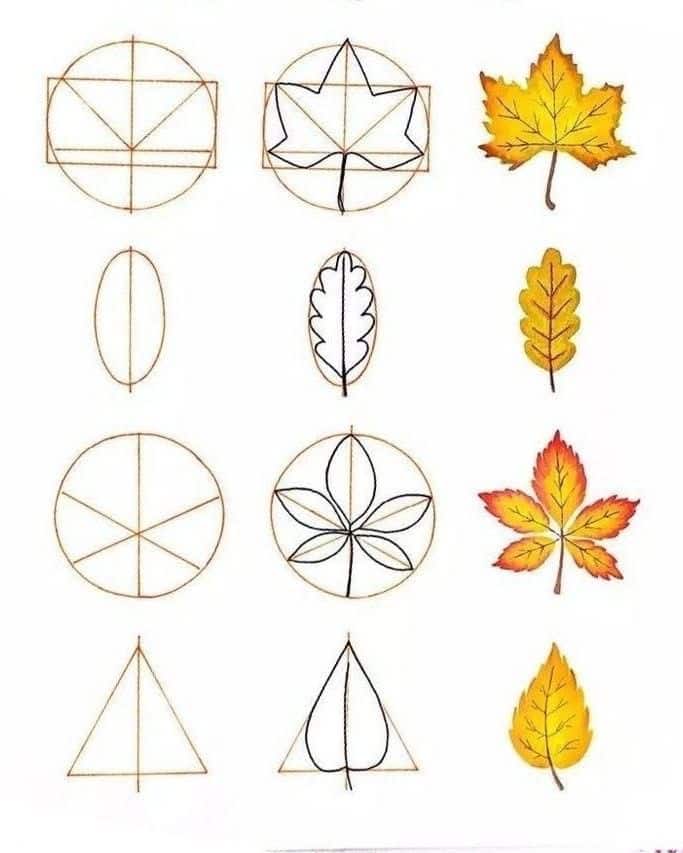
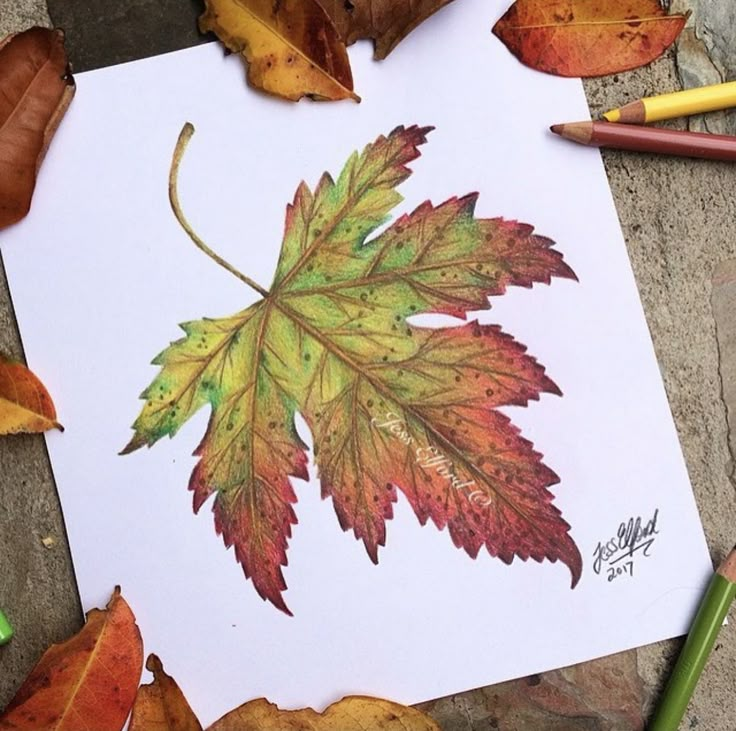
Layering adds depth to a drawing by building multiple levels of color and detail. Artists begin with a simple sketch, then add layers of shading, veins, and texture.
Each layer should be light at first, then gradually darker. This helps avoid muddy colors. Adding veins with a sharp pencil or thin pen gives the leaf an authentic look.
Different leaf edges and folds can be emphasized by changing the pressure on the pencil. Lighter pressure creates soft highlights, while heavier pressure adds shadows and dimension.
Adding background elements
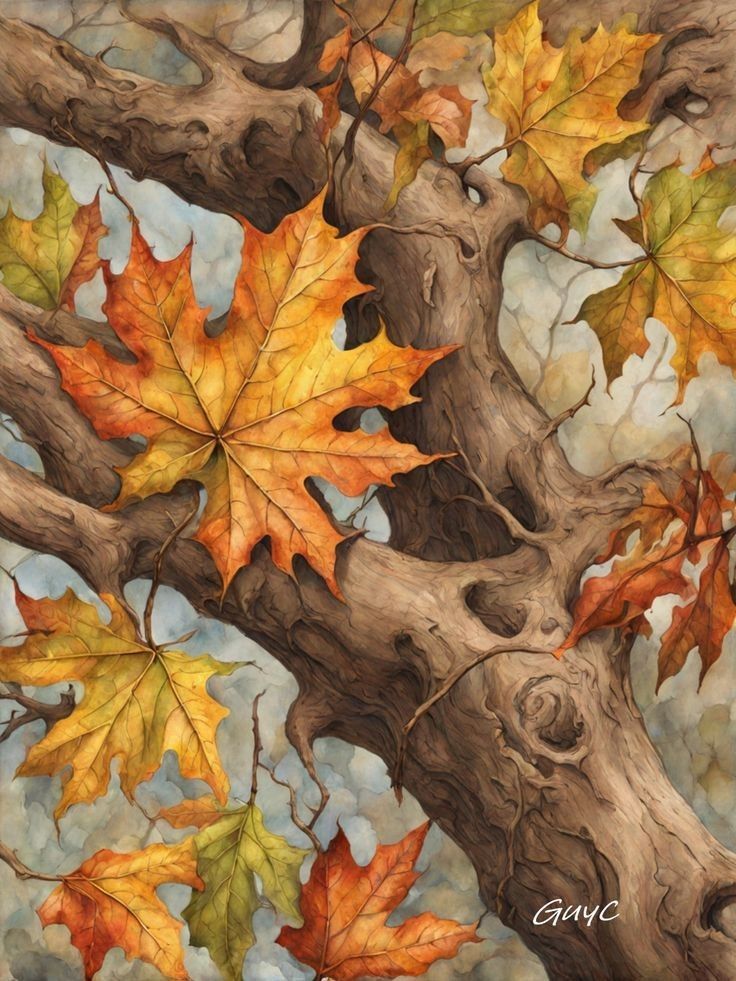
Adding background elements can make a fall leaf drawing more interesting and give it a setting. Simple shapes like branches, acorns, or scattered leaves work well without taking attention away from the main leaf.
Once the leaf shape feels comfortable, use these fall things to draw as small seasonal prompts that mix leaves with pumpkins, animals, cozy clothing, and simple backgrounds.
Once leaf shapes feel comfortable, try a few pumpkin sketch ideas that combine maple leaves, vines, gourds, and soft cast shadows on the same page.
Using soft, muted colors for the background helps the leaf stand out. Artists can use light washes or soft shading for a gentle backdrop.
Placing leaves at different angles or overlapping some helps create a natural, random fall scene. Keeping the background less detailed than the leaf keeps the focus clear.
Final thoughts
Fall leaves are small, forgiving subjects, which makes them perfect for learning structure, line rhythm, and color layering. Start with one clear vein map, keep the edges slightly imperfect, and let the autumn color build slowly.
More fall drawing practice
Once the leaf shape feels comfortable, use it inside a broader seasonal sketch. Try a dedicated leaf drawing structure lesson, collect more fall drawing ideas, or practice with autumn sketch inspiration. If you want simpler warmups, move into easy fall drawings, nature drawing ideas, and botanical sketch subjects. For color and finish, pair the lesson with colored pencil drawing ideas, shading techniques, and watercolor painting techniques.
Frequently asked questions about drawing fall leaves
Q: What is the easiest fall leaf to draw?
A: The easiest fall leaf to draw is a simple oval or birch-style leaf. Start with one center vein, sketch a soft teardrop around it, then add short side veins and a lightly serrated edge. Maple leaves look iconic, but their pointed lobes take more control.
Q: How do you draw fall leaves step by step?
A: Draw a curved center vein, add side veins, block the outer shape, refine the edge, clean the sketch, shade the curled areas, then add autumn color in light layers. That sequence works for maple, oak, birch, and loose fallen leaves.
Q: How do you draw a maple leaf for beginners?
A: Start a maple leaf drawing with a long center vein and five to seven angled side veins like a fan. Sketch uneven pointed lobes around those guide lines, clean the outline, add smaller veins, then shade under the lobes before adding yellow, orange, and red.
Q: What colors should I use for autumn leaf drawing?
A: Use yellow ochre, orange, burnt sienna, deep red, brown, and a little muted green. Begin with the lightest color and build darker tones slowly. Heavy pressure too early can make the leaf look muddy instead of dry and glowing.
Q: How do you make a fall leaf drawing look realistic?
A: A realistic fall leaf drawing needs structure, unevenness, and value. Place the main vein first, vary the side veins, break the edge slightly, and shade where the leaf curls or overlaps itself. Tiny tears, spots, and dry tips help the drawing feel natural.
Q: Can I draw fall leaves with markers?
A: Yes. Markers work well for bold fall leaves, especially on marker paper. Start with pale yellow or light orange, then add darker orange, red, and brown in small areas. Let each layer dry before adding the next so the colors stay clean.
Q: How should beginners practice easy fall leaves to draw?
A: Practice one leaf type at a time. Draw three maple leaves, then three oak leaves, then three simple oval leaves. Keep the first version as line art, the second with veins, and the third with shading and color so each skill improves separately.
If you want to add soft fall color after a pencil leaf study, this pastel drawing for beginners guide covers paper tooth, light pressure, and cleaner layering.
- 1.4Kshares
- Facebook0
- Pinterest1.4K
- Twitter0
- Reddit0