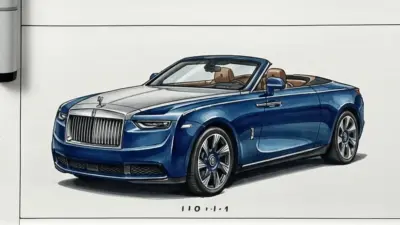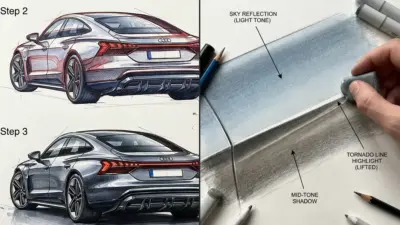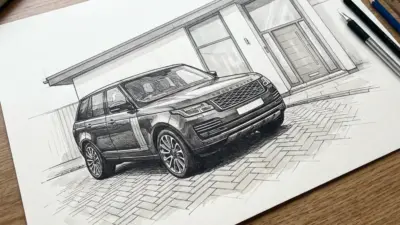

Drawing cars can be a blast and a real confidence booster, even if you’re a complete newbie. People dont need to be artistic to draw a decent car – you just need to know some simple tricks of the trade. With a few basic shapes and a bit of swag with your lines, you can conjure up a pretty realistic car drawing. And the more you practice, the better you’ll get – you’ll be churning out impressive artwork in no time.
This article is here to walk you through the process of drawing cars, step by step, and dish out some handy tips along the way. Whether you’re a traditional pencil and paper kind of person or you’re all about digital tools, we’ve got you covered. From deconstructing a car into its basic shapes to adding in the little details, this guide is all about making the learning process as smooth as possible.
What is the easiest way to draw a car for beginners?
The easiest way to draw a car is by starting with basic shapes, then refining details gradually instead of drawing everything at once.
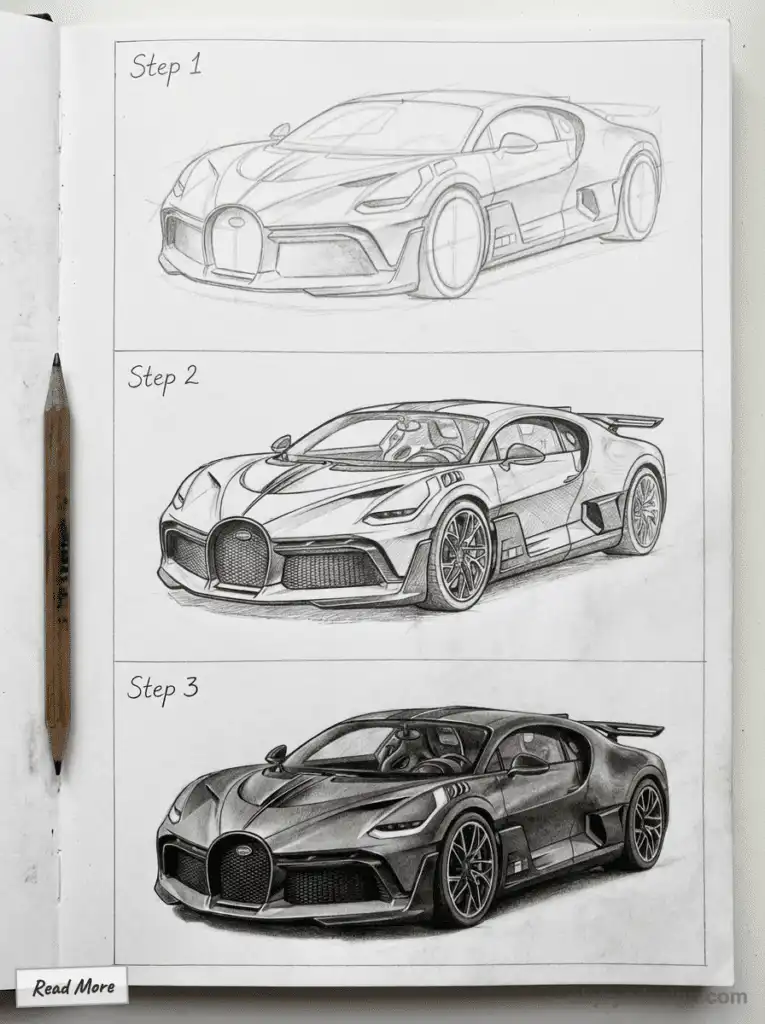
The biggest mistake beginners make is jumping straight into details. Cars look complex, but they’re built from simple forms. Once you understand this, drawing cars becomes much less intimidating.
So get ready to dive in and unleash your inner artist. Each section of this guide is designed to give you the lowdown and the know-how you need to draw cars like a pro – no matter how much experience you already have.
Key Takeaways
- Basic shapes form the foundation of car drawings.
- Step-by-step instructions simplify the drawing process.
- Digital tools can enhance traditional drawing skills.
Understanding the Basics


Drawing cars can be fun and rewarding. To start, understanding specific skills and techniques is important. This section covers perspective and choosing subjects, both key to drawing cars effectively.
The Importance of Perspective
Perspective plays a big role in how a car looks in a drawing. When drawing a car, he or she needs to choose the right angle, like the side view or a 360° image. This choice helps create the illusion of depth and movement.


A side view is simple and very popular. It shows the car’s basic shape and design. Using reference images, like stock photos or vectors, can help artists see details better. For more dynamic drawings, incorporating different angles can make the car appear to be in motion.
Choosing Your Subject
Choosing the right subject is crucial for a successful drawing. Artists can select from various types of cars. A racing car may require different techniques than a family sedan.


When selecting a subject, consider what inspires her or him. They might enjoy sketching classic cars or modern sports models. Picking a subject that excites the artist leads to better results. It’s helpful to gather references, like stock photos. These can provide useful details on shapes, colors, and features.
Getting Started with Car Drawings
To begin drawing cars, it’s important to prepare with the right materials and a suitable space. This helps to make the drawing process smoother and more enjoyable.
Gathering Materials
Having the right materials is essential for drawing cars easily. Here are some items one might need:
- Pencils: Get a range of pencils. Softer pencils like 2B or 4B are great for shading.
- Paper: Use smooth paper that can handle pencil and eraser well.
- Erasers: A good eraser will help to fix mistakes cleanly.
- Ruler: A ruler is useful for drawing straight lines.
- Reference Images: Collect pictures of different cars to use as guides.
These materials will help in creating clear shapes and details. Choosing quality items can improve the drawing experience.
Setting Up Your Drawing Space
Creating a comfortable workspace makes drawing easier. Here are some tips for setting up a good area:
- Lighting: Make sure there’s sufficient light. Natural light or bright lamps help see details better.
- Table or Desk: Use a sturdy table that has enough space for all materials.
- Chair: A comfortable chair will help avoid fatigue during long drawing sessions.
- Clean Surface: Keep the area tidy. A clear space helps focus on drawing without distractions.
Arranging these elements thoughtfully creates an inviting environment. This setup enhances concentration and creativity while drawing cars.
Step-By-Step Drawing Tutorial


This tutorial will guide readers through four main steps in drawing a car. It will cover the basic shape, adding details, shading techniques, and refining the drawing for a polished look.
Sketching the Basic Shape
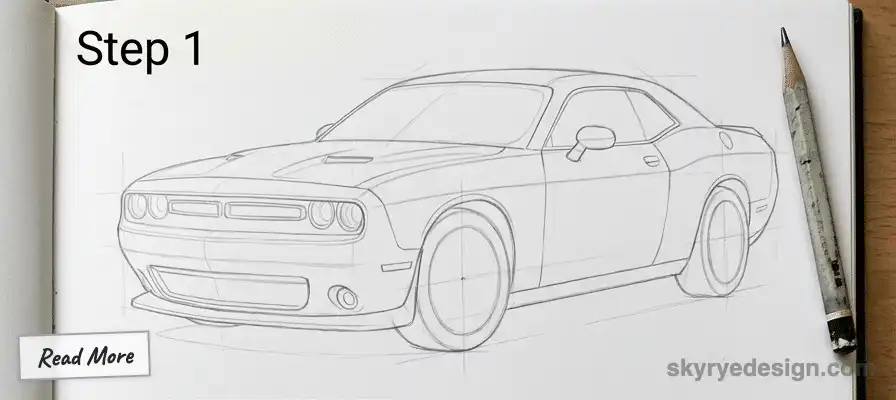
Start by lightly sketching the outline of the car. Use simple geometric shapes, like rectangles and circles, to represent different parts. The main body can be a large rectangle. Add two circles for the wheels at the bottom.
Next, outline the roof. It can be a smaller rectangle or a curved shape depending on the car design. Keep the lines light so they can be easily erased later. This step lays the groundwork for the rest of the drawing.
Make sure to consider the car’s proportion. Car dimensions can vary, so take time here to adjust the shapes as needed. A well-proportioned basic shape will make the details easier to add later on.


Adding Details and Features
Once the basic shape is ready, start adding details. Focus on the front and back of the car first. Draw the headlights and taillights as small circles or rectangles.
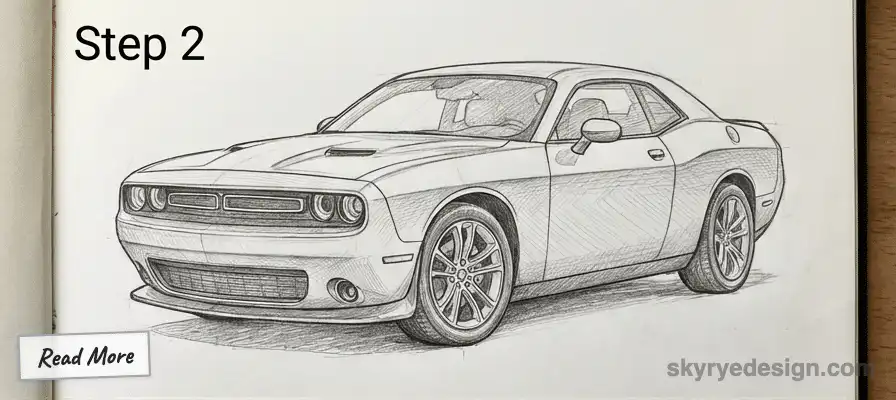
Next, add the windows. These can be drawn as rectangles or trapezoids, depending on the design. Include door handles and mirrors for realism.
Also, don’t forget the wheels. Add details like rims or treads. Make sure each feature matches the style of the car you are drawing. This careful attention creates a more lifelike representation.


Shading and Texturing Techniques
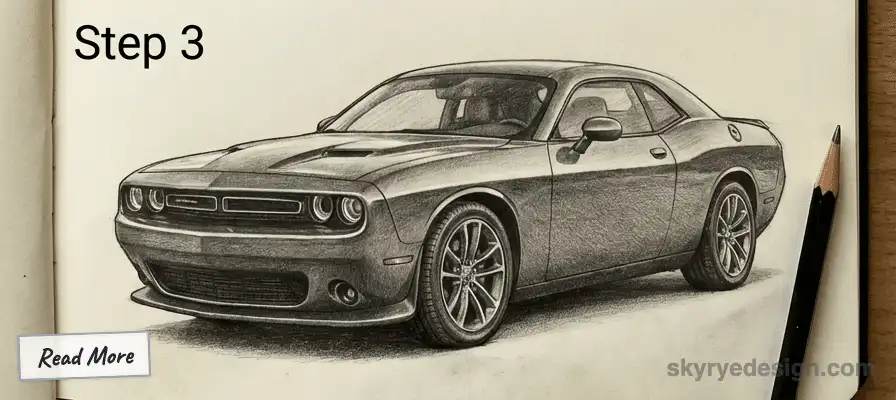
Shading gives depth to the drawing. Begin by deciding where the light source is coming from. Typically, the top left or right works well. Lightly shade areas away from the light source to create shadows.
Use diagonal lines or cross-hatching to mimic the texture of the car’s surface. Ensure that the shading is soft to avoid harsh lines.


For added realism, shade the wheels and the edges where surfaces meet. This technique enhances the three-dimensional look of the car. Use a blending tool or your finger to smooth out darker areas.
Refining Your Drawing
After shading, it’s time to refine the drawing. Go over the outlines with a darker pencil or a fine pen. This makes the drawing stand out and look finished.
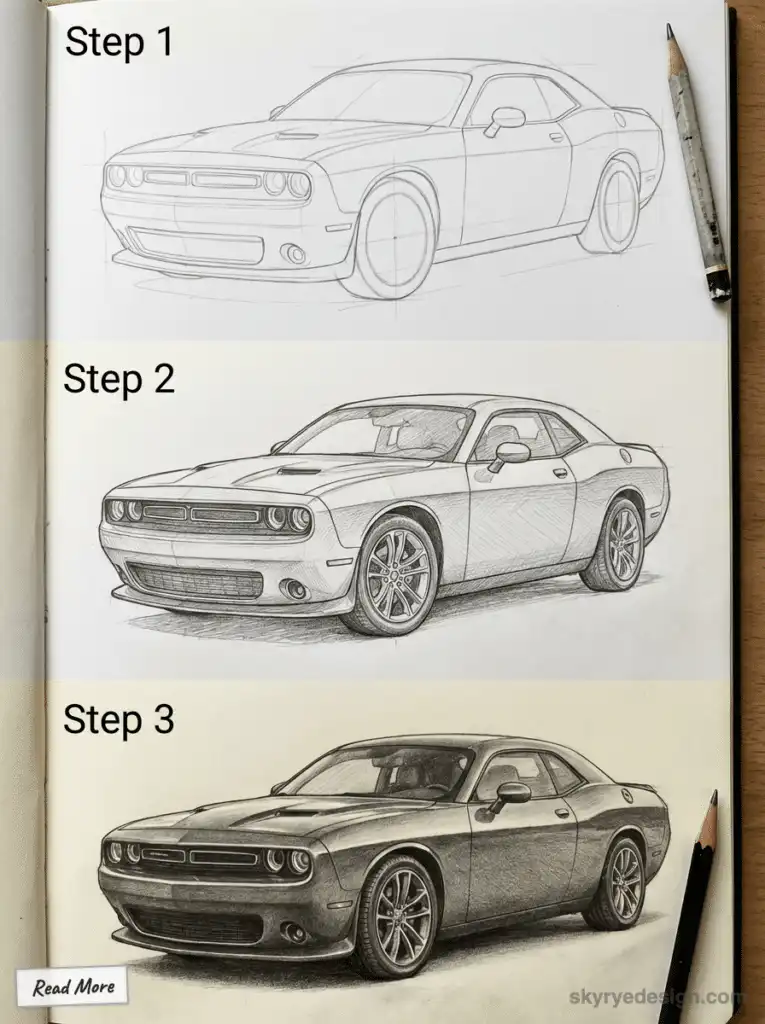
Look closely at each detail. Erase any unnecessary lines and clean up the edges. Adding small highlights, like shining spots on the windows, can bring life to the drawing.
Check the proportions again to ensure everything looks balanced. Refining the drawing will help in achieving a polished look. Spending time on this step is essential for a good final result.
How do you draw car wheels correctly?
Car wheels should be equal in size, aligned horizontally, and placed slightly inside the body outline.
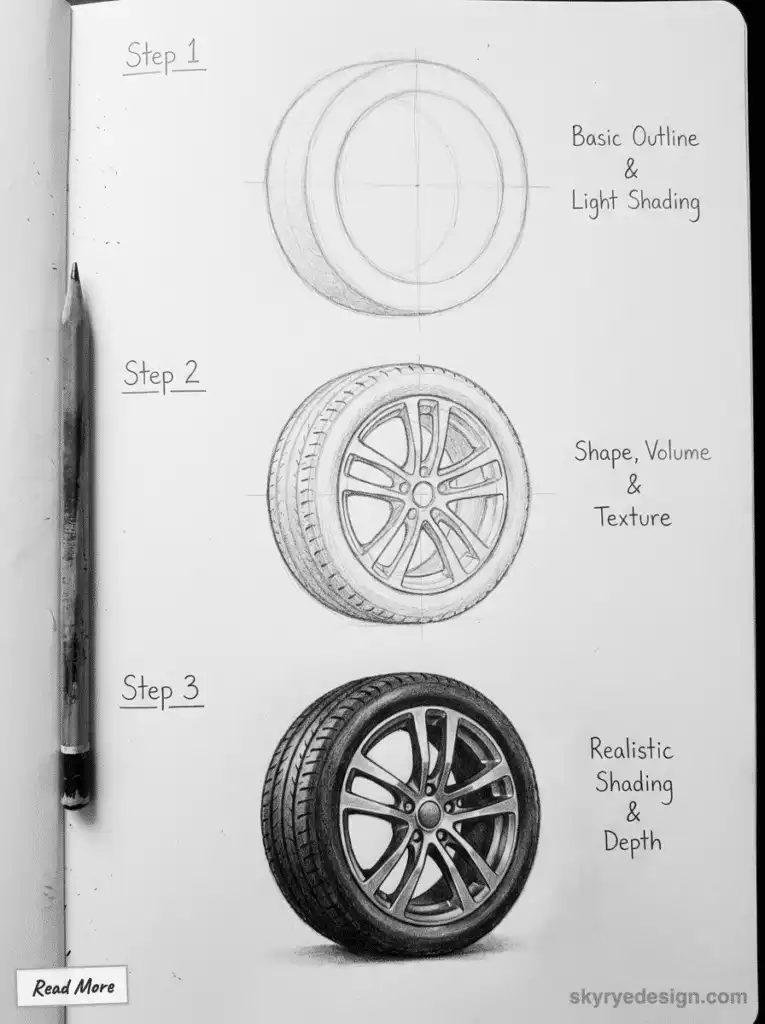
Wheels are the most common source of errors. To avoid mistakes:
- Keep both wheels the same size
- Align them on the same horizontal axis
- Avoid placing wheels too close to the edges
Enhancing Your Artistic Skills


Improving artistic skills takes practice and learning. By completing specific exercises and embracing mistakes, anyone can become a better artist. These methods build confidence and help develop unique styles.
Practice Exercises
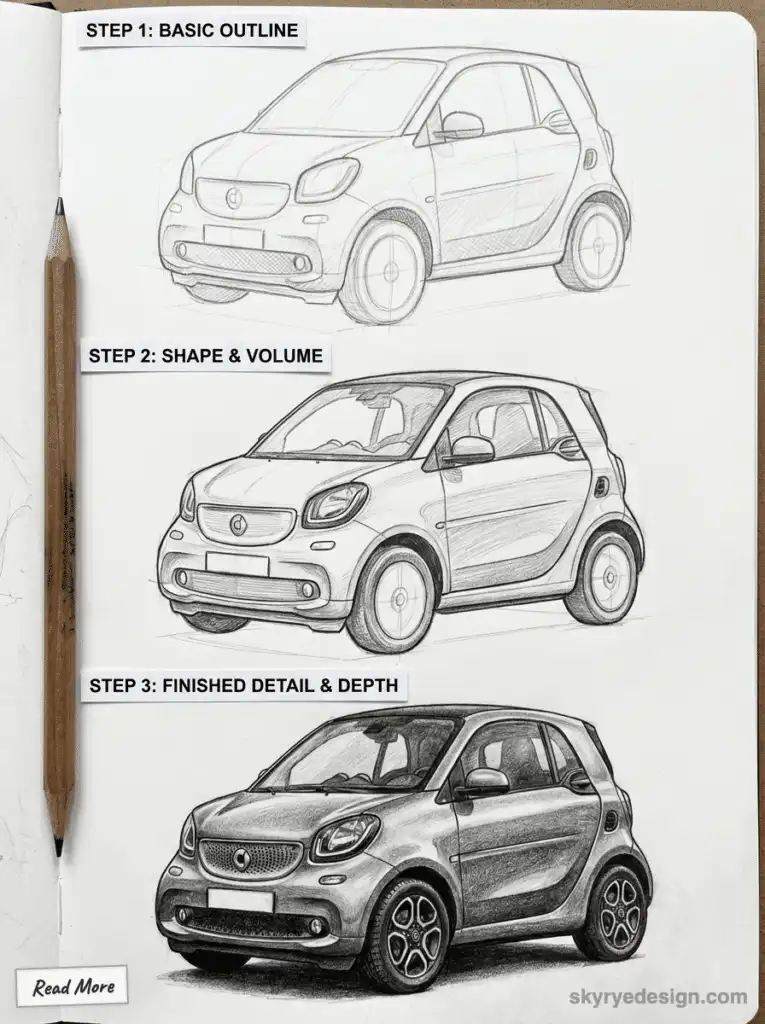
Regular practice is essential for growth. Here are some exercises that can help:
- Sketch Daily: Spend 10-15 minutes sketching cars or other objects. This builds muscle memory and improves drawing speed.
- Use References: Look at photos or real cars. Try to replicate them. This helps with proportions and details.
- Experiment with Styles: Try different ways to draw. Use cartoon styles, realistic techniques, or abstract forms. This encourages creativity.
Tracking progress can be motivating. Keeping a sketchbook allows artists to see their improvements over time.
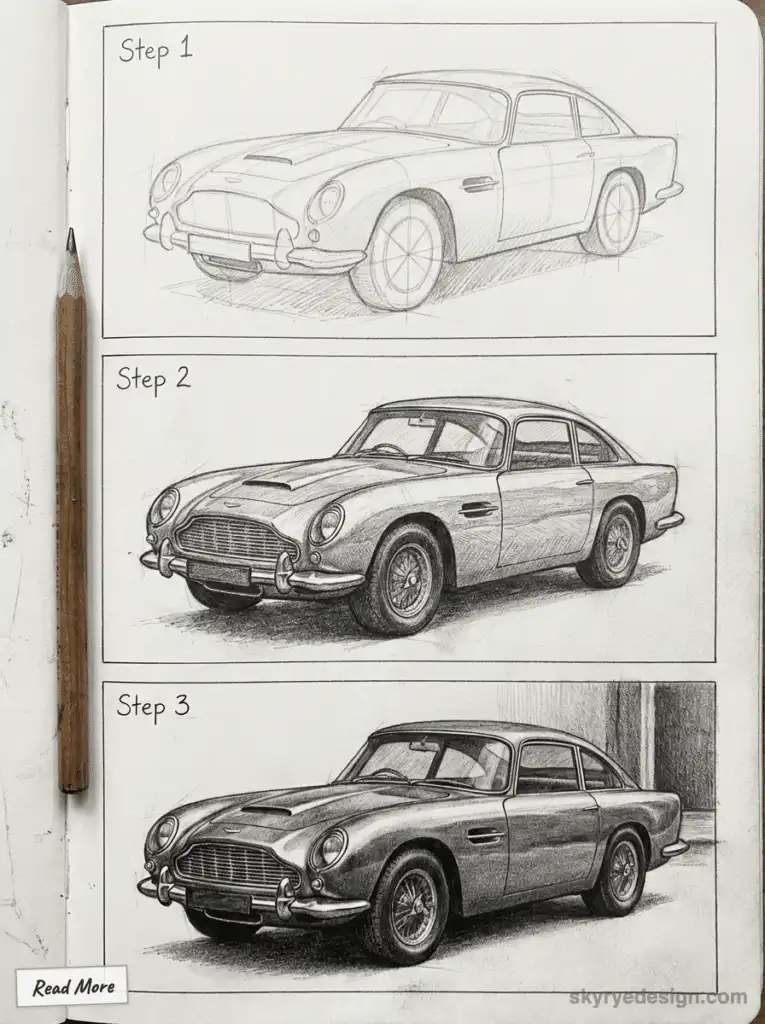
Learning from Mistakes
Mistakes are part of the learning process. Here’s how to benefit from them:
- Analyze Errors: When a drawing doesn’t turn out as expected, identify what went wrong. Was it the shape or shading?
- Ask for Feedback: Sharing work with others can provide new perspectives. Others might see issues that aren’t obvious.
- Iterate on Ideas: Use mistakes as a starting point. Modify a failed drawing into something new.
By viewing mistakes as learning opportunities, artists can grow and develop their skills further. Embracing this mindset is vital for progress.
How do you add depth and shading to a car drawing?
Add light shading under the car, darker tones on one side, and highlights to suggest form and depth.
Shading tips:
- Choose one light source
- Shade the underside and wheel wells
- Keep highlights clean on the roof and hood
- Use light pressure—cars have smooth surfaces
Avoid heavy shading early; subtle tones look more realistic.
Digital Drawing and Editing


Digital drawing offers many tools and possibilities for creating stunning car drawings. With the right software and techniques, artists can enhance and refine their work more easily than with traditional methods.
Digital Tools Overview
Digital tools make it simple to create and modify car drawings. Software like Adobe Illustrator and Procreate are popular choices. These programs allow users to work with layers, which helps separate different elements of a drawing.
Vectors are a key feature in many drawing applications. They allow for crisp lines and easy resizing without losing quality. Artists can also explore various brushes and textures, giving their car drawings a unique look.


Stylus pens greatly improve control and precision. Using a stylus on a tablet can mimic the feeling of drawing on paper. These tools help artists fine-tune details and add depth to their work.
Editing Your Car Drawings
Editing is an important part of completing car drawings. Once a base drawing is complete, artists can adjust colors, lines, and shapes. Digital tools offer features like undo and redo, making it easy to correct mistakes.
Selecting specific areas of a drawing is simple with digital tools. Artists can change colors or add effects to certain parts without affecting the whole image. This flexibility allows for creativity, ensuring that each drawing can be customized.
In addition, filters and effects can enhance car drawing easy. Artists can add shadows, highlights, or backgrounds to improve the overall look. Experimenting with different styles can help artists find their unique voice in digital art.
Showcasing and Sharing Your Work
Sharing art helps artists connect with others and gain feedback. It also allows them to showcase their skills. Two effective ways to share car drawings are through social media platforms and by building a portfolio.
Using Social Media
Social media is a great tool for sharing car drawings. Platforms like Instagram and Facebook allow artists to post their work and reach a broad audience.
To make posts engaging, artists can:
- Share step-by-step videos showing the drawing process.
- Use hashtags to reach more viewers, such as #CarArt or #DrawingTutorial.
- Interact with followers by responding to comments and questions.
Artists should also follow others in the art community. This builds connections and can inspire new ideas.
Building a Portfolio


A portfolio is essential for showing off art skills. It helps to gather images of the best work in one place. A good portfolio can be physical or online.
For an online portfolio:
- Use platforms like Behance or a personal website.
- Organize work by categories, such as types of cars or drawing styles.
- Include brief descriptions with each piece to give context.
Physical portfolios can be created with high-quality prints of the artwork. This is useful for in-person interviews or art shows. Both types of portfolios highlight the artist’s unique style and expertise.
How long does it take to learn how to draw a car?
Most beginners can draw a recognizable car within a few hours and improve noticeably within one to two weeks.
Skill growth depends on:
- Frequency of practice
- Studying real car references
- Repeating simple drawings, not complex ones
Progress comes faster than most expect.
Final Thoughts: Is drawing cars easy to learn?
You don’t need talent—just a method. Start simple, draw often, and let improvement happen naturally.
- 716shares
- Facebook0
- Pinterest716
- Twitter0
- Reddit0