
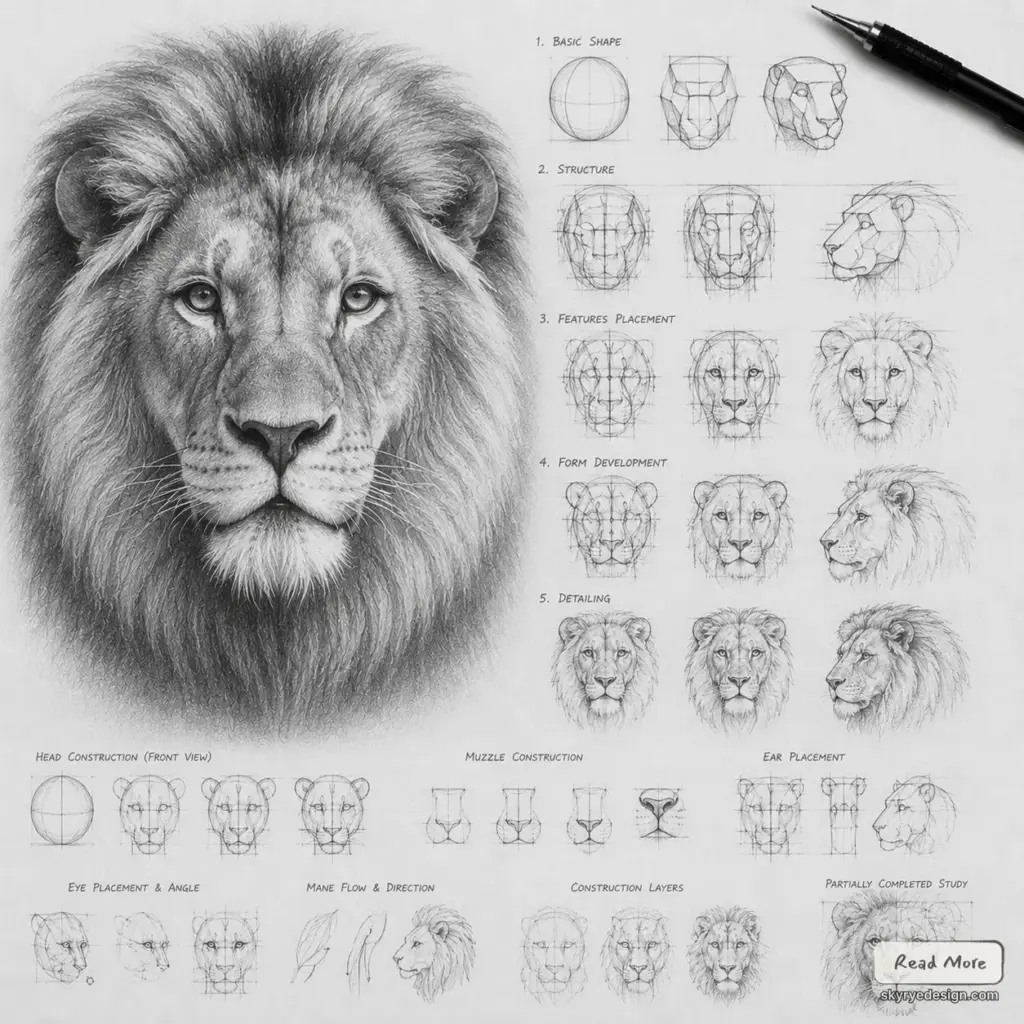
This lion face drawing tutorial is built around one idea: get the structure right before you chase fur detail. A lion portrait can look complicated because of the mane, but the face itself is a set of simple landmarks: center line, eye line, nose, muzzle pads, ears, and shadow shapes.
Use a light HB pencil for the first pass. Keep the construction loose enough to erase. Once the eyes, nose, and muzzle sit in the right place, you can switch to softer graphite for the mane and darker shadows.
- How to draw a lion face step by step
- Gather your supplies
- Sketch the lion face proportions
- Place the eyes and brow shadow
- Draw the nose, muzzle, and mouth
- Refine the ears and cheek shape
- Build the mane in directional clumps
- Add shading, fur texture, and whiskers
- Common lion face drawing mistakes
- Lion face drawing examples
- Frequently asked questions
- References
How to draw a lion face step by step
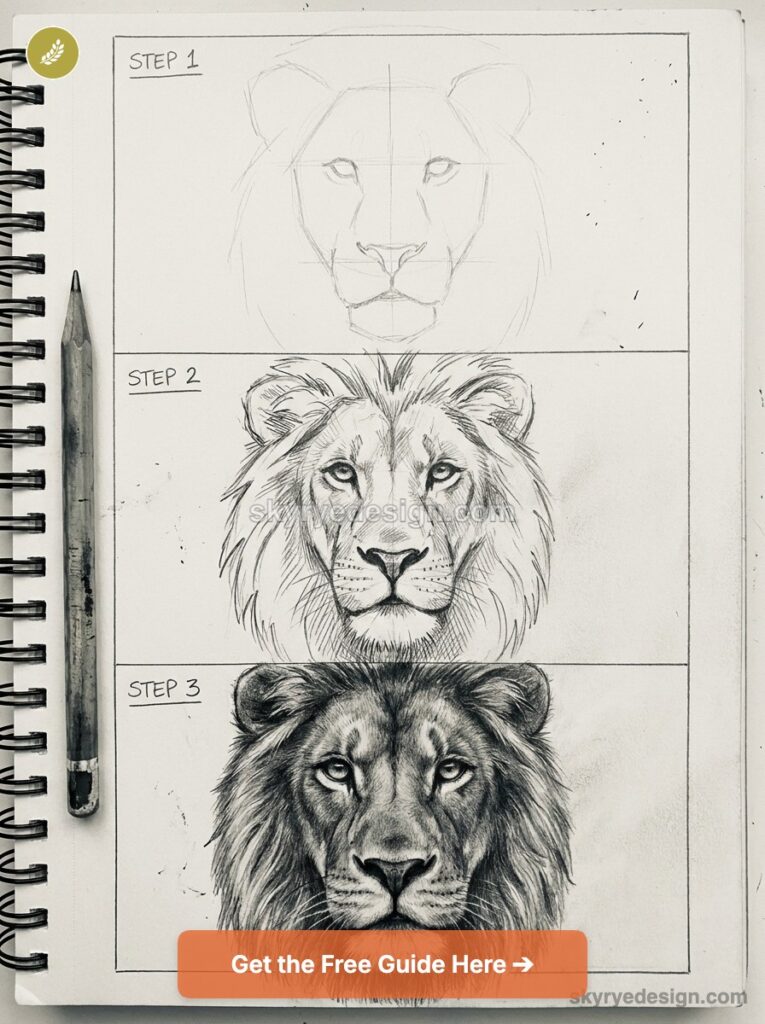
Here is the short version before the detailed steps: block the head with a circle and center line, place the eyes on a horizontal guide, build the nose and muzzle from rounded shapes, add ears, then draw the mane in directional clumps. Save whiskers and the darkest shading for the end.
| Stage | What to draw | Main mistake to avoid |
|---|---|---|
| Construction | Center line, eye line, head circle, cheek mass | Pressing too hard too early |
| Features | Eyes, nose, muzzle pads, mouth curve | Making both eyes stare in different directions |
| Fur | Mane clumps, cheek fur, inner ear texture | Drawing the mane as one flat outline |
| Finish | Eye sockets, nostrils, mane shadows, whiskers | Adding whiskers before the shadows are done |

1000 Drawing Ideas for Artists
Get a free PDF packed with easy drawing ideas, anime prompts, character concepts, nature inspiration, and fantasy sketchbook challenges.
Download Free PDFGather your supplies
You do not need a large kit. Use an HB pencil for construction, a 2B for main lines, and a 4B or 6B for the deepest shadows. A kneaded eraser helps lift whiskers and pale fur strands. If you are still building control, warm up with a few beginner drawing exercises before starting the portrait.
- HB pencil for light guidelines
- 2B pencil for eyes, nose, and main fur direction
- 4B or 6B pencil for nostrils, brow shadows, and mane depth
- Kneaded eraser for construction cleanup and lifted whiskers
- Smooth sketch paper that can handle light layering
Sketch the lion face proportions
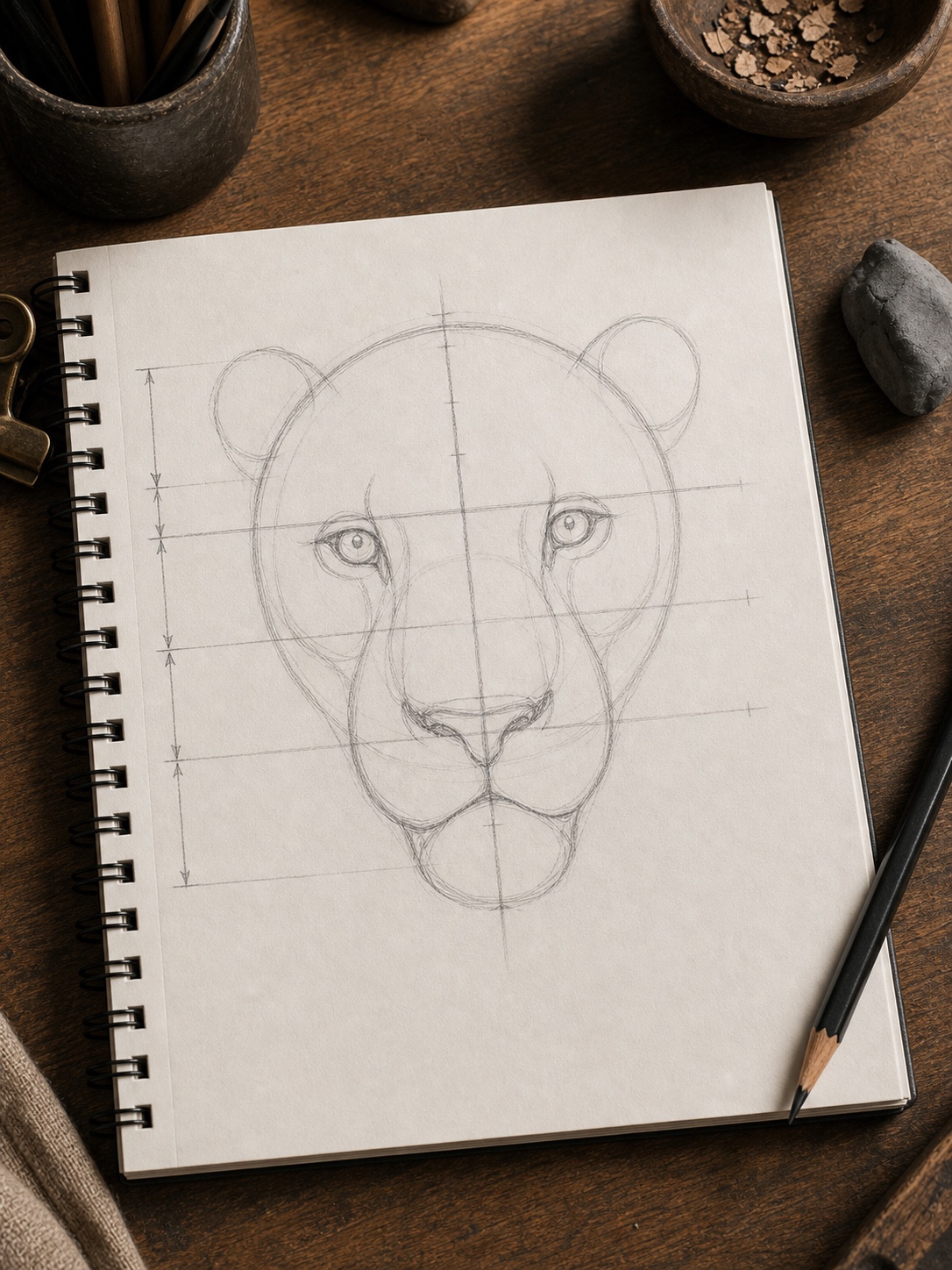
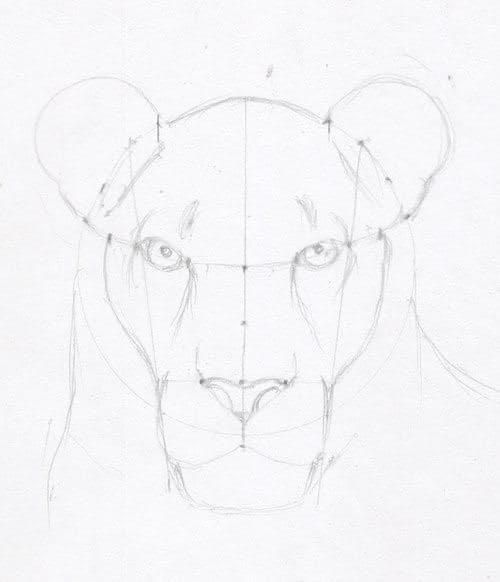
Draw a vertical center line first, then add a horizontal eye line across the upper half of the head. Place the main head circle lightly and add cheek shapes below it. I usually treat this stage like a map; if the map is wrong, the shading will only make the mistake darker.
Keep the muzzle area lower than you might expect. Beginners often push the nose too high, which makes the lion look more like a house cat. Leave enough room for the nose bridge, muzzle pads, mouth, and chin.
Place the eyes and brow shadow
For another focused facial-feature study, this falcon head and beak study shows how a small eye highlight and hooked beak change the whole expression.
Lion eyes are not just circles. Start with almond-shaped eyelids, then tuck the iris inside that shape. Darken the brow and the inner corner before you add tiny iris detail. That shadow is what gives the face weight and focus.
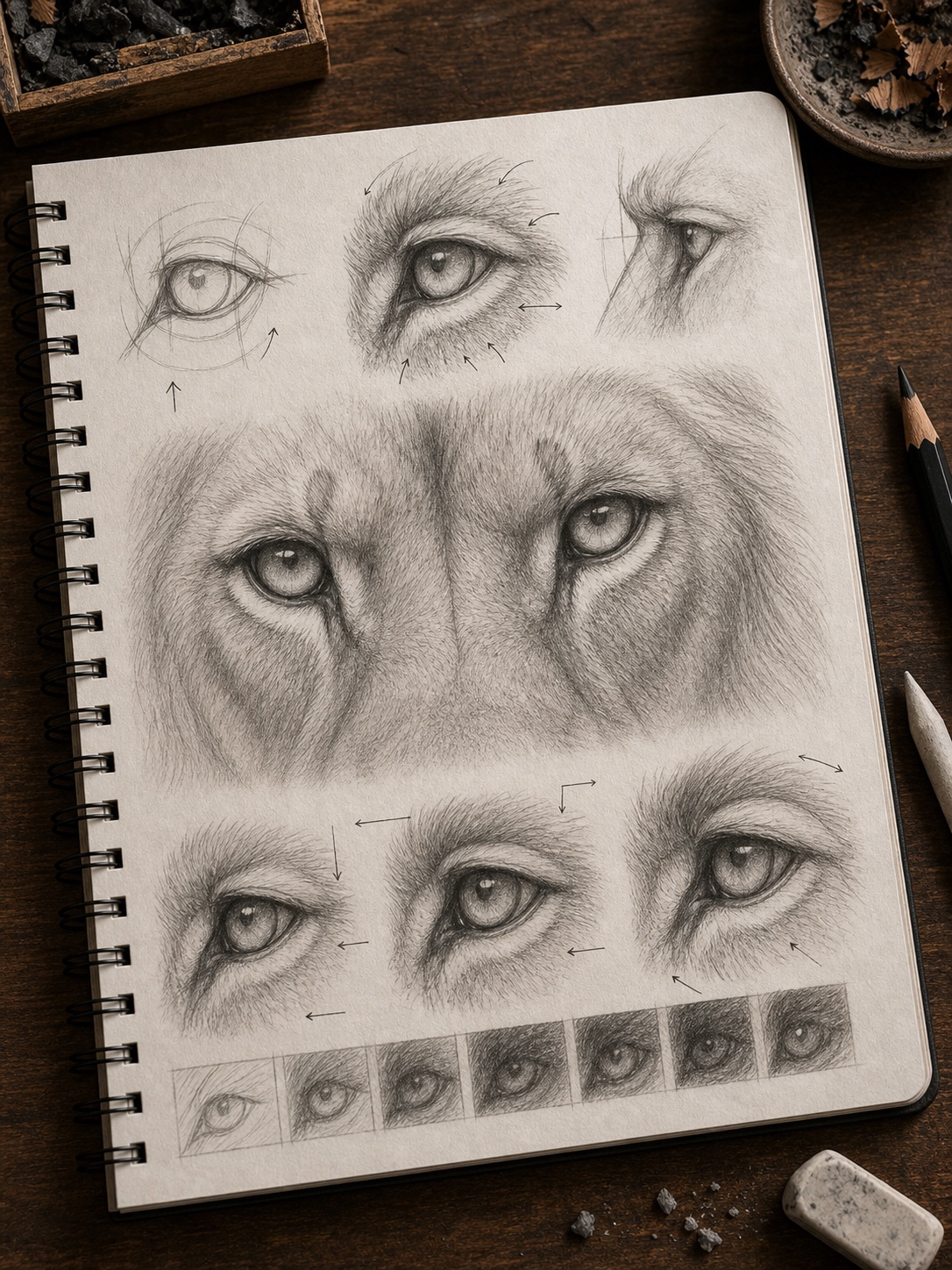
- Keep both eyes on the same guide line.
- Leave one small catchlight clean in each eye.
- Shade the brow ridge before adding fur texture.
- Use short strokes around the eye so the fur follows the form.
Draw the nose, muzzle, and mouth
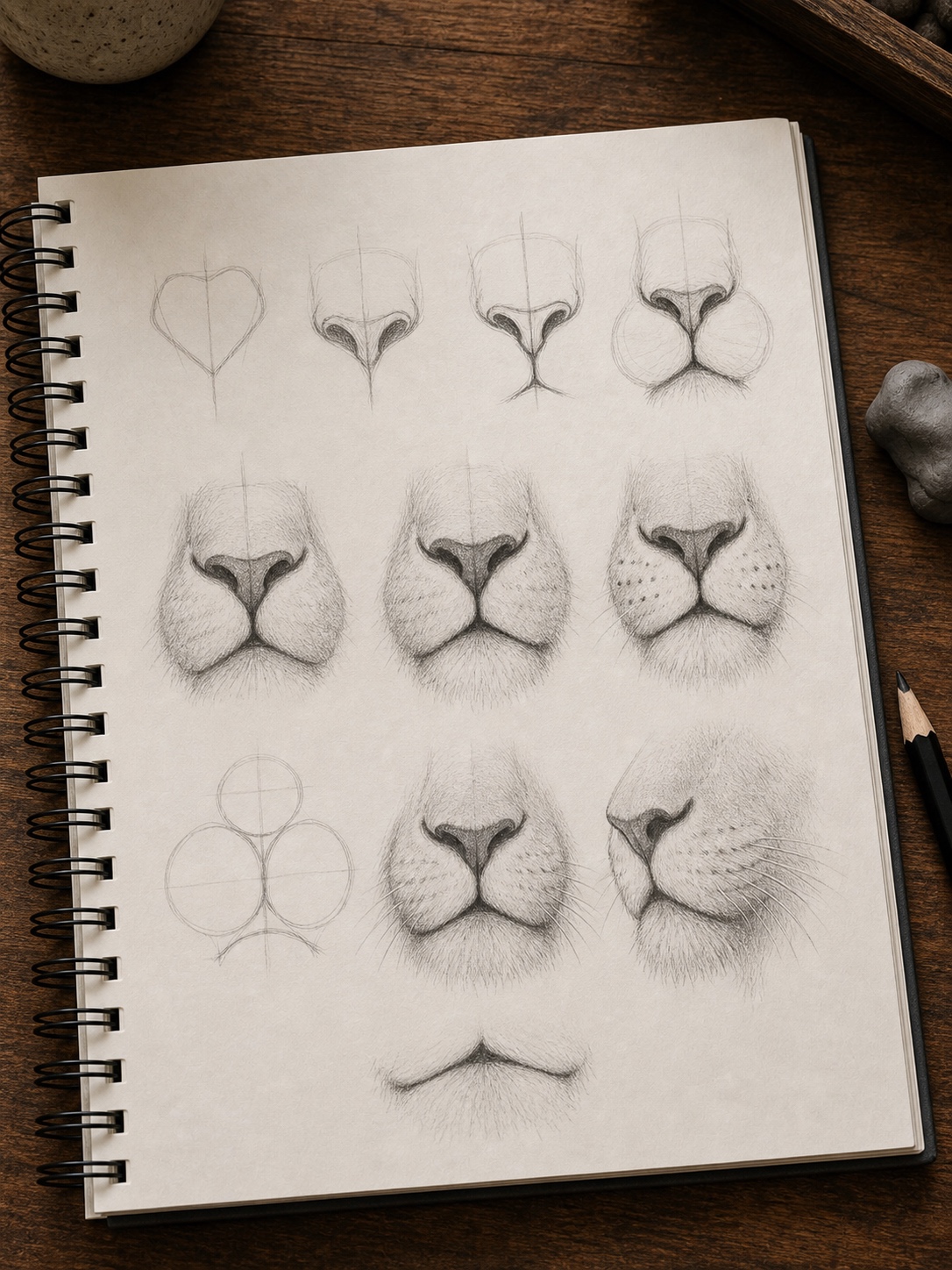
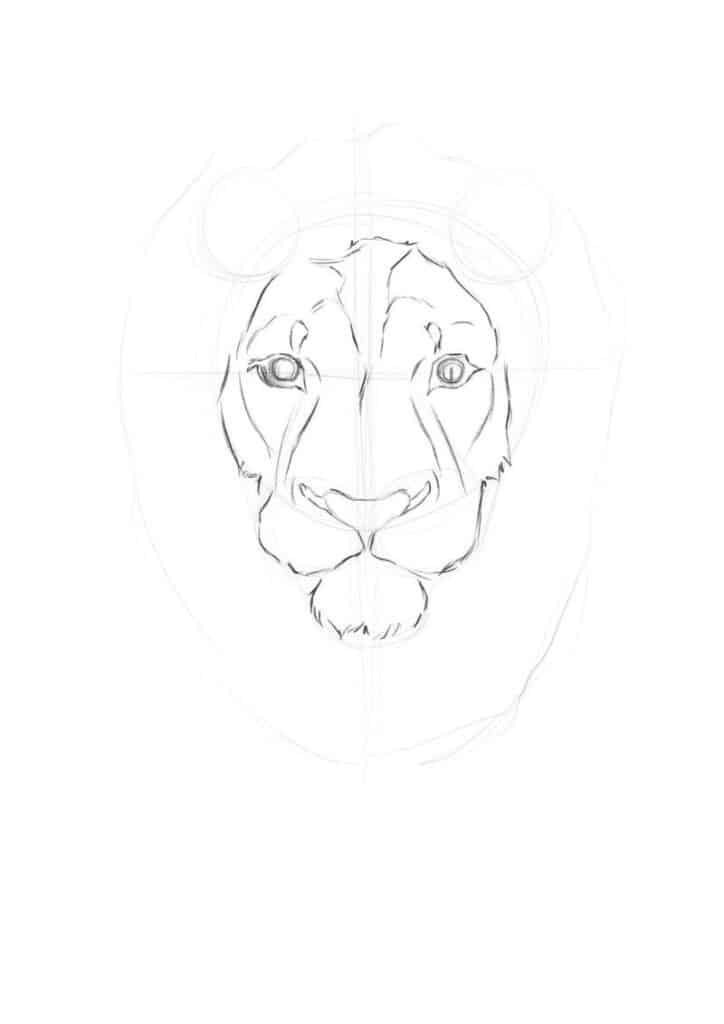
Block the nose as a soft heart or rounded triangle on the center line. Add the nostrils as dark wedge shapes, then pull a short Y-shaped bridge down toward the mouth. The muzzle pads sit like two rounded cushions under the nose.
Do not rush the mouth curve. A tiny angle change can make the lion look calm, tense, or cartoonish. Put the whisker dots in place before drawing long whiskers; the dots help you avoid random lines later.
Refine the ears and cheek shape
Place the ears as rounded triangles attached to the upper head mass. They should feel tucked into the mane, not pasted on top. Add the inner ear curve lightly and keep the base darker where the ear disappears into fur.
Check the cheek silhouette before adding mane texture. The face needs a clear plane change from brow to cheek to muzzle. If that transition is too soft, use a little more value under the cheekbone and beside the nose.
If realistic lion anatomy feels too heavy, switch to a cartoon lion drawing like Simba to study the same face shapes in a simpler style.
Build the mane in directional clumps
The mane is the easiest place to overdraw. Instead of outlining every hair, think in clumps that grow away from the face. Shorter strokes frame the forehead and cheeks; longer strokes fall around the sides and lower mane.
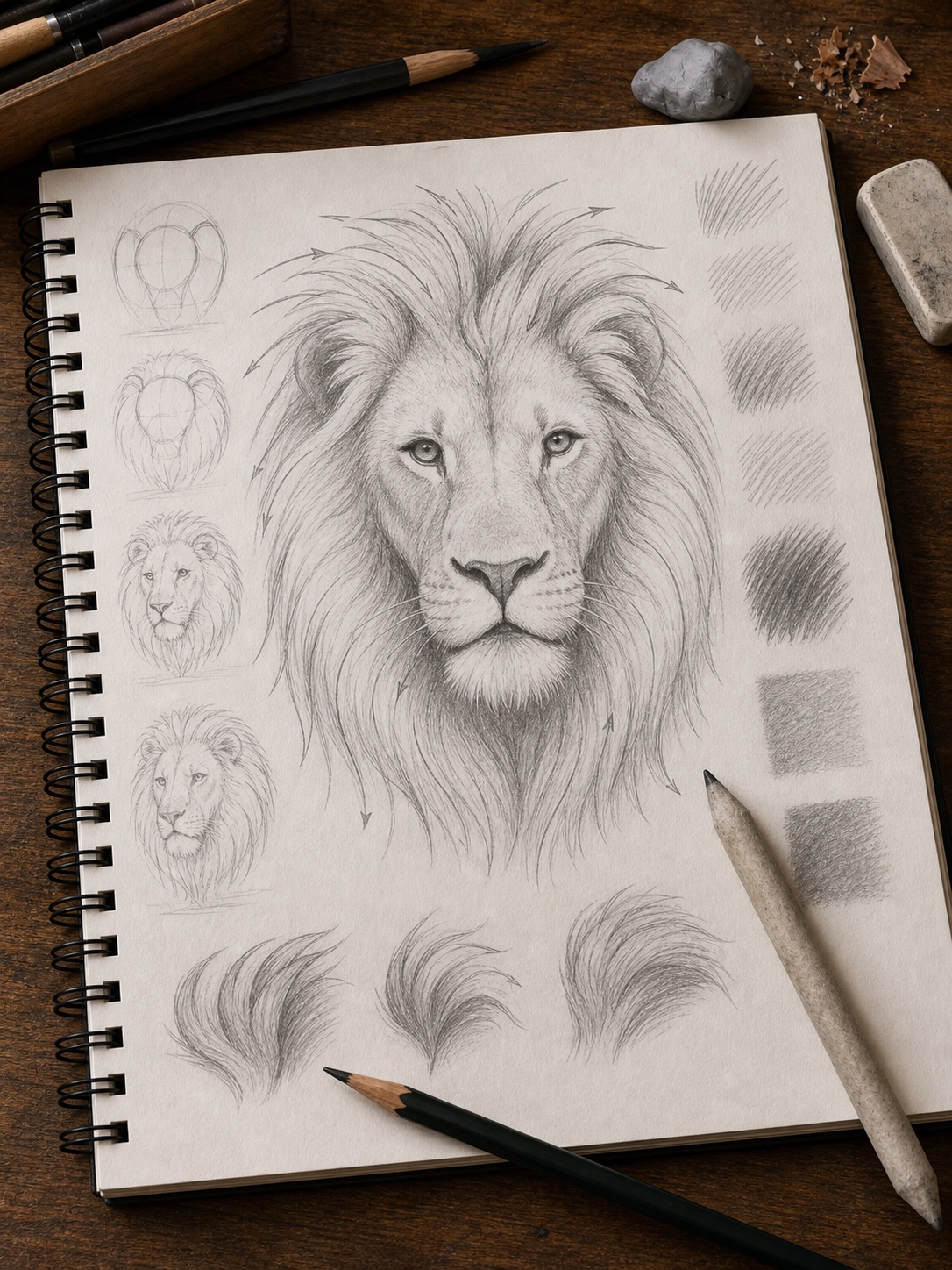
Vary the pressure as you draw. A few dark clumps make the light strands believable. If every strand has the same weight, the mane turns into a flat curtain. For more value control, pair this step with a quick shading techniques drill.
Add shading, fur texture, and whiskers
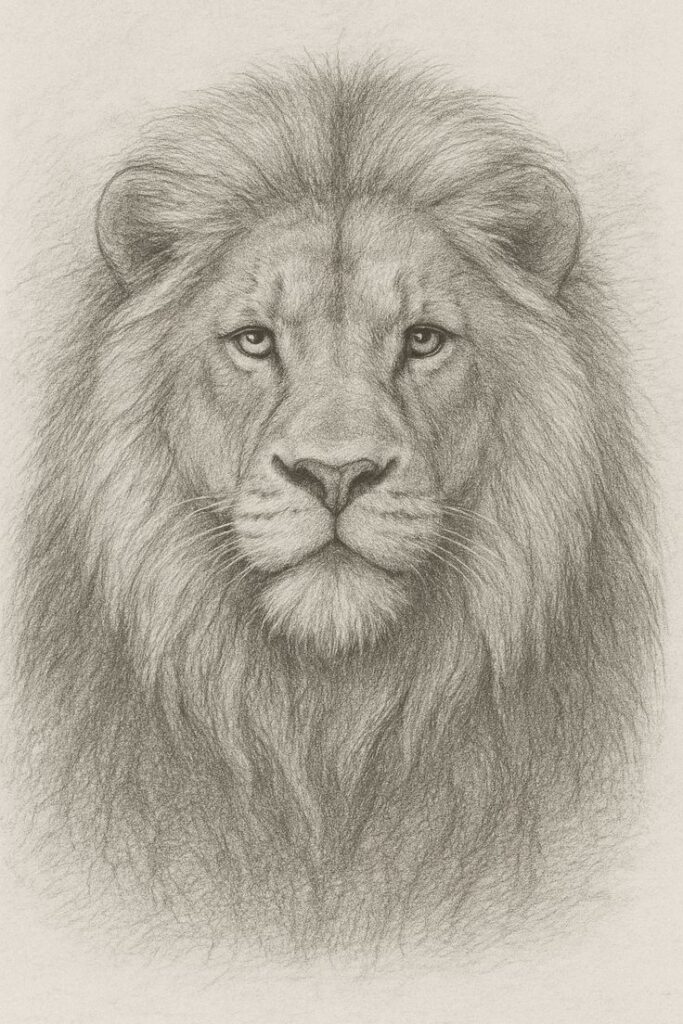
Shade the big forms before the texture: eye sockets, underside of the nose, lower muzzle, inner ears, and the deepest mane pockets. Then add fur strokes on top of those value shapes. This keeps the portrait from becoming a field of identical lines.
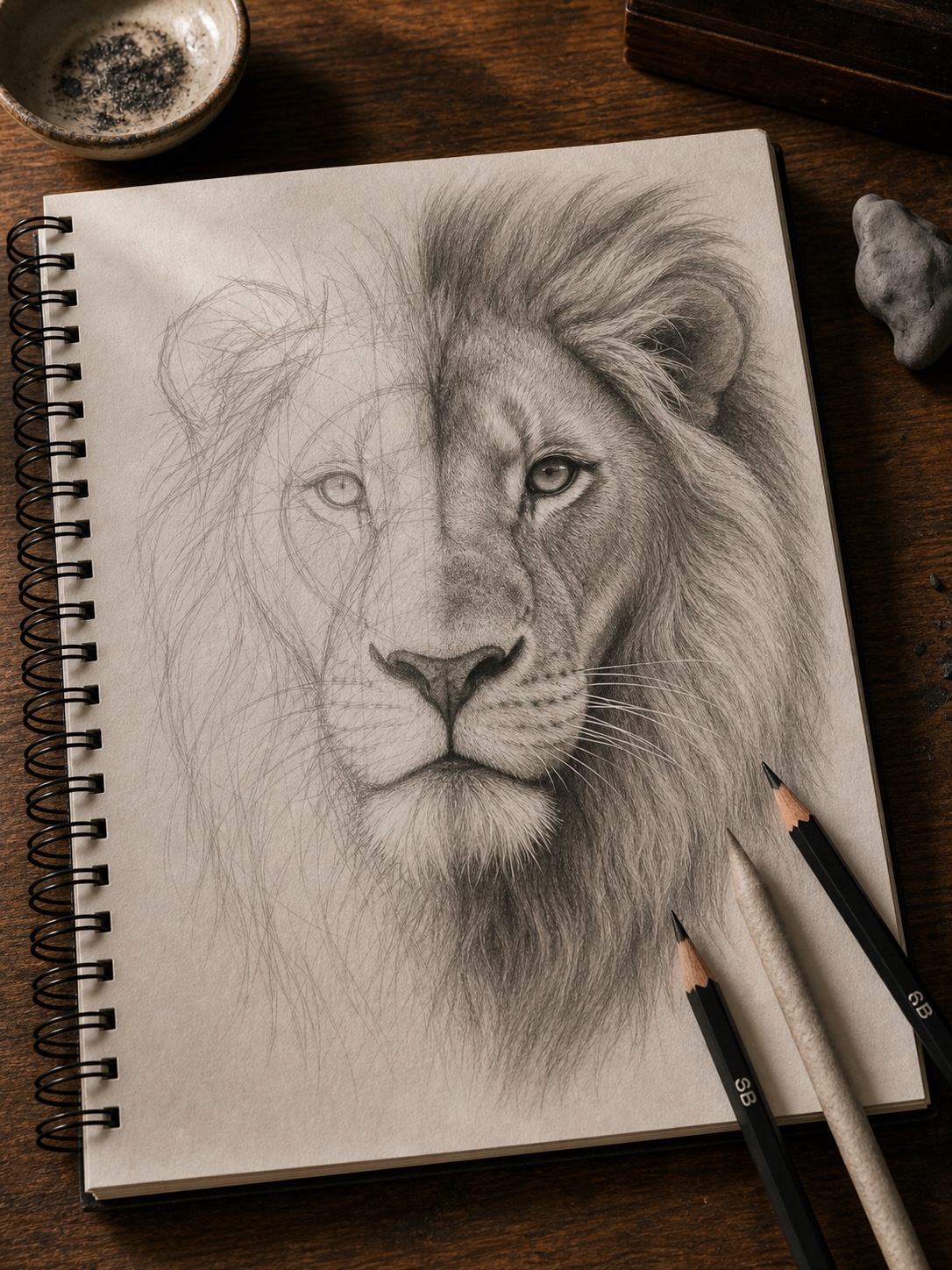
Save whiskers until the end. Either lift them with a kneaded eraser or draw them with a sharp white pencil/gel pen if your paper can take it. Whiskers should vary in length and curve; perfectly parallel whiskers look stiff.
Common lion face drawing mistakes
| Mistake | Why it hurts the drawing | Quick fix |
|---|---|---|
| Nose too high | The face loses its lion-like muzzle mass | Lower the nose and give the muzzle pads more room |
| Round human-looking eyes | The expression feels cute instead of animal-like | Use almond lids and a heavier brow shadow |
| Flat mane outline | The head looks like a sticker | Break the mane into directional clumps |
| Whiskers drawn too early | They get buried under shading | Add or lift whiskers after the main values |
Lion face drawing examples
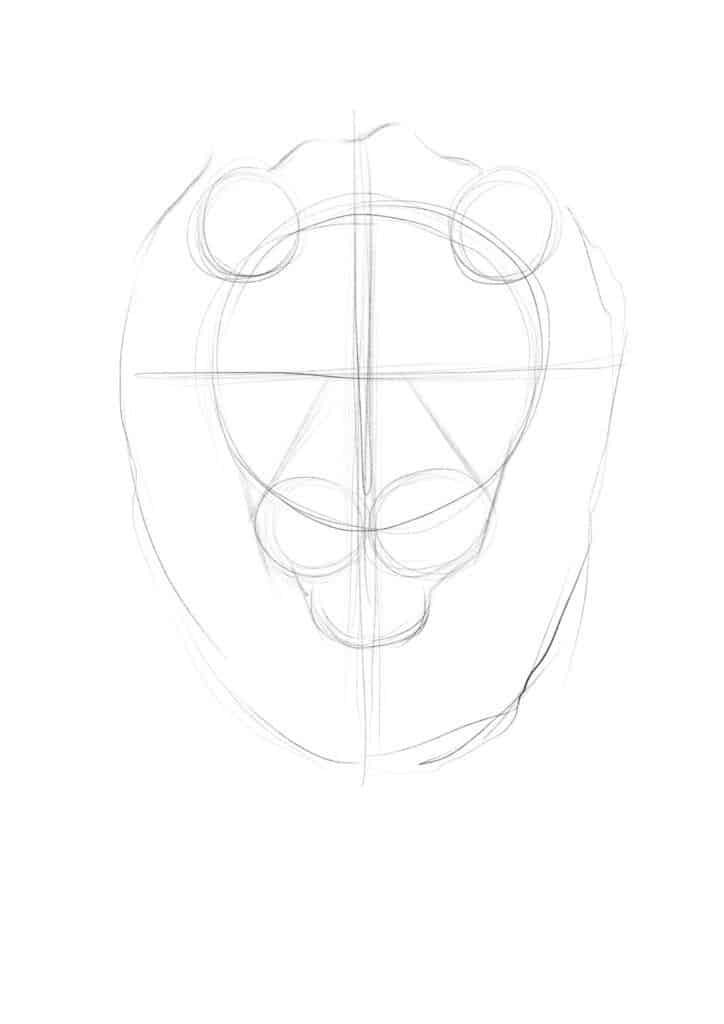
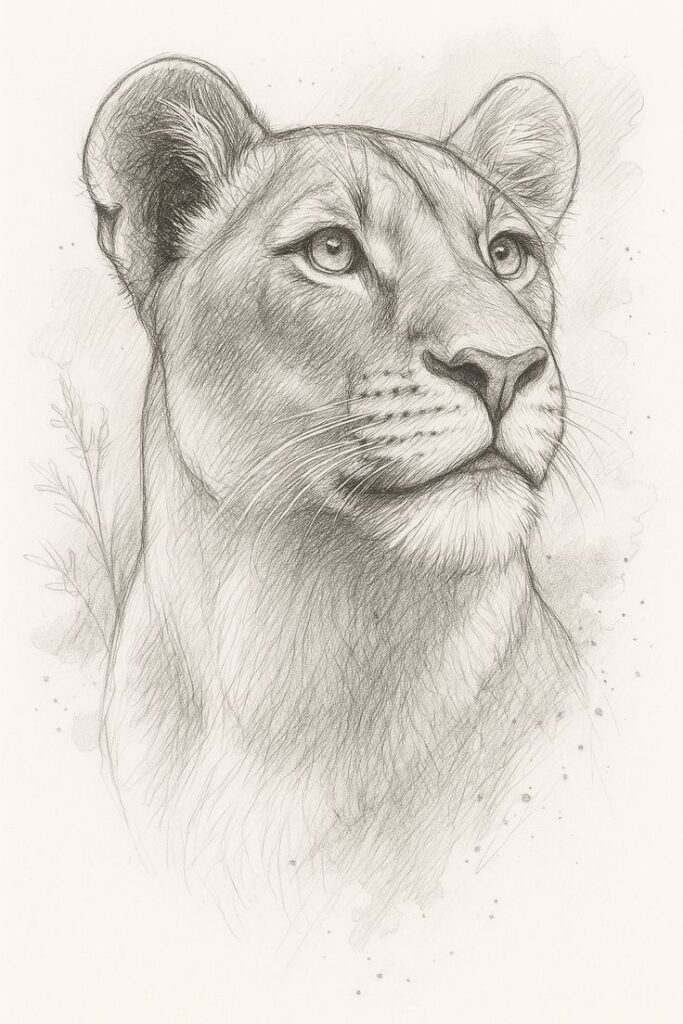
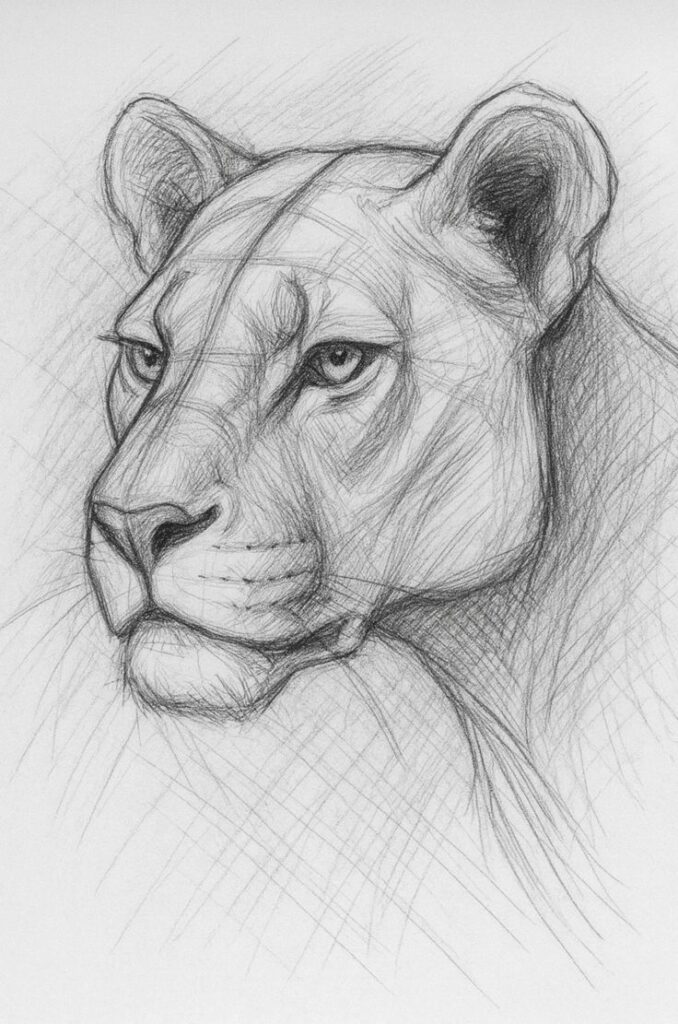
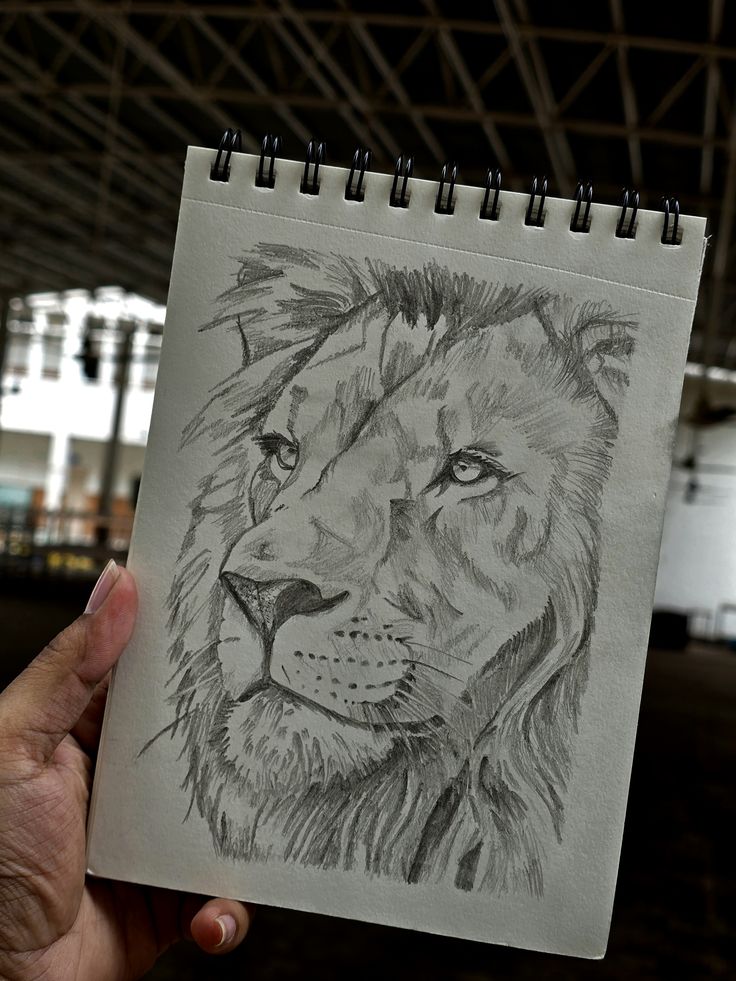
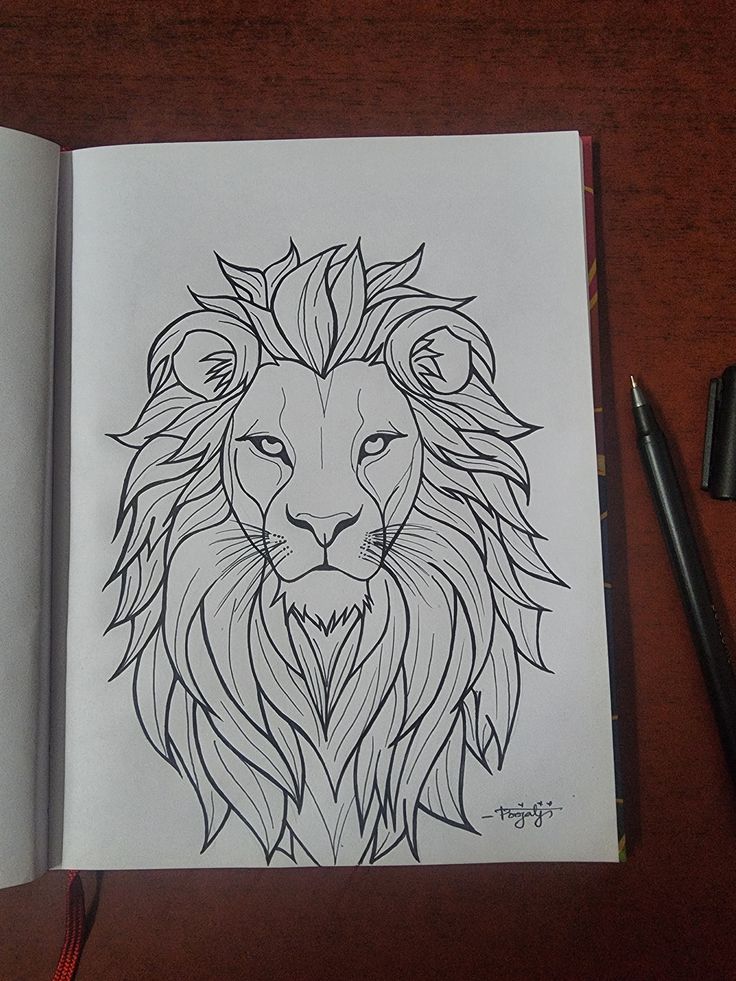
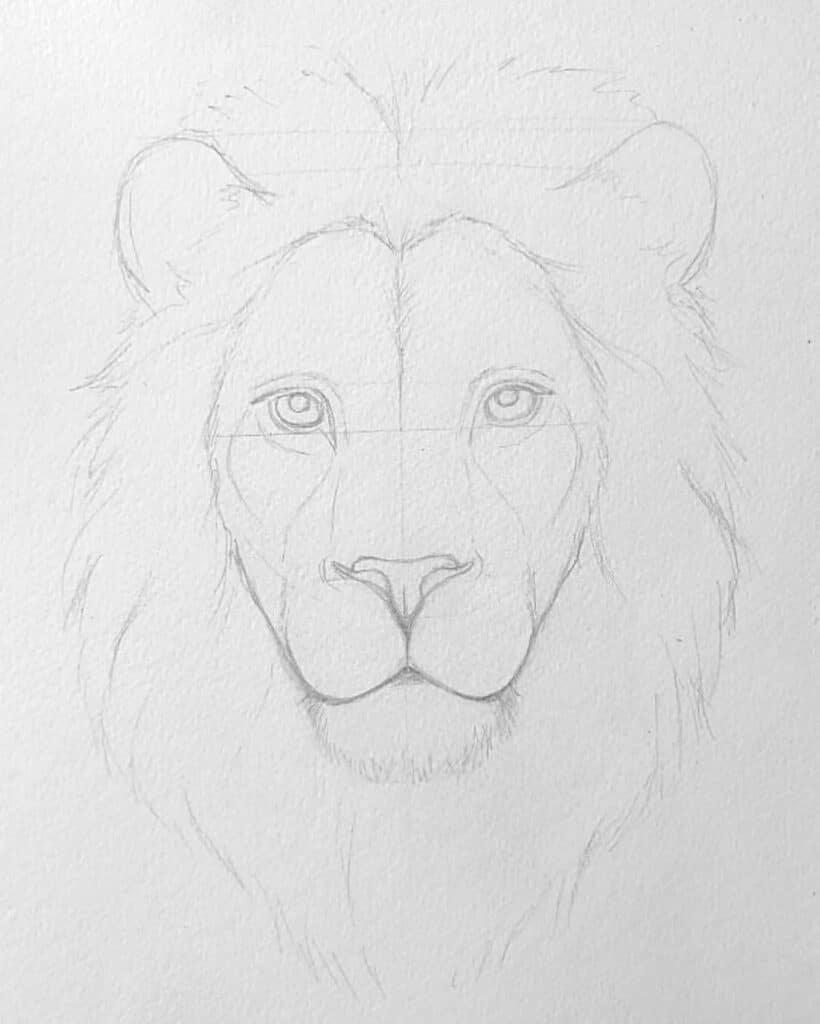
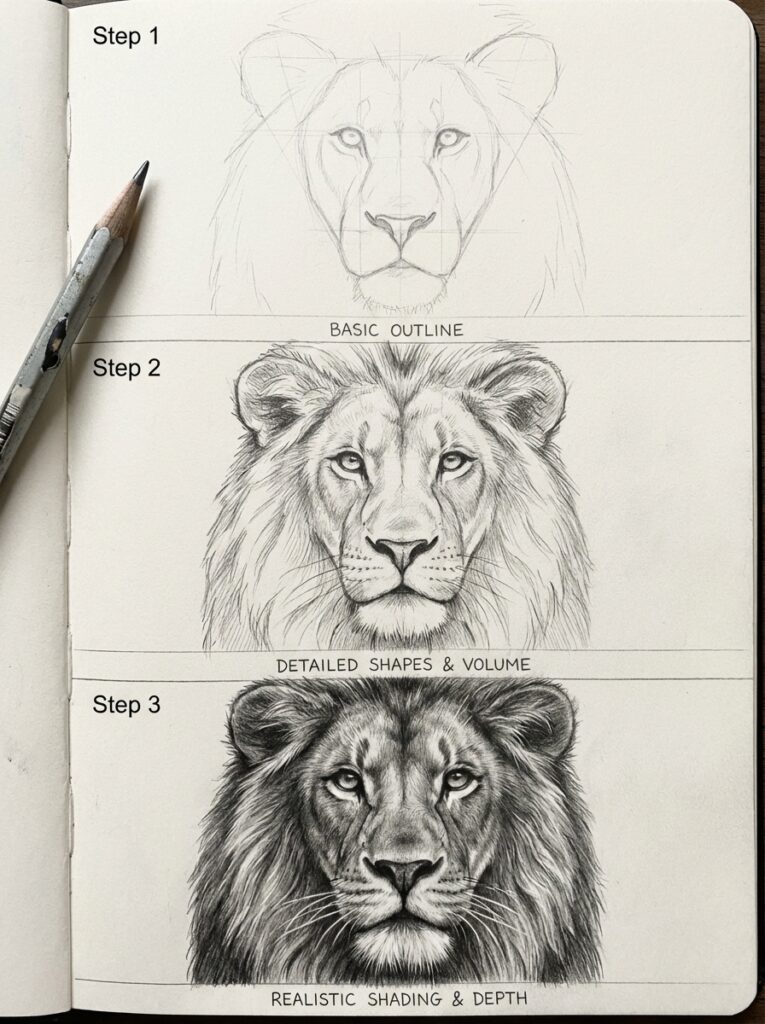
Use these older example sketches as reference for different finishes: loose construction, clean line drawing, and more rendered graphite portraits. Compare the eye placement, muzzle width, and mane direction instead of copying every hair.
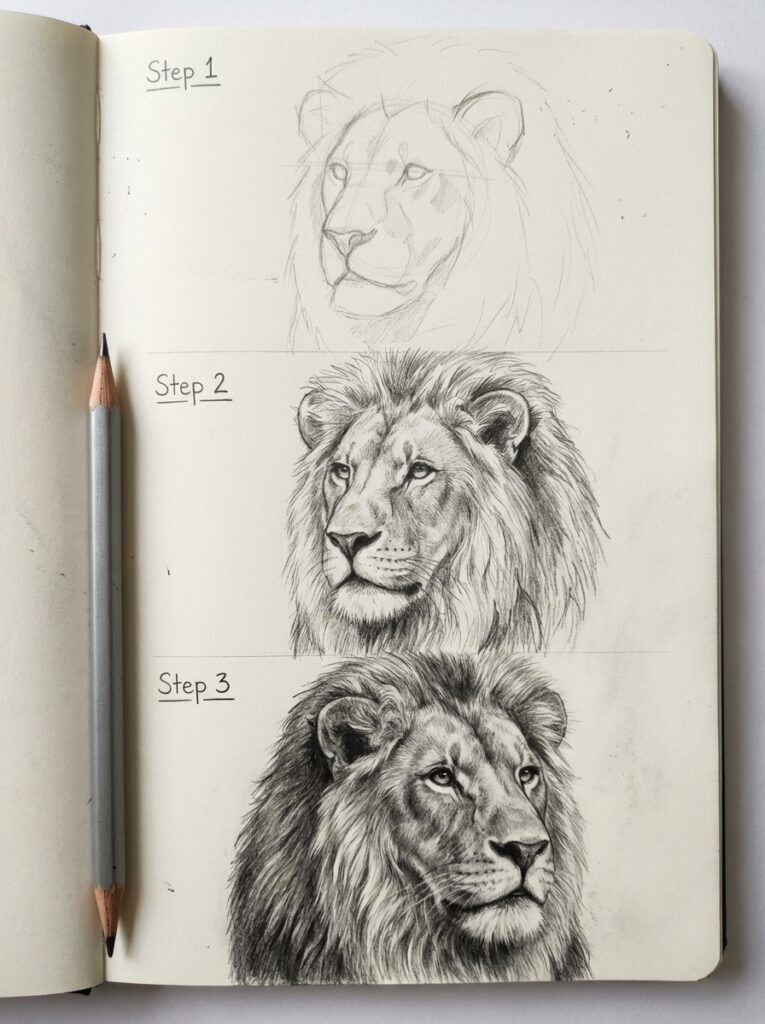
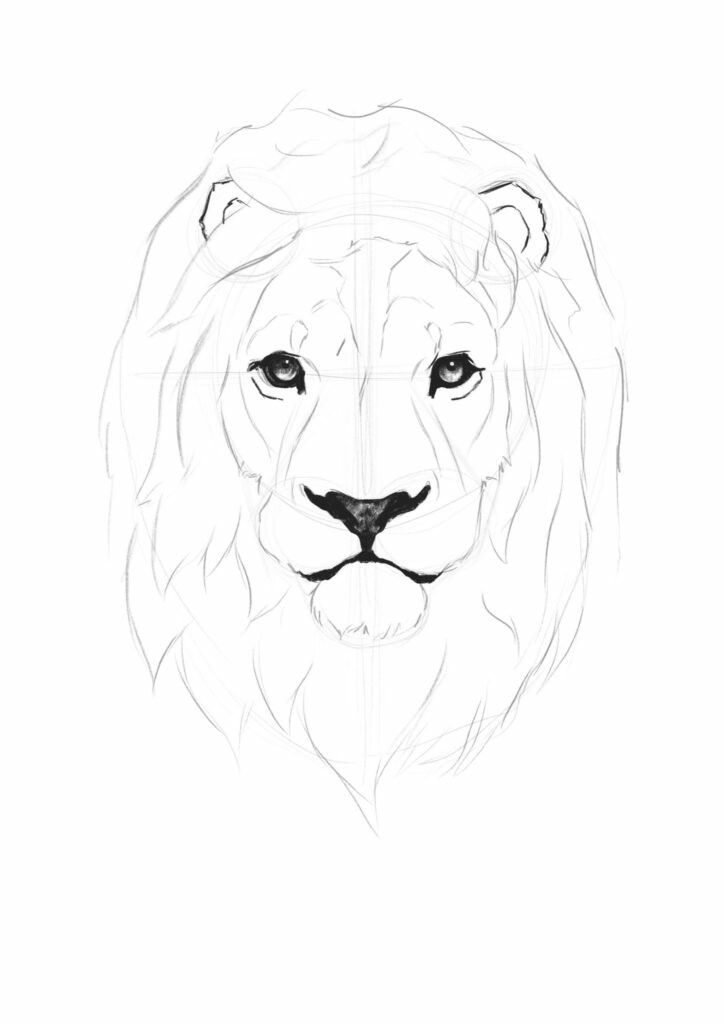
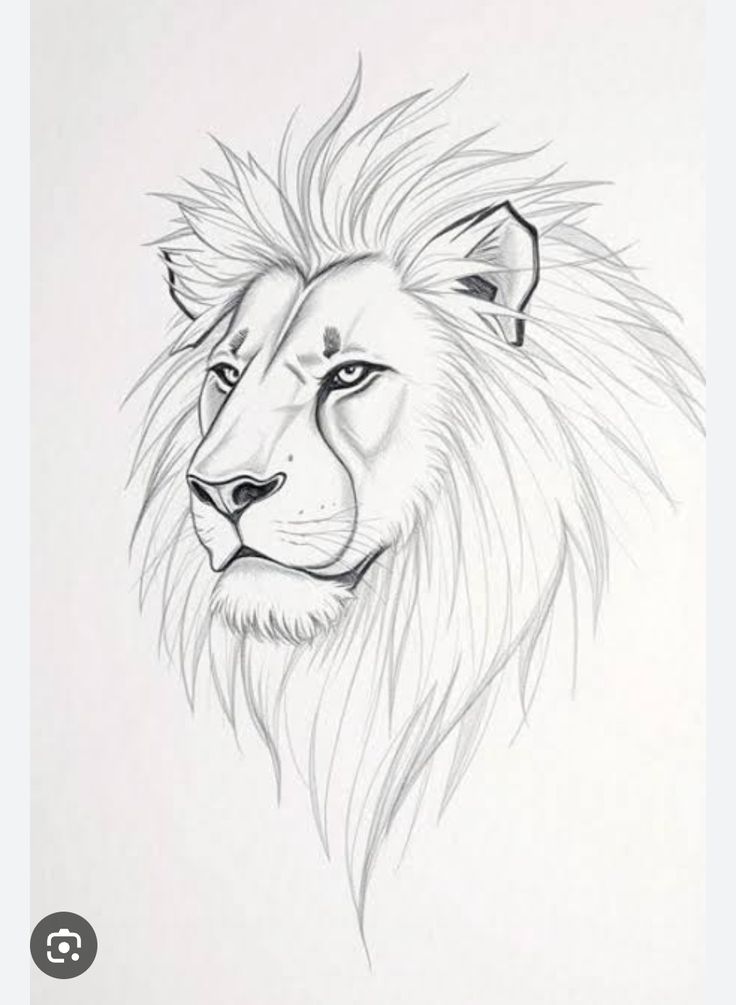
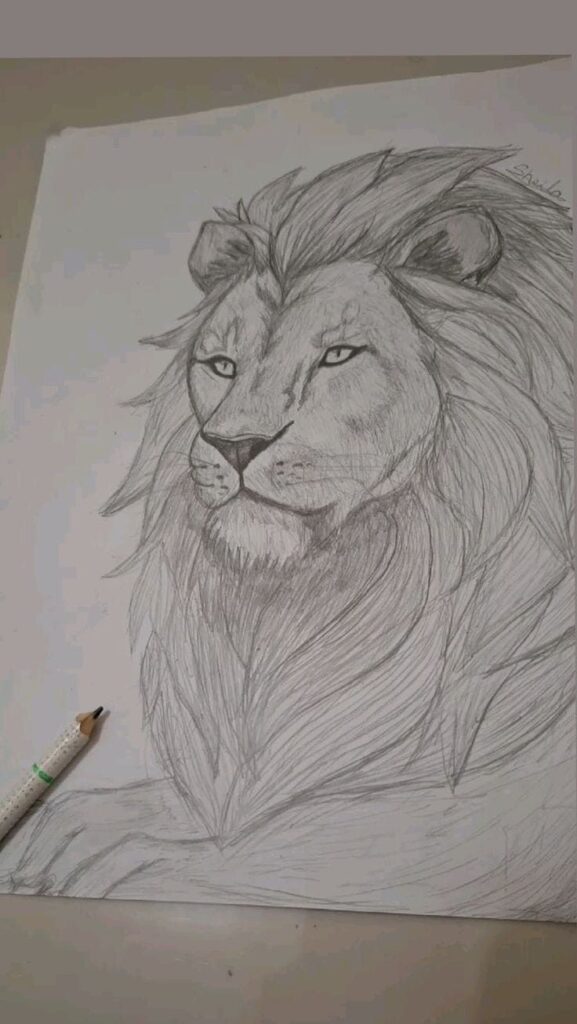
Frequently asked questions
What is the easiest way to start a lion face drawing?
Start with a center line, an eye line, and a simple head circle before drawing any fur. Then block the muzzle as two rounded pads and place the nose on the center line. If the construction is balanced, the lion will still read clearly even before the mane is detailed.
How do you draw a lion face symmetrically?
Use the vertical center line as a measuring tool, not a rigid divider. Check eye height, cheek width, ear placement, and muzzle pads from side to side. Small differences are fine, but the eyes and nose need to feel aligned or the expression will look accidental.
How do you make lion eyes look realistic?
Darken the brow shadow first, then draw the almond-shaped eyelids around the iris. Keep one small catchlight clean. The eye socket and fur direction around the eye matter more than adding lots of tiny lines inside the iris.
How do you draw a lion nose and muzzle?
Build the nose from a soft heart or rounded triangle shape, then add nostril shadows and a Y-shaped bridge down to the mouth. The muzzle works best as two rounded pads under the nose. Add whisker dots before the final whisker lines.
What pencil should I use for lion fur and mane?
Use HB or 2B for construction and light fur direction, then move to 4B or 6B for dark areas in the mane, nostrils, and eye sockets. A kneaded eraser is useful for lifting whiskers and bright strands after the main shading is in place.
Why does my lion face drawing look flat?
Most flat lion drawings have the same problem: the values are too even. Push the darks under the brow, inside the nostrils, under the muzzle, and deep in the mane. Keep the nose bridge, whiskers, and some fur tips lighter so the face has depth.
References
- Realistic lion drawing guidance: Studio Wildlife
- Lion face construction reference: We Draw Animals
- Artist lion tutorial: Wacom
- 18.6Kshares
- Facebook0
- Pinterest18.6K
- Twitter3
- Reddit0