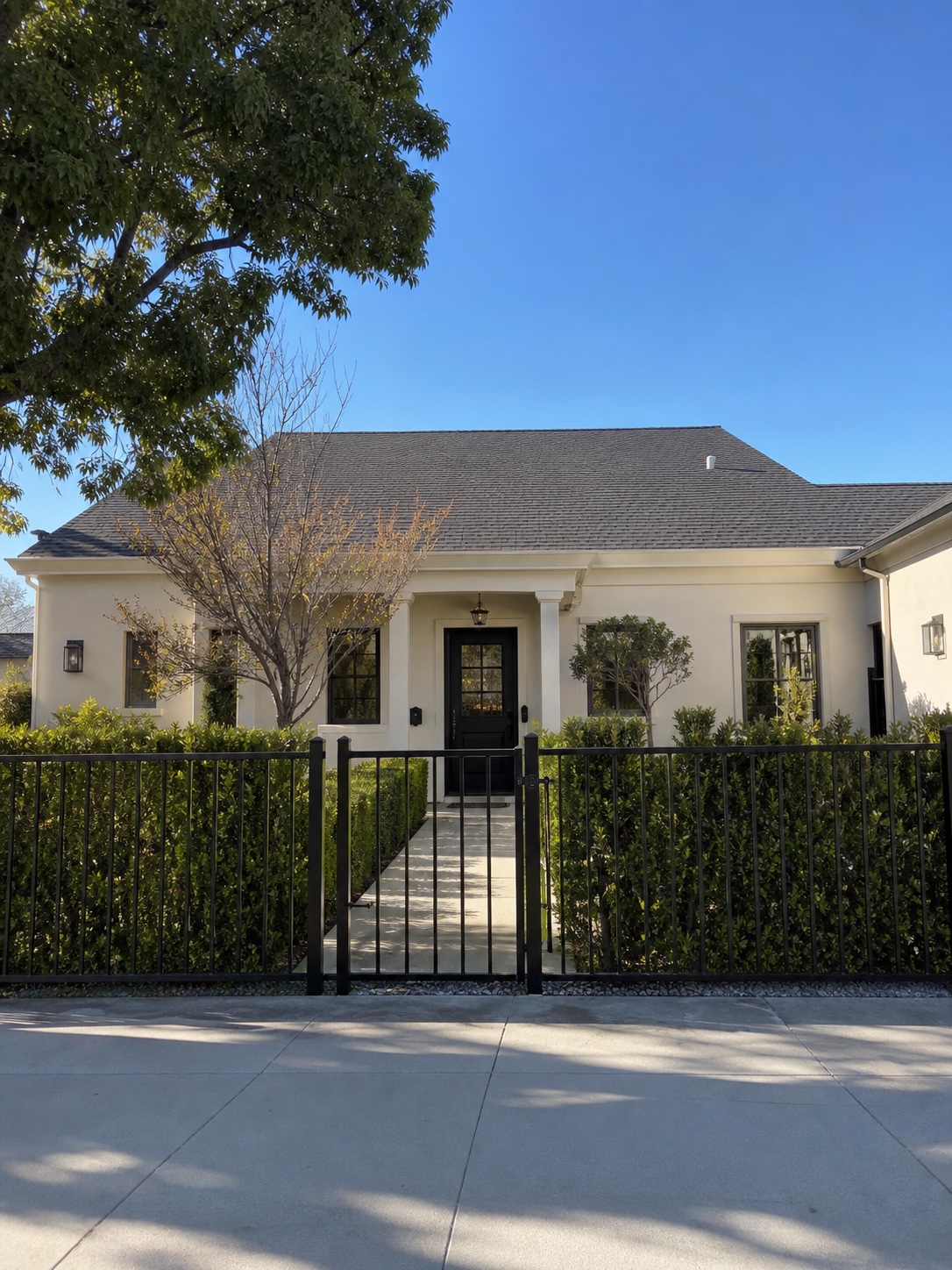
Aluminum fence installation in Van Nuys is not only a security decision. The right fence changes how the front yard reads from the street, how the house meets the sidewalk, and how much privacy the property has without making it feel shut off. I’ve looked at a lot of residential fencing across different projects, and the ones that work (the ones you don’t consciously notice because they just fit) are never accidental. Someone thought carefully about height, spacing, color, and how the gate would sit relative to the driveway.
The ground around that gate matters too, and quality interlock and landscaping sets the driveway and walkways on a level, durable base that frames the fence line.
Many Van Nuys homes sit on visible residential streets where the fence is the first thing people see. Get it wrong and the whole exterior reads off, even if the house itself is well maintained. Get it right and the property feels considered.
- Why aluminum fencing works well for Van Nuys homes
- Match the fence style to the architecture
- Choose height by privacy, not just security
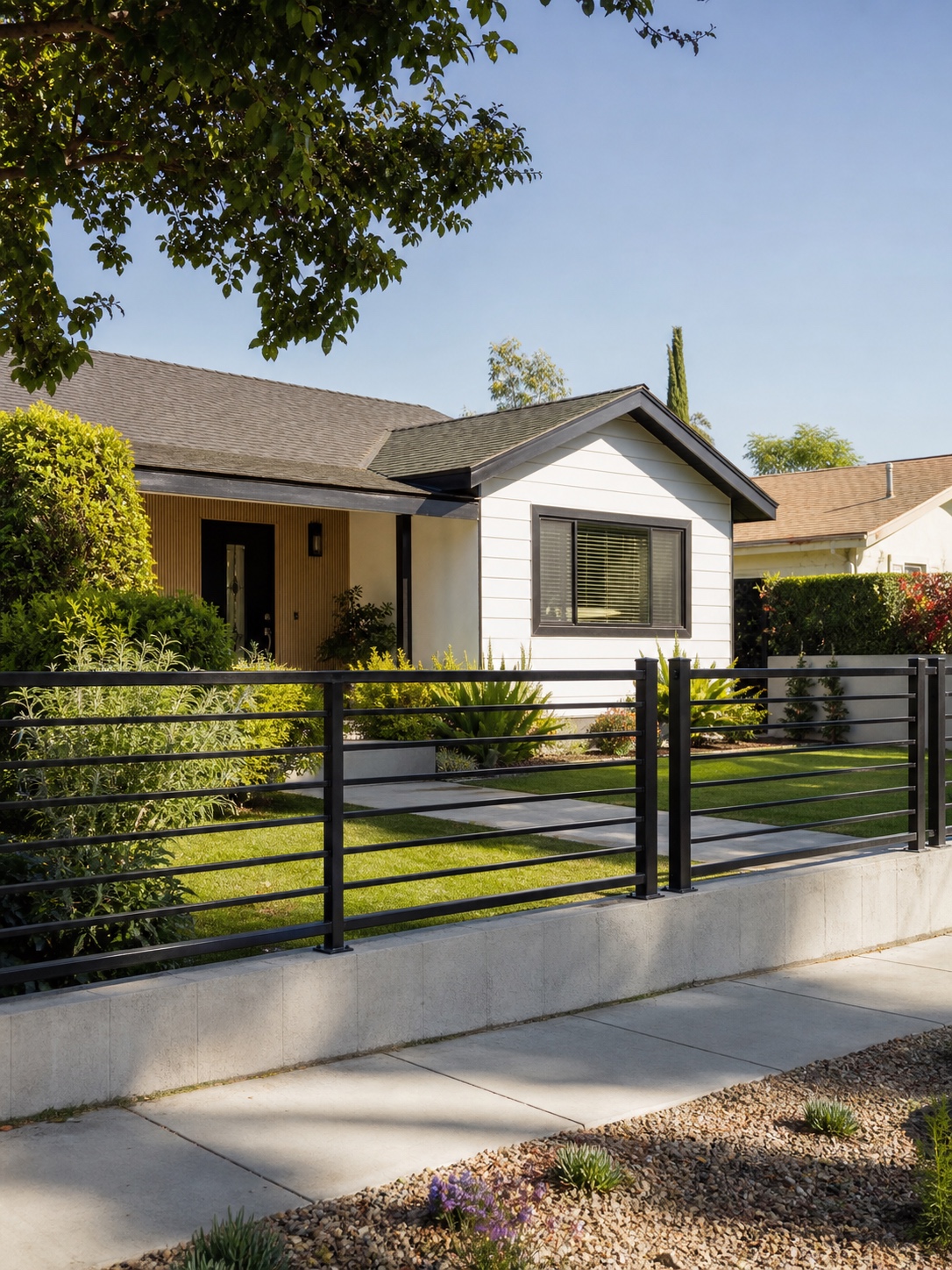
- Use spacing to control light, views, and airflow
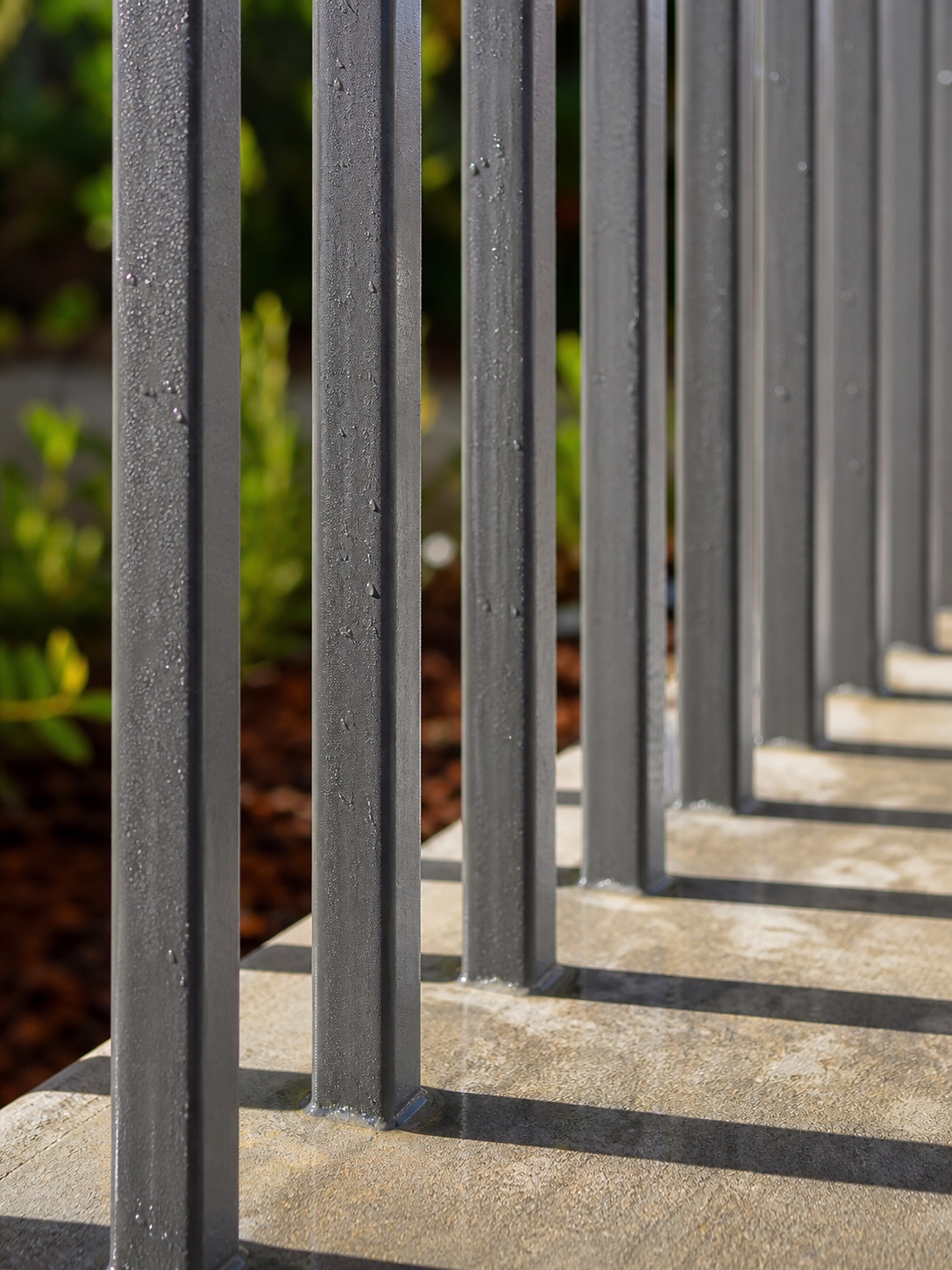
- Pick black, bronze, or custom finishes carefully
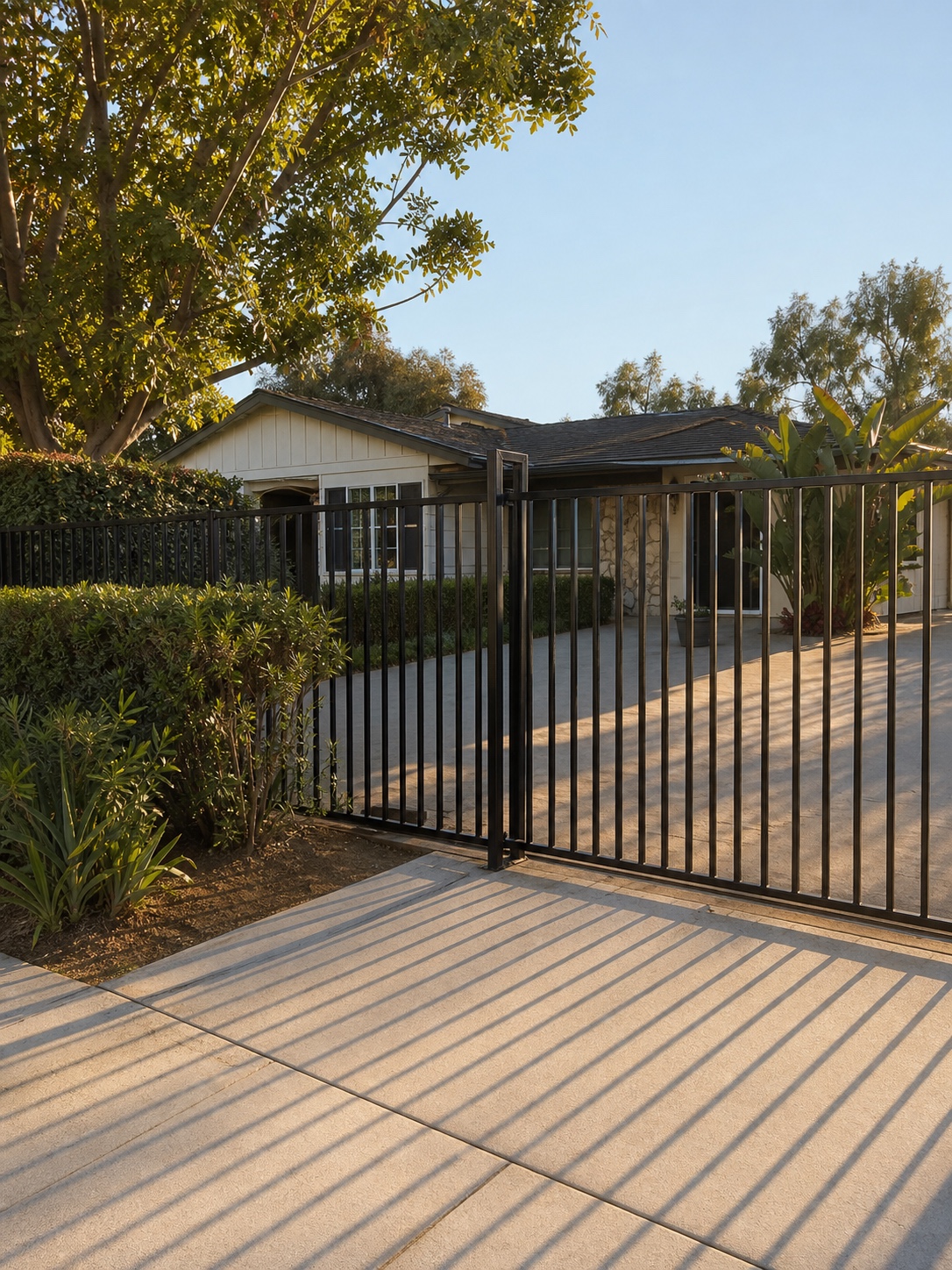
- Plan gates, driveways, and walkways early
- Check local rules, property lines, and installation details
- When to hire a professional installer
- Frequently asked questions
- How much does aluminum fence installation cost in Van Nuys?
- Do I need a permit for a fence in Van Nuys?
- What is the best fence height for a front yard in Van Nuys?
- Which aluminum fence finish holds up best in the San Fernando Valley?
- How far apart should aluminum fence pickets be spaced?
- Can I match an aluminum fence to a modern or craftsman-style home?
- How do I find a reliable fence installer in Van Nuys?
- Start with design, end with a fence that fits
This guide covers eight design decisions you should think through before aluminum fence installation begins, so you’re not making fast choices when a crew is standing in your driveway waiting for an answer.
Why aluminum fencing works well for Van Nuys homes
Van Nuys has a specific exterior design problem: the climate is hard on materials. Summer temperatures regularly hit the low 100s, UV exposure is relentless, and irrigation systems mean fences are getting wet at the base repeatedly, week after week. Wrought iron looks great for about three years before the rust spots appear and someone has to sand and repaint the whole thing. Wood warps and grays. Vinyl holds its color but can look cheap against certain architectural styles.
Aluminum takes the climate better than any of those. It doesn’t rust. The powder-coat finish resists UV degradation better than paint. It doesn’t absorb water, so repeated irrigation contact doesn’t weaken it structurally the way it does with wood posts. The material is also lighter than iron, which means less structural load on posts and gates — gates swing more consistently over time.
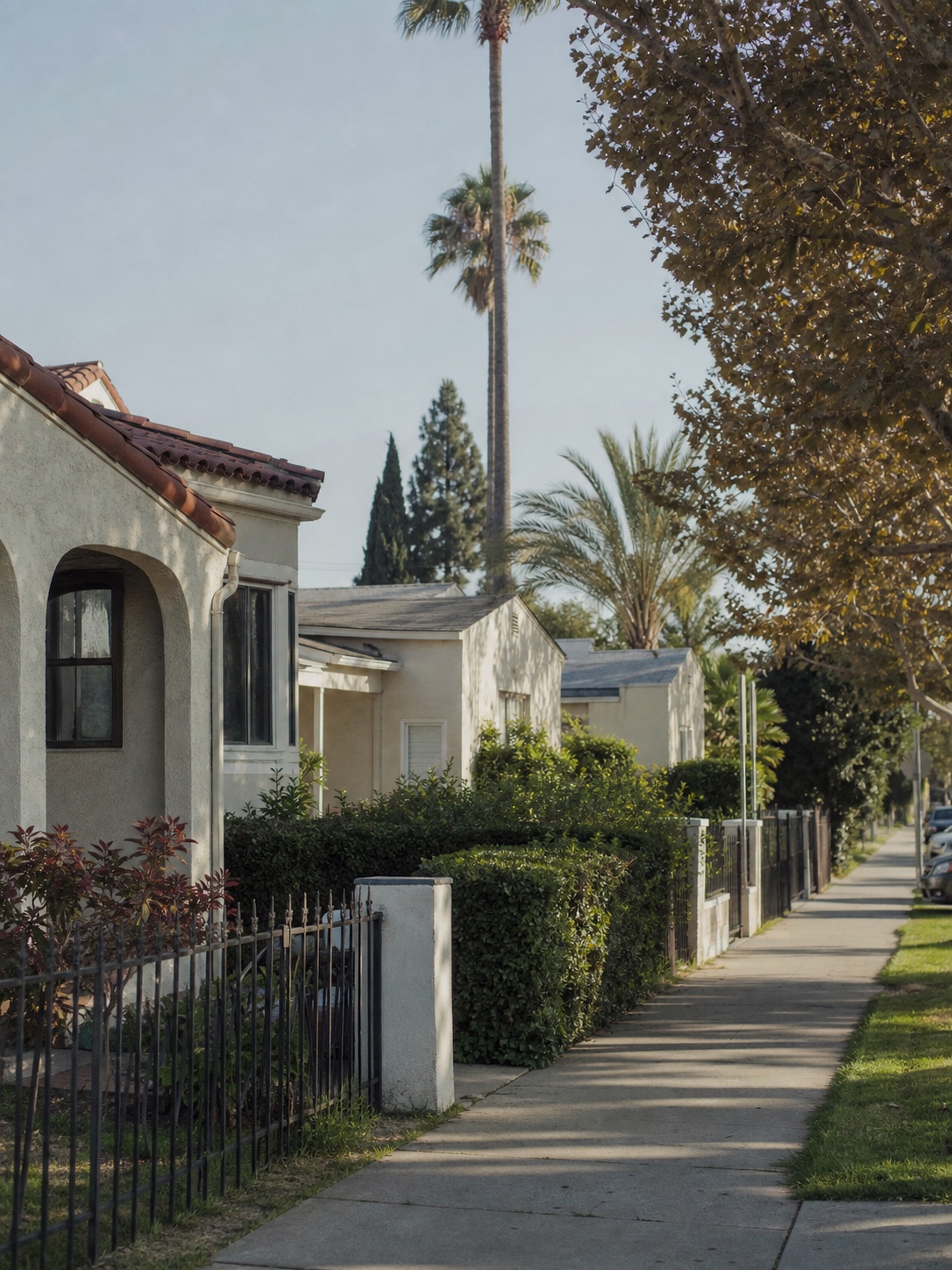
The aesthetic argument is just as strong. Aluminum reads as a modern material. It works with the clean stucco facades that dominate the Valley, with mid-century homes, with craftsman bungalows, and with the newer contemporary builds going up throughout the neighborhood. That versatility is something wood and vinyl don’t offer to the same degree.
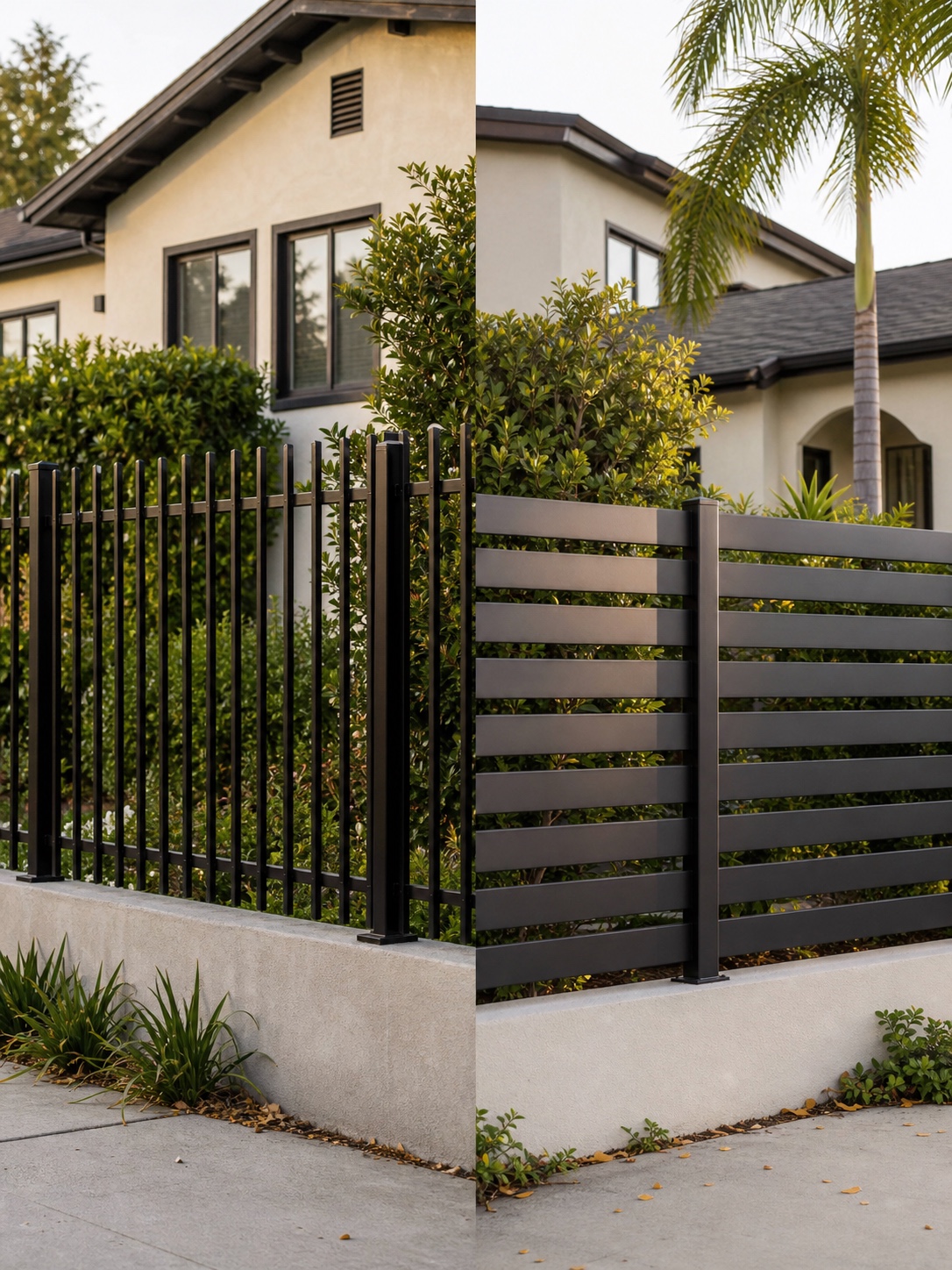
Design note: Aluminum fence lines read best when they align with the architectural language of the house. A home with clean horizontal lines and flat roofs suits horizontal slat panels. A craftsman bungalow with detailed trim suits vertical pickets with decorative caps. Match the vocabulary, not just the color.
Match the fence style to the architecture
Most aluminum fence catalogs show the same handful of styles: vertical pickets with spear tops, horizontal slats, and mixed-panel designs. The question is which one fits your house, not which one you personally prefer in isolation.
Vertical picket
The traditional option. Works with almost everything but has the most design range within the category. Spear-top pickets read more formal and slightly traditional — they fit craftsman, colonial revival, and Mediterranean exteriors without looking out of place. Flat-top pickets are cleaner and more contemporary. The spacing between pickets changes the character too: tight spacing feels more like a fence, loose spacing feels more like a decorative boundary.
For most Van Nuys front yards, a 36-to-42-inch vertical picket fence in matte black or dark bronze is the safest starting point. It reads clearly as a design decision, not a default.
Horizontal slat
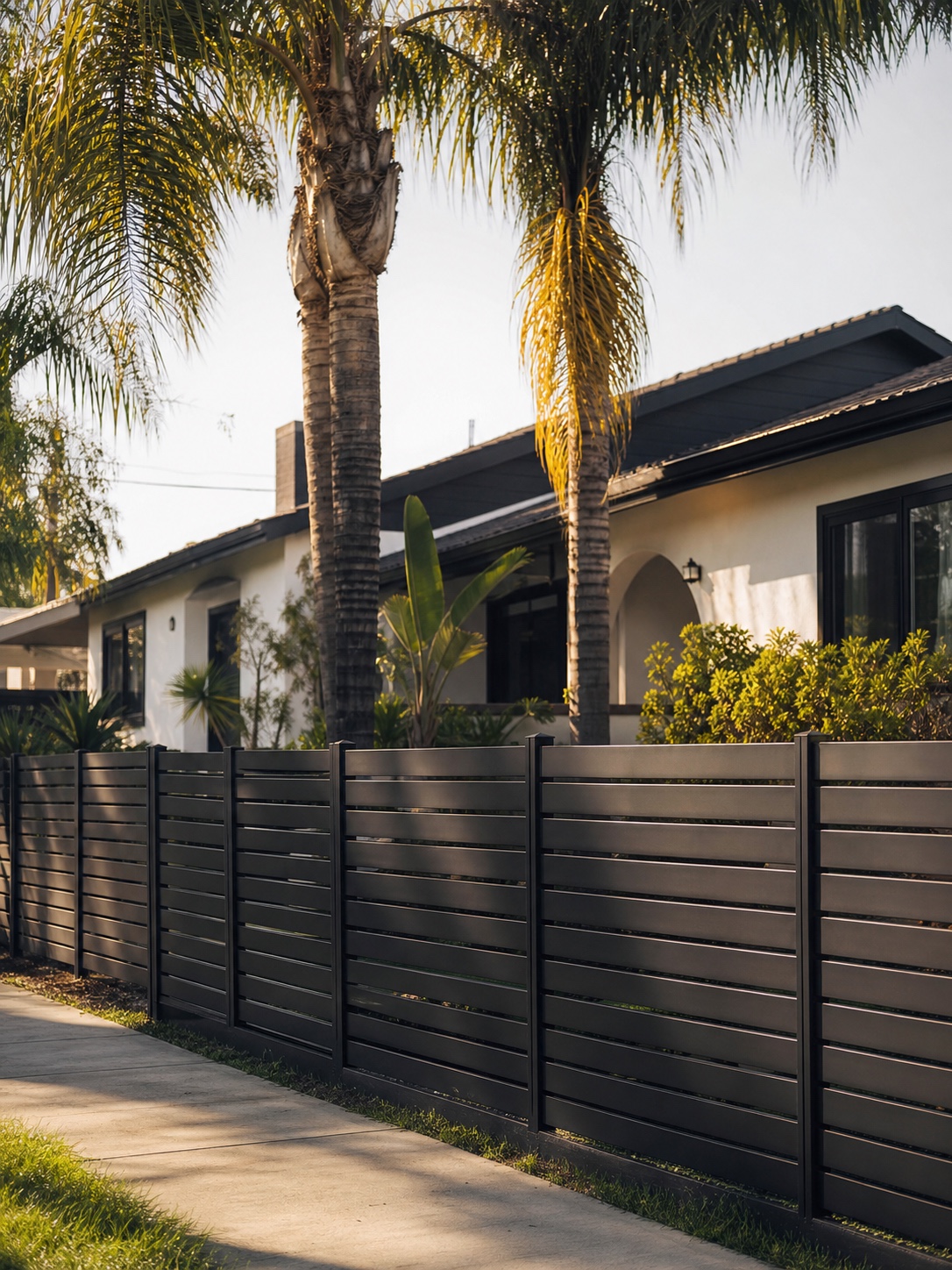
This is the style that’s dominated new residential construction in the Valley over the last five years, and it makes sense on modern and contemporary homes. Horizontal lines reinforce the horizontal emphasis most modern architecture already has. The panels look deliberate and proportioned.
The challenge with horizontal slats is execution. They require exactly level installation. Even a slight slope in the panel reads visually in a way that a vertical picket fence would hide. On sloped lots, installers either step the panels (creating visible horizontal gaps at the base) or rack them at a slope, which compromises the horizontal line. If your lot has any grade, confirm which approach the installer uses before committing to horizontal slats.
Mixed material
Some of the most resolved fence designs in Van Nuys combine aluminum framing with wood infill or frosted glass panels. These work when there’s a design reason for them: a craftsman home where the wood echoes the exterior trim, or a modern property where the glass panel at the entry gate reads as a continuation of the glazed front door. They cost more and require more maintenance on the wood or glass components, but the result can be genuinely distinctive.
Choose height by privacy, not just security
This is where most fence decisions go wrong. People set the height based on security instinct (higher feels safer) without thinking about what the fence will actually look like from the street or what it will do to light in the yard.
Front yard fences in Van Nuys follow Los Angeles zoning: anything over 42 inches in the front yard requires a permit or variance. That rule exists for a reason. A 6-foot fence across the front of a residential property doesn’t read as security — it reads as hostility. It cuts the house off from the street, makes the yard feel like a compound, and usually makes the property look smaller from the exterior.
Front yard heights
Thirty-six inches is a clean boundary. It says “this is my property” without saying anything else. It’s practical for most small dogs and generally looks proportional to single-story homes with low horizontal roof lines. Forty-two inches adds a little more containment and visual presence without crossing into permit territory or looking aggressive.
If the front yard fence primarily needs to keep a dog in, consider that aluminum fence picket height is not the only variable. Picket spacing matters as much as height for smaller breeds. More on that in the spacing section.
Backyard and side yard heights
Six feet is standard for backyard privacy in the San Fernando Valley and is generally permit-exempt. This is where you can legitimately focus on privacy and security. The fence design for the backyard doesn’t have to match the front — in fact, many properties use ornamental aluminum in front and a more solid privacy fence (wood or vinyl) in back, treating them as separate design zones.
If the property has a pool, California building code requires the pool enclosure fence to be at least 60 inches high with self-latching, self-closing gates that open away from the pool. That requirement applies regardless of other fence decisions.
Height planning tip: Decide front and back heights separately. Front yard fence height is about streetscape and curb appeal. Backyard height is about privacy and function. Treating them as the same decision usually produces compromises that serve neither goal well.
Use spacing to control light, views, and airflow
Picket or slat spacing is one of the most overlooked fence design decisions, and it affects three things simultaneously: how much light passes through, what can be seen from the street, and how air moves through the yard.
Standard spacing
The default residential spacing is 3.5 to 4 inches between pickets. This allows light and airflow, blocks most dogs, and gives the fence a slightly open character that reads as decorative rather than a barrier. It’s the right choice for front yards where the goal is to define the property line without creating visual weight.
Tight spacing for semi-privacy
Spacing of 2 to 2.5 inches reads almost solid when viewed at an angle but still allows air movement and doesn’t create wind load problems. This is a good compromise for side yards that face neighbors or for backyard sections where partial screening is useful without committing to a full privacy fence. It costs slightly more because more pickets are needed per panel.
Pool code requirements
California pool fencing code requires maximum 4-inch picket spacing to prevent a child from passing through. This is the legal floor, not the design recommendation. Some pool enclosures use tighter spacing or glass infill panels specifically because they’re more visually transparent than aluminum pickets, which improves pool supervision sightlines from the house.
Spacing affects wind load. Open picket spacing reduces the force wind puts on the fence. In San Fernando Valley locations that get Santa Ana winds, very tight spacing or nearly solid panels can catch enough wind to loosen posts over time. Your installer should account for this when sizing footings.
Pick black, bronze, or custom finishes carefully
Powder-coat color is where most aluminum fences either fit the property or fight it. The options are wider than they used to be — manufacturers now offer dozens of standard colors and can match almost any RAL code on custom orders — but most of the resolved fence designs I’ve seen in Van Nuys come back to three choices: matte black, dark bronze, and occasionally dark green.
Matte black
The dominant choice in contemporary Van Nuys residential design right now. It works with white and gray stucco, reads as a deliberate design choice, and photographs well — which matters if you’re thinking about resale. It’s a neutral that pairs with almost any exterior paint color, which is part of why it’s become so common.
The risk with matte black is that it absorbs heat. In a west-facing front yard, a matte black fence panel can get noticeably hot to the touch in afternoon sun. Not a structural issue, but something to consider if children will be around the fence regularly.
Dark bronze
Bronze reads warmer and slightly more traditional than black. It works well with brick, tan stucco, craftsman trim, and earth-toned paint palettes. If the house leans toward traditional or transitional architectural styles, bronze often fits better than black without looking dated.
It’s also more forgiving of dust and oxidation on the surface, which can matter in a neighborhood where irrigation overspray is common. Bronze-finish fences tend to look clean between washes more reliably than matte black.
Powder-coat specifications
Ask any contractor for the powder-coat spec by AAMA rating. AAMA 2604 is the minimum for exterior residential use in Southern California. AAMA 2605 is the upgraded spec and is worth asking for on fences that face south or west, near pools with chemical exposure, or in any location with heavy direct sun. The Vinyl Fence Depot showroom in Van Nuys carries stock in both ratings and will explain the difference in person if you want to see sample panels side by side — which is worth doing before committing to a finish.
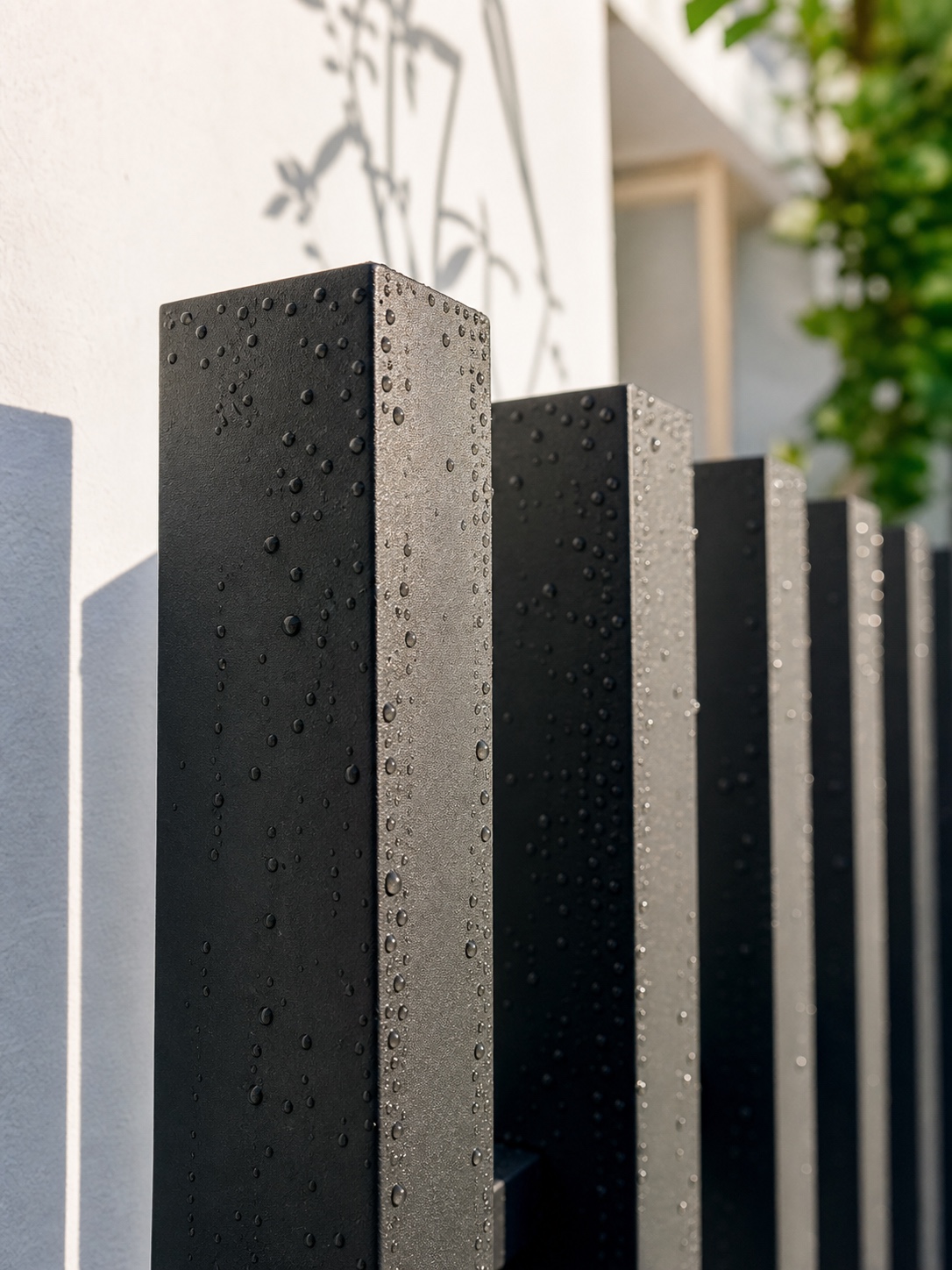
When the brief includes stronger access control, compare those design choices with this guide to metal fencing for home security before setting height, spacing, and gate hardware.
Plan gates, driveways, and walkways early
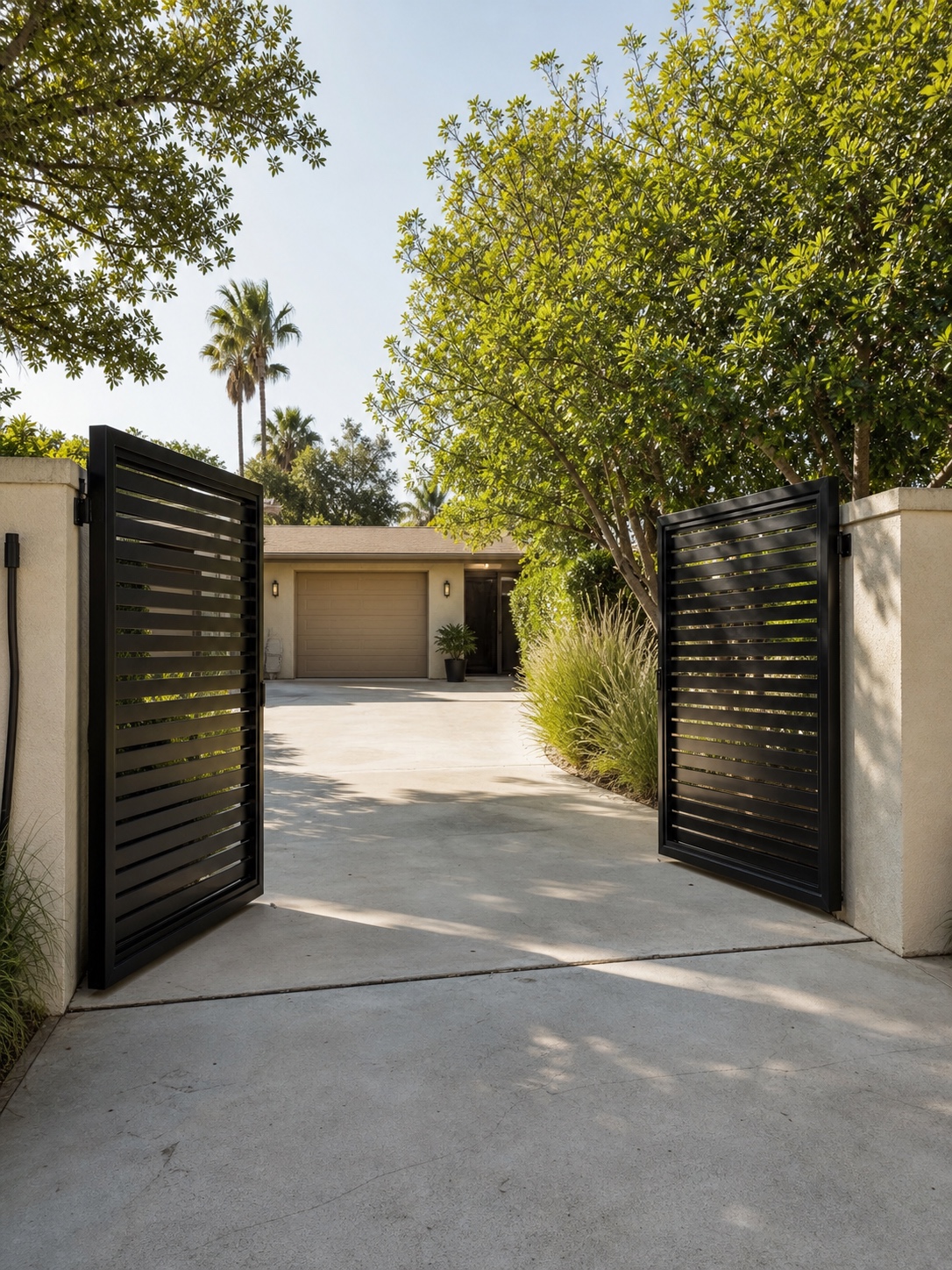
Gates are where aluminum fence installations most often look improvised. The gate gets added at the end, it’s sized to clear the driveway by a few inches, it opens in whatever direction is easiest for the installer, and the result is a gate that works mechanically but doesn’t look like it belongs.
Gate placement should be part of the initial design, not a detail sorted out on installation day. The questions to resolve before work starts:
Swing direction and clearance
Gates should swing inward toward the property, not outward into a sidewalk or driveway. Outward-swinging gates create conflict with pedestrians, can catch a passing car door, and are required by code to swing away from pool areas. Confirm the swing direction with your installer and walk through the clearance — a gate that catches on an uneven driveway surface every time it opens is a long-term irritation.
Driveway gate sizing
Measure the widest vehicle you realistically need to clear, add at least 18 inches on each side, and that’s your minimum gate opening. Undersized driveway gates are a common problem on Van Nuys residential properties where pickup trucks and SUVs are the norm. A gate sized for a mid-2000s sedan won’t clear a current full-size truck.
Double swing gates are the most reliable mechanically. Sliding gates require a level, clear path and proper counterweight or motor sizing. If the driveway slopes toward the street, a sliding gate needs specific hardware to prevent it from rolling on its own.
Pedestrian walkway gates
These get undersized more often than driveway gates. A 36-inch-wide pedestrian gate feels immediately cramped. Forty-two inches is the comfortable minimum for two adults side by side, and wider if there are accessibility considerations. Gate width affects the frame sizing and the hardware, so it should be decided before the contractor quotes the job.
Gate design note: The gate should match the fence panel design exactly — same picket profile, same spacing, same powder-coat batch. Mismatched gates are obvious and age the whole fence visually. Ask specifically whether the gate hardware is a matching powder-coat or a different finish, and get that in writing.
Check local rules, property lines, and installation details
Los Angeles zoning and building code applies to all Van Nuys properties. The rules are not complicated but they catch people off guard when they’re not checked in advance.
Permit requirements
Backyard fences up to 72 inches are generally permit-exempt. Front yard fences over 42 inches require a permit or variance from the Los Angeles Department of Building and Safety. Fences adjacent to a pool or spa have separate safety requirements regardless of height. A licensed installer should pull any permits required as part of the project scope; if a contractor tells you permits aren’t necessary for work that requires them, that’s a signal to keep looking.
Property line verification
California’s Good Neighbor Fence Act creates shared responsibility (and sometimes shared cost) when a fence sits on a property line between two parcels. Before installation, confirm where the property line actually is — not where you think it is. A survey or the recorded plat is the reliable answer. Fences built a few inches into the neighbor’s property or into the public right-of-way become expensive problems when they’re discovered.
Post depth and footing size
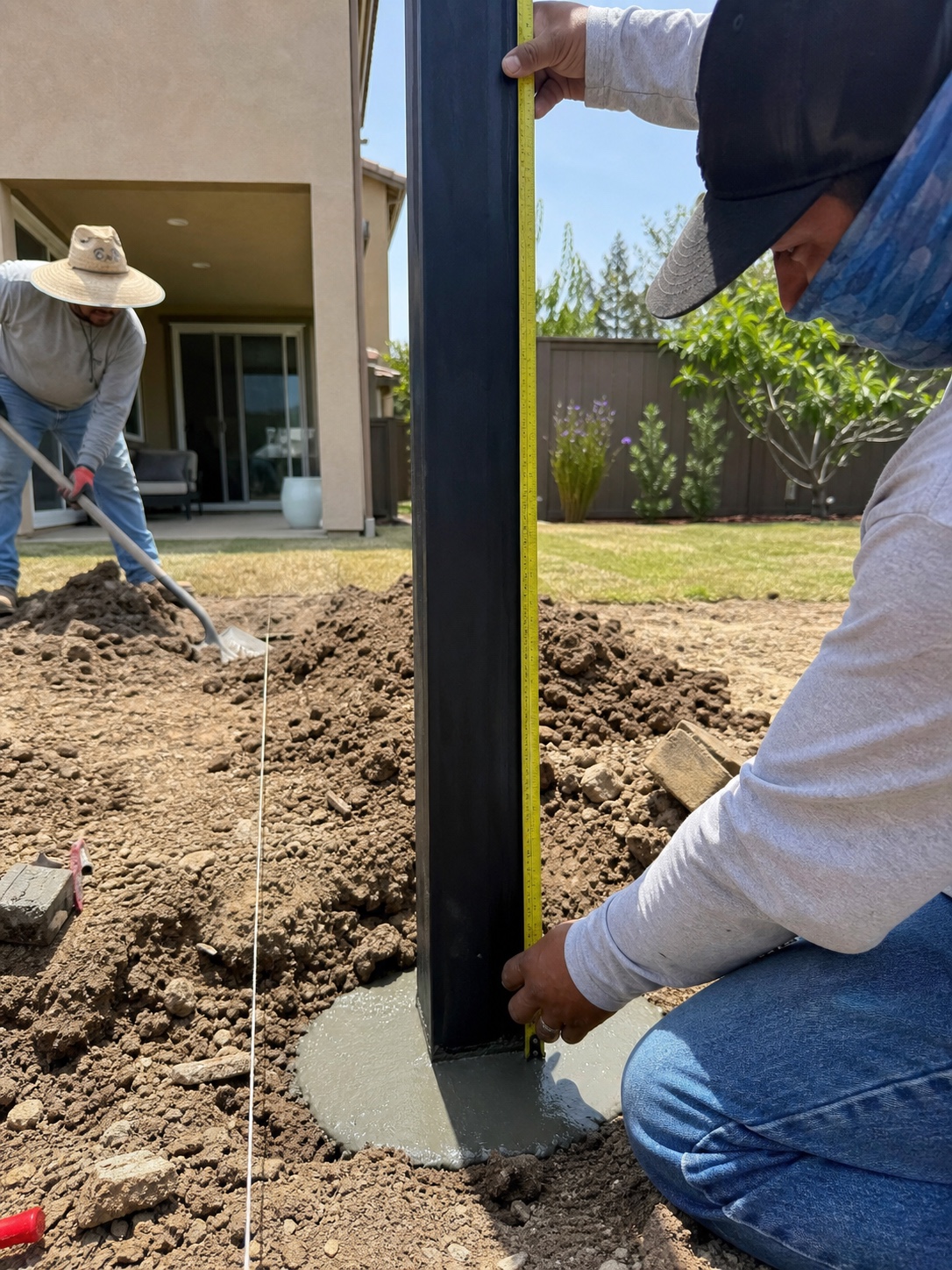
This is where installation quality becomes structural quality. Posts for a 4-foot fence should be set a minimum of 18 to 24 inches deep in concrete footings. Taller fences and gate posts need proportionally deeper footings. In sandy or clay-heavy soil (common in parts of the Valley), footings need to go deeper to reach stable ground. Ask what post depth and footing diameter the installer uses as a standard practice, not just what they’ll do on your job.
Verify the C-13 license. Any contractor installing fencing in California should carry an active C-13 specialty license. You can verify license status, bond status, and complaint history through the Contractors State License Board at cslb.ca.gov. Do this before signing anything.
When to hire a professional installer
Aluminum fencing is sold as a DIY-friendly material, and technically it is — the panels are lighter than wrought iron, the connectors are straightforward, and the components are designed to be assembled without welding. But the parts of the job that determine whether a fence looks good ten years from now are not the panel assembly. They’re the post setting.
Posts set shallow, in undersized footings, or in disturbed soil will move. They settle unevenly. Gates go out of alignment. Rails develop a slight bow. None of this is immediately visible when the fence is new, but it shows within three to five years on a fence that wasn’t installed correctly from the start.
What a professional installation covers
A licensed C-13 contractor handles permit pulling, property line confirmation, underground utility clearance (California 811 call before any digging), correct post depth and footing size for the soil and fence height, and alignment that stays true across the full run. The labor warranty covers this work, usually for one to two years, and a reputable installer stands behind it.
Current aluminum fence installation costs in the Los Angeles area run about $30-50 per linear foot for standard ornamental styles, installed with materials. Horizontal slat and custom designs run higher, typically $50–70 per linear foot. Those numbers include standard powder-coat finishes and basic gate hardware. Get at least two quotes and compare the specifications : post gauge, footing size, powder-coat rating, and warranty terms not just the per-foot price.
What to ask before hiring
- Current California C-13 license number (verify at cslb.ca.gov)
- Proof of general liability insurance (ask for a certificate)
- Written line-item quote with post depth, footing diameter, and panel gauge specified
- Powder-coat specification by AAMA rating
- Warranty terms for both materials and labor, in writing
- References from Van Nuys or San Fernando Valley projects in the past two years
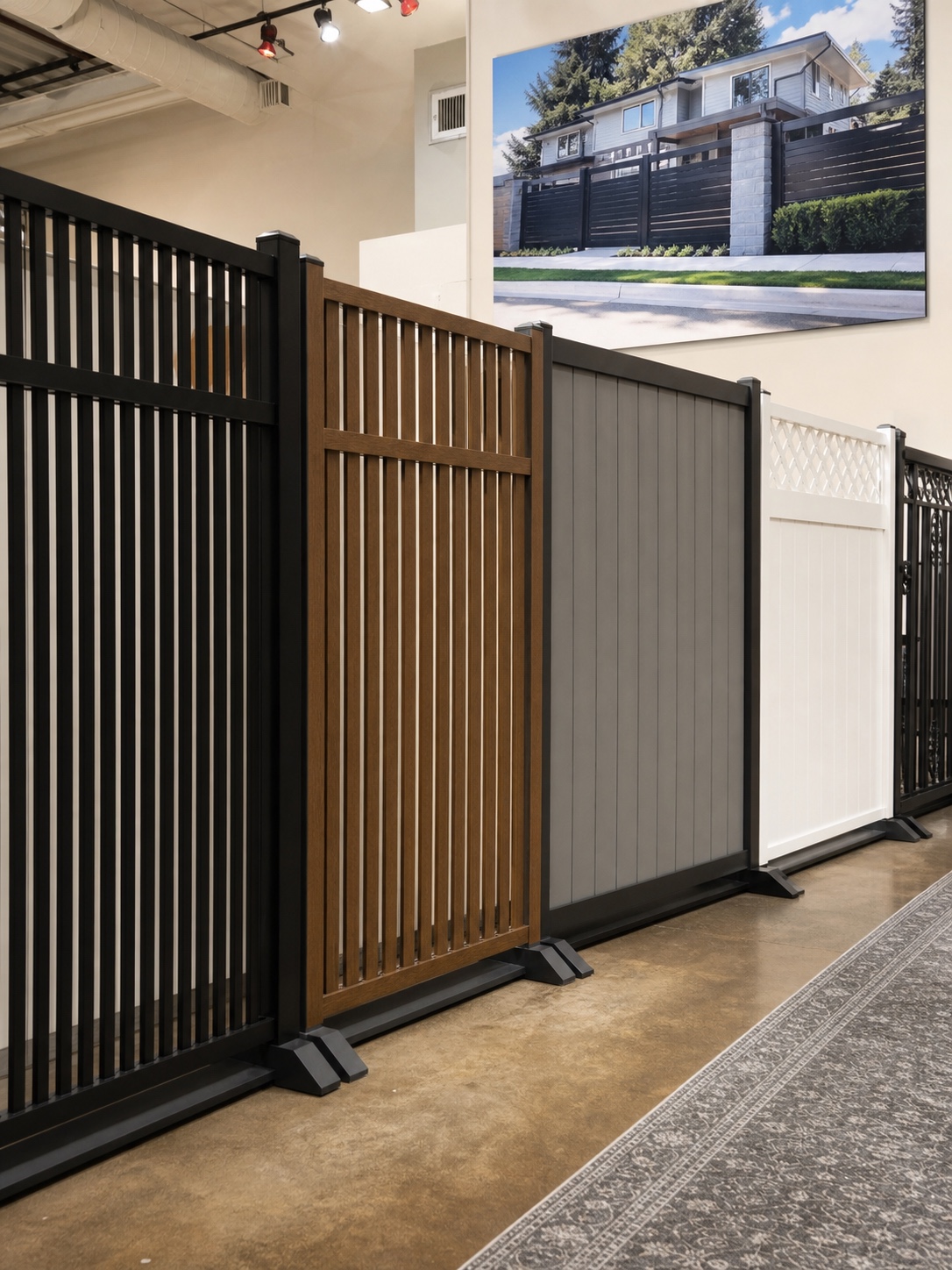
One practical tip: Visit a showroom that displays full-size fence panels before committing to a style. Catalog photos and renders misrepresent how a fence reads at ground level and in natural light. Seeing the actual panel, at height, in the powder-coat finish you’re considering, takes fifteen minutes and prevents a significant number of regrets.
Frequently asked questions
How much does aluminum fence installation cost in Van Nuys?
Standard aluminum fence installation in the Los Angeles area runs about $30-50 per linear foot for ornamental styles, installed. Designer horizontal slat designs or custom powder-coat colors run $50 to $70 per linear foot. Gate hardware, post caps, and permit fees add to the total. Compare at least two quotes against the material and warranty specifications, not just the per-foot number.
Do I need a permit for a fence in Van Nuys?
Van Nuys is under Los Angeles city jurisdiction. Backyard fences up to 72 inches are generally exempt from permit requirements. Front yard fences over 42 inches typically require a permit or variance. Pool and spa enclosures have separate code requirements. A licensed installer should pull any required permits as part of the project. Check with the Los Angeles Department of Building and Safety for current requirements before starting.
What is the best fence height for a front yard in Van Nuys?
For most Van Nuys residential streets, 36 to 42 inches is the practical range for front yard fences. It defines the property clearly, keeps most dogs contained, and reads proportionally on single-story homes. Heights above 42 inches require a permit in most Los Angeles front yards. If privacy is the main goal, focus that investment on the backyard, where taller fences are permitted without a variance.
Which aluminum fence finish holds up best in the San Fernando Valley?
Powder-coated finishes outperform painted finishes in Southern California conditions. Look for AAMA 2604 or 2605 rated powder coat, especially near pools or in locations with direct afternoon sun exposure. Matte black and dark bronze are the most durable and visually consistent choices over time. Glossy finishes show UV fade faster and show dust more obviously in an irrigation-heavy yard.
How far apart should aluminum fence pickets be spaced?
Standard residential spacing is 3.5 to 4 inches between pickets. California pool code requires 4 inches or less to prevent a child from passing through. For semi-privacy applications, 2 to 2.5 inches reads nearly solid from an angle while still allowing air movement. Tighter spacing costs more per panel because more pickets are needed, so confirm the spacing specification in the written quote.
Can I match an aluminum fence to a modern or craftsman-style home?
Yes. For modern homes with clean horizontal lines, horizontal slat aluminum in matte black works well as an extension of the exterior language. For craftsman homes, vertical picket aluminum with spear or flat tops in bronze or dark green coordinates with wood trim without looking out of place. The key is matching the fence finish to the darkest element in the exterior palette rather than trying to match the main wall color.
How do I find a reliable fence installer in Van Nuys?
Ask for the contractor’s California C-13 fencing license number and verify it through the Contractors State License Board at cslb.ca.gov. Confirm active general liability insurance. Request references from projects in the area completed within the last two years. Any reliable installer will provide a written quote with line-item pricing and warranty terms for both materials and labor before you sign.

Start with design, end with a fence that fits
The aluminum fence installations that look right (the ones that read as part of the property rather than something added to it) share one thing: the design decisions were made before installation started. Height, spacing, finish color, gate placement, and how the fence meets the architecture are not details to sort out on the day. They’re the design.
Van Nuys properties are visible. The front fence is part of the exterior for as long as you own the place. Spending an afternoon confirming the style, measuring gate clearances, checking the lot line, and verifying the installer’s license costs almost nothing compared to pulling permits after the fact or replacing posts that were set too shallow.
Get the design right first. The installation is the straightforward part.
- 146shares
- Facebook0
- Pinterest146
- Twitter0
- Reddit0