I spent a chunk of my career reviewing material spec sheets for automotive undercarriages, arguing with suppliers about which fastener coating would actually survive five years of road salt instead of just looking good on paper. Turns out that same argument happens on the Outer Banks, just with a different client.
A gorgeous beach house exterior and a corroded hinge six months later are not a contradiction. They are what happens when a design brief gets written around style and never around exposure.
- Why coastal house design starts with exposure, not style
- Outer Banks lot realities to solve before drawing the house
- How the sea breeze changes the way a beach house ages
- Coastal building materials that hold up in salt air
- Layout decisions that protect the view and the structure
- Details homeowners usually notice too late
- How to keep a beach house beautiful without fragile finishes
- Simple maintenance habits for salt-air homes
- Bringing it together
- Frequently Asked Questions
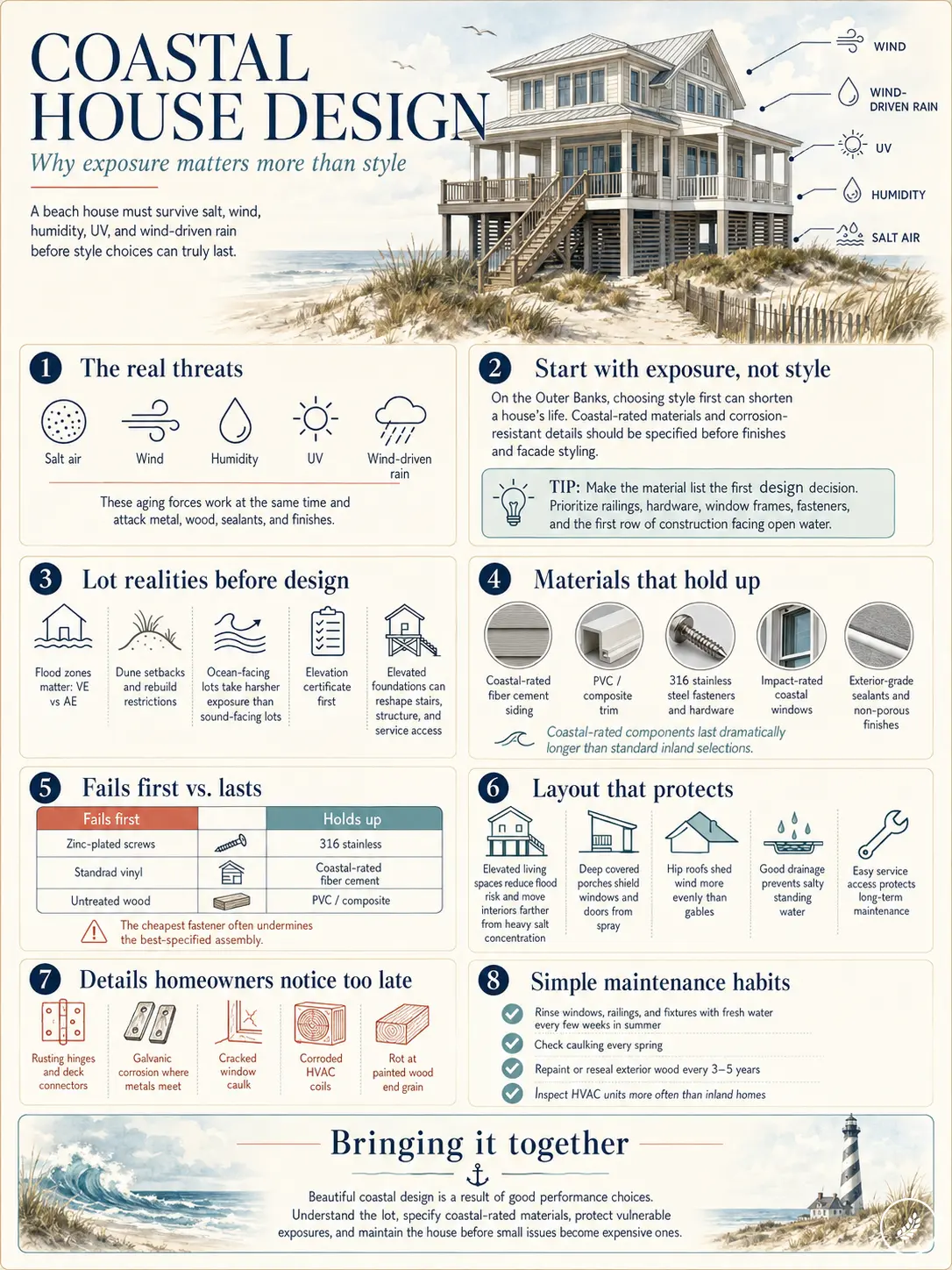
Coastal house design has one job before it has any other job: survive the air it sits in. Salt, wind, humidity, UV, and wind-driven rain do not care about your elevation drawings. Get the exposure logic right first, and the style choices actually last. Get it backward, and you are repainting trim every eighteen months while telling yourself it is just “beach house maintenance.”
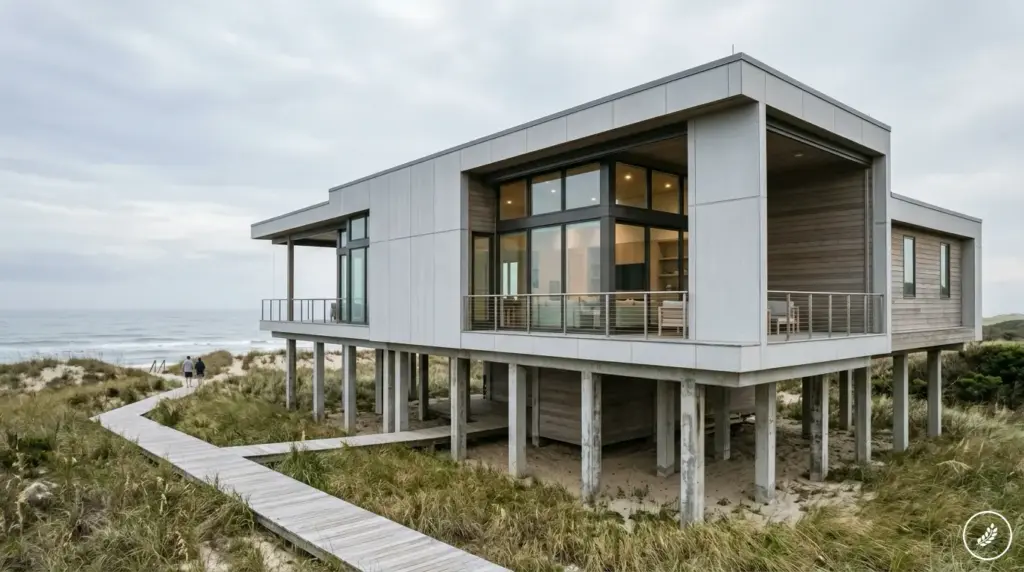
Why coastal house design starts with exposure, not style
Most homeowners approach a coastal build the way they would approach any build: pick a style, pick finishes, pick a floor plan. On the Outer Banks, that order kills houses early.
Salt air is corrosive in a way most inland builders never have to think about. It is not just the ocean spray you can see. Airborne salt particles settle on everything, including surfaces that never look “wet,” and they hold moisture against metal and wood longer than plain humidity would. Add UV breakdown on top of that, plus wind-driven rain finding every gap in a poorly detailed joint, and you have got four separate aging mechanisms working on your house at once.
I think about this the same way I used to think about brake caliper coatings. A caliper that looks identical to a competitor’s can fail in half the time if the zinc-nickel plating was swapped for a cheaper zinc coating to save two dollars a unit. Houses work the same way. A window that looks fine in the showroom can be pitted and leaking within three years if the frame alloy or the gasket compound was not rated for salt exposure.
Automotive suppliers test coatings against ASTM B117, a standardized salt fog chamber that simulates years of exposure in a matter of weeks. Nobody is running that test on a window frame before it ships to an Outer Banks job site, which is exactly why the manufacturer’s coastal rating matters more here than it would on a house forty miles inland. A frame rated for coastal exposure has usually been through some version of that accelerated testing. One that is not, has not.
TIP
Your material list should be the first design decision, not the last one. Before anyone sketches an elevation, agree on which surfaces are non-negotiable for corrosion resistance: railings, hardware, window frames, fasteners, and anything in the first row of construction facing open water.
Outer Banks lot realities to solve before drawing the house
You cannot design a durable coastal house on a lot you do not understand yet. This is where most projects go sideways, and it happens before a single wall gets framed.
Outer Banks properties sit inside a patchwork of flood zones, dune setback rules, and rebuild restrictions that vary block by block, sometimes lot by lot. A house designed without checking these first can end up needing a redesign mid-permitting, which costs real money and real time. Elevation requirements alone can shift your entire structural approach, since a home that needs to sit eight feet above grade has completely different foundation, stair, and service-access needs than one that does not.
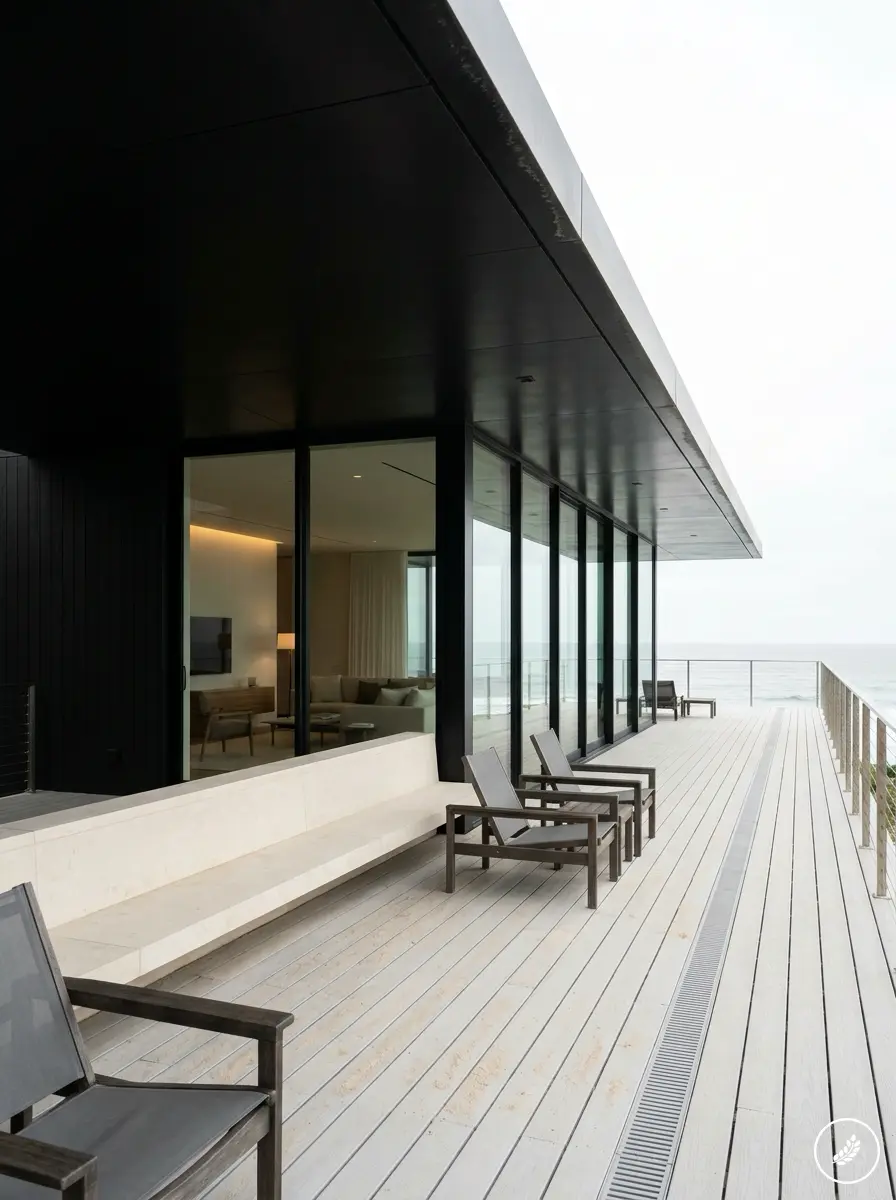
This is exactly where local expertise earns its keep. Working with a group like Sun Realty, who has spent years matching buyers with coastal properties up and down the Outer Banks, is worth doing even before you have settled on a lot. They can tell you which streets flood first after a nor’easter, which parcels carry rebuild restrictions from prior storm damage, and roughly what elevation your home will likely need to meet current flood maps. That information should shape the design brief, not get bolted onto it after the architect has already drawn the first floor plan.
Ocean-facing versus sound-facing exposure matters here too. A lot facing open water takes a fundamentally different beating than one set back on the sound side, and your material budget should reflect that difference rather than treating every elevation the same.
Flood zone designation is worth understanding in more detail than most homeowners bother with. A property mapped as VE zone, meaning it is exposed to wave action during a storm surge, carries stricter elevation and foundation requirements than one mapped as AE zone, which floods but without the same wave force. An elevation certificate from a licensed surveyor, done early, tells you exactly which category you are in and what your lowest floor elevation needs to be before your architect commits to a foundation type.
How the sea breeze changes the way a beach house ages
Here is a piece most homeowners never think about, and it genuinely surprised me the first time a coastal engineer explained it to me: salt exposure on a house is not constant through the day. It has a rhythm.
During warmer months, land heats up faster than ocean water. Warm air rises off the land, and cooler, salt-laden ocean air moves in to replace it. That is the sea breeze, and on the Outer Banks it repeats like clockwork most afternoons in summer. It is a genuinely pleasant thing to stand in. It is also a genuinely rough thing for your siding, because it is pulling salt-heavy ocean air inland across your house on a near-daily cycle.
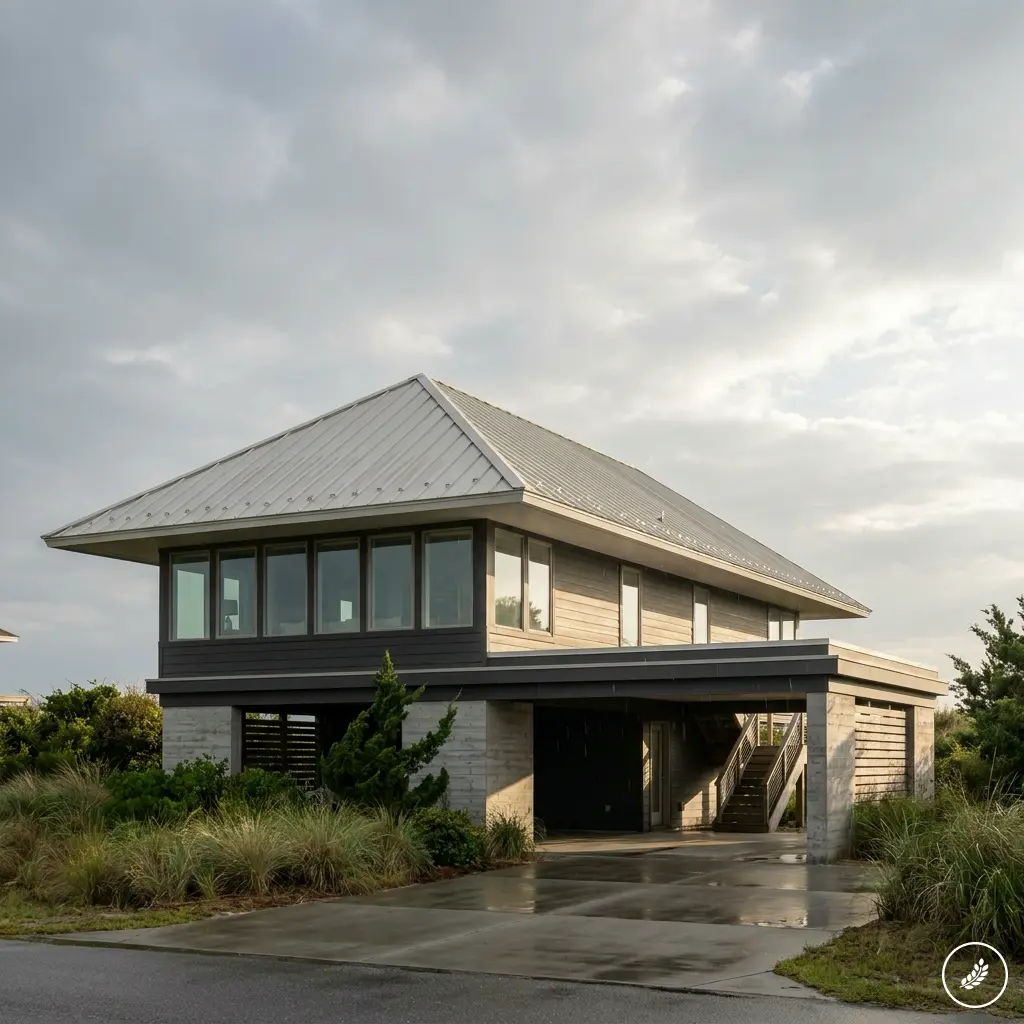
The practical takeaway is not complicated once you see the pattern: the ocean-facing side of the house is absorbing more salt load than the sound-facing side, day after day, month after month. That is your cue to spend more of the materials budget on that exposure, even if it means trimming back slightly on the side that is catching less of the daily inland pull. I would rather see a client save money on sound-facing trim than cut corners on the ocean-facing hardware. One of those decisions shows up as a slightly less premium detail. The other shows up as a rust stain running down white siding within two summers.
| TIP The sea-breeze cycle intensifies through July and August, when the land-water temperature difference is widest. Spend the upgraded budget where the daily cycle hits hardest — you do not need 316 stainless on a sound-facing gutter bracket that sees a fraction of the exposure. |
|---|
Coastal building materials that hold up in salt air
This is the section I would want printed and taped inside every Outer Banks general contractor’s truck.
Fiber cement siding (James Hardie’s coastal-rated lines are a common, reliable choice) holds up dramatically better than standard vinyl or wood clapboard in salt exposure. It does not absorb moisture the way wood does, and it will not chalk and fade the way cheaper vinyl does under constant UV and salt. PVC and composite trim boards do the same job for fascia and window casings, where solid wood tends to rot from the inside out long before it looks bad on the surface.
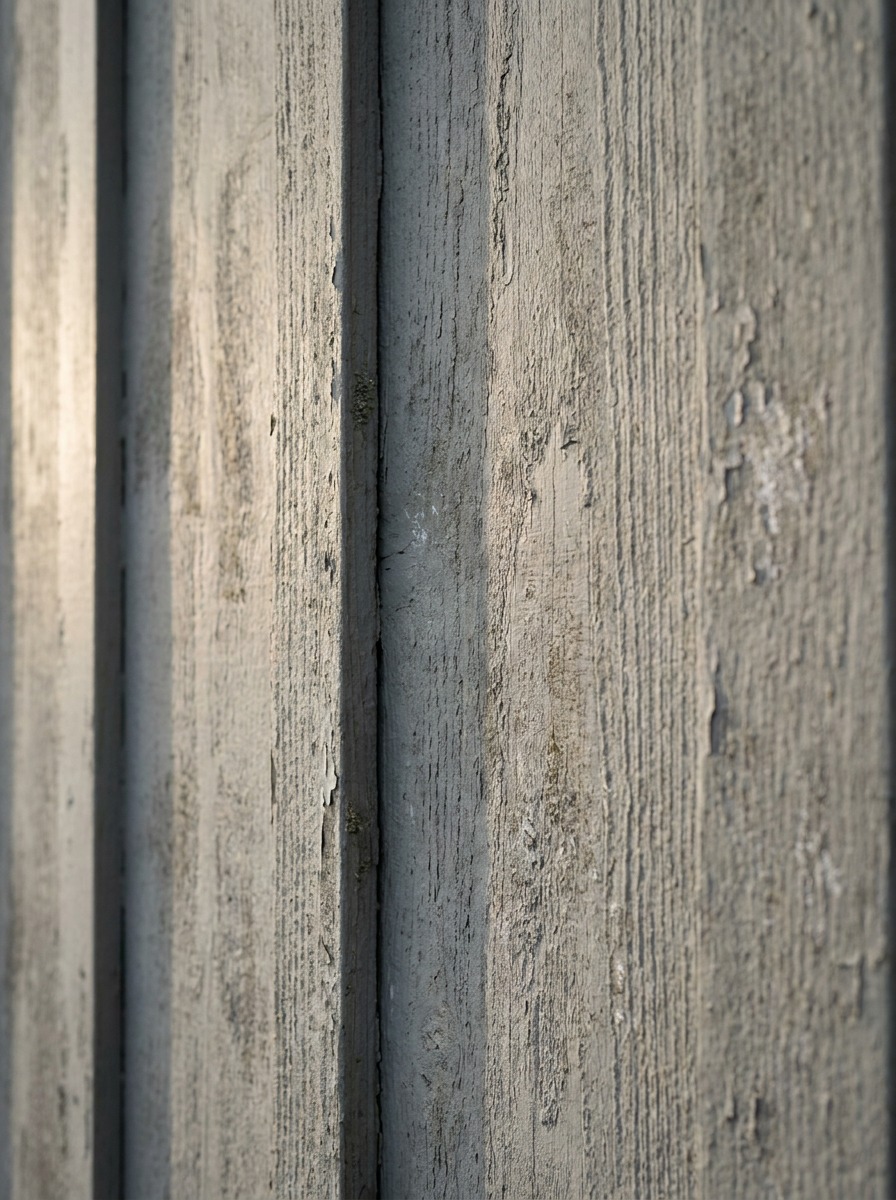
Hardware is where corners get cut most often, and it is the mistake that shows up fastest. Standard zinc-plated fasteners will start showing rust bleed through paint within a year or two on an ocean-facing wall. Stainless steel, ideally 316-grade rather than the more common 304, resists that same corrosion for decades. Marine-grade hardware costs more upfront, sometimes two to three times as much as standard hardware, but replacing rusted railings and hinges every few years costs far more over the life of the house.
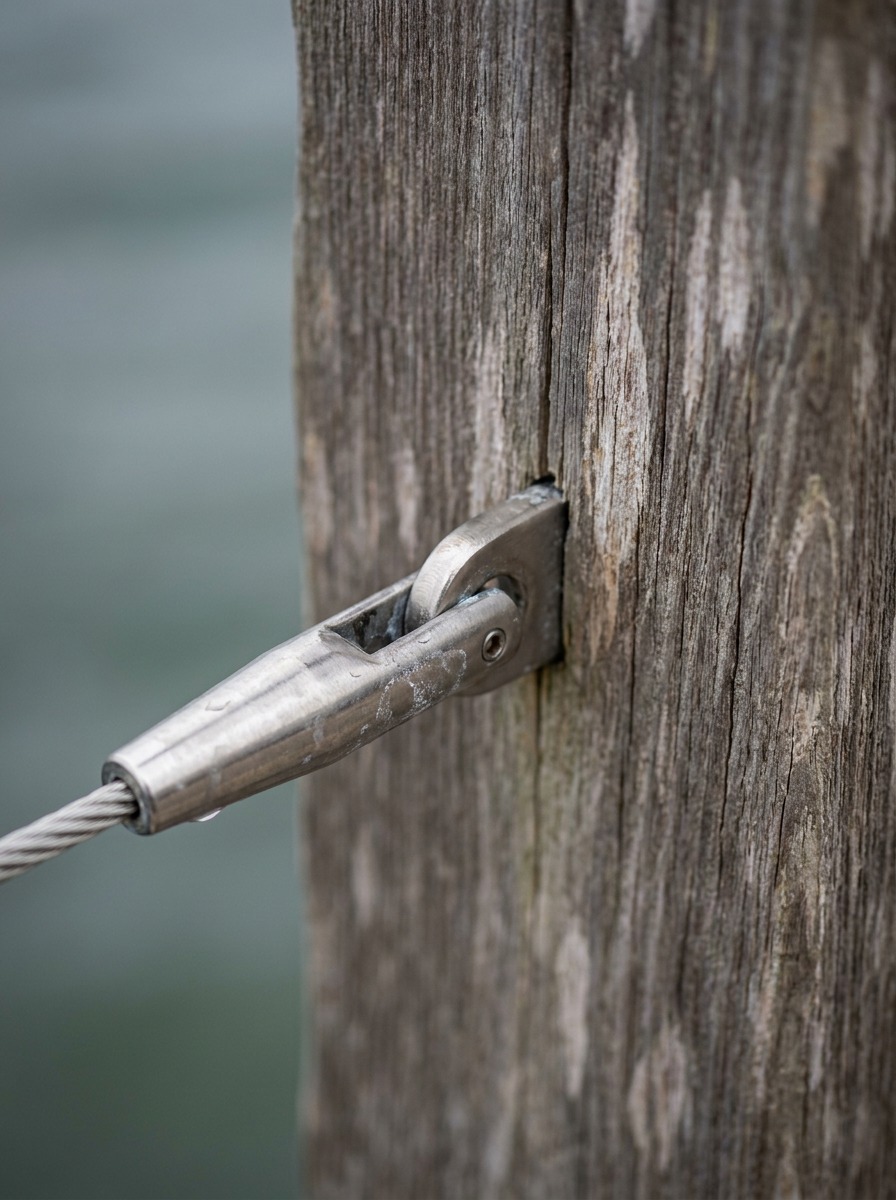
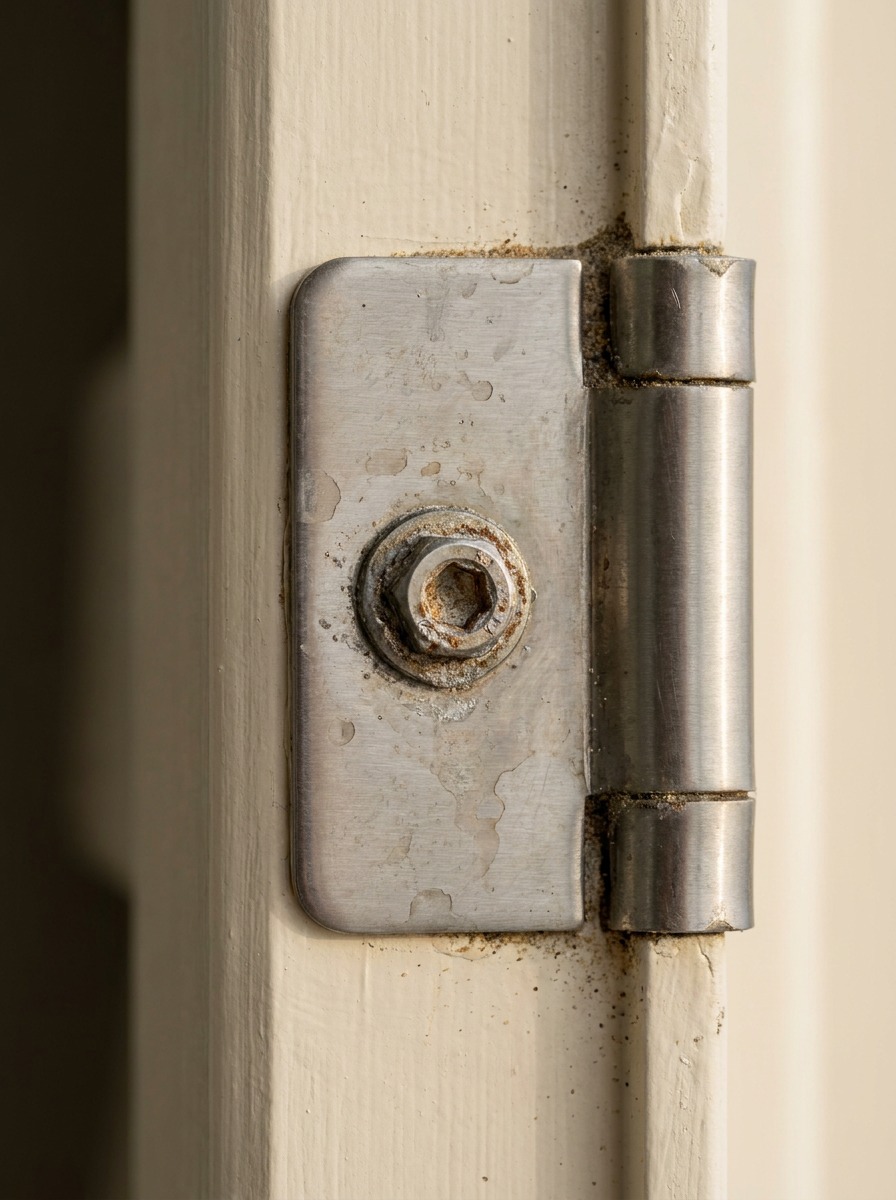
Impact-rated windows earn their premium here too, and not just for storm protection. Lines like PGT’s WinGuard or Andersen’s coastal-rated 100 Series are typically rated for the kind of sustained salt and wind exposure that standard residential windows are not built for. Exterior-grade sealants and non-porous finishes round out the list: anything porous is a moisture trap, and moisture plus salt is the exact combination that ages a house fastest.
What fails first versus what lasts
| Component | Fails first | Holds up |
|---|---|---|
| Fasteners | Zinc-plated screws — rust bleed in 12-18 months | 316 stainless — 25+ years, no visible corrosion |
| Siding | Standard vinyl — chalks/yellows in 5-7 years | Coastal-rated fiber cement — 2-3x longer color hold |
| Trim | Untreated wood — end-grain rot in 2-3 years | PVC / composite — does not rot |
What fails first, in my experience, is almost always the cheapest fastener in an otherwise well-specified assembly. A $40,000 window package undermined by a box of the wrong screws is a genuinely common failure pattern, and it is an entirely avoidable one.
Layout decisions that protect the view and the structure
Material choice only gets you halfway. The other half is layout, and this is closer to my actual background — the same logic that applies when weighing design decisions before you build or renovate in a hot climate applies here too, just with salt replacing dry heat as the primary threat driving the decisions.
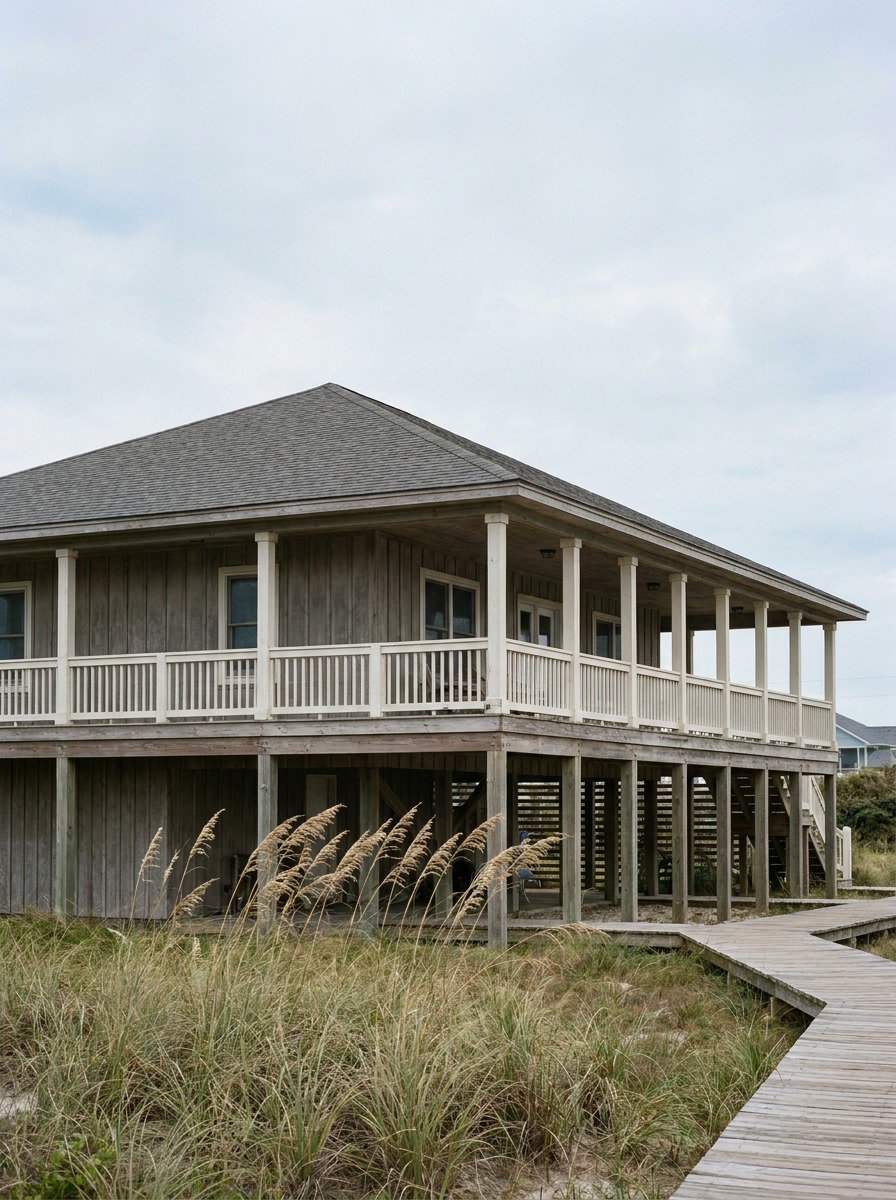
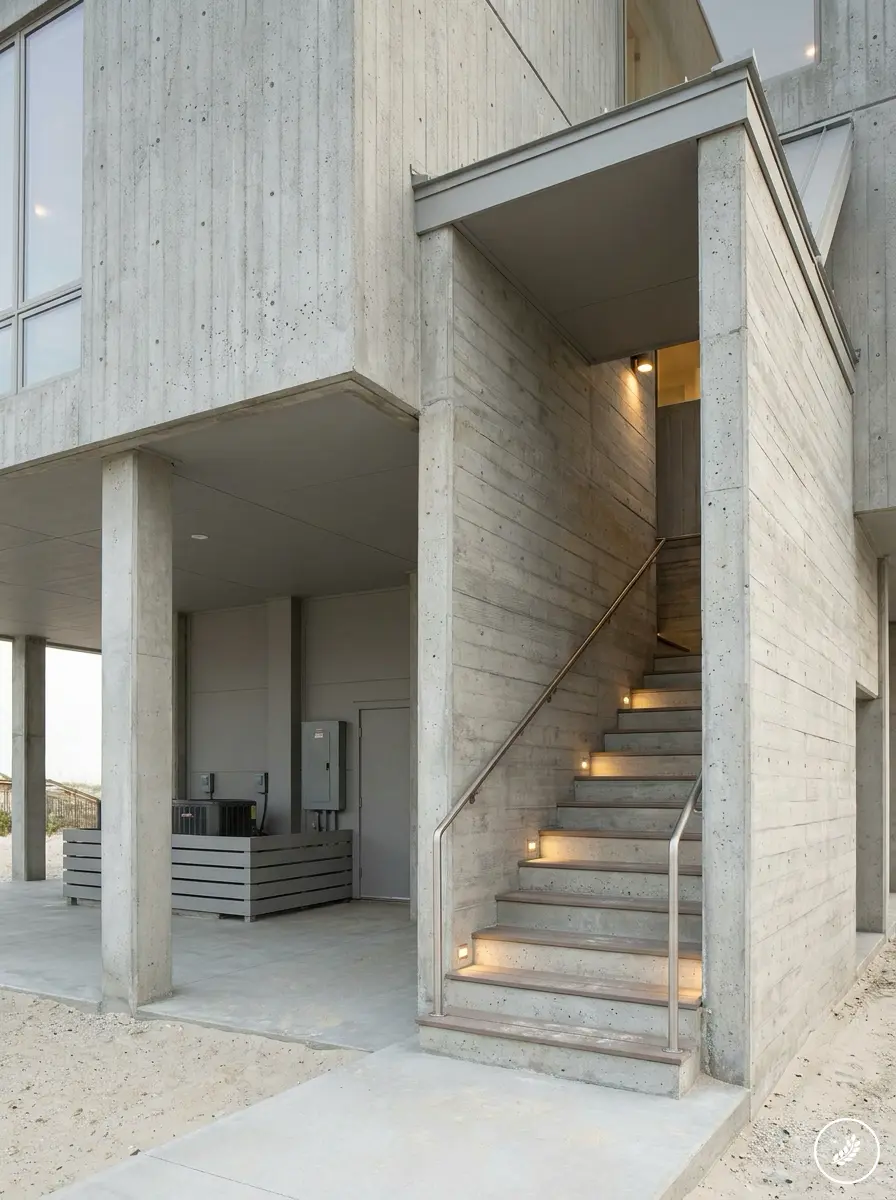
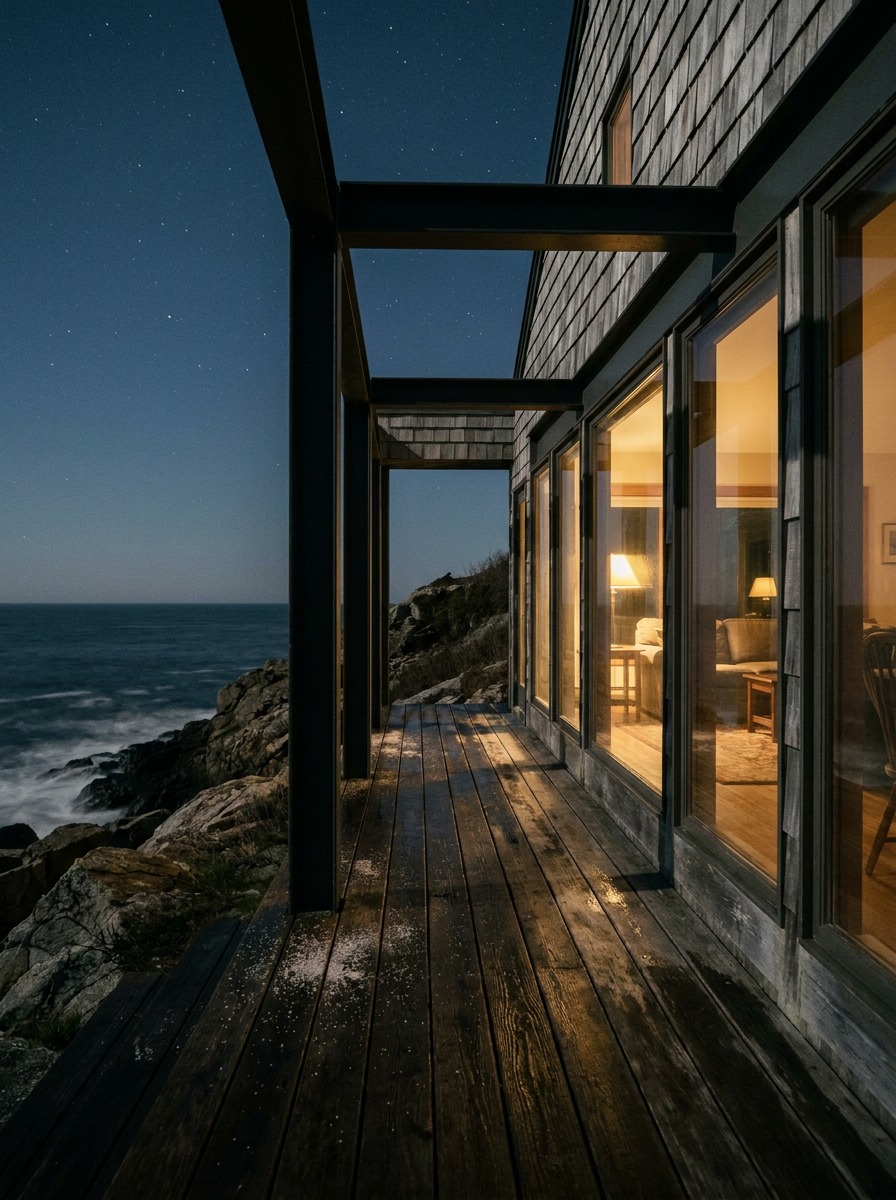
Elevated living spaces do double duty on the Outer Banks: they satisfy flood requirements and they keep your main living areas further from the heaviest salt concentration, which sits closer to grade near open water. Covered porches are not just a style choice either. A deep porch shields windows and doors from direct wind-driven spray, which meaningfully extends the life of everything behind it, from paint to weatherstripping.
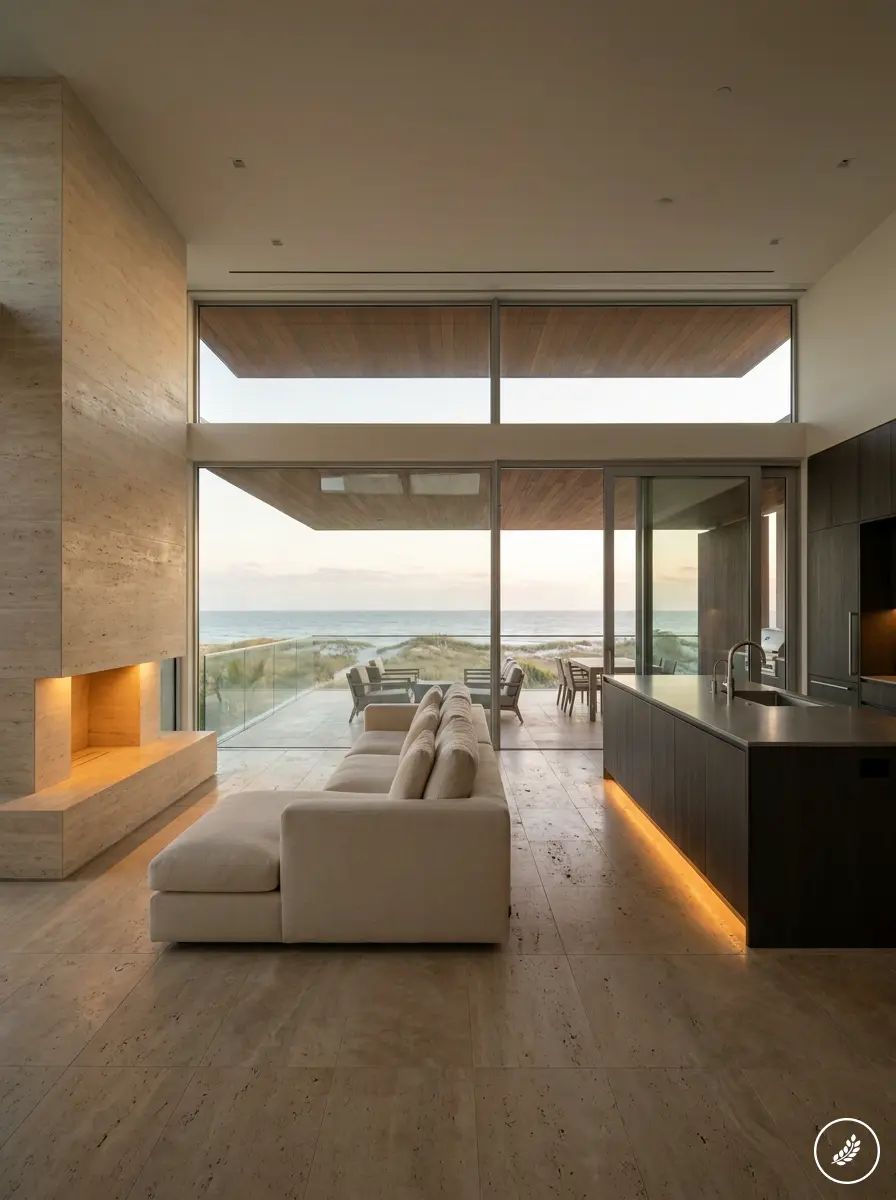
Roofline matters more than most homeowners expect. A hip roof sheds wind more evenly than a gable roof, which is part of why you see so many of them along the Outer Banks despite gables being the more common style inland. A roof designed to shed wind rather than catch it reduces uplift risk during storms and cuts down on the standing water and debris pockets that accelerate material breakdown. Drainage paths need the same attention: water that pools instead of running off carries salt with it and concentrates that exposure in one spot instead of letting it wash away.
A covered porch with six to eight feet of overhang does meaningfully more protective work than a shallow four-foot version, and it is worth the extra framing cost if the budget allows it. The difference shows up less in how the porch looks and more in how long the siding and windows behind it stay in good shape.
Service access is the detail everyone forgets until year three. HVAC units, electrical panels, and anything with moving parts should be positioned where a technician can actually reach them without disassembling a deck rail first. Shaded outdoor rooms, tucked under roof overhangs rather than fully exposed decks, buy you years of extra life on outdoor furniture and finishes too. On offshore sites, private island design planning also needs to account for boat access, utility capacity, and the delivery of replacement components.
Details homeowners usually notice too late
Nobody calls their architect about a squeaky hinge in year one. By year three, when three or four small things go wrong at once, it suddenly feels like the house is falling apart. It is not. It is just catching up on maintenance nobody scheduled.
Hinges and deck connectors are usually the first casualties, especially if they were not specified in stainless from the start. Railings follow close behind, particularly at welds and joints where two dissimilar metals meet and create the conditions for galvanic corrosion. I have seen an aluminum rail bolted directly to a steel post start pitting at the contact point within a single season, simply because nobody isolated the two metals with a proper barrier washer.
Window caulk dries out and cracks faster in this environment than almost anywhere else, and once it fails, water gets behind the frame and the real damage starts. HVAC coils corrode faster near open water too; a unit that would last fifteen years inland might need coil replacement by year eight or nine on an oceanfront lot. Painted wood edges, especially end grain on trim boards, are where rot starts even on otherwise well-maintained exteriors.
| TIP Walk the exterior twice a year with a critical eye, the way you would walk around a car before a long road trip. You are not looking for disasters. You are looking for the small stuff before it becomes the expensive stuff. |
|---|
How to keep a beach house beautiful without fragile finishes
There is a persistent myth that durable coastal design has to look plain, like you traded style for survival. I would push back on that hard. Some of the best-looking coastal houses I have studied get their character from performance choices, not despite them.
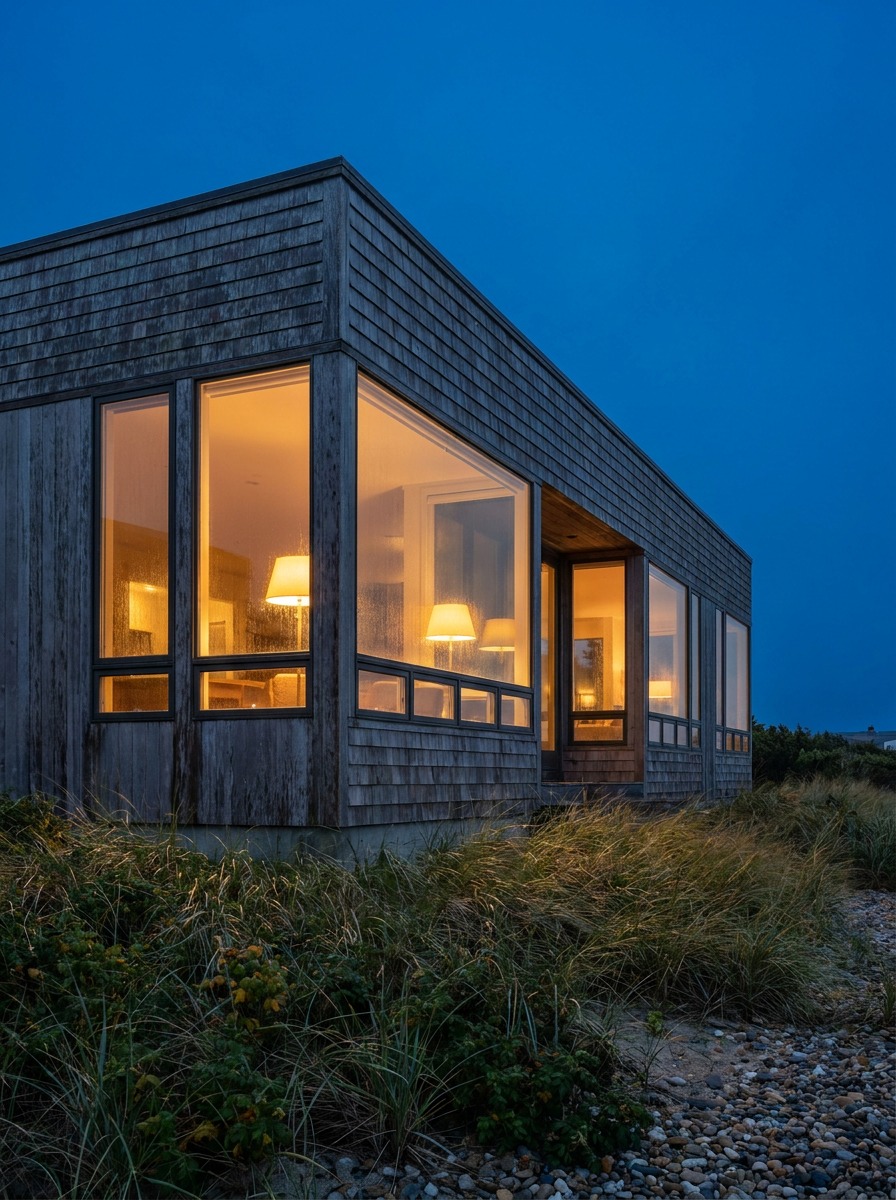
A durable coastal palette leans on muted whites, weathered wood tones, mineral grays, and deeper hardware accents in bronze or black. None of that is a compromise; it is a palette that happens to photograph beautifully and age gracefully at the same time. Texture does more visual work than decoration in this style anyway. Cladding pattern, porch depth, shutter placement, and rail profile all create the shadow lines and visual interest that a fragile decorative element would have tried to fake.
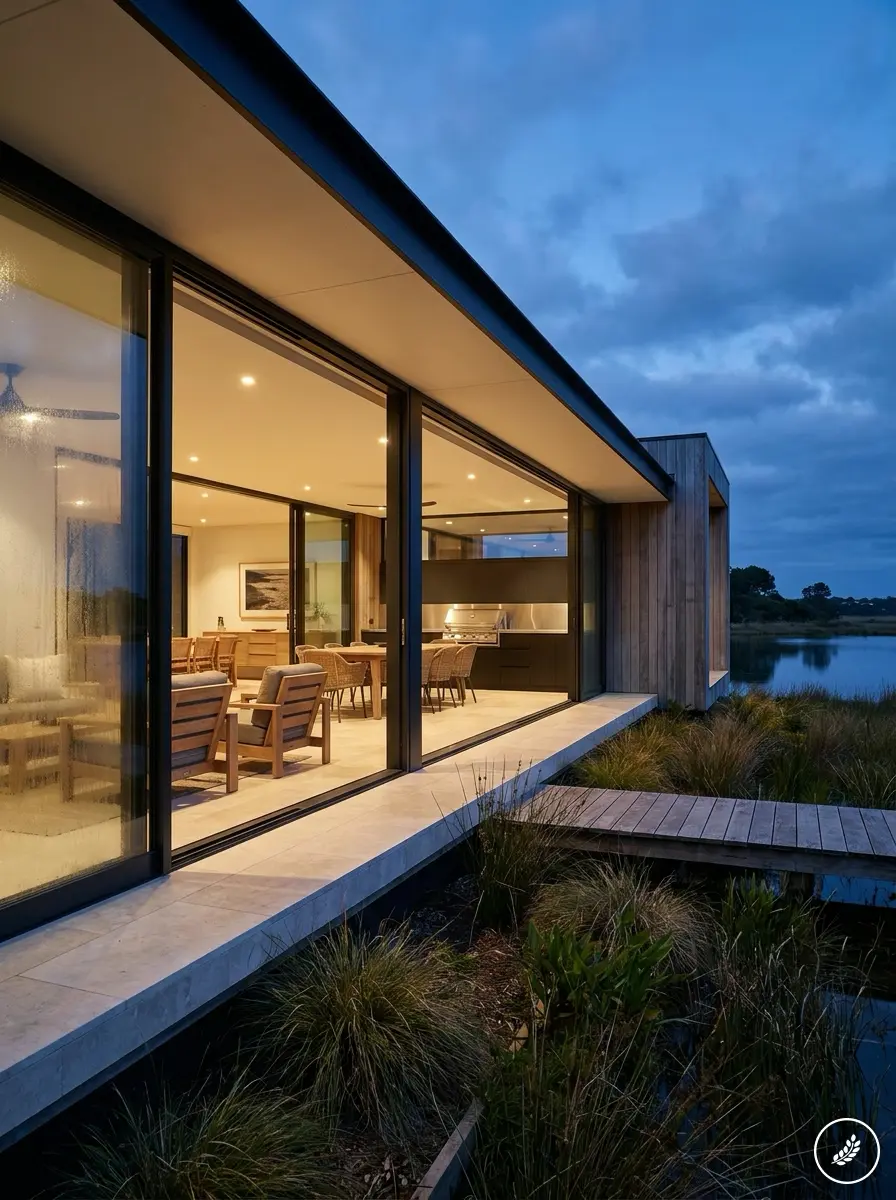
This is where my design training actually shows up most directly. Shadow and light behave on a building facade the same way they behave on any three-dimensional form I have studied since art school, whether that is a car body panel or a piece of jewelry. A deep porch overhang throws a shadow line that changes through the day and gives a facade depth no applied trim detail could match. Get the massing and the shadow lines right, and you do not need fragile ornament to make a house feel designed.
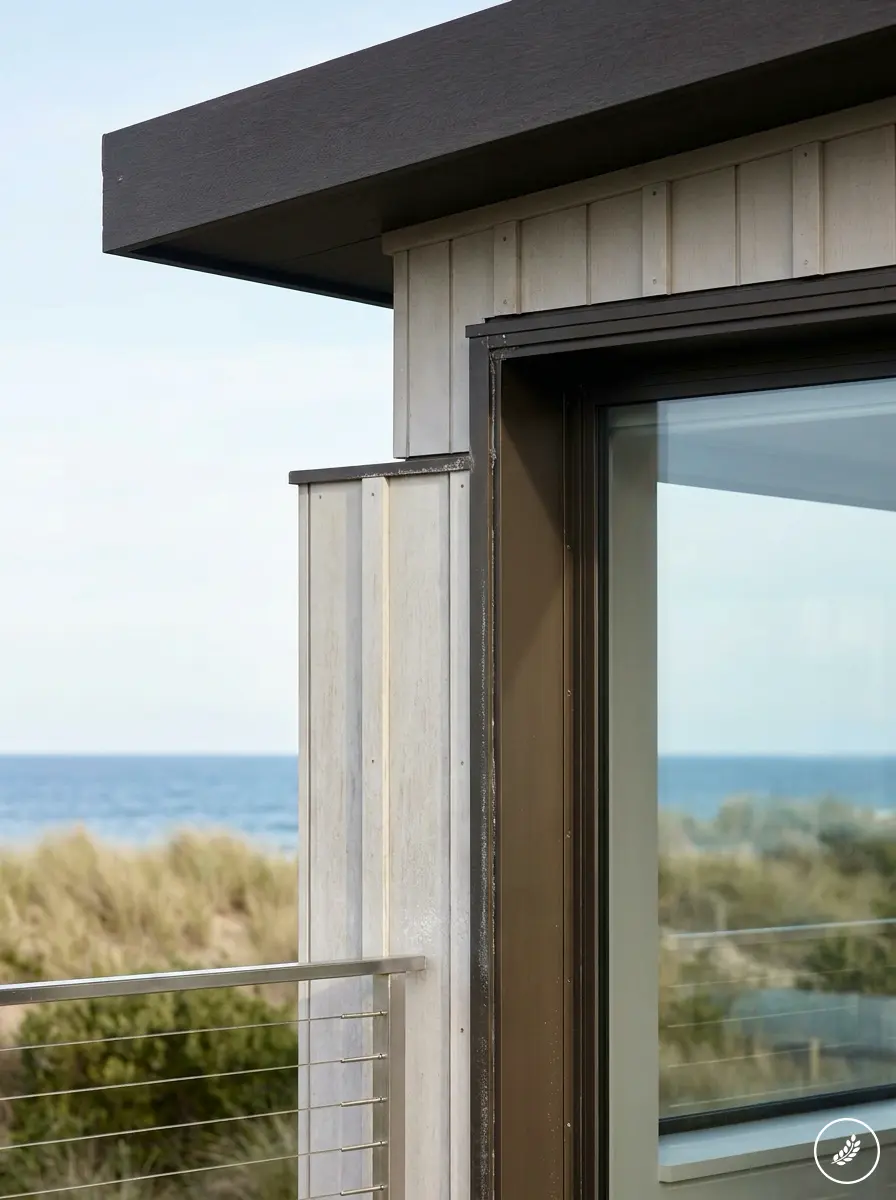
A board-and-batten fiber cement facade in a weathered gray, paired with black bronze hardware and a stainless cable rail, reads as genuinely upscale, and every material in that combination is chosen first for salt resistance. The style is not a compromise bolted onto the performance spec. It came from it.
The honest version of coastal style is one where the aesthetic is a byproduct of getting the performance right, not a layer applied on top of it afterward.
Simple maintenance habits for salt-air homes
Good design gets you most of the way there. A handful of maintenance habits get you the rest, and none of them take much time.
- Rinse windows, railings, and outdoor fixtures with fresh water every few weeks through the summer — a garden hose is enough, and it is worth avoiding a high-pressure washer around caulk lines and window seals, since the pressure that strips salt film off siding can also strip out a bead of sealant that still had years of life left in it.
- Reseal or repaint exterior wood every three to five years rather than waiting for peeling to force the issue; by the time paint failure is visible, moisture has usually already gotten underneath it.
- Check caulking around every window and door each spring, before hurricane season ramps up — a cracked bead caught in April is a five-minute fix; the same crack ignored until August is a soaked wall cavity.
- Have HVAC units inspected more often than you would inland, since salt accelerates corrosion in coils and fasteners at a noticeably faster rate near open water.
None of these habits are dramatic. Skipping them, though, is reliably how a small, cheap fix turns into an expensive one two years later.
Bringing it together
A beach house on the Outer Banks can absolutely be both beautiful and built to last. It just requires treating exposure as the starting point of the design, not an afterthought bolted on once the style is picked. Understand the lot before you draw the house, choose materials that are actually rated for salt rather than materials that just look the part, and build a maintenance habit around the daily reality of the sea breeze pulling salt air across your walls.
Do that, and the house that looks best on the dune line in year one will still look that way in year fifteen, long after the ones built for looks alone have started showing their age.
Frequently Asked Questions
What is the best siding for a coastal house?
Fiber cement, like James Hardie’s coastal-rated lines, is the most reliable choice for salt-heavy environments. It does not absorb moisture the way wood does and will not chalk or fade under constant UV and salt the way standard vinyl does. It costs more upfront than vinyl but holds its color roughly two to three times as long.
How often should you maintain a beach house exterior?
Rinse windows, railings, and fixtures with fresh water every few weeks in summer, reseal or repaint exterior wood every three to five years, and check caulking each spring before hurricane season. HVAC units should get inspected more often than inland homes, since salt corrodes coils and fasteners faster near open water.
Are impact-rated windows worth it for an Outer Banks beach house?
Yes, for two reasons, not just one. They are built for storm protection, but their gaskets and frame alloys are also typically rated for sustained salt and wind exposure that standard residential windows are not. Lines like PGT’s WinGuard or Andersen’s coastal-rated 100 Series hold up where standard windows would pit and leak within a few years.
What materials resist salt air corrosion best?
316-grade stainless steel is the benchmark for hardware, railings, and fasteners, resisting corrosion for decades where standard zinc-plated hardware bleeds rust within a year or two. For siding and trim, fiber cement and PVC or composite boards outperform wood and vinyl, since neither absorbs moisture or rots from the inside out.
How high should a beach house be elevated in a flood zone?
It depends on your flood zone designation, which is why an elevation certificate from a licensed surveyor matters before design starts. A property mapped as VE zone, exposed to wave action, typically requires a higher elevation than one mapped as AE zone. Some Outer Banks lots need eight feet or more of clearance above grade.
- 28shares
- Facebook0
- Pinterest28
- Twitter0
- Reddit0