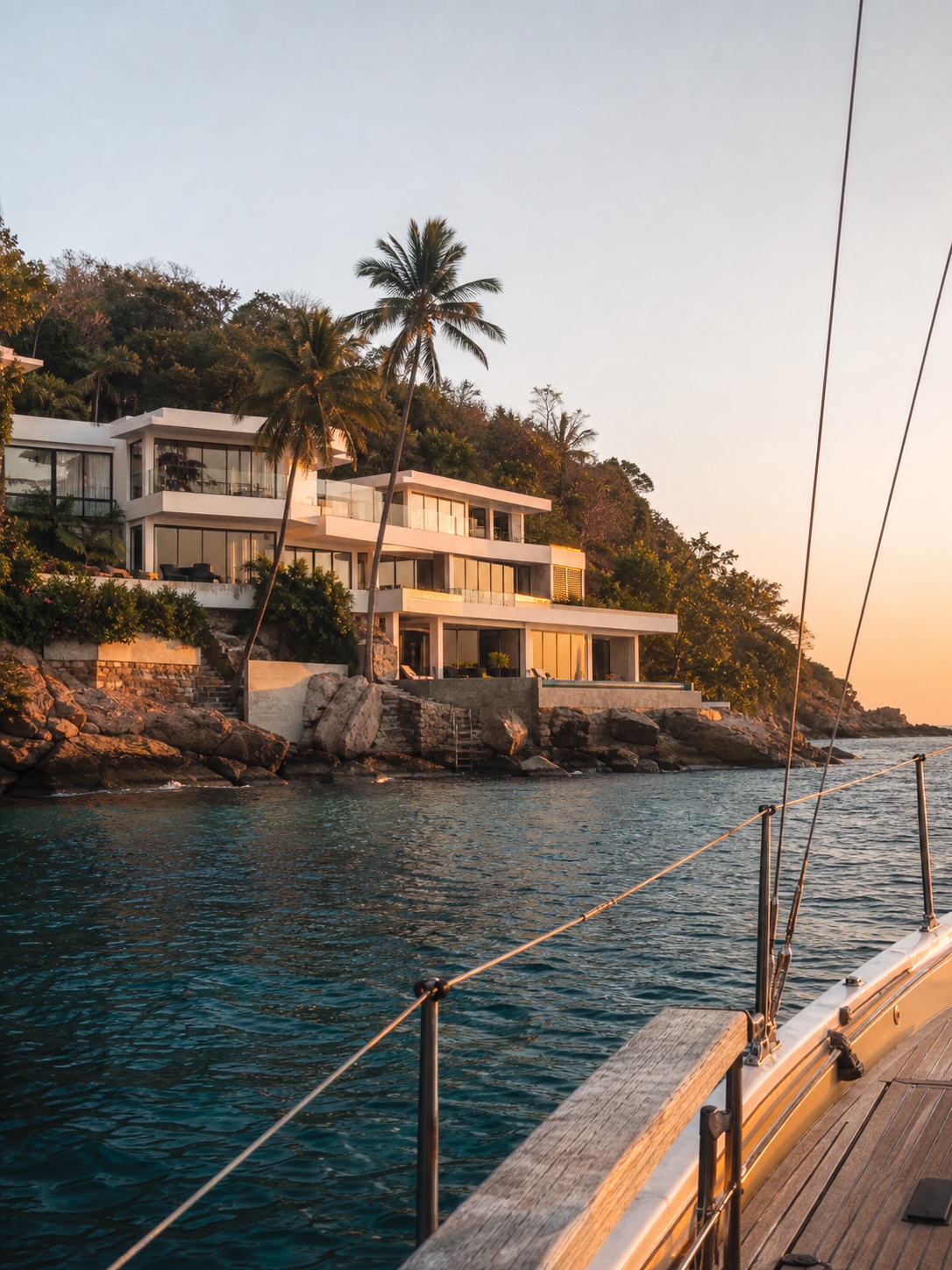
I spent a week on Phuket two seasons ago, mostly sailing between Patong and Nai Harn, and what stuck with me wasn’t the beaches. It was the villas visible from the water, dozens of them, all chasing the same problem I deal with in industrial design every day: how do you make a form work with its environment instead of fighting it.
- What tropical house design actually means
- Reading the climate before you draw a single wall
- Materials that perform, not just photograph well
- Passive cooling as a design discipline, not an afterthought
- Getting the indoor-outdoor transition right
- Outdoor living, kept in proportion
- What Phuket's villa market reveals about the discipline today
- What most tropical house design guides leave out
- Final thought
- FAQ
- Q: What makes a house design tropical rather than just having tropical decor?
- Q: How much does passive cooling actually reduce air conditioning costs?
- Q: What's the best flooring material for a tropical climate?
- Q: Is teak worth the extra cost over other tropical woods?
- Q: Do tropical houses need air conditioning at all?
- Q: What is a sala, and why does it matter in tropical design?
- Q: What's the biggest mistake people make when designing for a tropical climate?
- Q: How does salt air affect material choices near the coast?
A car body has to manage airflow at 100 km/h. A tropical house has to manage airflow at zero, all day, every day, with no engine to help. That’s a harder design problem than most people give it credit for, and the trained eye spots which villas solved it and which ones just rented the view.
I’ve spent years reading proportion the way automotive design demands it: how a roofline sits against a body, how a single overhang either completes a form or just hangs there looking decorative. Phuket’s better villas read the same way once you know what to look for. The overhang isn’t trim. It’s the single hardest-working line in the whole composition.
Most articles on tropical house design treat it as a decorating style: bamboo accents, rattan chairs, a few palm-print cushions. That’s not architecture, that’s a mood board. Real tropical house design is climate-responsive architecture first and aesthetic second, and Phuket’s villa scene right now is one of the clearest live laboratories for watching that principle play out at scale.
What tropical house design actually means
The term gets used loosely, so it’s worth drawing a line. Tropical modern architecture, as a discipline, traces back to Sri Lankan architect Geoffrey Bawa in the early 1960s, who fused modernist minimalism with techniques drawn from vernacular tropical buildings: deep shade, cross ventilation, courtyards, and a refusal to seal a building off from its climate with glass and air conditioning alone. Costa Rican architect Bruno Stagno carried similar ideas forward in Central America around the same period, founding what became the Institute of Tropical Architecture.
That lineage matters because it separates two things people conflate constantly. Tropical style is decoration: woven textures, warm wood tones, a color palette borrowed from the jungle. Tropical architecture is performance: how a building’s massing, orientation, and material choices respond to heat, humidity, monsoon rain, and salt air. A house can look tropical and perform terribly in the heat. A house can look almost minimalist and perform brilliantly, because the performance lives in the section drawing, not the surface finish.
I’ve seen this confusion play out in real client conversations, someone shows me a Pinterest board full of rattan pendant lights and bamboo screens, calls it “tropical design,” and has no idea their floor plan orients the longest glass wall straight into the afternoon sun. The lights are tropical style. The orientation problem is what an architect trained in tropical performance would have caught on day one.
Reading the climate before you draw a single wall
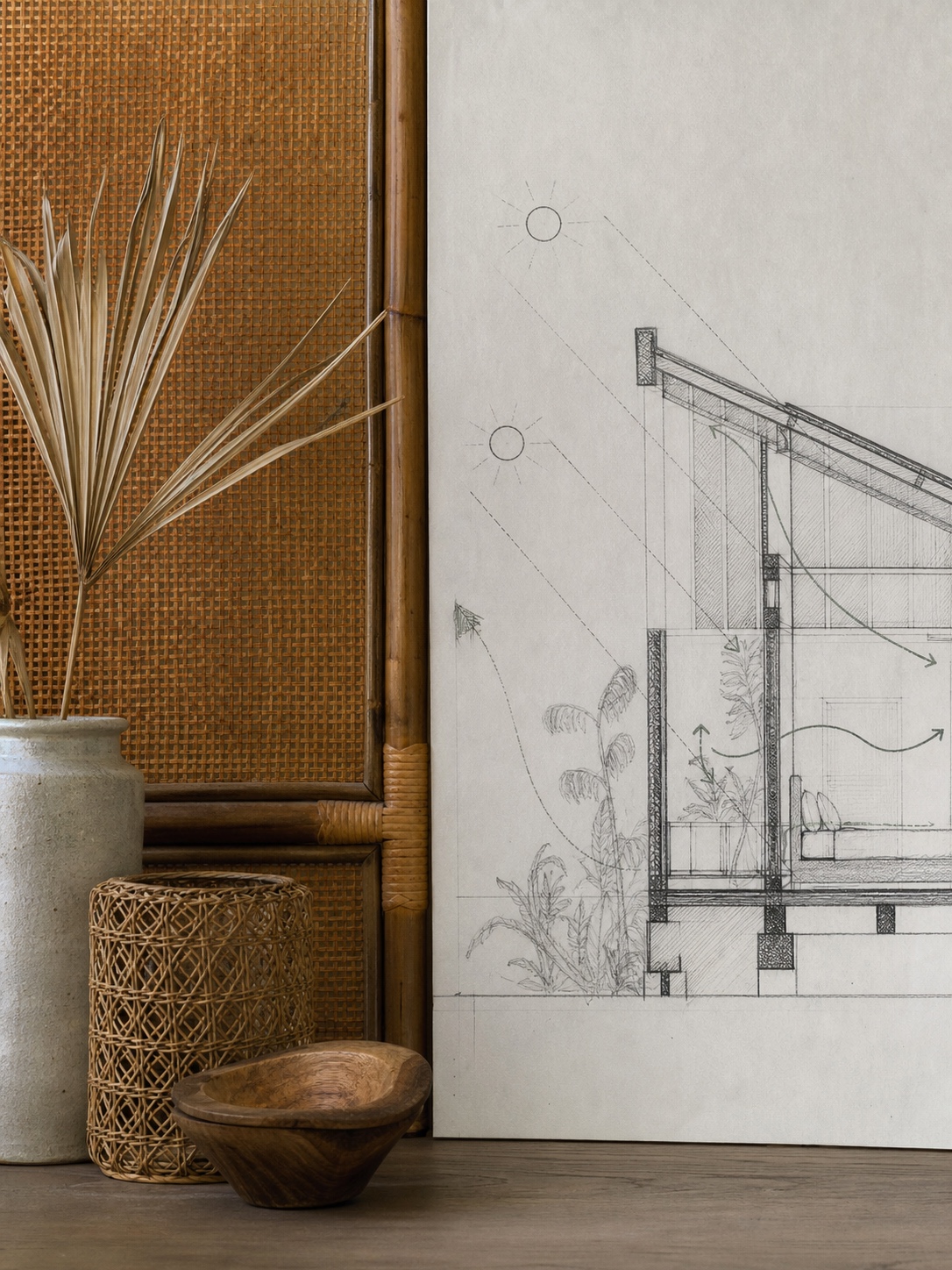
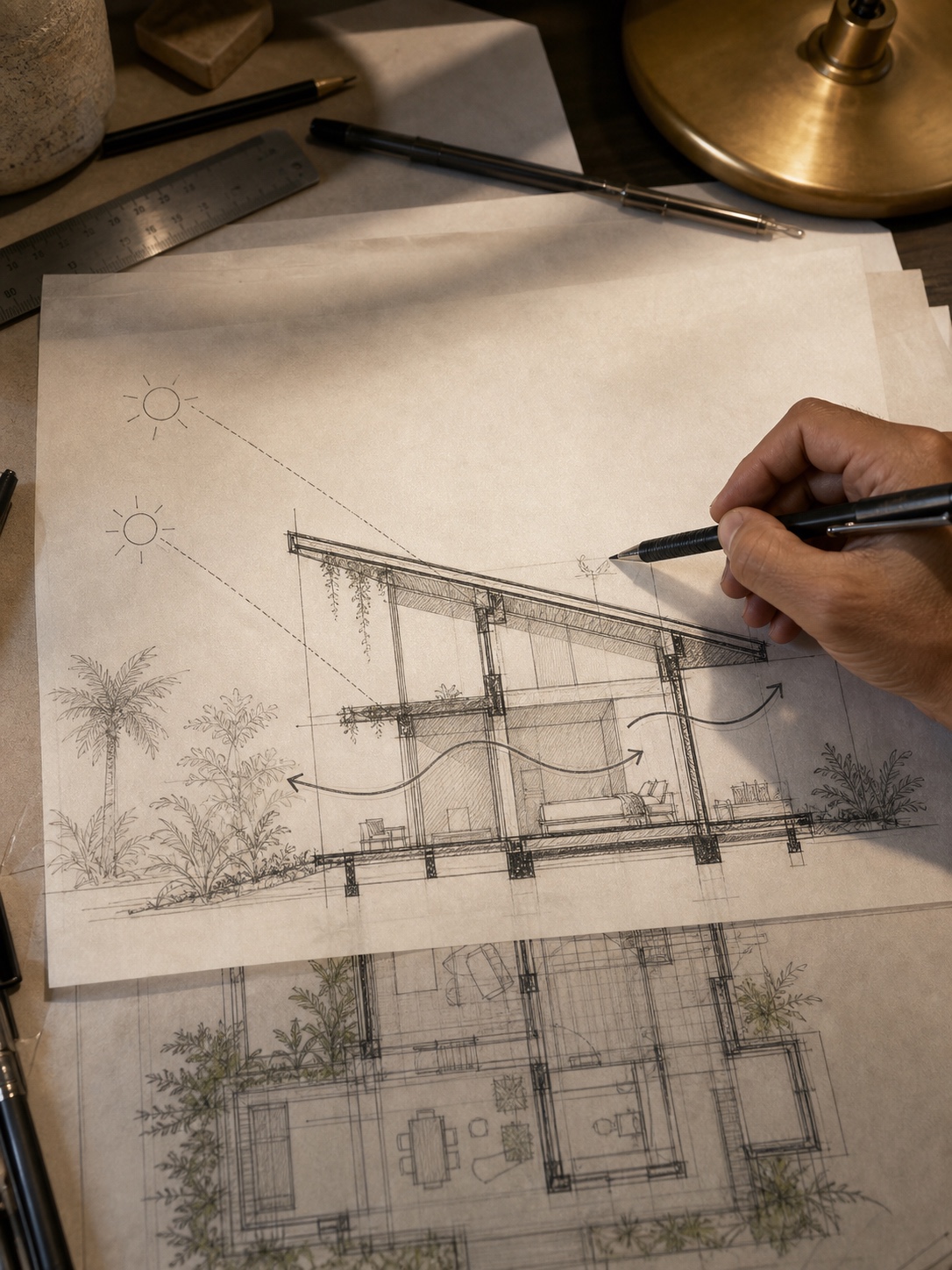
Every architect I’ve talked with in Phuket starts the same way: orientation first, decoration last. The island sits close enough to the equator that sun angle barely shifts through the year, so shading strategy isn’t seasonal guesswork the way it is in temperate climates. It’s a fixed geometry problem you solve once and live with forever.
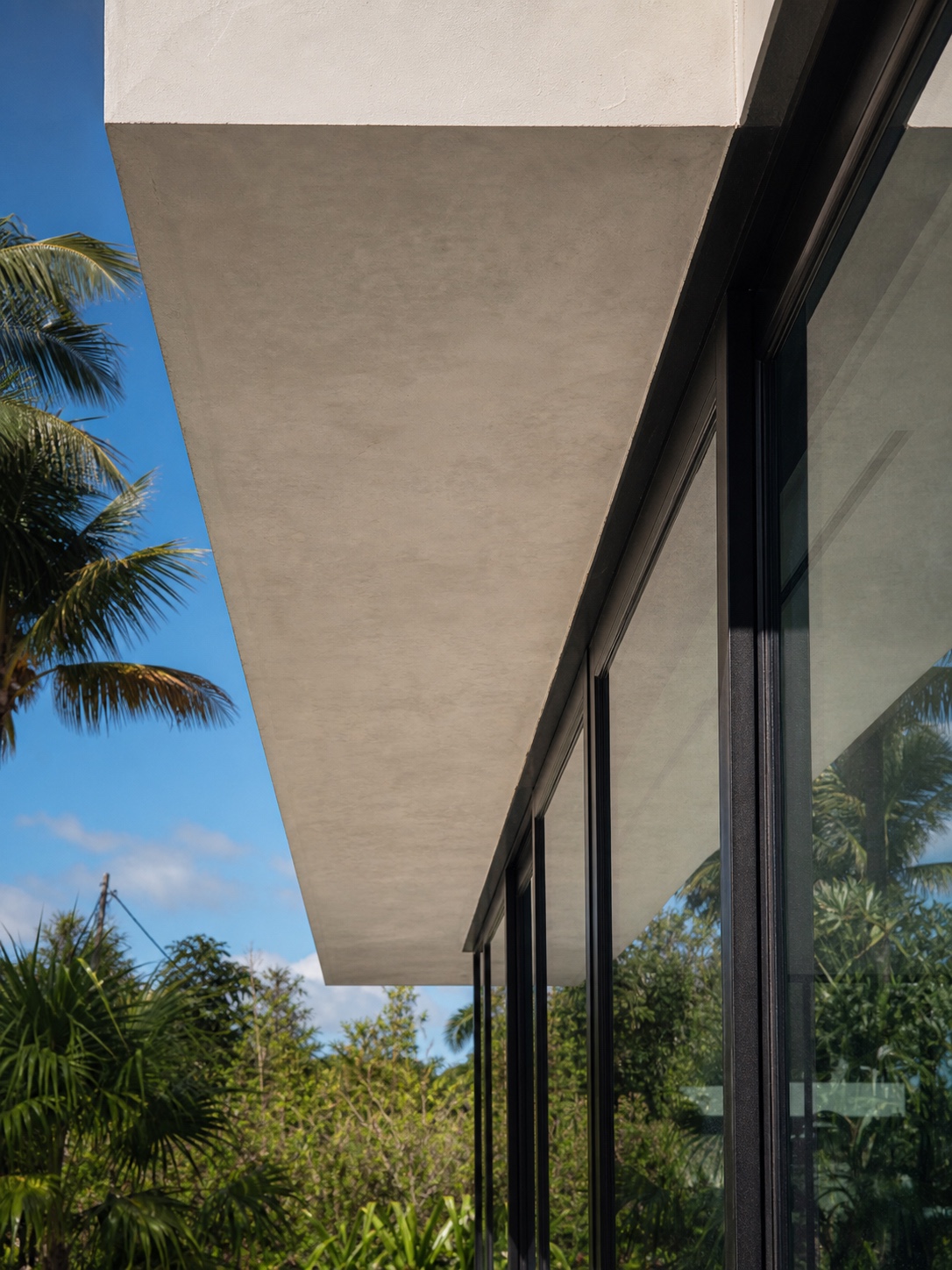
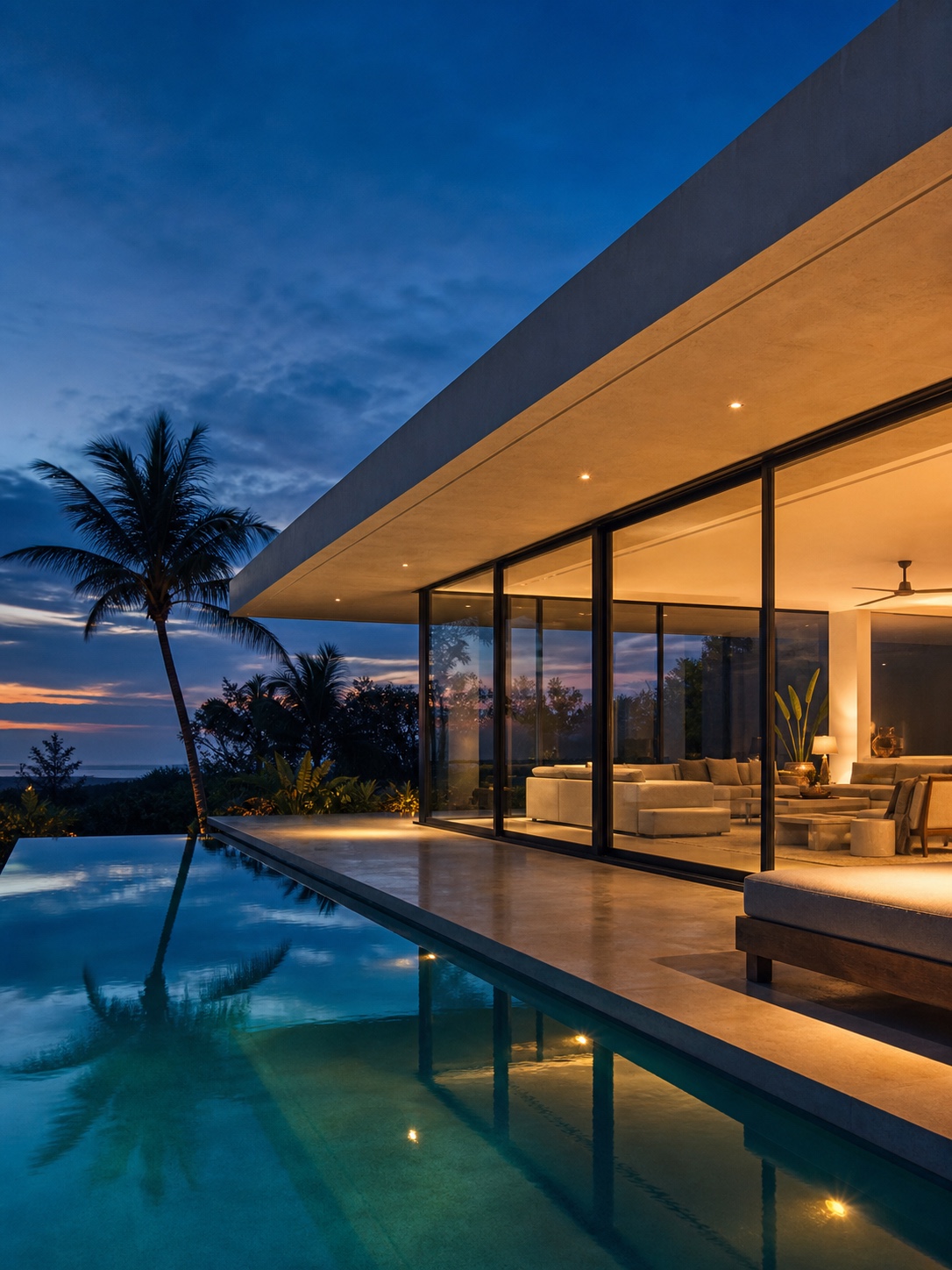
The current generation of Phuket villas (KZ Architecture’s 2026 portfolio in Layan is a good reference point) leans on roof overhangs of two to three meters paired with full-height glazing reaching three to four meters, framed in ultra-thin black aluminum. The overhang does the actual work: it blocks high-angle tropical sun from ever hitting the glass directly while still allowing low-angle morning and evening light through. According to KZ Architecture’s own measurements across delivered projects, that combination of overhangs, natural ventilation, and passive solar architecture cuts air conditioning load by 30 to 40 percent compared to a conventional villa with the same floor area. That’s not a marketing number; that’s a building science result, and it’s the kind of figure most tropical design content never bothers to include.
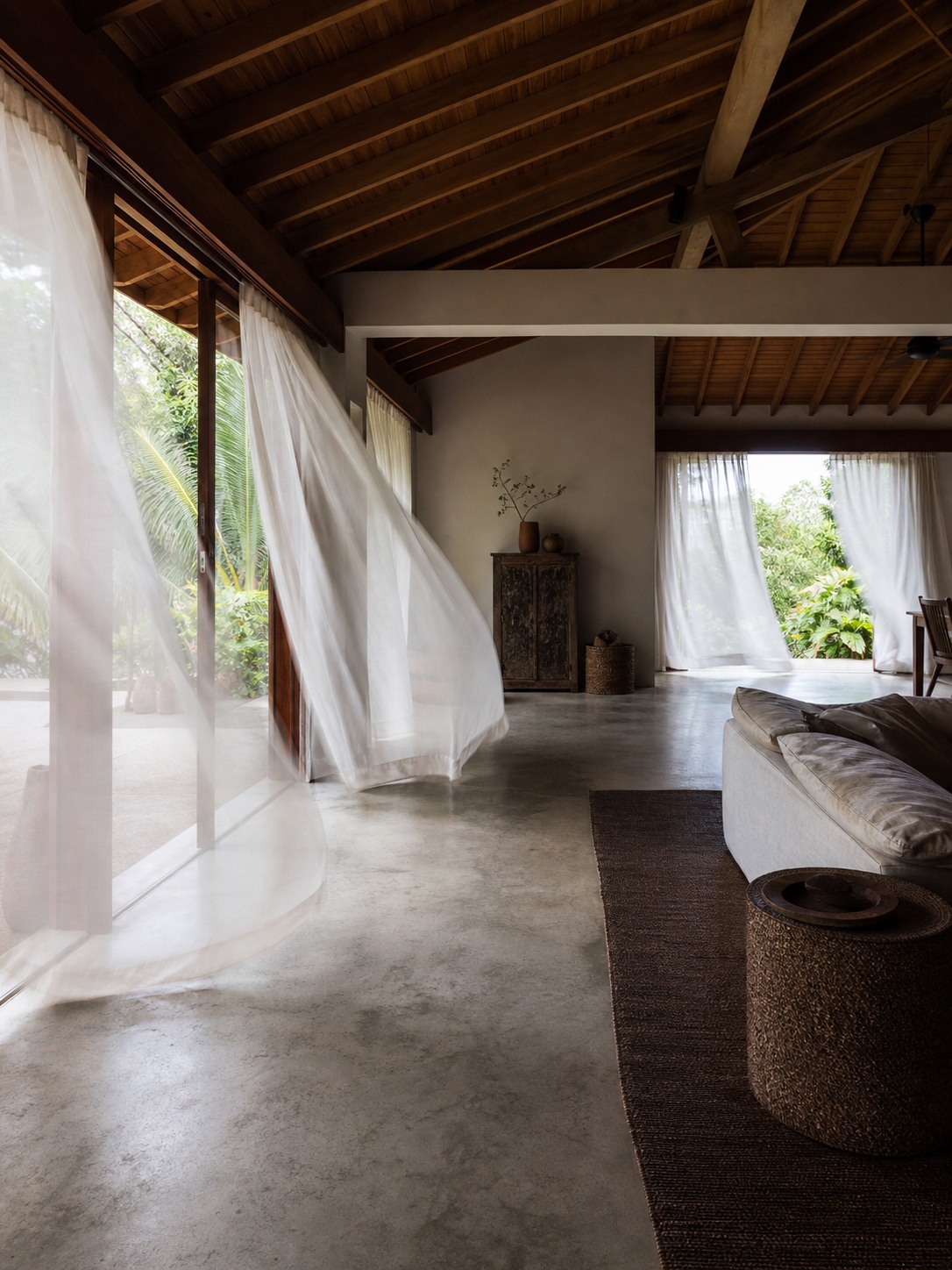
Cross ventilation gets the same disciplined treatment. Openings sit on opposite walls aligned to the prevailing sea breeze, and high ceilings let hot air stack and escape through clerestory vents near the roofline rather than pooling at head height. None of this requires exotic technology. It requires someone willing to actually study wind direction before pouring a foundation, which is rarer than it should be.
I’d push this further than most architects writing about it: orientation analysis should happen before the floor plan, not alongside it. Sketch the sun path and the wind path on the site first, then let the rooms find their place inside those two constraints. Do it the other way around, design the rooms first and rotate the building to fit the lot, and you end up retrofitting shade devices onto a building that was never built to need them in the first place. I’ve watched that exact mistake happen on a renovation project where a beautiful west-facing living room turned into an unusable greenhouse by 3pm every single day.
Materials that perform, not just photograph well
This is where I think most tropical design coverage falls short. Writers list “natural materials” as a single bucket: bamboo, wood, stone, done. In practice, every material on a Phuket villa is chosen for a specific thermal or durability job, and the choices conflict with each other constantly. Granite holds heat differently than limestone. Teak resists humidity in a way cedar simply doesn’t. Salt air off the Andaman Sea will eat cheap aluminum hardware within a couple of monsoon seasons, which is why broader coastal design ideas have to treat materials as performance choices, not just surface style.
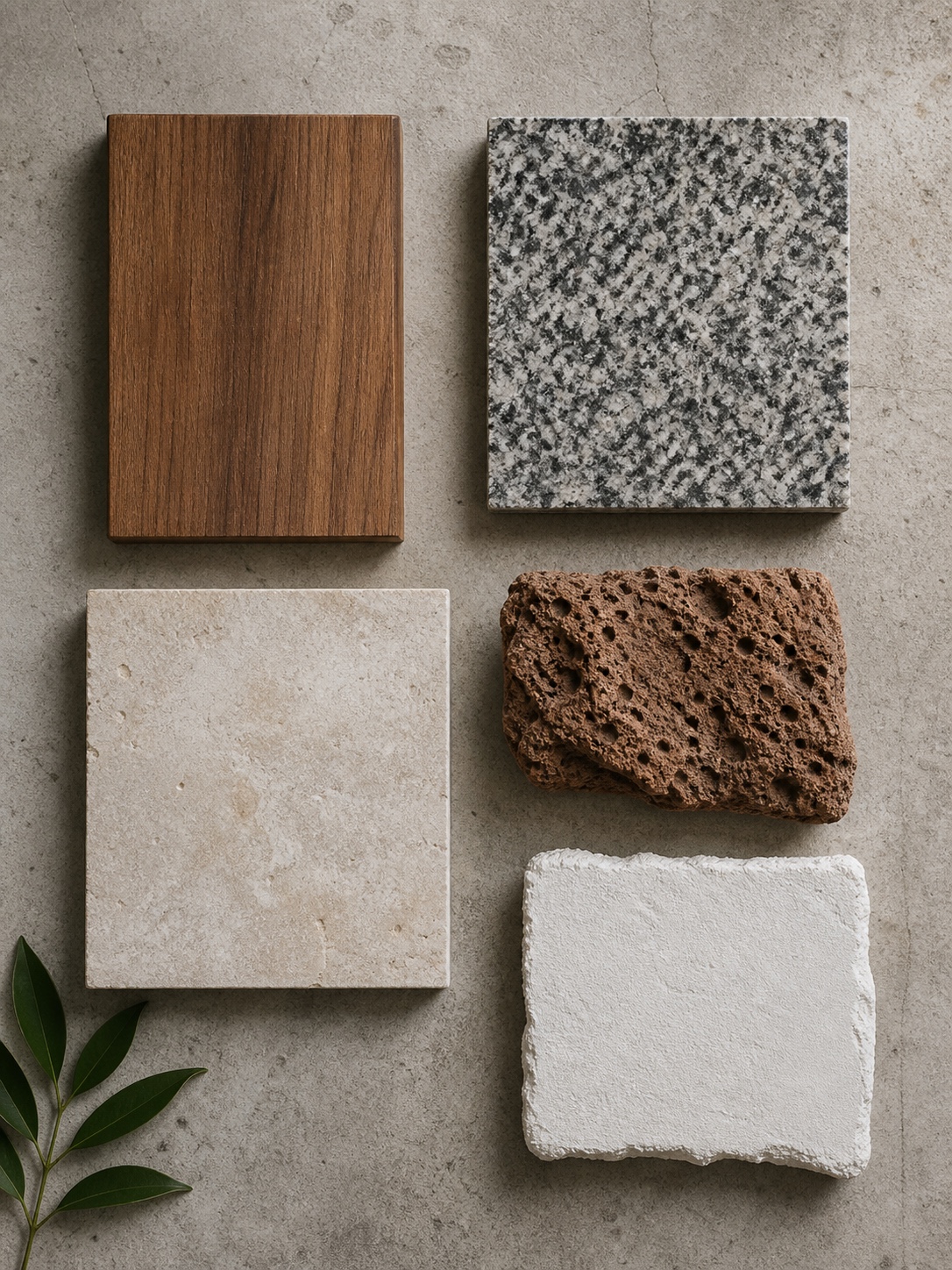
| Material | Best application | Thermal behavior | Durability notes |
|---|---|---|---|
| Teak | Decking, structural beams, window frames | Naturally insulating, low heat transfer | Resists humidity and pests far better than softer woods like cedar |
| Granite | Kitchen counters, high-traffic floors | Dense, stores heat (use in shaded zones) | Scratch and heat resistant, very low maintenance |
| Limestone | Flooring, exterior cladding | Stays notably cool underfoot | Ages gracefully but needs sealing against staining |
| Laterite | Feature walls, low garden walls | Naturally cool to the touch even in afternoon heat | Locally quarried in parts of Thailand, rooted aesthetic |
| Lime plaster | Interior and exterior wall finishes | Breathable, helps regulate humidity | Needs a skilled applicator, ages with a soft patina |
| Ceramic tile | Bathrooms, transitional indoor-outdoor floors | Cool underfoot, fully water resistant | Trusted staple precisely because it shrugs off humidity |
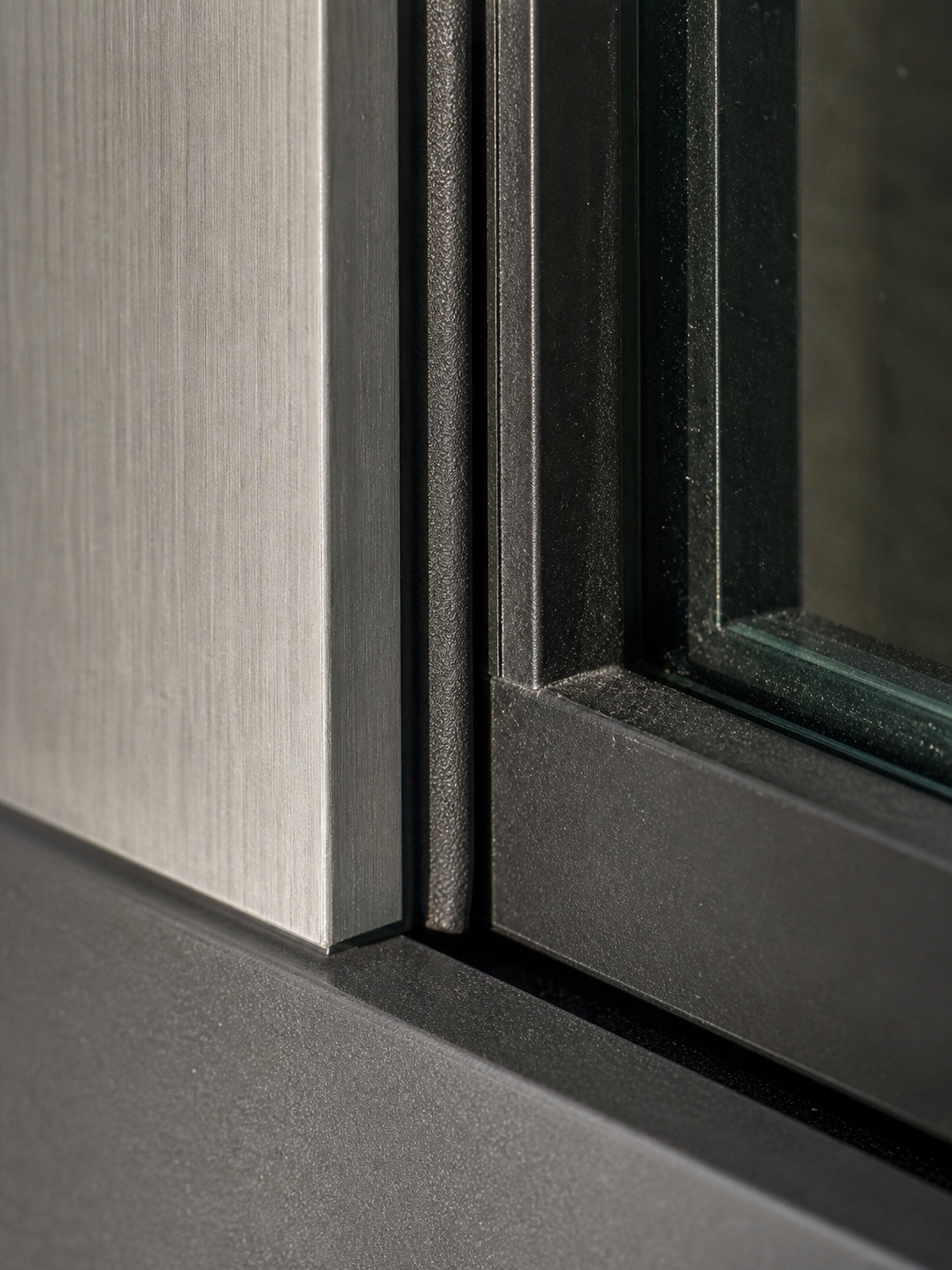
| Thermal-break aluminum | Window and door framing | Cuts conductive heat transfer at the frame | Powder-coated versions resist coastal salt corrosion |
I’d add one design note from outside architecture entirely: in automotive interiors, you learn fast that two materials touching each other create a thermal bridge, a path for heat to sneak through a joint you thought was sealed. Phuket’s better villas treat the building envelope the same way, breaking that bridge at every window frame and roof junction instead of trusting a single “tropical-looking” material to solve everything on its own.
Passive cooling as a design discipline, not an afterthought
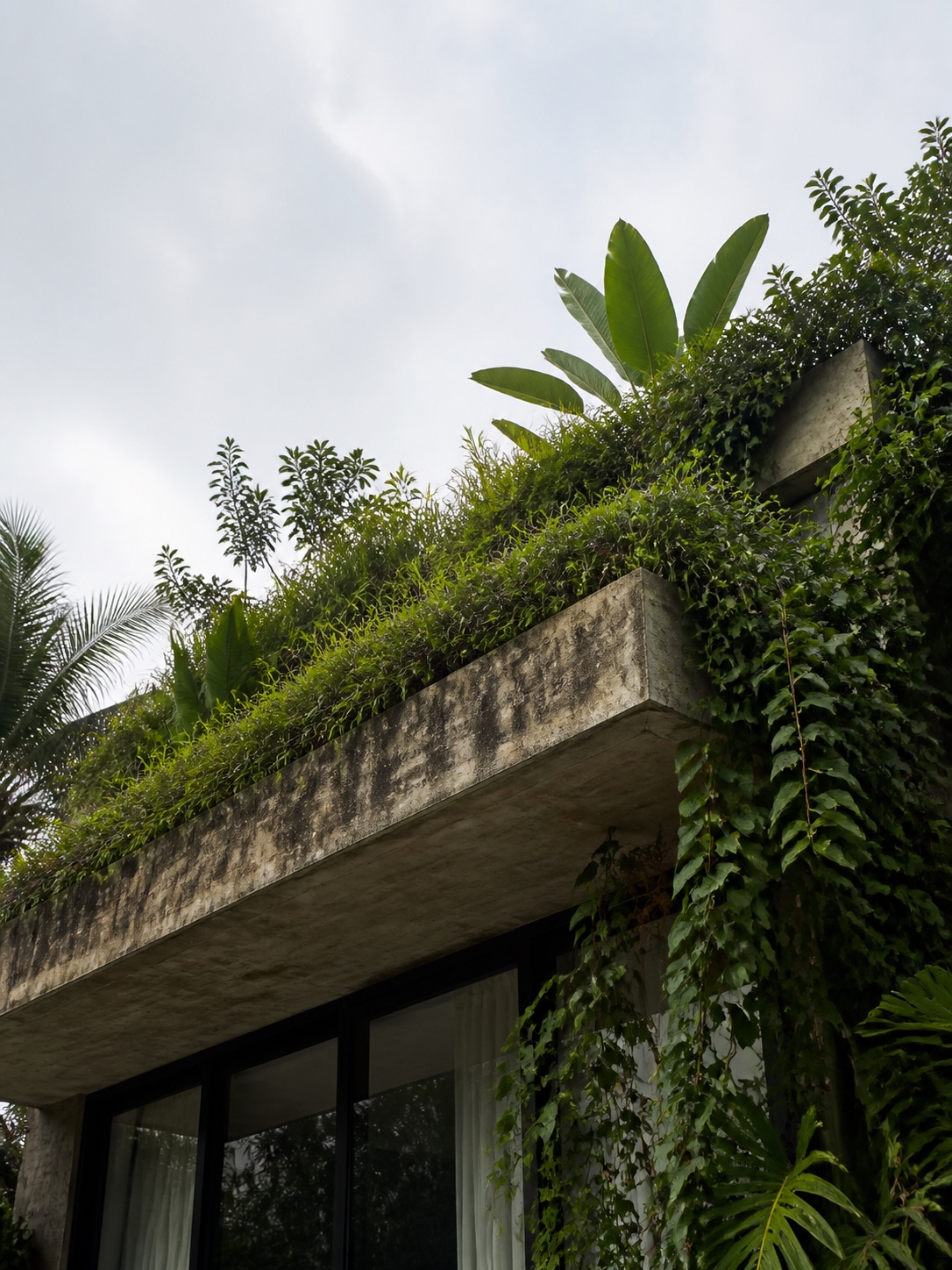
Air conditioning exists in nearly every Phuket villa, but the good ones treat it as a backup system, not the primary strategy; the same envelope-first logic shows up in summer living comfort projects where shade, insulation, and airflow do the first round of work. Light-colored, porous exterior materials reduce surface heat absorption and let some water infiltrate rather than running straight off into drainage systems already strained by monsoon volume. Green roofs and climbing vegetation add another shading layer above the structural roof itself; Rosewood Phuket’s restoration project along Emerald Bay covers nearly 15 percent of its building footprint in green roofing for exactly this reason.
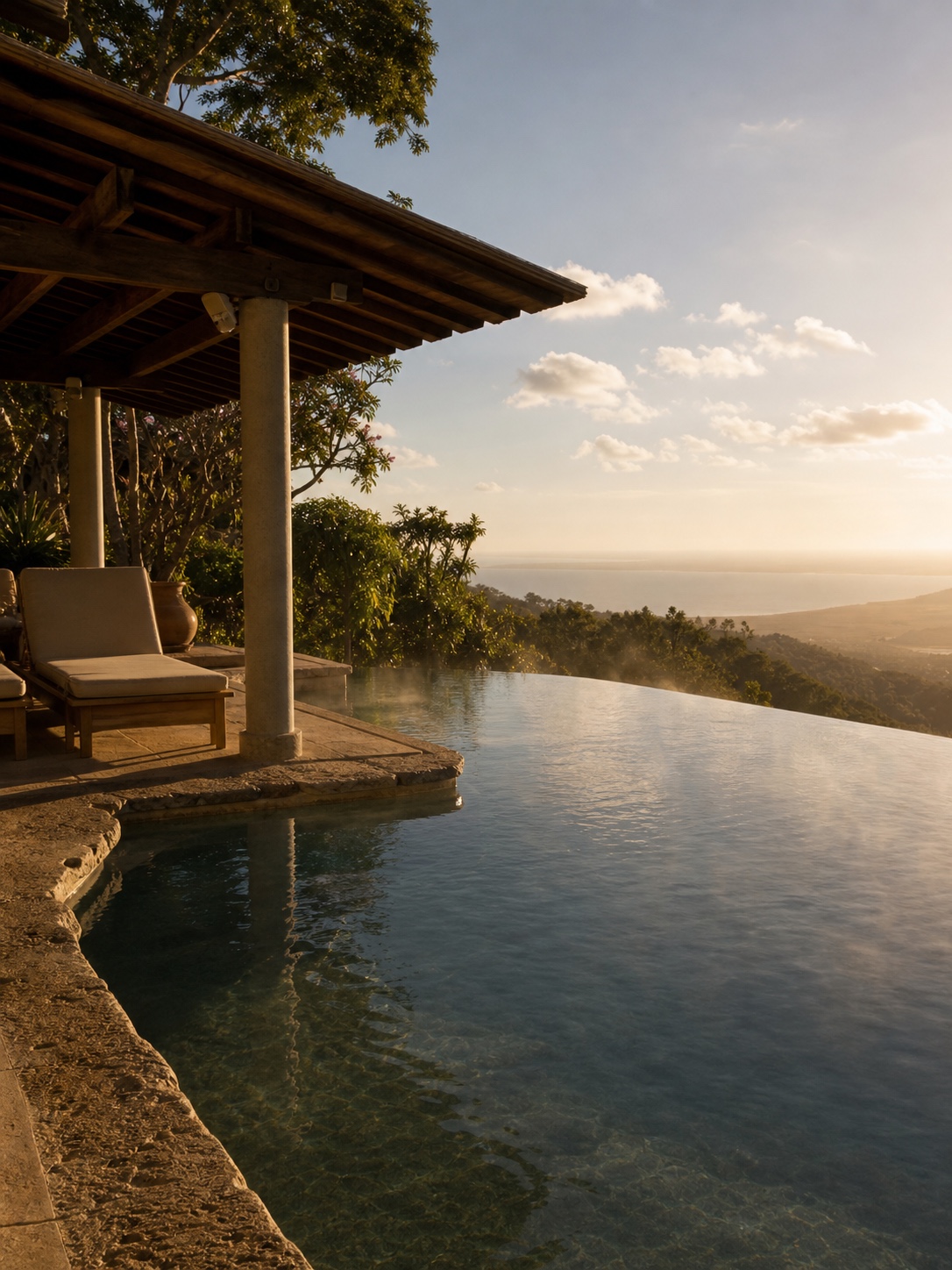
Water features do double duty too, evaporative cooling as air passes over a pool or reflecting pond, and a genuine visual anchor for the indoor-outdoor sightline. I’ve watched homeowners install an infinity pool purely for the photo and skip the orientation work that would have actually made the space comfortable to sit beside at 2pm. The pool looks the same in both cases. Only one of them is usable without retreating indoors to the air conditioning by midday.
Getting the indoor-outdoor transition right
This is the detail that separates a tropical house from a house with some tropical decoration bolted on. Large sliding doors and folding partitions aren’t a luxury feature, they’re load-bearing parts of the climate strategy, because a wall that opens fully turns an interior room into a shaded extension of the outdoors during the cooler parts of the day, the same design move behind homes that are deliberately opened to the outside.
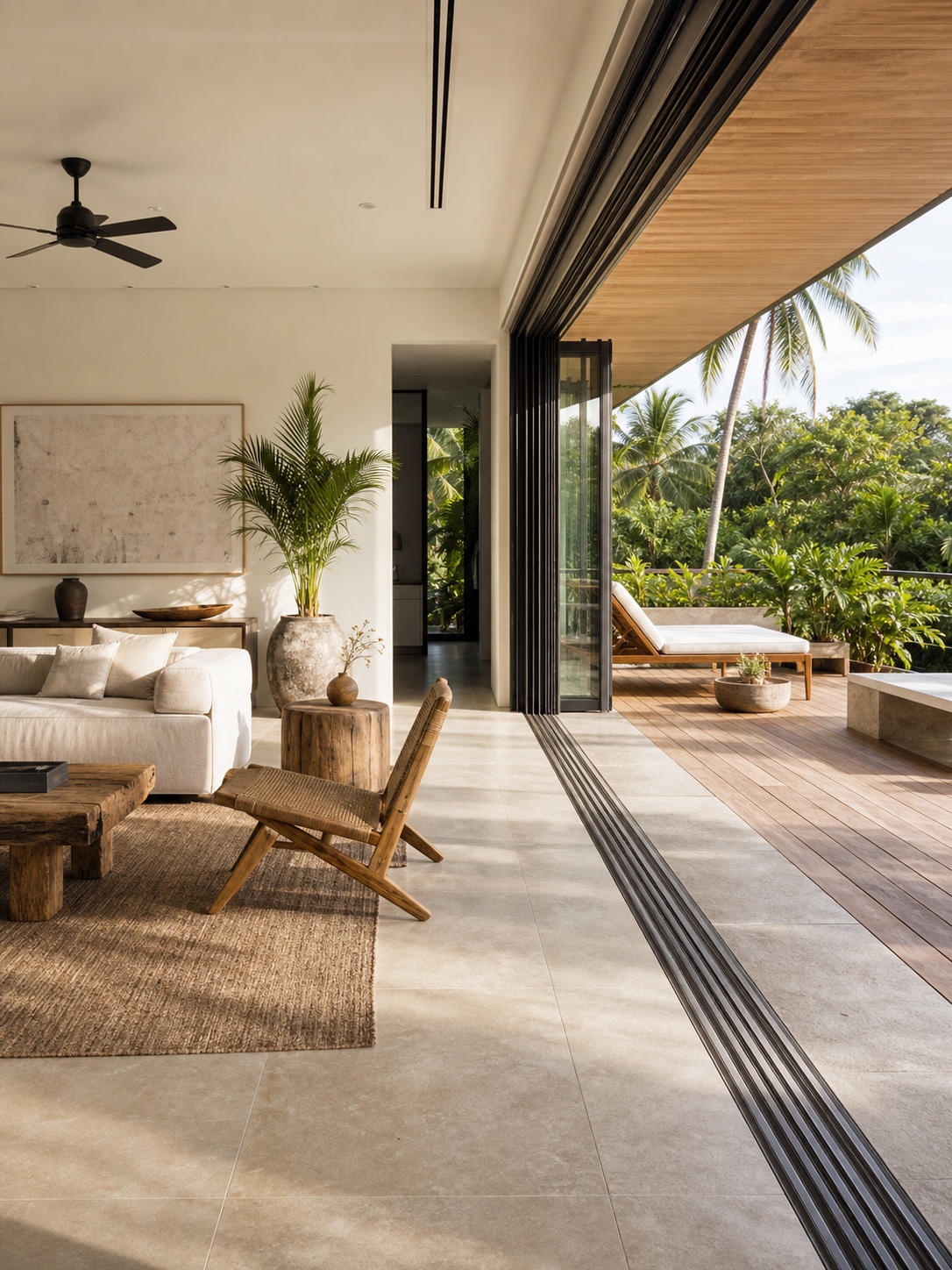
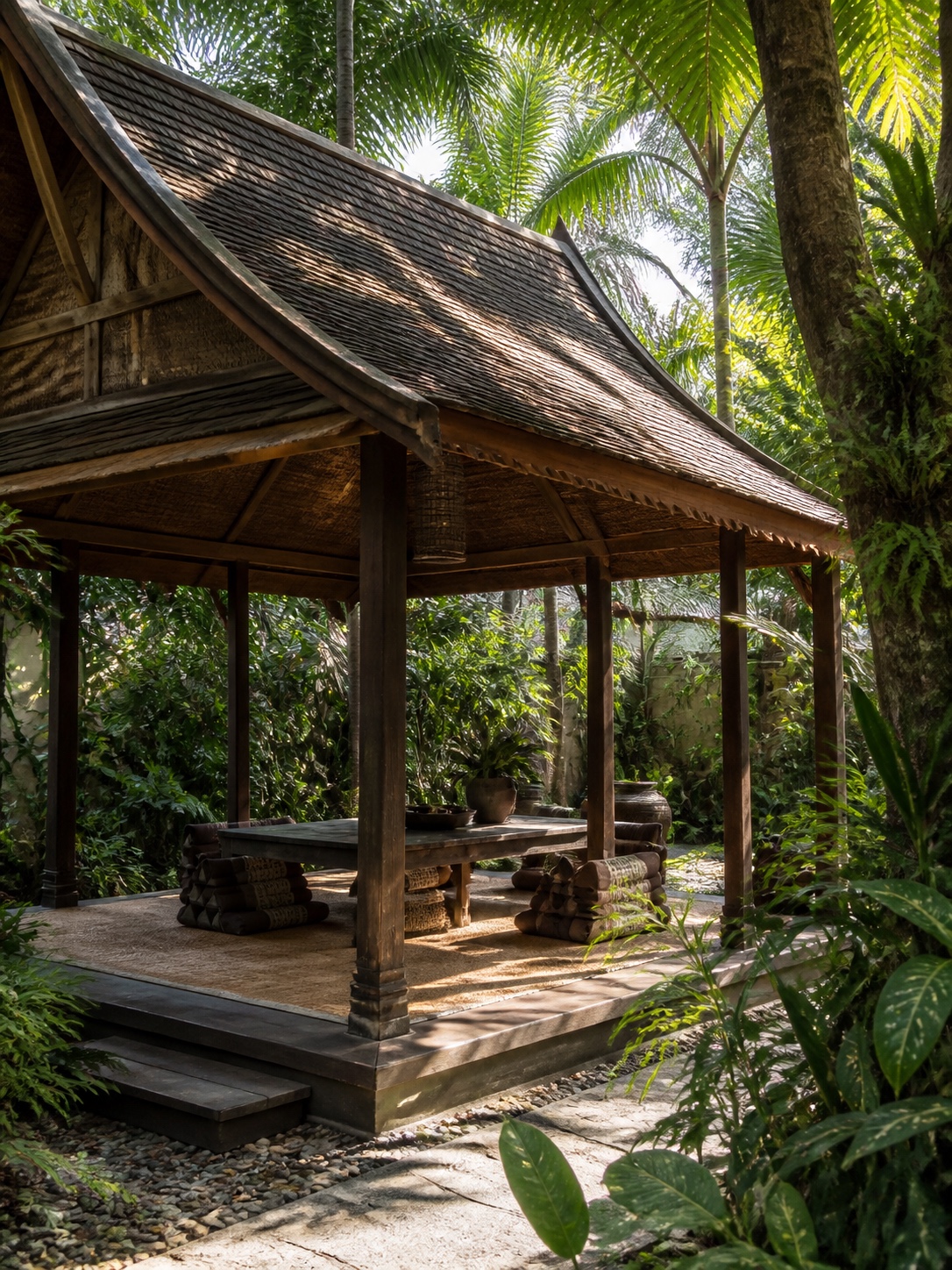
Verandas and covered terraces need to function as real rooms, not afterthought patios. I’ve seen plenty of beautiful covered outdoor spaces sit empty because nobody gave them a defined purpose, a dining table, a daybed, a reading corner, something that pulls people out there instead of leaving the space as decorative threshold. The best Phuket villas treat the sala, the open-sided pavilion structure borrowed from traditional Thai building, as the actual social heart of the property, with the enclosed air-conditioned rooms playing a supporting role for sleeping and storage.
The transition zone itself deserves attention too, the strip of flooring right where indoor tile meets outdoor deck. Get the level wrong by even a couple centimeters and rainwater pools at the threshold during monsoon season; get the material wrong and that one transition strip becomes the spot where every design decision in the house either reads as intentional or starts to look like an afterthought. It’s a small detail, and it’s exactly the kind of small detail that separates a villa built by someone who’s done this fifty times from one built by someone who hasn’t.
Outdoor living, kept in proportion
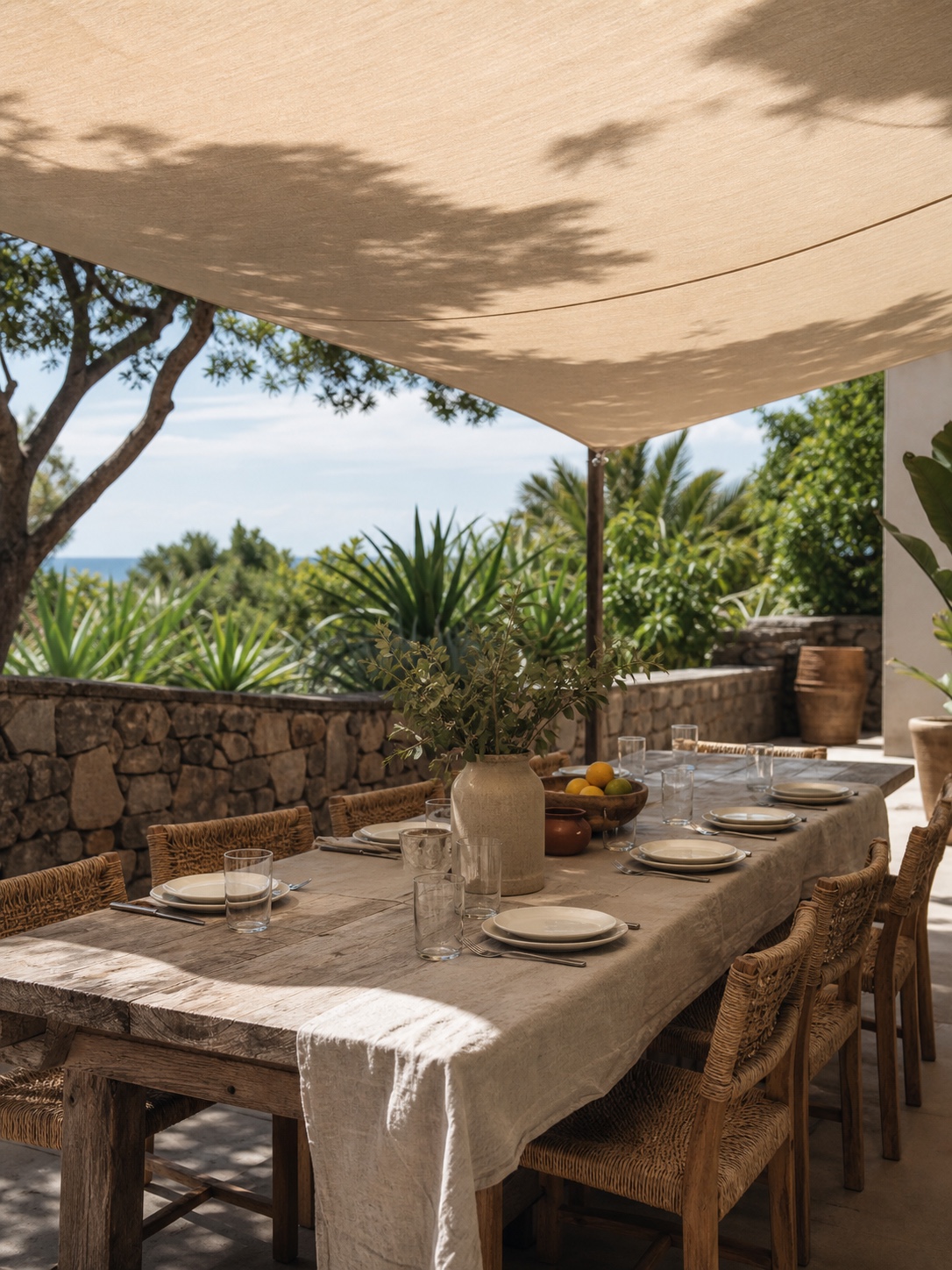
Outdoor living deserves its own mention, but it’s one ingredient in tropical house design, not the whole recipe. A shaded dining pavilion, a daybed under a canvas sail, an outdoor kitchen positioned downwind of the main living space so cooking heat and smoke drift away rather than into the house: these are the practical layer sitting on top of the climate-responsive bones already discussed above. Get the orientation and shading wrong, and no amount of nice outdoor furniture fixes it. Get it right, and the outdoor space barely needs styling to feel finished.
What Phuket’s villa market reveals about the discipline today
Spend time browsing Phuket’s villa market and a pattern shows up fast across very different price points and locations: nearly every recent listing leads with the same vocabulary, full-height glazing, infinity-edge pools, vegetation framing the structure rather than competing with it. That’s not coincidence. It’s the market responding to the same building-science pressures architects have been documenting for years: buyers in this climate now expect a home that performs, not just one that photographs well in golden hour light.
It’s a useful read for anyone studying tropical architecture even without commercial intent, because a competitive villa market forces a kind of design accountability that academic case studies sometimes lack. If you’re researching the practical side, sites covering options to buy villa in Phuket tend to surface floor plans and section drawings that show the overhang and ventilation strategy clearly, which is more instructive than most architecture blogs manage in a full article. I treat these listings the way I’d treat a competitor teardown in product design: not as a shopping exercise, but as a fast way to see what a whole market has converged on through trial and error.
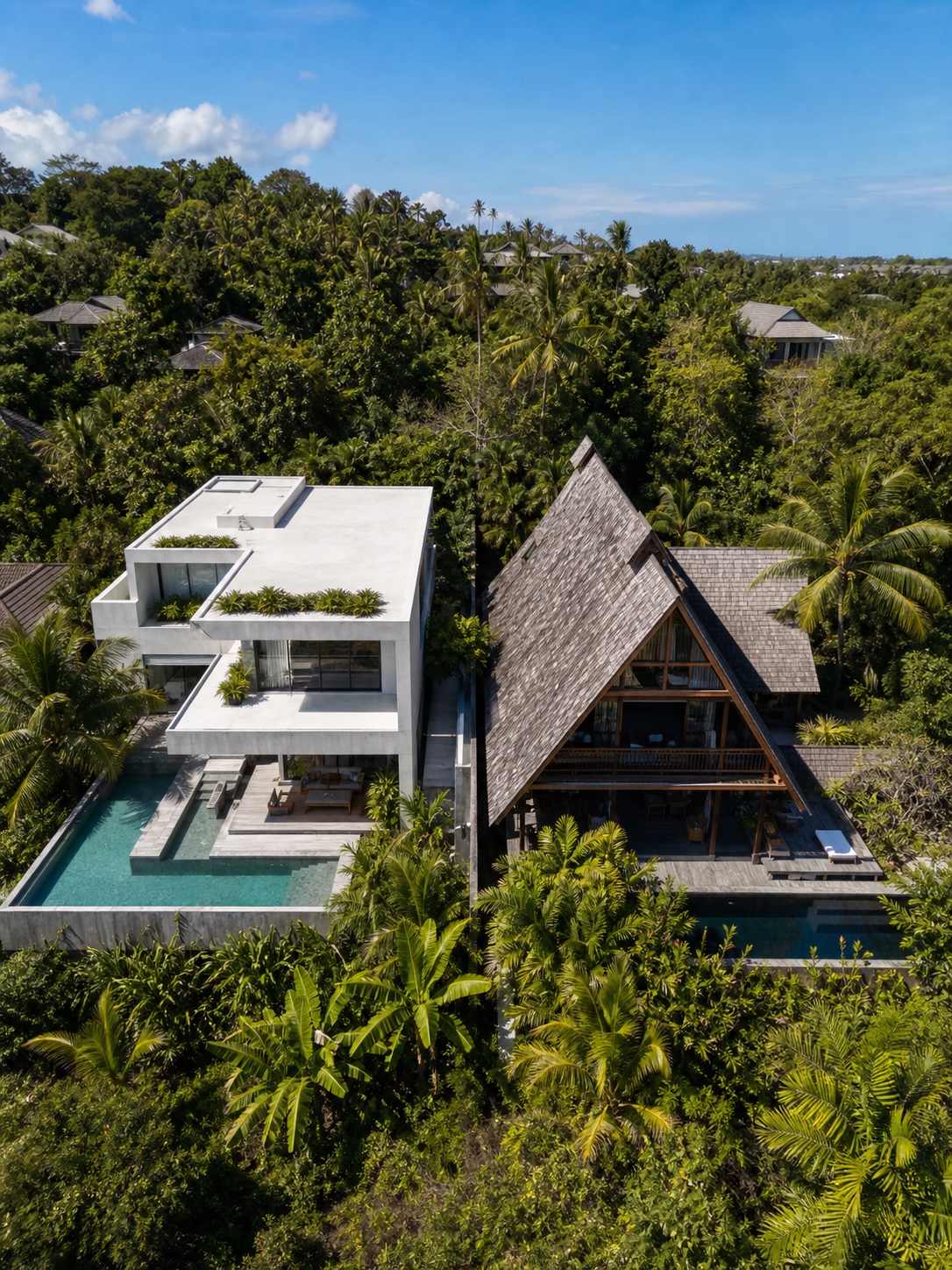
The variation between areas is its own lesson. Listings around Layan and Bang Tao tend toward the KZ Architecture-style minimalism, flat roofs, concrete and limestone palettes, pergolas casting hard graphic shadows. Properties closer to Nai Harn and the older parts of the island lean more traditional, steeper roof pitches, more timber, deeper verandas. Neither approach is more “tropical” than the other; they’re two different, equally valid answers to the same climate brief, shaped by site, budget, and the era each villa was built in.
What most tropical house design guides leave out
Searching this topic turns up a lot of overlapping content, and almost all of it covers the same five things: open floor plans, natural materials (named generically), big windows, lush landscaping, infinity pools. That’s table stakes, and it’s true as far as it goes. What’s consistently missing is the architecture underneath the aesthetic.
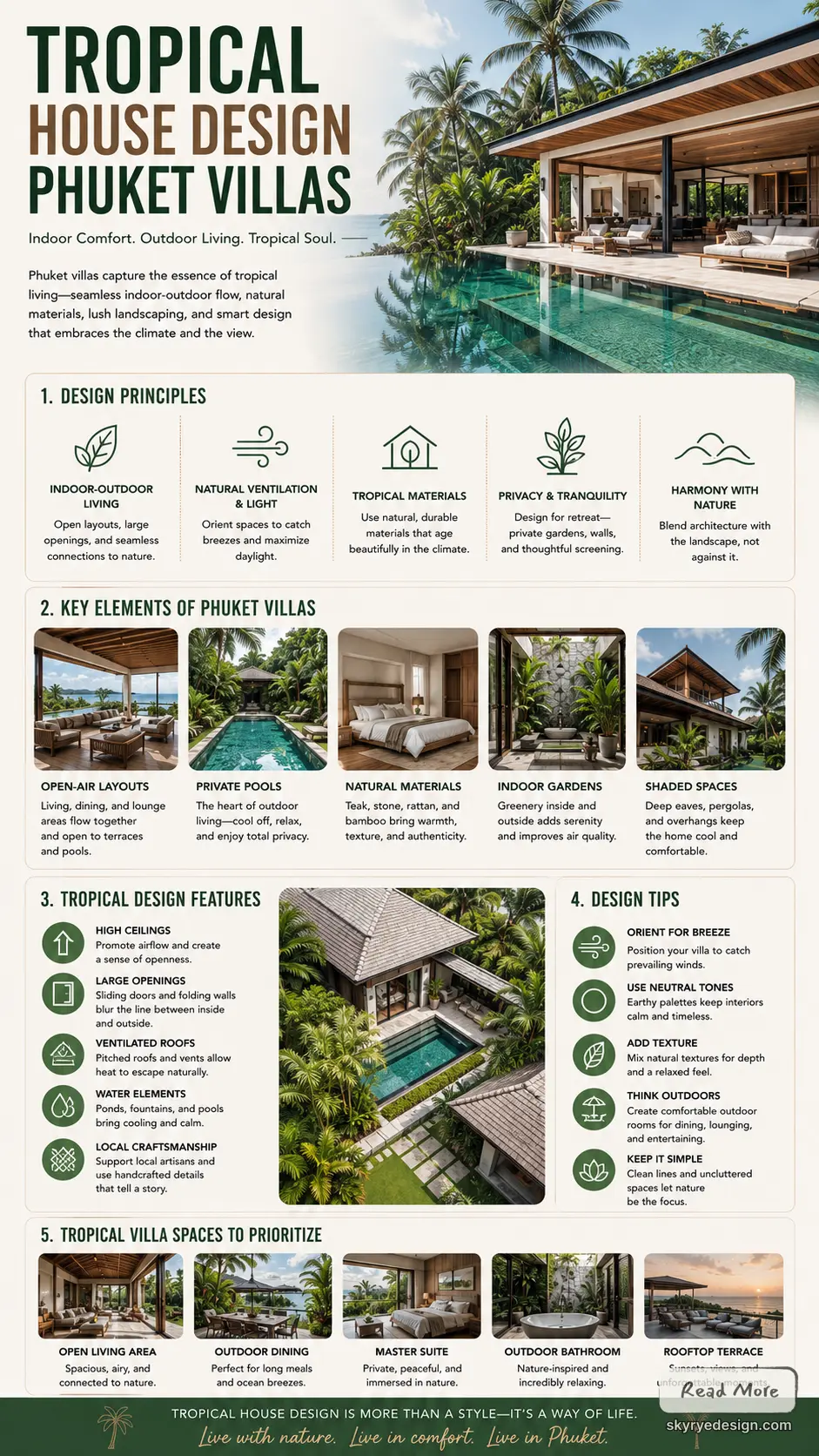
Most guides never distinguish tropical style from tropical performance, so readers come away thinking a few rattan chairs and a palm print accomplish what only correct orientation and shading can. Few articles ground their advice in one specific climate and market instead of vaguely blending Bali, the Caribbean, and Costa Rica into a single generic “tropical” mood, which makes the advice harder to actually apply anywhere.
Material comparisons are almost always a flat list with no real performance data attached, no mention of thermal mass placement, no honest discussion of maintenance tradeoffs in salt air. And concrete numbers are rare. A claim like “passive cooling reduces AC use” shows up constantly; a specific, sourced figure like the 30 to 40 percent reduction documented in current Phuket builds almost never does. That’s the gap this piece is built to close.
If the project is warm-climate rather than alpine, compare tropical roof overhangs with a tropical A-frame cabin design approach so shade, airflow, and deck space are solved together.
Final thought
Tropical house design earns its name when the building does real work against heat, humidity, and rain before a single decorative choice gets made. Phuket’s current villa generation, full-height glazing under generous overhangs, thermal-bridge-conscious materials, sala-style outdoor rooms treated as primary living space, shows what that discipline looks like when a competitive market forces architects to actually deliver on performance, not just mood. Borrow the principles, not just the palette, and the same logic translates to any hot, humid climate you’re building in.
FAQ
Q: What makes a house design tropical rather than just having tropical decor?
A: True tropical house design responds to climate through building science: orientation against the sun, deep roof overhangs for shade, cross ventilation pathways, and materials chosen for thermal performance. Tropical decor (rattan furniture, palm prints, warm wood tones) can sit on top of that structure or completely apart from it. A house can look tropical and still perform poorly in heat if the underlying architecture ignores climate.
Q: How much does passive cooling actually reduce air conditioning costs?
A: Documented Phuket projects using roof overhangs, cross ventilation, and passive solar protection together have measured 30 to 40 percent reductions in AC load compared to conventional villas of similar size, according to KZ Architecture’s delivered project data. Results vary by site and orientation, but the range gives a realistic benchmark for what well-executed passive design can achieve.
Q: What’s the best flooring material for a tropical climate?
A: Limestone and ceramic tile both stay notably cool underfoot and resist humidity well, making them common choices for tropical villa floors. Limestone ages with character but needs sealing against staining; ceramic tile is the more maintenance-free option, especially in transitional indoor-outdoor zones where moisture tracks in constantly.
Q: Is teak worth the extra cost over other tropical woods?
A: Generally yes for exterior or high-exposure applications. Teak resists humidity and pest damage far better than softer woods like cedar, which means fewer replacements and less ongoing maintenance over a building’s lifetime, even though the upfront material cost runs higher.
Q: Do tropical houses need air conditioning at all?
A: Most do, but the better-designed ones treat it as backup rather than the primary cooling strategy. Orientation, shading, and ventilation handle most of the comfort load, which is why well-designed tropical homes can run AC less aggressively, and far less expensively, than a sealed box that depends on mechanical cooling entirely.
Q: What is a sala, and why does it matter in tropical design?
A: A sala is an open-sided pavilion structure rooted in traditional Thai architecture, typically used as a shaded gathering or dining space separate from the enclosed living areas. In well-designed tropical villas, the sala often becomes the actual social center of the property, with air-conditioned rooms playing a supporting role.
Q: What’s the biggest mistake people make when designing for a tropical climate?
A: Treating outdoor living and tropical materials as the whole strategy while skipping orientation and shading analysis. An infinity pool or covered terrace looks good in photos either way, but only a building correctly oriented against the sun and prevailing wind stays comfortable to actually use through the hottest hours of the day.
Q: How does salt air affect material choices near the coast?
Using textured cushions and local plants is a great way to style your fall patio decor for maximum seasonal comfort.
A: Coastal salt air corrodes standard hardware and untreated metal quickly, often within a couple of monsoon seasons. Thermal-break aluminum with quality powder coating, stainless fixtures, and naturally resistant stone like granite and limestone hold up far better than budget alternatives, which is why coastal villa specs lean toward these materials even at higher upfront cost.
For warmer sites, timber needs shade, airflow, and smart detailing. This wood house design for warm climates adds a wood-focused checklist to climate-aware villa planning.
These design elements illustrate how a local vernacular style of architecture responds dynamically to its climate.
- 795shares
- Facebook0
- Pinterest795
- Twitter0
- Reddit0