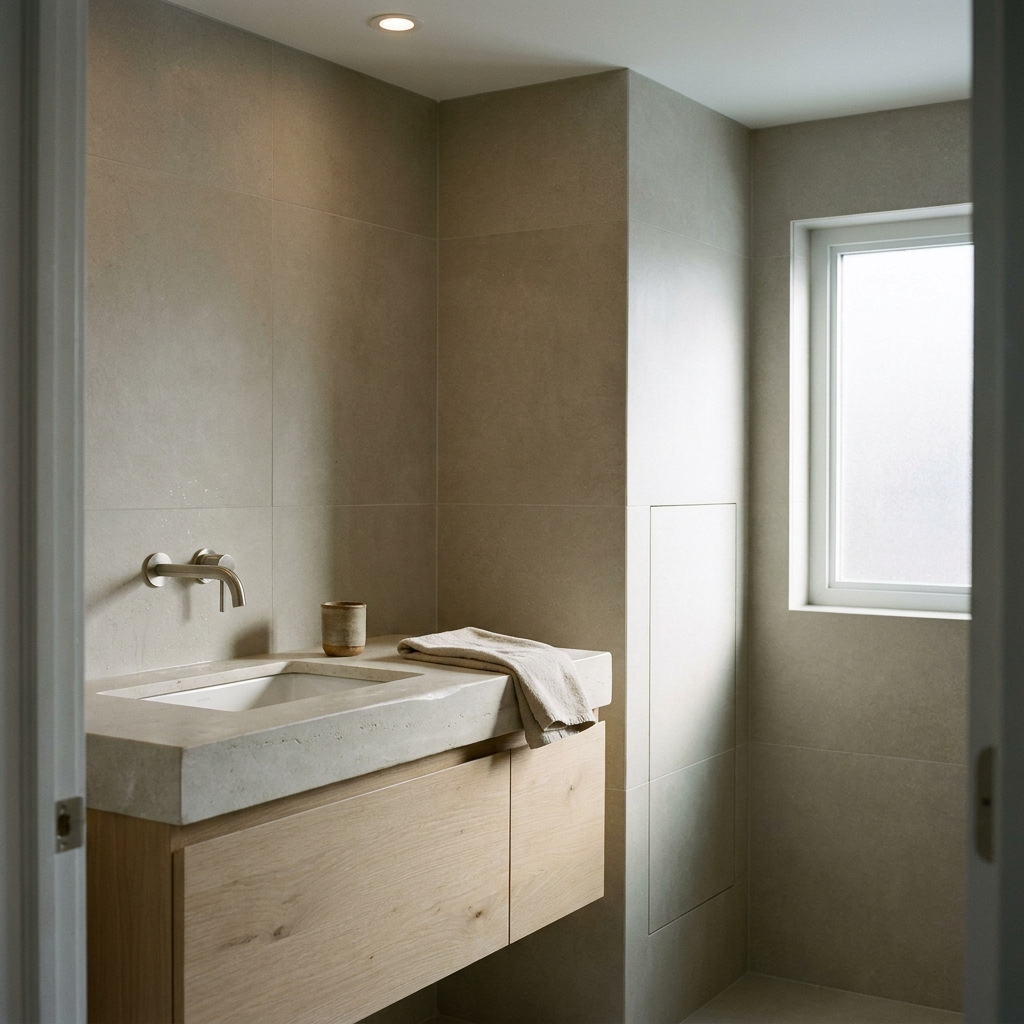
When a pipe bursts at midnight or a water heater fails on a freezing morning, the phone call to a plumber goes better if you have a few things ready. This guide covers what to tell the plumber, how to keep the home safe while you wait, how to check credentials and how to read an estimate. It also covers the design side: protecting tile, vanities and cabinetry during repairs, and asking the right questions about openings and access panels.
About the author’s role: Vlad writes for Sky Rye Design as a designer, not a plumbing contractor. A licensed plumber diagnoses problems, decides technical requirements and does the repair work. The advice below is about preparation, communication and protecting finishes.
The images are AI-generated editorial illustrations. They do not document a specific Brossard home, contractor or repair.
When to book urgently and what to do first
Before you call, decide whether you have an emergency or a planned job.
Call right away if water is escaping and won’t stop, a toilet or drain is overflowing, the water heater has failed, or water has reached any area with electrical equipment.
Schedule a visit for a fixture replacement, a slow drip, a planned water heater replacement or a bathroom renovation. You have time to get written estimates and coordinate the design.
Check for electrical risk before anything else
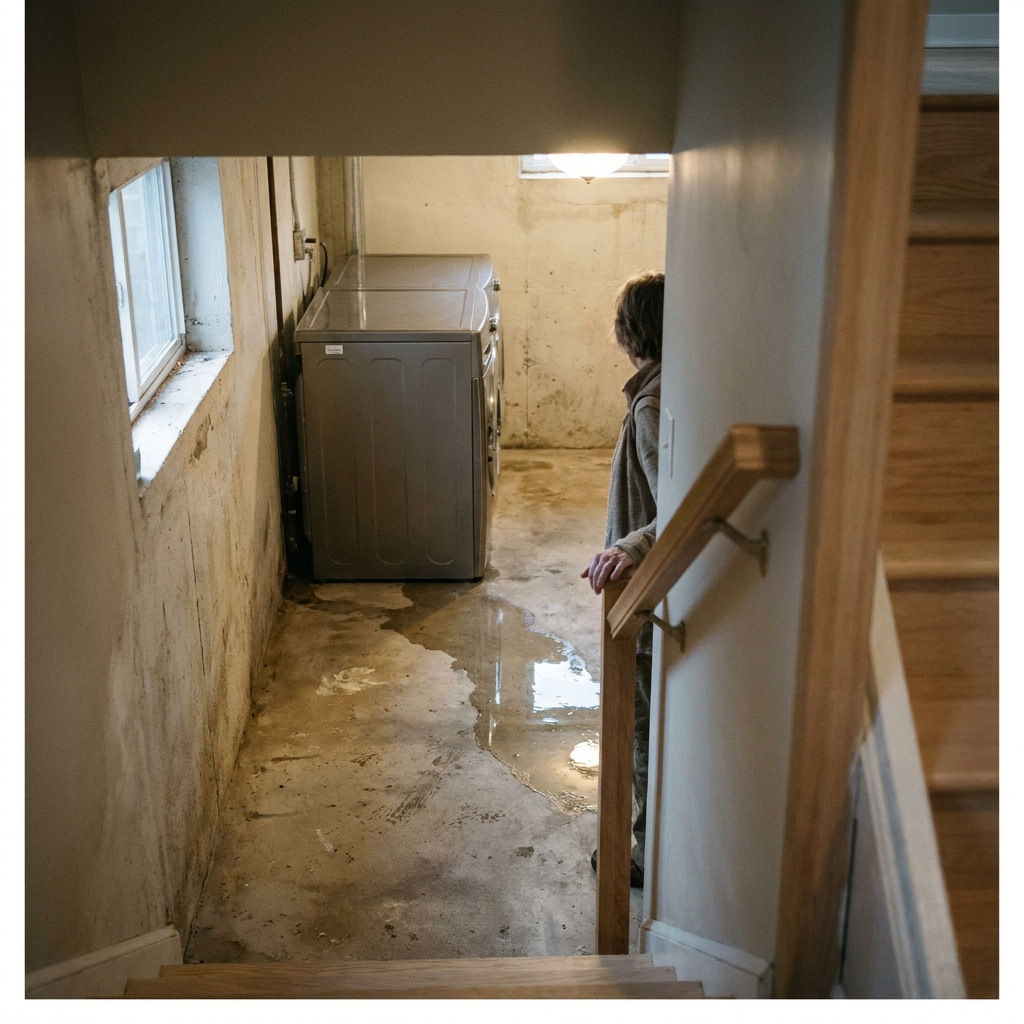
Look at the area first. If water has reached outlets, appliances, a panel or any equipment that could be energized, don’t walk into the water and don’t reach for a valve inside that area. Leave, follow Hydro-Québec’s guidance on water damage and flooding, and call 911 if anyone is in danger. Close the main supply only if the main valve sits in a dry, safe location.
If there is no electrical risk
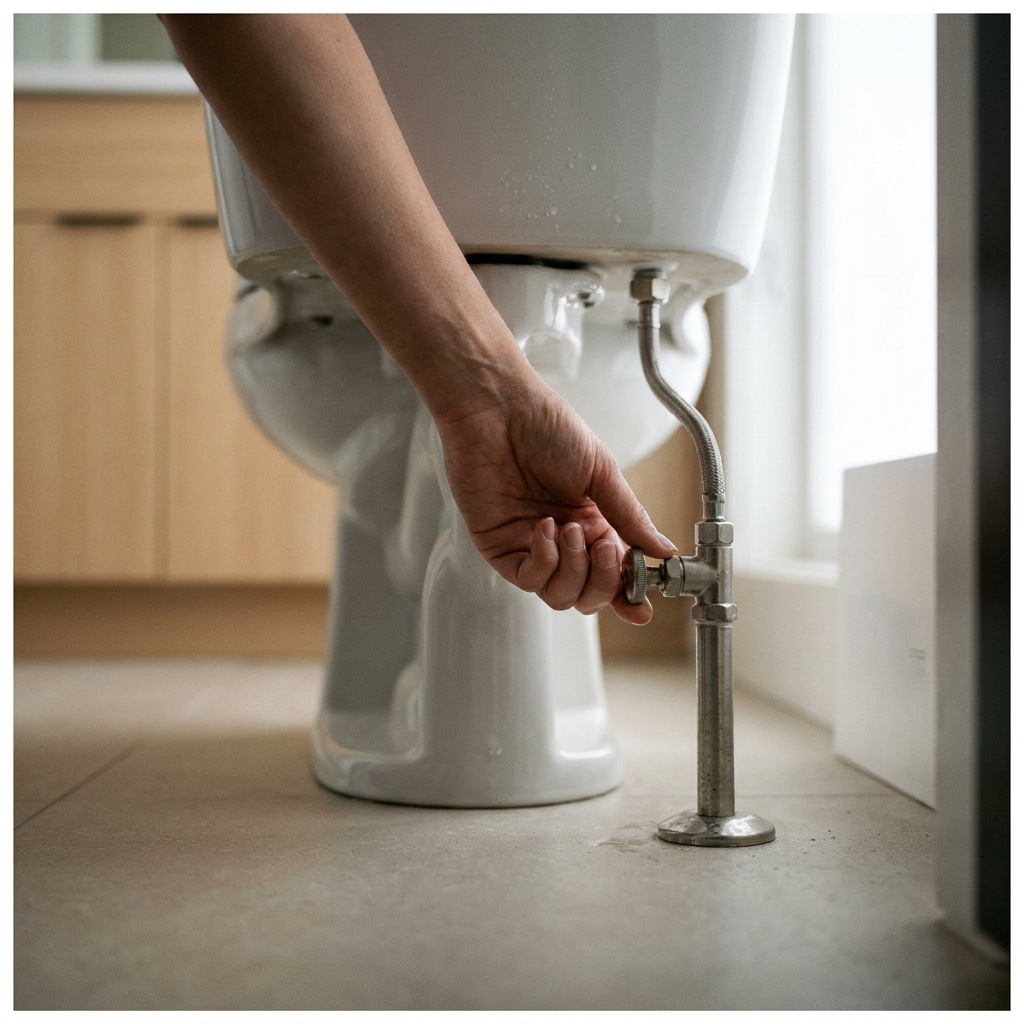
- Fixture shutoff: If water is escaping from a fixture or connection, close that fixture’s valve. Do this only if you can identify it, reach it safely and turn it without forcing.
- Main supply: If the leak continues, the main water supply may need to be closed. The same conditions apply.
- Cracked fittings: Leave them alone. Tightening one at random can make the leak worse.
- Overflowing toilets and drains: Stop using them. If a floor drain backs up, also stop the washing machine and dishwasher.
- Drain cleaner: Don’t add any chemicals. If someone already has, tell the plumber which product was used.
What to tell the plumber before the visit
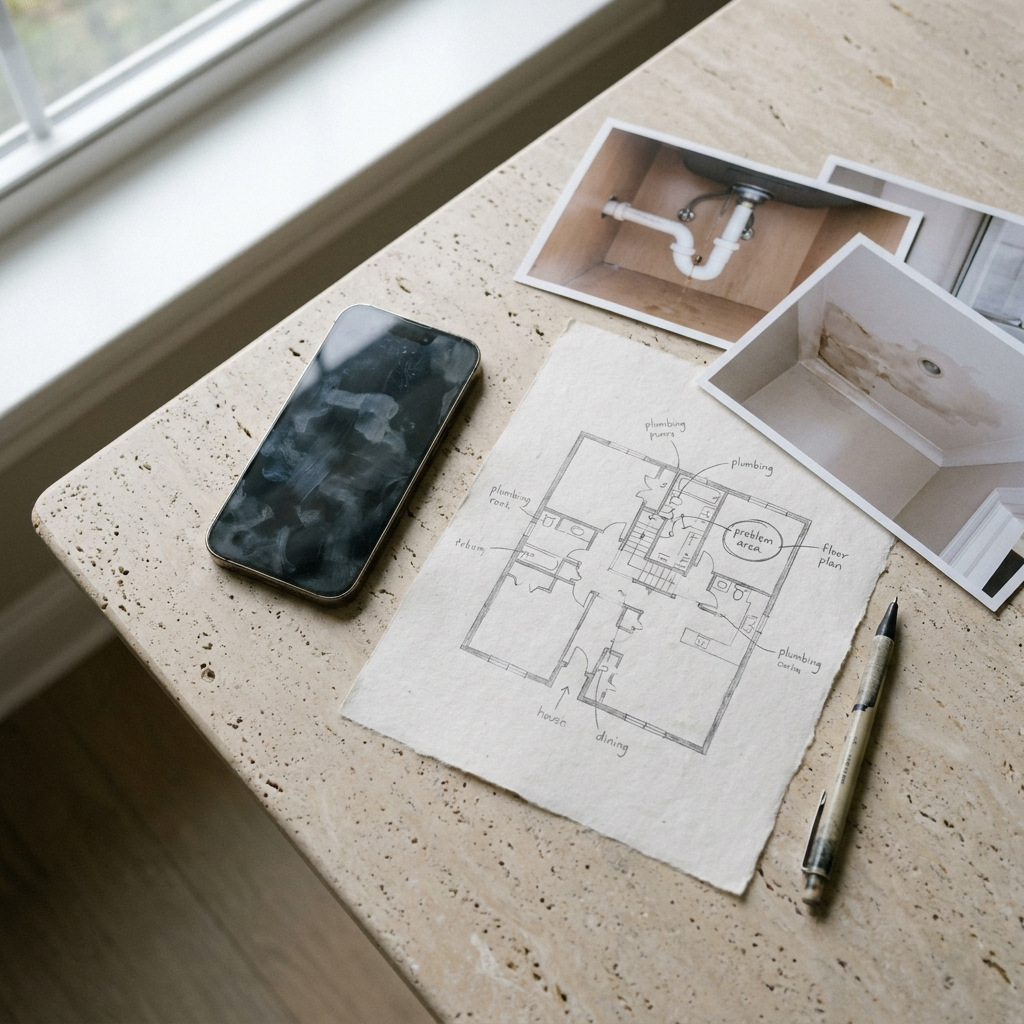
A dispatcher needs an accurate picture of what is happening right now. It helps the plumber tell a supply leak from a drainage problem and bring the right equipment. Useful details include:
- whether water escapes even when the fixture is off
- whether a drain backs up only during a load of laundry
- whether an adjoining room is affected
Also have ready:
- your full street address and unit number, because a neighbourhood name isn’t enough
- the property type: detached house, townhouse or condo
- which fixtures are affected and how the symptoms behave
- photos of connections or damage, taken only where it is safe to stand
In a condominium, shared piping may require coordination with the syndicate. Tell the plumber who can authorize access and a water shutoff.
Add photos of the surrounding finishes
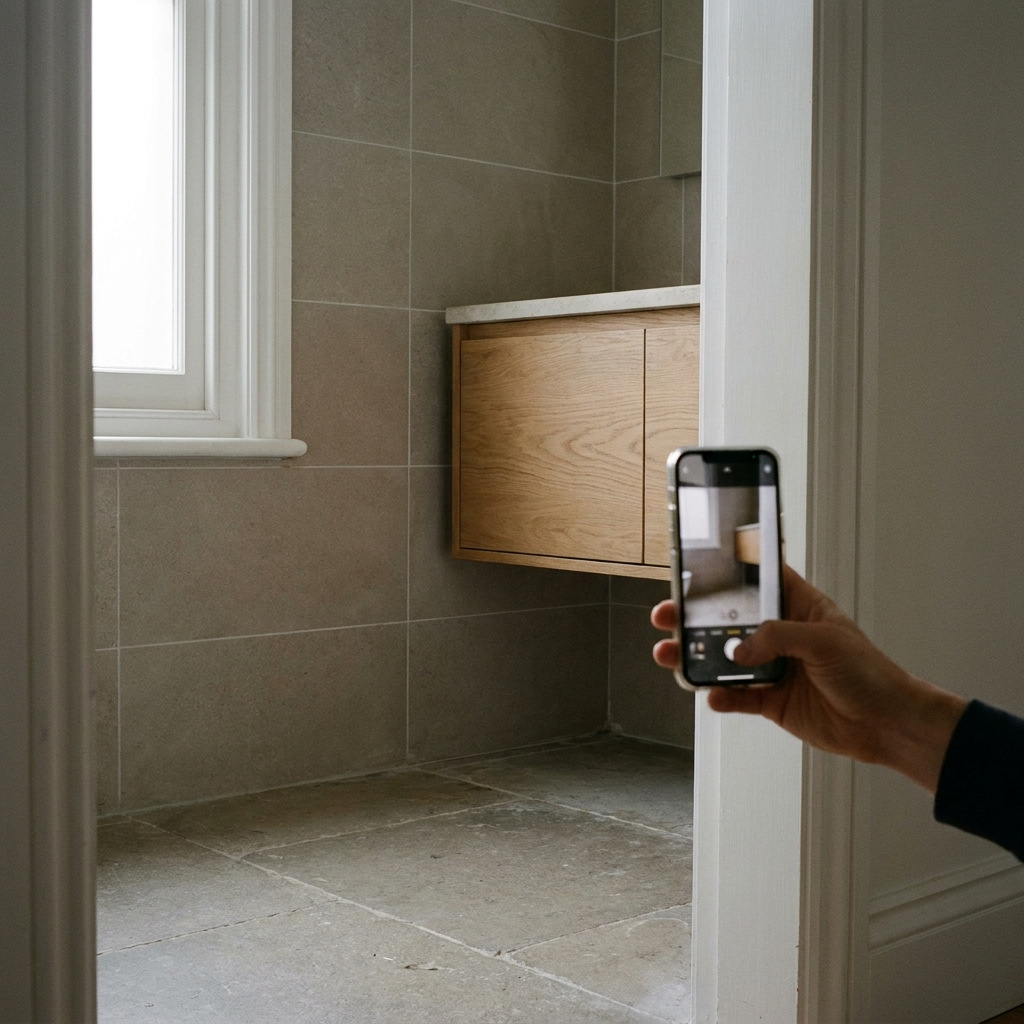
If you can do it safely, also photograph the room as a whole: the tile field, any feature wall, the vanity, built-in cabinetry, the flooring near the fixture and any specialty trim. These photos show the plumber which surfaces sit near the work, record the room’s condition beforehand, and give a tiler, cabinetmaker or painter a reference if restoration is needed later.
Protect finishes and make service points reachable
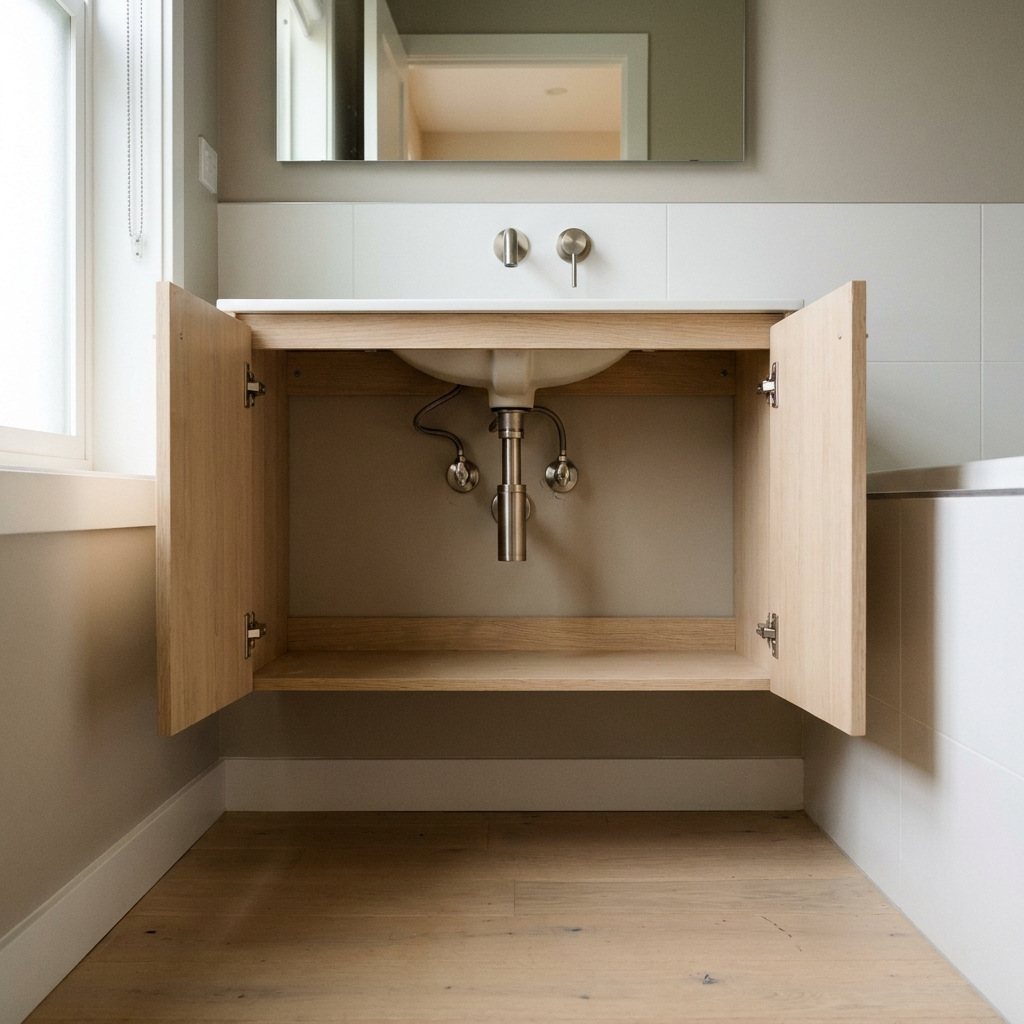
You can prepare a lot of the access while you wait.
- Clear stored items away from the shutoff valve, cleanout and water heater.
- Empty the vanity drawers and the cabinet under the sink.
- Move rugs, decor and freestanding furniture out of the path between the entrance and the work area.
- Ask the plumber how their team protects floors and nearby surfaces, and agree on who prepares what.
Leave built-in cabinetry, panels and tile in place. If removing them is part of the job, it belongs in the agreed scope and should be done by the right trade.
Ask where any opening would go
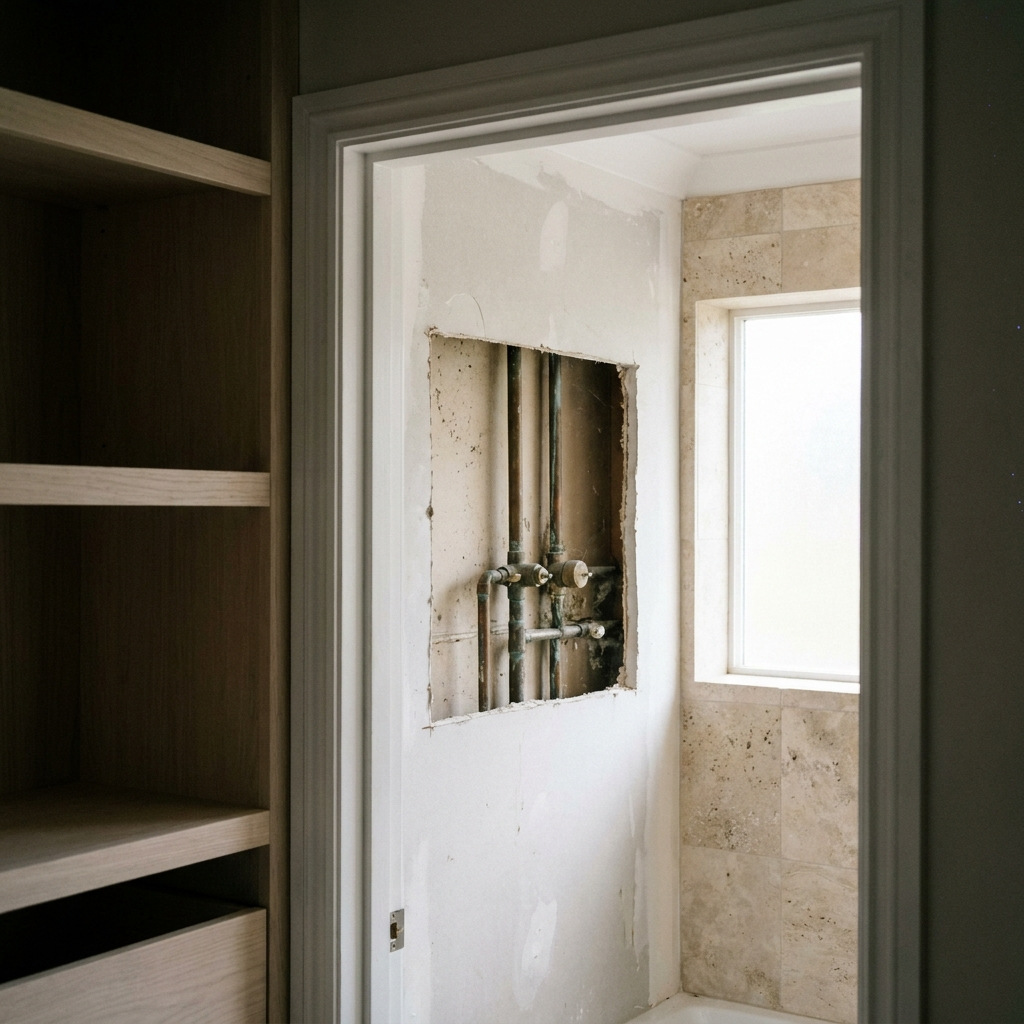
If the plumber has to open a wall, ceiling or cabinet, ask before work starts:
- Where would the opening be, and roughly how large?
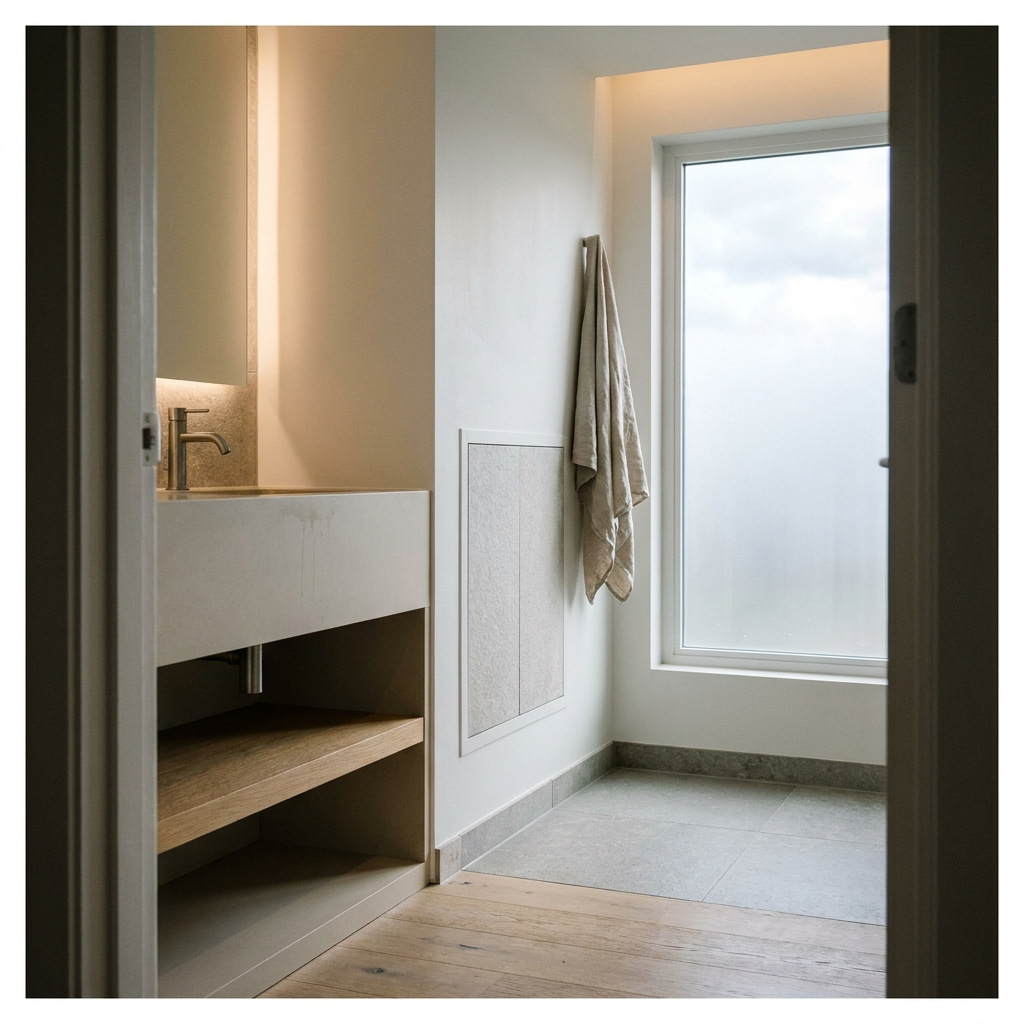
- Is a less visible side workable? For example, a closet wall, the back of a cabinet or a utility space.
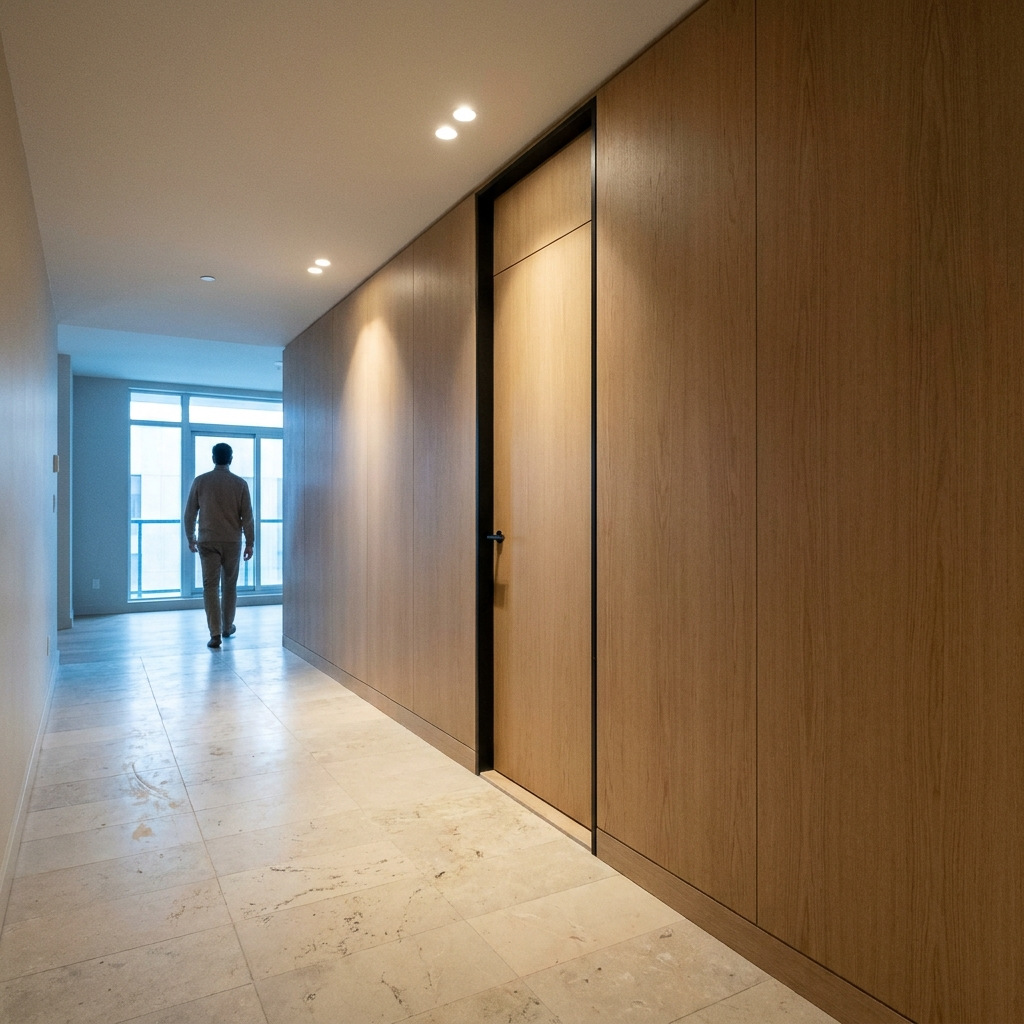
- Would an access panel make sense here for future service?
The plumber decides what is technically workable. Your role is to say which surfaces matter most to you, so the options can be weighed together. No one can promise that the finishes will come through untouched. A clear plan for restoring them is a reasonable thing to ask for.
Our guide on why premium bathroom design starts behind the walls explains how hidden services shape a finished room.
For ways to make a panel discreet without sealing off the repair route, see how to hide bathroom plumbing without blocking future repairs.
Check licensing and choose the right scope

Plumbing is a regulated trade in Quebec. Before you authorize any work:
- Look up the company in the CMMTQ member directory. The CMMTQ explains why hiring a member matters.
- Ask for the legal name that will appear on the estimate and invoice.
- Ask about liability insurance, especially for larger jobs.
- Review the Office de la protection du consommateur’s checklist before hiring an electrician or plumber.
Brossard has a mix of detached houses, townhouses and residential towers, and access differs from one to the next. When you contact a local company, such as l’équipe de Plombier Expert à Brossard, ask how it handles access and shutoffs in your type of property.
Get the following confirmed in writing:
- the arrival window
- the estimated scope of work
- who performs and who invoices the work
Ask about warranty conditions before you agree to anything. A reputable plumber answers these questions plainly and doesn’t pressure you to decide.
Discuss the estimate, repair boundaries, and finish restoration
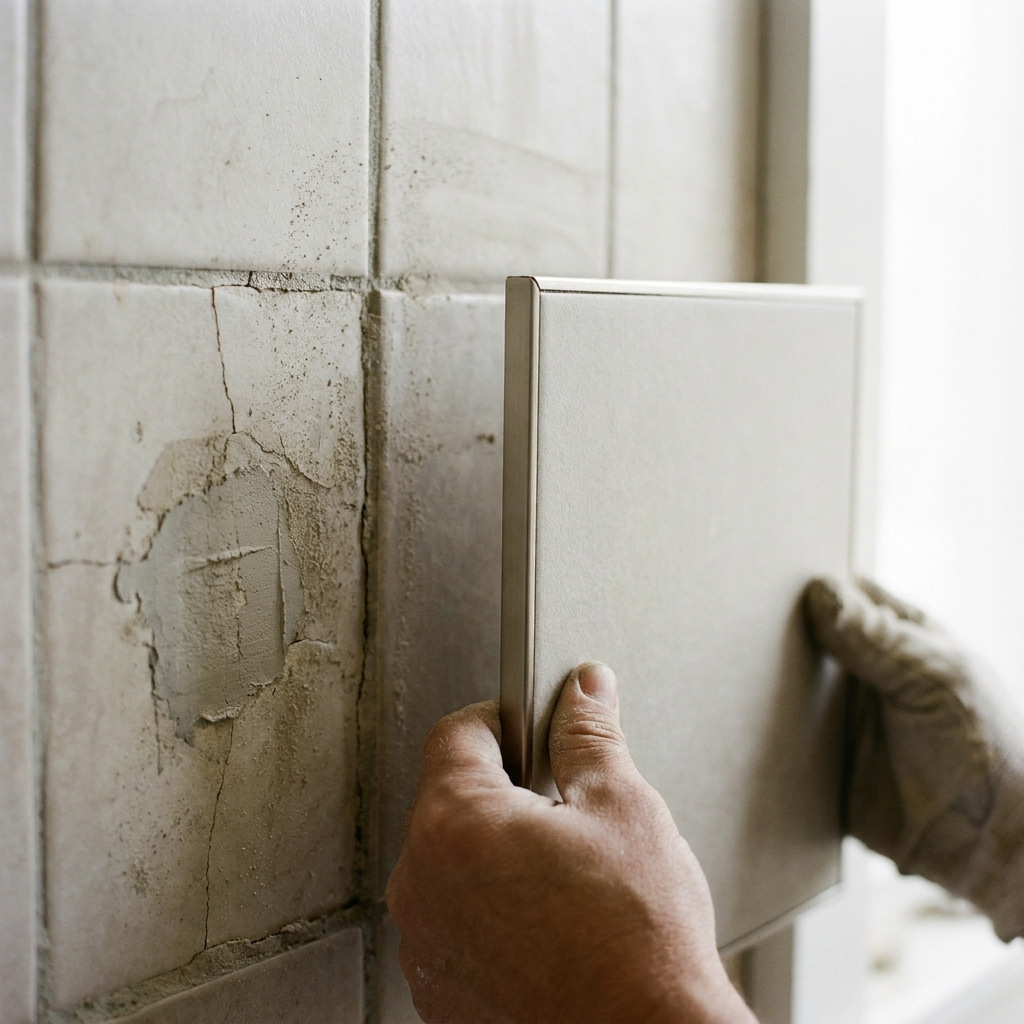
A reliable price usually comes after a diagnosis, because the same symptom can have different causes. A dripping faucet may need only a cartridge. A slow drain may hide a blockage far down the line.
| Cost factor | What it covers | Question to add for the design |
|---|---|---|
| Access | Whether connections are exposed or a wall must be opened | Where would the opening be, and who restores the surface? |
| Parts and fixtures | The chosen model and any adaptations needed | Will the replacement suit the existing finish and trim? |
| Severity | How extensive the leak or blockage is, and the checks needed afterward | Will any surface need to stay open for inspection? |
| Coordination | Work involving neighbours, a syndicate or municipal infrastructure | Who approves openings in shared areas? |
Also ask how the price is calculated:
- a service-call fee, an hourly rate or a flat amount
- taxes
- surcharges for nights or weekends
If you have several small repairs, give the plumber a list so they can be done in a sensible order. For planned work, such as a water heater replacement or a bathroom renovation, ask for a written estimate. Ask whether the company charges for it.
Find out where the plumbing scope ends
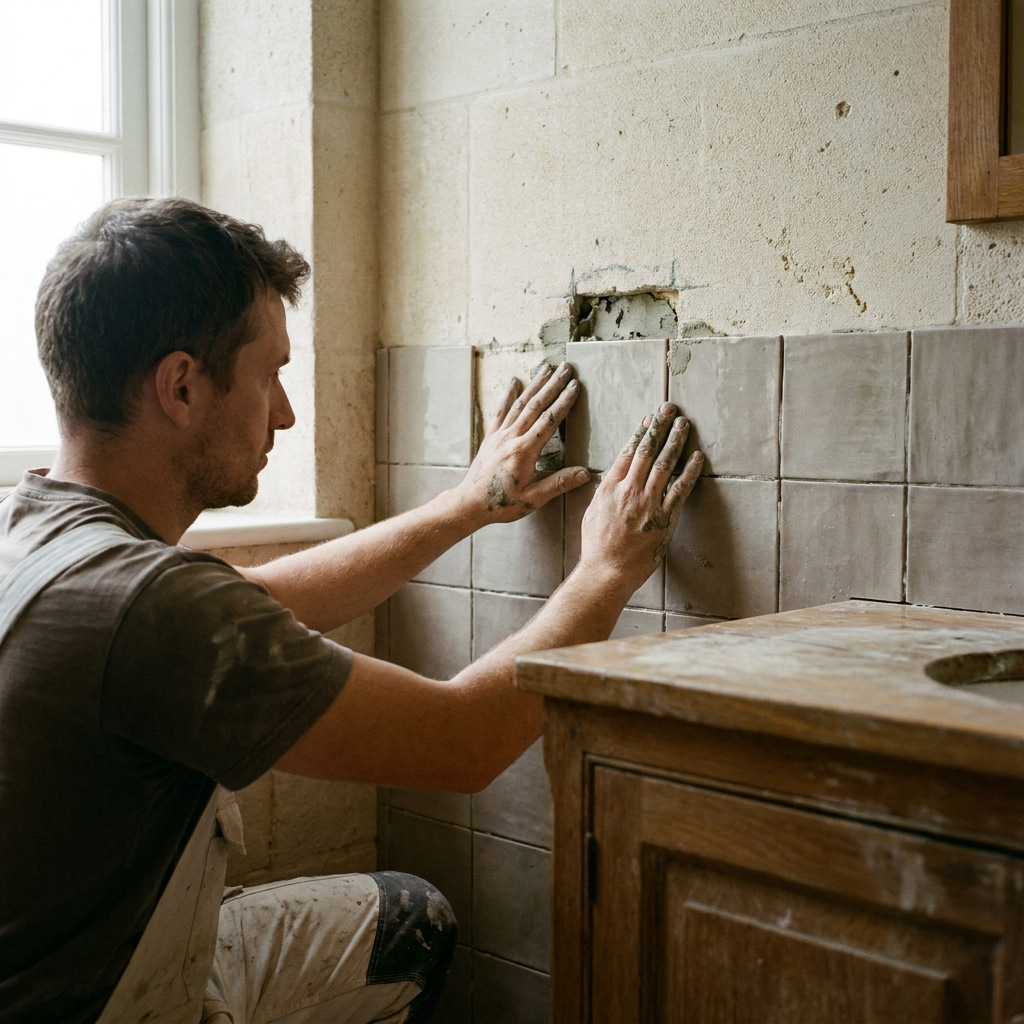
A plumbing estimate may not include restoring visible finishes. Ask directly:
- Does the plumber close the openings, or only make them?
- Are patching, tiling, painting and cabinet repair included, or handled by another trade?
- Should restoration wait until the repair has been checked?
Planned bathroom work: give the plumber a useful design brief


A renovation gives you time to coordinate the plumbing and the design before the walls close. Bring this to the plumber’s site visit:
- Fixture selections or a shortlist, with model information if available, so the plumber can flag any adaptations.
- The tile layout, showing niches, valves and drains in relation to the grout lines. Our bathroom tile layout guide covers cuts and niches.
- Vanity and cabinetry drawings, so the supply and drain locations can be compared with drawers and interior storage.
- Preferred locations for access panels, presented as preferences. The plumber confirms what the system requires.
- The order of work. Our guide to home remodel planning and utility upgrades explains why utility work should be settled before the drywall goes up.
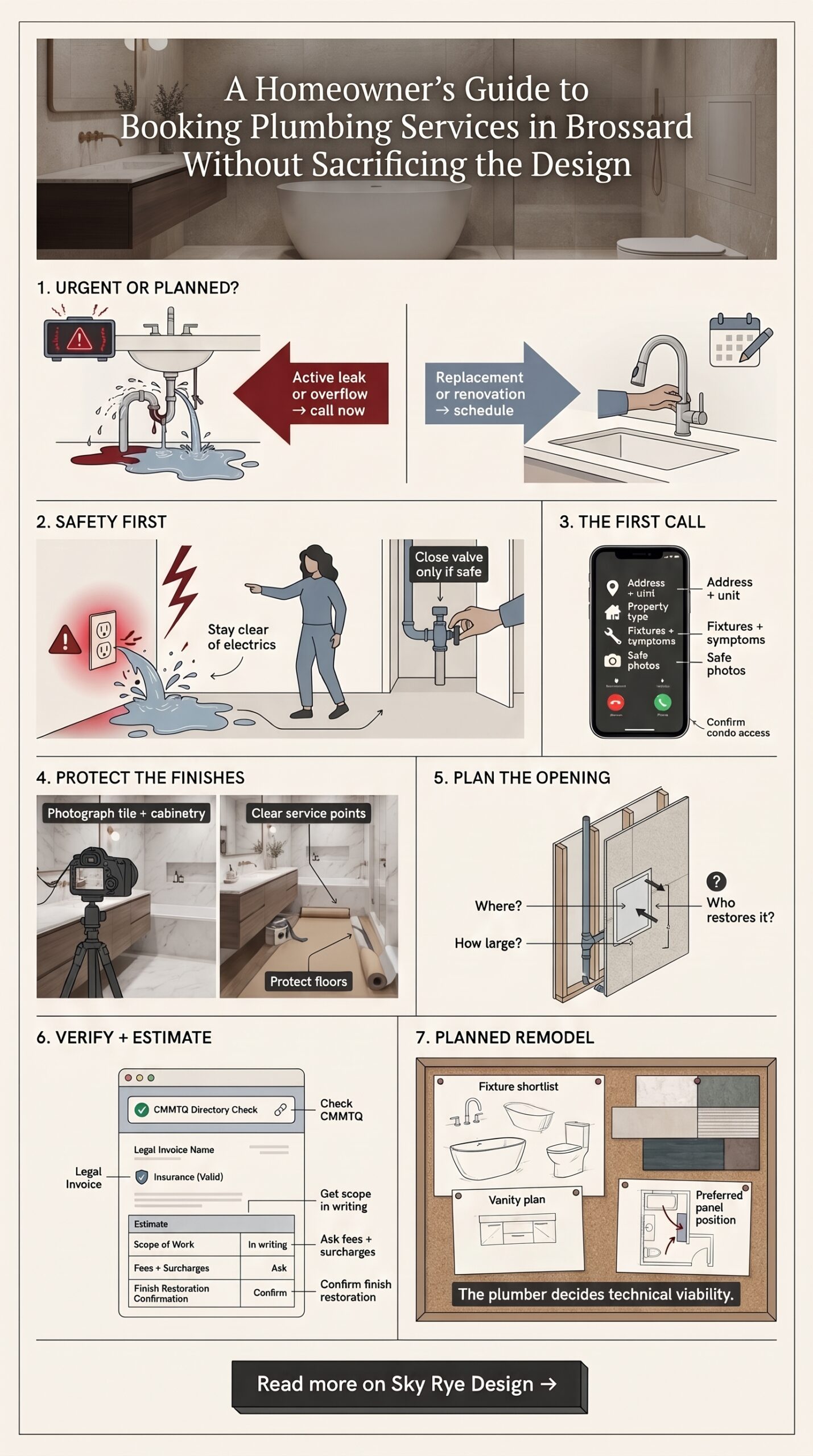
A visual checklist before you book
FAQ
Can a leak wait until morning? If water keeps escaping after you safely close the fixture valve, or it has reached electrical equipment, treat it as urgent. A drip that stops once the fixture valve is closed can usually be scheduled.
Should I call 911 or a plumber? Call 911 if anyone is in danger, including from water near energized equipment. A plumber handles the plumbing problem once the area is safe.
Who repairs the tile or drywall after the plumber opens a wall? It depends on the agreed scope. An estimate may cover the plumbing repair without the finish, so confirm this in writing before work starts.
Can I get a firm price over the phone? Usually not, because the cause has to be diagnosed first. You can ask how the price will be calculated and what surcharges apply.
Do I need a designer for a plumbing repair? Not for most repairs. A designer can help with renovations or with restoring visible finishes, but the plumber remains responsible for every technical decision.
What changes when I live in a condo? Shared piping may involve the syndicate. Find out who can authorize access and a shutoff before the plumber arrives.
A short call checklist
- ☐ Your plumber’s number and the location of your main shutoff valve are easy to find
- ☐ You have checked for electrical risk before going near the water
- ☐ You know whether this is an emergency or planned work
- ☐ Your address, unit number and property type are ready
- ☐ You can describe the affected fixtures and how the symptoms behave
- ☐ You have photos of the problem and the surrounding finishes, taken safely
- ☐ The shutoff valve, cleanout and water heater are clear of stored items
- ☐ You have checked the company’s CMMTQ membership and legal name
- ☐ The arrival window, scope, invoicing and warranty are confirmed in writing
- ☐ You know where any openings would go and who restores the finishes
- ☐ In a condo, you know who can authorize syndicate access
- 0shares
- Facebook0
- Pinterest0
- Twitter0
- Reddit0