Luxury fashion is designer clothing and accessories sold with a promise of distinctive design, fine materials, careful construction and known provenance. Established houses have built that promise over generations, though its execution varies from product to product. A high price and a famous logo are common signals. Neither tells you how the piece was made. To understand the category, look at the chain of decisions behind an object: why a seam sits where it does, why a leather was chosen, and how a shape responds to the way someone moves, travels or works.
Five objects make that chain visible: a saddle harness, a travel trunk, a little black dress, a Bar jacket and a nylon backpack. Each began as an answer to a particular way of living. Read together, they show what luxury fashion is, how it differs from haute couture and other market labels, and how to judge a piece yourself.
Editorial scenes in this article were created with Google Flow. Archival photographs and museum objects are identified in their captions.
Contents
Where luxury fashion sits among couture, premium and mass-market
People often use “luxury,” “couture” and “designer” interchangeably. Only one of these terms has a formal definition.
| Label | What it usually describes | How it’s usually made | What to look for |
|---|---|---|---|
| Haute couture | A formal designation in France for houses meeting set criteria | Made for individual clients, with atelier work | Personalization, handwork, fittings |
| Luxury fashion | Ready-to-wear, leather goods, shoes and accessories from established houses | In series; handwork varies widely by product | Design authorship, material, finishing, archive |
| Premium | An informal market label for brands priced between luxury and the high street | In series; methods vary widely | Fabric, fit and finish judged case by case |
| Mass-market | High-volume fashion driven by cost and speed | Large runs, fast turnover | Trend access, low price |
Haute couture is the narrowest category. The Fédération de la Haute Couture et de la Mode describes accreditation in terms of craft expertise, personalization, a collection schedule and atelier know-how. Couture collections are presented in January and July. A luxury house may also show couture, but most of what it sells, such as bags, shoes, ready-to-wear and fragrance, falls outside that category.
“Premium” has no agreed definition. Some premium brands have long histories and serious workshops; others are recent and outsourced. “Luxury” is also a market label, though the houses below have long archives that give the word some shape. The labels describe positioning and price. They don’t guarantee quality.
From harness to backpack: how luxury fashion took shape
Several of the houses below began in trades that served wealthy customers: harness making, trunk making and dressmaking. No single designer invented the system. Several businesses changed, over decades, how clothes and goods were conceived and sold.
Worth and the authored collection
In 1858, Charles Frederick Worth and Otto Bobergh opened a dressmaking shop in Paris, according to the Metropolitan Museum of Art. The Met notes that Worth showed finished designs on live models and that clients ordered variations. It also cautions that Worth was neither the first nor the only one to organize fashion this way.
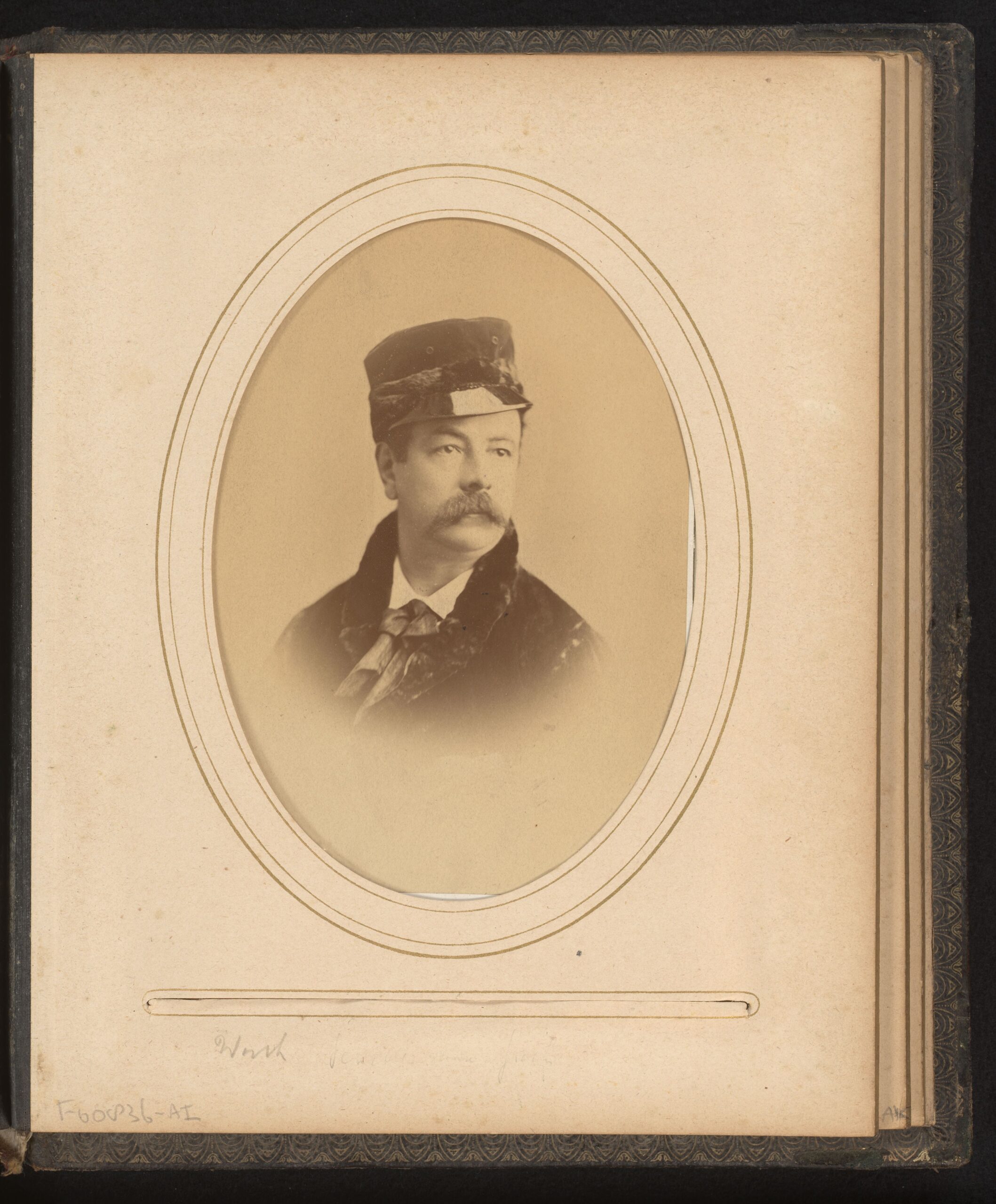
My reading as a designer is that this method puts authorship with the house. When a client chooses from finished designs, she is choosing a point of view as well as a dress. Much of later fashion branding depends on that idea.
Hermès: leather under load
Hermès dates its founding to 1837, when Thierry Hermès opened a harness workshop in Paris. In 1880 the business moved to 24 Faubourg Saint-Honoré.
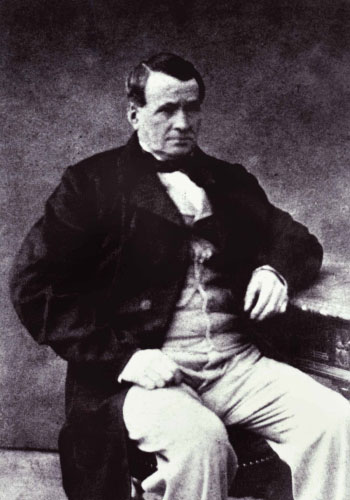
My observation, from industrial design, is that harness making is a form of leather engineering. Straps carry load, buckles hold under tension, and edges rub against a moving animal for hours. The discipline trains attention on stress points.
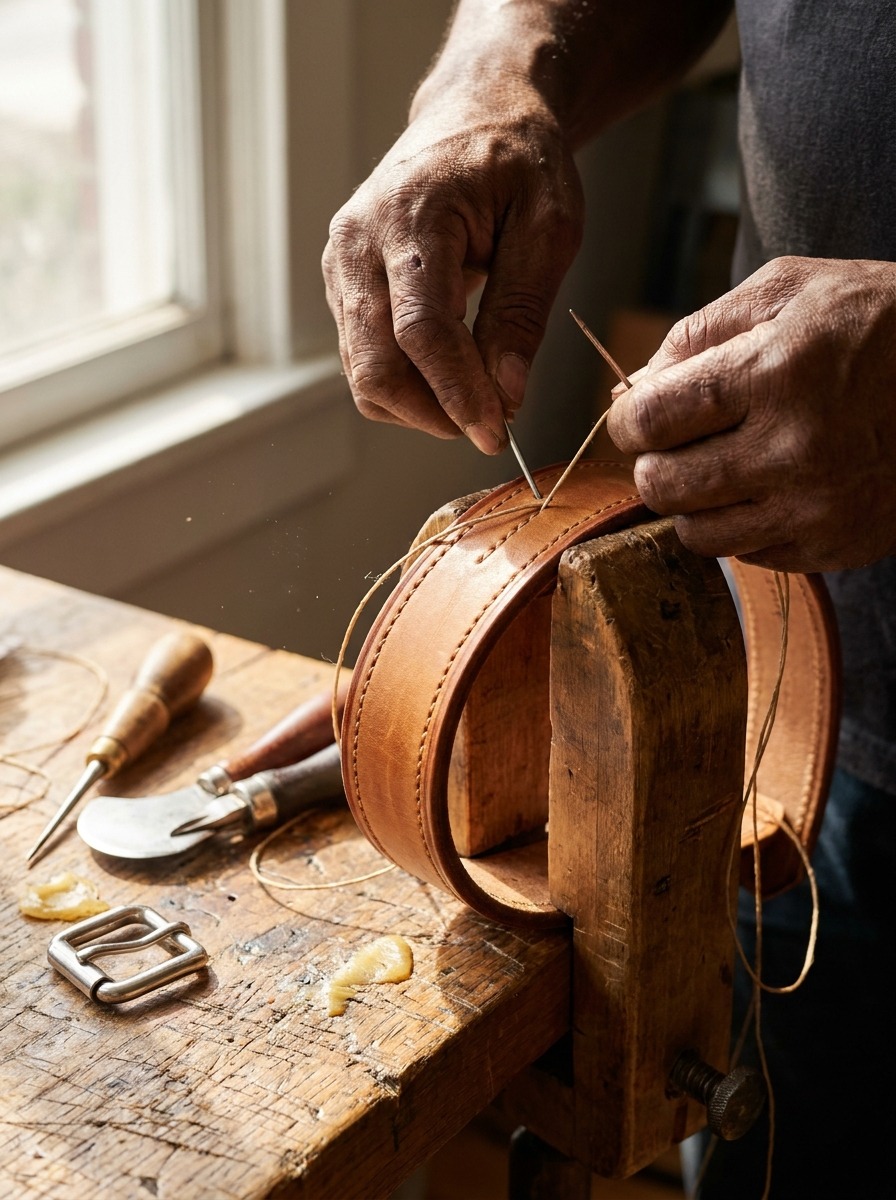
Hermès says the bag later known as the Kelly was designed by Robert Dumas in the 1930s, and the name is linked to a 1956 photograph of Grace Kelly carrying it. The Birkin came out of a conversation on a flight between the actress Jane Birkin and Jean-Louis Dumas.
Louis Vuitton: the flat lid
Louis Vuitton was established in 1854, and its heritage centers on travel trunks. The house timeline dates its flat trunk to 1867.
Read purely as form, the flat lid makes sense. A domed top sheds water but resists stacking, while a flat top stacks. The shape suits the luggage hold more than the parlor.

Chanel: clothes built for movement
Gabrielle Chanel opened a hat shop in Paris in 1910, and the house’s account of her work emphasizes freedom of movement. Chanel’s own report dates No. 5 to 1921, the simple black dress to 1926 and the quilted 2.55 shoulder bag to 1955.
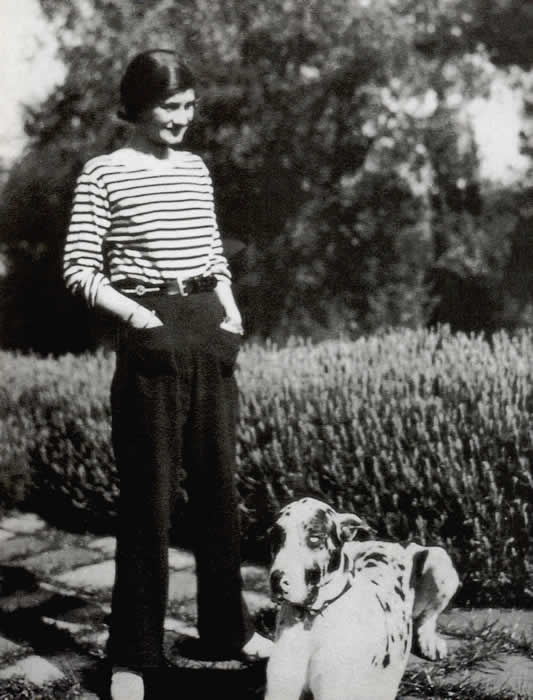
As a composition, I read the simple black dress as an exercise in restraint: one color and a plain cut leave proportion to do the work. The 2.55 extends that logic to accessories, since a shoulder bag leaves the hands free.
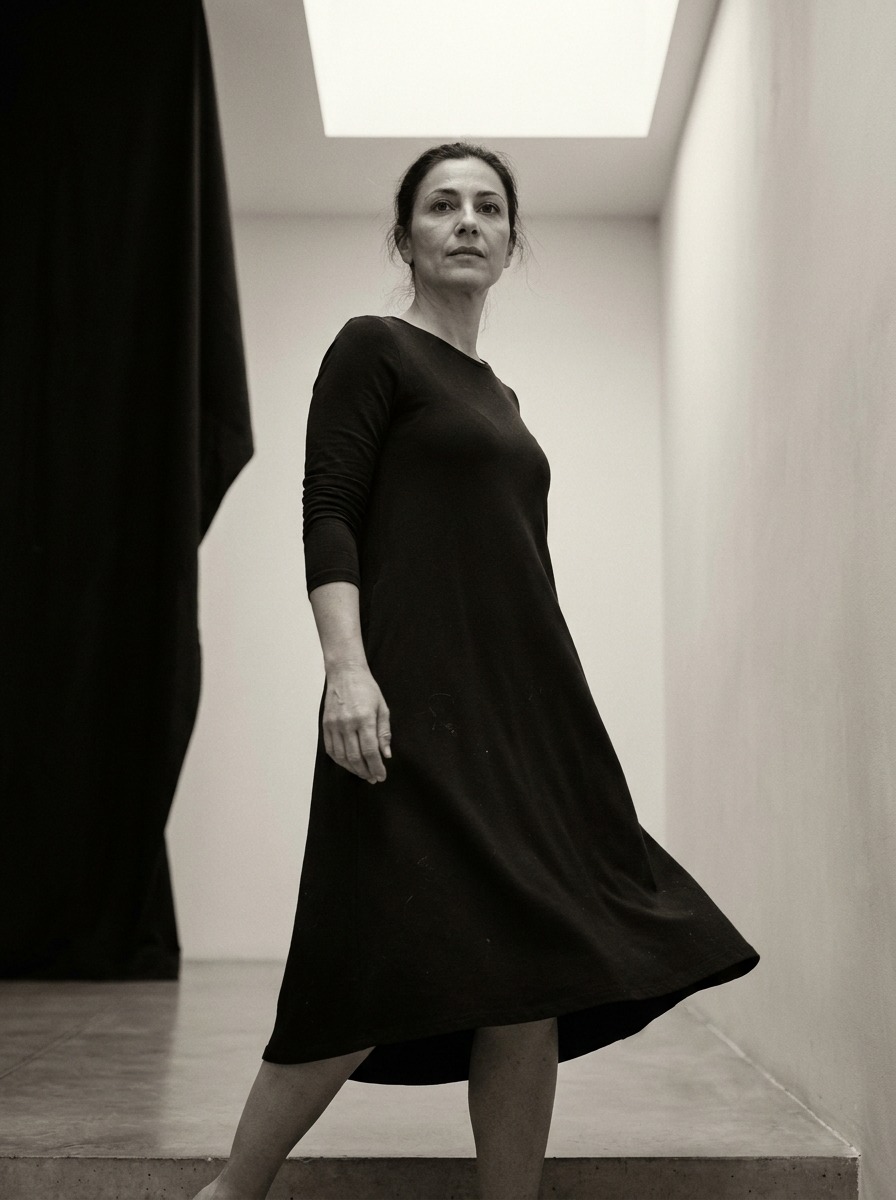
No. 5 shows something else. A fragrance is neither couture nor clothing, yet it sits at the center of the house’s history.
Gucci: travel goods and equestrian hardware
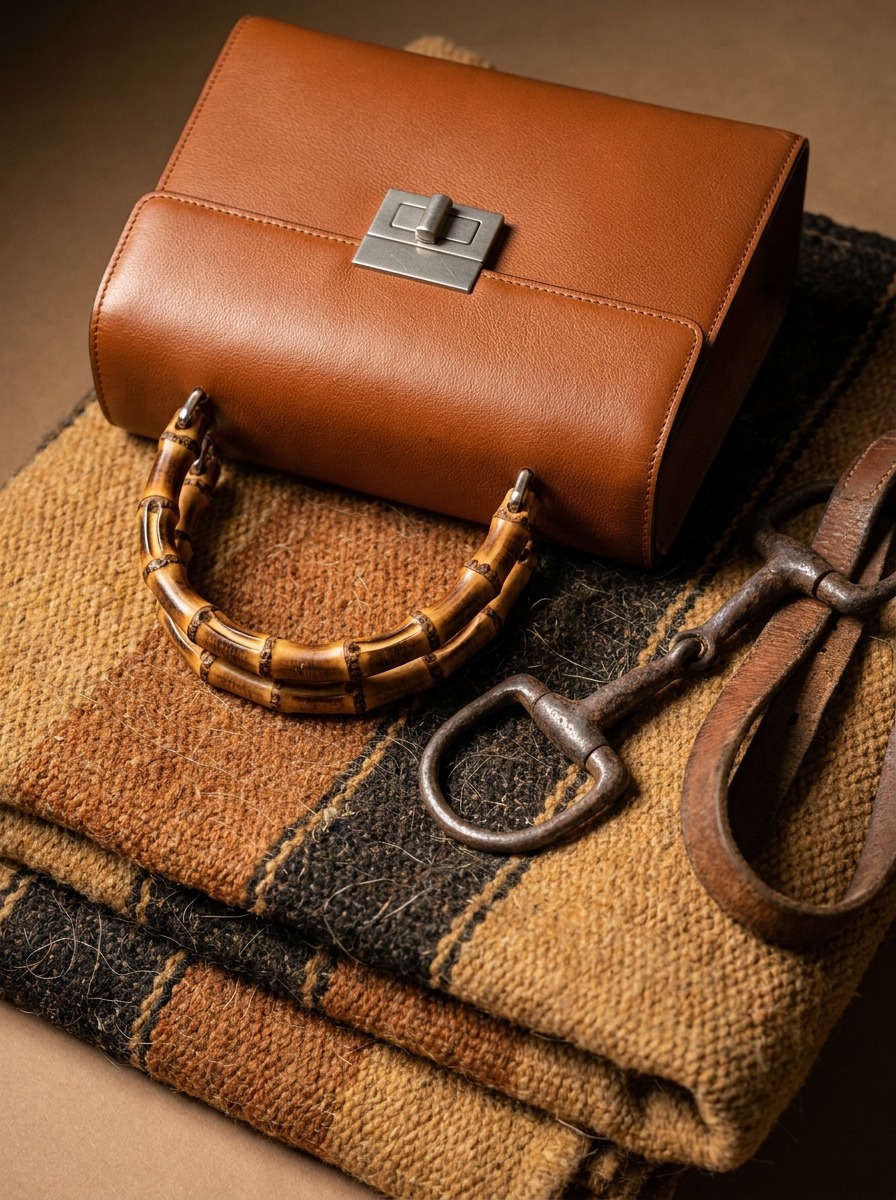
Gucci says Guccio Gucci opened a luggage atelier in Florence in 1921, inspired partly by his experience as a porter at London’s Savoy Hotel. The house dates the Bamboo bag to 1947 and the Horsebit loafer to 1953.
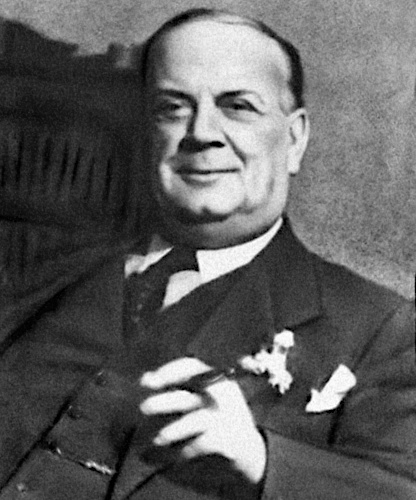
The loafer has a design kinship with Hermès. It takes hardware from the stable and places it on a city shoe. The equestrian vocabulary survives as ornament while the use changes.
Dior: structure as a statement
Christian Dior presented his first collection on 12 February 1947 at 30 Avenue Montaigne. The Bar jacket became the emblem of what was called the New Look.
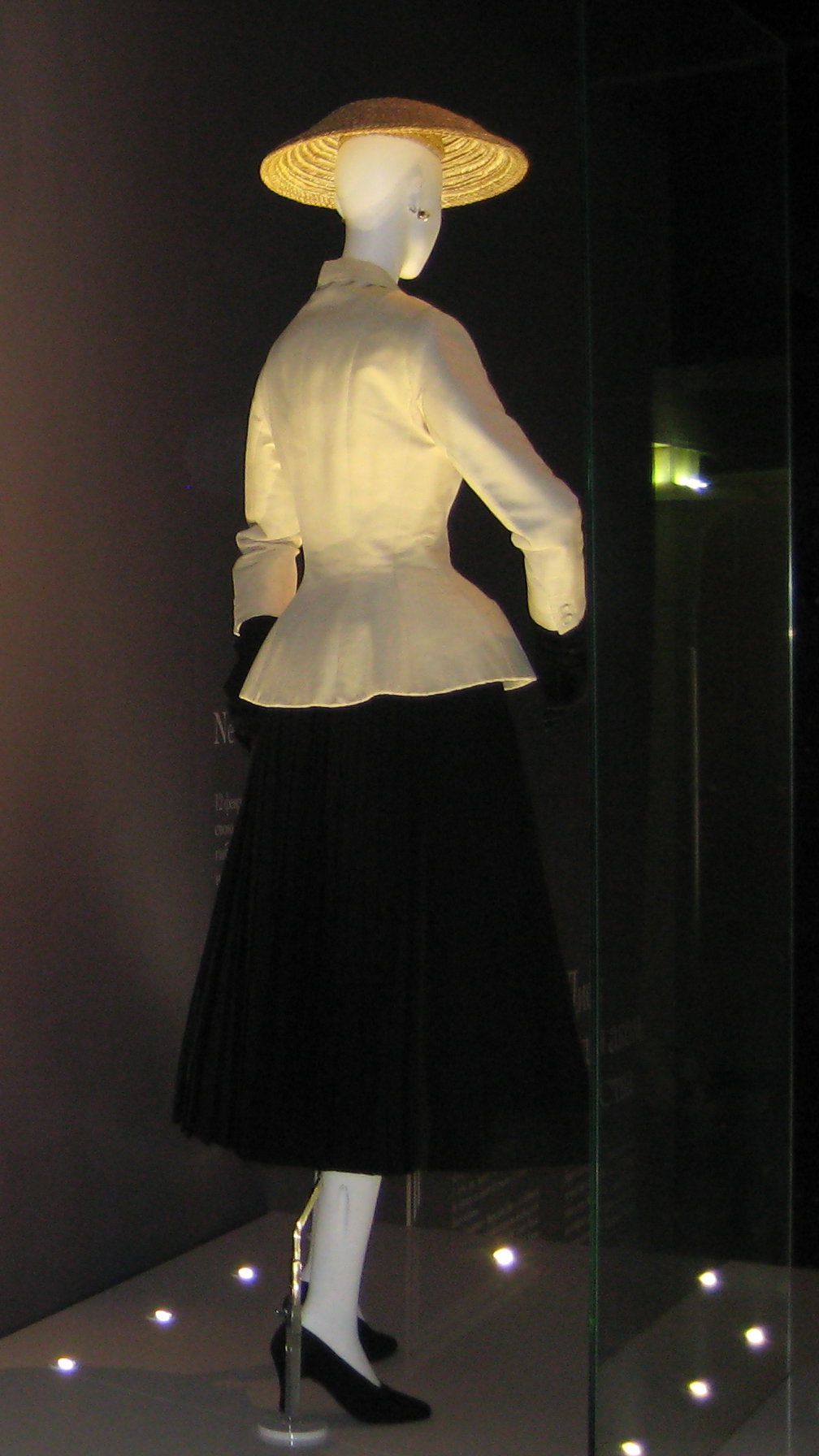
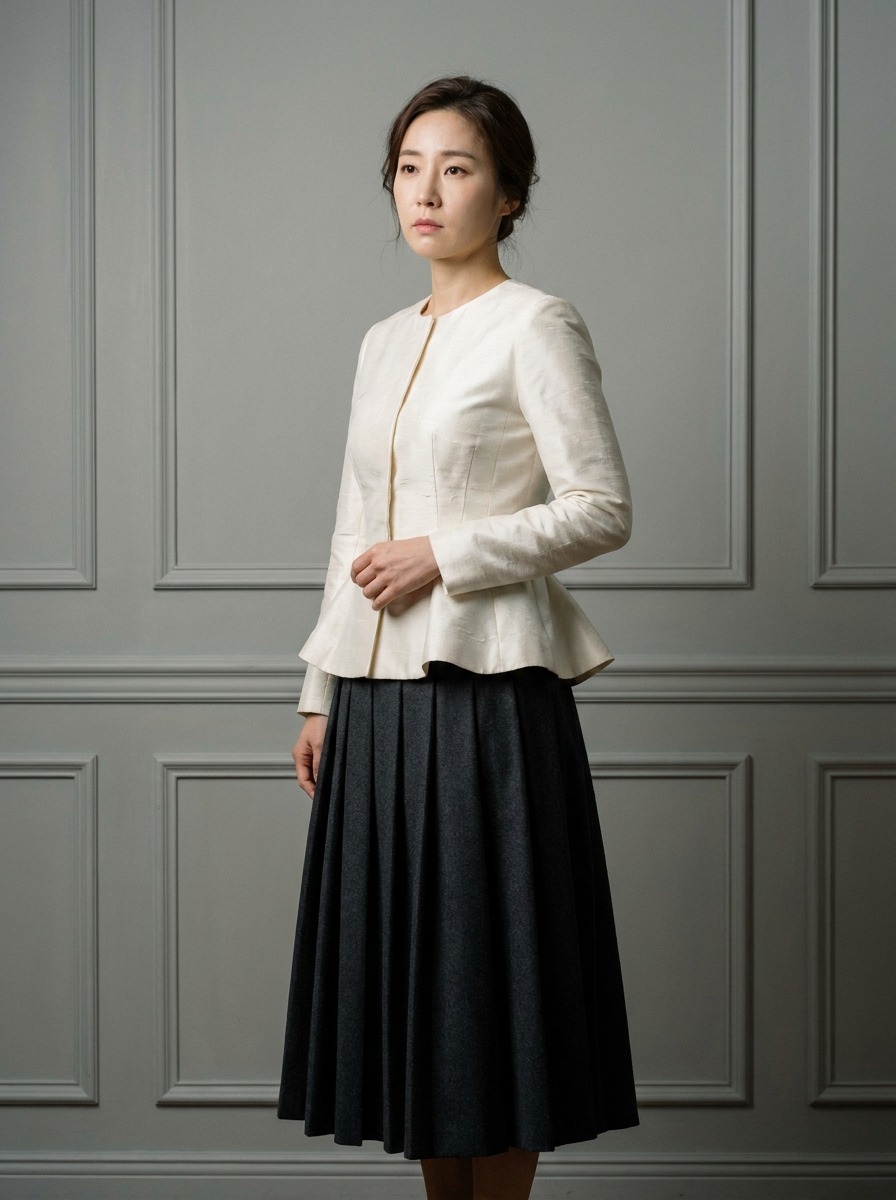
The jacket holds a defined waist and flares over the hips beneath a soft shoulder line. Set beside Chanel’s black dress, it shows two opposite strategies. One reduces structure so the body moves freely; the other adds structure to shape the body. Both belong to luxury fashion, which tells you the category tolerates very different ideas of form.
Saint Laurent: one idea, two production models
In 1966 Yves Saint Laurent showed a tuxedo for women. According to the Musée Yves Saint Laurent Paris, the couture version initially sold only one example, while the ready-to-wear version succeeded.
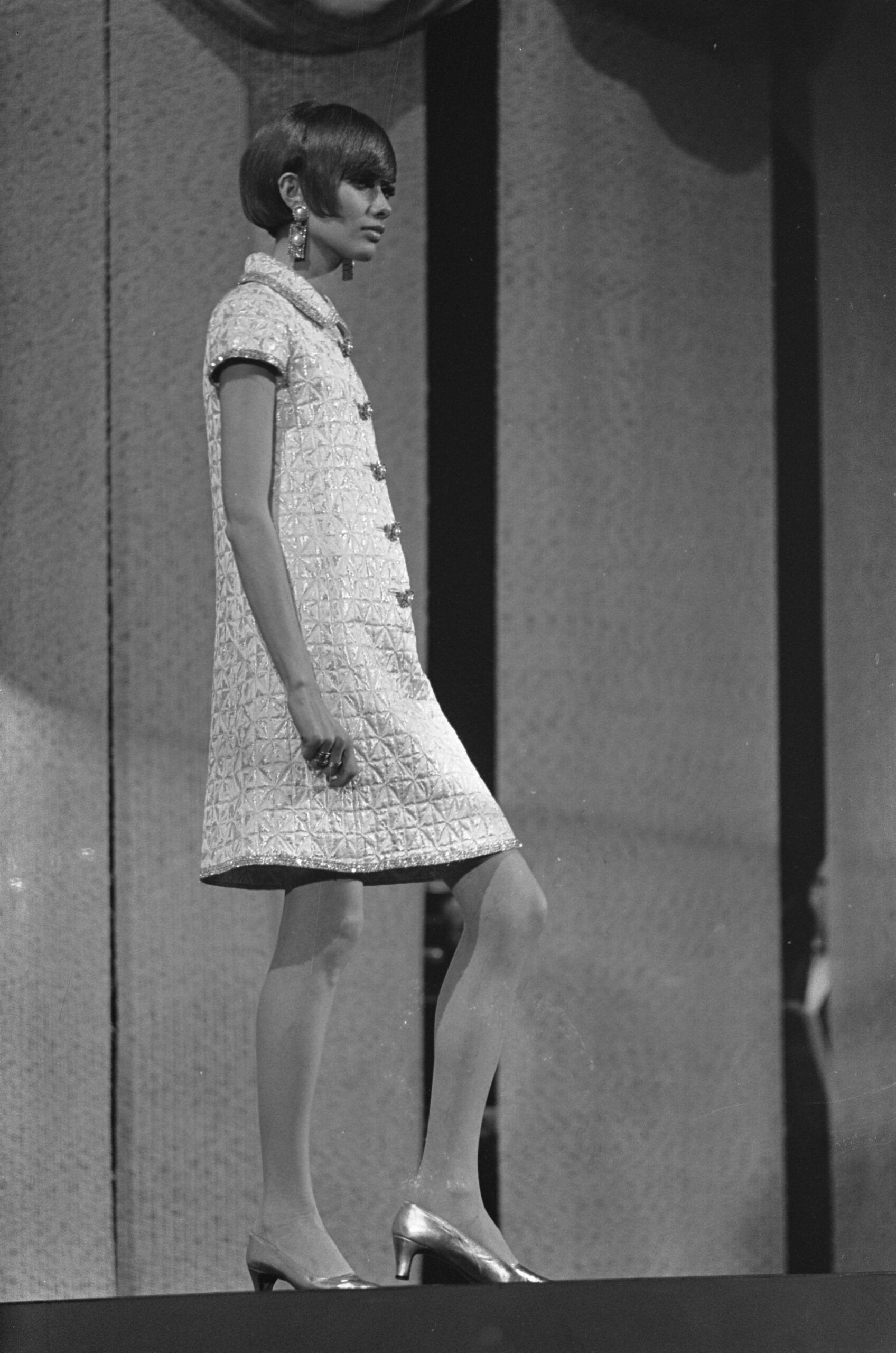
That ready-to-wear came from Saint Laurent Rive Gauche, a boutique that opened on 26 September 1966 with a separately designed collection. The tuxedo shows how much the production and retail system around a garment can shape who ends up wearing it.

Prada: an industrial material treated with care
Prada was founded in Milan in 1913. The company’s 2015 social responsibility report states that the nylon backpack was first produced for Fall/Winter 1984–85 and developed later.
Nylon is light and tough, and it’s more often associated with technical gear than with leather goods. To my eye, the backpack’s interest lies in that contrast: a utilitarian material given the attention usually reserved for leather.

Compact timeline
| Year | House | Object or event |
|---|---|---|
| 1837 | Hermès | Harness workshop founded in Paris |
| 1854 | Louis Vuitton | House established |
| 1858 | Worth and Bobergh | Dressmaking shop opens in Paris |
| 1867 | Louis Vuitton | Flat trunk (house timeline) |
| 1880 | Hermès | Move to 24 Faubourg Saint-Honoré |
| 1910 | Chanel | Hat shop opens in Paris |
| 1913 | Prada | Founded in Milan |
| 1921 | Gucci / Chanel | Florence luggage atelier opens; No. 5 |
| 1926 | Chanel | Simple black dress |
| 1947 | Dior / Gucci | Dior debut on 12 February; Bamboo bag |
| 1953 | Gucci | Horsebit loafer |
| 1955 | Chanel | 2.55 shoulder bag |
| 1966 | Saint Laurent | Women’s tuxedo; Rive Gauche opens 26 September |
| 1984–85 | Prada | Nylon backpack first produced |
Why price and a logo are not enough
A price shows what a brand can charge. It covers design and making, plus retail space, advertising, distribution and the value of the name. Two bags at the same price can differ considerably in material and finish.
Logos tell you even less. They can be counterfeited, printed on mass-produced canvas, or applied to products far from a house’s core craft. A monogram identifies the company and says little about the seams underneath.
It also helps to drop the assumption that every product from a luxury house is handmade. Some lines involve extensive handwork; others are largely machine-made with careful finishing. The histories above point the same way. No. 5 is a fragrance made far from any dress atelier, and Saint Laurent’s ready-to-wear tuxedo reached more customers than its couture version.
Treat the label as a starting point, then judge the object.
How to judge a luxury piece with a designer’s eye
These checks come from general design and making principles. They apply at any price. Some luxury pieces fail them, and some cheaper pieces pass.
Silhouette and design
I look at the silhouette first, before considering any detail. A strong design reads clearly from a distance through its shoulder line, waist position and the balance of volumes. Then I ask what the shape does. The Bar jacket shapes the body, and the 2.55 frees the hands. If the only answer is “it carries the logo,” the design has little to say.
Material
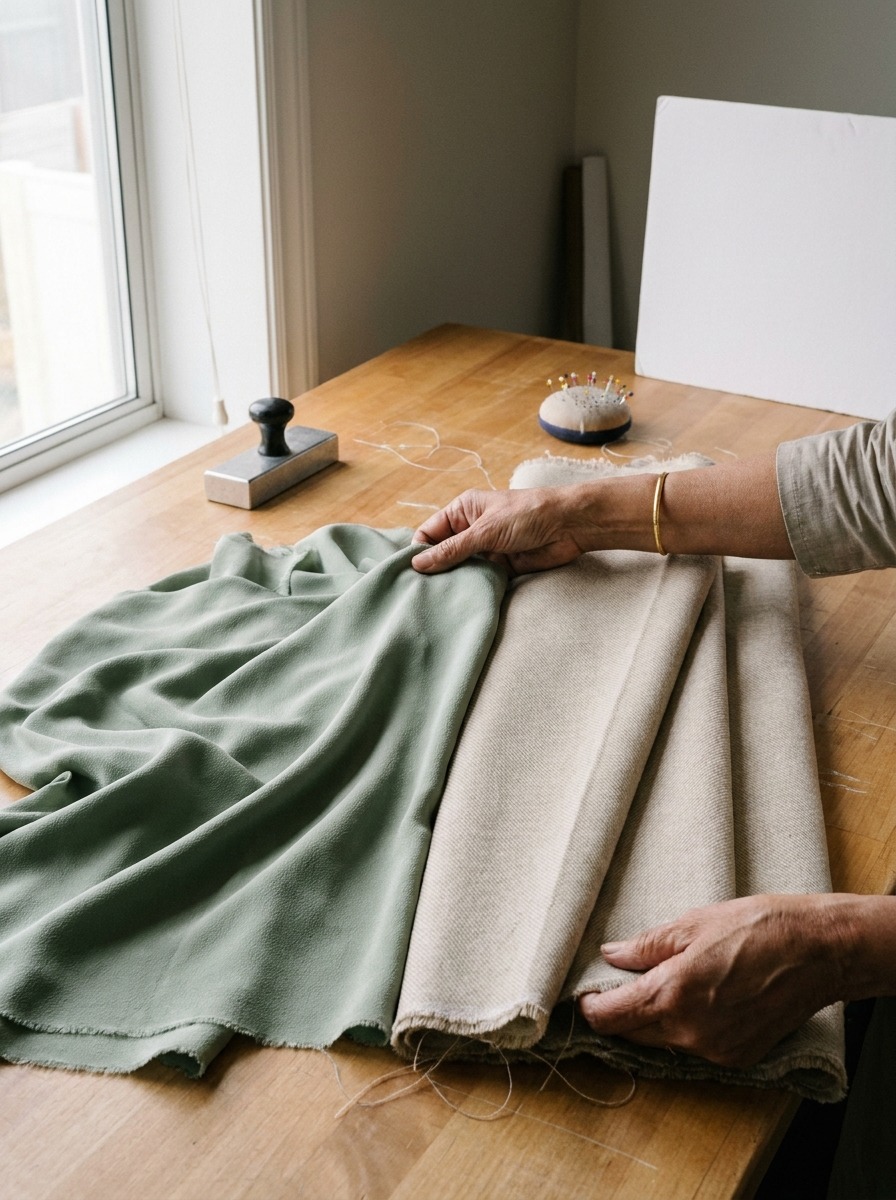
Look closely and handle the material. In leather, check that grain and color stay consistent across panels and that cut edges are finished deliberately: painted, folded or left raw as a choice. In fabric, check that weight and drape suit the cut. Prada’s nylon is a reminder that the right material for the job can matter more than the rarest one.
Construction
Turn the piece inside out. Construction often shows most clearly where buyers rarely look.
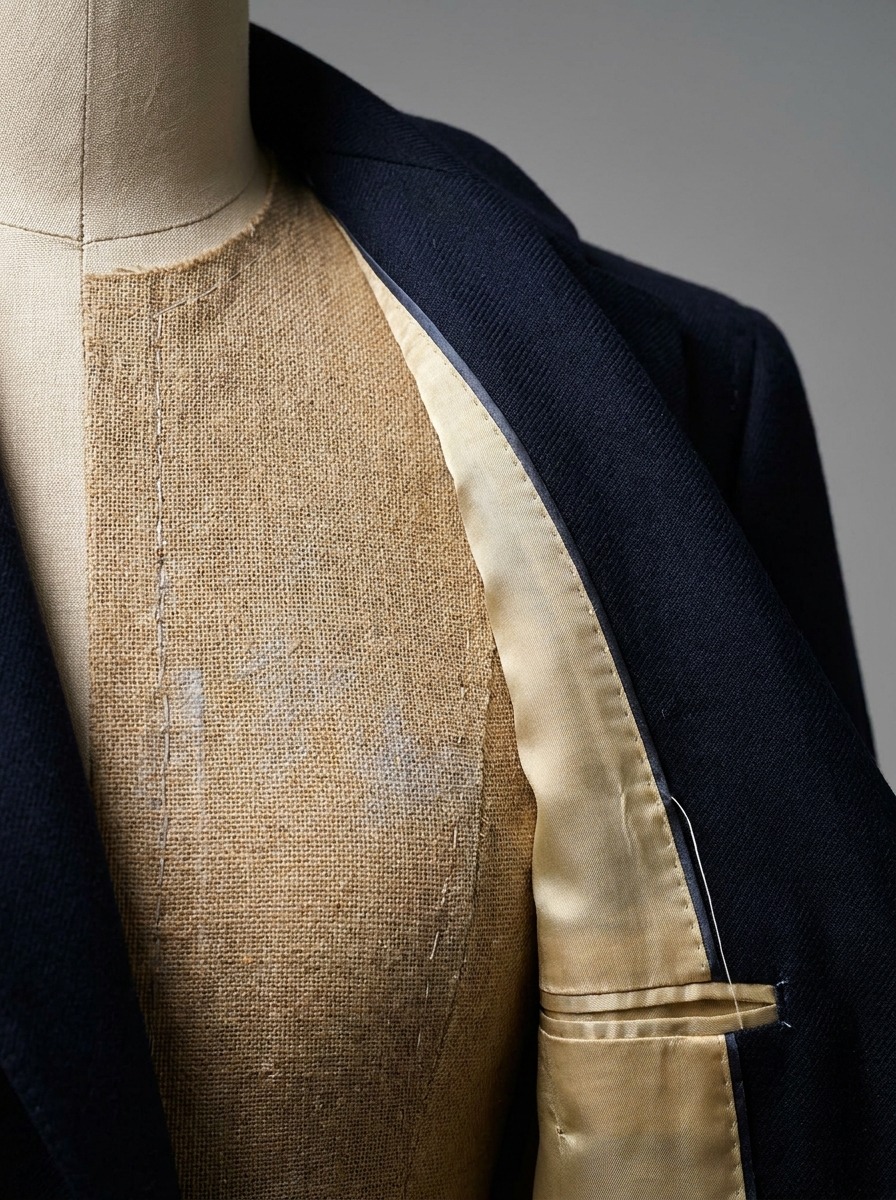
- Stitching should be even in length and tension, especially at corners and stress points.
- Patterns and stripes should line up across seams, pockets and closures where the design intends it.
- Linings should lie flat and be attached cleanly, without pulling.
- Hardware should feel solid, and you should be able to see how it’s fixed: riveted, stitched or screwed.
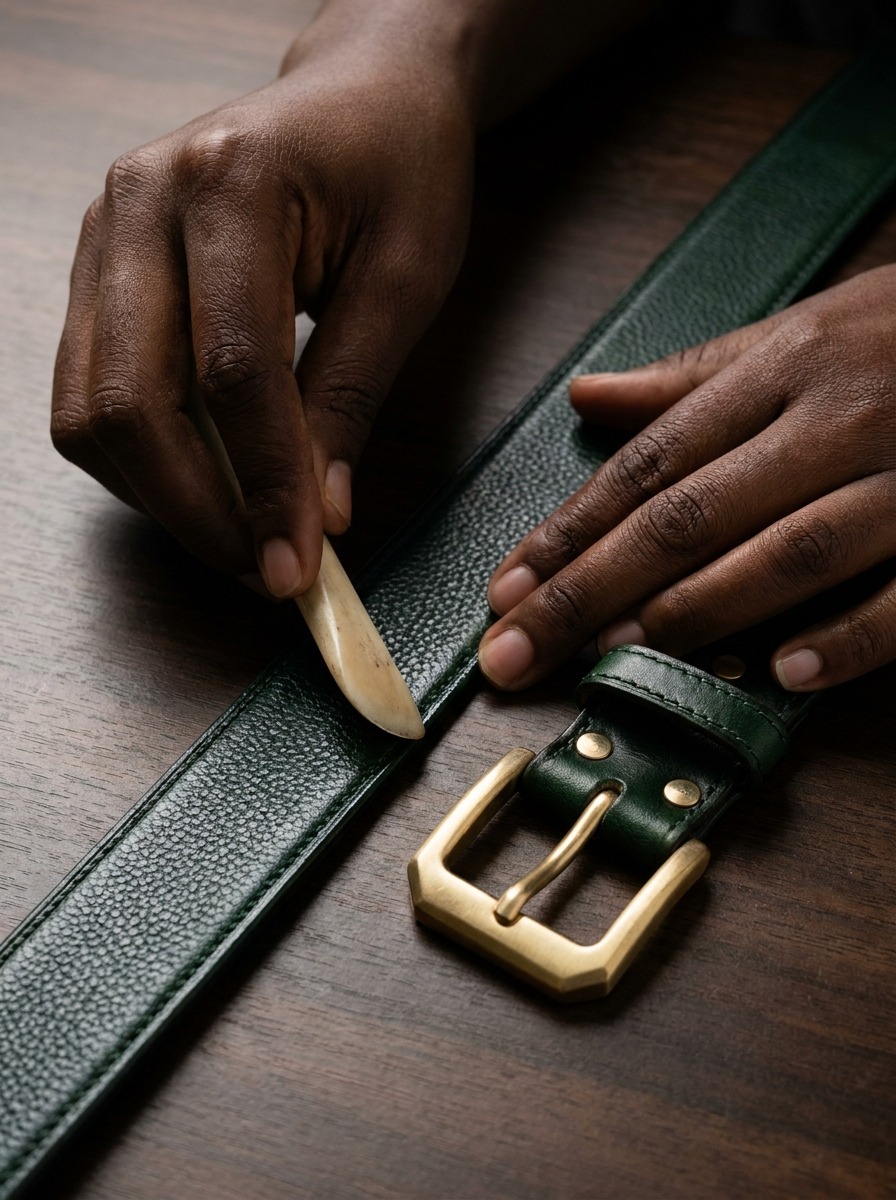
Apply the harness principle. Find where the object carries load, then check whether that point is reinforced.
Fit
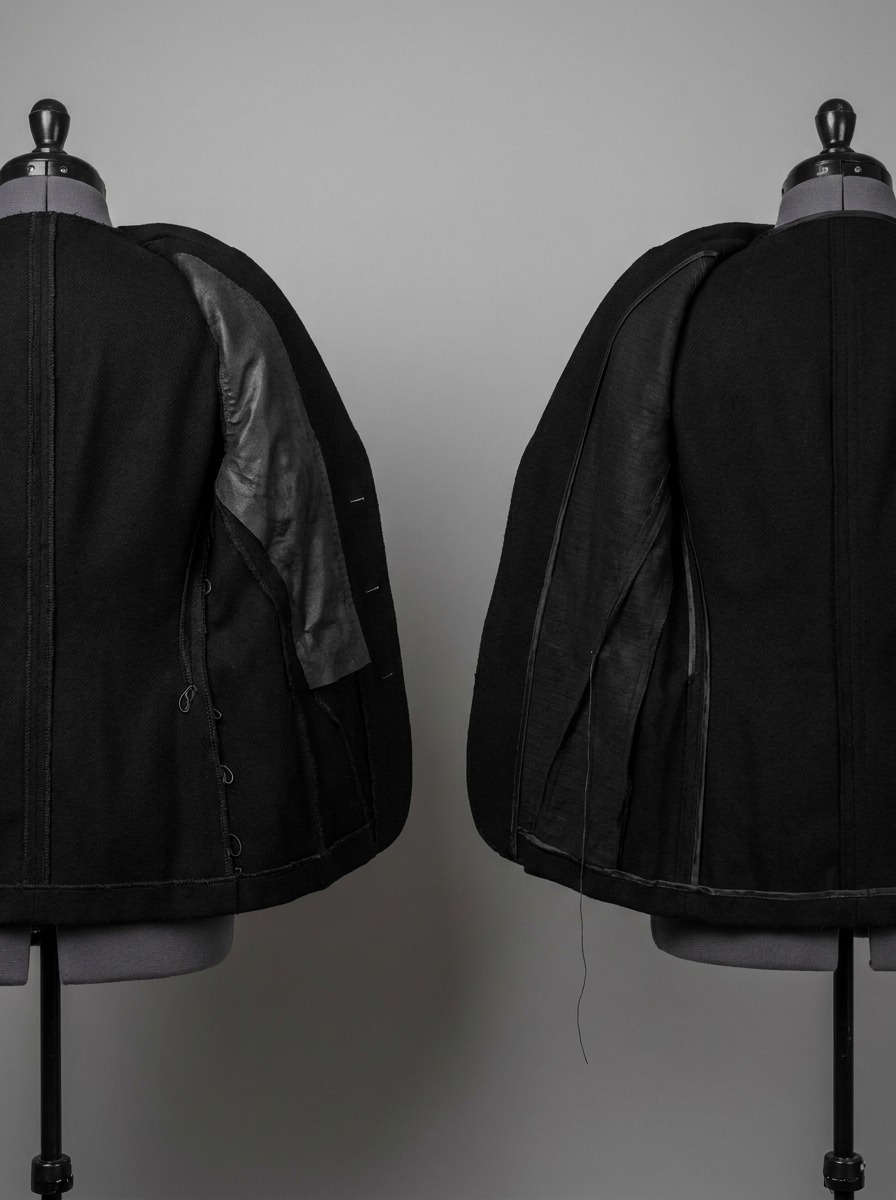
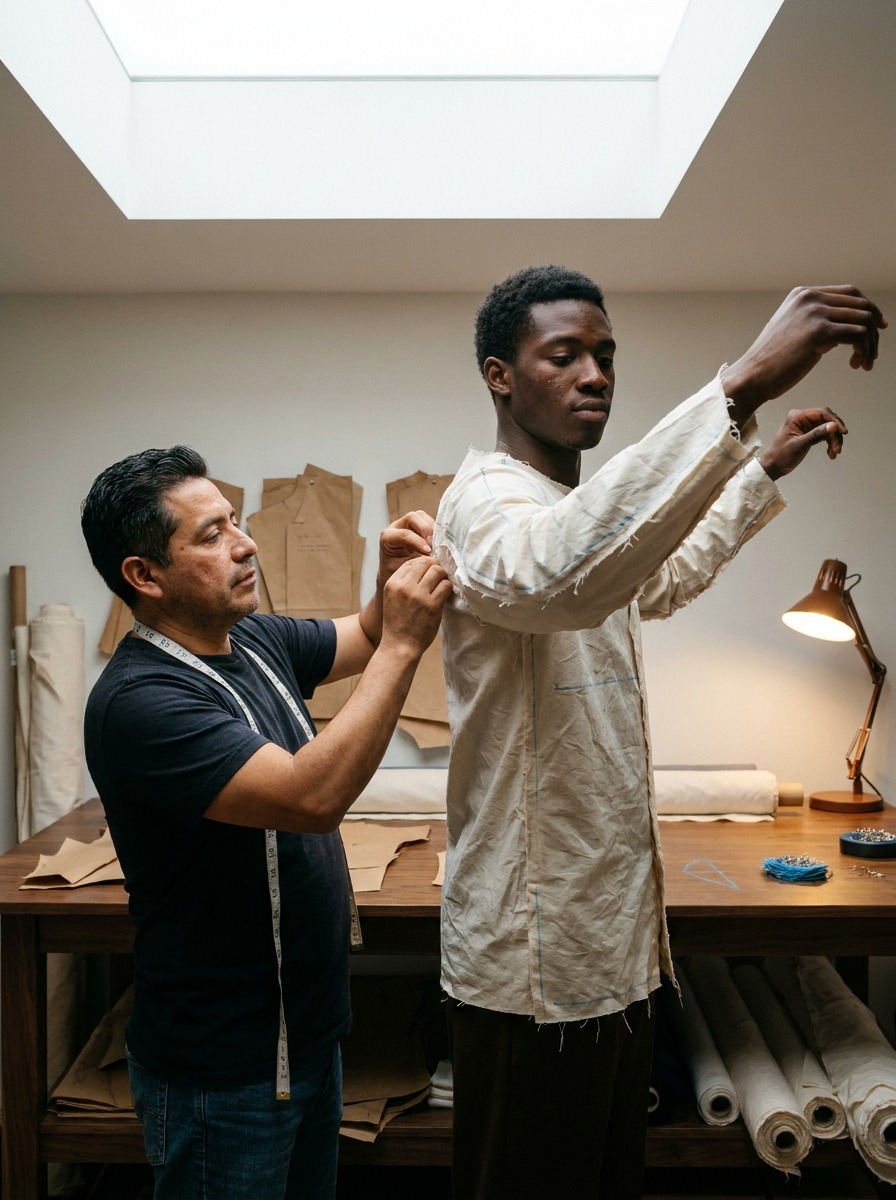
Judge fit against the cut the designer chose. A set-in sleeve is meant to sit near the shoulder point; a dropped shoulder is cut to fall lower, and an oversized jacket is meant to stand away from the body. Whatever the cut, raise your arms, sit down and reach forward. The garment should move with you without dragging or riding up more than its style explains. With a bag, check strap drop, empty weight and whether it sits steadily against your body.
Provenance
Read the country of manufacture on the label, then look at what the brand publishes about where and how it makes things. Some houses share detailed information; others share little. Provenance won’t settle quality on its own, but a lack of information is worth noting.
Repairability
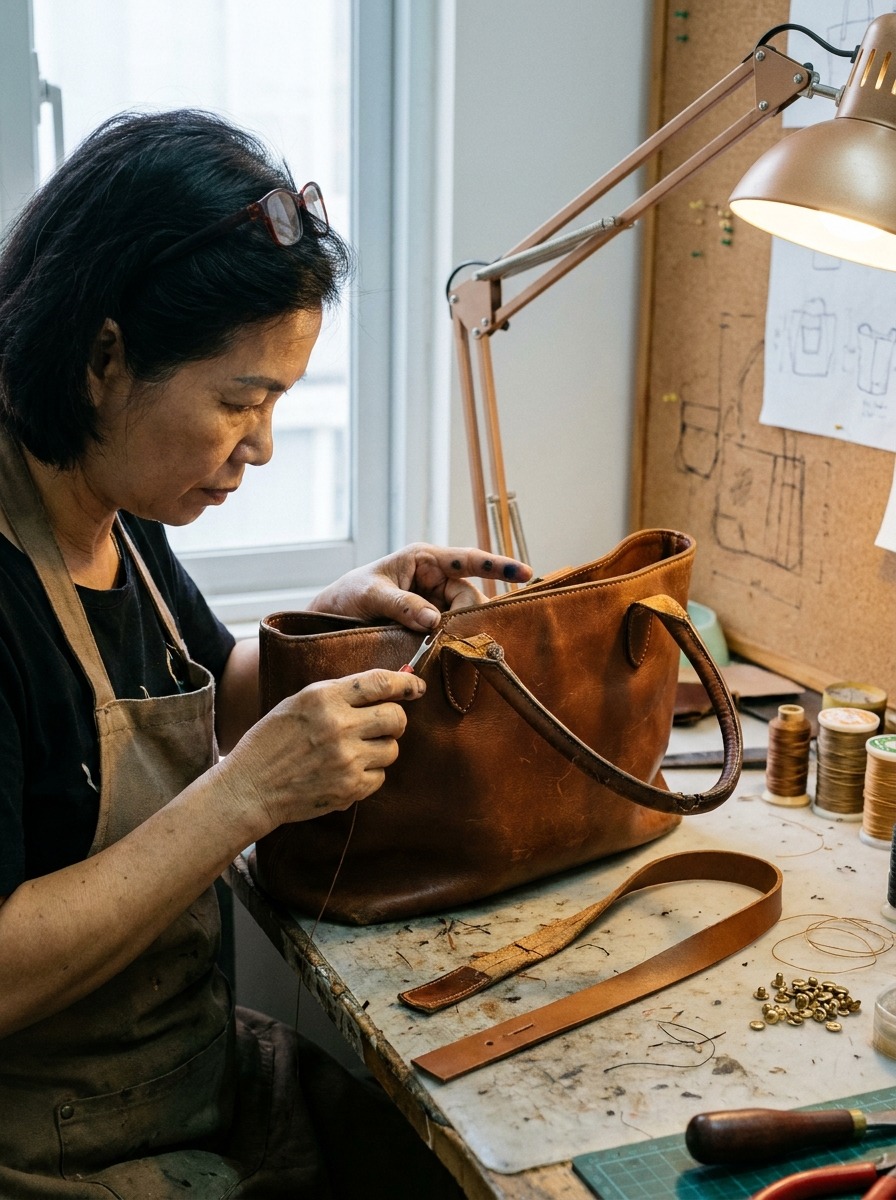
Before buying, ask whether the brand repairs its products and which parts can be replaced: zips, handles, heels, linings. On garments, look for seam allowances generous enough to let out. A piece designed for repair is designed for years of use, which links it to the harness and the trunk more directly than any logo does.
FAQ
What is the difference between luxury fashion and haute couture?
Haute couture is a formal designation in France, tied to criteria around craft, personalization and atelier work, with collections shown in January and July. Luxury fashion is broader and includes ready-to-wear, leather goods and accessories made in series.
Is luxury fashion always handmade?
No. Handwork varies widely across products and houses. Some items involve significant hand finishing, while others are largely machine-made. Ask the brand about the specific product.
Is premium fashion the same as luxury fashion?
“Premium” is an informal market label for brands priced between luxury and the high street. It has no fixed definition, so judge each brand and piece on its own design, materials and construction.
Which was the first luxury fashion house?
There is no single answer. Of the houses covered here, Hermès has the earliest founding date (1837). Worth is often credited with shaping the modern fashion house, but the Met notes he was not the first or only one to work this way.
Is luxury fashion worth the money?
It depends on the piece. Weigh design, material, construction, fit, provenance and repairability against the price. A brand name alone doesn’t guarantee value.
How can I tell if a piece is well made?
Look inside. Check stitch consistency, seam alignment, edge finishing, lining attachment and how the hardware is fixed. Then wear it and see how it behaves when you move.
A test to take with you
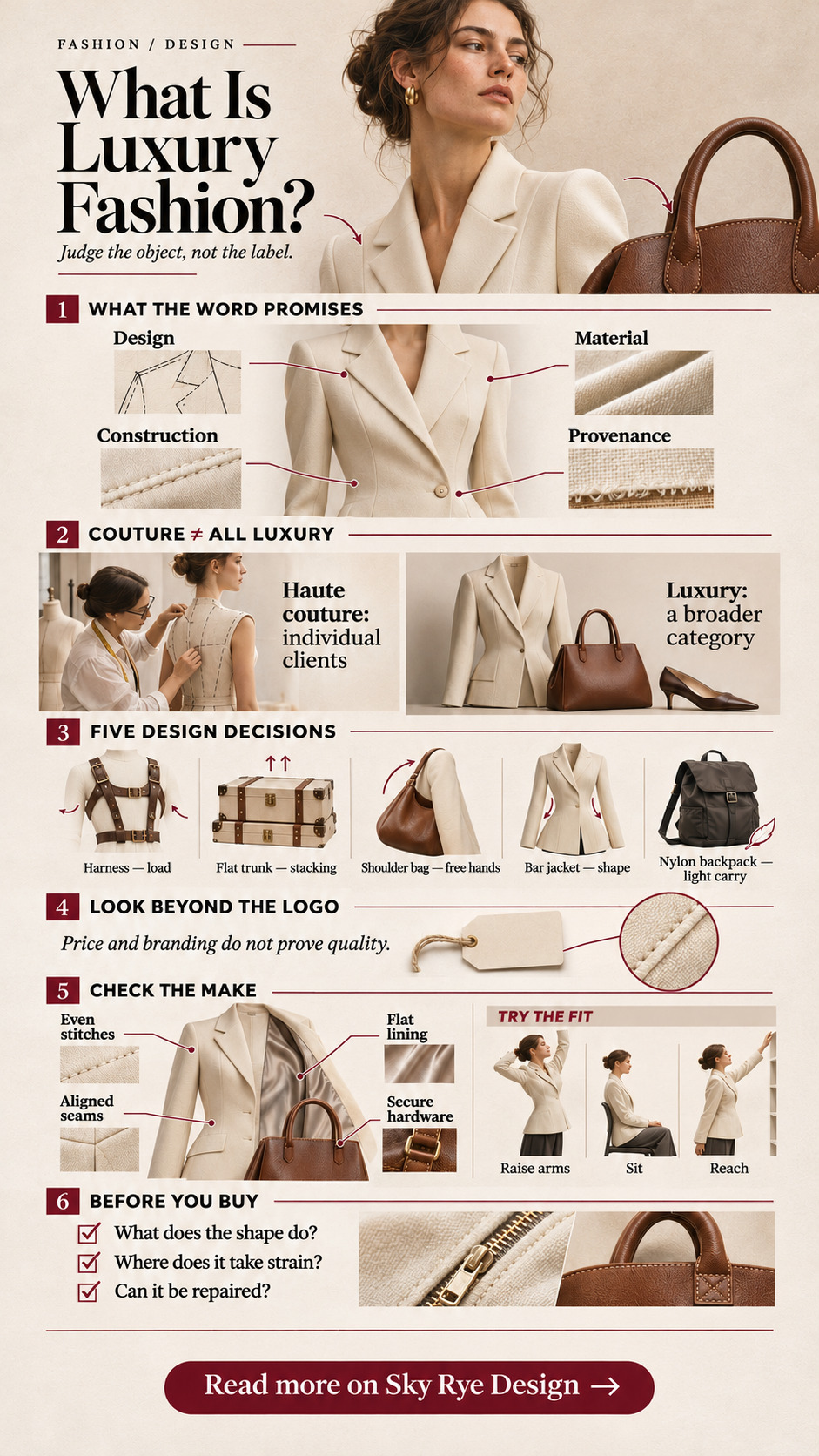
The five objects in this story each record a decision about how someone lived. A harness strap answers to load, a flat trunk to stacking, a shoulder bag to free hands, a Bar jacket to a chosen body shape and a nylon backpack to a lighter way of carrying things. The houses still draw on those decisions, though their current products vary in how closely they follow them. That variation is what you can check. When you next consider a piece, answer three questions from the object itself and the brand’s published information: what the shape does for the body, where the piece takes strain and how that point is reinforced, and which parts can be repaired or replaced. Do this before you look at the price.

Sources
- Metropolitan Museum of Art, Worth and Bobergh: Source
- Metropolitan Museum of Art, Charles Frederick Worth and the House of Worth: Source
- Hermès, Six generations of artisans: Source
- Louis Vuitton, Heritage: Source
- Chanel, Report to Society: Source
- Chanel, Gabrielle Chanel: Source
- Gucci, History of Gucci: Source
- Gucci, The making of the Gucci Bamboo 1947: Source
- Dior, The House of Dreams: Source
- Dior, Bar jacket: Source
- Musée Yves Saint Laurent Paris, Saint Laurent Rive Gauche: Source
- Musée Yves Saint Laurent Paris, The first tuxedo: Source
- Prada, Galleria 1913: Source
- Prada, Social responsibility report 2015: Source
- Fédération de la Haute Couture et de la Mode: Source
- Fédération de la Haute Couture et de la Mode, Our history: Source
- 1share
- Facebook0
- Pinterest1
- Twitter0
- Reddit0