Privacy and natural light usually pull in opposite directions. Curtains and blinds block the view, but they also block the sun. That can leave a bathroom dim or an office feeling enclosed. Frosted glass offers a middle path because it admits much of the light while blurring the line of sight.
How frosted glass works
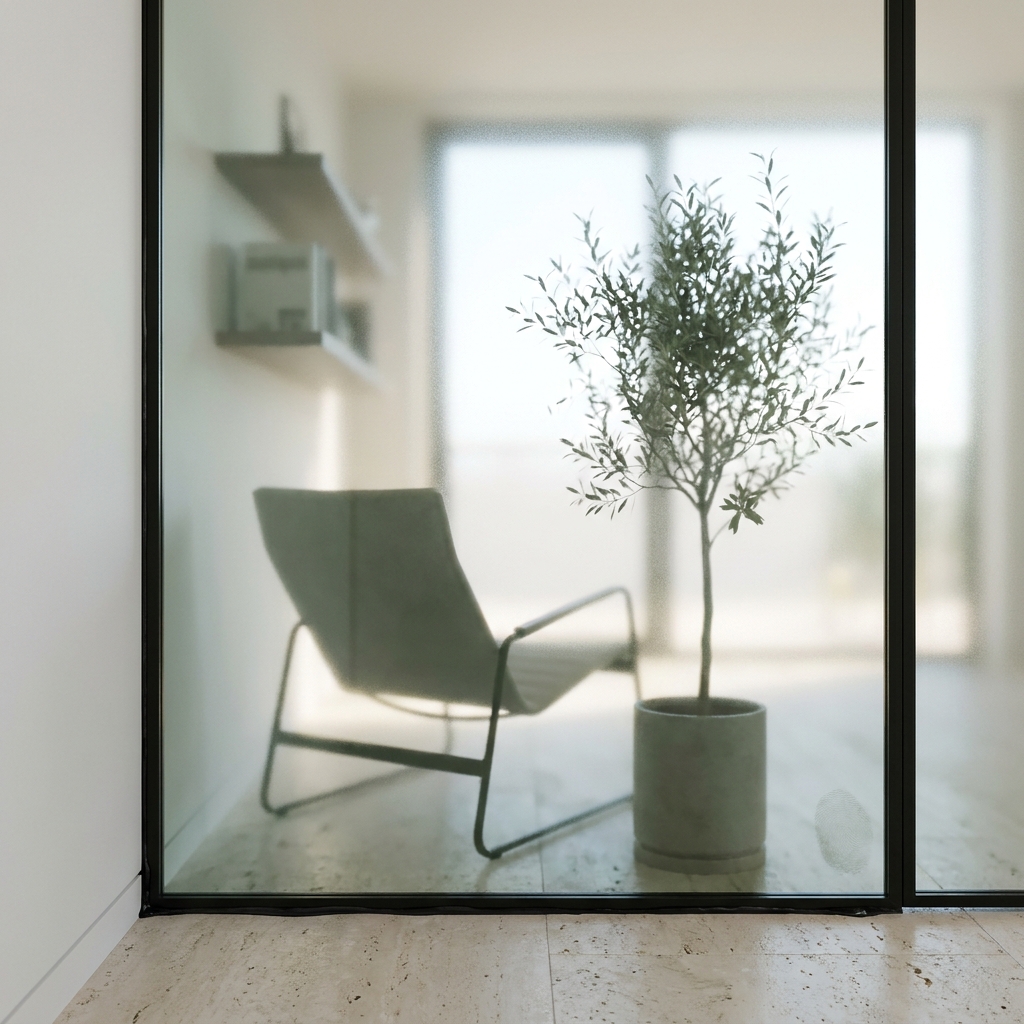
Frosting alters the surface of the glass so that light scatters as it passes through. The room stays bright, but shapes on the other side soften into vague outlines. The effect can be achieved by sandblasting, acid etching or applying a frosted film, and each has a slightly different look and feel.
Sandblasted glass has a fine, even texture and a matte finish. It can cover a whole panel or create patterns, borders and logos that contrast with clear glass.
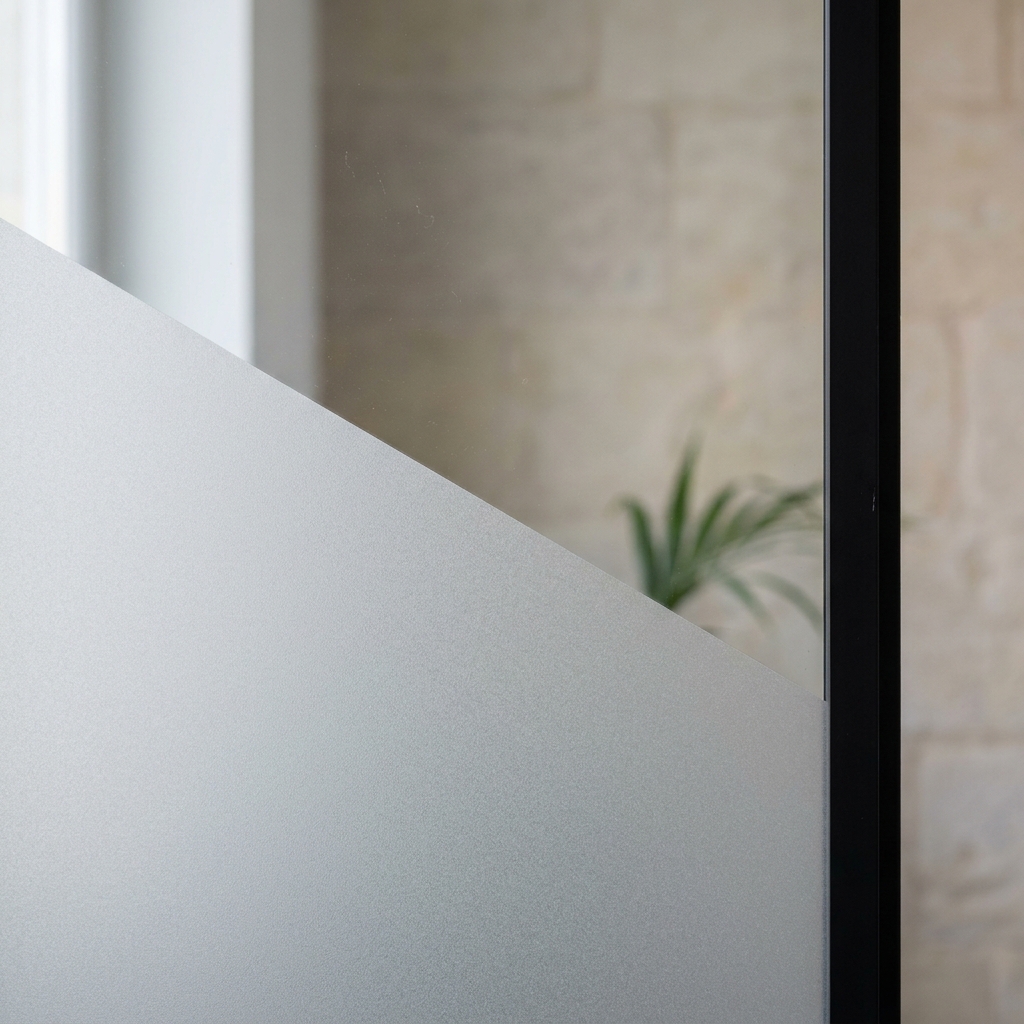
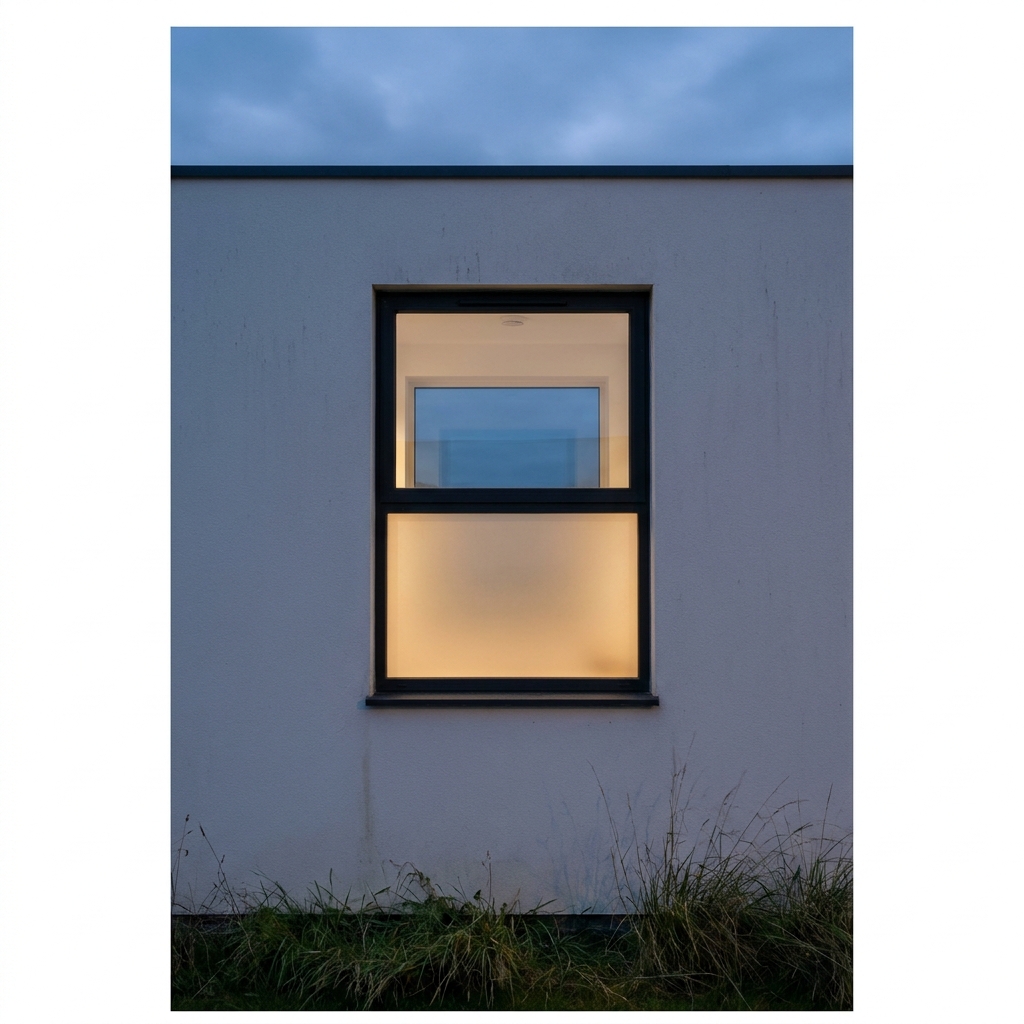
Translucency diffuses detail, but it does not guarantee concealment. A person standing close to the pane can show as a recognisable silhouette, especially with bright light behind them. The National Glass Association notes that decorative glass can balance privacy with light flow and that conditions differ at night. A panel that feels private at noon may reveal more after dark, when interior lighting makes the room the brighter side of the glass.
Map sightlines before you choose
Start by deciding what you actually need to hide. Stand where people will walk, sit or wait, and note where their eye lines meet the glass. Check from both sides, both seated and standing.
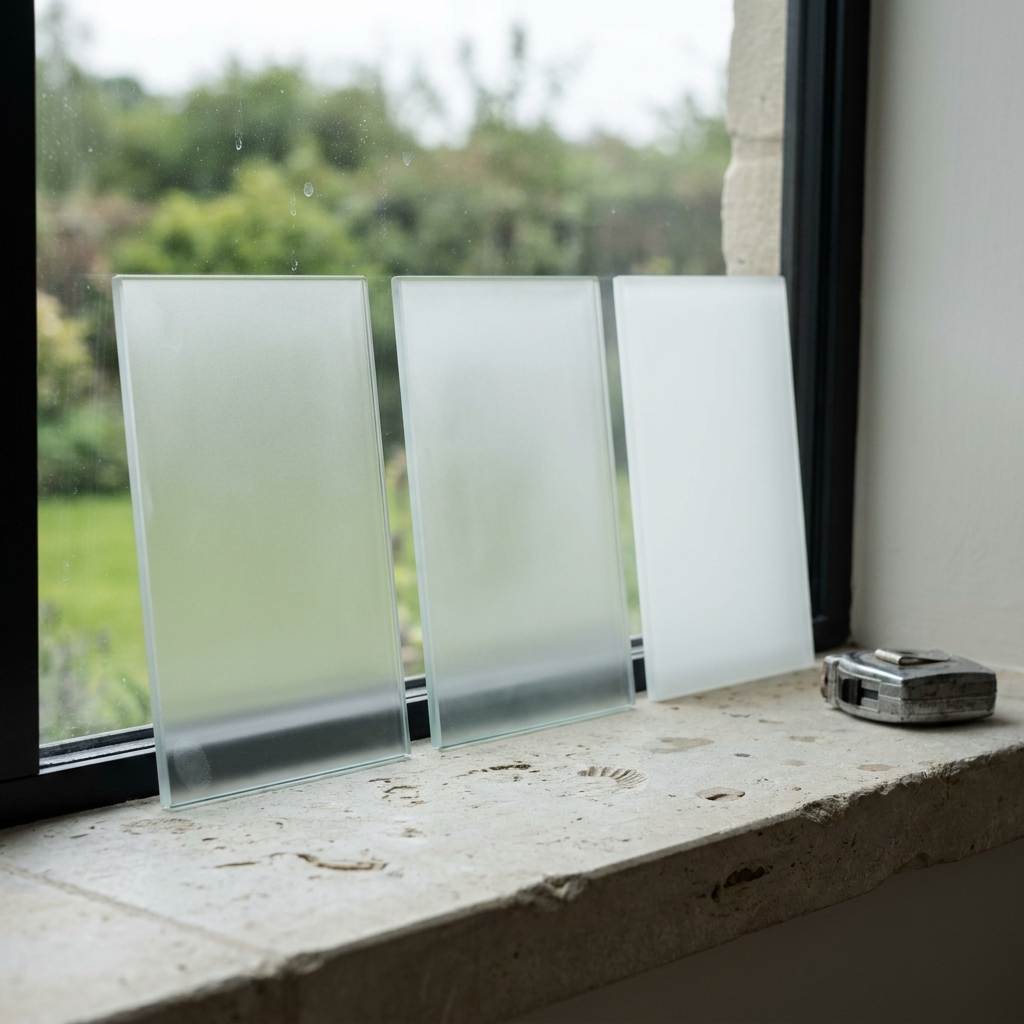
Set the frost band to cover those sightlines with some margin, rather than defaulting to a standard height. Then look at a sample or mock-up twice: in daylight, and after dark with the lights on. If the night view fails, choose a denser frost or a taller band, or add a blind for evenings.
Bathroom ideas
Frosted shower screens. They keep the space light while softening what is behind them. Shower enclosures generally call for safety glazing. The NGA's frameless shower enclosures design guide covers this in a U.S. context. Requirements vary by location, so confirm them with a qualified glazier.
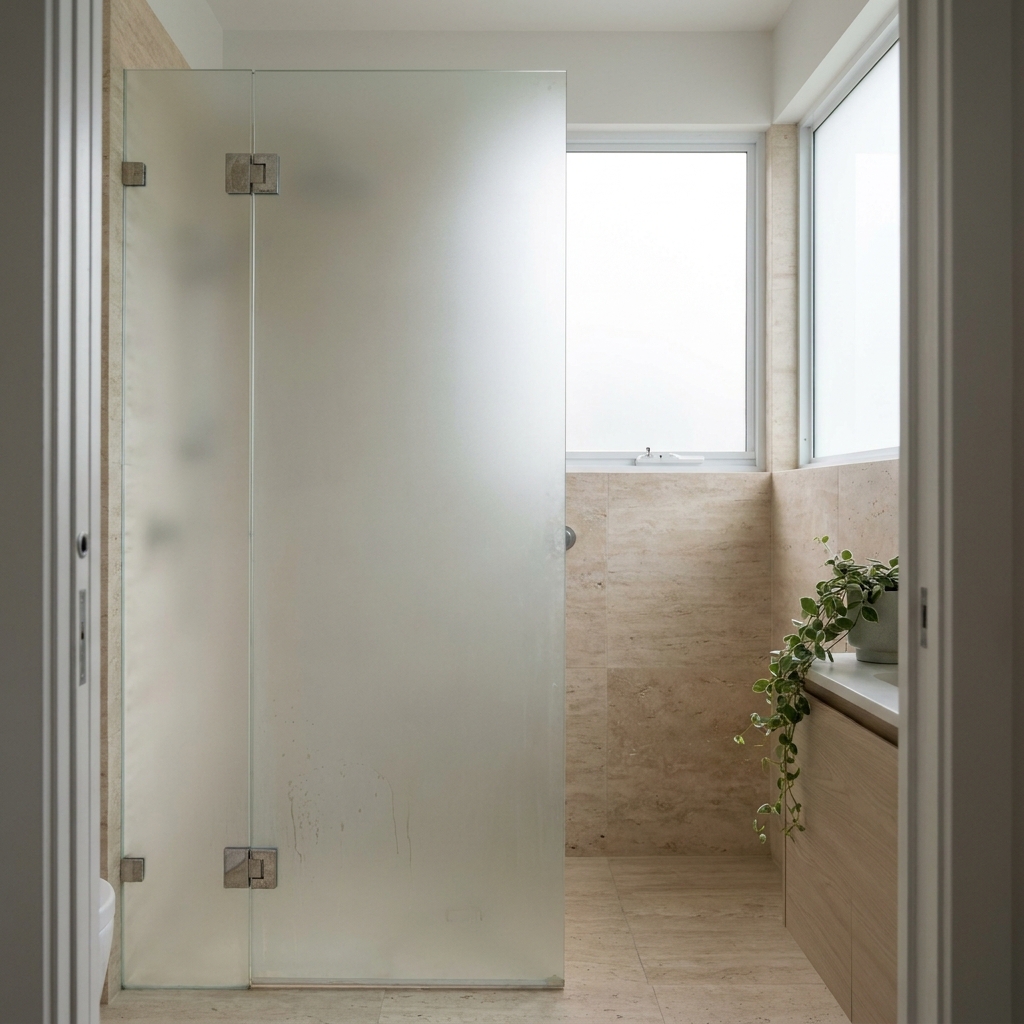
Frosted windows. They let in daylight without permanent blinds. They do not ventilate the room, though, so moisture still needs an extractor fan or an openable window.
Partial frosting. Frosting the lower half of a window gives privacy at eye level while keeping a view of the sky. Check the band from outside, allowing for changes in ground level and nearby upper windows. For broader planning, see these ways to make a small bathroom feel brighter.
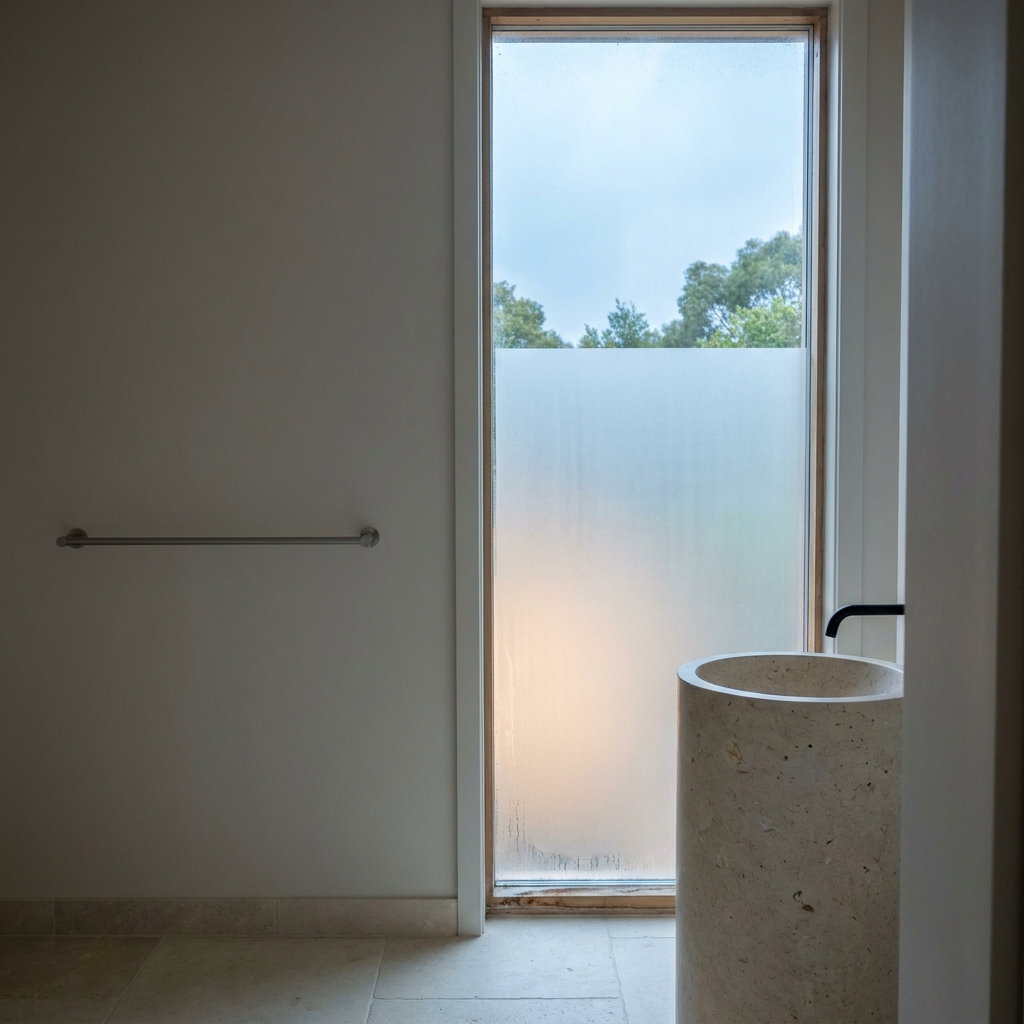
Frosted vanity panels or mirror surrounds. These add a soft, finished look. Diffused daylight shifts through the day, so pair the glass with a layered bathroom lighting plan that works after dark.
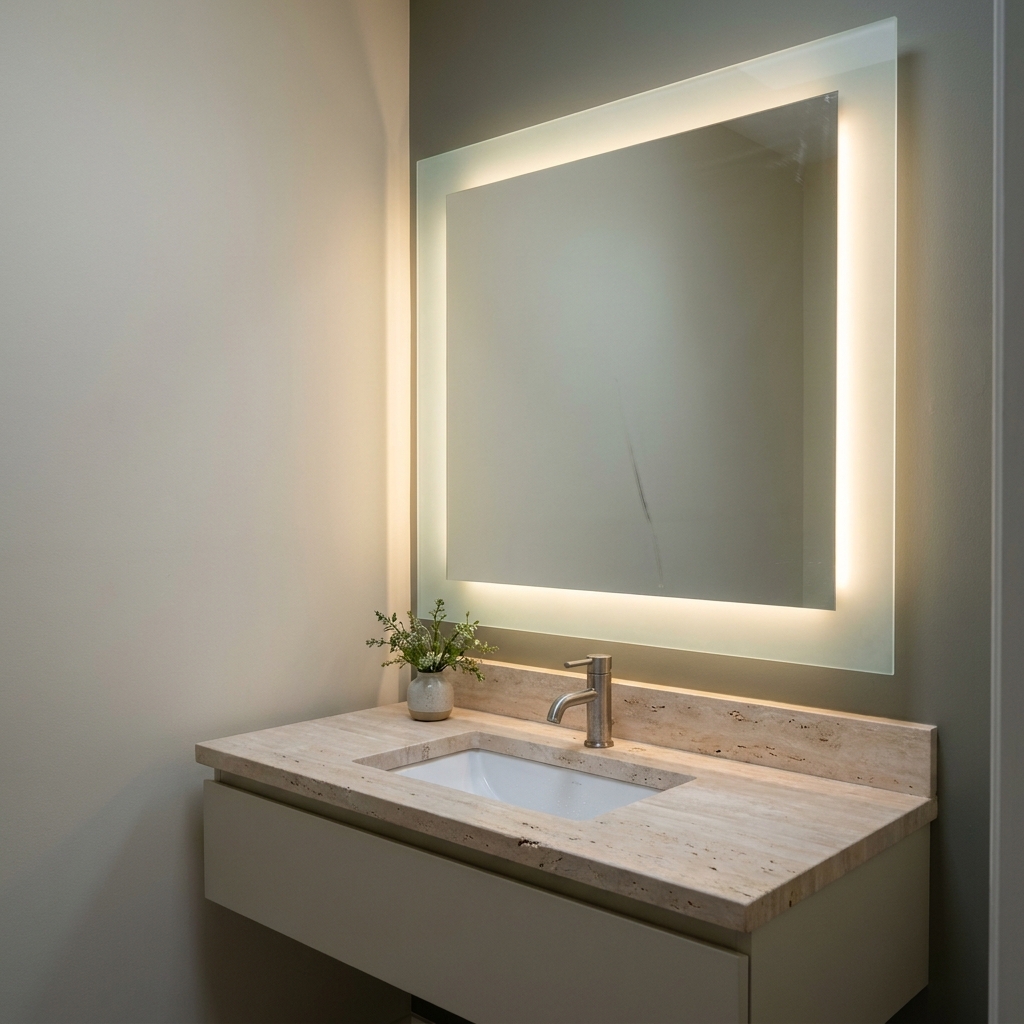
The rule for bathrooms is to frost wherever someone could look in from a likely position, and leave glass clear only where no such sightline exists.
Office and workspace ideas
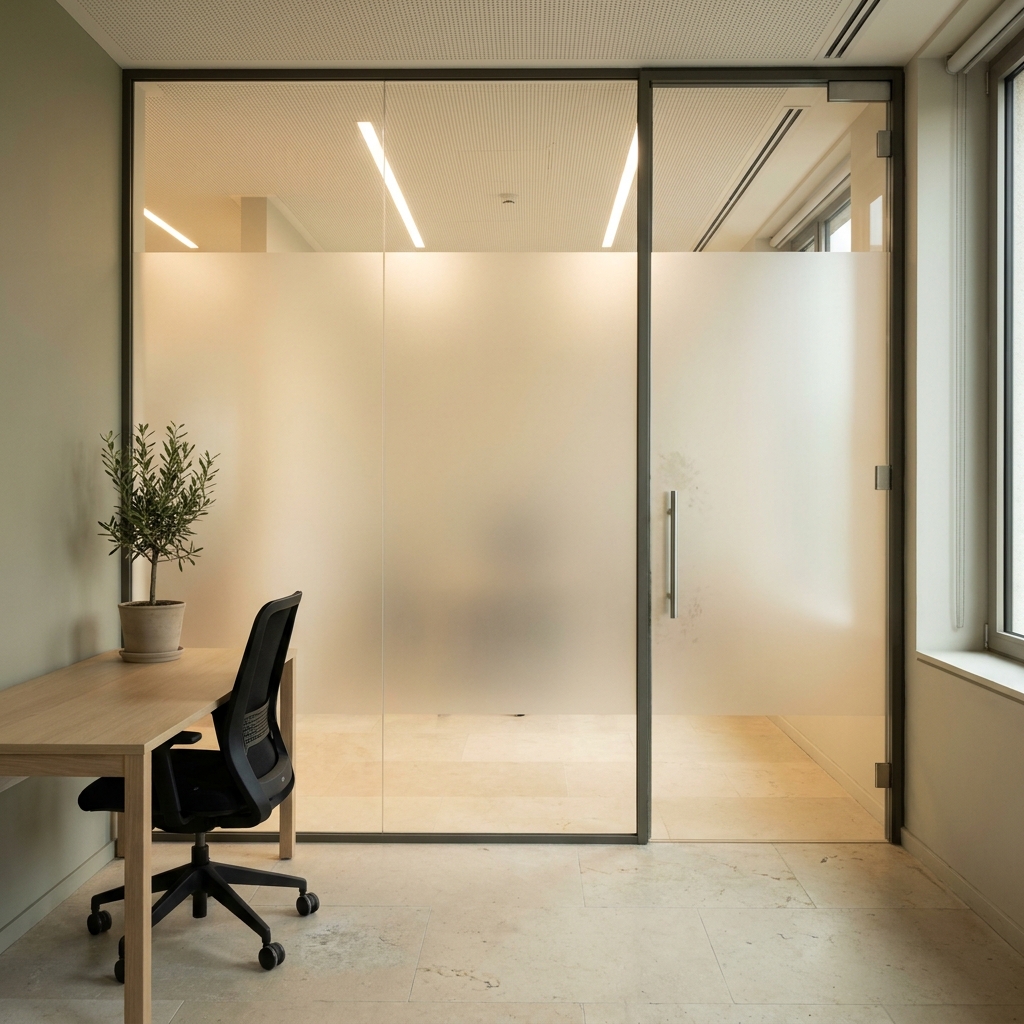
In an office, frosted glass is most useful for meeting rooms, reception areas and private offices. A frosted band across a glass partition at seated eye level gives privacy without turning the room into a box. Clear sections above and below keep the space feeling open.
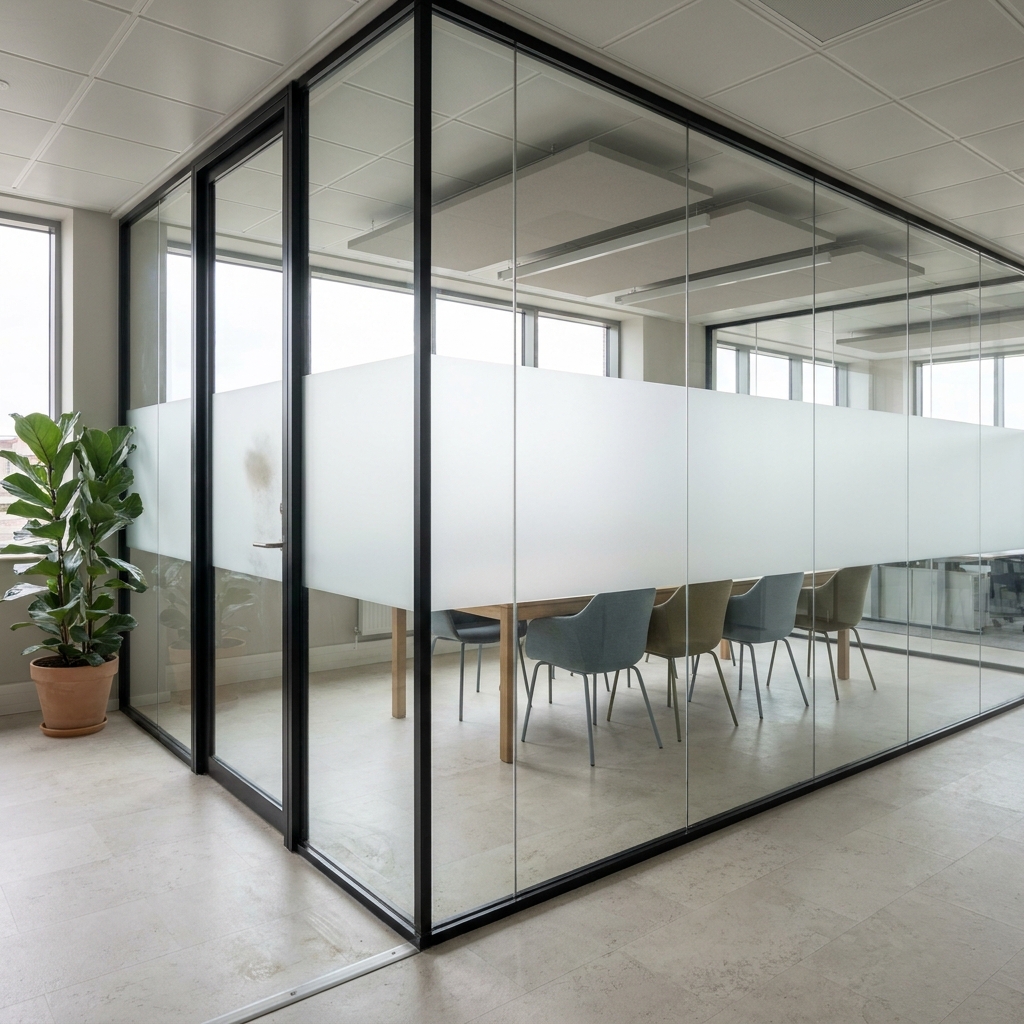
Match the opacity to the room's purpose. Rooms for interviews or confidential conversations warrant a denser frost and a taller band. Collaboration rooms can use lighter frosting, since being able to see whether a room is occupied is often useful. Keep in mind that frosting changes what people see, not what they hear. For acoustics and layout, see this guide to glass conference room design.
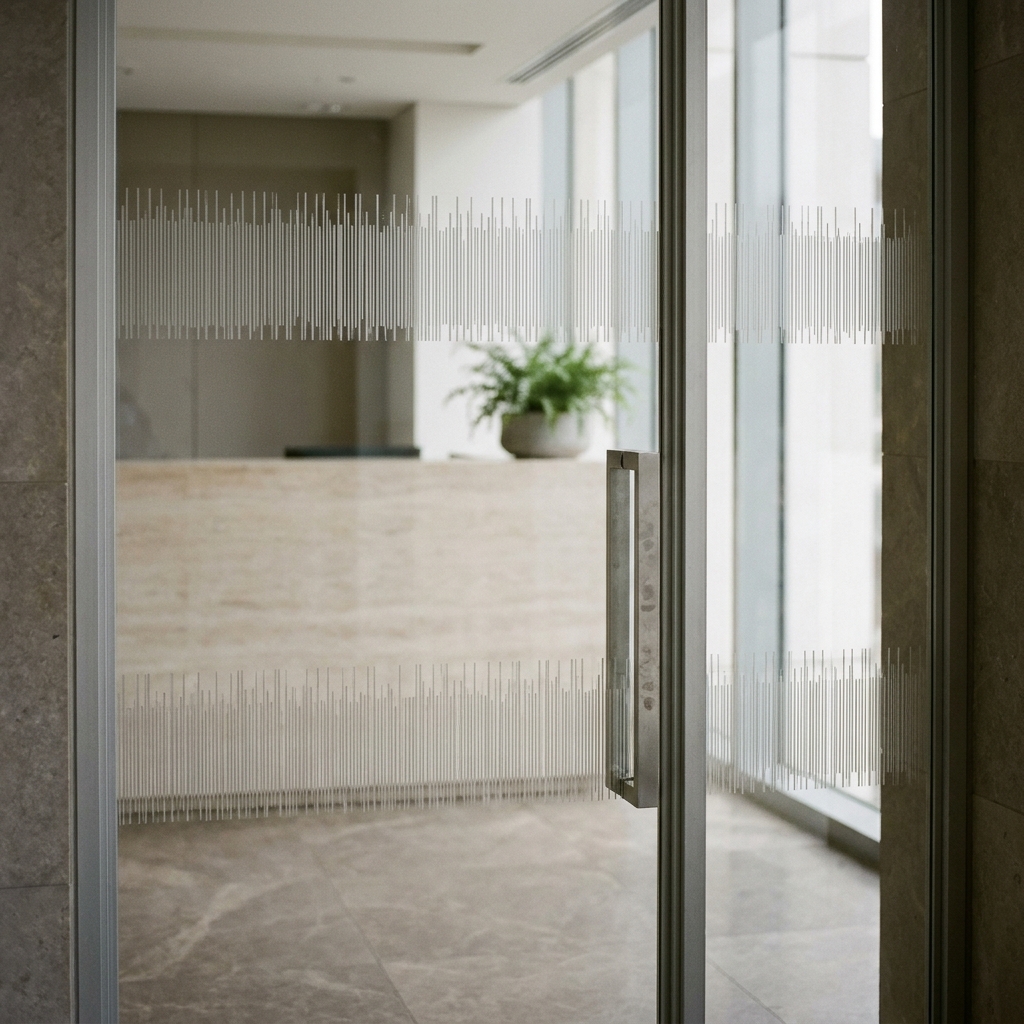
Patterns and branding can be sandblasted into entrance glass to make arrival memorable, provided the band still covers the sightlines that matter.
Things to consider before you choose
Placement. Where possible, put the frosted face on the side people will not touch, because fingerprints and oils can mark some finishes.
Level of privacy. Heavier frosting hides more. A light frost still shows colour and movement.
Safety glass. Bathrooms, doors and areas where people may knock into glass often need toughened or laminated safety glass. A qualified glazier can confirm what local regulations require.
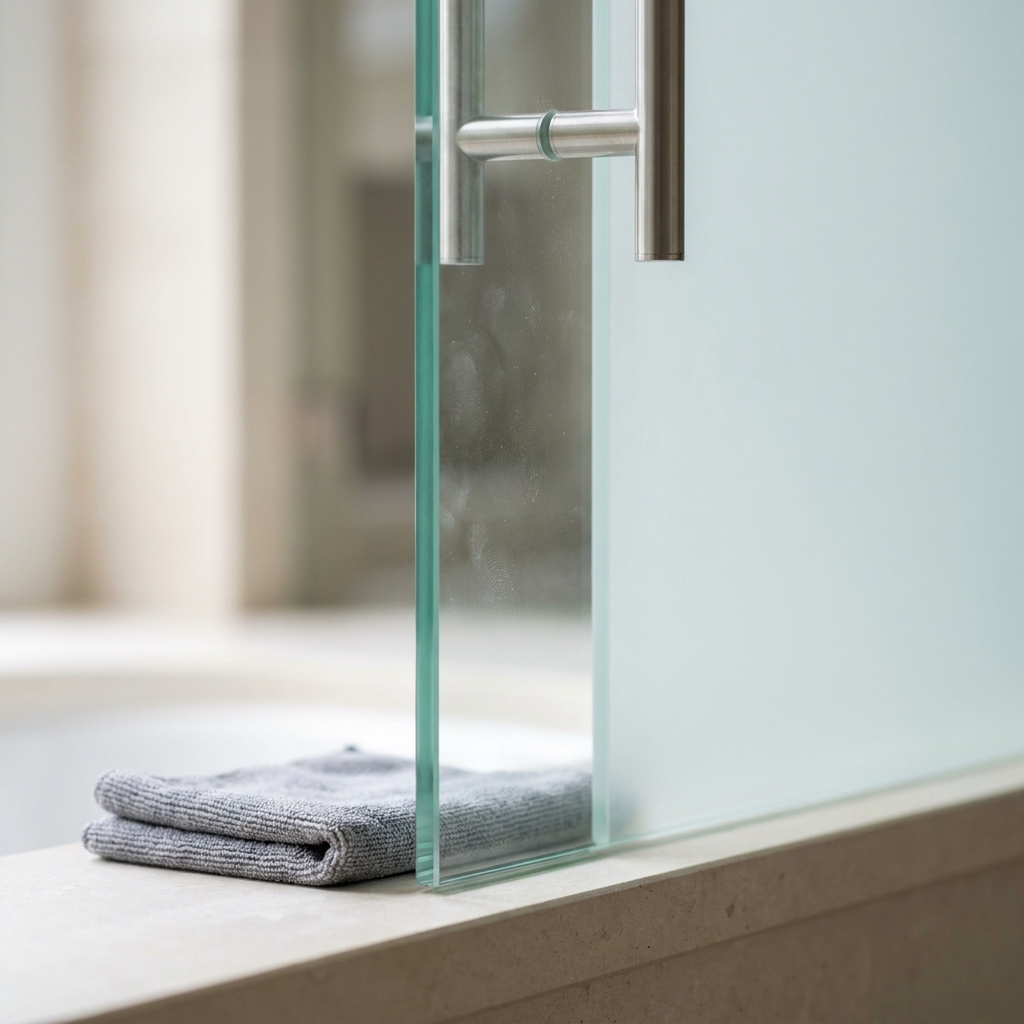
Cleaning. Most frosted surfaces clean with a soft cloth and a non-abrasive glass cleaner. Avoid harsh scourers, and check the maker's guidance for films and sealed finishes.
Frosted film or sandblasting?
Film is quick to apply and removable. That suits rental spaces, short-term changes and layouts that may shift. Sandblasting is permanent, generally more durable, and gives crisper edges for patterns and logos, but it is harder to change later.
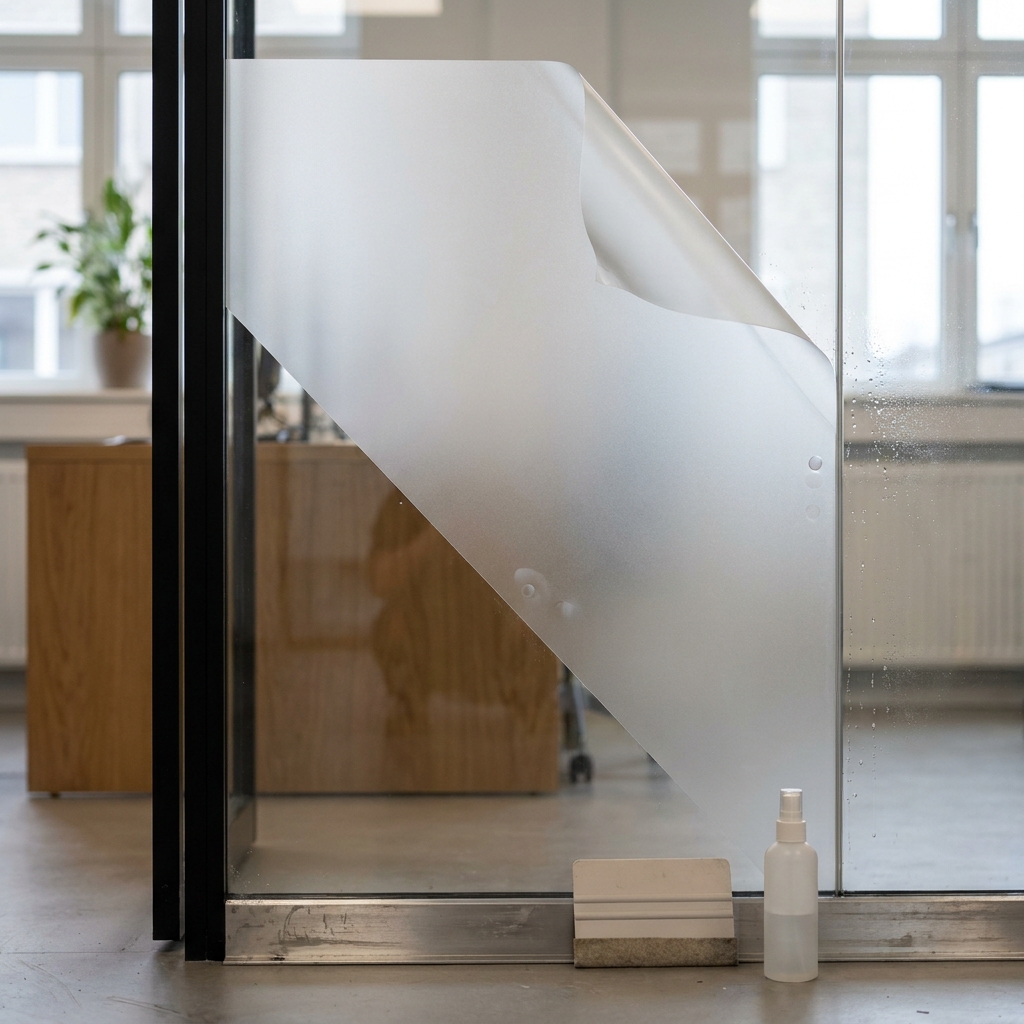
Neither is automatically the better investment. Permanent etching makes sense when the layout and privacy needs are settled. Film makes sense when they may change, or when you want to test a band height before committing.
If you want a clean, permanent finish for a bathroom, partition or shopfront, specialists in frosted and sandblasted glass can help you choose the right level of privacy and pattern for the space.
Final thought
A well-chosen frosted panel does more than hide what is behind it. It softens the light, tidies the room and gives bathrooms and workspaces a calmer, brighter feel, as long as it has been planned around real sightlines, by day and by night.
- 8shares
- Facebook0
- Pinterest8
- Twitter0
- Reddit0