My first cat drawings looked like furry sausages with pointed ears. The proportions were technically correct—I’d measured everything carefully from reference photos. The fur texture was decent. The eyes had that characteristic cat shape. But something was fundamentally wrong. They looked like taxidermy, not living animals. Stiff, lifeless, awkward.
I spent months trying to fix the problem with better shading, more detailed fur, fancier rendering techniques. None of it helped. The cats remained frozen, rigid, obviously drawn rather than observed.
The breakthrough came when I stopped focusing on surface details and started studying how cats actually move. I watched my own cat for hours—how she transitioned from sitting to standing, how her spine curved when she stretched, how her weight shifted when she walked. Cats aren’t just shapes with features attached. They’re liquid creatures whose bodies flow from one position to another with remarkable flexibility.
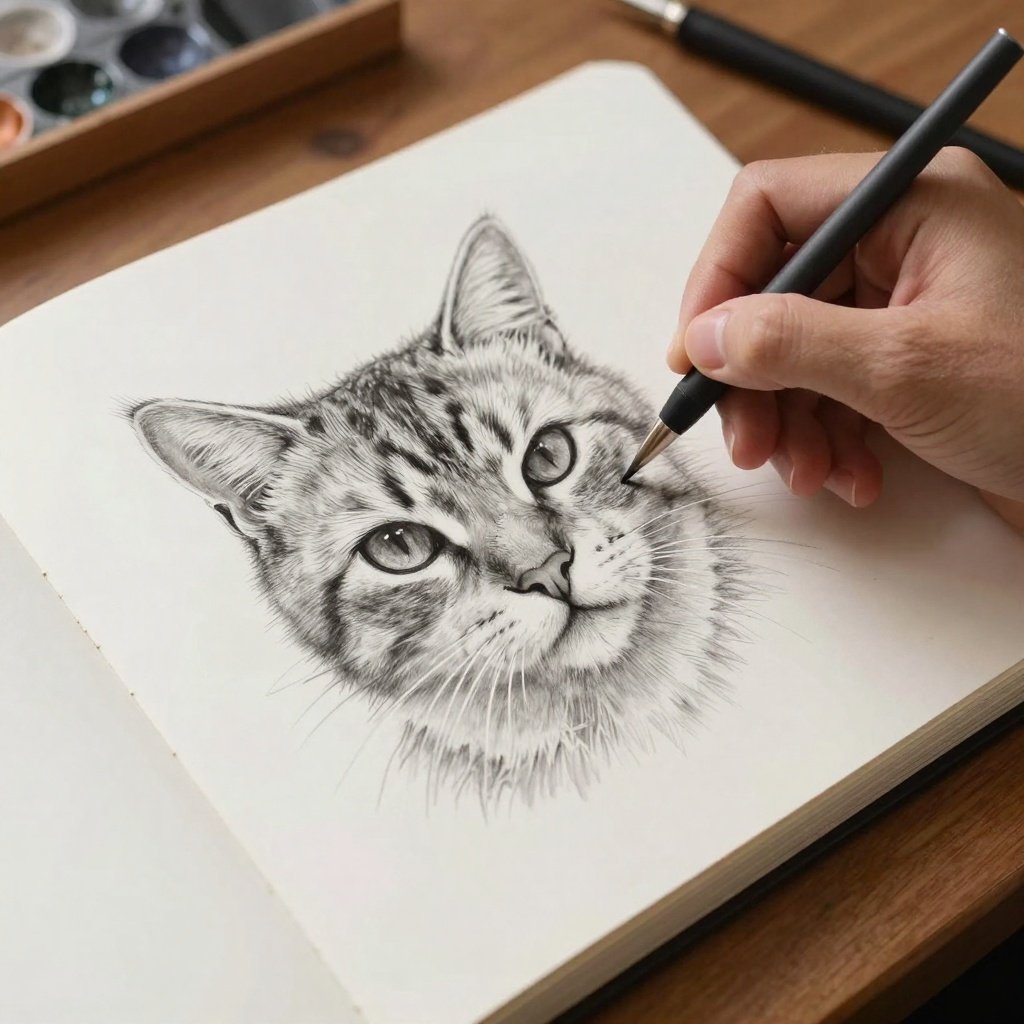
Here’s what separates cat drawings that feel alive from those that feel stuffed: understanding that cats are defined by their movement potential, not their static appearance. Even a sleeping cat contains the suggestion of coiled energy. That quality comes from understanding feline anatomy and how it enables the grace that makes cats unmistakably feline.
This guide breaks down drawing cats into learnable components: skeletal structure, muscular form, facial features, fur rendering, and capturing personality. Master these fundamentals and your cats will finally look like they could leap off the page.

These techniques come from years of animal drawing practice, studying cat anatomy through veterinary references, and countless hours observing cats in motion. I’ve drawn hundreds of cats across every medium—the principles that follow are what actually made the difference.


Understanding Cat Anatomy
Before drawing convincing cats, you need to understand what’s happening beneath the fur. Cat anatomy differs significantly from human anatomy, and these differences create the distinctive feline silhouette.
The Feline Skeletal Structure
Cats have approximately 230 bones—more than humans—and their skeletal structure enables remarkable flexibility:
The spine contains 30 vertebrae (compared to human’s 24), allowing cats to arch, twist, and curl in ways impossible for most mammals. When drawing cats, the spine is your primary gesture line. Get the spine right, and everything else follows.
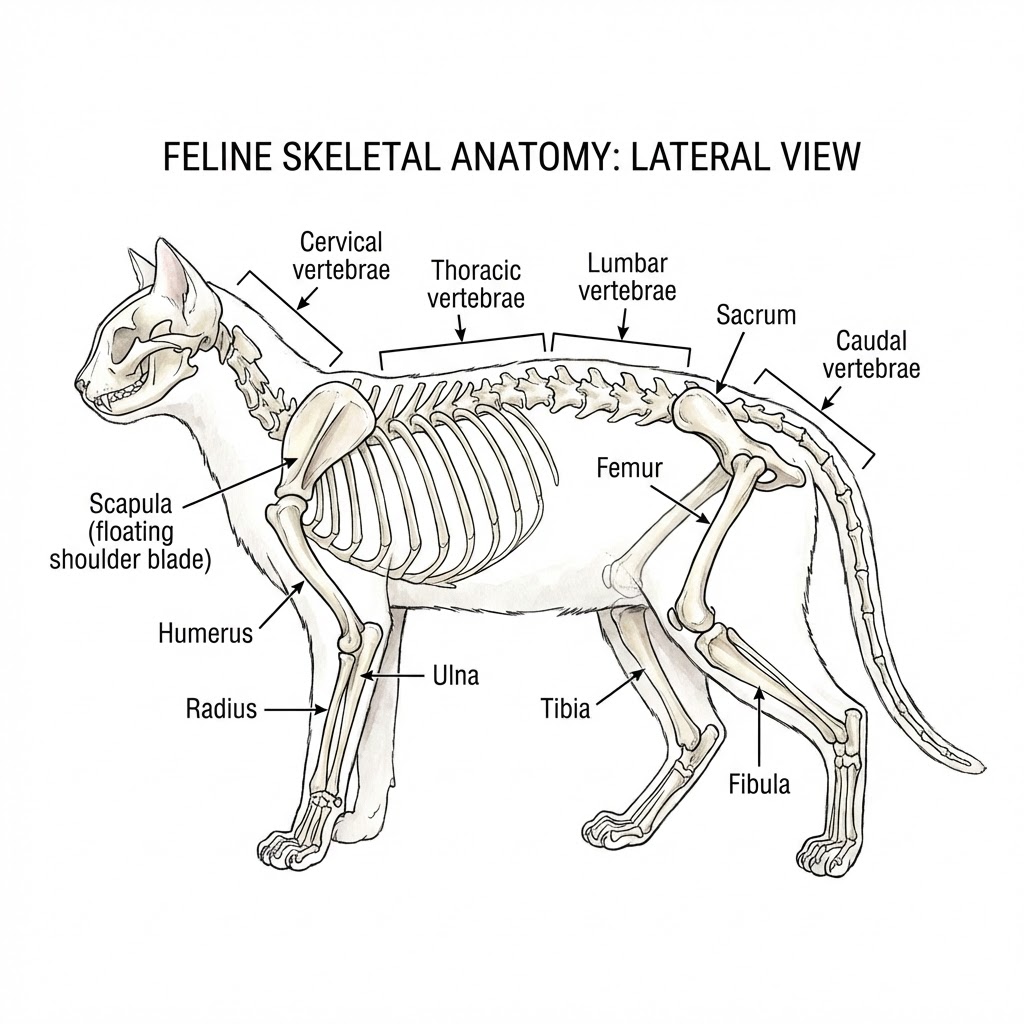
The shoulder blades aren’t attached to the skeleton by bone—only by muscle. This floating scapula allows cats to squeeze through tight spaces and contributes to their fluid movement. When a cat walks, you can see the shoulder blades rising and falling independently.
The legs are structured for explosive power. The rear legs are significantly longer than the front legs when fully extended, which explains why cats are such effective jumpers. The front legs act primarily as shock absorbers and steering, while the rear legs provide propulsion.
The tail contains 19-23 vertebrae and functions as both a balance tool and communication device. A cat’s tail position tells you about their emotional state and helps maintain balance during complex movements.
Proportional Guidelines
Cat proportions vary by breed, but general guidelines help establish believable drawings:
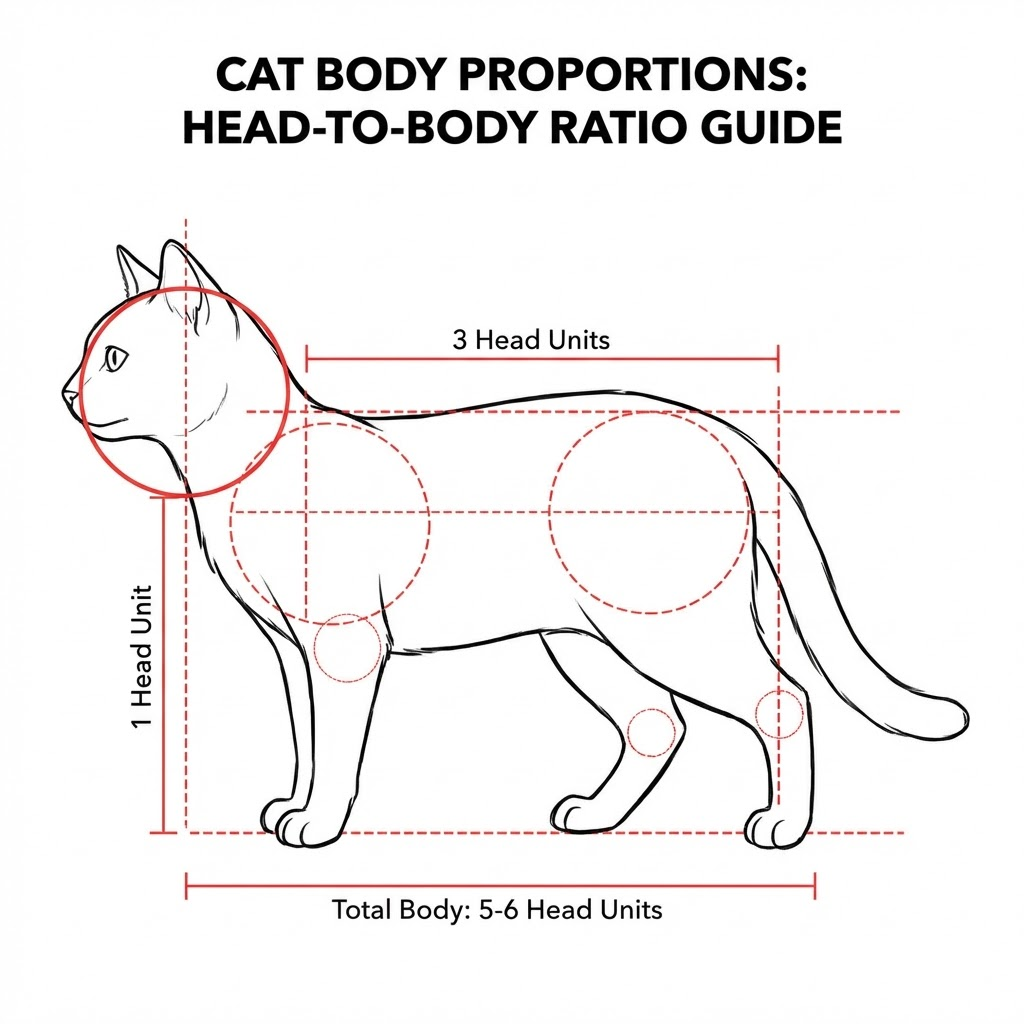
Head to body ratio: A cat’s head typically fits into the body length about 4-5 times for domestic cats. Kittens have proportionally larger heads—about 1:3 ratio.
Leg length: Front legs are roughly equal to the depth of the chest. Rear legs are longer, with the upper thigh roughly equal to the lower leg.
Ear placement: Ears sit on the top corners of the skull, not on the sides like human ears. The space between ears roughly equals the width of one ear.
Eye position: Eyes are large relative to the skull and positioned on the front of the face, giving cats binocular vision. The space between eyes roughly equals one eye width.
Breed Variations
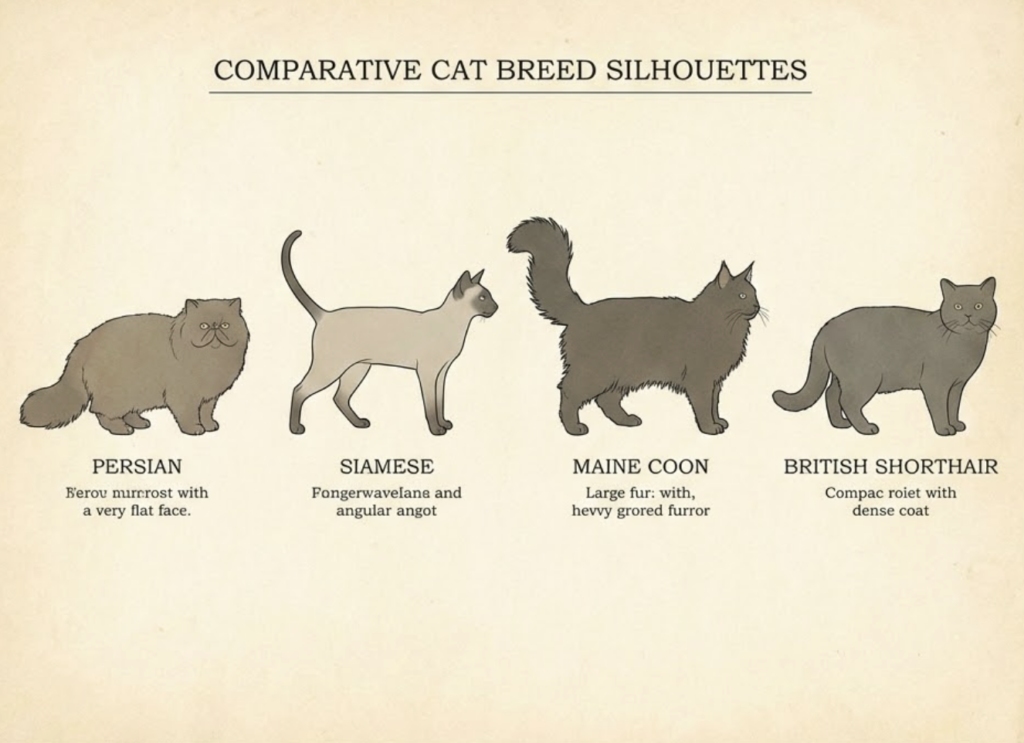
Different breeds have distinct proportional characteristics:
Persian and Exotic Shorthair: Flattened faces, round heads, compact bodies, short legs relative to body mass.
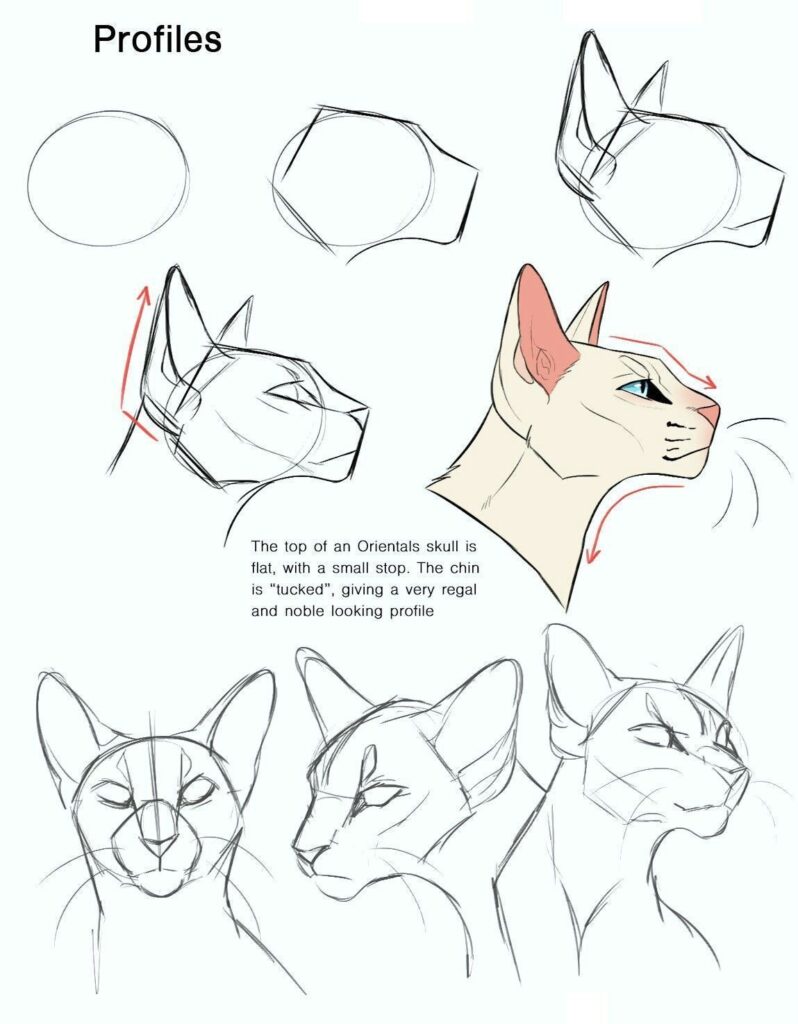
Siamese and Oriental: Elongated faces, triangular heads, long slender bodies, long legs.
Maine Coon: Large overall, square muzzle, tufted ears, substantial bone structure, longest domestic cat breed.
British Shorthair: Round faces, dense compact bodies, sturdy legs, thick tails.
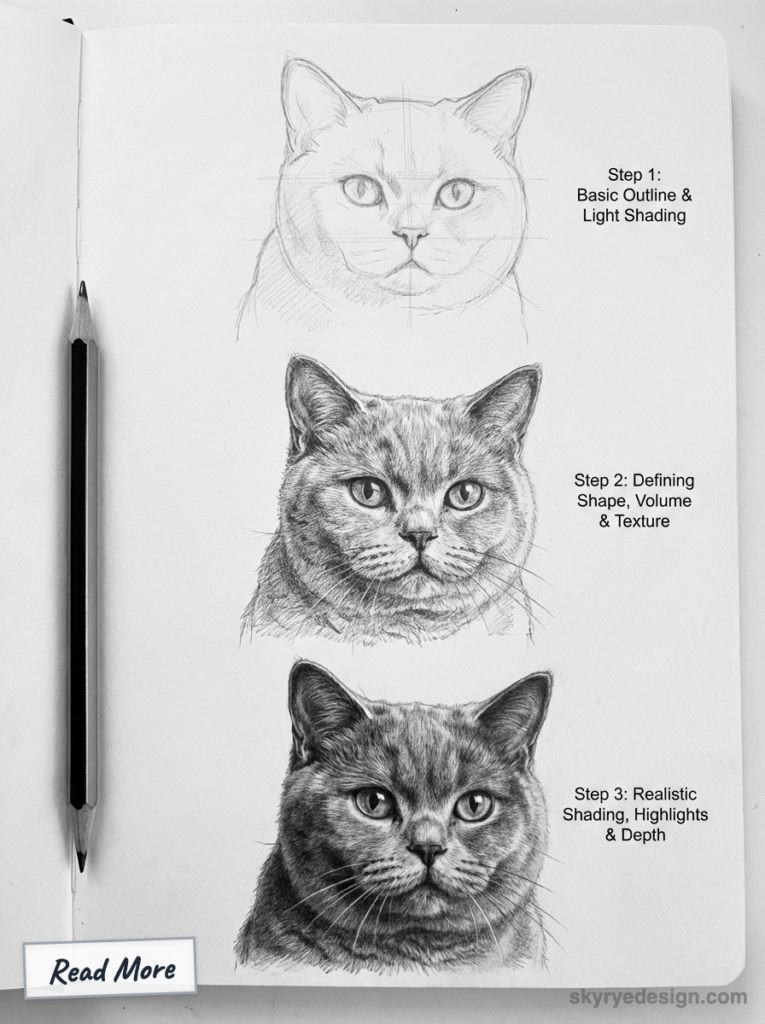
Understanding breed characteristics helps you capture specific cats accurately and avoid generic “cat-shaped” drawings that don’t represent any real feline.
Essential Drawing Materials
The right tools support your technique without fighting against you.
Beginner drawing kit
Want to turn these ideas into real sketchbook practice?
If you are working through this list, a few simple supplies will make the process easier: a sketchbook, graphite pencils, eraser, fineliners, and optional colored pencils for finishing your favorite drawings.
This article may contain affiliate links. As an Amazon Associate I earn from qualifying purchases.
For Pencil Work
Graphite pencils: Range from 2H (light, for initial sketching) through HB to 6B (dark, for shadows and details). Cat fur requires the full value range.
Paper: Medium texture works best for cat fur. Too smooth and you can’t build texture; too rough and details get lost. Strathmore 400 series or similar weight handles erasing and layering well.
Kneaded eraser: Essential for lifting highlights in fur, softening edges, and creating whisker effects. Shape it to a point for precise lifting.
Blending stumps: Useful for smooth fur areas like the nose and inner ears, but over-blending destroys fur texture. Use sparingly.


For Digital Work
Textured brushes: Custom fur brushes speed up rendering but require refinement to avoid mechanical appearance.
Pressure sensitivity: Essential for varying stroke weight. Cat fur ranges from fine whiskers to thick body fur—pressure control captures this range.
Layers: Separate sketch, line work, base values, fur detail, and highlights. This allows adjustment without destroying earlier work.
Drawing the Cat Face
The face is where personality lives. Getting facial features right transforms generic cats into specific individuals.
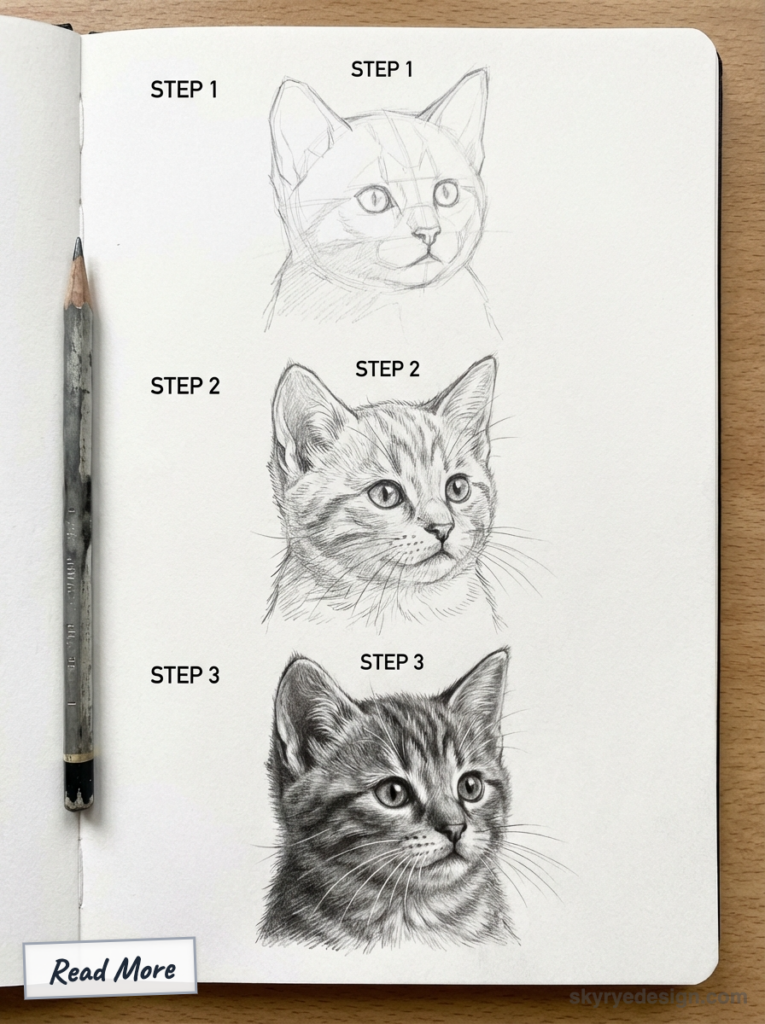
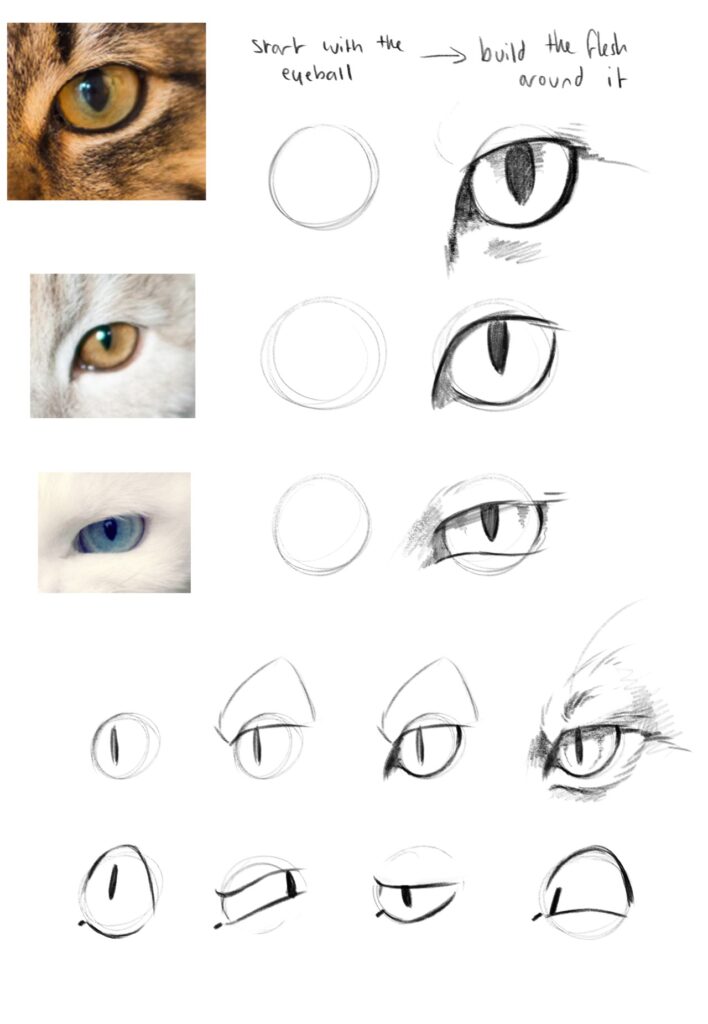
Eye Construction
Cat eyes are the most distinctive facial feature:
Shape: Large, almond-shaped, with pointed corners. The outer corner typically sits slightly higher than the inner corner.
Pupil behavior: Pupils dilate and contract dramatically based on light and emotional state. Vertical slits in bright light; nearly round in dim light or excitement.
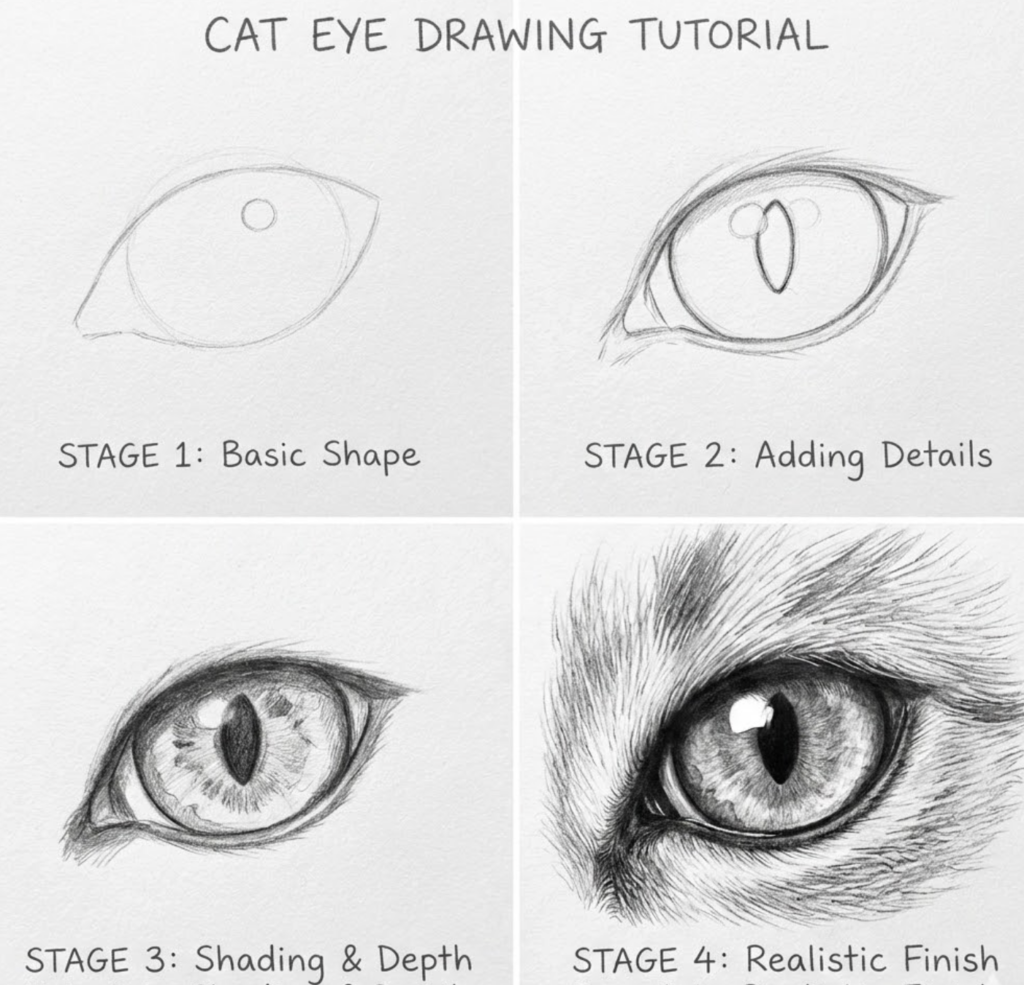
Reflections: Cat eyes have a reflective layer (tapetum lucidum) that creates distinctive bright reflections. Include a highlight spot to bring eyes to life.
Common mistake: Drawing eyes too small or too round. Cat eyes dominate the face—larger than you expect.
Nose and Muzzle
The cat nose and muzzle create the distinctive feline profile:
Nose shape: Triangular with a flat plane on top. The nose leather (the pink or black part) is relatively small.
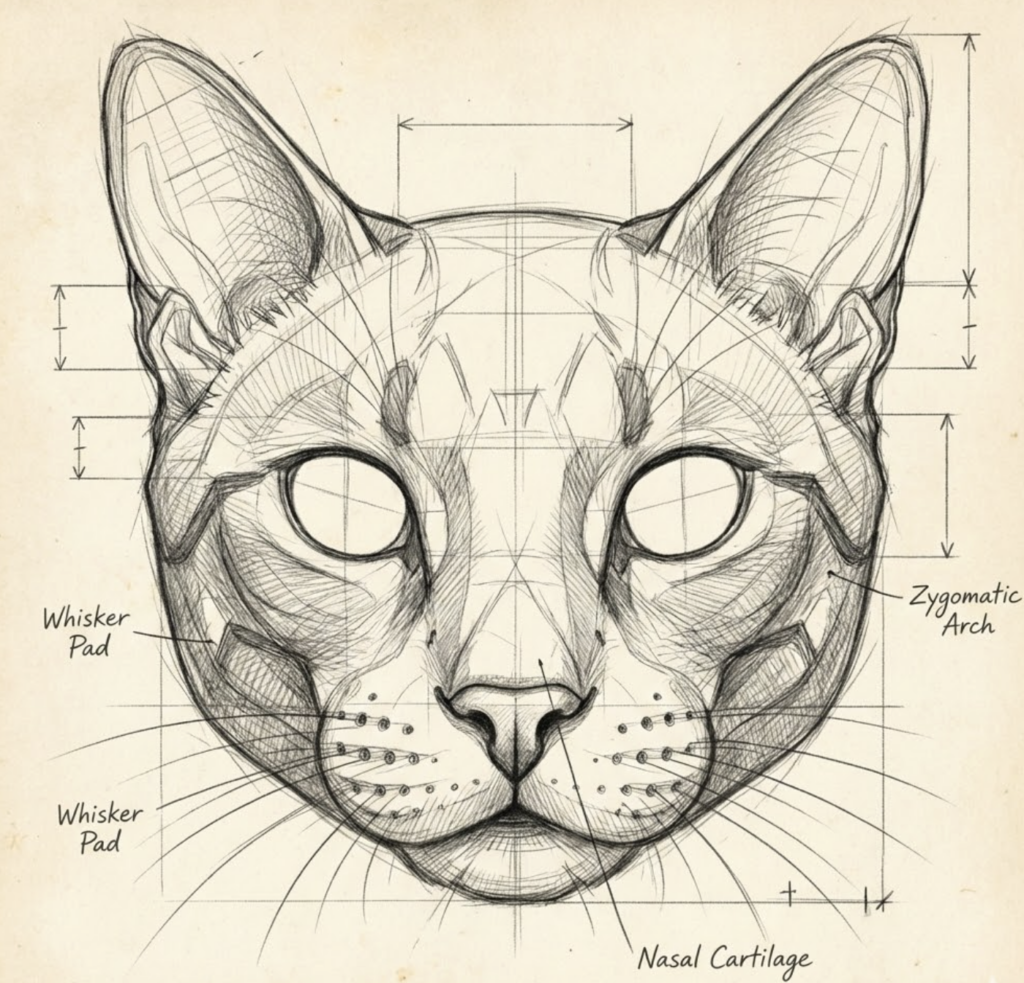
Muzzle structure: Puffy whisker pads create the characteristic “W” shape when viewed from the front. These pads are denser than they appear—they’re not just fur, but muscular tissue.
Profile view: The nose projects forward from the face at roughly a 45-degree angle for most breeds. Persian cats have a much flatter profile.
Turn these ideas into real sketchbook practice
Ear Structure
Cat ears are complex structures that convey emotion:
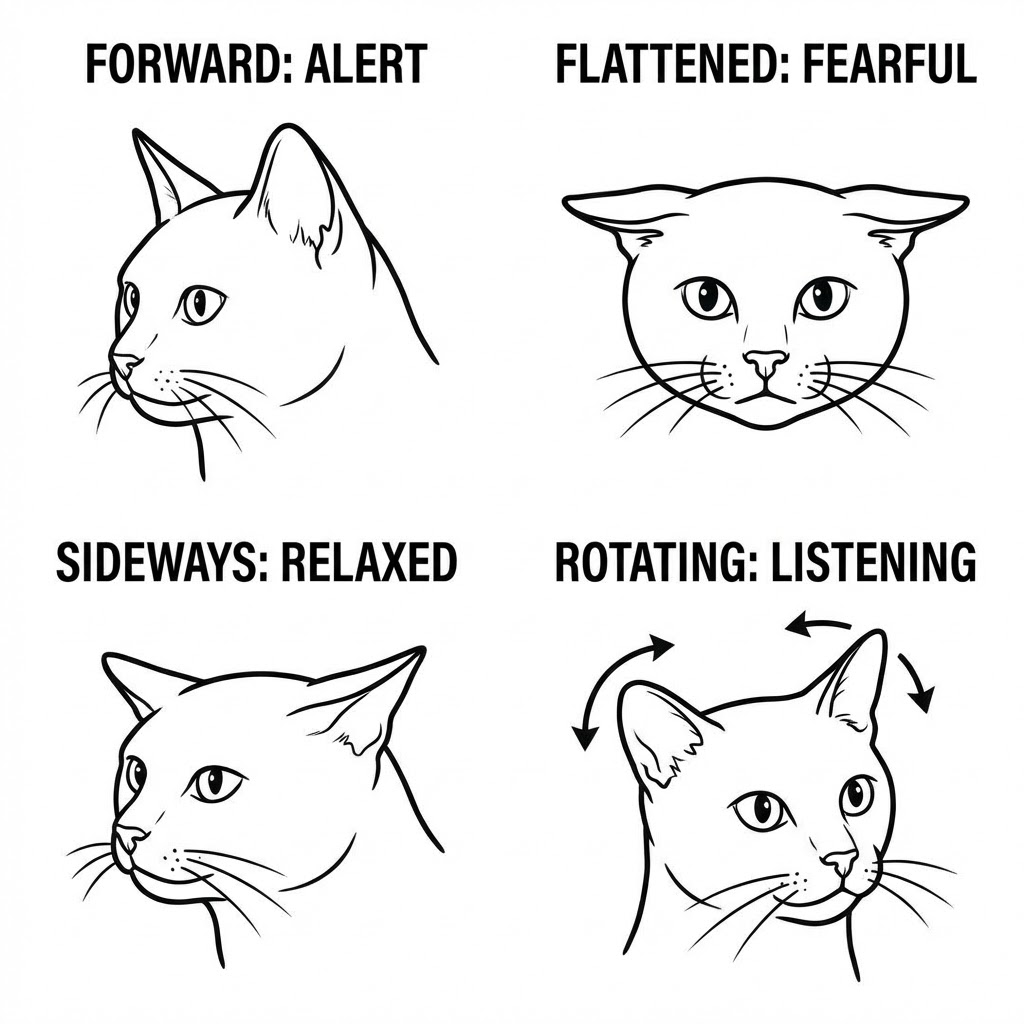
Shape: Triangular, but with curves. The outer edge is convex; the inner edge often has a slight notch.
Ear furnishings: Most cats have tufts of fur at the ear tips and inside the ear. These add character and breed distinction.
Movement: Ears rotate independently up to 180 degrees. Position conveys mood—forward is alert/friendly, flattened is fearful/aggressive, sideways is relaxed.


Capturing Body and Movement
Static poses are easier to draw, but understanding movement makes even static poses feel alive.
The Gesture Line
Every cat pose starts with a gesture line—a single flowing curve that captures the spine’s position and the overall energy of the pose:
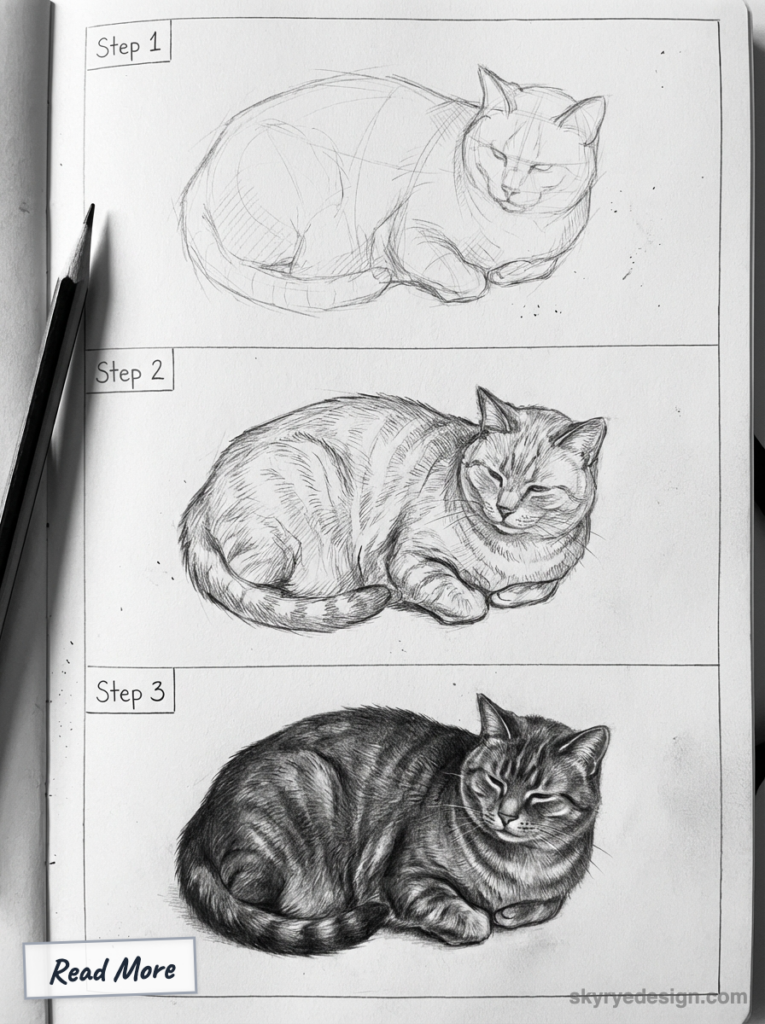
Sleeping cats: Curved, circular gesture lines. The spine curls, the body folds inward.
Alert cats: Straighter gesture with tension. The spine is extended, ready for action.
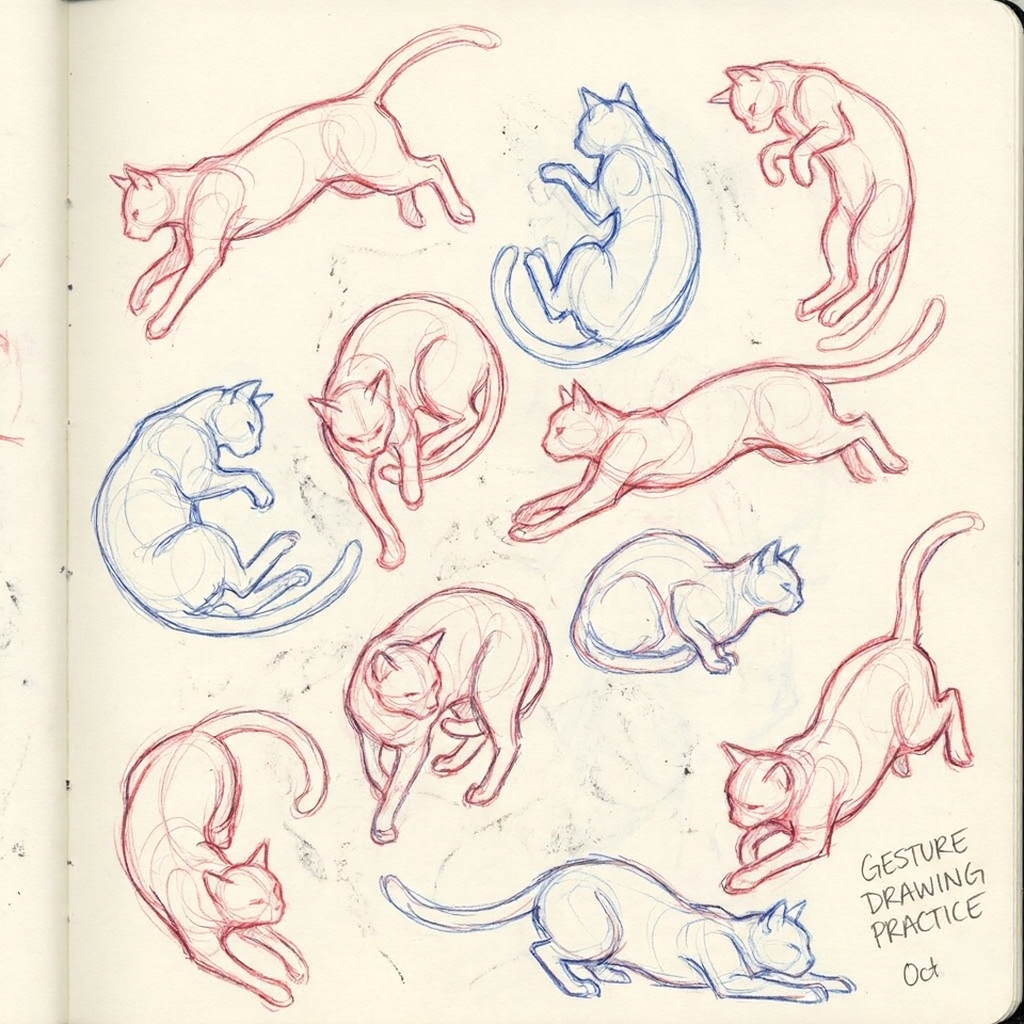
Walking cats: S-curve gesture. The spine undulates as weight shifts between legs.
Stretching cats: Extreme curves showing maximum flexibility. The spine can arch dramatically in both directions.
Start every drawing with the gesture line before adding any details. This single line determines whether your cat feels alive or stuffed.
Weight Distribution
Understanding how cats distribute weight prevents the “floating” look:
Standing: Weight distributed across all four paws, but not equally. Cats shift weight constantly for balance.
Sitting: Weight primarily on haunches. Front paws bear minimal weight, often positioned close together.
Lying down: Weight distributed along the entire body contact area. The body conforms to the surface beneath.
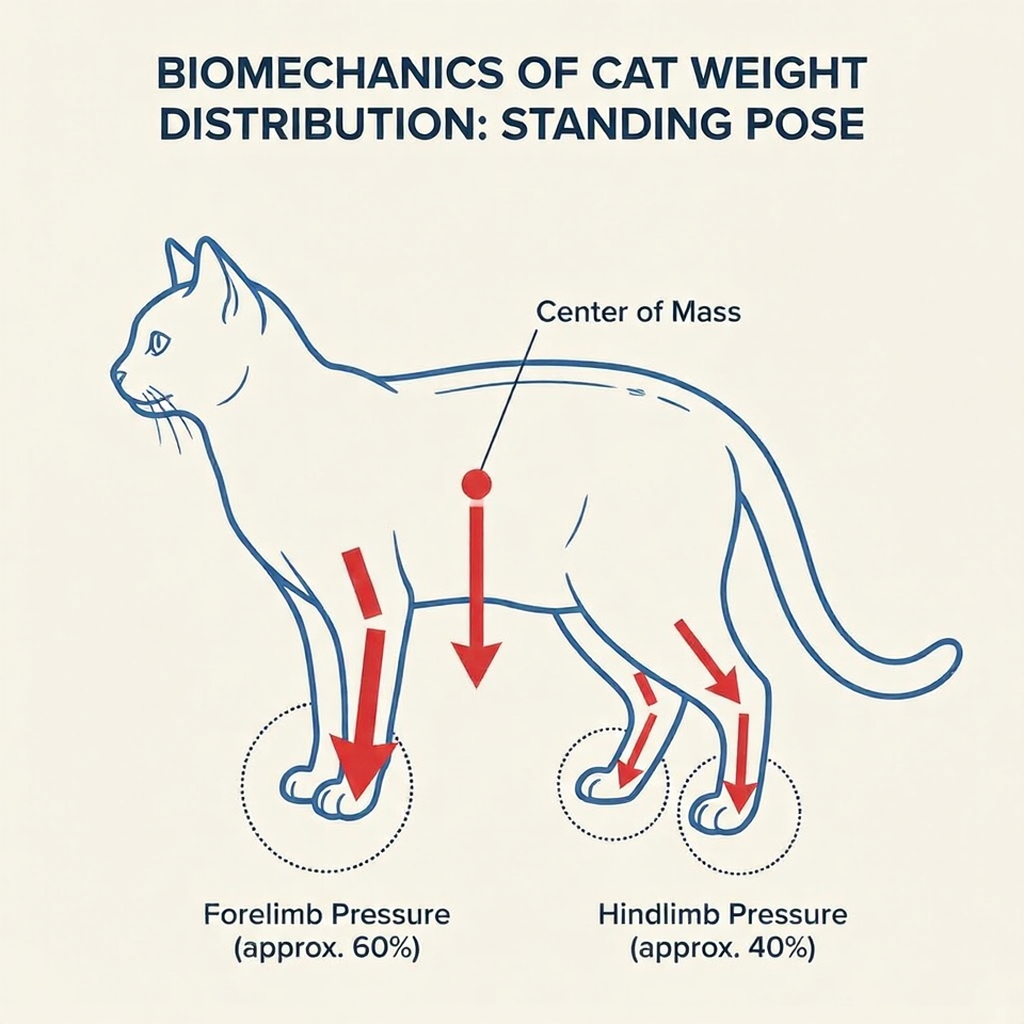
Walking: Weight transfers in a specific pattern—right front, left rear, left front, right rear. At any moment, at least two paws support the body.
Common Poses
Certain poses appear repeatedly because they’re characteristically feline:
The loaf: Legs tucked under body, tail wrapped around. Compact, cozy, content.
The sploot: Rear legs extended behind. Relaxed, often seen in hot weather.
The stretch: Extreme spine extension, often with yawning. Shows full body length.
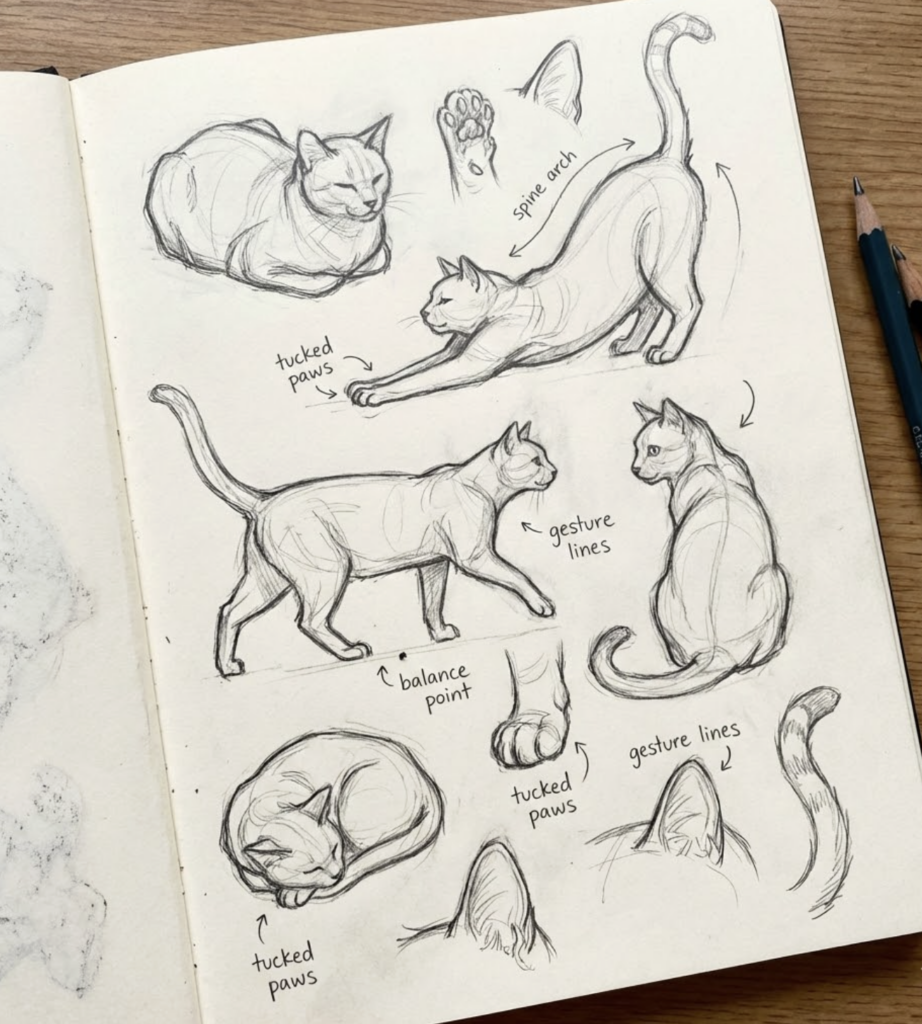
The pounce crouch: Rear elevated, front lowered, eyes locked on target. Intense focus.
The grooming twist: Body curved to reach grooming areas. Demonstrates flexibility.


Rendering Fur Effectively
Fur rendering can make or break a cat drawing. The goal isn’t drawing every hair—it’s suggesting fur texture convincingly.
Understanding Fur Direction
Cat fur doesn’t grow randomly. It follows specific patterns:
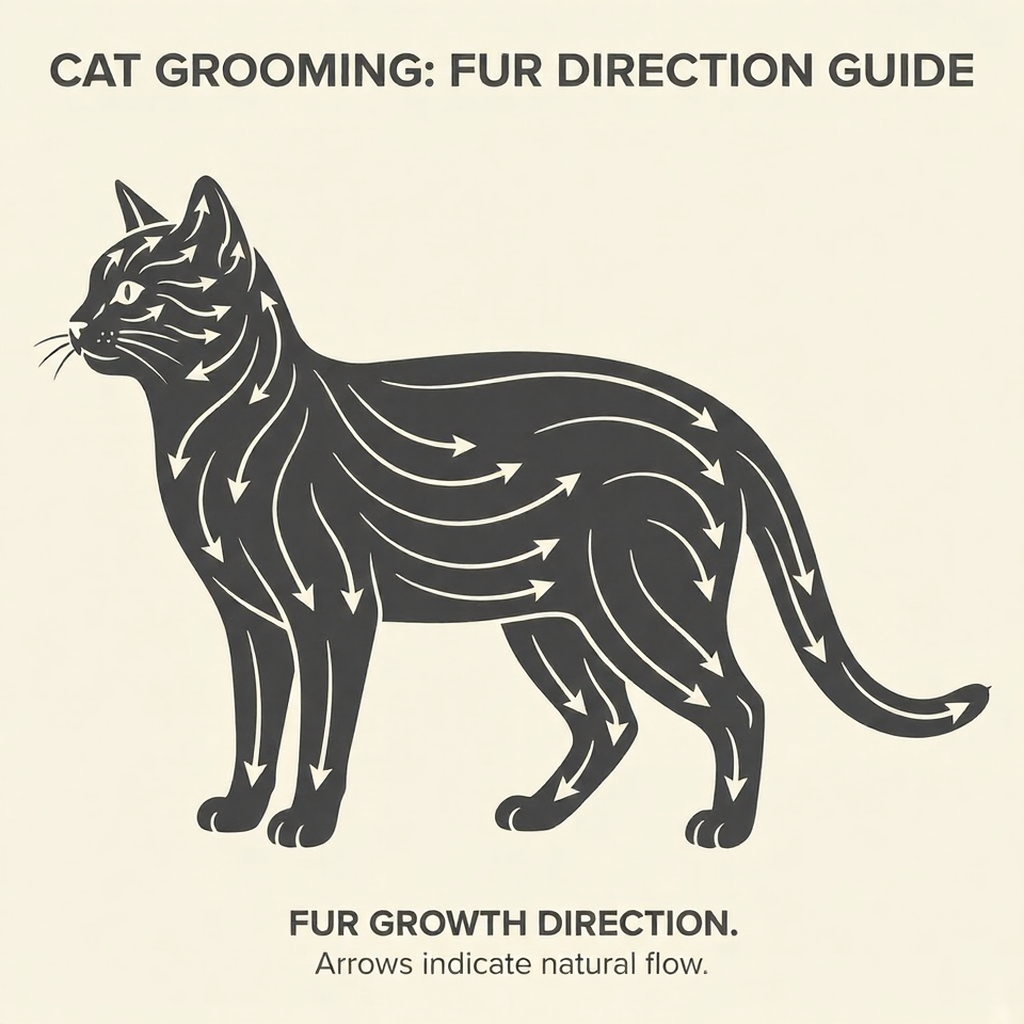
Face: Fur radiates outward from the center of the face, between the eyes.
Body: Fur flows from head toward tail along the back, and downward on the sides.
Legs: Fur flows downward toward the paws.
Tail: Fur flows from base to tip.
Draw fur strokes in the direction fur grows. Fighting the natural direction creates unnatural texture.
Building Fur in Layers
Effective fur rendering works in stages:
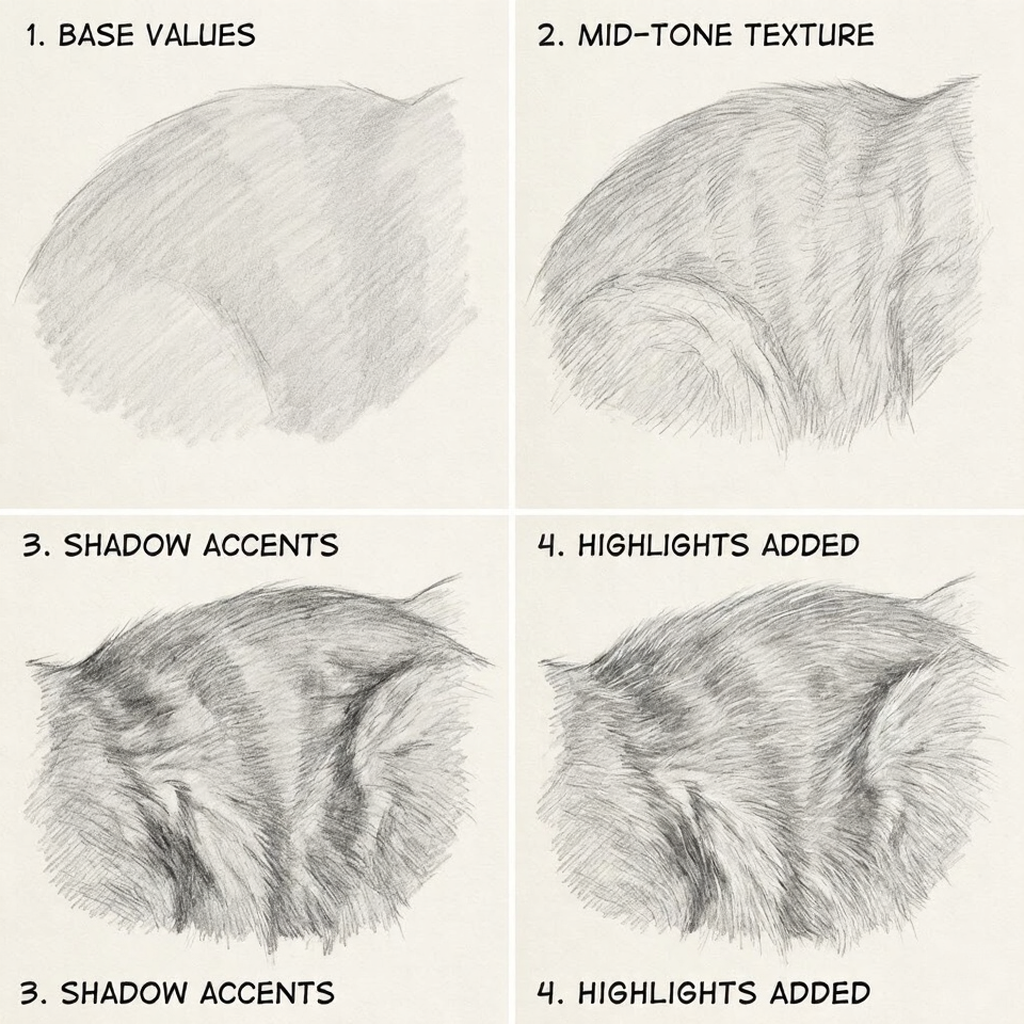
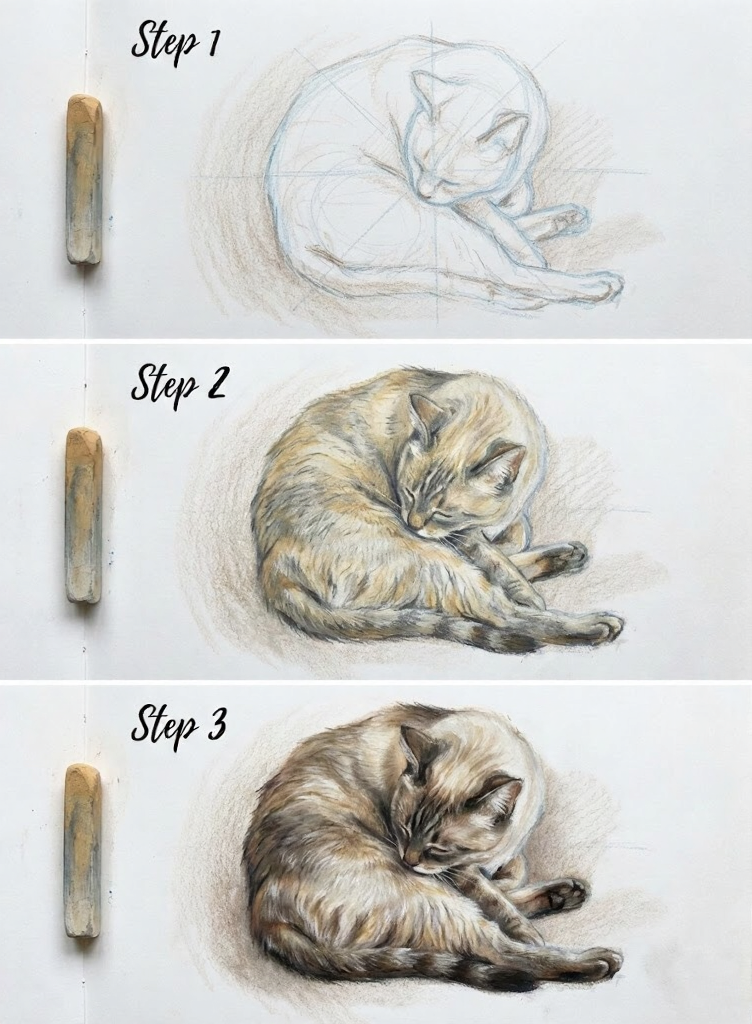
Base values: Establish the overall light and shadow pattern before adding fur detail. Squint at your reference to see simplified value shapes.
Mid-tone fur: Add fur texture in the middle value areas first. This establishes the direction and density.
Shadow accents: Deepen shadows between fur clumps. This creates depth and prevents flat appearance.
Highlights: Add lighter strokes over existing fur to show individual hairs catching light. Use restraint—too many highlights look unnatural.
Short Fur vs. Long Fur
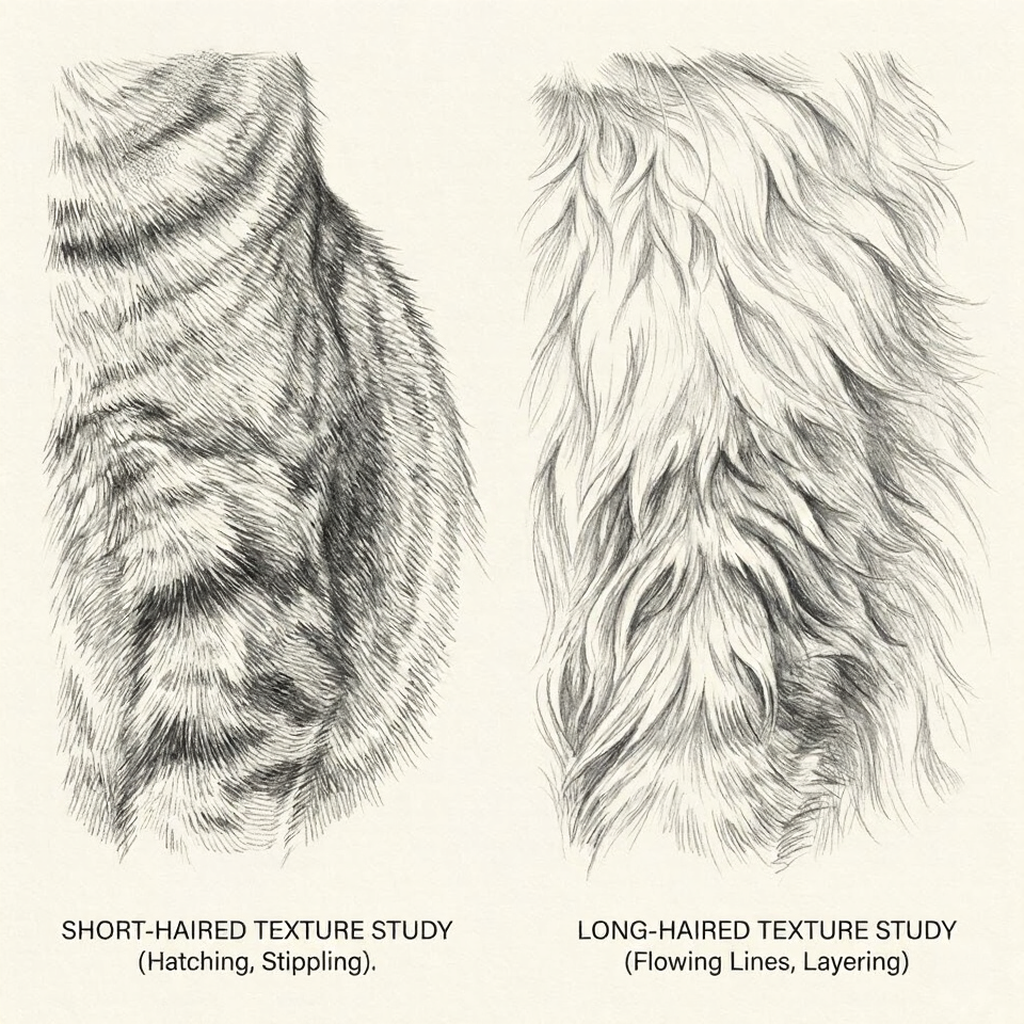
Different fur lengths require different approaches:
Short fur (domestic shorthair, Siamese): Shorter, more uniform strokes. Surface contours visible through fur. Less texture variation.
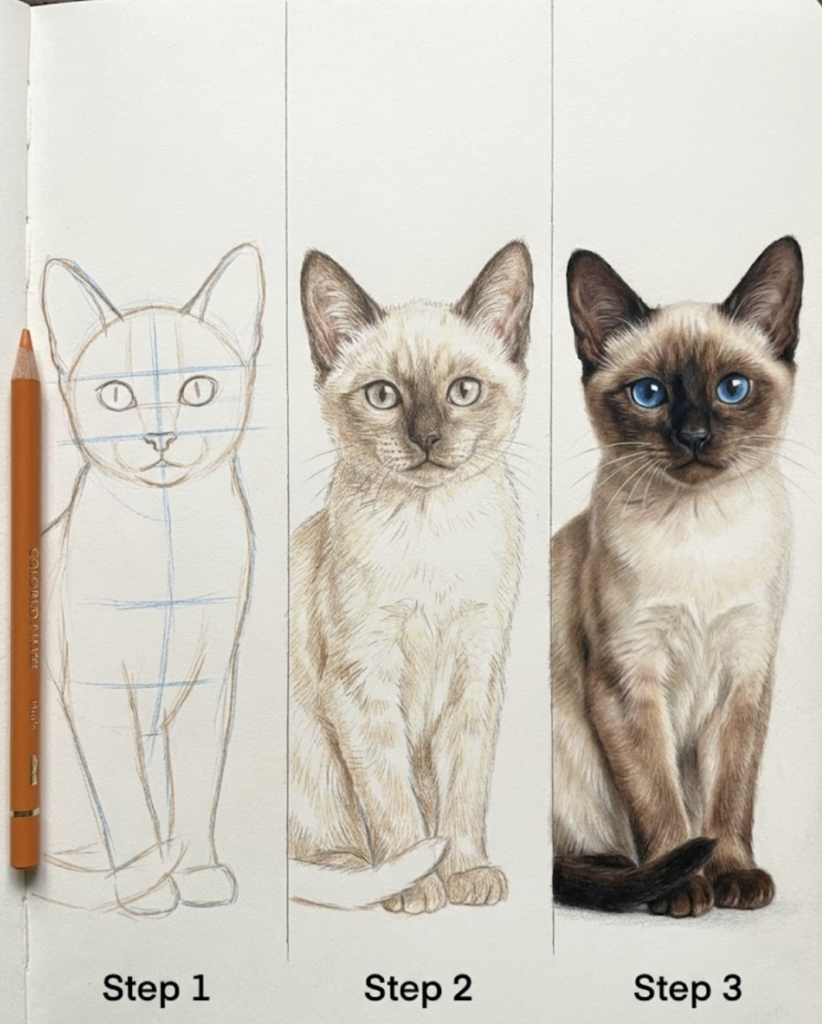
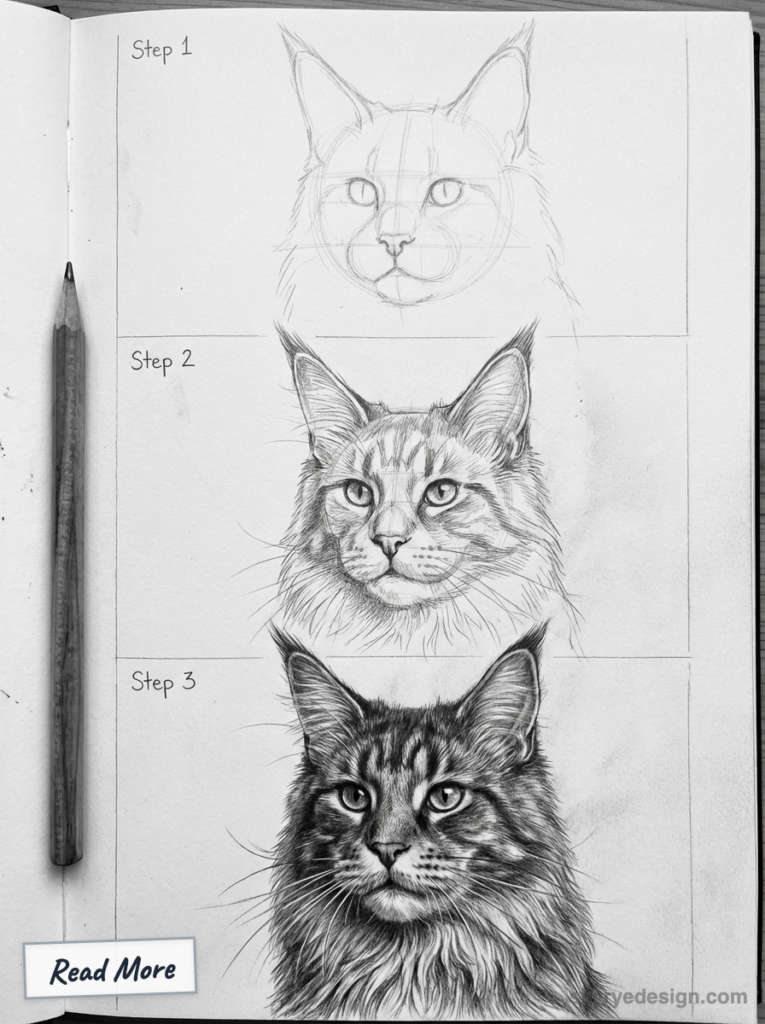
Medium fur (British Shorthair, Maine Coon body): Varied stroke lengths. Some clumping visible. Moderate texture.
Long fur (Persian, Maine Coon ruff): Long, flowing strokes. Significant clumping and layering. Hair often obscures body contours.
Capturing Personality and Expression
Technical accuracy isn’t enough—cat drawings need personality to feel complete.
Reading Cat Body Language
Cats communicate constantly through posture and facial expression:
Relaxed: Soft eyes (slow blinks), ears forward but relaxed, loose body posture, tail low or gently curved.
Alert: Wide eyes, ears pricked forward, body tension, tail often twitching at the tip.
Fearful: Dilated pupils, ears flattened, body low or hunched, tail tucked or puffed.
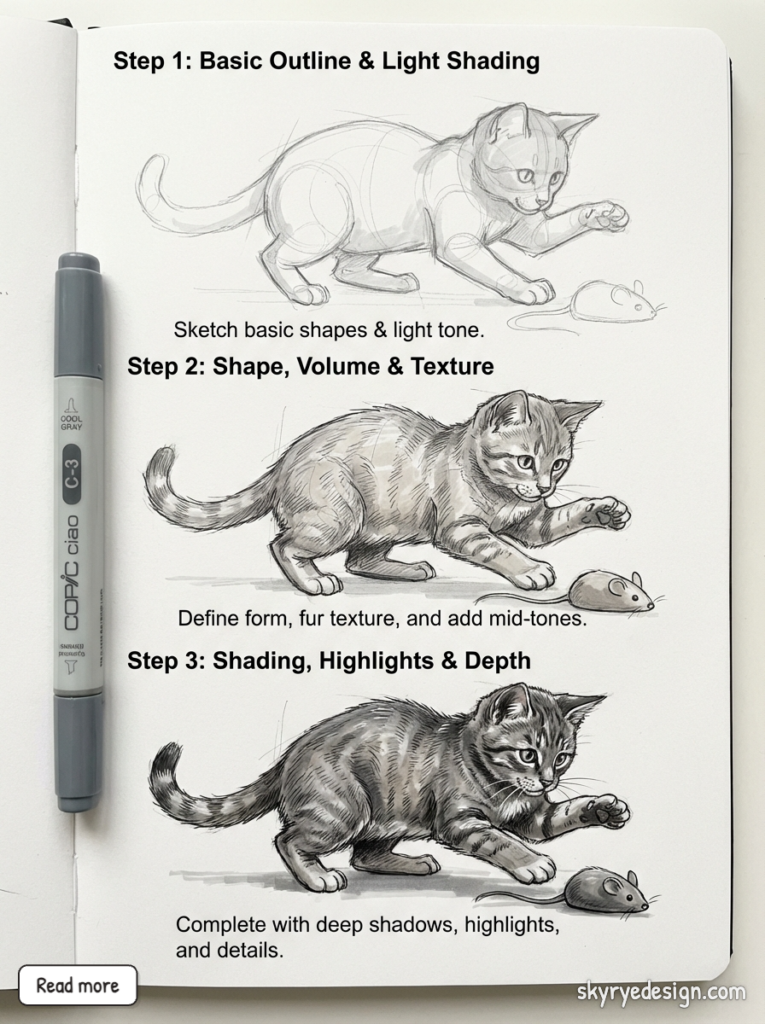
Playful: Dilated pupils, ears forward, rear elevated, tail high with curved tip.
Aggressive: Narrowed eyes, ears back, body rigid, tail puffed and lashing.
Individual Personality
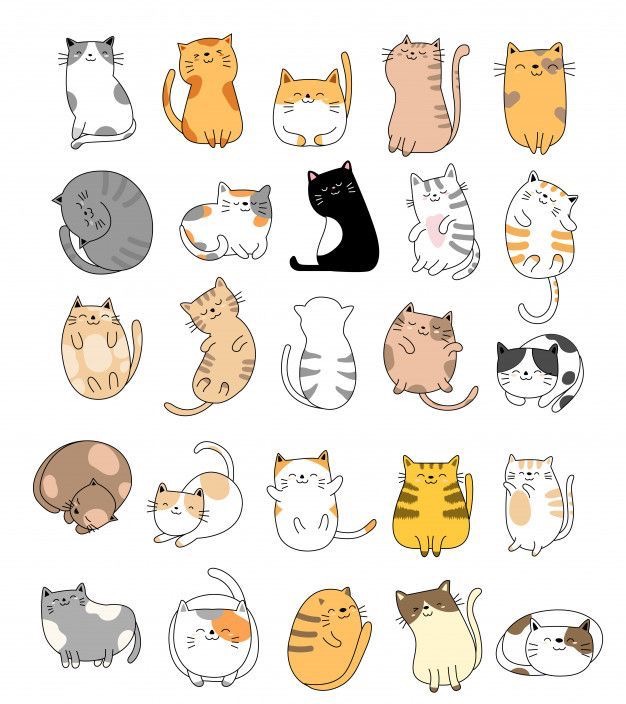
Beyond generic cat expressions, individual cats have distinctive personalities:
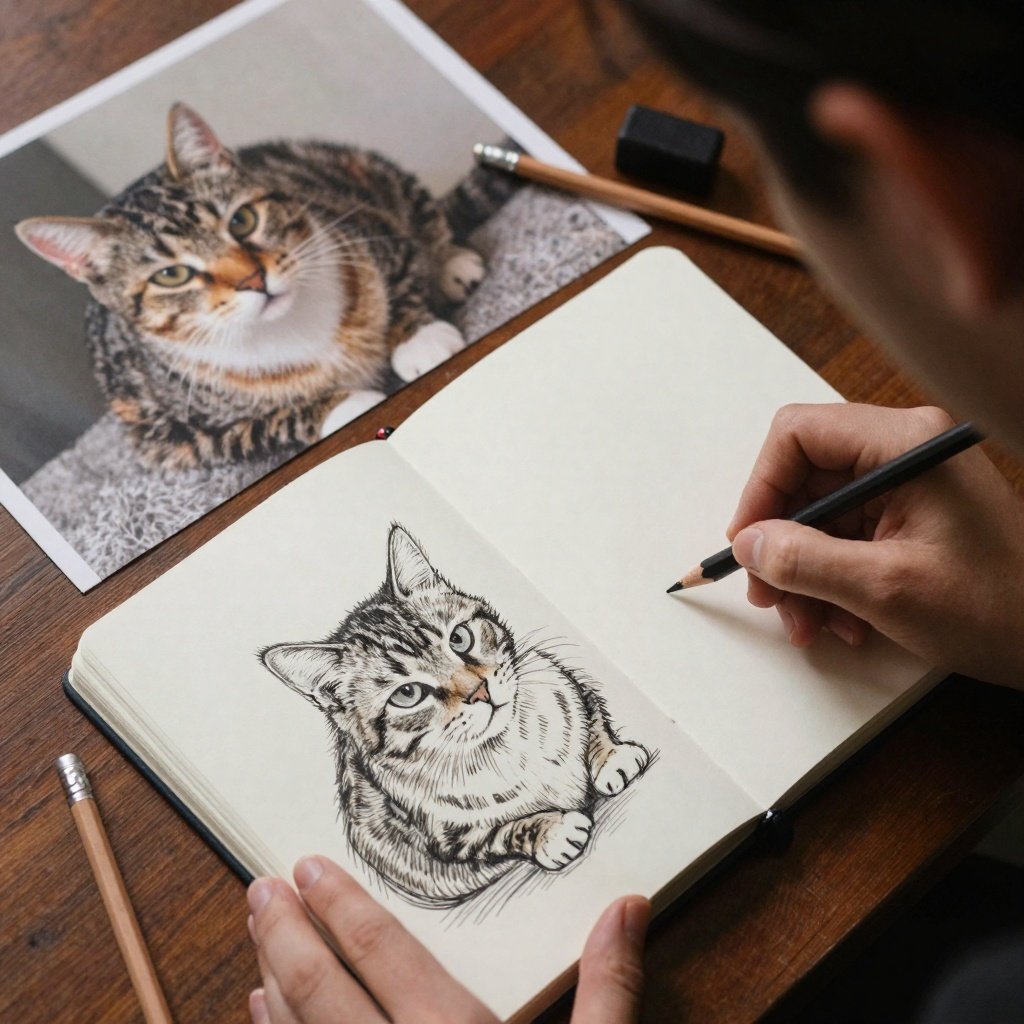
Observe specific cats. Watch how a particular cat holds their head, how they position their paws, their habitual expressions. These details create portraits rather than generic cats.
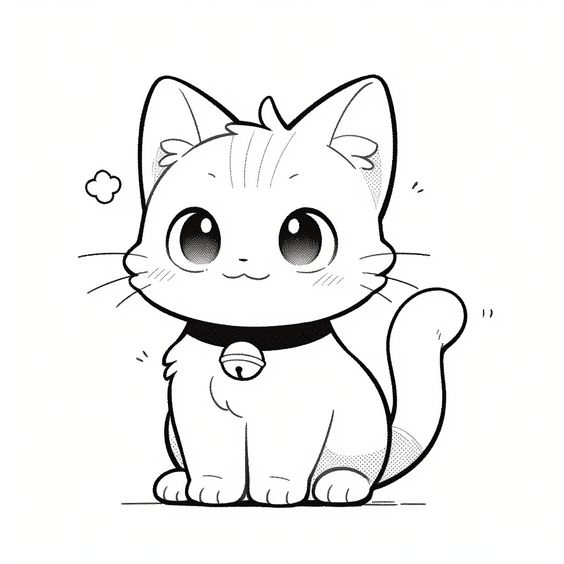
If you want to stylize those observations, the anime pet drawing steps show how to enlarge the head and eyes while keeping the cat’s muzzle and stance recognizable.
Reference photos help, but observation is better. Spending time watching real cats teaches you subtleties no photo captures.
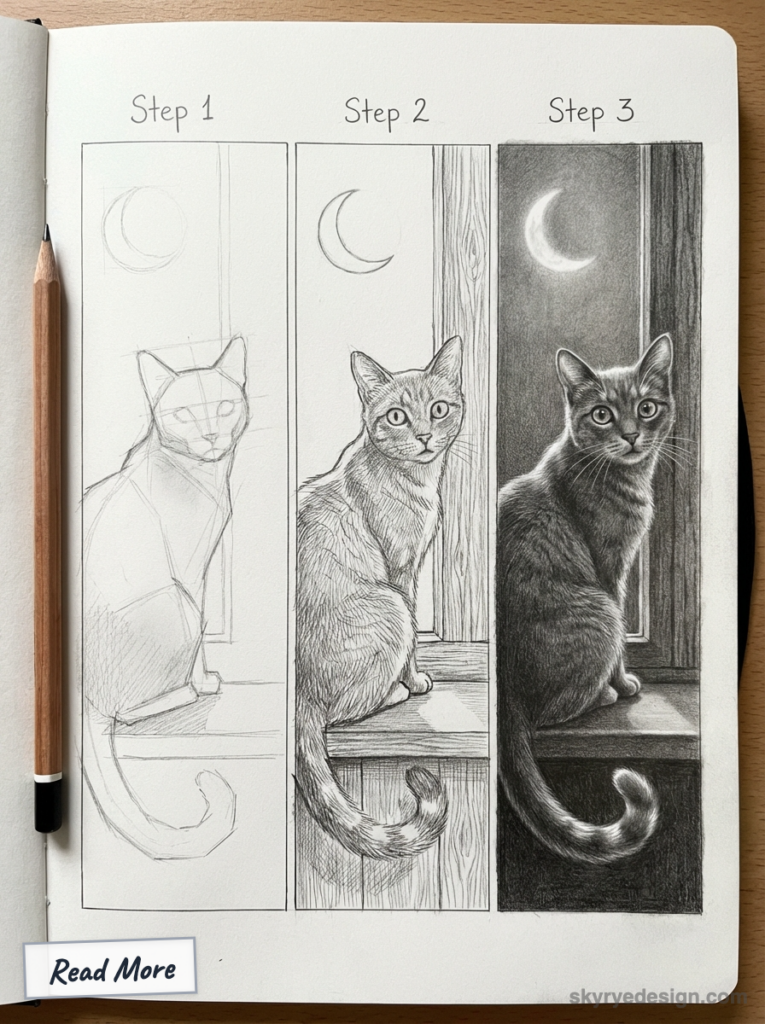
Step-by-Step Drawing Process
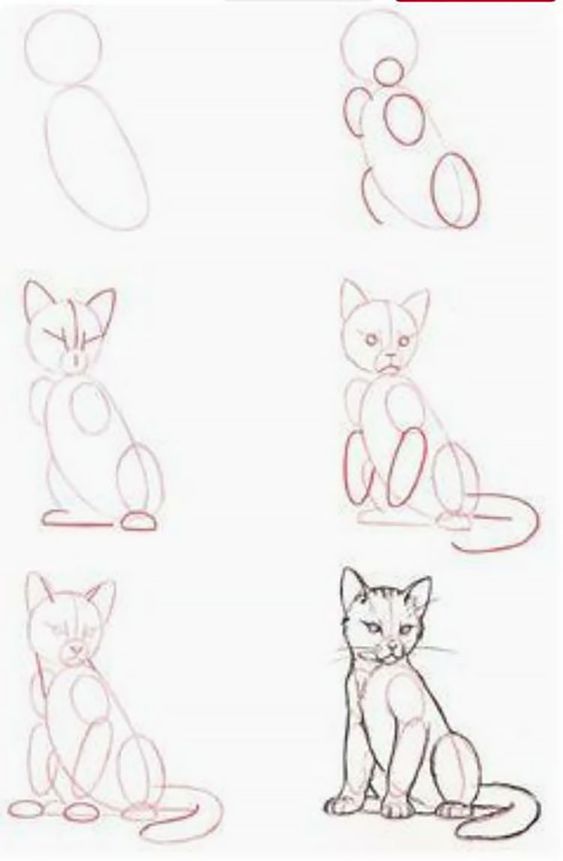
Phase 1: Gesture and Structure (5 minutes)
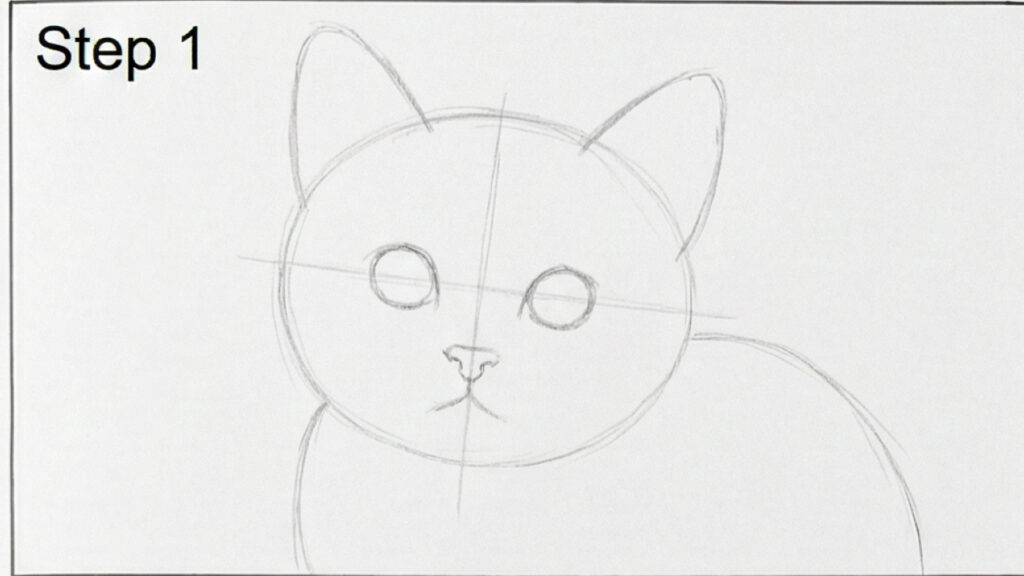
Start with quick gesture sketching. Capture the spine curve, head tilt, and overall energy before adding any details. Use light pressure—these lines will be refined or erased.
Add basic structural shapes: oval for ribcage, smaller oval for pelvis, circle for head. Connect with the gesture line.
Phase 2: Proportions and Features (10 minutes)
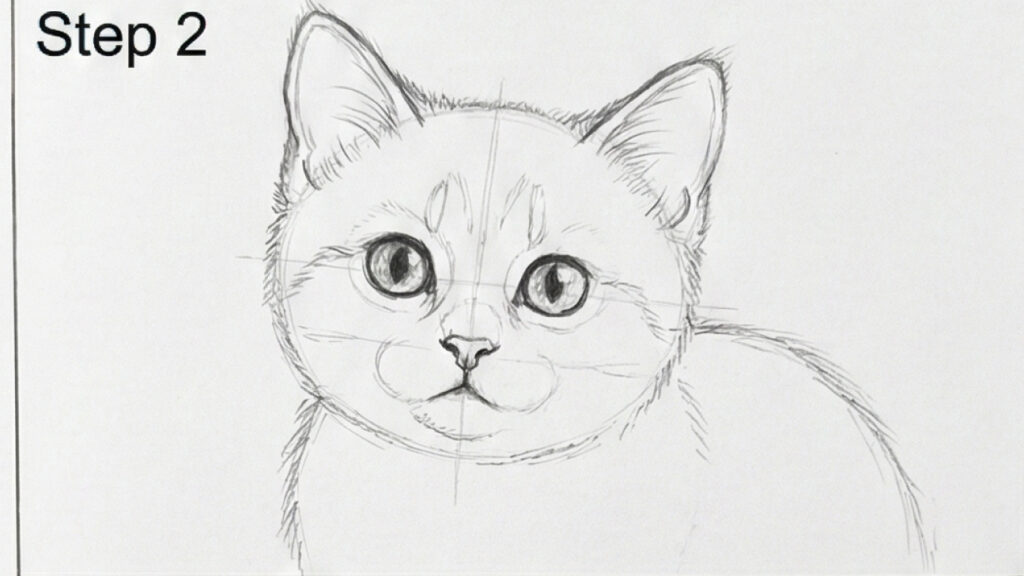
Refine proportions within the structural shapes. Add ear placement, facial feature guidelines.
Check proportions against reference. Common errors: head too small, legs too short, body too long.
Phase 3: Detailed Line Work (15 minutes)
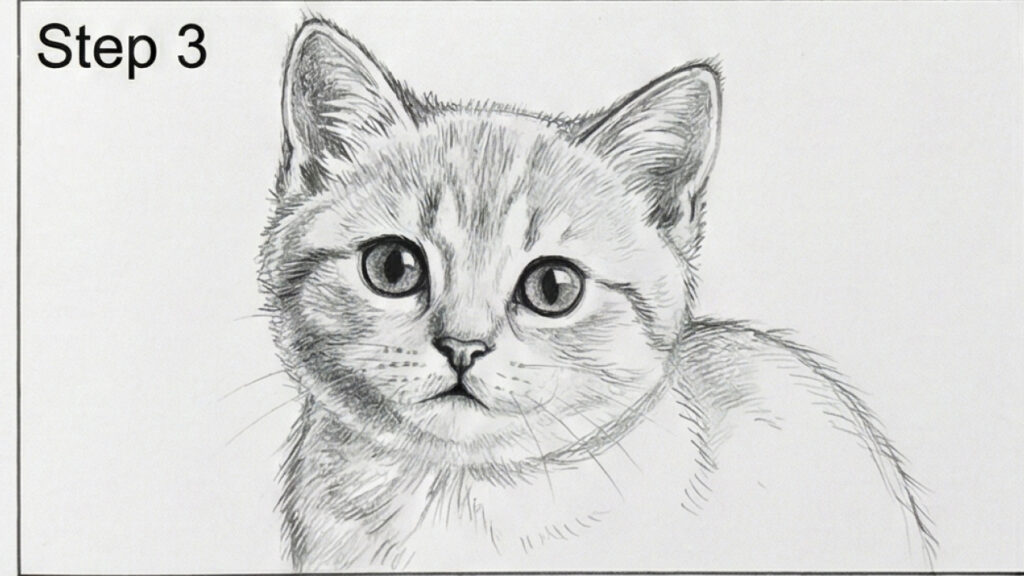
Develop contours with confident lines. Suggest fur direction through line quality—broken, textured lines for furry areas; smooth lines for nose and eyes.
Add facial features with precision. The face carries the drawing.
Phase 4: Values and Fur (20+ minutes)
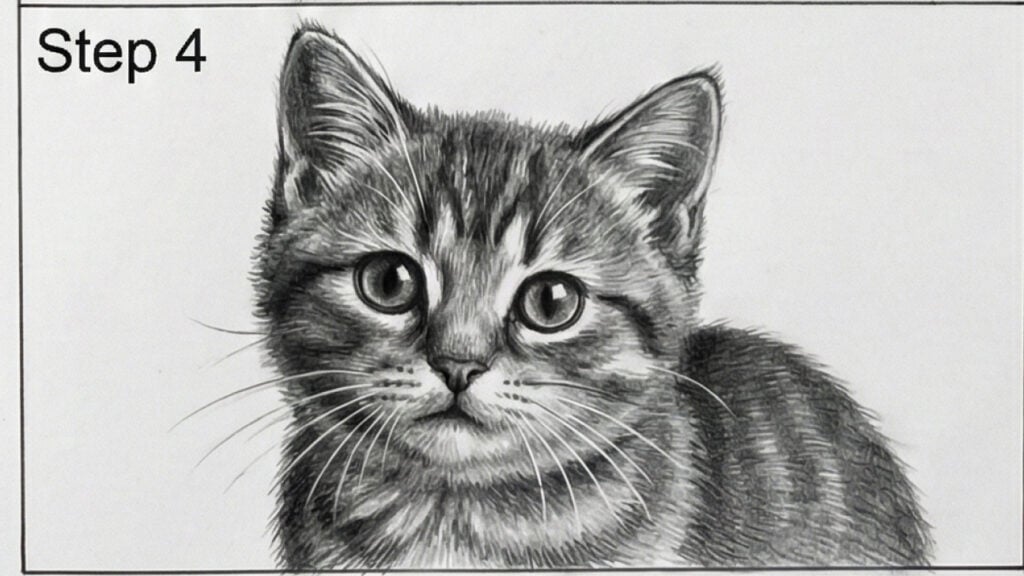
Establish base values through the entire drawing before adding fur texture. Build fur systematically, working from mid-tones outward to shadows and highlights.
Save finest details—whiskers, eye highlights, individual hairs—for last.
Common Mistakes and Solutions
Mistake: Stiff, Lifeless Poses
Problem: Cat looks like a stuffed animal.
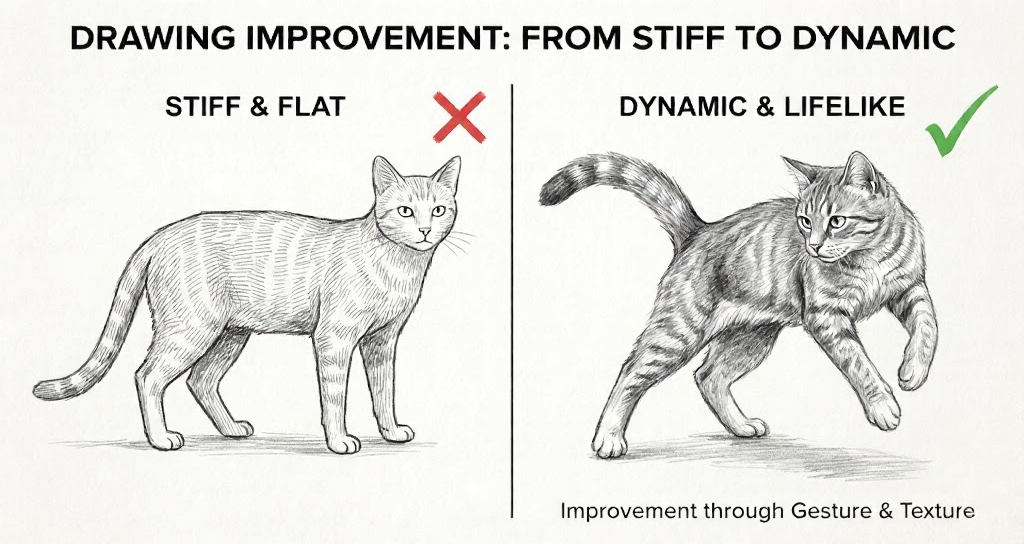
Solution: Strengthen gesture drawing practice. Spend the first minute on gesture alone. If the gesture feels dead, the finished drawing will too.
Mistake: Generic Cat Face
Problem: Cat doesn’t look like any specific cat.
Solution: Work from reference photos of actual cats. Study what makes that individual cat’s face distinctive—ear set, muzzle shape, eye placement.
Mistake: Uniform Fur Texture
Problem: Fur looks like a carpet rather than actual fur.
Solution: Vary your stroke length, pressure, and spacing. Include areas of smooth fur and areas of texture. Let some strokes overlap and clump.
Mistake: Floating Appearance
Problem: Cat doesn’t seem to rest on any surface.
Solution: Pay attention to weight distribution. Add cast shadows. Show how the body conforms to the surface beneath it.
FAQ
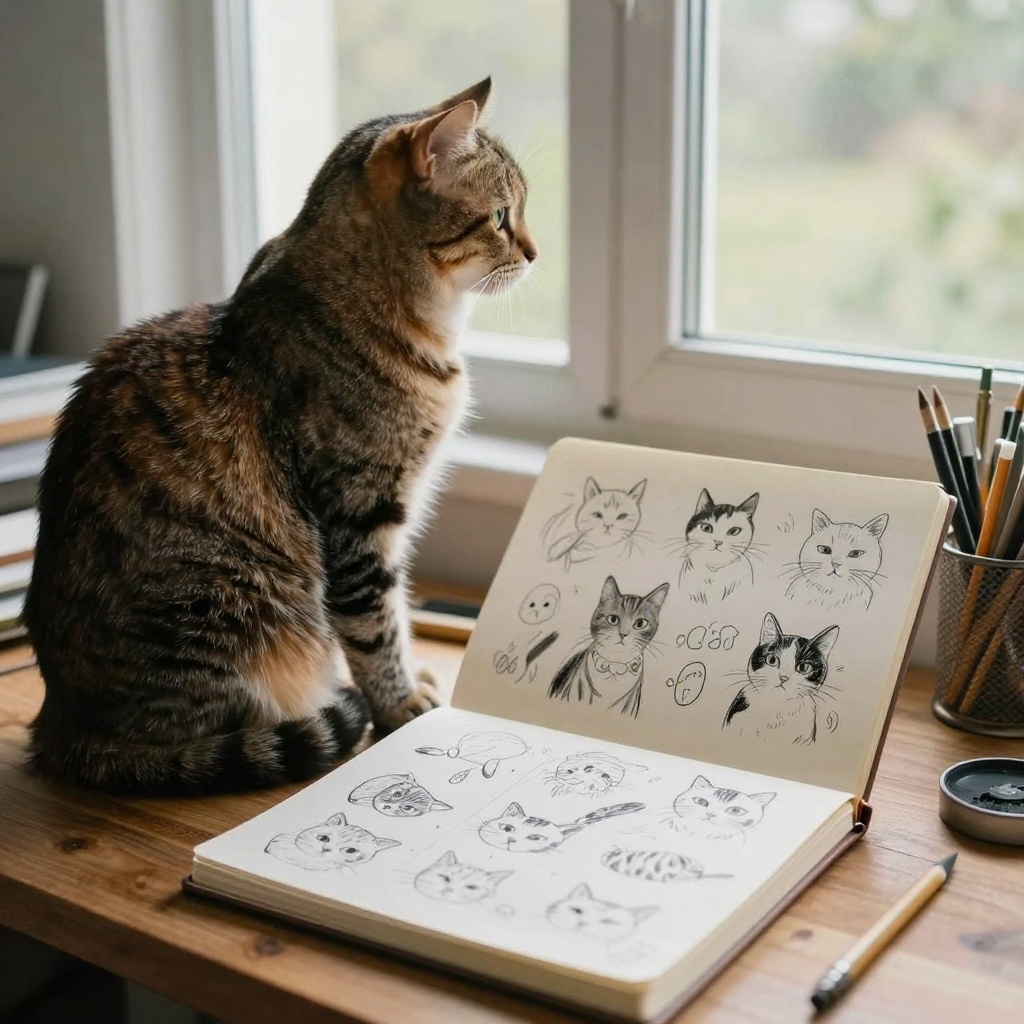


Why do my cat drawings look stiff even with correct proportions?
Proportions alone don’t create life—gesture does. Before drawing any details, capture the flow of the spine with a single gesture line. This curve contains the energy of the pose. If your gesture line feels stiff, your finished drawing will too, regardless of how accurate the proportions are.
How do I draw cat fur without it looking like a mess?
Work in layers, not all at once. Establish your value structure first, then add fur texture following the natural growth direction. Use varied stroke lengths and include areas without heavy texture. The eye needs contrast between detailed and simple areas.
What’s the most common mistake beginners make when drawing cats?
Starting with details instead of structure. Many beginners jump straight to drawing eyes or fur patterns before establishing the underlying anatomy and gesture. Build from general to specific: gesture first, then major shapes, then proportions, then features, then details.
How long does it take to get good at drawing cats?
With focused practice—meaning deliberate study of anatomy, gesture sketching, and working from life or reference—most people see significant improvement within 2-3 months. However, like any skill, cat drawing continues to develop over years of practice.
Should I draw cats from photos or from life?
Both, but prioritize life drawing when possible. Photos freeze a single moment; watching live cats teaches you how cats move and how poses flow into each other. Start with photos for convenience, but observe real cats whenever you can.


Conclusion
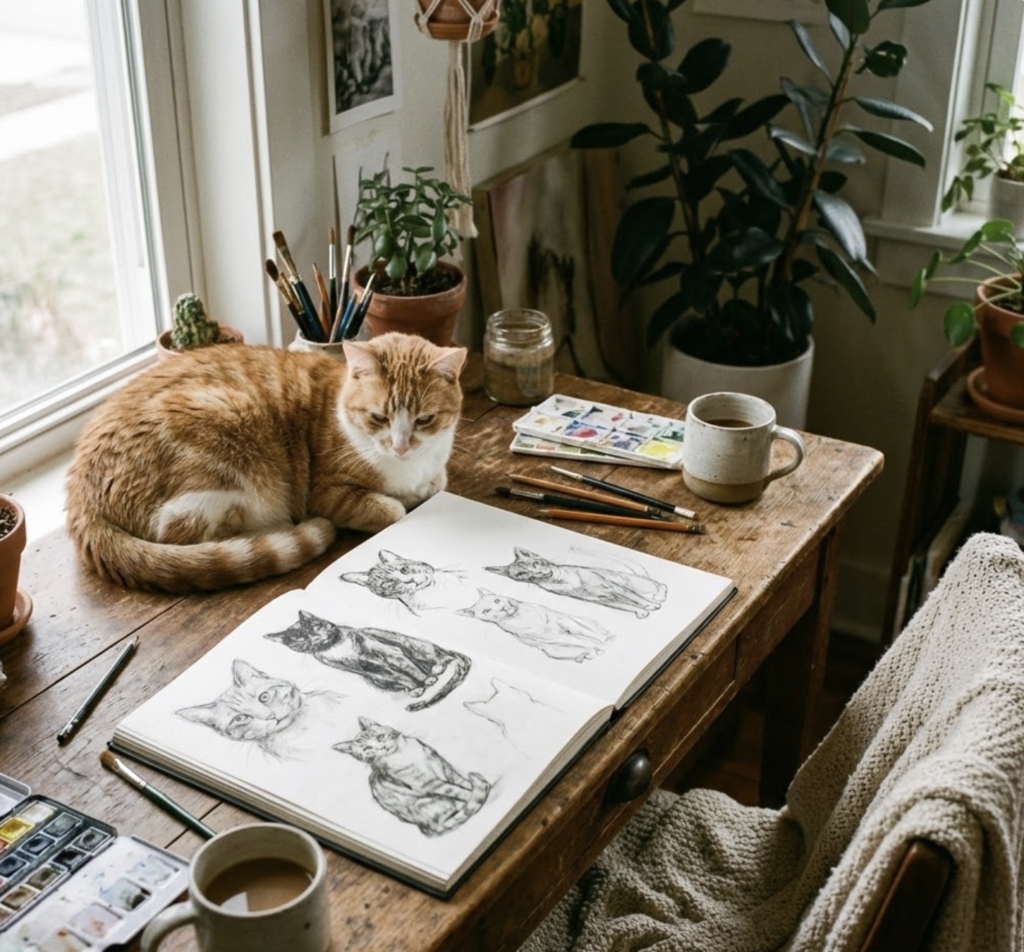
Drawing cats that feel alive requires understanding what makes cats uniquely feline: their flexible spine, their efficient predator anatomy, their expressive faces, and their constant potential for movement. Surface details like fur texture matter, but they can’t compensate for weak underlying structure.
The difference between stiff cat drawings and living ones comes down to gesture and anatomy. A quick sketch with accurate gesture feels more alive than a rendered drawing with rigid underlying structure. Master the foundation first—the details follow naturally.
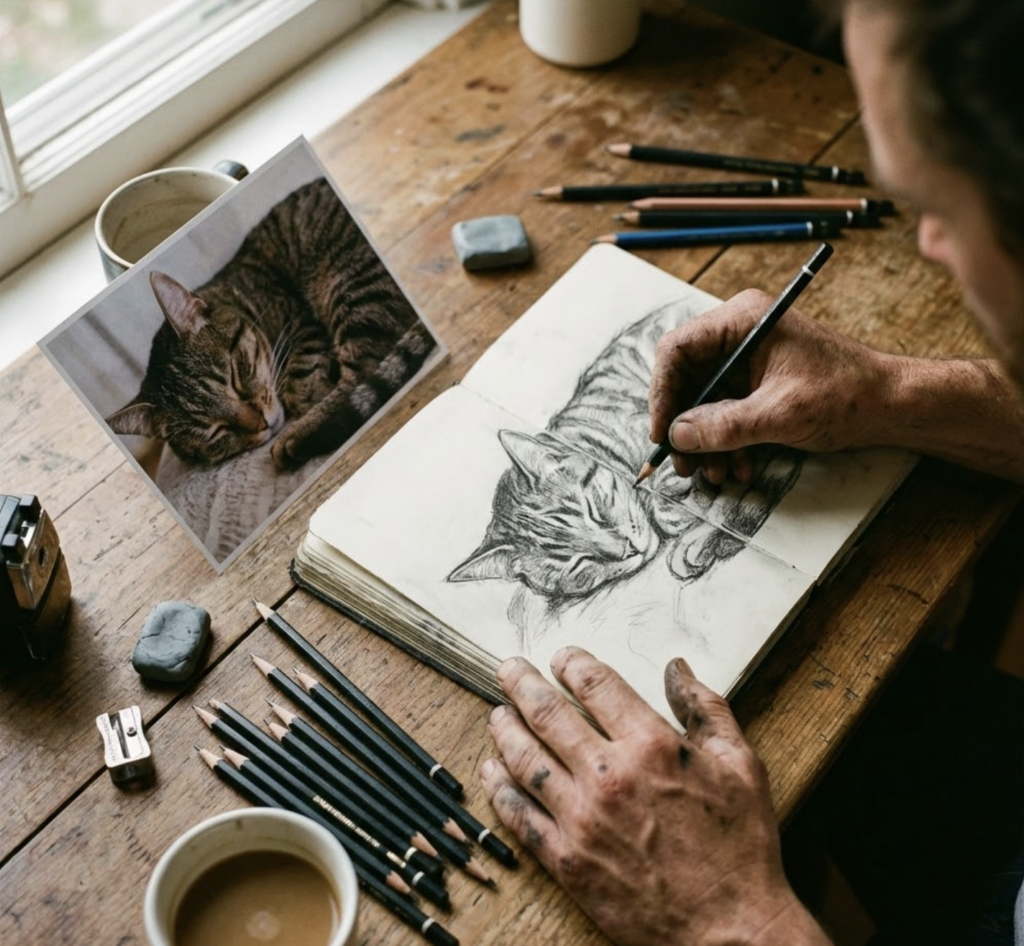
This week: Spend 15 minutes daily doing gesture sketches of cats from photo references. One minute per sketch, fifteen sketches. Focus only on capturing the spine curve and overall energy. Don’t worry about features or fur.
This month: Complete 10 longer studies (30-60 minutes each) working through the full process: gesture, structure, proportions, features, values, fur. Keep all your studies to track improvement.
Ongoing: Observe real cats whenever possible. Watch how they move, how they transition between poses, how their bodies express personality. This observation feeds directly into your drawing practice.
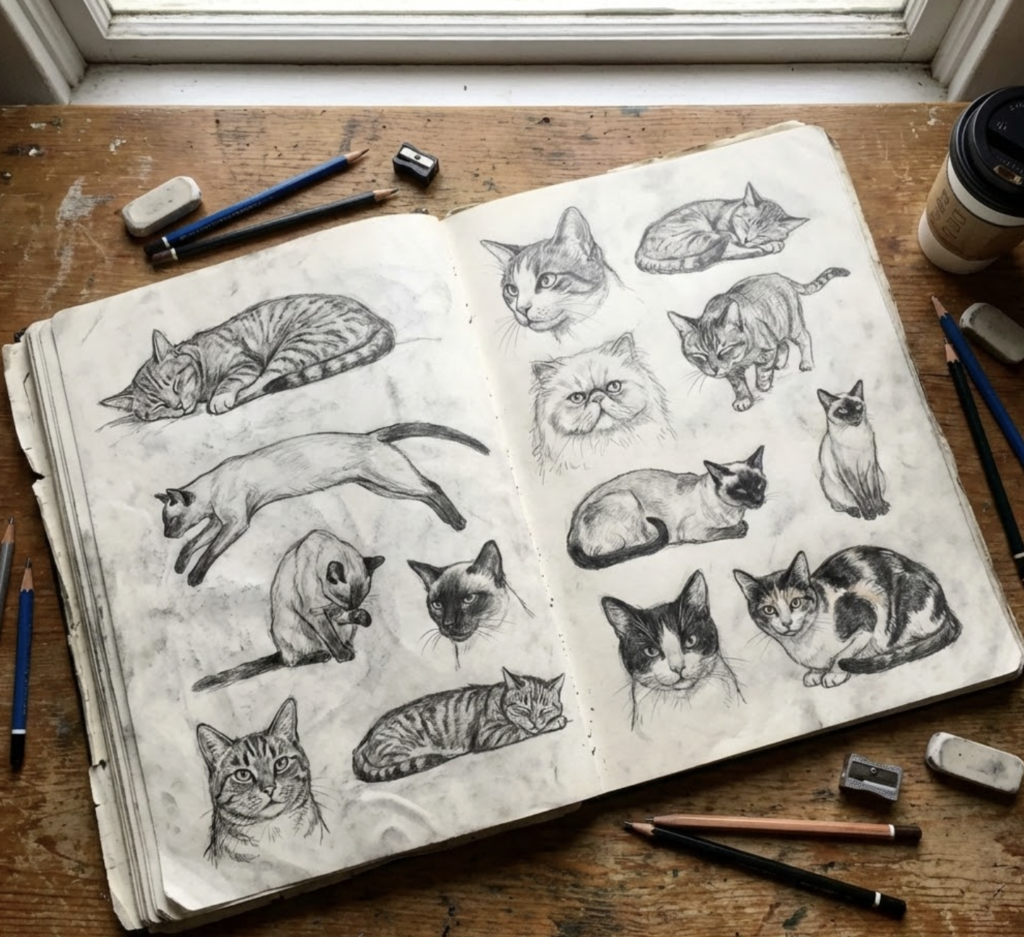
Your cats deserve to look like they’re breathing, not like they’re mounted on a wall. Start with gesture, build with anatomy, and let the personality emerge through thoughtful observation.

- 15.9Kshares
- Facebook0
- Pinterest15.9K
- Twitter1
- Reddit0