Most Minecraft house tutorials treat “bigger” and “more detailed” as the same thing as “better,” and that’s exactly why so many builds look busy instead of good. I’ve spent years on the design side of real architecture, and the same rules that make a house read as intentional in real life, roofline silhouette, a restrained material palette, proportions that make sense at a glance, apply directly to a blocky medium. A house built from three block types with a confident roof pitch will almost always outshine one built from twelve textures with no plan.
This is a list of 20-plus house ideas, but it’s organized around that principle. Each build gets a short materials list using nothing but blocks that actually exist in the game, no invented textures, no mod-only items, and a compact set of build steps you can follow directly. Every material listed below is a real, vanilla Minecraft block.
- What makes a Minecraft house look good, not just big
- 20+ Minecraft house ideas
- FAQ
- What's the easiest Minecraft house to build for beginners?
- How do I make a small Minecraft house look less plain?
- What materials work best for a modern-style Minecraft house?
- Can these house designs work in both Survival and Creative mode?
- How many blocks of one type should I use before it looks repetitive?
- Do bigger Minecraft houses automatically look better than small ones?
- Final thoughts
Most existing house-idea roundups are organized by biome or by difficulty tag, which is useful for browsing but doesn’t actually teach you why one build reads better than another. This list groups builds by category too, but every entry also names the specific design choice doing the work, whether that’s a roof pitch, a material contrast, or a proportion decision, so you can apply the same logic to a build of your own that isn’t on this list at all.
What makes a Minecraft house look good, not just big
Three things separate a house that reads as designed from one that reads as a pile of blocks, and none of them require more building time.
Roofline does more visual work than almost anything else. A steep gabled roof, a shallow hip roof, a flat roof with a parapet, each one sets the whole building’s character before a single window gets placed. Picking one roof language and committing to it beats mixing three roof styles on the same structure. In real architecture, roof pitch often signals climate and era before anyone consciously registers it, and the same shorthand works in Minecraft’s simplified geometry: a steep pitch reads as cold-climate or rustic, a flat roof reads as modern or desert, almost regardless of the walls underneath.
Material restraint matters more than material variety. Two or three block types, one for the main walls, one for trim or accents, one for the roof, read as a deliberate palette. Five or six different blocks scattered without a pattern read as noise, even if each individual block looks fine on its own. This is the single easiest fix for a build that “looks off” without an obvious reason: count your distinct block types, and if you’re past four or five without a clear pattern governing where each one goes, that’s usually the actual problem.
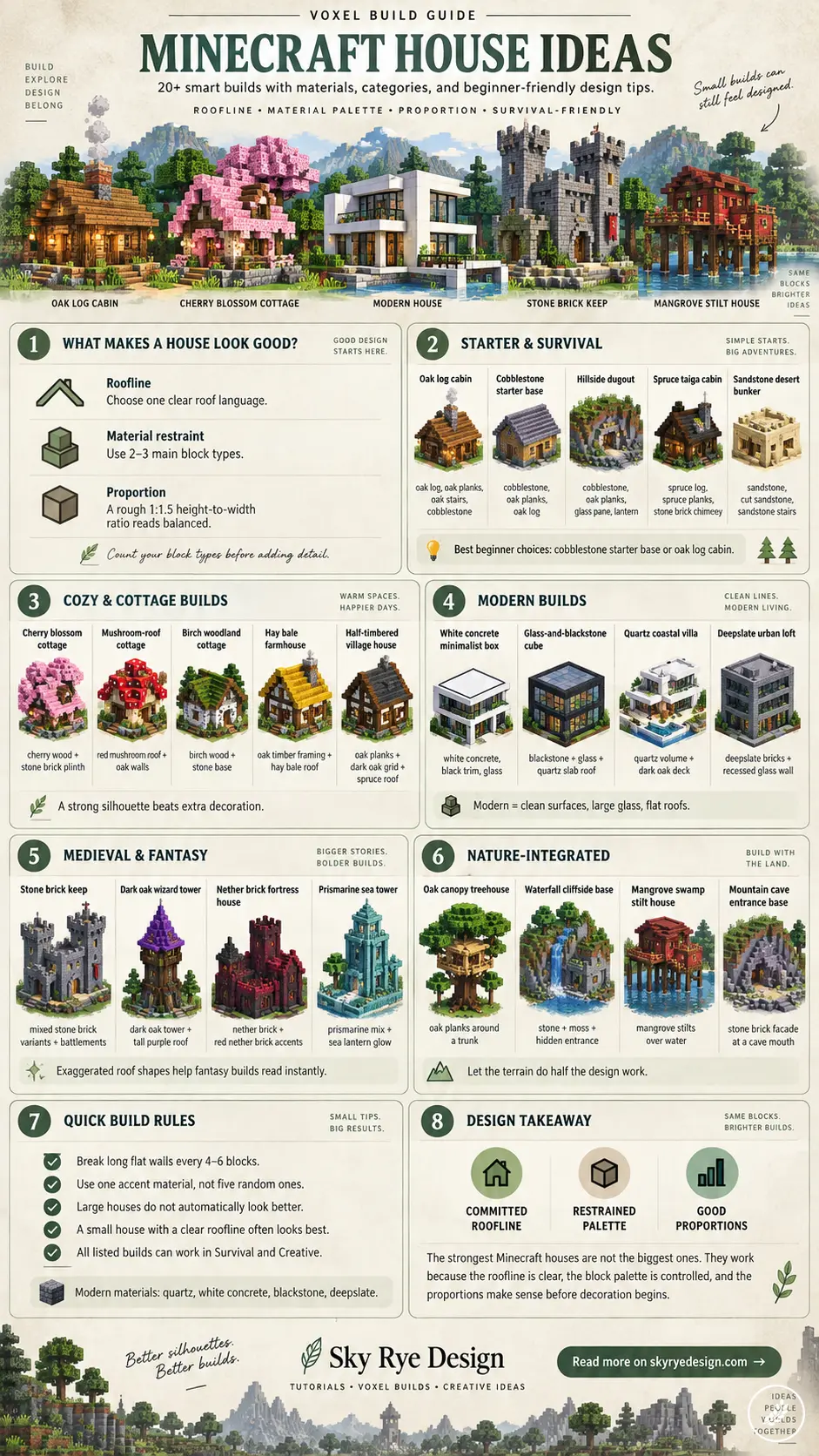
Proportion is the part most builders skip entirely. A house that’s too tall for its footprint looks like a tower pretending to be a house; one that’s too wide and flat looks squat and heavy. A rough starting ratio of roughly 1:1.5 height to width for the main volume, before the roof, reads as balanced for most house styles, though cottages can run a bit shorter and towers a bit taller on purpose. Sketching a build’s rough footprint and wall height on paper first, even a two-minute rectangle, catches proportion problems far earlier than noticing them after forty minutes of placing blocks.
Keep those three principles in mind through every build below, and you’ll get better results adapting any of them than you would copying dimensions exactly.
20+ Minecraft house ideas
Starter and survival houses
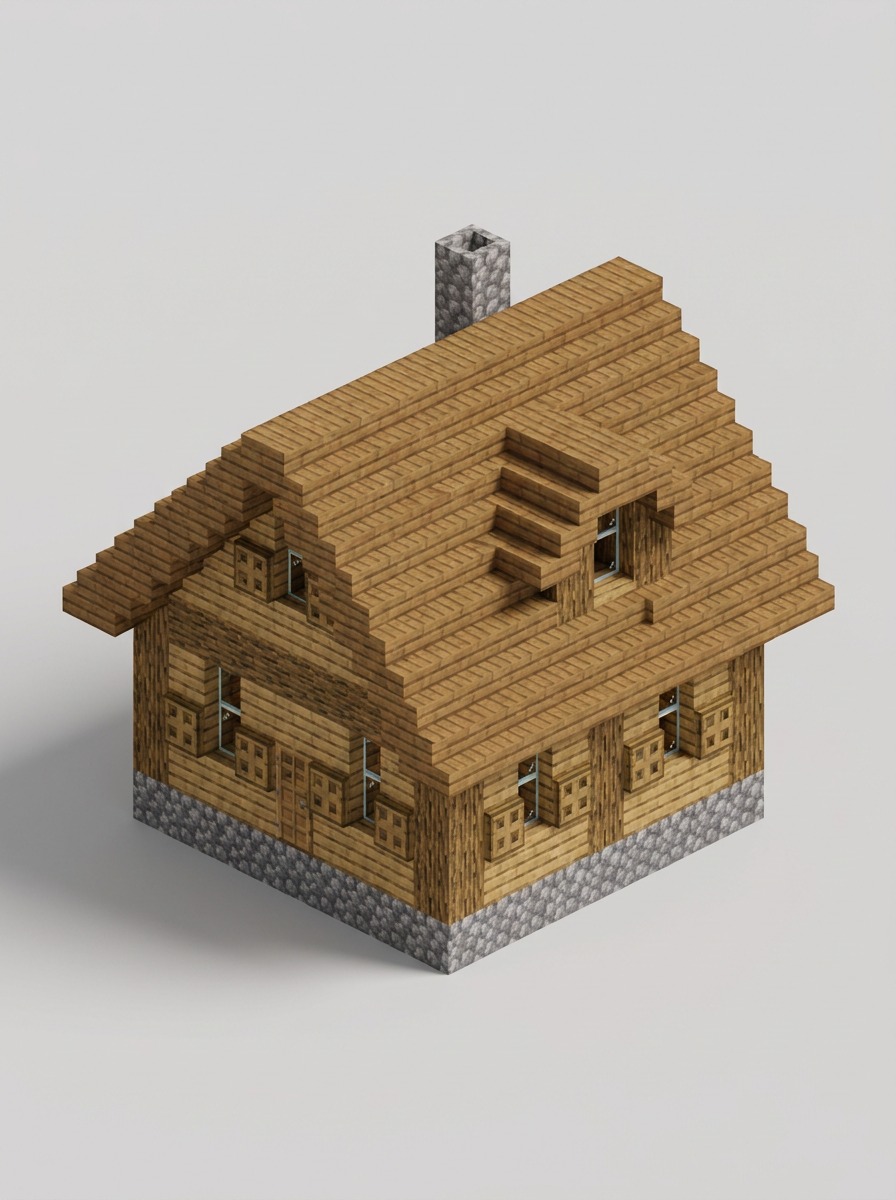
1. Oak log cabin. A steep gabled roof and log walls read as “cabin” instantly, and it only needs common overworld materials. Keep the roof pitch steep and uninterrupted; a cabin with a shallow or broken roofline loses the read entirely, no matter how correct the log walls are.
Materials: oak log, oak planks, oak stairs, oak trapdoor, cobblestone (foundation), glass pane.
Build: Lay a cobblestone foundation one block high; stack oak log walls to 4 blocks; frame door and window openings; build a gabled roof with oak stairs; add trapdoor shutters.
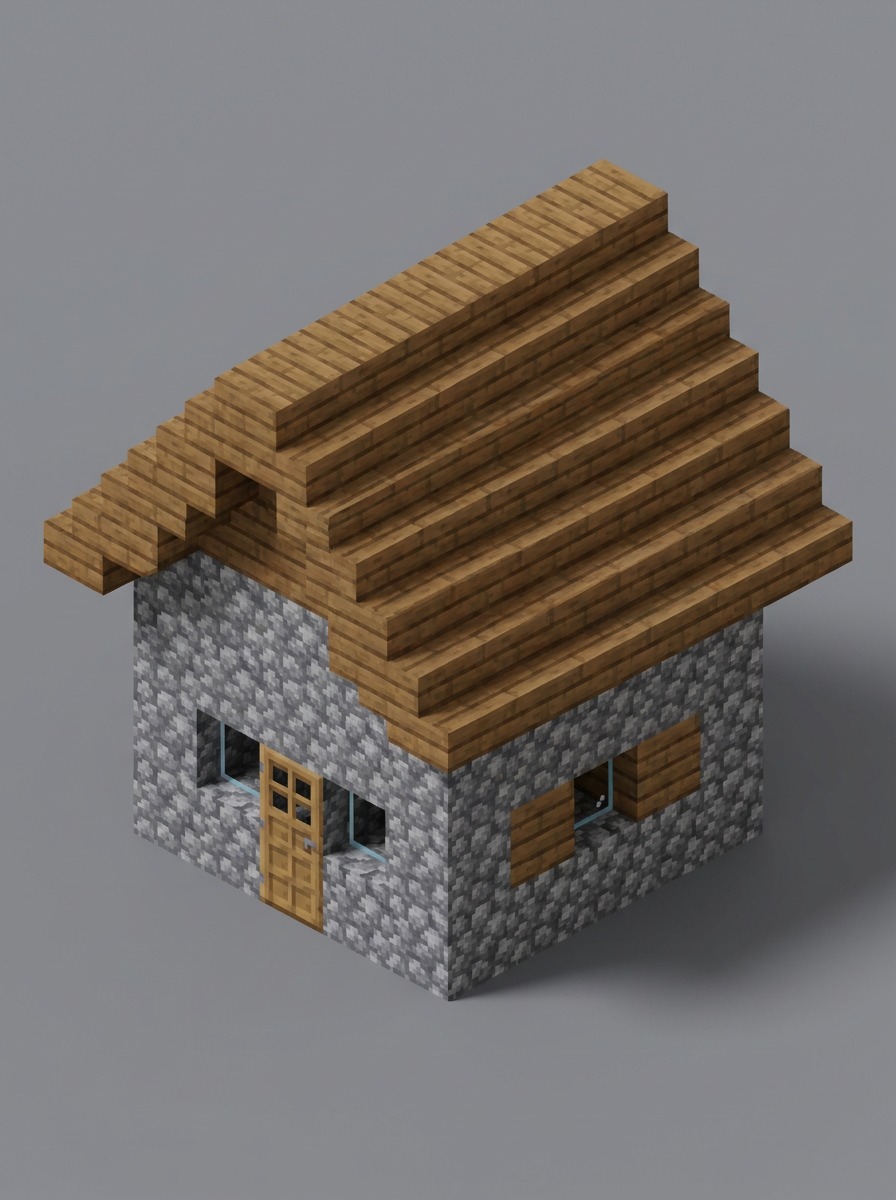
2. Cobblestone starter base. The single fastest reliable base in the game, since cobblestone is the first renewable building material most players collect.
Materials: cobblestone, oak planks, oak log, glass pane, ladder.
Build: Dig or wall off a 7×7 footprint; raise cobblestone walls 4 blocks; frame a simple flat or single-slope roof in oak planks; add a door and two window openings.
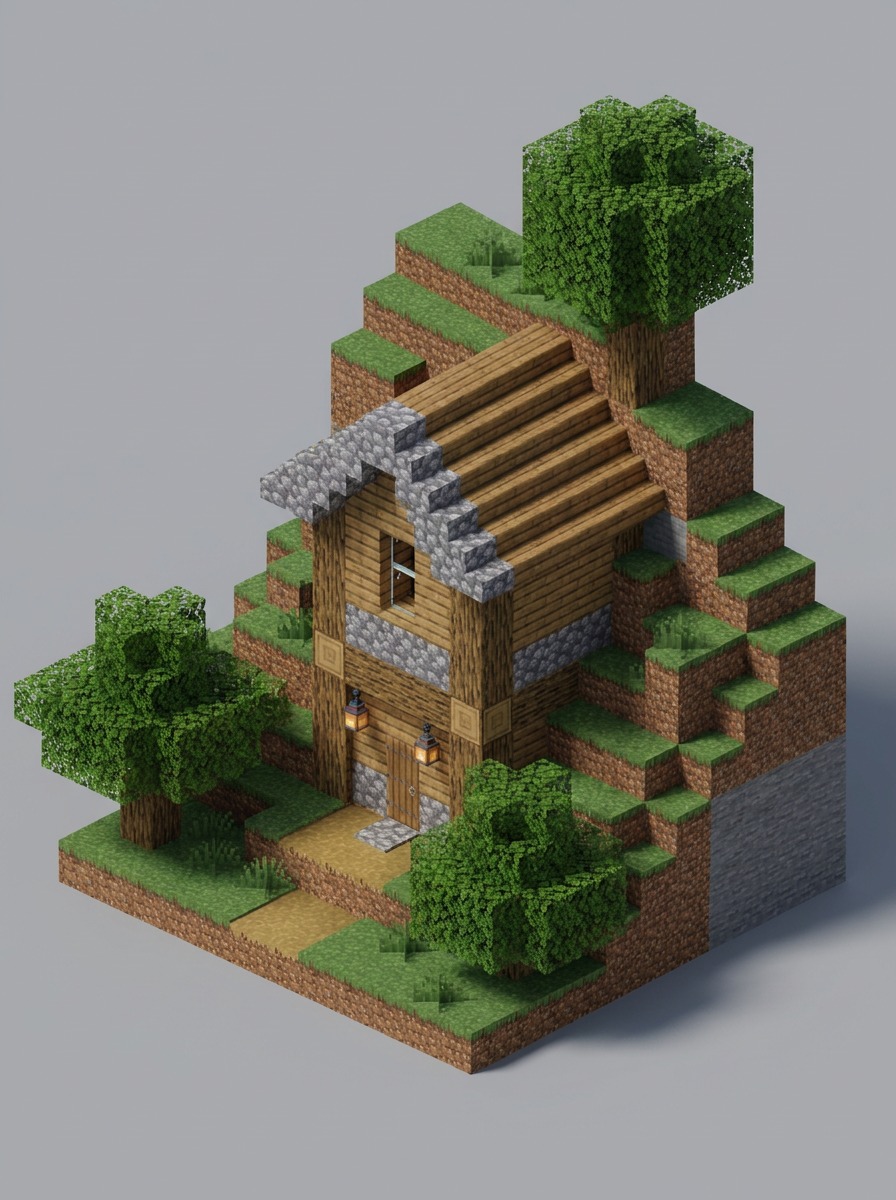
3. Hillside dugout. Building into a hill cuts your material needs nearly in half and gives natural insulation from mobs. The visible facade is doing all the design work here, since most of the structure is hidden, so put the extra effort into a clean, well-framed entrance rather than interior detail nobody will see from outside.
Materials: cobblestone, oak planks, oak fence, glass pane, torch or lantern.
Build: Carve a 5×5 room into a hillside; frame the exposed face with cobblestone and a plank door frame; add interior lighting; leave one small window cut into the hill face.
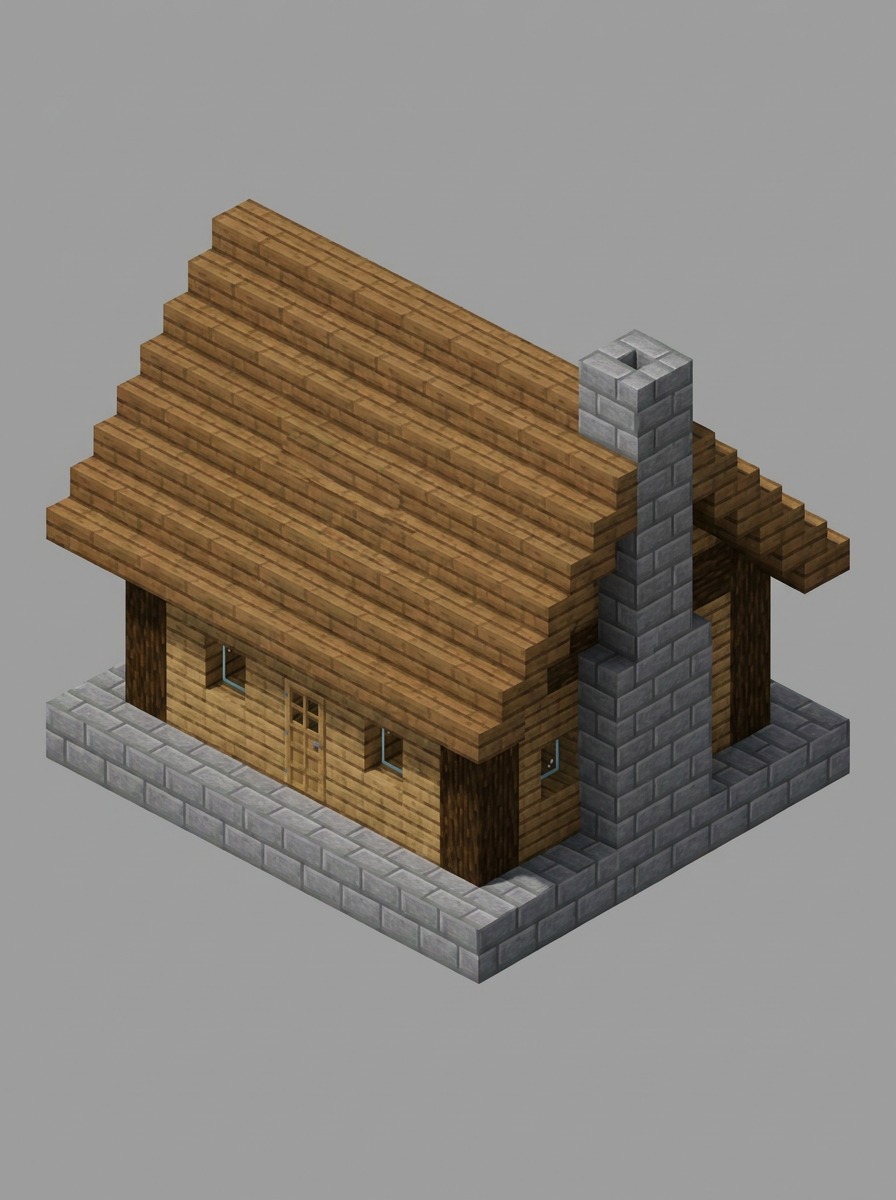
4. Spruce taiga cabin. Spruce’s darker tone pairs naturally with snowy or forested biomes and needs almost no extra dye or decoration to look intentional.
Materials: spruce log, spruce planks, spruce stairs, stone brick (chimney), glass pane.
Build: Raise spruce log walls on a small stone brick plinth; frame a steep spruce stair roof; add a stone brick chimney on one gable end; keep windows small and evenly spaced.
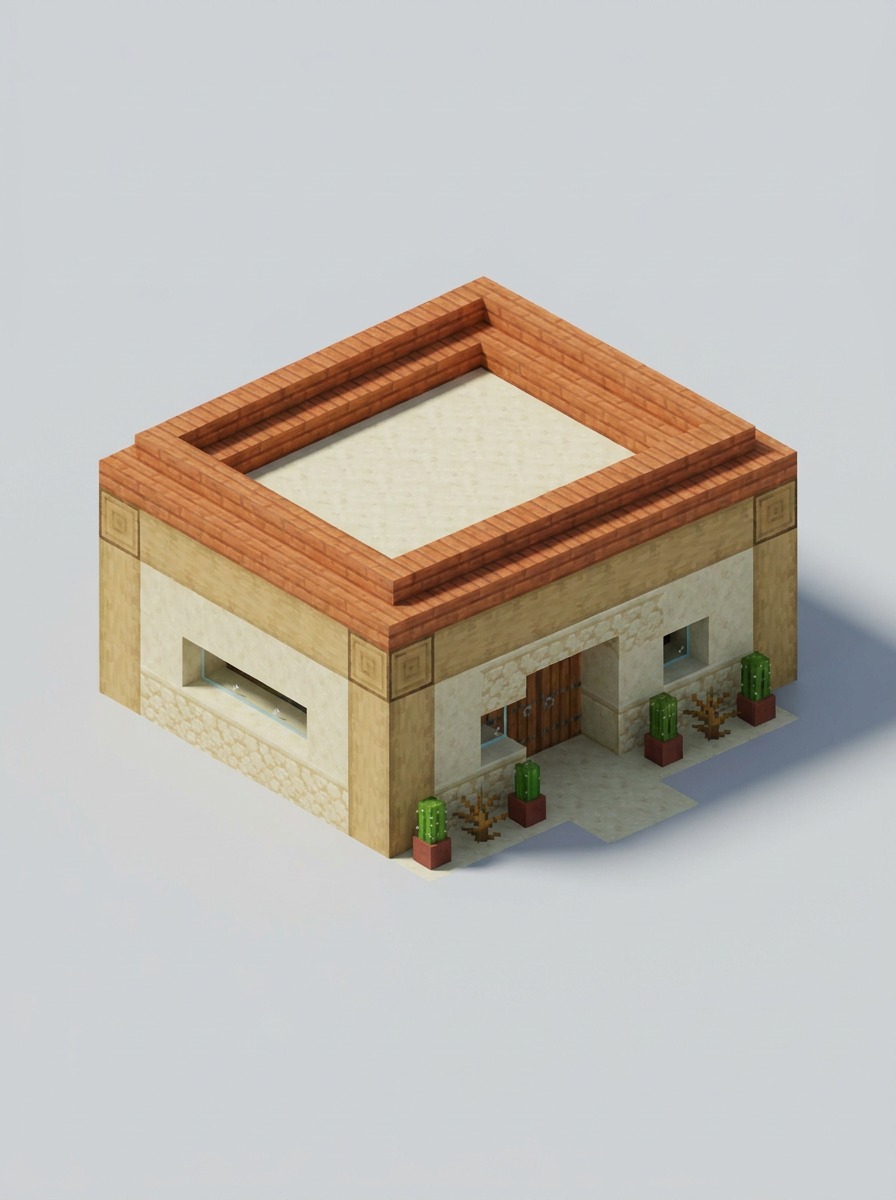
5. Sandstone desert bunker. A low, flat-roofed profile suits desert biomes both visually and practically, since it blends with the terrain and stays cool-looking.
Materials: sandstone, cut sandstone, sandstone stairs, glass pane, oak trapdoor.
Build: Build sandstone walls to 3 blocks on a wide, low footprint; cap with a flat cut sandstone roof and a single stair-lined parapet edge; keep window openings narrow to suit the style.
Cozy and cottage builds
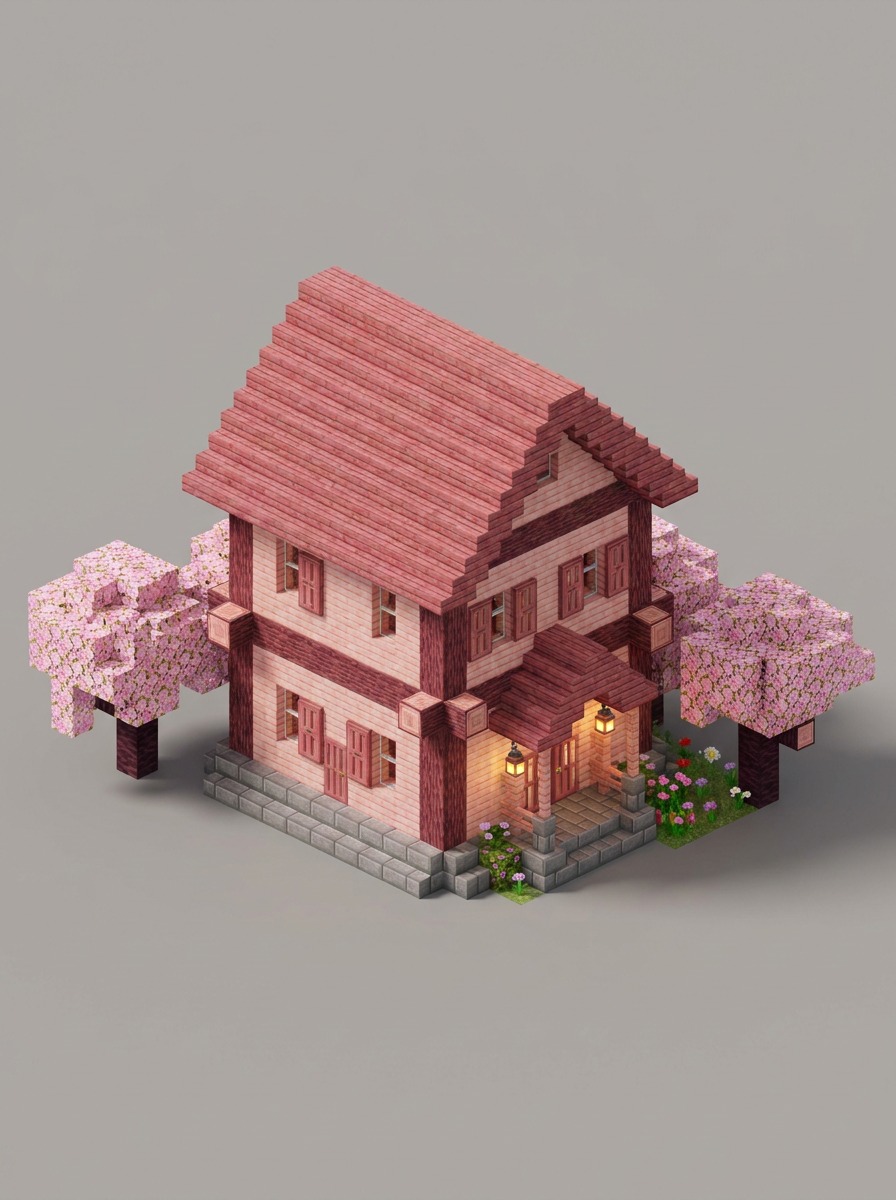
6. Cherry blossom cottage. Let the cherry blossom biome’s palette do most of the color work rather than layering on extra decoration. Resist adding extra pink accent blocks beyond the natural trees around the build; the biome already supplies the color, and adding more competes with it instead of complementing it.
Materials: cherry log, cherry planks, cherry stairs, stone bricks (foundation), glass pane, lantern.
Build: Build a stone brick plinth; raise cherry plank walls with exposed cherry log corner posts; frame a simple pitched cherry stair roof; hang lanterns at the entrance.
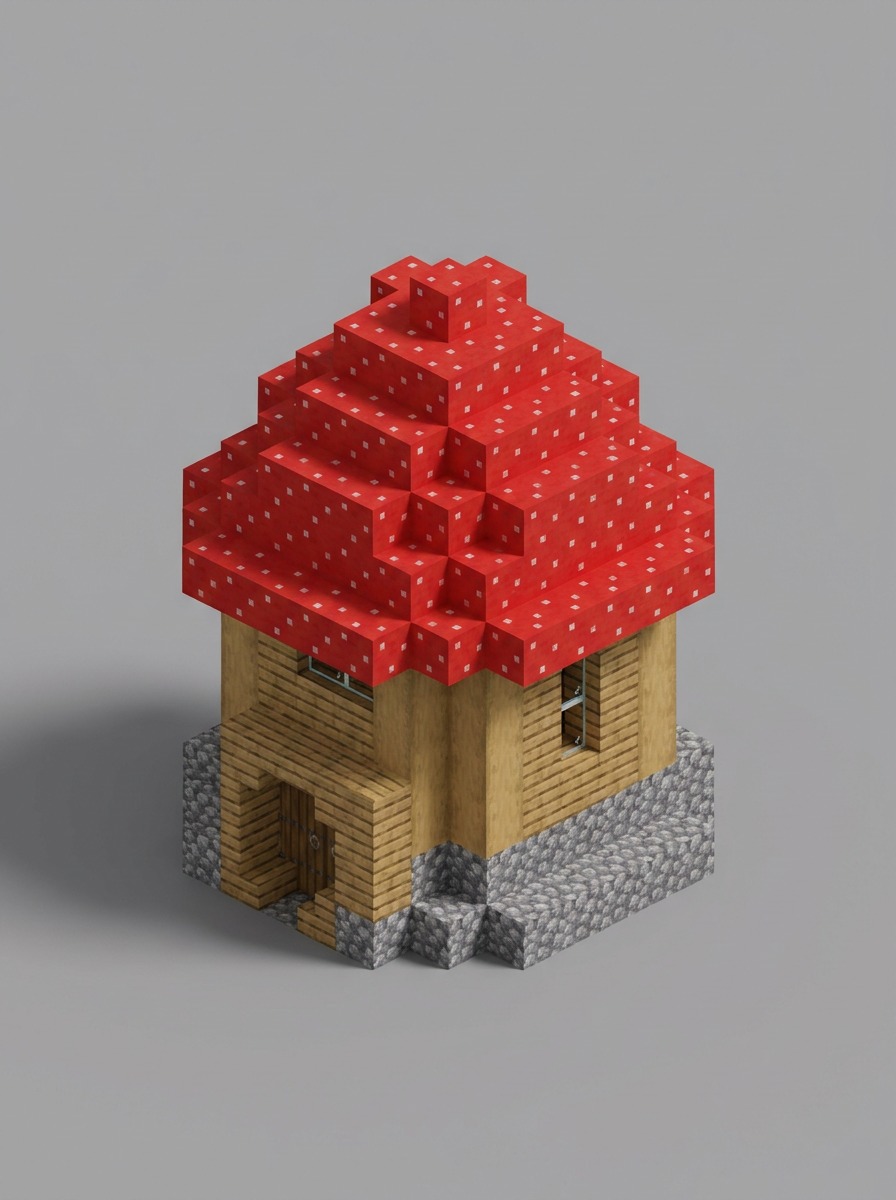
7. Mushroom-roof cottage. A rounded red mushroom-block roof breaks up the usual straight roofline and gives the whole build a storybook feel.
Materials: red mushroom block, oak planks, oak log, cobblestone (foundation), glass pane.
Build: Build a small oak plank box on a cobblestone base; cap it with a domed red mushroom block roof, stepping the blocks inward as you go up; add a round door opening.
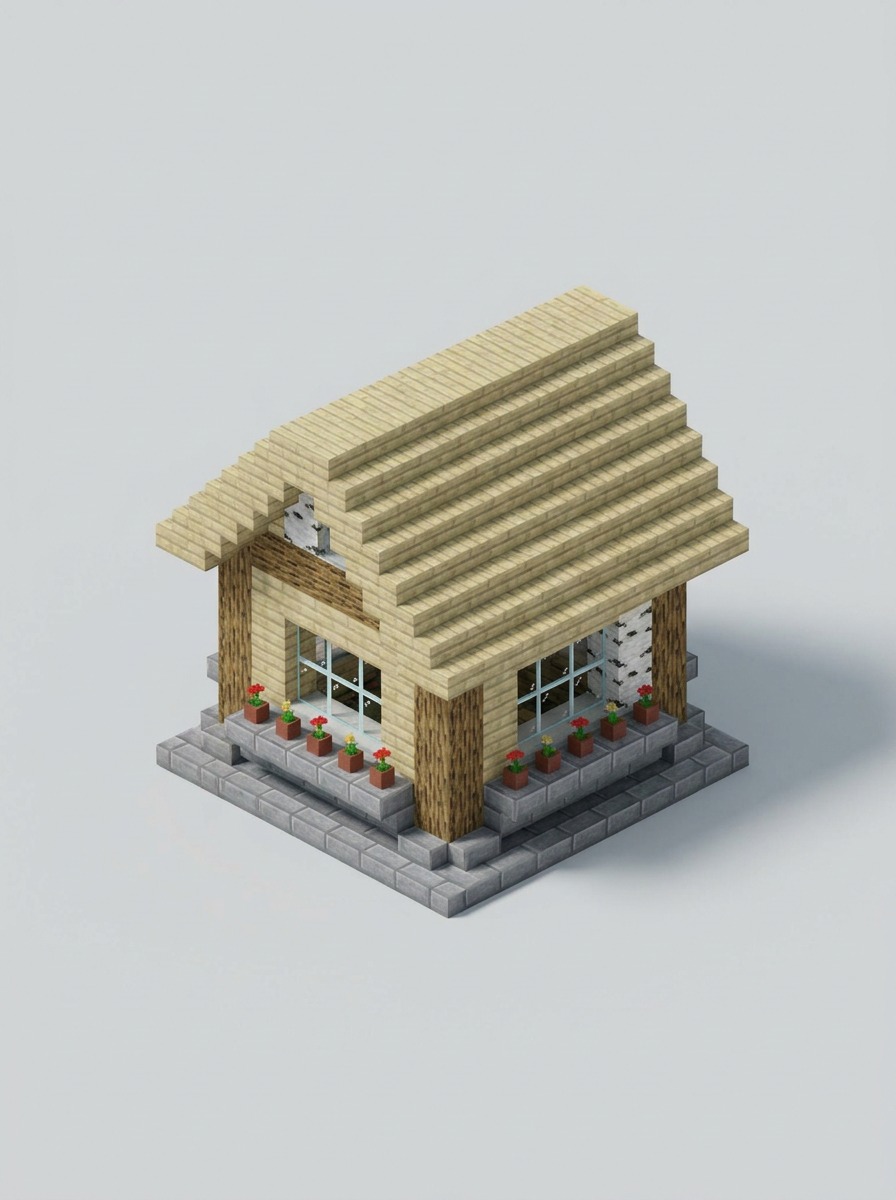
8. Birch woodland cottage. Birch’s pale tone works well against green foliage and reads as bright and open even in a small footprint.
Materials: birch log, birch planks, birch stairs, stone bricks, glass pane, flower pot (optional detail).
Build: Raise birch plank walls on a stone brick base; frame a moderate-pitch birch stair roof; add flower pots beneath windows for a lived-in detail.
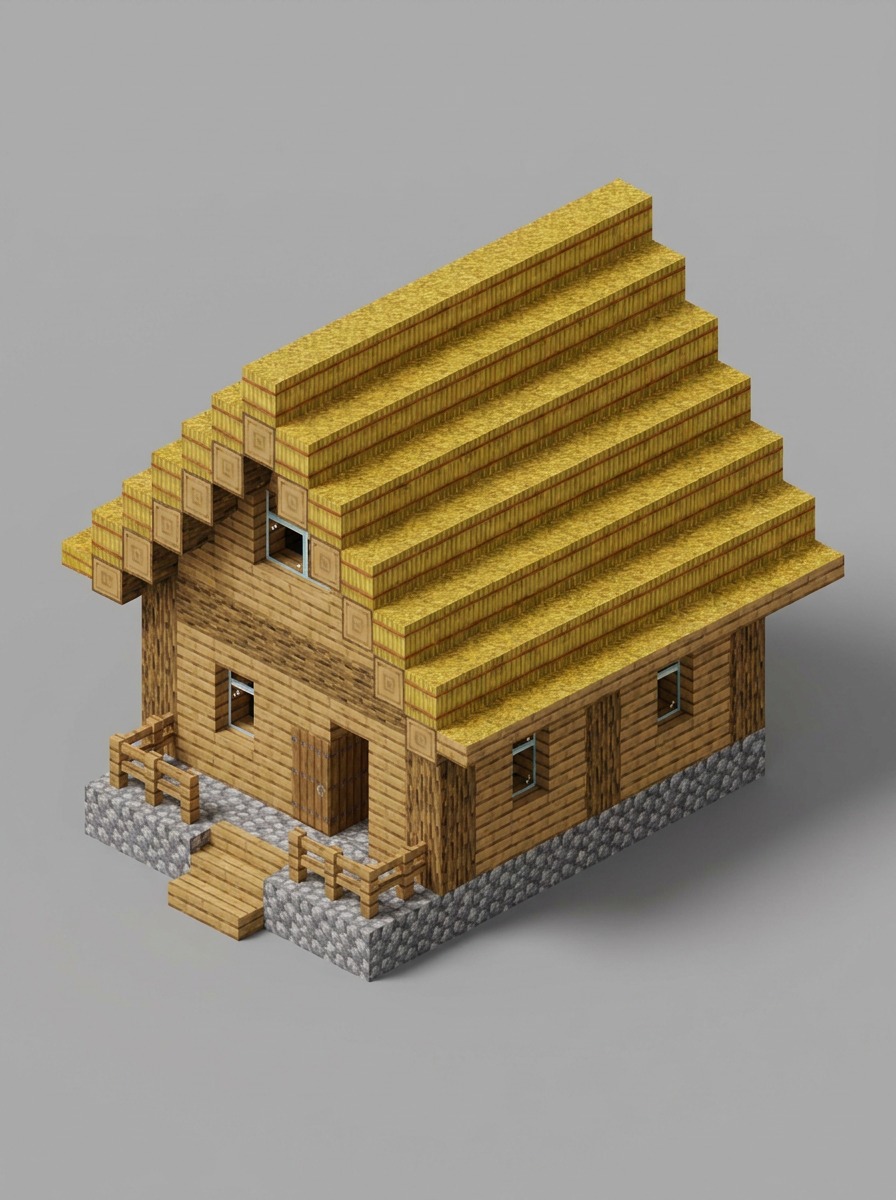
9. Hay bale farmhouse. Hay bale blocks read as a thatched roof at a glance, which is otherwise hard to replicate convincingly in vanilla Minecraft. Keep the timber framing lines evenly spaced rather than decorative; real half-timbering follows structural logic, and even an approximate grid reads more convincingly than an ornamental one.
Materials: oak planks, oak log (timber framing), hay bale, cobblestone (foundation), glass pane.
Build: Build oak plank walls with exposed oak log framing lines; cap with a hay bale roof laid in a gentle slope; keep the footprint rectangular and simple to sell the farmhouse read.
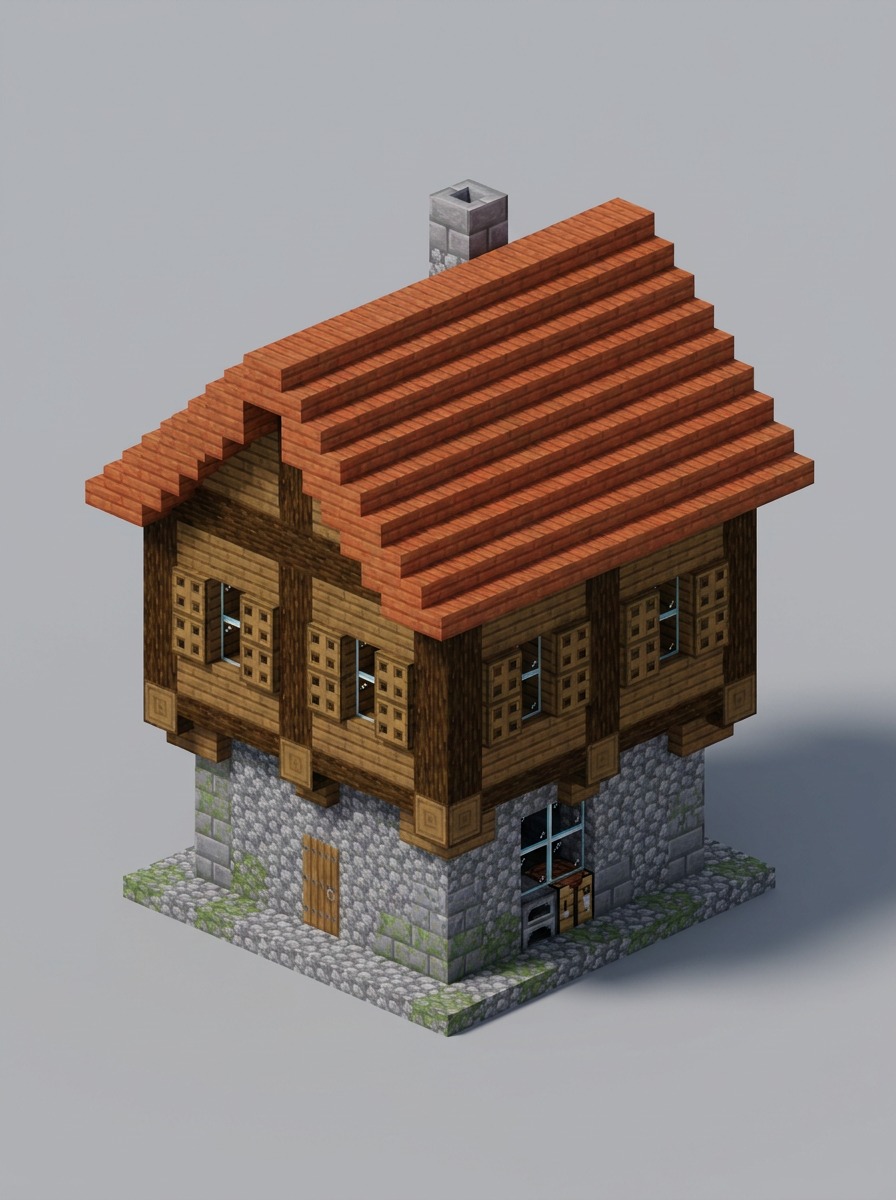
10. Half-timbered village house. Alternating dark and light wood in a grid pattern is one of the most reliable ways to make a small house look detailed without adding complexity.
Materials: oak planks, dark oak log, cobblestone (lower walls), spruce stairs, glass pane.
Build: Build a cobblestone ground floor; frame the upper floor in oak planks with dark oak log lines forming a grid pattern; cap with a spruce stair roof.
Modern builds
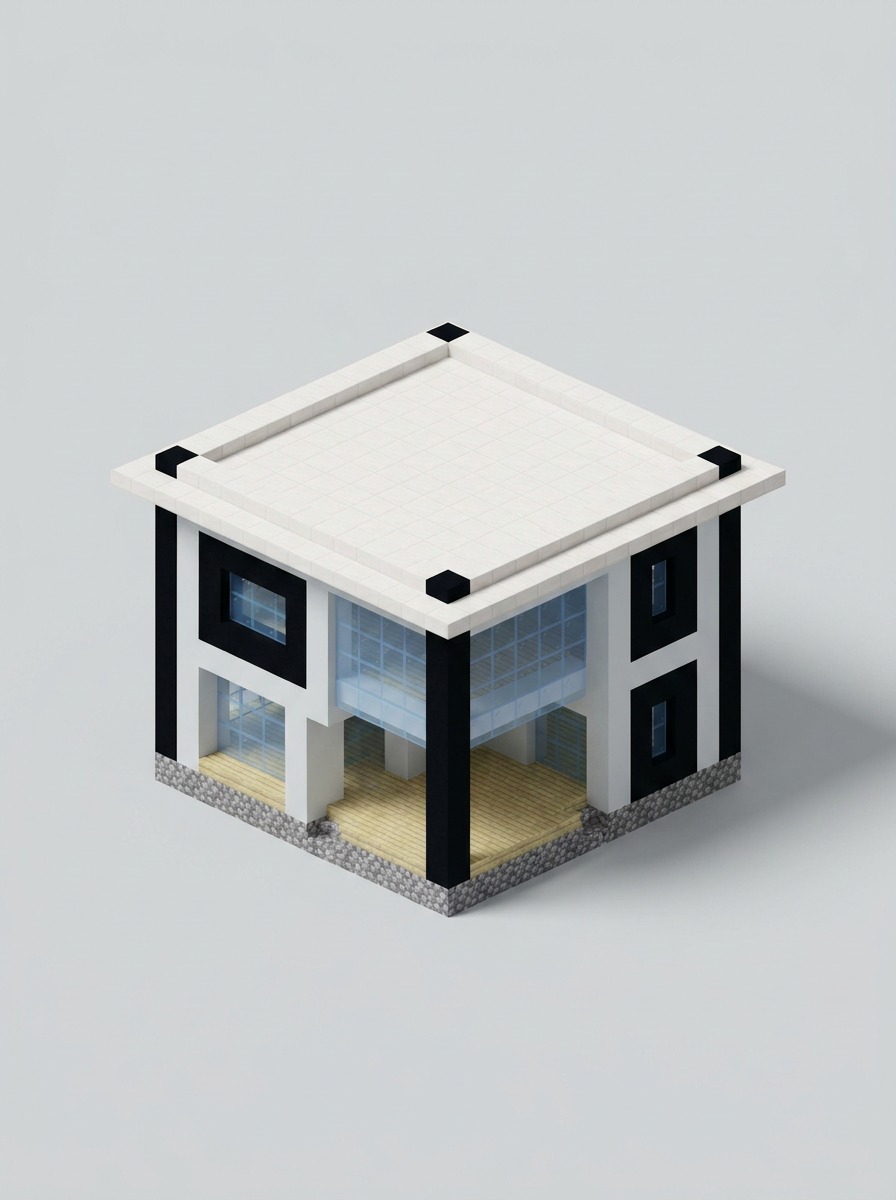
11. White concrete minimalist box. A single flat-roofed volume with large glass openings is the fastest way to read as “modern” in Minecraft. The temptation with this style is adding a second or third volume for visual interest; resist it until the first box’s proportions are settled, since stacking undefined volumes is what makes amateur modern builds look accidental rather than composed.
Materials: white concrete, glass, black concrete (trim), quartz slab (roof cap).
Build: Build a clean rectangular white concrete volume; cut large glass wall sections rather than small windows; cap with a flat quartz slab roof edged in black concrete.
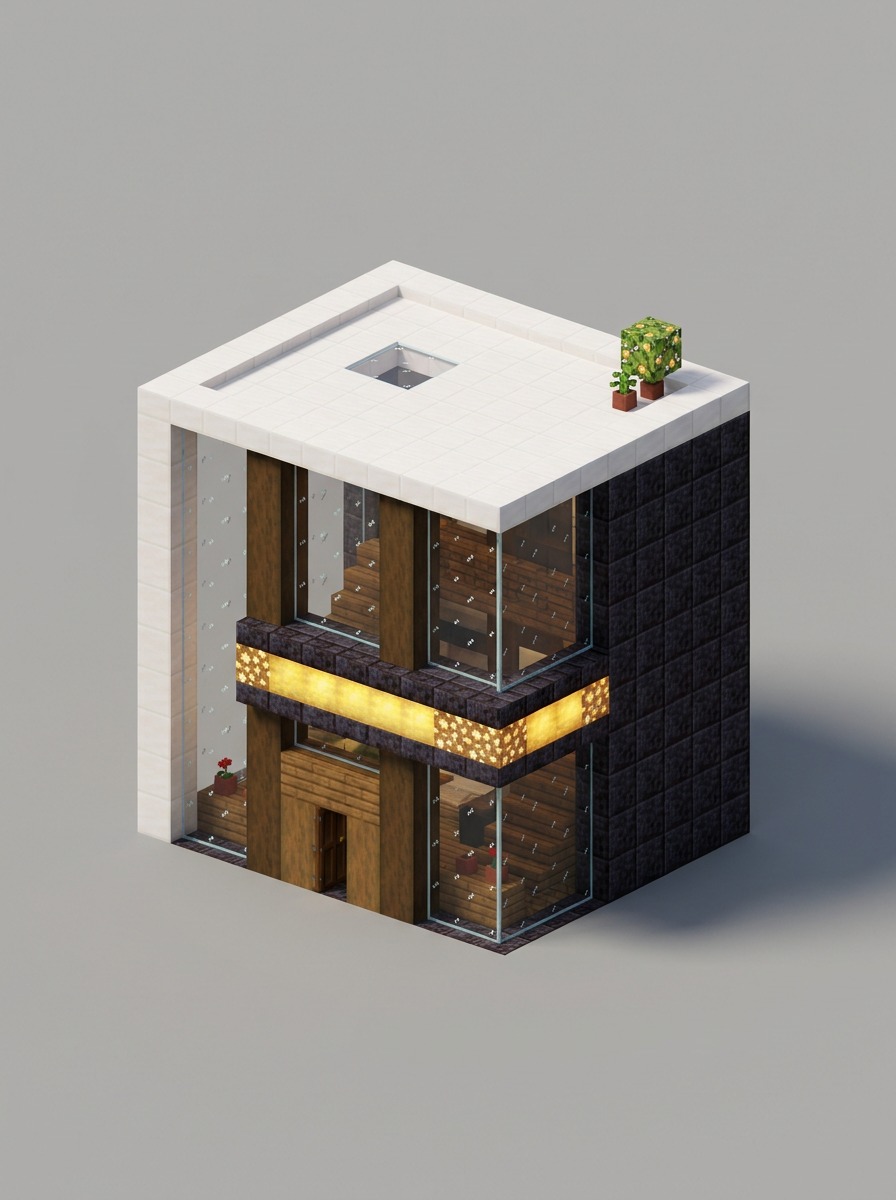
12. Glass-and-blackstone cube. High contrast between dark blackstone and clear glass creates a strong modern silhouette even at a small scale.
Materials: blackstone, polished blackstone, glass, gilded blackstone (accent), quartz slab.
Build: Build blackstone walls with a full glass wall on the main facade; add a gilded blackstone accent strip at doorway height; cap with a flat quartz slab roof.
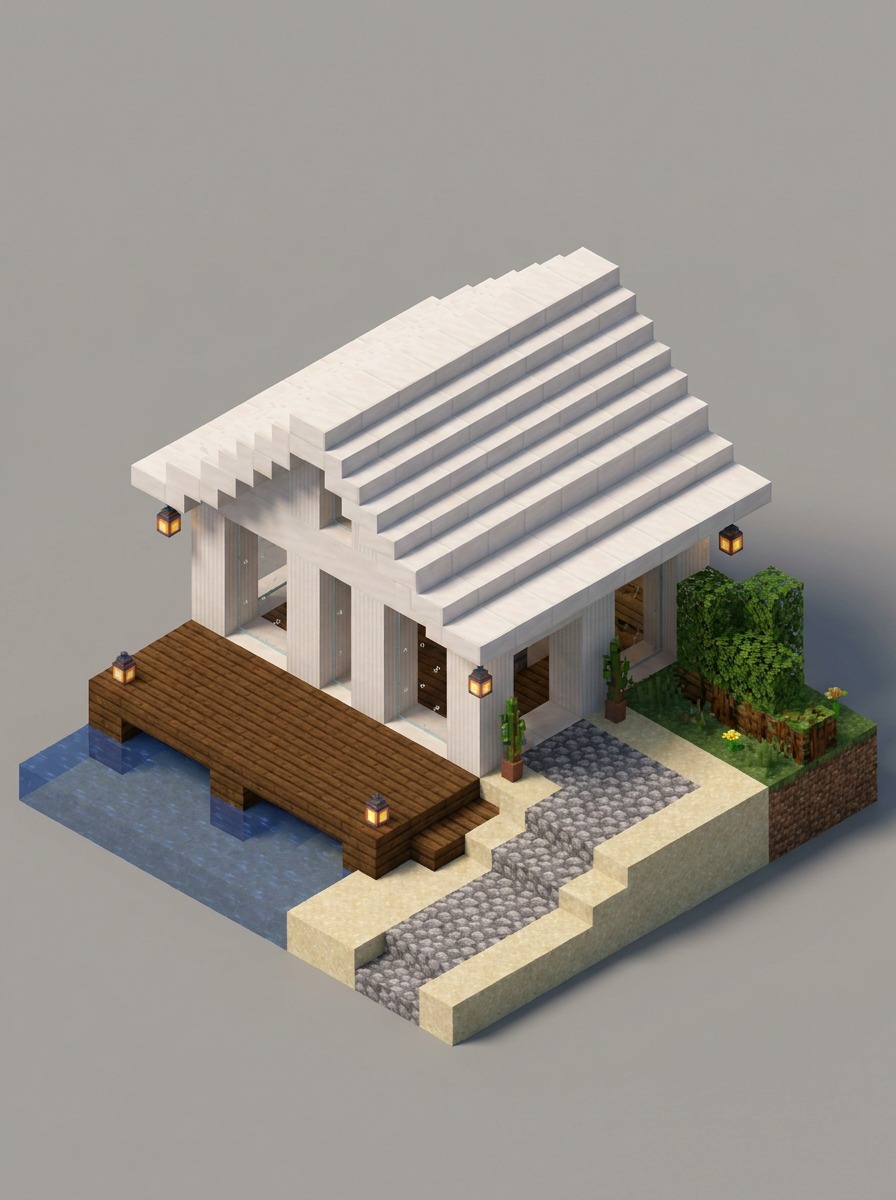
13. Quartz coastal villa. Quartz’s clean white tone and horizontal massing suit a beachside or clifftop setting.
Materials: quartz block, smooth quartz, glass, dark oak (deck framing), quartz stairs.
Build: Build a low, wide quartz volume with a dark oak deck extending toward the water; use quartz stairs for a stepped roofline; keep glass openings large and unbroken.
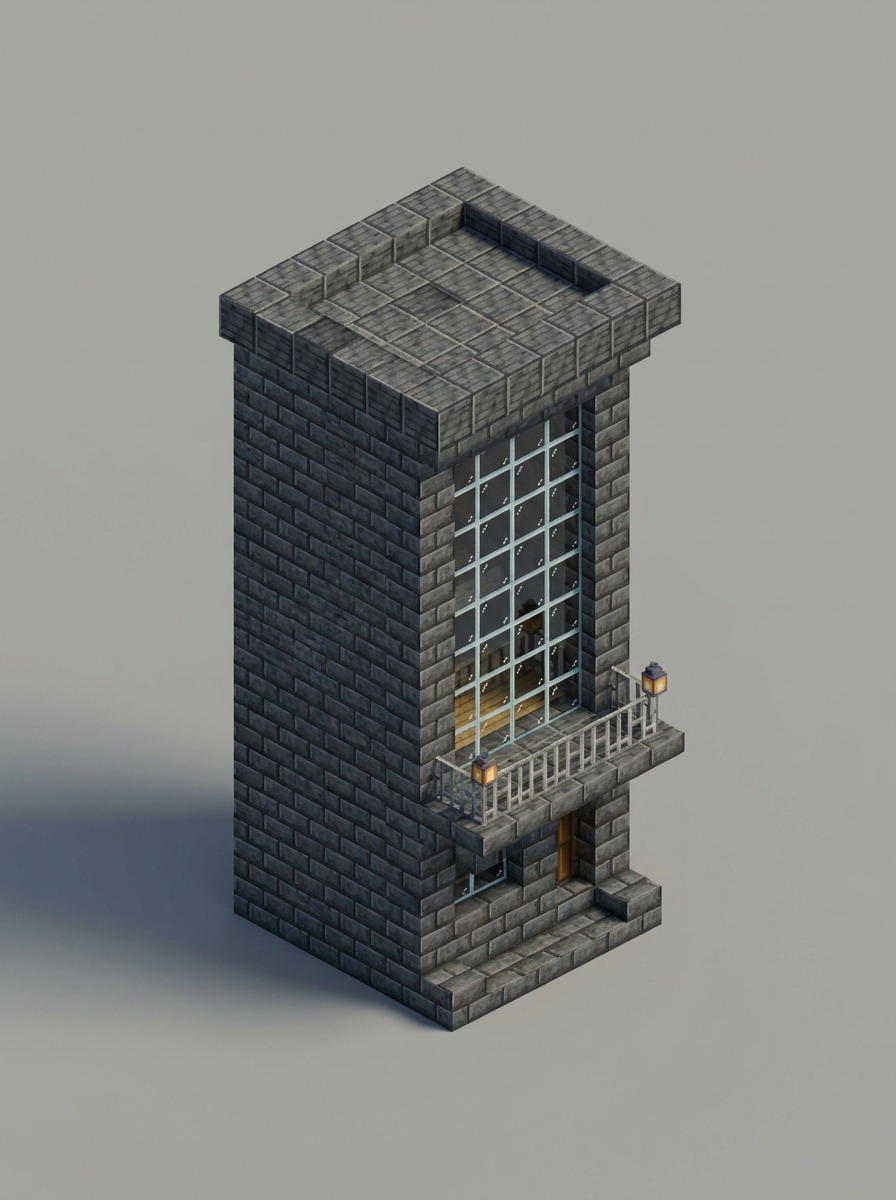
14. Deepslate urban loft. Deepslate’s dark, slightly rough texture reads as concrete or raw stone, suited to a dense, stacked urban build.
Materials: deepslate bricks, polished deepslate, glass, iron bars (balcony rail), deepslate tile stairs.
Build: Stack a tall, narrow deepslate volume; add a recessed glass wall on the upper level with an iron bar balcony rail; cap with a flat deepslate tile stair roof edge.
Medieval and fantasy builds
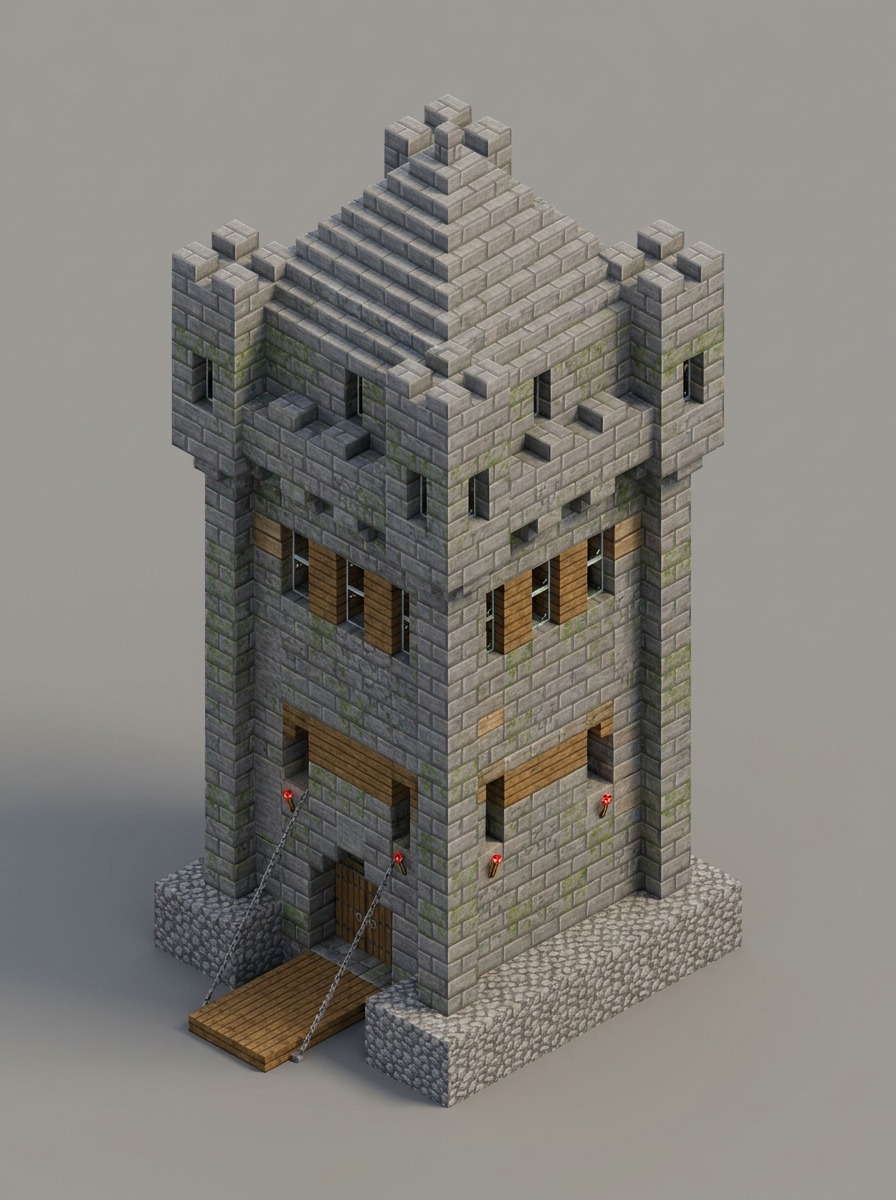
15. Stone brick keep. A tall, narrow tower with battlements reads as a keep instantly, and stone brick’s texture variants add depth without extra planning. Mix the three stone brick variants (regular, mossy, cracked) in an irregular but not random pattern, roughly 70 percent regular with the other two scattered as accents, to suggest age without the wall looking patchy.
Materials: stone bricks, mossy stone bricks, cracked stone bricks, stone brick stairs, glass pane.
Build: Build a tall square or round tower in mixed stone brick variants; cap with a battlement ring using stone brick stairs and gaps; add narrow arrow-slit windows.
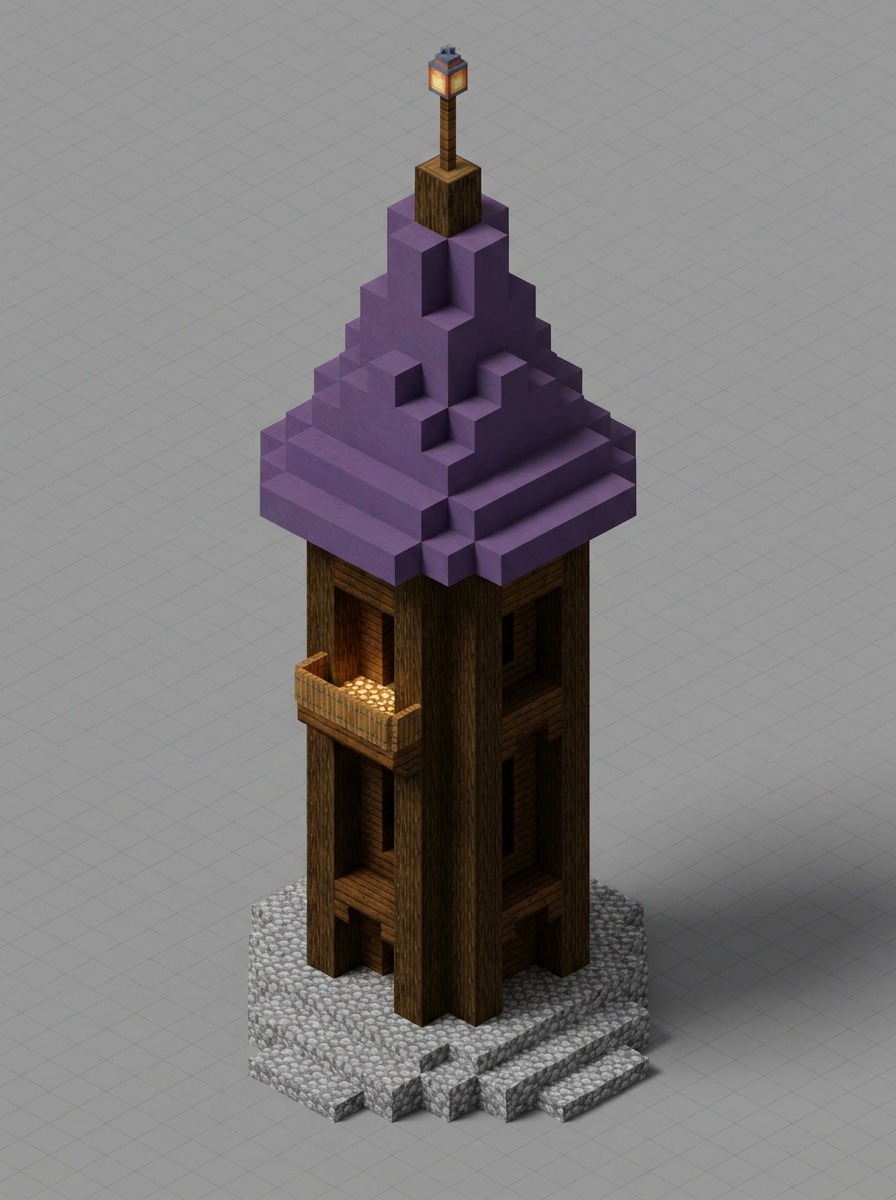
16. Dark oak wizard tower. A steep, exaggerated conical roof is what sells this build, more than any single wall detail. Push the roof’s height beyond what looks “reasonable” for the tower’s width; wizard-tower proportions specifically break the 1:1.5 ratio on purpose, and that exaggeration is the whole point of the style.
Materials: dark oak log, dark oak planks, cobblestone (base), purple or cyan terracotta (roof), glass pane.
Build: Build a narrow dark oak tower on a cobblestone base; cap with a tall, steeply stepped terracotta cone roof; add a single lantern-lit balcony partway up.
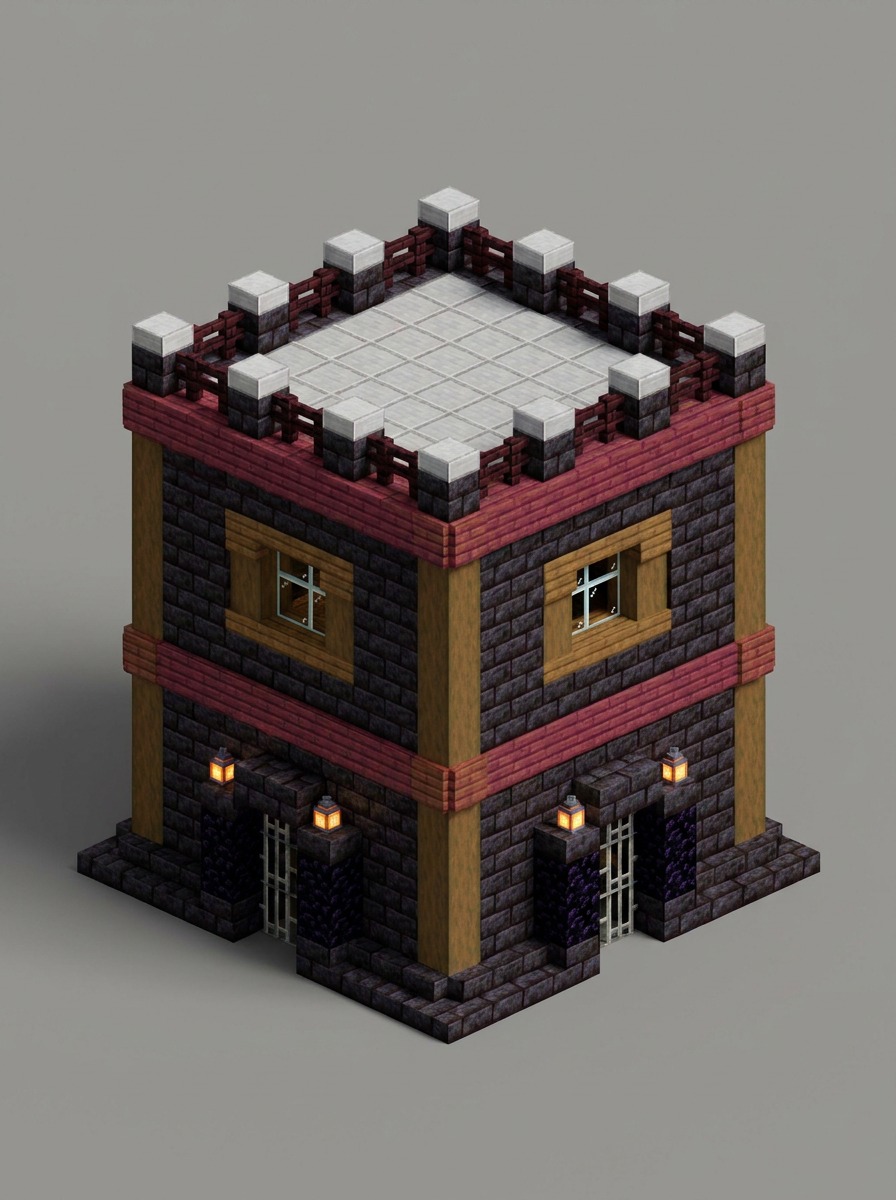
17. Nether brick fortress house. Repurposing Nether brick for an aboveground build gives an aggressive, fortress-like read that stone alone doesn’t achieve.
Materials: nether brick, red nether brick, nether brick fence, glass pane, lantern.
Build: Build heavy nether brick walls with red nether brick banding at floor lines; top with a nether brick fence parapet; light entrances with lanterns for contrast against the dark palette.
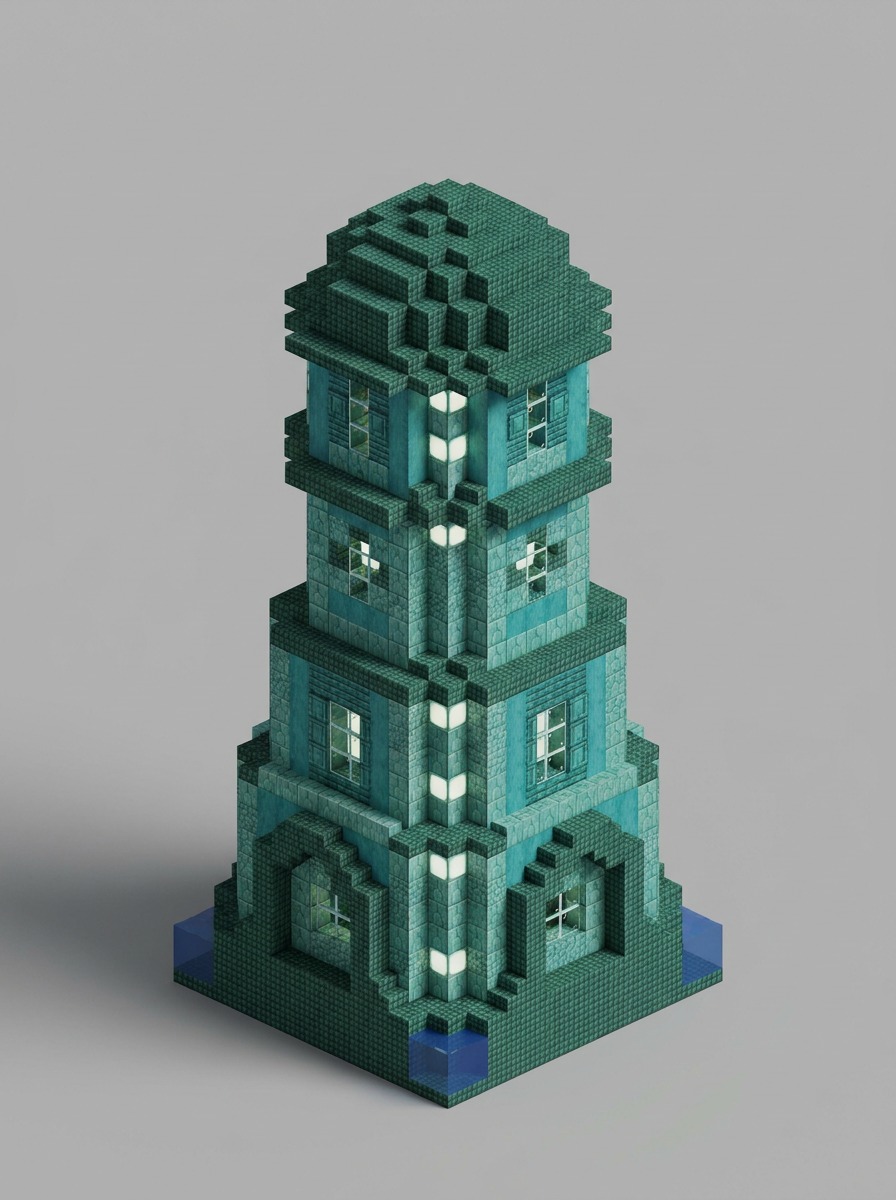
18. Prismarine sea tower. Prismarine’s subtle glow and blue-green tone make this the natural choice for a coastal or underwater-adjacent build. Keep sea lanterns sparse and evenly spaced rather than clustered; too many at once flattens the ambient glow effect that makes this material combination distinctive in the first place.
Materials: prismarine, prismarine bricks, dark prismarine, sea lantern, glass.
Build: Build a round or square tower in mixed prismarine variants; embed sea lanterns at intervals for ambient glow; cap with a dark prismarine dome or stepped roof.
Nature-integrated builds
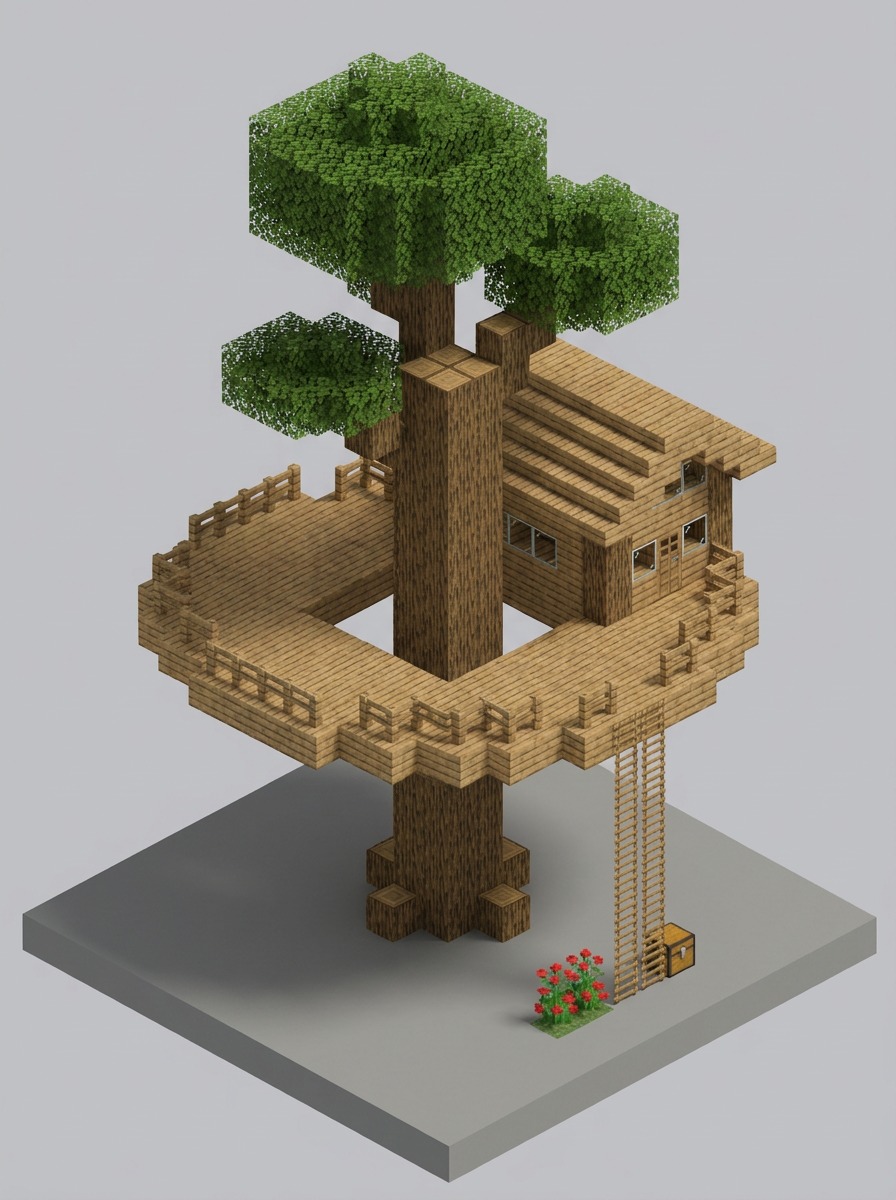
19. Oak canopy treehouse. Building around the trunk rather than floating a platform beside it keeps the structure feeling grown-in rather than bolted-on. Let the trunk interrupt your floor and wall lines instead of building around it in a perfect circle; that irregularity is what sells the “built into” read over “built next to.”
Materials: oak planks, oak log, oak fence, oak trapdoor, ladder or oak stairs.
Build: Build a platform ring around an existing large tree trunk; frame walls in oak planks with fence railings at open edges; add a ladder or stair access from the ground.
20. Waterfall cliffside base. Carving into a cliff face behind a waterfall hides most of the structure and gives a strong, cinematic entrance.
Materials: stone, cobblestone, stone brick, glass pane, moss block (blending).
Build: Carve a room into a cliff face behind or beside a natural or built waterfall; frame the entrance in stone brick; blend the exterior edges with moss blocks so the cut looks natural.
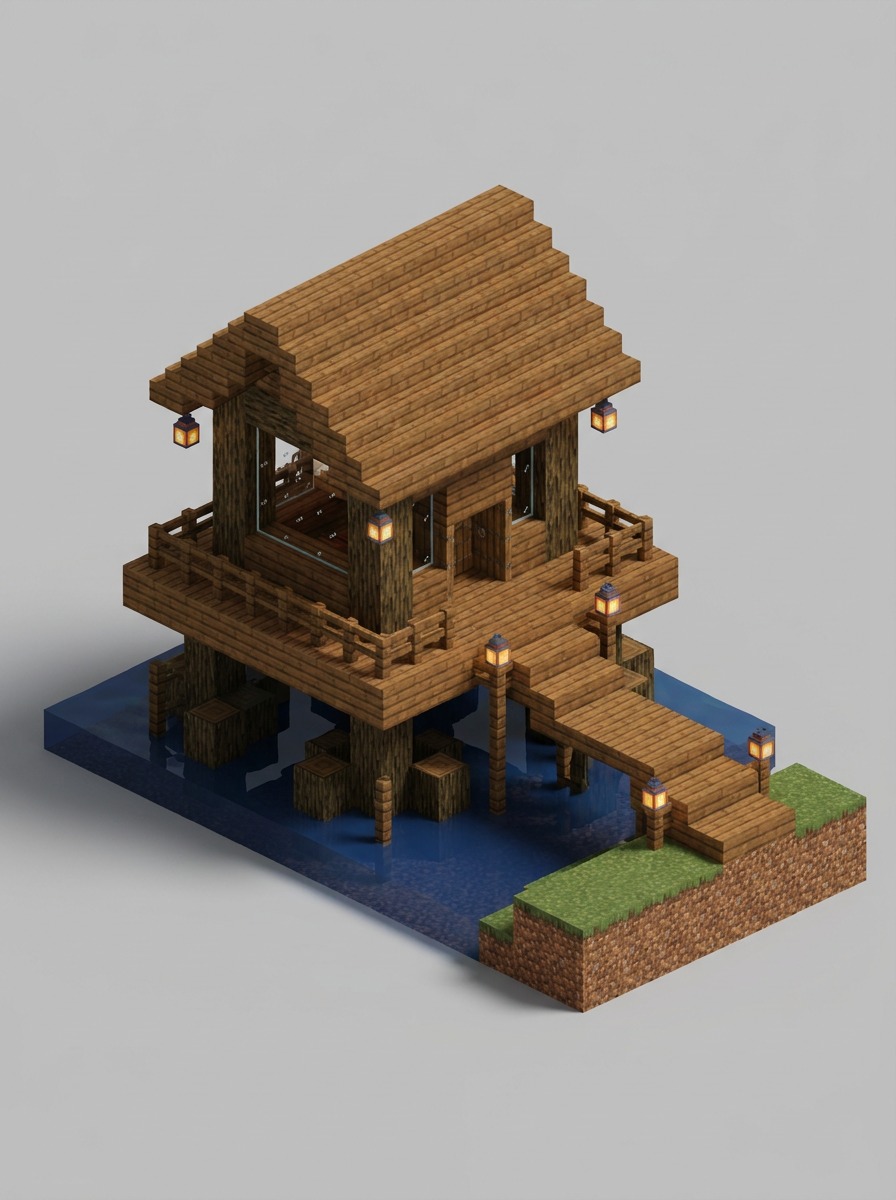
21. Mangrove swamp stilt house. Raising the structure on mangrove root stilts solves the swamp biome’s messy terrain instead of fighting it.
Materials: mangrove log, mangrove planks, mangrove roots, glass pane, lantern.
Build: Place mangrove root or log stilts above the water or mud line; build a mangrove plank platform and walls on top; add a simple plank walkway back to dry land.
22. Mountain cave entrance base. A built facade set into a natural cave mouth gives you a fortified, naturally camouflaged home with minimal new construction. The facade is the entire design statement in this build, since everything behind it disappears into raw stone, so treat the entrance frame with the same care you’d give a full building’s front elevation.
Materials: stone bricks, cobblestone, oak planks (door framing), glass pane, lantern.
Build: Find or carve a cave entrance on a mountainside; frame the opening with a stone brick facade and a plank door frame; light the interior entrance with lanterns for a welcoming glow against the stone.
DESIGN TIP: Count your distinct block types before adding more detail. Past four or five without a clear pattern, you’re adding noise, not design.
FAQ
What’s the easiest Minecraft house to build for beginners?
The cobblestone starter base or the oak log cabin, both use single, easy-to-gather material types and simple rectangular footprints, so there’s no complex roofline or block-mixing to plan out before you start.
How do I make a small Minecraft house look less plain?
Focus on roofline and material contrast before adding size. A confident pitched roof and one accent material, exposed log framing, a stone brick trim line, does more for a small house’s look than doubling its footprint.
What materials work best for a modern-style Minecraft house?
Quartz, white or black concrete, blackstone, and deepslate all give clean, low-texture surfaces that read as modern. Pair one of these with large glass sections and a flat or barely-pitched roof for the strongest result.
Can these house designs work in both Survival and Creative mode?
Yes. Every material listed is obtainable through normal Survival gameplay, mining, farming, or trading, so none of these builds require Creative-mode inventory access, though Creative naturally makes gathering materials faster.
How many blocks of one type should I use before it looks repetitive?
There’s no fixed number, but breaking up a large flat wall with a trim line, a window pattern, or a texture variant roughly every 4 to 6 blocks usually prevents the flat, repetitive look large single-material walls can fall into, especially with concrete, quartz, or planks.
Do bigger Minecraft houses automatically look better than small ones?
No. Size increases the cost of proportion mistakes rather than fixing them; a poorly proportioned large house just has more surface area for the imbalance to show. A well-proportioned small house with a confident roofline usually reads better than a large one built without a plan.
Final thoughts
The difference between a forgettable Minecraft house and a genuinely good one usually comes down to the same three things covered at the start of this list: a committed roofline, a restrained material palette, and proportions that make sense before any decoration goes on. Pick any build above and you can scale it up, mix in a different wood type, or adjust the roof pitch, and it’ll still hold together as long as those three principles stay intact.
Try applying the same evaluation to a build you already have in your world before starting something new. Count the distinct block types on the exterior, check whether the roof commits to one pitch and style, and eyeball the height-to-width ratio of the main volume. Most existing builds that feel “almost right” turn out to be one of these three things away from actually working.
If pixel-scale design is more your interest than full 3D builds, pixel art ideas covers a related approach to composing within a blocky grid. And if you want to take one of these builds beyond the game entirely, my guide to 3D printing Minecraft projects walks through turning a build into a physical model.
- 779shares
- Facebook0
- Pinterest779
- Twitter0
- Reddit0