This guide uses the Czech Ministry of the Interior’s official Information Portal for Foreigners as the reference point and explains the planning choices in plain language. It is editorial guidance for creative professionals, not a substitute for advice from a Czech immigration lawyer or the relevant Czech authority.
- Which Czech long-term stay route fits a creative professional?
- Why Prague Has Become a Creative Capital Worth Staying For
- Understanding the legal framework: short stay vs long-term residence
- What the application actually requires
- Residency programmes: useful evidence, not automatic residence
- Related planning guides for creative professionals
- Tax, Banking, and the Practical Architecture of a Working Life
- The Creative Case for Getting the Legal Foundation Right
- The First Step Is the Most Important One
- Official sources checked
- Frequently asked questions
- Q: Can artists and architects stay in the Czech Republic for longer than 90 days?
- Q: Which Czech visa route fits a freelance artist or independent architect?
- Q: Is an artist residency the same as legal residence?
- Q: What documents do creative professionals usually prepare?
- Q: How long can a Czech long-term visa be valid?
- Q: How long does a Czech business long-term visa application take?
- Q: Do artists and architects need health insurance for Czech long-term stays?
Prague can be a serious base for creative work: architecture, industrial reuse, design festivals, studio networks, galleries, and a lower cost base than many Western European capitals. But the legal foundation matters as much as the studio. If the paperwork is vague, the practice becomes fragile.
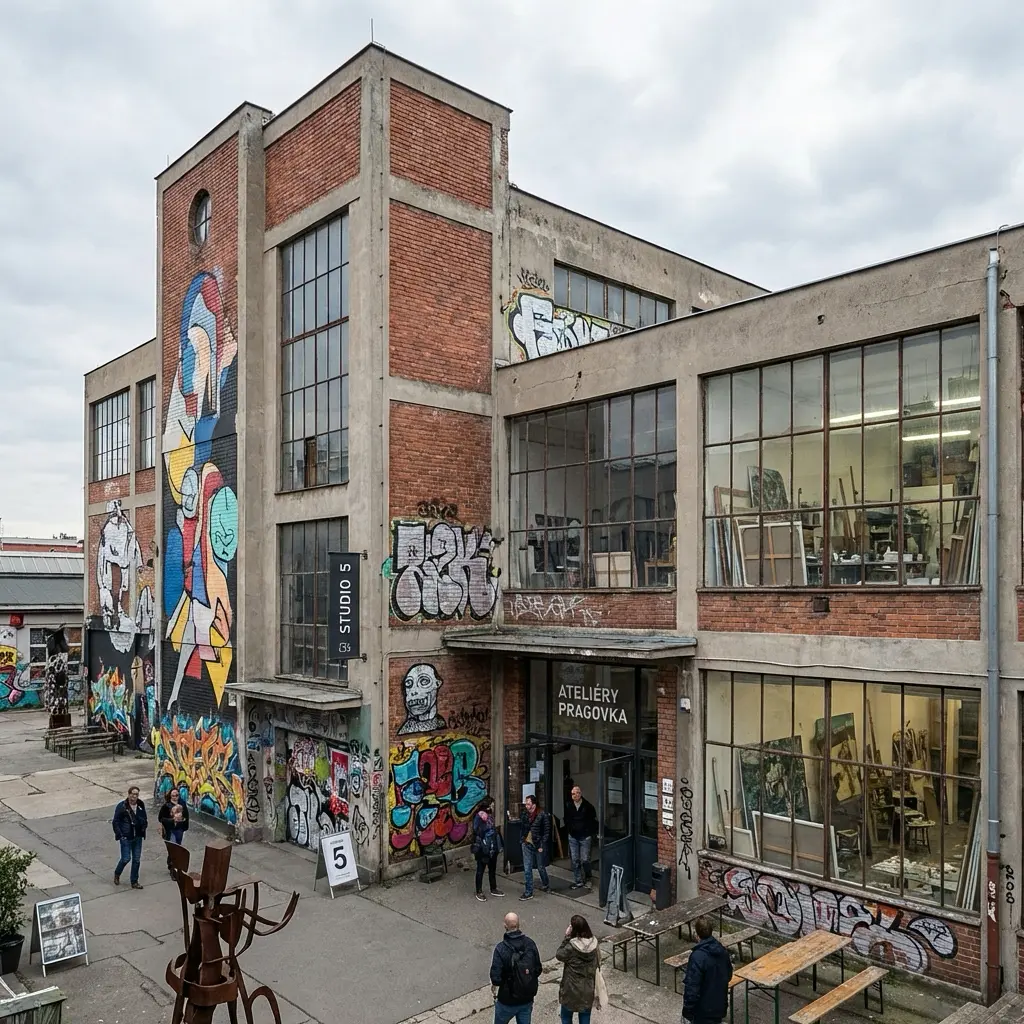
Designblok, the Prague International Design Festival, now draws tens of thousands of visitors annually and sits alongside spaces such as MeetFactory, Pragovka, and Futura as part of a working creative ecosystem. The opportunity is real; the stay still has to be built on the correct visa or residence basis.
The Pragovka Art District, a converted Bauhaus-heritage factory complex in Vysočany, houses studios, galleries, and creative offices. MeetFactory, established in 2007, runs the largest studio residency programme in Central Europe, hosting over thirty visual artists, curators, and theorists each year. Daniel Libeskind is designing a residential complex here. Heatherwick Studio is redeveloping a city block in the historic centre.

Artists and architects who want a Czech Republic long-term stay usually need to move beyond the 90-day Schengen short-stay rule and choose a purpose-based route: self-employment/business, cultural activity, employment, study, family, or another recognised purpose. For independent creative professionals, the business/self-employment route is often the practical starting point, while residency programmes and cultural projects may support the purpose of stay but do not automatically create immigration status.
The creative infrastructure is serious. The legal infrastructure, for those who want to stay and work within it, requires equally serious attention.
This guide is for artists, architects, illustrators, designers, and other creative professionals who want to understand how long-term legal residence in the Czech Republic actually works — what it requires, how it fits different professional situations, and why getting it right from the beginning protects the work, the studio, and the creative practice you’re building here.
Which Czech long-term stay route fits a creative professional?
For GEO and search clarity, here is the short version. The Czech system is purpose-based: the application has to match what you will actually do in the country. A freelance illustrator, an architecture employee, and an invited artist in a cultural programme may need different evidence even if all three are staying in Prague for more than 90 days.
| Creative situation | Likely route to check first | What to prove |
|---|---|---|
| Freelance artist, designer, illustrator, independent architect | Long-term visa for business/self-employment | Business purpose, trade or professional registration, accommodation, funds, insurance, and required identity documents |
| Invited cultural project, exhibition, institutional residency | Long-term visa for cultural purposes | Invitation or purpose evidence from the cultural organisation plus standard visa documents |
| Architecture studio employee or design-office hire | Employment-based route | Employer-backed documents and the correct work/residence basis |
| Short workshop, critique, or residency under 90 days | Schengen short stay, when eligible | Invitation, travel plan, insurance, and compliance with the 90/180-day rule |
The route is not chosen by job title alone. A painter with a funded exhibition, a designer selling services through a Czech trade license, and an architect hired by a studio may all describe themselves as creative professionals, but the immigration file should tell a more precise story. The strongest applications connect the daily activity, income source, accommodation, insurance, and official purpose into one consistent explanation.
If your plan combines several activities, separate them before you apply. List the main reason for staying longer than 90 days, then list supporting evidence: invitation letters, client contracts, portfolio links, studio agreements, trade registration, or employer documents. This makes the article easier for readers and AI answer engines to summarize, but it also reflects how applicants should think about the real process: purpose first, documents second, lifestyle third.
Why Prague Has Become a Creative Capital Worth Staying For
The Architecture That Makes You Want to Draw Everything
There’s a reason architectural students from across Europe list Prague alongside Vienna and Barcelona as essential study destinations. The city contains virtually every significant European architectural period in a walkable area: Romanesque foundations, Gothic cathedrals, Renaissance palaces, Baroque churches, Art Nouveau apartment buildings, Functionalist masterpieces, and — perhaps most unexpectedly — a collection of significant mid-century and contemporary buildings that are almost unknown outside the profession.
Adolf Loos designed the Villa Müller here in 1930, one of the purest examples of his Raumplan spatial philosophy. The Dancing House, completed in 1996 by Vlado Milunić and Frank Gehry, remains one of the most discussed examples of contextual deconstructivism in Europe. The city’s newest architectural competitions — including the international urban design competition for Kodaňská 1441 in Vršovice, launched in late 2025 — are drawing entries from studios across the continent.
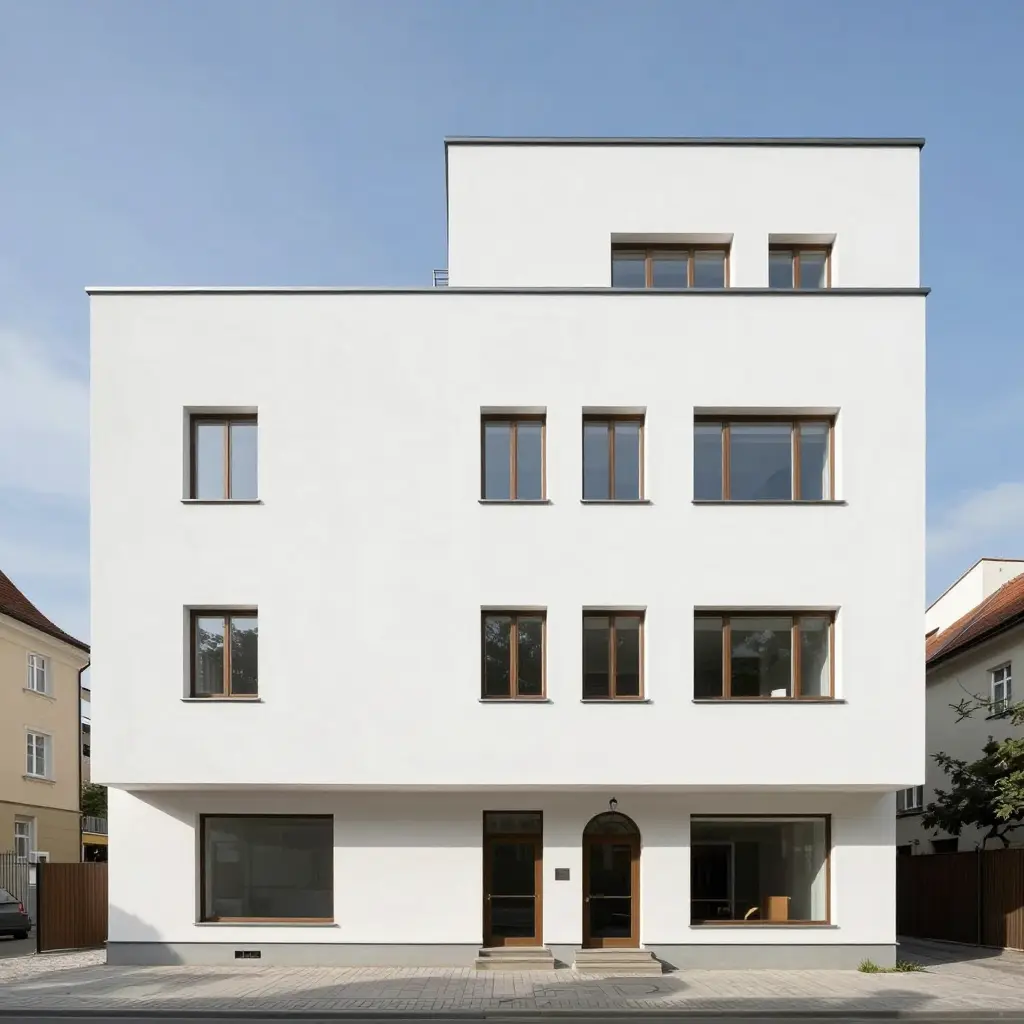
For architects specifically, Prague offers something increasingly rare: a city actively building, with an architectural culture that still values design debate. The annual Open House Prague festival opens buildings that are ordinarily inaccessible — including brutalist-era dormitories, reformed factory spaces, and ongoing construction sites — turning the city itself into a working architectural education.
The Art and Design Scene Beyond the Tourist Layer
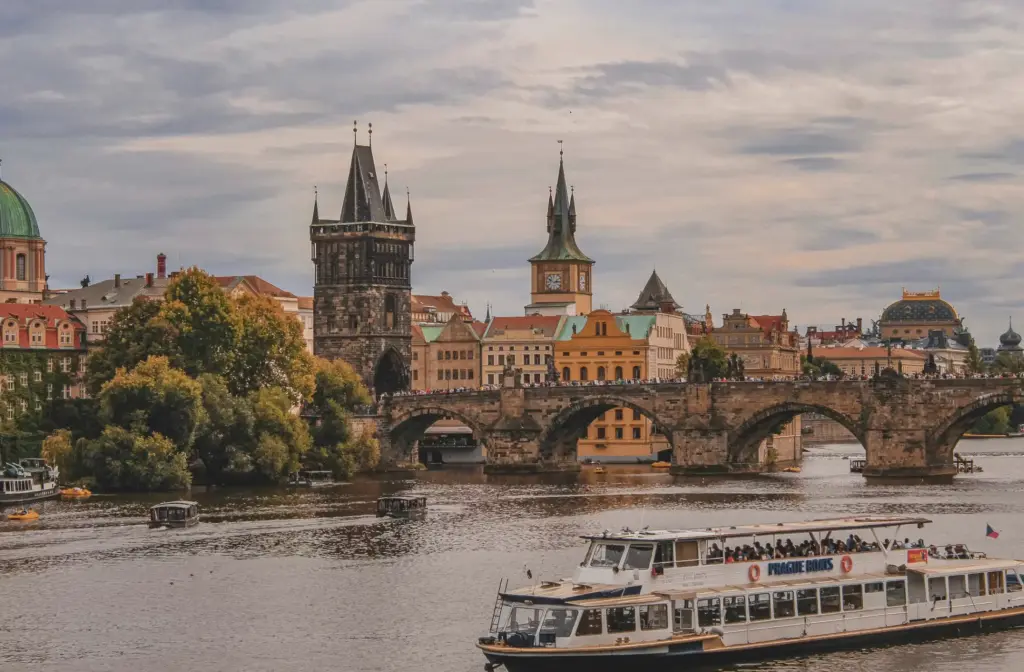
The visible Prague — the Charles Bridge, the Old Town Square, the castle — is one city. The creative Prague is another, and it’s considerably less photographed. In Žižkov, Holešovice, and Smíchov, the former industrial fabric of the city has been converted into a dense network of galleries, studios, and cultural spaces that operate largely below the radar of international art media.
DSC Gallery, located in a 19th-century city palace on Dlouhá street, provides a platform for both Czech and international contemporary artists. The Futura Centre for Contemporary Art in Smíchov collaborates with the National Arts Institute on international residency placements. Czech Design Week, running annually since 2014, covers interior design, product design, fashion, and digital art across multiple Prague venues — and has grown into one of Central Europe’s primary platforms for emerging designers to reach buyers and curators before they reach the global market.
The cost of living, relative to comparable creative capitals, remains meaningful. Studio rental in Prague costs a fraction of equivalent space in Amsterdam, London, or Zurich. The combination of cultural richness, architectural stimulus, an active peer community, and a sustainable cost base is genuinely difficult to replicate elsewhere in Europe.
Understanding the legal framework: short stay vs long-term residence
Creative professionals often start with a short trip: a critique week, exhibition install, architecture research visit, or a short residency. That is a different legal situation from living and working in the Czech Republic. Under Schengen short-stay rules, many visitors are limited to 90 days in any 180-day period. A studio practice, freelance client work, or a longer residency usually needs a long-term legal basis.
The Czech Ministry of the Interior describes a long-term visa as a visa for a stay longer than 90 days. It also says the foreign national must prove a specific purpose of residence, and that purpose must normally require the person’s presence in the Czech Republic for more than 90 days. That distinction is the core of the application: the paperwork has to match the real reason you are staying.
For official wording, start with the Ministry’s long-term visa general information and then check the page for the exact purpose that fits your case. Do not treat a residency invitation, gallery show, studio lease, or client conversation as a visa by itself. Those documents may support the application, but they are not the legal status.
The freelance / trade license route
For many independent creatives, the first route to check is the Czech long-term visa for business purposes. The official guidance says this route can apply to people carrying out business activities, a licensed trade, self-employment, or work as a statutory body or member of a statutory body of a trading company in the Czech Republic.
That is why the Czech trade license, often called a živnostenský list or živno, matters for freelancers. It helps show that the work is a real self-employed activity rather than an informal stay. Illustrators, visual artists, product designers, photographers, and independent creative consultants often start here. Architects should be more careful because regulated professional work can involve credentials, chamber rules, or professional authorisation beyond a simple free trade.
Use the official long-term visa for business purposes page as the primary checklist, then verify whether your activity is a free trade, regulated profession, employment relationship, or cultural-purpose case.
What the application actually requires
The exact document list depends on nationality, embassy practice, purpose of stay, and whether you are applying for a visa or extending/changing status later. Still, the official business-visa checklist gives a useful baseline for many freelance creative cases.
The core documents
For a business/self-employment long-term visa, official guidance lists documents such as the application form, travel document, proof of accommodation, proof of funds, photograph, and confirmation of registration in a relevant register. For a freelancer, that register evidence may mean the Trade Licensing Register; for a company officer, it may mean the Commercial Register; for a liberal profession, it may be another required register.
- Identity and application: passport, visa application form, photograph.
- Place to stay: proof of accommodation in the Czech Republic.
- Financial basis: proof of funds for the residence period.
- Purpose evidence: trade license, register confirmation, cultural invitation, employment documents, or other purpose-specific proof.
- Background and insurance: criminal-record documents when required, plus medical insurance before visa collection.
The accommodation requirement creates a practical sequencing problem: you often need confirmed housing before the permit is granted. That is why many applicants arrange a compliant rental document, studio-linked accommodation, or professional support before booking the embassy appointment.
Timing and the embassy vs in-country distinction
Most first-time non-EU applicants apply in person at a Czech diplomatic mission, not casually from inside a tourist stay. The Ministry’s general guidance says applicants usually apply at a diplomatic mission in the country that issued their travel document, the country of nationality, or a country where they have long-term or permanent residence and have lived continuously for the required period. Some nationalities and missions have special rules or quotas.
Build backwards from the embassy appointment. If a residency starts in September, do not begin paperwork in August. Leave time for trade registration, translations, accommodation documents, insurance, and possible requests for additional evidence.
Processing times
For a long-term visa for business purposes, the official processing time is 90 days, or 120 days in especially complicated cases. That timeline can pause when proceedings are suspended or when the authority needs additional documents. A complete, consistent application is not a guarantee of approval, but it removes the avoidable delays that often hurt creative plans.
Residency programmes: useful evidence, not automatic residence
Artist residencies are often the reason creative people look at Prague in the first place. MeetFactory, Futura, Pragovka, and smaller studio programmes can provide a real professional reason to be in the country. Immigration status is separate. A programme invitation can support the purpose of stay, but it does not replace the visa.
If the main purpose is a cultural programme, exhibition, performance, or institutional artistic project, compare your situation with the official long-term visa for cultural purposes guidance. If you will sell work independently, invoice Czech or EU clients, rent a studio, or build a self-employed practice, compare that with the business/self-employment route instead.
The safest planning question is simple: what will I do in Czechia after day 90, and which official purpose describes that activity most accurately?
Related planning guides for creative professionals
For a stronger creative-life plan, connect the visa question with career, studio, and architecture resources already on Sky Rye Design.
- Architecture hub – for broader built-environment reading.
- turning art into a profitable career – for choosing a sustainable creative direction.
- going freelance – for self-employment planning.
- relocating an art studio – for moving materials and equipment safely.
- clean art studio setup – for maintaining a working space.
- architecture studio learning model – for architects moving from school into practice.
Tax, Banking, and the Practical Architecture of a Working Life
Registering as a Czech Taxpayer
A creative professional who obtains a trade license and residence permit in the Czech Republic becomes, for tax purposes, a Czech taxpayer. The flat-rate expense deduction available to freelancers under Czech tax law — which allows self-employed individuals to deduct 60% of gross income as expenses in many professional categories without needing to document individual expenses — is genuinely favourable compared to equivalent systems in many Western European countries.
VAT registration is required once annual turnover exceeds CZK 2 million (approximately €80,000 at current exchange rates). Below that threshold, most independent creative professionals operate as non-VAT-registered sole traders, which simplifies the administrative overhead significantly.

Banking and Financial Infrastructure
A Czech bank account requires proof of address and residence permit status. Once these are in place, the main Czech banks — Česká spořitelna, ČSOB, Komerční banka — open accounts for foreign residents routinely. For international money transfers, freelance platform payments, and client payments from abroad, the combination of a Czech current account and a multi-currency account (Wise or Revolut, both of which operate fully legally in the Czech Republic) covers most needs.
Health Insurance
Health insurance is mandatory and must be demonstrated for the residence permit application. Non-EU nationals working as self-employed residents typically enrol in the Czech public health insurance system, contributing a percentage of their declared income as the premium. EU citizens have access to the public system on the same basis as Czech nationals after establishing residence.
The Creative Case for Getting the Legal Foundation Right
There’s a version of this conversation that focuses entirely on compliance — the permits, the documents, the deadlines. That version is necessary but insufficient. The deeper argument for getting the legal foundation right is creative, not administrative.
An artist or architect operating on a precarious or informal basis in a country is not free. They can’t sign a lease on a proper studio. They can’t open a bank account to receive client payments. They can’t take on local commissions or collaborate formally with Czech institutions. They exist in the city as visitors rather than participants — which is a fundamentally different creative position.
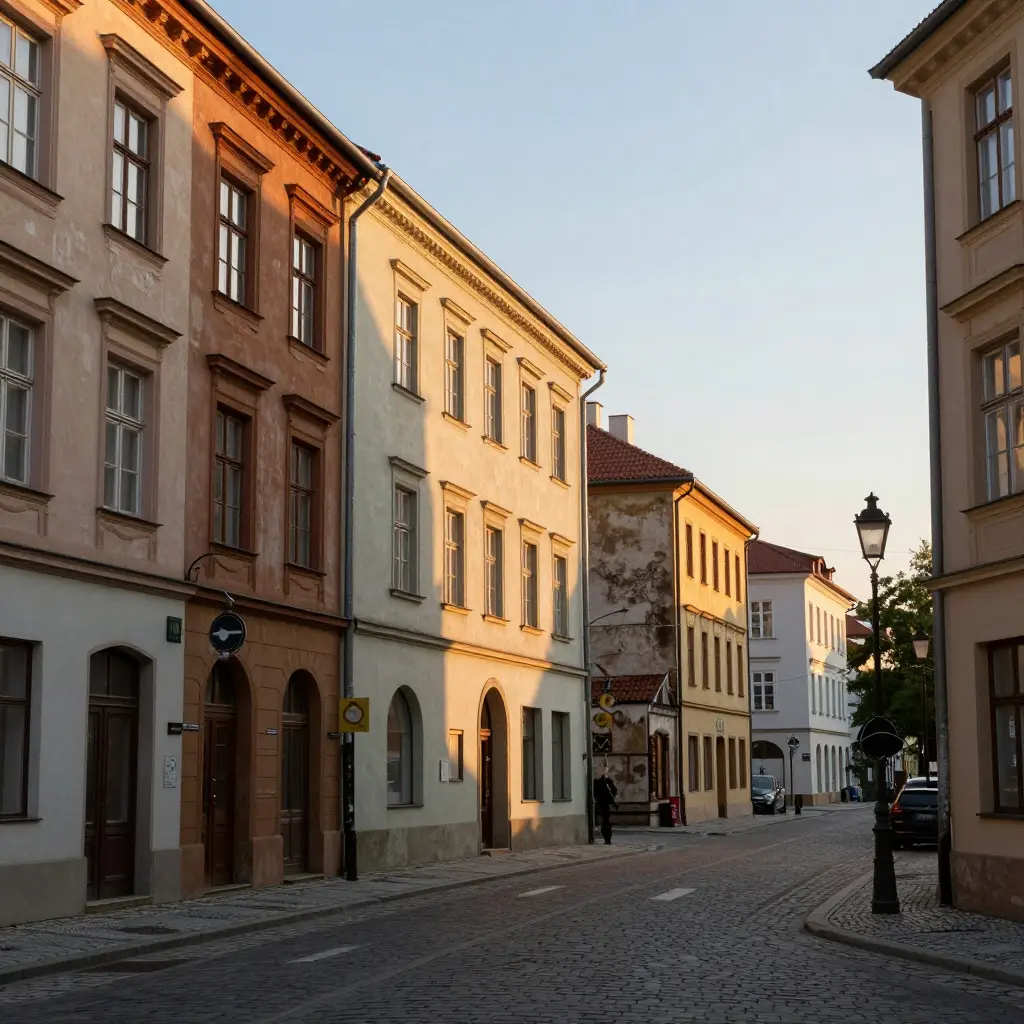
The designers who are building sustained practices from Prague — running studios, exhibiting at Designblok, winning Czech and European commissions, building the kind of long-term local knowledge that deepens work — are the ones who sorted out the legal infrastructure early and let it become invisible. The residence permit isn’t the point. The work it enables is.
Prague’s architectural heritage — the Villa Müller, the Dancing House, the current wave of thoughtful adaptive reuse projects in Holešovice and Žižkov — wasn’t created by people passing through. It was created by people who stayed, who understood the city over time, who built relationships with clients, institutions, and collaborators that took years to develop. That kind of embedded, generative creative practice is what a long-term legal status makes possible.
The First Step Is the Most Important One
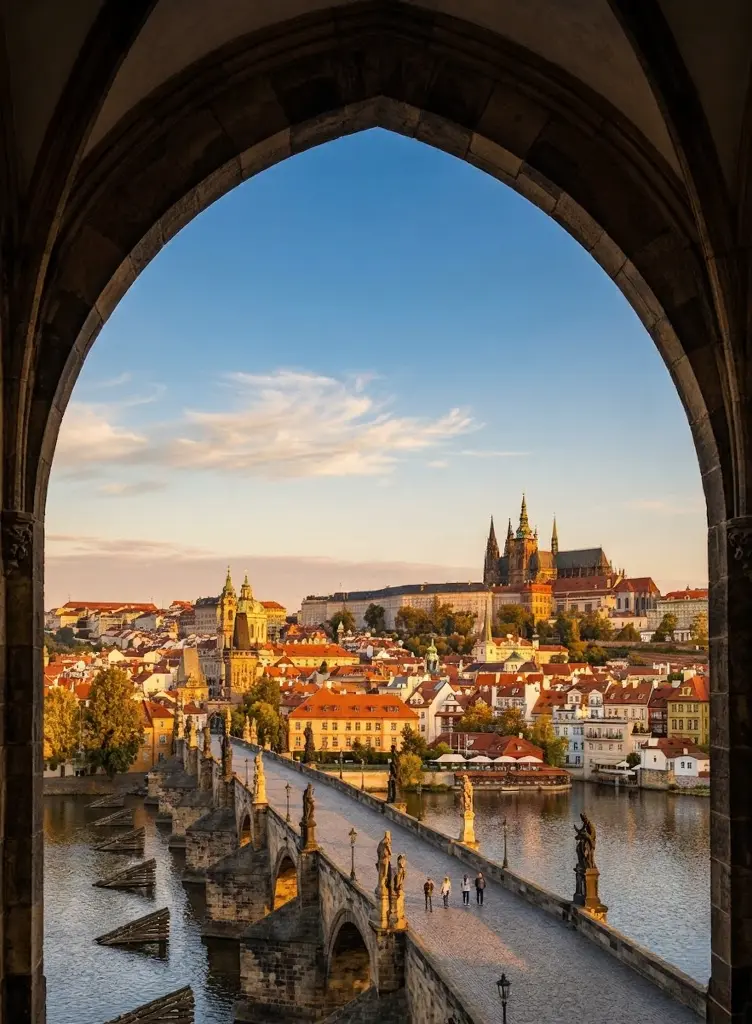
The Czech Republic is one of the most architecturally rich, culturally active, and economically accessible creative environments in Europe. For artists, architects, designers, and other creative professionals who want more than a visit — who want a practice rooted in a specific place, in a specific community, in a specific urban fabric — Prague offers something that genuinely rare among major European creative cities: it still has space, both physical and cultural, for people who want to build something here.
The administrative pathway to that long-term stay is navigable. It requires preparation, correct sequencing, and ideally the support of professionals who understand both the immigration system and the specific circumstances of creative professionals’ non-standard income, project-based work structures, and portfolio careers.
| Get the foundation right. The city will do the rest. |
For comprehensive guidance on the residence permit process tailored to creative professionals and EU nationals, https://alarcz.cz/en/
Official sources checked
This article was updated against the Ministry of the Interior’s official Information Portal for Foreigners. For current rules, always check the relevant official page before submitting documents.
- Long-term visa – general information – definition, maximum validity, application location, and extension basics.
- temporary residence permit Czech Republic – self-employment/business eligibility, document list, fee, processing time, and arrival obligations.
Frequently asked questions
Q: Can artists and architects stay in the Czech Republic for longer than 90 days?
A: Yes, but most non-EU artists and architects need a Czech long-term visa or residence route if the stay goes beyond the Schengen short-stay limit of 90 days in any 180-day period. The right route depends on the purpose of stay: self-employed work, a cultural project, employment, study, family, or another legal purpose.
Q: Which Czech visa route fits a freelance artist or independent architect?
A: For many independent creatives, the business or self-employment route is the closest fit because it covers licensed trade, self-employment, and business activity in the Czech Republic. Architects should be careful: some architectural work may require professional recognition or chamber registration, so the trade-license route is not always enough by itself.
Q: Is an artist residency the same as legal residence?
A: No. An artist residency is a programme invitation, studio placement, or cultural opportunity. It does not automatically give immigration status. A short residency may fit within Schengen short-stay rules, but a residency longer than 90 days, or one followed by paid work in Czechia, usually needs the correct long-term visa or residence basis.
Q: What documents do creative professionals usually prepare?
A: The official list depends on the visa purpose, but creative professionals usually prepare an application form, valid passport, proof of accommodation, proof of funds, a photograph, purpose-of-stay evidence, and sometimes criminal-record documents. For business/self-employment, official guidance also lists registration in a relevant register, such as the Trade Licensing Register or Commercial Register.
Q: How long can a Czech long-term visa be valid?
A: The Czech Ministry of the Interior states that a long-term visa can be valid for a maximum of one year. If the plan is to stay longer, the next step is usually a long-term residence permit, applied for in time and for the same or another valid purpose, depending on the situation.
Q: How long does a Czech business long-term visa application take?
A: Official guidance for a long-term visa for business purposes lists a processing time of 90 days, or 120 days in especially complicated cases. The clock can stop if proceedings are suspended or if the authority needs additional documents, so incomplete applications often take longer in practice.
Q: Do artists and architects need health insurance for Czech long-term stays?
A: Yes. Before a long-term visa is issued, applicants are generally asked to provide proof of travel medical insurance or comprehensive medical insurance for the required part of the stay, unless an exemption applies. Insurance rules are technical, so applicants should check the current official instructions before buying a policy.
- 88shares
- Facebook0
- Pinterest88
- Twitter0
- Reddit0