I’ve been drawing animals since I was seven—badly at first, obsessively always. So when I finally decided to get my first tattoo in my late twenties, I knew it would be an animal. What I didn’t know was how much the style would matter.
- Why Geometric Works So Well for Animal Tattoos
- The Building Blocks: How Geometric Animal Designs Are Constructed
- Ten Animal Tattoo Designs That Work Best in Geometric Style
- 1. Wolf — Loyalty, Pack, and Instinct
- 2. Lion — Authority, Courage, Identity
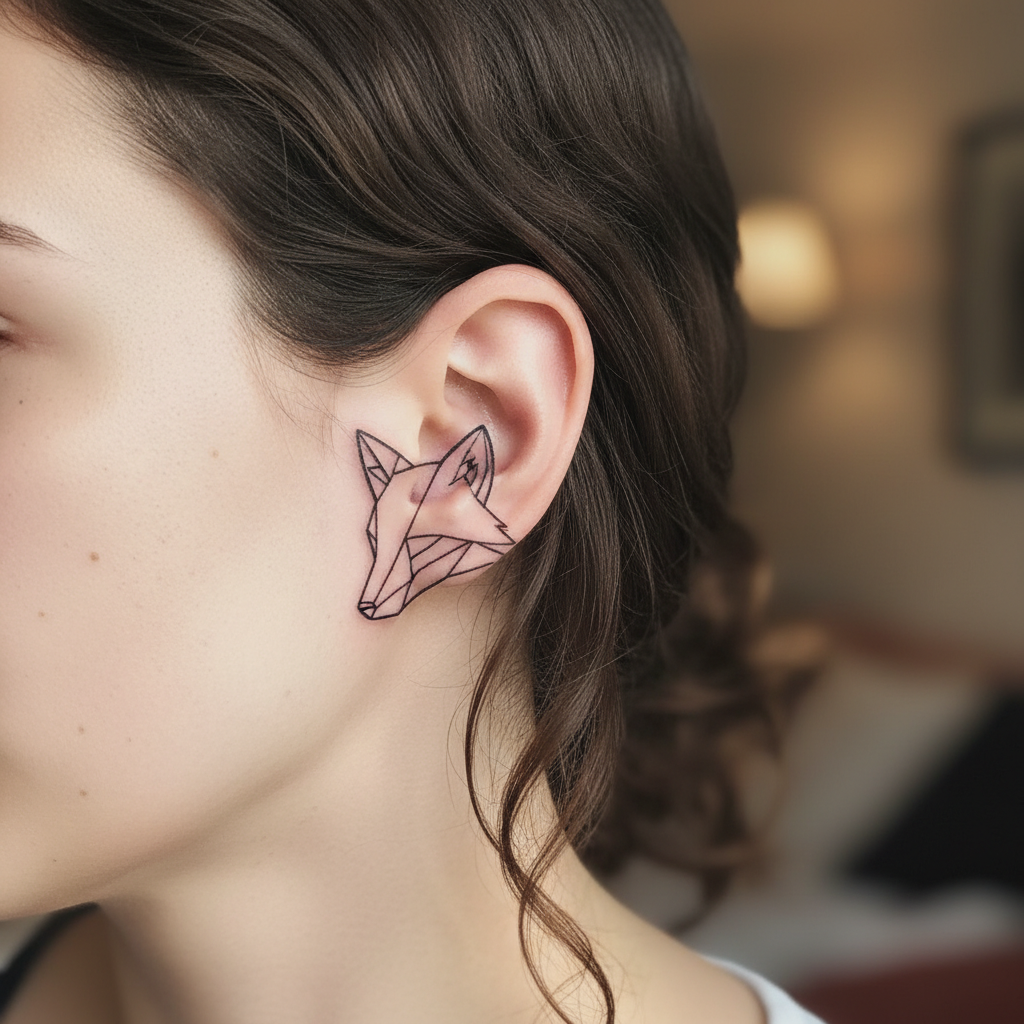
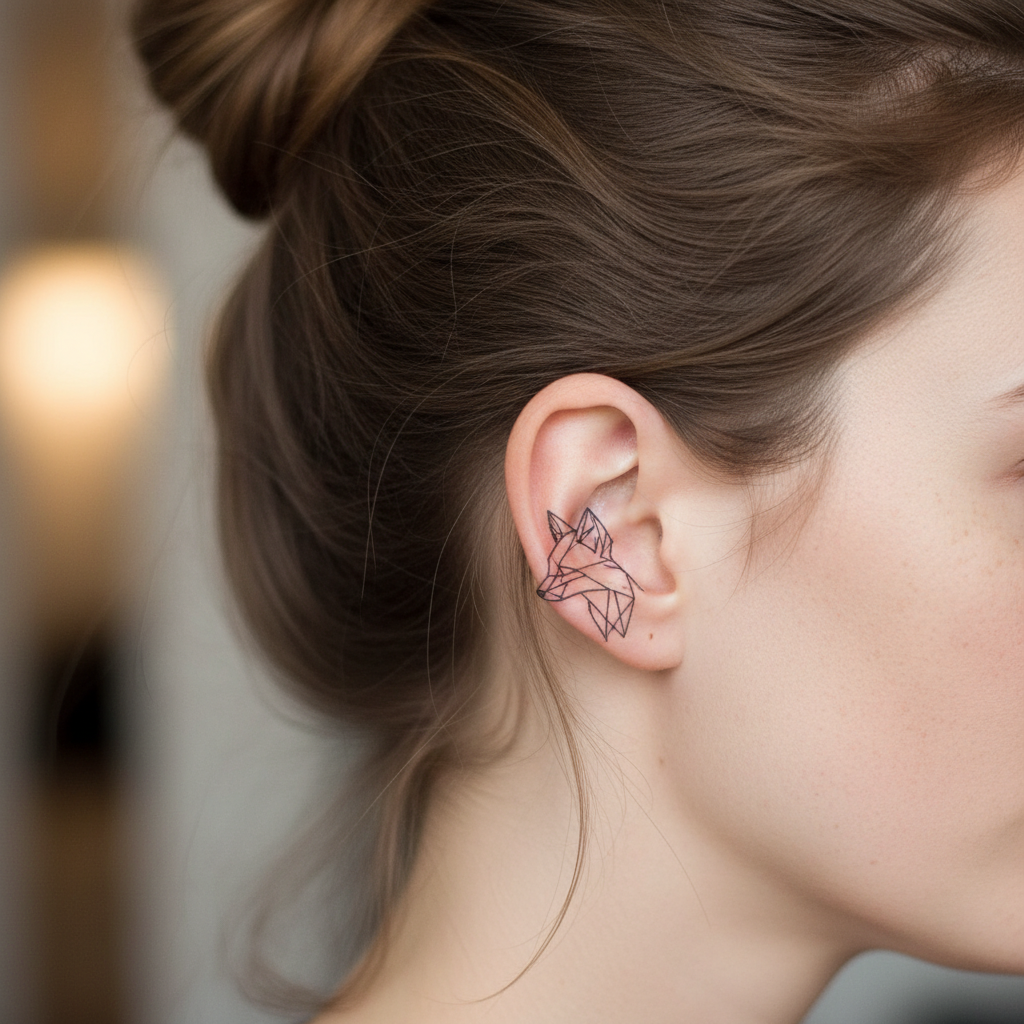
- 3. Fox — Intelligence and Adaptability
- 4. Owl — Wisdom, Night Vision, Mystery
- 5. Bear — Groundedness, Protection, Inner Strength
- 6. Eagle — Freedom, Vision, Ambition
- 7. Snake — Transformation, Duality, Renewal
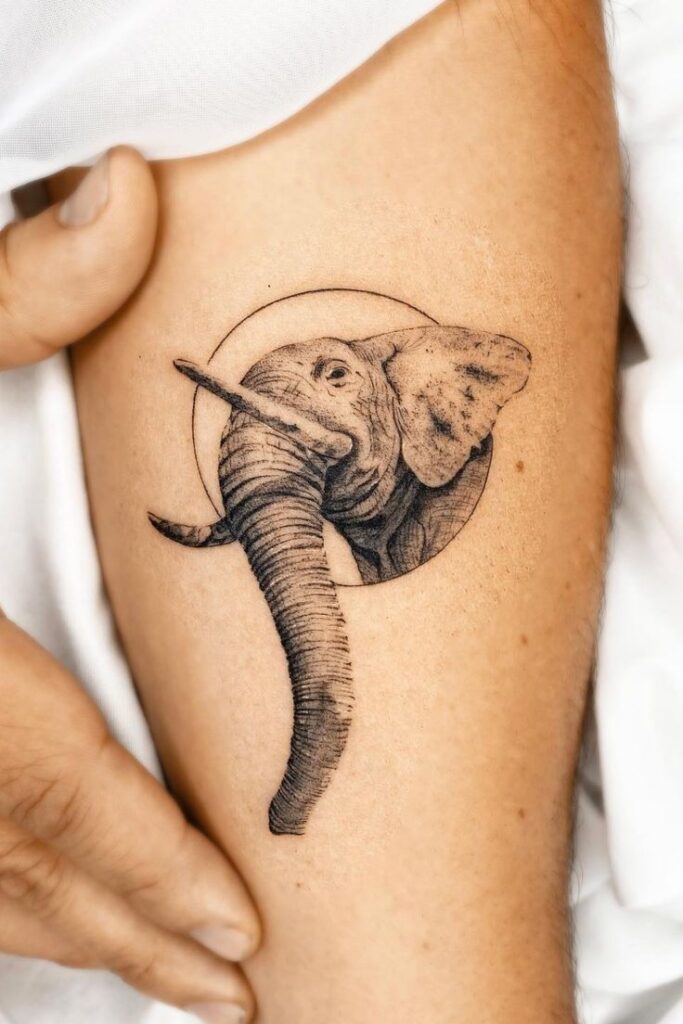
- 8. Elephant — Memory, Family, Ancient Wisdom
- 9. Deer / Stag — Grace, Intuition, Connection to Nature
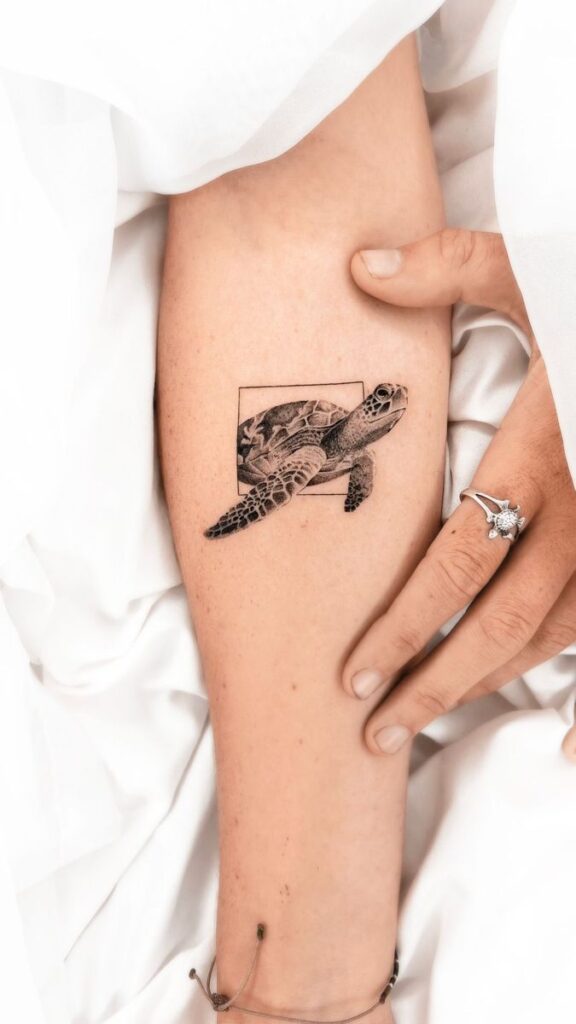
- 10. Sea Turtle — Longevity, Navigation, Ancient Calm
- Placement Guide: Matching Animal to Body
- Finding the Right Artist: What to Look for in a Portfolio
- Aftercare for Geometric Tattoos: Protecting the Lines
- Frequently Asked Questions
I sat across from the artist with a sketchbook full of reference images—realistic lion heads, Japanese-style wolves, new-school foxes—and none of them felt right. Then she showed me a geometric wolf she’d done the previous week: clean triangles, deliberate negative space, the animal’s essence stripped back to structure and line. I booked the appointment the same afternoon.
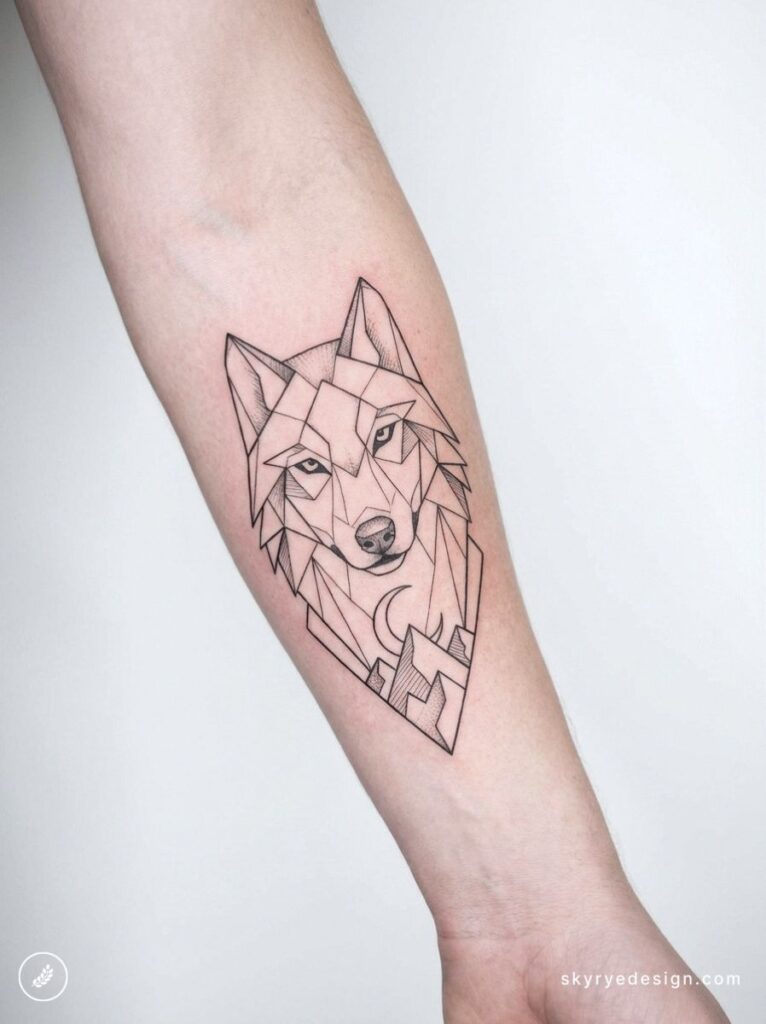
That experience is what this guide is built on. Not a list of ‘cool tattoo ideas‘ scraped from Pinterest—but a genuine breakdown of why geometric animal tattoos work, which animals suit the style best, what each design actually symbolises, and how to find the artist who’ll execute it properly. The primary keyword is animal tattoo, but the real subject is intention: understanding what you’re choosing before it’s on your skin for life.
Why Geometric Works So Well for Animal Tattoos
The obvious answer is that geometric designs look striking. Triangles catching the light on a forearm, clean linework holding its edge decades later—the aesthetic is undeniably strong. But the reason geometric animal tattoos have staying power goes deeper than visual appeal.
Representational animal tattoos—photorealistic portraits, detailed fur textures, full-colour wildlife scenes—are technically impressive, but they age in two ways. The detail fades as ink spreads under skin over years, and the hyper-realistic style can date to a specific era of tattooing. Geometric designs don’t have this problem. They’re built from mathematical structures that don’t depend on fine photographic detail. A set of clean triangles forming a wolf’s muzzle holds its form at age 35 the same way it does at age 55.
There’s also a conceptual dimension that I think gets underplayed. Geometric tattooing forces distillation—you can’t include everything, so you include only what’s essential. A geometric lion isn’t a portrait of a lion; it’s a visual argument about what a lion fundamentally is. That reduction, done well, creates designs that carry symbolic weight in a way that representational work sometimes doesn’t.
| 🖊 Artist Tip Before your consultation, try this: close your eyes and picture the animal you’re drawn to. Whatever shape or structural feature appears first—the wolf’s ears, the eagle’s wingspan, the snake’s coil—that’s what the geometric version should emphasise. Tell your artist that, not just which animal. |
The Building Blocks: How Geometric Animal Designs Are Constructed
Understanding the technical vocabulary of geometric tattooing helps you communicate clearly with your artist and recognise quality work when you’re researching portfolios.
Triangles: The Sharpest Tool
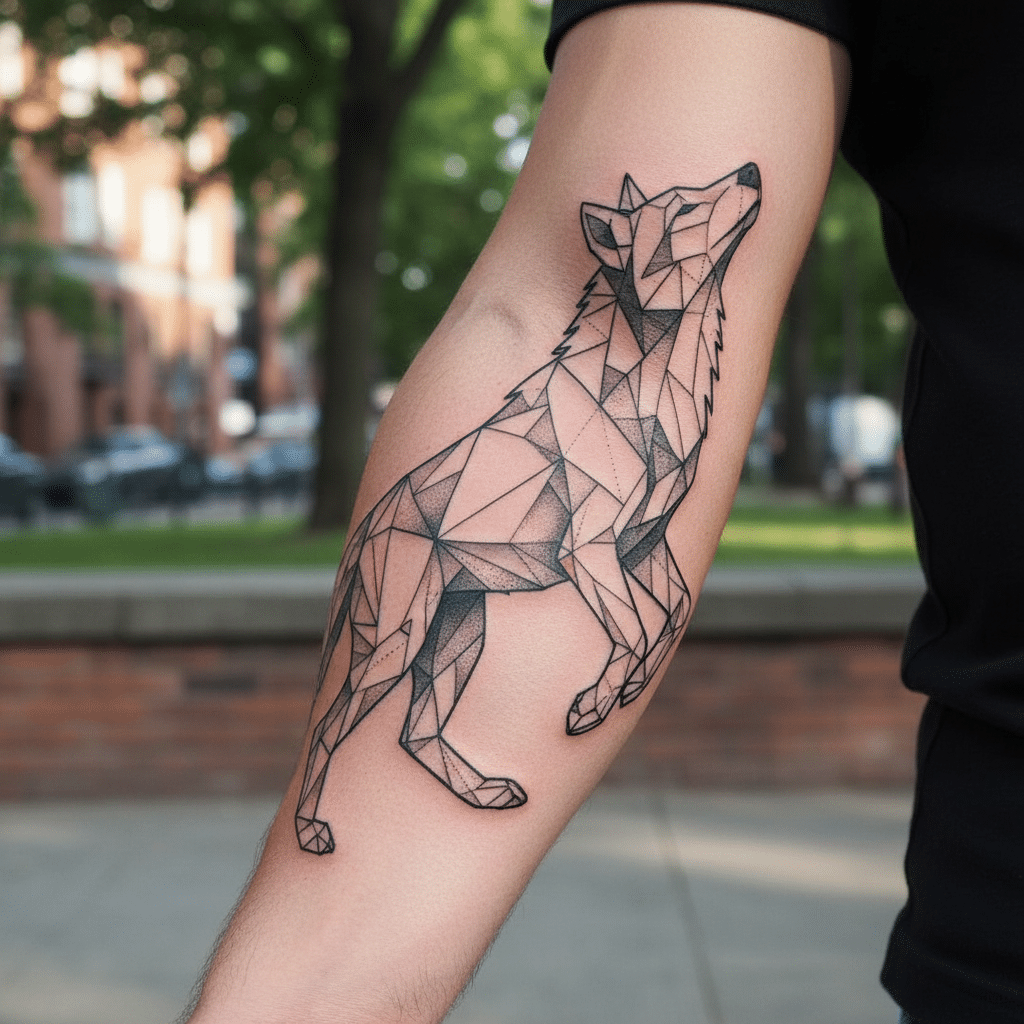
Triangles dominate geometric animal tattooing for good reason—they’re directional and dynamic. An upward-pointing triangle implies aspiration and forward movement; downward suggests groundedness and weight. In practice, triangles define the features that communicate an animal’s character: the wolf’s angular ears and muzzle, the eagle’s beak and wingtip feathers, the fox’s pointed face. Artists like Sven Rayen (Belgium) and Dr Woo (LA) use triangular construction to give animal subjects the feeling of having been crystallised rather than drawn.
Circles and Arcs: Containment and Completeness
Circles in geometric animal design often serve a framing function—the animal placed within a perfect circle, suggesting completion or a self-contained world. They also work internally: the owl’s eyes as concentric circles, the snake forming a circular ouroboros, the turtle’s domed shell rendered as a geodesic sphere. Circles soften what triangles sharpen, and the tension between the two is where much of the aesthetic interest in this style lives.
Polygons and Faceting: The Crystal Effect
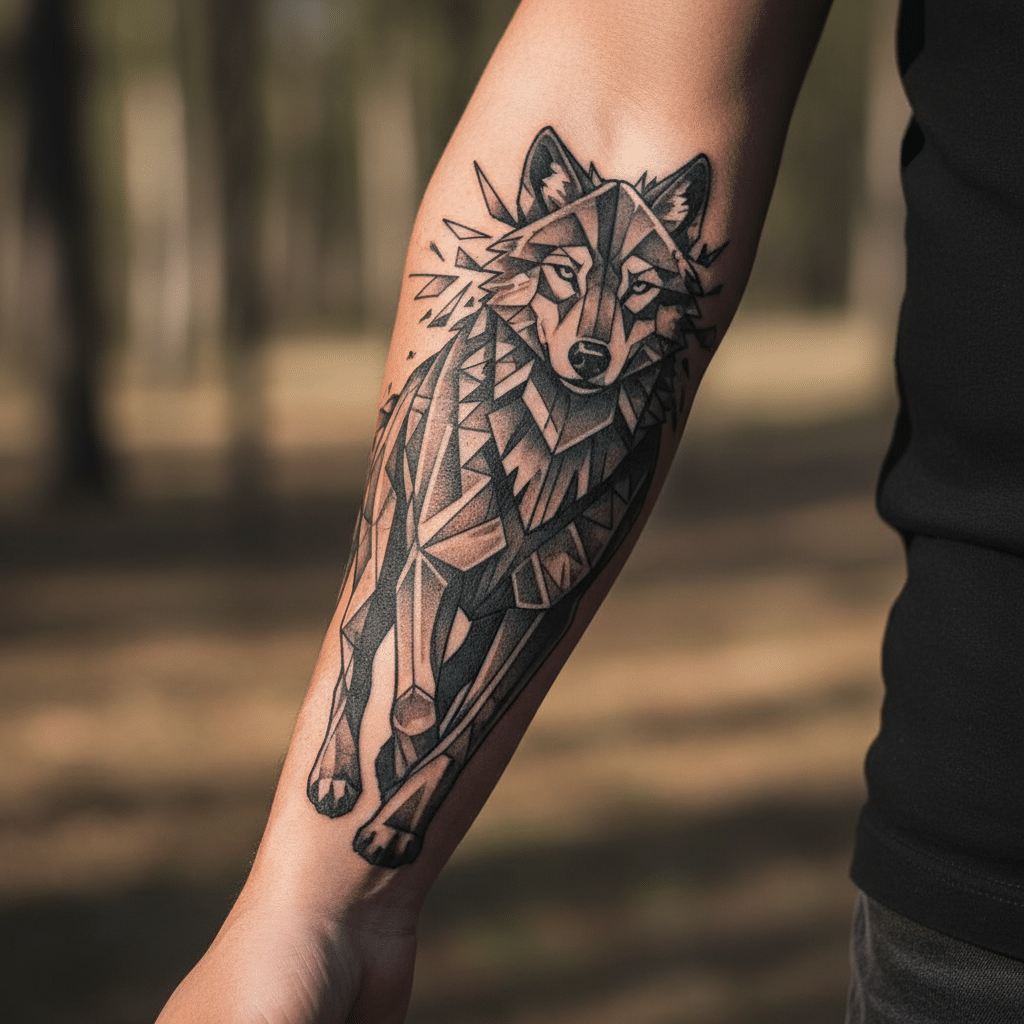
More complex polygons—hexagons, pentagons, irregular multi-sided forms—create a faceted, crystalline quality that reads as almost three-dimensional on flat skin. A fox built from interlocking polygons looks as if it’s been carved from obsidian. This approach is technically demanding: the artist must map a three-dimensional animal form onto geometric planes without losing the animal’s recognisable silhouette. When it works, it’s extraordinary. When the polygon count is wrong, the animal loses legibility.
Dotwork and Fine Linework: Tone and Texture
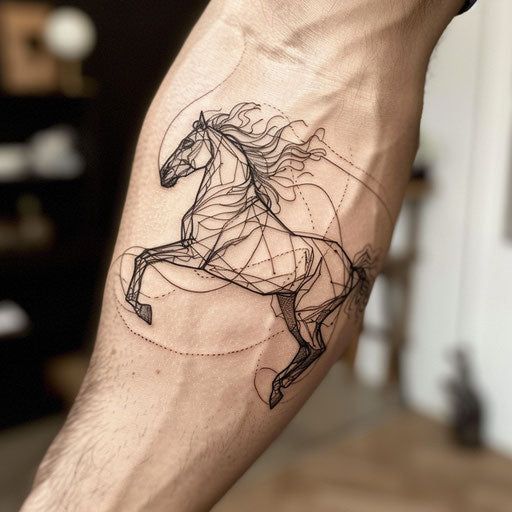
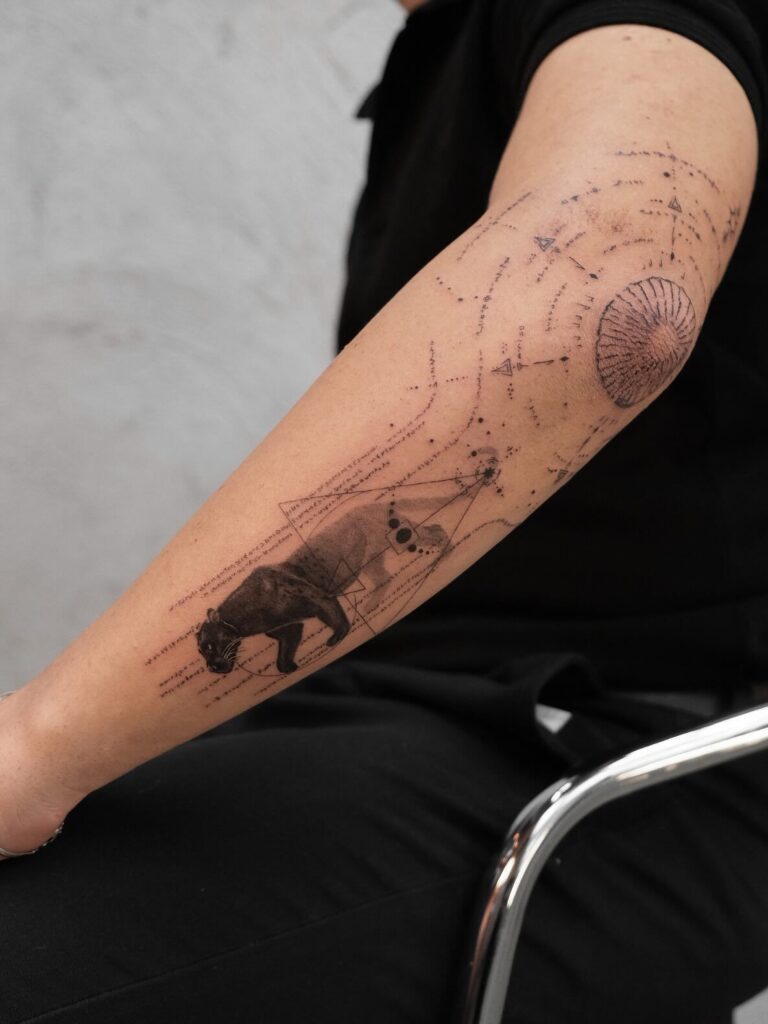
Not every geometric animal tattoo is built from solid shapes. Dotwork—using thousands of tiny points to build tone—adds depth and a near-photographic gradient without using conventional shading strokes. Fine linework at 0.3mm needle gauge can achieve hair-fine detail that holds surprisingly well over time compared to broader shading. The best geometric animal tattoos often combine all three: clean line structure for the geometric framework, dotwork for tonal depth, and selective solid black for contrast anchors.
Ten Animal Tattoo Designs That Work Best in Geometric Style
A geometric snake is usually more about movement and tension than cute animal symbolism. Use the serpent tattoo meaning guide if you want the design to feel intentional before you simplify it into angles and clean linework.
Not every animal suits geometric treatment equally. The ones that work best have either strong, angular natural features—which map directly to geometric forms—or iconic silhouettes that remain recognisable even when abstracted. Here are the ten I’d recommend without hesitation, with honest notes on what each design demands technically.
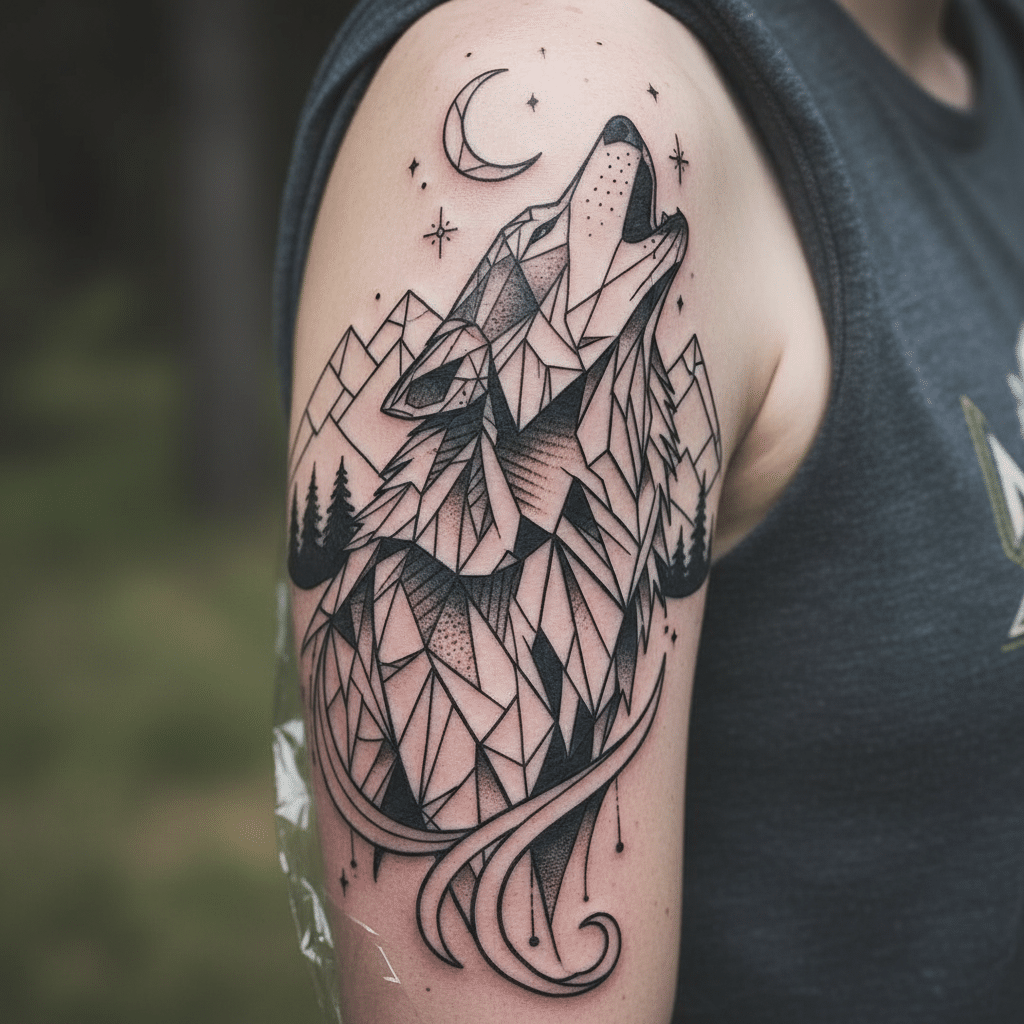
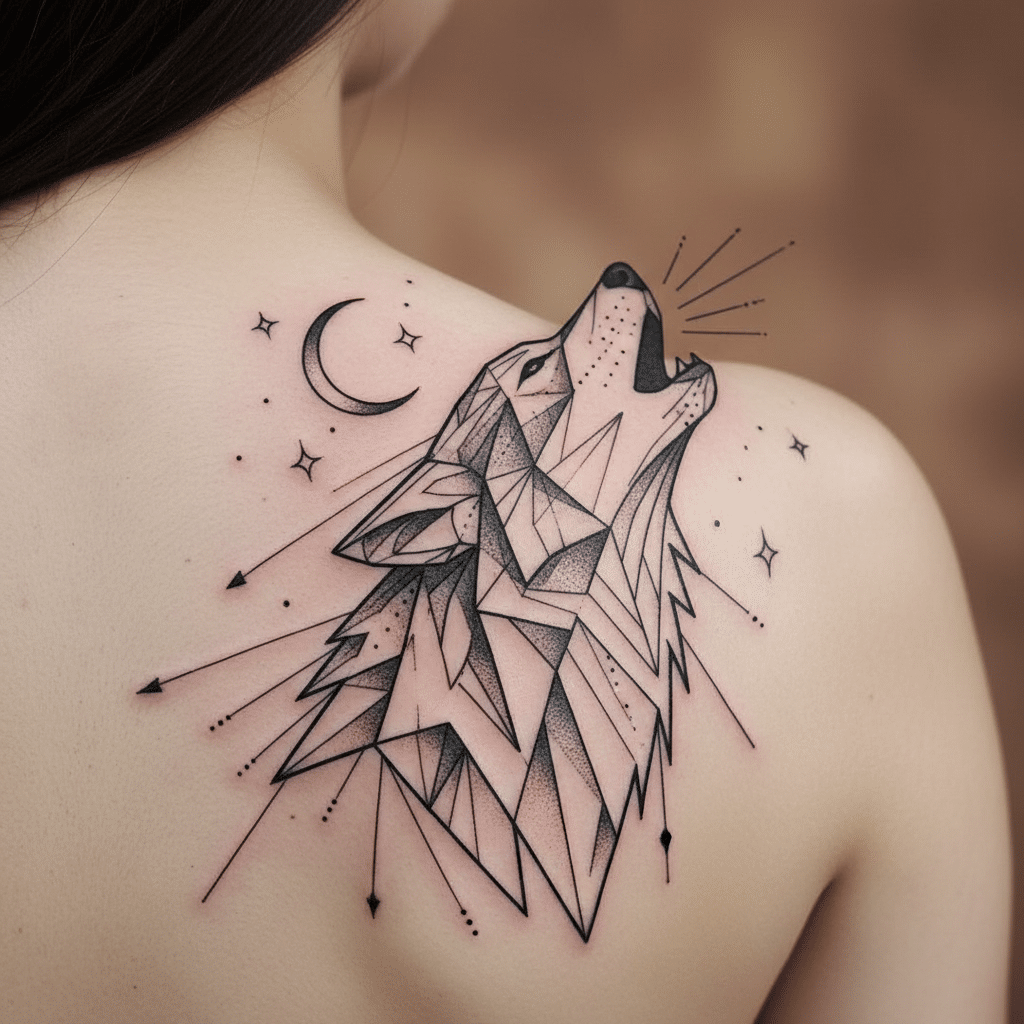
1. Wolf — Loyalty, Pack, and Instinct
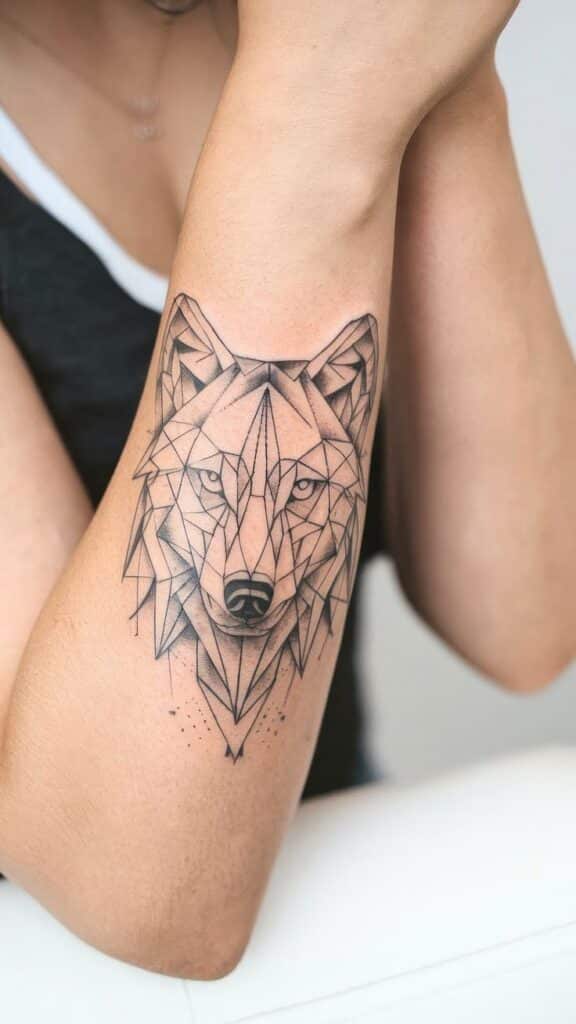
The geometric wolf is probably the most requested animal tattoo in this style, and it earns that position.
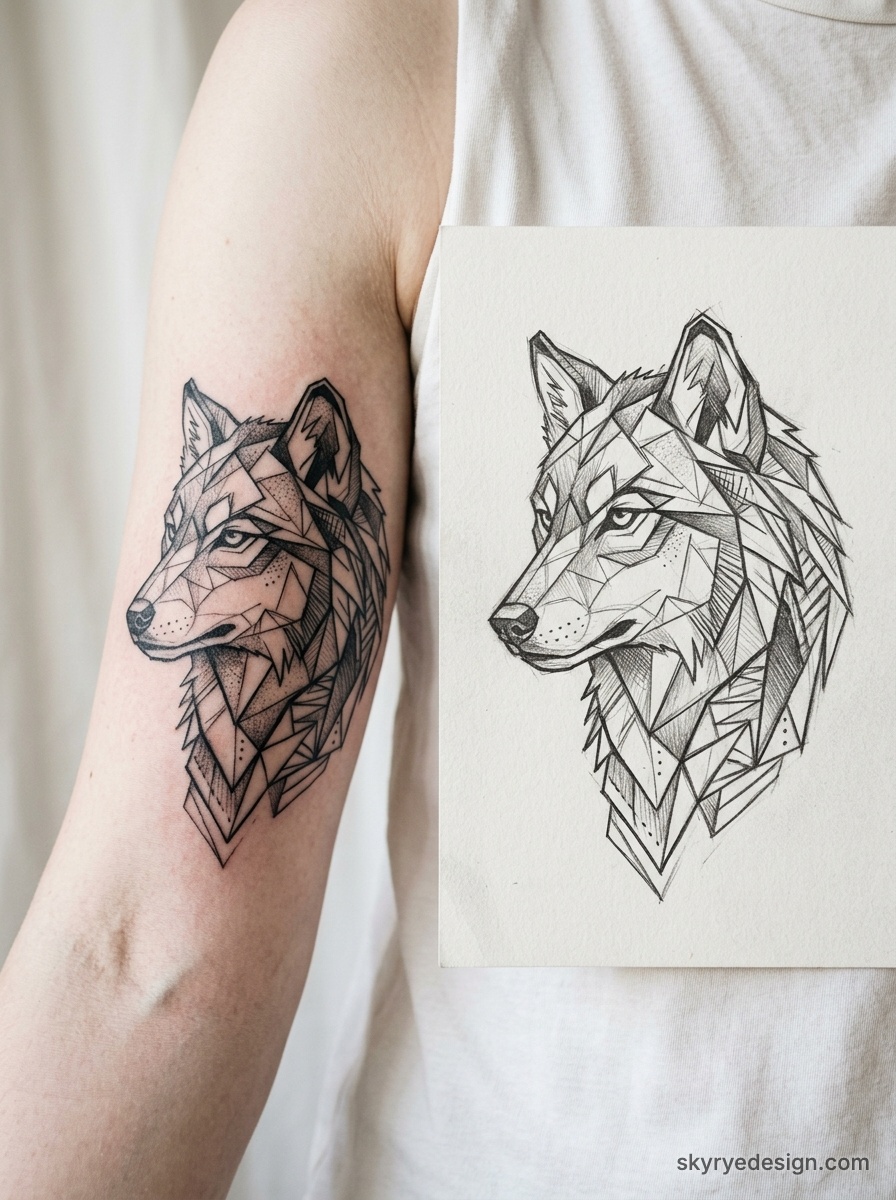
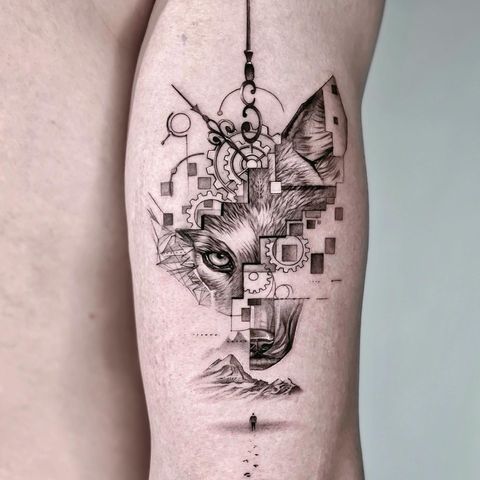
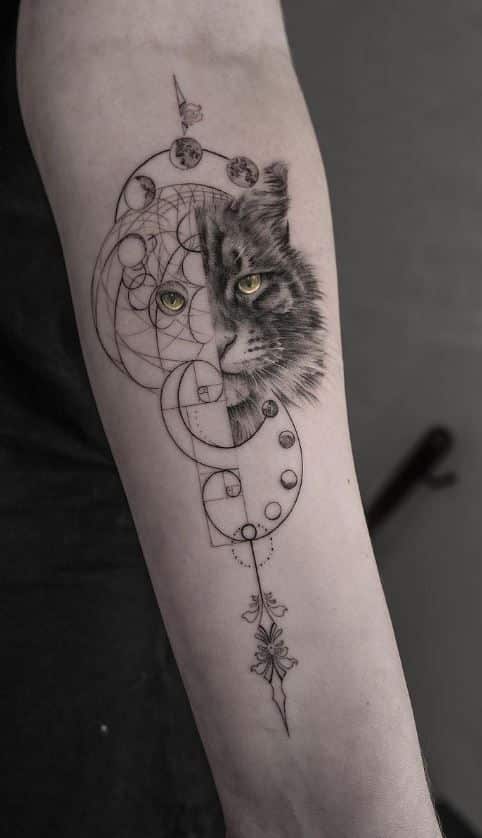
The wolf’s angular muzzle, erect ears, and intense gaze translate directly into triangular construction. The howling pose—neck extended, snout pointing up—creates a beautiful vertical composition for forearm or calf placement. Avoid artists who render the wolf as a floating head surrounded by disconnected triangles; the strongest wolf designs integrate the geometric elements into the animal’s form, not around it.
| Geometric Wolf Symbolism: Loyalty, pack mentality, intuition, freedomGeometric approach: Triangular muzzle and ears, angular eye geometry, optional mountain or moon integrationBest placement: Upper arm, forearm, chest (for larger pieces with landscape elements) |
2. Lion — Authority, Courage, Identity
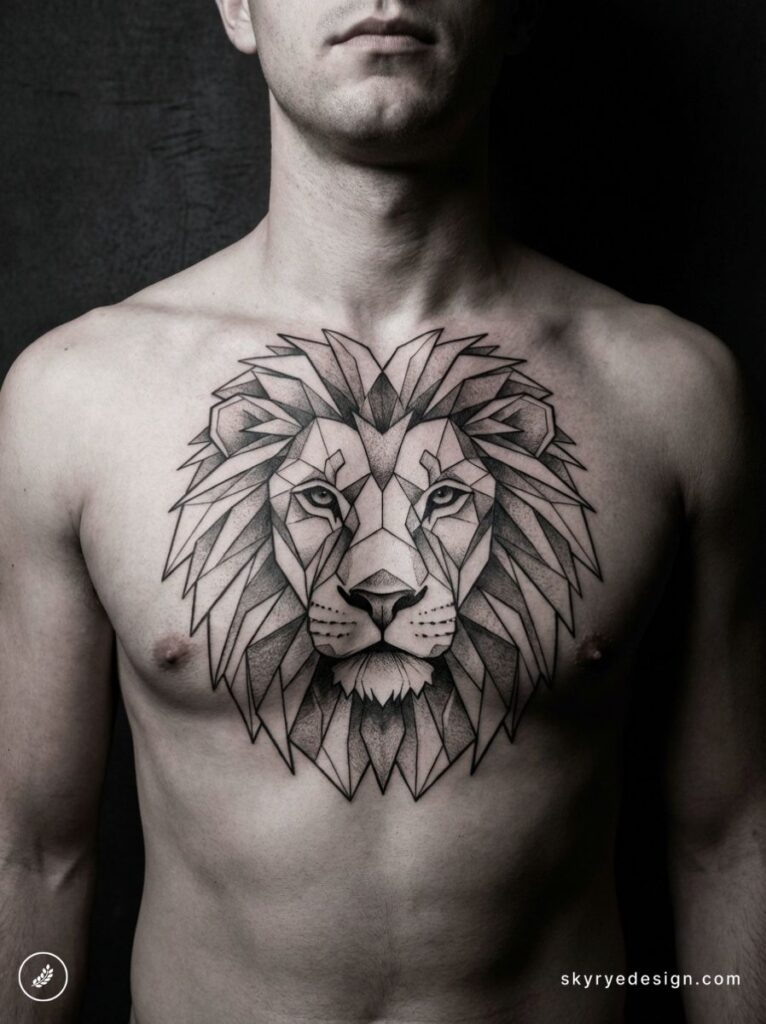
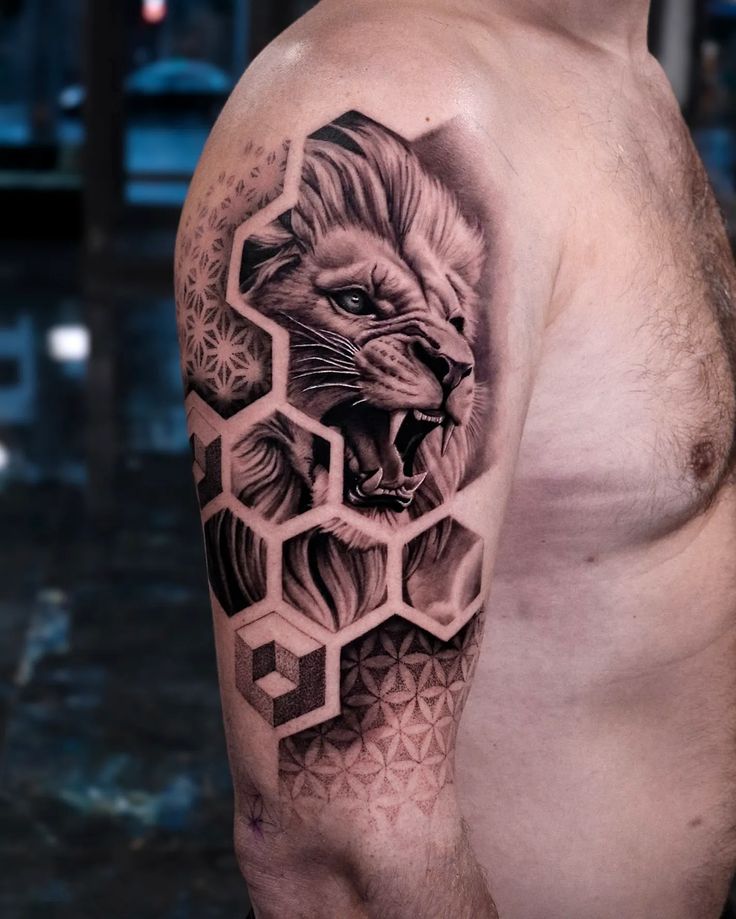
The lion presents a specific challenge: the mane. A realistic lion mane is organic, chaotic, and directional—everything geometric design isn’t.
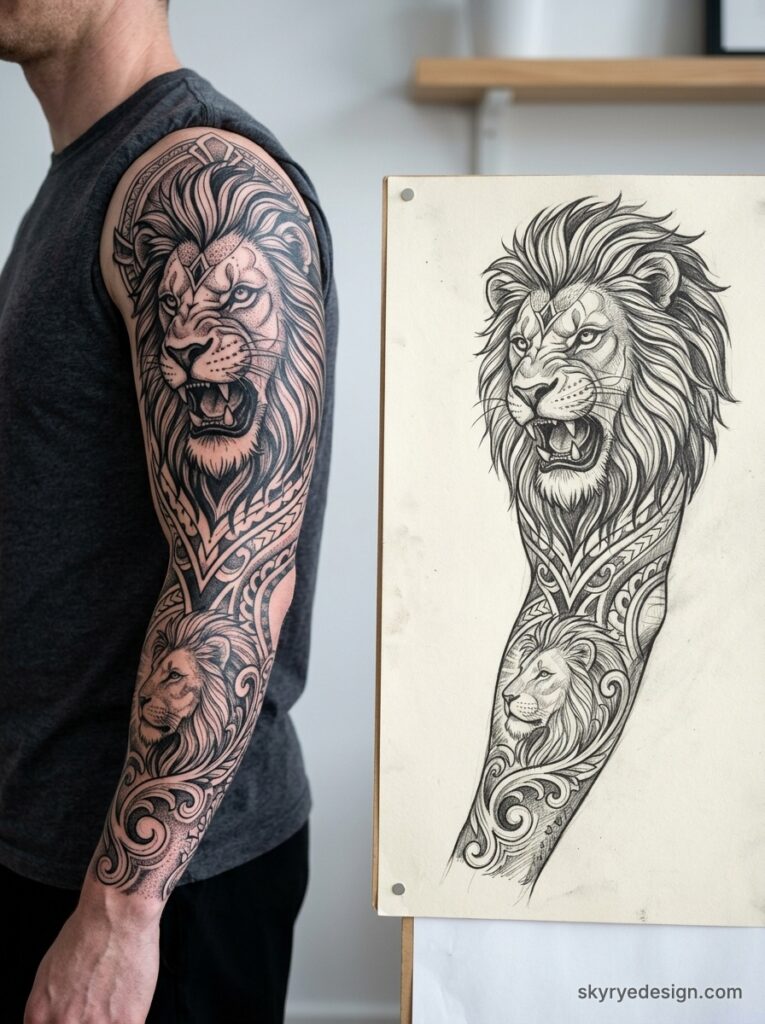
The best geometric lion tattoos handle the mane as a radiating structure of triangles or as a series of concentric angular layers rather than attempting to geometric-ify individual strands. The face—jaw, brow, nose—is where the strongest geometric structure lives. As an animal tattoo, the lion reads as authority and self-possession at any size, from a 6cm chest piece to a full back design.
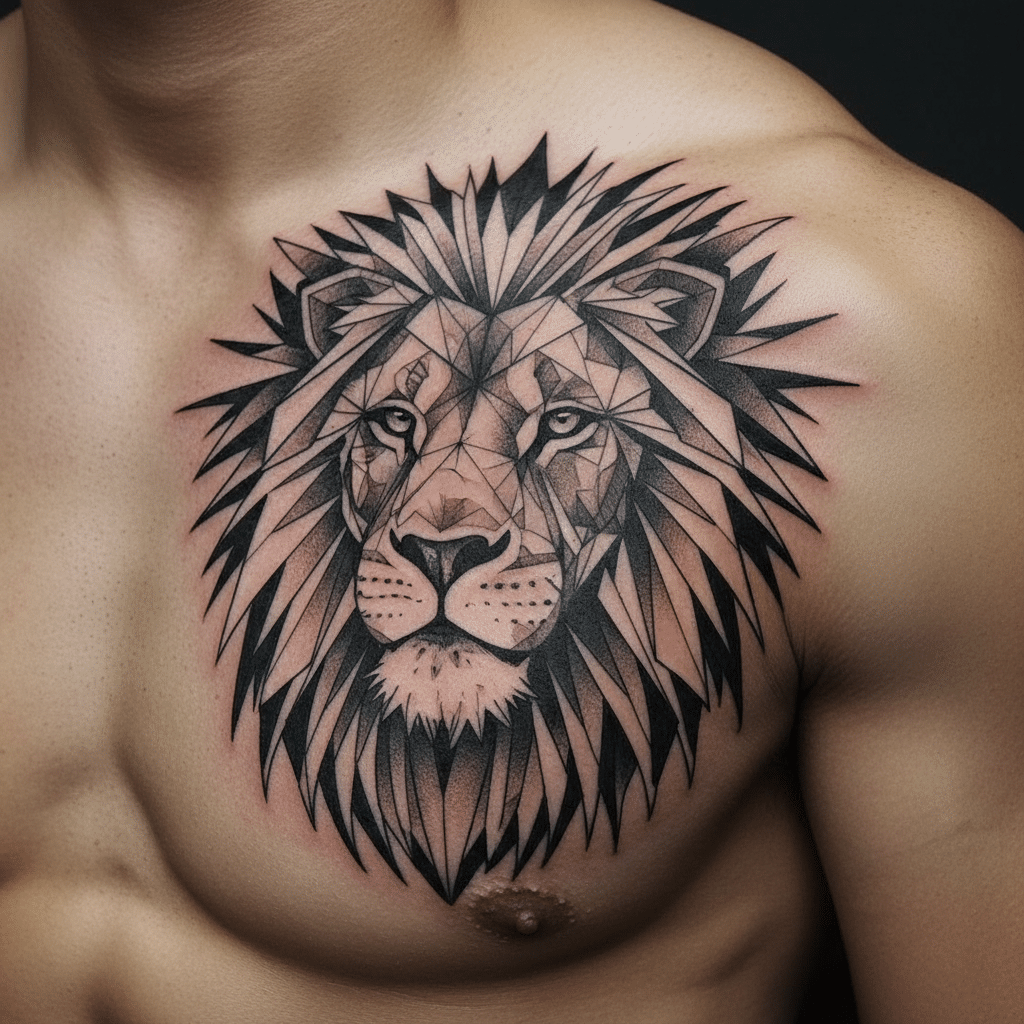
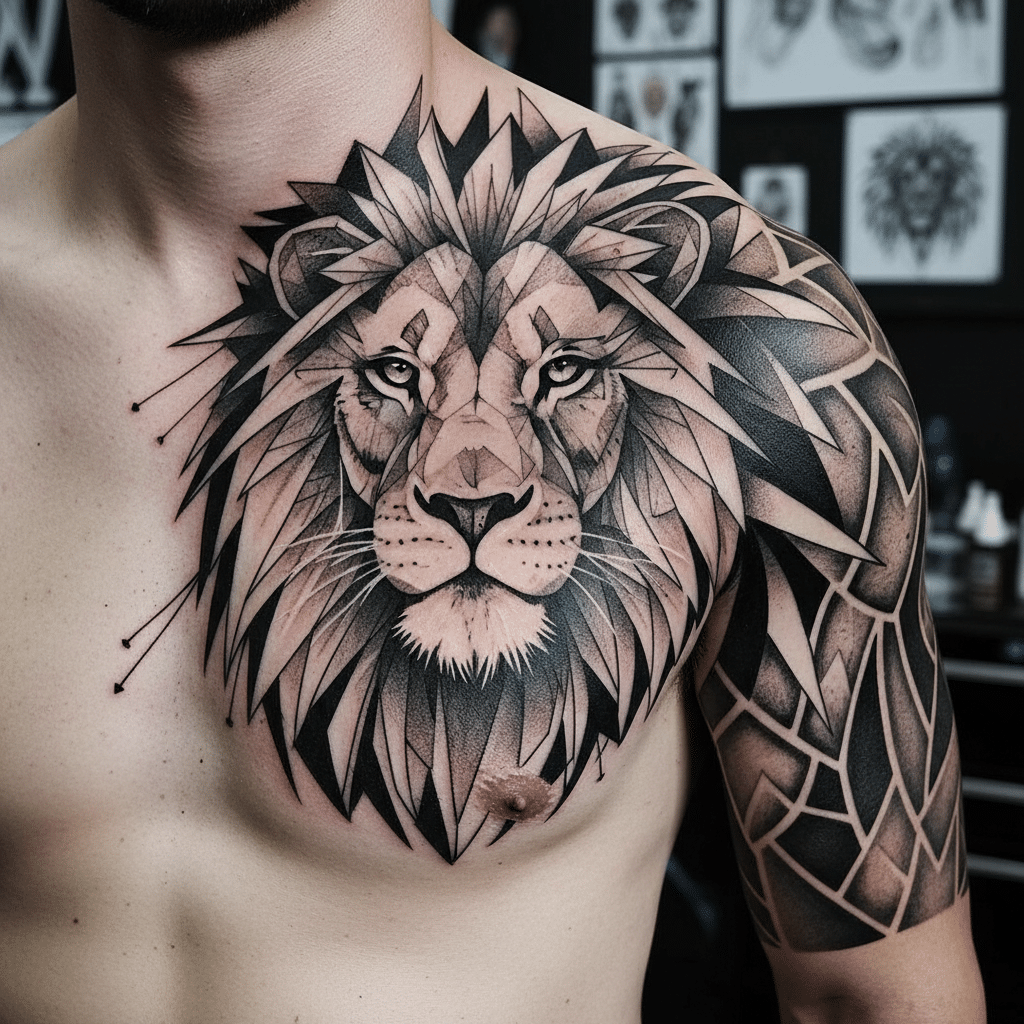
| Geometric Lion Symbolism: Strength, leadership, courage, nobilityGeometric approach: Triangulated mane structure, strong jaw and brow geometry, piercing eye as focal pointBest placement: Chest (centred), upper arm, back (for full-mane compositions) |
3. Fox — Intelligence and Adaptability
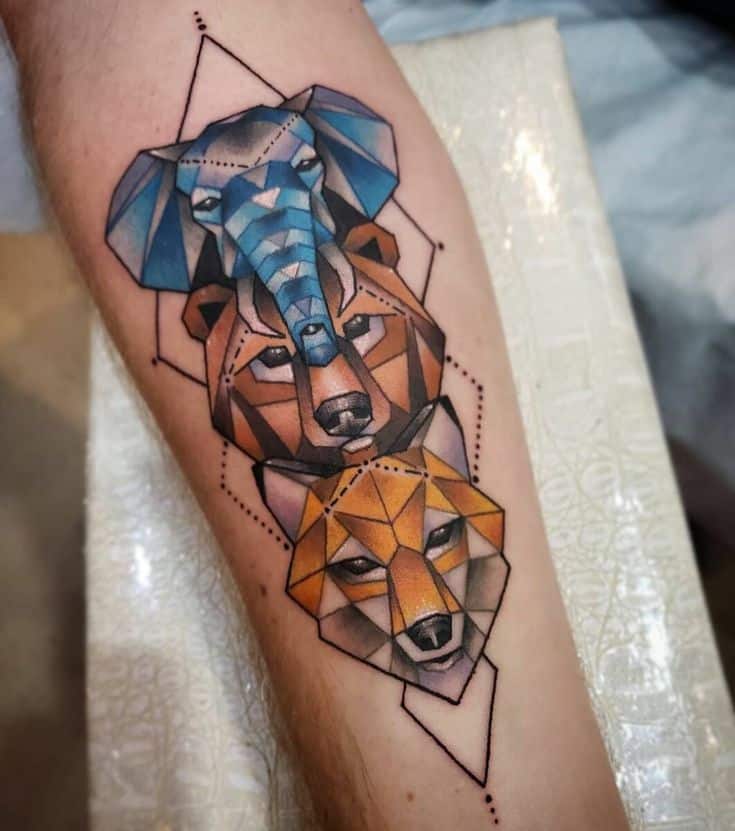
The fox’s naturally sharp, angular features make it one of the most naturally suited animals for geometric treatment. The pointed ears, narrow muzzle, and sleek body silhouette all map cleanly to triangles and polygons. Colour is where fox designs often diverge: a black-and-grey geometric fox is clean and graphic; a rust-and-amber version in coloured ink can be stunning, though colour adds complexity to the aging question. The fox is my personal favourite for forearm placement—it fits the long bone line perfectly.
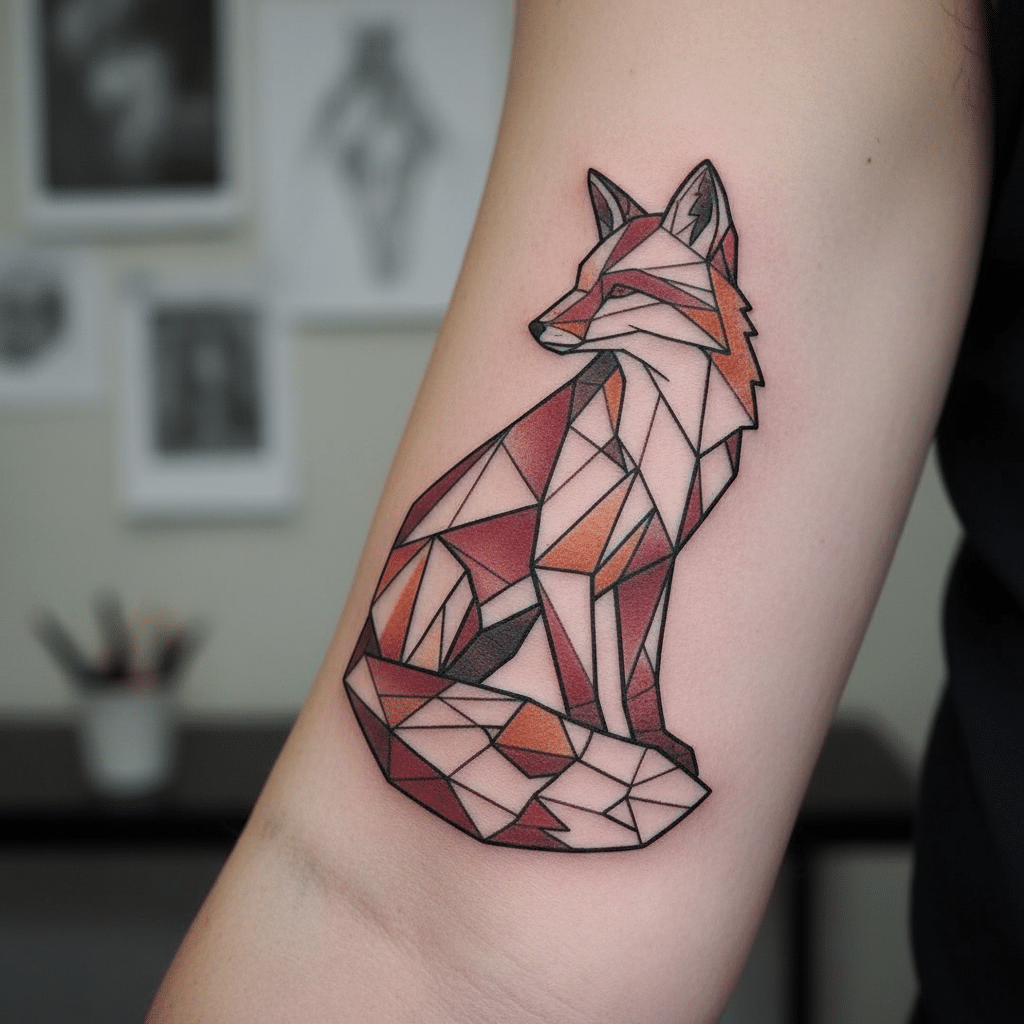
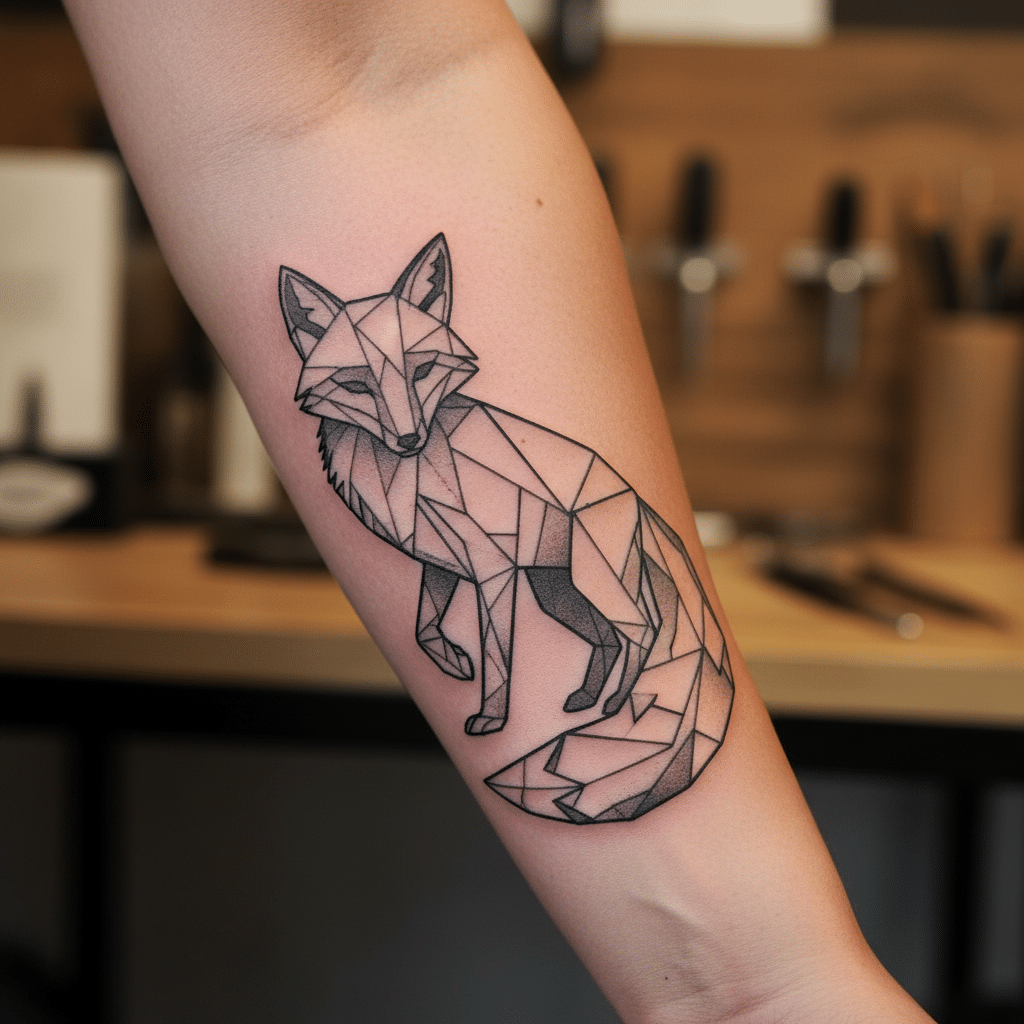
| Geometric Fox Symbolism: Cunning, adaptability, quick thinking, resourcefulnessGeometric approach: Sharp triangular ears and snout, polygon body construction, optional colour in warm amber tonesBest placement: Forearm, calf, shoulder blade |
4. Owl — Wisdom, Night Vision, Mystery
The owl offers something most geometric animal subjects don’t: a face that looks directly at the viewer. That frontal gaze—wide eyes, symmetrical face—creates immediate visual impact and works perfectly with the bilateral symmetry of geometric design.
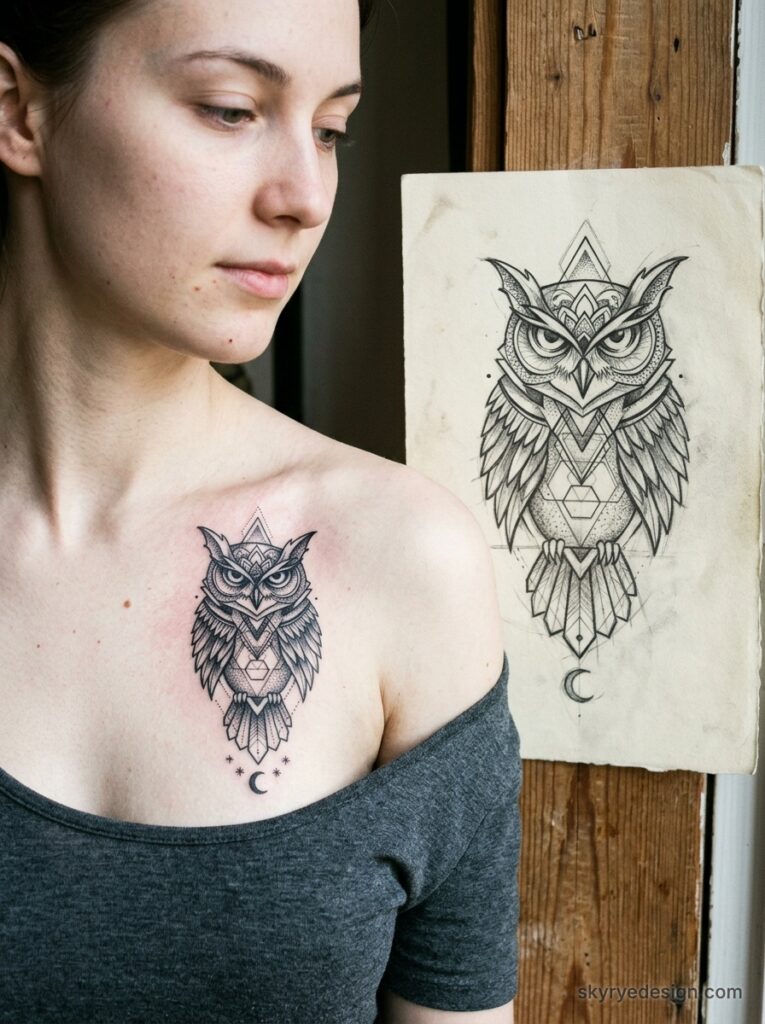
The feather structure can be suggested through overlapping triangular layers without attempting individual feathers. The eye treatment is critical: either a perfectly circular iris rendered in concentric geometry, or a deeply detailed polygon iris—both work. A muddy middle ground doesn’t.
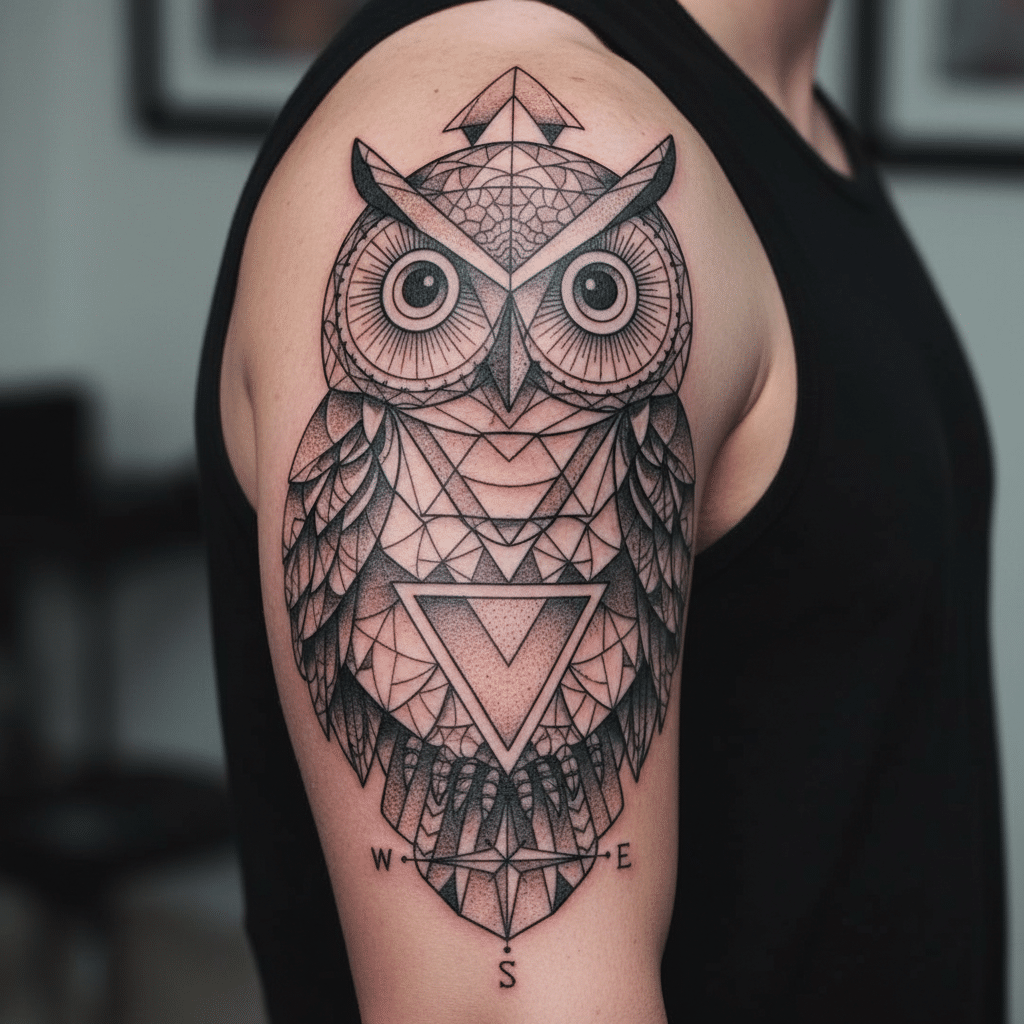
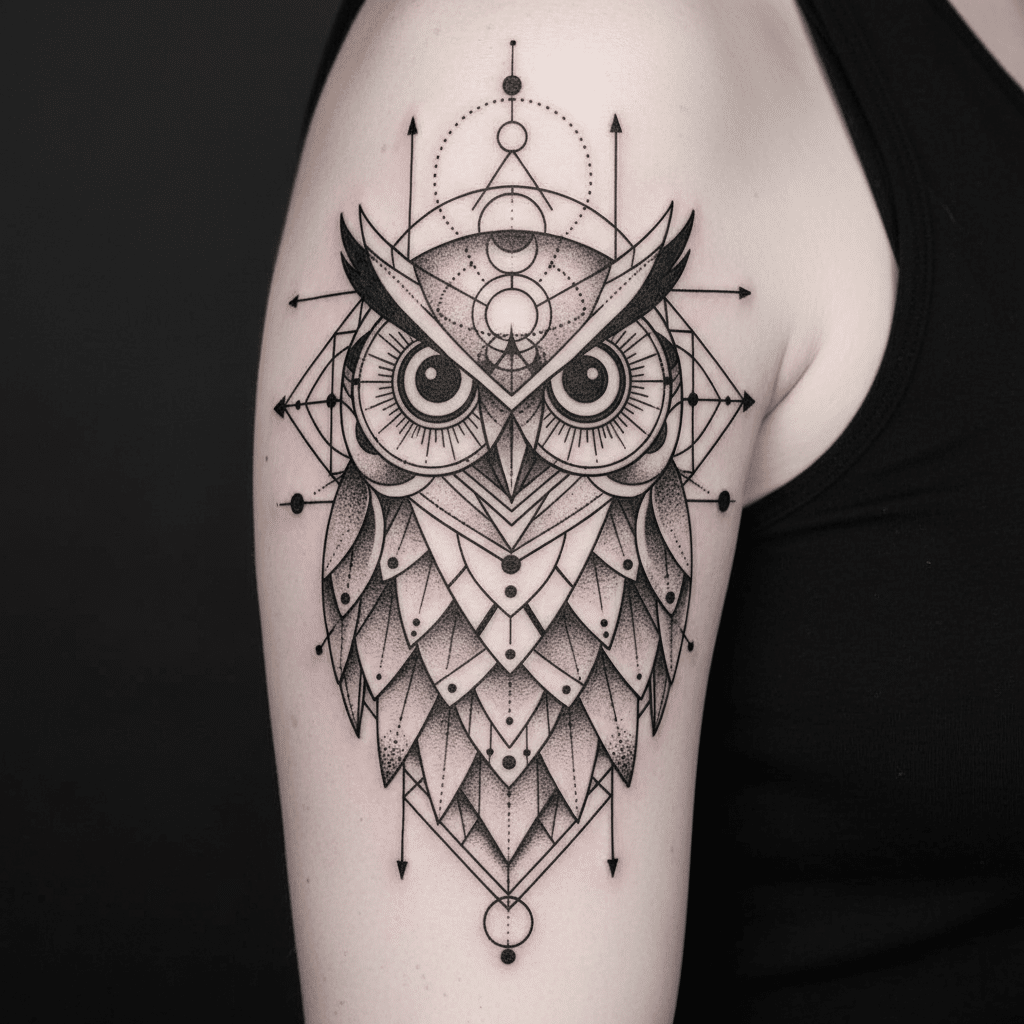
| Geometric Owl Symbolism: Wisdom, mystery, observation, intuitionGeometric approach: Symmetrical frontal face, concentric circle eyes, triangular feather layer constructionBest placement: Chest (perfectly centred), upper arm, sternum |
5. Bear — Groundedness, Protection, Inner Strength
The geometric bear is underrated in tattoo culture, probably because bears lack the dramatic angular features of wolves or foxes. But that’s the design challenge that makes bear tattoos interesting: you have to use solid, blocky polygon construction to convey mass and weight rather than sharp triangles to convey speed or aggression.
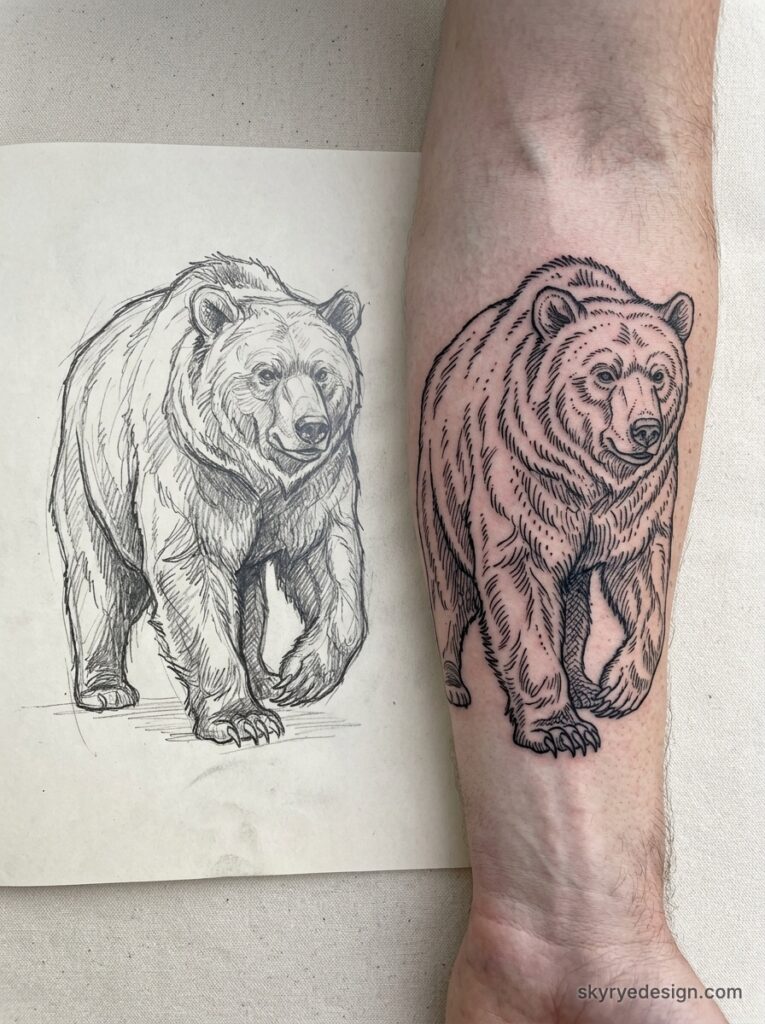
A well-executed geometric bear feels heavy in the right way—planted, immovable, protective. It’s an excellent animal tattoo for upper arm placement where the rounded muscle of the bicep echoes the bear’s rounded form.
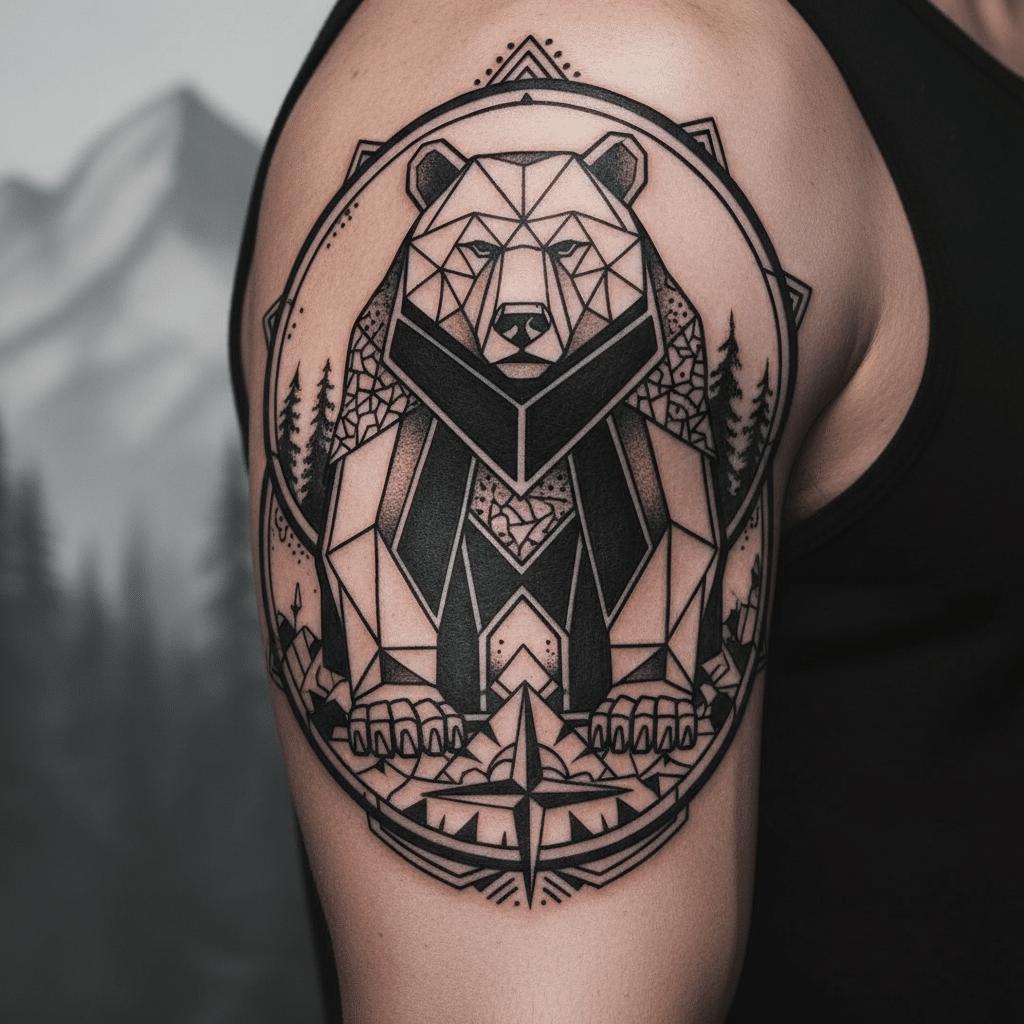
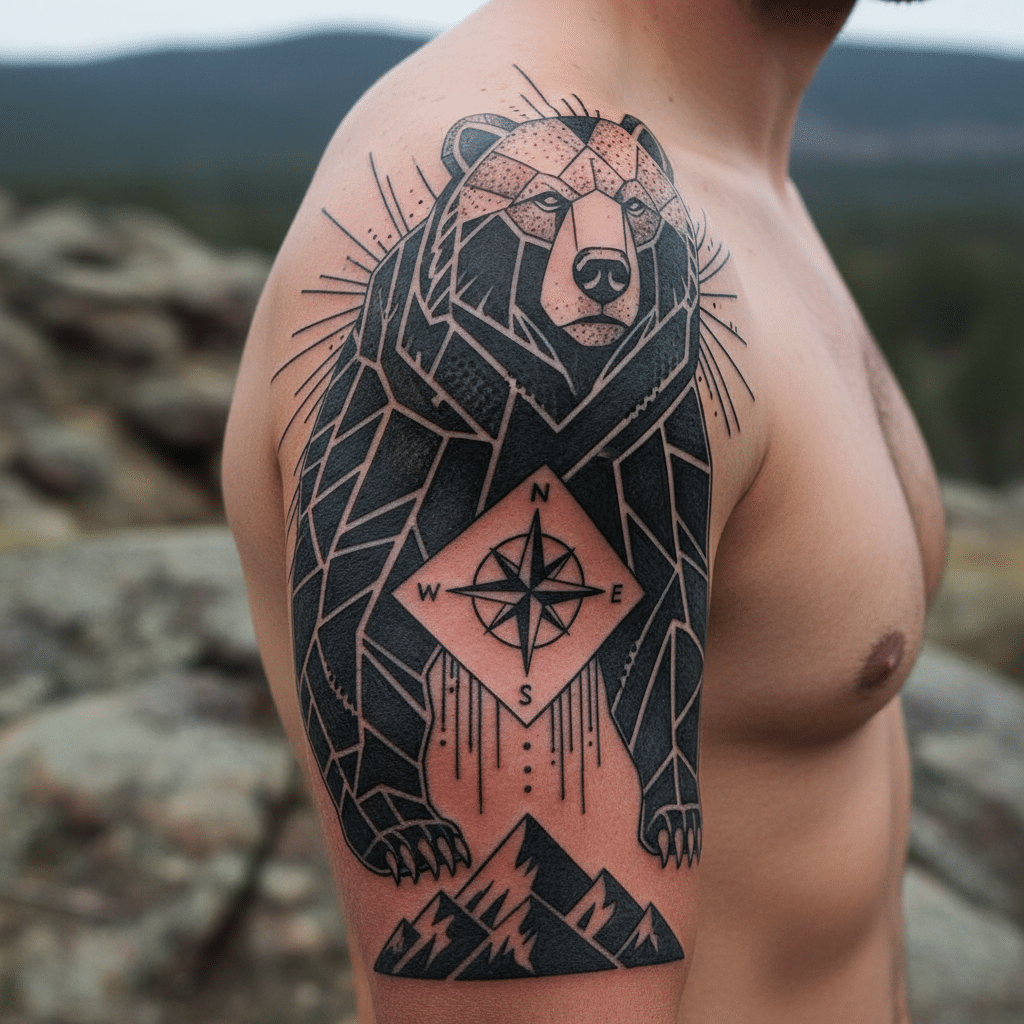
| Geometric Bear Symbolism: Strength, protection, grounding, resilienceGeometric approach: Solid polygon construction for mass, less sharp than wolf/fox, strong silhouette emphasisBest placement: Upper arm, upper back, thigh |
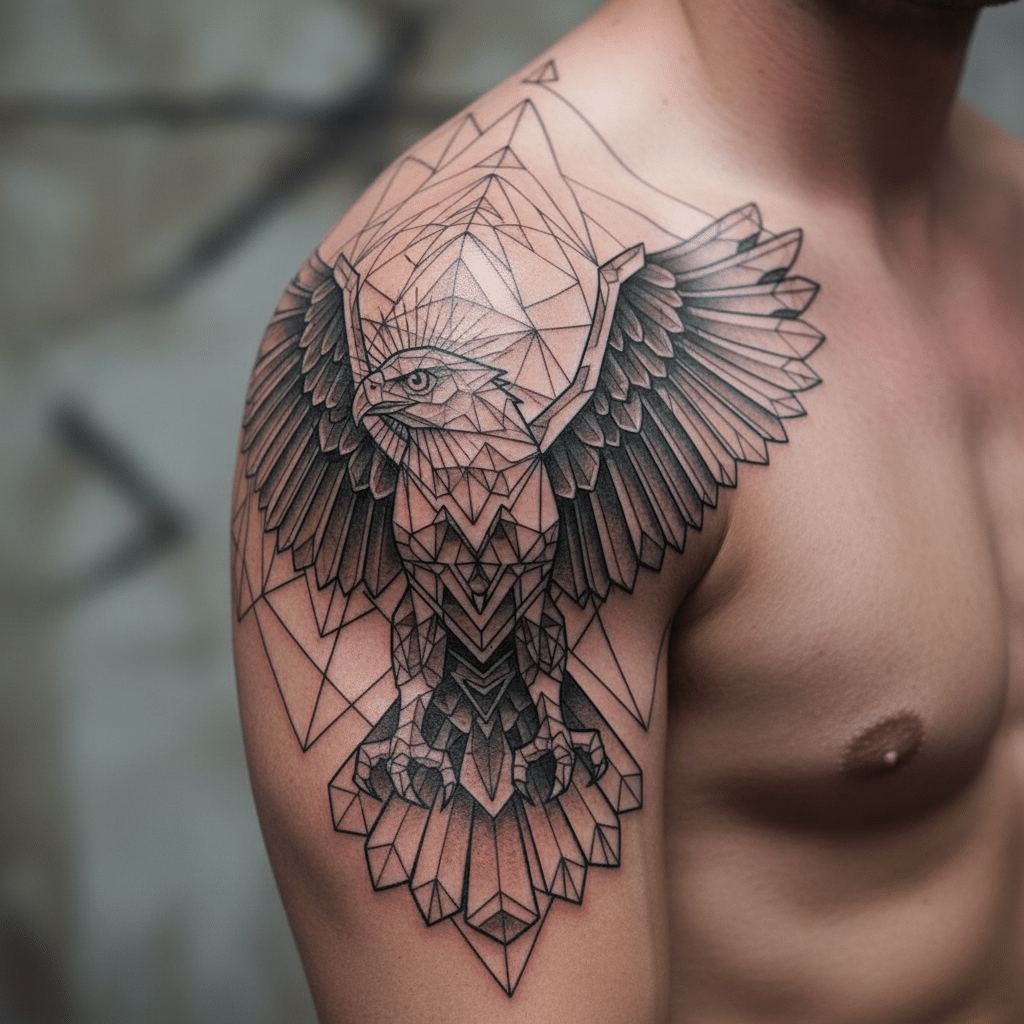
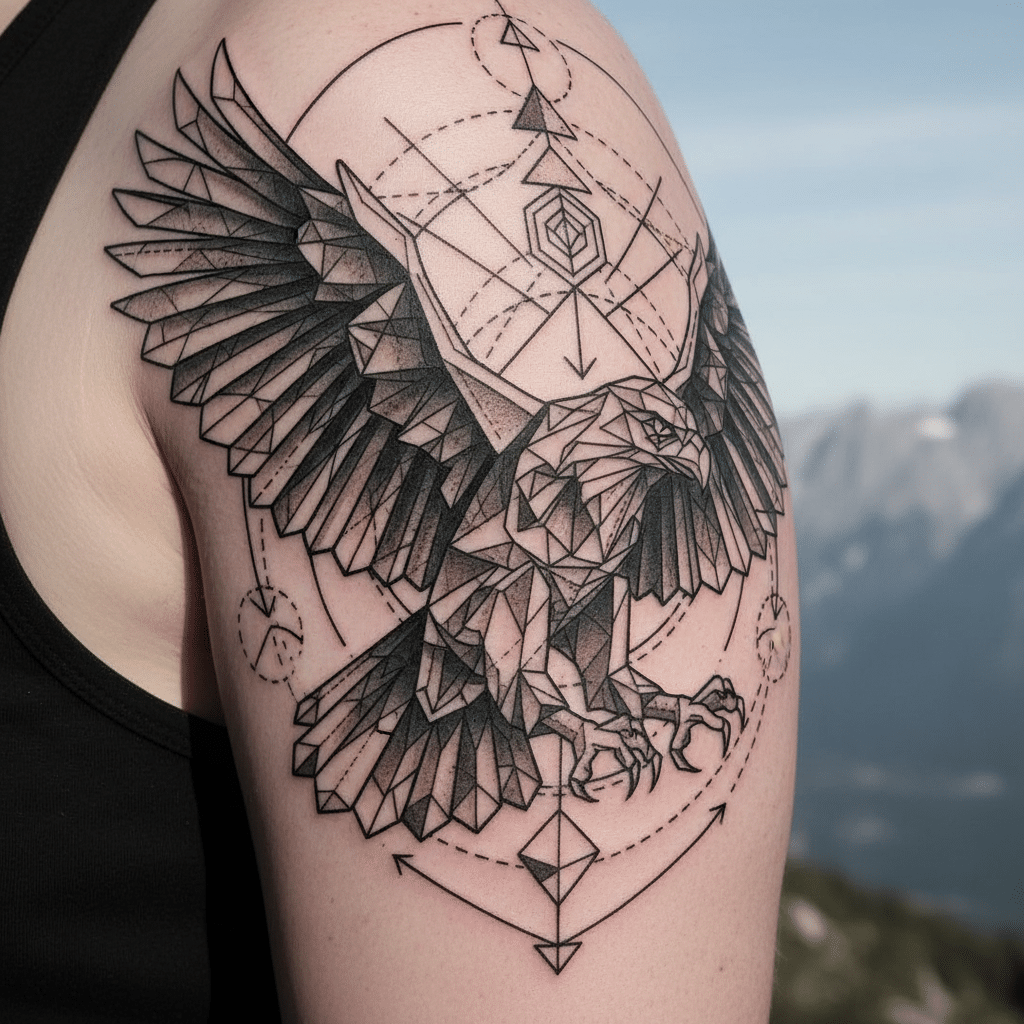
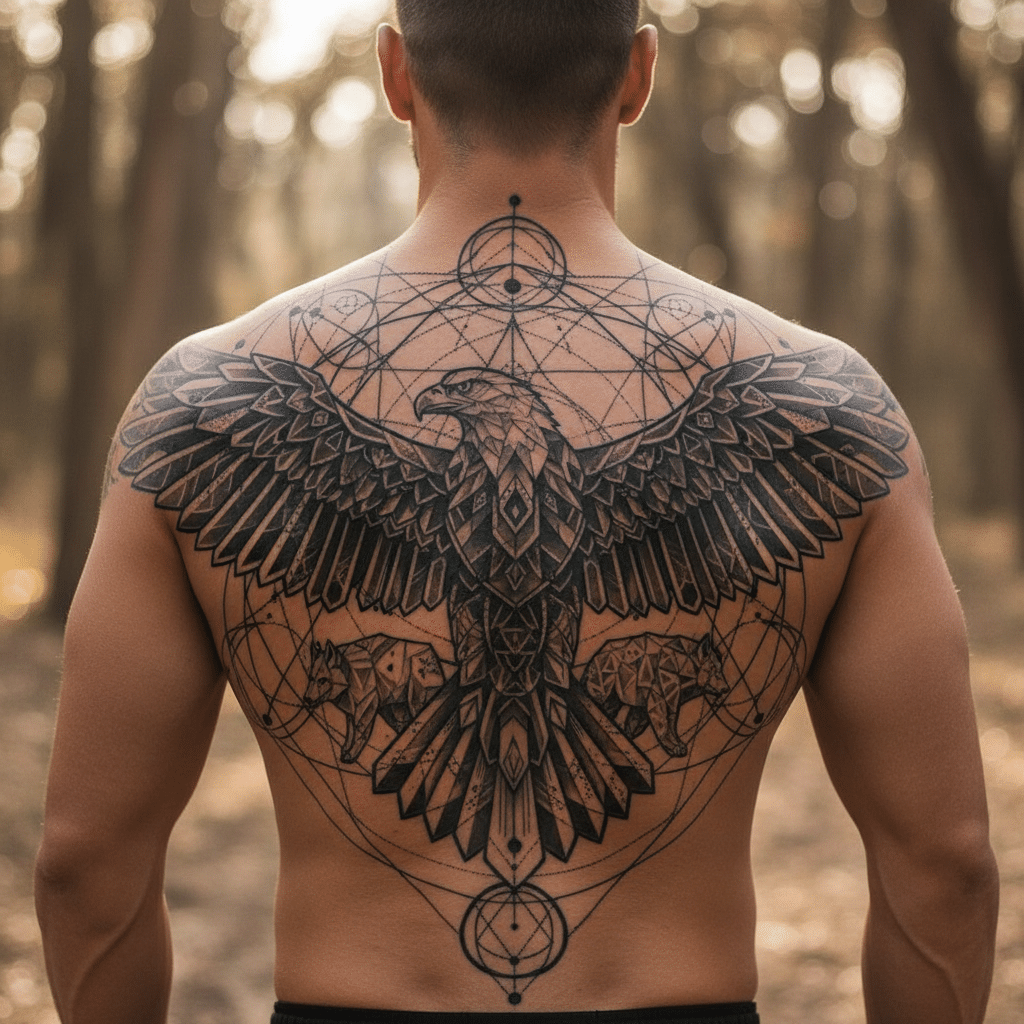
6. Eagle — Freedom, Vision, Ambition
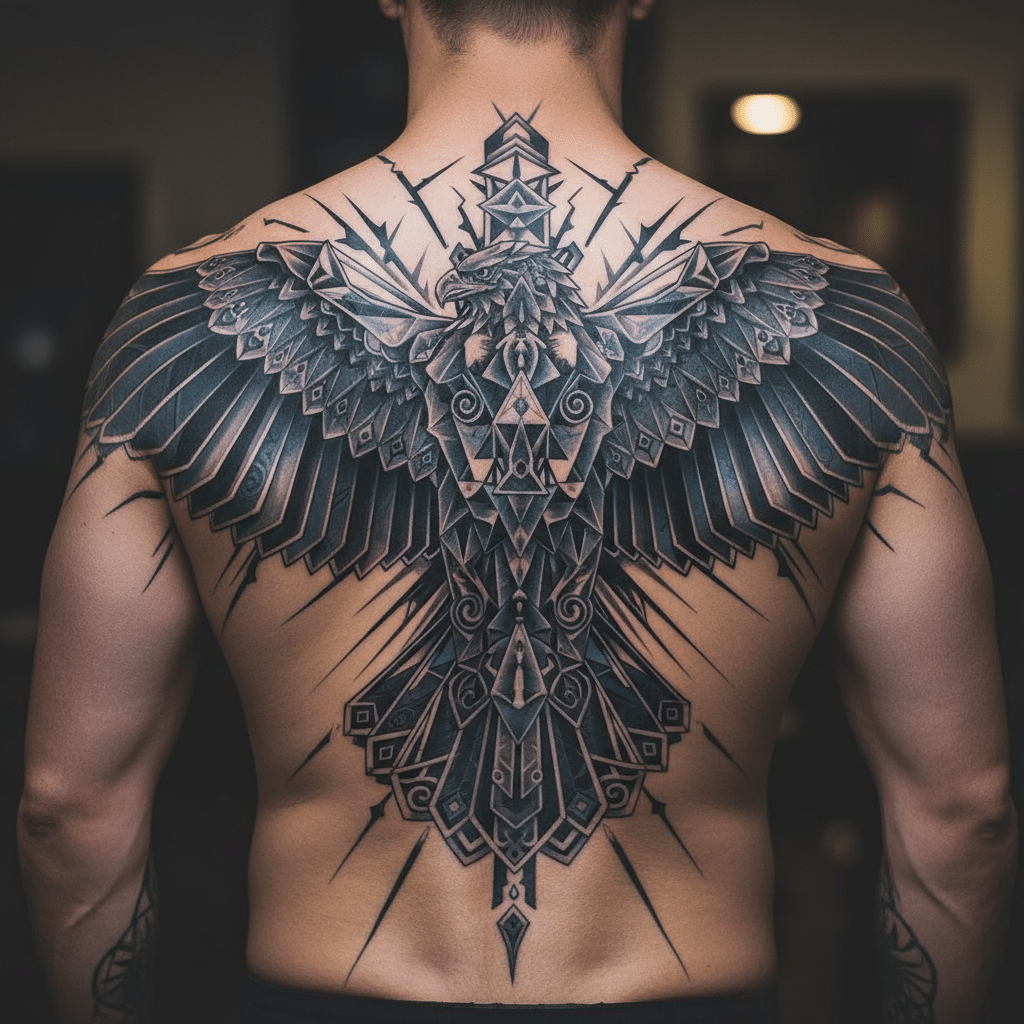
Eagles are the most challenging geometric animal tattoo to get right—and the most spectacular when executed well.
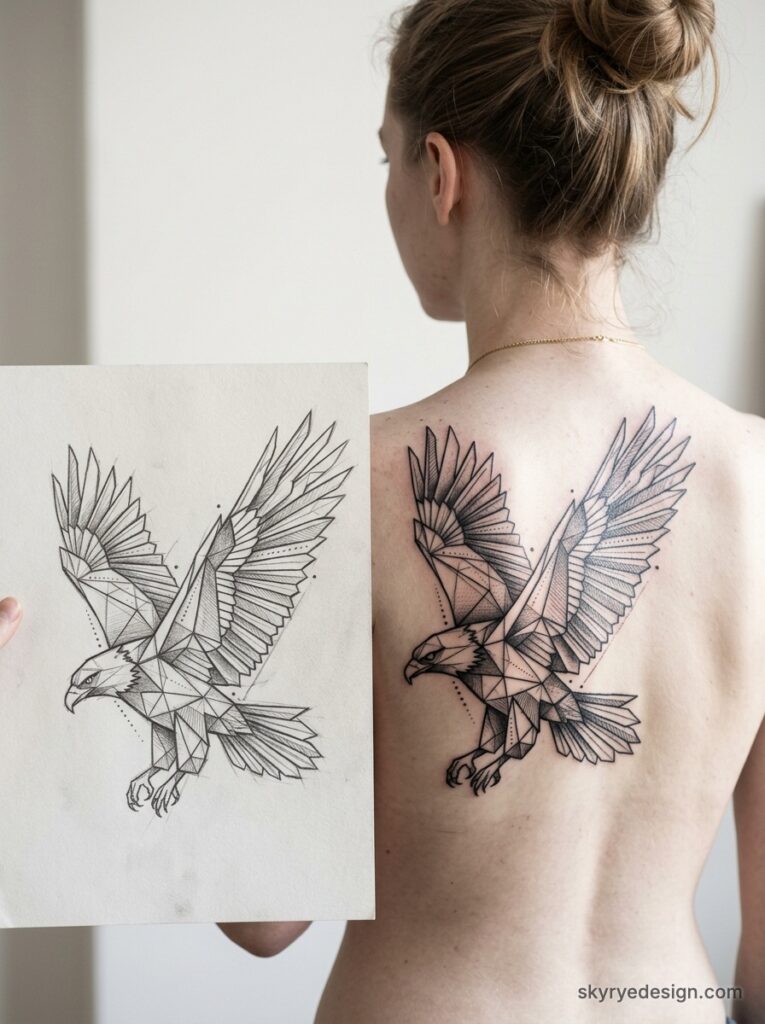
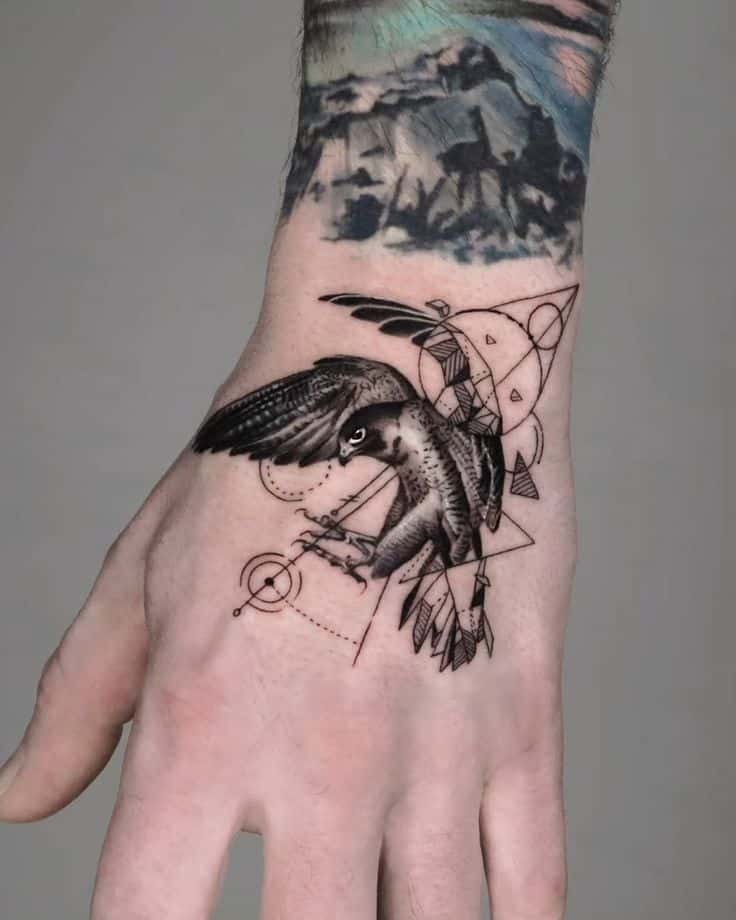
The wingspan creates a natural horizontal composition that suits chest or upper back placement. The key decision is whether the wings are stylised as repeating triangular feather patterns (graphic and bold) or as a smooth geometric plane with selective feather detail at the trailing edge (more refined). The eagle’s beak and talons are the sharpest natural anchor points for geometric line.
| Geometric Eagle Symbolism: Freedom, vision, power, spiritual elevationGeometric approach: Wing geometry as primary structure, triangular beak and talon detail, optional sun or mountain integrationBest placement: Chest (full wingspan), upper back, shoulder |
7. Snake — Transformation, Duality, Renewal
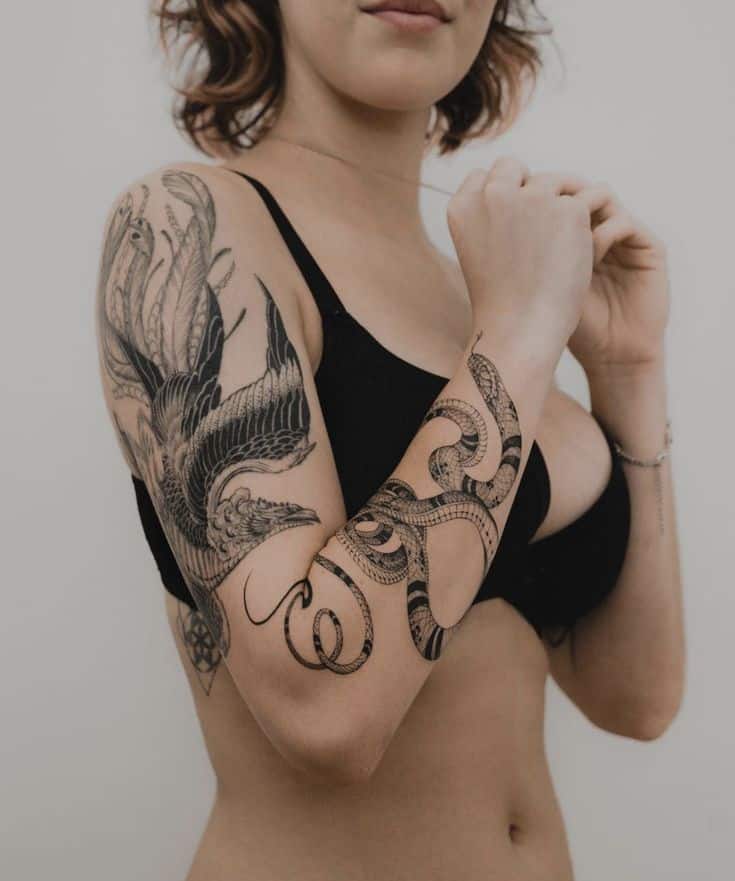
The snake is the most compositionally flexible geometric animal tattoo. Its length adapts to almost any body placement: a coiled snake on a forearm, a full-length snake running up a calf, a snake forming a circular frame around another element.
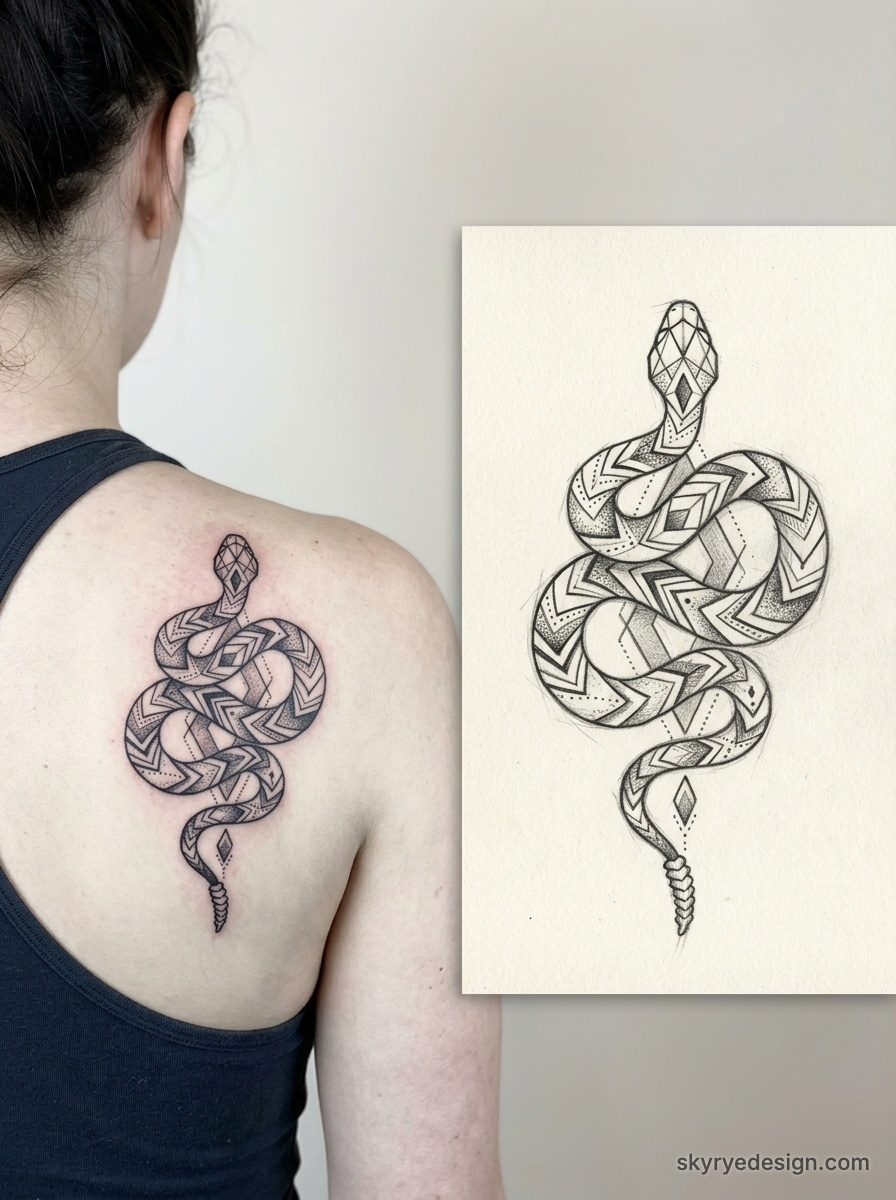
Geometric scales—hexagonal or diamond patterns—can be meticulously rendered or simply suggested through linear banding. The head is where geometric definition matters most: a triangular, sharp-angled head reads as power; a softer rounded head suggests something more cyclical and philosophical.
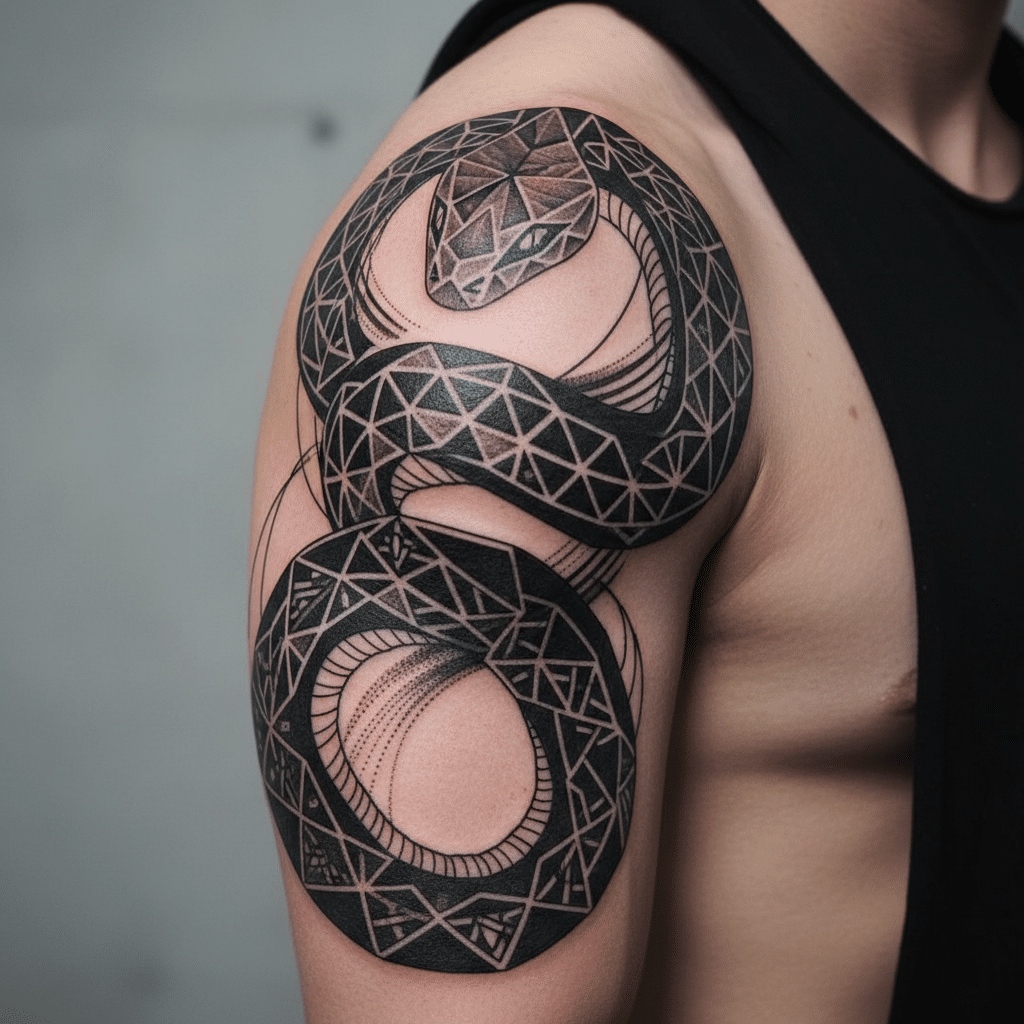
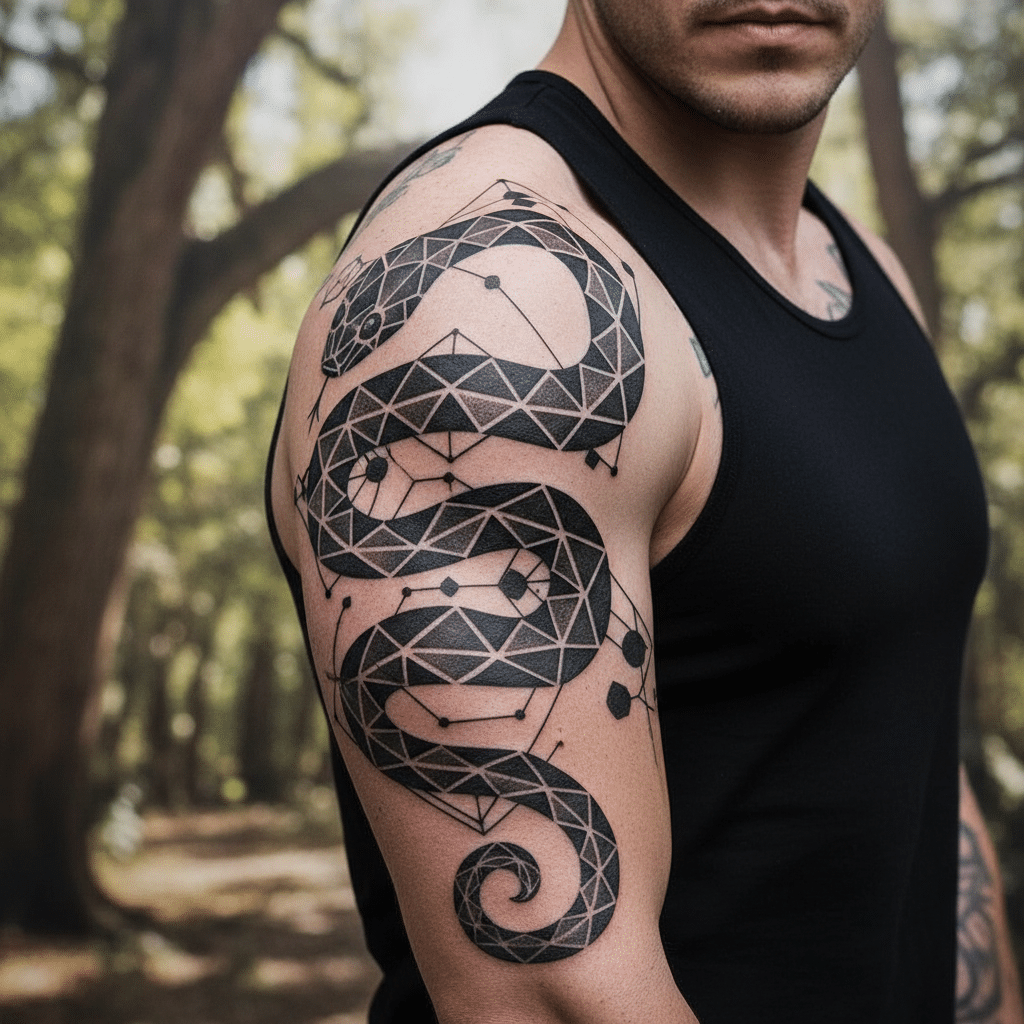
| Geometric Snake Symbolism: Transformation, rebirth, healing, dualityGeometric approach: Linear banding or hexagonal scale pattern, sharp triangular head, flexible coil compositionBest placement: Forearm, calf, upper arm (coiled), spine (full length) |
8. Elephant — Memory, Family, Ancient Wisdom
The elephant’s mass and gentle presence translate into geometric design through solid, architectural polygon construction. Unlike the wolf or fox, the elephant isn’t about sharp angular aggression—it’s about weight, stability, and deep rootedness.
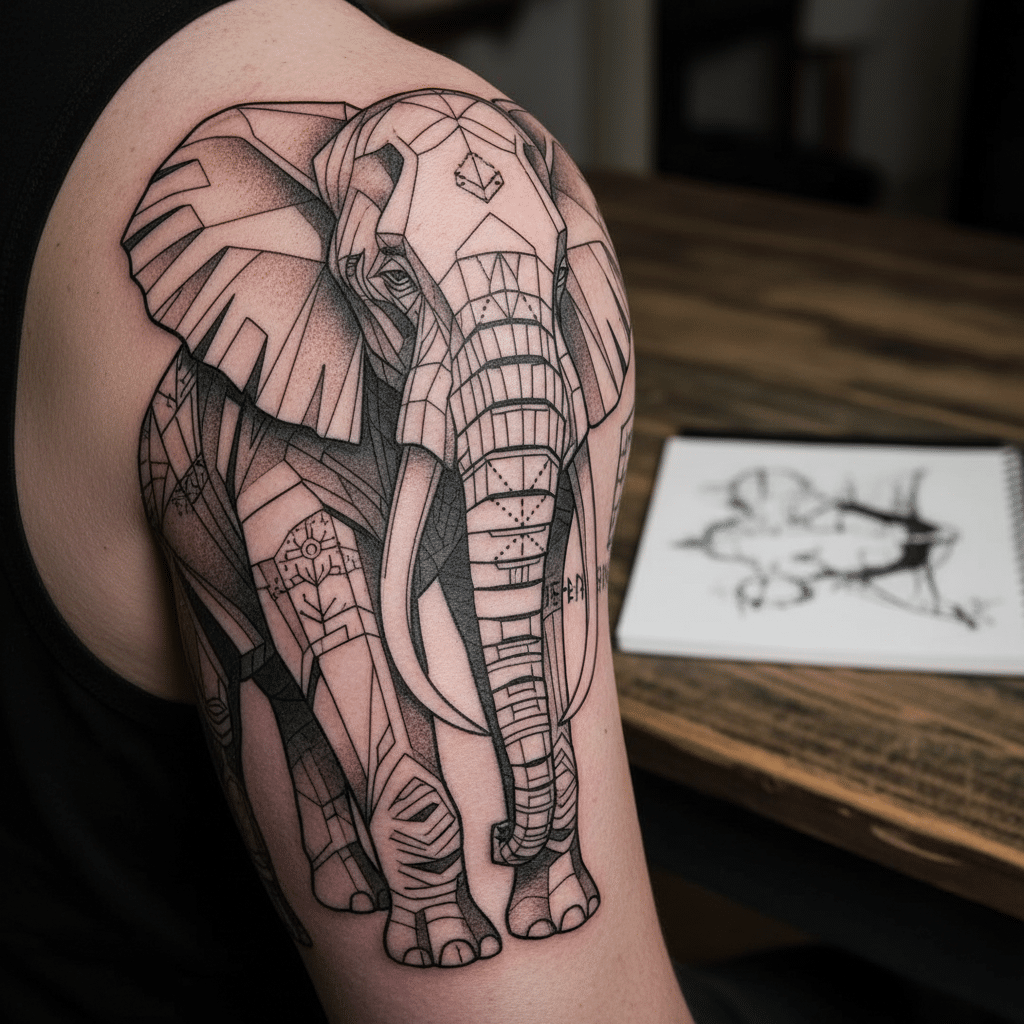
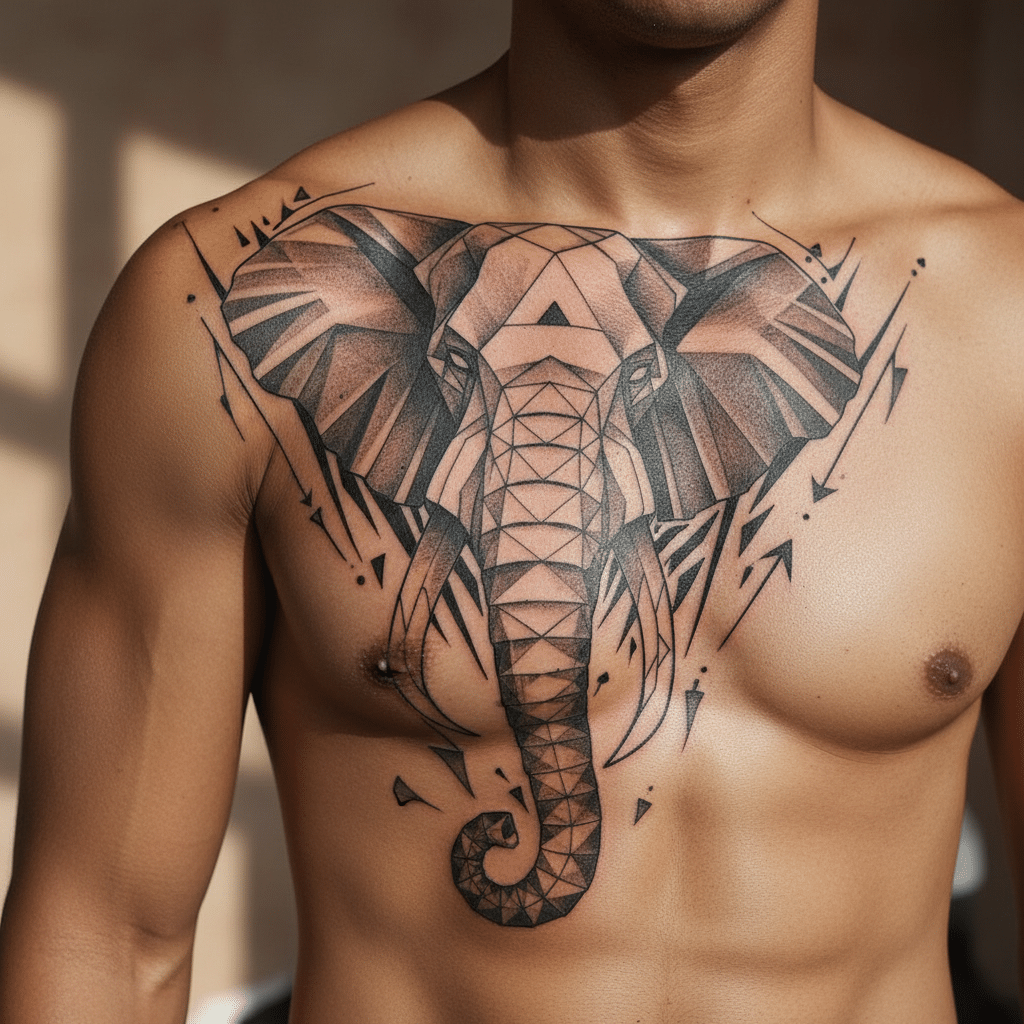
The trunk creates a natural curving element that contrasts beautifully with strict geometric form. Mandala-influenced geometric elephants (the body built from repeating radial patterns) are popular for a reason: they emphasise the animal’s connection to ancient wisdom and sacred geometry simultaneously.
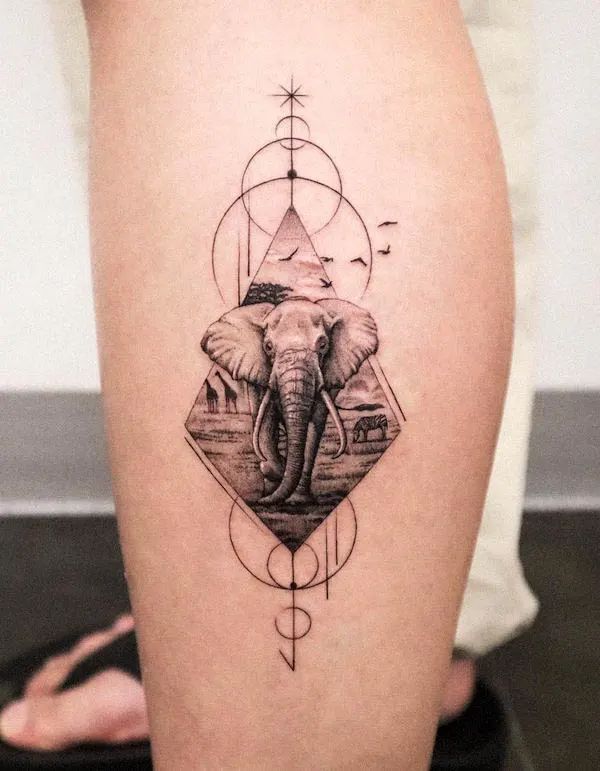
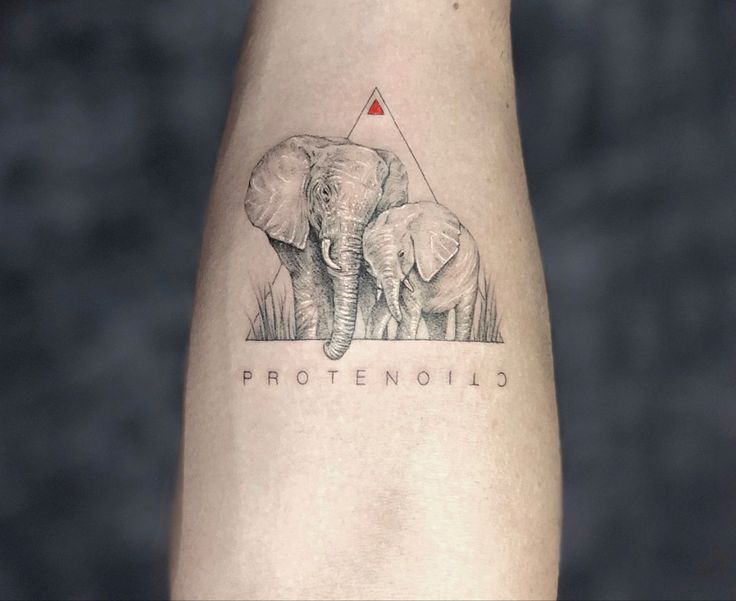
| Geometric Elephant Symbolism: Wisdom, memory, family bonds, good fortuneGeometric approach: Solid architectural polygon body, curved trunk as organic contrast, optional mandala integrationBest placement: Thigh, upper arm, chest |
9. Deer / Stag — Grace, Intuition, Connection to Nature
The stag’s antlers are what make this animal uniquely suited to geometric design. Antlers branch with natural mathematical logic—a structure that looks geometric even in reality.
A bird can handle geometric structure especially well when the wing silhouette stays clear. A geometric phoenix tattoo is a good reference point if you want symmetry, linework, and a rebirth meaning without turning the design into a full realistic bird.
Rendered in clean linework, a stag’s antler rack becomes an extraordinary organic-geometric crown. The body is typically more lightly rendered, allowing the antler structure to dominate the composition. Forest or mountain elements integrate naturally: a geometric stag in a triangulated treeline is a well-established composition for good reason.
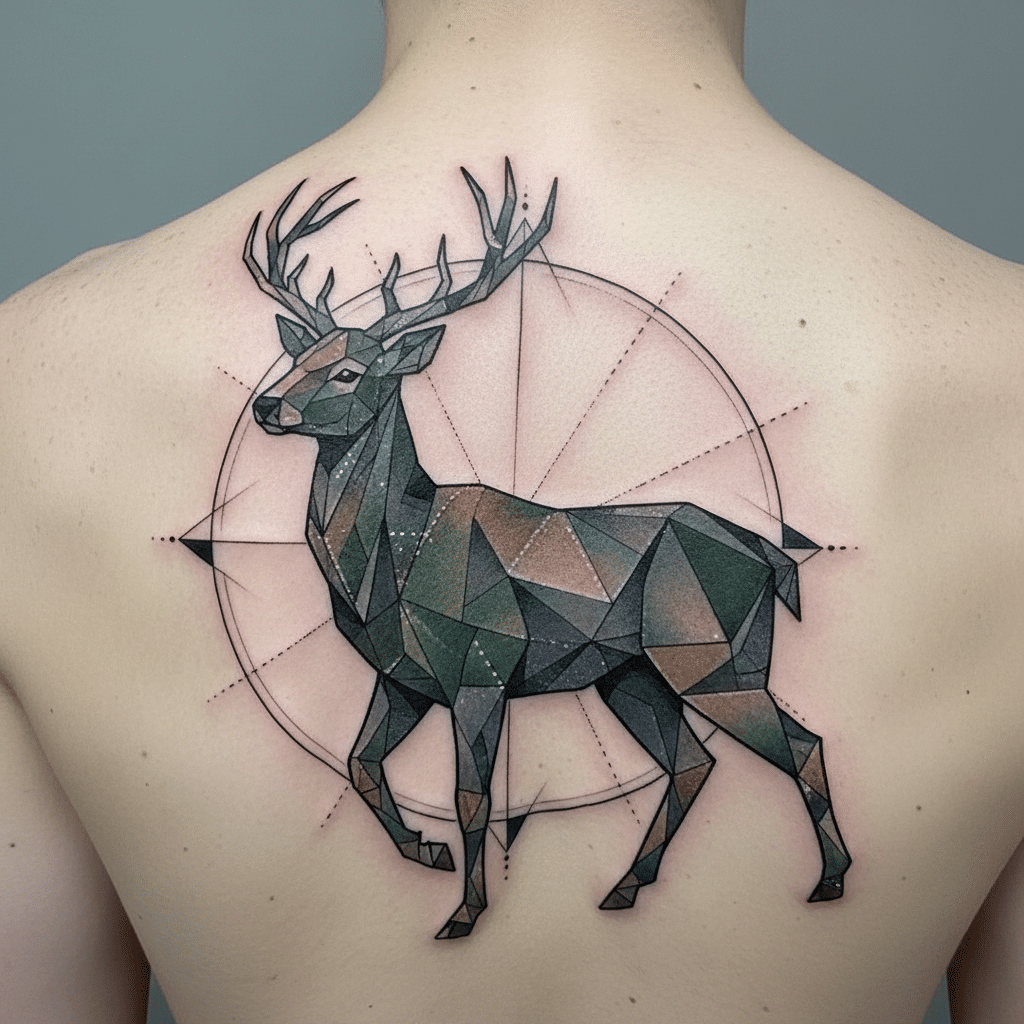
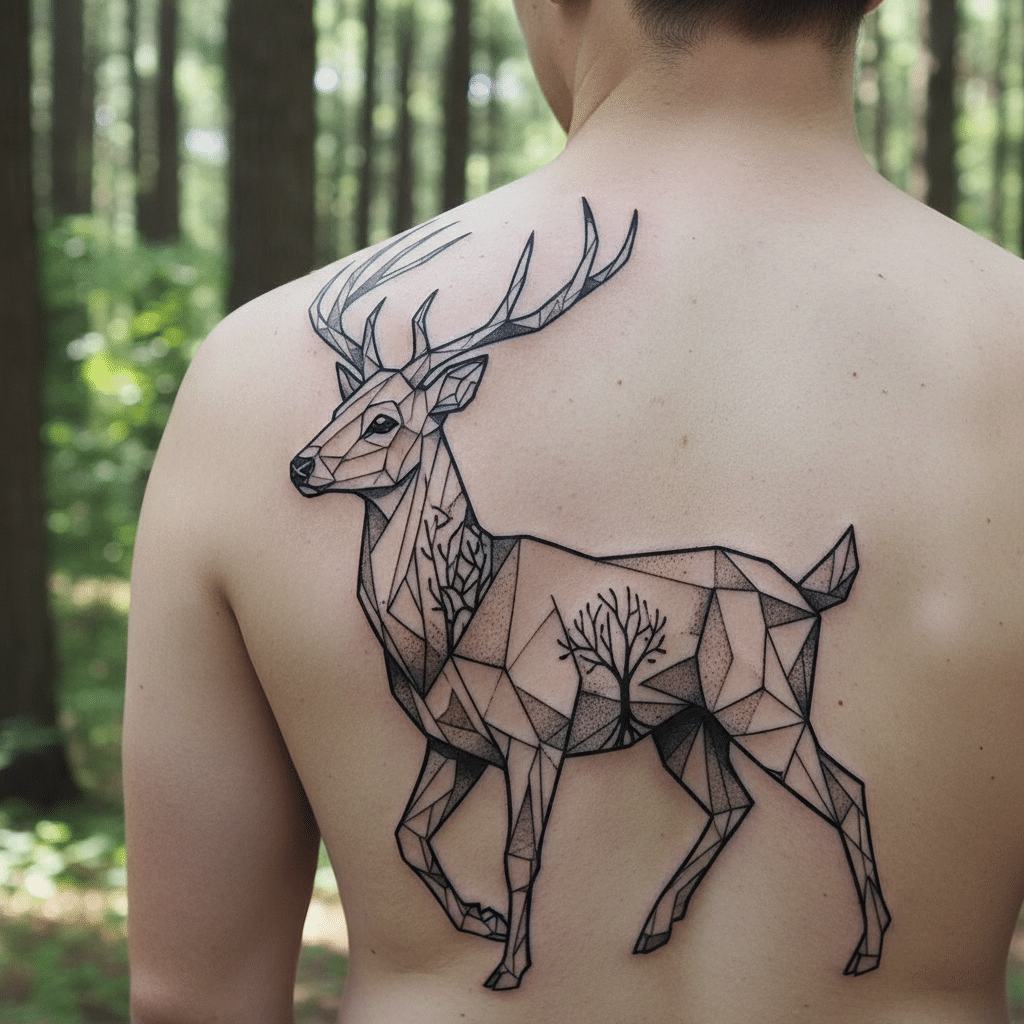
| Geometric Stag Symbolism: Gentleness, intuition, natural grace, renewalGeometric approach: Antler branching as primary geometric structure, lighter polygon body, landscape integrationBest placement: Back, chest, upper arm (for antler-forward compositions) |
10. Sea Turtle — Longevity, Navigation, Ancient Calm
The sea turtle’s shell is a ready-made geometric canvas—the natural hexagonal scute pattern is one of the strongest arguments in nature for geometric design.
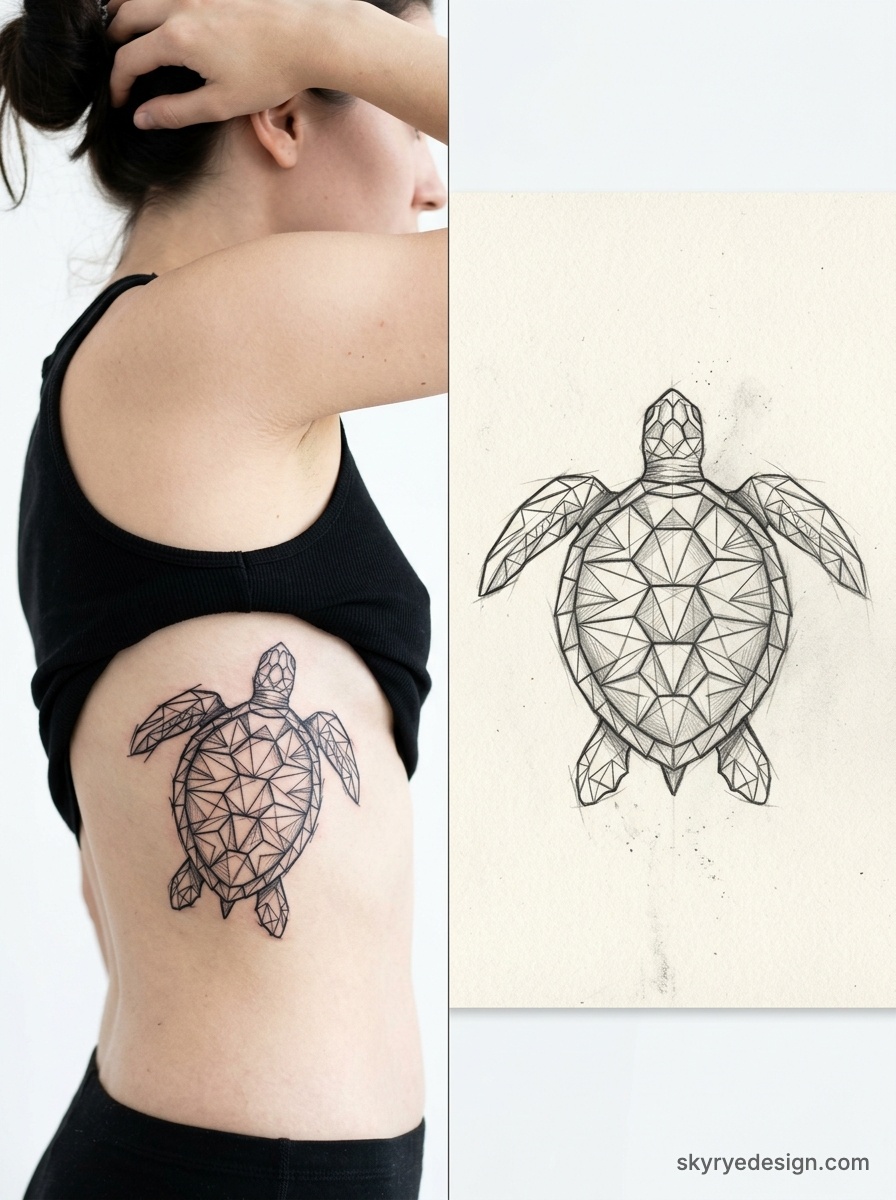
Tattooed well, a geometric sea turtle carries intricate shell patterning (hexagons, spirals, mandalas) while the body, fins, and head remain in clean geometric outline. The result is high visual complexity in the shell zone and clean simplicity everywhere else—a composition that works at any size from wrist to full back.
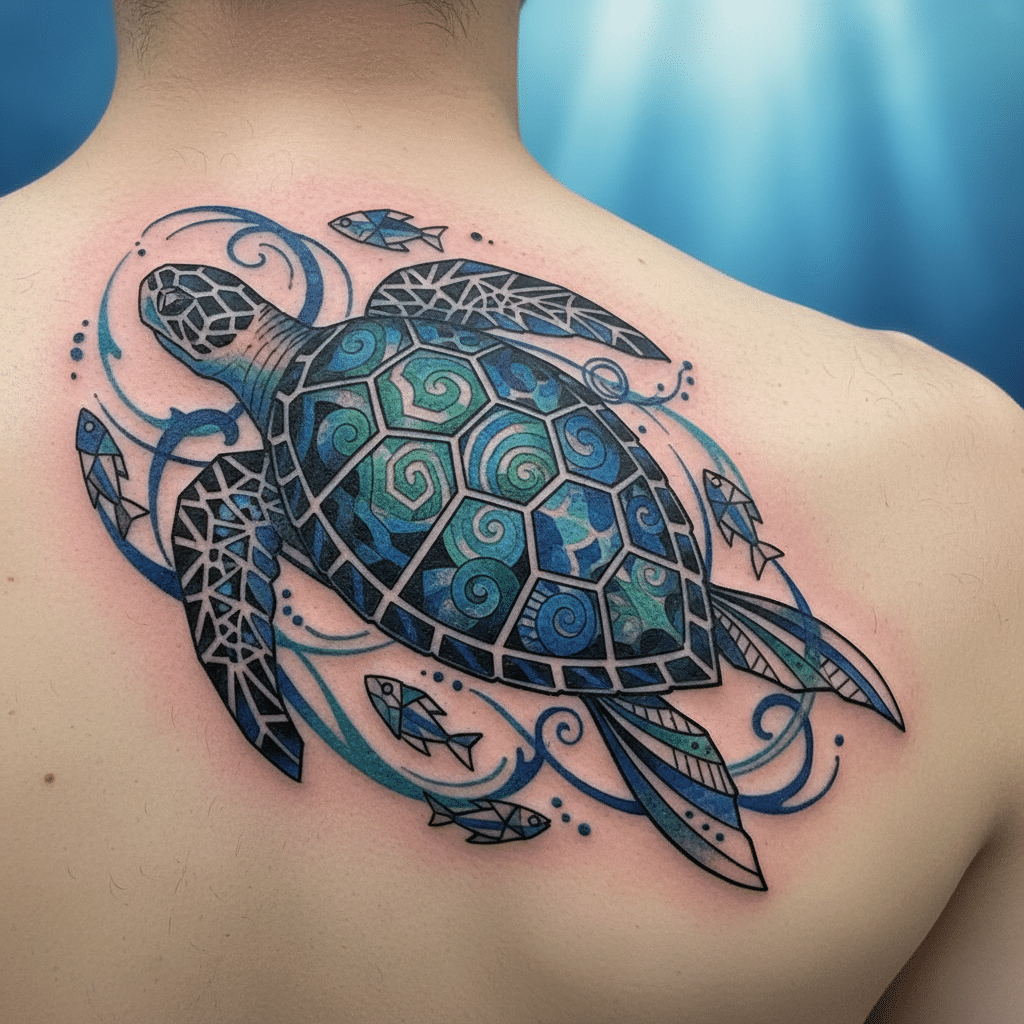
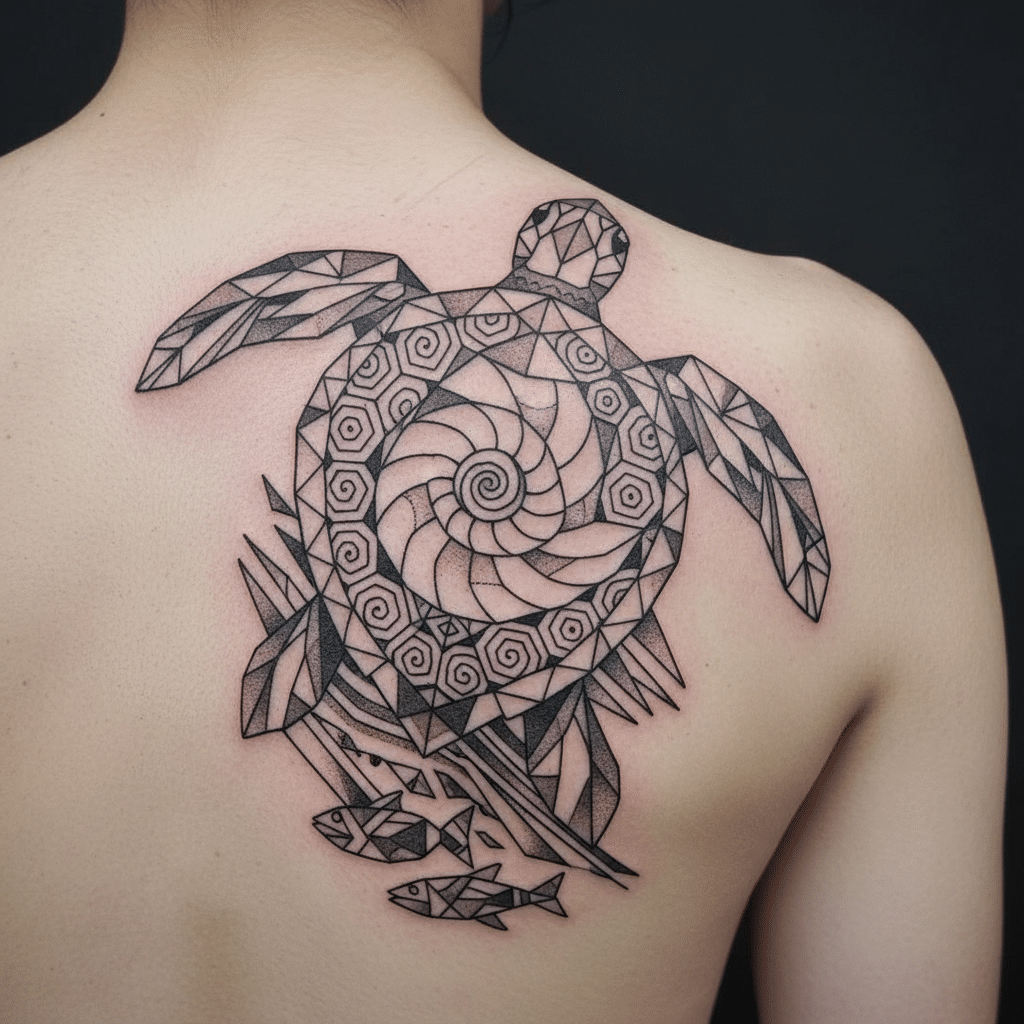
| Geometric Sea Turtle Symbolism: Longevity, patience, ancient wisdom, navigationGeometric approach: Shell as geometric centrepiece (hexagonal or mandala pattern), clean outline body and finsBest placement: Shoulder, back, upper arm, calf |
Placement Guide: Matching Animal to Body
Geometric designs interact with body contours differently than organic illustration styles. The clean lines of geometric work can emphasise or conflict with the natural curves of the body, so placement deserves genuine thought rather than a default choice.
Arms and Forearms: The Most Versatile Location
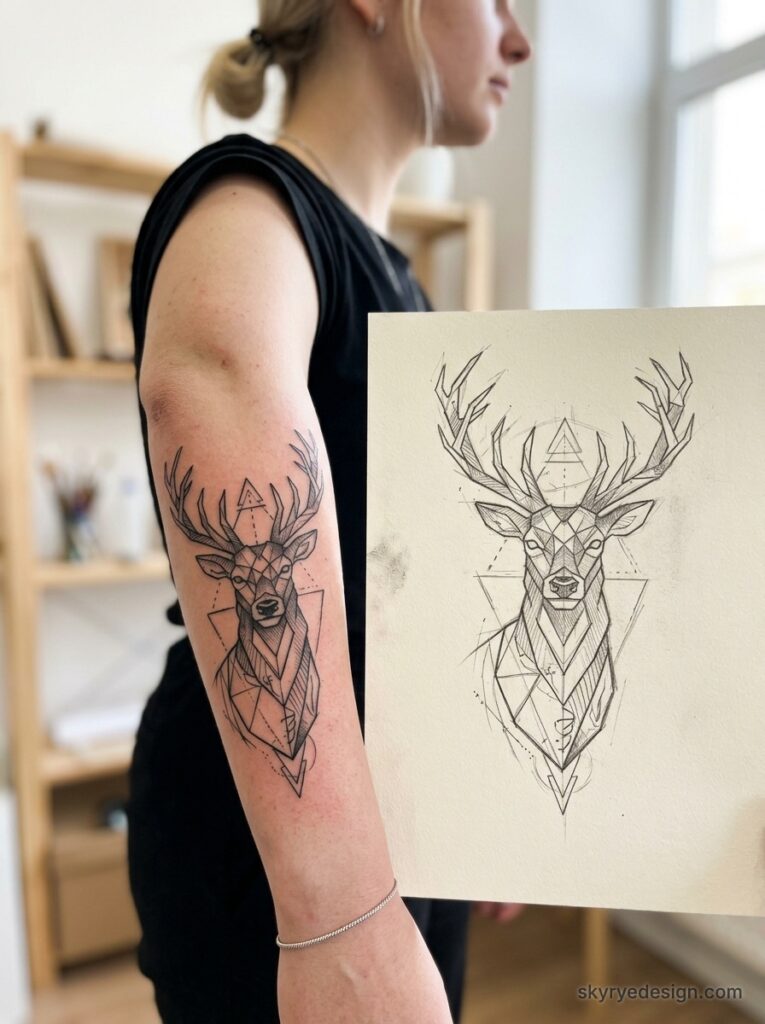
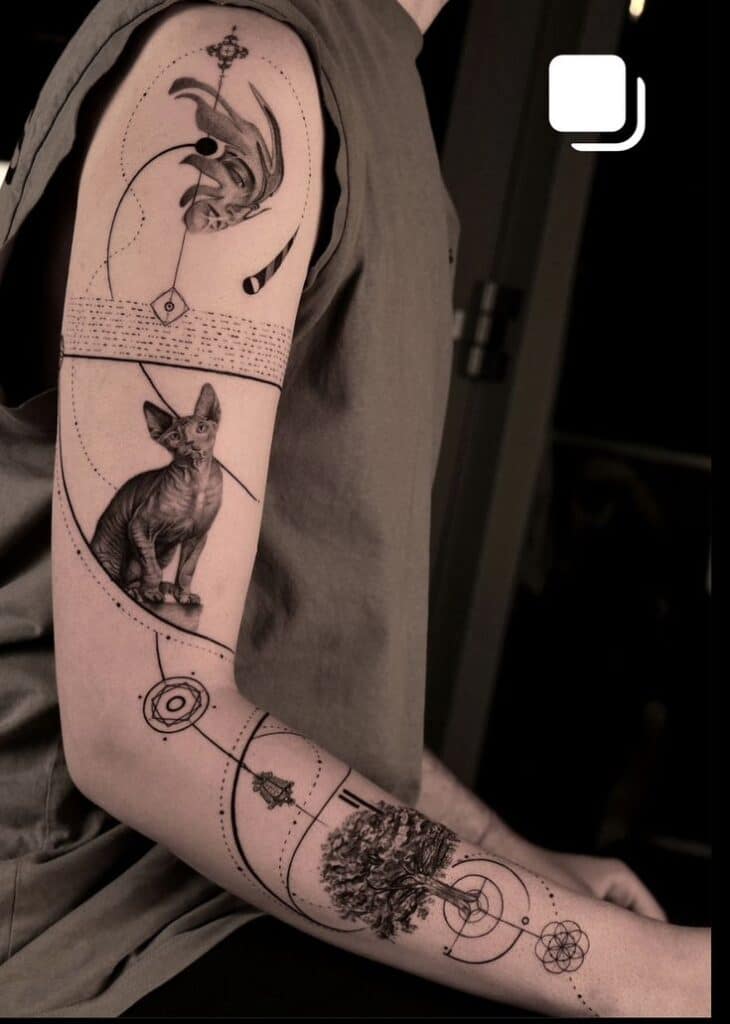
The forearm is the most viewed placement on most bodies—you see it constantly, others see it in conversation. For a geometric animal tattoo, the forearm rewards designs with a clear vertical or diagonal composition: a wolf silhouette, a fox in full stride, a snake coiling up the arm. The rectangular canvas of the forearm works with the clean lines of geometric design better than almost any other placement.
Chest: Symmetry and Statement
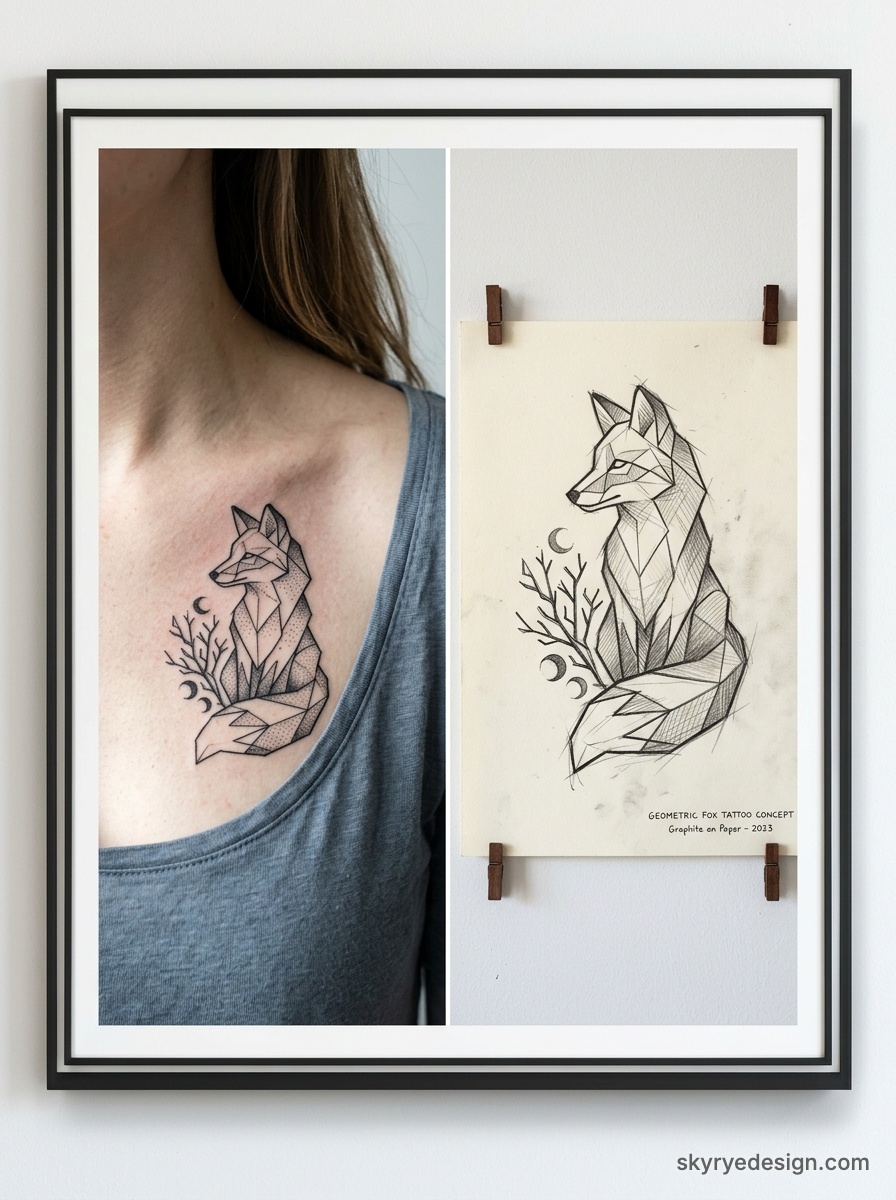
Chest placement is ideal for animals with natural symmetry: the frontal owl, the eagle in full wingspan, the centred lion face. The sternum line provides a natural axis for bilateral designs. Chest tattoos are more intimate—seen by fewer people—which often makes them the right choice for tattoos with deep personal meaning rather than purely aesthetic motivation.
Back: Full-Scale Compositions
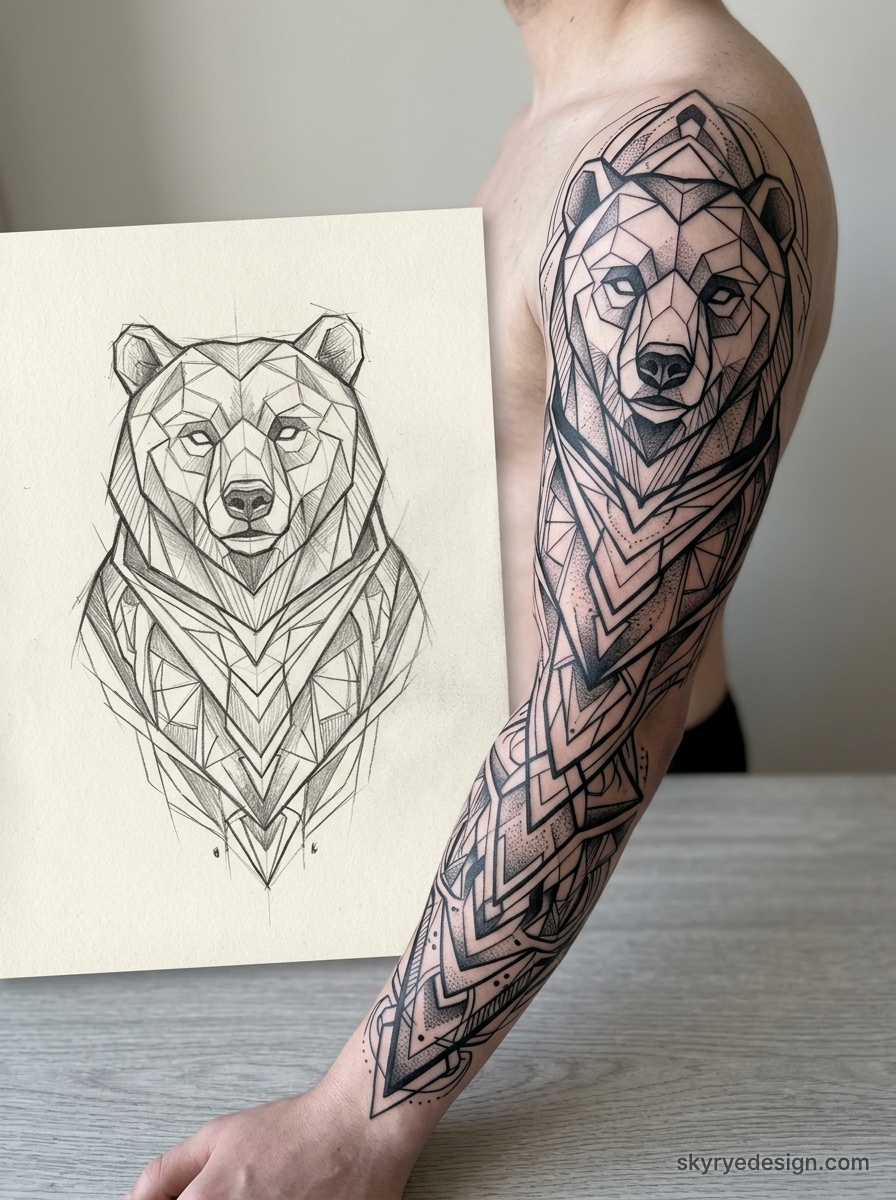
The back is where geometric animal tattoos become truly ambitious. A full-back eagle with geometric mountain elements beneath it, a wolf with a night sky and constellation geometry—these require an artist with strong composition skills, not just technical line precision. Back pieces typically require multiple sessions (4–8 hours total is a reasonable estimate for a full back geometric animal design) and the commitment should factor into the decision.
Smaller Placements: Wrist, Ankle, Behind the Ear
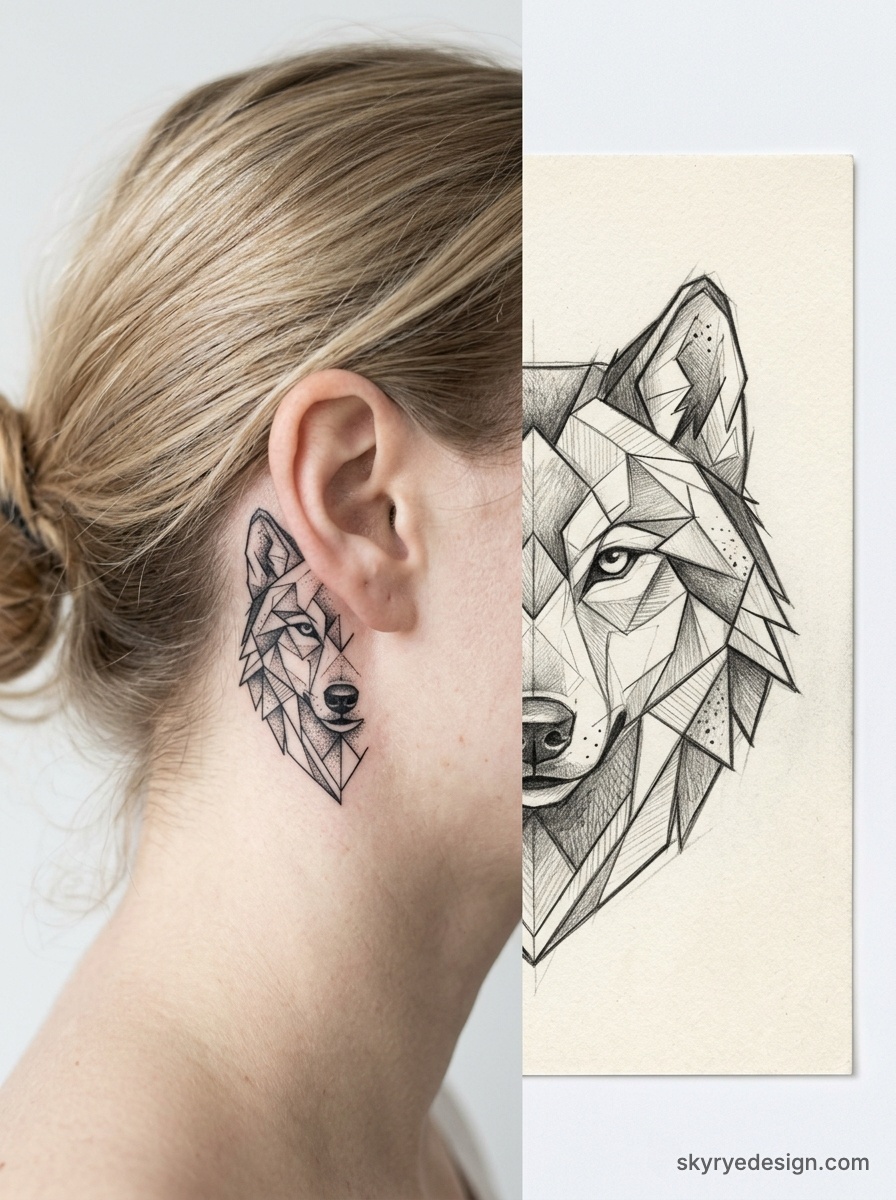
Geometric animal designs at small scale work best when the animal is reduced to its absolute essential silhouette rather than attempting micro-versions of complex compositions. A geometric wolf head at 4cm reads clearly. A full geometric wolf-in-mountain scene at 4cm becomes visual noise. For small placements, choose designs built from three to five clean geometric elements maximum.
Finding the Right Artist: What to Look for in a Portfolio
This is the part of the process most people underinvest in, and it’s the most important. A mediocre artist executing a brilliant design produces a mediocre tattoo. A skilled geometric specialist with a concept that’s 80% right produces something you’ll be proud of in twenty years.
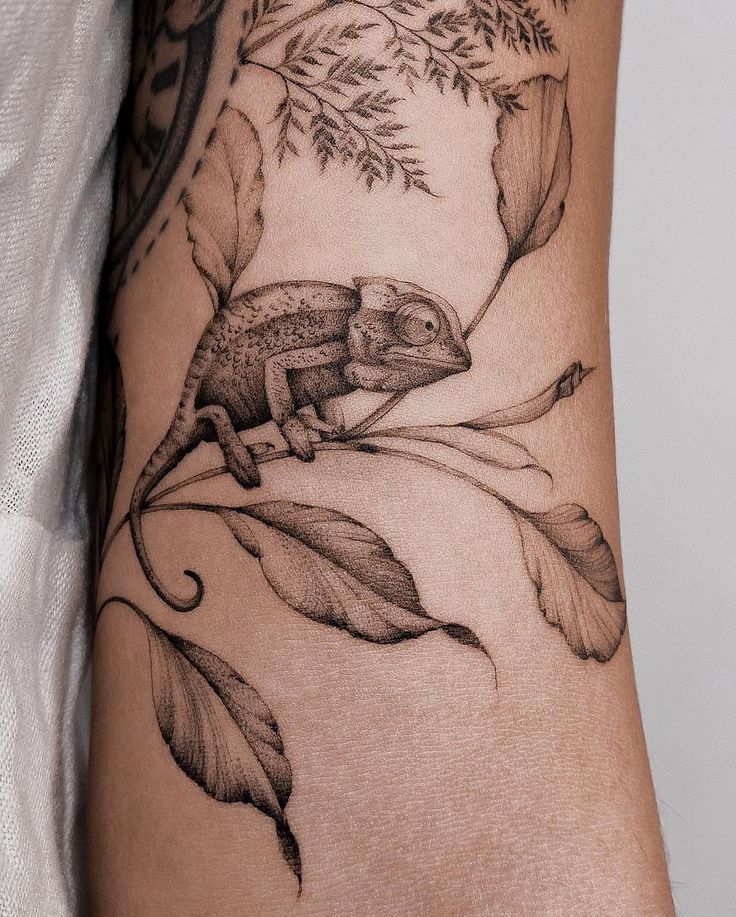
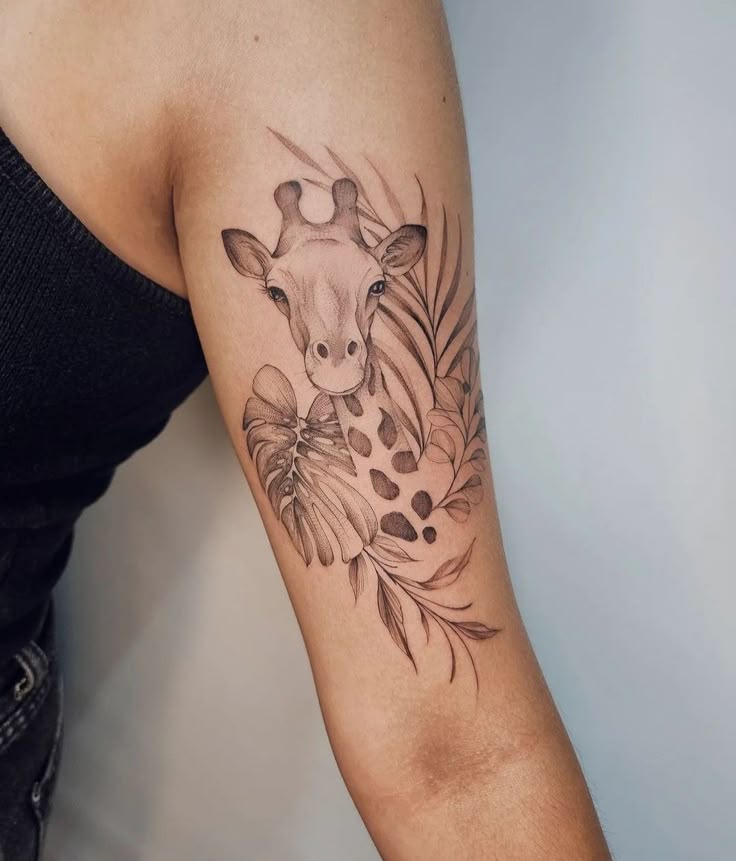
What to look for: clean, consistent line weight. Geometric tattoos expose shaky or inconsistent linework immediately—there’s nowhere to hide the way there is in organic illustration. Look at the angles in their geometric work: do corners meet precisely? Do circles look like circles? Is the dot spacing in dotwork consistent? These aren’t signs of perfectionism—they’re the baseline for competent geometric tattooing.
Also check whether their animal anatomy is correct. An artist who draws wolves with domestic dog proportions will produce a wolf tattoo that reads as a dog. Geometric style doesn’t compensate for structural inaccuracy—it amplifies it.
The consultation is where you assess whether the artist engages with your symbolism or just your reference images. A skilled geometric tattoo artist will ask why you chose this animal, not just how you’d like it rendered. They’re designing a permanent object—they should care about whether the meaning fits.
| 🖊 Artist Tip Ask any shortlisted artist to show you photographs of healed work, not just fresh tattoos. Fresh ink always looks crisp. The real test of geometric linework is how it holds after two to three years of healing. Clean lines that hold shape over time are the mark of technical mastery, not just a steady hand on the day. |
Aftercare for Geometric Tattoos: Protecting the Lines
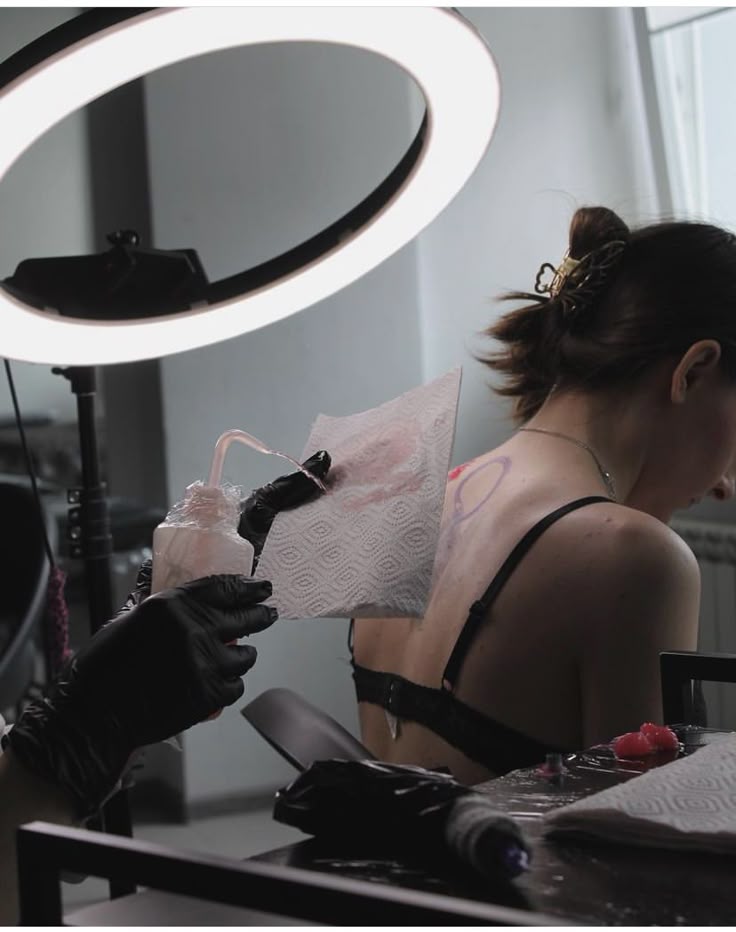
Geometric tattoos have specific aftercare vulnerabilities that organic styles don’t. Fine linework is more susceptible to sun damage than bold traditional outlines—UV breaks down the ink in fine lines faster than in thick ones. For the first three months, SPF 50 on any exposed geometric tattoo is not optional. After that, regular application whenever the tattoo will be in direct sun extends the design’s sharpness by years.
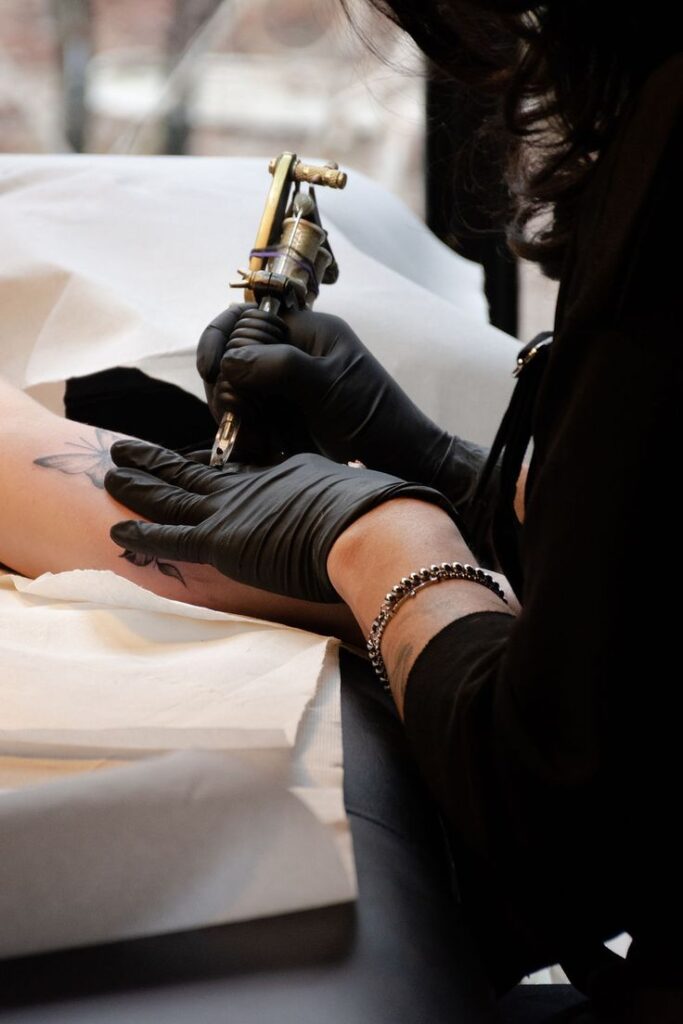
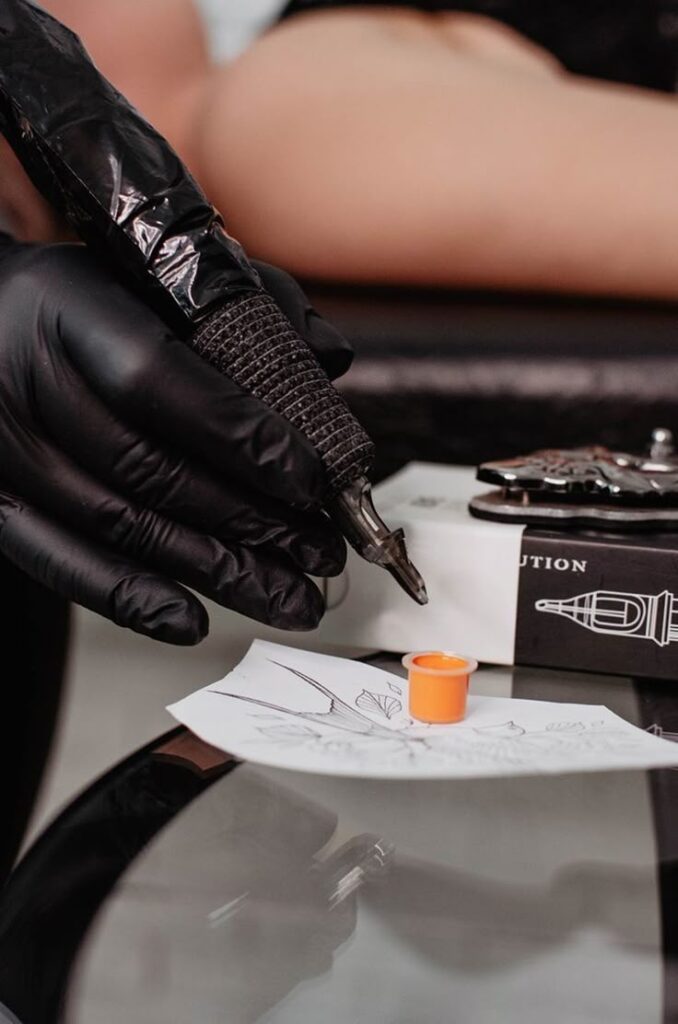
Moisturising properly during healing matters more for geometric work than many artists tell clients. Dry, flaking skin during the healing phase can lift ink unevenly—a problem that reads as faded patches in solid geometric areas and inconsistent line weight in fine linework. Fragrance-free, petroleum-free lotions (Lubriderm or Curel are reliable standards) applied twice daily for the first two to three weeks keeps ink seated correctly.
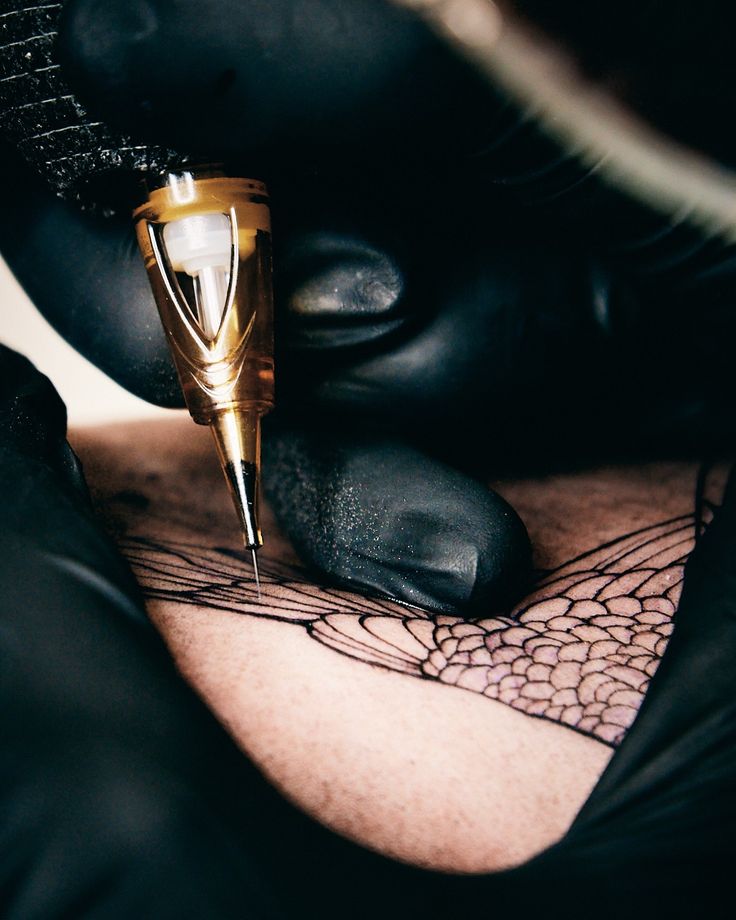
One specific note for dotwork-heavy geometric animal tattoos: dots are small, and they heal with more visible variation than solid fill. Some dots may appear lighter than others after full healing. This is normal and expected—wait the full 6–8 weeks for the skin to settle before assessing whether a touch-up is needed.
Frequently Asked Questions
How much does a geometric animal tattoo cost?
For a medium-complexity geometric animal tattoo (approximately 10–15cm, single session), expect $200–$500 at a reputable studio in a major city. Full back pieces with detailed geometric landscapes run $1,500–$4,000+ across multiple sessions. Geometric work at this level is priced on the artist’s hourly rate ($150–$300/hour for experienced specialists) rather than a flat design fee. Avoid pricing your tattoo from the cheapest quote available—in this style, technical quality is directly correlated with experience.
Do geometric tattoos age well?
Better than most styles, when executed correctly. The key factors: line weight (heavier lines hold longer than ultra-fine work), ink density (solid black areas stay darker than grey washes), placement (inner forearm and upper arm age better than hands, fingers, or feet where skin moves and exfoliates more aggressively), and aftercare quality in the first few years. Geometric designs built from bold linework with selective fine detail typically look excellent at 15–20 years. Pure ultra-fine linework may require a refresh after 8–10 years.
Which geometric animal tattoo is best for a first tattoo?
A medium-sized geometric wolf or fox (10–12cm) on the forearm or upper arm is a genuinely excellent first tattoo choice. The placement is relatively low pain, the designs photograph well, and both animals carry enough cultural resonance that the choice rarely feels arbitrary. Avoid chest or rib cage for a first tattoo—the pain is significantly higher and the healing more complex. Start with a placement you can see and care for easily.
Should I go black-and-grey or add colour?
Black-and-grey is the stronger long-term choice for most geometric animal tattoos. The mathematical precision of geometric design reads most clearly in high contrast—black lines, white negative space—and colour can dilute that clarity if it isn’t used very deliberately. Selective colour works well: a geometric fox with amber-toned fill in the body but black geometric line structure, for example. Full-colour geometric work requires an artist with specific colour theory skill and is harder to source than black-and-grey specialists.
How do I find a geometric tattoo artist near me?
Instagram is the most reliable portfolio tool for this style—search #geometrictattoo, #geometricalanimaltattoo, and location tags for your city. Tattoodo.com and Style Seat both allow filtering by style. The most important step is looking at healed work, not just fresh photos. Ask artists in DMs whether they have a healed work album. Any specialist who’s been tattooing this style for three or more years should have one readily available.
Can geometric animal tattoos be removed if I change my mind?
Yes, but geometric tattoos present specific removal challenges. Dense black ink in solid geometric areas responds well to laser removal (Nd:YAG 1064nm is the standard). Fine linework and dotwork respond inconsistently—some ink clears quickly, some requires more sessions than expected. Budget 6–12 sessions spaced 6–8 weeks apart for a medium-complexity geometric removal. Prevention is significantly cheaper and less painful than removal: invest in the right design and artist the first time.
For a structured animal motif, a geometric sea turtle tattoo gives the shell a natural place for pattern, symmetry, and dotwork.
- 536shares
- Facebook0
- Pinterest536
- Twitter0
- Reddit0