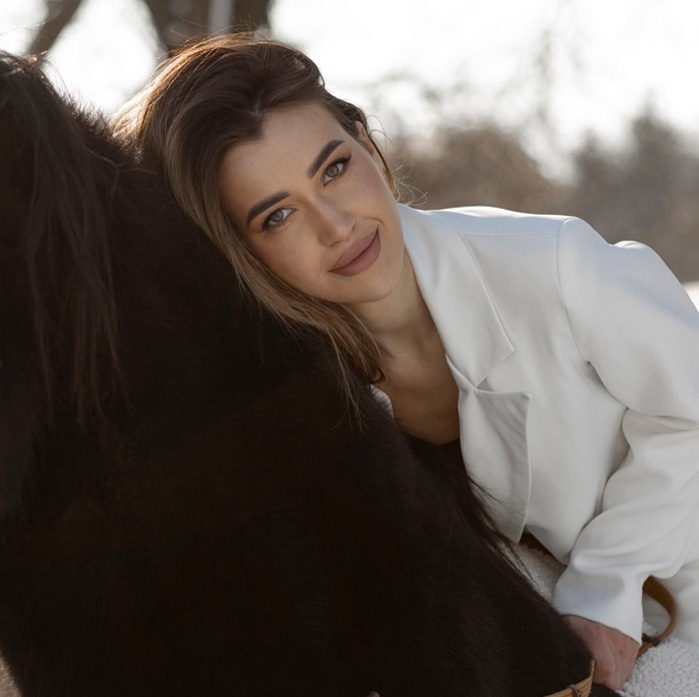
Selfie poses for girls work best when the pose feels relaxed but still has a clear shape. The right selfie pose can soften the shoulders, define the jawline, bring light into the eyes, and make the background feel intentional instead of accidental.
This guide keeps the focus on 30 practical selfie ideas: soft smiles, side glances, mirror shots, seated poses, close-ups, props, background choices, and quick technical fixes. Use it when you need a pose that looks natural on Instagram, TikTok, a profile photo, or a casual camera-roll moment.
What are the best selfie poses for natural photos?
The selfie poses that work are the ones where face, hands, and background are doing the same job instead of pulling in different directions. Camera slightly above eye level, shoulders turned, chin forward just enough to define the jaw — not so far it looks deliberate.


Soft smile, side glance, mirror shot with one hand visible, seated with crossed legs, close-up where hair or sunglasses or a sleeve frames the face. Those are the starting points. Light does more than any of them: window light, open shade, golden hour. Overhead lighting is why most bathroom selfies look off even when everything else is right.
Keep the background simple unless it’s actually adding something — a clean wall, a cafe table, a car mirror, a street with enough going on to feel like context rather than clutter. Shoot more than you think you need. The relaxed one is never the first frame.
With some simple tips and a bit of practice, anyone can take a great selfie. Understanding how to position oneself and use available tools can lead to impressive results.
Use this as a quick pose menu before you start shooting. Pick one idea, take three versions, then change either the angle, the crop, or the hand placement.
Key Takeaways
- Natural-looking selfies usually start with soft light, a slight shoulder turn, and a relaxed expression.
- Mirror selfies, side glances, close-ups, seated poses, and prop-based shots all work better when the background is clean.
- Take several versions of the same pose and change one thing at a time: camera height, face angle, hand placement, or crop.
The Art of the Selfie


Taking the perfect selfie is a mix of understanding basic techniques and clever compositional choices. Attention to lighting and angles can enhance the overall quality of a photo.
Understanding the Basics
To start, it’s important to know the key elements of a good selfie. A well-placed camera or smartphone is crucial. Most people hold their device slightly above eye level to create a flattering perspective.
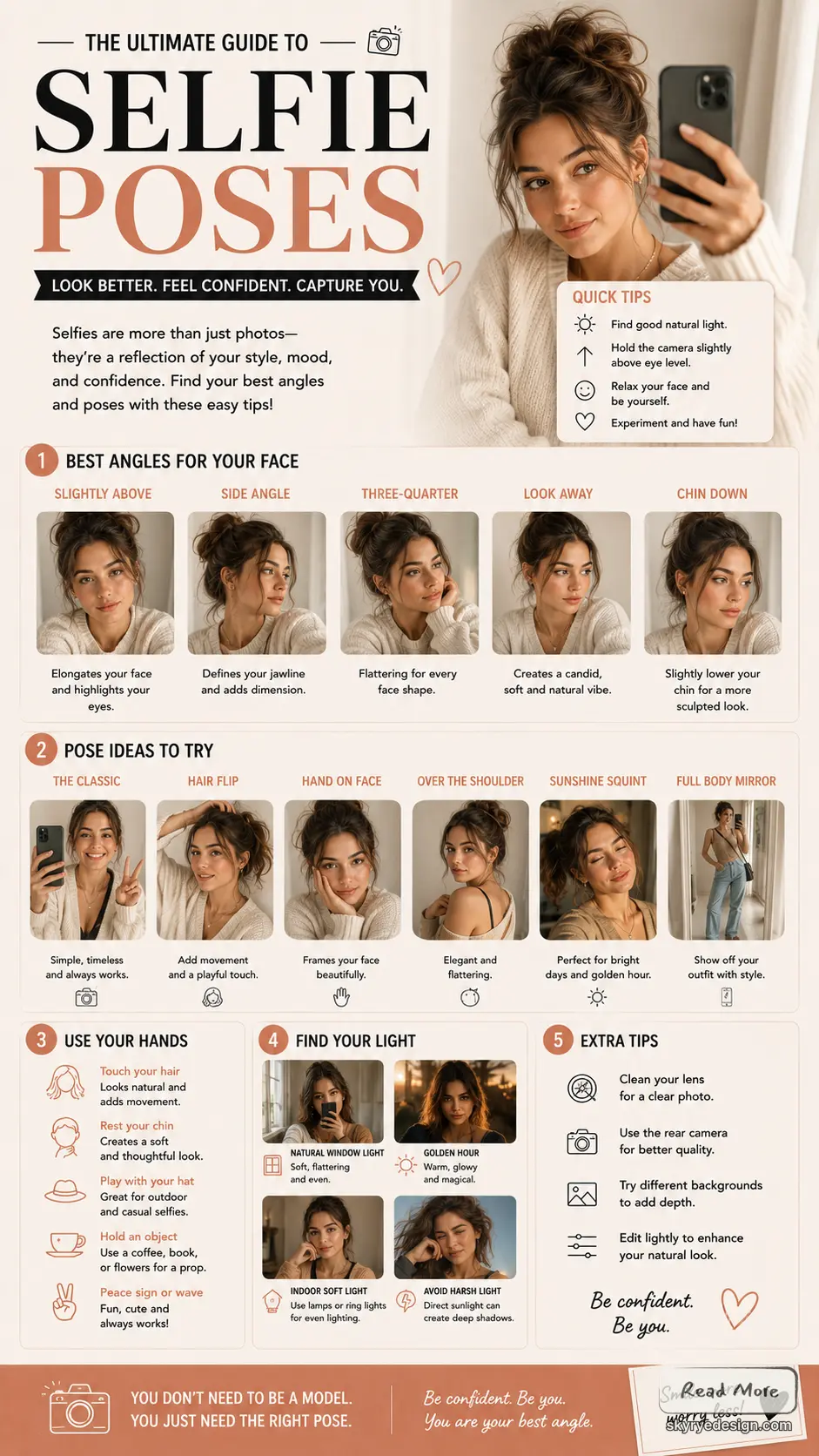
When framing the shot, the rule of thirds is a useful starting point. Turn on the phone grid and place the eyes near an upper intersection instead of centering the face every time. Adobe’s rule of thirds guide explains the composition idea clearly, and it works just as well for a quick phone selfie as it does for a portrait shoot.
Also, practicing different facial expressions can make a big difference. A genuine smile or a subtle look adds personality, making the selfie more engaging.
| # | Selfie pose | Quick cue |
|---|---|---|
| 1 | Soft smile | Relax the mouth first, then smile with the eyes. |
| 2 | Side glance | Look just past the lens for a candid feel. |
| 3 | Mirror selfie | Hold the phone low enough to keep the face visible. |
| 4 | Two-handed selfie | Use both hands to steady the frame and soften the shoulders. |
| 5 | Chin-on-hand pose | Rest lightly on the fingers instead of pressing into the face. |
| 6 | Over-the-shoulder look | Turn the body first, then bring the eyes back to camera. |
| 7 | Sunglasses pose | Tilt the frames slightly so they catch light without hiding the face. |
| 8 | Hair-framing close-up | Let hair or a sleeve frame one side of the image. |
| 9 | Seated cafe selfie | Use the table edge as a clean foreground line. |
| 10 | Car mirror selfie | Watch reflections and keep the background uncluttered. |
| 11 | Phone-cover face crop | Hide only part of the face so the pose still feels intentional. |
| 12 | Laughing candid | Take a burst while moving, then choose the least forced frame. |
| 13 | Golden-hour profile | Turn toward the light and keep the shadow side soft. |
| 14 | High-angle selfie | Raise the camera slightly, but avoid stretching the neck. |
| 15 | Low-angle street shot | Use architecture behind you to make the angle feel deliberate. |
| 16 | Hand near collarbone | Keep fingers loose to avoid a stiff fashion-catalog pose. |
| 17 | Book or coffee prop | Let the prop explain the mood without covering the face. |
| 18 | Workout mirror pose | Keep the phone vertical and shoulders relaxed. |
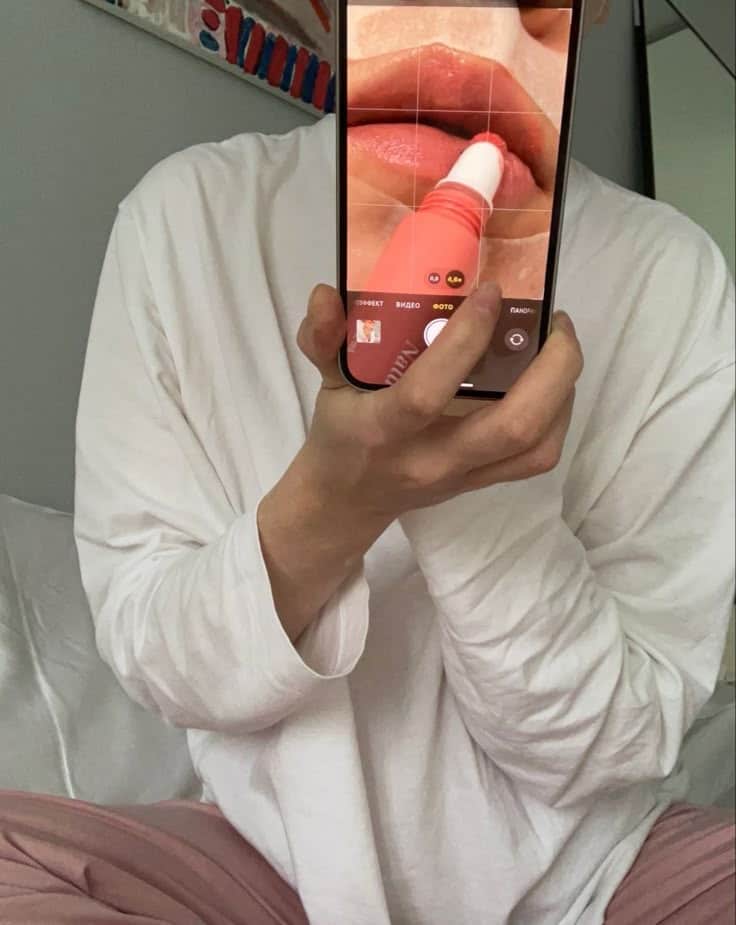
| 19 | Makeup detail close-up | Crop around eyes, lips, or nails with clean light. |
| 20 | Walking selfie | Move slowly and let the background blur naturally. |
| 21 | Window-light portrait | Stand near the window, not directly under overhead light. |
| 22 | Hat or cap pose | Tip the brim up so it does not cast a hard shadow over the eyes. |
| 23 | Group selfie | Put faces on different heights so the frame feels lively. |
| 24 | Pet selfie | Let the pet move and keep your own expression simple. |
| 25 | Outfit mirror shot | Step back enough to show shoes, sleeves, and silhouette. |
| 26 | Close crop with texture | Use knitwear, denim, jewelry, or hair texture as detail. |
| 27 | Backseat selfie | Use side-window light and avoid bright windshield glare. |
| 28 | Half-face crop | Keep one eye sharp so the crop feels graphic, not accidental. |
| 29 | Upward hair flip | Use burst mode and choose the frame with the cleanest shape. |
| 30 | Natural no-pose selfie | Look at the screen, breathe out, then take the shot before overthinking it. |
Composition and Technique
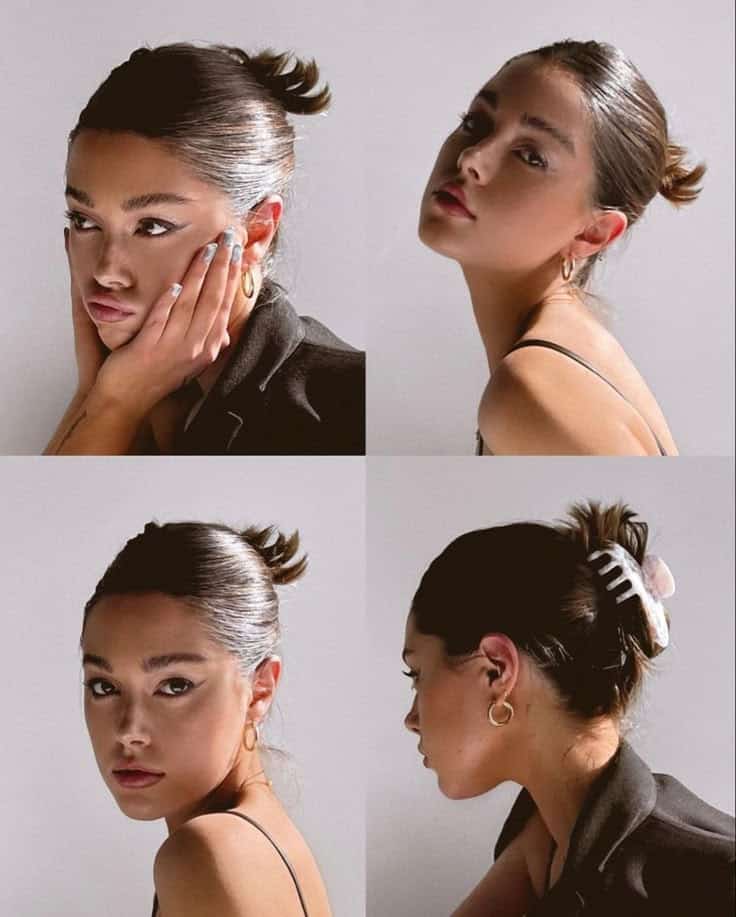
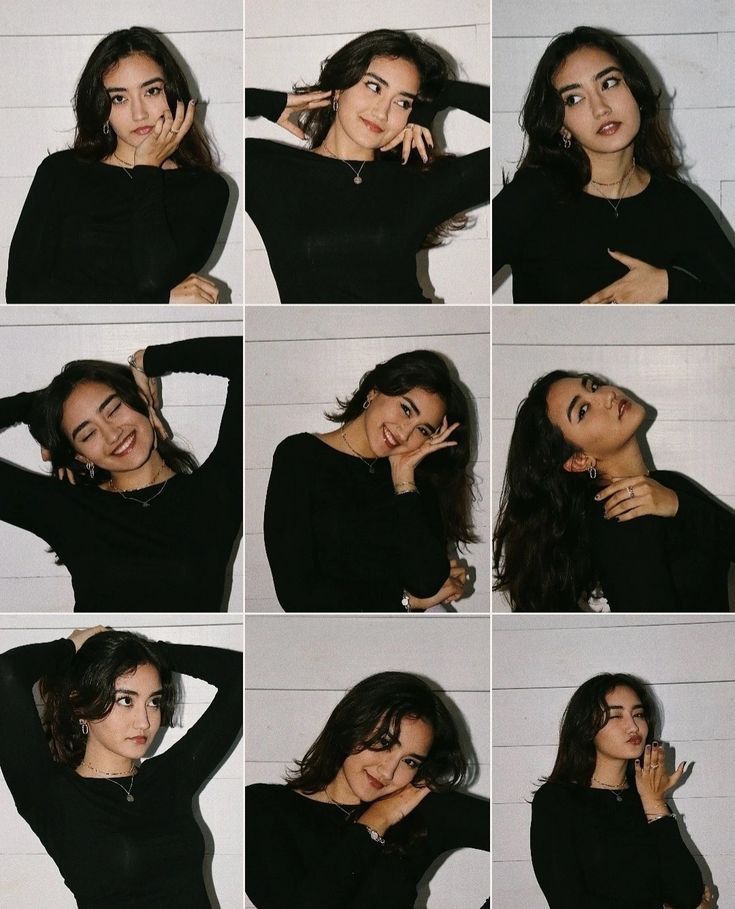
Composition is about how elements are arranged in a photo. Keeping backgrounds simple helps the subject stand out. Busy backgrounds can distract from the person in the selfie.
To create depth, try positioning the camera at a slight angle rather than straight on. This can capture more of the surroundings and make the selfie feel more dynamic.
Many people also consider using props or interesting settings. This adds context and can make each selfie unique. Choosing the right pose also plays a key role. Confidence shines through in the way someone presents themselves.
Lighting and Angle Considerations
Good lighting is key to a perfect selfie. Natural light is often the best choice. Positioning oneself near a window or outdoors can help illuminate the face, minimizing shadows.
Golden hour, shortly after sunrise or before sunset, offers soft lighting that flatters portraits. Additionally, avoiding harsh overhead lights can prevent unflattering shadows.
Angles also matter greatly. Tilting the head slightly or experimenting with different camera heights can help capture the best features. It’s common to take several shots to find the most flattering angle and natural expression.
Classic Selfie Poses
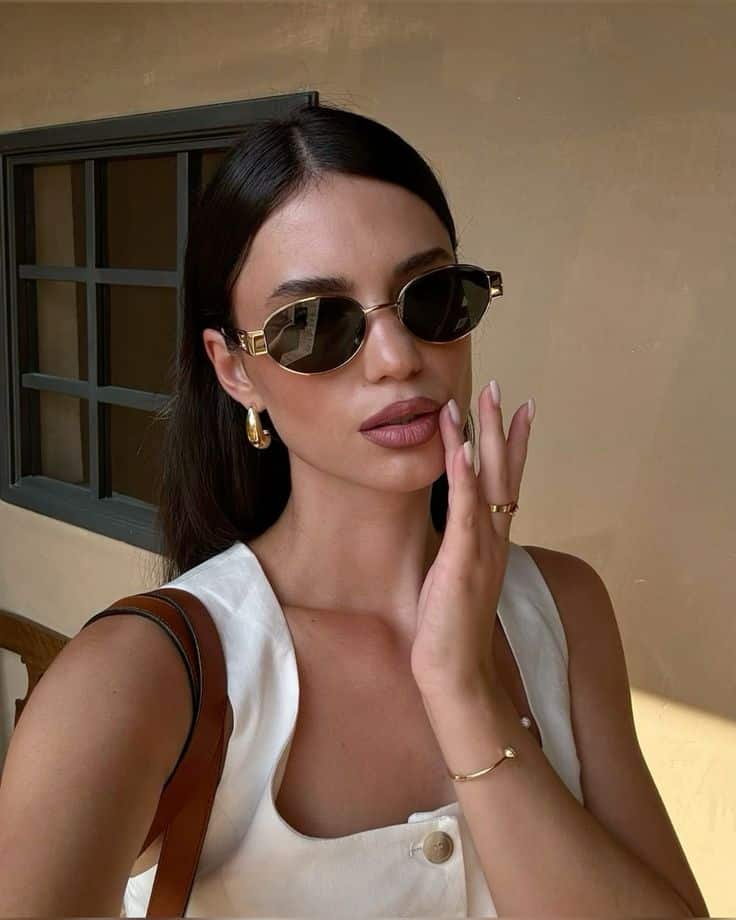

Classic selfie poses are popular choices that many people use to enhance their photos. These poses can show personality and confidence while ensuring a flattering look. Here are three classic options that stand out.
The Smile
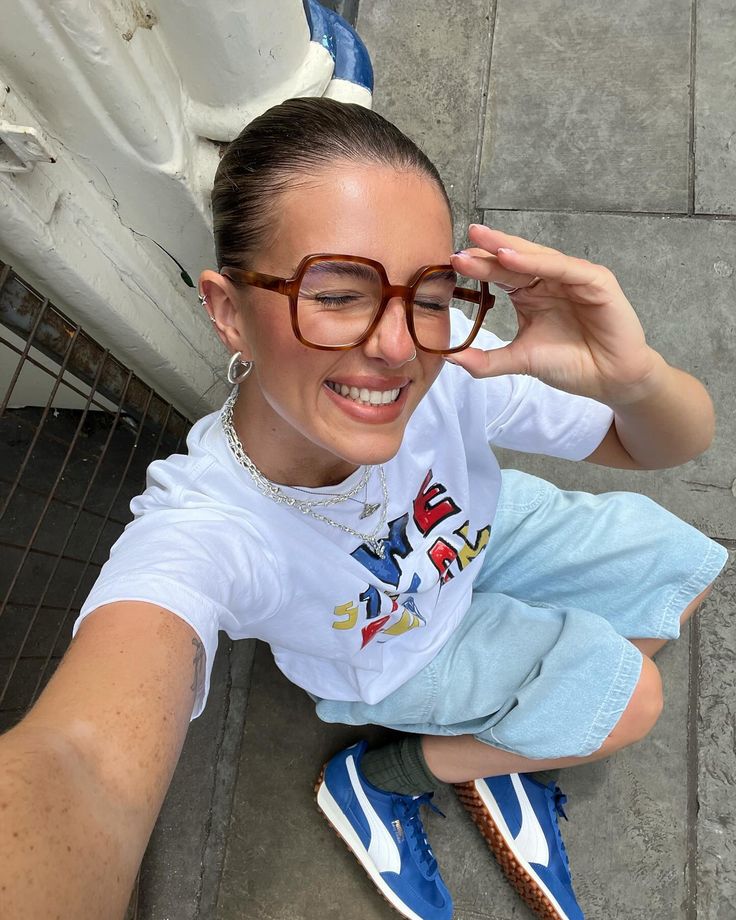
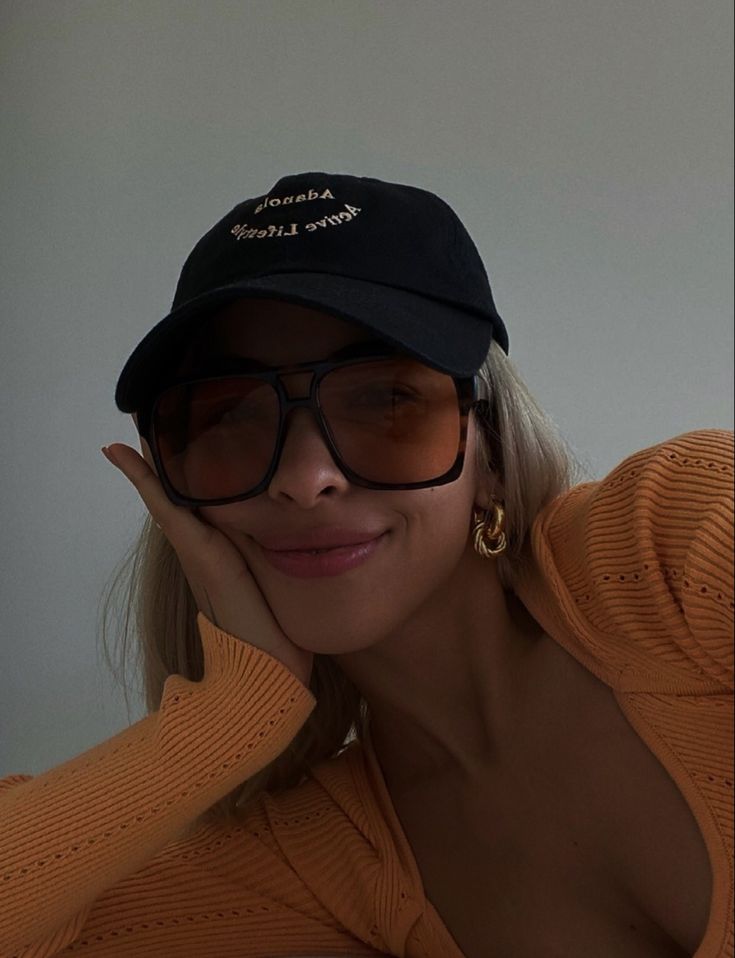
A genuine smile is one of the best ways to connect with the audience in a selfie. This pose comes across as friendly and approachable. To create the perfect smile selfie, start by relaxing the face. A slight tilt of the head can add interest.
It’s also helpful to practice smiling naturally. A forced smile may look less appealing. Focusing on happy thoughts can help produce an authentic smile. Lighting is important too; try to face a light source for a bright, clear expression.
The Duck Face
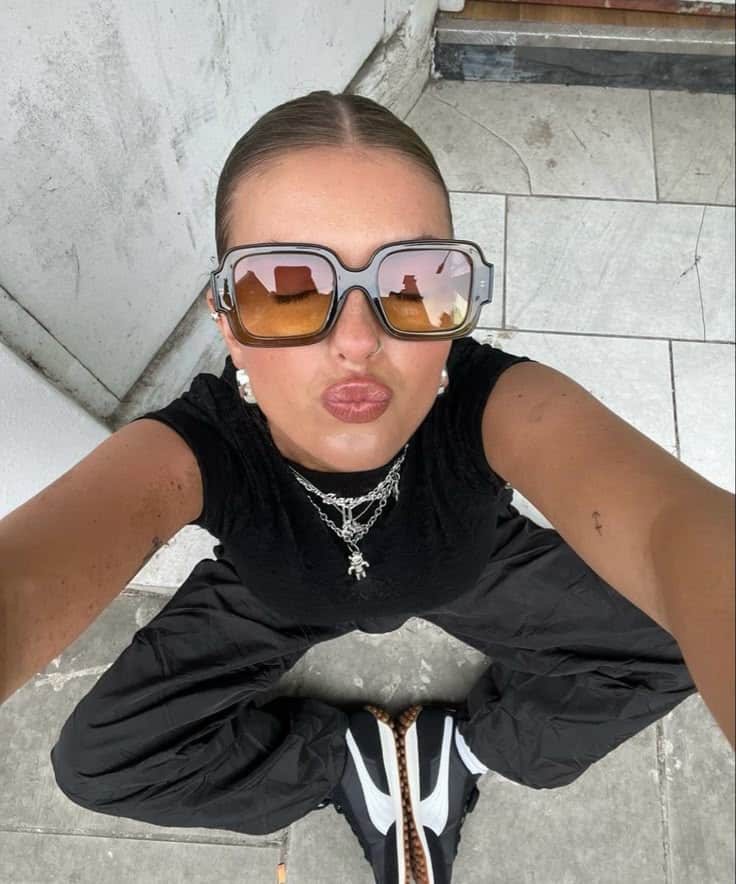

The duck face is a well-known pose that involves pouting the lips. This can create a playful image but can also look exaggerated if done poorly. To achieve this pose, slightly push the lips forward while keeping the mouth closed.
Proper angle is vital for this pose. Tilting the head a bit can help show off the jawline. Some people find that slightly raising the eyebrows adds to the effect. It’s best to practice to find a balance that looks natural yet fun.
The Side Look
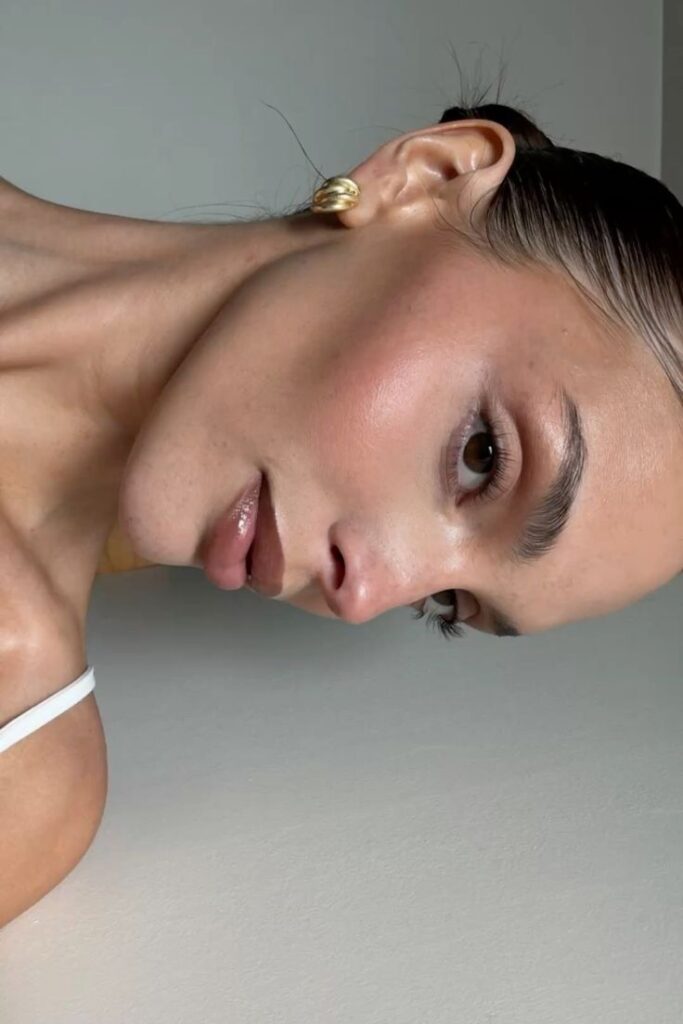
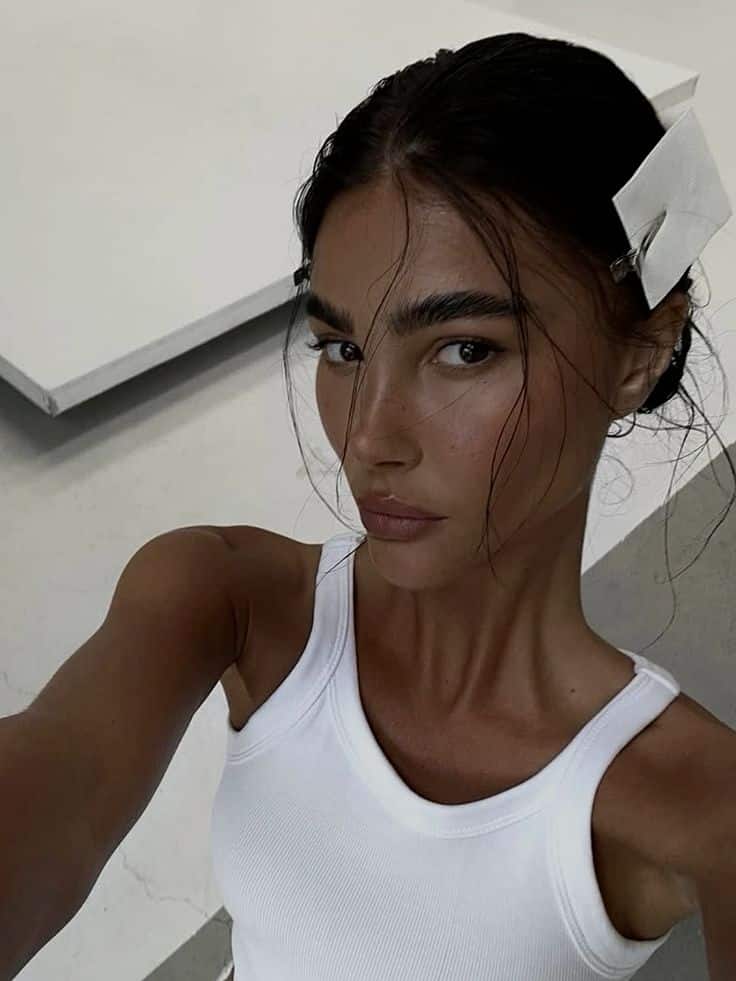
The side look pose can give a selfie a more candid feel. Instead of facing the camera directly, turning one’s head to the side creates depth. This angle can highlight features like the cheekbone or jawline.
For the best results, find a flattering angle that shows your features well. Relaxing the jaw and keeping the eyes soft can enhance this pose. This approach often results in a sophisticated and artistic photo, perfect for sharing on social media.
Innovative Selfie Poses
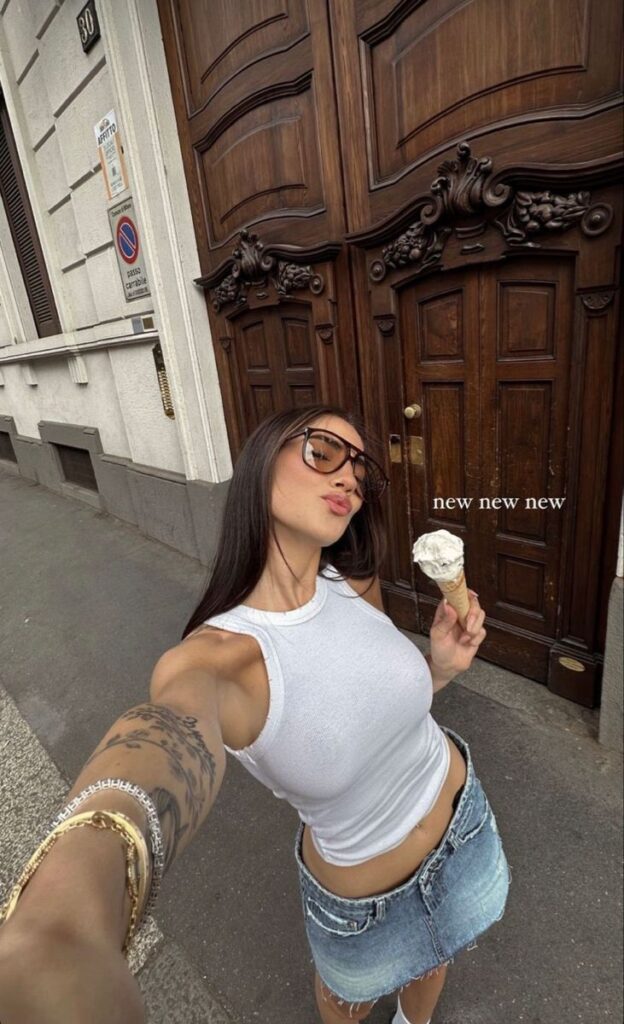

This section explores unique selfie poses that can take your photos to the next level. From using both hands to creative mirror tricks, these ideas will help anyone capture striking images.
The Two-Handed Selfie
The two-handed selfie is a fun and engaging way to add energy to a photo. Instead of holding the camera with one hand, using both hands allows for more expressive poses.
To execute this pose, the person can hold the camera with one hand and use the other hand to create a gesture, such as a peace sign or a wave. This position not only adds personality, but it also helps to stabilize the camera for clearer shots.
Try angling the camera slightly upwards. This angle can make the subject look taller and more confident. It also lends a more dynamic feel to the overall picture.
The Creative Mirror Shot

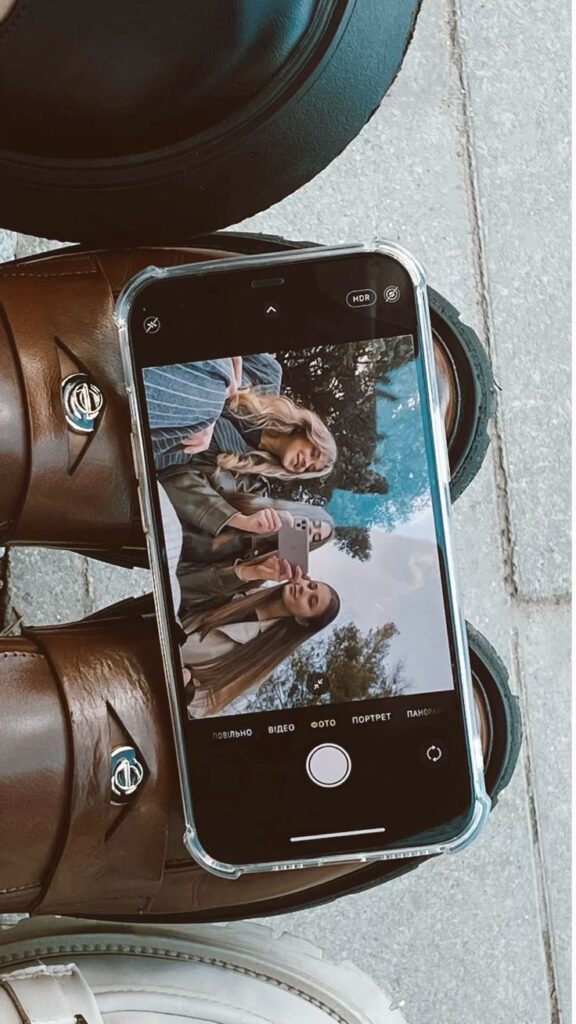
The creative mirror shot is a popular choice for those looking to elevate their selfie game. This pose involves using mirrors to create interesting reflections.
To achieve this, find a well-lit mirror and angle the camera to capture both the person and their surroundings. This can add depth and context to the image.
Incorporating different angles, such as shooting from above or below, can make the photo even more unique. Adding props, like sunglasses or interesting outfits, can enhance the visual story.
Dynamic Angles and Poses
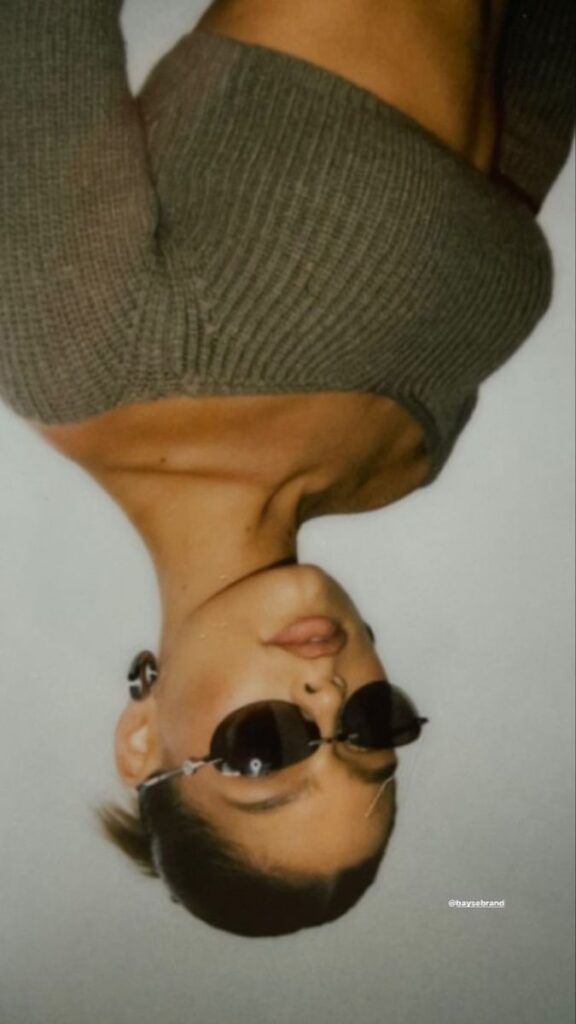

Dynamic angles are key to taking standout selfies. Instead of facing the camera straight on, turning slightly to the side or tilting the head can create a more flattering look.
Using different heights and levels can also change the vibe. Kneeling or standing on something slightly elevated shifts the perspective.
Experimenting with body movements, like jumping or tilting, can lead to spontaneous, playful shots. The right angle can highlight features and create a more interesting composition for the viewer.
Props and Backgrounds
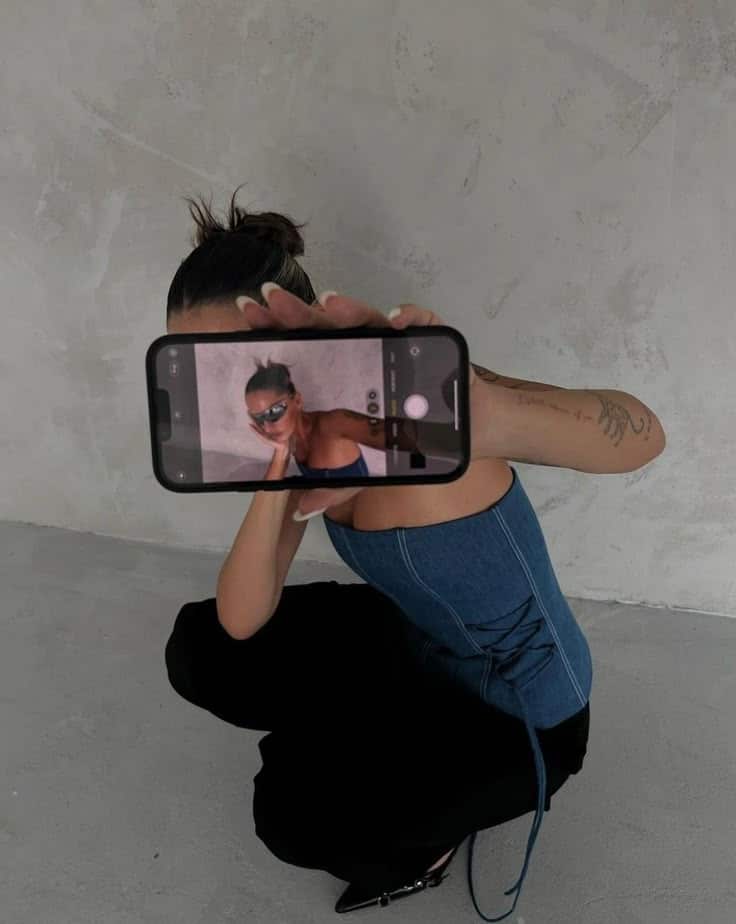
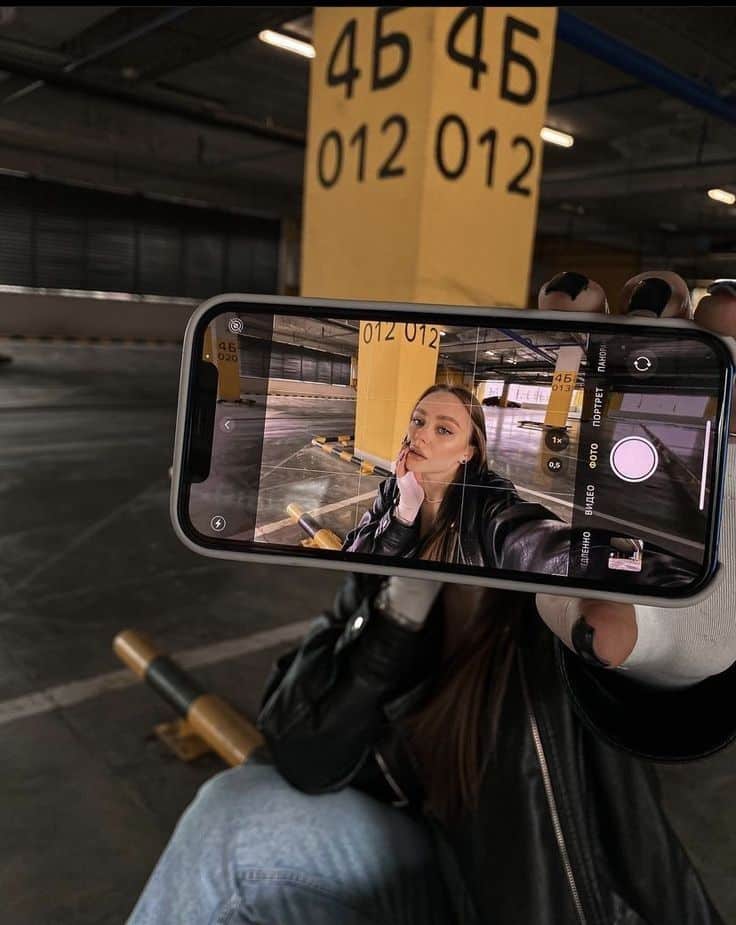
Props and backgrounds can elevate a selfie, making it stand out. They add context and personality, helping to portray the right mood and style.
Utilizing Props
Props can make a selfie more engaging. They offer opportunities to express creativity and individuality. Common props include:
- Oversized sunglasses: These can add a fun touch.
- Hats: A stylish hat can change a look.
- Seasonal items: For example, pumpkins in fall or flowers in spring.
Choosing props that reflect personal interests or hobbies is key. They should enhance the image without overwhelming it. It’s important to keep props relevant to the context of the selfie. Some could even serve as conversation starters.
Choosing the Right Background
The background can significantly affect the selfie’s impact. A cool background can make the subject pop. Here are some tips for selecting a great background:
- Trendy locations: Think about urban murals or natural landscapes. These settings are often vibrant and attractive.
- Simple backgrounds: A plain wall or soft colors keeps the focus on the subject.
- Personal space: Incorporating a favorite room or garden can add warmth and authenticity.
Consider the time of day and lighting, as they influence how the background looks. Natural light generally provides the best results.
Selfie Trends and Cultural Impact

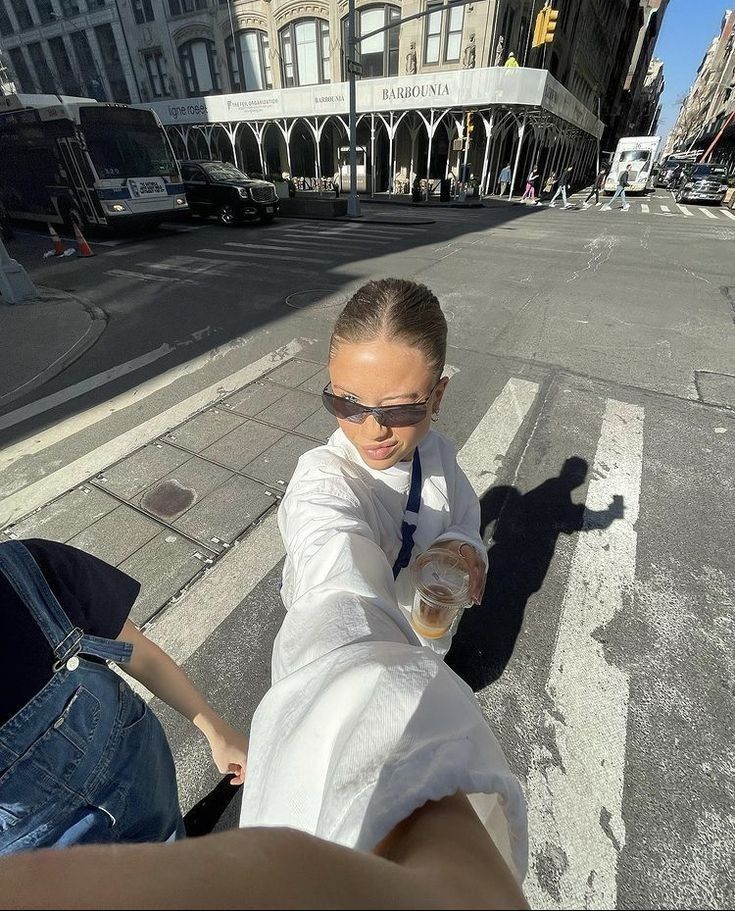
Selfies have transformed the way people express themselves and connect with others. Trends change quickly, but selfies remain a vital part of social media culture, especially among girls and women.
Current and Evolving Trends
Selfie trends frequently evolve, reflecting changes in technology and culture. Popular poses include the “duck face,” “smizing” (smiling with the eyes), and candid shots.
- Angles Matter: Finding the right angle can enhance a selfie. High angles are popular, as they tend to make faces look slimmer.
- Lighting is Key: Natural light often gives the best results. Golden hour light creates a soft glow.
- Props and Filters: Many users now incorporate props or use filters to enhance their selfies. Accessories like hats and sunglasses can add flair.
Girls and women often set these trends by sharing their favorite poses and techniques on platforms like Instagram and TikTok.
Cultural Significance of Selfies


Selfies sit somewhere between portrait, outfit check, diary entry, and social signal. Pew Research Center reported on how common selfie sharing became among younger social media users, which is why a simple pose can carry more meaning than it seems at first glance.
For a practical photo, that means the pose should match the message. A soft window-light close-up reads differently from a playful mirror selfie, a gym check-in, or a group shot with friends.
- Empowerment: Selfies allow individuals to showcase their uniqueness and boost confidence.
- Social Connection: Sharing selfies helps people connect with friends and followers. This interaction fosters a sense of belonging.
- Changing Beauty Standards: Selfies challenge traditional beauty norms by promoting diverse representations. Many women embrace imperfections and celebrate individuality.
Through these aspects, selfies continue to shape how girls and women view themselves and each other in society.
Technical Tips for Enhanced Selfies
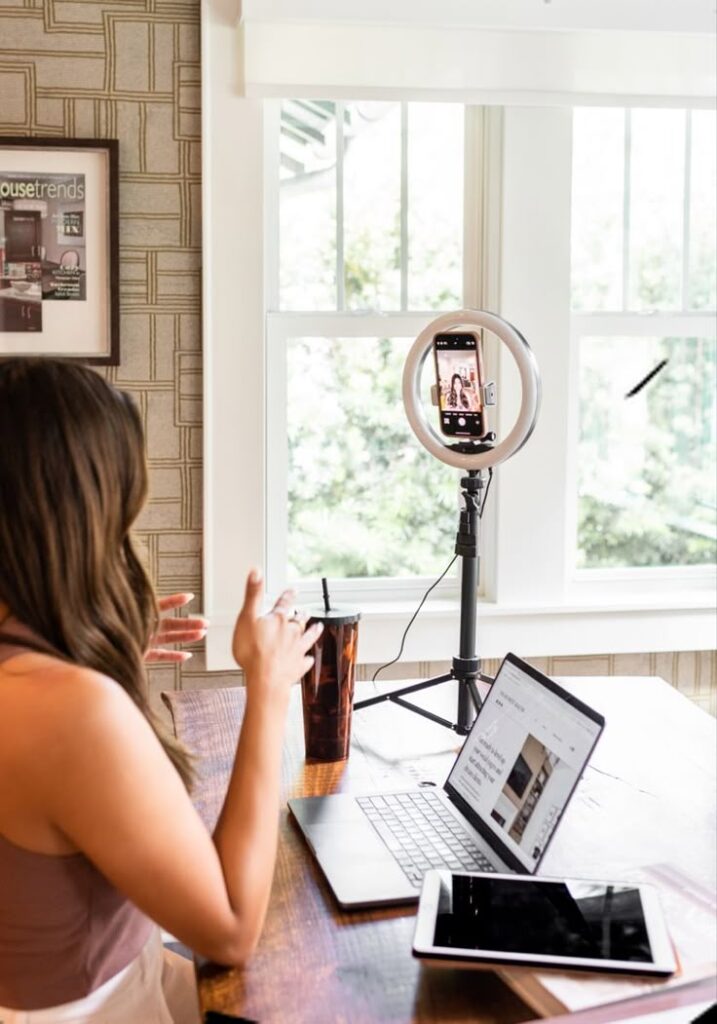

To take better selfies, users can explore editing tools and advanced smartphone features. These options can significantly improve the quality and appeal of the images.
Editing and Filters
Editing tools can transform a good selfie into a great one. Basic adjustments include brightness, contrast, and saturation. Using these settings, a user can create a more vibrant image.
Filters also play a crucial role. Various apps offer filters that can change the mood of the photo. For a soft look, a gentle filter can be applied. For a more dramatic effect, users can choose bold or high-contrast filters.
It’s helpful to try different options before settling on one. This experimentation can reveal unique styles. Users should save the original image in case they want to revert changes later.
Advanced Smartphone Features
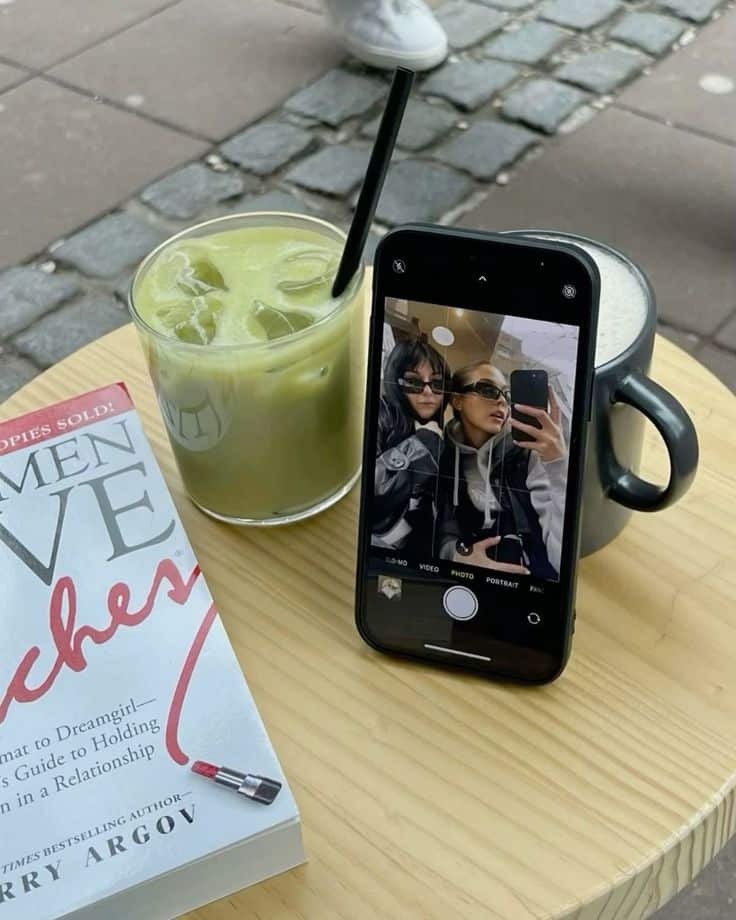

Modern smartphones come equipped with features that can enhance selfies. One important tool is the depth effect. This feature blurs the background, making the subject stand out.
Another useful option is 360° panoramic images. This allows users to capture their environment fully. They can share a more immersive experience with friends.
Many smartphones also include beauty modes. These can smooth skin texture and even out skin tones. Adjustments like these can create polished and flattering selfies.
Exploring these features will give users the tools to take selfies that truly stand out.
Creating Selfie Videos
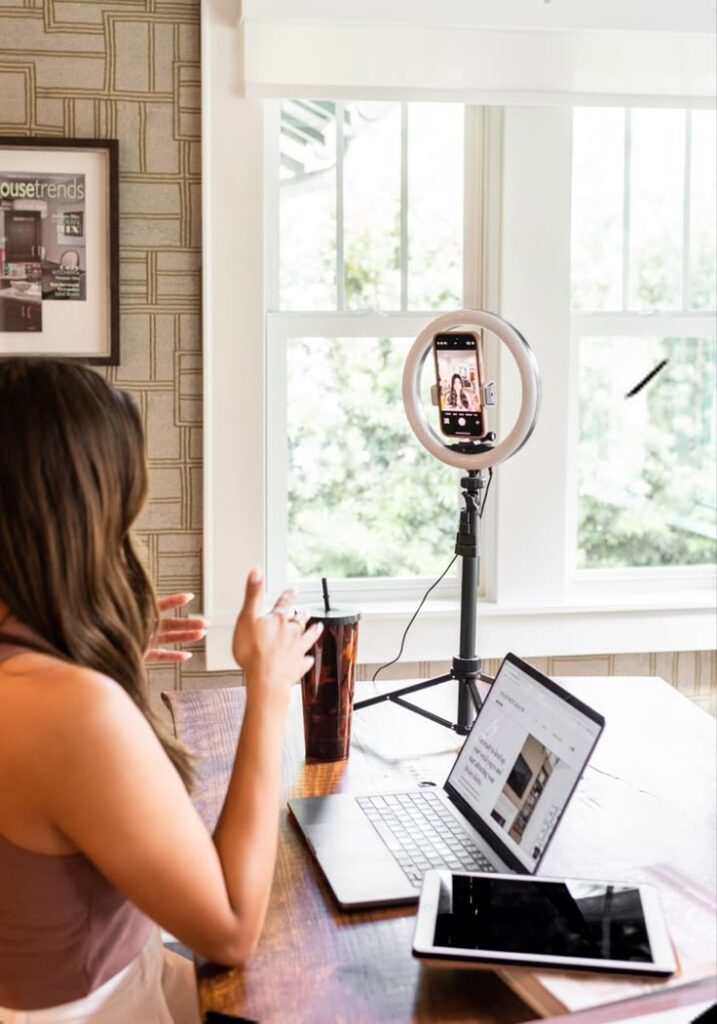
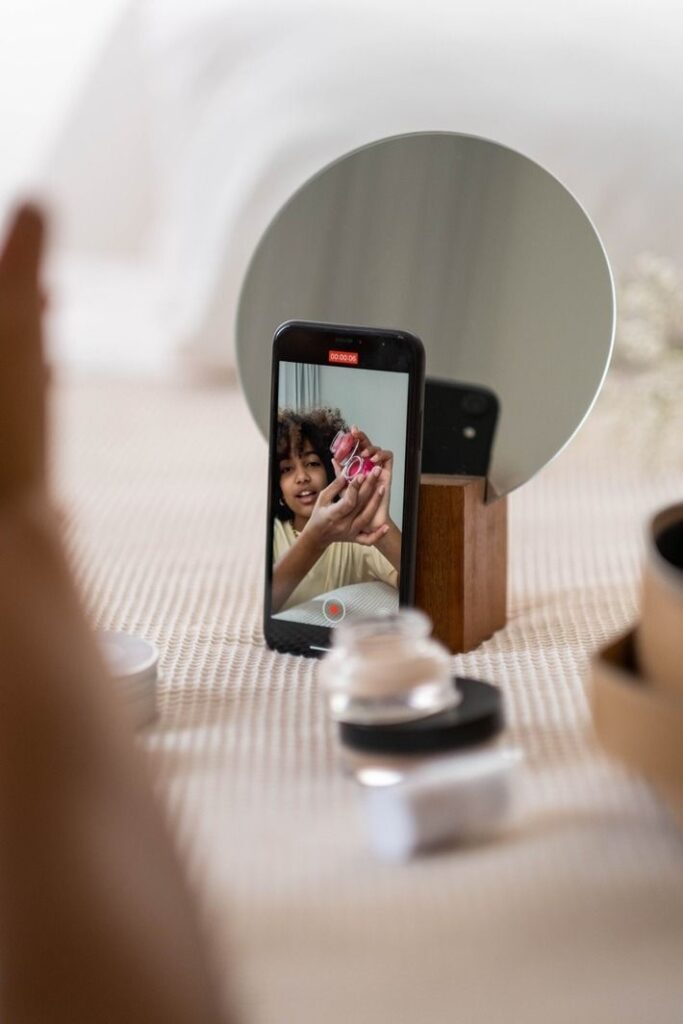
Selfie videos are a fun way to express oneself and share moments with others. Knowing some effective techniques can lead to better quality and more engaging videos. Below are key tips for both video selfies and live streaming.
Video Selfie Techniques
When creating a video selfie, lighting plays a vital role. Natural light is often the best choice. Positioning the camera so the light hits the face directly helps avoid shadows.
Choosing the right background is also important. A clean and uncluttered space draws attention to the subject. Using props can add interest but should not distract from the main focus.
Stabilizing the camera improves video quality. A tripod or a steady hand can help prevent shaking. Keeping the camera at eye level creates a more flattering angle.
Lastly, consider the length of the video. Short clips (15-30 seconds) are often more engaging. They keep the viewer’s attention without losing interest.
Live Streaming Tips

Live streaming is a special way to connect with an audience in real-time. Before going live, test the internet connection to ensure it is strong. A weak connection can lead to poor video quality.
Using a strong opening statement or question can catch the audience’s attention. Interaction is key, so encouraging comments and reactions helps build rapport.
It’s helpful to plan topics but remain flexible. This allows for spontaneous interactions and keeps the session lively.
Finally, consider using a second camera if possible. This can provide different angles and make the stream more dynamic. Taking the time to learn these skills can enhance the live streaming experience.
Legal and Ethical Considerations
When taking and sharing selfies, it is important to recognize the legal and ethical aspects involved. Understanding copyright, privacy rights, and the responsibility of sharing content helps to ensure a respectful and lawful online presence.
Copyright and Privacy Issues
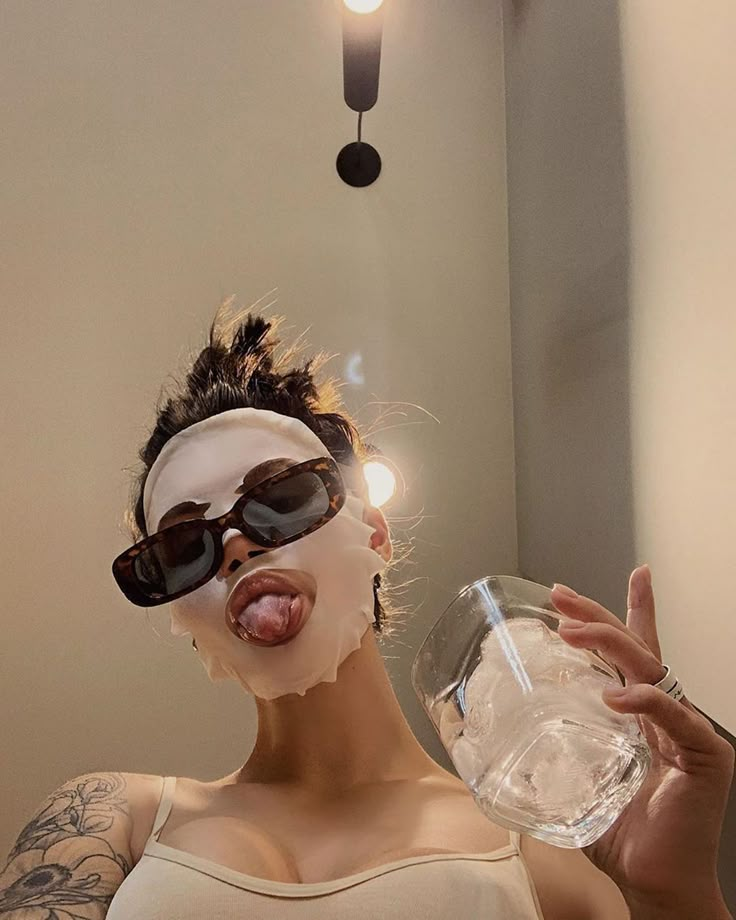
Copyright laws protect creative works, including images. If a person uses a backdrop, art, or any element that is not their own, they may face copyright infringement issues. For instance, using a cool background that is a stock photo requires permission from the photographer or creator.
Privacy matters most when other people, private rooms, school or work details, addresses, screens, or children appear in the frame. Before posting, zoom into the background and check what the image reveals. The FTC’s guidance on image-based abuse and consent is a useful reminder that sharing a photo is not only a styling decision.
Responsible Sharing
Responsible sharing is essential in the digital age. Selfies can be fun, but they can also reflect poorly on a person if shared carelessly. When sharing online, it is crucial to think about the potential impact on one’s reputation.
Posting photos in sensitive situations or locations may make others uncomfortable. Consideration should also be given to personal information that could be revealed in the background of the photo. Always ensure that content shared upholds respect for all individuals involved.
If the selfie ideas start to feel too still, use them as a warm-up and then move into more active photoshoot poses, where walking, turning, and hand cues create cleaner motion.
If the pose is ready but the frame still feels plain, try these selfie photo ideas for light, props, backgrounds, and close crops.
FAQ
Q: What is the most flattering selfie pose?
A: The most flattering selfie pose is usually a slight shoulder turn with the camera just above eye level. Keep the chin gently forward, relax the mouth, and turn toward soft light. This angle defines the face without making the pose look stiff.
Q: How do I pose for a selfie without looking awkward?
A: Give your hands a job. Touch your hair, hold sunglasses, rest your hand near your collarbone, or use a coffee cup or phone case as a prop. Then take a burst of photos while moving slightly. The best frame is often the one before the pose becomes too perfect.
Q: What angle is best for selfies?
A: A slightly high angle works for most selfies because it opens the eyes and keeps the jawline clean. Eye-level shots feel more honest and portrait-like. Low angles can look stylish too, but they need a strong background or outfit shape so they feel intentional.
Q: How do I take mirror selfies that look natural?
A: Clean the mirror, step back from clutter, and hold the phone where it does not cover the whole face. Shift weight onto one leg, loosen the shoulders, and check the crop before shooting. Shoes, sleeves, and the phone case are part of the composition.
Q: What lighting is best for selfies?
A: Soft window light, open shade, and golden hour are the easiest options. Face the light or turn slightly to one side for gentle shadows. Avoid strong overhead lights when possible because they can create dark eye sockets and sharp shadows under the nose.
Q: What should I avoid before posting a selfie?
A: Check the background before posting. Look for private documents, addresses, screens, school or work details, and people who did not agree to be included. Also avoid heavy filters that change the face so much that the photo no longer feels like you.
Conclusion
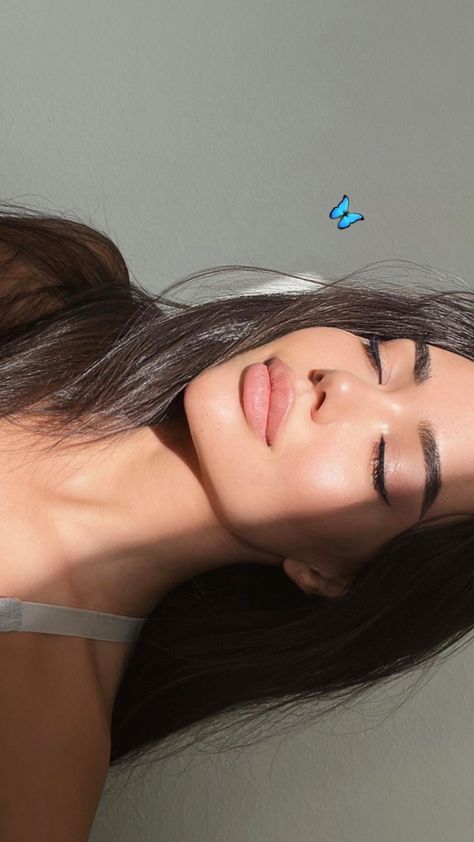

For lighting that keeps faces relaxed and flattering, use these soft natural light for portraits.
The best selfie pose is not the most complicated one. It is the pose where the light, expression, crop, and background all point in the same direction.
Start with one of the simple selfie ideas above, take a few versions, and adjust only one thing at a time. Raise the phone a little. Turn the shoulders. Move closer to the window. Clean one distracting object from the background. Those small choices do more for a selfie than another heavy filter.
- 665shares
- Facebook0
- Pinterest662
- Twitter3
- Reddit0