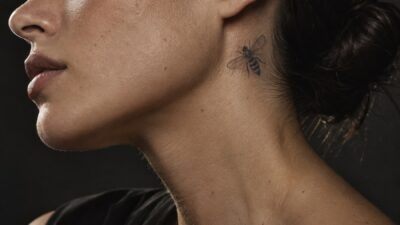
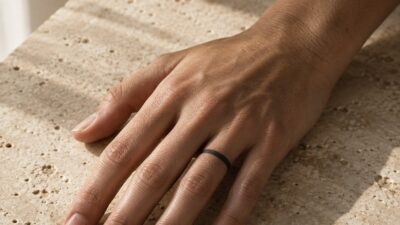
Hand tattoo designs need a stricter brief than most tattoo ideas. The skin moves constantly, washes often, catches sun, and sheds faster than the upper arm or shoulder, so the best hand tattoos are not just pretty in a fresh photo. They have enough line weight, spacing, and placement logic to stay readable after the first year.
- How to choose hand tattoo designs that age well
- Why Hand Tattoos Are a Different Decision Entirely
- Ten Hand Tattoo Styles: What Works, What Fades, and What to Expect
- The Cultural History Behind Hand Tattoo Symbolism
- The Honest Practical Considerations
- Hand Tattoo Aftercare: The Protocol That Actually Matters
- Frequently Asked Questions
- How much does a hand tattoo cost?
- Will a hand tattoo affect my job prospects?
- Which hand tattoo style lasts the longest?
- Can I get a hand tattoo if I already have a sleeve?
- How long does a hand tattoo take to heal?
- Do hand tattoos hurt more than other placements?
- Do hand tattoos fade quickly?
- What should I avoid in a hand tattoo design?
- Final note before you book
A good hand tattoo starts with one question: will the design still read when the skin has moved, faded, and settled? I look at the silhouette first. If the outline is weak, extra shading will not save it on a high-wear placement.
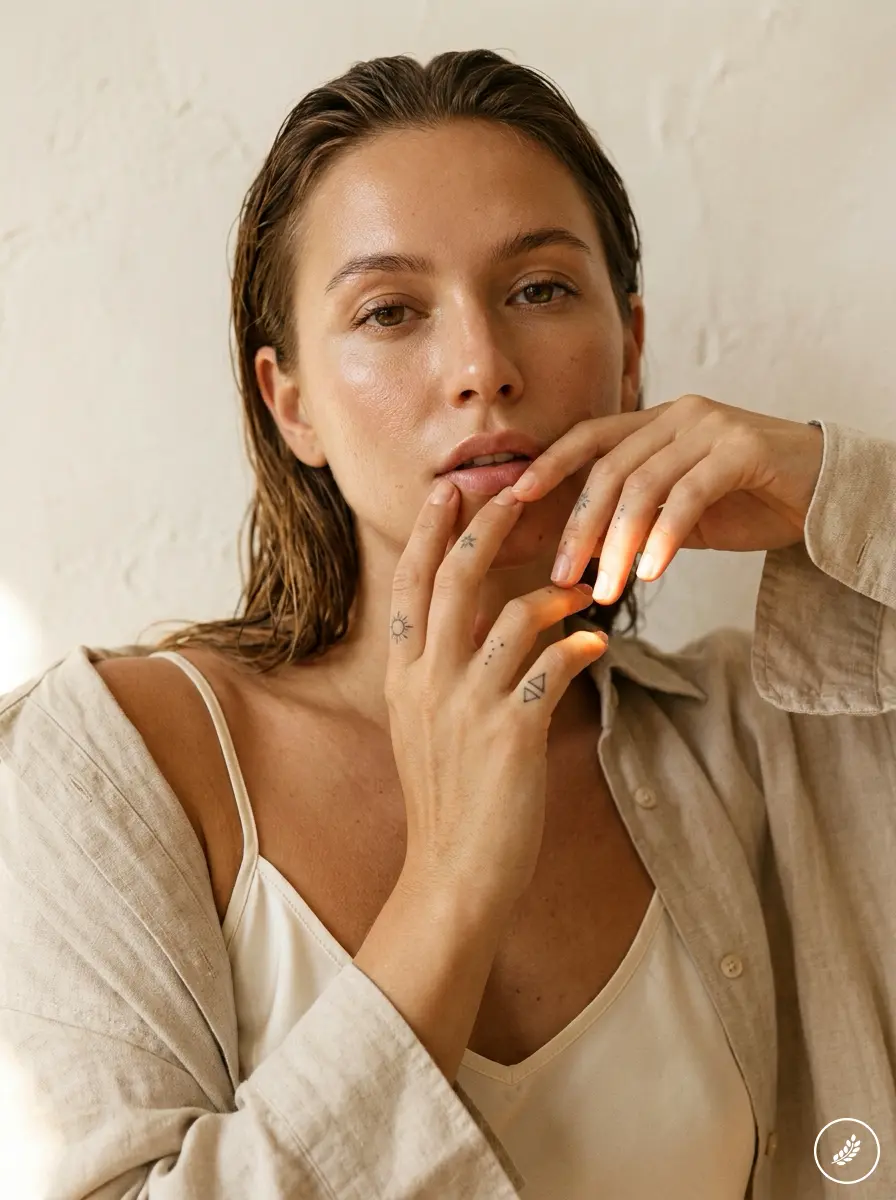
How to choose hand tattoo designs that age well
For most people, the safest hand tattoo designs use bold outlines, open negative space, and simple shapes that avoid the deepest creases. Tiny details can look beautiful in a studio photo, but they blur quickly on fingers and knuckles. For a smaller first step, compare these with small tattoo ideas that can sit on the wrist, ankle, or upper arm instead.
| Best for longevity | Bold blackwork, traditional outlines, simple geometric shapes, open floral linework |
| Riskier choices | Tiny script, dense micro-realism, pale gray shading, detail placed directly over knuckle creases |
| Placement note | Back of hand usually holds better than fingers or palm; fingers need the most touch-up planning |
| Design rule | Leave breathing room. If two lines almost touch in the stencil, they may merge after healing |
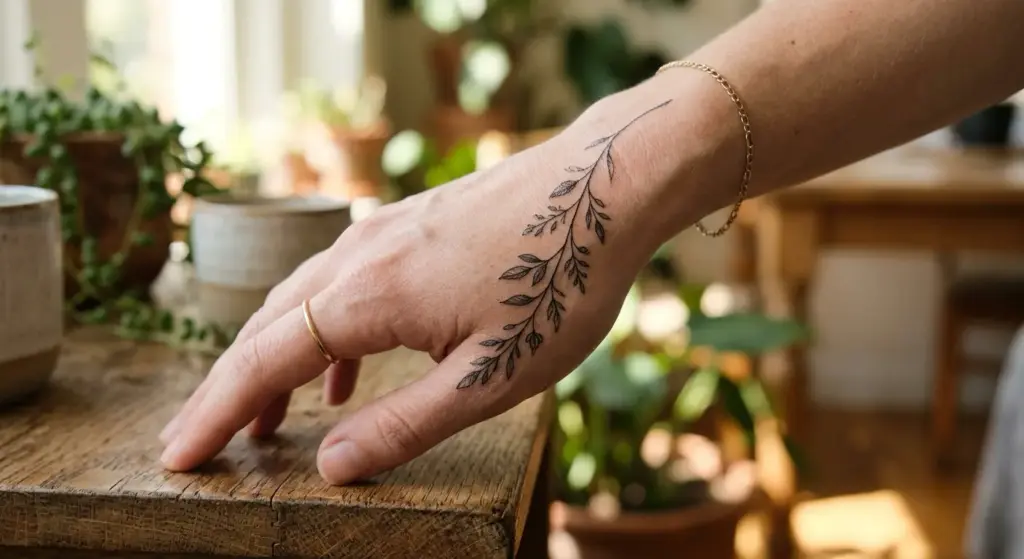
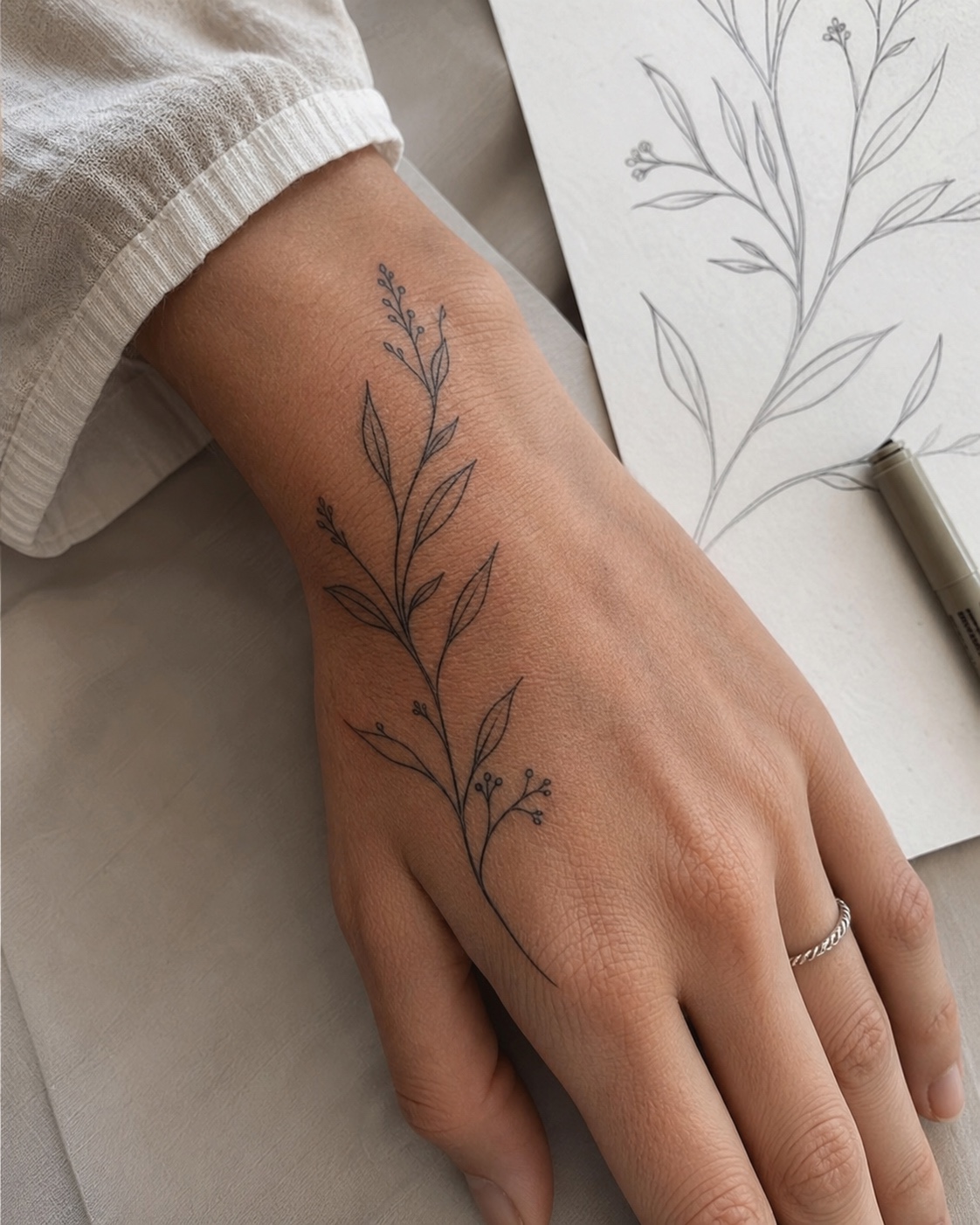
This guide covers ten distinct hand tattoo styles, with honest notes on longevity, pain, professional considerations, and the design logic behind each. If you’re seriously considering a hand tattoo, this is what you actually need to know.
Why Hand Tattoos Are a Different Decision Entirely
Every tattoo artist I’ve spoken to gives the same warning before tattooing hands: the skin here is unlike anywhere else on the body. The outer layer of the hand exfoliates constantly—every time you wash your hands, grip something, or expose them to weather, microscopic layers of skin shed. That’s the mechanism that causes hand tattoos to fade at roughly twice the rate of tattoos on the upper arm or back.

The structural reality is worth understanding before you commit. Fine lines thinner than 1mm often partially disappear within 12–18 months on hands, not because of artist error but because the skin simply doesn’t retain ultra-fine ink the way other placements do. Solid black areas hold better. Bold outlines outlast delicate fills. Geometric work with clean lines tends to age more gracefully than photorealistic shading.


This isn’t an argument against hand tattoos—it’s an argument for designing hand tattoos with longevity built into the brief. A design that accounts for how the hand actually ages will look good at year two, year five, and year ten. One that ignores these realities will need significant touch-up work to stay legible.
| 🖊 Artist Tip Ask your artist to show you healed hand tattoo photos specifically—not fresh work. Fresh ink on hands always looks clean. Healed work at 12–18 months tells you the real story about how their linework holds on this placement. |
Ten Hand Tattoo Styles: What Works, What Fades, and What to Expect
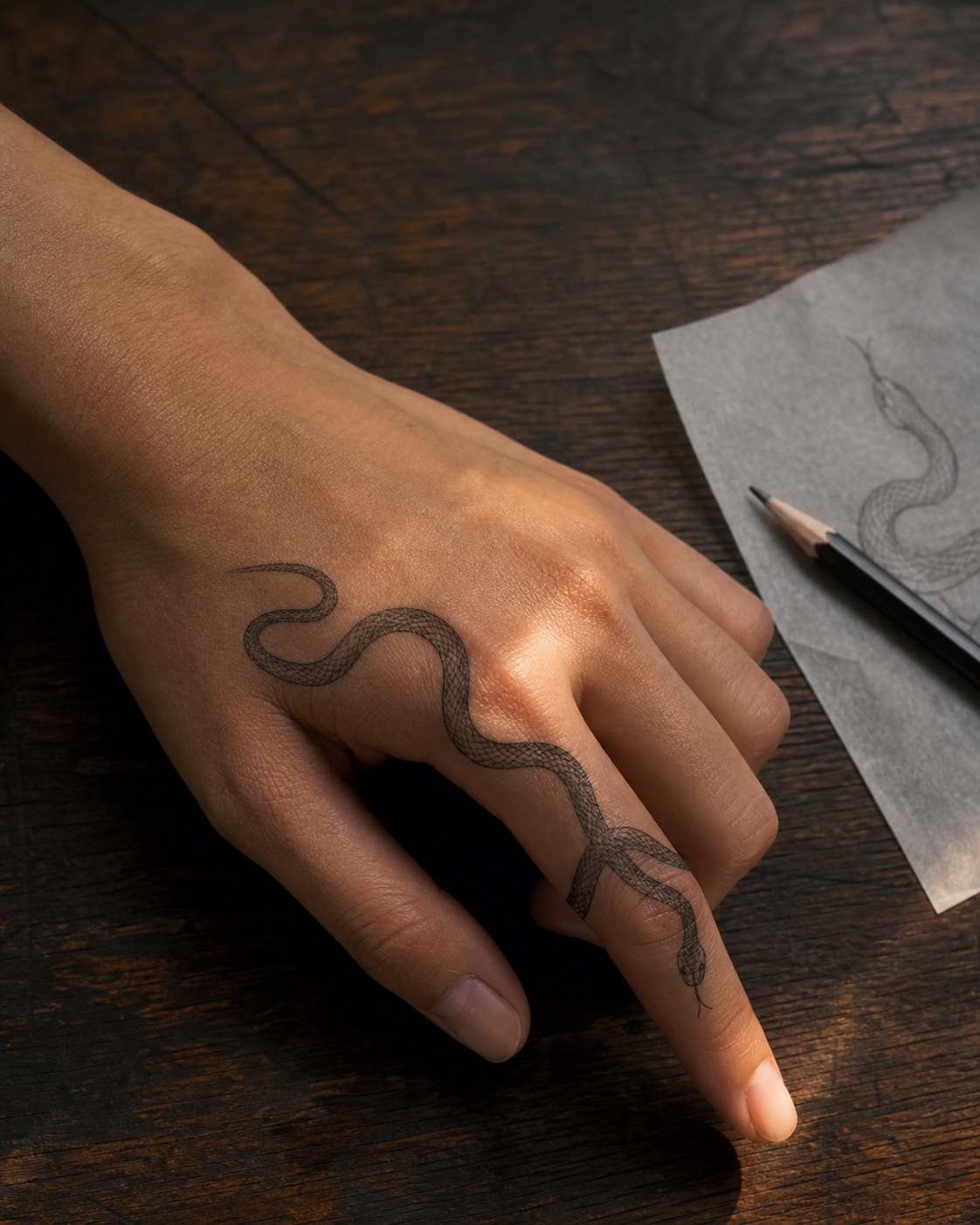
For hand and finger pieces, snake designs work because the curve can follow the knuckles or wrap around a finger. Before choosing that shape, check the small snake tattoo meaning so the placement matches the message, not just the silhouette.
If you are not ready for hand ink yet, start by comparing forearm tattoos before hand tattoos; the forearm gives more room, easier healing, and more cover-up flexibility.
1. Delicate Finger Tattoos
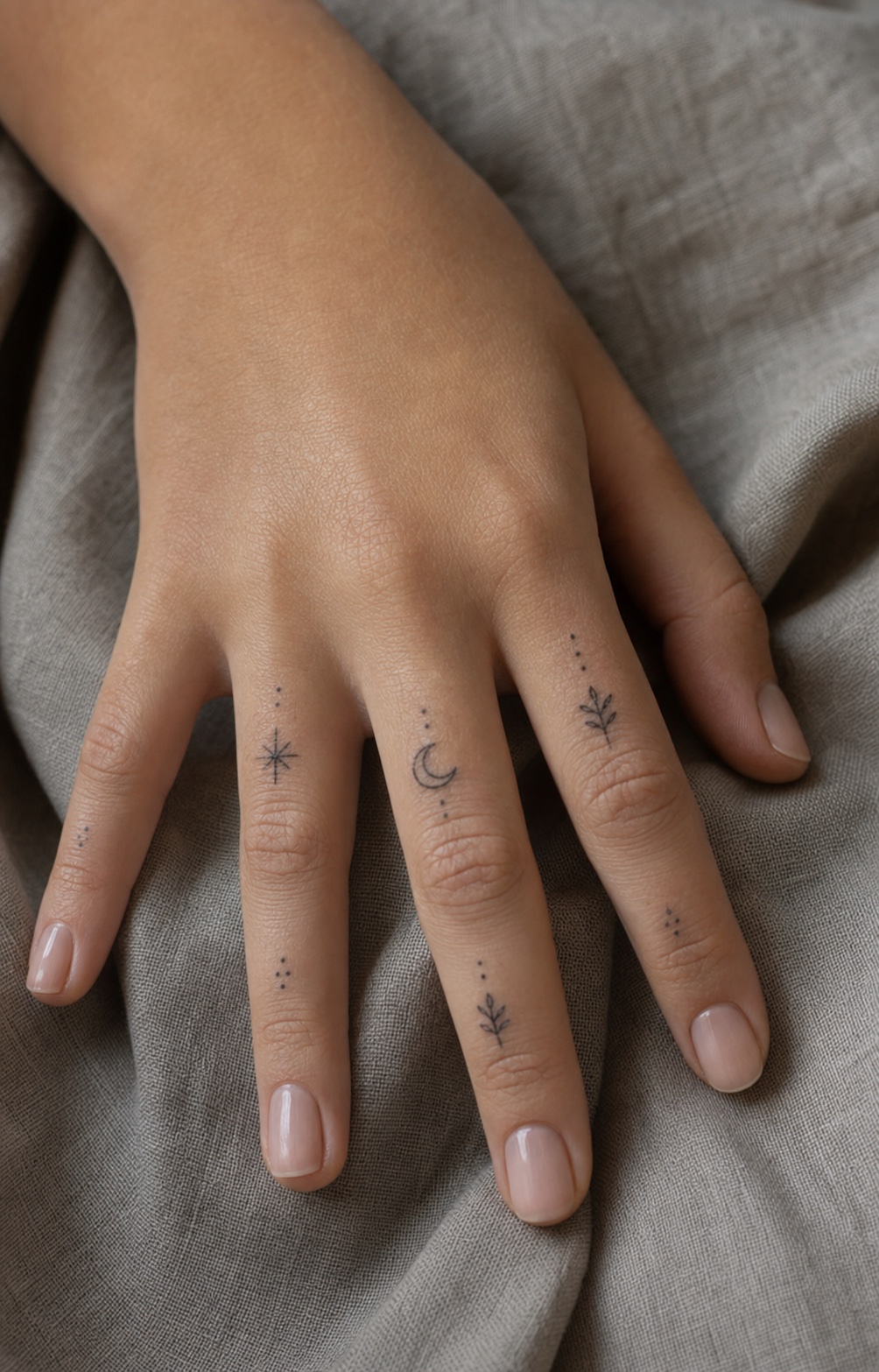
Finger tattoos are the most requested and the fastest to fade. The combination of thin skin over bone, constant flexion at the knuckle joints, and relentless daily hand use creates the most demanding environment for any tattoo. Artists who specialise in this placement—like JonBoy (New York) and Playground Tattoo (Seoul)—have refined their approach over years of observing how finger ink actually heals.


What works: simple, bold symbols at least 3–4mm across. Stars, moons, small geometric shapes, single initials in medium-weight script. What doesn’t: ultra-fine lines under 0.5mm, detailed illustrations, intricate lettering. Joints are particularly difficult—ink placed directly on knuckle creases has the highest failure rate of any tattoo placement.
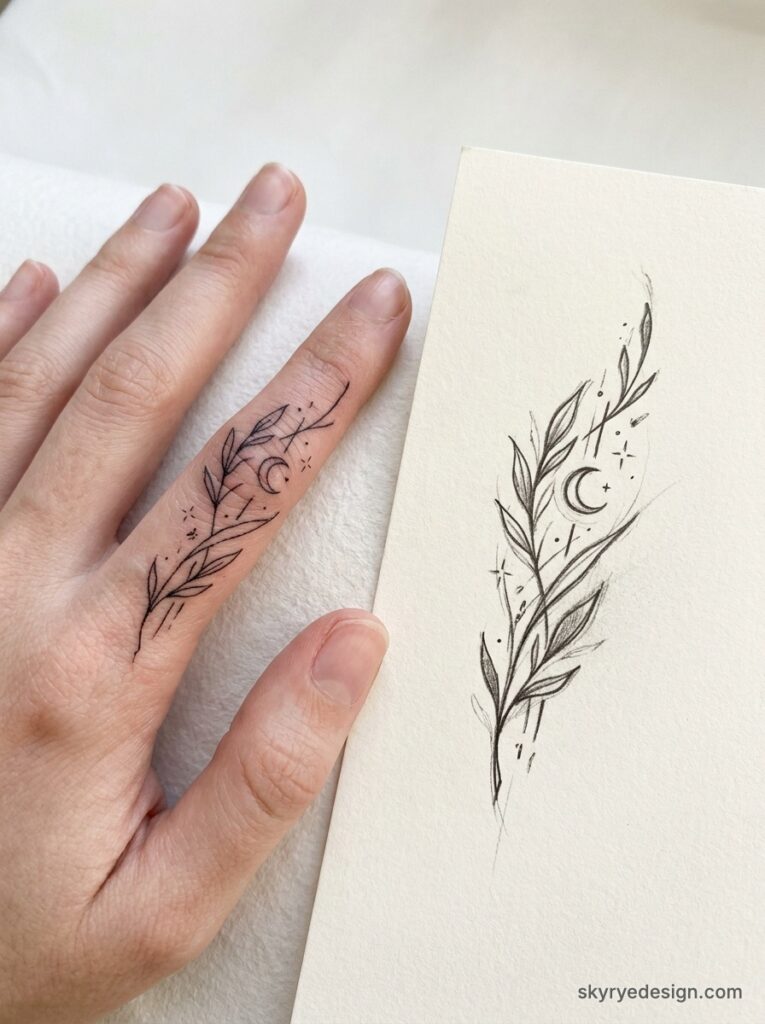
Touch-ups are not optional for finger tattoos; they’re built into the expected cost. Budget an annual or biannual touch-up session into your planning, and choose an artist who is honest about this upfront rather than one who promises permanent fine-line results on fingers.
| Finger Tattoo at a Glance Best designs: bold symbols, single initials, minimal geometry (3mm+ elements)Avoid: ultra-fine lines under 0.5mm, knuckle joint placement, dense detailLongevity: 1–2 years before first touch-up is realistic for most designsPain level: 7–8/10 — bone proximity with minimal cushioning |
2. Bold Palm Tattoos
Palm tattoos are the most counterintuitive placement on the hand.

The palm skin is thick, highly calloused, and regenerates rapidly—meaning ink in this area fades faster than even finger tattoos for many people. And yet palm tattoos have genuine advocates, particularly among people who appreciate the impermanence as part of the concept.
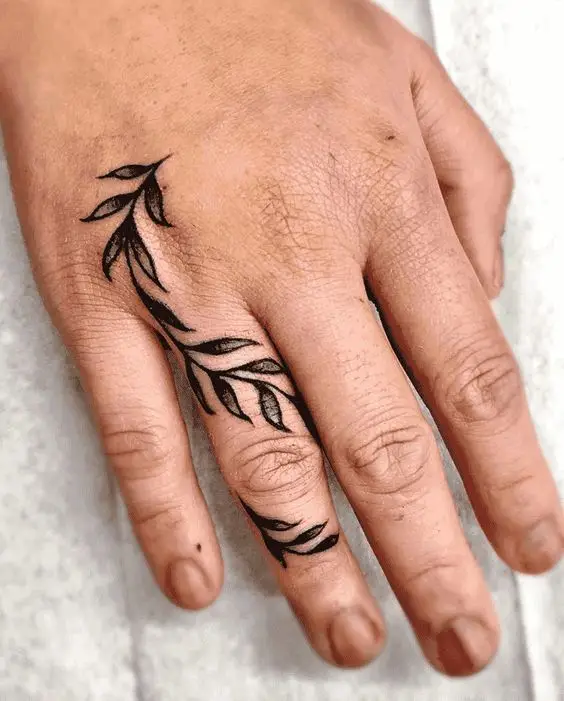

Designs that work on palms lean toward bold, thick-outlined symbols that can survive significant fading and still remain readable—eyes, mandalas, large geometric forms, single words in heavy block lettering. The natural crease lines of the palm are worth incorporating into a design rather than working against them. Some artists map the design to the hand’s existing line structure, which creates pieces that look intentional even as they evolve.
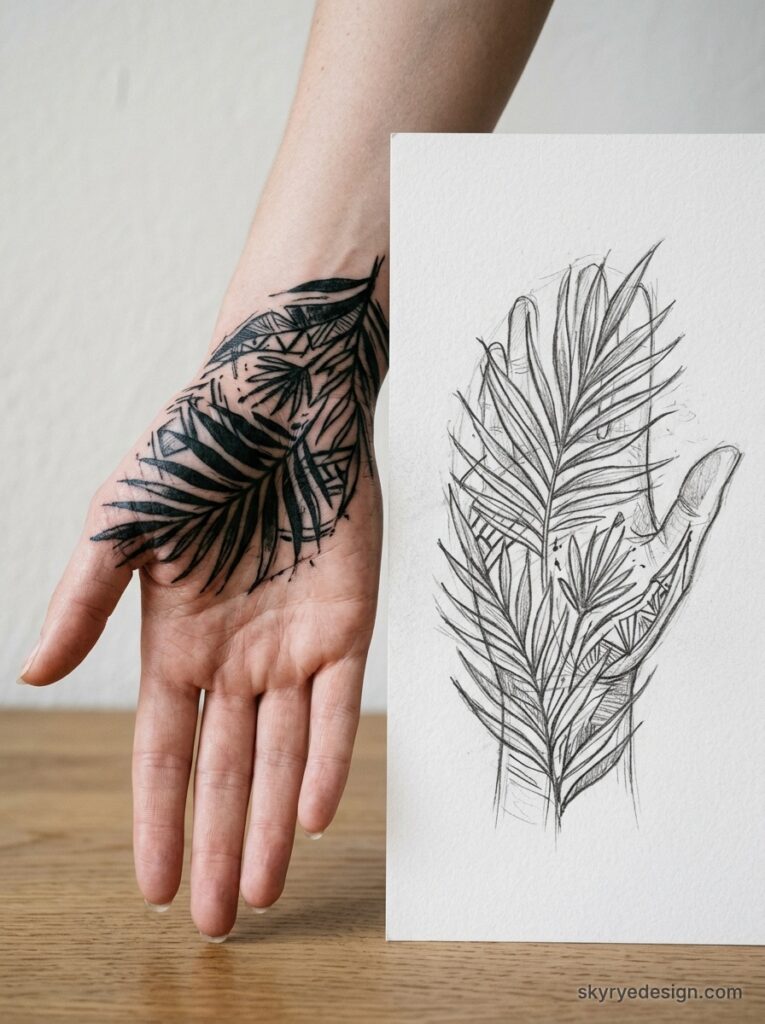
One practical note: palm tattoos often require multiple initial sessions to get ink to seat properly, because the thick skin tends to reject ink more than other placements. Some experienced artists quote two or three short sessions rather than one longer one. Factor this into your timeline and budget.
| Palm Tattoo at a Glance Best designs: bold thick-outlined symbols, large mandalas, heavy block textAvoid: fine line work, gradient shading, small intricate detailLongevity: highly variable — some fade significantly within 6 monthsPain level: 8–9/10 — dense nerve endings, thick skin over metacarpals |
If this would be your first visible tattoo, read the first tattoo guide before booking. Hands are beautiful, but they are rarely the easiest starting point.
3. Tribal Patterns
Tribal hand tattoos have the longest historical track record of any style in this guide—which makes them uniquely valuable evidence for what actually holds up on hands over decades.
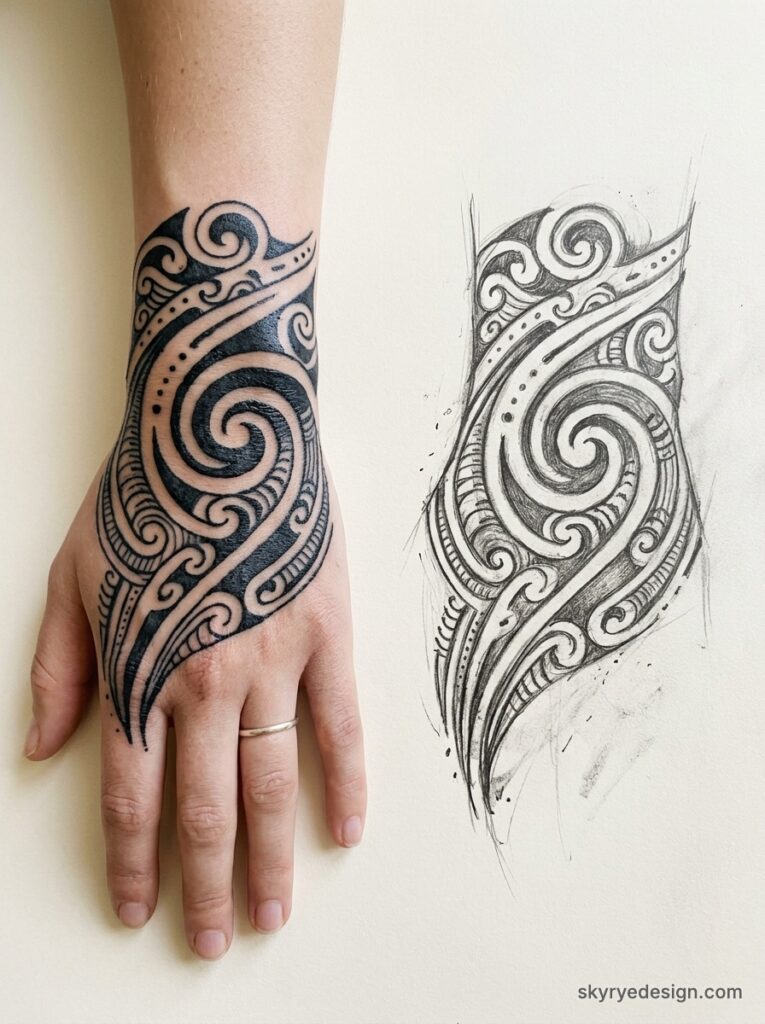
Polynesian, Maori, and traditional Hawaiian designs were built specifically for high-wear body placements: bold black outlines, solid fill, geometric pattern structures that don’t depend on fine detail to remain legible.


Contemporary tribal-influenced work follows the same design logic. Thick black lines (2mm+) outlining solid or patterned fill consistently outperform fine-line work on hands by a significant margin. Artists like Sulu’ape Aisea Toetu’u (Samoa) and their extended family of traditional practitioners have documented generations of work aging on hands—the style is proven.


Cultural considerations apply here seriously. Polynesian tribal tattoos specifically carry cultural significance that should be acknowledged rather than appropriated. If you’re drawn to the aesthetic rather than the cultural heritage, working with a contemporary artist who draws geometric inspiration from tribal traditions—without directly replicating sacred cultural patterns—is the more considered approach.
| Tribal Hand Tattoo at a Glance Best designs: bold black geometric patterns, solid fill with thick outlinesAvoid: fine-line tribal-inspired work — misses the structural logic of the styleLongevity: excellent — proven over generations at this placementPain level: 7–8/10 |
This guide breaks down hand tattoo ideas by style, placement, fading risk, pain, aftercare, and professional visibility. If you want something softer before committing to visible hand ink, start with the delicate tattoos guide and compare those lower-pressure placements first. For a larger canvas that stays hidden under clothing, consider less visible chest tattoo placement instead.

4. Traditional American Bold
Old School American traditional tattooing was built by sailors who needed designs that would survive decades of salt water, manual labour, and sun exposure. The style’s technical DNA—thick black outlines, limited flat colour palette (red, yellow, green, blue), simple iconic imagery—is perfectly adapted to the demands of hand tattooing.


Common traditional hand designs include anchors, roses, daggers, eagles, hearts, and swallows. The design logic is simple: thick outlines, strong shapes, and limited detail survive hand wear better than misty shading. That is why traditional work still feels practical on this placement, not just nostalgic.
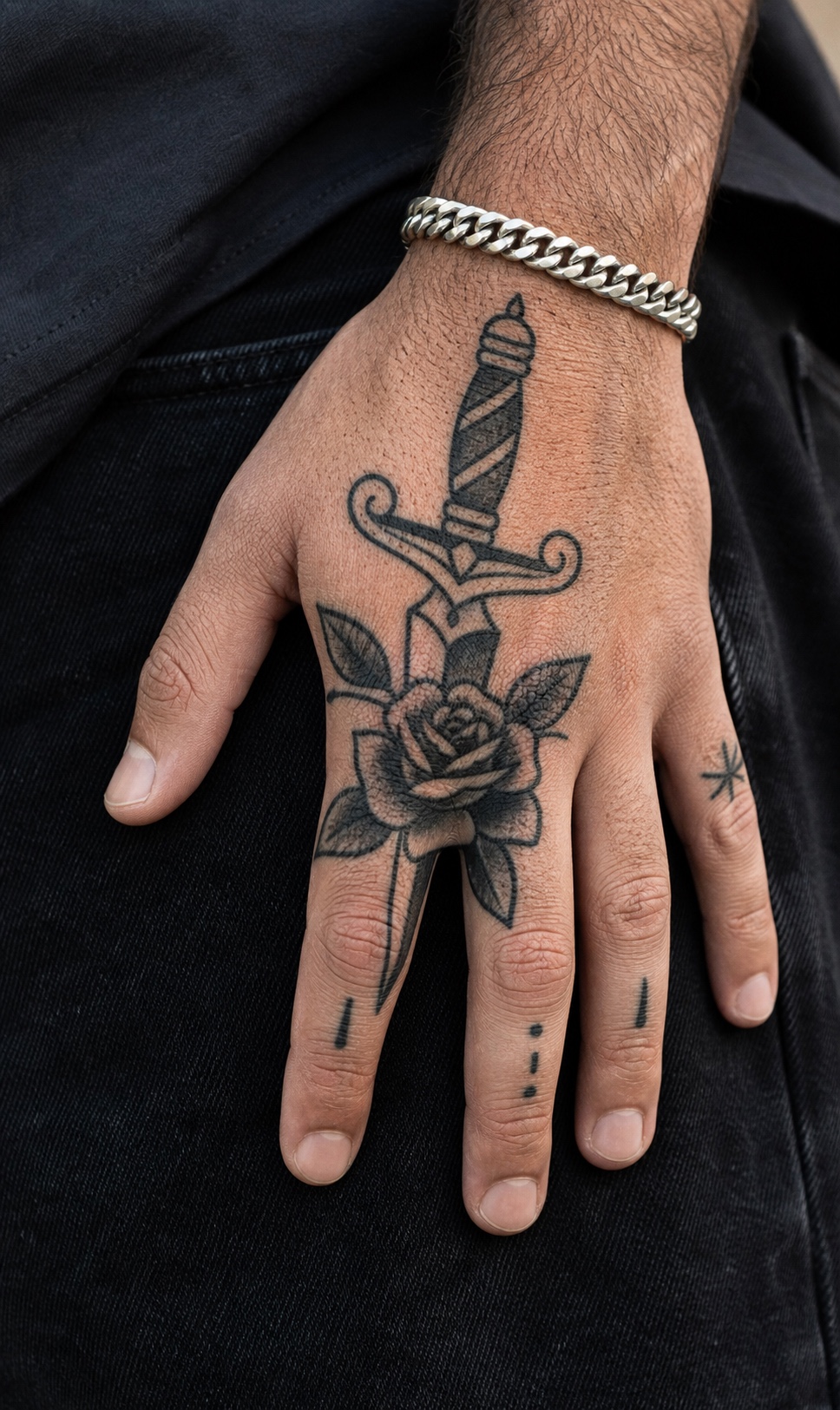
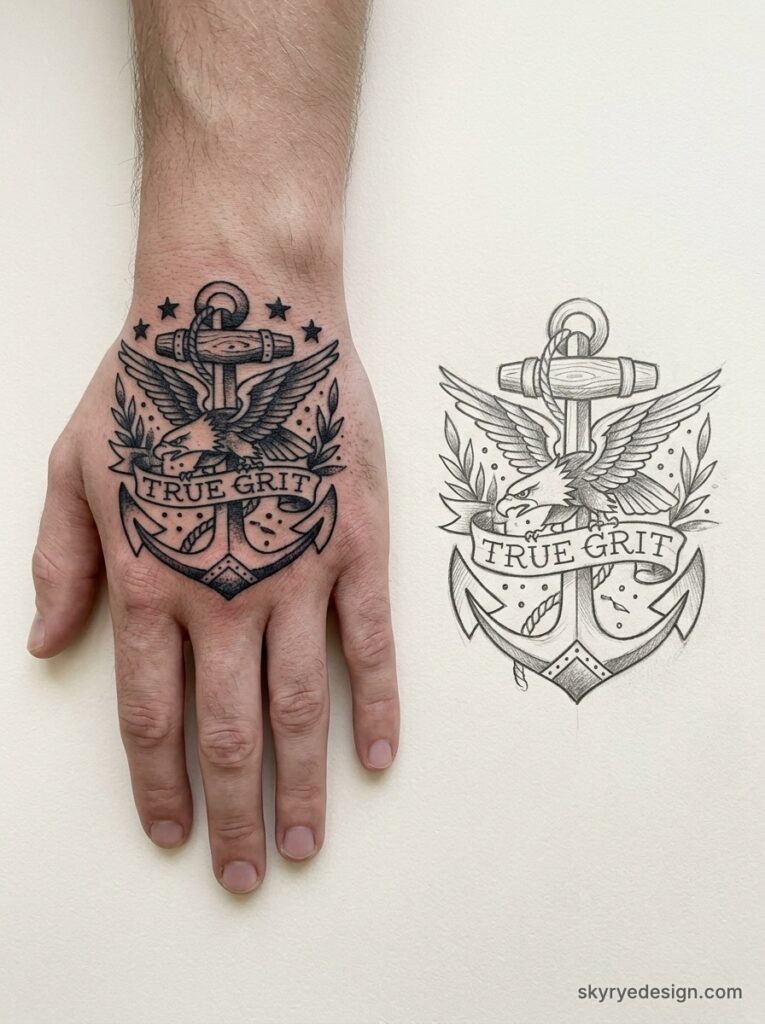
For hand tattoos specifically, traditional American is probably the single highest-confidence style choice in terms of long-term appearance. If you’re uncertain about committing to a hand tattoo and want a design that will genuinely age well regardless of skin behaviour, this is where I’d start.
| Traditional American at a Glance Best designs: classic imagery (roses, anchors, eagles) with thick outlinesAvoid: trying to add photorealistic detail to traditional imagery — defeats the purposeLongevity: outstanding — the style was engineered for durabilityPain level: 6–7/10 for back of hand; higher for palm and finger placements |
5. Minimalist Fine Line
Fine line hand tattoos are the style where the gap between what looks beautiful freshly tattooed and what looks beautiful eighteen months later is widest. I say this as someone with a fine line hand tattoo: the first few weeks it looked extraordinary. By month eight it needed its first touch-up. That’s not a failure—it’s the known reality of this style at this placement.


Fine line hand tattoos at their best—artists like Dr Woo (LA) or Witty Button (Seoul)—are precise, considered, and intentionally simple. Single stems, minimal botanical shapes, abstract line compositions. The error is adding complexity that can’t survive the fading: detailed faces, multi-element compositions with thin connecting lines, gradient shading in tiny areas.
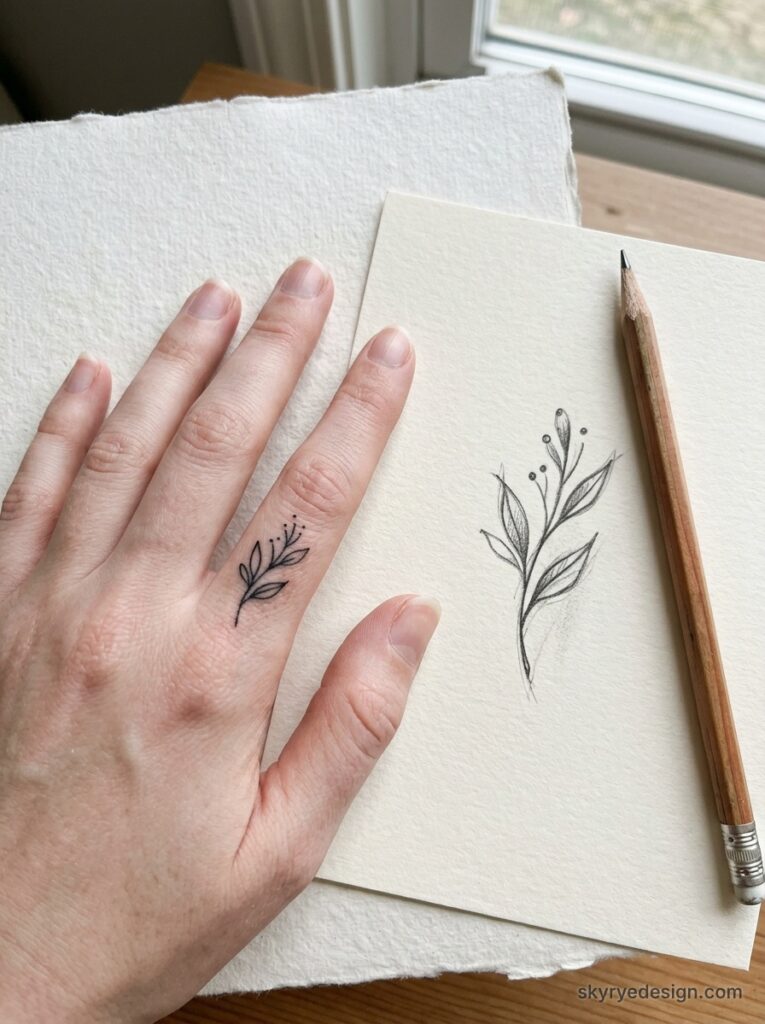
If fine line is the aesthetic you want for a hand tattoo, the practical advice is: design simpler than you think you need to. What looks spare and minimal as a drawing becomes appropriately detailed on a healing hand. What looks appropriately detailed as a drawing becomes visual noise once thin lines begin to migrate.
| Minimalist Fine Line at a Glance Best designs: single botanical elements, simple geometric line, minimal textAvoid: complex compositions, very thin lines under 0.3mm, gradient shadingLongevity: 12–18 months before first touch-up in most casesPain level: 6–7/10 — lighter needle gauge means less trauma per pass |
| 🖊 Artist Tip For fine line hand tattoos: request that your artist goes slightly heavier on line weight than you think you want. The difference between 0.3mm and 0.5mm is invisible to the eye at normal viewing distance but measurable in how long the design holds without touch-up. |
6. Geometric Patterns
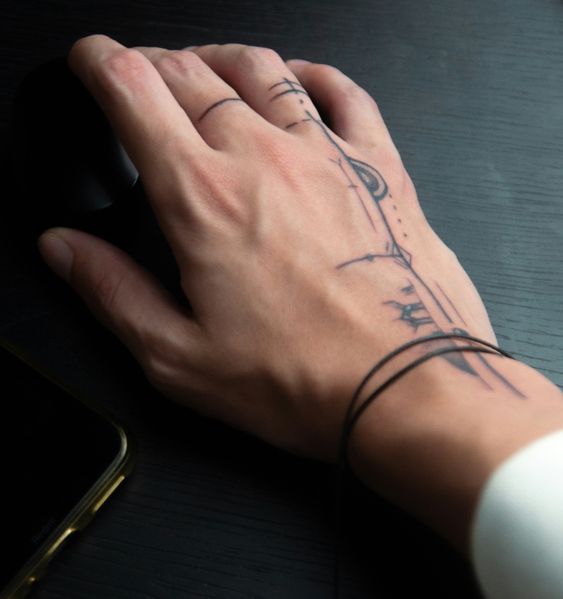
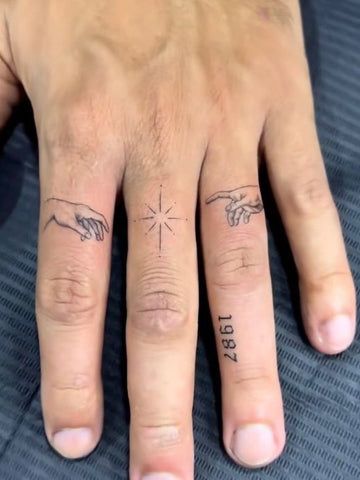
Geometric hand tattoos sit in a practical sweet spot. Clean angles, defined curves, and repeated shapes survive hand skin better than soft realism, but they do not carry the same cultural baggage as copied tribal patterns. The catch is precision: if the stencil fights the knuckles, every tiny wobble becomes obvious.
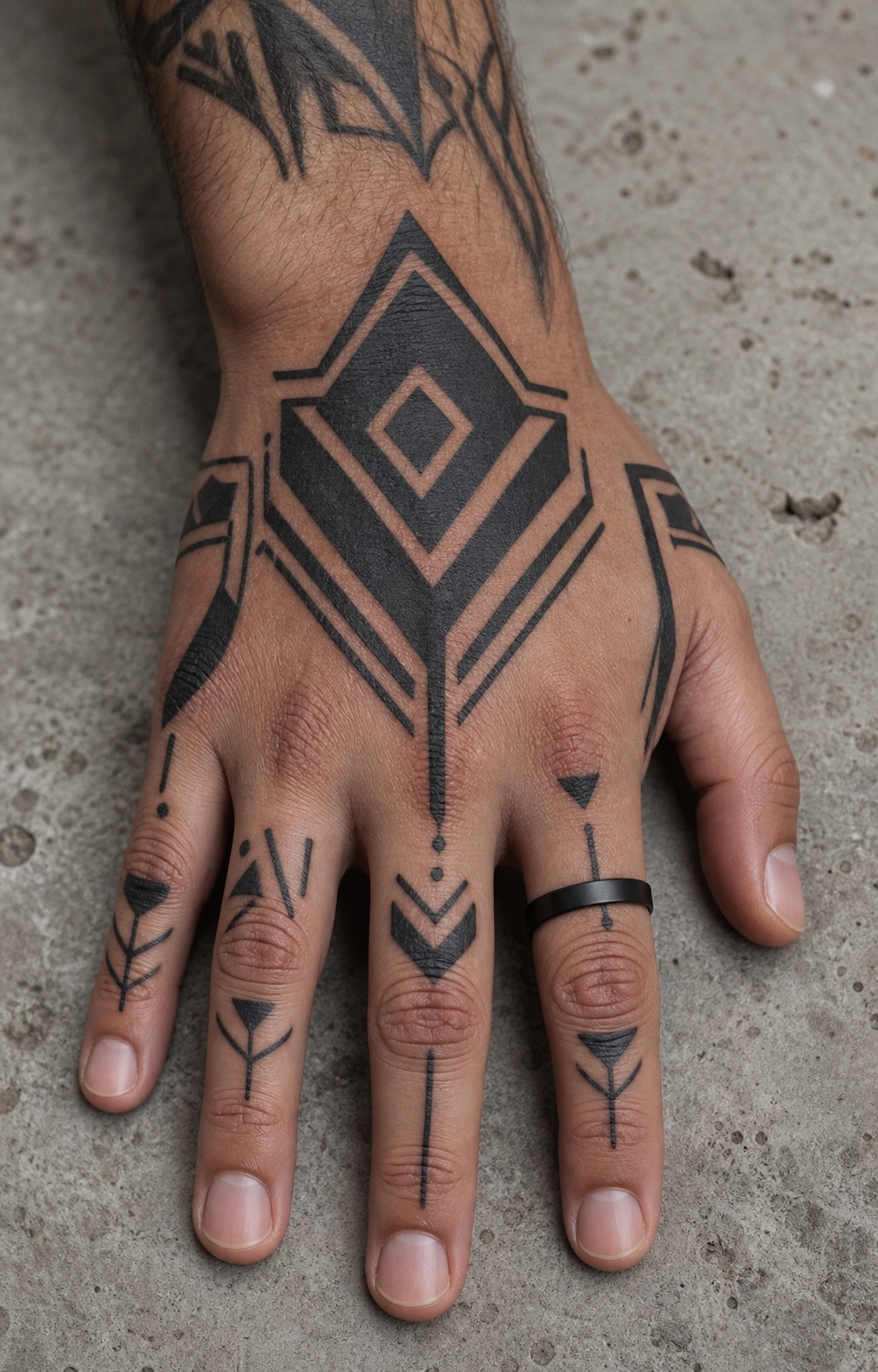

The technical requirement is precision. Geometric work that’s slightly off—circles that aren’t quite circular, angles that aren’t consistent—is immediately visible. This is a style where artist selection matters enormously. Look for portfolios showing healed geometric work specifically, and evaluate the consistency of line weight and angle across multiple pieces.
Honeycomb patterns, sacred geometry (Flower of Life, Metatron’s Cube), mandala structures, and abstract polygon compositions all translate well to the hand’s canvas. Many people choose to extend geometric work from the wrist onto the hand as part of a larger sleeve composition—this integration approach often produces more cohesive results than a standalone hand piece.
| Geometric at a Glance Best designs: clean polygon structures, mandala forms, sacred geometry elementsAvoid: very small geometric detail under 5mm — loses definition quicklyLongevity: good — structural lines hold better than organic illustrationPain level: 6–8/10 depending on placement on hand |
7. Floral Motifs


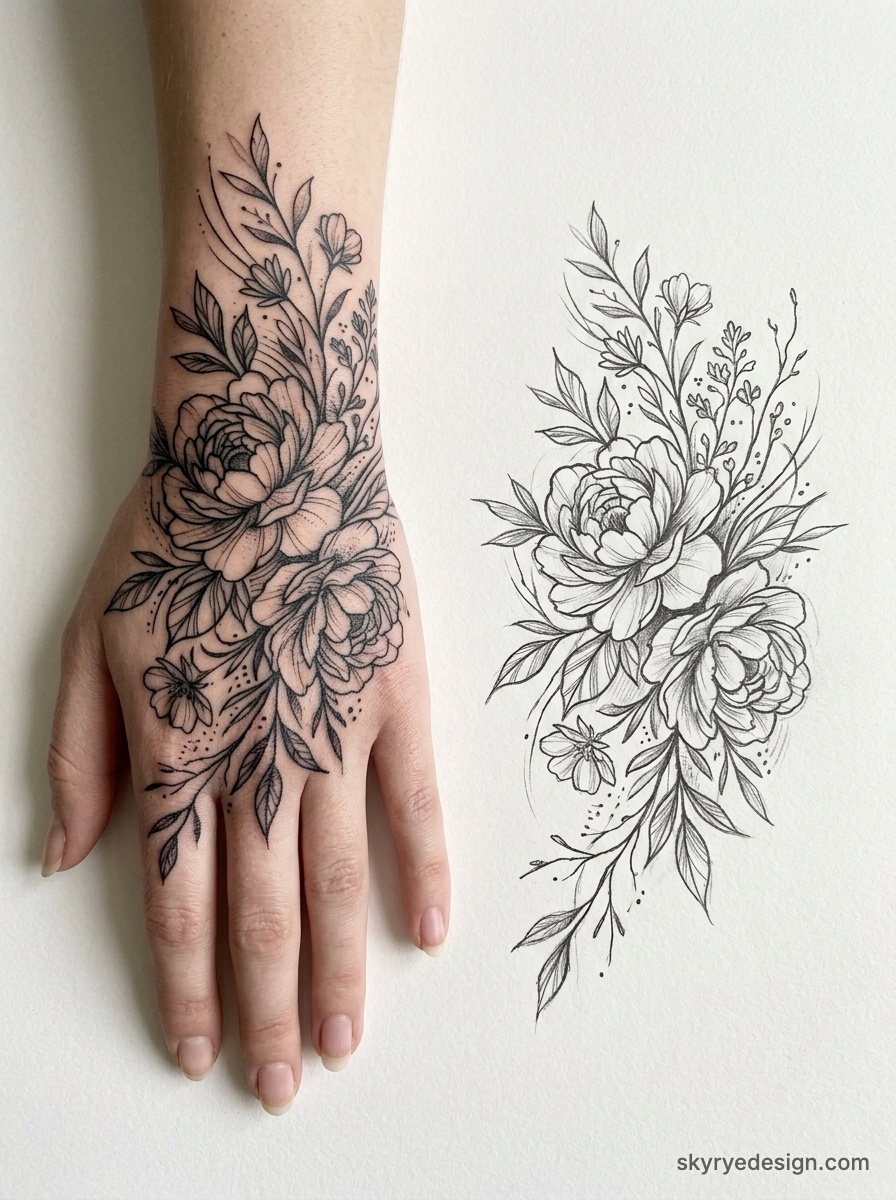
Floral hand tattoos work because stems, leaves, and petals can follow the tendons instead of fighting them. The mistake is packing too much detail into the flower head. On a hand, I would rather see one clear peony, rose, or leafy branch with open space than a crowded bouquet that turns gray after a few summers.
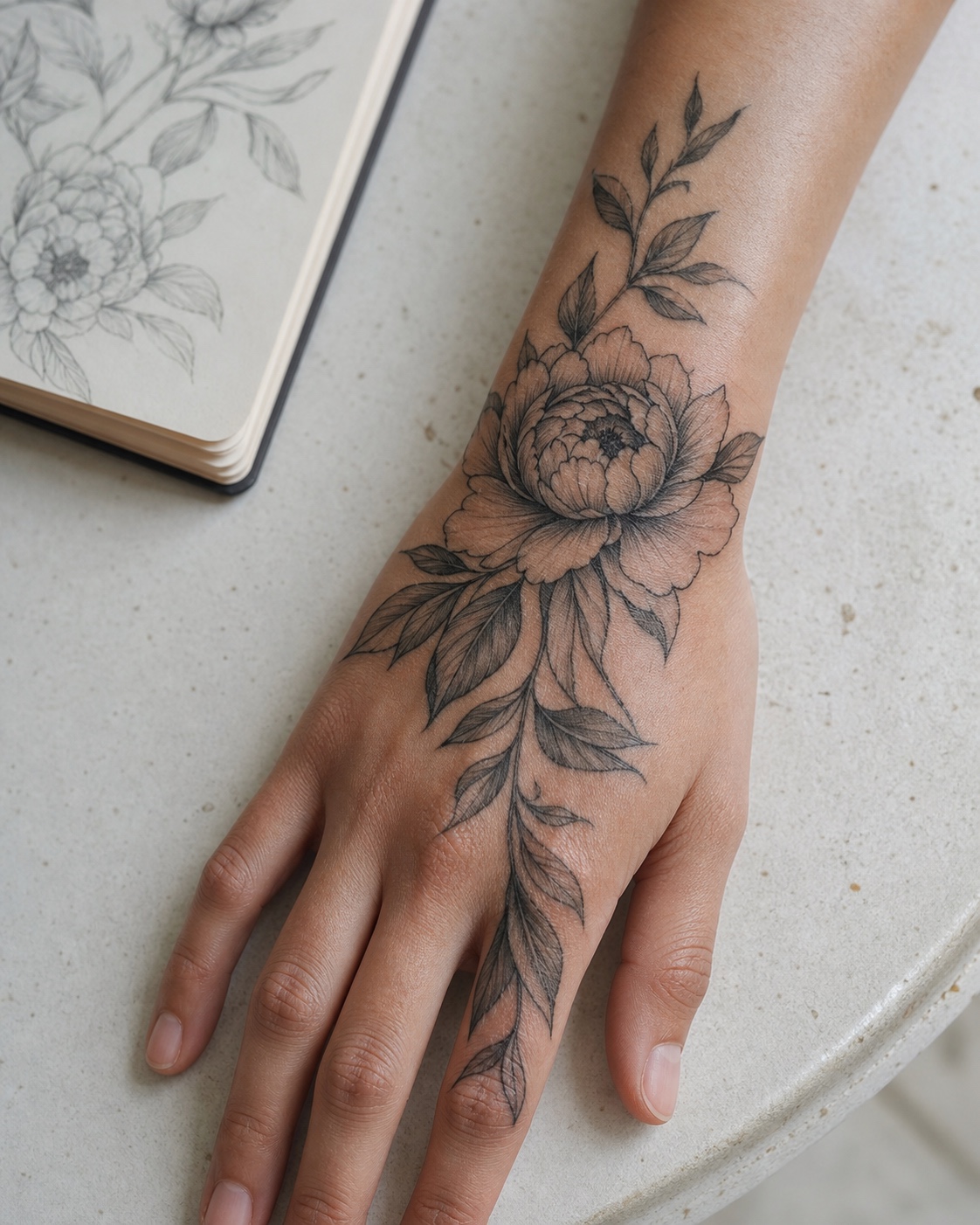


The design considerations for floral hand tattoos are essentially the same as for fine line work: simpler holds better. A single rose with a clean stem and two or three leaves will age more gracefully than an elaborate bouquet with multiple overlapping elements. The artist mukyeon_tattoo (Seoul) has documented extensive healed floral hand work showing which elements persist and which fade.
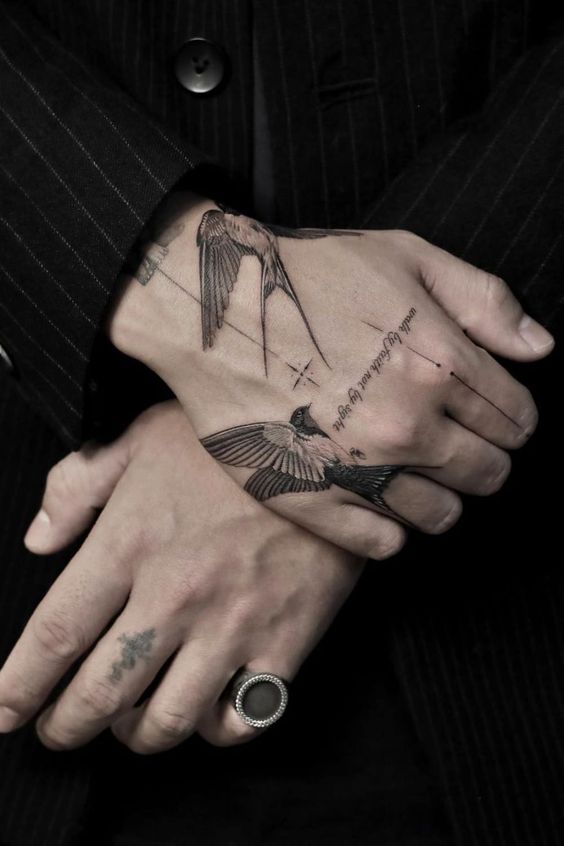
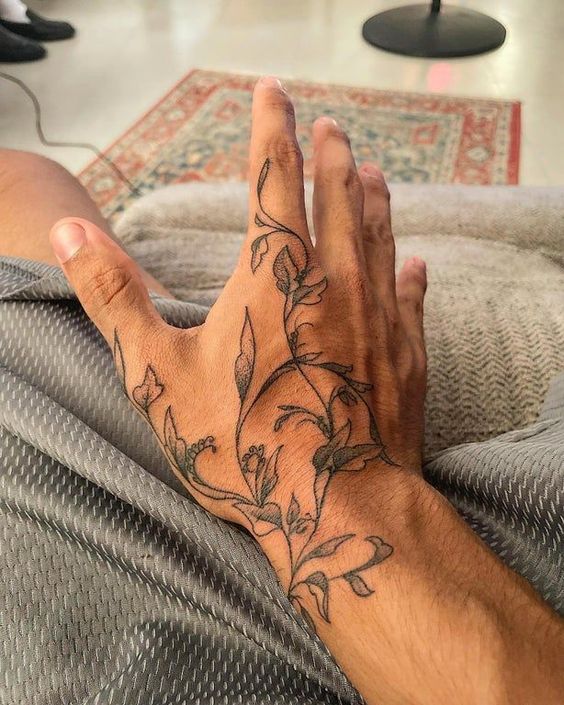
Colour is a specific decision point for floral work. Black and grey floral tattoos age more predictably than colour—colour can shift, particularly in yellow, orange, and lighter pink tones. A black and grey rose that fades slightly reads as intentionally vintage. A faded pink rose can look unintentional. If colour is important to your design, discuss with your artist which specific pigments hold best at this placement.
| Floral at a Glance Best designs: single focal flower with minimal surrounding elements, black and greyAvoid: multi-flower compositions with thin connecting elements, light colour fillsLongevity: moderate — black outlines hold; fine detail and colour shift within 2 yearsPain level: 6–8/10 |
8. Animal Portraits
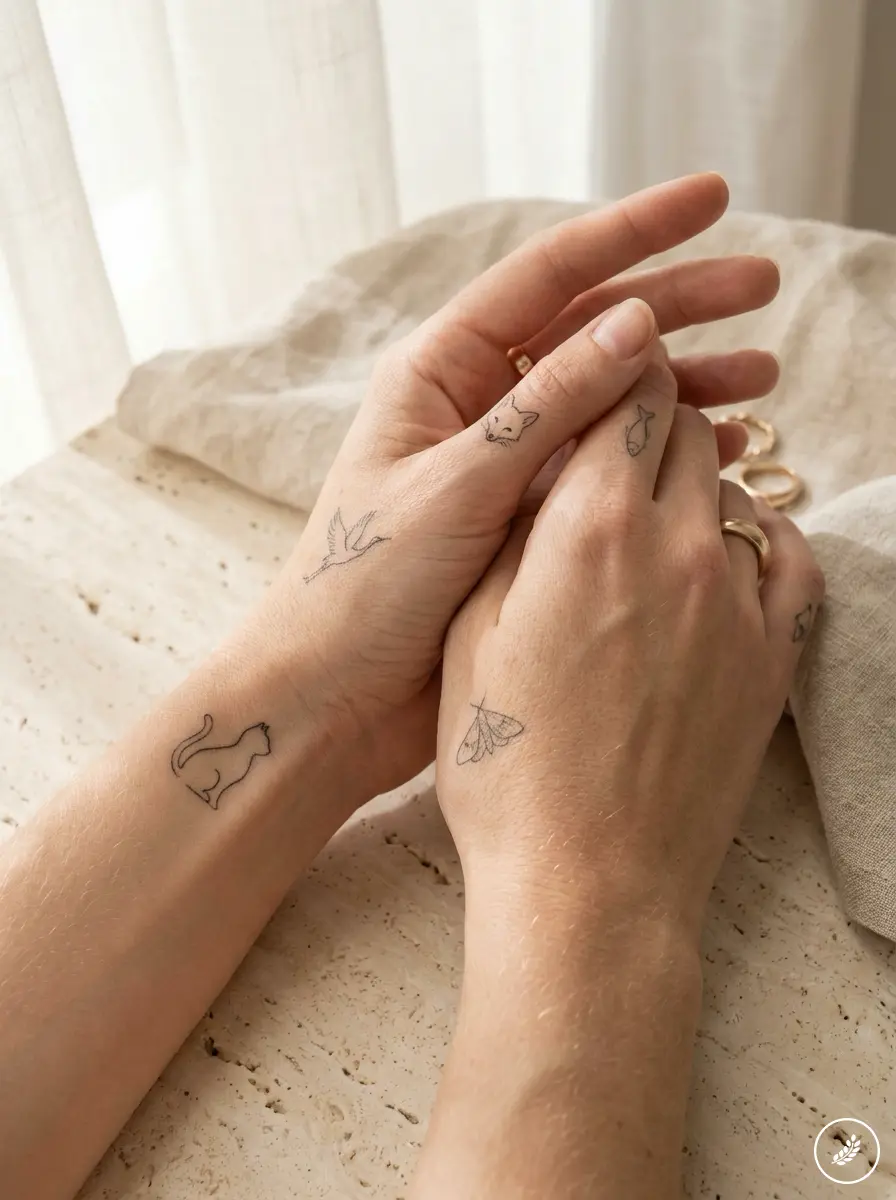
Animal hand tattoos range from tiny minimalist creature outlines on fingers to detailed portrait work covering the back of the hand. The style logic is the same as for any illustrated work at this placement: structural elements hold, fine detail fades.


Portrait-quality animal work—photo-realistic fur texture, subtle shading, detailed eyes—is the most technically vulnerable category of hand tattoo. The fine stippling that creates realistic fur texture will migrate and soften within two years at this placement. This doesn’t mean portrait animal work is wrong for hands, but it means managing expectations: the piece will evolve toward a looser, more impressionistic version of itself, which can be beautiful if you’re prepared for it.
The most durable animal hand tattoos use bold, graphic design approaches: strong silhouettes with selective internal detail, blackwork with deliberate solid areas, designs where the animal remains recognisable even if fine detail softens. A wolf head in bold linework with minimal internal detail holds better than a photorealistic wolf face at the same size.
| Animal Portrait at a Glance Best designs: bold graphic silhouettes, blackwork with solid areas, strong outlinesAvoid: photorealistic portrait work — fine detail will migrate significantlyLongevity: bold versions hold well; realistic versions evolve substantially within 2 yearsPain level: 7–8/10 |
9. Script and Quotes
Text hand tattoos are among the most commonly requested and the most frequently regretted—not because the sentiment changes but because the execution often doesn’t account for how lettering behaves on this placement. Script fonts with thin hairline strokes can become illegible within 18 months if the lines are too fine.
What holds on hands: medium-weight script (not hairline, not ultra-bold), block lettering with consistent line weight, single words or very short phrases. What fails: elaborate calligraphic fonts with extreme thick-thin contrast, long phrases that have to be compressed into small letter sizes, serifs that are too thin to survive.
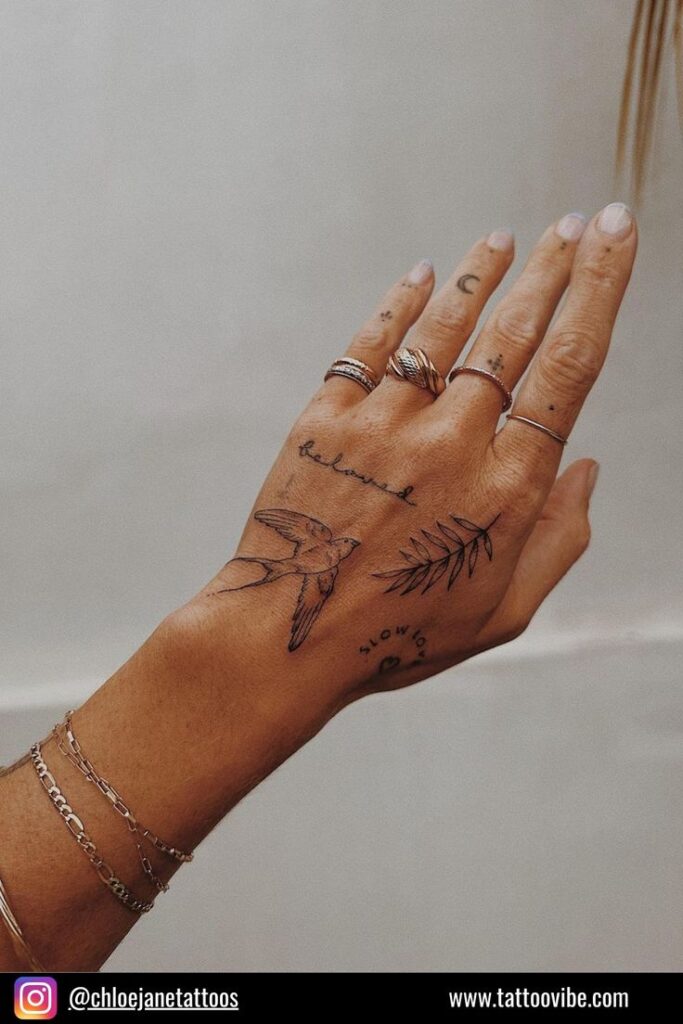
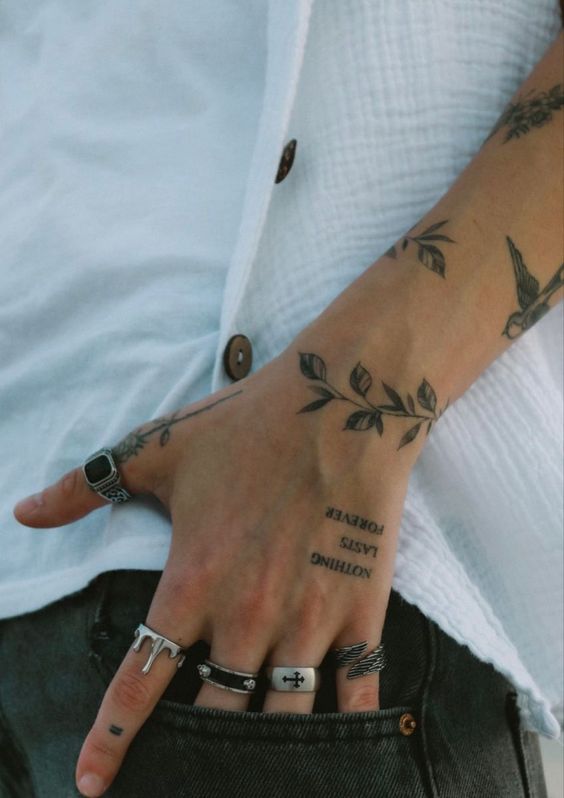
Inner wrist placement (technically not the hand but closely related) is slightly more forgiving than the back of hand or fingers for script work because it sees less daily abrasion. The ‘Let them’ and single-word wrist tattoos that are consistently popular on platforms like Instagram tend to use exactly the right design approach: medium-weight, clean font, short text.
| Script / Quote at a Glance Best designs: medium-weight script, single words, short phrases in clean fontAvoid: hairline calligraphy, elaborate serifs, long text requiring tiny letter sizeLongevity: medium — weight and font choice determines how it holdsPain level: 5–7/10 depending on exact placement |
10. Skull and Dark Art
Skull hand tattoos occupy an interesting cultural space: they’re simultaneously a traditional tattoo category with deep roots in American and Japanese tattooing, and a contemporary statement piece for people who want to communicate something deliberate about their relationship with mortality or impermanence.
From a technical standpoint, skull work on hands performs well when it follows traditional design logic—bold black outlines, selective solid fill, minimal dependence on fine detail for the design to read correctly. A skull rendered in traditional American style will age well at this placement. A hyper-detailed 3D skull with photorealistic shading will not.
Hand tattoos stay visible all the time, so it helps to compare them with hand tattoo ideas for men and decide whether the design should feel bold, minimal, or connected to a sleeve.
For a small hand symbol, a small crown tattoo is worth planning carefully because finger and hand ink needs simple shapes, generous spacing, and a realistic touch-up plan.
The social dimension of skull hand tattoos deserves honest acknowledgement. These are high-visibility, high-statement pieces that communicate something specific to most observers. If you work in an environment where that’s a consideration—client-facing roles, conservative professional contexts—a skull hand tattoo is a choice that rewards genuine reflection before commitment.
| Skull / Dark Art at a Glance Best designs: traditional bold outline skulls, graphic blackwork, classic imageryAvoid: hyper-realistic 3D rendering — fine detail won’t hold at this placementLongevity: excellent for bold traditional versions; moderate for detailed realismPain level: 7–8/10 |
The Cultural History Behind Hand Tattoo Symbolism
Hand tattoos are not a contemporary trend. Archaeological evidence of hand tattooing dates back over 5,000 years—Ötzi the Iceman, found in the Alps in 1991, had tattooed hands and wrists. Ancient Egyptian mummies show evidence of hand tattoos. Across multiple cultures and millennia, humans have chosen the hand as a location for permanent marking, which suggests something deeper than aesthetic preference.
The hand is the primary human tool—it’s how we interact with the world, build things, express care, and make things. Tattooing the hand has historically signified a permanent claim on that relationship: marking the instrument of action with the values or identity of the person wielding it. Polynesian tattoo culture understood this explicitly—hand tattoos in traditional Samoan and Maori practice signified the completion of a warrior’s identity, the visible declaration that the person’s hands would act with specific intent.
Contemporary hand tattoos carry this weight whether or not the wearer is conscious of it. The visibility of the placement means the tattoo is part of how other people read you at first meeting—which makes the symbolism decision more consequential than for ink in less visible locations. The stars, hearts, animals, and geometric forms people choose for their hands are, in effect, public statements about what they want their hands to be associated with.
For a softer hand placement, a small butterfly hand tattoo can work better than a heavy symbol if the lines are open, the wings are simplified, and the design is not squeezed too close to the knuckles.
The Honest Practical Considerations
Professional Impact in 2026
The professional landscape for visible tattoos has changed significantly over the past decade. In creative industries, tech, media, and many service sectors, hand tattoos are unremarkable. In law, finance, medicine, and traditional corporate environments, they remain a genuine consideration that can affect hiring, client perception, and advancement.
The practical advice hasn’t changed despite the cultural shift: think about your likely career path over the next ten to fifteen years, not just your current role. A hand tattoo that’s fine at your current employer might become a consideration if you move into a different field, relocate to a more conservative region, or shift into client-facing roles you can’t fully anticipate now. This isn’t an argument against hand tattoos—it’s an argument for factoring the full picture into a permanent decision.
Pain: What to Actually Expect
Hand tattoo pain is specific and worth understanding before you’re in the chair. The back of the hand is 6–7/10 for most people—uncomfortable but manageable for most sessions. The webbing between fingers and the area near the knuckles moves into 7–8/10 territory. Fingers, particularly the sides and tips, and the palm are genuinely painful—8–9/10 is the consistent report from people who have done these placements.
The particular quality of hand tattoo pain is sharp and bone-resonant rather than the broader ache of fleshier placements. If you’ve had tattoos elsewhere and found them tolerable, a back-of-hand tattoo is probably fine. If you’re concerned about pain, start there and see how your body responds before committing to fingers or palm. Breaking a hand session into 90-minute maximum segments is sensible regardless of pain tolerance.
Hand Tattoo Aftercare: The Protocol That Actually Matters
Standard tattoo aftercare doesn’t quite work for hands because hands can’t rest the way an arm or back can. The aftercare protocol needs to account for the fact that you’re going to use your hands continuously throughout the healing period.
| First 10 Days Protocol Wash the tattoo 4–5x daily with fragrance-free liquid soap (Dove Sensitive or equivalent)Pat dry with clean paper towel — never rubApply thin layer of Aquaphor or Hustle Butter after each washWear nitrile gloves for cleaning, cooking, or any chemical contactNo submerging in water — showers are fine, baths and swimming are notSPF 50 on the tattoo whenever outdoors from week 2 onwardDo not pick at peeling skin — let it shed naturally |
After the initial healing phase (typically 2–3 weeks for the surface layer, up to 6 months for full dermal settlement), daily moisturising with a fragrance-free lotion—Lubriderm, Curel, or Aveeno—extends the tattoo’s appearance significantly. The single most impactful long-term care habit for hand tattoos, and for visible placements like wrist tattoos, is consistent SPF application: UV is responsible for more fading than almost any other factor, and hands are sun-exposed constantly.
Touch-up timing: most experienced hand tattoo artists recommend waiting a full 6 months before evaluating whether a touch-up is needed, even if the healed result looks patchy earlier than that. The skin continues to settle for months after the surface appears healed, and premature touch-ups on incompletely settled ink often cause more problems than they solve.
If you are deciding whether a hand tattoo is too visible, compare it with these tattoo design ideas for women across wrist, collarbone, ankle, rib, and arm placements.
Before extending ink onto the fingers or hand, check the hand and sleeve tattoo flow notes so the sleeve ending feels deliberate rather than tacked on.
Frequently Asked Questions
How much does a hand tattoo cost?
Expect to pay $150–$300 for a small to medium finger or back-of-hand design at a reputable studio, with artists charging $150–$250/hour as a standard rate. Many studios apply a placement premium to hand work because of the technical difficulty and fading risk—this is standard practice, not price gouging. Full hand coverage (knuckles, back, wrapping to the wrist) runs $500–$1,500+ depending on detail and time. Touch-ups, which are essentially guaranteed for hand tattoos, are typically charged at a reduced rate by the original artist.
Will a hand tattoo affect my job prospects?
Honestly, it depends entirely on your field and location. In creative industries, tech, hospitality, and many urban professional environments in 2026, hand tattoos are unremarkable. In law, investment banking, traditional corporate environments, and many client-facing service roles, they remain a consideration. The most practical approach: research your specific industry and region rather than relying on general cultural trend data. If in doubt, speak to people further along your intended career path who have visible tattoos.
Which hand tattoo style lasts the longest?
Traditional American bold work consistently outperforms every other style for longevity at hand placement—the thick outlines and simple iconic imagery were engineered for exactly this kind of high-wear placement. Tribal bold blackwork performs comparably. Minimalist fine line work has the shortest natural lifespan without touch-ups, typically 12–18 months before visible fading. Geometric work with clean, medium-weight lines sits in the middle ground.
Can I get a hand tattoo if I already have a sleeve?
Yes, and this is actually the context where most experienced artists prefer to work on hands. Many tattoo artists have an informal standard of tattooing hands primarily on clients who already have significant existing work—not as gatekeeping, but because they’ve seen how often people regret a hand tattoo as a first or isolated piece. A hand tattoo that connects to an existing sleeve reads as part of an intentional body of work; a standalone hand tattoo on otherwise bare skin draws more social attention than many people anticipate.
How long does a hand tattoo take to heal?
Surface healing (the outer skin layer) typically takes 2–3 weeks for most people. The tattoo will look fully healed at this point but hasn’t finished settling—the ink continues to integrate into the dermal layer for up to 6 months. During this period the tattoo may look slightly milky or less vibrant than it will eventually appear. The final result isn’t fully visible until 3–6 months post-session, which is also why evaluating whether touch-up is needed before the 6-month mark is premature.
Do hand tattoos hurt more than other placements?
Yes, consistently reported as above average. Back of hand is typically rated 6–7/10—uncomfortable but manageable. Fingers, knuckles, palm, and webbing between fingers move into 8–9/10 territory. The specific quality is sharp and bone-resonant rather than the broader ache of fleshy placements. Pain sensitivity varies significantly between individuals, but almost everyone reports hand placements as notably more intense than arms, thighs, or upper back.
Do hand tattoos fade quickly?
Yes. Hands usually fade faster than upper arms, shoulders, thighs, or backs because the skin is washed, flexed, rubbed, and sun-exposed constantly. Fine-line finger tattoos often need a touch-up within 12-24 months. Back-of-hand designs with stronger outlines usually hold better, especially when the artist leaves enough space between lines.
What should I avoid in a hand tattoo design?
Avoid tiny script, pale gray shading, micro-realistic faces, and detail that sits directly on knuckle creases or finger joints. Those choices can look sharp on day one and muddy after healing. If you love a detailed idea, ask your artist to simplify the silhouette, thicken the key lines, and move the smallest details away from the highest-friction areas.
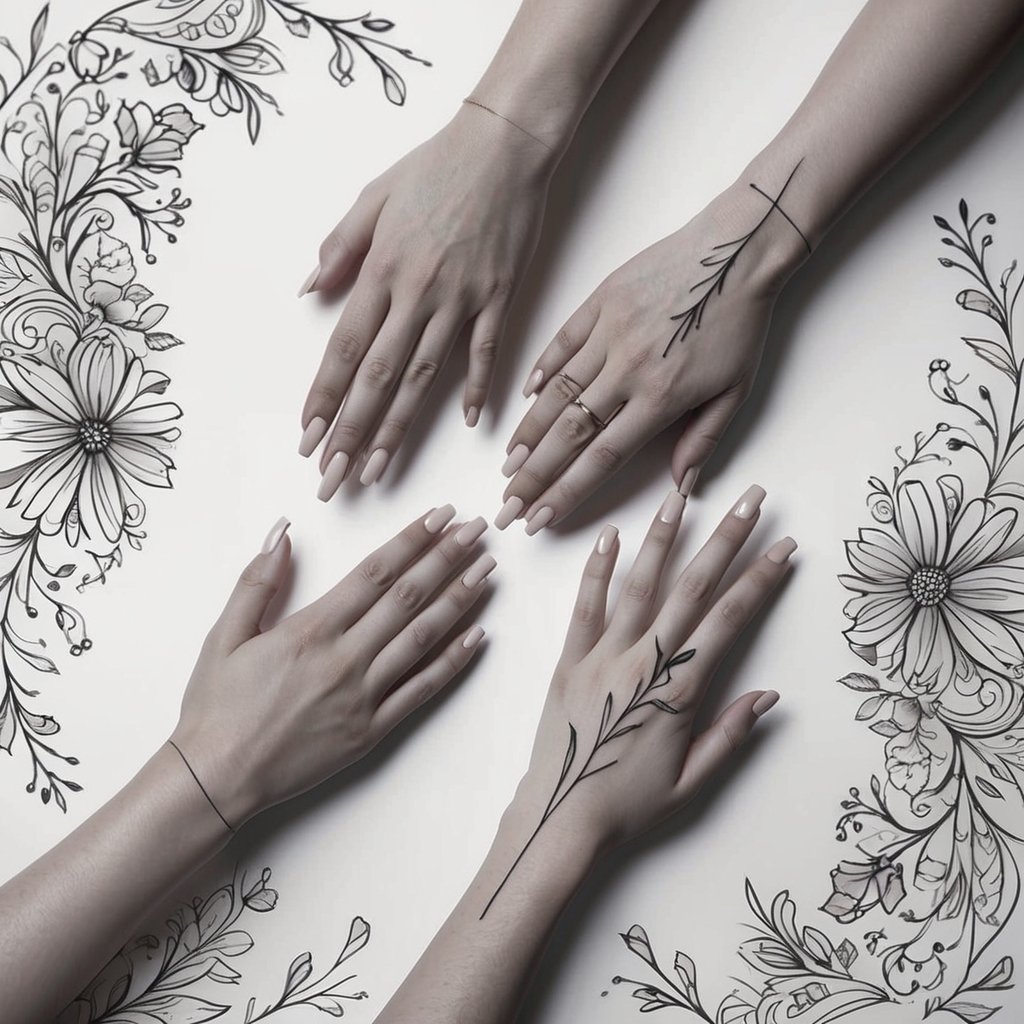


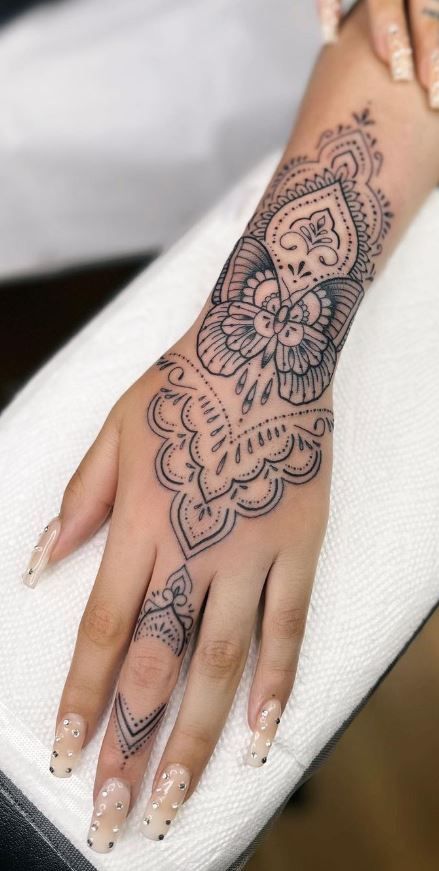
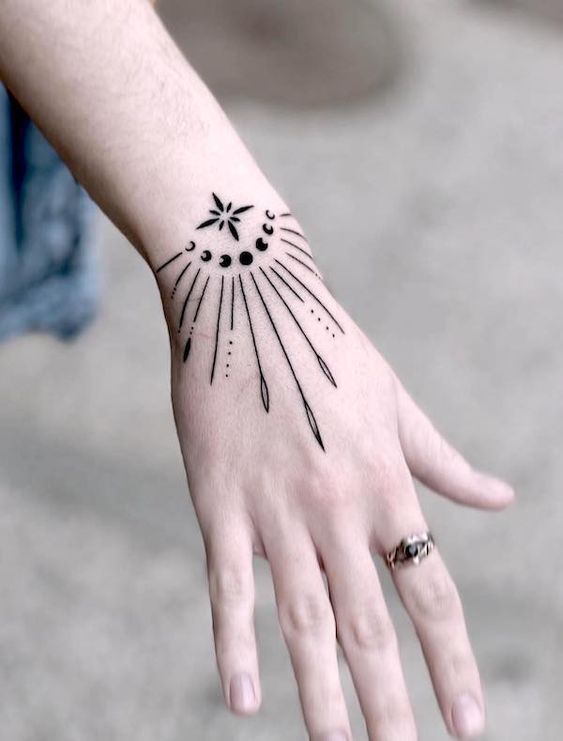
For a temporary version of hand body art, these henna hand tattoo ideas are useful because palms and fingers often hold a darker stain than smoother body areas.
Final note before you book
The best hand tattoo is the one your artist can still make readable after it heals. Bring references, but also bring flexibility. If the artist suggests fewer lines, a larger shape, or a shift away from a crease, that is usually design experience talking.
For more placement ideas, style references, and related designs, browse the Sky Rye Design tattoo ideas hub.
For hand tattoos, a hidden UV tattoo detail can add a blacklight reveal, but tiny lines need careful planning so the healed design stays readable.
Before carrying a hand tattoo into the wrist and forearm, use this arm sleeve tattoo guide to plan flow, visibility, and spacing.
Hand lettering needs extra caution because the skin fades and moves so much. Before placing text on the fingers or palm, study word tattoos that stay readable and keep the letters more open than you think.
Hand ink needs extra restraint because the skin moves and fades faster. A funny finger tattoo works best when the joke is built from one clean shape or a very short phrase, not a crowded miniature scene.
- 3.5Kshares
- Facebook0
- Pinterest3.5K
- Twitter0
- Reddit0