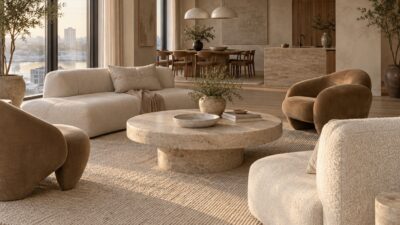

A client once asked me to swap a fabric sofa for leather three months after we’d finished her living room, not because the fabric had worn out, but because the room felt “too soft” once the rug and curtains went in. Nothing was wrong with the sofa. It was wrong for the room it ended up in. That’s the part most fabric vs leather sofa guides skip entirely: this is a design decision before it’s a maintenance decision.
Most comparisons online sort straight into a spec sheet – stain resistance here, wipeable surface there – and treat the sofa like an appliance you’re choosing on durability alone. It isn’t one. A sofa is usually the single largest object in a living room, and its upholstery does more to set the tone of that room than the paint colour, the rug, or almost anything else you’ll choose for the space.
- Fabric vs leather sofa: the design difference at a glance
- Start with the room, not just the sofa
- Fabric sofas: softness, color, pattern, and casual comfort
- Leather sofas: structure, patina, and a cleaner minimal look
- Sofa material comparison: comfort, maintenance, durability, and style
- Do not ignore the internal build quality
- Final verdict: which sofa material fits your interior?
- FAQ
This guide covers both sides properly – comfort, upkeep, durability – but starts where the decision actually should: the room itself, the light it gets, and how you actually live in it.
Fabric vs leather sofa: the design difference at a glance
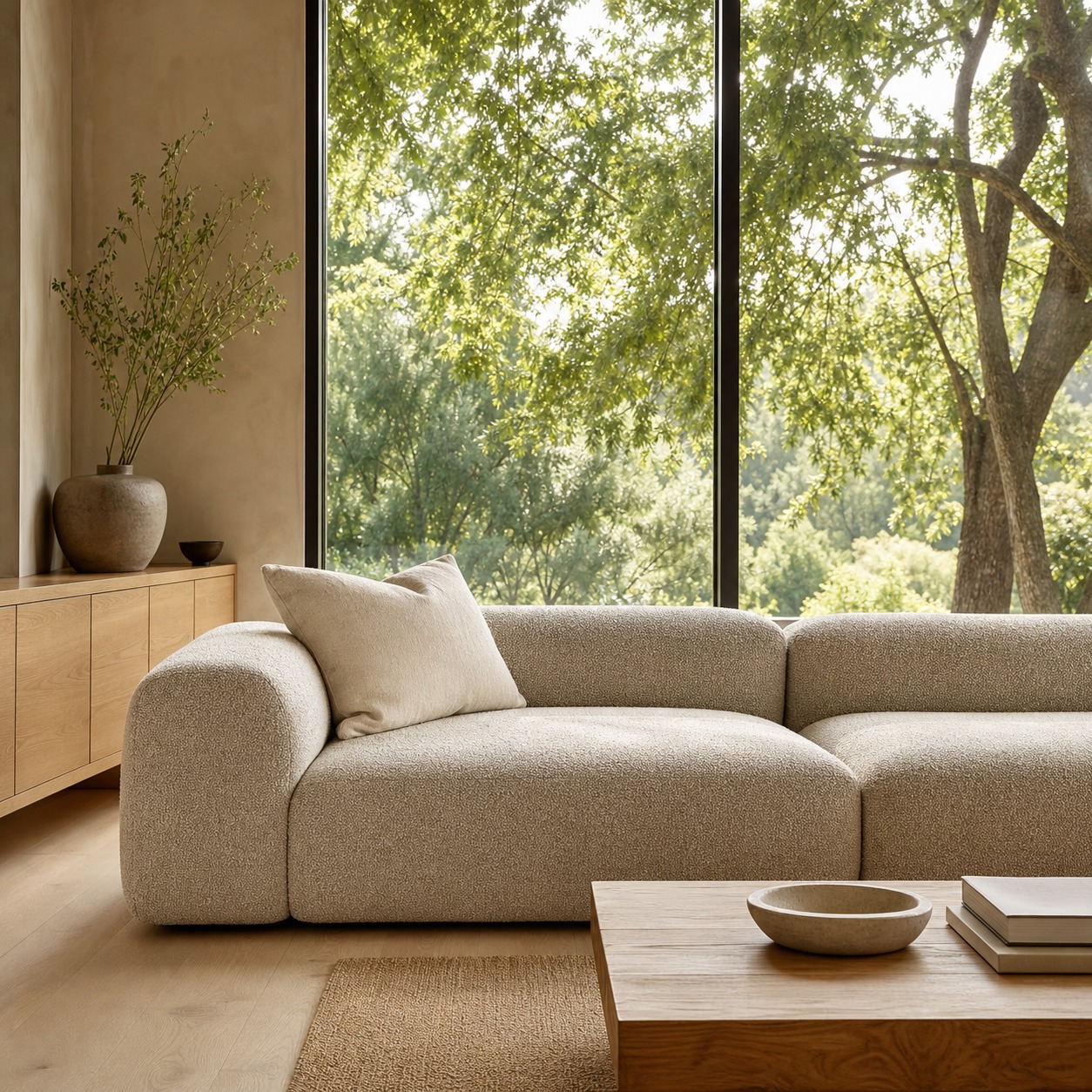
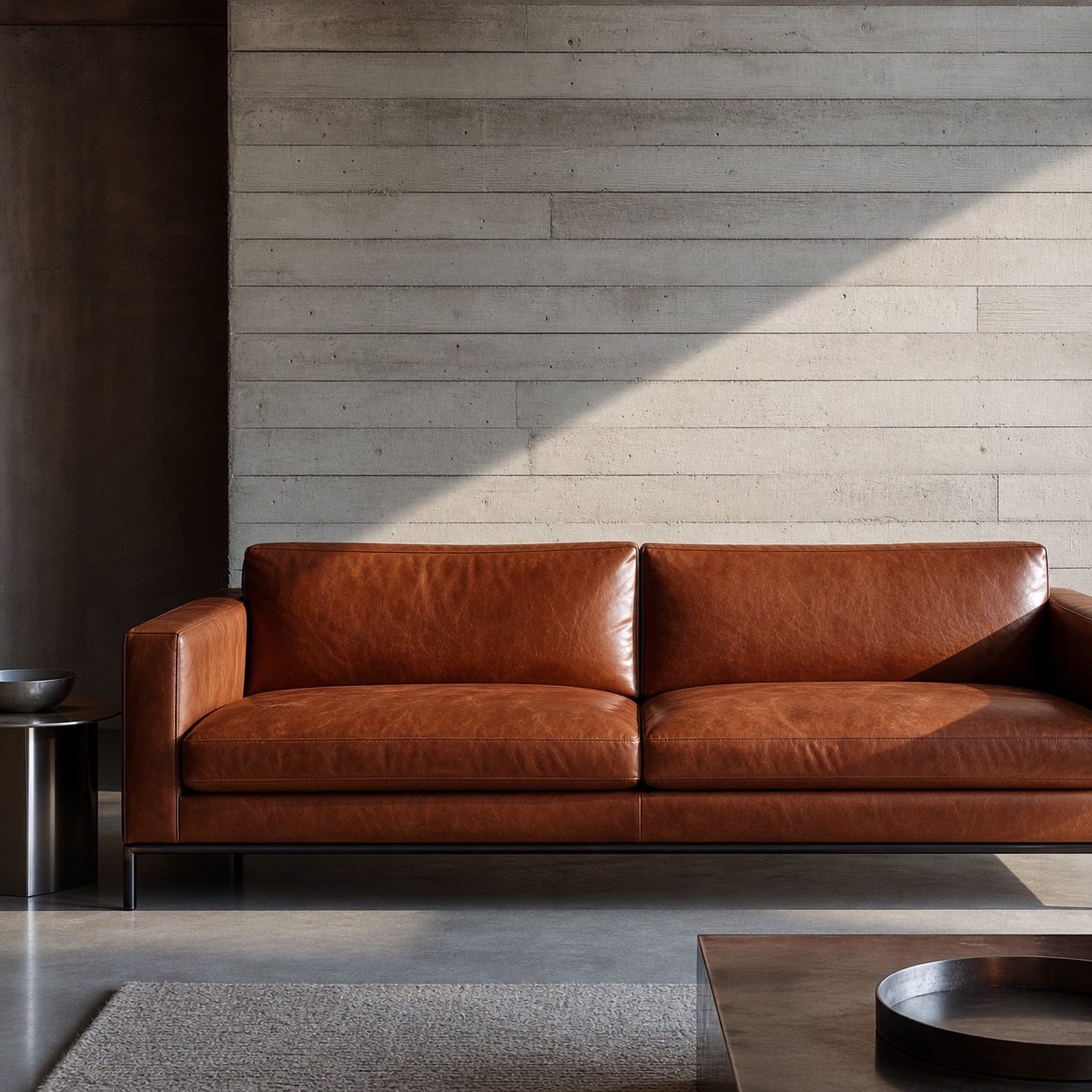
Before the detail, the short version. Fabric reads as soft, textured, and colour-flexible – it absorbs light rather than bouncing it, which makes a room feel more relaxed and layered. Leather reads as structured, cleaner-lined, and lower-maintenance on the surface – it catches light instead of absorbing it, which sharpens a room’s edges and tends to read as more formal, even in a casual layout.
Neither is objectively better. Fabric wins on colour range, pattern options, and immediate softness. Leather wins on visual weight control, ease of wiping down, and a look that ages into character rather than wearing out. The right answer depends far more on the room and the household than on which material is technically more durable.
It helps to think of the two materials as doing different jobs in a room rather than competing on the same scorecard. Fabric is a colour and texture decision first, a durability decision second. Leather is closer to an architectural material choice, the way you’d think about a stone floor or a metal fixture, where the surface finish and how it ages matter more than the range of tones available. Once you frame it that way, the choice usually gets easier, because you’re really answering a question about the room’s character rather than ranking two products against each other.
Start with the room, not just the sofa
I’ve specified both fabric and leather sofas for the same style of client brief and gotten completely different results, purely because the rooms were different. Treat the room as the starting brief, not the sofa spec sheet.
Before you look at a single swatch, walk the room at three different times of day if you can, morning, midday, and evening, and note how the light changes. A room that reads cool and bright at noon can feel completely different under warm evening lamp light, and the upholstery choice that looked right in a showroom under even lighting can behave very differently once it’s sitting under your own windows.
Visual weight, color palette, and texture
Leather has more visual weight than fabric of a similar colour, because it reflects light in a single, uniform sheen rather than scattering it across a woven texture. In a small or low-ceilinged room, that weight can make the sofa feel like it’s taking up more of the room than its actual footprint. Fabric, especially in a lighter tone or bouclé-style weave, tends to recede slightly and let the room breathe.
Colour behaves differently across the two as well. Leather’s colour range is narrower, mostly earth tones, black, white, and the occasional saturated statement colour, because dyeing hide evenly at scale is harder than dyeing woven fibre. Fabric gives you almost unlimited colour and pattern options, which matters if the sofa needs to anchor a specific palette rather than simply sit in the background.
Texture also changes how a room photographs and how it feels to actually sit in day to day, which are two different things worth separating. A tightly woven performance fabric or a smooth top-grain leather both read as clean and considered in photographs. In person, the difference is more about touch and temperature than appearance, woven fabric holds warmth against skin faster, while leather takes a moment to warm up but then holds heat differently in a way some people find more comfortable for long periods of sitting.
Climate, sunlight, pets, children, and daily use
A sofa positioned in direct sunlight for several hours a day will fade over time regardless of material, but leather shows UV damage differently than fabric – it can dry out, crack, or lighten unevenly, while fabric typically just fades in colour. If the sofa sits near a bright south-facing window, factor that into the material decision, not just the room’s overall light level.
Pets and children push the decision in opposite directions depending on the specific problem. Leather resists pet hair better (fabric fibres grab onto hair, smooth leather doesn’t) and wipes clean of most spills instantly. But sharp claws can scratch or puncture leather in a way that’s difficult to repair invisibly, while a stain on a well-chosen performance fabric can often be cleaned or the cushion cover replaced entirely. Neither material is pet-proof or child-proof. Both just fail differently.
Humidity and indoor climate matter more than people expect too. In consistently air-conditioned or centrally heated rooms, leather can feel noticeably cooler to sit on than fabric, at least until body heat warms the contact area, while fabric holds a more neutral temperature from the first moment you sit down. In a naturally humid climate without much air conditioning, fabric breathes better against skin over long periods, while leather can feel slightly tacky in sustained high humidity. Neither issue is a dealbreaker, but it’s worth sitting on both materials in conditions close to your actual living room before deciding.
Fabric sofas: softness, color, pattern, and casual comfort
Fabric sofa vs leather sofa comparisons usually lump all fabric options into one category, which undersells how different the actual choices are once you get into sofa upholstery fabric types.
Linen, velvet, chenille, microfiber, and performance fabrics
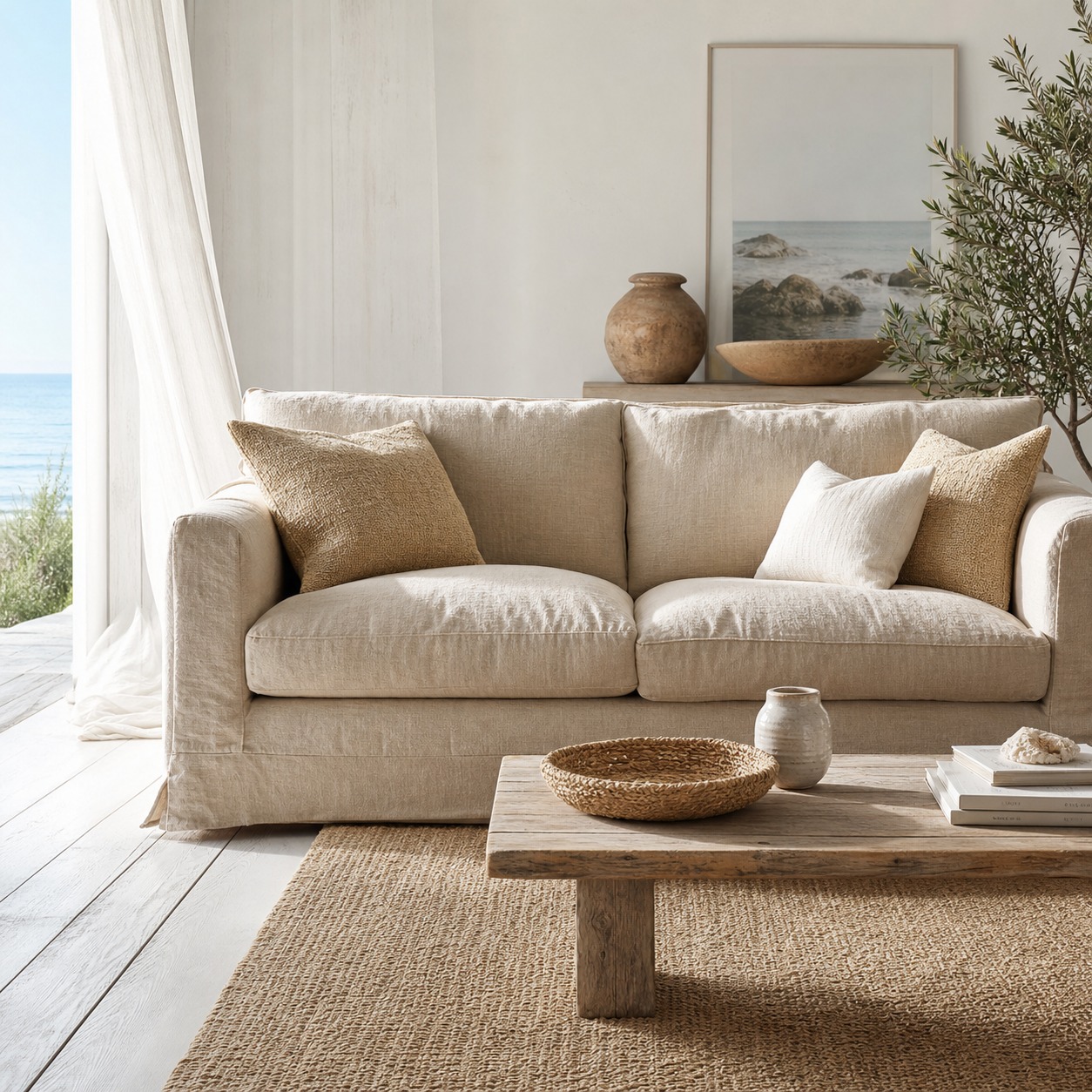
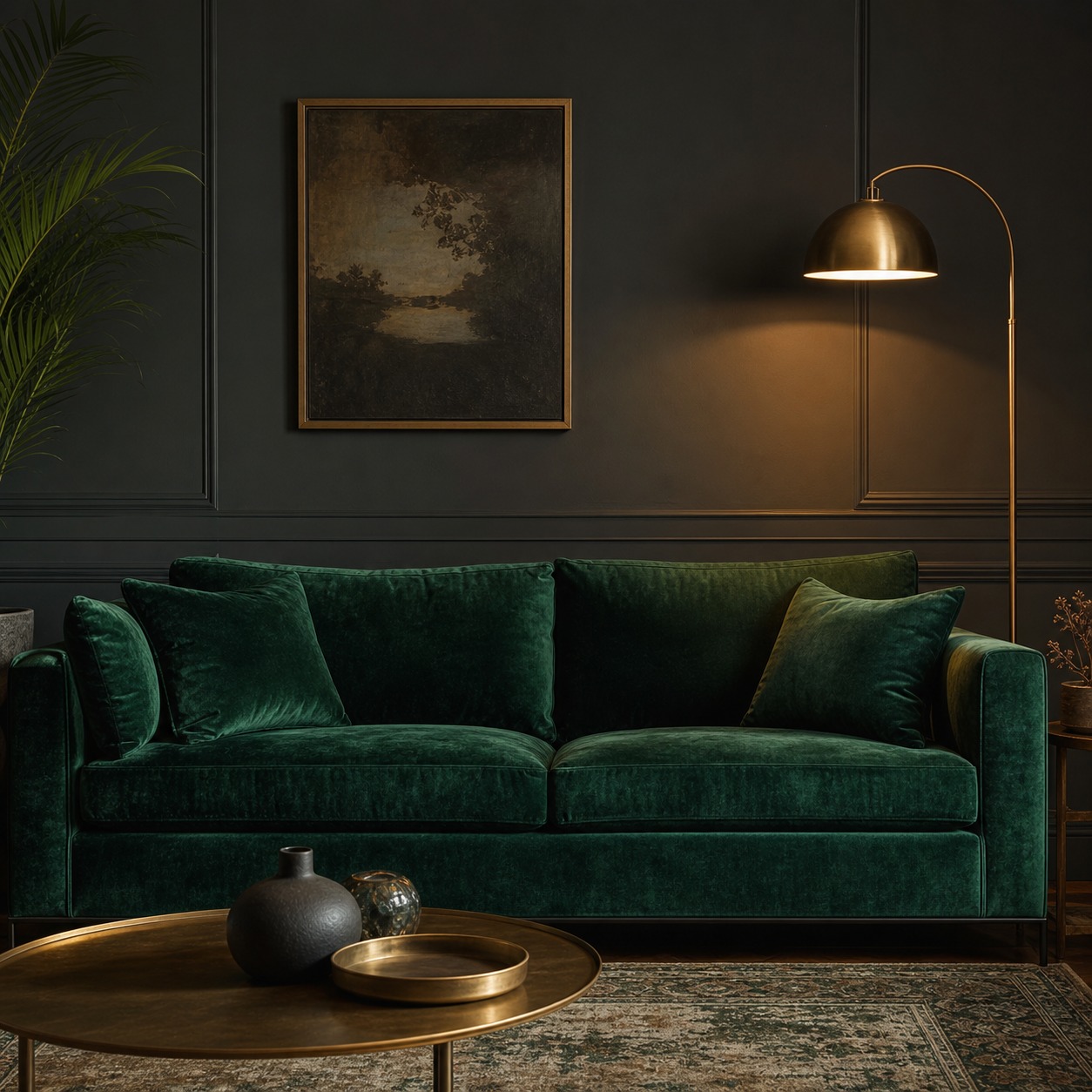
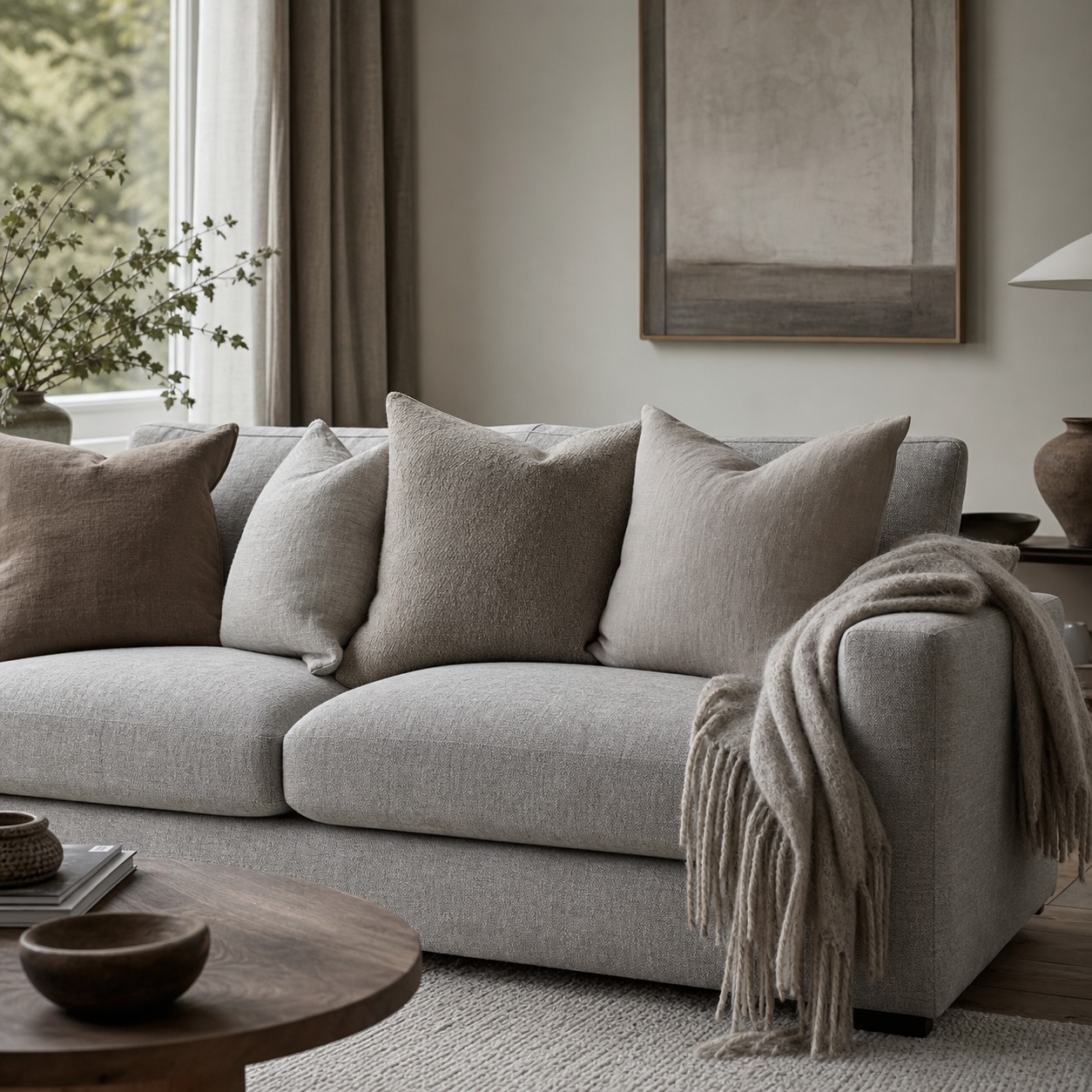
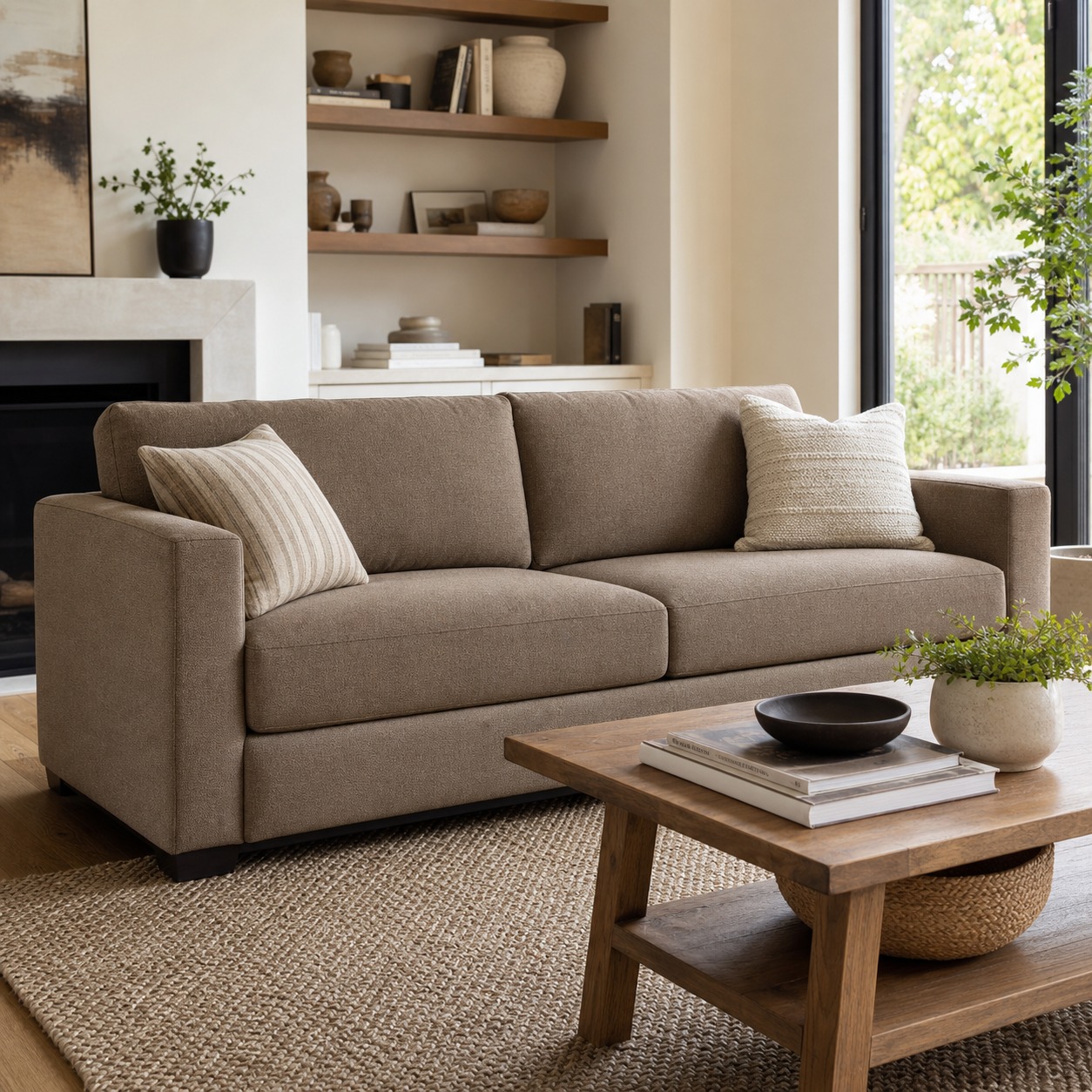
Linen gives a relaxed, slightly textured look that reads well in contemporary and coastal-leaning interiors, though it wrinkles and marks more easily than tighter weaves. Velvet brings genuine visual richness and a soft hand-feel, and it photographs beautifully, but it shows crushing and watermarking more readily than most other fabric options, which matters in a high-traffic room. Chenille sits in between: warm, tactile, forgiving of daily use, and a strong choice for a cosier living room brief.
Microfiber and polyester blends are the practical end of the fabric spectrum, chosen mainly for stain resistance and price rather than for their look. Performance fabrics, a newer category built specifically for stain and abrasion resistance without sacrificing the softness of a natural-feeling weave, have genuinely closed most of the durability gap that used to exist between fabric and leather. If durability is the deciding factor and you still want fabric’s colour range, this is the category worth specifying.
Weave tightness is worth asking about directly when you’re comparing fabric samples, since it affects both durability and how the fabric handles light. A tighter weave, measured roughly by thread count in the same way bedding is, resists pilling and abrasion better and tends to hold a crisper, more tailored look over time. A looser, more textured weave feels warmer and more casual but shows wear faster in high-contact zones like arm rests and seat edges.
When fabric works best in modern interiors
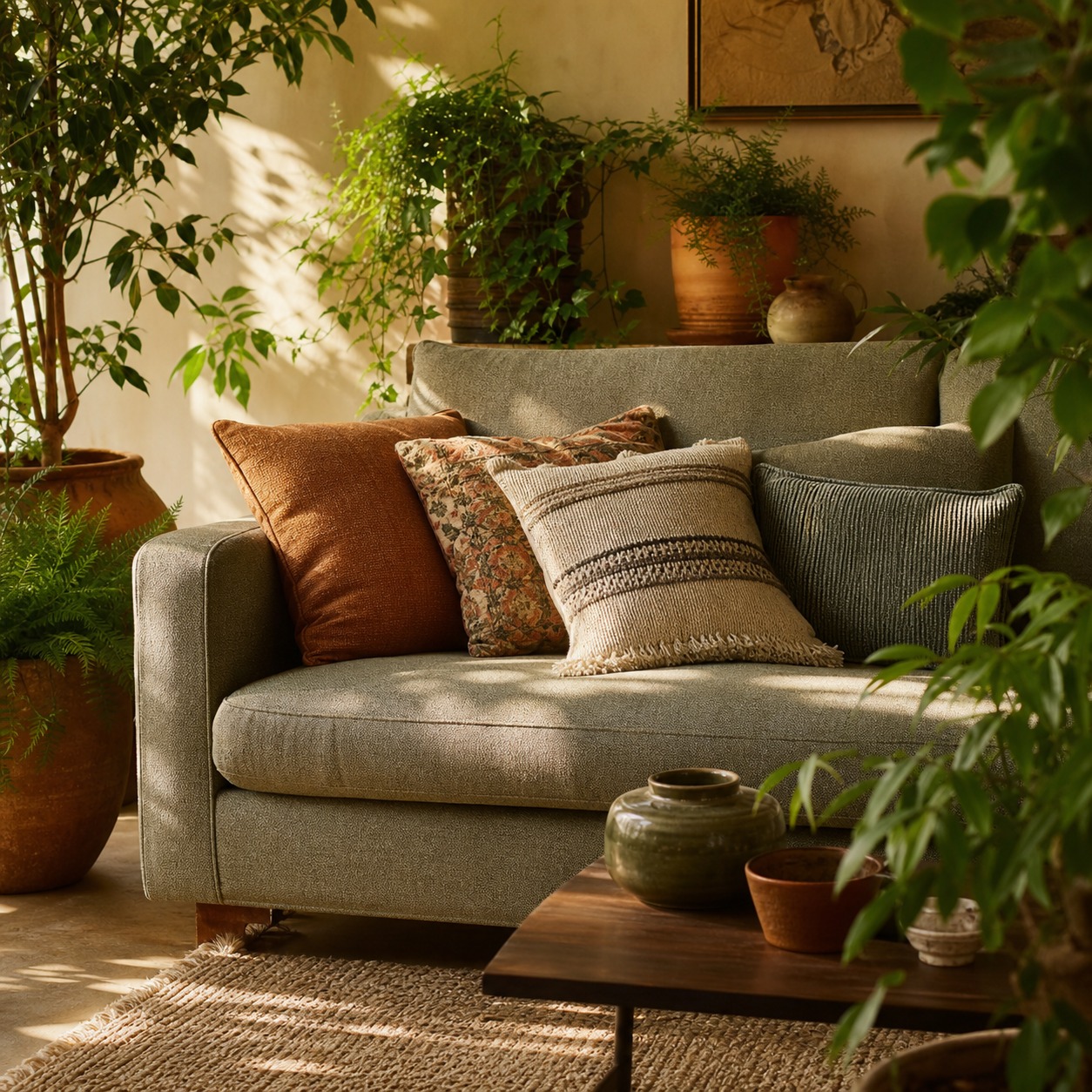
Fabric earns its place in a room that wants softness and colour to do some of the design work – a living room where the sofa is meant to add warmth against hard flooring, exposed concrete, or a neutral architectural shell. It’s also the stronger choice when the household genuinely values pattern and colour flexibility over time, since reupholstering or swapping cushion covers is more forgiving on fabric than on leather.
It also works well as a deliberate contrast piece. In a room built mostly from hard, reflective materials, stone counters, glass, polished concrete, a fabric sofa gives the eye somewhere soft to land, and that contrast often does more for the room’s balance than matching every surface to the same finish.
Leather sofas: structure, patina, and a cleaner minimal look
Leather vs fabric sofa arguments tend to treat “leather” as one material, but the grade of leather changes the sofa’s performance and price more than almost any other single spec decision.
Full-grain, top-grain, bonded, and faux leather
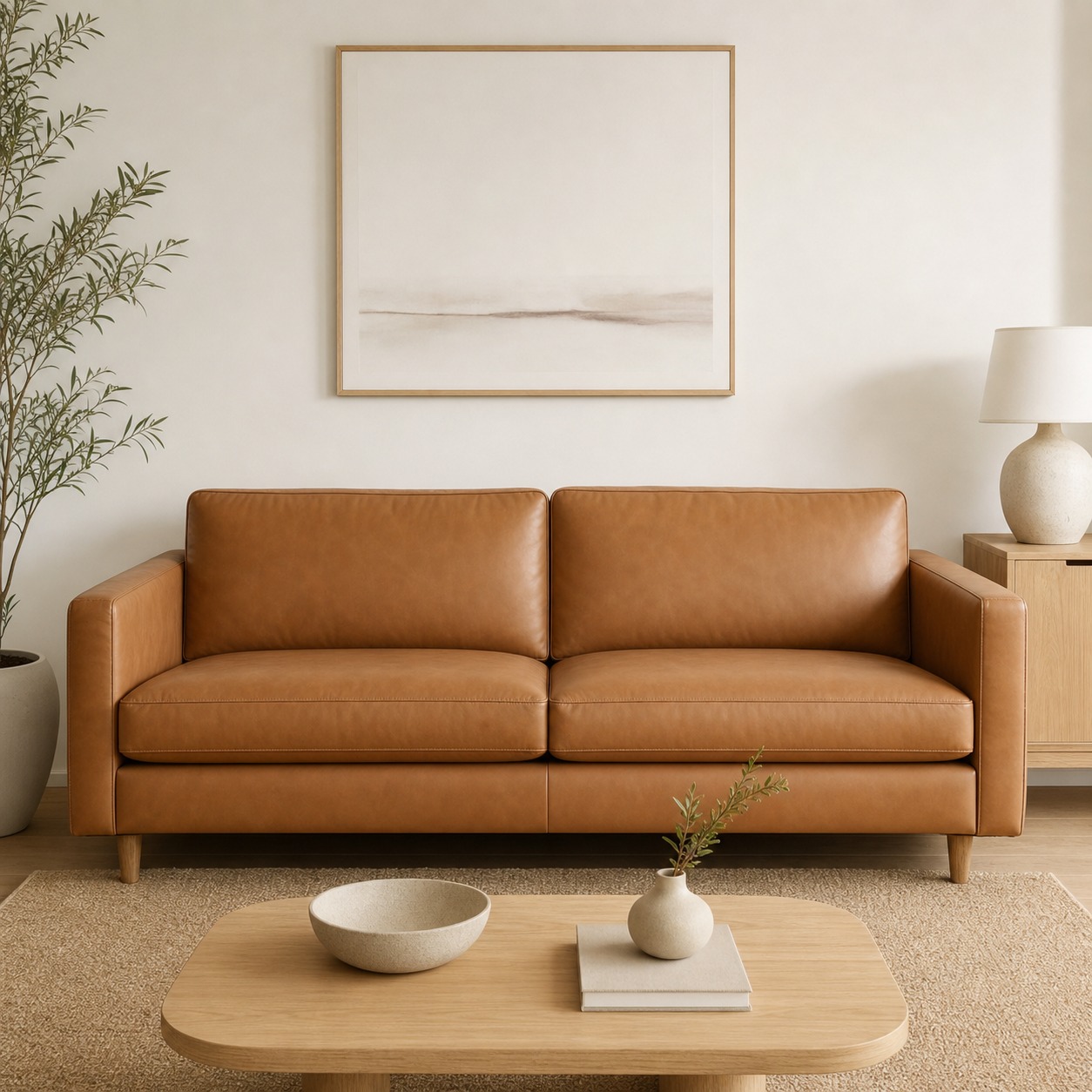
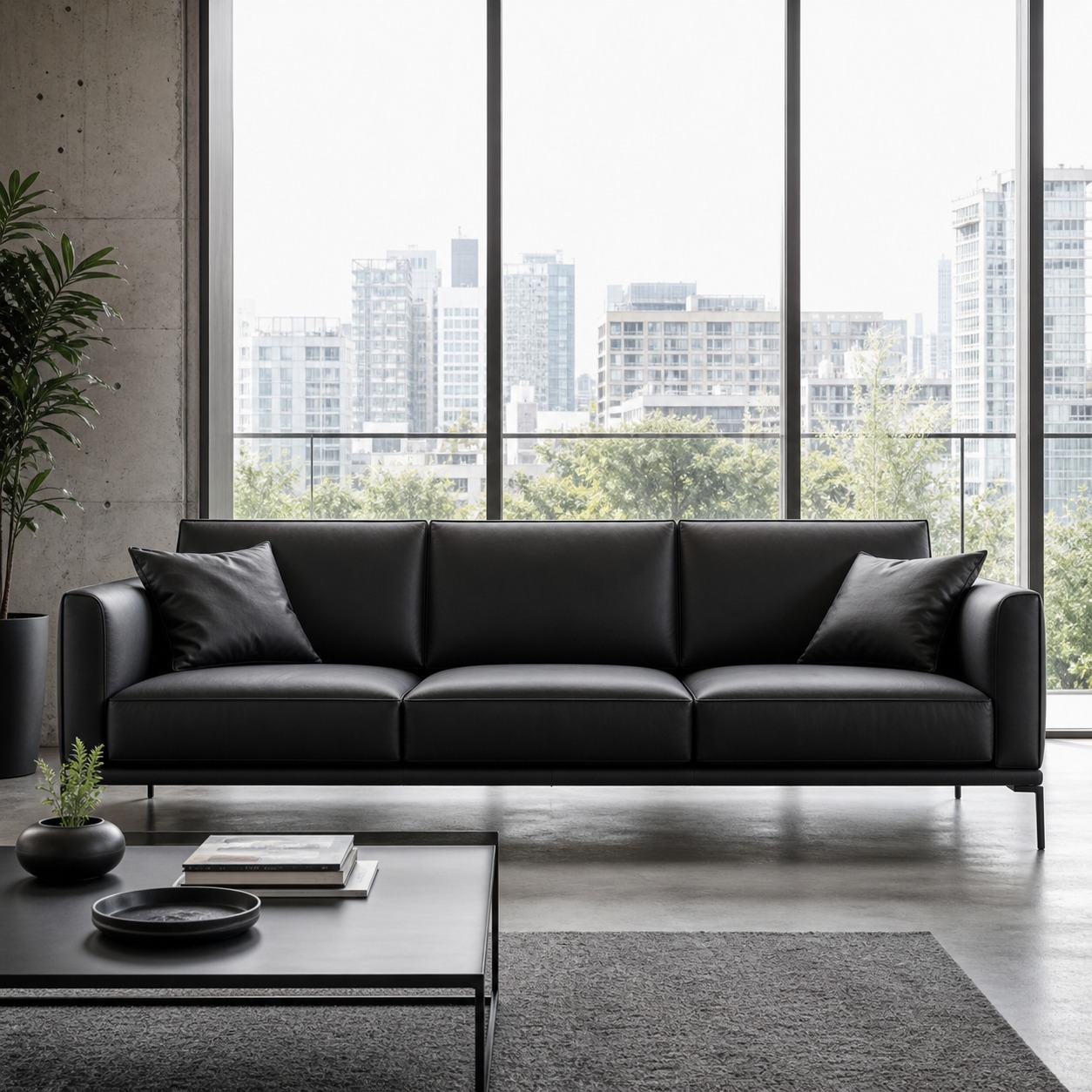
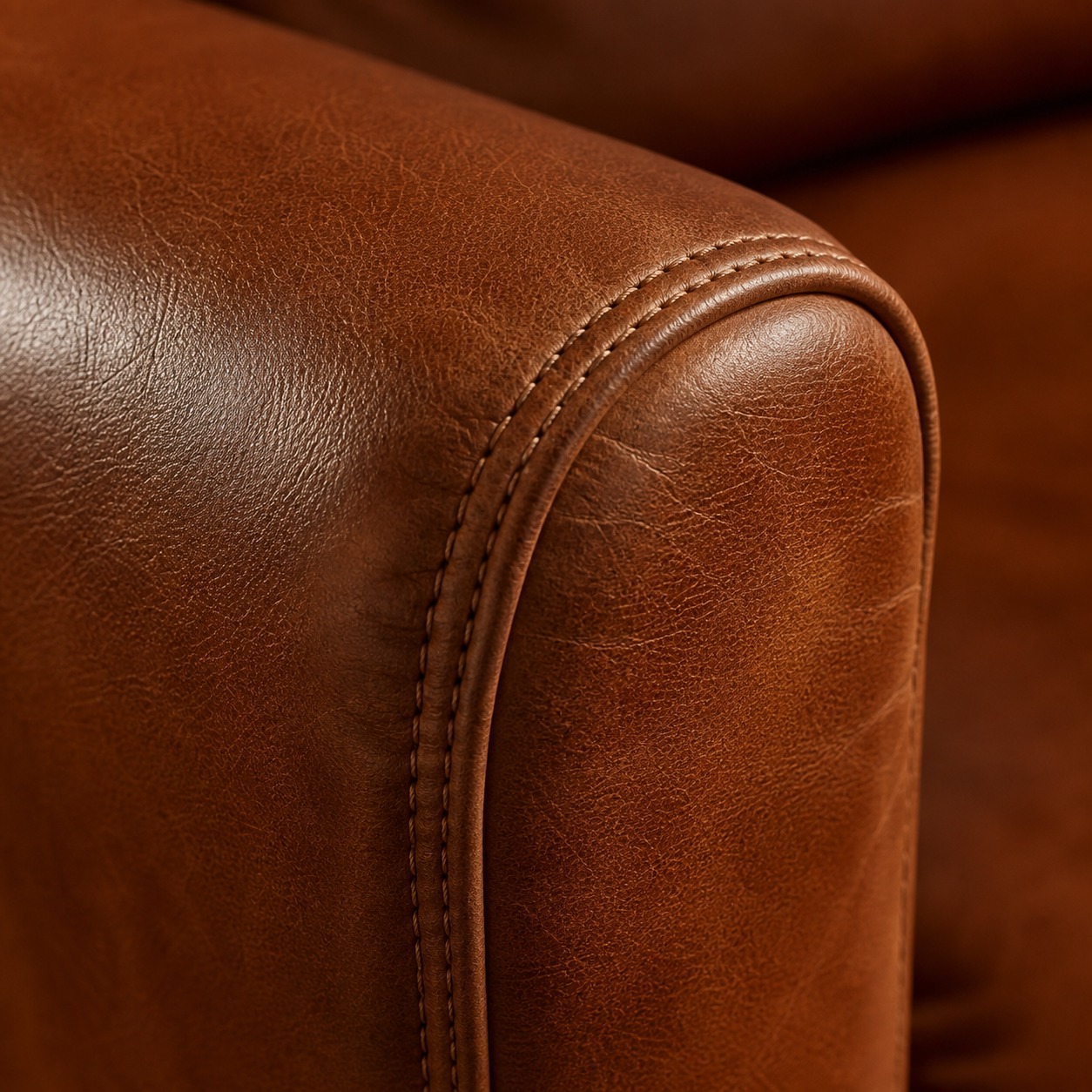
Full-grain leather keeps the hide’s natural surface intact, including its imperfections, and is the most durable and expensive option. It develops a genuine patina over years of use, darkening slightly and softening at pressure points, which is a feature for buyers who want the sofa to age with character rather than staying static. Top-grain leather is sanded and refinished for a more uniform, slightly smoother surface, trading a little of that natural character for consistency and a lower price point.
Bonded leather, made from leftover leather fibres bonded to a fabric backing, looks like leather at a fraction of the cost, but the surface layer typically cracks and peels within a few years under regular use, so treat it as a short-term look rather than a long-term investment. Faux leather (polyurethane or a similar synthetic) has improved considerably and now offers a genuinely convincing texture, easier cleaning, and no animal hide at all, at the cost of the specific way real leather ages.
Price tends to track grade fairly closely, and it’s a reasonable proxy when you’re comparing options in a showroom without a spec sheet in hand. If a leather sofa is priced close to a comparable fabric piece, it’s very likely bonded or faux leather rather than full-grain or top-grain, since genuine hide at scale rarely comes in at fabric-equivalent pricing.
When leather makes a room feel sharper or heavier
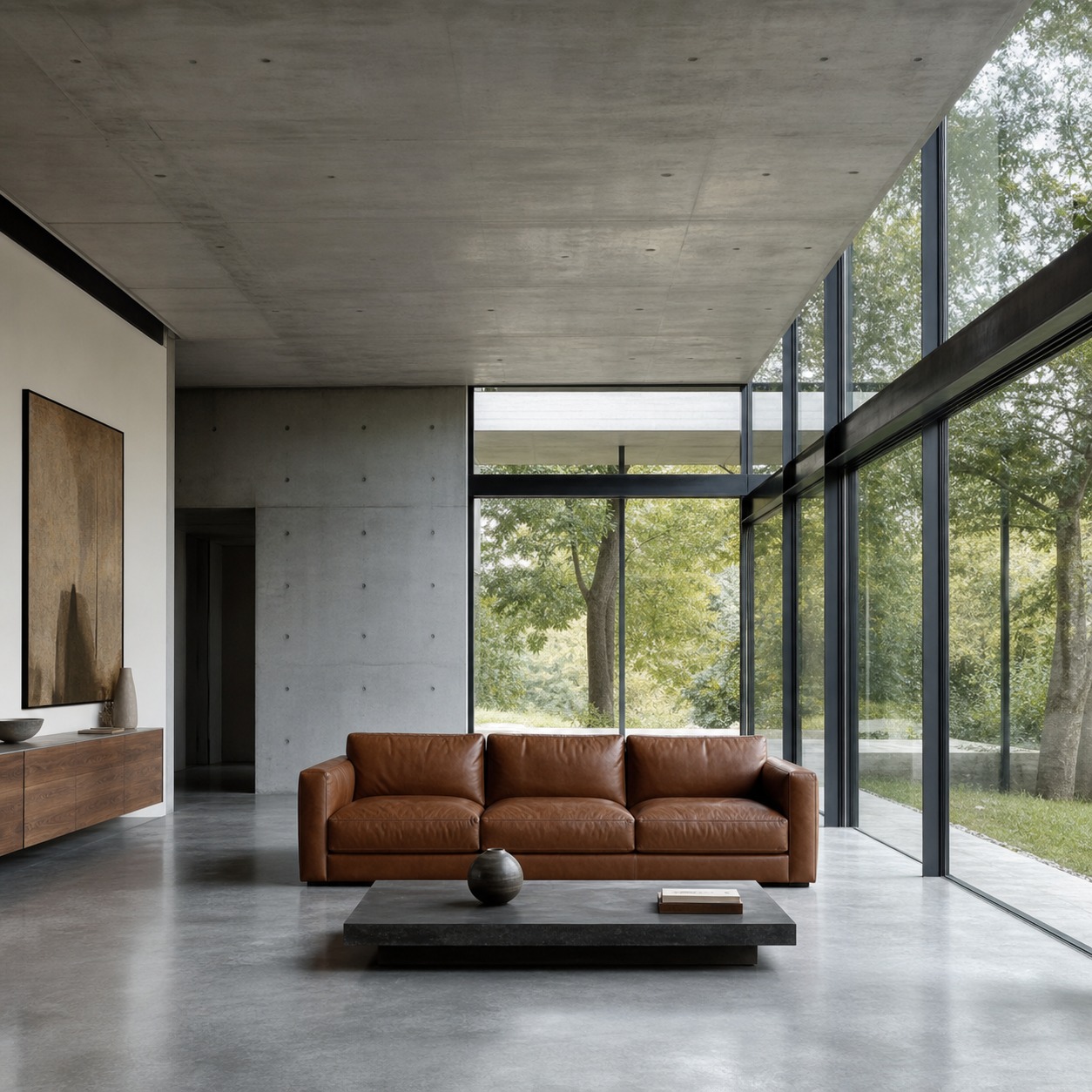
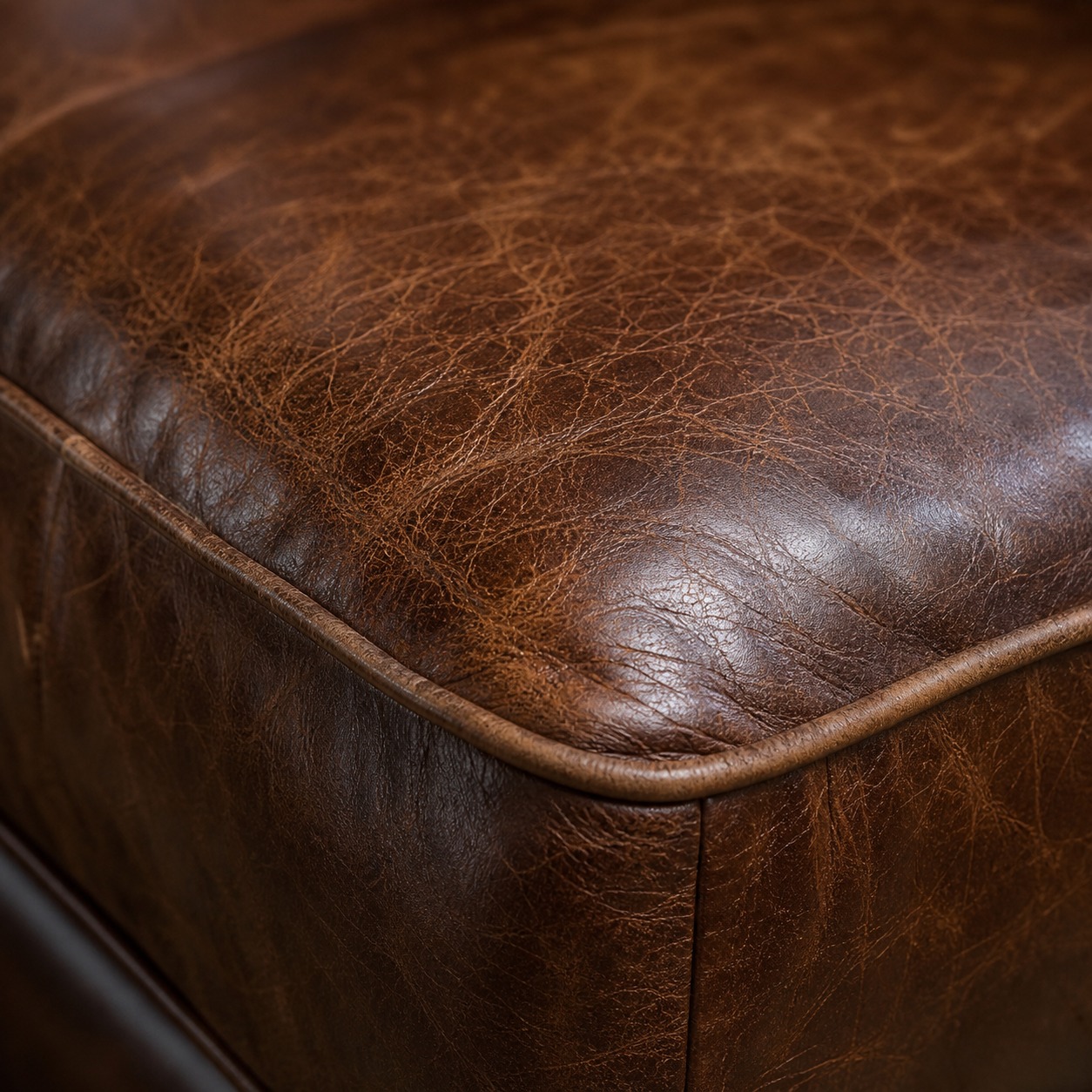
Leather is the stronger choice when a room wants a cleaner, more architectural read – minimalist interiors, spaces built around straight lines and a restrained palette, or any room where you want the sofa to feel grounded and permanent rather than soft and changeable. It’s also the practical choice for households that prioritise quick clean-up over colour flexibility, since a damp cloth handles most day-to-day marks.
The trade-off is genuine: in a small or already visually busy room, leather’s weight and sheen can make the space feel heavier rather than more polished. If the room already has strong architectural lines, hard flooring, and a restrained palette, that’s rarely a problem. If it’s a softer, more layered room, leather can fight the rest of the design rather than complementing it.
Sofa material comparison: comfort, maintenance, durability, and style
A genuinely balanced sofa material comparison weighs all four of these together, not just one axis in isolation.
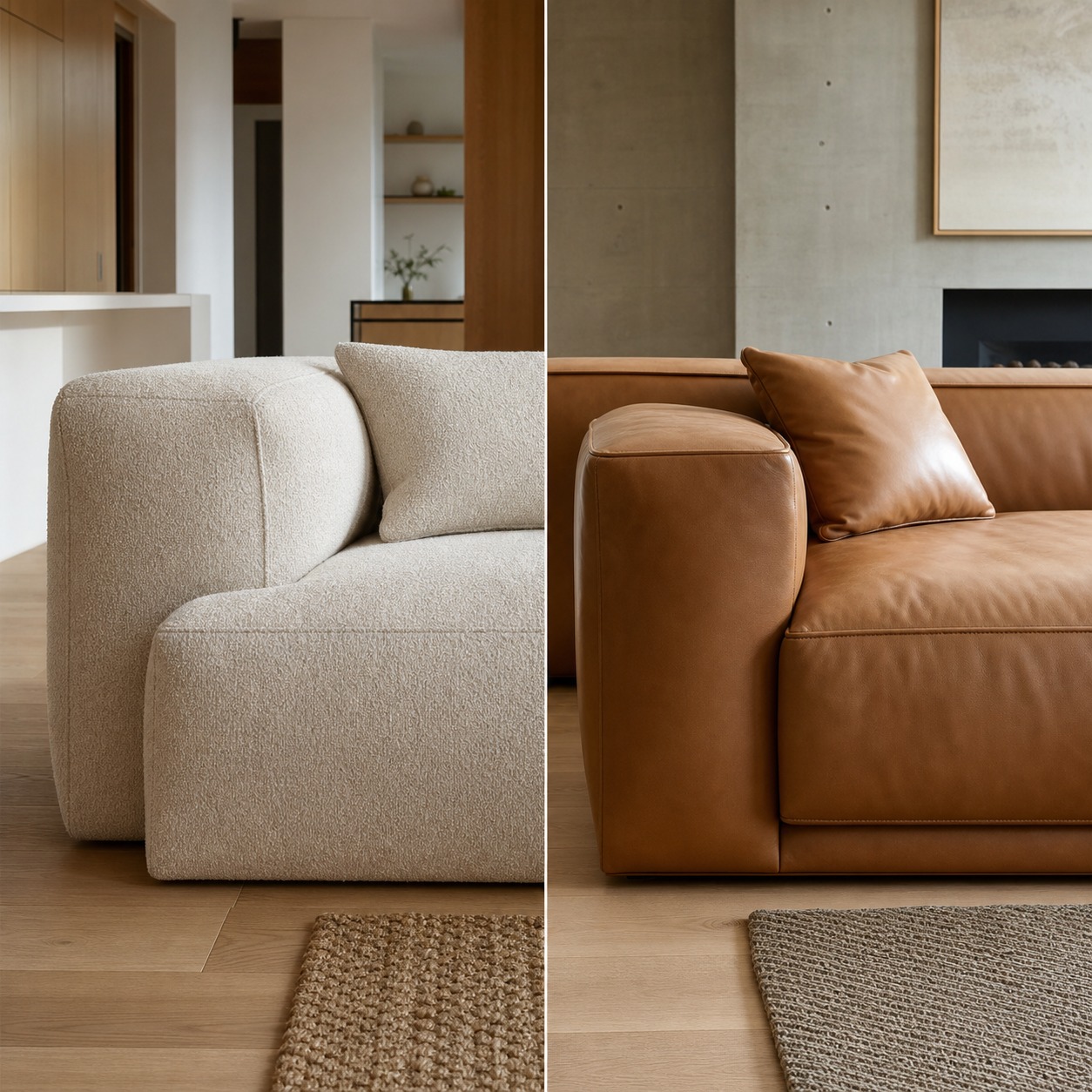
On comfort, fabric usually feels softer and warmer the moment you sit down, with a much wider range of texture available depending on the weave. Leather tends to feel firmer initially and takes longer to soften and mould to the body, but many people find well-broken-in leather more supportive over long sitting sessions once it’s had time to adjust. On maintenance, leather’s advantage is speed, a spill wipes off in seconds, while fabric usually needs a cleaning product or a professional visit for anything beyond a light dusting, though performance fabrics have narrowed that gap considerably. On durability, the honest answer is that grade and construction quality matter more than the fabric-versus-leather choice itself, a well-built sofa in either material outlasts a poorly built one regardless of upholstery.
Best choice for small living rooms
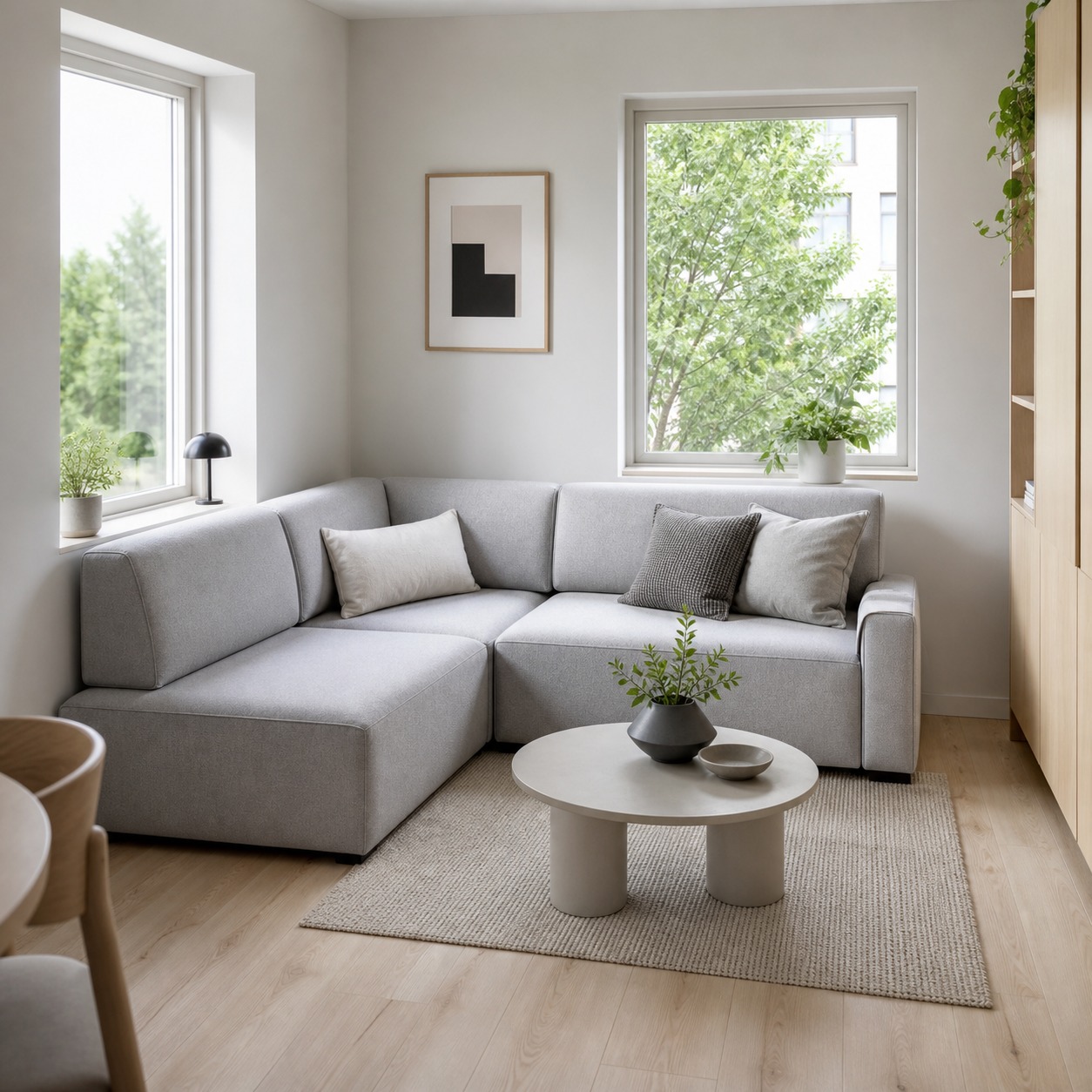
Fabric, generally, and specifically a lighter tone that doesn’t add visual bulk to a compact room. If you’re furnishing a smaller space, our guide to modular sofas for small spaces covers layout options that pair well with a lighter fabric choice, since a modular fabric piece can be reconfigured as the room’s use changes.
Best choice for families and pets
There’s no clean winner here, only a clearer trade-off. Leather resists hair and wipes clean faster; a well-chosen performance fabric resists stains nearly as well and is far more forgiving of claws. For a household with both young children and a cat, a performance fabric in a mid-tone colour that hides everyday marks is usually the safer bet than betting everything on leather’s scratch vulnerability.
Best choice for luxury, minimalist, and cozy interiors
Full-grain leather for a minimalist or genuinely luxury brief, where its patina and structure reward the investment over time. Velvet or chenille fabric for a cosy, layered interior where texture and colour are doing more of the emotional work than surface sheen. Neither choice is wrong for either brief; it’s a question of which feeling the room is built around.
Do not ignore the internal build quality
This is the part that gets skipped in almost every fabric vs leather sofa comparison, and it matters more than the upholstery choice itself for how the sofa performs over the next decade.
Frame, cushion density, stitching, and support
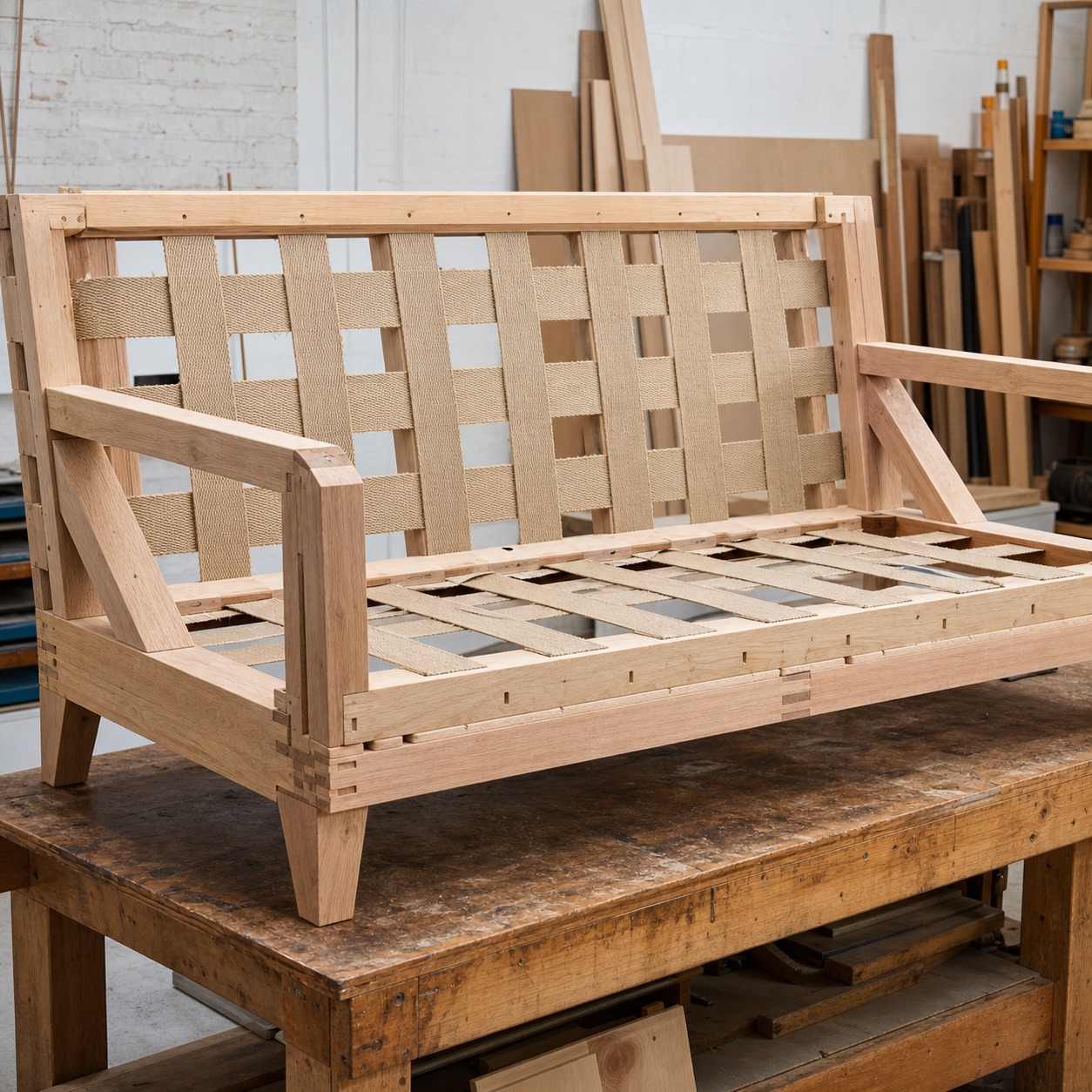
A solid hardwood frame (kiln-dried, to resist warping) outlasts a softwood or particle-board frame by years, regardless of what covers it. Cushion density, measured in foam density ratings rather than just how soft a showroom cushion feels on the day, determines whether the sofa still holds its shape after eighteen months of daily use or starts sagging within the first year. Stitching quality is easy to check by hand: double-stitched seams along stress points (arm joints, seat edges) hold up considerably better than single-stitched construction, on either fabric or leather.
I check these three things before I look at the upholstery material at all when I’m speccing a sofa for a client, because a beautiful full-grain leather cover on a weak frame will sag and creak within a couple of years, while a well-built frame under a mid-range fabric will hold its shape for a decade or more.
Suspension system is worth asking about too, and it’s easy to overlook next to frame and foam. Sinuous spring or webbed suspension underneath the seat cushions affects how the sofa feels under sustained weight, sagging springs are one of the most common reasons an otherwise good-looking sofa starts to feel worn out within a few years, long before the upholstery itself shows any real damage.
Ask for the foam density rating and frame material before you ask about the upholstery colour. Most showrooms will give you both if you ask directly, and the answer tells you more about how the sofa will feel in three years than any amount of time spent sitting on it today.
Final verdict: which sofa material fits your interior?
There isn’t a single right answer, and any guide that gives you one is skipping the room-specific part of the decision. Fabric suits rooms that want warmth, colour, and softness to do design work, and households that value pattern flexibility over pure wipe-down convenience. Leather suits rooms that want a cleaner, more architectural read, and households that prioritise quick surface clean-up over colour range. Whichever direction you land on, treat the frame and cushion construction as seriously as the upholstery choice – a well-built modern sofa in either material will outperform a beautifully upholstered one sitting on a weak frame within the first two years of daily use.
If you’re still torn between the two after weighing the room, the household, and the build quality, it’s worth sitting on both for longer than a showroom visit allows. Ask about a home trial period if the retailer offers one, or visit at a quieter time and actually sit for ten minutes rather than thirty seconds. The material that still feels right after that longer sit is usually the right answer, whatever the spec sheet says.
For more on how upholstery choices ripple through the rest of a room’s design, see the role upholstery plays in interior design, and if you’re still weighing up the sofa itself, our custom sofa buying guide and the ultimate sofa buying guide both go deeper into the buying decision beyond material alone. If leather vs fabric is a question you’re also facing for other seating in the room, our leather vs fabric wingback chairs comparison covers the same trade-offs for chairs specifically, and our living room interior design ideas has broader layout and palette ideas for building the room around whichever sofa you choose.
FAQ
Is fabric or leather better for a sofa?
Neither is universally better – it depends on the room and the household. Fabric offers more colour and texture flexibility and feels softer immediately; leather offers a cleaner, more architectural look and easier surface clean-up. Match the material to the room’s visual weight and your household’s daily use, rather than picking based on durability alone.
Which sofa material lasts longer?
It depends more on grade and construction than on fabric versus leather as categories. Full-grain leather and high-performance fabrics can both last well over a decade with good frame and cushion construction underneath. Bonded leather and low-grade polyester fabrics tend to wear out fastest, regardless of which broad category they fall into.
Is leather or fabric better for pets?
Leather resists pet hair and wipes clean of most accidents faster, but sharp claws can scratch or puncture it in ways that are hard to repair invisibly. A well-chosen performance fabric resists stains nearly as well as leather resists spills, and it’s far more forgiving of claws, so it’s often the safer overall choice for households with cats specifically.
What is the best sofa material for a small living room?
A lighter-toned fabric generally works best in a small room, since it has less visual weight than leather and won’t make the space feel more crowded than it is. Leather in a pale tone can work too, but a darker or highly reflective leather tends to read as bulkier in a compact footprint.
Are performance fabric sofas worth it?
For most households, yes. Performance fabrics are engineered specifically for stain and abrasion resistance while keeping the softness and colour range that make fabric appealing in the first place. They’ve closed most of the durability gap that used to push people toward leather by default, without the scratch vulnerability leather carries.
- 31shares
- Facebook0
- Pinterest31
- Twitter0
- Reddit0