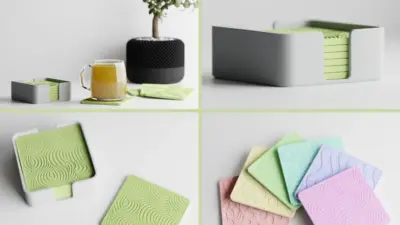
Cool 3D prints are best when they do something specific: move cleanly, organize a messy corner, soften a phone light, or make a daily tool easier to use. This list focuses on eight projects that look good, print realistically, and are useful enough to keep around after the novelty wears off.
I judge 3D print ideas a lot like small product concepts: start with the silhouette, check how the hand will use it, then decide whether the material makes sense. A desk robot can be playful in PLA, but a battery case or cable box needs cleaner tolerances and a little more thought.
Best cool 3D prints to start with
The best cool 3D prints for most makers are small functional objects with one clear design challenge: a print-in-place robot, cable box, wall clock, phone lantern, headphone stand, coffee filter holder, battery case, or custom-fit slipper. If you want more options before choosing, compare this list with our useful 3D prints and awesome 3D prints roundups.
| 3D print idea | Best use | Material note |
|---|---|---|
| Articulated robot | Testing moving joints and tolerances | PLA is usually easiest; print slowly around joints |
| Cable management box | Cleaning up a desk or media unit | PETG handles daily use better than brittle PLA |
| Phone lantern | Turning a flashlight into soft ambient light | Use a light-colored or translucent filament |
| Battery case | Organizing loose AA, AAA, or button cells | Check fit with a small test print before the full case |
1) Articulated robot model
Articulated robot models are a good first “wow” print because the movement is built into the object. The best ones come off the bed with joints that already flex, which makes them a useful tolerance test as well as a desk piece.
You can find thousands of articulated robot designs online ready for printing. Popular repositories like Printables.com and Yeggi host extensive collections of robot models specifically designed for 3D printers.
The beauty of these prints is in their engineering. Each joint is printed in place, allowing you to simply remove the completed model from your print bed and start posing it immediately.
Articulated robots range from simple desk toys to complex, detailed replicas of popular characters. Some models even incorporate electronic components, allowing for remote control functionality.
For a more advanced project, consider a BB8 droid. Detailed instructions exist for creating a remote-controlled version entirely with 3D printed parts. This type of project combines the artistic aspects of 3D printing with practical robotics.
When selecting an articulated robot model, look for designs with positive reviews confirming that the joints move smoothly after printing. Print settings matter significantly for these models, as layer height and infill can affect joint mobility.
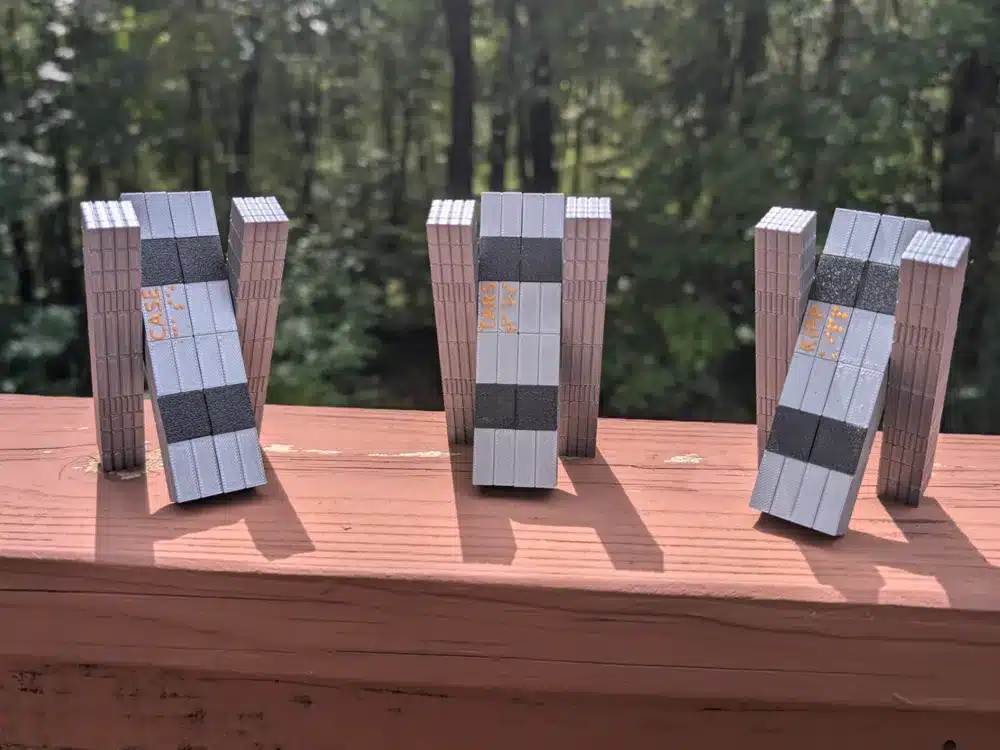
TARS print-in-place model on MakerWorld
2) Cable management box
A cable management box is the kind of 3D print you notice every day because it removes a real annoyance. It hides the power strip, gathers loose cord length, and makes a desk or media unit feel intentionally designed instead of patched together.
You can find numerous cable management box designs on popular 3D printing websites. Many options are customizable to fit your specific power strip dimensions and cable requirements.
The beauty of 3D printing your own cable management solution is the ability to create exactly what you need. You can design or modify existing models to include specific openings for different cable types or add ventilation features if needed.
These boxes typically feature a lid to completely hide the cables and a few strategic openings to route cords where needed. Some designs include internal dividers to keep different cables separated and organized.
By printing your own cable management box, you can choose colors that match your decor or make it a statement piece with bright, contrasting filament. The practical nature of this print makes it both functional and aesthetically pleasing.
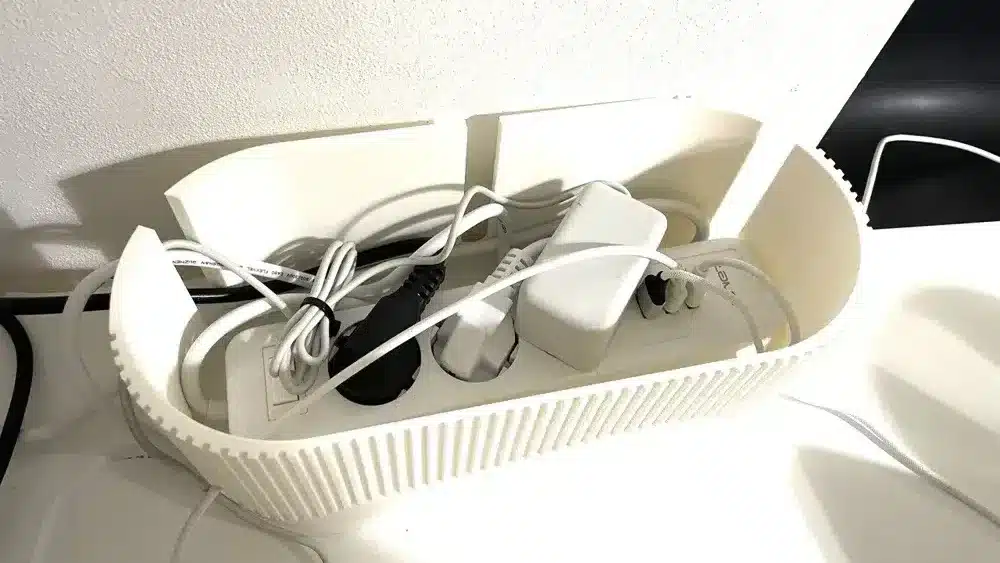
Cable management box on MakerWorld
3) Minimalist wall clock
A 3D printed wall clock is a nice step up from containers and desk accessories because it mixes visual design with mechanical patience. Even a minimalist clock teaches spacing, legibility, and how small printed parts behave over time.
You can find many designs online that offer reliable performance despite being made from plastic components. Some 3D printed clocks can achieve impressive accuracy, with variations of only 1-2 minutes per week.
The runtime for these clocks varies by design. Some models can run for more than 24 hours on a full wind, while more sophisticated designs might offer up to 8 days of operation before needing to be rewound.
Weight-driven clock mechanisms tend to be more reliable when 3D printed. These classic style designs harness gravity to power the movement, reducing the complexity of the printing process.
Creating your own clock allows for customization to match your interior design preferences. You can opt for minimalist styles that enhance modern spaces without overwhelming them with unnecessary details.
When selecting a design, look for models with positive user reviews confirming their functionality. Many enthusiasts report their 3D printed clocks continuing to run perfectly even after months of operation.

Wall clock model on MakerWorld
4) Slippers with custom fit
If you are collecting ideas by use case, the 3D printing ideas hub gives a broader map of beginner, practical, creative, and advanced projects to compare with these cooler display prints.
3D printed slippers are more experimental than the desk projects in this list, but that is part of the appeal. The interesting part is not just the shape; it is the lattice structure, airflow, flexibility, and how the sole responds when weight moves through it.
The technology allows for adjustable sizing without needing different molds, making them particularly suitable for people with non-standard foot sizes. Many designs feature breathable structures and are fully washable, which is especially beneficial if you have sweaty feet.
You can customize not just the fit but also the design and color of your slippers. Some options include plush lining for extra comfort during colder seasons, combining the precision of 3D printing with cozy materials.
Services like Cobbl3D Footwear now make this technology accessible to anyone with a 3D printer. If you don’t own a printer, companies offer custom slipper printing services based on your specifications.
The production freedom of 3D printing allows for lightweight yet durable designs that can be tailored to your specific needs. You can even incorporate personal artwork or logos into your slippers, creating truly unique footwear that reflects your style.
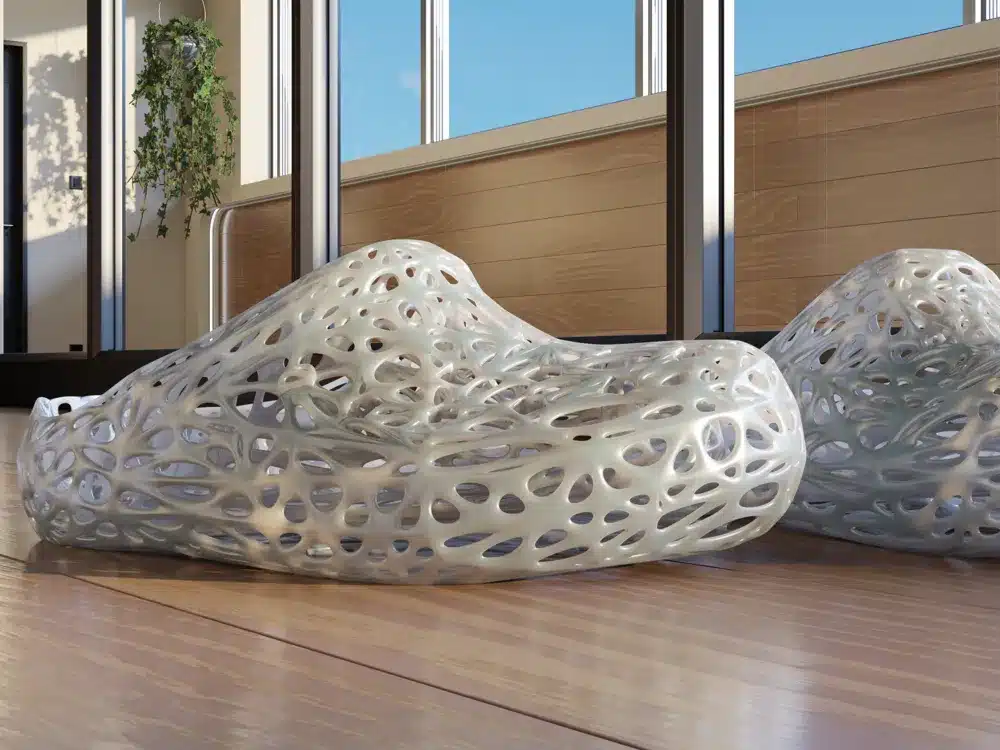
Voronoi Crocs model on MakerWorld
5) Phone lantern
Ever wished your phone’s harsh flashlight could provide a warmer, more diffused light? The Phone Lantern is a practical 3D print that transforms your smartphone’s bright flashlight into a cozy, ambient light source.
This clever design works by creating a housing that your phone sits in, with the flashlight pointing inward. The lantern’s walls diffuse the light, creating a softer glow that’s perfect for camping, power outages, or setting a relaxing mood.
The better phone lantern models are simple shells with smart openings. Look for a design that diffuses the flashlight without blocking the phone controls, and avoid walls so thick that the light turns dull instead of soft.
You can find various STL models online, including one by Supervince that’s free to download. Most designs are straightforward to print with minimal supports required.
The practical benefit is obvious: your phone is already with you. A small printed lantern turns it into a softer backup light for a nightstand, travel bag, or emergency drawer without adding another battery-powered device.
Print times typically range from 2-5 hours depending on the complexity of the design and your printer settings.
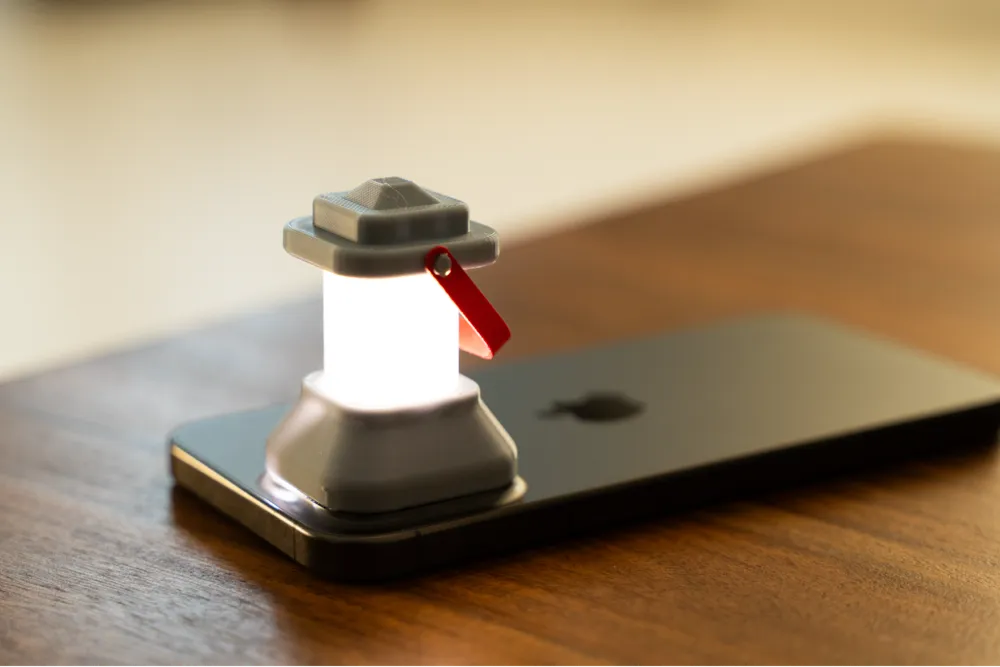
Smartphone lantern on MakerWorld
6) Headphone stand
A headphone stand is one of the most practical 3D prints you can make for your desk setup. It keeps your headphones easily accessible while preventing them from taking up valuable workspace or getting damaged.
Many 3D printing enthusiasts have created headphone stand designs that range from minimalist to elaborate. Some designs are inspired by popular brands like Focal, known for their clean aesthetic.
You can find thousands of headphone stand models on sites like Yeggi, where new designs are uploaded daily from creators worldwide. These designs vary in complexity, with some requiring just a few hours to print.
The beauty of 3D printing your own headphone stand is customization. You can choose one that matches your desk’s color scheme or even modify existing designs to fit your specific headphone model.
Printing a headphone stand is also relatively straightforward, making it an ideal project for beginners. Most designs use minimal filament and don’t require complex support structures.

7) Coffee filter holder
Coffee filter holders are practical 3D printing projects that combine functionality with customization. Many designs are available online, from simple containers to more elaborate decorative pieces.
Mountain-styled coffee filter holders add a touch of nature to your kitchen while keeping your filters organized. These designs often feature mountain silhouettes along the sides, bringing an outdoorsy aesthetic to a practical item.
Collapsible filter holders are particularly innovative for those with limited space. These lightweight designs (around 30g) can be folded down for travel or storage, making them perfect for camping trips or small kitchens.
Some models include lids to keep your filters dust-free between uses. This additional protection helps maintain the quality of your coffee by preventing contamination.
You can find options specifically designed for pourover coffee setups, supporting your preferred brewing method. These holders are typically created to fit standard filter sizes while adding convenience to your coffee routine.
Many designs on platforms like Etsy offer customization through laser engraving, allowing you to personalize your filter holder. With multiple patterns and colors available, you can find one that matches your kitchen decor.
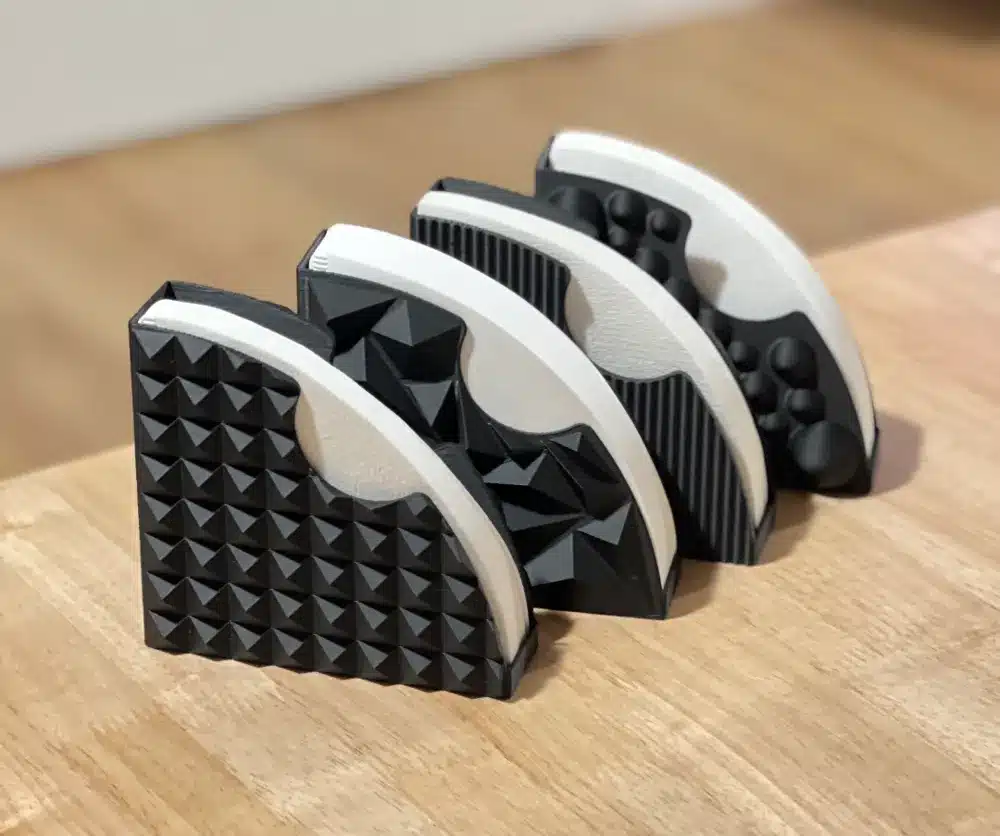
Geometric V60 coffee filter holder on MakerWorld
8) Custom battery case
A custom 3D printed battery case is a practical solution for organizing and storing your batteries. These cases can be designed to fit specific battery types like AA, AAA, or other cylindrical batteries.
You can find customizable battery case models online that allow you to adjust the number and type of batteries they hold. This flexibility ensures you get exactly what you need for your storage requirements.
Some designs feature wave or FIFO (First In, First Out) patterns that make it easy to access your batteries while keeping them organized. This system helps you use older batteries first, preventing waste.
For travelers, a compact battery case prevents batteries from rolling around in your bag or accidentally discharging if they touch metal objects. You can even find stacking designs that maximize space efficiency.
Battery cases can also include features like labels to distinguish between charged and uncharged batteries. Some designs incorporate foam padding for added protection.
With a 3D printer, you can create custom battery holders for specialty batteries or unique configurations that might not be commercially available. This makes 3D printed battery cases both practical and personalized.
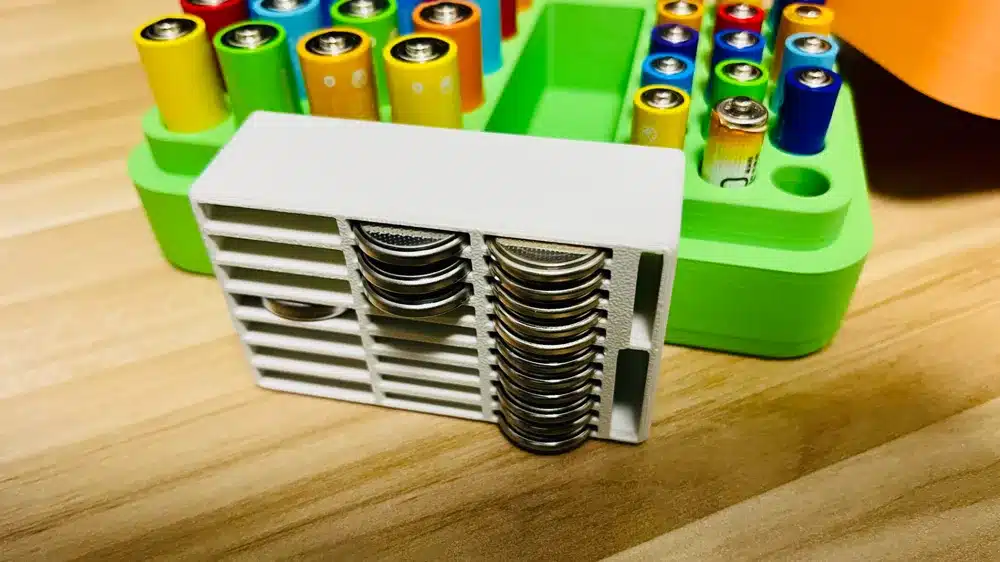
Large battery storage case on MakerWorld
Choosing the right materials for 3D printing
Material choice changes the feel, strength, surface finish, and failure rate of your print. A beautiful model can still feel wrong if the filament is too brittle, too soft, or too glossy for the job.
If you are choosing a project halfway through this list, sort by use first. For practical household storage, branch into 3D print ideas; for quick calibration-friendly projects, use our small fast 3D prints; for simple starter files, keep the easy 3D prints list nearby.
Common filament types and their properties
PLA (Polylactic Acid) is the most beginner-friendly option, requiring lower printing temperatures (180-220°C) and no heated bed. It’s biodegradable, comes in countless colors, but has limited heat resistance.
ABS offers greater durability and heat resistance (up to 105°C) but requires higher printing temperatures (220-250°C) and a heated bed. It produces fumes during printing, so good ventilation is necessary.
PETG combines PLA’s ease of printing with better durability. It’s food-safe, water-resistant, and less prone to warping than ABS, making it excellent for functional parts.
TPU (Thermoplastic Polyurethane) provides flexibility and elasticity, perfect for items needing bendable properties. Print slowly with this material to avoid extrusion issues.
Nylon offers exceptional strength and durability but is hygroscopic (absorbs moisture) and requires high temperatures (240-260°C).
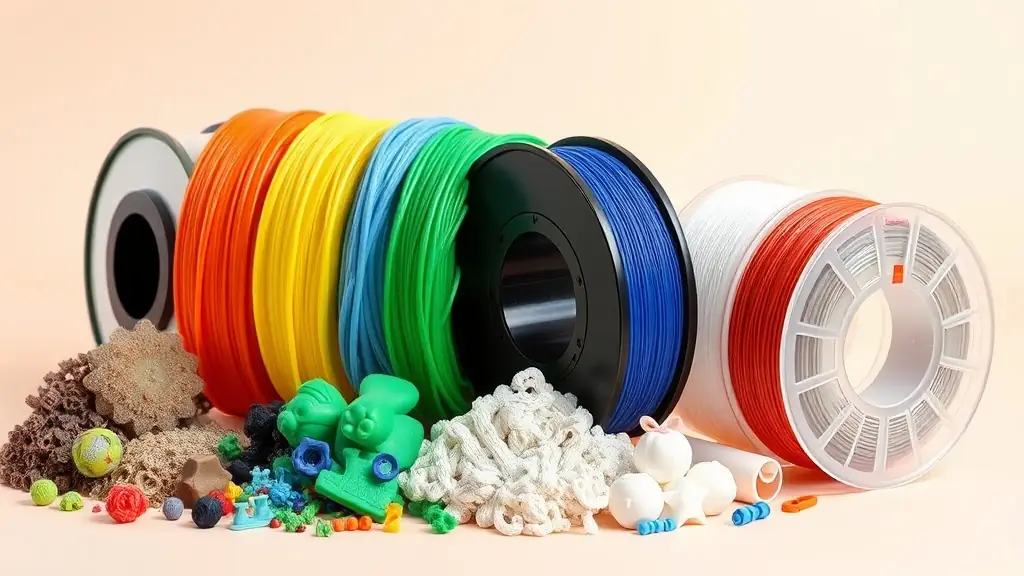
How material choice impacts print quality
Print temperature significantly affects layer adhesion and surface finish. Each material has an optimal temperature range—too low causes weak bonding, while too high leads to stringing and blobs.
Bed adhesion varies by material type. PLA works well on blue tape or glass, while ABS needs higher bed temperatures (100-110°C) and often benefits from an enclosure to prevent warping.
Layer height selection should consider material properties. Flexible filaments like TPU print better with thicker layers (0.2-0.3mm), while detailed models in PLA can utilize finer layers (0.1mm).
Cooling requirements differ dramatically between materials. PLA benefits from maximum cooling, whereas ABS needs minimal cooling to prevent layer cracking and separation.
Storage conditions affect print quality too. Keep moisture-sensitive filaments like Nylon and PETG in airtight containers with desiccant to maintain optimal printing properties.
Tips for designing better 3D models
Better 3D models come from the same habits that help in product design: clear proportions, honest material choices, and parts that look like they know what job they are doing. If you are moving from downloaded models into your own files, our 3D modeling guide is a useful next stop.
Best practices for beginner designers
Start with simple designs and gradually increase complexity as you gain experience. When designing, maintain minimum element sizes appropriate for your printer’s capabilities to avoid failed prints.
Consider the orientation of your model during printing. Proper orientation minimizes the need for support structures and improves surface quality.
Design parts that fit together in only one way to eliminate misalignment issues during assembly. This approach saves time and frustration when putting complex models together.
Avoid steep overhangs exceeding 45 degrees when possible. If overhangs are necessary, incorporate proper support structures into your design or ensure your slicing software can generate appropriate supports.
Test critical components separately before printing a complete model. This practice helps identify potential problems early and saves material.


Optimizing designs for strength and function
Add fillets and rounded inside corners where parts will be handled or stressed. Sharp corners may look crisp in a render, but in a printed object they often become weak points.
Consider the layer orientation relative to stress directions. Printed objects are typically weaker along the Z-axis (between layers), so design accordingly.
Add reinforcing features like ribs or gussets to areas that require additional strength without significantly increasing material use. Strategic reinforcement is more efficient than increasing overall thickness.
Use appropriate infill patterns and densities based on your model’s purpose. Functional parts may require higher infill percentages than decorative items.
Think about post-processing requirements during the design phase. Leave space for sanding, drilling, or adding hardware if your finished piece requires these modifications.
Test functional features through prototyping. Creating small test pieces of moving parts or connections ensures your final print will work as intended.
More 3D printing ideas to try next
If this list gave you a starting point, the next step is choosing by difficulty. Browse the full 3D printing archive for more project lists, or jump straight to cool objects to 3D print if you want a newer batch of desk, home, and utility ideas.
For broader inspiration, use 3D printing projects when you want creative prompts, stuff to 3D print when you need a quick shortlist, and 3D printed drone parts if you are ready to think more seriously about strength and fit.
If you are comparing future-facing design ideas, this guide to 3D printed furniture explains where additive manufacturing is already useful for chairs, tables, home accessories, and custom interiors.
A resin anime figure print is slower than a quick desk gadget, but it teaches support placement, surface prep, primer, and careful color blocking.
FAQ about cool 3D prints
Q: What are the coolest 3D prints to make first?
A: Start with prints that show one clear trick: a moving articulated robot, a cable management box, a phone lantern, a headphone stand, or a battery case. They are more satisfying than random desk toys because you can see the result immediately and keep using the object after the first print.
Q: What should beginners print before a complex model?
A: Print a small tolerance test, a simple organizer, or a one-piece phone stand before you try a complex mechanical model. Those quick projects teach bed adhesion, support cleanup, layer height, and fit without wasting a full spool on a part that may not move correctly.
Q: Which filament is best for cool 3D prints?
A: PLA is the easiest choice for decorative prints, toys, clocks, and desk objects. PETG is better for organizers, clips, battery cases, and parts that get handled often. TPU is useful for flexible parts, but it is slower and less forgiving, so I would not make it your first material.
Q: How do I choose a 3D print that will actually be useful?
A: Look for a problem you already have: tangled cables, loose batteries, headphones lying flat on the desk, coffee filters bending in a drawer, or a phone flashlight that is too harsh. A useful 3D print should solve that problem with fewer parts, not add another object to clean around.
Q: Are 3D printed home items strong enough for daily use?
A: Many 3D printed home items are strong enough for light daily use if the model is designed well and printed in the right orientation. Avoid thin hooks, sharp inside corners, and load-bearing parts until you understand how your printer handles layer adhesion and infill.
Q: How can I make a 3D print look less cheap?
A: Choose a clean filament color, lower the layer height for visible surfaces, and sand or lightly post-process the edges if the object will sit in a visible place. The biggest design trick is restraint: fewer random curves, cleaner silhouettes, and details that follow the function.
- 99shares
- Facebook0
- Pinterest96
- Twitter3
- Reddit0