Paul Kaptein wooden sculptures sit in a strange place between traditional carving and digital distortion. At first, the figures look calm: pale wood, quiet faces, carefully carved clothing, hands, hair, and folds. Then the body slips. A face stretches sideways, a robe breaks into horizontal layers, a standing figure loses little square pieces, and a hand becomes both anatomical study and material study.
That is why this gallery is more than a collection of unusual wooden sculptures. It is a useful lesson in how a solid material can feel unstable. Kaptein keeps enough realism for the viewer to read the body, then interrupts that realism with cuts, voids, and warped forms. The result feels handmade and strangely digital at the same time.
What makes Paul Kaptein wooden sculptures unusual?
Paul Kaptein’s wooden sculptures are unusual because they use realistic figurative carving as a starting point, then break the figure with visual glitches, sliced volumes, holes, and warped silhouettes. The viewer still sees a person, a hand, a robe, or a gesture, but the form no longer behaves like a normal body. That mix of recognition and disruption is what makes the work memorable.
| Detail to notice | What it does visually |
|---|---|
| Wood grain | Keeps the sculpture grounded in a real material |
| Horizontal slices | Makes the body feel paused, shifted, or digitally glitched |
| Small cutout voids | Turns absence into part of the portrait |
| Soft facial carving | Creates calm before the distortion becomes obvious |
| Folded clothing | Links the figure to classical drapery while still feeling contemporary |
Gallery of unusual wooden sculptures
The descriptions below focus on what is visible in each work: silhouette, body language, cutouts, wood grain, and the way the form is interrupted. Read them as close-looking notes rather than a catalogue raisonne.
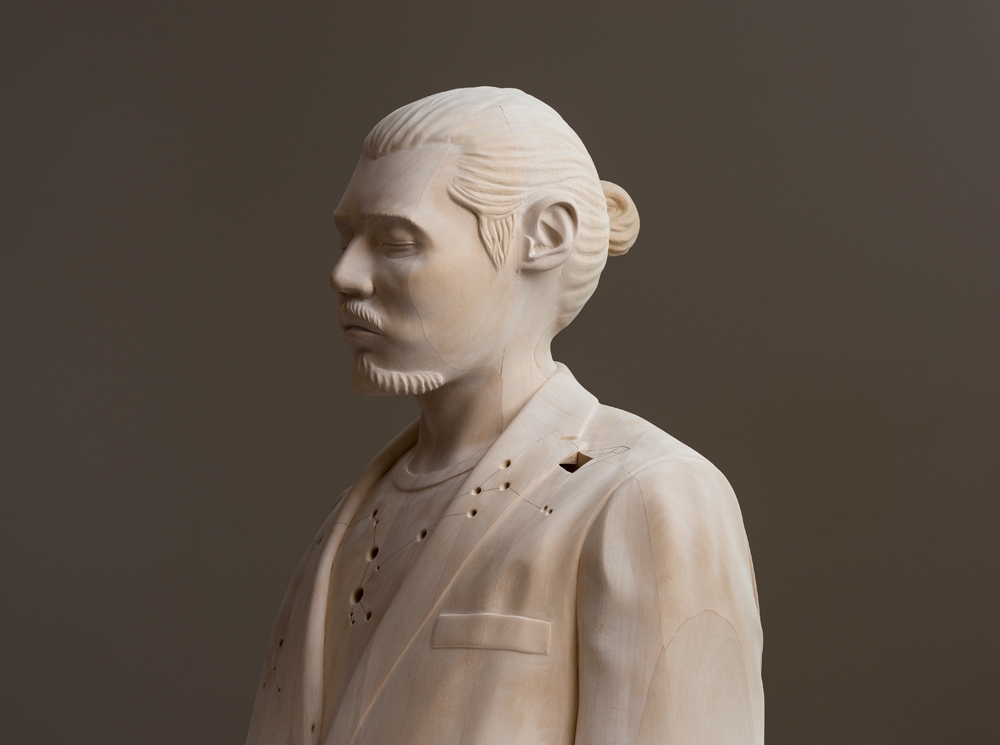
The stillness is the hook here. The figure feels almost classical at first, then the tiny holes and softened facial edges start to make the body feel less stable.

This piece reads like a character design caught between ritual costume and everyday clothing. The smooth pale wood keeps the odd details from becoming noisy.
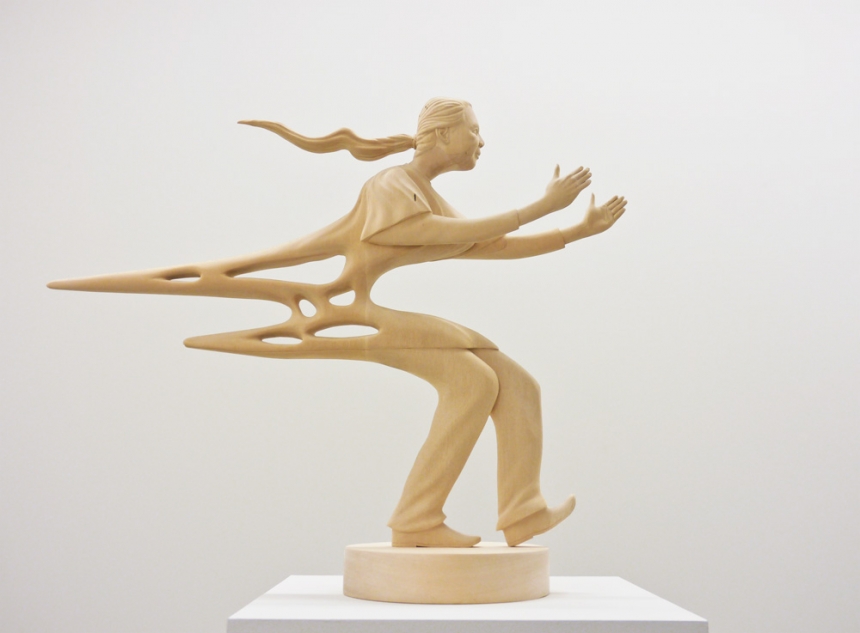
The figure is not simply running; it looks pulled through time. The open negative spaces behind the body make the sculpture feel fast without adding any literal motion.

The pose does a lot of work. It has the awkward weight shift of a real person, but the simplified carving and blank gaze push it into a dream state.
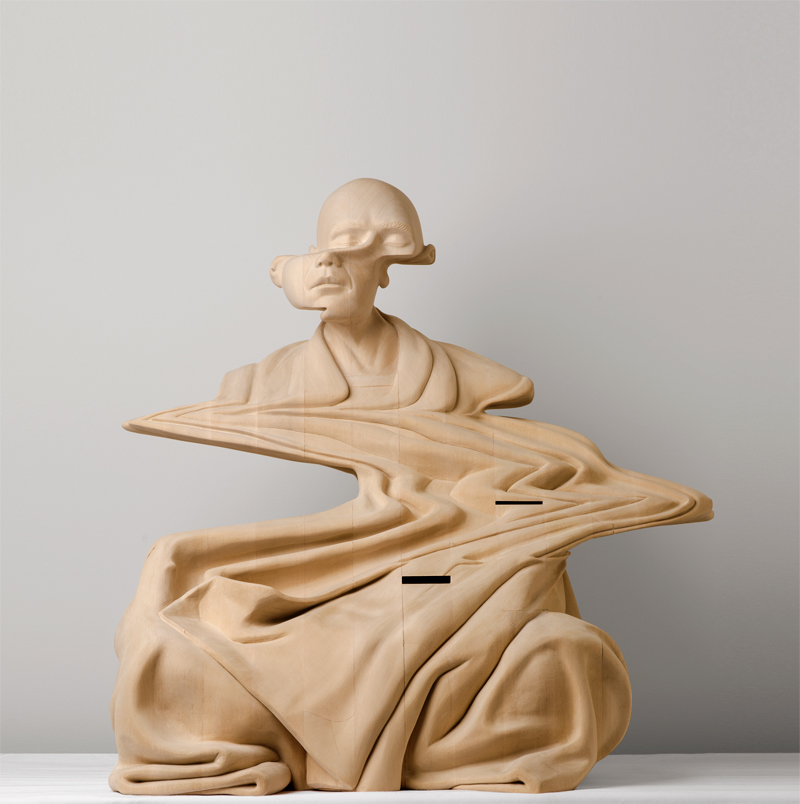
This is one of the clearest examples of Kaptein’s glitch language. The sculpture keeps the softness of carved cloth while breaking the body like a paused digital signal.
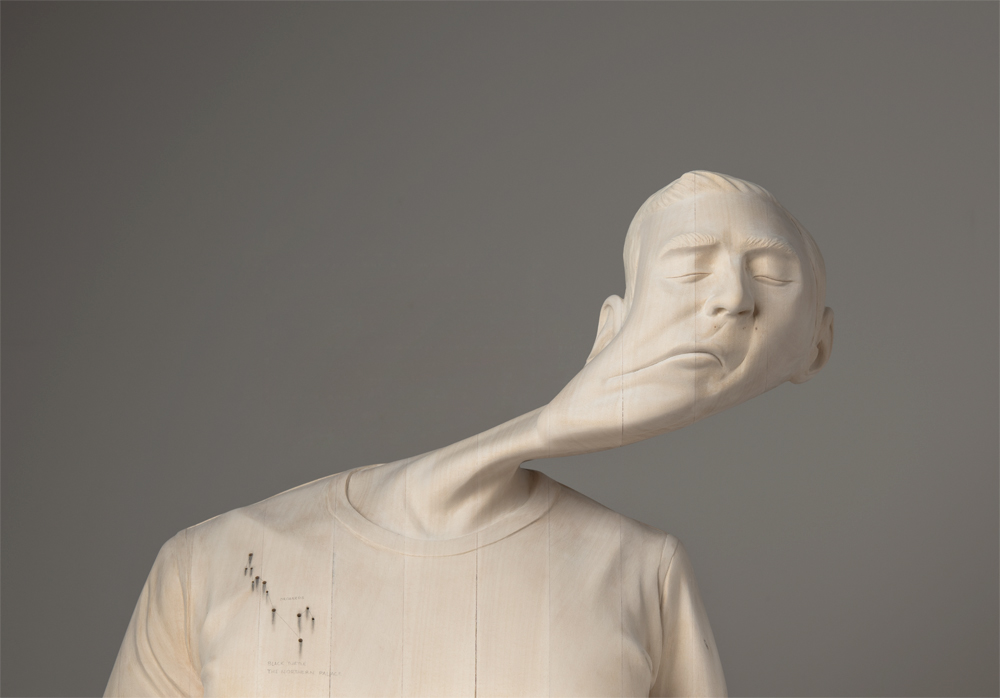
The expression stays soft, which makes the distortion more unsettling. The wood grain and facial carving keep the image human even as the form slips sideways.

The block base reminds you this is carved from material, not cast from life. The little missing squares make the figure feel edited, as if pieces of presence have been removed.

The robe is carved with soft, patient folds, then cut by a hard visual interruption. That contrast is what makes the piece work: slow craft meeting a sudden glitch.

The hand is simple compared with the full figures, but it shows the same tension between anatomical detail and material truth. The grain becomes part of the skin.

This sculpture is almost comic in silhouette, but the hollow hood and folded body make it stranger the longer you look. It is a good closer because it pushes the human form closest to abstraction.
How to read the distortions
The easiest way to understand these works is to look at the plain human figure first. Find the shoulders, head, hands, knees, robe, or gesture. Once that structure is clear, notice where Kaptein interrupts it. The break might be a stretch through the face, a missing square in the torso, or a fold that turns clothing into a wave.
In design terms, the work is strong because the distortion has a job. It is not decoration pasted onto a figure. It changes how you read weight, memory, identity, and presence. The wooden surface stays warm and physical, while the form behaves like an image that has been delayed, paused, or corrupted.
Material and process notes
Wood is a demanding material for this kind of illusion. In a drawing or digital image, a face can be stretched with a tool. In carved wood, that stretch must be planned as volume, edge, shadow, and surface. That is why the quiet parts matter so much: eyelids, fingers, hems, and folds prove that the sculpture is not only about the glitch. It is also about control.
For current portfolio updates, check Paul Kaptein’s official website and public Instagram profile. Those external links are placed here near the lower body of the article so the opening stays focused on the artwork itself.
Related wood sculpture and art guides
If you are using these works for research, moodboards, or studio practice, these related Sky Rye Design guides help connect the gallery to sculpture, carving, material choice, and display.
- unusual sculptures
- 3D printed sculpture
- DIY woodworking basics
- Sloyd knife carving ideas
- DIY clay projects
- 3D art with plaster or clay
- resin art techniques
- minimal art guide
- art for home
- 3D printed art projects
Paul Kaptein wooden sculptures FAQ
Q: What makes Paul Kaptein wooden sculptures unusual?
A: Paul Kaptein’s wooden sculptures feel unusual because they combine realistic figurative carving with interruptions that look almost digital. Faces stretch sideways, robes slide into horizontal breaks, bodies open into voids, and hands or figures remain carefully carved even when the form starts to collapse. The tension between slow wood craft and glitch-like distortion is the main visual hook.
Q: Are Paul Kaptein’s sculptures carved from wood?
A: The works in this gallery are presented as wooden sculptures, and the visible grain, pale timber surface, tool-sensitive folds, and carved details all support that reading. The material matters because the distortions are not just visual tricks; they are built into a solid object with weight, edges, and real negative space.
Q: What should I look for first in these sculptures?
A: Start with the silhouette. Kaptein often keeps the overall human figure readable, then interrupts it with slices, stretches, holes, or folded sections. After that, look at the face, hands, clothing folds, and wood grain. Those quieter details make the distortion feel deliberate rather than random.
Q: Why do some of the figures look like digital glitches?
A: Several figures use horizontal breaks, stretched faces, displaced robes, or missing square sections. Those choices resemble a paused video error or a corrupted image, but they are translated into carved wood. That contrast is what gives the sculptures their strange energy: a digital-feeling failure made through a physical material.
Q: Can these sculptures inspire drawing or design practice?
A: Yes. They are useful references for studying silhouette, negative space, material texture, and how a figure can stay readable after distortion. For sketchbook practice, draw the sculpture first as a simple human shape, then add only one interruption: a slice, void, stretch, or folded edge. That keeps the idea clear.
Q: Where can I see more Paul Kaptein work?
A: Use Paul Kaptein’s official website and public social profiles for current portfolio updates, exhibitions, and newer pieces. This Sky Rye Design post is a curated visual reading of the wooden sculptures shown here, not a complete catalogue of the artist’s work.
Conclusion
Paul Kaptein’s wooden sculptures work because they make a familiar material feel uncertain. The pale timber, carved faces, robes, hands, and clothing details invite close looking, while the warped forms stop the figures from becoming simple realism. If you are studying contemporary wood sculpture, these pieces are a useful reminder: distortion is strongest when the underlying form is still carefully observed.
- 18shares
- Facebook0
- Pinterest18
- Twitter0
- Reddit0