Creative sculptures can change the mood of a street faster than almost any other kind of public art. A horse crossing water, a child jumping into a river, a figure breaking through a wall, or a ghost rising near a harbor can make an ordinary place feel like a small story you walked into by accident.
This updated Sky Rye Design gallery keeps the original visual spirit of the post, but gives each sculpture a clearer note so the page is useful for artists, designers, travelers, and anyone collecting sculpture inspiration. The strongest examples here share one habit: they use the surrounding city as part of the artwork.
What Makes a Creative Sculpture Memorable?
A memorable sculpture usually starts with one readable idea. It may use impossible scale, frozen motion, local legend, humor, or a physical illusion. The material matters, but the setting matters just as much. That is why public art sculptures often work best when a wall, pavement, river, plaza, tree, or building becomes part of the composition.
For quick study, look at each image below in three passes. First, read the silhouette. Second, notice how the sculpture meets the ground, wall, water, or street. Third, ask what emotion appears first: wonder, motion, humor, tension, memory, or surprise. That small exercise turns a gallery of creative statues into a practical design reference.
Creative Sculptures and Public Art Stops
1. Mustangs of Las Colinas, Texas

The Las Colinas mustangs work because the horses feel caught mid-gallop, not posed. Water, bronze, and plaza scale all push the same idea: motion made permanent. Among creative sculptures, this one is especially useful to study for rhythm, repetition, and the way public space can make a sculpture feel larger than its material.
2. First Generation, Singapore

This Singapore river scene turns childhood play into public memory. The figures are small, lively, and placed close to the real water, so the sculpture feels less like a monument and more like a moment someone just noticed. It is a strong example of creative statues using humor and local history without feeling heavy.
3. Hippo Square, Taipei Zoo

The Taipei Zoo hippos use surprise as the main design move. Instead of standing neatly on a base, the animals seem to push through the paving. That small illusion makes the piece approachable for children and memorable for adults, which is exactly the kind of public art sculpture that people stop to photograph.
4. Giant Hand Around a Tree, Baku

The Baku piece is simple, but the placement does the hard work. Giant fingers rise from the lawn and wrap around a living tree, making the viewer read nature and body at the same time. It is a good reminder that unusual sculptures do not always need complicated forms; one clean visual idea can be enough.
5. Sinking Building, Melbourne, Australia

Melbourne turns architecture into a visual joke here. A building appears to tilt and disappear into the ground, as if the city itself had become soft. The image works for inspiration because it blurs the line between sculpture, street installation, and architectural illusion.
6. Le Passe-Muraille, Paris
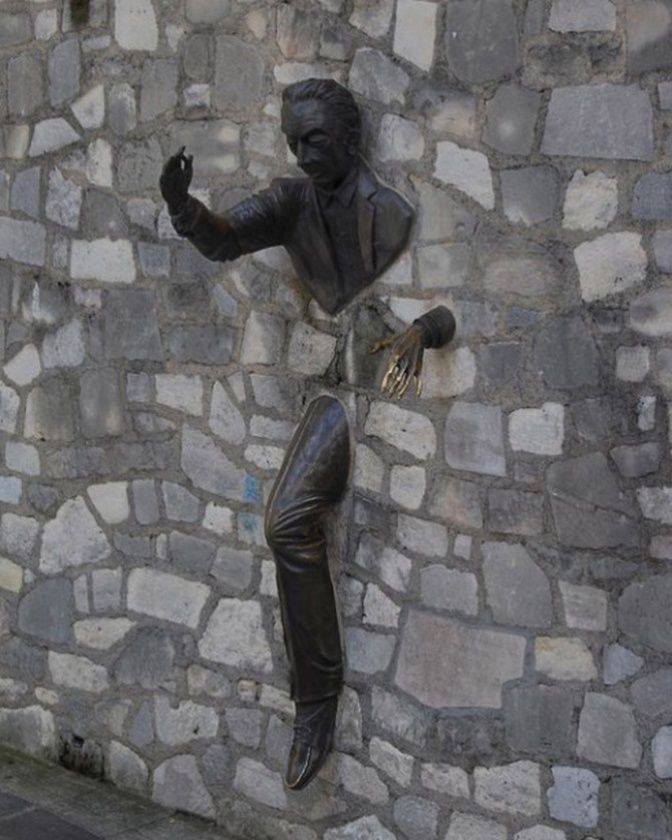
The Paris wall figure has a clean narrative built into the pose: a person seems trapped between two worlds. Hands, knee, and upper body emerge from stone, so the wall becomes part of the body. It is one of the most compact examples in the gallery of a sculpture telling a story without extra explanation.
7. Salmon Sculpture, Portland, Oregon
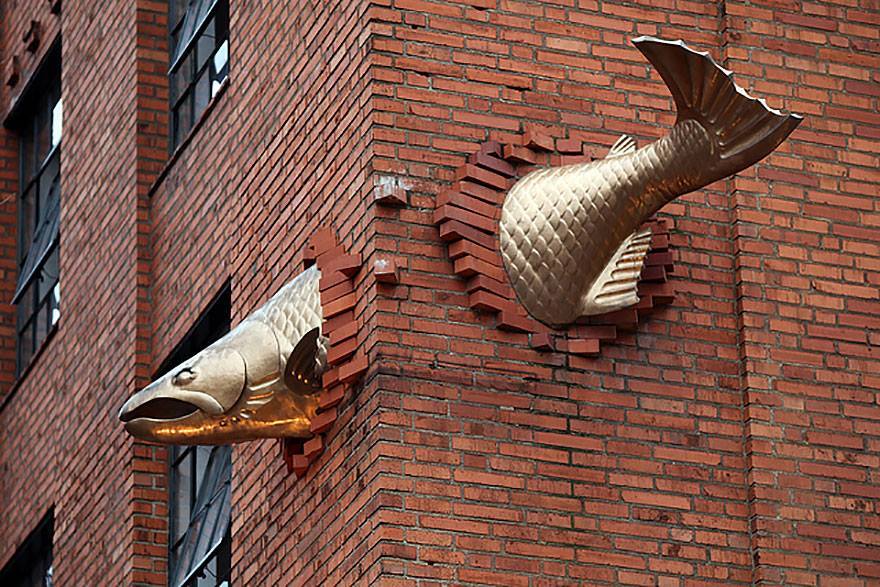
The Portland salmon turns a brick corner into a river. That collision between a fish and a building is what makes the work memorable: the sculpture does not decorate the street, it interrupts it. For artists, it is a sharp lesson in using context as part of the piece.
8. Break Through From Your Mold, Pennsylvania

This Pennsylvania sculpture is built like a sequence. Figures move from flat relief to full freedom, so the idea of escape becomes visible step by step. It belongs naturally beside famous sculptures around the world because the message is clear before the viewer reads a title.
Related Sculpture and Art Ideas
Continue the study with Sky Rye Design guides on 3D printed sculpture, unusual wooden sculptures, DIY clay projects, resin art, public spaces design, and art drawing ideas. Together they connect the gallery to material experiments, sketching, and the design of real public places.
9. Anonymous Passerby, Wroclaw, Poland

Wroclaw uses the street itself as the stage. The anonymous pedestrians seem to sink on one side and return on the other, turning an ordinary crossing into a quiet urban mystery. It is a powerful public art idea because the viewer completes the story while walking past.
10. Les Voyageurs, Marseille, France

The Marseille travelers are memorable because of what is missing. Large gaps cut through the bodies, making each figure feel both solid and temporary. The idea fits the subject perfectly: travel, memory, and identity all become visible through absence.
11. Cumil, Bratislava

Cumil is small, funny, and perfectly placed. The bronze figure peeks from the pavement at pedestrian level, so people meet the work almost face to face. It shows how creative sculpture can succeed through personality and location rather than size.
12. Floating Stones at Cairo Airport

The Cairo airport piece has the instant pull of a magic trick. Two heavy stones appear to float, held in tension by a rope. Because the setting is so open and bright, the illusion reads quickly from a distance, which makes it effective public art for a place where people are constantly moving.
13. Black Ghost, Klaipeda, Lithuania
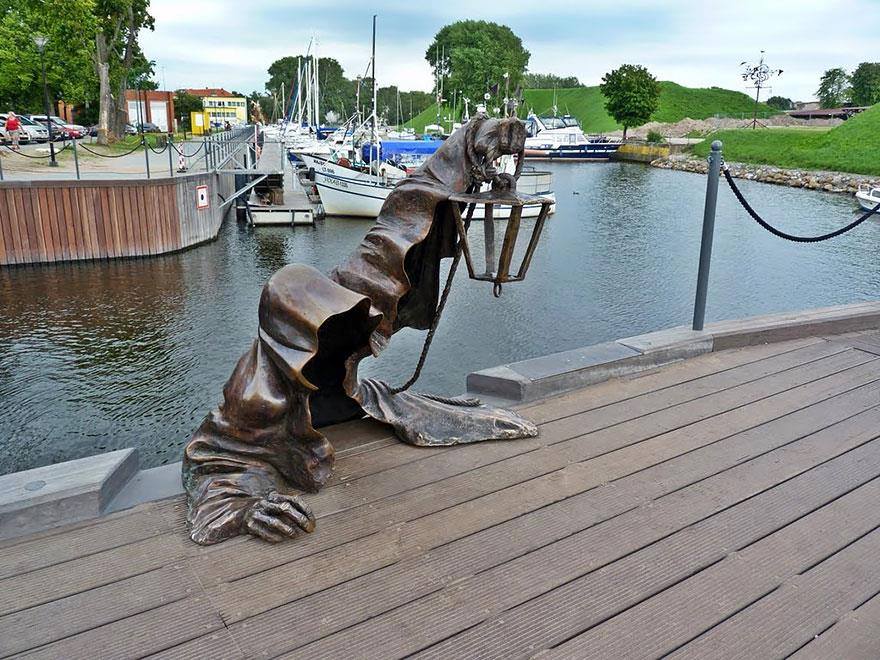
The Black Ghost feels built for its site. A hooded figure rises near the water, turning local legend into a direct visual encounter. The best part is the threshold feeling: the sculpture seems to come from below the city, not simply stand on top of it.
14. Cattle Drive, Downtown Dallas
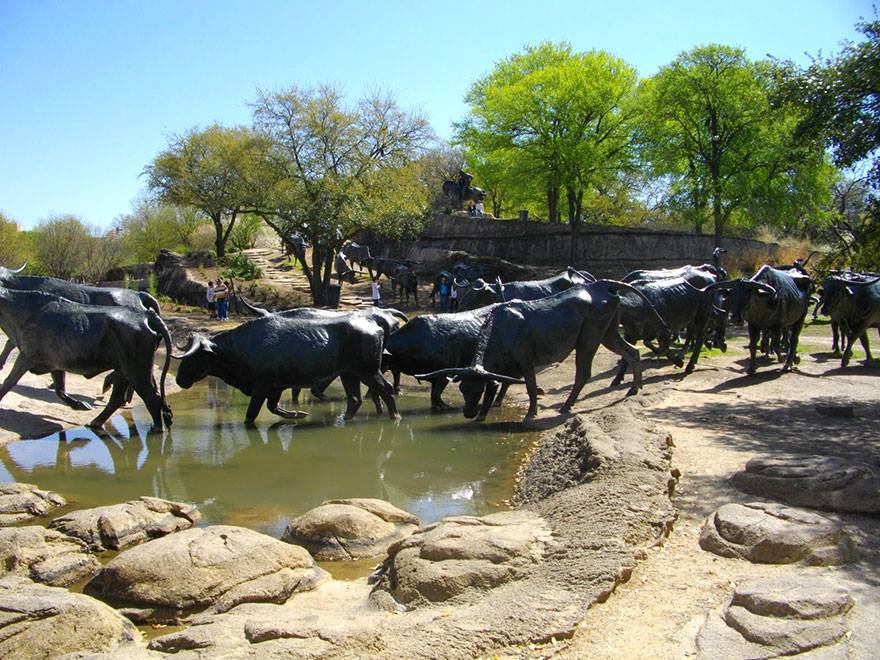
Downtown Dallas uses scale and repetition to create movement. The longhorns do not feel like separate statues; they read as a herd moving through the plaza. That makes the scene useful for studying how multiple figures can guide a viewer through a public space.
15. Park Lane Hand and Car Sculpture, London

The London hand sculpture plays with scale in the most direct way possible. A huge hand grips a small car, making the vehicle look toy-like and fragile. It is a quick visual punch, but it also asks a useful design question: what happens when an everyday object suddenly loses its normal size?
16. Johnson Cheung-shing Ceramic Splash, Hong Kong

Johnson Cheung-shing turns ceramic into a frozen spill. Cups, liquid, and a face seem to flip through the air, caught at the exact moment before collapse. It is a strong closing image because the material looks both hard and fluid, which is the kind of contradiction contemporary sculpture often loves.
Source Notes and Further Reading
For more context around several locations and artists in this gallery, the links below point to tourism, museum, and artist pages rather than generic reposts. They are useful for checking place details, dates, materials, and how each sculpture is presented in its city.
- Mustangs of Las Colinas visitor information
- Smithsonian record for The Mustangs of Las Colinas
- First Generation on Singapore Roots
- Wroclaw monument and sculpture listings
- Les Voyageurs by Bruno Catalano
- Rubberneck Cumil in Bratislava
- Pioneer Plaza in Dallas
Creative Sculptures FAQ
Q: What are creative sculptures?
A: Creative sculptures are three-dimensional works that use form, material, scale, placement, or illusion in an unexpected way. They may be famous monuments, playful street statues, contemporary gallery pieces, or public art sculptures designed to make people stop, look, and interact with a place differently.
Q: Which creative sculptures in this gallery are the most recognizable?
A: The most recognizable examples here include the Mustangs of Las Colinas in Texas, First Generation in Singapore, the Anonymous Passerby in Wroclaw, Les Voyageurs in Marseille, Cumil in Bratislava, the Black Ghost in Klaipeda, and the cattle drive at Pioneer Plaza in Dallas.
Q: What makes public art sculptures memorable?
A: Memorable public art usually has a strong silhouette, a clear idea, and a real relationship with its setting. A sculpture becomes easier to remember when the street, water, wall, plaza, or building around it feels like part of the artwork rather than a neutral background.
Q: How many sculptures are shown in this updated Sky Rye Design gallery?
A: This updated version describes the 16 visible sculpture sections currently present in the legacy WordPress post. The original URL includes the number 20, but the live post content available for editing contains 16 image sections, so the update improves the real gallery without inventing missing artwork.
Q: What are five common types of sculpture?
A: Five common sculpture types are freestanding sculpture, relief sculpture, installation art, kinetic sculpture, and site-specific public art. Many creative statues overlap categories, especially when they use a wall, pavement, water, or architecture as part of the visual effect.
Q: Are creative statues different from famous sculptures?
A: They can overlap, but they are not the same idea. Famous sculptures are widely known because of history, artist reputation, or cultural importance. Creative statues are judged more by invention: surprise, humor, material choice, scale shift, or the way they transform a public place.
Q: How can artists use these sculptures for inspiration?
A: Artists can study each sculpture as a design problem. Look at the silhouette, material, location, viewer angle, and one main idea. Then translate that lesson into a new sketch or model instead of copying the piece. The best takeaway is usually a method, not a finished form.
Final Note
The best lesson from these sculptures is restraint. Each piece has a clear visual hook, but the successful ones do not stop there. They use their site, scale, and viewer angle to make the idea feel alive in public space.
- 670shares
- Facebook0
- Pinterest670
- Twitter0
- Reddit0