Adult coloring pages get judged by the wrong standard half the time. People borrow the same “easy is better” logic that works for a five-year-old’s coloring book and apply it to a page meant for a stressed-out adult looking to unwind after work, and it backfires. An adult reaching for a coloring page usually wants to stay engaged for twenty or thirty minutes, not finish in ninety seconds. Too little detail and the page gets boring before the calm even sets in.
I spent years in academic drawing training learning to read line hierarchy: which lines carry the composition, which ones are secondary texture, and where the eye needs a clear resting point so a busy drawing doesn’t turn into visual noise. That same hierarchy is exactly what separates a genuinely good adult coloring page from a page that’s just been drawn with more lines. Density alone isn’t the goal. Organized density, with real rest points built in, is.
- What makes an adult coloring page actually work
- 40+ adult coloring page ideas by theme
- Florals and botanicals
- 1. A rose in full bloom with layered, overlapping petals
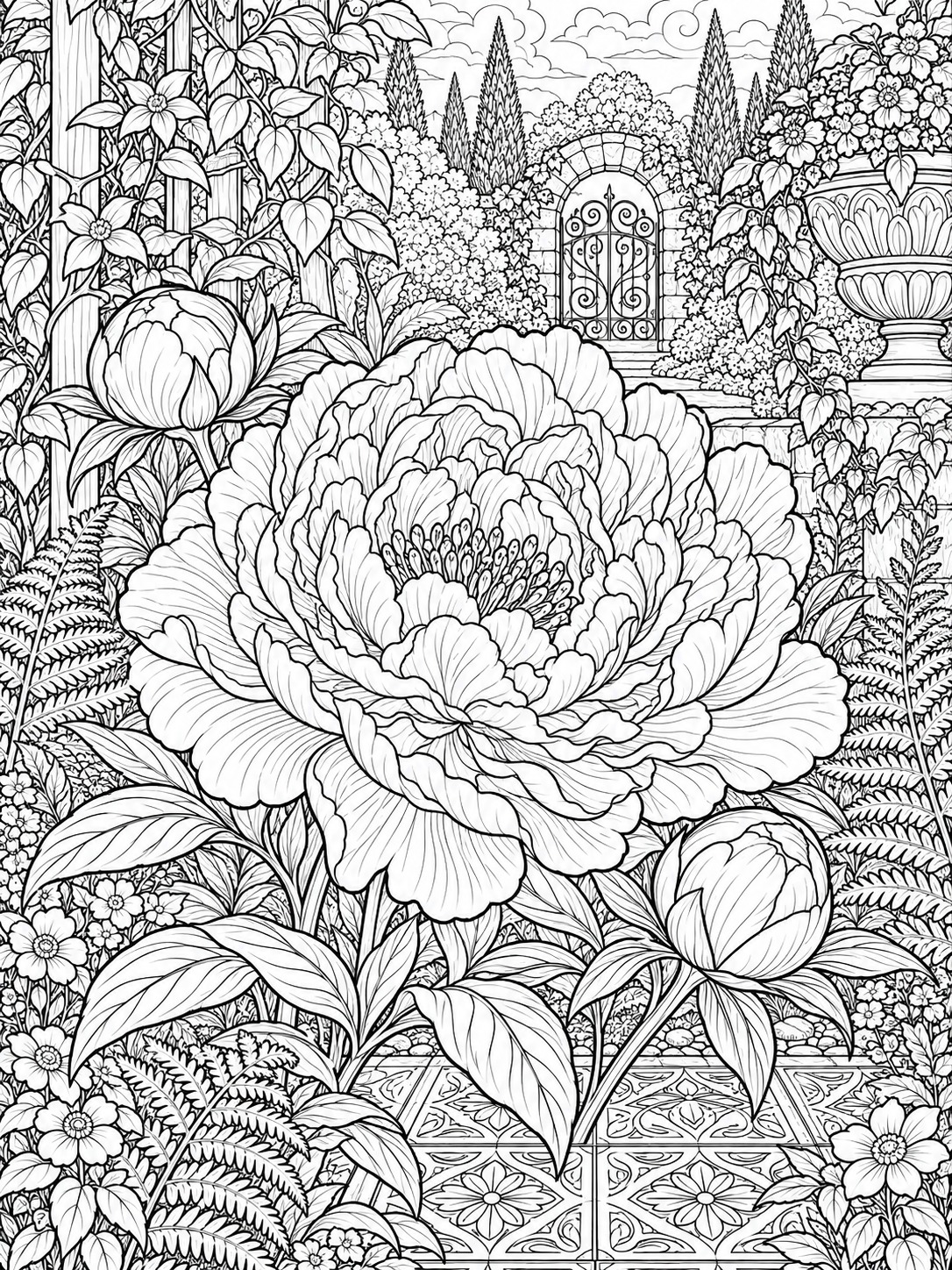
- 2. A peony with densely ruffled petal detail
- 3. A botanical fern frond with fine vein lines
- 4. A eucalyptus branch with rounded leaves and texture
- 5. A cluster of wildflowers in a loose bouquet
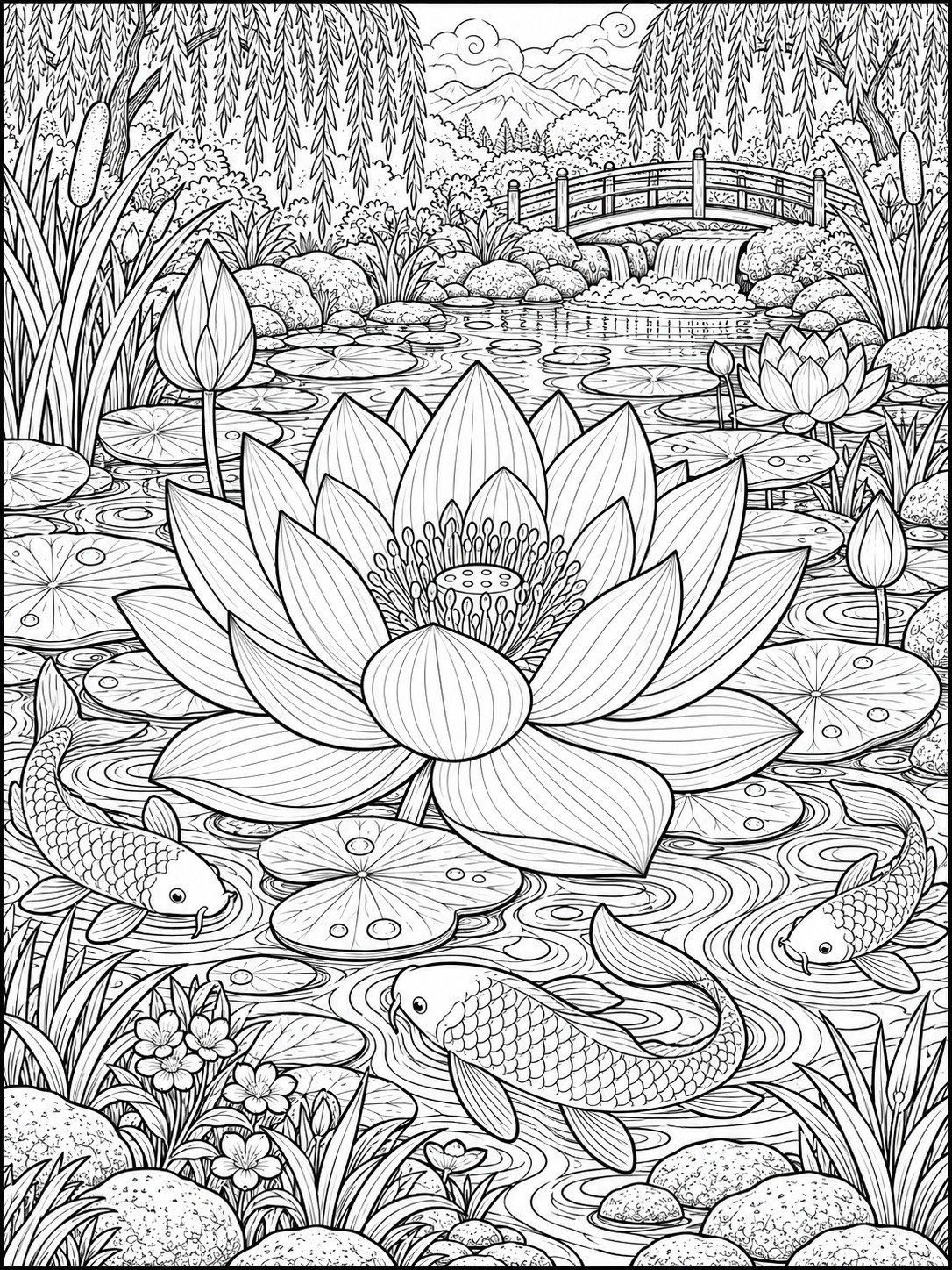
- 6. A single lotus flower with radiating petal layers
- 7. A trailing vine with leaves and small blossoms
- Animals with real detail
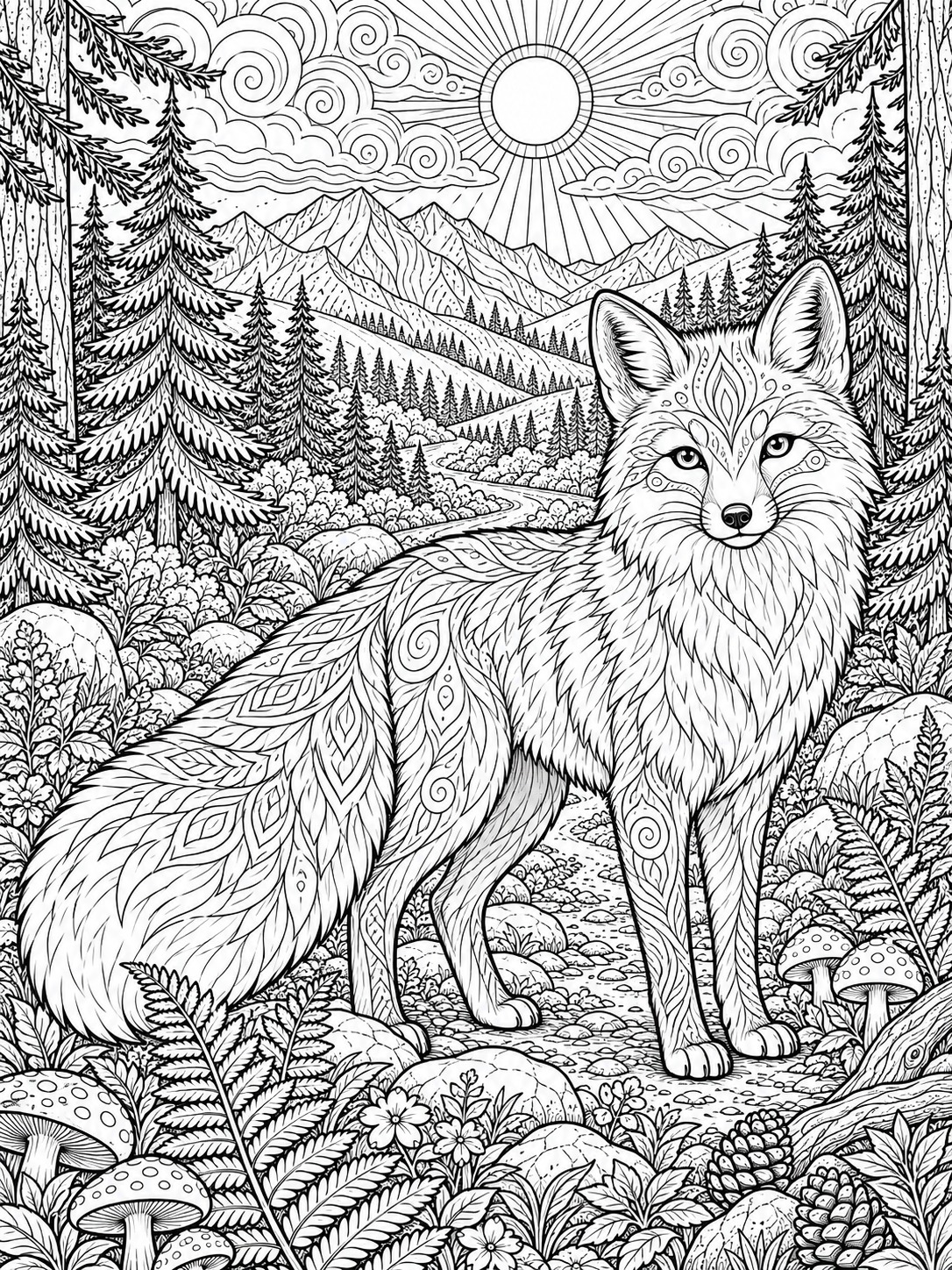
- 8. A fox with detailed tail fur and facial markings
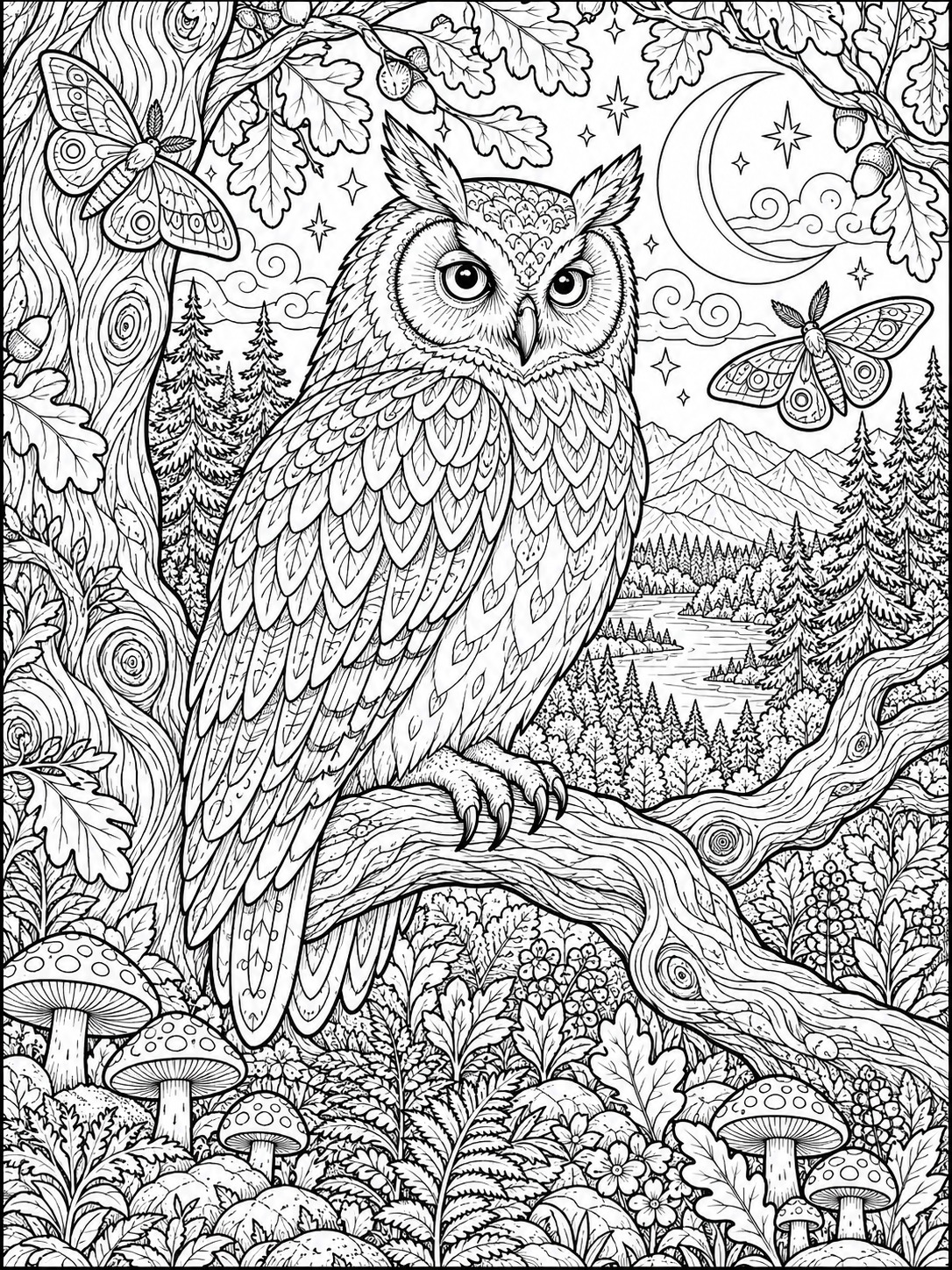
- 9. An owl with individually rendered feather sections
- 10. A lion with a textured, layered mane
- 11. A hedgehog with detailed quill texture
- 12. A peacock with elaborate tail feather patterns
- 13. A wolf howling, with fur texture along the back and chest
- 14. A koi fish with detailed scale patterns
- Nature scenes and landscapes
- 15. A forest path with layered tree lines receding into the distance
- 16. A mountain lake scene with reflected peaks
- 17. A cozy cabin in the woods with a wisp of chimney smoke
- 18. A coastal scene with rock formations and gentle waves
- 19. A meadow at sunset with a distant tree line
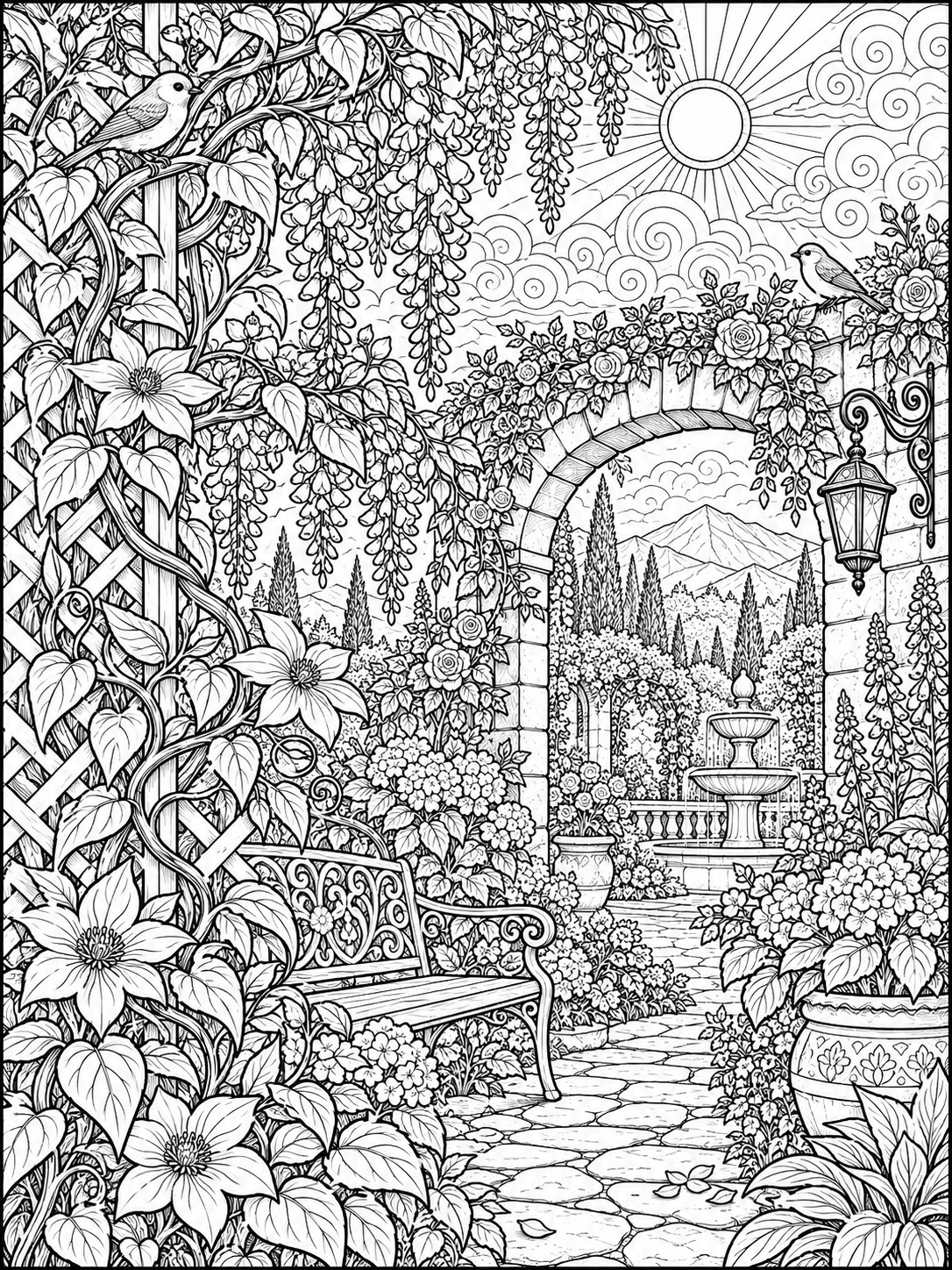
- 20. A garden trellis scene with climbing vines and flowers
- Zentangle and abstract patterns
- 21. A honeycomb-inspired repeating pattern with varied fill zones
- 22. An abstract wave pattern with alternating dense and open bands
- 23. A feather-shaped zentangle with mixed pattern fills
- 24. A teardrop-shaped abstract design with layered pattern zones
- 25. A circular abstract design divided into contrasting pattern sections
- 26. An organic, flowing line pattern with open negative space
- Quote-ready frames
- Whimsical and fantasy for adults
- Geometric patterns
- Florals and botanicals
- How to choose the right complexity level for you
- Paper, tools, and printing tips for adult coloring
- FAQ
- What makes an adult coloring page different from a kids' coloring page?
- How do I know if a coloring page is too advanced for me?
- What's the best paper for adult coloring pages?
- Are zentangle-style pages harder than floral or animal pages?
- How long should I expect to spend on a detailed adult coloring page?
- Can I mix coloring mediums on the same adult coloring page?
- Why do some detailed pages feel calming while others feel stressful?
- Final thoughts
Below are 40 printable adult coloring page ideas sorted by theme, after a short look at what makes an adult-level page work and how to judge complexity before you commit to it.
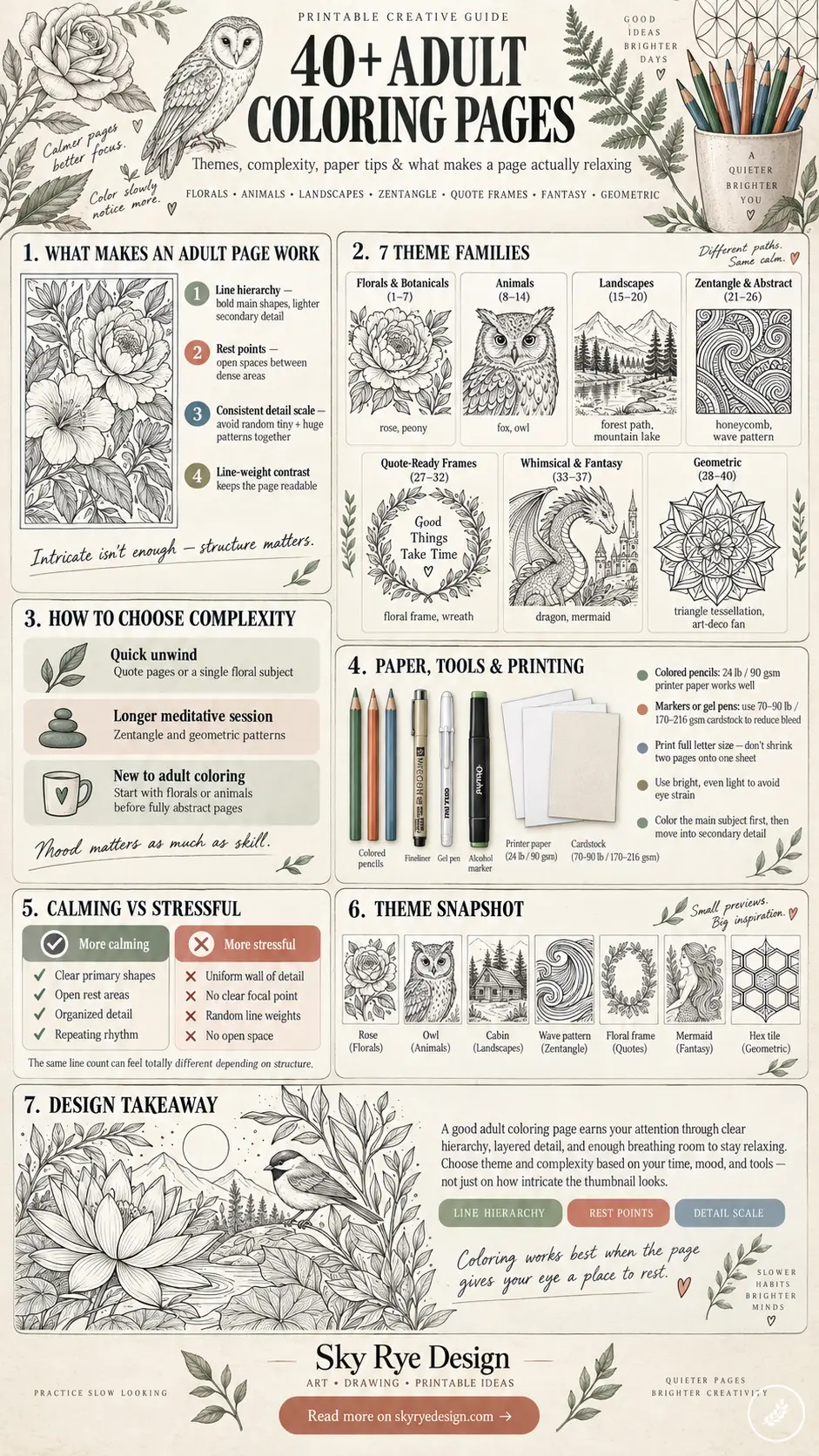
This distinction between “detailed” and “well-structured” matters more than most roundups acknowledge. A page can be objectively complex, hundreds of individual lines, and still fail as a relaxing activity if that complexity is distributed randomly instead of organized around a clear visual hierarchy. Understanding what separates the two means you can evaluate any adult coloring page in a few seconds, rather than printing a stack of pages and only discovering which ones actually work once you’re twenty minutes into a session that isn’t landing.
What makes an adult coloring page actually work
Three things separate a genuinely engaging adult coloring page from one that just looks intricate in a thumbnail.
Line hierarchy comes first. A well-built adult page has a clear primary structure, the outer petal shapes of a flower, the main body of an animal, the dominant lines of a pattern, and then secondary detail layered inside those primary shapes: vein lines, fur texture, small repeating pattern fills. Without that hierarchy, a page reads as a flat wall of equally weighted lines, which is exhausting to look at before you’ve even picked up a pencil.
Rest points matter just as much as detail. An intricate adult page still needs pockets of open space and a few larger, calmer shapes among the smaller ones. The pages in this collection use fully drawn, layered backgrounds, but the detail is organized so your eye and hand can pause between dense sections.
Consistent detail scale ties a page together. This means keeping pattern elements within a section at roughly the same size rather than mixing tiny, medium, and large details randomly throughout one region. A mandala with evenly scaled repeating shapes reads as sophisticated; the same mandala with three different detail scales crammed together reads as cluttered, even though the total line count might be identical.
I’d add a fourth factor that’s easy to overlook: contrast between line weights inside the same page. The primary structural lines, the outline of a flower’s outer petals, the main body of an animal, should stay visibly bolder than the secondary detail lines inside them. When every line on a page uses the same weight, the hierarchy collapses even if the actual composition was well planned, since your eye has no visual cue for which shapes to read first.
Keep these principles in mind as you go through the list below, and use them again anytime you’re evaluating a coloring page from any other source, not just this one.
40+ adult coloring page ideas by theme
A quick note before the list: this roundup intentionally leaves out two categories I’ve already covered in depth elsewhere on the site. If mandalas specifically are what you’re after, 25 mandala art designs goes from easy to advanced with more geometric pattern variety than fits here. And if unicorns are the theme you want, 50+ unicorn coloring pages already covers that ground for both kids and adults. Everything below focuses on the other adult-favorite categories.
Florals and botanicals
Floral subjects are the most requested adult coloring category for good reason: petals and leaves naturally support the kind of layered detail, outer shape plus inner vein or texture work, that makes an adult page satisfying without needing an invented pattern. A single flower already gives you a built-in hierarchy, outer petal silhouette first, internal vein and shading detail second, which is exactly the structure the principles above call for.
1. A rose in full bloom with layered, overlapping petals
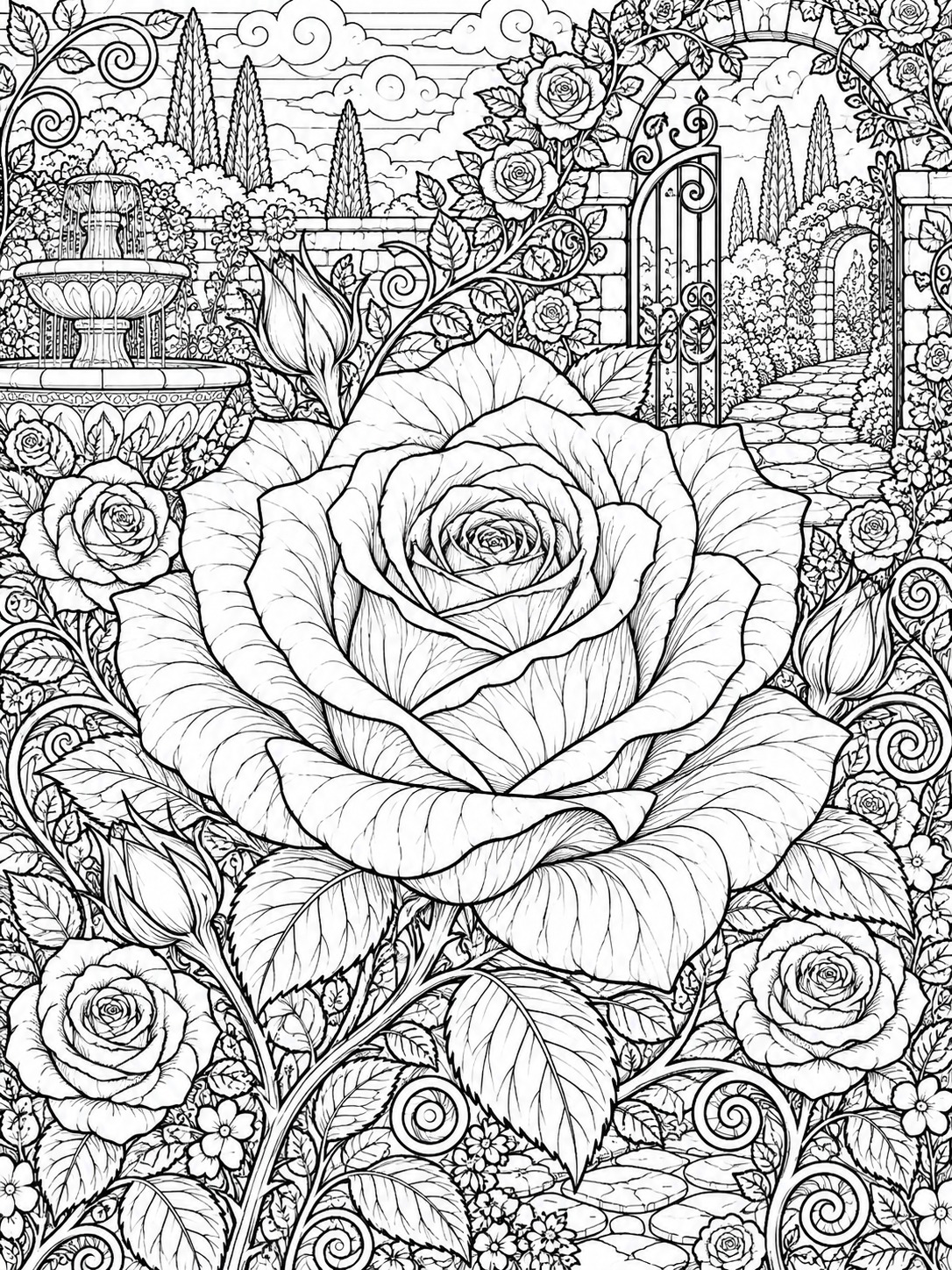
2. A peony with densely ruffled petal detail
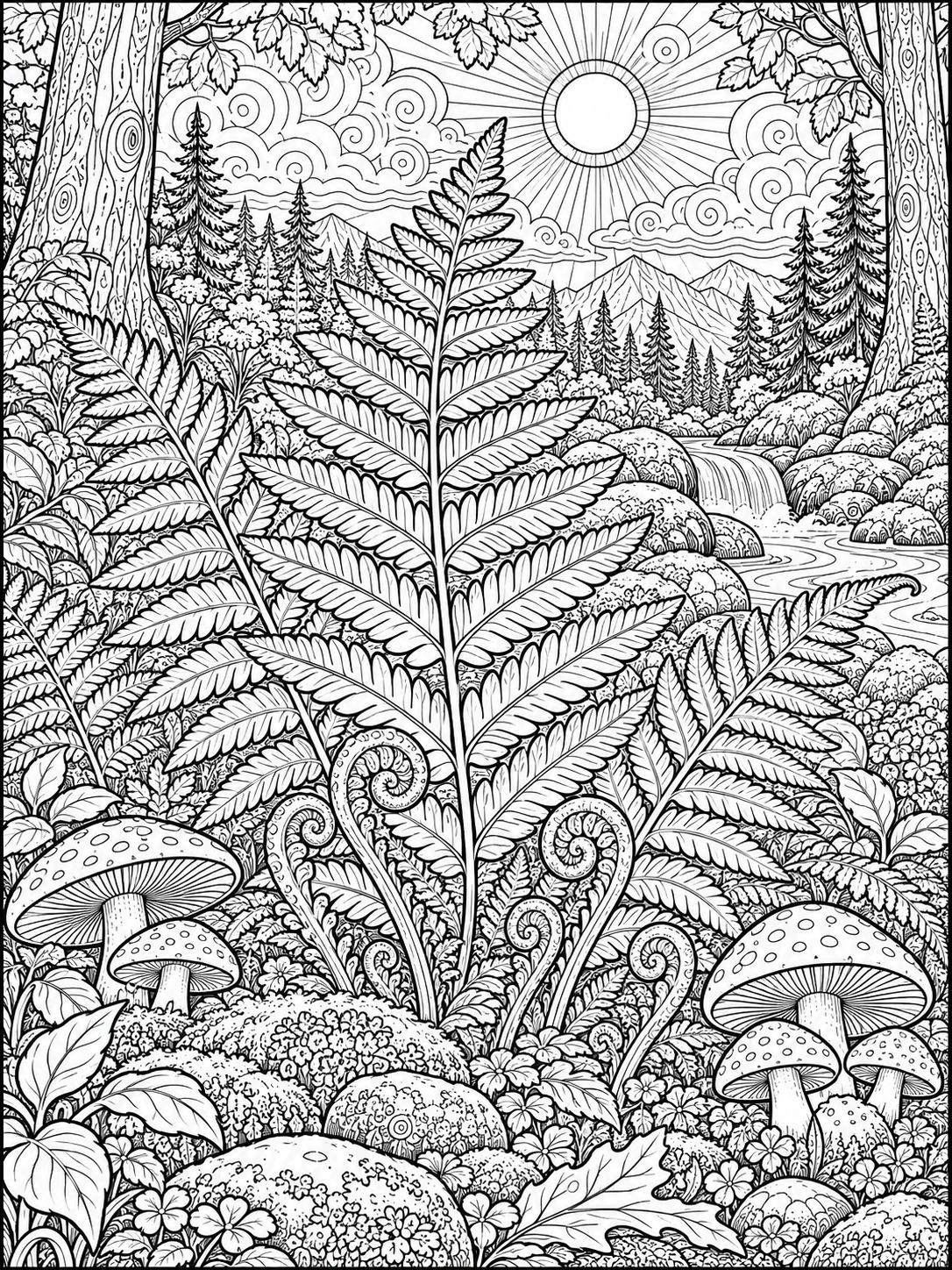
3. A botanical fern frond with fine vein lines
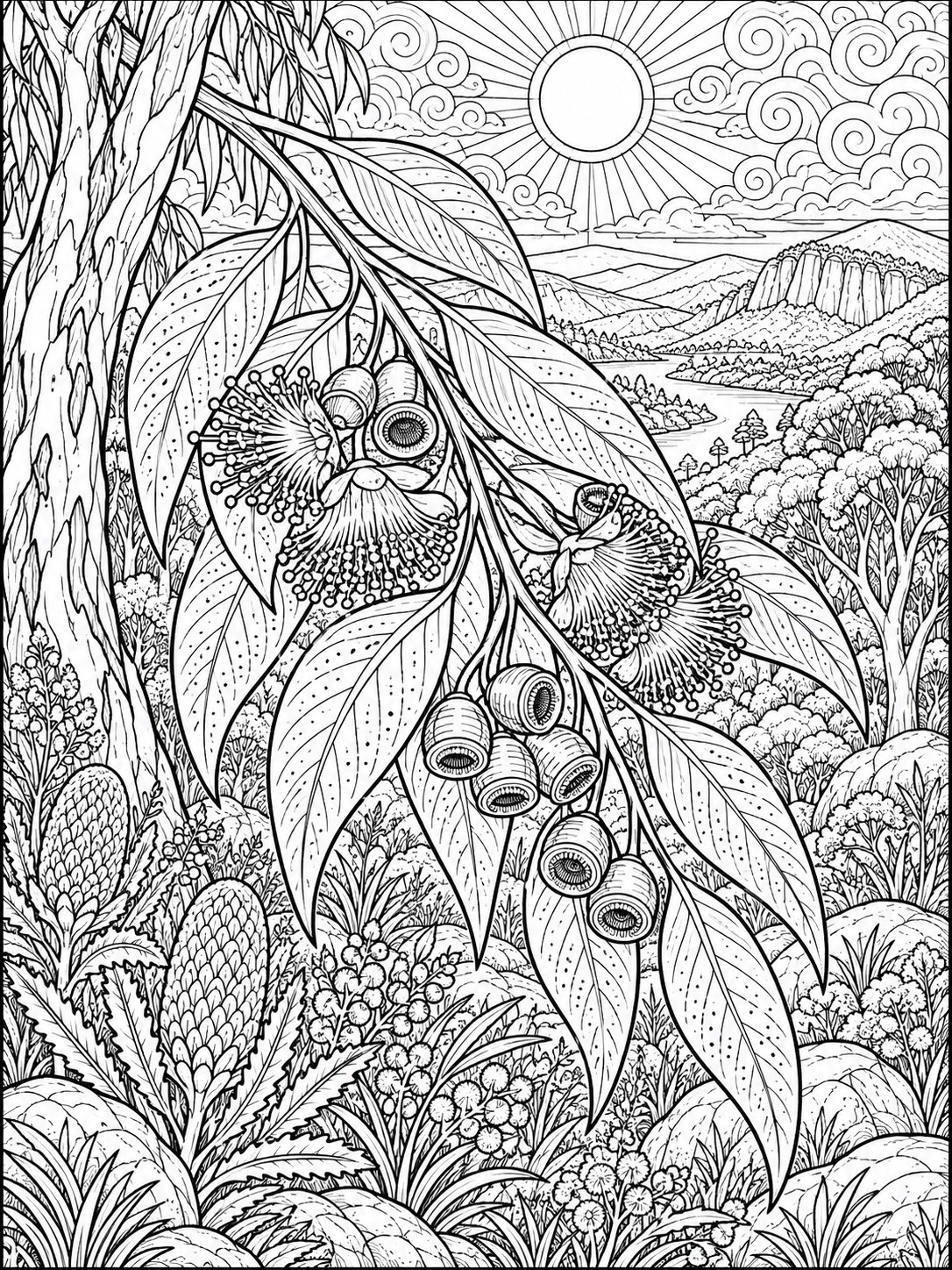
4. A eucalyptus branch with rounded leaves and texture
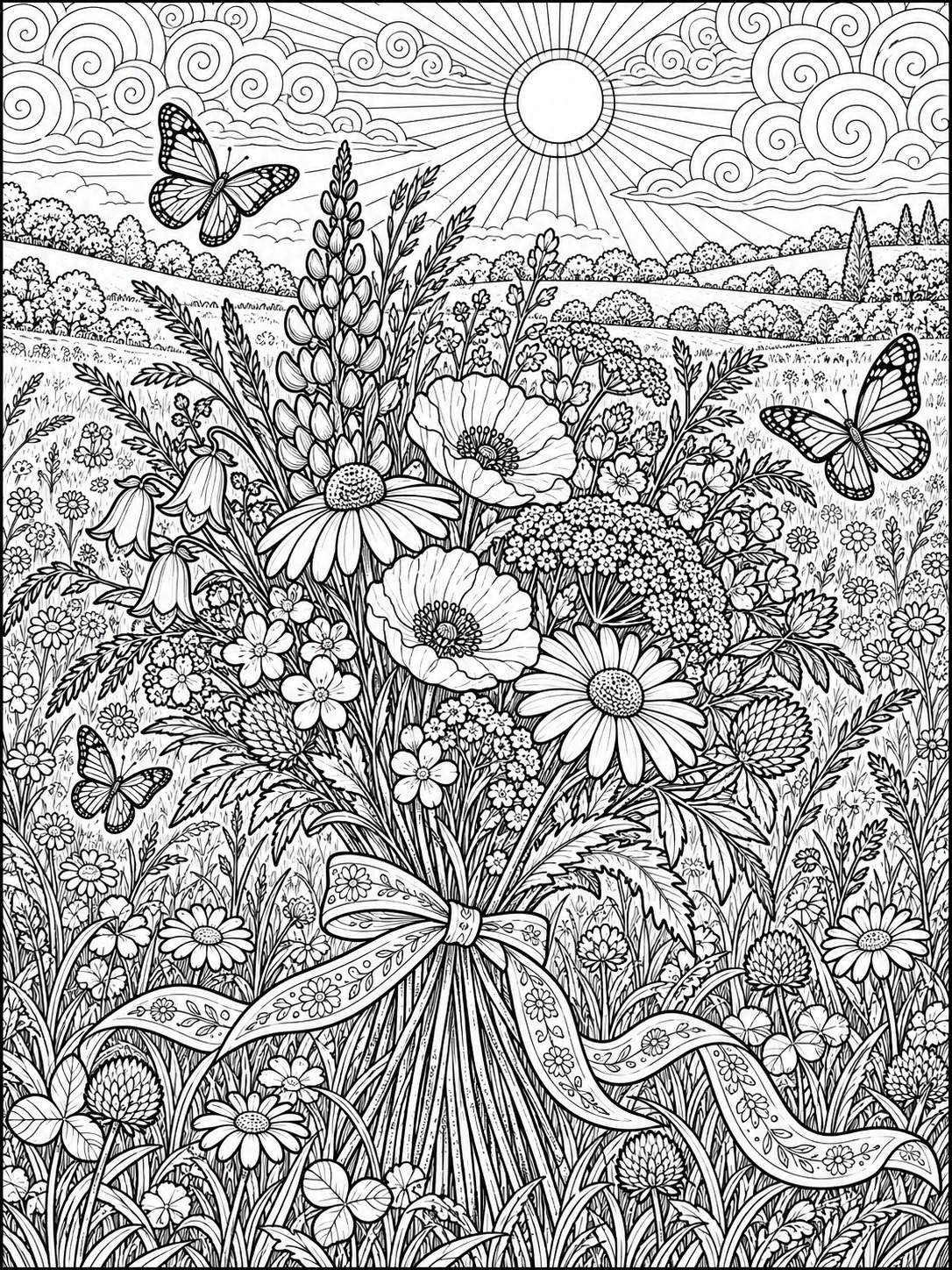
5. A cluster of wildflowers in a loose bouquet
6. A single lotus flower with radiating petal layers
7. A trailing vine with leaves and small blossoms
Animals with real detail
Detailed animal pages differ from kids’ versions mainly in texture: fur, feathers, and scale patterns get represented instead of simplified away, which gives an adult colorist real shading and pattern-fill decisions to make. The rest-point principle matters especially here, since a fully fur-textured animal with no smooth areas at all quickly becomes the kind of uniformly dense page that’s more tiring than absorbing.
8. A fox with detailed tail fur and facial markings
9. An owl with individually rendered feather sections
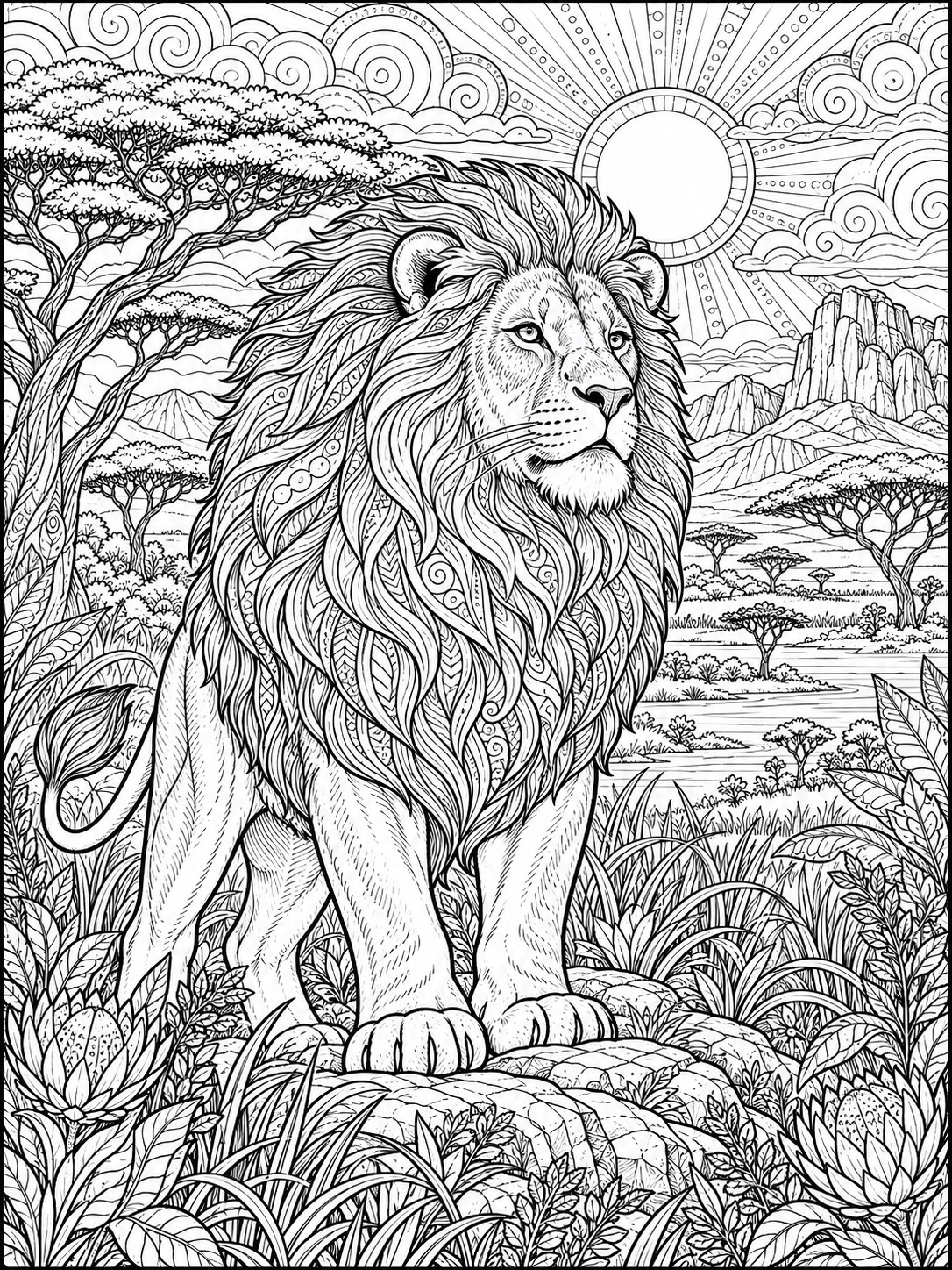
10. A lion with a textured, layered mane
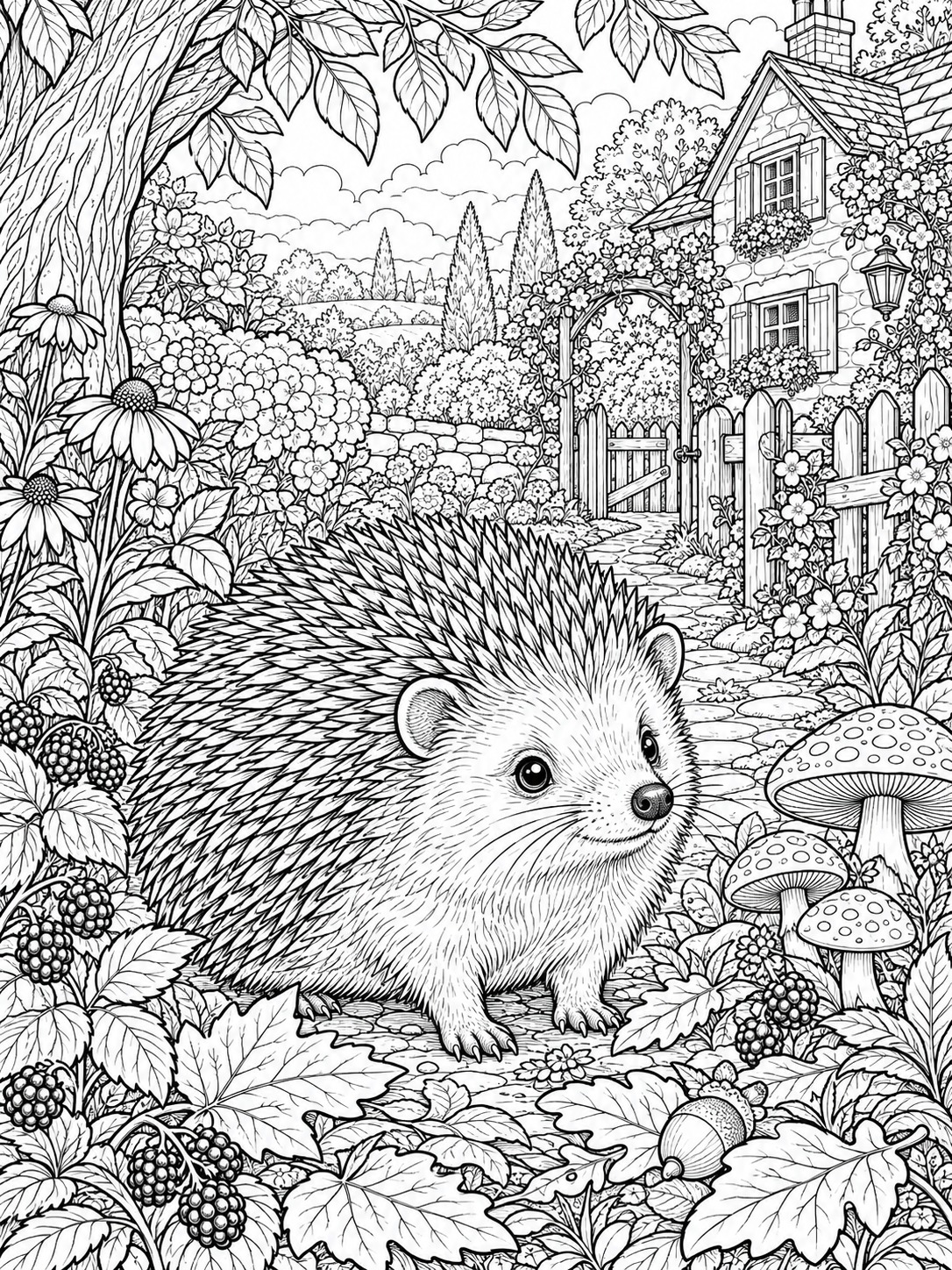
11. A hedgehog with detailed quill texture
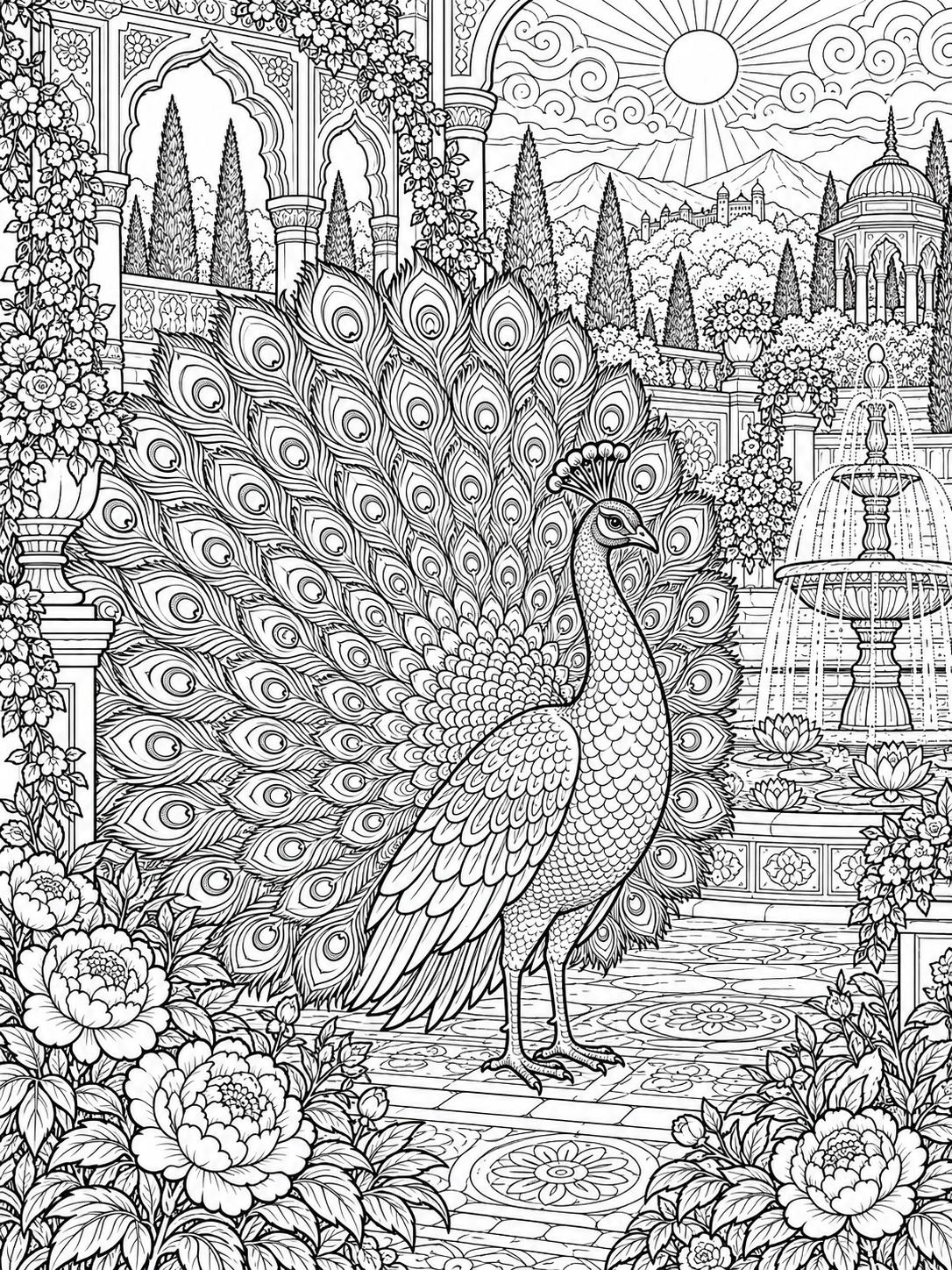
12. A peacock with elaborate tail feather patterns
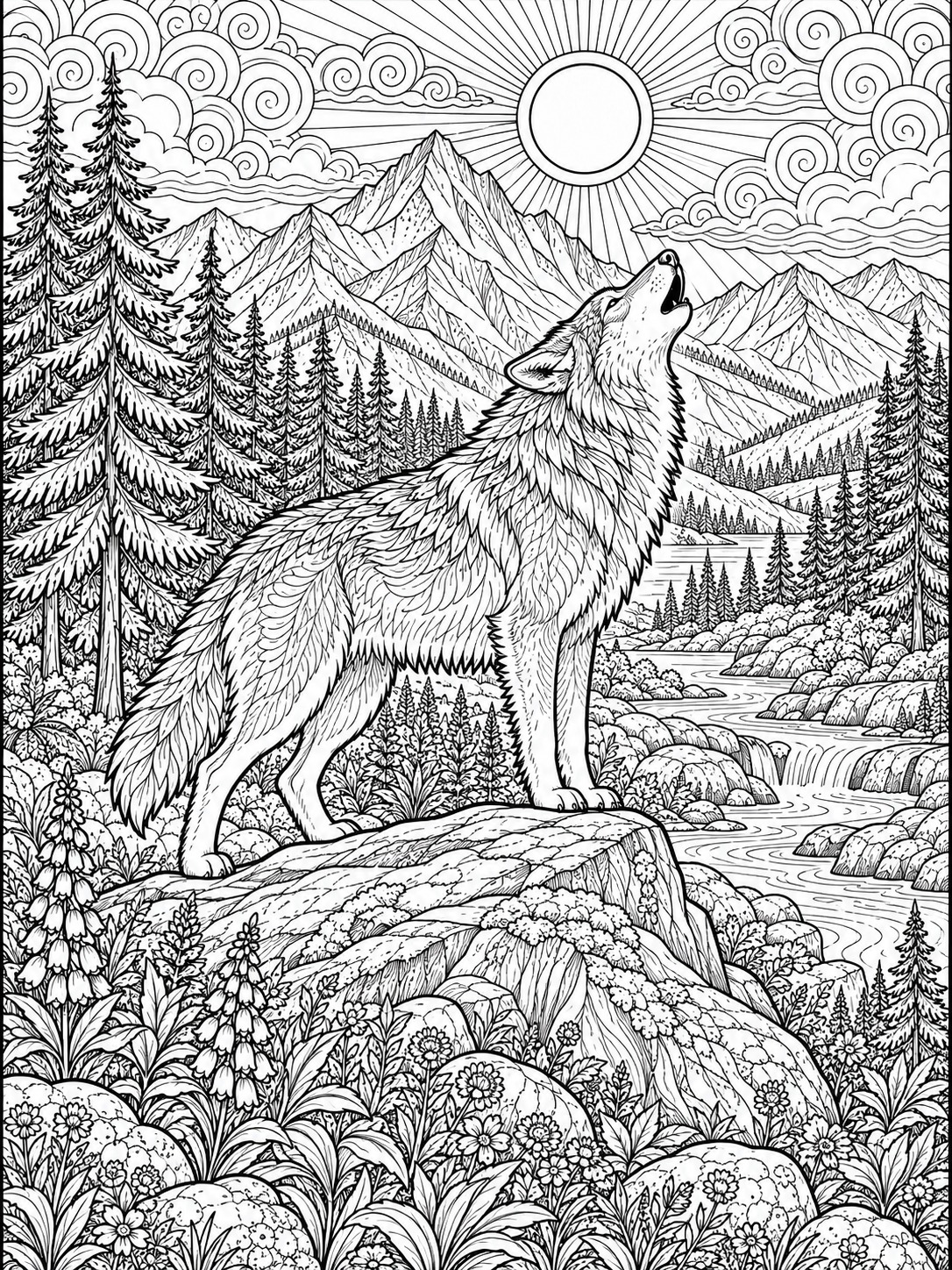
13. A wolf howling, with fur texture along the back and chest
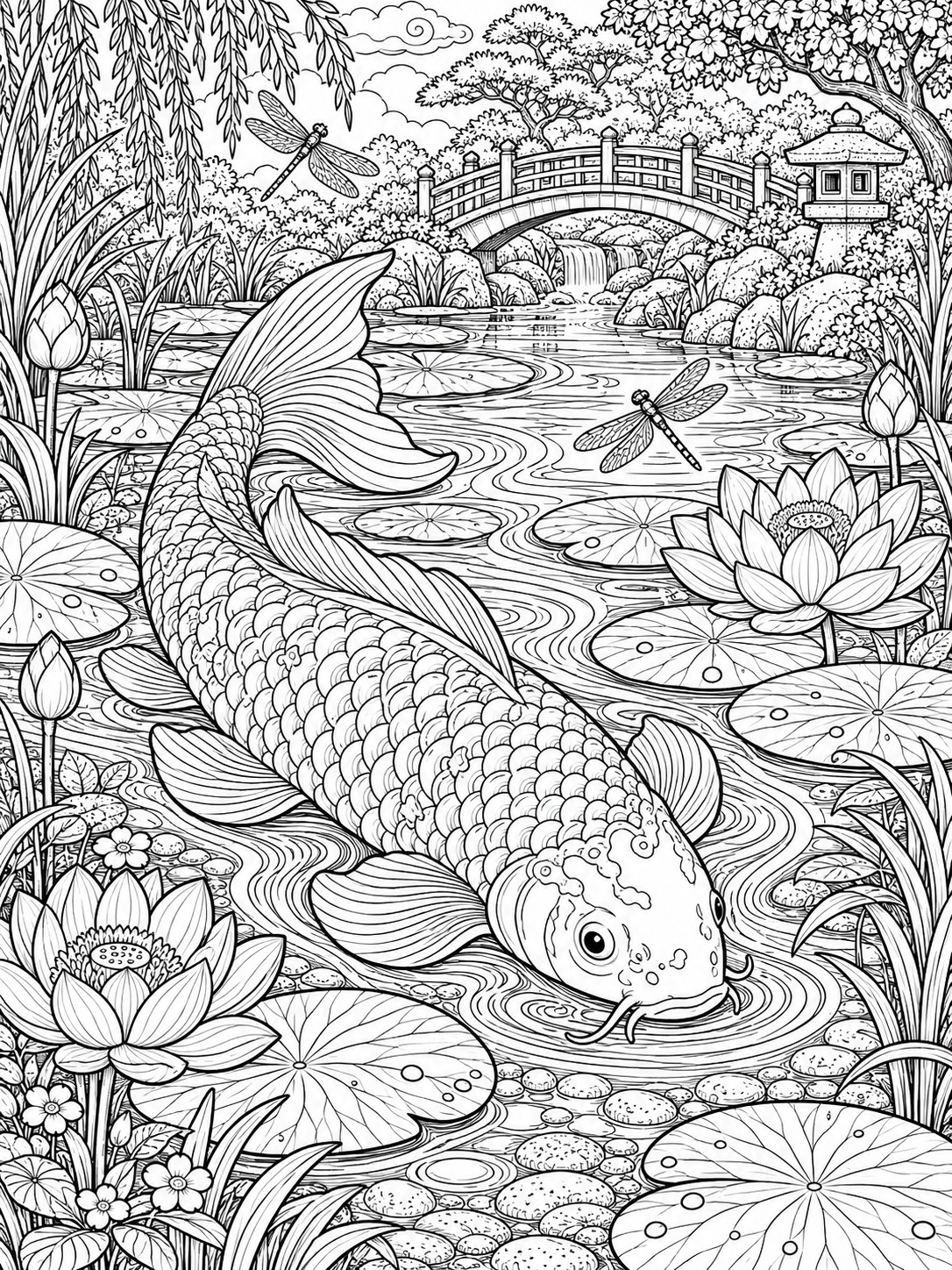
14. A koi fish with detailed scale patterns
Nature scenes and landscapes
Landscape pages work differently from single-subject pages, since the detail hierarchy has to guide the eye through a whole scene rather than one object. Here, sky, water, distant ridges, and foreground plants are all drawn, but their pattern scale changes so the main subject stays readable.
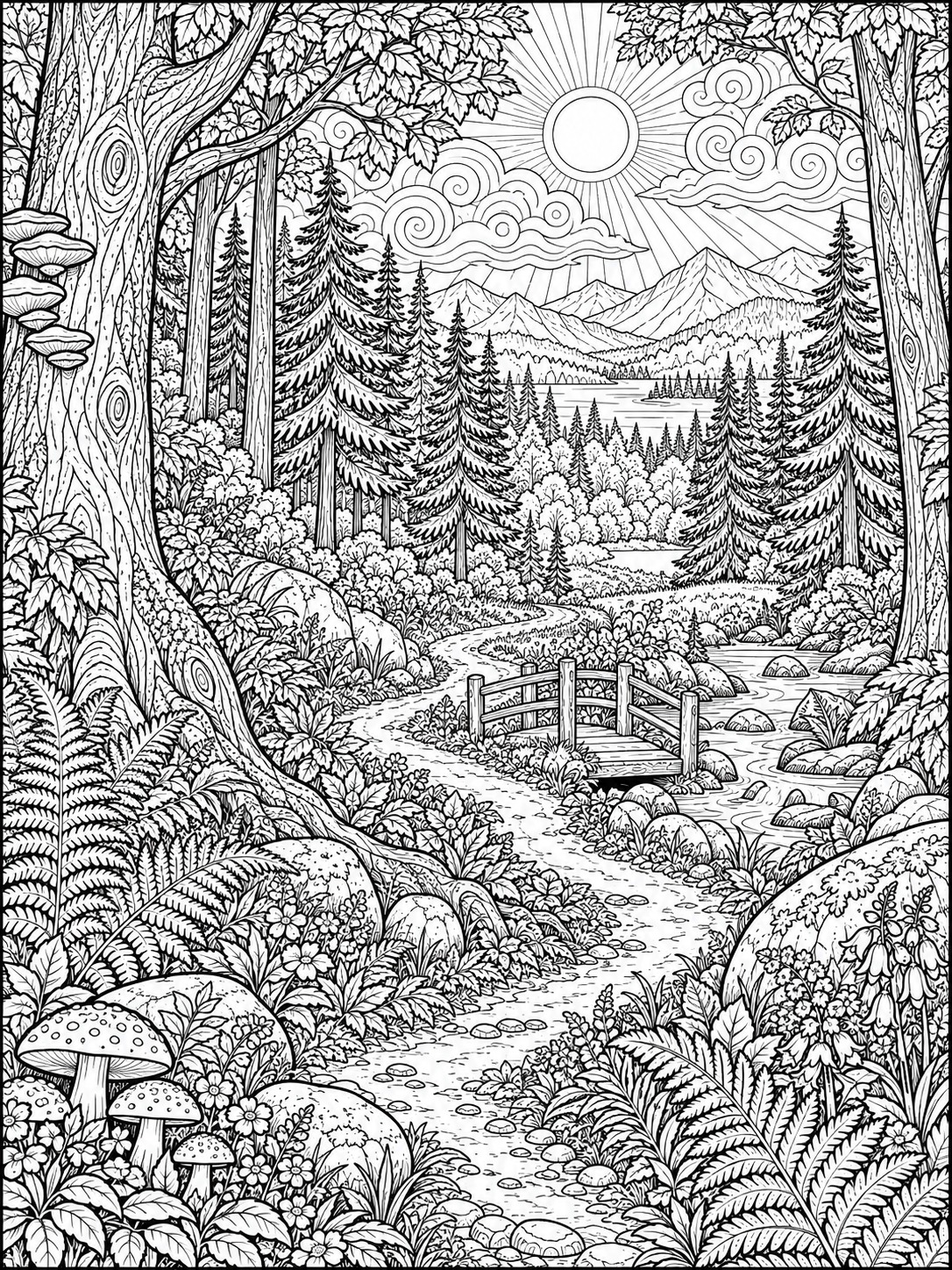
15. A forest path with layered tree lines receding into the distance
200 Bold & Easy Coloring Pages
Get 200 bold, simple and relaxing printable coloring pages for adults and kids — featuring animals, nature, food, fantasy, patterns and seasonal designs.
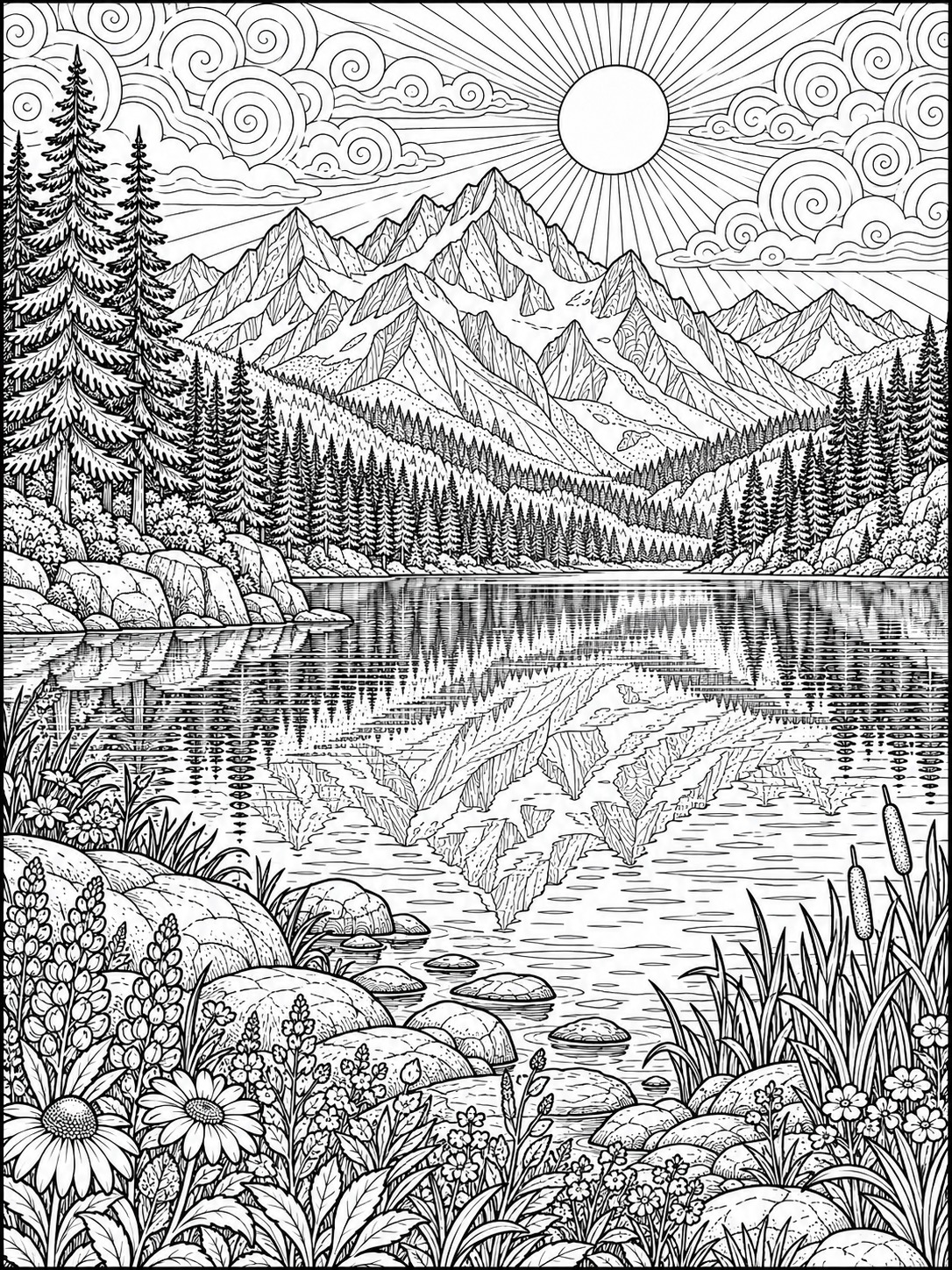
16. A mountain lake scene with reflected peaks
17. A cozy cabin in the woods with a wisp of chimney smoke
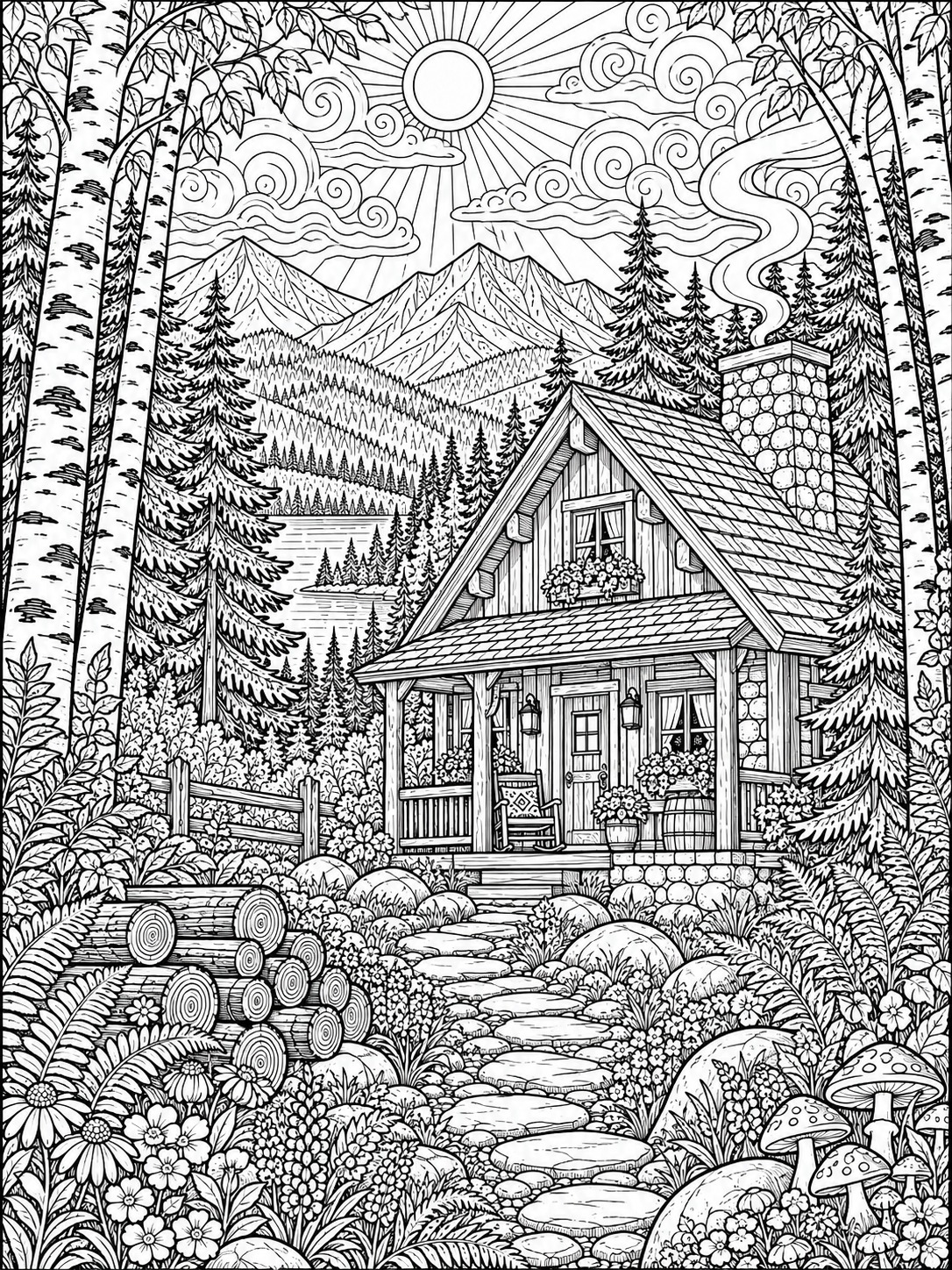
18. A coastal scene with rock formations and gentle waves
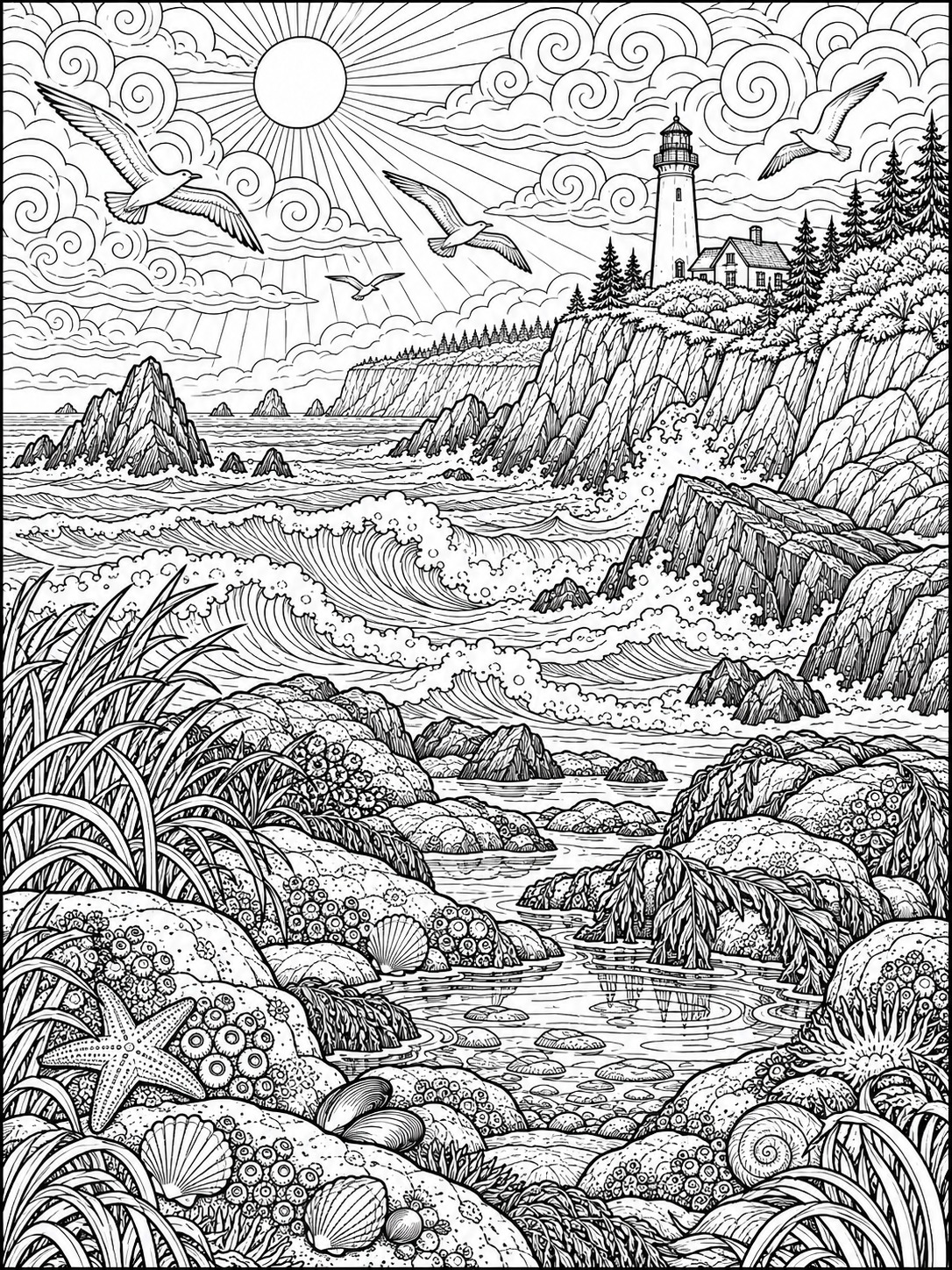
19. A meadow at sunset with a distant tree line
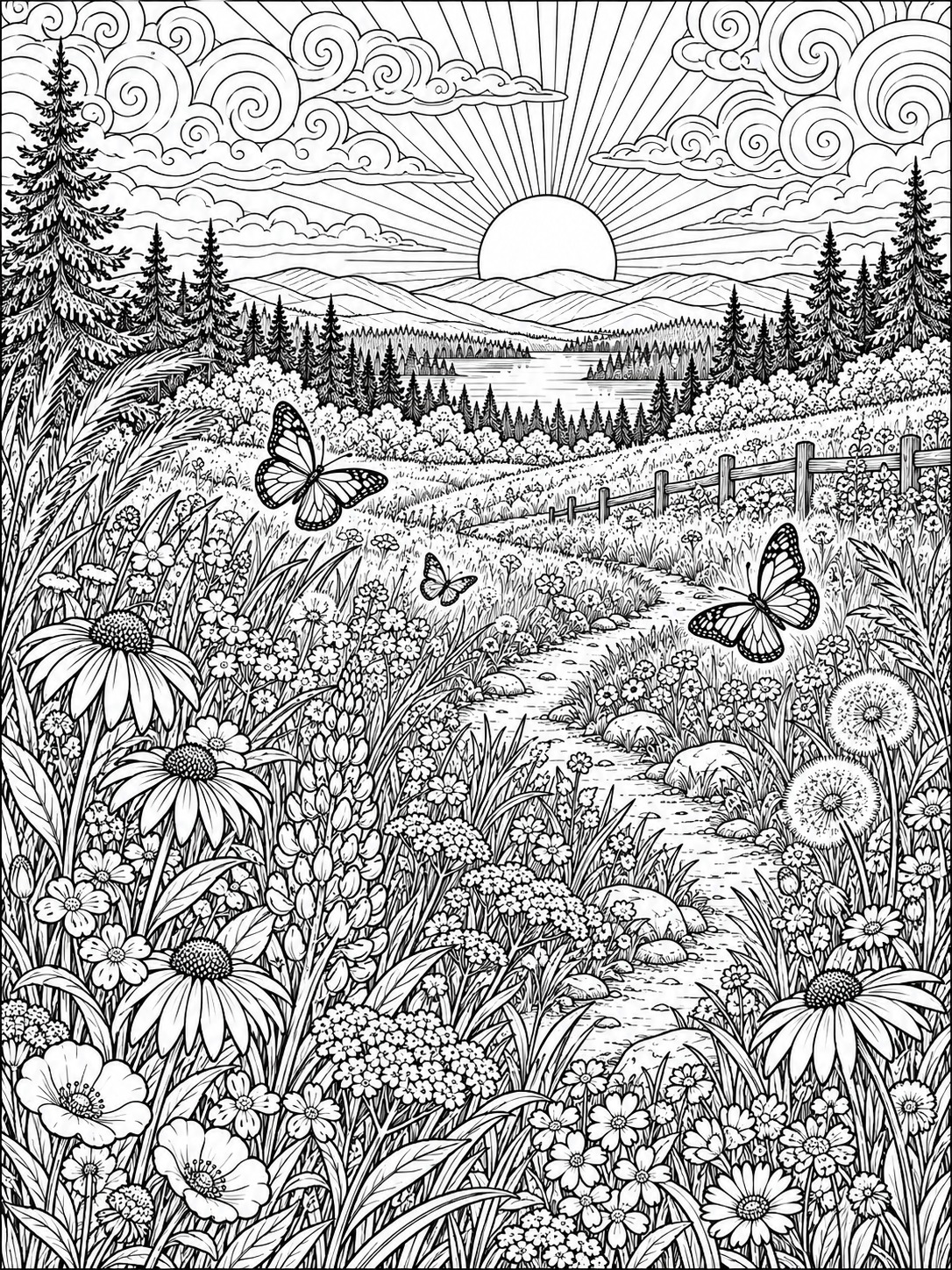
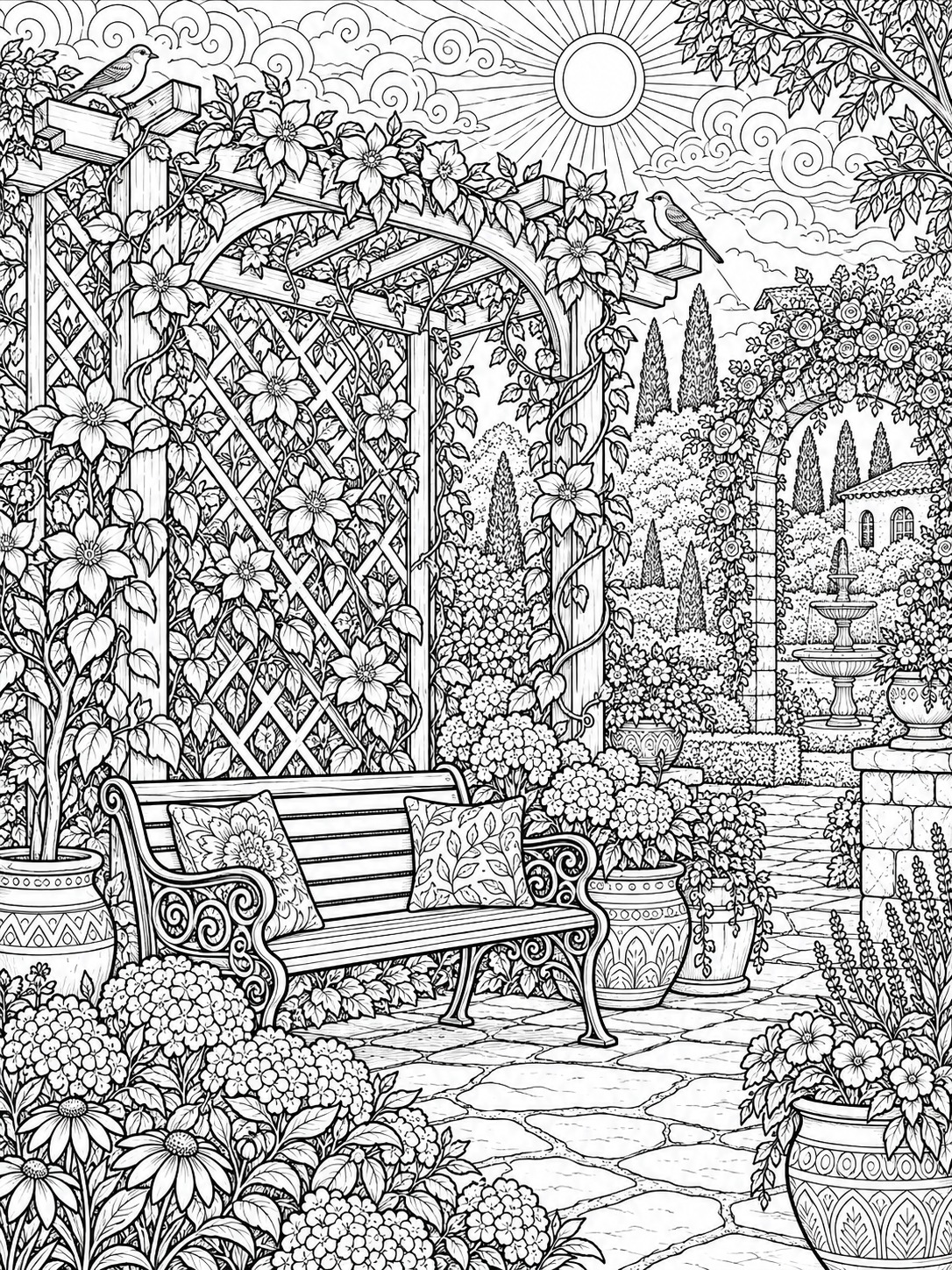
20. A garden trellis scene with climbing vines and flowers
Zentangle and abstract patterns
Zentangle-style pages are built entirely from the density and rest-point principles above: organized zones of small repeating patterns separated by deliberately open sections. Unlike floral or animal pages, there’s no representational subject to fall back on, which is precisely why the underlying structure has to be even more deliberate to keep the page from feeling like arbitrary scribbling.
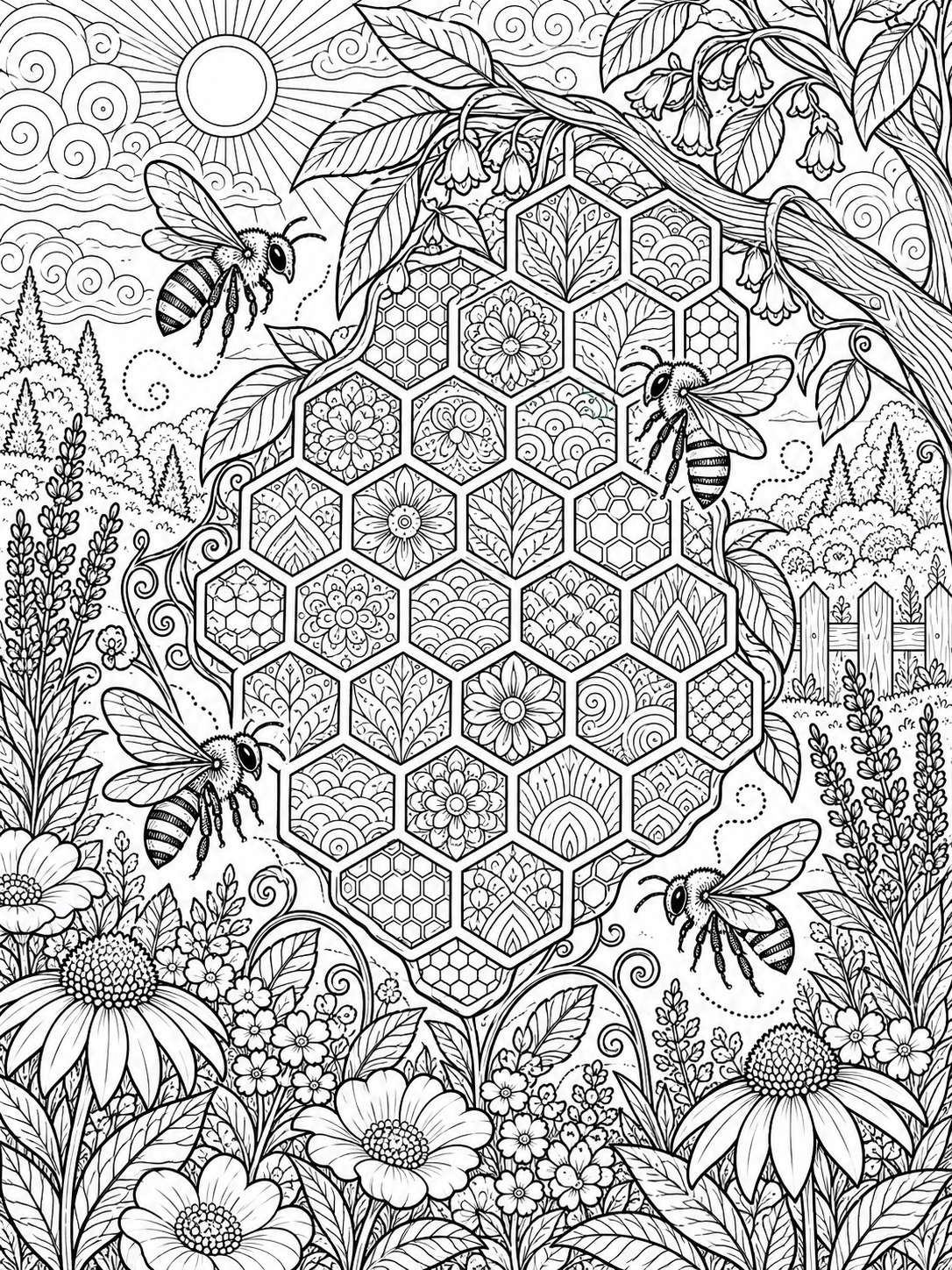
21. A honeycomb-inspired repeating pattern with varied fill zones
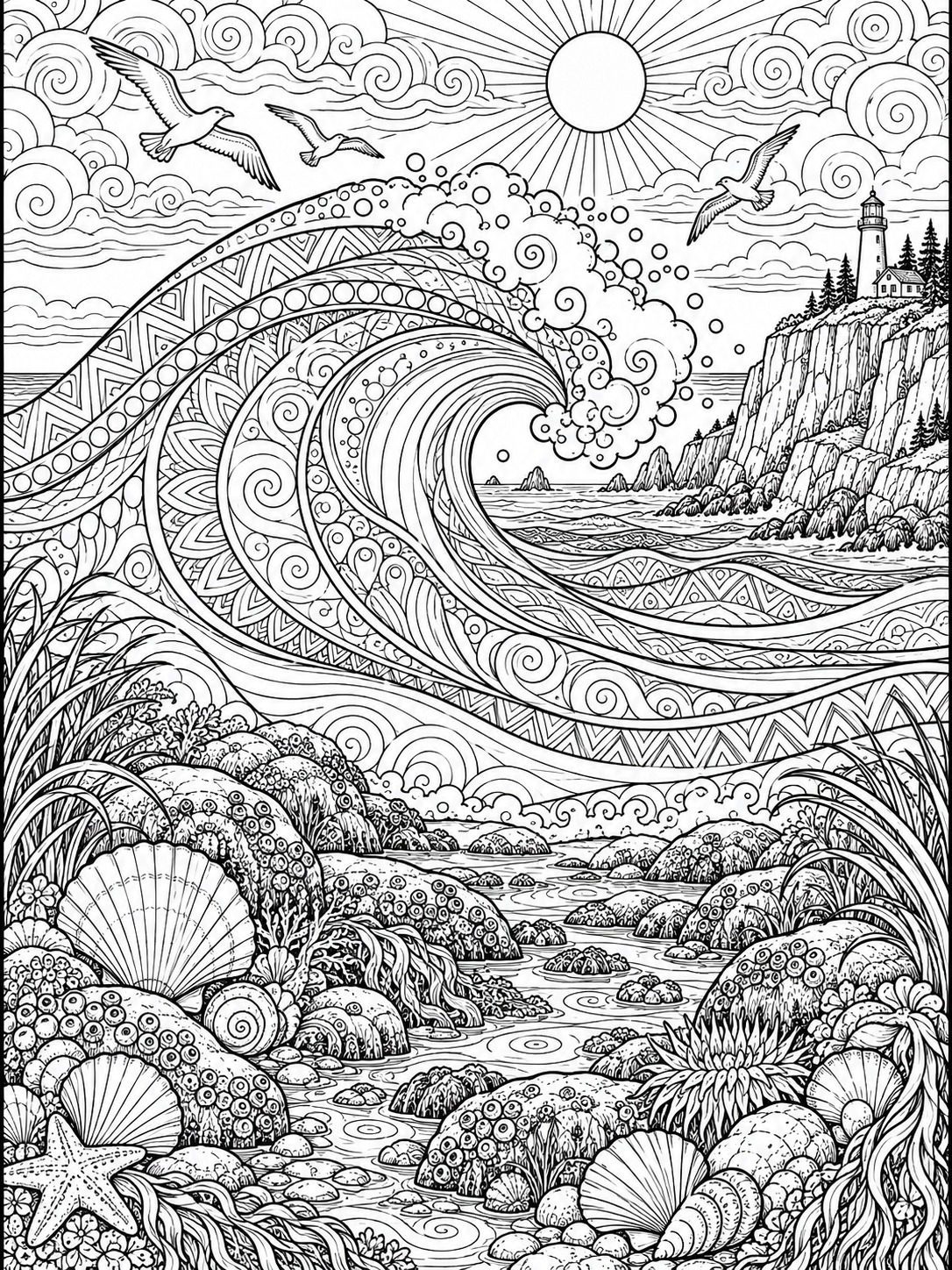
22. An abstract wave pattern with alternating dense and open bands
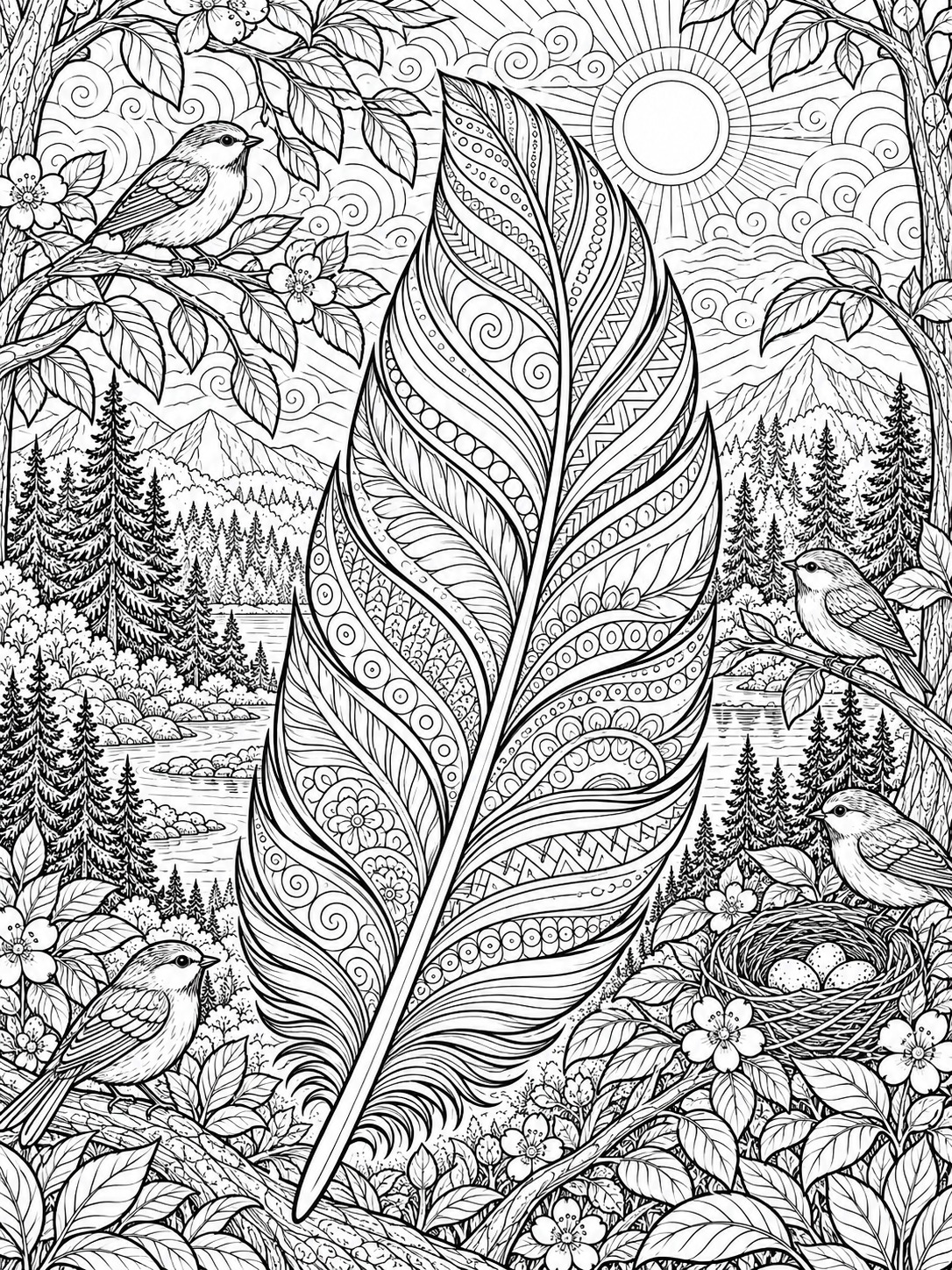
23. A feather-shaped zentangle with mixed pattern fills
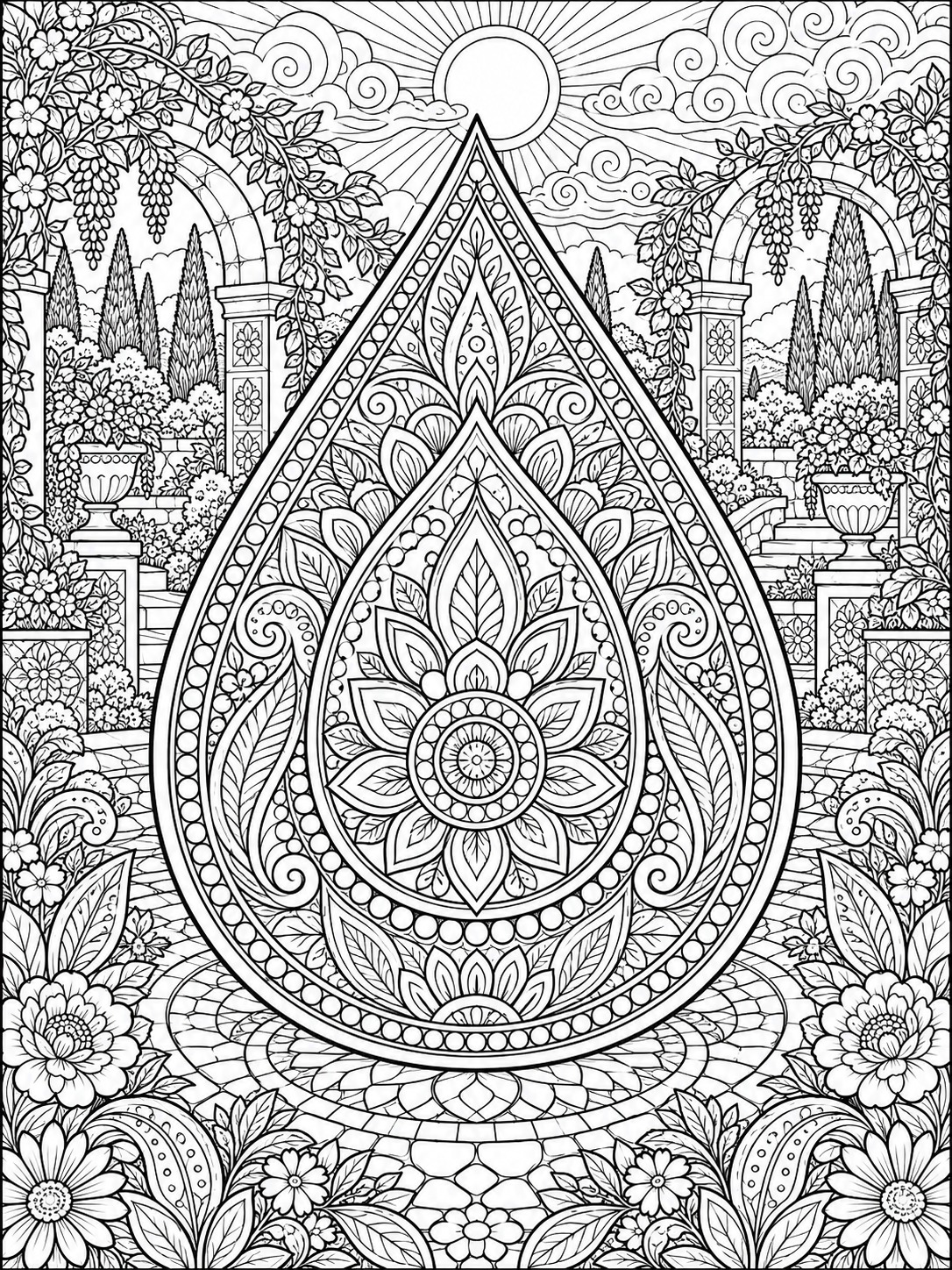
24. A teardrop-shaped abstract design with layered pattern zones
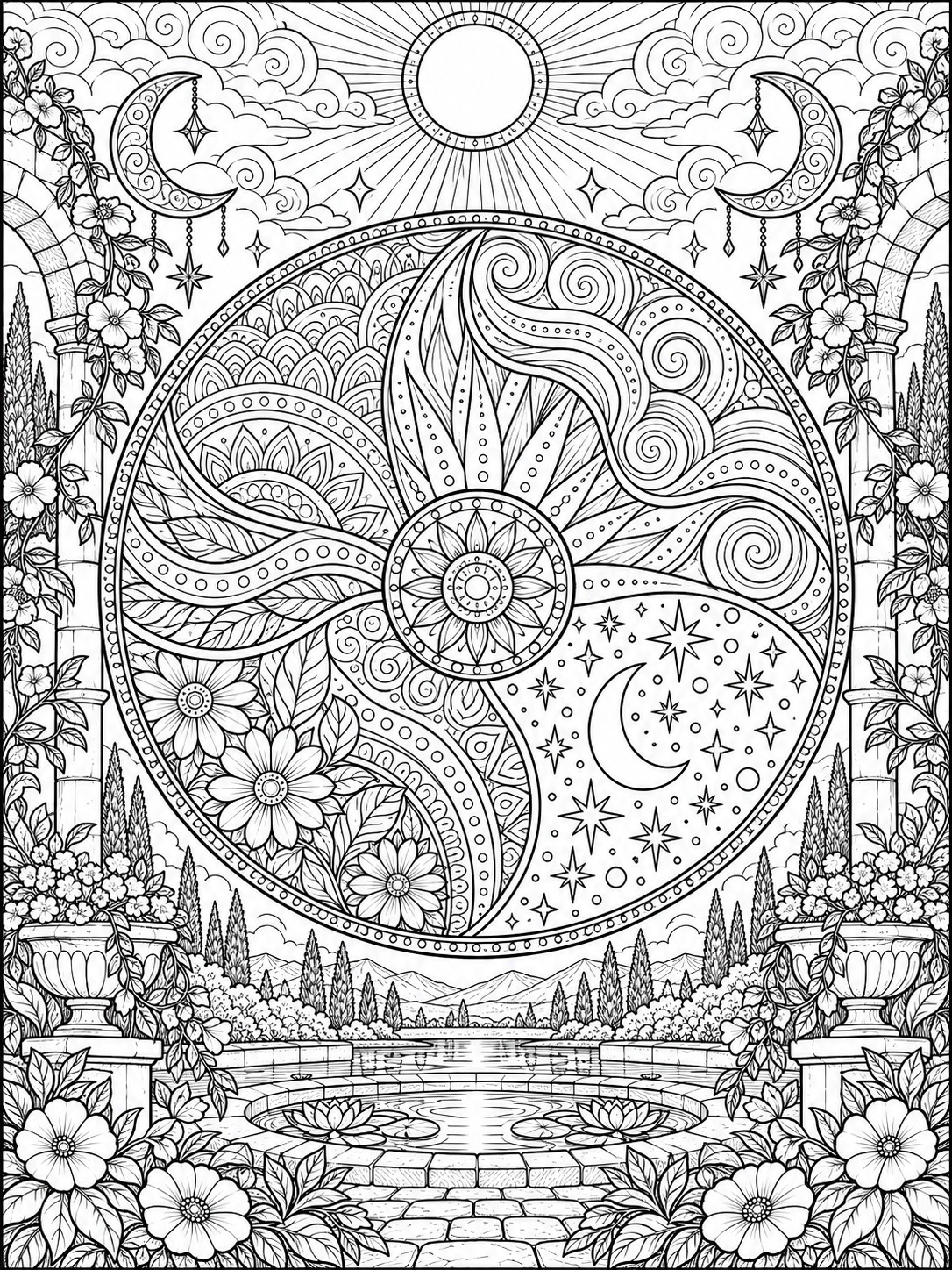
25. A circular abstract design divided into contrasting pattern sections
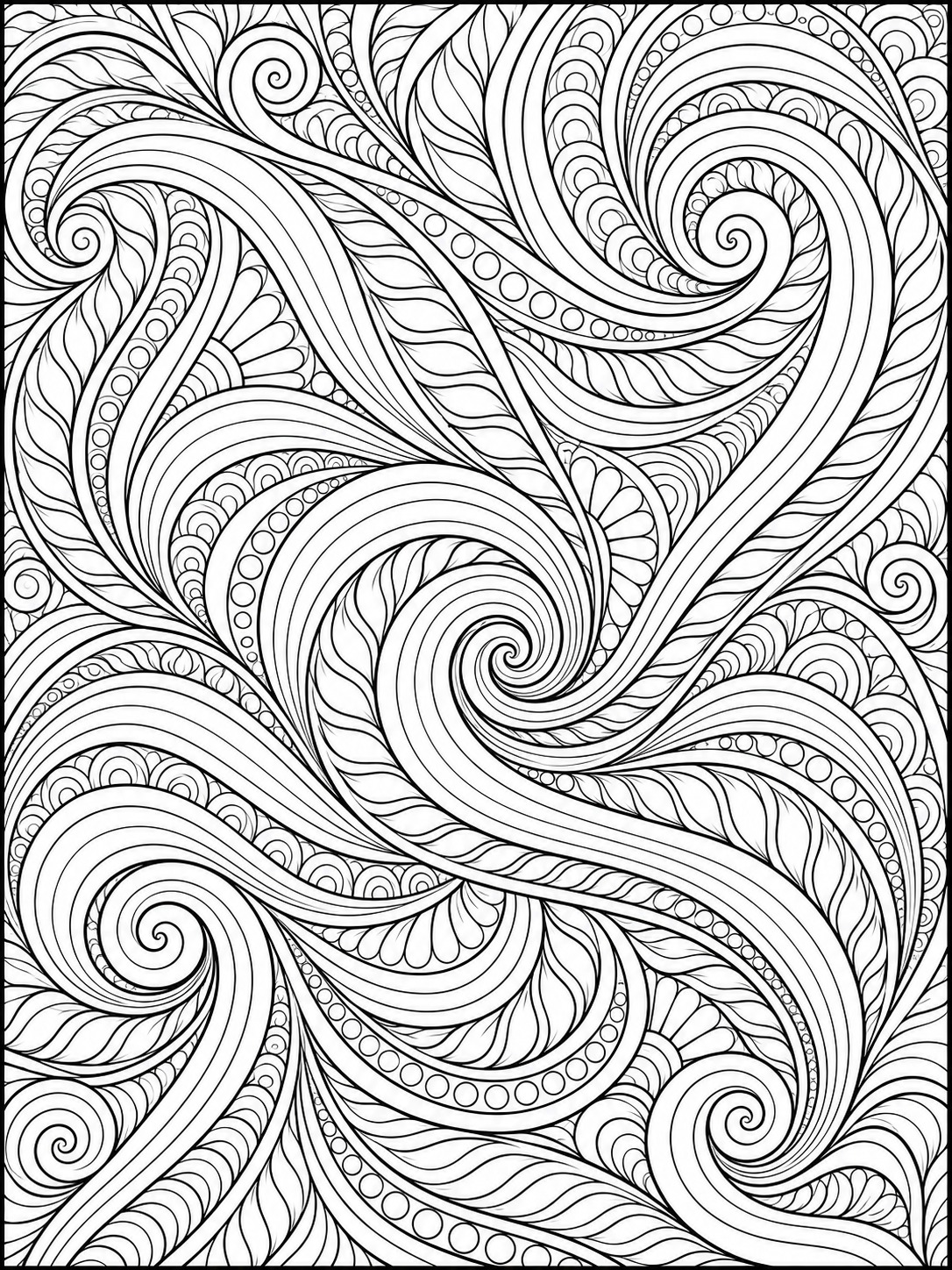
26. An organic, flowing line pattern with open negative space
Quote-ready frames
These six printable designs leave the central lettering area blank, so you can add a favorite phrase by hand. The frame becomes the detailed secondary layer while the open center provides a natural rest point.
27. A quote-ready center with a floral border
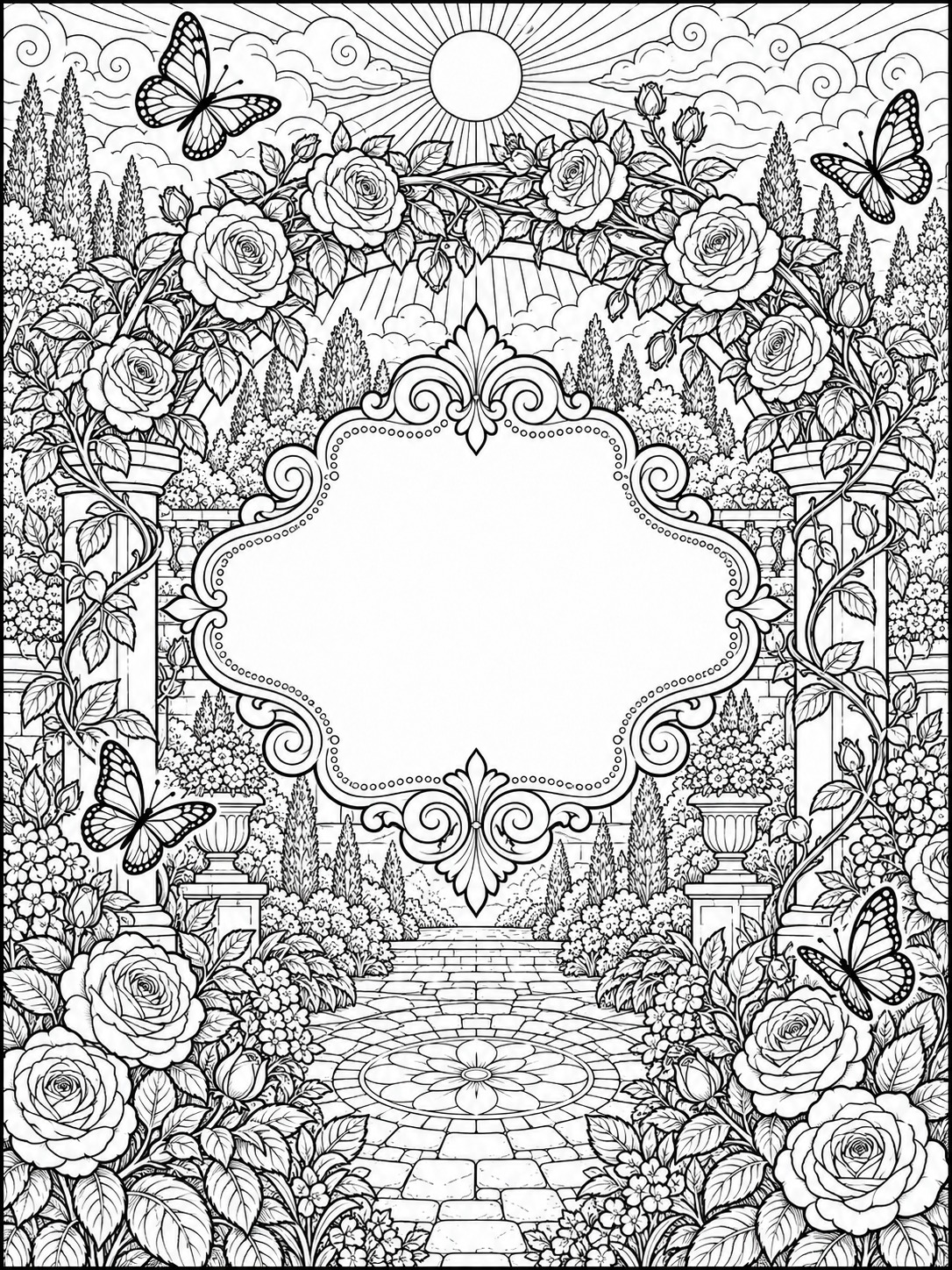
28. A flowing blank center surrounded by leaves
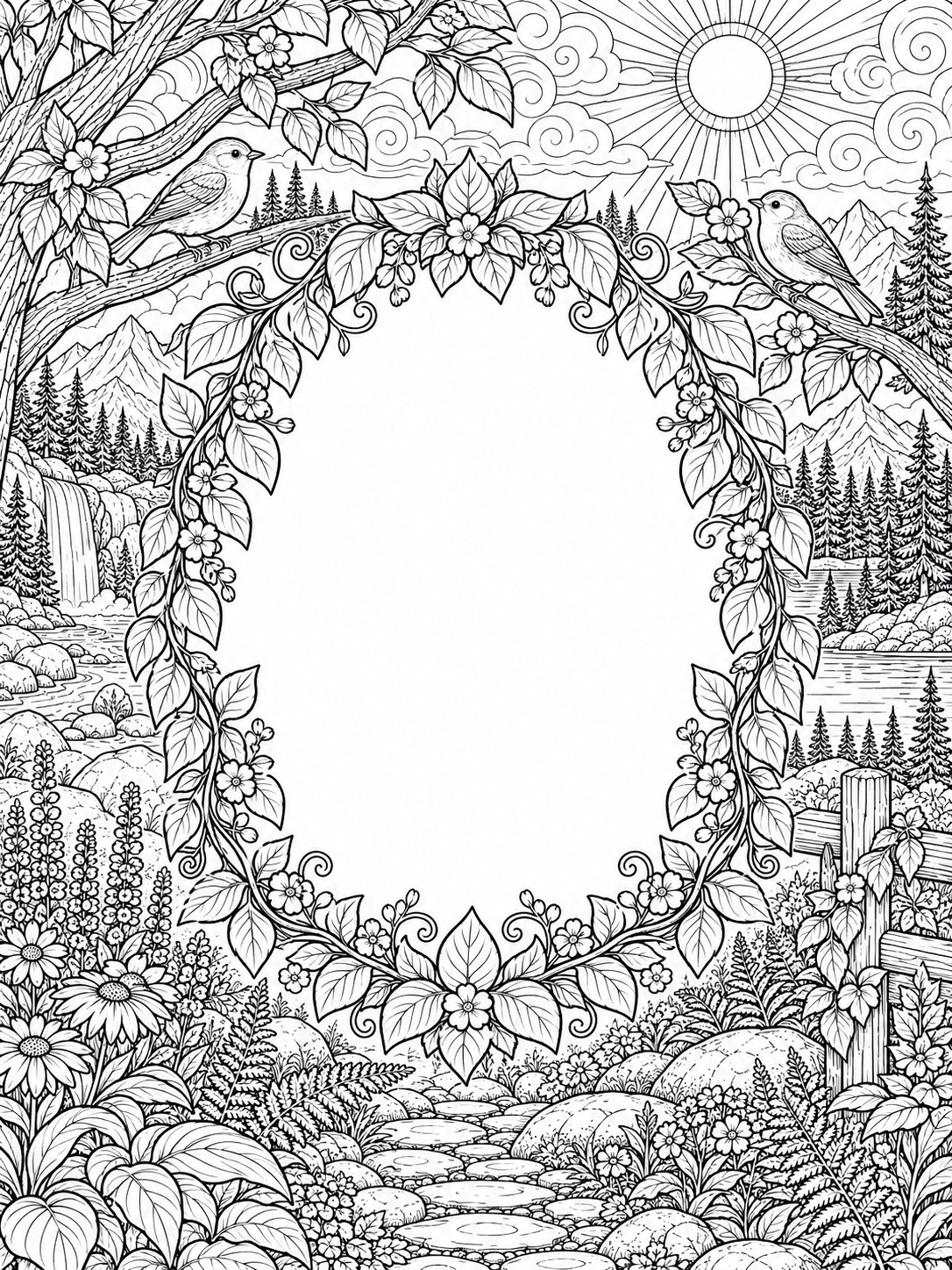
29. A geometric quote frame with repeating patterns
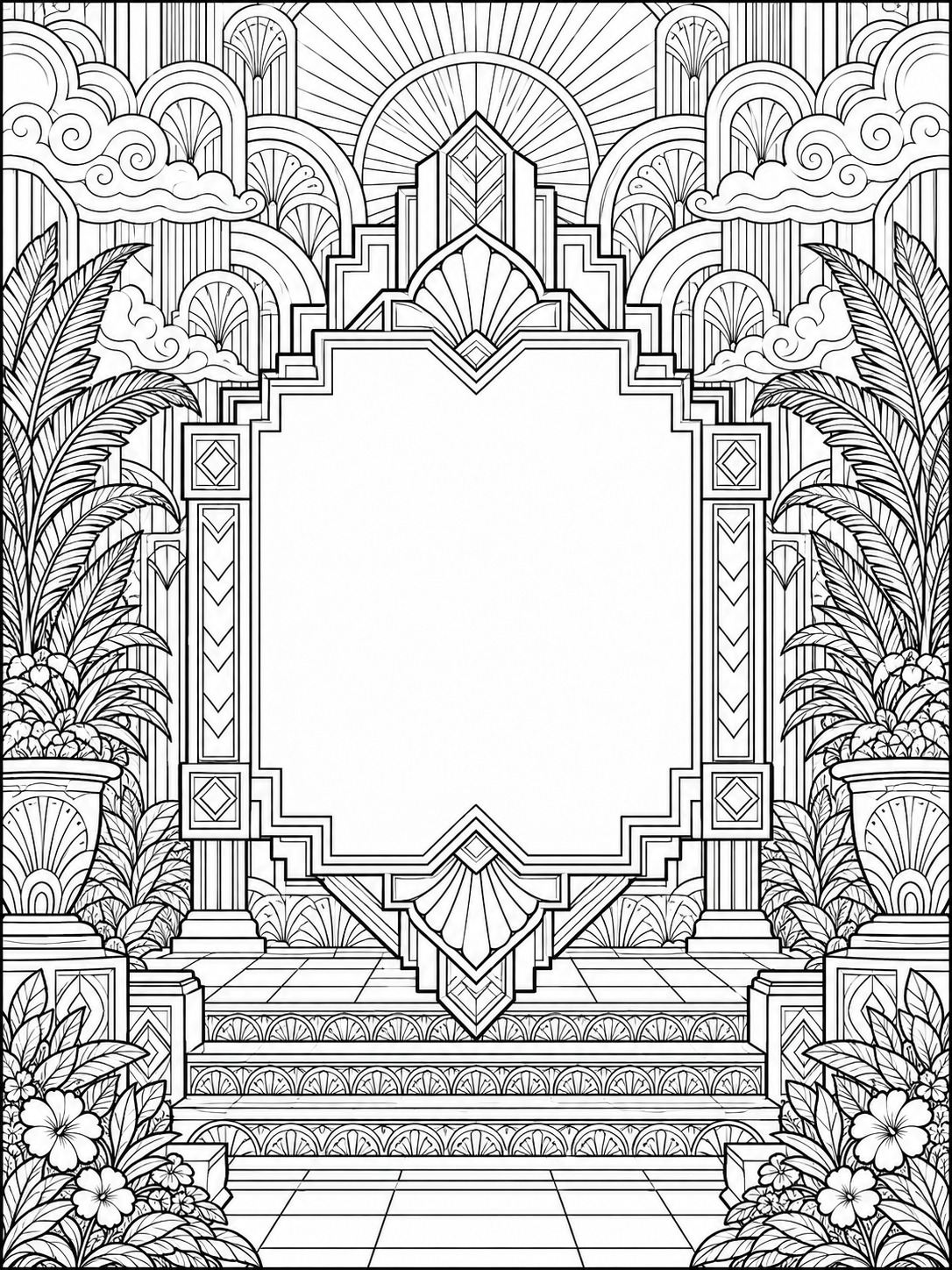
30. A delicate blank center with a simple line-art frame
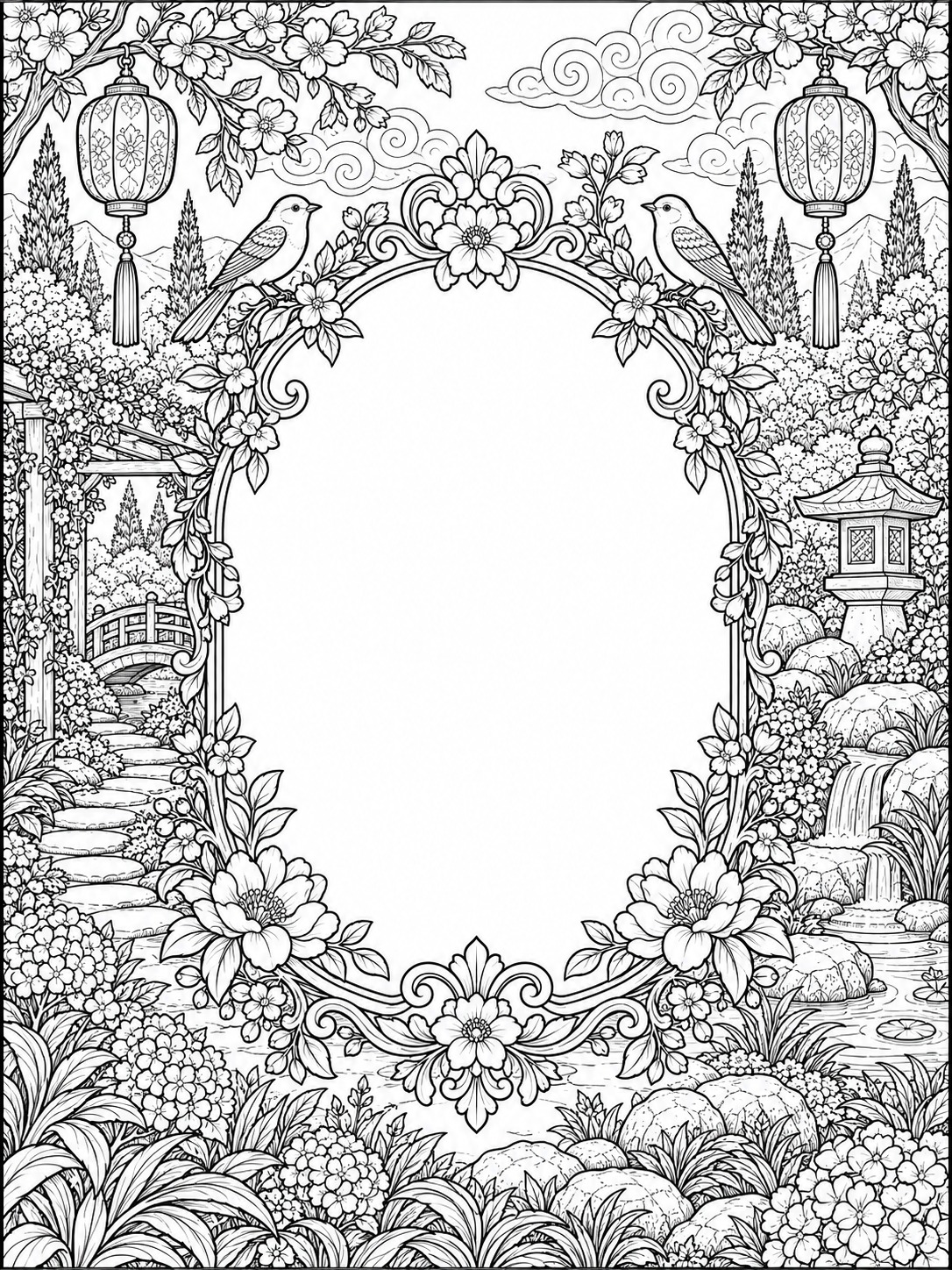
31. A decorative wreath with room for one word
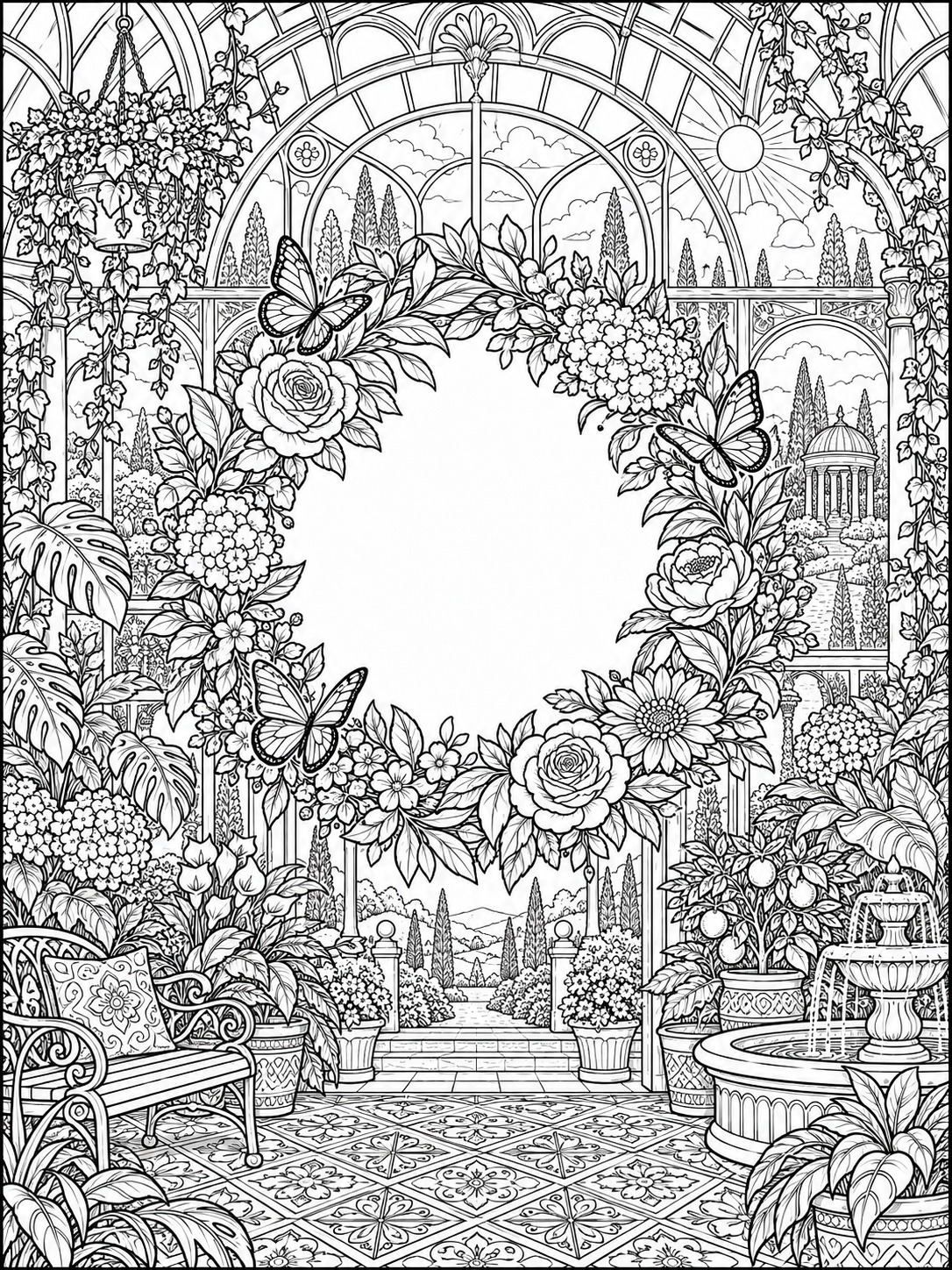
32. A layered quote frame with geometric accents
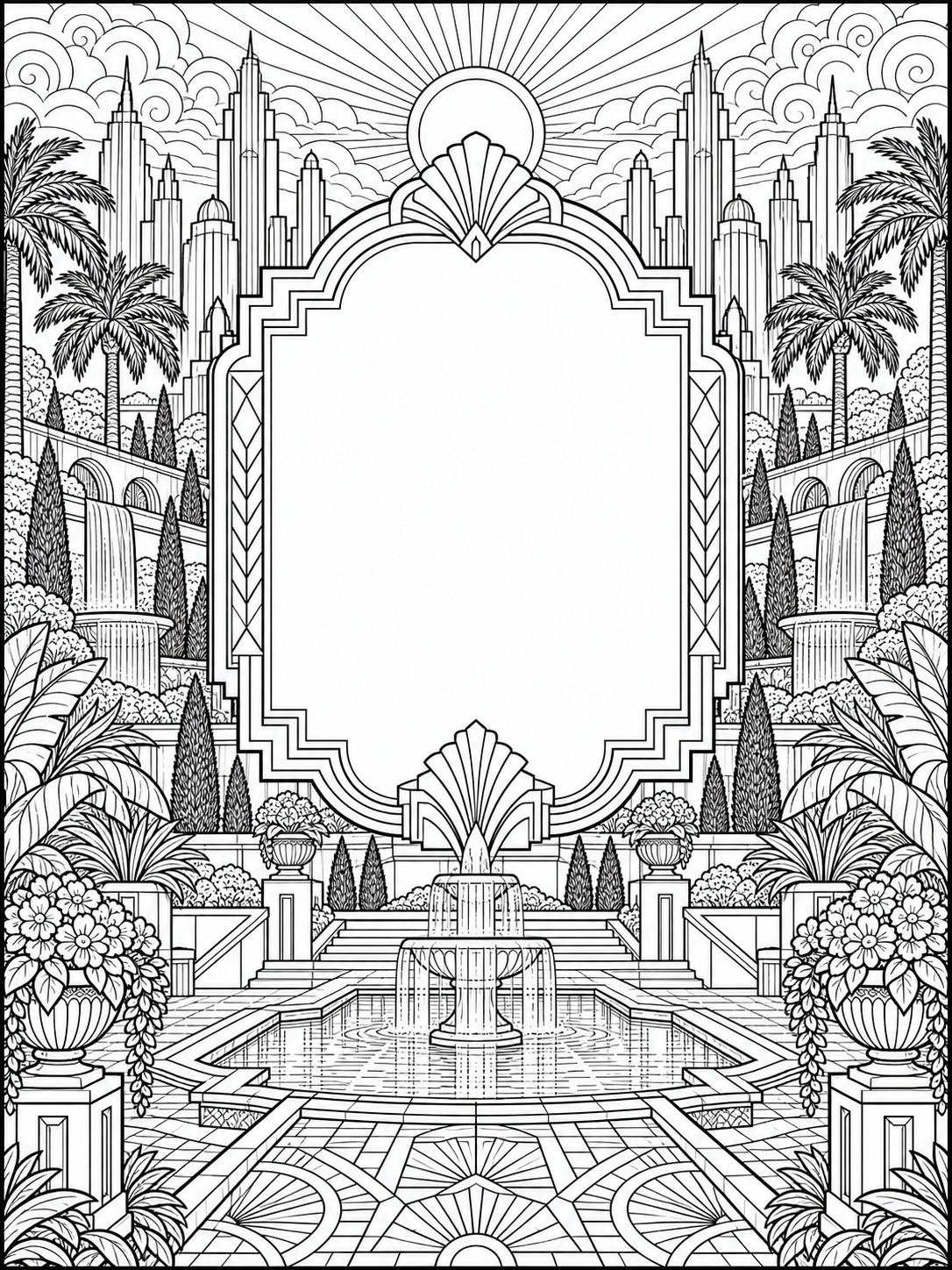
Whimsical and fantasy for adults
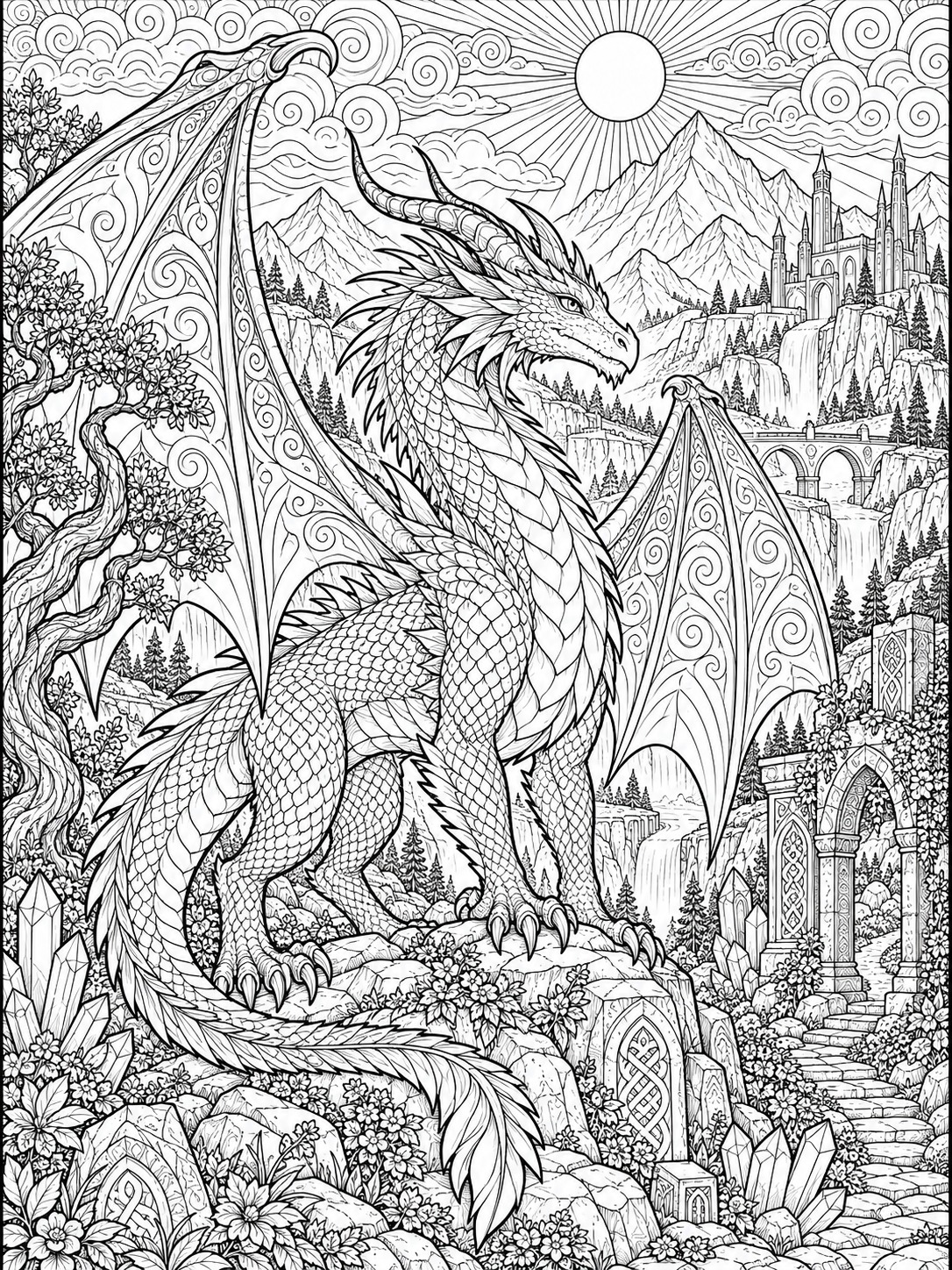
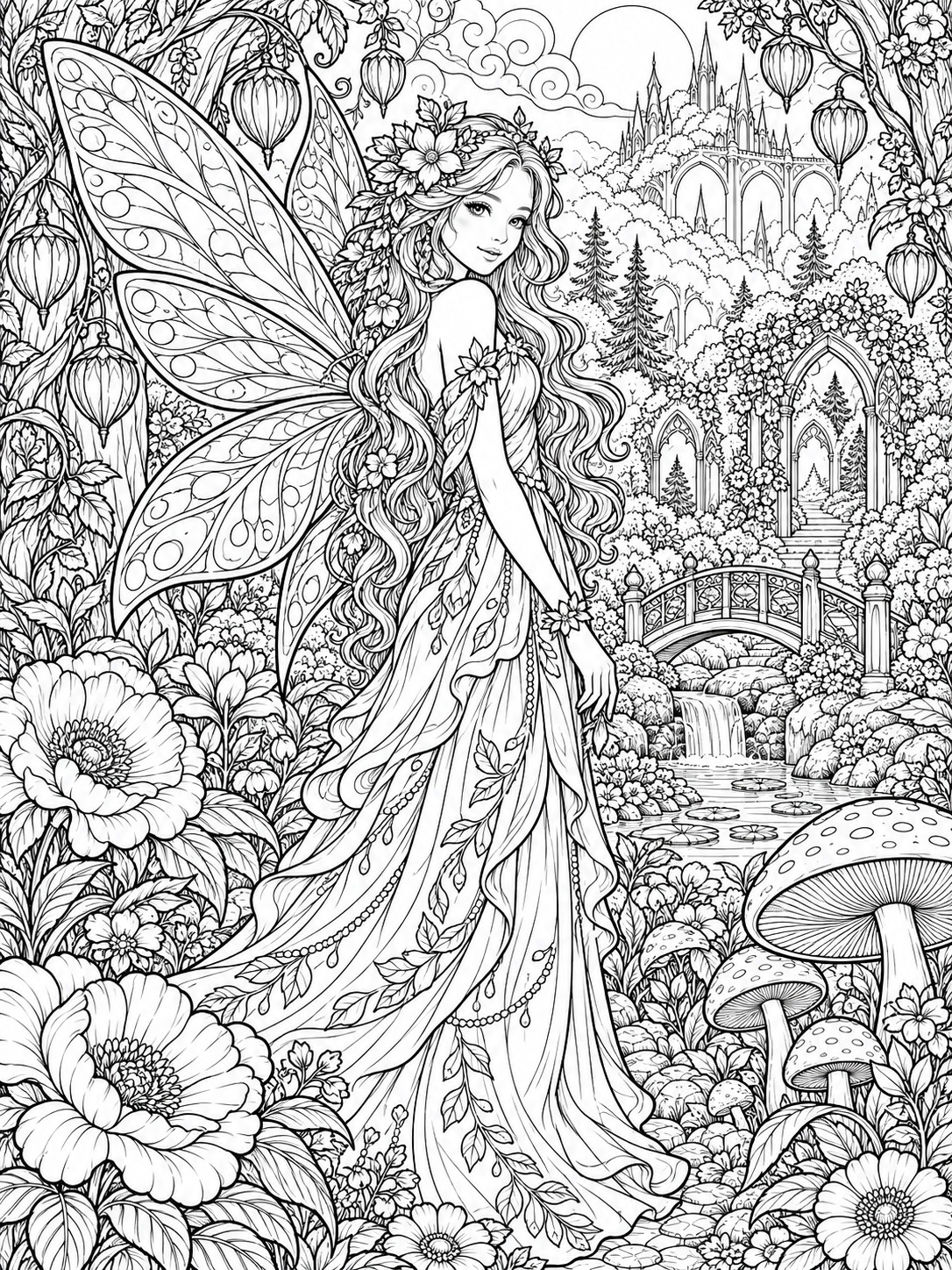
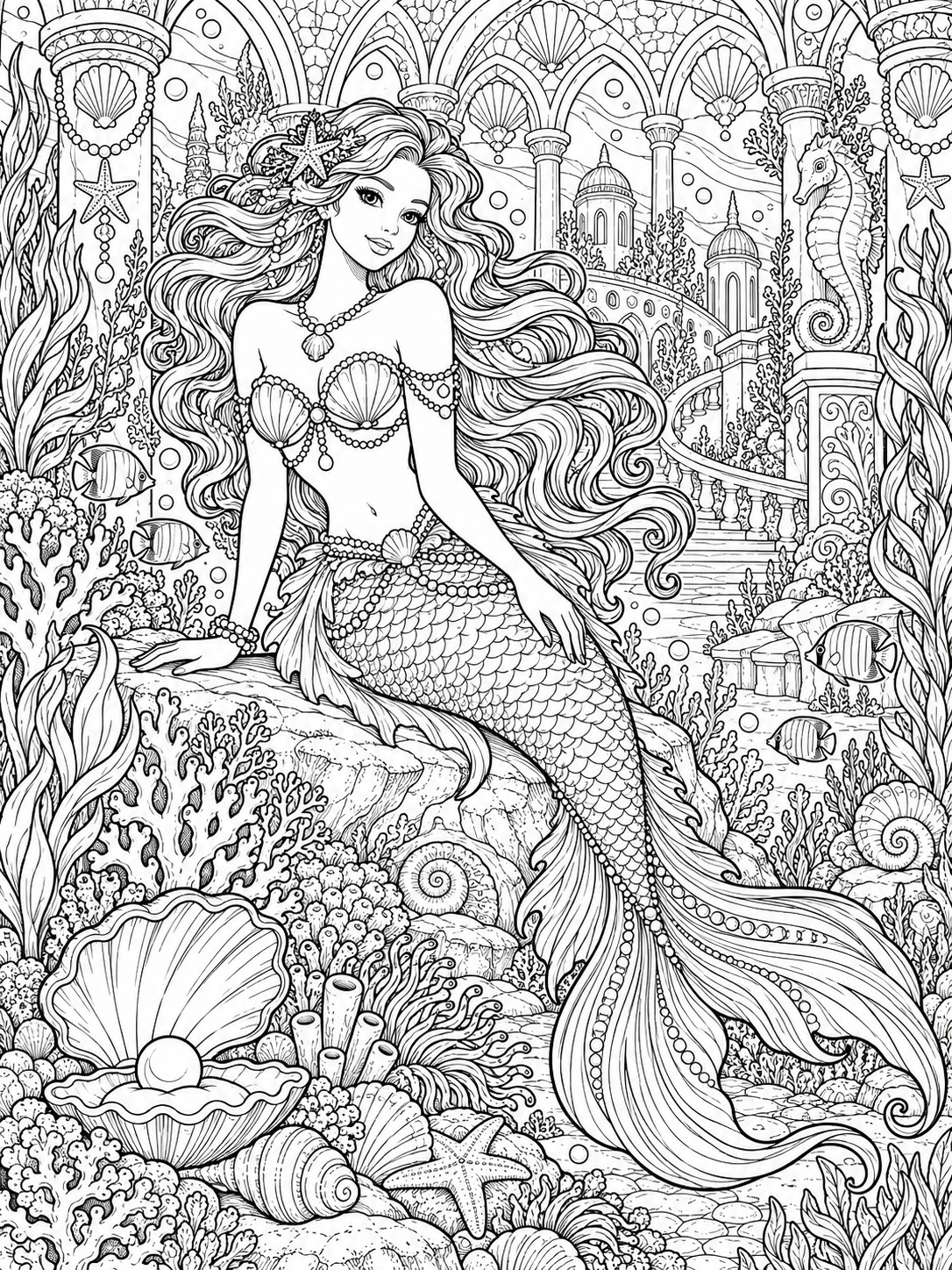
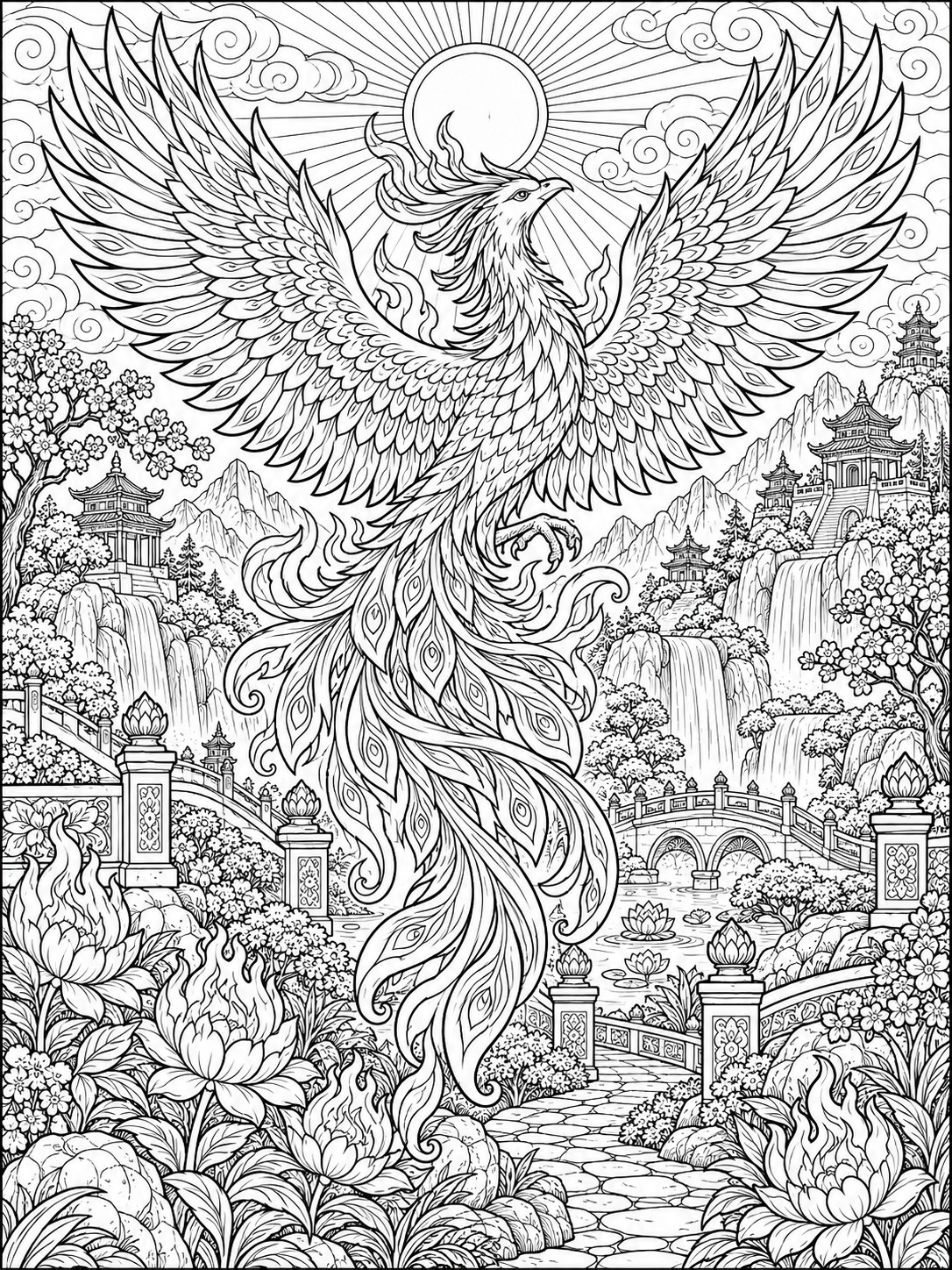
Fantasy subjects for adult pages lean into finer detail than their kids’-page counterparts, scales, ornate accessories, layered wings, since adult colorists generally want more to work with per subject. The same rest-point caution applies here more than anywhere else on this list, since fantasy illustrations are the easiest category to over-detail into an exhausting wall of texture with no plain space left anywhere on the page.
33. A dragon with layered, textured scales and ornate wing detail
34. A fairy with detailed wing patterns and floral hair accents
35. A mermaid with scale texture and flowing, detailed hair
36. A phoenix with richly layered feather patterns
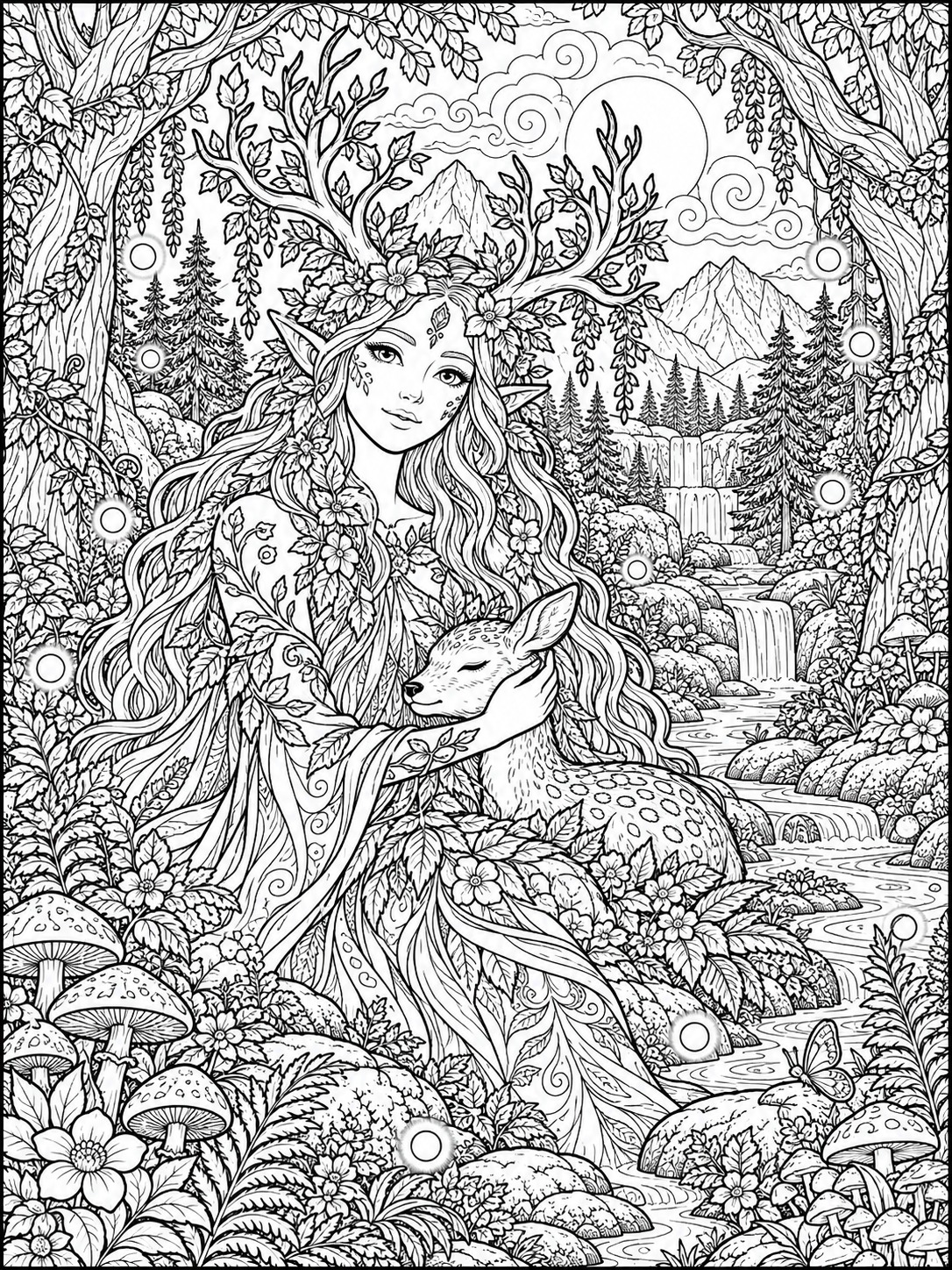
37. A forest spirit character surrounded by detailed foliage
Geometric patterns
Geometric pages give a more structured, less organic alternative to zentangle work, built from repeating shapes rather than freeform pattern fills.
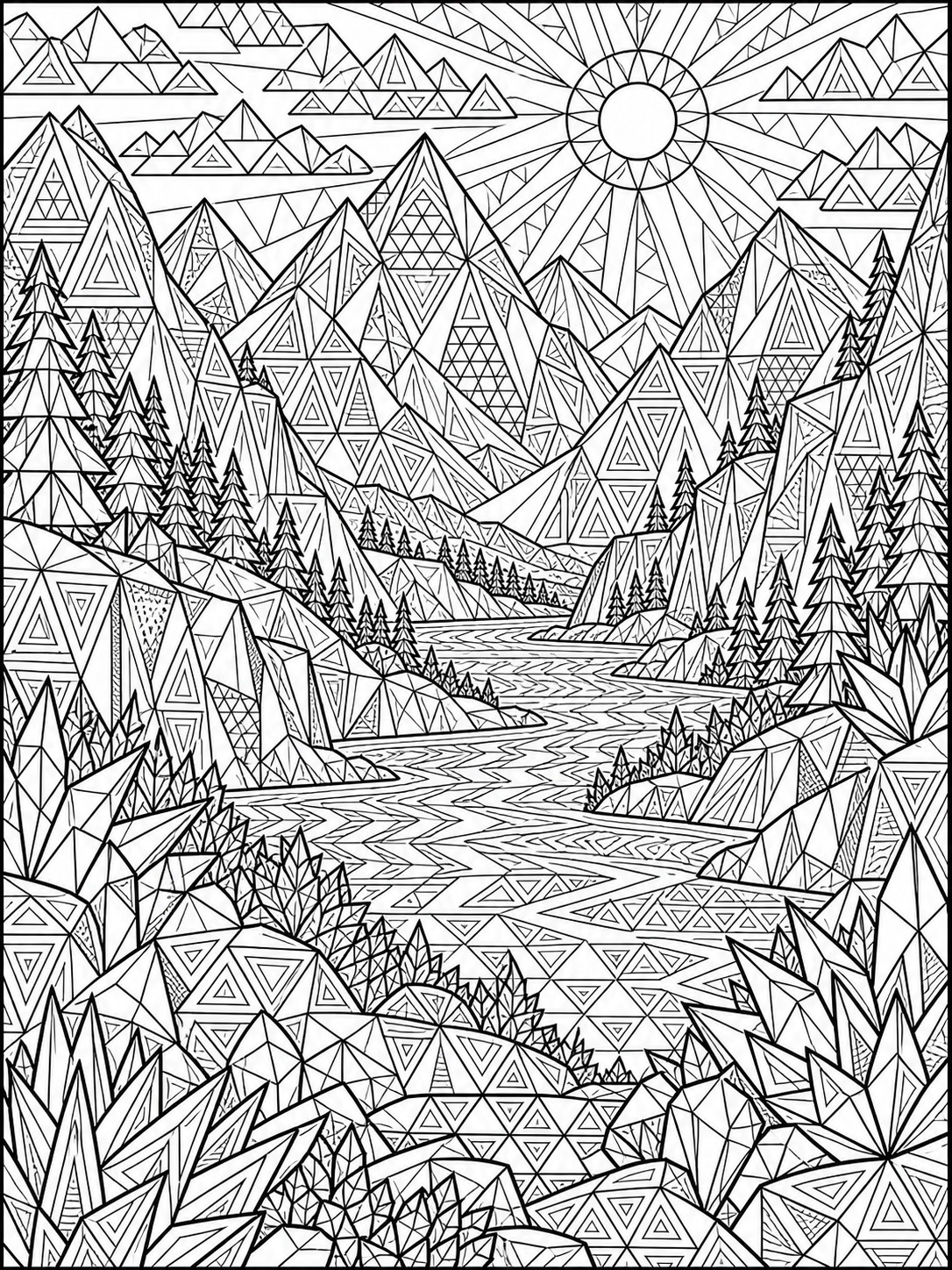
38. A tessellating triangle pattern with alternating fill zones
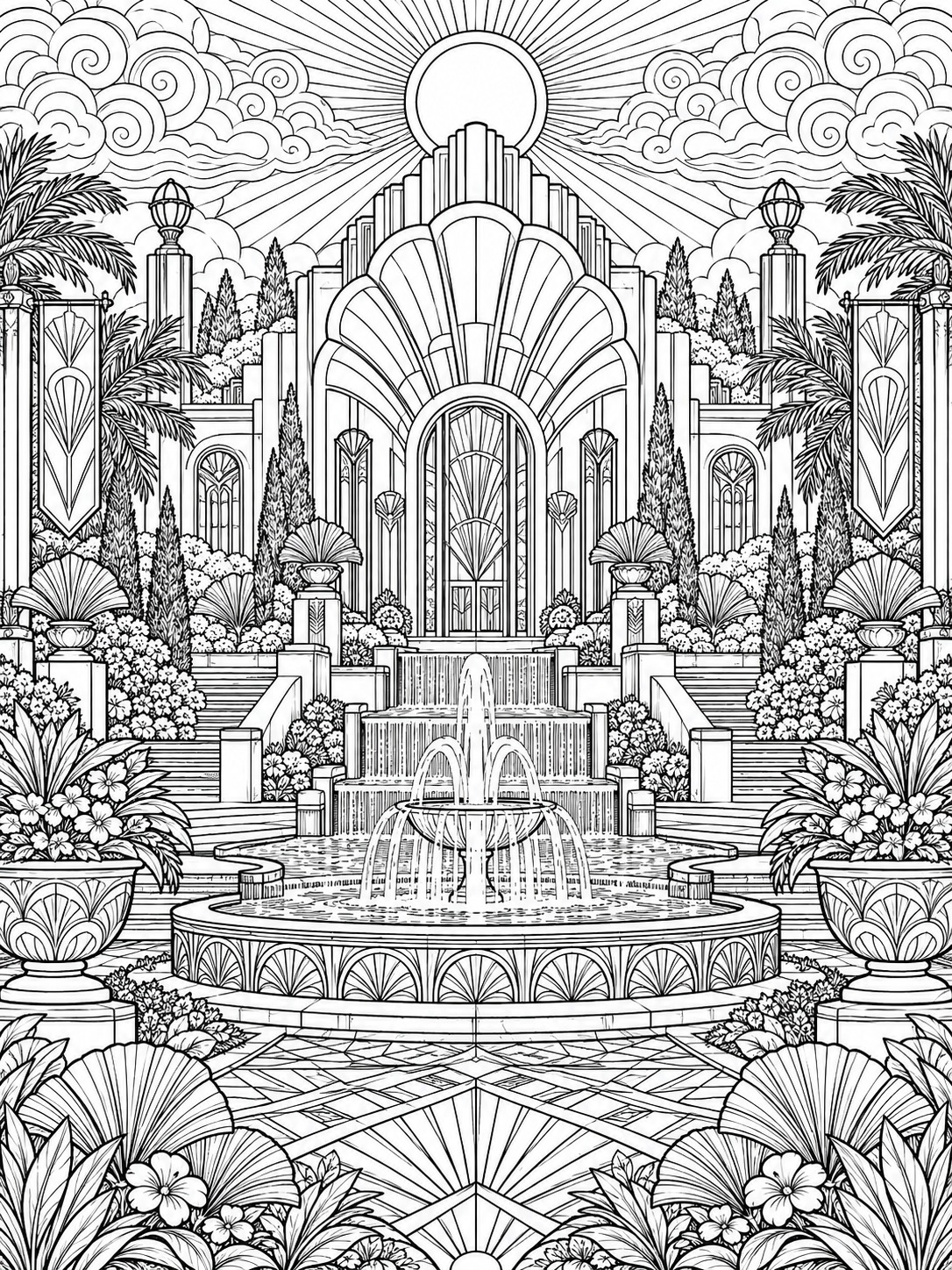
39. An art-deco-inspired fan pattern with layered arcs
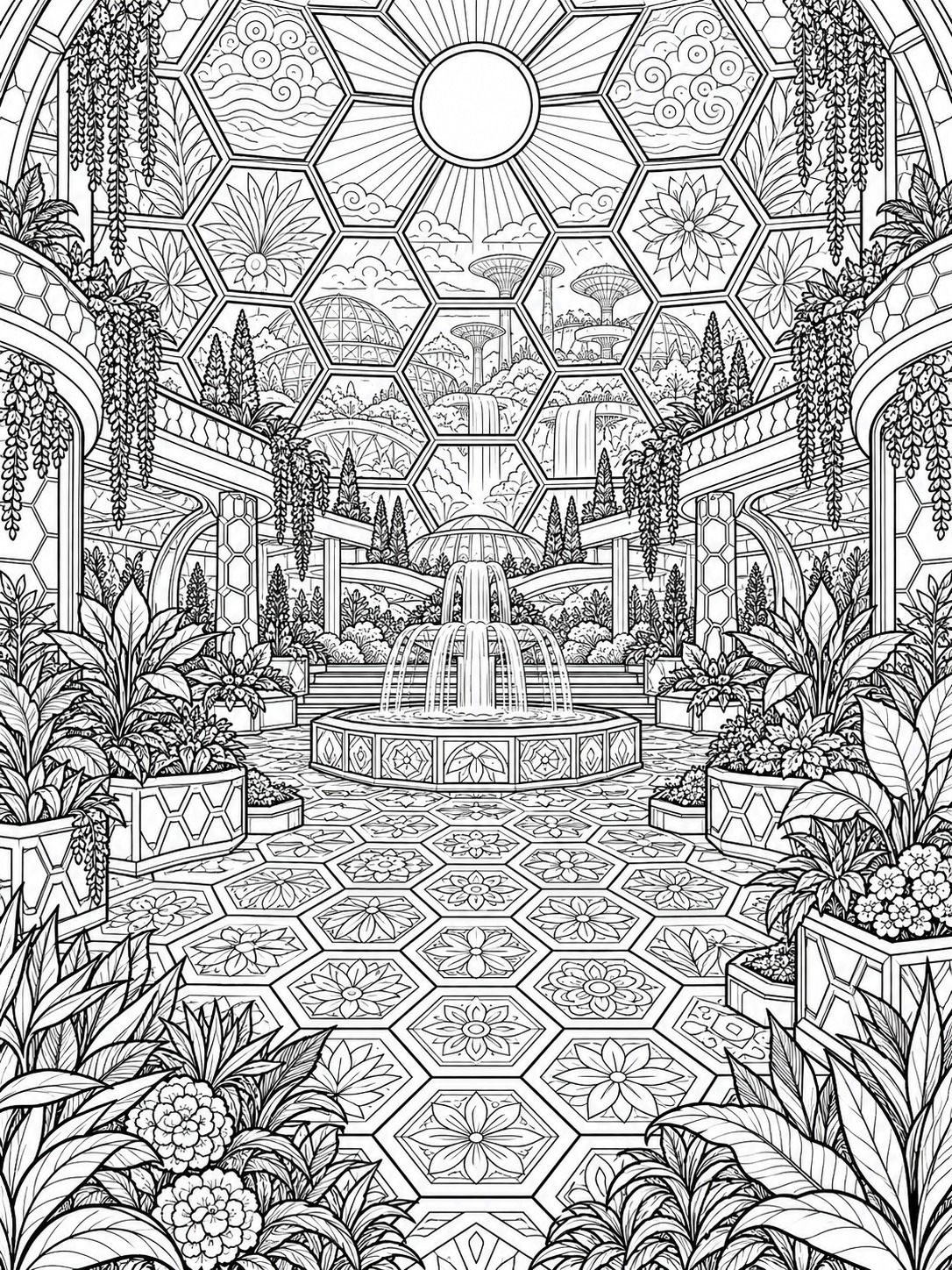
40. A hexagonal tile pattern with varied internal detail
Design tip: Judge any adult coloring page by line hierarchy, rest points, and detail scale, not by how intricate it looks in a thumbnail.
How to choose the right complexity level for you
Complexity should match the time and mental state you’re bringing to the page, not a fixed skill level. A page you’d enjoy after a calm Sunday morning coffee is often the wrong choice at the end of an exhausting day, not because it’s too hard, but because dense pattern work takes sustained attention that a tired brain doesn’t have much of.
For a short break, fifteen minutes or less, the quote and typography pages or a single floral subject work well, since they have a clear beginning and end without demanding hours of continuous attention. For a longer, more meditative session, the zentangle and geometric patterns reward the time investment, since their repeating structure becomes more absorbing the longer you stay with it.
If you’re newer to adult-level coloring and coming from simpler pages, start with the floral or animal categories rather than jumping straight to zentangle or geometric work. Those subjects give you a recognizable shape to anchor on before you’re managing an entirely abstract pattern with no representational reference point to guide your color choices.
Mood matters as much as available time. A frustrating day sometimes calls for the predictability of a floral or quote page, where the outcome is more or less known before you start, while a calmer, more exploratory mood might actually welcome the open-ended nature of a zentangle piece, where color choices and pattern interpretation are entirely up to you as you go. Neither approach is more advanced than the other; they’re suited to different states of mind, and switching between categories based on how you’re actually feeling tends to keep the whole activity from becoming stale.
Paper, tools, and printing tips for adult coloring
Paper choice matters more for adult pages than for kids’ pages, mainly because adult coloring sessions run longer and more often involve fineliners, gel pens, or alcohol markers that behave very differently from crayons on thin paper.
For colored pencils, standard printer paper at around 24 lb (90 gsm) holds up fine, and its slight texture actually helps colored pencil pigment grip the page. For markers or gel pens, move up to 70 to 90 lb cardstock (170 to 216 gsm) specifically to prevent bleed-through, which becomes a real problem on detailed pages where a bled line can blur into an adjacent pattern zone.
Print at full letter size rather than shrinking a page to fit two per sheet. Shrinking a page reduces every pattern element’s size proportionally, which turns a comfortably detailed zentangle section into a genuinely difficult one where a fine-tip pen becomes almost mandatory just to stay inside the lines.
Lighting deserves real attention for adult pages specifically, since sessions tend to run longer and the detail is finer than most kids’ coloring work. A full, even light source, natural daylight or a proper desk lamp positioned to avoid casting your own hand’s shadow across the page, makes it far easier to see where one small pattern zone ends and the next begins. Working in dim light on a densely detailed page is one of the more common reasons people report eye strain from what should be a relaxing activity.
Work through a page’s rest points in a deliberate order if you’re prone to losing steam partway through: complete the main subject or primary shapes first, then move into secondary detail work, rather than trying to finish one small dense section completely before touching anything else. That order keeps the page visually coherent even if you set it aside partway through, since an unfinished page with the main structure colored in still reads as intentional, while one with a random finished patch surrounded by blank space usually doesn’t.
FAQ
What makes an adult coloring page different from a kids’ coloring page?
Line hierarchy and detail density. Adult pages layer secondary texture, fur, feathers, pattern fills, inside a clear primary structure, while kids’ pages stick to large, simple, closed shapes with minimal internal detail. Adult pages also need deliberate rest points so the added density doesn’t become fatiguing.
How do I know if a coloring page is too advanced for me?
Look at the page for about ten seconds before starting. If you can’t identify where the main shapes are versus the secondary detail, or if the whole page reads as one uniform density with no open areas, it’s likely to feel overwhelming rather than relaxing, regardless of your actual skill level.
What’s the best paper for adult coloring pages?
Standard 24 lb printer paper works fine for colored pencils. For markers, gel pens, or alcohol-based markers, use 70 to 90 lb cardstock to prevent bleed-through, especially on pages with fine detail where a bled line can blur into surrounding pattern work.
Are zentangle-style pages harder than floral or animal pages?
Not necessarily harder, just differently demanding. Floral and animal pages give you a recognizable subject to anchor color choices around; zentangle and geometric pages are purely abstract, so the challenge shifts from “what color should this be” to sustaining attention through a longer repeating pattern.
How long should I expect to spend on a detailed adult coloring page?
Anywhere from twenty minutes for a smaller floral or quote page to well over an hour for a dense zentangle or geometric design. There’s no fixed timeline; the point is sustained, absorbing engagement rather than a quick finish, so let the page take as long as it takes.
Can I mix coloring mediums on the same adult coloring page?
Yes, and it often works well: colored pencils for shading and blending in larger areas, with a fine-tip gel pen or marker for crisp detail in small pattern zones. Just confirm your paper can handle both before starting, since thin paper that’s fine for pencil can still bleed under a marker used in the same session.
Why do some detailed pages feel calming while others feel stressful?
Usually because of rest points, not raw detail count. A densely patterned page with a few plain, open sections gives your eye somewhere to land between busy zones, which reads as calming. The same amount of detail spread evenly with no breaks anywhere tends to feel relentless instead, regardless of how technically well-drawn the page is.
Final thoughts
A good adult coloring page earns your attention the same way a good drawing does: through a clear hierarchy of what matters most, layered detail that rewards a closer look, and enough open space that the whole thing doesn’t feel like a chore before you’ve started. Judge any adult coloring page by that structure first, not by how intricate it looks in a thumbnail.
That evaluation lens outlasts any single collection of ideas, this one included. Trends in adult coloring themes shift, but line hierarchy, rest points, and consistent detail scale stay the same underlying reasons a page either draws you in for an hour or gets abandoned after five minutes.
Use the three principles from the start of this piece, line hierarchy, rest points, and consistent detail scale, to sort through any collection you find, including ones far more extensive than the forty-plus ideas listed here. For mandala-specific designs at every difficulty level, see 25 mandala art designs, and for unicorn-themed pages built for both kids and adults, 50+ unicorn coloring pages covers that ground separately.
200 Bold & Easy Coloring Pages
Get 200 bold, simple and relaxing printable coloring pages for adults and kids — featuring animals, nature, food, fantasy, patterns and seasonal designs.
- 1.9Kshares
- Facebook0
- Pinterest1.9K
- Twitter3
- Reddit0