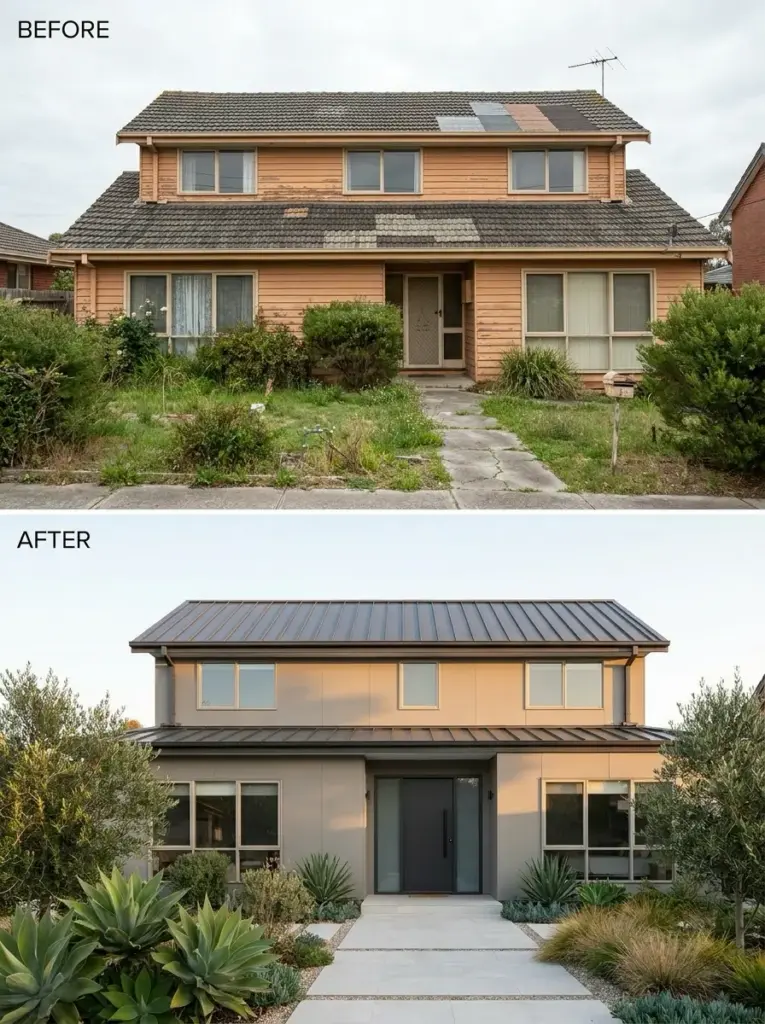
A house on our street has been sold twice in three years. The first time, it sat on the market for four months and eventually went for below asking. The second time — after the new owners had spent eight months on the exterior — it sold in two weeks at a significant premium.
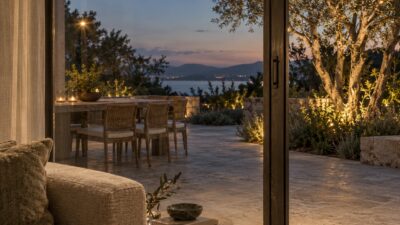
Exterior modernization is partly about making a building answer its setting; private island design makes that relationship impossible to ignore.
I walked past it regularly during the renovation, and the changes were not dramatic in scope: the roof had been redone, the tired orange-toned timber cladding replaced with smooth fibre-cement in a warm grey, the entry door changed from a wood-grain steel insert to a pivot door in deep charcoal. The landscaping went from overgrown to structured.
- Reading the Facade as an Architectural Composition
- The Roof Plane: The Largest Design Decision on Your Facade
- Cladding: The Material That Sets the Architectural Character
- Contemporary Cladding Materials
- Outdoor Living and the Ground Plane: Completing the Composition
- FAQ: Modernizing Home Exterior Architecture
None of these were structural changes. The floor plan was identical. The windows were the same. What changed was that the building finally read as designed rather than inherited — as a series of considered material and compositional decisions rather than the accumulated choices of previous owners, each working in a different decade.
That is what exterior modernization actually is: not adding new features, but editing the existing elements until the facade reads with a consistent, contemporary design intent.
This guide covers exterior modernization from the architectural perspective that makes upgrades work together rather than in isolation — how to read the existing facade as a composition, which elements carry the most design weight, the material choices that shift a property into a contemporary register, and how to sequence improvements so that each stage enhances rather than undermines the ones around it.
Reading the Facade as an Architectural Composition
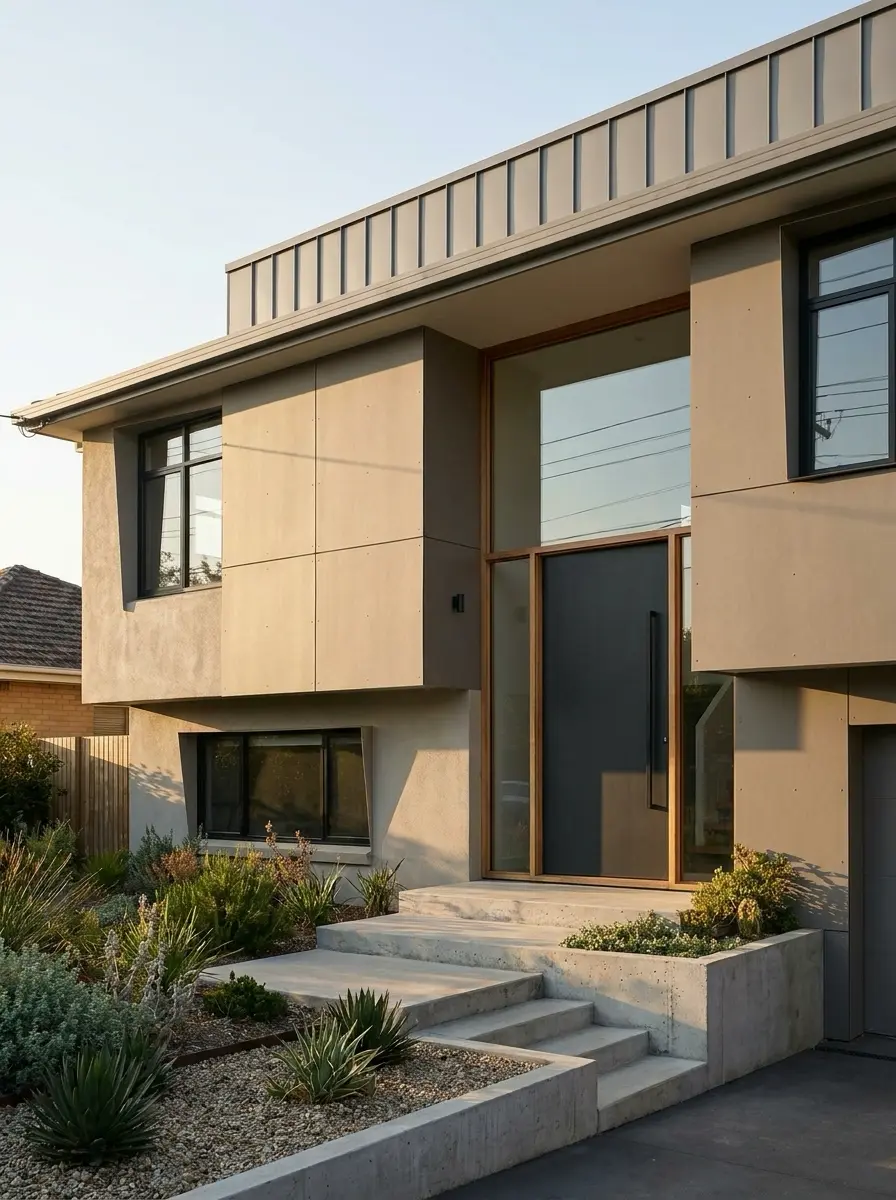
Before specifying any exterior upgrade, the most useful exercise is to stand at the street edge and evaluate the facade as a composition rather than as a list of separate elements.
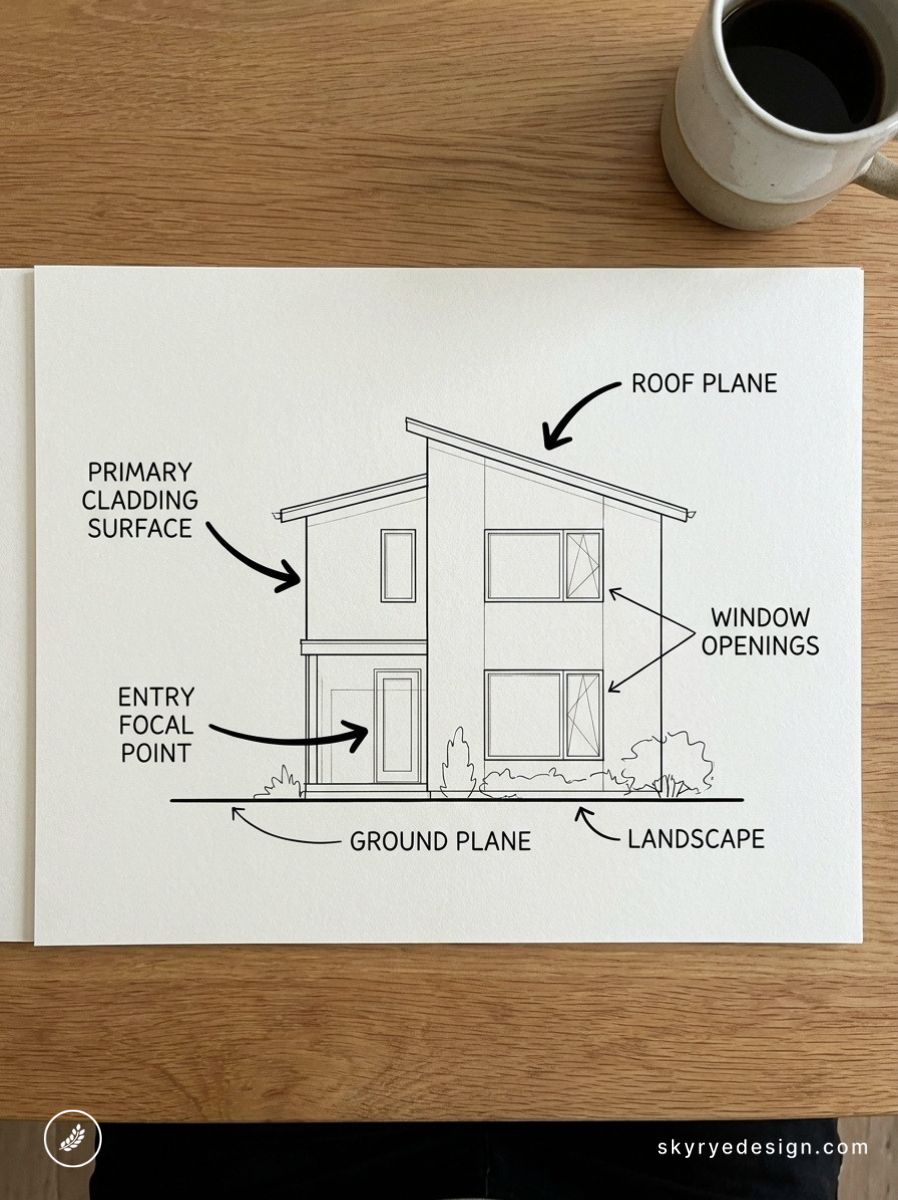
Which material carries the most visual area? Which element draws the eye first? Where does the composition feel resolved, and where does it feel unfinished? These questions guide investment toward the changes that will have the greatest compositional impact, rather than those that are simply most obviously damaged or most recently noticed.
The visual hierarchy of most residential facades runs: roof plane (largest surface, highest position, most visible from approach), primary cladding (second largest surface, sets the tonal character of the building), entry focal point (smallest area, but highest visual attention because it is the human-scale element that every visitor approaches directly), and ground plane (landscape and hardscape that frames the building from below). Improvements made in this hierarchy order accumulate — each resolved element makes the next upgrade more visible and more effective.
The Sequence Principle
The most common error in exterior modernization is upgrading elements out of hierarchy order — a new front door on a facade with failing cladding, or new landscaping against a roof that reads as aged and neglected. Each lower-hierarchy element is perceived against the backdrop of the higher-hierarchy elements above it. A beautiful door on a failing facade does not read as a beautiful door; it reads as a detail on a failing facade. The sequence that produces coherent results: envelope first (roof and cladding), then focal points (entry, glazing), then ground plane (hardscape and landscape).
✏ Design note: Before committing to any specific upgrade, photograph the facade from the street at the same angle and time of day the property is most frequently seen by passing viewers. Print or display this photograph and mark the three elements that most immediately read as dated, neglected, or compositionally unresolved. These three elements are your priority list — in hierarchy order, not convenience order.
The Roof Plane: The Largest Design Decision on Your Facade
The roof is the most significant single surface decision in residential exterior architecture and the one most commonly treated as a maintenance decision rather than a design one.
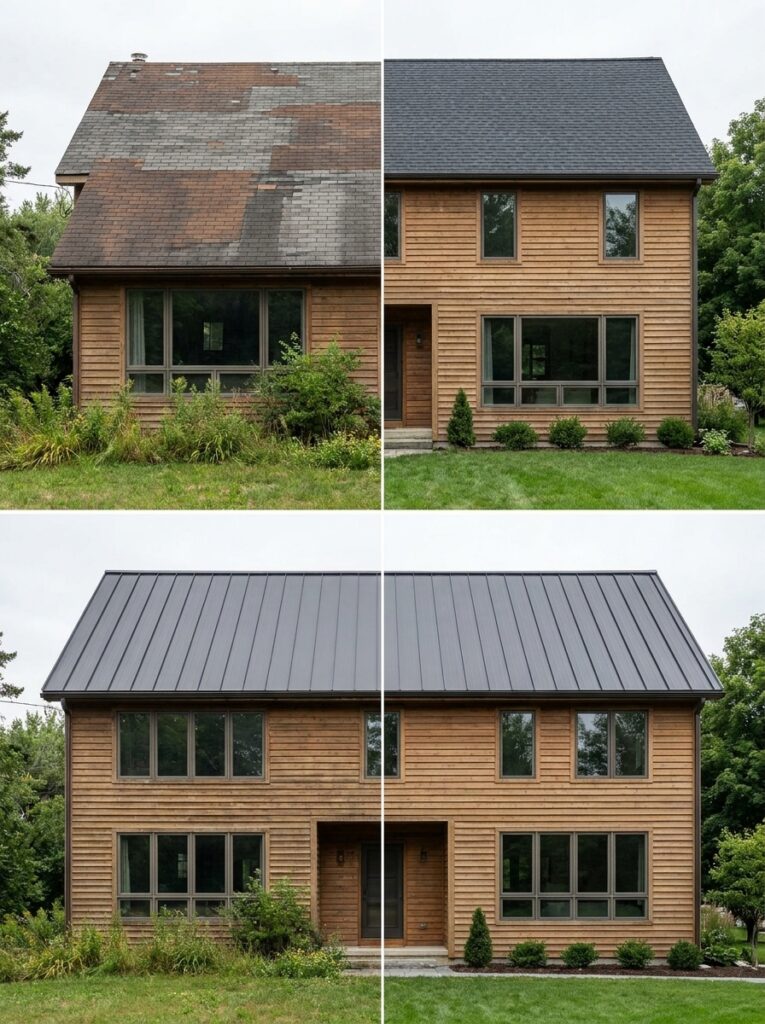
It occupies more visual area than any other element on most facades, and its material, colour, and condition communicate the maintenance standard and design ambition of the property more immediately than anything below it.
According to This Old House survey data, 31% of homeowners have pursued roof renovation, repair, or maintenance projects — making it one of the most common exterior investments homeowners make. What the data does not capture is the design opportunity that most of those projects miss: the chance to shift the roof from a maintenance specification to an architectural specification, choosing a material and colour that actively contributes to the facade composition rather than simply replacing what was there.
Material as Compositional Decision
Standing-seam metal roofing in charcoal or weathered zinc reads as a deliberate architectural choice and elevates everything below it on the facade. Architectural asphalt in a deep slate grey or aged wood profile is the accessible alternative that delivers significantly more compositional quality than standard three-tab. The roof colour should be chosen in direct relationship to the cladding colour — not matched, but in a considered tonal relationship. Roof darker than cladding is the most stable compositional formula; it grounds the building visually and provides contrast that makes the cladding read more clearly.
Cladding: The Material That Sets the Architectural Character
Cladding covers the primary visible surface of the building and determines more of the facade’s character than any other single element. It is also the element most directly associated with the building’s period — orange-toned timber staining reads as 1980s, patterned stone veneer reads as early 2000s, aluminium in aged beige reads as 1990s.
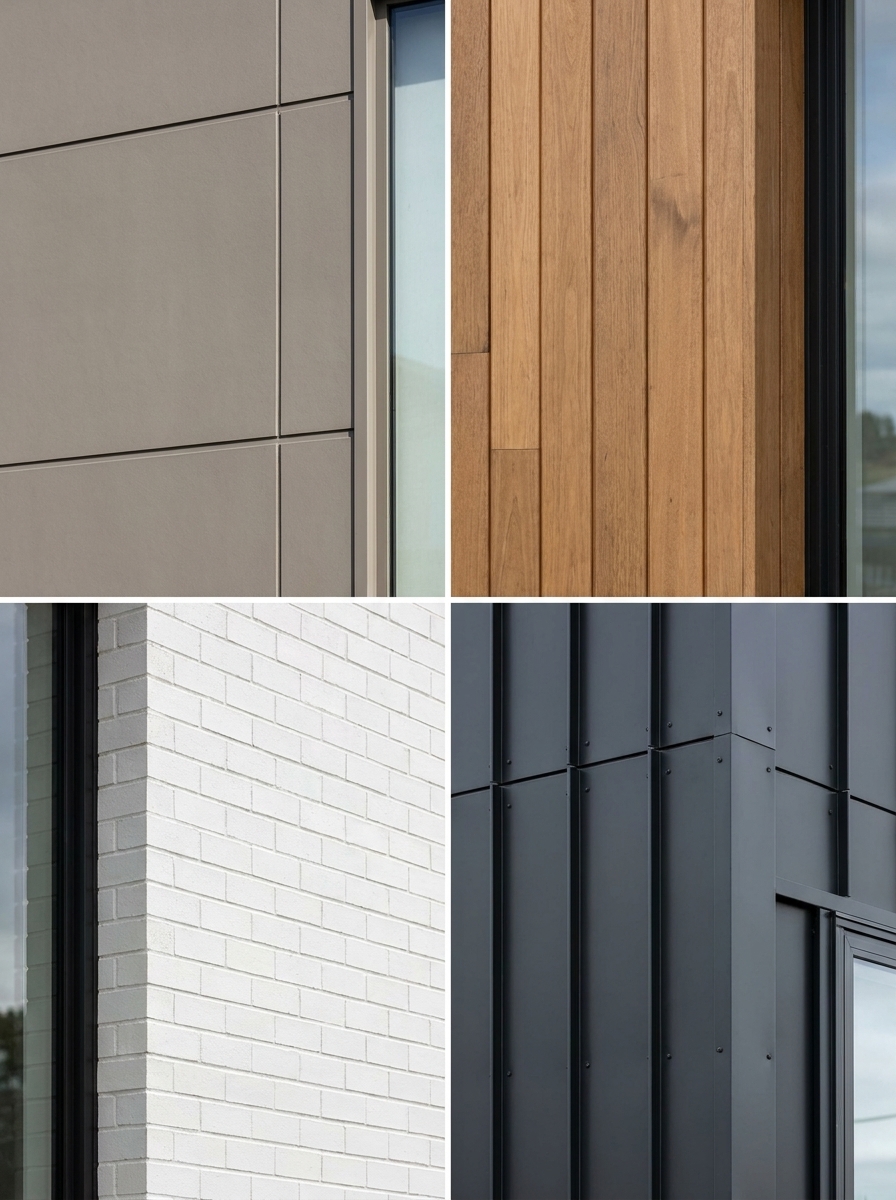
Cladding replacement or refinishing is the most complete single intervention available in exterior modernization because it allows the entire tonal and textural register of the facade to be reset.
According to Fixr research, 39% of homeowners replace siding primarily due to damage, more than the 36% who replace it for aesthetic improvement. This distinction matters architecturally: damage-driven replacement is a maintenance specification, while aesthetic-driven replacement is a design specification. The design specification demands more from the process — material selection, colour relationship to roof and landscape, profile and joint detailing — but produces a qualitatively different result from simple like-for-like replacement.
Contemporary Cladding Materials
Fibre Cement — Smooth or Textured Profile
Modern approach: Specify smooth-finish fibre cement (James Hardie Smooth or equivalent) in a contemporary colour — warm white, warm grey, sage green, or deep navy. Avoid wood-grain embossed profiles if a contemporary result is the goal; the grain pattern reads as a facsimile and ages less well than smooth profiles.
Material note: Highly durable, dimensionally stable, excellent paint adhesion and retention. Resists moisture, impact, and UV degradation better than timber at equivalent cost. The industry standard material for contemporary residential cladding replacement.
Design impact: Smooth fibre cement is the most versatile facade material available — it reads as contemporary without being aggressive, and its clean surface allows the colour specification to carry the design intent without material texture competing.
Engineered Timber — Horizontal or Vertical Board
Modern approach: Specify a pre-finished engineered timber board (Kebony, Accoya, or thermally modified pine) in a natural medium to dark tone. Horizontal boards in a wider profile (150mm+) read as contemporary; narrow-board weatherboard reads as traditional.
Material note: Engineered and thermally modified timbers offer the visual warmth of natural wood with significantly improved dimensional stability and UV resistance. Pre-finished boards from reputable suppliers carry 15-25-year finish warranties.
Design impact: Timber cladding introduces organic warmth that no synthetic material replicates. Used on a primary facade plane or as an accent zone within a primarily fibre cement facade, it humanises the composition and prevents the clean-but-cold quality that all-fibre-cement facades can have.
Brick — Painted or Repointed
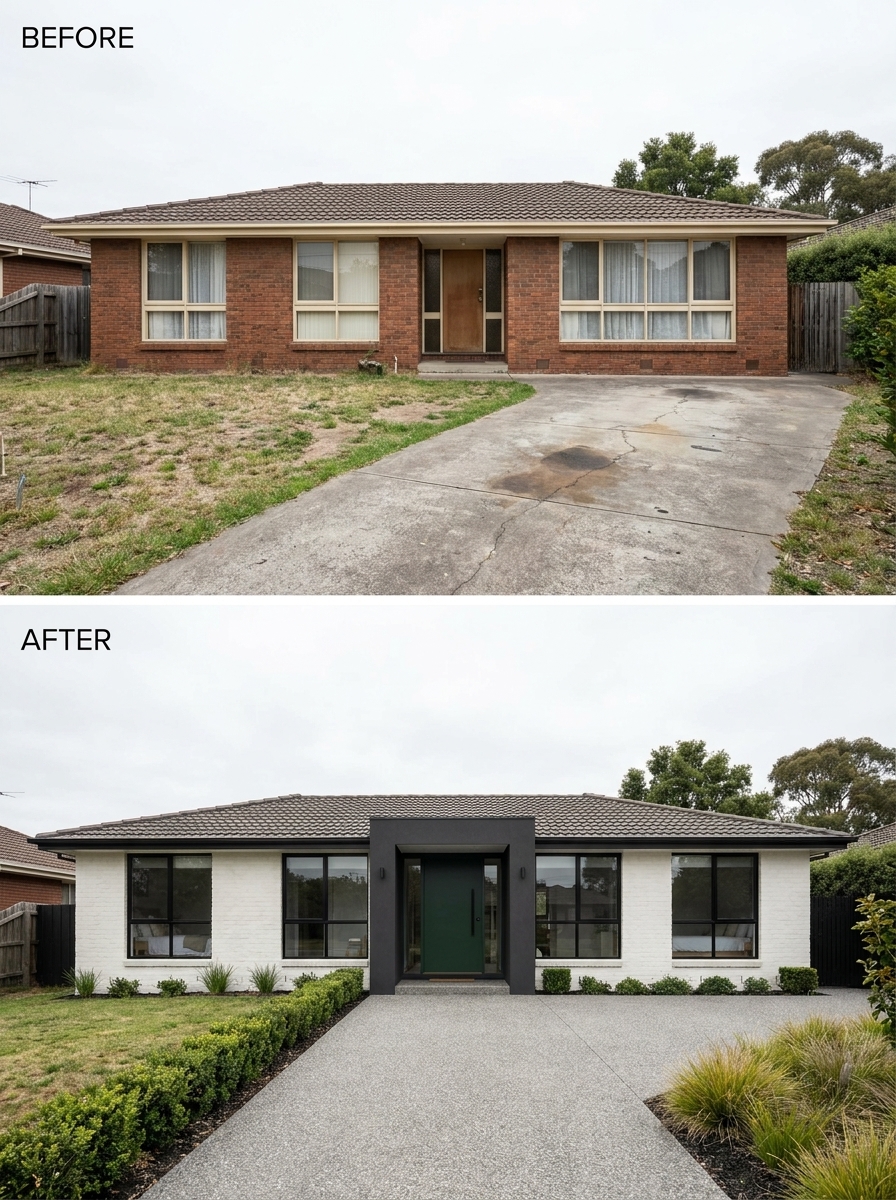
Modern approach: Existing brick does not always require replacement to shift its architectural register. Painting in a well-chosen contemporary colour (warm white, charcoal, deep green) with a limewash or mineral paint that preserves texture transforms the brick’s period association. Repointing with a contrasting mortar colour — white mortar in dark brick — is a subtler intervention with high impact.
Material note: Painting brick is a permanent decision — maintaining paint condition becomes an ongoing commitment. Use a breathable mineral paint (Keim or equivalent) that allows moisture vapour transmission. Avoid conventional latex paint on historic brick.
Design impact: Painted or whitewashed brick reads as contemporary Mediterranean or Hamptons, depending on colour and detail execution — both of which are current and widely appreciated. The brick’s texture remains visible and provides tactile interest that smooth cladding cannot offer.
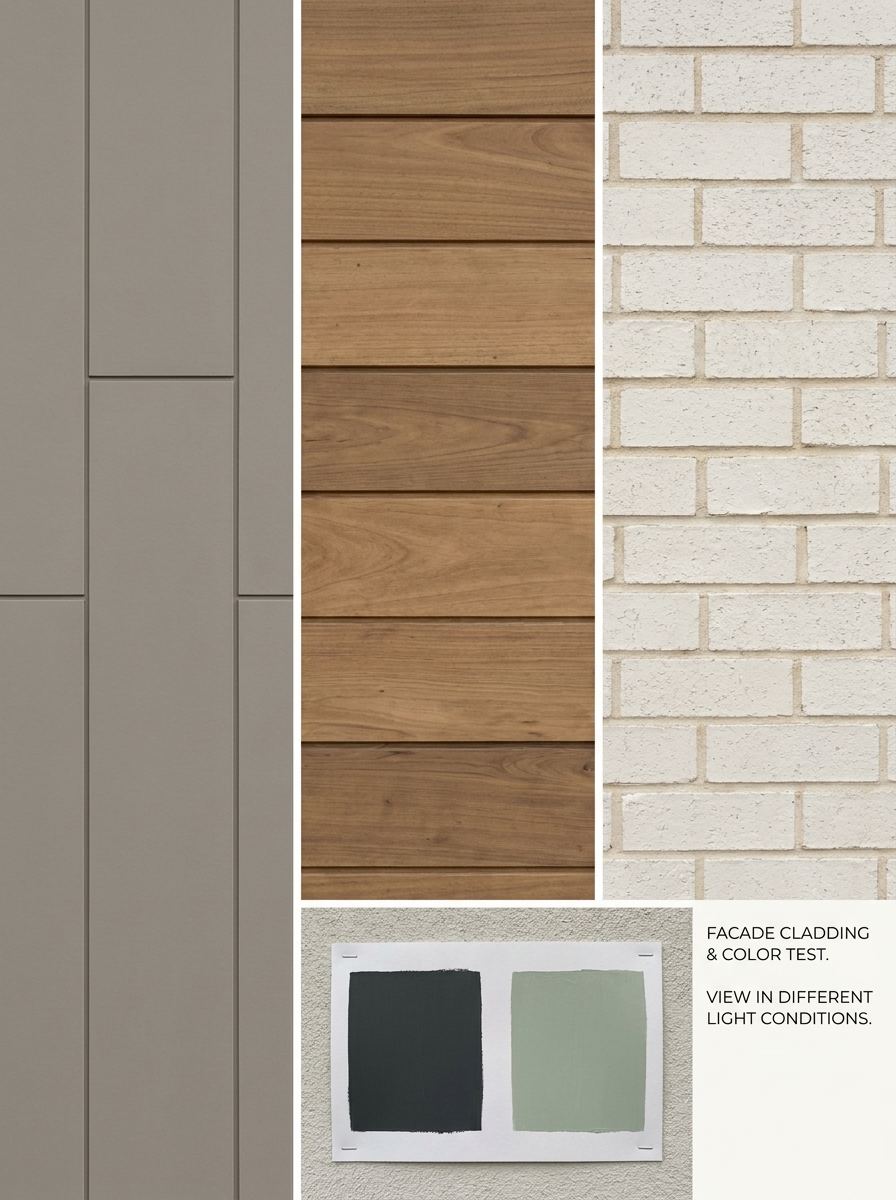
✏ Design note: When specifying a new cladding colour, test full-size painted panels (minimum 600 x 600mm) mounted on the actual facade before committing. The colour will read differently at different times of day and under different sky conditions than it does on a paint chip or screen. View test panels in morning light, midday, overcast afternoon, and low evening light before making the final selection.
Entry and Focal Points: The Human-Scale Architecture
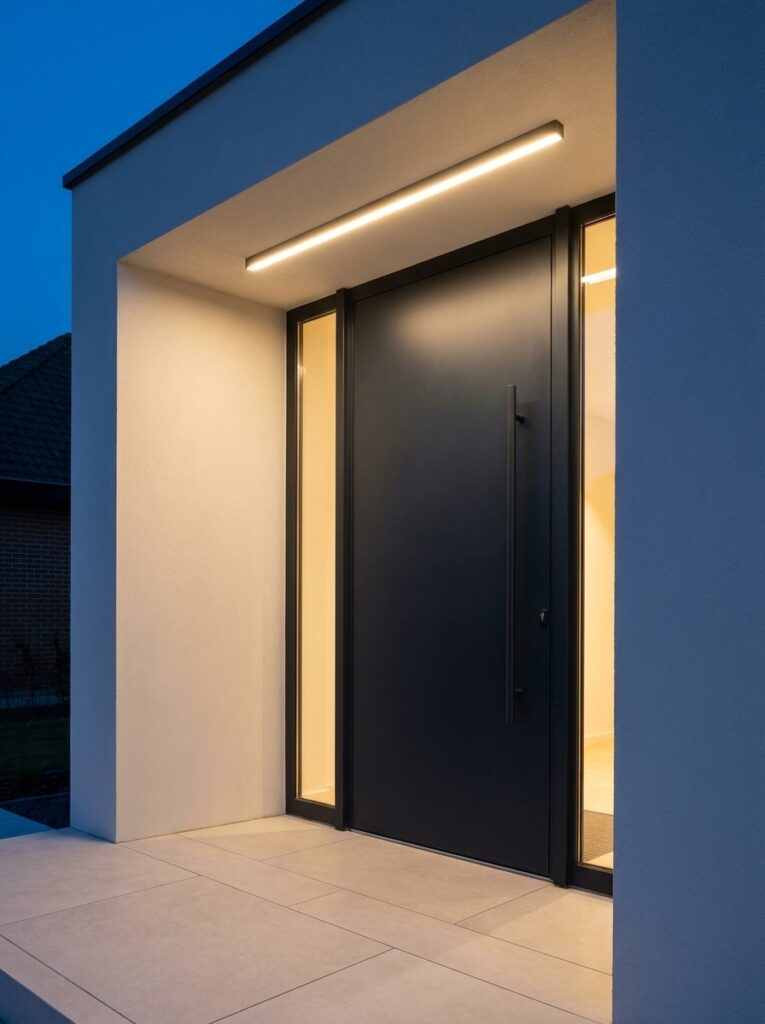
The entry is the element of the facade that every visitor engages with at close range, and it is where the gap between facade quality and entry quality is most immediately felt. A premium cladding specification with a standard hollow-core door in the wrong colour reads as an unresolved composition. The entry should be the most precise and considered part of the facade — not the most elaborate, but the most intentional.
The Door as Architectural Statement
Front door specification has more design impact per square metre than any other exterior element. A pivot door — wider and taller than a standard hinged door, opening on a central pivot axis — reads as architecture rather than hardware. In deep charcoal, anthracite, or a carefully chosen accent colour, it becomes the compositional focal point that anchors the entire facade. The door colour should be chosen last, in relation to the resolved cladding and roof colours — it can match the roof (for a unified dark-accented composition), contrast the cladding (for a clear focal point), or introduce a controlled accent colour.
Glazing as Facade Element
Window specification is typically constrained by budget and existing opening dimensions, but the frame colour is a free variable that significantly affects how the facade reads. Black powder-coated aluminium frames are the contemporary default — they read as sharp and resolved against any cladding colour from white to charcoal, and they connect visually to dark door and roof specifications. Timber frames read as warmer but require more maintenance commitment. Aluminium in white or beige reads as generic and should be avoided unless the overall palette is deliberately light.
Outdoor Living and the Ground Plane: Completing the Composition
The ground plane — the landscape, hardscape, and outdoor living elements that frame the building from below — is the last element in the compositional hierarchy and the one most directly affected by everything above it. A resolved facade makes the ground plane’s quality more visible; an unresolved ground plane undermines an otherwise resolved facade. The two must be considered together in the final stage of any exterior modernization project.
Hardscape as Architecture
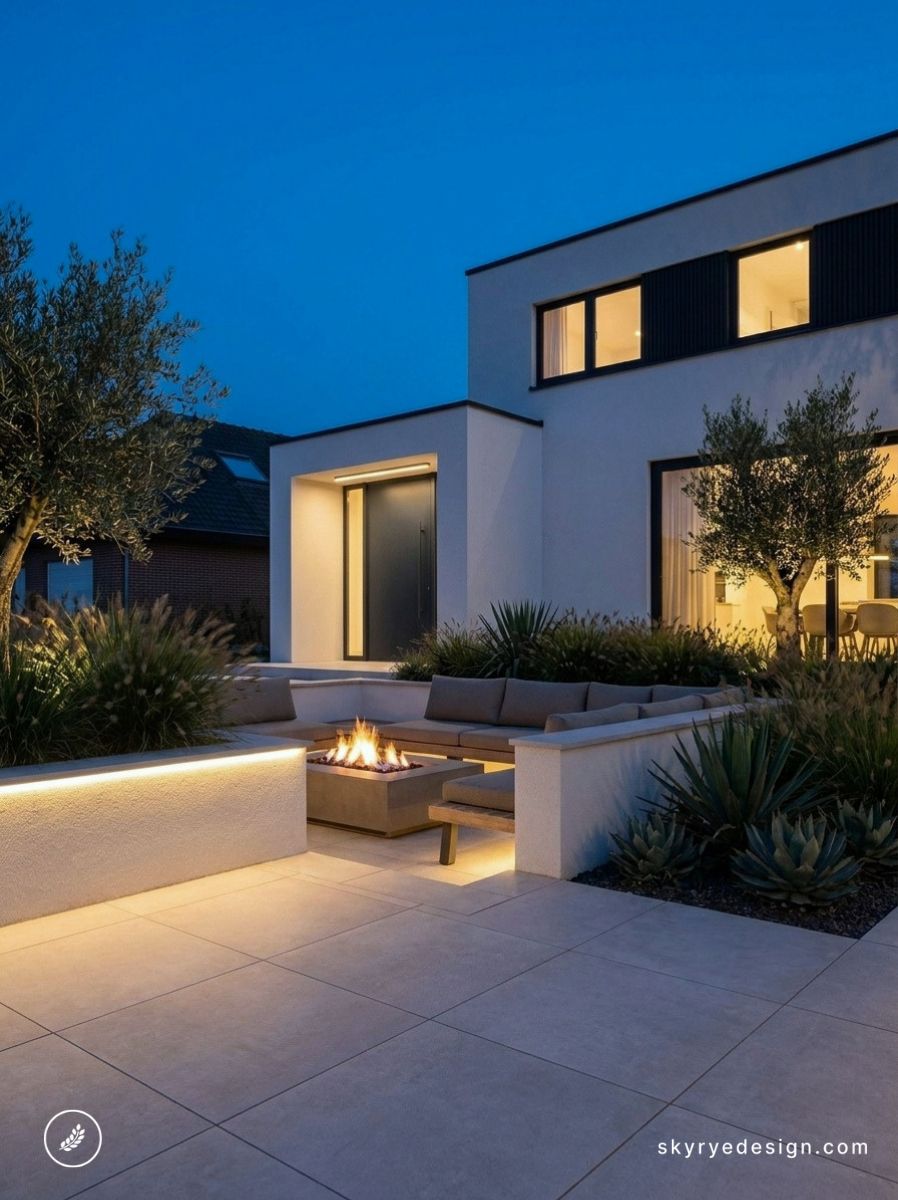
Contemporary hardscape for residential exteriors is moving away from small-unit paving (brick pavers, small-format concrete) toward large-format materials that produce fewer joints, a quieter visual surface, and a more architectural quality. Large-format porcelain (600x600mm or larger) in a warm grey or stone-related colour is the current standard for high-quality contemporary residential hardscape. It connects visually to the cladding palette, provides a stable and low-maintenance surface, and reads as deliberately specified rather than off-the-shelf.
Pools and Outdoor Living
The outdoor living space has become an expected feature in contemporary residential design — not as an optional luxury but as a functional extension of the interior that is visible and evaluable from the street. According to Pool Research data, about 51 to 60% of all pools in the United States are inground installations, reflecting a clear preference for the more architecturally integrated format over above-ground alternatives.
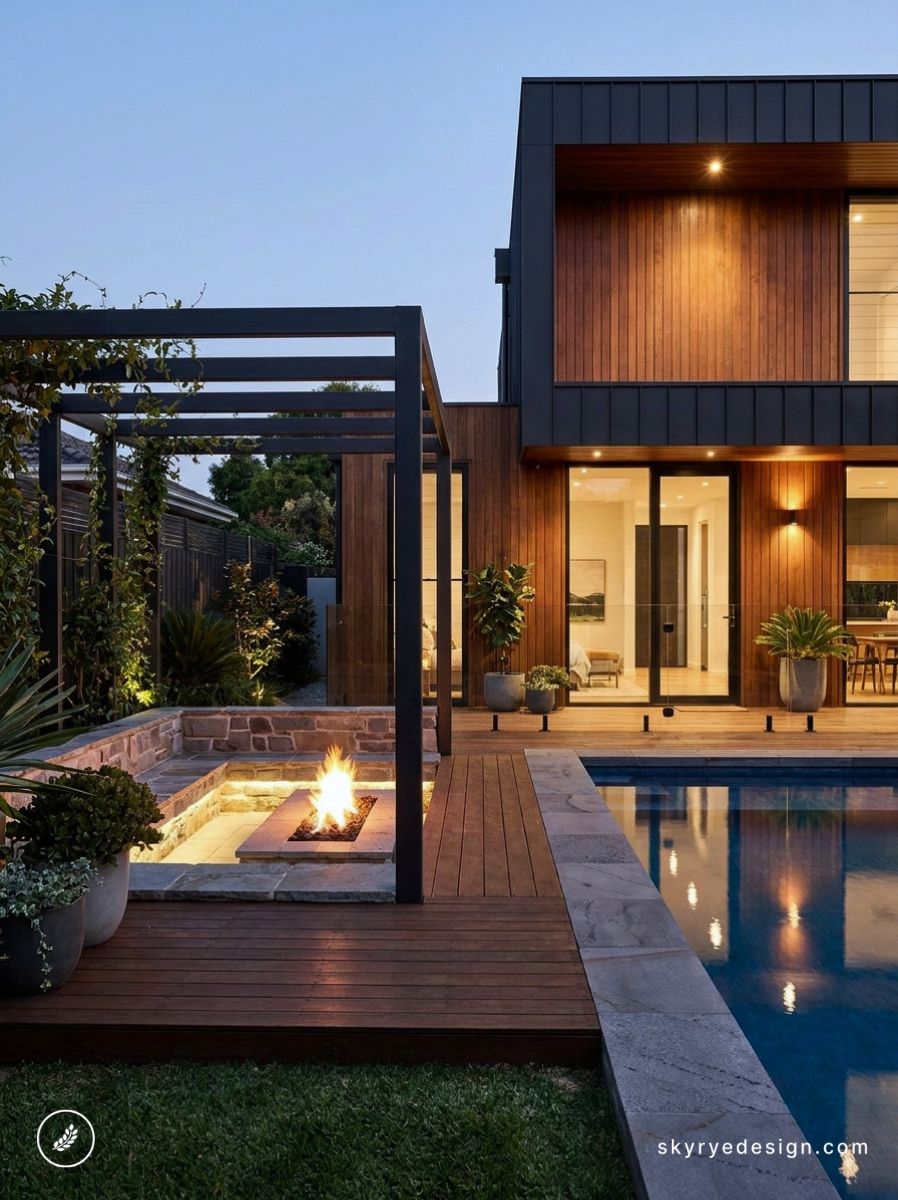
The same integration principle applies across outdoor living features: elements that read as permanent, considered, and architecturally connected to the main building contribute to facade quality; elements that read as temporary or separate detract from it.
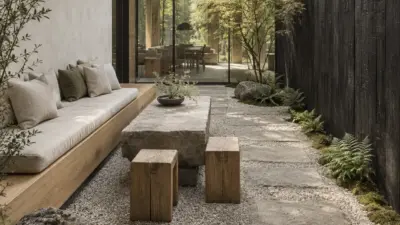
A fire pit area, a structured pergola, or a well-detailed deck — all framed by considered planting and connected to the facade by consistent material choices — creates the sense that the architecture does not stop at the building’s wall but extends into the landscape. This continuity is what distinguishes an architecturally resolved exterior from a collection of individual improvements.
The Modernized Exterior as a Single Designed Object
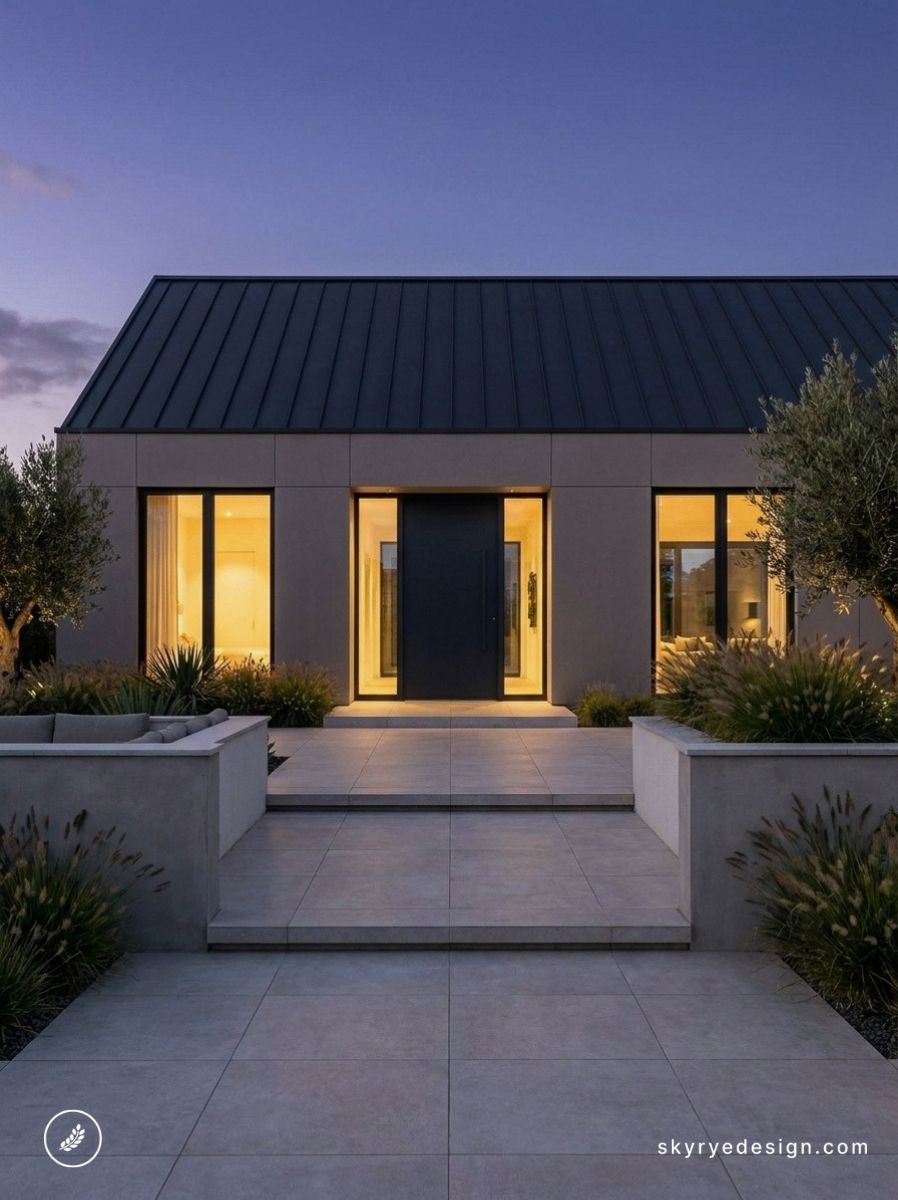
The house on our street that sold in two weeks did not become a different building. Its footprint, its structure, its window positions — all unchanged. What changed was that it became legible as a designed object rather than an accumulated one. Each element is read in relationship to the others. The roof colour related to the door. The cladding related to the hardscape. The planting is related to the massing.
This is the goal of exterior modernization done well: not the addition of new features, but the resolution of existing ones into a composition that communicates design intelligence from the street. It requires a different approach than standard home improvement — an architectural approach that starts with composition, works through hierarchy, and evaluates each decision in relationship to the whole rather than in isolation.
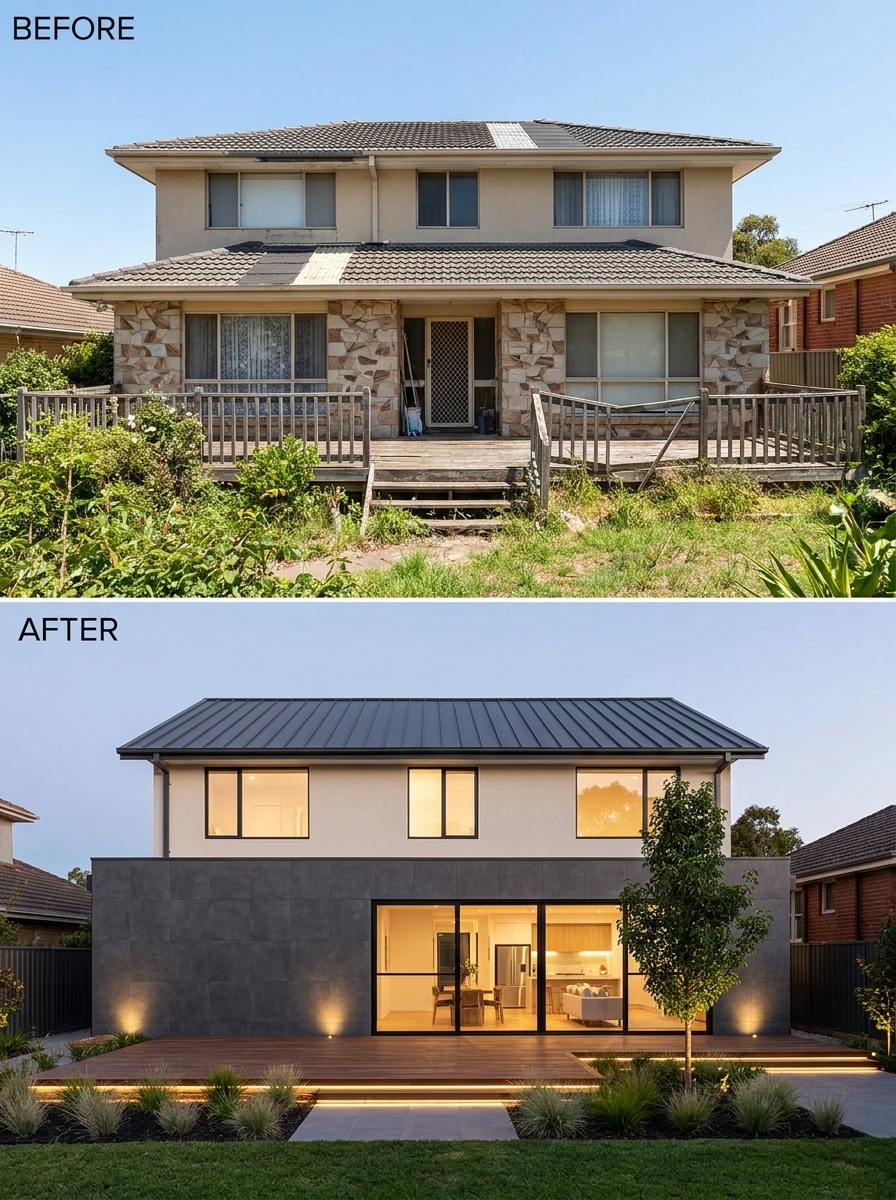
The practical sequence is straightforward: resolve the envelope first (roof, then cladding), then the focal points (entry door, glazing frames), then the ground plane (hardscape, planting, outdoor living). Each stage builds on the one before it. Done in this order, with considered material and colour selections at each stage, exterior modernization produces a building that looks nothing like it did and exactly like it always should have.
FAQ: Modernizing Home Exterior Architecture
Q: What exterior home improvements add the most value?
In architectural value terms: roof replacement, cladding re-specification, and entry upgrade — in that order. These address the primary compositional elements of the facade. The common factor in high-return improvements is that they resolve the most visually dominant elements first. A new front door on a failing facade will not hold its value; the same door on a resolved facade commands a premium.
Q: How do you modernize a house exterior?
Modernizing is fundamentally a material and colour editing exercise: identify dated materials (orange-stained timber, patterned stone, beige aluminium), shift the palette toward contemporary tones (warm white, grey, charcoal, sage, navy), simplify the facade by removing unintentional ornamental complexity, upgrade the entry focal point, and resolve the ground plane. Sequence matters — envelope before details before landscape.
Q: What cladding materials work best for contemporary homes?
The most versatile contemporary options: smooth fibre cement for durability and paintability, engineered timber for warmth, and painted or limewashed brick for texture. The trend across all categories is toward larger profiles, fewer joints, and simplified surface geometry. Avoid wood-grain embossed profiles — smooth surfaces age better and read as more deliberately specified.
Small exterior details matter during a facade upgrade too. Use these entryway smart lock choices to keep the door hardware aligned with the architecture instead of treating it as an afterthought.
A sharper facade can still feel unfinished if the driveway surface is cracked or badly faded. For exterior modernization plans, compare driveway resurfacing and paving costs alongside siding, roofing, and entry upgrades.
- 544shares
- Facebook0
- Pinterest544
- Twitter0
- Reddit0