These spring home renovation ideas help you decide what the house actually needs before a seasonal shopping trip begins. Start with maintenance, daylight, circulation, and storage; then choose paint, textiles, and plants to support the plan. That order keeps a modest refresh useful and stops a larger project from becoming a string of unrelated purchases.
When I plan a spring reset, I look at the room in morning and evening light before choosing a colour. I also walk the normal route from the front door to the kitchen, the laundry, and the garden. If the light and movement are wrong, a new cushion does not fix the room.


Spring home renovation ideas: start with the house, not the decor
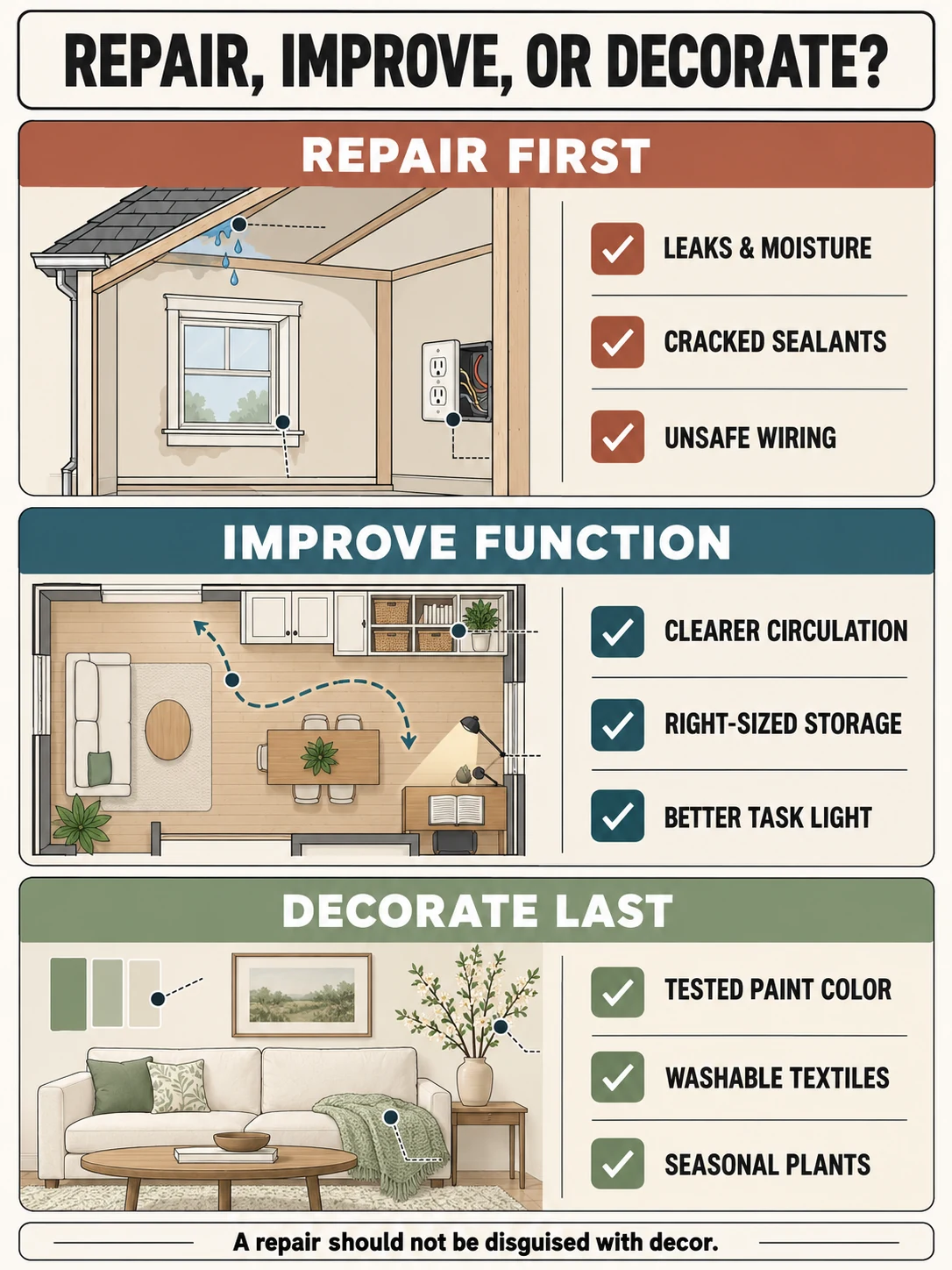
Open the windows, clean the glass, and inspect the rooms without styling them first. Look for peeling paint, condensation, loose handles, cracked sealant, blocked vents, awkward furniture paths, and places where daily objects pile up. Photograph each issue and sort it into three lists: repair, improve, and decorate. A repair should not be disguised with a decorative layer.
| What you notice | Low-cost test first | Plan a renovation when |
|---|---|---|
| The room feels dark | Clean glazing, open window treatments, and add task light | Daylight is blocked by the layout or the window performs poorly |
| Clutter returns every day | Remove duplicates and assign one landing place | The room lacks storage sized for the objects you use |
| Furniture interrupts movement | Mark a clear route with painter’s tape | Doors, partitions, or fixed cabinets create the bottleneck |
| The room feels tired | Repair damaged surfaces and test a large paint sample | Moisture, wiring, or failing finishes sit beneath the surface |
| The garden is disconnected | Move seating toward the best view | The threshold, access, shade, or drainage needs work |
Set priorities before choosing spring colours
Choose one measurable result for each room: easier morning storage, a dining table that is no longer a desk, better reading light, or a safer route to the patio. This gives every purchase a job. If several rooms need attention, complete the most disruptive repair first and limit the decorative work elsewhere.
Read daylight before testing paint
Paint a sample board rather than a small patch, and move it between walls for two days. North-facing light can make a cool neutral look flat; strong afternoon sun can exaggerate yellow or pink undertones. The practical primer on colour in house painting explains how finish and surrounding materials affect the result. For a darker room, improve the window zone and lighting plan before selecting a brighter white; our natural-light guide shows where to begin.
Use textiles to adjust comfort, not just colour
Spring textiles should suit the room’s temperature and cleaning routine. Washable covers, a lighter throw, and curtains that stack clear of the glass can change comfort without replacing good furniture. Repeat one colour in two or three places, but vary the material so the room does not look like a coordinated set. If the budget is tight, these budget-friendly cozy home ideas help identify the few changes that alter daily use.


Build the renovation budget in the right order
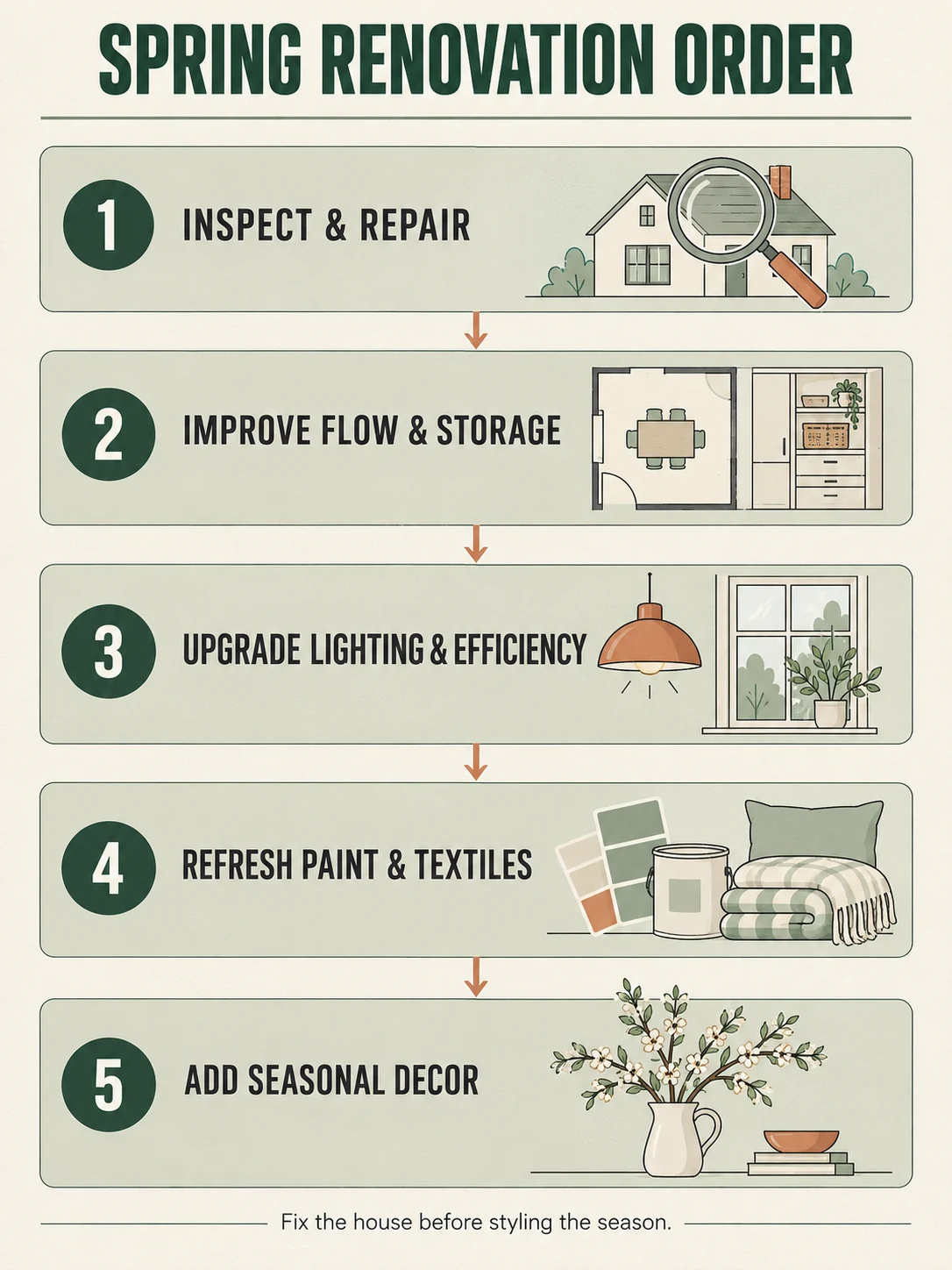
Budget from the building outward: investigation, repairs, structure, plumbing and electrical work, insulation, walls, flooring, fixed storage, lighting, then decoration. Add a contingency before choosing finishes. If the total is uncomfortable, reduce the scope rather than pretending the hidden work will not appear.
- Protect the house: deal with leaks, drainage, damaged sealants, and ventilation.
- Fix daily friction: improve circulation, storage, switches, and task lighting.
- Refresh surfaces: patch, paint, refinish, or replace only what is beyond repair.
- Add seasonal character: use flowers, art, textiles, and small accessories last.
Repairing and reusing what already works often leaves more money for the parts that affect comfort. The checklist in our eco-friendly home decor guide is useful when comparing secondhand furniture, wood, textiles, paint, and lighting.
Refresh living spaces with layout and storage
Remove small pieces that interrupt the main route, then place the largest seat for conversation, a view, or the activity used most often. Leave enough space to open doors and drawers fully. A console should not narrow an entry just because the wall looks empty. In a living room, one correctly sized rug usually creates more order than several small mats.
Declutter before buying storage. Measure what remains, including the vacuum, shoes, games, chargers, and seasonal gear. Closed storage calms visually busy rooms; open shelving is better reserved for objects you genuinely want to see. Use the steps in these decluttering and recycling instructions before specifying new cabinets.
Choose one functional room upgrade
A focused upgrade is easier to finish than a vague whole-house makeover. In the entry, add a durable floor zone and storage for the exact number of coats and shoes in regular use. In the kitchen, improve drawer access or task lighting before replacing all the cabinets. In a bathroom, repair ventilation and sealants before choosing mirrors and towels.
If the problem involves several rooms, map how one change affects the next. Our guide to small home remodeling ideas compares built-ins, door changes, flexible rooms, and circulation improvements without assuming that removing a wall is the answer.


Improve lighting and mirrors without creating glare
Use three layers where the room needs them: general light for safe movement, task light for reading or preparation, and a lower evening source. Match lamp height to the activity rather than using identical lamps throughout the house. Mirrors are most useful when they reflect a window, artwork, or a calm part of the room. Opposite a bare bulb or cluttered shelf, they simply double the problem.
Bring the spring renovation outdoors
Start at the threshold. Clean the route, check exterior lights, make sure water drains away, and provide a dry place for shoes or garden tools. Then place seating according to sun, wind, privacy, and the view from inside. The complete outdoor living design guide covers zoning, materials, shade, and circulation for patios and gardens.
Choose plants for the site’s light, soil, and maintenance level rather than for a single photograph. Group pots where watering is practical and keep mature size in mind near paths and doors. New gardeners can use this guide to starting plants at home in spring before buying a full seasonal display.


Plan paint, dust, and energy work safely
Renovation dust needs containment, especially when sanding or opening walls. For US homes built before 1978, the EPA explains why painted surfaces may require lead-safe renovation practices. Rules differ by location, so check local permits and use qualified professionals for structural, electrical, gas, and complex plumbing work.
If walls or ceilings will already be open, coordinate insulation and air sealing before closing them again. The US Department of Energy’s home upgrades guidance is a useful starting point for understanding comfort and energy work. Window performance also deserves a measured decision; use our explanation of window energy ratings before replacing serviceable units for appearance alone.
Spring home renovation checklist
- Walk every room in morning and evening light.
- Separate repairs, functional improvements, and decoration.
- Choose one measurable goal for each room.
- Measure furniture, storage contents, doors, and clear walking routes.
- Test paint on a movable board for at least two days.
- Price hidden work and add a realistic contingency.
- Complete dust, wiring, plumbing, and insulation work before finishes.
- Reuse or repair good pieces before replacing them.
- Plan exterior seating around sun, wind, drainage, and privacy.
- Photograph the finished room and note what still interrupts daily use.
The best spring update is not the one with the most new things. It is the one that removes a recurring problem, makes the house easier to use, and gives colour and texture a clear reason to be there.
- 189shares
- Facebook0
- Pinterest186
- Twitter3
- Reddit0