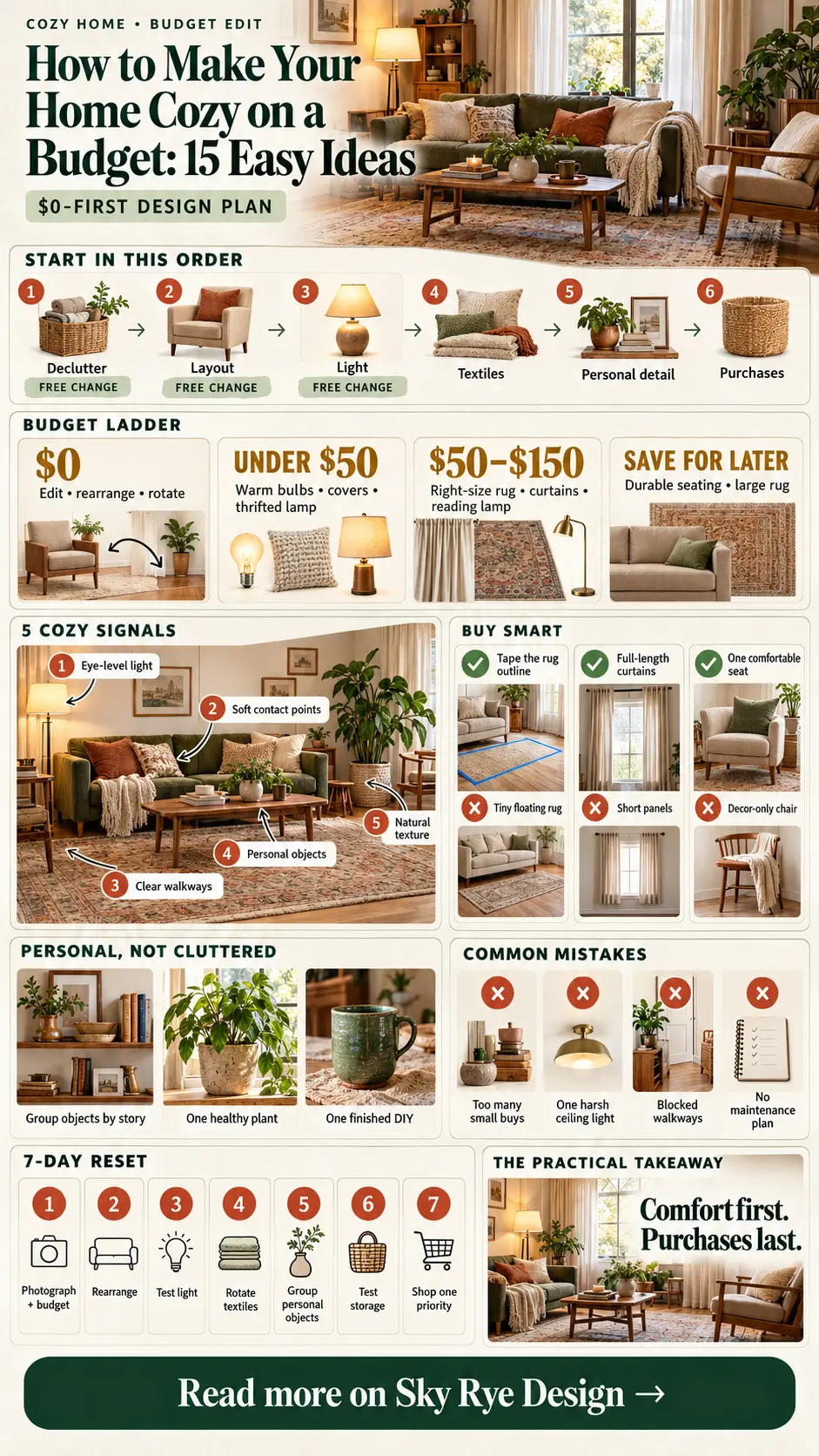
If you want to make your home cozy on a budget, begin with the changes that cost nothing: clear the visual noise, move furniture closer to how the room is actually used, and switch on lamps instead of relying on one ceiling fixture. Only then decide whether the room needs a rug, curtains, or another purchase. That order matters. A $15 lamp can improve a good layout; it cannot repair a sofa that blocks the walkway or a table buried under things nobody uses.
A cozy home is not a particular decorating style. It is a room that supports the way you arrive, sit, read, cook, talk, and rest. Warmth comes from several small signals working together: light at eye level, comfortable places to land, texture under the hand and foot, familiar objects, and enough order that those details can be noticed.
The 15 ideas below are arranged from free adjustments to selective purchases. Work through one room first. Photograph it from the doorway, make the no-cost changes, and live with them for two evenings before shopping. That pause prevents the common budget mistake of buying small accessories while the real problem is lighting or layout.
The $0-first cozy home plan
| Budget level | Do this first | Typical result |
|---|---|---|
| $0 | Declutter one surface, rearrange seating, move lamps, rotate art and textiles | A calmer room with a clearer focal point |
| Under $50 | Warm bulbs, pillow covers, a thrifted lamp, plant cuttings, simple frames | More warmth and personality without replacing furniture |
| $50–$150 | A properly sized secondhand rug, full-length curtains, a reading lamp | Better acoustics, softer edges, and more useful light |
| Save for later | Comfortable seating, durable window treatments, a large rug | One lasting upgrade instead of many temporary purchases |
Set one limit before you begin: either a total amount, such as $100 for the room, or a monthly allowance. Keep ten percent aside for practical extras—bulbs, hooks, curtain rings, picture hardware, or cleaning supplies. These small items are easy to forget and often decide whether a project is actually finished.

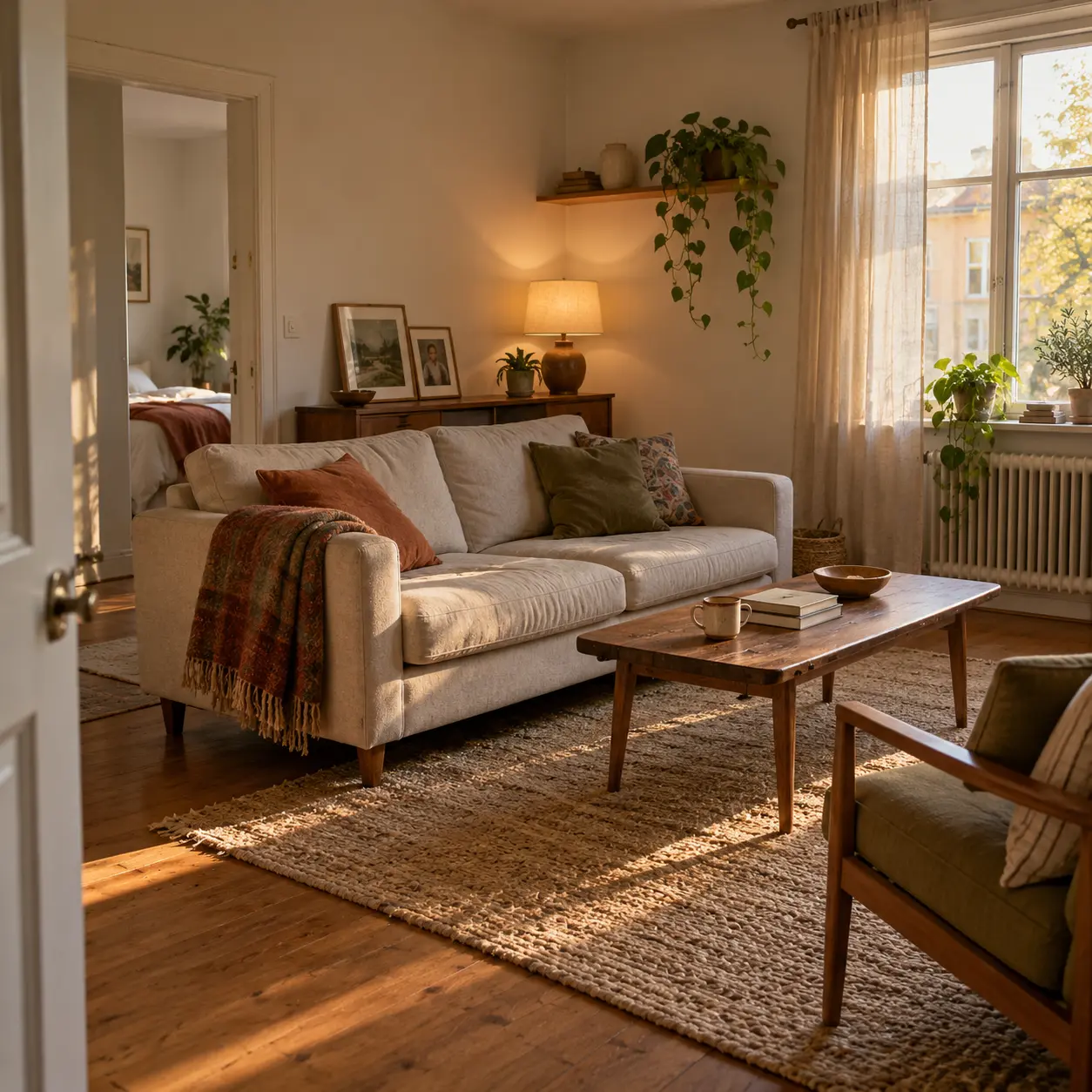
1. Edit the room before adding decor
Cozy and cluttered are not the same thing. A room can hold books, art, throws, and collections while still giving the eye a few quiet places to rest. Start with the coffee table, the largest shelf, and the route from the door to the main seat. Remove anything that belongs somewhere else, then group the remaining small objects instead of scattering them evenly.
A cozy home starts with a tidy space. When you clear away clutter, your rooms feel bigger and more peaceful. You do not need to get rid of everything. Just keep what you love and use often. Walk through each room and look for things you do not need. Old magazines, broken gadgets, or clothes you never wear can go.
Try this simple trick: grab a basket or box and fill it with items you do not use. Set a timer for 10 minutes. You will be surprised at how much you can clear in a short time. If you feel stuck, start with one drawer or shelf. Small steps make a big difference.
Tip: Ask yourself, “Do I use this? Does it make me happy?” If the answer is no, it might be time to let it go.
A tidy space helps you relax. You can find things faster. You also spend less time cleaning. When your home feels open and organized, it is easier to add cozy touches like soft blankets or candles.
Smart storage keeps your home neat and cozy. You do not need fancy shelves or expensive bins. Look for simple ways to store your things. Baskets, boxes, and trays work well. You can slide baskets under your bed or stack boxes in your closet.
Here are some easy storage ideas:
- Use baskets for blankets, toys, or magazines.
- Hang hooks by the door for bags and jackets.
- Store shoes in a rack or bin to keep your entryway clear.
- Place small trays on tables for keys, remotes, or chargers.
- Try over-the-door organizers for shoes, scarves, or cleaning supplies.
You can also make your own storage. Decorate old boxes with fabric or paper. Use glass jars for pens, makeup, or craft supplies. Repurpose items you already have.
Designer check: take another doorway photo. If the room now feels bare, restore one meaningful group—a lamp, two books, and a small object—rather than returning every accessory. The goal is not minimalism; it is hierarchy.
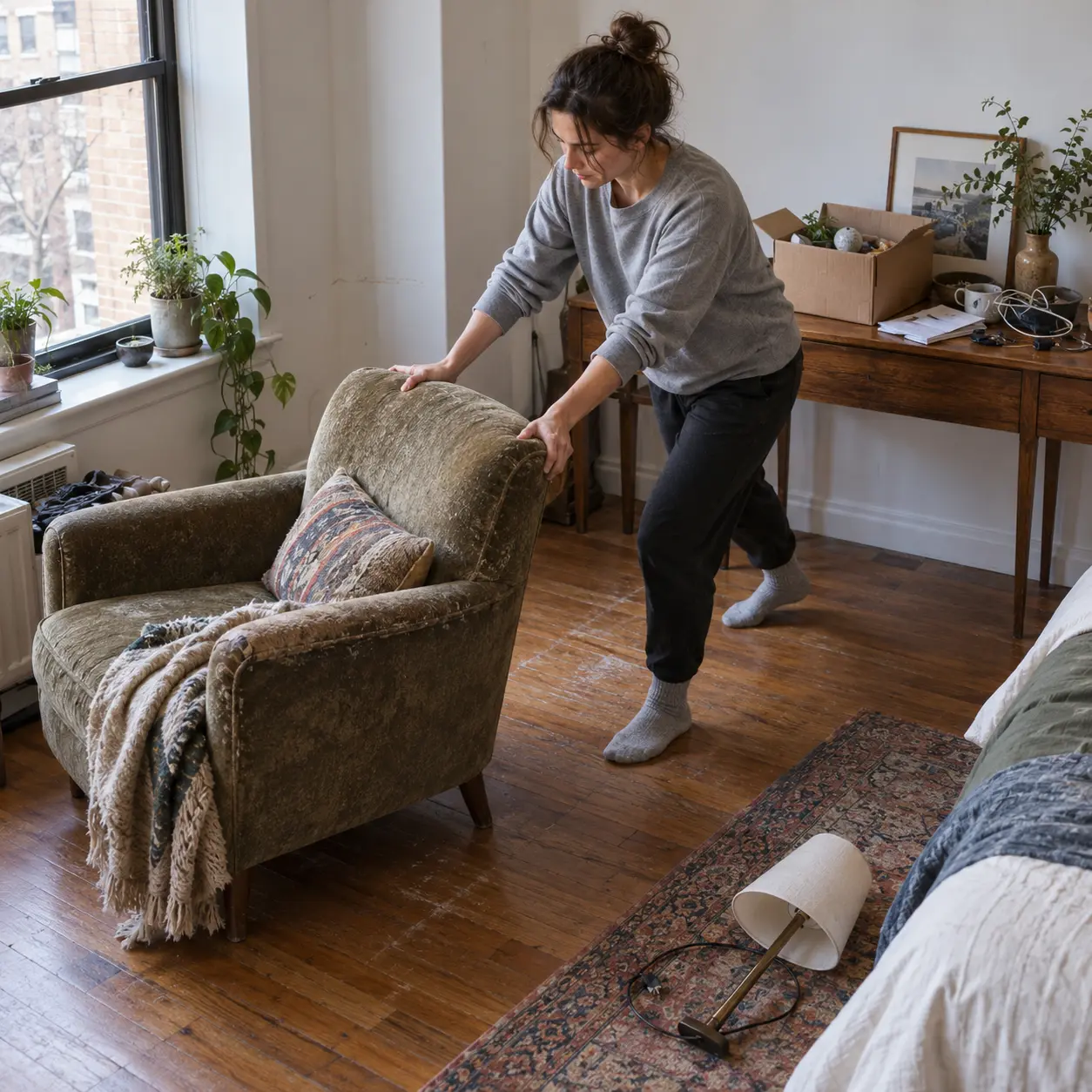
2. Rearrange furniture around a real activity
You can make your home feel brand new just by moving things around. Rearranging your furniture does not cost anything, but it can change the whole mood of a room. Interior design experts say that the way you set up your furniture can boost both comfort and function. Here are some steps you can follow to get the best results:
- Decide what you want each room to do. When you know the purpose, you can arrange your furniture to fit your needs.
- Make sure you have clear paths to walk. You do not want to bump into chairs or tables. Open walkways help your space feel bigger and easier to use.
- Pick a focal point. This could be a fireplace, a big window, or a piece of art. Arrange your seating so people naturally gather around it.
- Group your furniture. Place chairs and sofas close together to create cozy spots for talking or relaxing. In big rooms, you can use furniture to make different zones, like a reading corner or a game area.
- Think about size. Use furniture that fits the room. Too many big pieces can make a space feel crowded, while tiny pieces might look lost.
- Try to balance the room. You can use symmetry, like matching chairs on each side of a sofa, or mix things up for a more relaxed look.
- Use your walls. Add shelves or hang plants to draw the eye up and make the room feel taller.
- Leave some empty space. You do not have to fill every corner. Open areas help your home feel calm and welcoming.
- Try different setups. Move things around until it feels right. Your needs might change, so do not be afraid to experiment.
Tip: Take a photo of your room before and after you rearrange. You might spot things you want to change or keep!
If you want to save space and money, multi-functional furniture is your best friend. These pieces do more than one job, which is perfect for small homes or tight budgets. You can find many options that look great and work hard for you.
- Storage ottomans give you a place to sit, rest your feet, and hide away blankets or toys.
- Convertible tables can switch from coffee tables to dining tables, making every inch count.
- Sofa beds and Murphy beds let you turn a living room into a guest room in seconds.
- Modular furniture lets you move pieces around to fit your needs, so your space can change as your life does.
- Thrift stores and secondhand shops often have unique, budget-friendly finds.
- DIY projects let you create custom pieces that fit your style and space.
- Using multi-functional furniture helps you keep your home tidy. You do not need as many separate items, so you have less clutter.
- Space-saving designs make your rooms feel bigger and more open.
- Eco-friendly and sustainable options are good for your wallet and the planet.
Measure the narrowest walkway after the move. A comfortable route is more inviting than a decorative vignette people have to squeeze around. In a small room, pull one chair into the conversation area when guests arrive rather than keeping every seat permanently in place.

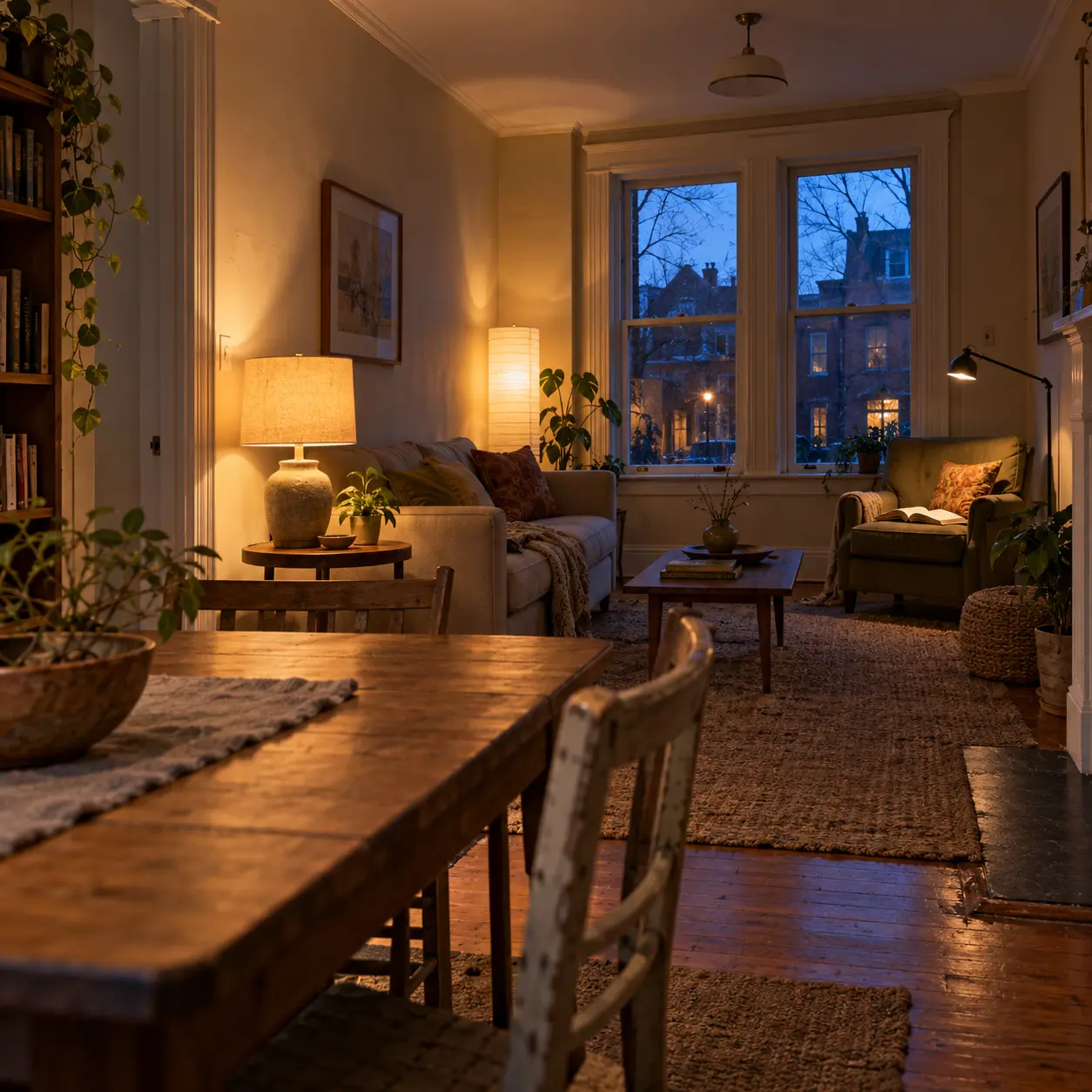
3. Replace one harsh light with layered warm lighting
Lighting can change the whole mood of your home. If you want your space to feel cozy, you need to think about more than just turning on a ceiling light. The right lighting makes everything look warmer and more inviting. Let’s look at some simple ways you can use lighting to make your home feel extra comfortable.
Soft lighting is one of the easiest ways to create a cozy vibe. You don’t need fancy equipment or a big budget. You just need to know what to look for.
Lamps and Bulbs
Lampshades also play a big part. They spread and soften the light, so it doesn’t feel harsh. Place table lamps or floor lamps in corners or next to your favorite chair. You’ll notice the room feels instantly warmer.
Tip: Try using more than one lamp in a room. The light will bounce around and make the space feel bigger and cozier at the same time.
String and Fairy Lights
String lights and fairy lights can work beyond the holidays. You can hang them along a bookshelf, drape them over a headboard, or wrap them around a mirror. These tiny lights add a magical touch and make any room feel special. They use very little energy and cost less than most other lighting options.
If you want to get creative, try placing fairy lights inside a glass jar or vase. This makes a cute, glowing centerpiece for your table or shelf.
Layered lighting means using different types of lights together. This helps you build depth and warmth in your home.
Candles and Alternatives
Candles give off a natural, flickering glow that feels calm and peaceful. You can use real candles for a classic look or try battery-operated ones for safety. Place candles on your coffee table, windowsill, or bathroom counter. The soft light will make you want to curl up with a good book.
Layering your lighting works best when you mix three types:
- Ambient lighting: This is your main source of light, like ceiling fixtures or big lamps. It sets the overall tone of the room.
- Task lighting: Use this for things like reading, cooking, or working at a desk. Desk lamps or under-cabinet lights work well.
- Accent lighting: These lights highlight special features, like artwork or shelves. They add drama and make your space feel more interesting.
When you combine these layers, your home feels more inviting and comfortable. Warm color temperatures in your lights help everything look soft and welcoming. With a few simple changes, you can turn any room into a cozy retreat.
Do the evening test with the overhead light off. Can you read in the chair, see what you are serving at the table, and move safely through the room? If not, add task light where it is missing rather than making every bulb brighter. The cozy lighting guide shows how to balance ambient, task, and accent light room by room.

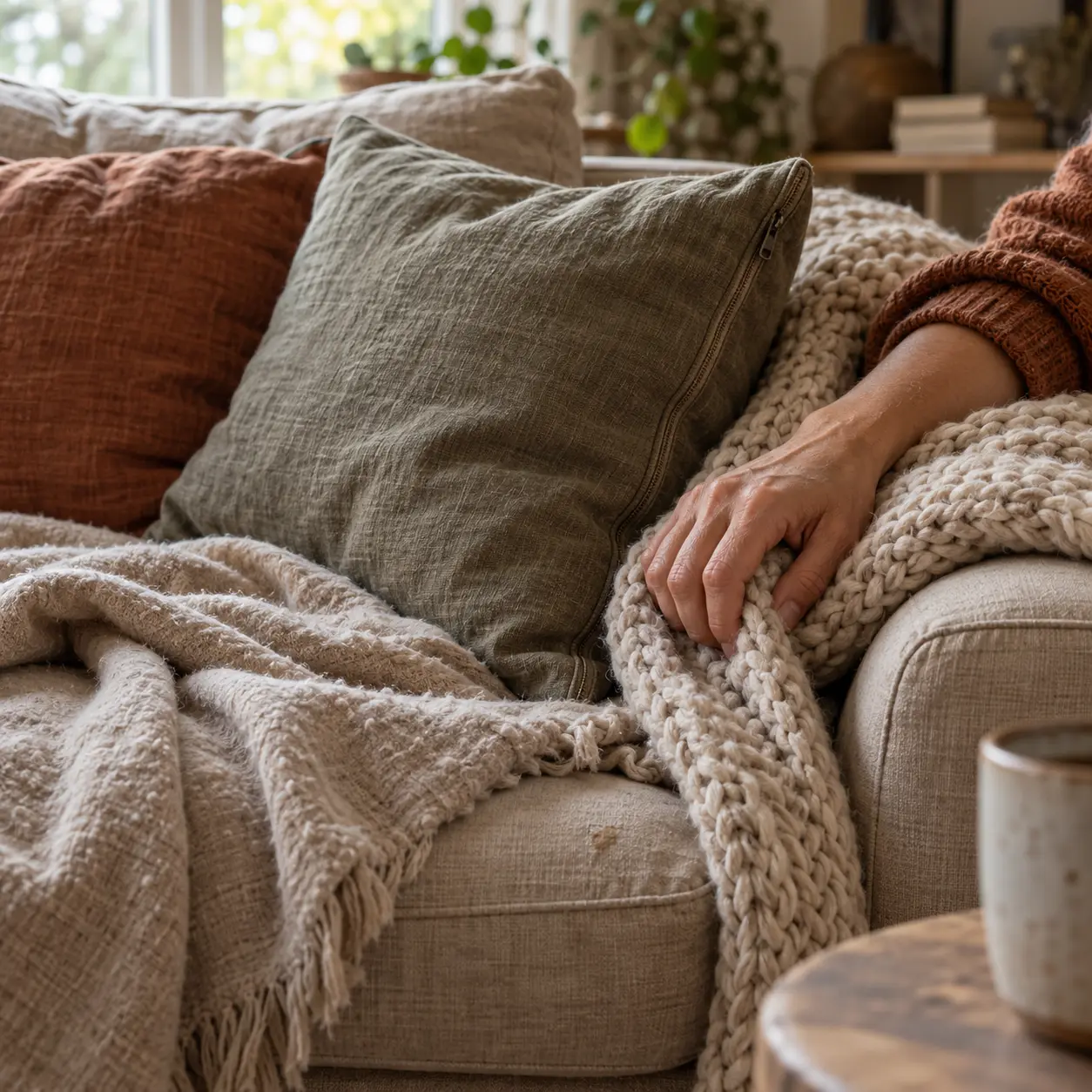
4. Layer textiles you can wash and rotate
When you want your home to feel cozy, textiles make a huge difference. Soft fabrics, warm blankets, and fluffy pillows can turn any room into a relaxing retreat. You do not need to spend a lot to get that snug feeling. Let’s look at some easy ways to use textiles for maximum comfort.
Nothing says “cozy” like a pile of throws and pillows. You can toss them on your sofa, bed, or favorite chair. They invite you to curl up and relax.
Mixing Textures
Mixing different textures adds depth and makes your space feel interesting. Try pairing a chunky knit blanket with a smooth velvet pillow. You might like the feel of boucle, linen, or even a faux fur throw. These fabrics add softness and warmth. When you layer textiles, you create a space that feels rich and inviting.
Tip: Choose a few pillows in different sizes and shapes. Mix in a thick knit blanket or a plush velvet throw for extra comfort.
Here are some textiles that work well for coziness:
- Velvet and plush fabrics for softness
- Linen and boucle for a natural touch
- Thick knit blankets for warmth
- Neutral colors with warm undertones, like taupe or sage
Budget Sources
You do not have to buy everything new. Check out these places for affordable finds:
- Thrift stores often have unique pillows and blankets.
- Discount stores sell seasonal throws at low prices.
- Online marketplaces let you find gently used or handmade items.
- Try making your own pillow covers from old sweaters or fabric scraps.
Choose texture by contact point. A washable throw matters on the sofa; a soft bedside rug matters under bare feet; a smooth pillow may be more comfortable than a heavily tufted one behind your back. Two or three useful layers feel more generous than a pile of cushions that must be moved every time someone sits down.

5. Use the right rug size before chasing a pattern
A good rug can make your room feel warmer and more comfortable. Rugs also help define spaces and add color or pattern.
Pick a rug that fits your space. In the living room, place a large rug under your coffee table and front legs of the sofa. In the bedroom, a soft rug beside your bed feels great under your feet in the morning. Layering smaller rugs can add extra texture and interest.
You can find budget-friendly rugs at big box stores, online sales, or even secondhand shops. Look for natural fibers or performance fabrics that feel soft but last a long time. Sometimes, a simple cotton rug or a woven mat does the trick.
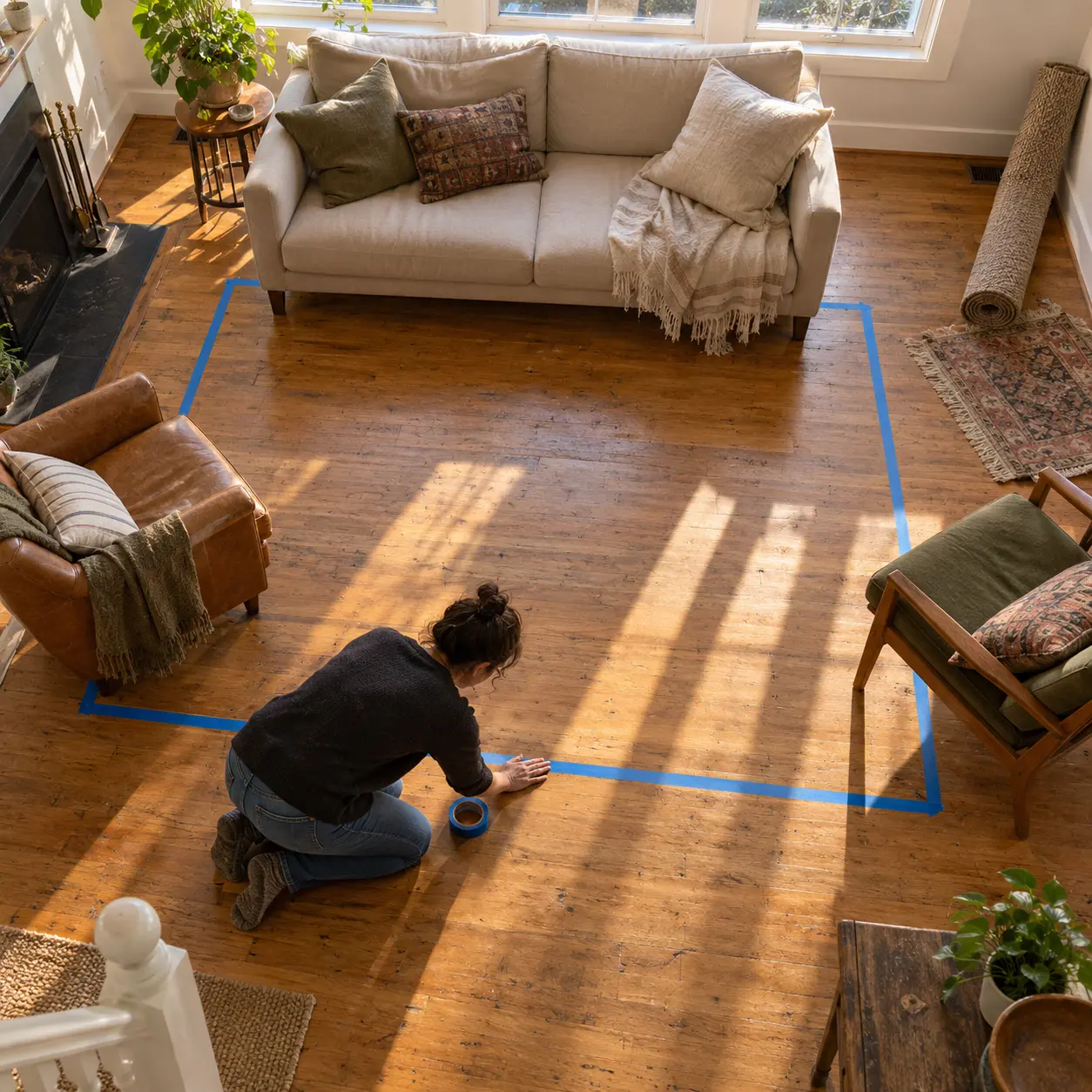
Tape the proposed rug outline on the floor. In a living room, it should usually connect the seating rather than float under the coffee table like an island. If a large new rug is outside the budget, look for a clean secondhand wool flatweave, use a smaller rug beside a bed, or wait. An undersized rug bought in a hurry often becomes the expensive option because it is replaced twice.

6. Hang curtains to soften the whole wall
Curtains do more than block light. They add softness and help keep warmth in your room.
You can make your own curtains from bedsheets or tablecloths. Just hem the edges and hang them with clip rings. If you find old curtains at a thrift store, dye them a new color or add trim for a fresh look. Heavy curtains in rich fabrics like velvet or thick cotton make your space feel extra snug.
Note: Using textiles inspired by nature, like earthy tones or organic patterns, brings a calming vibe to your home. Try mixing and matching until you find what feels best for you.
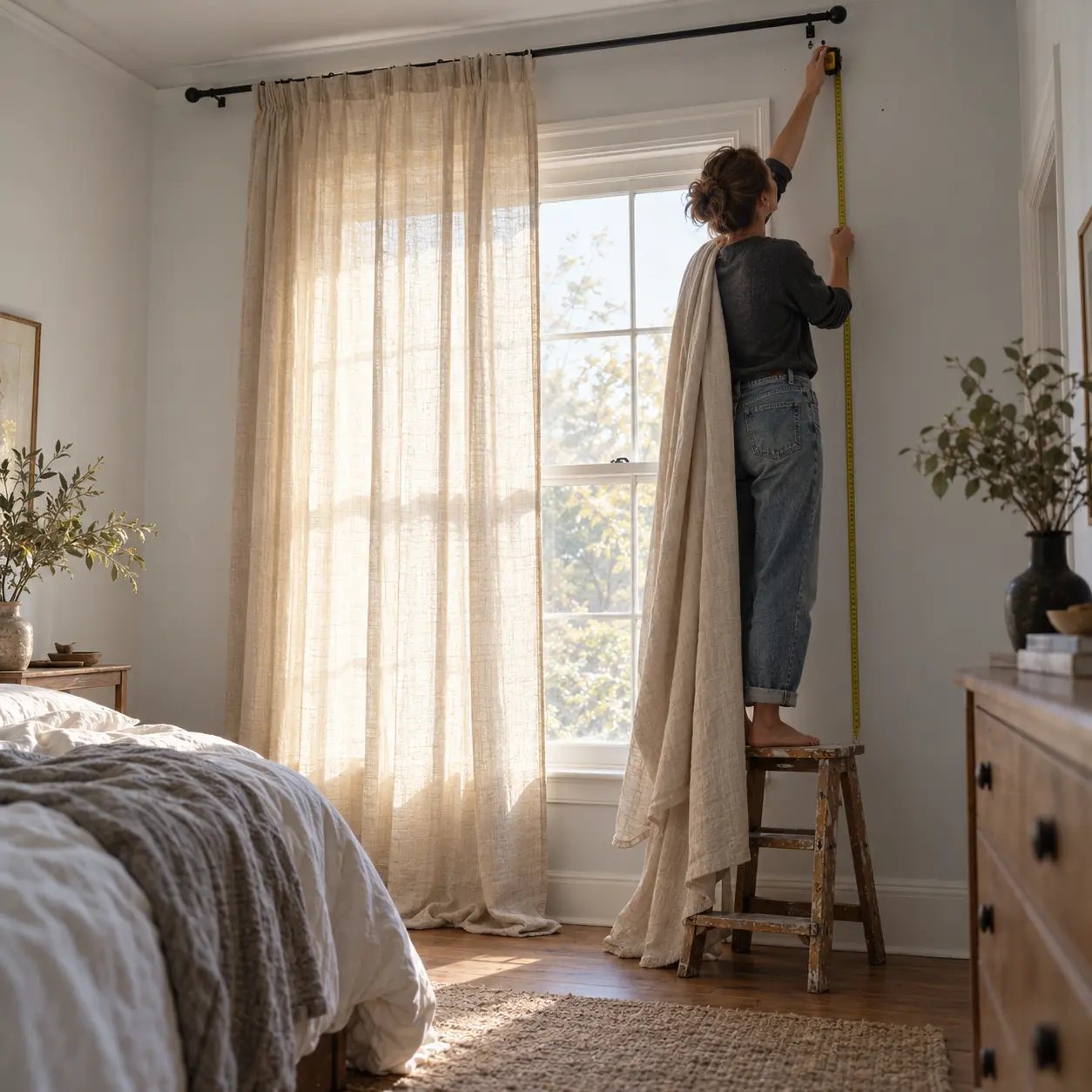
Before buying panels, measure from the planned rod position to the floor and calculate the combined fabric width. Curtains that barely cover the glass look thin even when the fabric is good. Mounting the rod a little wider can reveal more daylight when the curtains are open, while full-length panels give the wall a calmer vertical line.

7. Build one genuinely comfortable seat
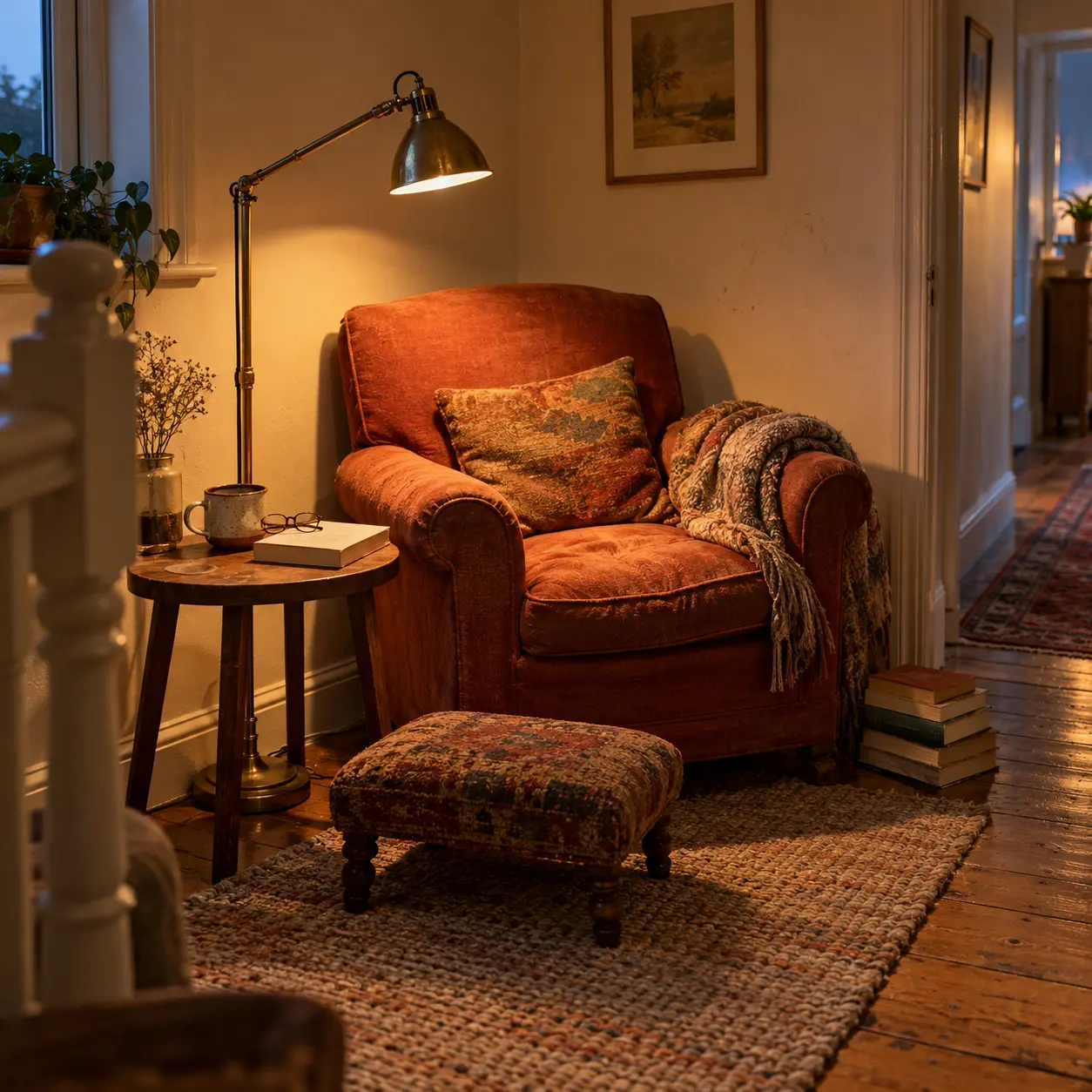
A cozy room needs at least one seat that works for more than a photograph. Check seat depth, back support, fabric feel, nearby light, and a surface for a mug or book. You may already own the right chair; moving it out of a dark corner and adding a lamp can be the entire project.
Recliners and Armchairs
When you want to know how to make a home cozy, start with your seating. A comfy chair or armchair can change the whole mood of a room. You might love curling up with a book or watching your favorite show. Look for chairs with soft cushions, wide arms, and a shape that hugs your body. If you have space, add a small armchair to a corner. This creates a perfect spot for relaxing or chatting with friends.
Tip: Place a small table next to your chair. You can keep your favorite drink, a lamp, or a book within easy reach.
Using Blankets and Pillows
You do not need to buy new furniture to make your home feel cozy. Sometimes, a quick refresh does the trick. Try draping a soft blanket over your sofa or adding a few new pillows. Mix different textures, like velvet, knit, or faux fur, to make your seating extra inviting. You can even use a colorful bed sheet or a pretty tablecloth as a slipcover for a tired chair.
Painting and Updating
If your furniture looks worn out, you can give it new life without spending much. Here are some affordable ways to refresh old pieces:
- Hire a local freelancer or hobbyist for simple upholstery jobs. They often charge less than big shops.
- Use fabric you already have, like blankets, sheets, or even shower curtains, instead of buying expensive material.
- Attach new fabric with staples, glue, or tacks. You do not need fancy tools or skills.
- Skip extra details like piping or buttons to save time and money.
- Reuse old cushion filling or buy affordable foam for new padding.
- Add small touches, like buttons or nailhead trim, for a fresh look.
Note: A little paint can also work wonders. Try painting wooden legs or arms in a new color to match your style.
If you are comparing powered recliners, the AlivingHome recliner collection is one commercial example. Verify dimensions, upholstery, power requirements, warranty, delivery access, and return terms yourself. A feature list is less important than whether the chair fits your body and the room.
For a broader layout, see these stylish living room decor ideas. Use them as composition references, then keep the pieces that suit your own space and budget.

8. Bring in plants and natural materials selectively
Bringing a bit of nature into your home can make it feel instantly cozier. You do not need a green thumb or a big budget. Even a few simple touches can help you relax and feel more at home.
Plants do more than just look pretty. They can change the whole mood of a room. When you add houseplants, you bring life and color into your space. You also get some surprising health benefits.
Low-Maintenance Choices
You might think plants are hard to care for, but many are easy to keep alive. Try these low-maintenance options:
- Snake plant: Needs little water and grows in low light.
- Pothos: Grows fast and forgives if you forget to water.
- ZZ plant: Survives in almost any spot.
- Spider plant: Handles different light and bounces back from neglect.
- Succulents: Store water and need only occasional care.
Did you know? Studies show that houseplants can improve air quality, reduce stress, and even help you focus better. Just seeing green leaves can make you feel calmer and happier.
You do not have to use real plants if you worry about care. Faux plants or even botanical art can give you some of the same cozy, calming effects.
DIY Planters
You can get creative with planters without spending much. Try these ideas:
- Use old mugs, teacups, or bowls as small pots.
- Paint tin cans or glass jars for a fun look.
- Wrap planters in twine or fabric scraps for texture.
- Hang plants in macramé holders you make yourself.
Making your own planters adds a personal touch and helps your space feel unique.
Natural materials bring warmth and texture to your home. They help you feel connected to the outdoors, even when you stay inside.
Wood and Bamboo
Wood and bamboo are classic choices for a cozy vibe. You can use them in big ways, like a wooden coffee table, or small ways, like a bamboo tray or picture frame. Reclaimed wood floors or oak shelves add a grounded, authentic feel. Even a simple wooden bowl on your table can make a difference.
- Oak wood has rich colors and natural details that make rooms feel warm.
- Bamboo is light, strong, and eco-friendly.
- Rattan baskets or wool throws add texture and comfort.
Eco-Friendly Decor
Choosing eco-friendly decor is good for the planet and your peace of mind. Look for:
One healthy plant in the right light is better than several struggling ones. If care, pets, or daylight make live plants impractical, use a bowl of seasonal fruit, a branch in a vase, a woven basket, unfinished wood, or a stoneware pot. The sustainable decor guide can help you judge materials and longevity before buying.

9. Display personal things with breathing room
Adding personal touches makes your home feel like it truly belongs to you. These small details tell your story and bring warmth to every room. You do not need to spend a lot to make your space special. Let’s look at three easy ways to add personality and comfort.
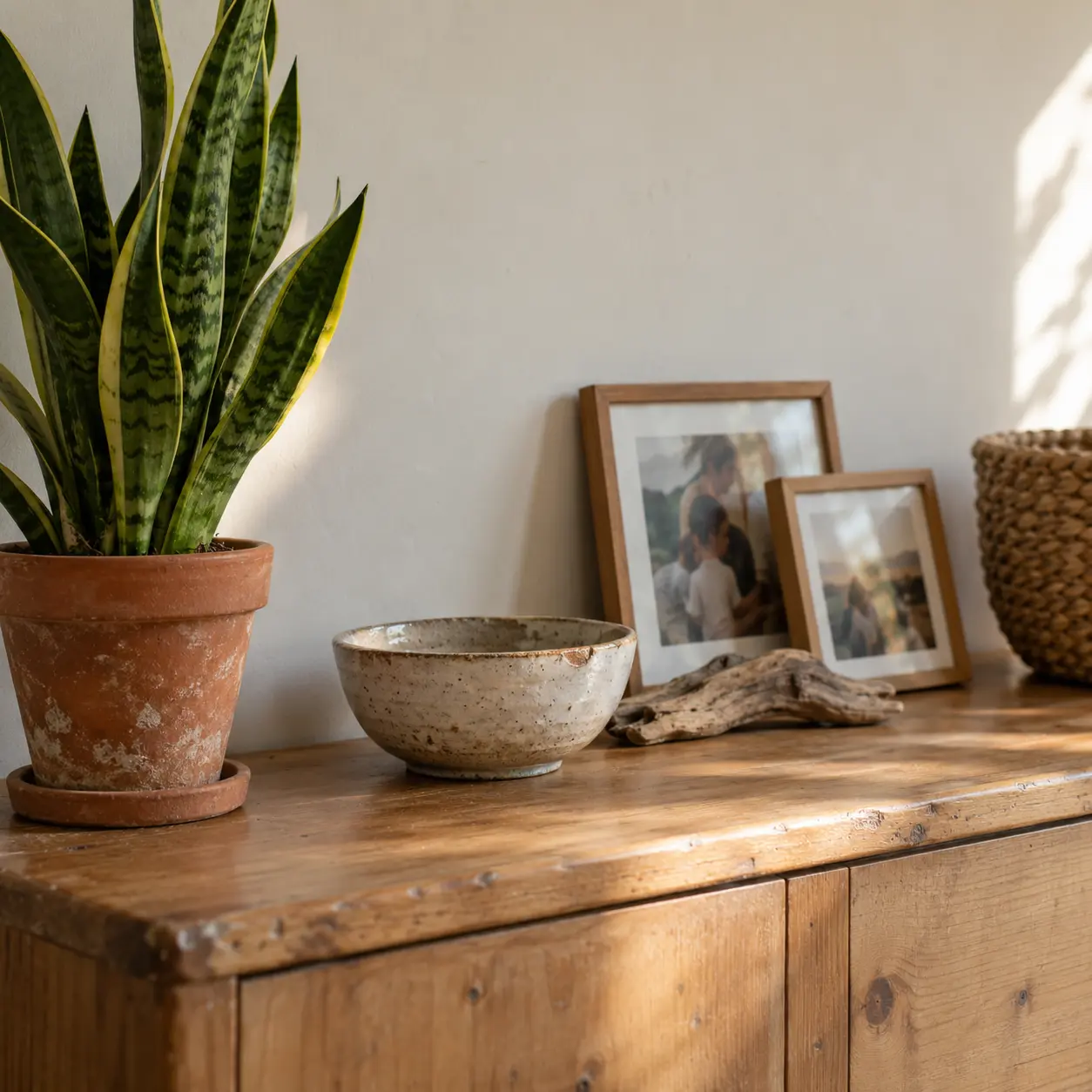
Photos and mementos remind you of happy times and people you love. You can display them in many creative ways. Try making a gallery wall with different frames. Mix family photos, vacation snapshots, and even postcards. If you want a simple look, use matching frames in a row. For a playful style, hang photos with clothespins on a string.
You can also show off souvenirs, ticket stubs, or small keepsakes. Place them in a shadow box or on a shelf. These items spark memories and start conversations when friends visit.
Tip: Change your photos every season. This keeps your space fresh and lets you relive different memories throughout the year.
You do not have to be an artist to make your own art. DIY art adds a unique touch and saves money. Paint a simple canvas with your favorite colors. Try making abstract shapes or patterns. You can also frame pretty wrapping paper, fabric, or scrapbook paper.
If you like crafts, try making a collage from magazine cutouts. You can even press flowers and frame them for a natural look. Kids’ artwork also makes great decor. Hang their drawings in the hallway or kitchen for a cheerful vibe.
Callout: Making art together as a family is a fun way to bond and decorate at the same time.
Bookshelves can do more than store books; they can also hold a restrained personal display. Start by sorting your books by color or size. Stack some books upright and others in small piles. Add a few plants, candles, or small sculptures between the books.
Place baskets on lower shelves to hide clutter. Show off your favorite items, like a special mug or a tiny globe. If you want a quick change, swap out decorations for each season.
Edit the display by story rather than by color alone. Three photographs from one trip, a sketch, and a small found object often feel more intentional than a shelf of unrelated fillers. If you are hanging frames, the wall art placement guide covers height, spacing, and safe installation.

10. Make or upcycle one useful detail
You can find amazing home decor without spending a lot. Thrift stores, consignment shops, and online marketplaces offer unique treasures that add character to your space. Before you go shopping, make a list of what you want. This helps you stay focused and avoid buying things you do not need.
Here’s how you can get the most out of your thrift shopping trips:
- Write down the items you want for your home, like a mirror, lamp, or vase.
- Head straight to the sections that match your list. This saves time and energy.
- Set a time limit for each store. You will stay focused and visit more places.
- Bring only the cash you plan to spend. This keeps your budget in check.
- If a store does not have what you need, move on quickly.
- Shop on restock days or midweek mornings. Stores are less crowded and have new items.
- Look for sales or markdown days for even better deals.
- Scan shelves by color, shape, or texture to spot hidden gems.
- Walk down each aisle from both directions. Sometimes treasures hide behind other items.
- Carry a measuring tape to make sure things fit your space.
- Mix in visits to consignment and antique shops for more choices.
- Try online thrift platforms and local estate sales for special finds.
Tip: Thrift shopping is like a treasure hunt. You never know what you’ll find, so keep an open mind and have fun!
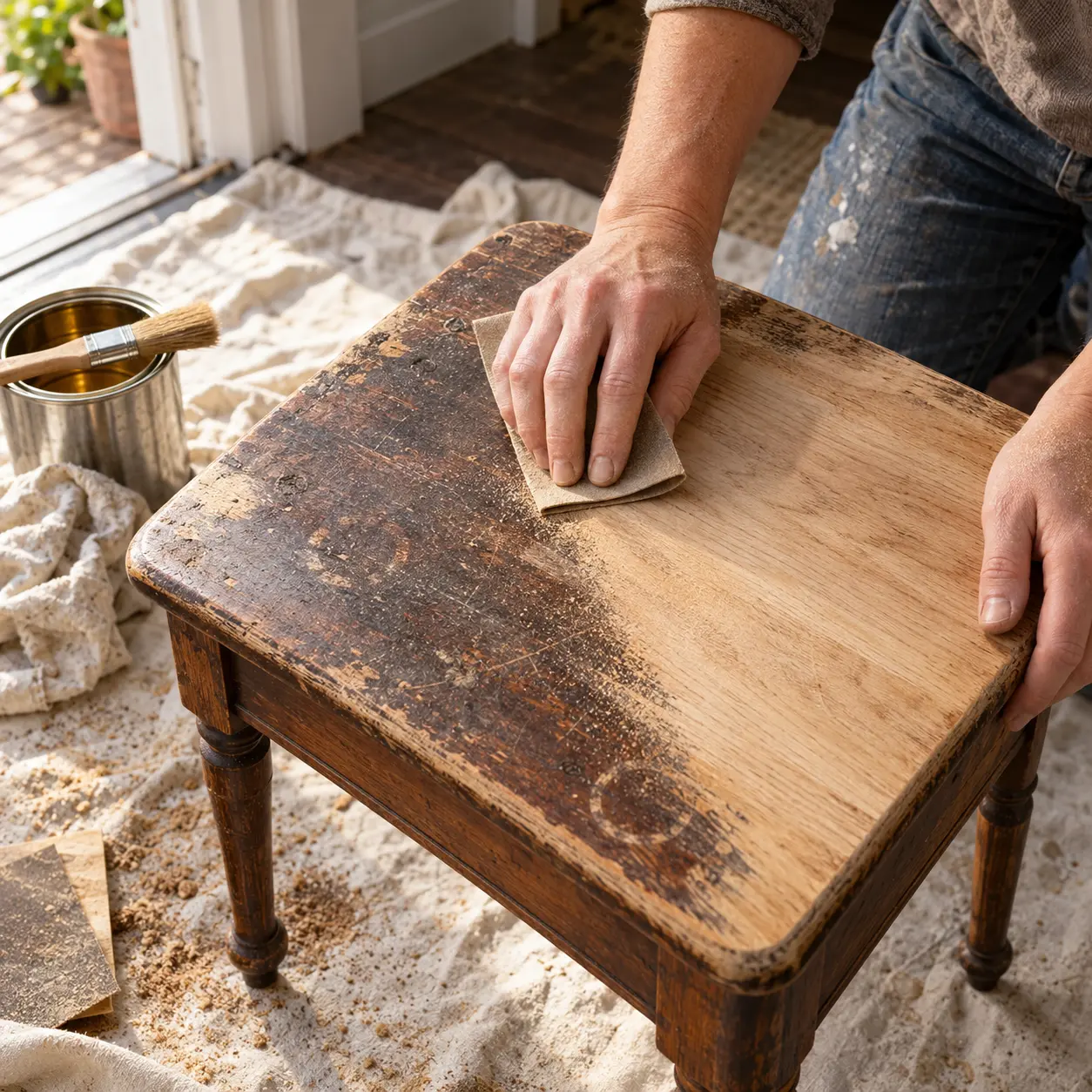
Upcycling means turning old or unwanted items into something new and useful. You do not need fancy tools or skills. Sometimes, a little paint or new fabric can give an old chair or table a fresh look. You can turn a glass jar into a vase or use an old ladder as a bookshelf.
Try these easy upcycling ideas:
- Paint a wooden tray in a bright color for your coffee table.
- Cover old pillows with fabric scraps for a new look.
- Use baskets or crates as storage for blankets or magazines.
- Turn a vintage suitcase into a side table.
Upcycling saves money and helps the planet. You also get one-of-a-kind pieces that make your home feel special.
Blending vintage finds with new decor creates a cozy, lived-in feel. Vintage pieces add warmth and history. New items bring freshness and function. When you mix both, your home tells your story.
Choose a project with a clear job: a tray for the entry, covers for worn cushions, a framed textile, or paint for a small table. Finish one before collecting supplies for the next. The DIY home decor guide offers more projects that can be adapted to materials you already have.

11. Give everyday clutter a landing place
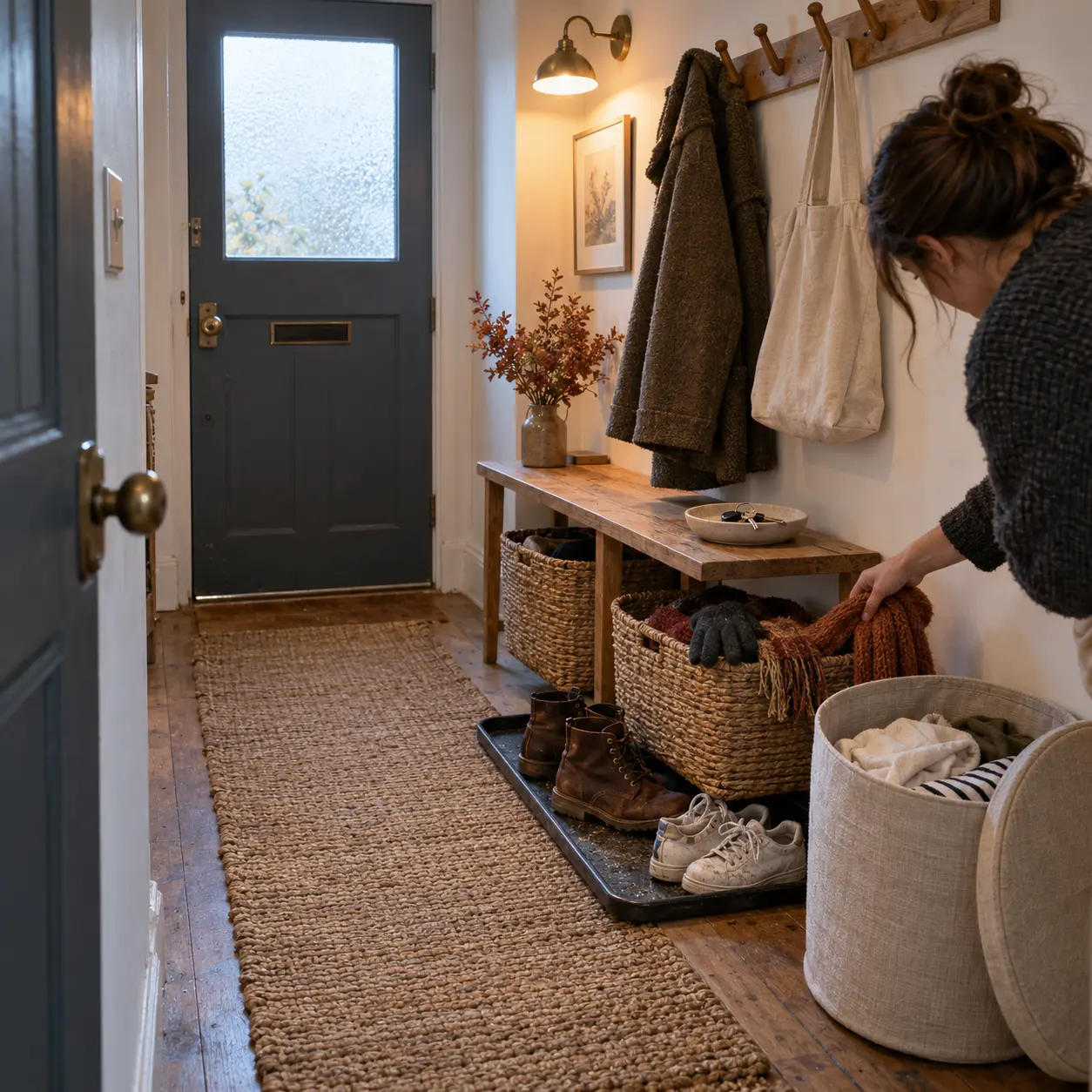
Storage makes a home feel easier to use when it matches the point where clutter appears. Put a tray where keys are dropped, a basket where blankets end up, and a lidded box near the sofa for chargers and controls. Moving those containers to a distant closet usually means the habit will not last.
Do a seven-day test before buying organizers. Use a cardboard box, spare bowl, or shopping bag in the proposed spot. If the household naturally uses it, upgrade the container. If not, change the location. These home organization ideas can help turn the test into a simple maintenance routine.

12. Use scent lightly and safely
Adding scent to your home is one of the easiest ways to make it feel cozy. The right smell can remind you of happy memories or help you relax after a long day. You do not need to spend a lot to fill your space with inviting scents. Let’s look at how you can use candles, diffusers, and seasonal fragrances to create a warm atmosphere.
Candles do more than light up a room. They fill your home with soft, comforting scents. You can choose candles in jars, tins, or even tea lights. Place them on your coffee table, bathroom counter, or next to your bed. When you light a candle, you set a calm mood. Some people like to use unscented candles for a gentle glow, but scented candles add another layer of coziness.
Diffusers are a great choice if you want a steady scent all day. You can use reed diffusers or electric ones. Just add a few drops of your favorite essential oil, and the diffuser will spread the scent around your room. Lavender, vanilla, and sandalwood are popular choices for a relaxing vibe. If you have pets or kids, flameless diffusers are a safe option.
Tip: Try mixing candlelight with a diffuser for a richer scent experience. You can use different scents in each room to match the mood you want.
Changing your home’s scent with the seasons keeps things fresh and interesting. Certain smells can make you think of fall leaves, winter holidays, or spring flowers. You can use candles, oils, or even simmer pots on the stove to bring these scents into your home.
Here are some of the most popular seasonal scents that help create a warm and inviting space:
You might love the smell of Chestnut Embers in the fall, which feels like sitting by a fireplace. In winter, White Maple Bourbon brings a sweet, baked treat scent that makes your home feel extra snug. Spring calls for Cardamom Blossom, which is light and fresh but still warm. Pumpkin Macchiato is perfect for autumn, giving your space that classic pumpkin spice latte feeling. Ambered Topaz works well when you want a soothing, warm scent any time the weather turns cool.
Start with ventilation, clean textiles, and rubbish removed; fragrance should not be asked to cover a maintenance problem. Keep flames away from curtains, shelves, children, and pets, and follow the manufacturer’s directions for diffusers. Unscented candles can provide the same soft light when fragrance sensitivity is a concern.

13. Warm the palette without repainting everything
Color changes everything. When you want your home to feel cozy, start with warm palettes. Warm colors make a room feel inviting and safe. Think about shades like soft beige, creamy white, gentle gold, or warm gray. These colors remind you of sunlight, fresh bread, or a cozy sweater. They help you relax and feel at home.
You do not need to paint every wall. Sometimes, just adding a few warm touches works wonders. Try these ideas:
- Add a tan or rust-colored throw blanket to your sofa.
- Use golden or amber pillows on your bed.
- Hang art with warm, earthy tones.
- Place a beige or sand-colored rug in your living room.
Warm colors work well in every room. They make small spaces feel bigger and large rooms feel more welcoming. If you want to try something bold, pick a deeper shade like terracotta or olive green for one wall or a piece of furniture. These colors bring energy without feeling too bright or harsh.
Tip: If you feel unsure about color, start with small things. Swap out pillow covers or add a warm-toned vase. You can always add more later.
Accent walls give your room personality. They draw your eye and make a space feel special. The right accent wall can turn a plain room into your favorite spot in the house.
Today, people love soft, earthy colors for accent walls. Sage green, sand, or gentle beige create a peaceful and stylish look. These colors feel calm and warm, not loud or overwhelming. You can see the difference in this table:
When you pick a spot for your accent wall, choose a natural focal point. Try the wall behind your bed, your sofa, or your fireplace. This makes the room feel balanced and cozy. Use real materials if you can, like wood slats or stone. These add texture and warmth without making the room feel busy.
Note: You do not need an accent wall in every room. One or two well-placed accent walls make your home feel modern and comfortable.
Accent walls with soft colors and real textures help your space feel calm, stylish, and warm. You will notice how much more inviting your home feels with just a little color and care.
Test color in the room at morning, afternoon, and evening. Warm white, clay, muted ochre, olive, brown, and dusty red can feel welcoming, but undertones shift beside flooring and artificial light. A cushion cover, thrifted vase, print, or painted stool is a safer first test than a full wall.

14. Mix secondhand and new pieces with one repeat
A secondhand piece feels connected when one material or shape repeats elsewhere. Echo the wood tone of a vintage chair in a frame, or repeat its curved line in a lamp. Do not sand, paint, or reupholster an old piece until you have checked its condition and whether altering it would destroy something valuable.
Inspect used upholstered furniture carefully for odors, stains, damaged seams, pests, and structural movement. Hard pieces are usually easier to clean and assess. The home styling guide explains how to combine different eras without turning a room into a matching set.

15. Rotate seasonal details instead of redecorating
When the weather turns chilly, you want your home to feel warm and inviting. Fall and winter are perfect seasons to add extra cozy touches. You can make small changes that have a big impact.
If the seasonal rotation expands into paint, lighting, storage, or repairs, use these spring home renovation ideas to put the work in the right order before buying decor.
Start with your textiles. Swap out light blankets for chunky knit throws or fleece. Add a few extra pillows in rich colors like deep red, burnt orange, or forest green. These colors remind you of autumn leaves and holiday cheer.
Candles work wonders in fall and winter. Place a few on your coffee table or windowsill. Choose scents like cinnamon, vanilla, or pine. The soft glow and warm smells make your space feel snug.
Try these easy ideas:
- Drape a plaid blanket over your sofa or favorite chair.
- Hang a simple wreath made from pinecones or dried leaves on your door.
- Place a basket of slippers by the entryway for guests.
- Use string lights to add a gentle sparkle to your living room or bedroom.
Tip: Layering is your friend in cold months. Stack rugs, throws, and pillows to create a nest-like feeling.
You can also bring in natural elements. Fill a bowl with pinecones, acorns, or small pumpkins. These little touches remind you of the season and cost very little.
When spring arrives, you want your home to feel fresh and bright. Summer calls for light and airy spaces. You can switch up your decor to match the season without spending much.
Swap heavy blankets for lightweight throws in pastel or bright colors. Store away dark pillows and bring out covers in soft blues, greens, or yellows. These colors make your rooms feel cool and cheerful.
Open your windows to let in fresh air. Use sheer curtains to let sunlight fill your space. Add a vase of fresh flowers or a bowl of lemons to your kitchen table. These simple changes bring the outdoors inside.
Here are some quick ways to refresh your home:
Keep the permanent room quiet enough that a few seasonal changes register. Store off-season covers, a throw, and one small group of decorations together. Before buying anything new, open that box. Rotation works because familiar objects return after a break; it does not require a new collection every three months.

How to layer pattern and texture without making the room busy
Patterns and textures can make your home feel alive and interesting. You do not need to buy expensive items to get this effect. Start with rugs and cushions. These are easy to swap out and do not cost much.
Rugs do more than cover your floor. They add color, pattern, and warmth. You can pick a rug with a bold pattern if you want to make a statement. If you like a calm look, choose a rug with soft colors and a simple design. Try a fluffy rug in your bedroom or a woven rug in your living room. Both add comfort and style.
Cushions are another great way to play with patterns and textures. Mix and match different cushion covers. You might like stripes, florals, or geometric shapes. Try using a few solid colors with one or two patterned cushions. This keeps your space from looking too busy.
Tip: If you want to save money, buy cushion covers instead of whole new pillows. You can change them with the seasons or whenever you want a new look.
Here’s a quick table to help you mix and match:
Layering means putting different textures and patterns together. This makes your home feel rich and cozy. You can layer rugs, cushions, blankets, and even curtains.
Start with a base. Place a large, simple rug on the floor. Add a smaller, patterned rug on top. This works well in living rooms and bedrooms. You can also layer cushions on your sofa or bed. Use a mix of sizes, shapes, and fabrics. Try a velvet cushion with a knit throw or a linen pillow with a faux fur blanket.
The same layering principle works for patterns as well as textiles. For example, pair a striped rug with a floral cushion. Just keep the colors similar so everything looks good together.
Note: Do not worry about making everything match. Cozy homes often have a mix of styles. If you like it, it works!
A useful formula is one large quiet texture, one medium-scale pattern, and one small accent. For example: a plain woven rug, striped cushions, and a small floral lampshade. Repeat one color across the layers, then stop. The eye reads the relationship without needing every piece to match.

Room-by-room priorities
| Room | Free first move | Best small spend | Wait before buying |
|---|---|---|---|
| Living room | Pull seating into conversation range | A warm reading bulb or washable throw | Tiny decor that adds no comfort |
| Bedroom | Clear the bedside and make the bed | A bedside lamp or full-length curtains | Extra cushions used only for display |
| Kitchen/dining | Clear one working surface | A dimmable bulb or table textile | Open storage that creates more visual noise |
| Entry | Remove off-season shoes and coats | Hooks, a tray, or a washable runner | Furniture that narrows the route |
| Rental | Move furniture and rotate existing art | Removable hooks, lamps, and portable textiles | Permanent alterations without permission |
Your living room is where you relax, watch TV, and hang out with friends or family. You want this space to feel warm and welcoming. Start by adding soft textures. Toss a few throw pillows and a cozy blanket on your sofa. Place a soft rug under your coffee table. These small touches make a big difference.
Use baskets or trays to keep remotes, magazines, and small items tidy. Hang a few family photos or art pieces on the wall. Add a plant or two for a fresh look. If you want extra warmth, use warm-toned lamps or string lights.
Tip: Swap out pillow covers or throws with the seasons. This keeps your living room feeling new and cozy all year.
Your bedroom should feel like a peaceful retreat. Start with your bed. Layer it with soft sheets, a fluffy comforter, and a few pillows. Choose calming colors like soft blue, gray, or cream. These shades help you relax and sleep better.
Place a small rug next to your bed. Your feet will love the soft touch in the morning. Use blackout curtains if you want to block out light and sleep in. Add a lamp with a warm bulb for gentle lighting at night.
Keep your nightstand simple. Place a book, a small plant, or a candle on it. Store clutter in baskets or drawers. Hang a favorite photo or piece of art above your bed. This adds a personal touch.
Note: Make your bed every morning. A tidy bed makes your whole room feel cleaner and cozier.
You can make your kitchen and dining area cozy without spending much. Start by clearing off your counters. Keep only what you use every day. Add a bowl of fresh fruit or a vase of flowers for color.
Use placemats or a table runner to dress up your dining table. Try mixing and matching dishes for a fun, lived-in look. Hang a piece of art or a chalkboard for notes and doodles.
If you have space, add a small lamp or string lights for soft lighting. Place a comfy chair or bench in a corner for reading or chatting. Store utensils and tools in jars or baskets to keep things neat.
Tip: Light a scented candle or simmer spices on the stove. Good smells make your kitchen feel extra inviting.
Your entryway sets the mood for your whole home. When you walk in, you want to feel welcome right away. Even if your entry is small or just a corner, you can make it cozy and organized without spending much.
Start by clearing out clutter. Shoes, bags, and coats pile up fast. Use a basket or a simple shoe rack to keep things tidy. Hang a few sturdy hooks on the wall for jackets, hats, or backpacks. If you have a bench, place it near the door. You can sit to put on shoes or drop your bag when you come in.
Lighting matters here, too. A warm lamp or a string of fairy lights makes your entryway feel inviting, especially at night. If you have a window, let in as much natural light as possible during the day.
Apartment dwellers can adapt the same sequence without permanent work. The apartment decor on a budget guide focuses on reversible changes, while the interior details checklist helps identify scale, alignment, lighting, and finish problems before you shop.

Common budget decorating mistakes
- Buying many small items first: a room may still feel cold because the real gap is lighting, curtains, or furniture placement.
- Choosing an undersized rug: measure and tape the outline before committing.
- Using only one bright ceiling light: add useful light at reading, dining, and task height.
- Confusing fullness with comfort: leave clear routes and some empty surface around meaningful objects.
- Ignoring maintenance: delicate fabrics, high-care plants, and dust-catching decor do not feel cozy when they create work you resent.
- Following a palette too literally: repeat a few colors and materials, but allow practical mismatches and personal history.
- Buying before testing: mock up rugs, curtains, art, and storage with tape or items you already own.
A one-week cozy home reset
- Day 1: photograph one room, set the budget, and remove items that belong elsewhere.
- Day 2: rearrange the main seating and protect a clear walkway.
- Day 3: test the room after dark and move existing lamps where they are useful.
- Day 4: wash and rotate throws, pillow covers, curtains, or bedding you already own.
- Day 5: group personal objects and hang one piece at the correct height.
- Day 6: test a storage landing place with a temporary box, tray, or basket.
- Day 7: write a short shopping list ranked by comfort, not by novelty, and buy only the first justified item.
The practical takeaway
To make your home cozy on a budget, solve the room in this order: clutter, layout, light, textiles, personal detail, then purchases. That sequence gives every dollar a job. It also leaves room for the imperfect pieces that make a home recognizably yours.
Revisit the room after a week. Notice where people choose to sit, what gets left out, and which light is switched on first. Those behaviors are better design evidence than a shopping trend. Keep what supports them, adjust what gets in the way, and let the room become comfortable gradually.
- 24shares
- Facebook0
- Pinterest24
- Twitter0
- Reddit0