Marco Grassi painting is a good place to study what hyper realistic painting can do when it moves beyond a simple “is this a photo?” trick. His portraits are polished, quiet, and slightly uncanny: real skin, careful light, blue eyes, lace, porcelain-like patterns, and decorative surfaces that make the figure feel both intimate and unreal.
The original version of this gallery only listed the images. This updated guide gives each painting a little context, adds a short history of hyperrealism, and points you toward related realism practice if you want to understand the technique more deeply.
Marco Grassi painting: what to notice first
Grassi’s strongest work usually balances three things: a calm portrait pose, very controlled skin transitions, and one unexpected surface detail. That detail may be lace, a blue shawl, a glossy shoulder piece, or a floral pattern that seems to merge with the body.
From a drawing and painting point of view, the useful lesson is restraint. The paintings are detailed, but they are not noisy. Hair edges stay soft, shadows are held back, and the brightest color is usually saved for a precise accent.
Marco Grassi paintings in this gallery
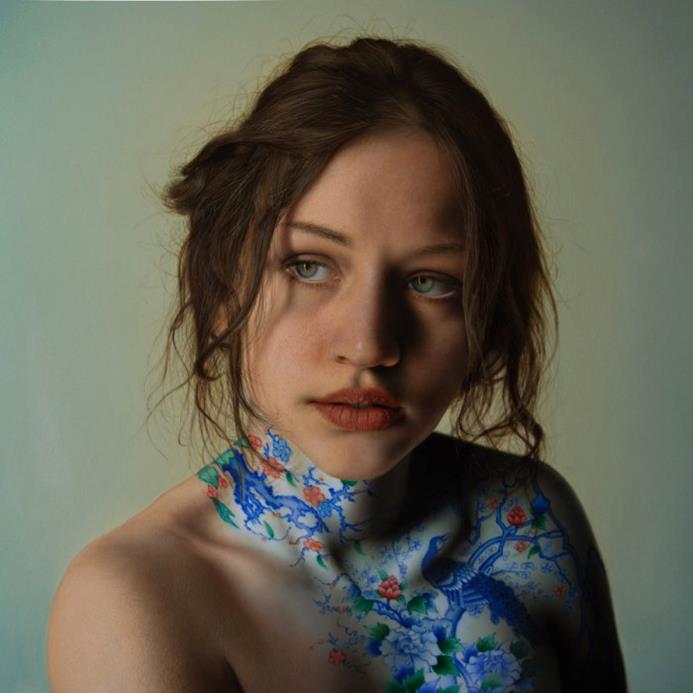
The Garden
The Garden works because the floral pattern does not behave like a simple tattoo. It sits across the neck like porcelain decoration, while the face stays soft and slightly uncertain. That contrast is the reason the painting feels more unsettling than a clean photo reference.
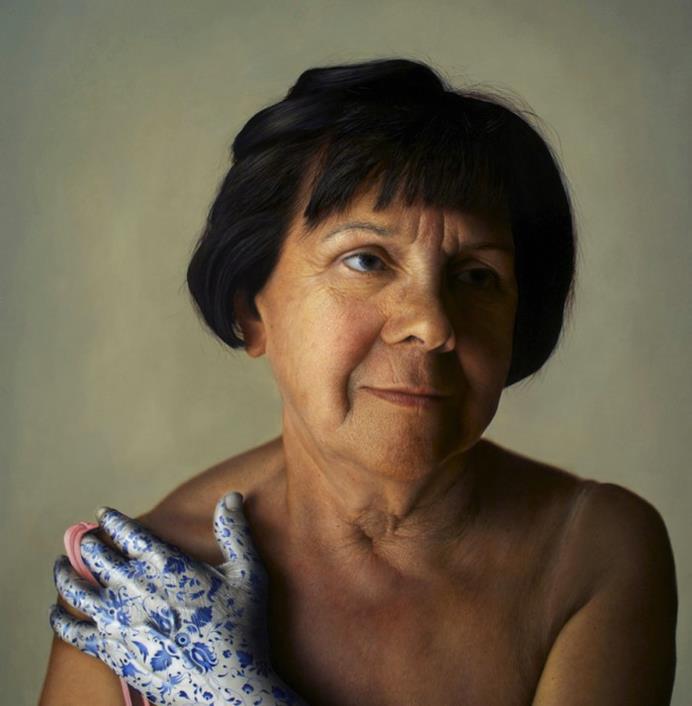
La Bellezza
La Bellezza slows the eye down. The patterned glove, the older face, and the quiet turn of the head make the realism feel intimate instead of flashy. Look at the small changes in skin temperature around the cheek, neck, and shoulder.

Focal Point
Focal Point is built around the eyes, but the lace is just as important. The openwork pattern gives the portrait a second texture to solve: skin has to feel alive, while the garment has to stay crisp without turning into a flat stencil.
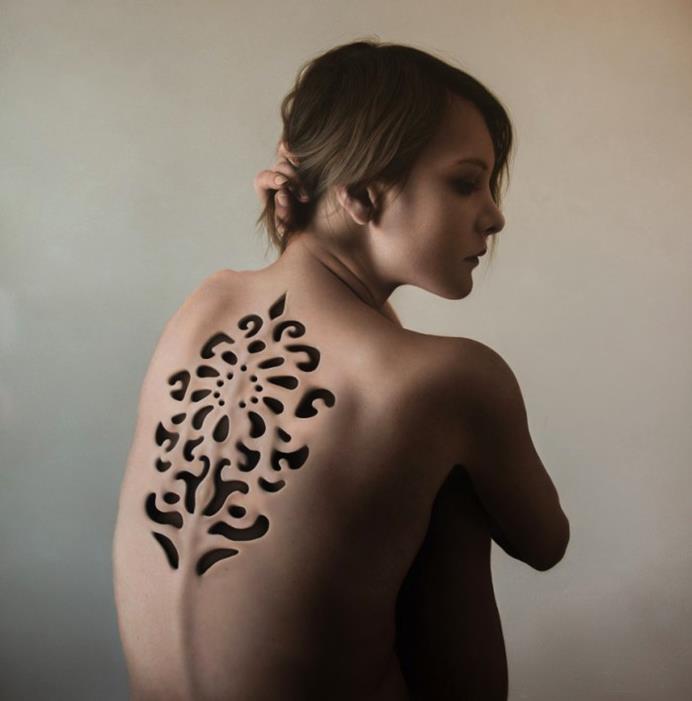
Empty Space
Empty Space is the most graphic image in the set. The cutout shape on the back gives the composition a strong black pattern, but the painting still depends on soft transitions across the shoulder, neck, and profile.

Blue Shawl
Blue Shawl is a useful example of how Grassi handles fabric. The blue pattern gives the portrait color and weight, but it does not overpower the face. The light is controlled enough that the skin, hair, and shawl all sit in the same believable room.
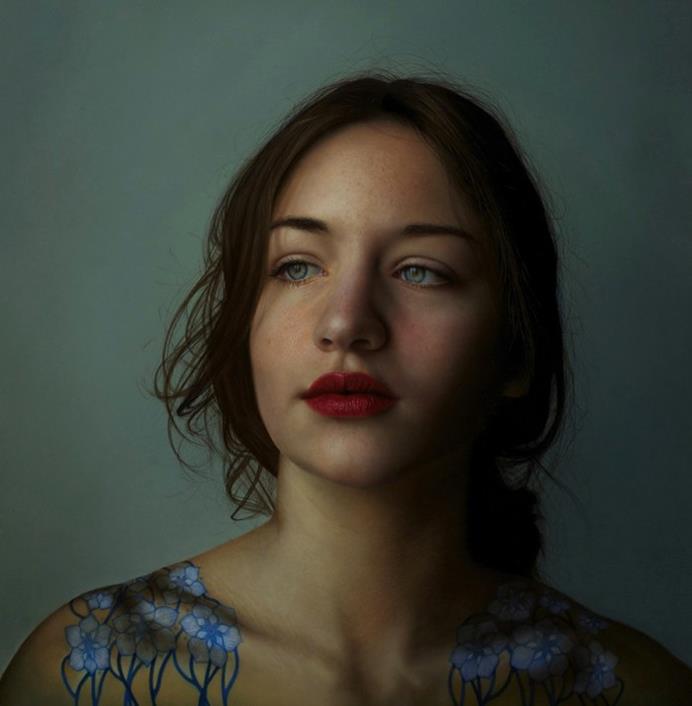
Phthalo
Phthalo feels quieter at first, then the color starts doing the work. The red lips, cool background, and blue floral detail make a limited palette feel rich without turning the portrait into fashion illustration.
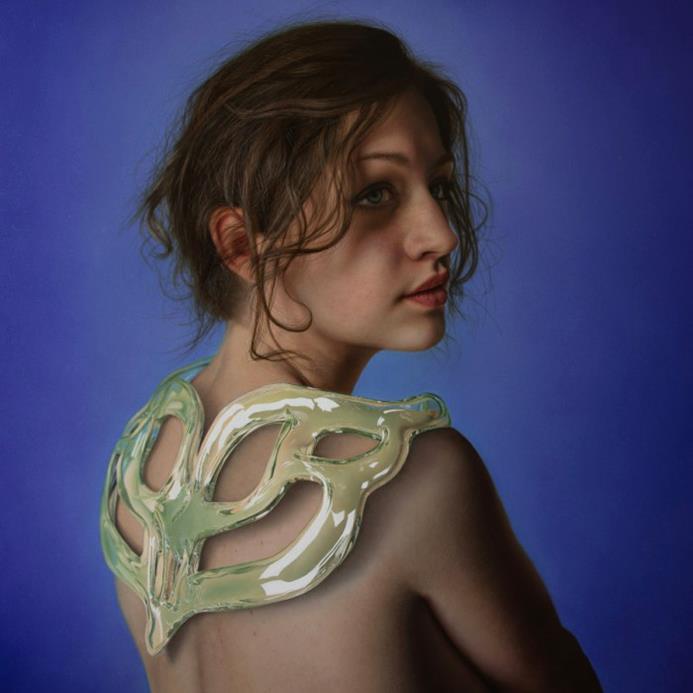
Virtual Reality
Virtual Reality leans into the strange side of hyperrealism. The glossy shoulder piece looks almost digital, but the face and damp-looking hair keep the image grounded. That tension between natural skin and artificial surface is the point.

Marco Grassi portrait study collage
This vertical collage is useful as a quick study board. Seen together, the paintings show Grassi returning to the same problems again and again: soft light, exact skin edges, decorative surface, and a face that does not feel over-posed.
A short history of hyper realistic painting
Hyper realistic painting grew from the longer history of realism and photorealism. Photorealism became visible as an art movement in the late 1960s and 1970s, when artists used photographs as source material and rebuilt them in paint with almost mechanical accuracy. If you want the broader art-history frame, the Tate photorealism overview and Britannica’s Photorealism entry are useful starting points.
Hyperrealism keeps the technical pressure of photorealism but often makes the image feel more staged, polished, emotional, or strange. In Marco Grassi’s case, the subject is usually a figure or portrait, but the extra surface detail changes the mood. You are not only looking at a face. You are looking at skin, pattern, costume, and illusion competing for attention.
How to study Marco Grassi’s hyper realism art
If you are using these paintings as an artist reference, do not start by copying the full portrait. Pick one small problem: an eye, a mouth corner, a fabric edge, a soft cast shadow, or the transition from skin to decorative pattern. Hyper realistic artwork improves through patient comparison, not through piling on detail everywhere.
- hyper realistic drawing techniques
- realistic eye drawing practice
- realistic lips drawing
- drawing face expressions
- perspective drawing basics
- photo to sketch workflow
- best sketchbooks for artists
- sketching ideas for practice
- drawing water and reflections
FAQ about Marco Grassi painting and hyperrealism
Q: What is Marco Grassi known for?
A: Marco Grassi is known for hyper realistic portrait painting, especially faces with soft light, carefully painted skin, and decorative details that blur the line between body, fabric, porcelain, and surface design.
Q: Is Marco Grassi a hyperrealist artist?
A: Yes. His work fits the hyperrealism conversation because the paintings read with photographic precision, but they are not only copies of a camera image. The strange surface details and controlled mood make the portraits feel more constructed and psychological.
Q: What should I notice first in a Marco Grassi painting?
A: Start with the edges around the eyes, lips, hair, and shoulders. Then look at the secondary surface: lace, a shawl, a glossy ornament, or a painted floral pattern. The realism works because both skin and decoration are handled with equal patience.
Q: How is hyperrealism different from photorealism?
A: Photorealism grew from late-1960s and 1970s artists working from photographs with extreme accuracy. Hyperrealism usually pushes that accuracy into a more staged, emotional, or uncanny image, where the painting feels sharper or stranger than ordinary observation.
Q: Can beginners learn from Marco Grassi paintings?
A: Beginners can learn a lot, but not by trying to copy every detail at once. Use the paintings to study value, soft edges, skin temperature, and where the focal point sits. A small eye or fabric study is more useful than a rushed full portrait.
Q: What keywords best describe this page?
A: The most useful keyword cluster is Marco Grassi painting, Marco Grassi artist, hyper realistic painting, hyper realism art, hyper realistic artwork, and hyper realistic portraits. These phrases match the page without forcing the same wording into every caption.
Conclusion
Marco Grassi’s paintings work because the realism is controlled, not just detailed. The portraits feel photographic at first glance, but the longer you look, the more the decorative surfaces start to steer the mood. That is the useful lesson here: hyper realistic painting is strongest when accuracy supports an idea, not when detail is the only idea.
- 53shares
- Facebook0
- Pinterest53
- Twitter0
- Reddit0