I get asked the same question almost every week from clients getting their first dragon piece: “which way should it face?” Most of them have no idea that’s actually a design decision, not superstition. That’s the thing about dragon tattoos — everyone knows they mean “strength” and “power,” but the real meaning splits into four separate layers: which culture’s dragon you’re drawing, what color it is, which direction it flows, and where it sits on your body.
- What a dragon tattoo means, at a glance
- Dragon tattoo meaning by culture
- Dragon tattoo color meanings
- Direction and placement: does it actually matter?
- Dragon tattoo meaning for men vs. women
- Is a dragon tattoo a good idea? Things to consider
- Popular dragon tattoo styles, from a designer's eye
- Conclusion
- FAQ
- Q: Is a dragon tattoo good or bad luck?
- Q: Should a dragon tattoo face up or down?
- Q: Is getting a dragon tattoo a sin in Christianity?
- Q: What does a dragon tattoo mean on a woman?
- Q: What's the difference between a Chinese and Japanese dragon tattoo?
- Q: Are dragon tattoos considered masculine or feminine?
- Q: What's the most popular dragon tattoo placement?
- Q: Do dragon tattoo colors fade differently?
Get those four right and the piece reads as intentional. Get them wrong and it just looks like a big lizard. I’ll walk through all four, plus the placement and gender questions people actually search for, from the perspective of someone who’s spent fifteen years thinking about how form and line move across a surface, whether that surface is a car body or a shoulder blade.
What a dragon tattoo means, at a glance
Strip away the cultural nuance and dragon tattoos boil down to four recurring ideas: strength, wisdom, protection, and transformation. That’s true whether you’re looking at a Chinese imperial dragon or a Western fire-breather, which is part of why the symbol has stayed popular across so many centuries and continents.
But “strength and wisdom” is the shallow answer, and it’s the one every generic listicle stops at. The deeper truth is that dragons split hard along cultural lines. An East Asian dragon (Chinese, Japanese, Korean) is almost always a benevolent force: a guardian, a bringer of rain and fortune, a symbol of balance. A Western dragon is the opposite instinct: something fierce to be fought and overcome, which flips the whole meaning from “harmony” to “conquest.” Neither reading is wrong. They’re just answering different questions about what you want the tattoo to say about you.
That’s the real starting point before you pick a design: are you telling a story about balance, or about a fight you won?
Dragon tattoo meaning by culture
Pick the wrong cultural style for the meaning you want and the tattoo tells the wrong story, no matter how well it’s drawn. I’ve watched clients ask for a “fierce protector” dragon and hand the artist a reference photo of a Western dragon mid-attack, which reads as aggression, not protection. The four traditions below aren’t interchangeable skins on the same creature. They’re different animals with different jobs.
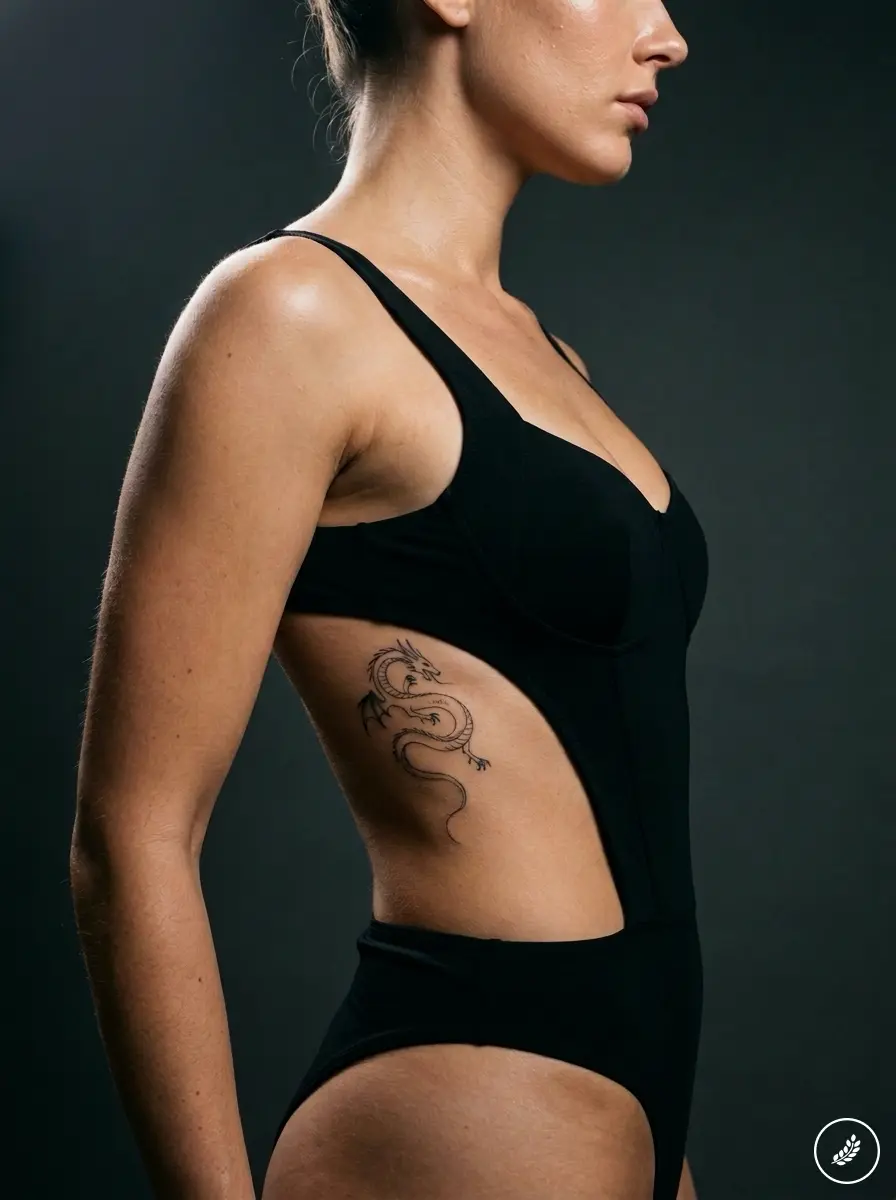
Chinese dragon tattoo meaning
The Chinese dragon, or long, was an imperial symbol for centuries, literally reserved for the emperor. A five-clawed dragon meant royalty; anyone else got four claws or fewer. That hierarchy still shapes the tattoo today: it reads as prosperity, good fortune, and authority rather than raw aggression. The body is long, serpentine, and usually shown weaving through clouds or chasing a flaming pearl, which represents wisdom or spiritual power.
There’s also the yin-yang layer. The dragon pairs with the phoenix in Chinese symbolism, masculine and feminine, sky and earth, in balance. A solo dragon still carries a trace of that idea: power that’s controlled, not chaotic.
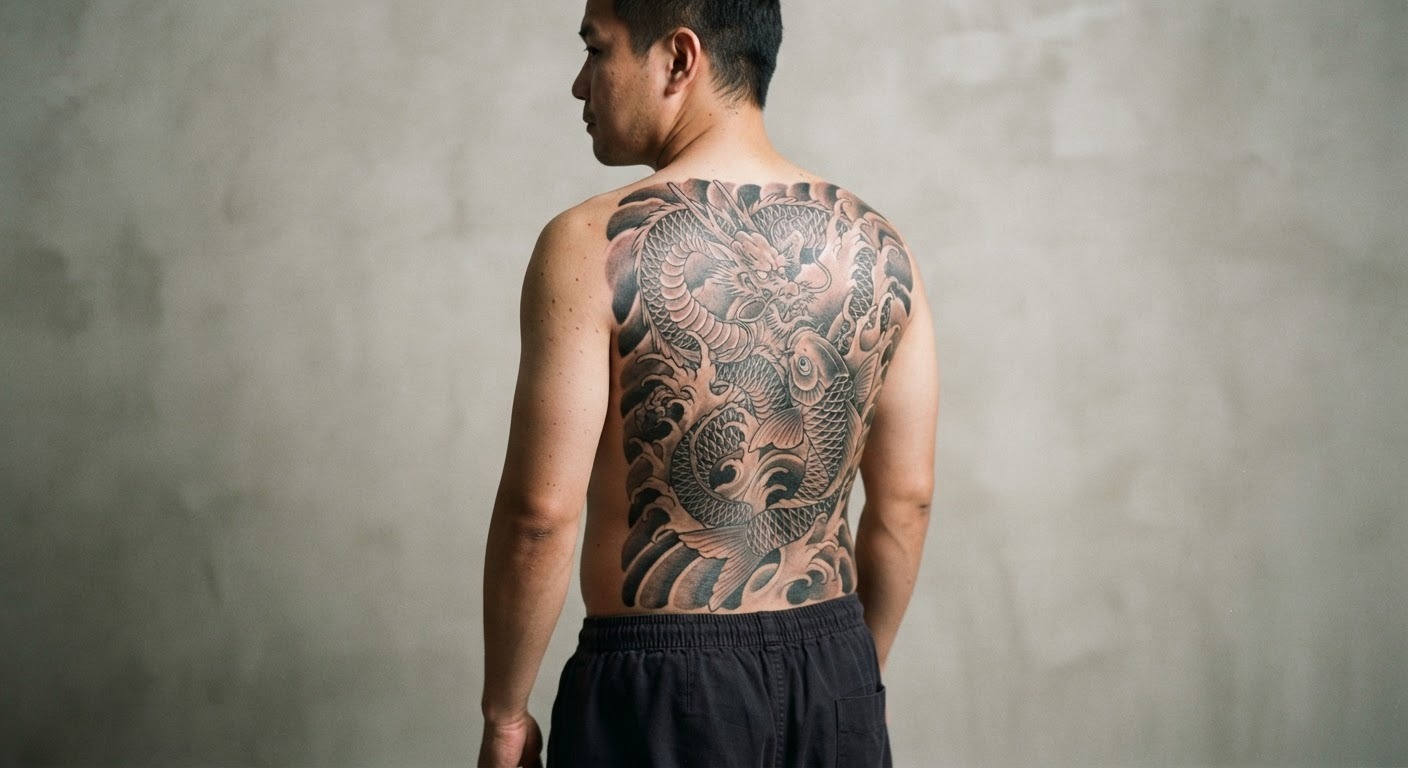
Japanese dragon tattoo meaning
Japanese dragons come from a gentler mythology. In Irezumi tradition, the dragon (ryu) is a water deity, a guardian of rain, rivers, and balance in nature. It’s benevolent by default, which is the opposite instinct from most Western dragon art. That’s why you’ll often see a Japanese dragon paired with a koi fish mid-transformation. The legend says a koi that swims upstream far enough becomes a dragon, so the pairing symbolizes perseverance and earned strength, not inherited power.
Three claws instead of five is the traditional Japanese count, a small detail that matters if you care about getting the reference right. The line work tends toward flowing, almost liquid movement, since the dragon is meant to look like it’s swimming through air the way it would through water.
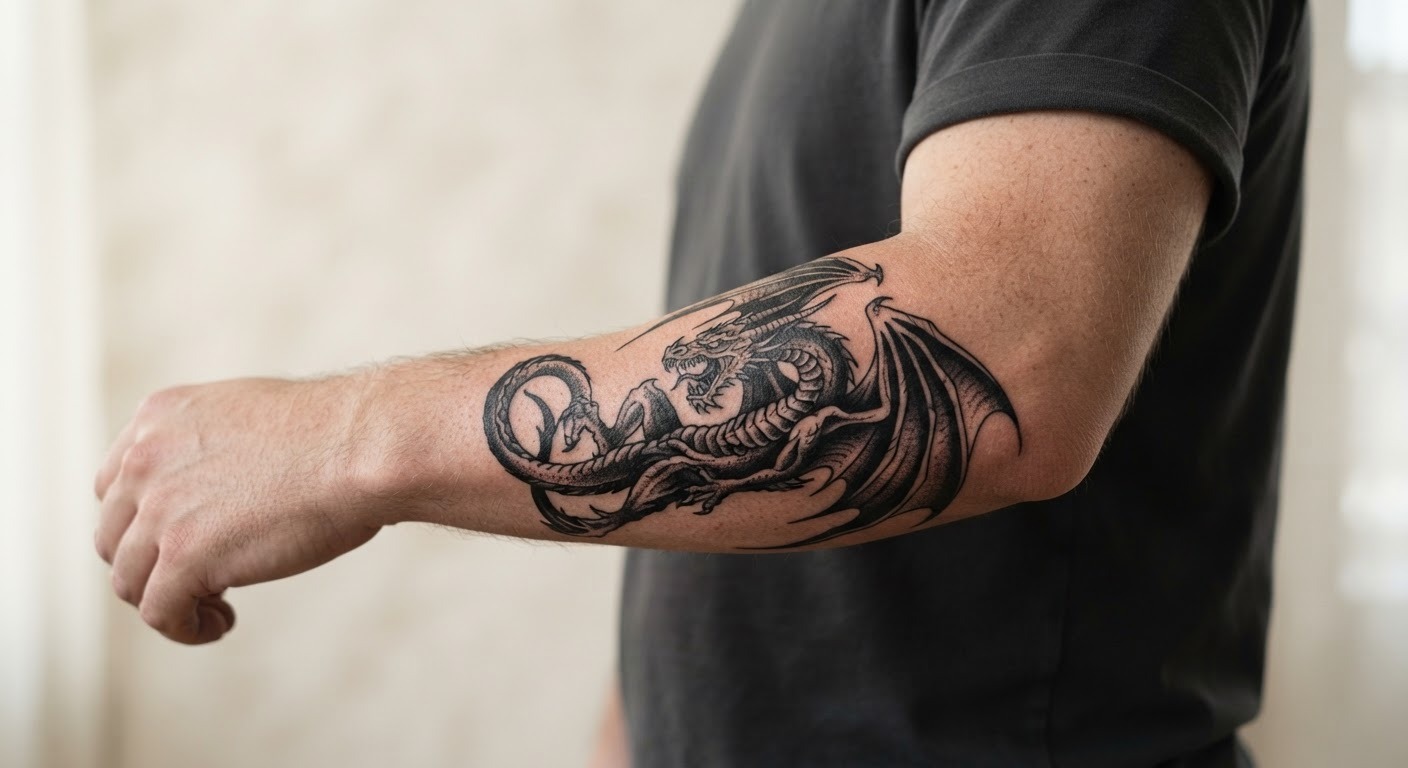
Western dragon tattoo meaning
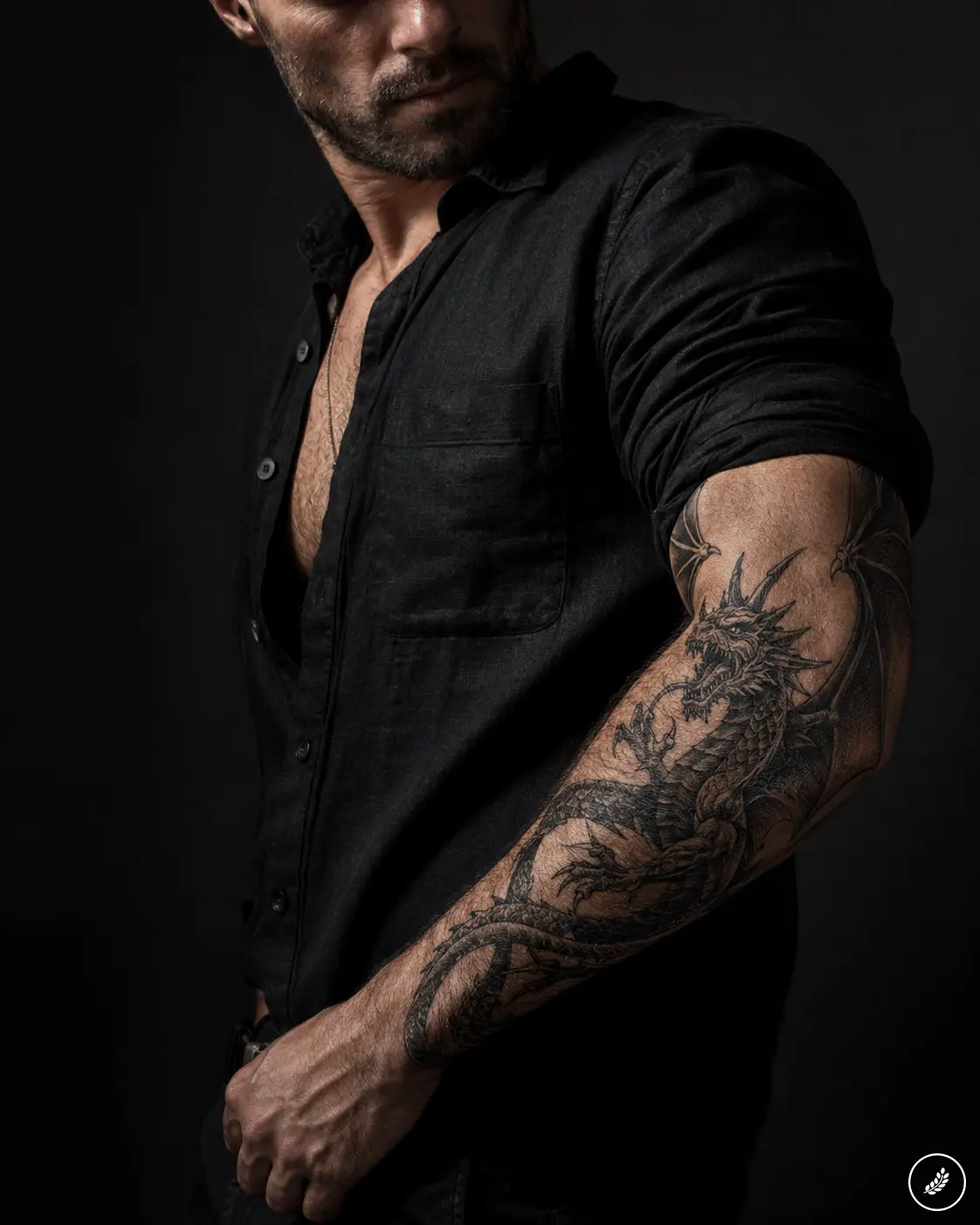
Flip to European folklore and the dragon becomes something to fight, not follow. Winged, fire-breathing, guarding treasure or terrorizing a village until a knight shows up. That adversarial role is baked into the Western dragon tattoo: it usually symbolizes a battle already won. Independence. A warrior spirit. Proof you faced something bigger than yourself and didn’t back down.
This is the style that reads most “aggressive” on skin, heavy shading, exposed teeth, wings spread. If your story is about overcoming something specific, addiction, illness, a hard year, this cultural lane fits better than the Eastern guardian dragons.
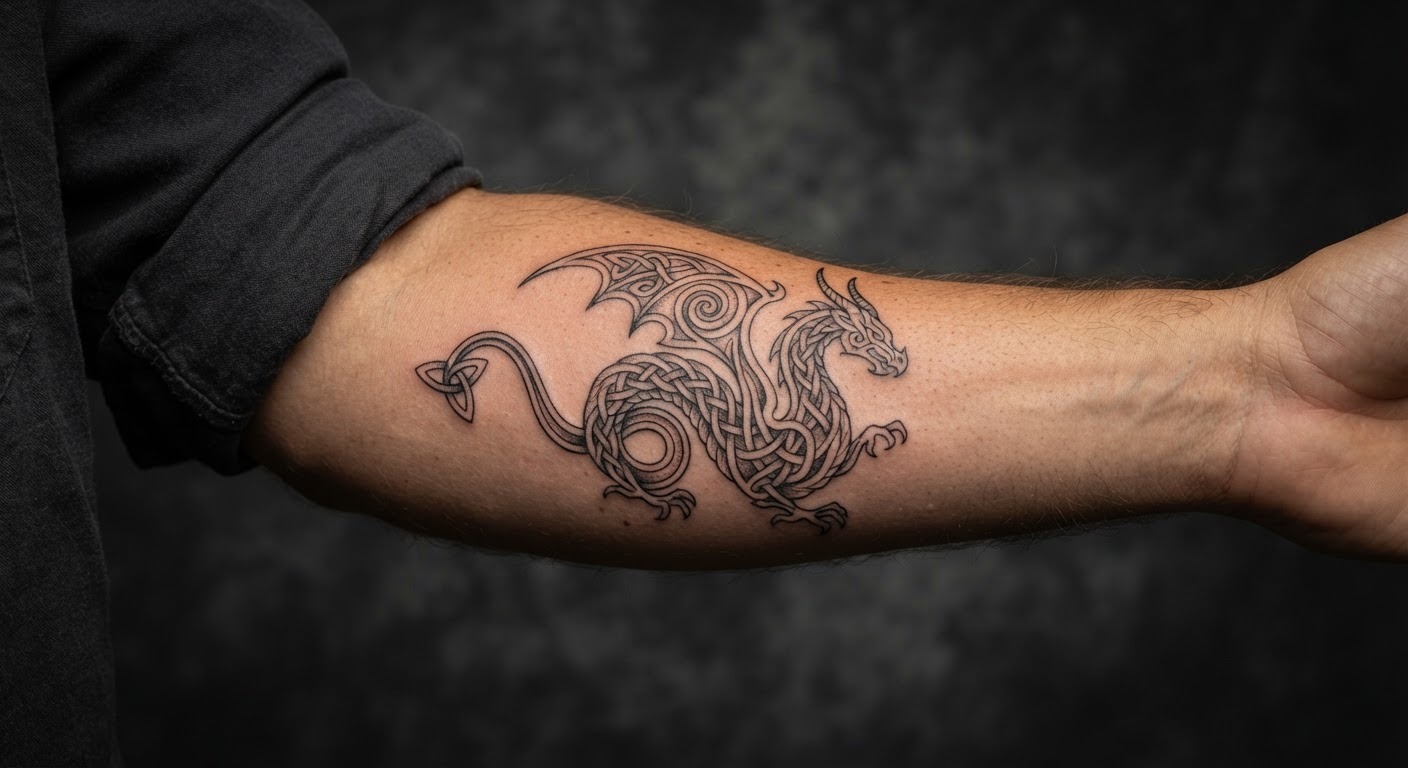
Celtic dragon tattoo meaning
Celtic dragon tattoos rarely look like dragons at all in the literal sense. They’re built from knotwork and spiral patterns, the same visual language as Celtic crosses and triskeles, which ties the dragon to land and continuity rather than combat. The symbolism leans toward earth-power and eternal protection, the idea that the land itself has a guardian spirit woven through it.
From a pure design standpoint, this is the style I find most interesting to draw. The dragon shape has to emerge from an interlocking pattern without breaking the knotwork’s continuous line, which is a genuinely hard composition problem, closer to solving a puzzle than sketching a creature.
Dragon tattoo color meanings
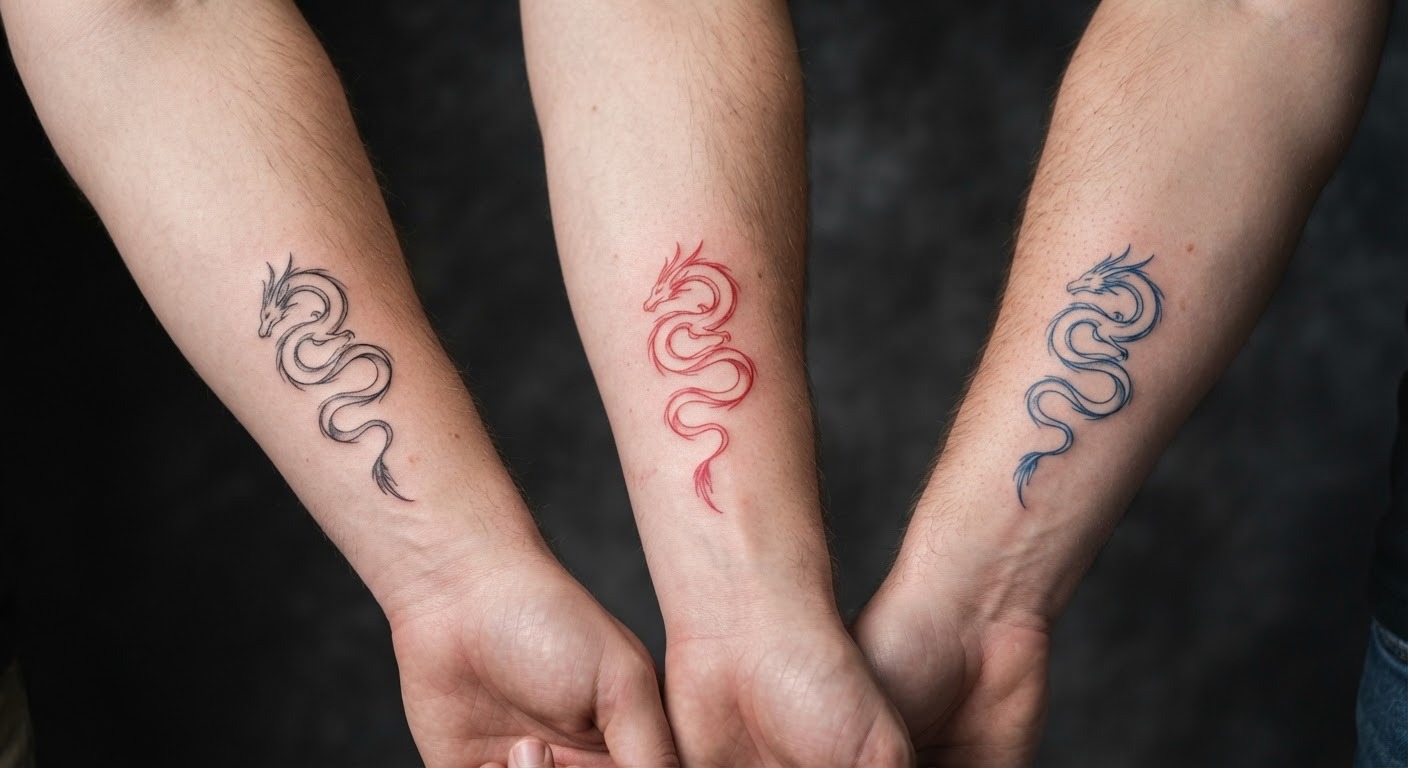
Culture sets the dragon’s personality; color adjusts its volume. The same Chinese-style dragon reads completely differently in red than it does in black, even with identical linework. I always tell clients to pick color after they’ve settled on meaning, not before, because color is where most people accidentally contradict themselves, like choosing a “calm protector” story and then inking it in aggressive scarlet red.
Red dragon tattoo meaning
Red is the loudest choice on the color wheel, and dragon tattoos wear it well. It carries passion, aggression, and raw power, the color of fire and blood in nearly every mythology that features dragons. In Chinese tradition specifically, red also ties to luck and celebration, so a red dragon can lean festive rather than fierce depending on the rest of the design.
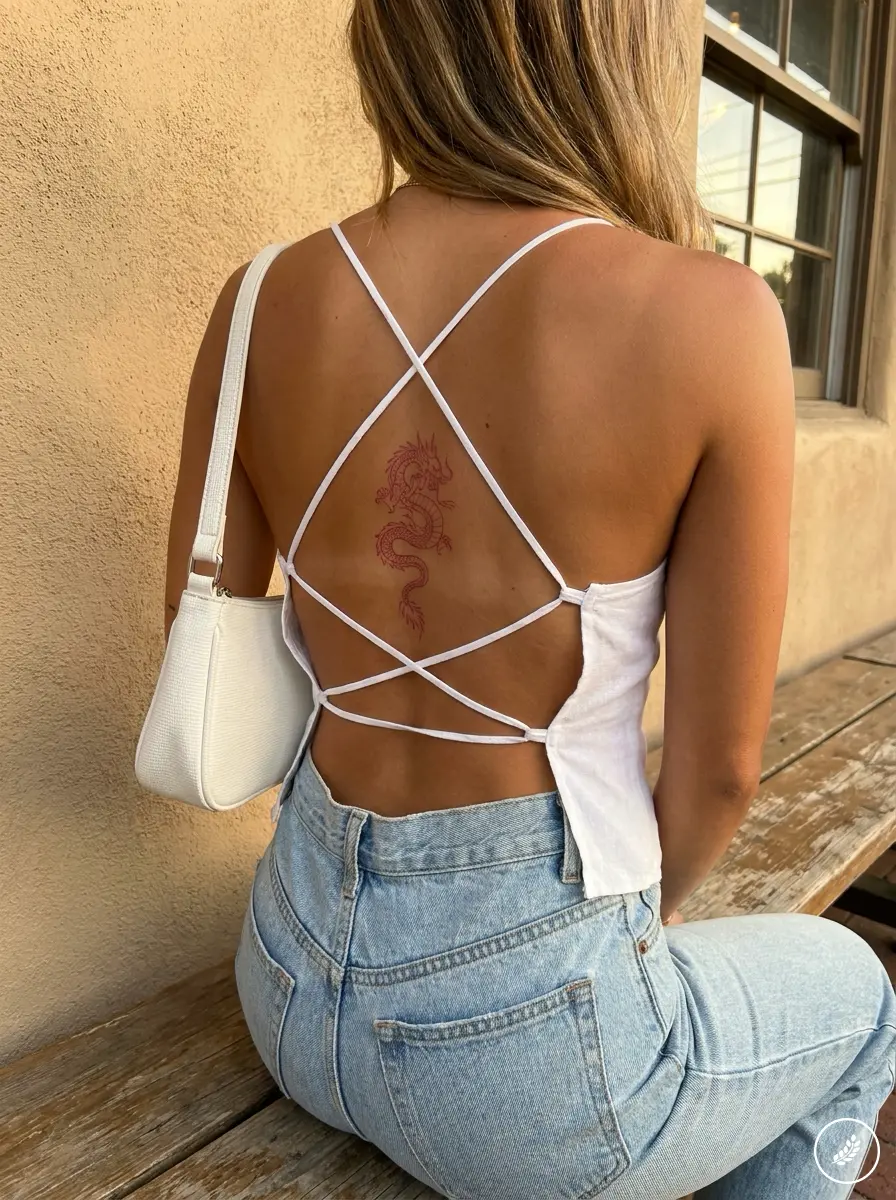
Red ink fades faster than black on most skin tones, which is a practical detail nobody mentions until year three. If you’re set on red, ask your artist about pigment density and expect a touch-up sooner than you would with a black and grey piece.
Black dragon tattoo meaning
Black is the default for a reason. It’s mystery, strength, and a certain refusal to explain yourself. A black dragon tattoo doesn’t announce a specific cultural story the way red or green can; it just sits there, heavy and permanent, which is exactly why so many first-timers land on it. Less decision fatigue, more staying power, and it ages better than any other color in the lineup.

There’s also a design argument for black I like making to clients: shading does more work than color ever could. A well-shaded black dragon has more visual depth than a flat-colored one, the same way a matte-black car body reads more sculptural under light than a glossy one does.
Blue and green dragon tattoo meaning
Blue dragons pull toward calm authority, wisdom without ego, the water-deity energy from Japanese tradition carried into a single color choice. It’s the pick for people who want strength read as composure rather than force.
Green shifts the story toward nature, growth, and renewal. Less about winning a fight, more about coming back from one. I’ve seen it used well on pieces tied to recovery, a second chapter, something rebuilt rather than defended.
Direction and placement: does it actually matter?
If a dragon feels too bold for your first plan, compare it with other tattoo ideas for women before choosing between fine-line, floral, symbolic, and blackwork styles.
Should a dragon tattoo face up or down?
This is the question I get more than any other, and it doesn’t have a mythological answer, it has a design one. There’s an old superstition floating around tattoo forums that a downward-facing dragon means bad luck or defeat, while an upward-facing one means ambition and rising power. I’d skip the folklore and think about it the way I’d think about a body line on a car.
A dragon facing up an arm, head toward the shoulder, creates visual momentum that pulls the eye upward and outward, which reads as ascending, active, reaching. Point the head down toward the wrist instead and the same design reads grounded, coiled, more defensive than aspiring. Neither is “wrong.” It’s the same logic as deciding whether a fender line should sweep up toward the A-pillar or settle low toward the wheel arch: both are valid, they just tell the eye a different story about motion.
The one placement I’d actually push back on: a dragon head aimed straight down toward your palm on the inner forearm. It fights the natural sightline of the arm and ends up looking cramped instead of intentional, regardless of which direction “means” something.
Best placements: sleeve, back, forearm
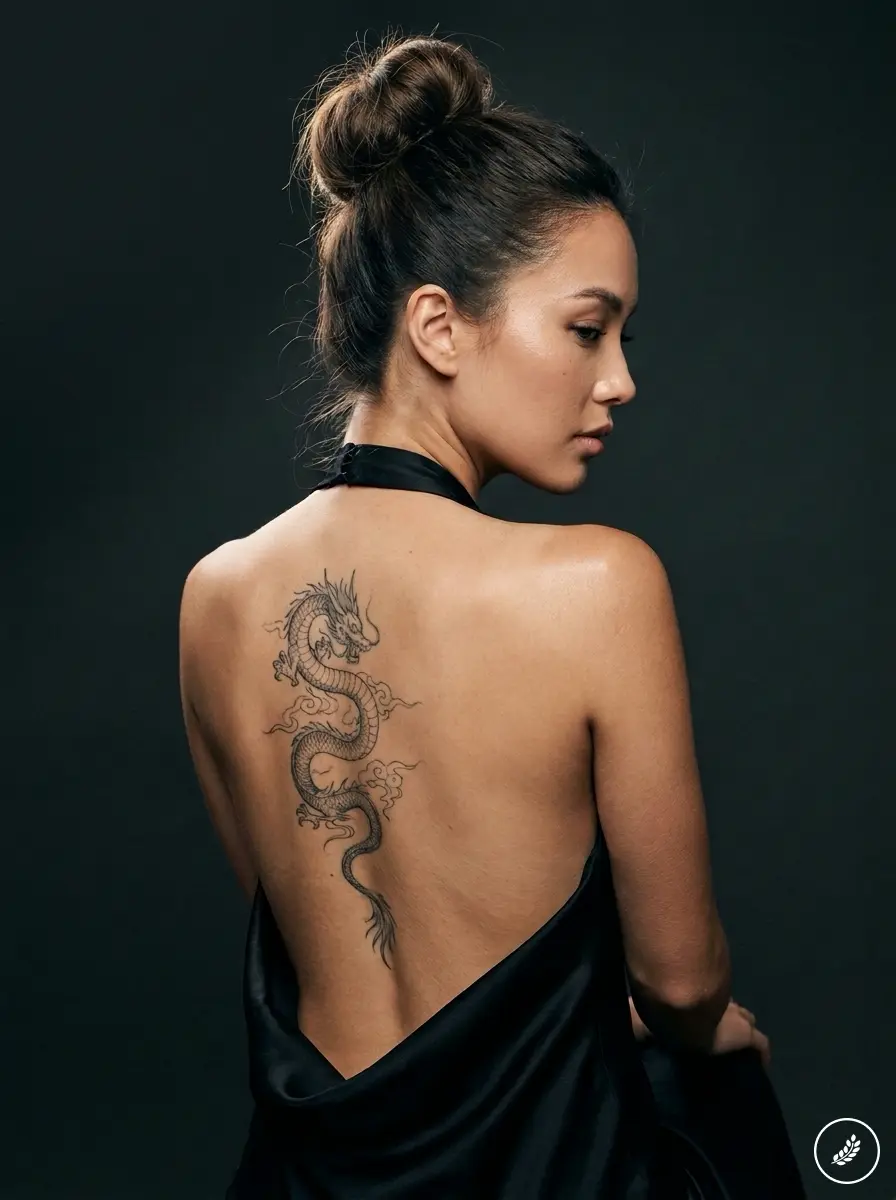
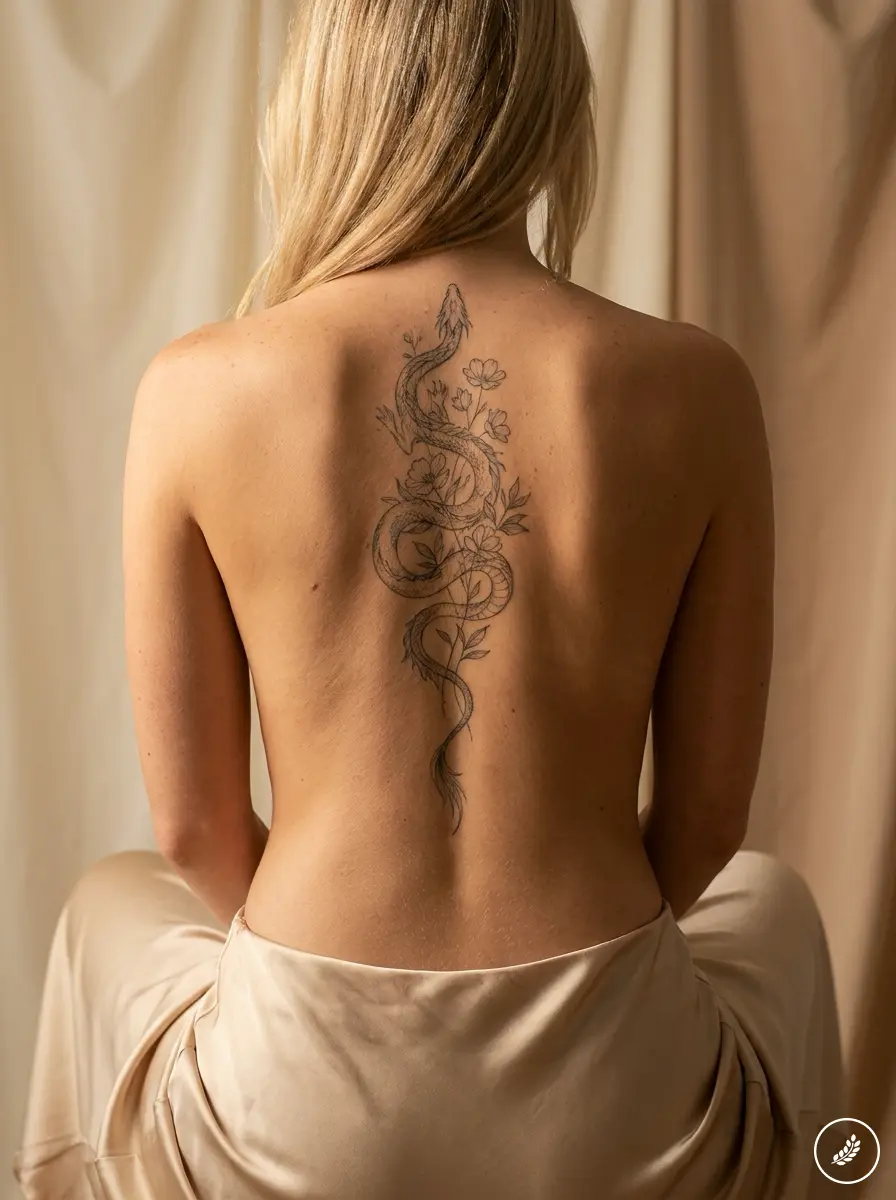
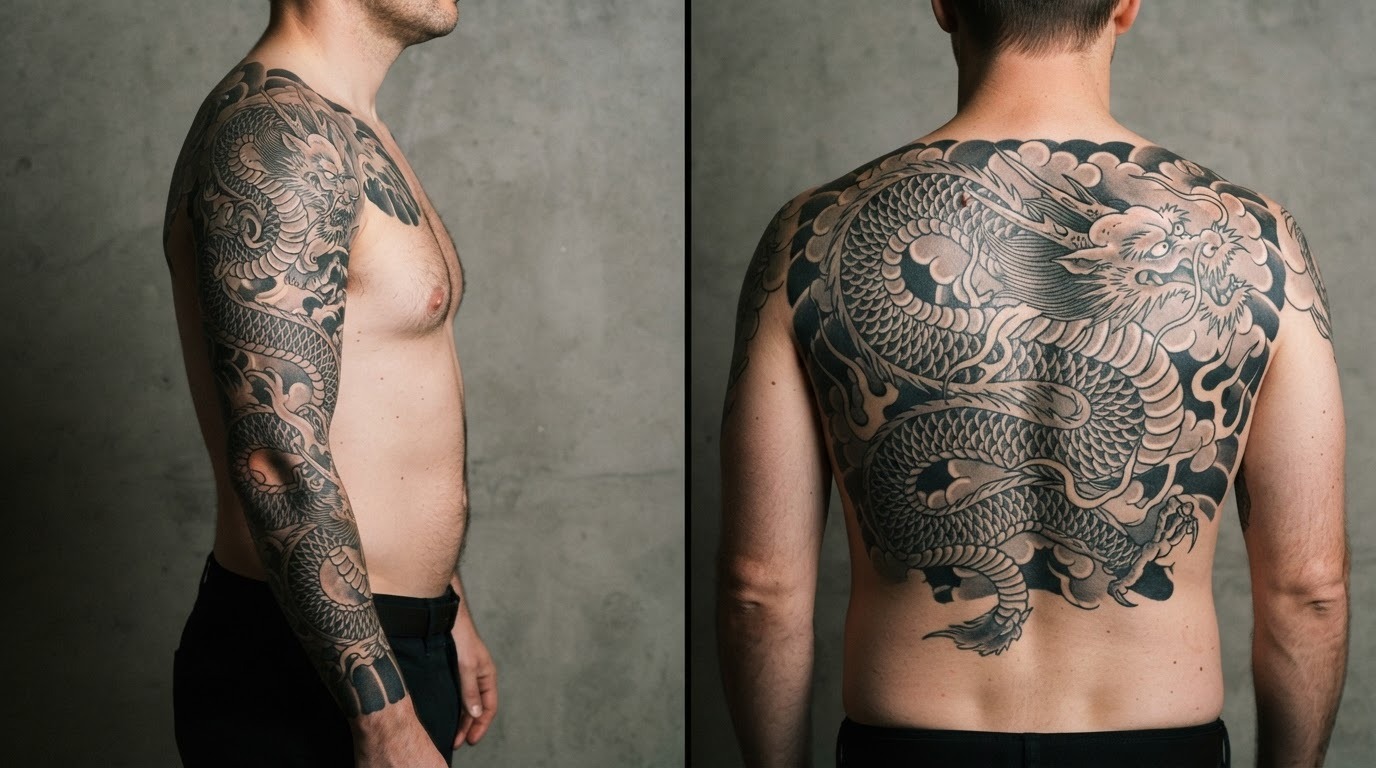
The back is the most forgiving canvas for a dragon tattoo, full stop. You get width and length to let the body actually serpentine the way dragon anatomy wants to, shoulder blade to shoulder blade, spine as the natural axis. It’s why so many large-scale, highly detailed pieces end up there.
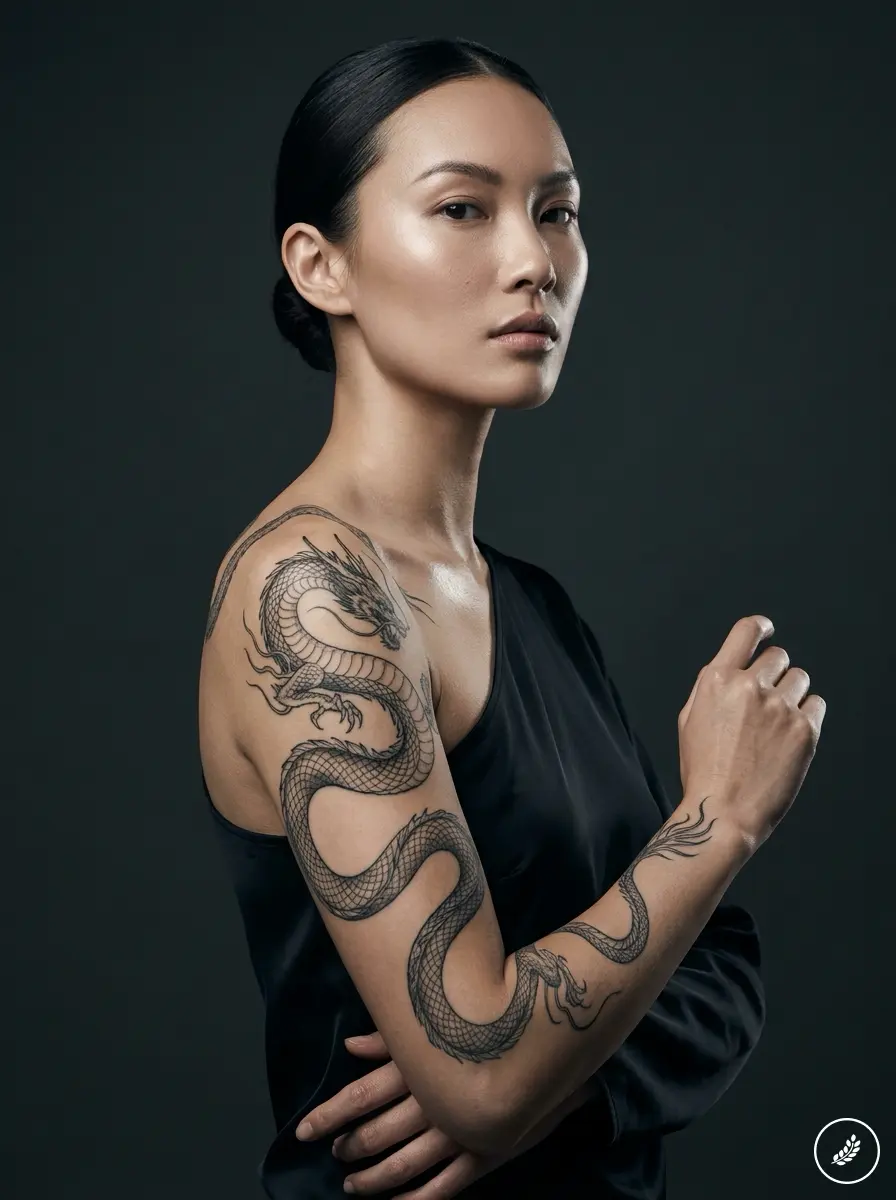
A sleeve is the second-best option and the one I recommend most for first-timers who want visibility without full-back commitment. The arm’s natural taper, wider at the shoulder, narrower at the wrist, gives the dragon body a built-in perspective cue, like it’s genuinely wrapping around a three-dimensional form instead of sitting flat on skin.
Forearm-only pieces work best for a partial dragon: a head, a coiled section, a claw gripping the wrist. Trying to cram a full serpentine body into forearm space alone usually forces the artist to compress the design until it loses the flow that makes dragon tattoos work in the first place.
Dragon tattoo meaning for men vs. women
Meaning doesn’t actually change by gender, culture and color still do the heavy lifting, but there’s a real difference in how the design gets adapted, and it’s worth addressing since it’s one of the most-searched angles on this topic.
Dragon tattoo meaning for men
Traditional dragon tattoo placement and scale skew toward men mostly for reasons of visibility and social convention, not symbolism. Full sleeves, back pieces, and chest panels show up more often on male clients, and the styles tend to lean into the fiercer end of the spectrum, exposed teeth, heavier shading, Western-style aggression, or bold Japanese Irezumi. The underlying meaning stays the same as everywhere else: dominance, resilience, having survived something.
What I’d actually flag for guys getting their first large piece: bigger isn’t automatically better. A tightly composed forearm dragon with clean linework reads more intentional than an oversized back piece rushed through in one sitting to hit a deadline before a trip or an event.
Dragon tattoo meaning for women
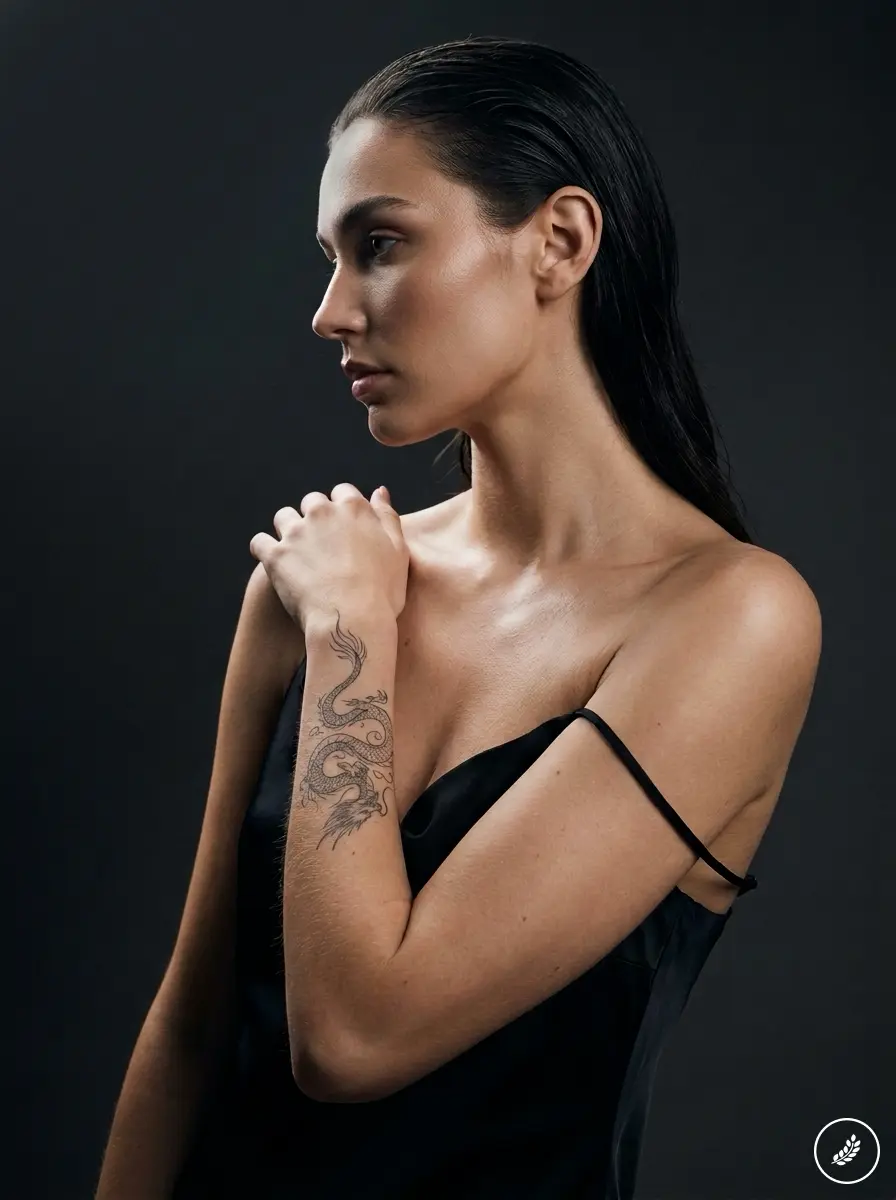
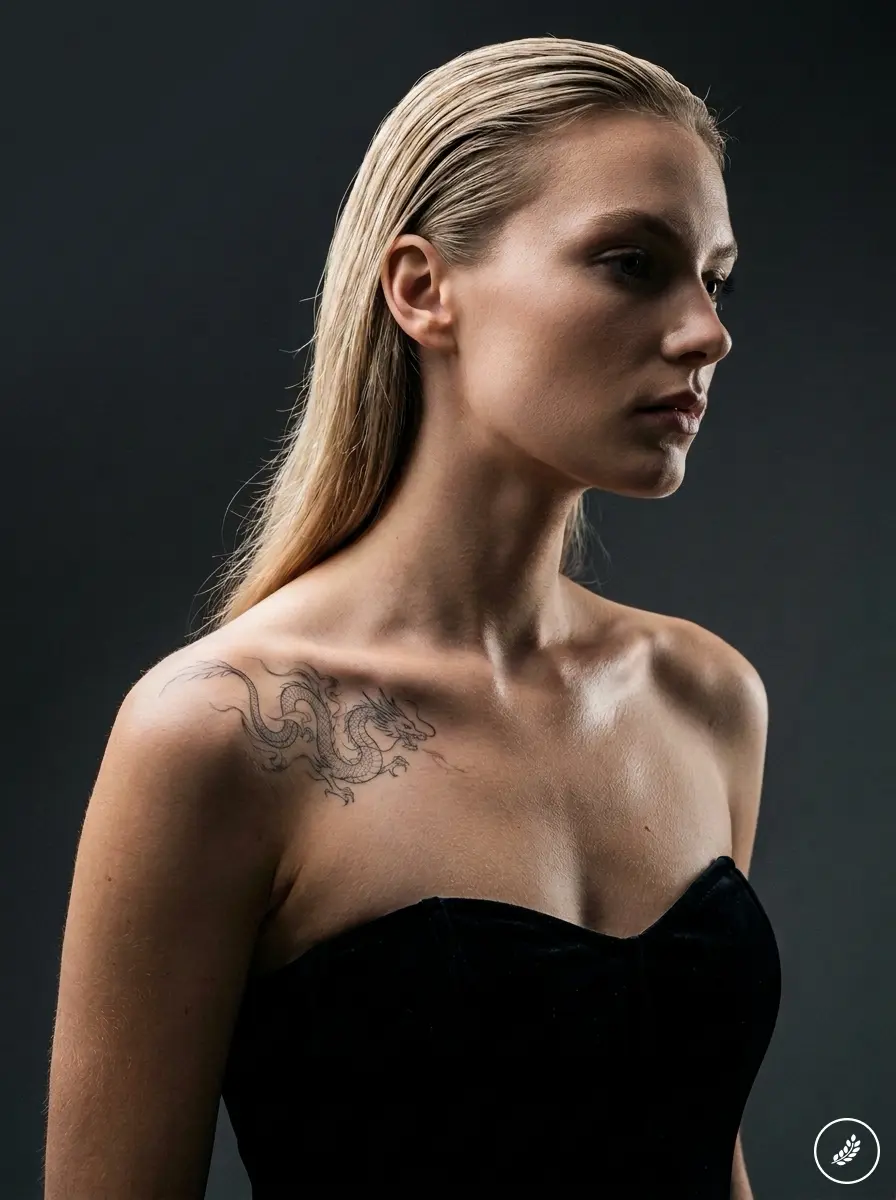
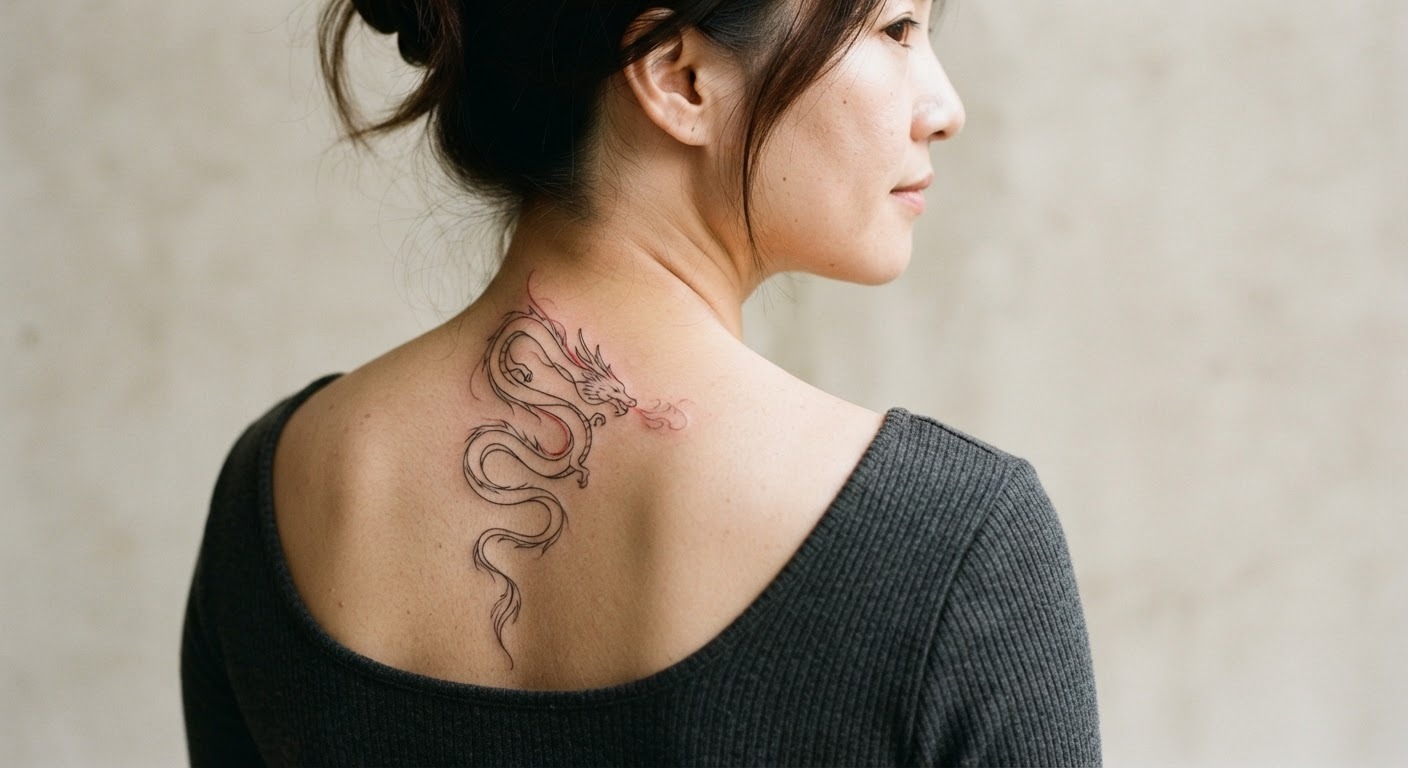
The “female dragon tattoo” search volume is real and growing for a reason: the symbol works just as hard on smaller, more delicate placements without losing any of its weight. Wrist, shoulder blade, ribcage, and ankle pieces are common, often rendered in fine-line style with a single color accent rather than full black saturation.
Strength doesn’t need to be loud to be strength. I’ve drawn small single-line dragons for clients that carry exactly as much meaning as a full sleeve, they just say it quietly instead of shouting it. Blue and soft red tend to be the most requested colors here, both for the calmer symbolism and because fine-line work holds those tones well over time.
Is a dragon tattoo a good idea? Things to consider
The religious question: is it a sin or satanic?
This comes up more than you’d expect, mostly from people raised in traditions where dragons appear as antagonists, the serpent in Eden, the beast in Revelation. Here’s the honest answer: a symbol’s meaning depends on the intention behind it. A dragon tattoo chosen for strength, resilience, or cultural heritage isn’t an act of worship toward anything. The Western dragon-as-villain framing is a specific medieval European reading, not a universal one, and it sits alongside centuries of Chinese and Japanese traditions where the same creature is a protector, not an adversary.
If it matters to you personally, that’s worth sitting with before you book an appointment, no design choice is worth ongoing internal conflict. But there’s no theological consensus that a dragon tattoo itself is sinful. It’s a mythological creature with wildly different roles depending on which culture you’re pulling from, which is really the whole point of this article.
Practical questions to ask before booking
Beyond the symbolism, a few practical decisions determine whether you’ll still like the piece in ten years:
Size relative to placement matters more than people think. A detailed dragon with fine scale work and cloud linework needs real surface area, cramming that level of detail into a 3-inch forearm space usually means it blurs into a dark blob within a few years as ink settles.
Match the artist to the style, not the other way around. A tattooer who’s excellent at bold Western blackwork isn’t necessarily the right pick for a delicate Japanese Irezumi piece, ask to see healed work in the specific dragon style you want, not just their general portfolio.
Color commitment is a long-term decision. Red and green fade faster than black, so if you’re set on a colored dragon, plan on a touch-up appointment around the two-to-three-year mark and budget for it upfront rather than being surprised later.
Popular dragon tattoo styles, from a designer’s eye
Here’s where fifteen years of thinking about form pays off in a way that has nothing to do with mythology. A dragon tattoo lives or dies on how well the artist handles three things: scale rendering, line weight, and flow, the exact same principles that separate a car with a coherent silhouette from one that looks like it was designed by committee.
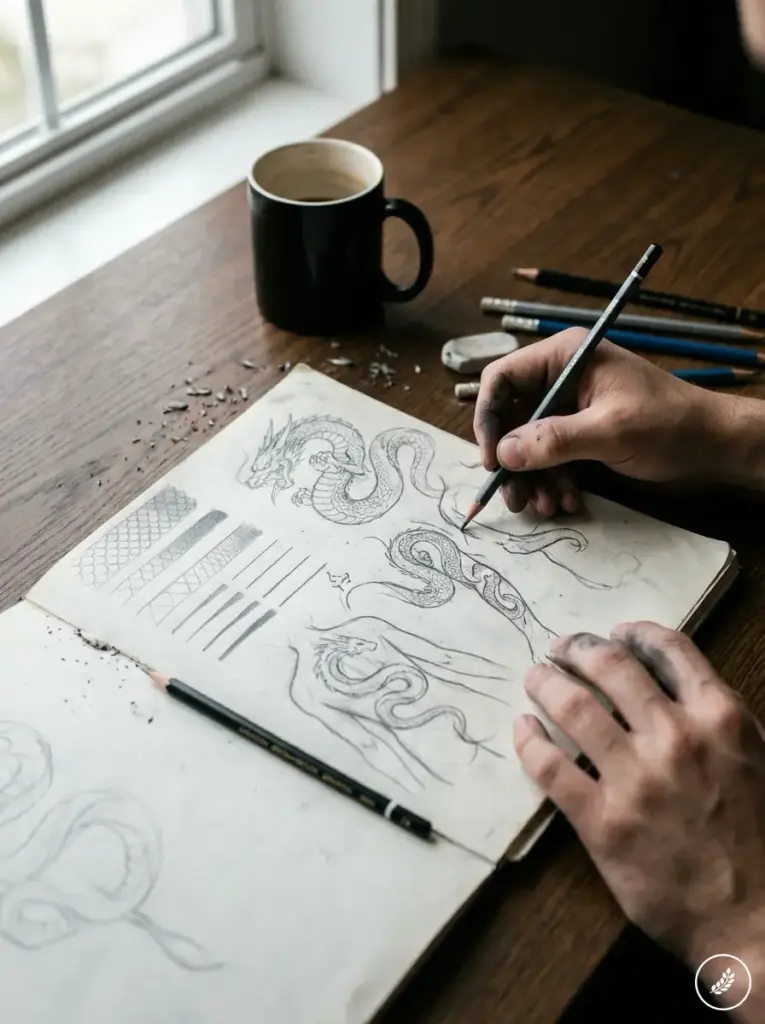
Scale rendering is the detail most people underestimate. Individual scales aren’t decoration, they’re what gives the body its sense of volume and direction, the way panel gaps and character lines tell your eye where a car’s surface curves before you even touch it. Overlapping scales that shrink slightly toward the tail create implied perspective on a flat area of skin. Skip that gradient and the dragon reads as a printed pattern instead of a body with mass.
Line weight is the second lever, and it’s where styles diverge the most. Japanese Irezumi keeps line weight relatively consistent and lets shading carry the depth. Western blackwork does the opposite, thick outer contours, sharp weight changes at joints and claws, which is what gives that style its punchier, more graphic read. Neither is more “correct.” They’re different tools for different effects, the same way a design brief calls for either soft, continuous surfacing or hard, defined creases depending on the character you’re going for.
Flow is the hardest to get right and the easiest to spot when it’s wrong. A dragon’s serpentine body has to follow the underlying anatomy it’s placed on, wrapping a bicep, curving down a spine, tapering along a forearm, or it fights the body instead of moving with it. I always tell clients to picture how the design would look mid-motion, arm bent, back twisted, not just standing flat and still, because that’s the position the tattoo will actually be seen in most of the time.
Conclusion
A dragon tattoo means whatever combination of culture, color, direction, and placement you build into it, not a single fixed symbol you can look up in one line. A Chinese dragon chasing a pearl says something different than a Western dragon with bared teeth, and a red dragon shouts where a black one just sits with quiet weight. The direction it faces and where you place it on your body aren’t superstition, they’re composition decisions that change how the whole piece reads.
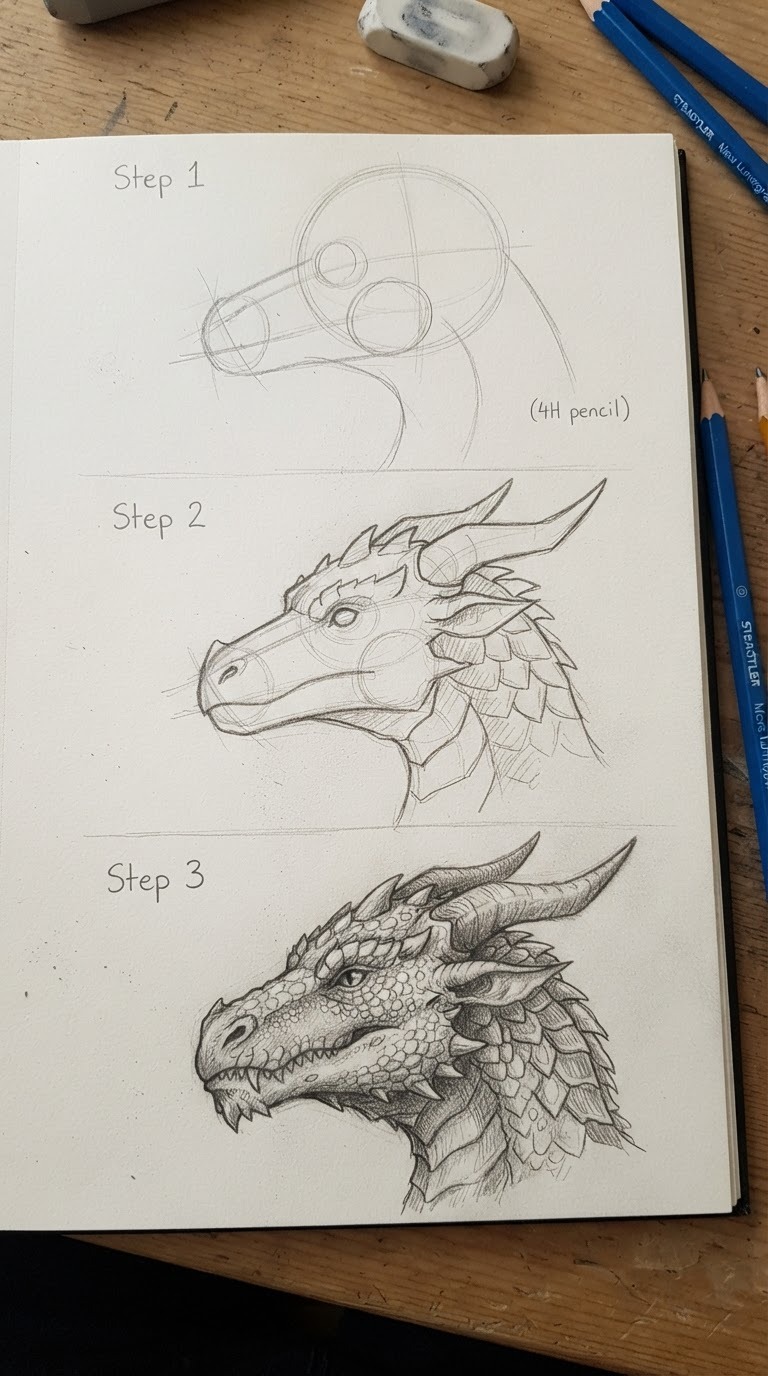
If you’re still sketching out the design, it’s worth spending as much time on those four layers as you would on the mythology itself. That’s what separates a dragon tattoo that ages well from one that just fills space. If you want to see how I build out the linework and scale detail from scratch, my dragon head drawing tutorial walks through the exact process step by step.
FAQ
Q: Is a dragon tattoo good or bad luck?
It depends entirely on which tradition you’re drawing from. In Chinese and Japanese culture, dragons are protective, prosperity-bringing symbols, good luck by default. In Western folklore, they’re adversaries meant to be defeated, so a Western-style dragon leans more toward “battle won” than “luck.” Neither reading is bad luck on its own.
Q: Should a dragon tattoo face up or down?
There’s no fixed rule, it’s a design choice, not superstition. A dragon facing up an arm creates upward visual momentum and reads as ascending or ambitious. Facing down reads more grounded and defensive. Pick based on the story you want the piece to tell, not folklore you found on a forum.
Q: Is getting a dragon tattoo a sin in Christianity?
There’s no theological consensus that it is. The dragon-as-villain reading comes from specific European and biblical imagery, but it sits alongside centuries of Eastern traditions where the same creature is a protector. Meaning follows intention, a dragon chosen for strength or heritage isn’t an act of worship.
Q: What does a dragon tattoo mean on a woman?
The same core meanings, strength, resilience, protection, just often expressed through smaller, more delicate placements. Wrist, shoulder blade, and ribcage pieces in fine-line style with a single color accent are common, and they carry just as much weight as a full sleeve.
Q: What’s the difference between a Chinese and Japanese dragon tattoo?
Chinese dragons trace back to imperial symbolism, five claws, associations with prosperity and authority, often shown chasing a flaming pearl. Japanese dragons come from a gentler, water-deity mythology, three claws, flowing linework, frequently paired with a koi mid-transformation.
Q: Are dragon tattoos considered masculine or feminine?
Neither, culturally. The gender split you see in placement and scale (large back pieces vs. fine-line wrist pieces) is more about social convention than symbolism. The meaning, strength and resilience, applies equally regardless of size or placement.
Q: What’s the most popular dragon tattoo placement?
The back offers the most room for a dragon’s serpentine body to move naturally, which makes it the top choice for large, detailed pieces. Sleeves are the close second for people who want visibility without a full-back commitment.
Q: Do dragon tattoo colors fade differently?
Yes. Red and green fade noticeably faster than black on most skin tones, often needing a touch-up around the two-to-three-year mark. Black and grey pieces hold their depth longest, which is part of why black remains the most common choice.
For more design directions before you commit to a sketch, browse the Sky Rye Design tattoo ideas hub.
- 2.5Kshares
- Facebook0
- Pinterest2.5K
- Twitter0
- Reddit0