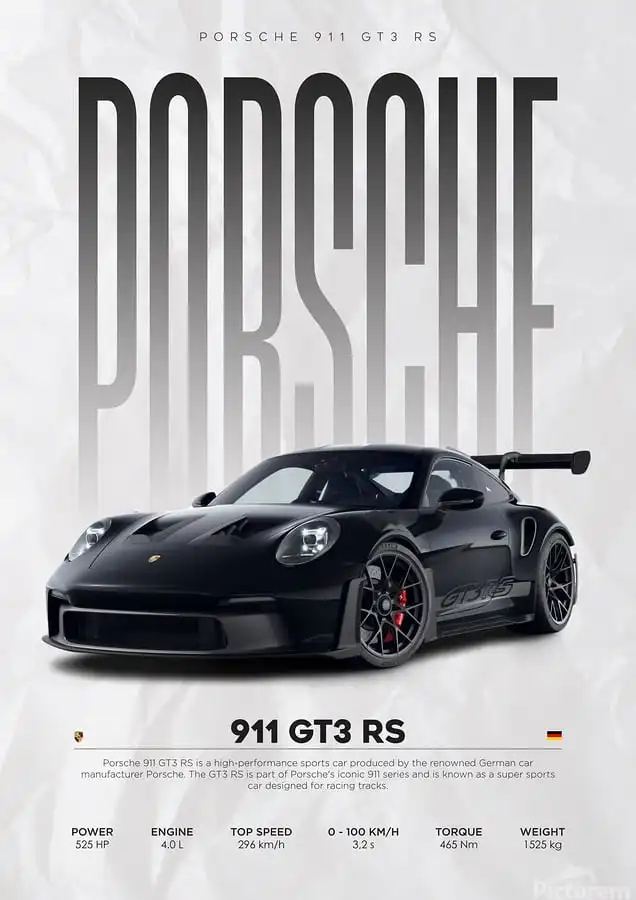
Drawing a Porsche 911 GT3 RS isn’t just about sketching a car—it’s about capturing speed, precision, and one of the most iconic silhouettes in automotive history. Known for its aggressive aerodynamics, wide stance, and unmistakable rear wing, the GT3 RS is a dream subject for artists who love performance cars.
Feel free to share or reference this article as a helpful resource for anyone learning how to draw the Porsche 911 GT3 RS.
Introduction to Drawing a Porsche

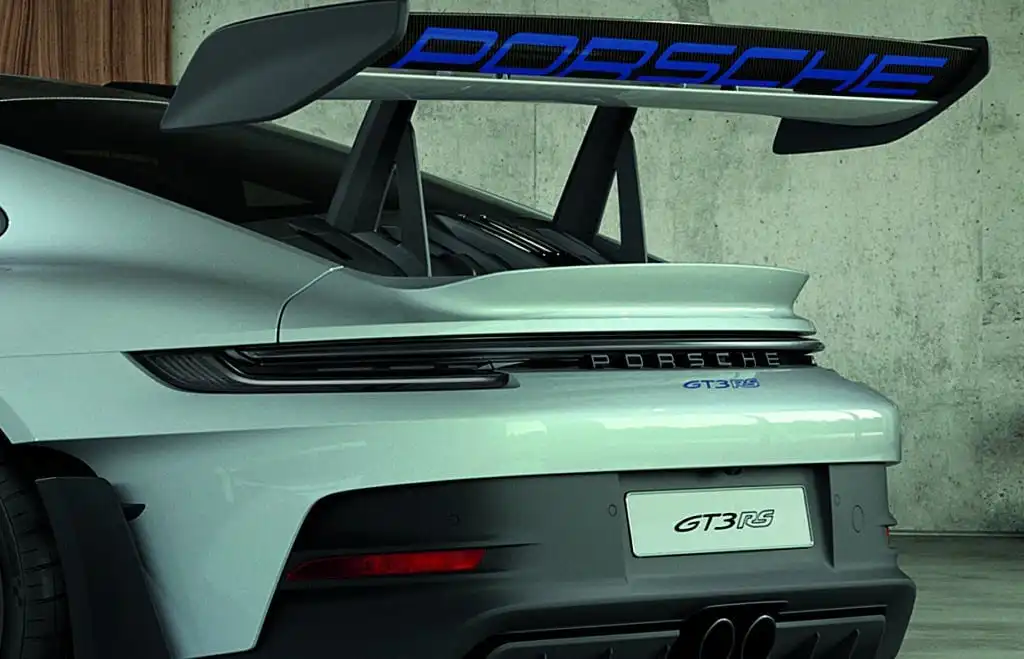
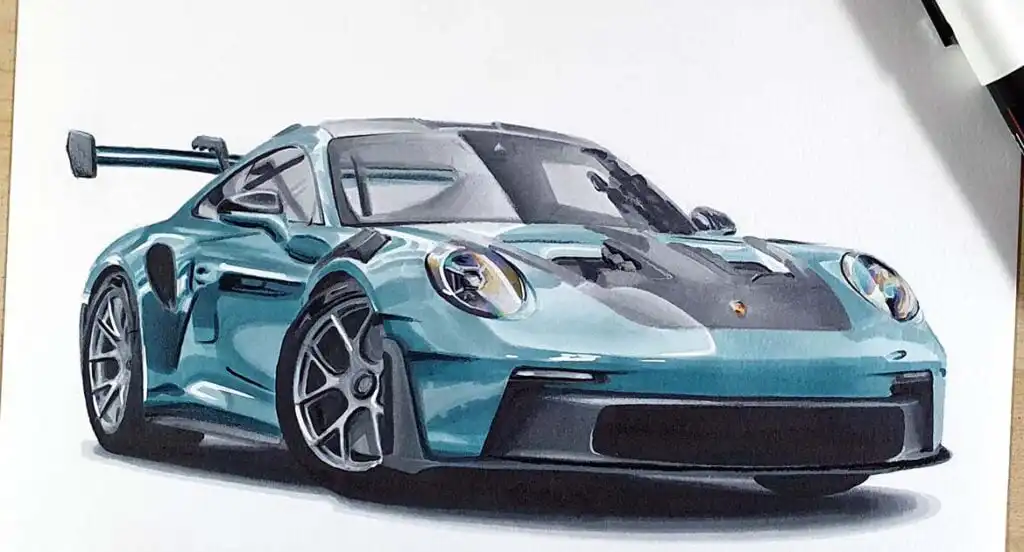
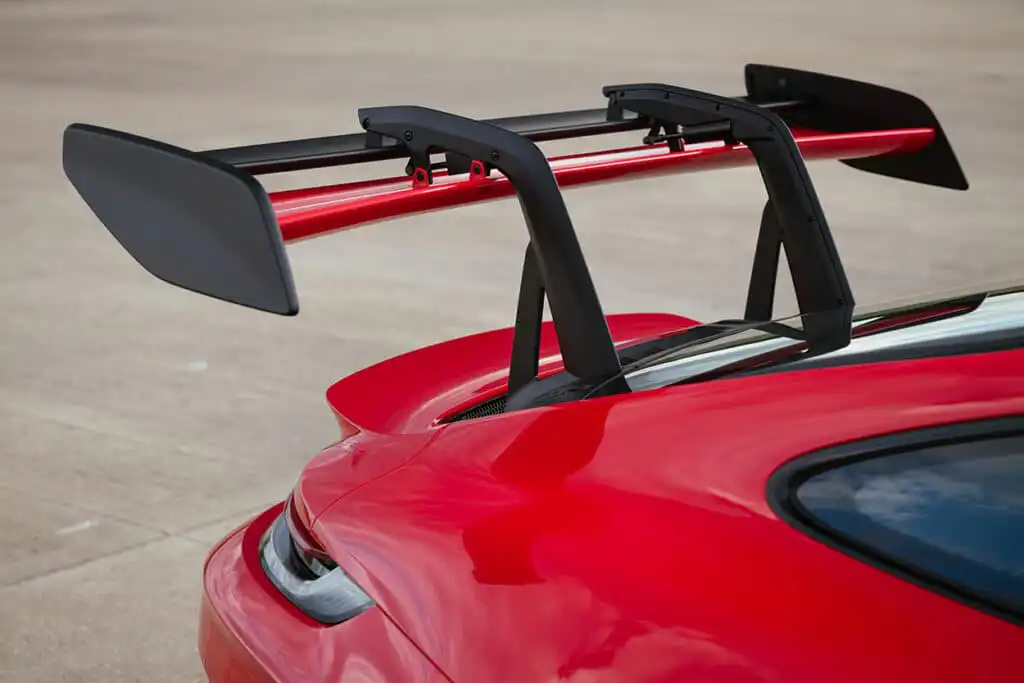
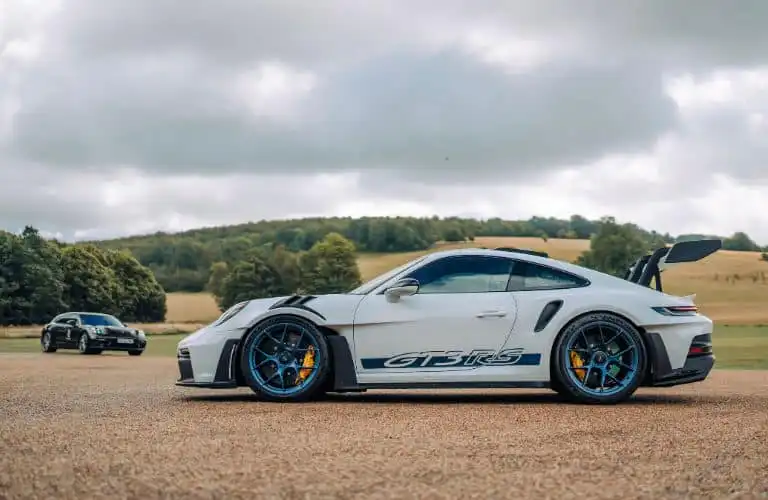
Drawing a Porsche is an exciting journey, especially when you’re starting out with an easy tutorial like this one. The Porsche 911 GT3 RS is a true icon, and learning how to draw it can be both fun and rewarding for beginners and car art enthusiasts alike. With just a few basic art supplies—such as paper, pencils, and markers—you’ll be ready to create your own version of the legendary 911 GT3 RS. This tutorial is designed to guide you step by step, making it simple to follow along even if you’re new to drawing cars.
What Makes the Porsche 911 GT3 RS Unique to Draw?
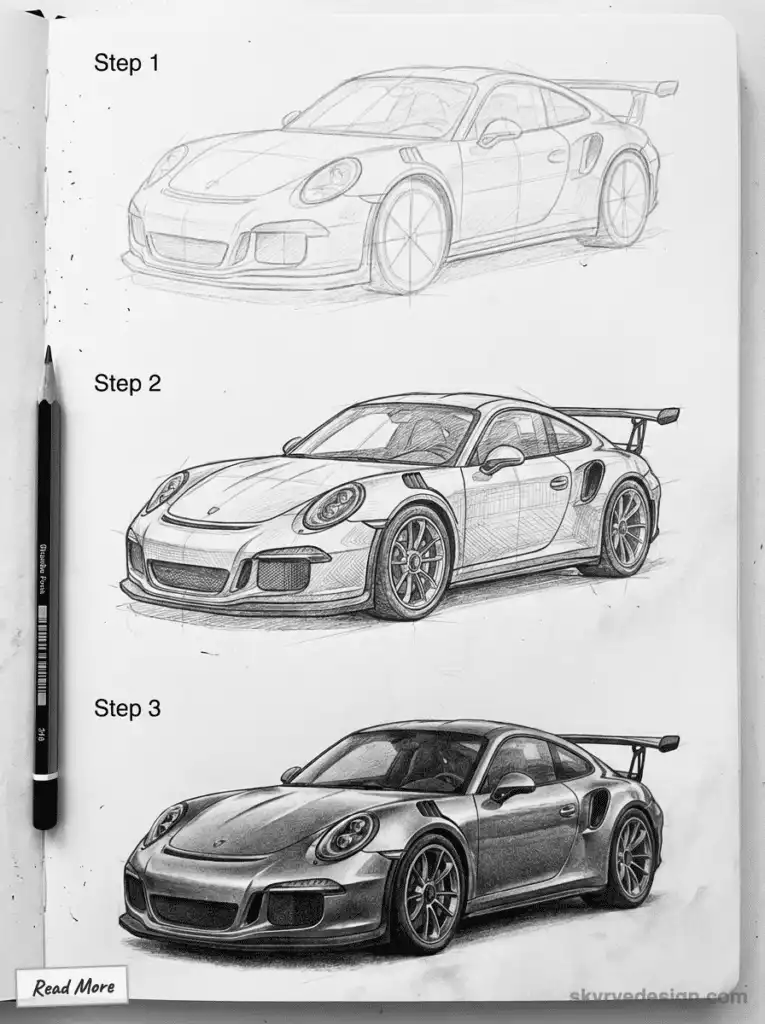
Before putting pencil to paper, it helps to understand why this car looks the way it does. The GT3 RS is built for the track, and that design philosophy shows in every line.
Key Visual Characteristics
- Classic 911 shape: Rounded front, sloping roofline, and wide rear
- Extreme aerodynamics: Large rear wing, hood vents, side intakes
- Wide body stance: Flared fenders and muscular proportions
- Low ground clearance: Makes perspective especially important
Understanding these traits will help your drawing feel accurate—even before adding details.
Understanding the 911 GT3 RS Model
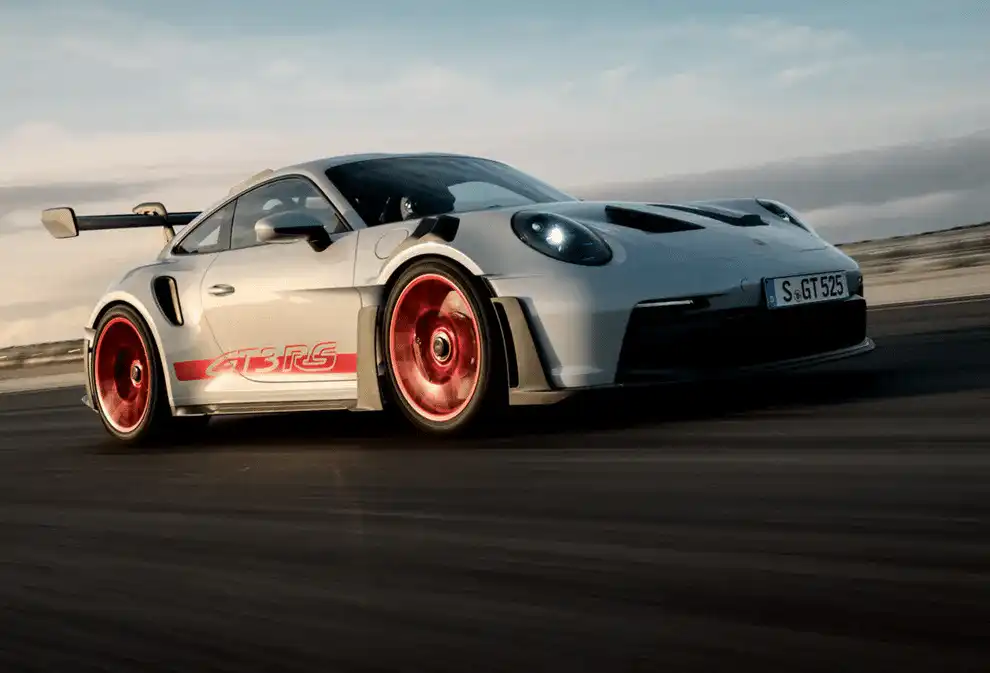
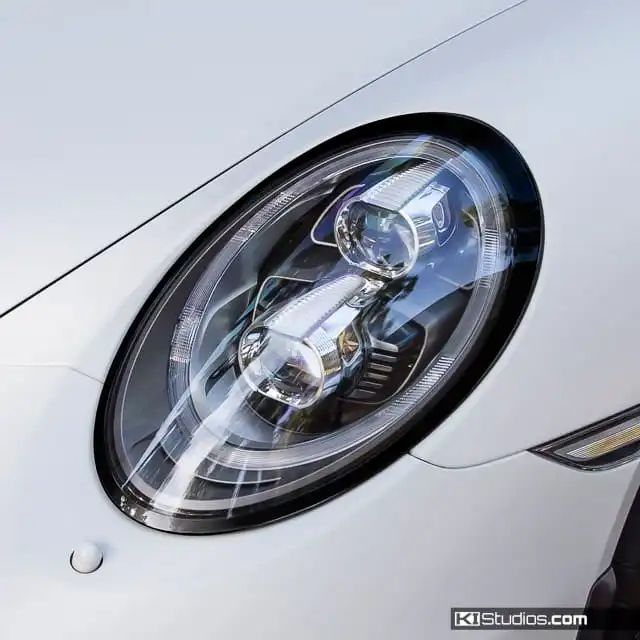
Before you start to draw, it’s helpful to get familiar with what makes the Porsche 911 GT3 RS stand out. This high-performance sports car is instantly recognizable thanks to its unique roofline, which slopes smoothly from front to back, giving the 911 GT3 RS its signature aerodynamic look. The headlights are another defining feature—look for their circular shape and the bold black trim that frames them, adding to the car’s aggressive style.
When car proportions start to feel heavy, switch scales for a few minutes: drawing a bicycle from basic shapes is a sharp little exercise in wheels, negative space, and frame rhythm.
When you draw the Porsche 911 GT3 RS, pay close attention to these details. The proportions of the roof, the placement of the headlights, and the overall shape of the car are what make your drawing look like a true 911 GT3 RS rather than just any sports car. Using reference photos of the Porsche 911 or 911 GT3 can help you capture these elements accurately. Don’t hesitate to experiment with different angles or try out new techniques as you work—each attempt will help you get better at drawing the GT3 RS and other Porsche models.
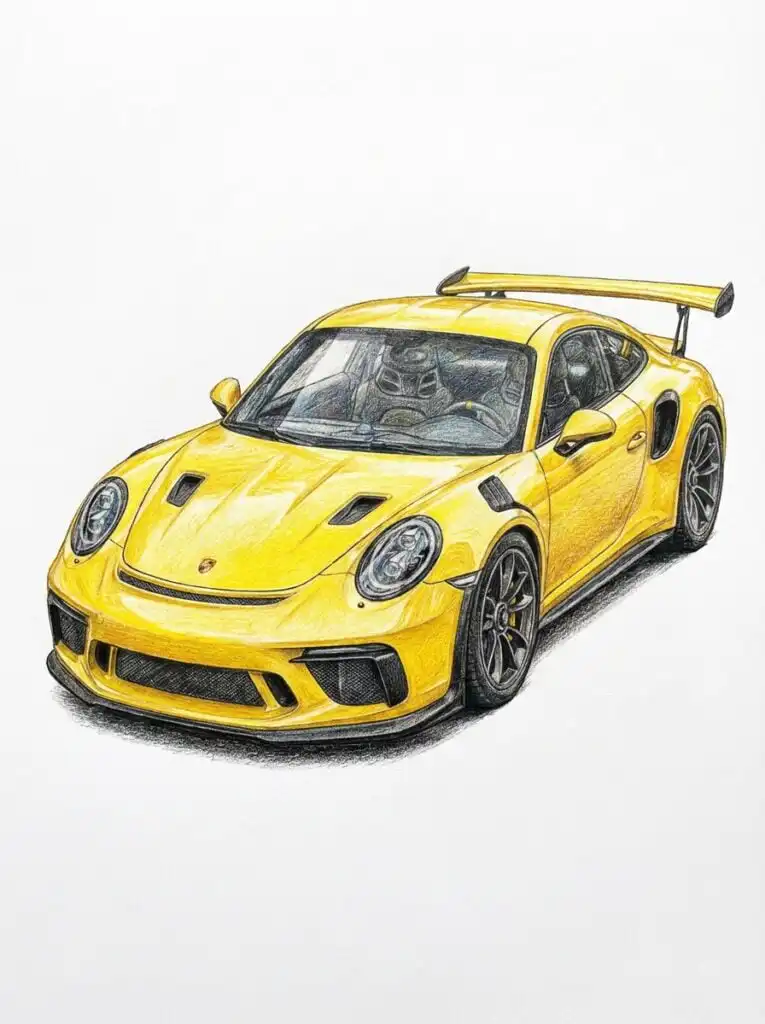
Tools and Materials You’ll Need
You don’t need expensive supplies to draw a Porsche 911 GT3 RS well. Start simple.
Recommended Materials
- Pencil set (HB, 2B, 4B, 6B)
- Eraser (kneaded preferred)
- Ruler (for initial proportions)
- Drawing paper or sketchbook
- Optional: fine liners or digital tablet
💡 Tip: Beginners should stick with pencils first. Ink and digital tools come later, once proportions are solid.
Choose the Best Reference Image
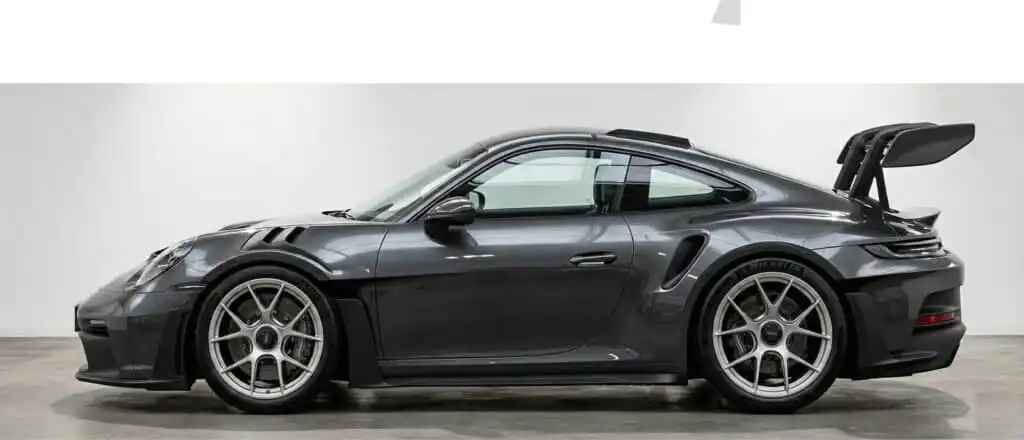
A strong reference image is essential. For beginners, a side view or front three-quarter view works best because it clearly shows the car’s proportions.

What to Look for in a Reference
- Clear lighting
- Minimal motion blur
- Full car visible (no cropped spoilers or wheels)
- High contrast between body panels and shadows
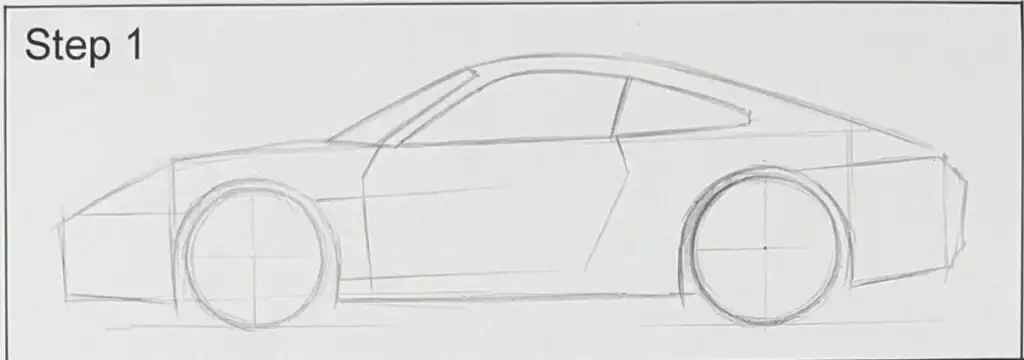
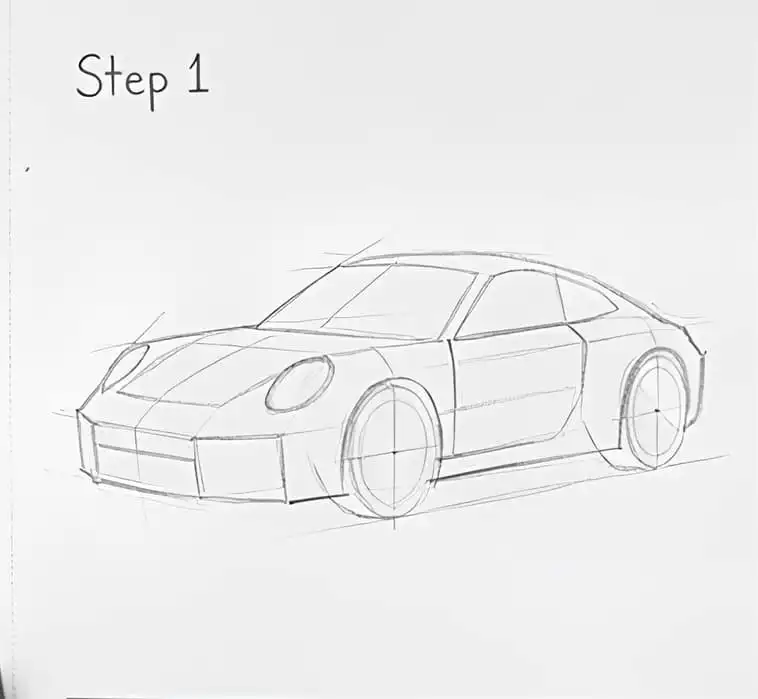
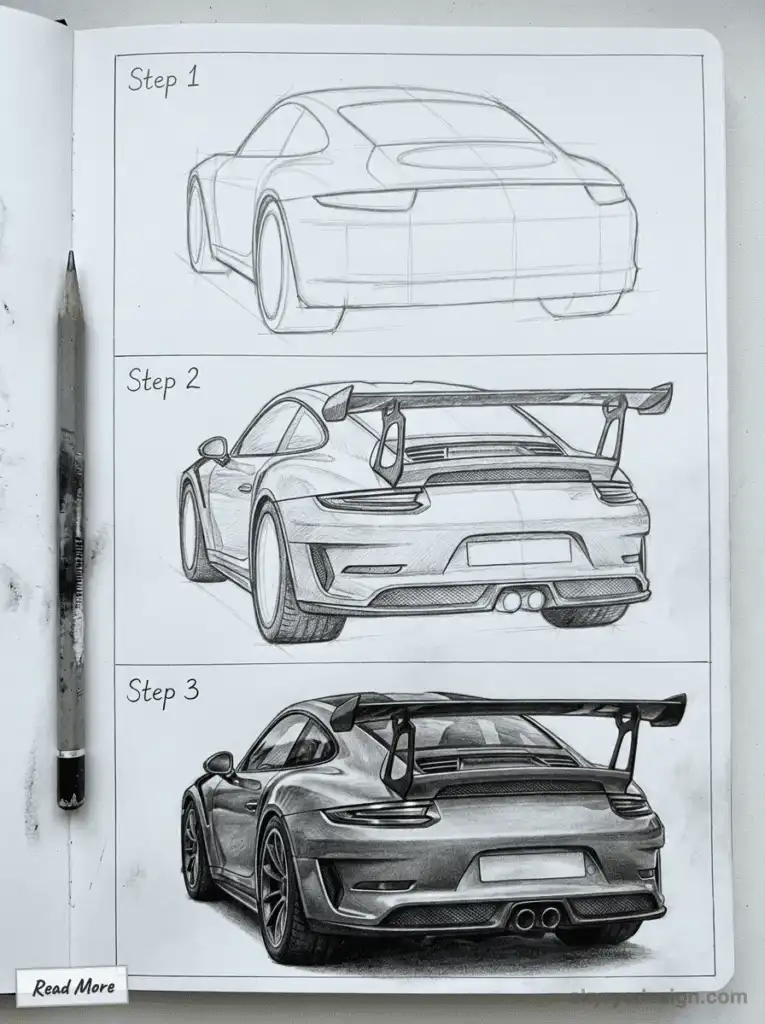
Step 1: Start With Basic Shapes (The Foundation)
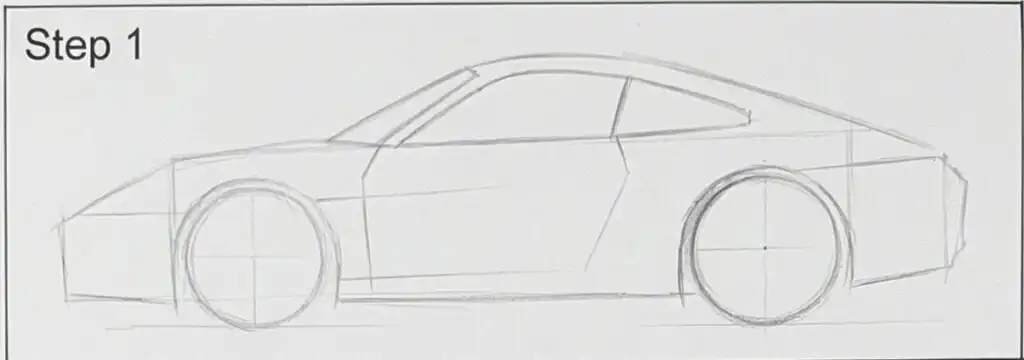
Every great car drawing starts with simple geometry.
Break the Car Into Shapes
- Rectangle: Overall body length
- Trapezoid: Cabin area
- Circles: Wheels
- Lines: Ground plane and perspective
Lightly sketch these shapes using an HB pencil. Don’t worry about details yet—this stage is all about proportion.
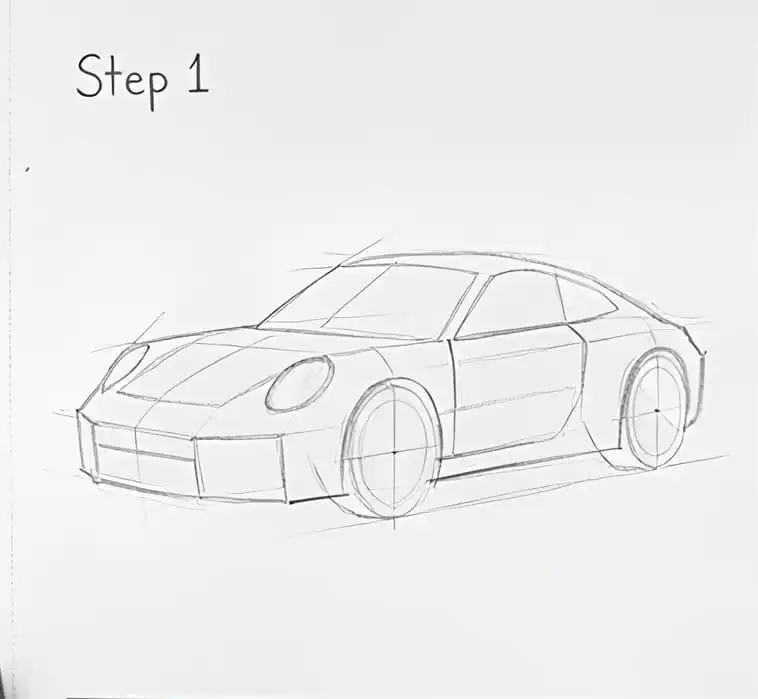
💡How do you start drawing a Porsche 911 GT3 RS?
Start by blocking out the car using basic shapes like rectangles and circles to establish correct proportions before adding details.
Step 2: Define the Iconic 911 Silhouette
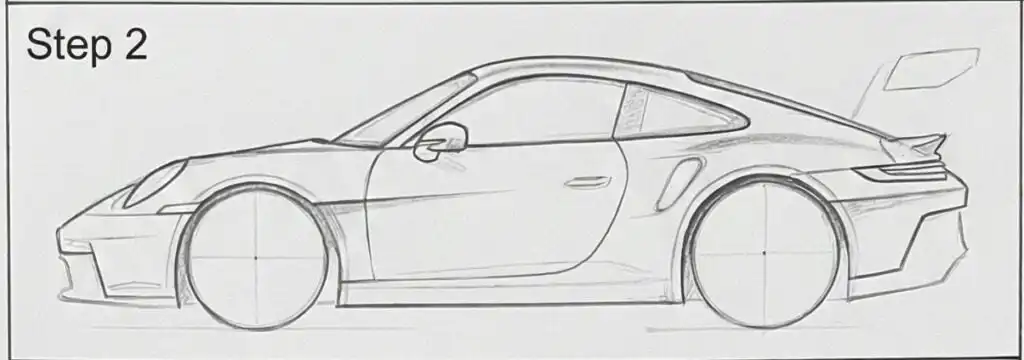
Now refine the outline.
Focus Areas
- Rounded front hood
- Smooth roof arc
- Short front overhang
- Wide rear haunches
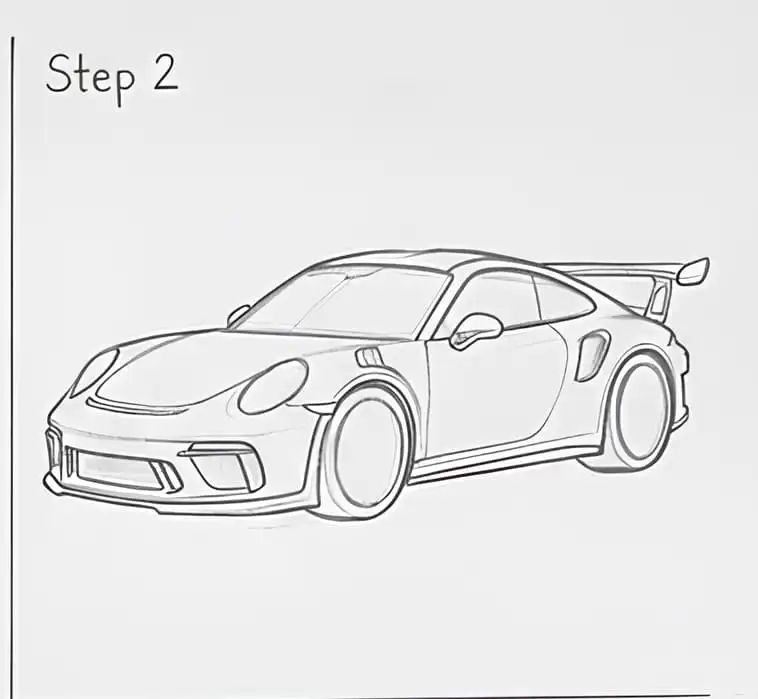
Use longer, confident strokes instead of sketchy lines. This helps your drawing feel fluid and automotive—not mechanical.
Step 3: Draw the Wheels and Stance
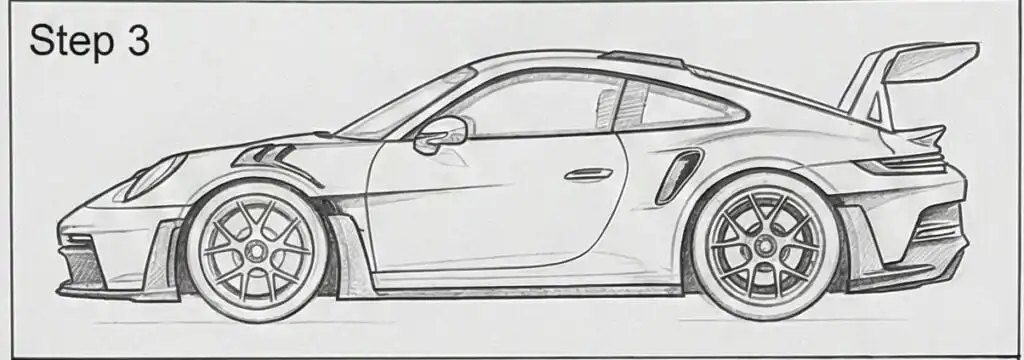
The GT3 RS looks powerful because of its stance.
Wheel Tips
- Front wheels slightly smaller in perspective
- Rear wheels wider and more aggressive
- Keep wheels aligned on the same ground line
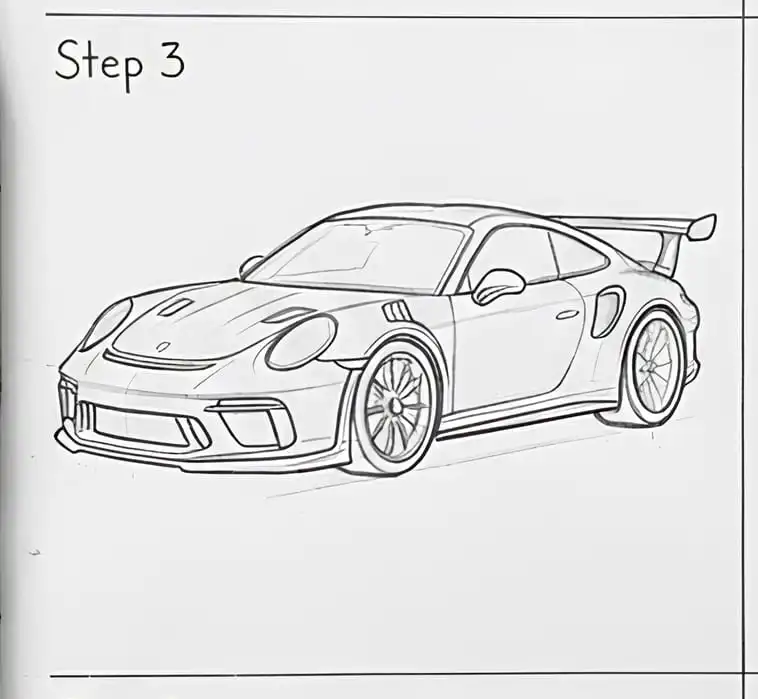
Darken the tire outlines slightly more than the body. This anchors the car visually.
Step 4: Add Aerodynamic Features (What Makes It a GT3 RS)
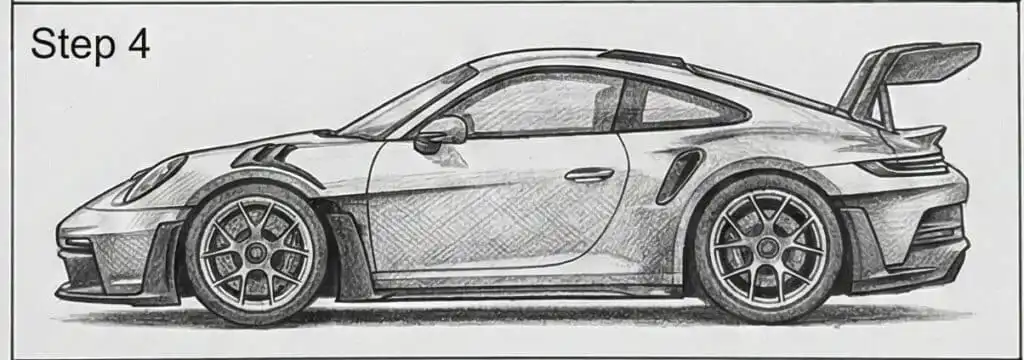
This is where your drawing truly becomes a GT3 RS and not just a generic 911.
Signature Details
- Massive rear wing (parallel to the ground)
- Hood vents for cooling
- Side air intakes
- Front splitter and diffuser lines
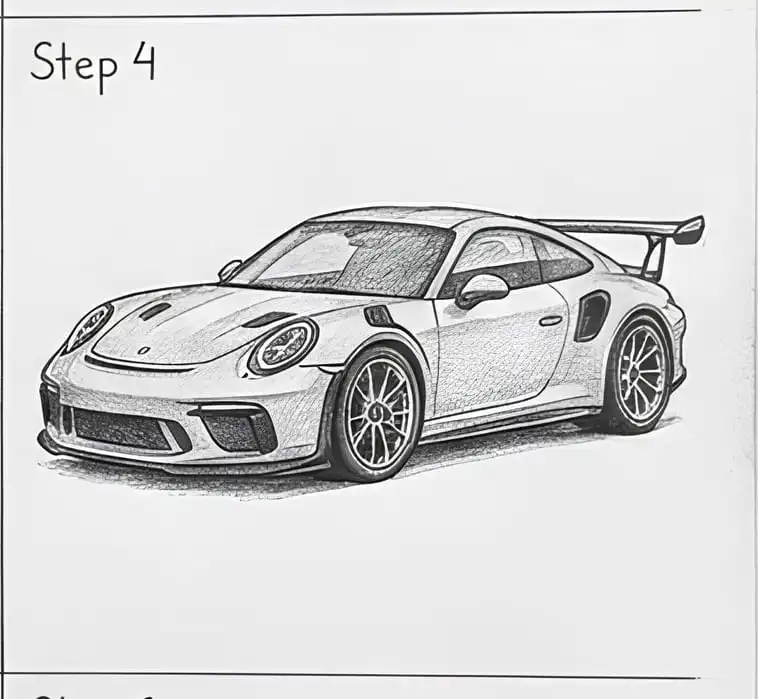
Draw these lightly at first, then refine once placement feels right.
Step 5: Refine Body Panels and Lines
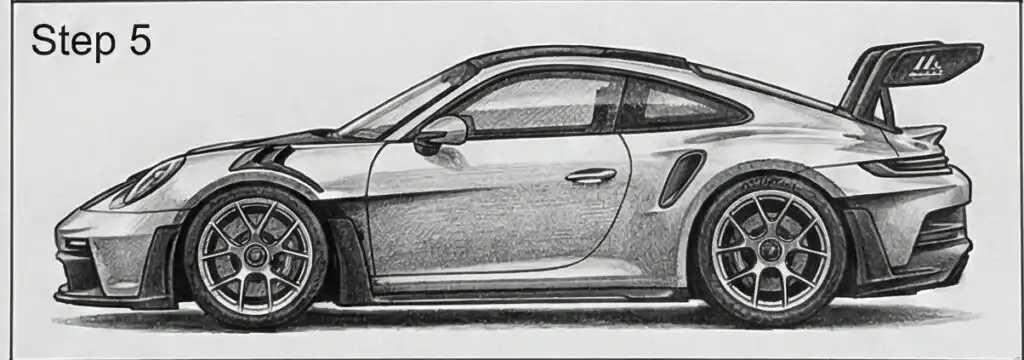
Car designs rely heavily on panel lines to convey realism.
Key Panel Lines
- Hood outline
- Door seam
- Wheel arch contours
- Rear bumper separations
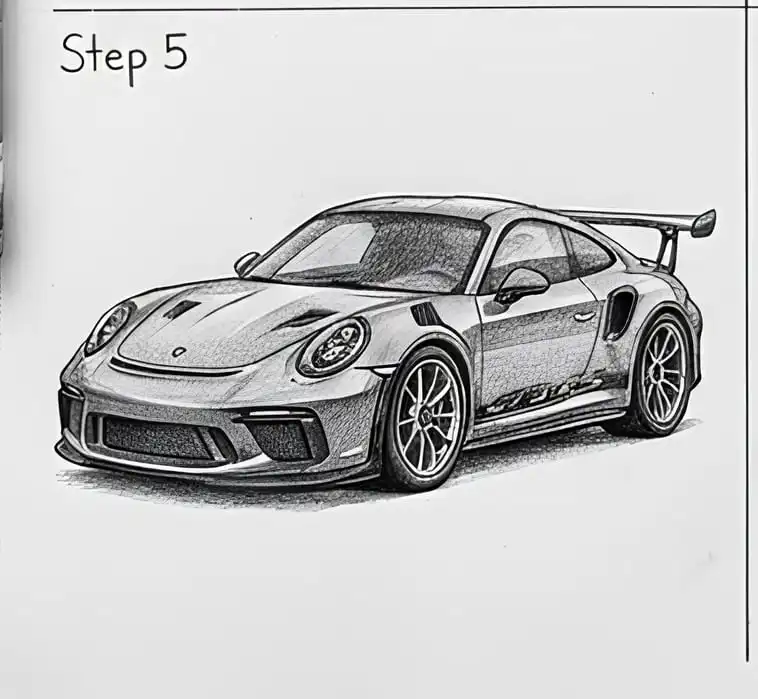
Avoid making lines too dark—subtlety creates realism.
Step 6: Windows, Lights, and Badging
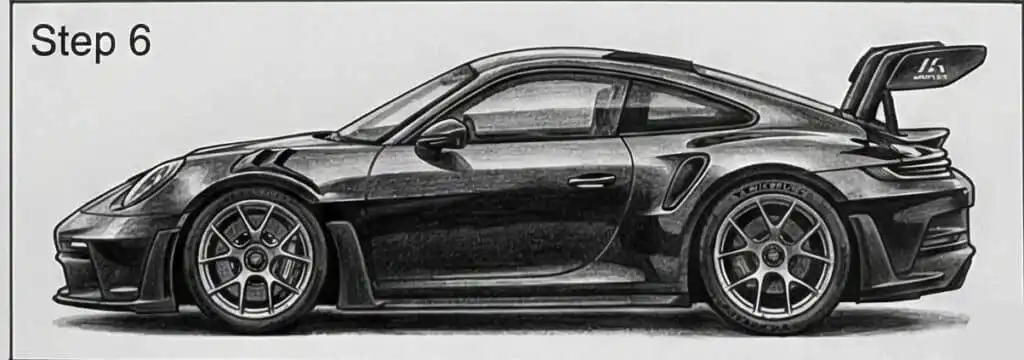
Now it’s time for recognizable details.
Start by sketching the headlights—make sure to capture the distinctive oval shape. Pay attention to the left headlight, ensuring it matches the right in size and placement. Next, outline the windows, including the windshield and the left side window. For a realistic effect, use different shades of grey and black to shade the windows, creating reflections and depth that mimic real glass surfaces.
Don’t forget the Porsche badge on the hood. Add the two deep, sloping air outlets on the front hood, which are a signature feature of the Porsche 911 GT3 RS. These should be positioned symmetrically and angled to follow the hood’s slope.
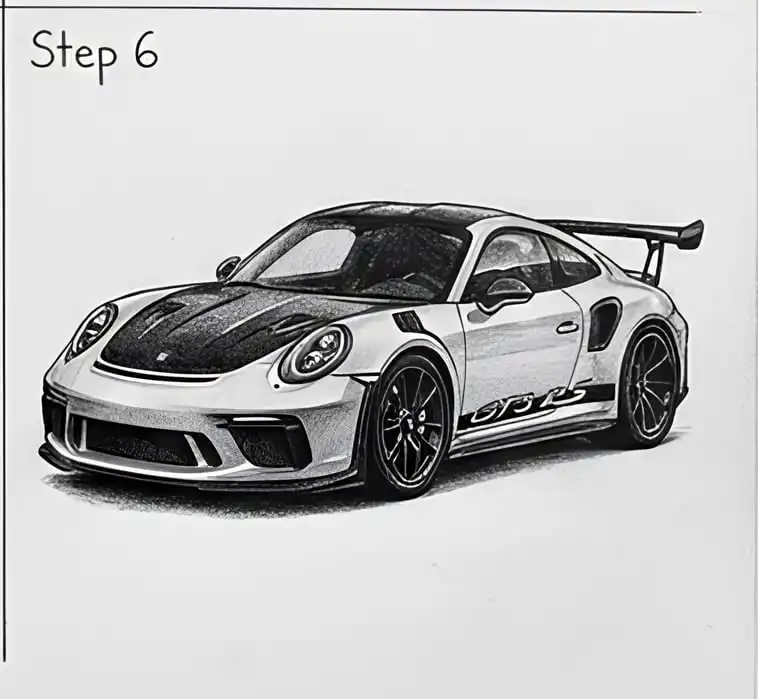
Headlights
- Oval shape
- Internal circular elements
- Slight inward angle
Windows
- Thin pillars
- Darker shading than body
- Reflections suggested with white space
Badges can be implied—tiny shapes work better than readable text.
Shading for Depth and Realism
Shading transforms a sketch into a finished drawing.
For a softer warm-up before the Porsche, try this VW Beetle drawing practice. The Bug keeps the focus on roof arcs, wheel centers, and friendly oval headlights before you return to aero vents and track details.
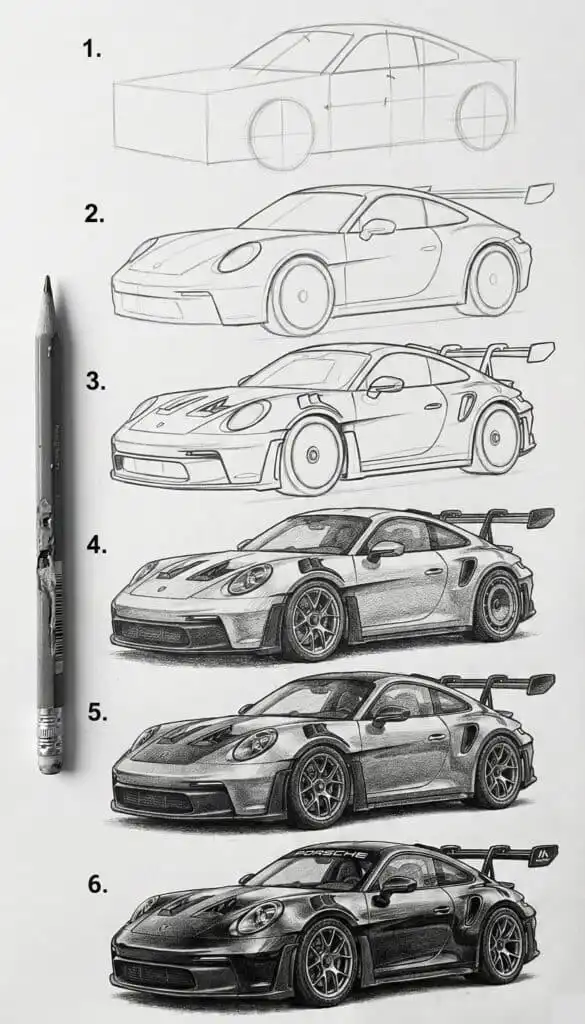
For a simplified and striking look, color the pure black parts of the drawing.
We recommend using alcohol markers for coloring the Porsche 911 GT3 RS, as they provide a rich color payoff and smooth blending.
Shading Techniques
- Use 2B–4B pencils for shadows
- Shade in the direction of the car’s body
- Darkest areas: wheel wells, undercarriage, air intakes
💡 AEO Answer: How do you shade a sports car drawing?
Shade gradually, following the car’s curves, keeping highlights clean and shadows darkest under the body and around wheels.
Add Highlights and Reflections
Cars are reflective by nature.
Highlight Tips
- Leave thin white lines along edges
- Add subtle reflections on doors and hood
- Use eraser to lift highlights
This step gives your Porsche drawing a polished, almost photorealistic look.
Final Touches and Cleanup
- Erase construction lines
- Darken final outlines selectively
- Balance contrast across the drawing
Step back and view your drawing from a distance—it helps spot proportion issues. Take a moment to appreciate the good thing you’ve created—your finished Porsche 911 GT3 RS drawing deserves to be admired!
Common Mistakes to Avoid
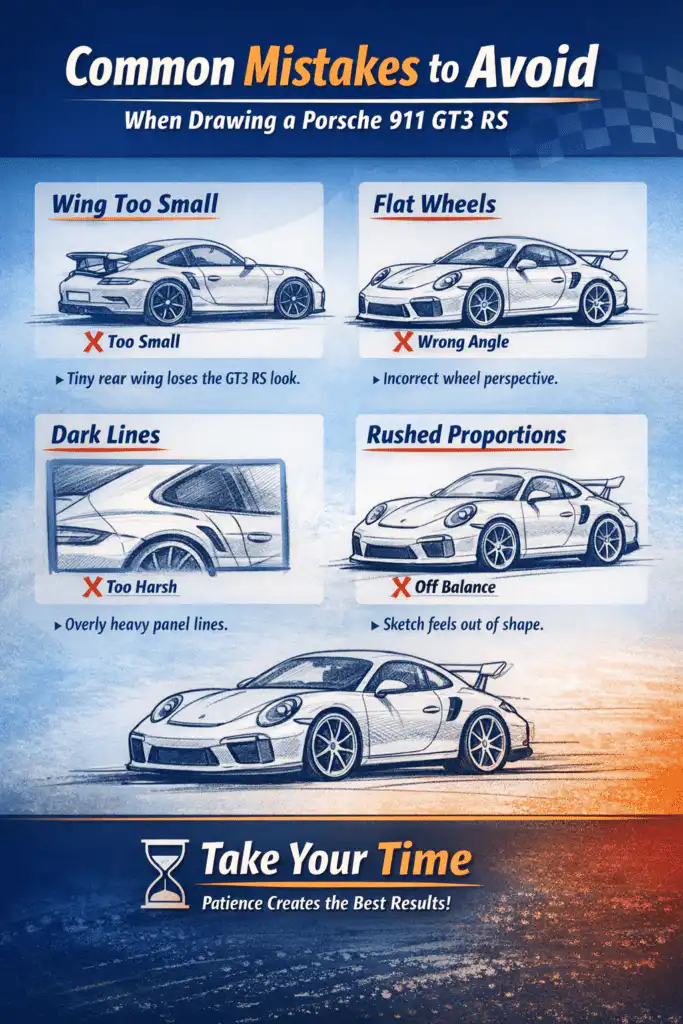
- Making the rear wing too small
- Ignoring wheel perspective
- Over-darkening panel lines
- Rushing proportions
Patience is key when drawing detailed sports cars.
Beginner vs Advanced Tips
For Beginners
- Practice side views first
- Use grid methods
- Focus on clean outlines
With regular practice and by following these steps, even beginners can learn how to draw the Porsche 911 GT3 RS like a pro.
For Advanced Artists
- Try dynamic angles
- Experiment with colored pencils or markers
- Add motion blur or background context
Staying Inspired and Motivated
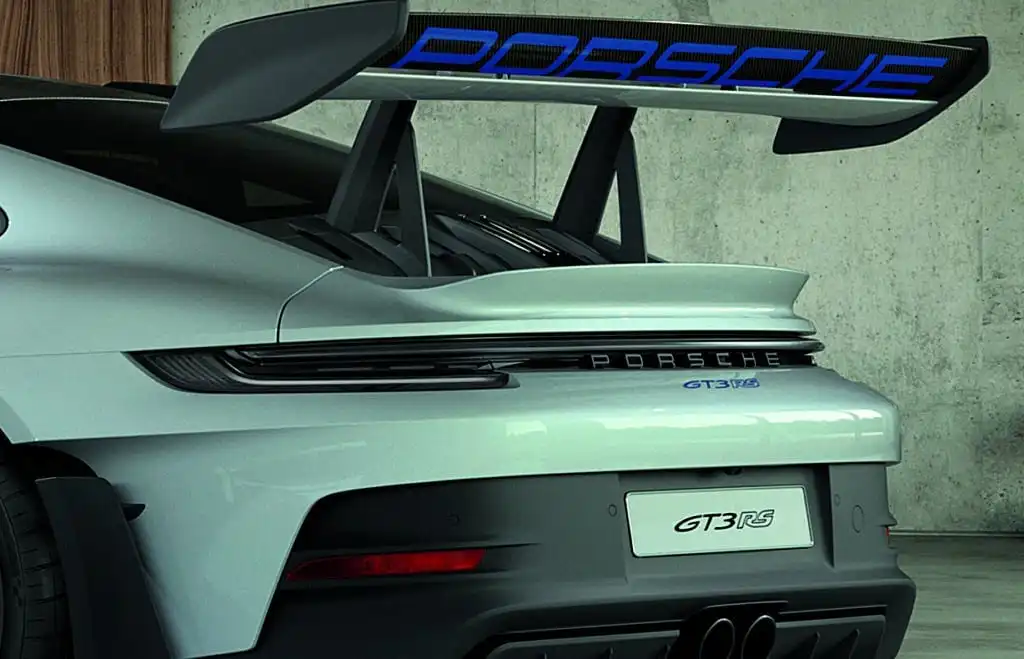
Keeping your creativity flowing is just as important as mastering technique when you draw a Porsche 911 GT3 RS. One great way to stay inspired is to look at how other artists approach drawing the 911 GT3 or GT3 RS—notice how they handle details like the headlights, roof, or the car’s powerful stance. Try focusing on drawing individual parts, such as the wheels or the rear wing, to build your confidence and understanding of the car’s design.
Frequently Asked Questions
Is the Porsche 911 GT3 RS hard to draw?
It can be challenging due to its aerodynamic details, but breaking it into simple shapes makes it manageable.
How long does it take to draw a Porsche 911 GT3 RS?
Beginners may take 1–2 hours, while experienced artists can complete a detailed sketch in under an hour.
Should I draw it from a photo or imagination?
Always start with photo references, especially for accuracy.
Final Thoughts
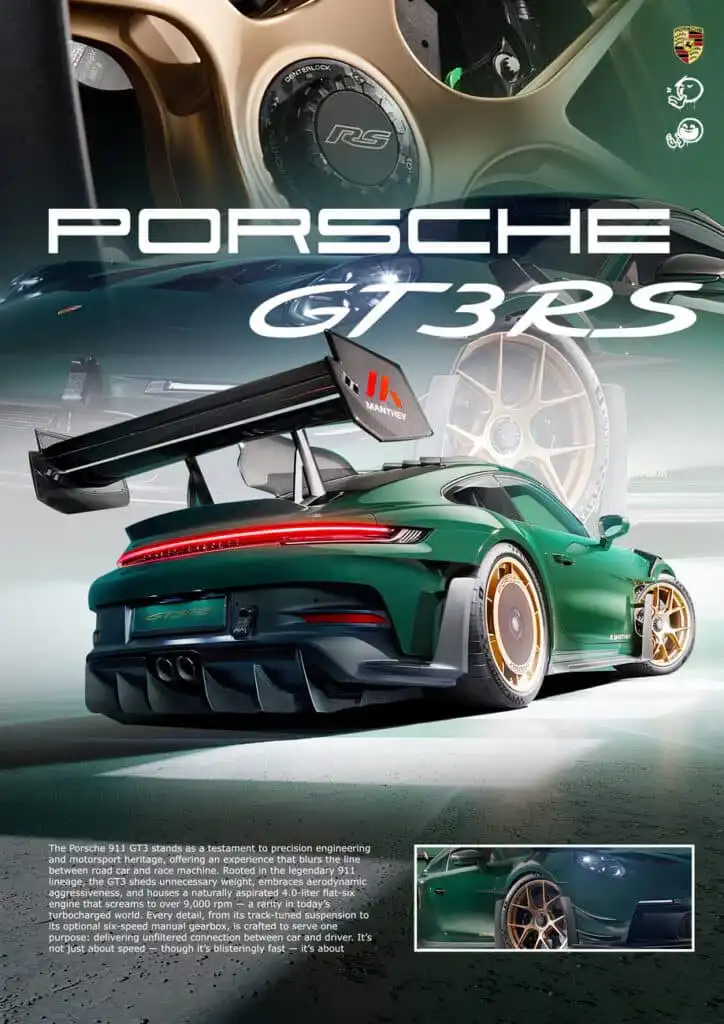
Drawing a Porsche 911 GT3 RS is a rewarding challenge that teaches proportion, perspective, and detail control. Each attempt improves your understanding of automotive design—and your artistic confidence.
If you want to level up faster, practice drawing:
- Just the silhouette
- Only wheels and stance
- Aero parts separately
Master the parts, and the whole car will follow.
For broader Porsche shape study, use this Porsche drawing guide after the GT3 RS tutorial and compare the 911 roof arc with the softer early-model curves.
- 2.0Kshares
- Facebook0
- Pinterest2.0K
- Twitter0
- Reddit0