Architecture sketches are quick freehand drawings you use to test a building idea before it turns into a measured plan. Start with the big shape, the horizon line, and where the main shadow falls — details come after the form actually reads.
- How to start architecture sketches
- What are architecture sketches?
- Essential Tools and Materials
- Key techniques for better architecture sketching
- Visualizing Concepts and Ideas
- Inspiring Famous Architecture Sketches
- Tips for improving your architecture sketches
- Showcasing and Preserving Your Work
- Related practice for architecture sketches
- References worth studying
- What are architecture sketches?
- How do you start architecture sketches for beginners?
- What tools do you need for architecture sketching?
- How are architecture sketches different from architectural drawings?
- What is the best way to practice sketching buildings?
- How do you make architecture sketches look more dimensional?
- Can digital tablets replace hand architecture sketching?
For beginners, a good architecture sketch has nothing to do with clean linework. It’s about seeing proportion, perspective, light, and rhythm fast enough to make a design call while the pencil’s still moving.
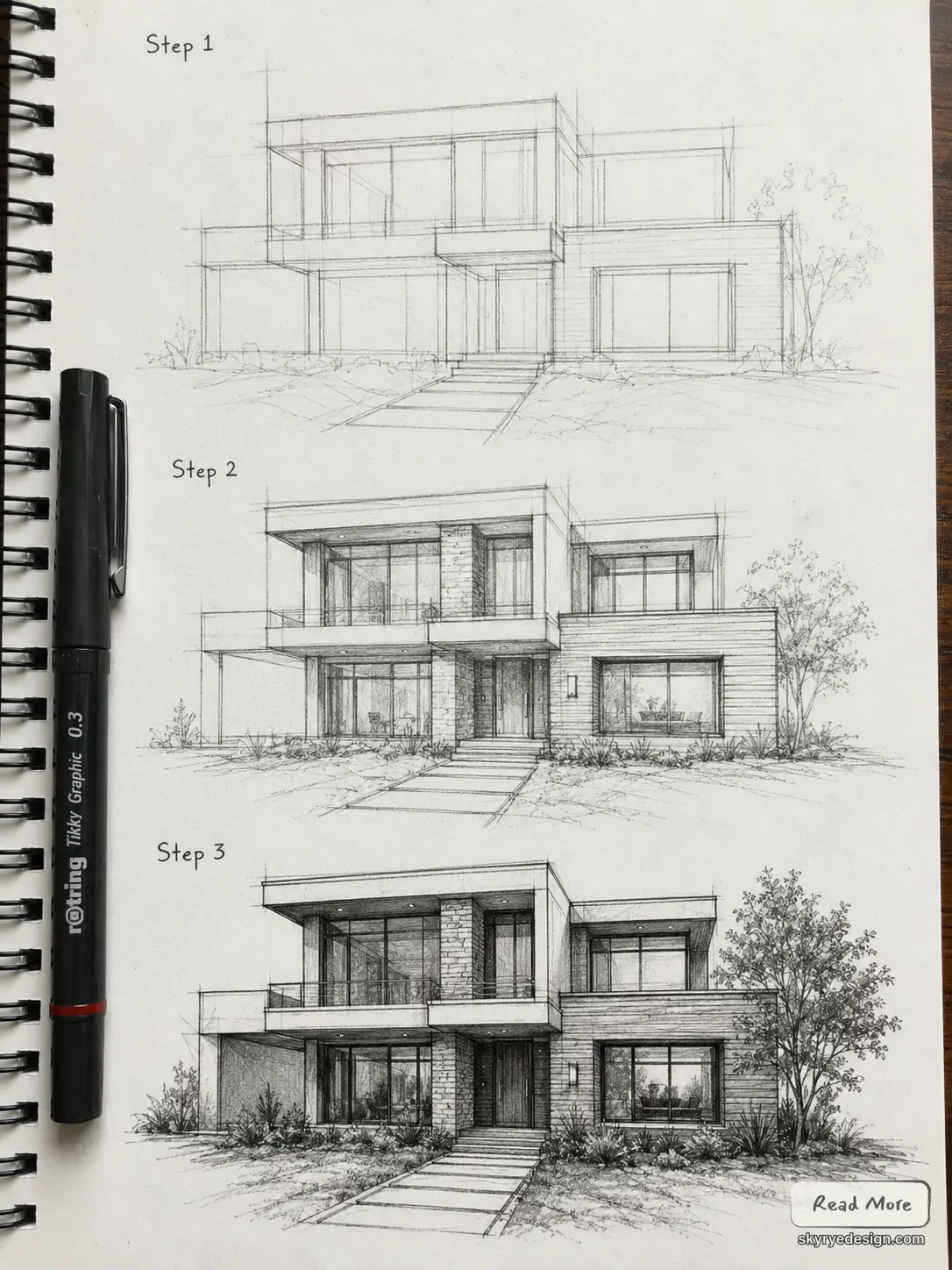
When I sketch architecture, I go for the silhouette first, then the main verticals and where they’re heading. A soft pencil, a fineliner, or a stylus on a tablet is enough — no need for anything fancier. What I’m really after is the structure: a facade, a room, a street corner, sometimes just an idea, before the drawing tightens up and goes stiff.
How to start architecture sketches
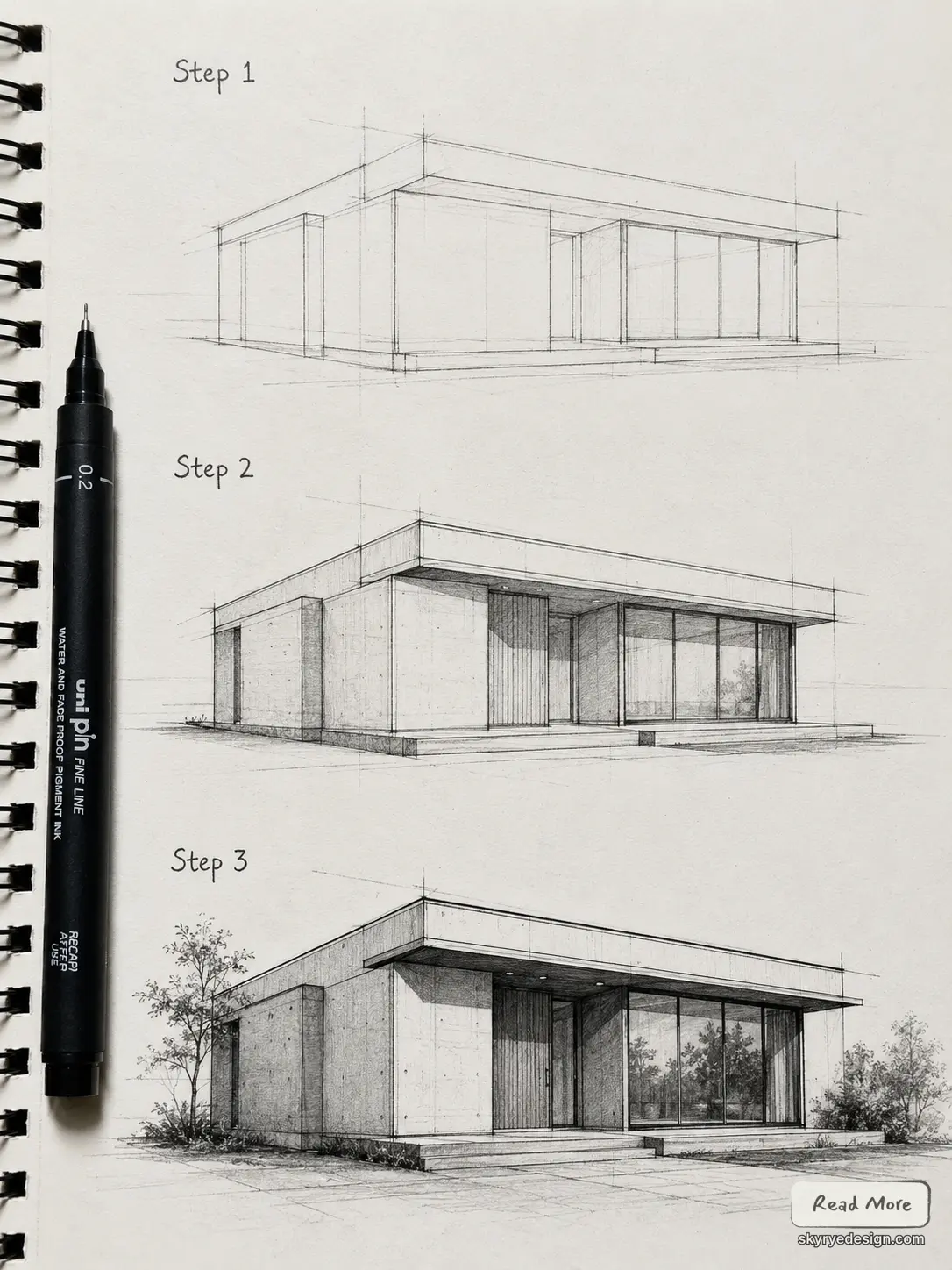
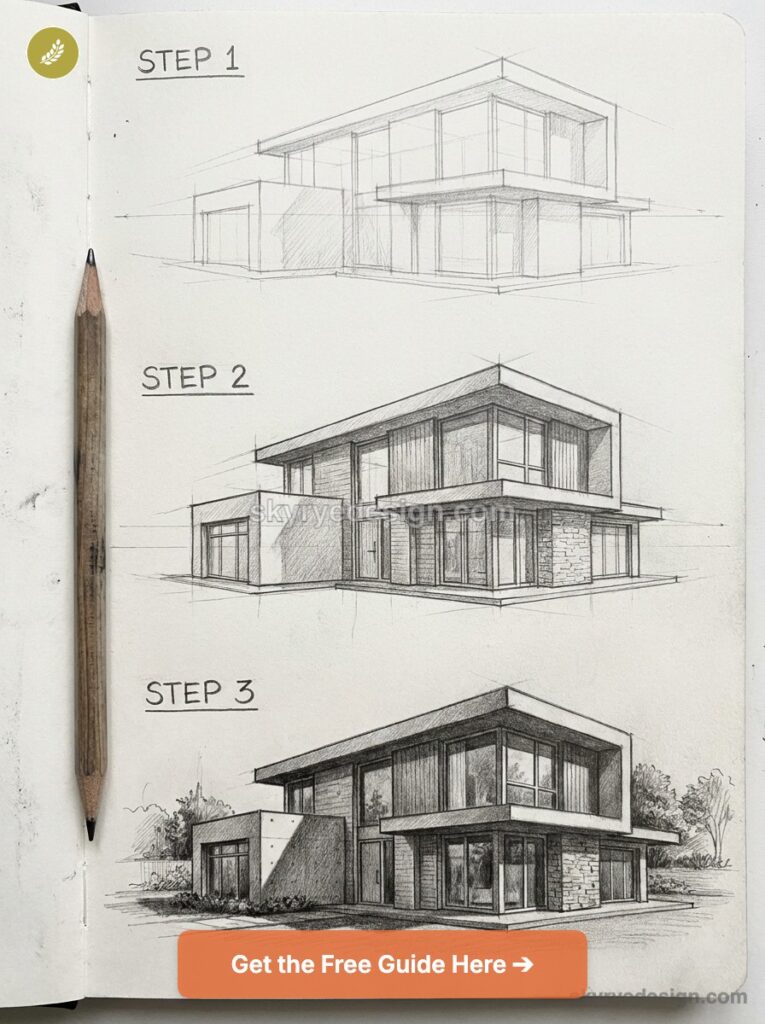
To start architecture sketches, block in the largest form first, set the horizon line, and decide where the main light is coming from. Use light construction lines for the big box or street angle, then darken only the edges that define the building.
Add windows, arches, columns, trees, people, or furniture after the perspective feels believable.
| Step | What to do | Why it helps |
|---|---|---|
| 1. Massing | Draw the building as simple boxes or planes. | Keeps the sketch from becoming a pile of details. |
| 2. Perspective | Mark the horizon and vanishing direction. | Makes walls, roofs, and streets sit in the same space. |
| 3. Line weight | Use darker lines for the front edges and focal point. | Shows depth without heavy rendering. |
| 4. Shadow | Add one clear shadow side before texture. | Gives the architecture volume and mood. |
What are architecture sketches?
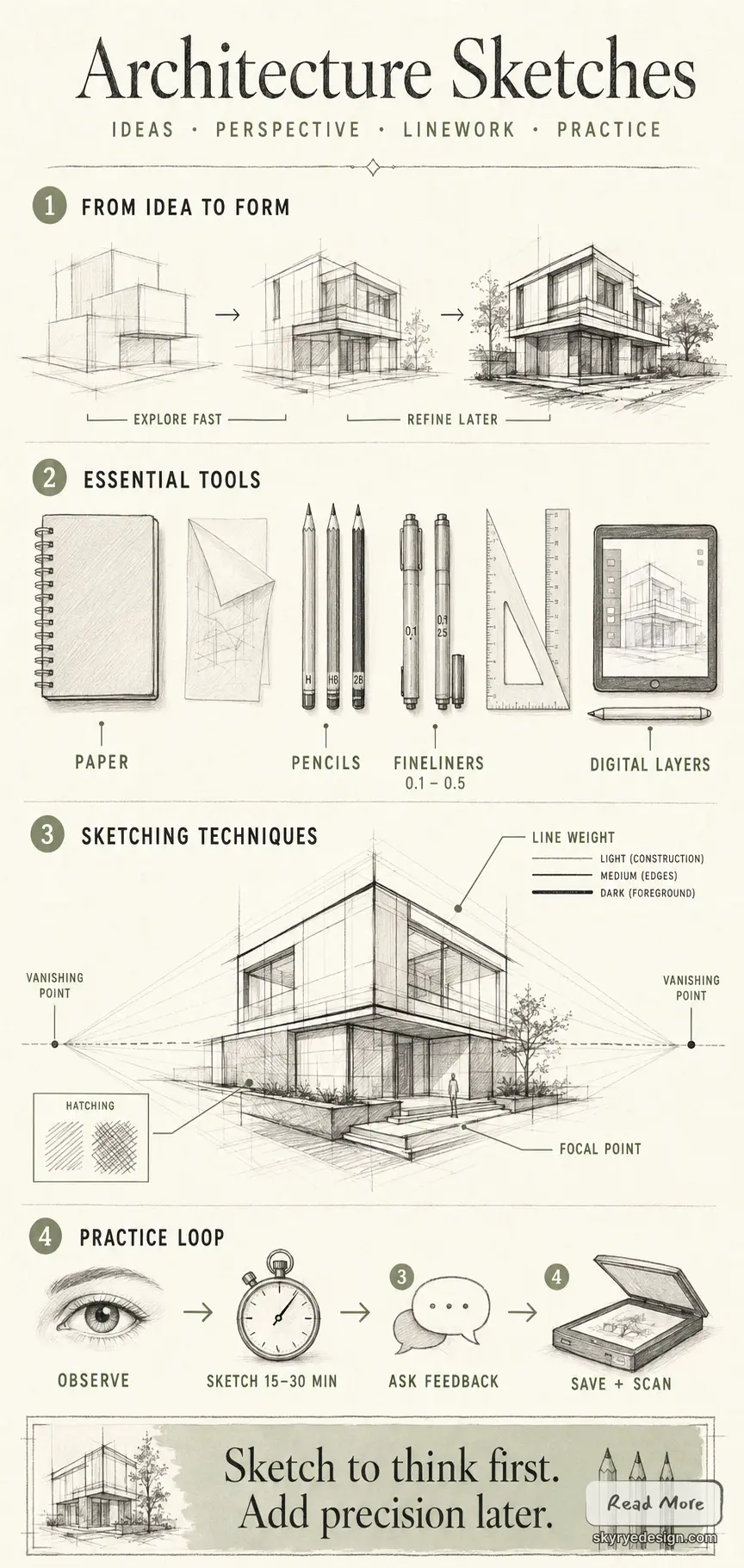
Architecture sketches are simple drawings that help designers explore ideas and show building concepts quickly. They capture shapes, forms, and layouts without needing full details. These sketches act as a bridge between raw thoughts and clearer designs.
Definition and Purpose
Architecture sketches are freehand drawings made by architects to visualize buildings, parts of buildings, or spaces. They are not about perfect measurements but about capturing ideas fast. Sketches help architects think through problems, try different versions, and communicate ideas to others.
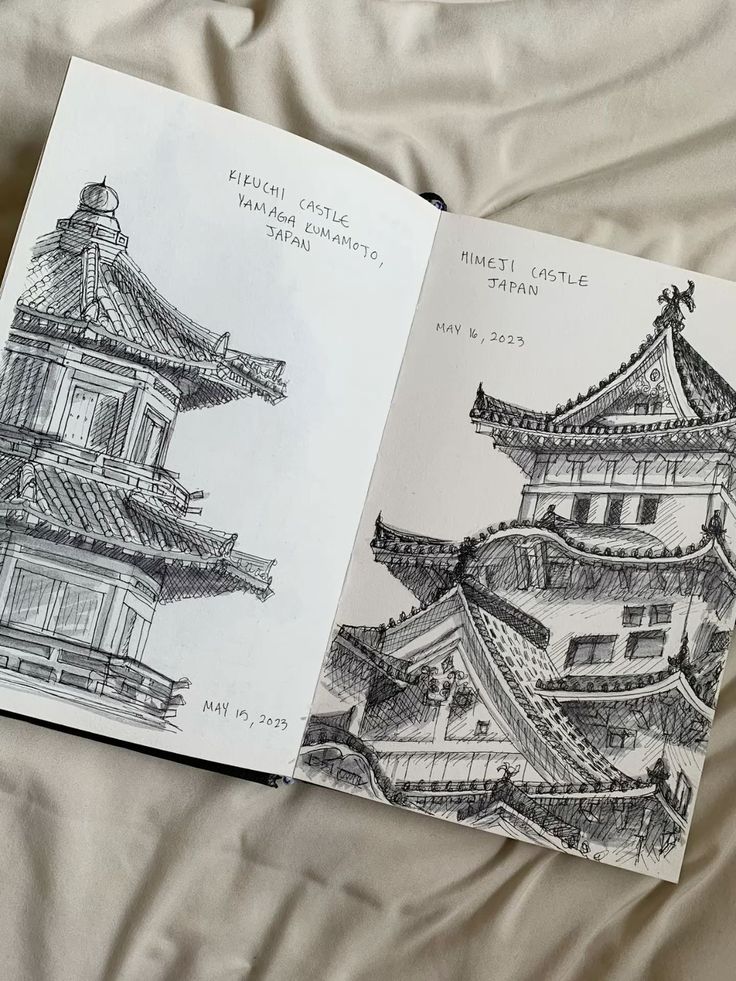
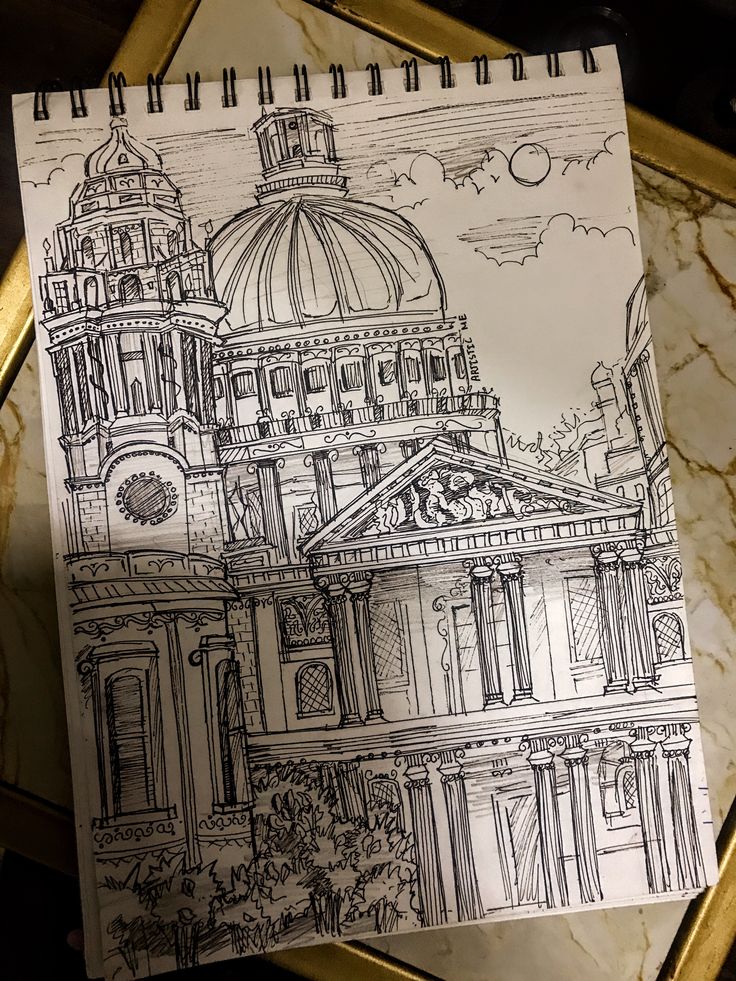
The purpose is to make concepts visible early in the design process. This lets architects experiment and share ideas with clients or teams before moving to detailed drawings. Sketches often include notes or simple shapes to emphasize certain parts of the design.
Comparison to Architectural Drawings
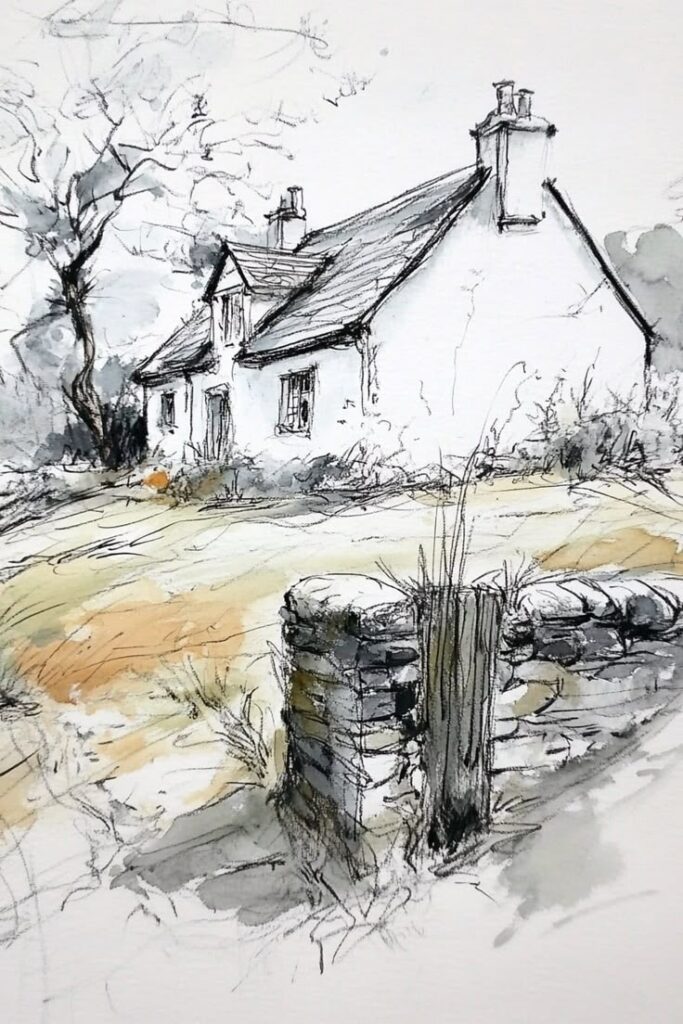
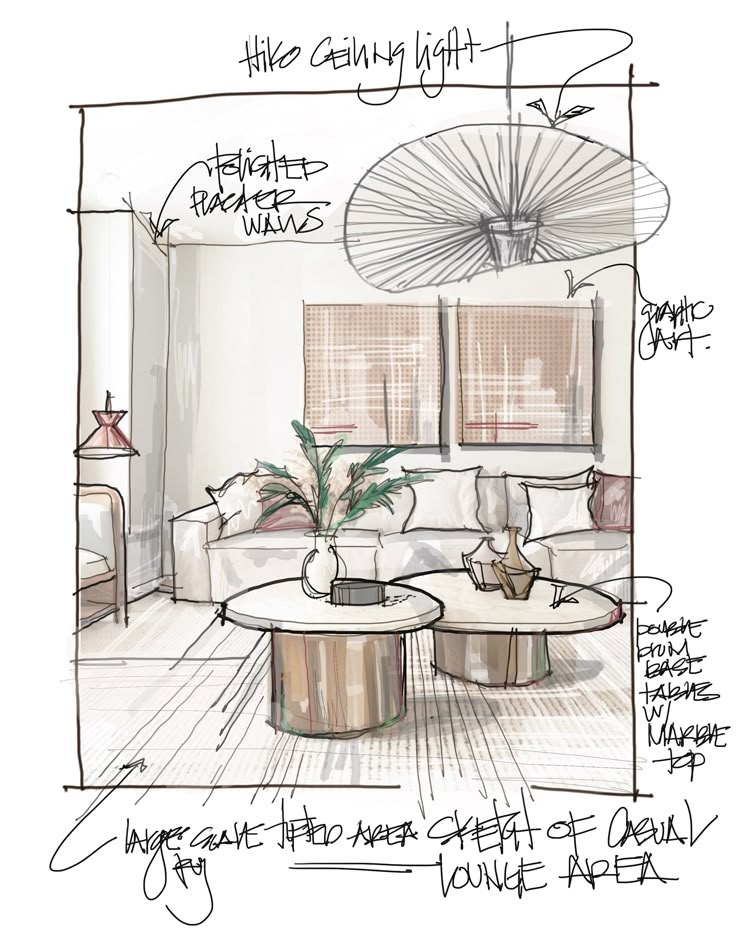
Architectural sketches differ from architectural drawings mainly in detail and accuracy. Drawings follow strict standards, using scales and precise lines to show exact dimensions and construction information. These are used by builders to create the final building.
Sketches, however, are rough and more about creative thinking. They don’t require exact measurements or specific symbols. Instead, they focus on exploring ideas and the overall design feeling. While drawings are technical, sketches are flexible tools for early-stage development.
| Feature | Architecture Sketches | Architectural Drawings |
|---|---|---|
| Detail Level | Low | High |
| Purpose | Idea exploration | Construction instructions |
| Accuracy | Flexible | Precise |
| Usage | Early design and concept | Final planning and building |
Types of Architecture Sketches
There are several types of architecture sketches, each serving a different function. Early concept sketches are quick and rough to capture new ideas fast. They might look messy, but they show important design thoughts.
Another type is presentation sketches. These are clearer and more polished to help explain ideas to clients or stakeholders. They focus on key features and sometimes use color or shading.
There are also technical sketches that help solve specific design problems. These might focus on how parts connect or look in detail but still stay less formal than full drawings.
Together, these sketch types help architects test a design while it is still flexible. A loose concept sketch can become a presentation drawing later, but it does not need to carry that pressure at the start.
Essential Tools and Materials
Good architectural sketches rely on choosing the right surfaces and tools. The selection of paper affects how lines appear and how easy it is to work. The pencils and pens used impact the clarity and precision of the drawing. Digital devices bring flexibility and speed to the sketching process, offering new ways to create and edit.
Paper Selection Tips
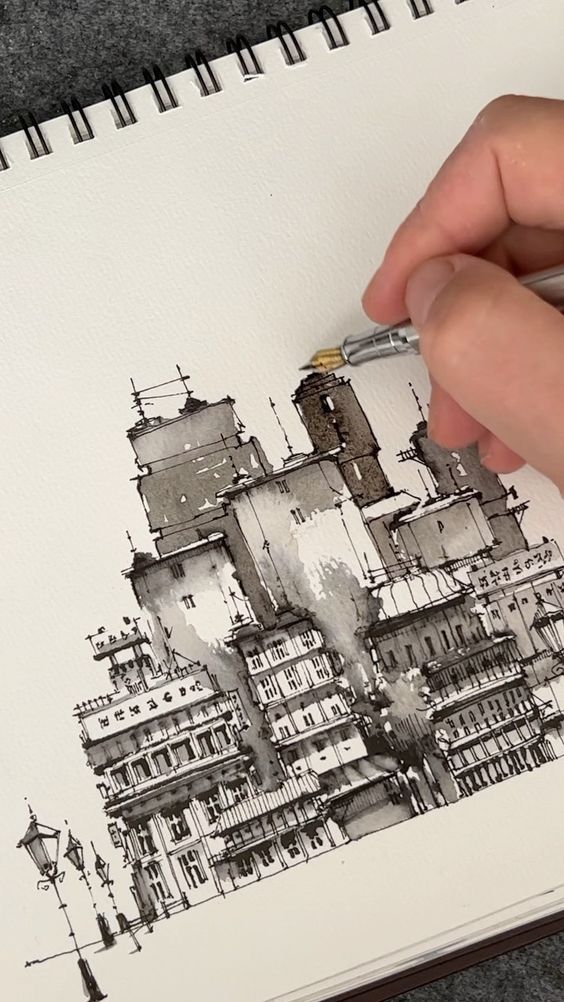
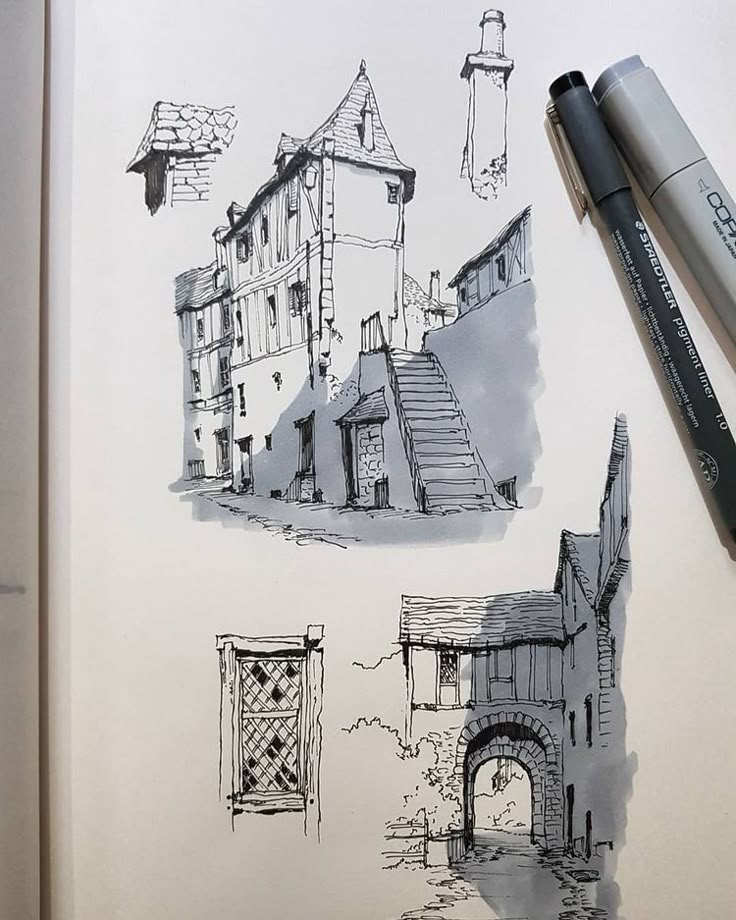
Paper choice is important for good sketching. Lightweight papers, like tracing paper, let light through, which is great for layering ideas. Heavier papers provide a sturdy surface for detailed pens or markers. The texture of the paper can affect how pencils or pens glide across it. Smooth papers work well with technical pens, while rough paper adds character to pencil sketches.
Architects often keep different types of paper on hand:
- Vellum: Durable and smooth, ideal for detailed drawings.
- Layout paper: Thin and translucent, perfect for quick layers.
- Marker paper: Designed to prevent bleeding and show marker colors clearly.
Pencils and Pens
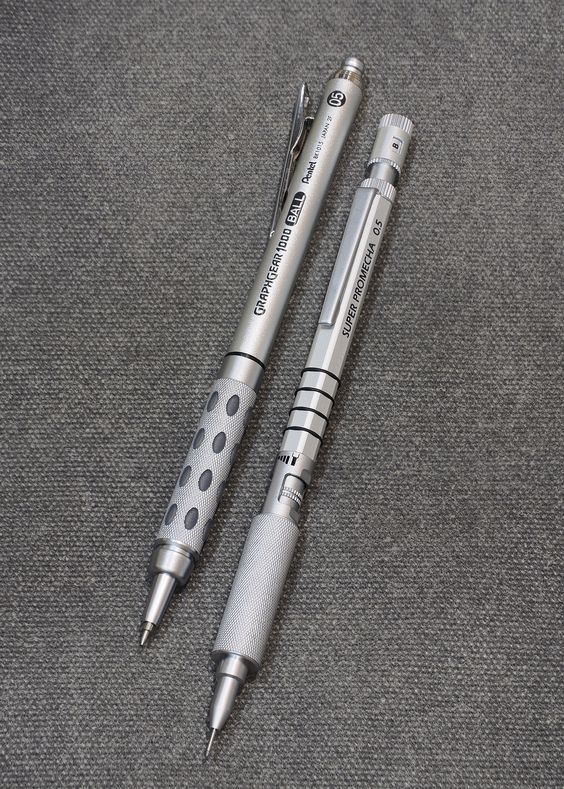
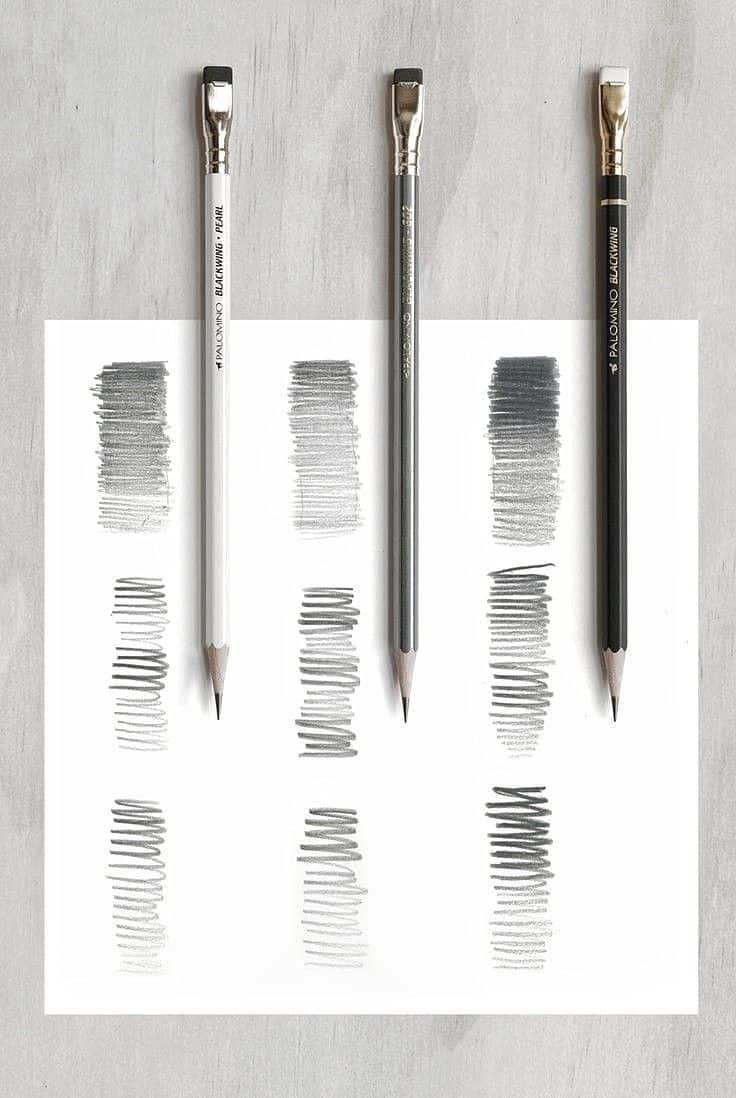
For sketching, having a set of pencils with different hardnesses is key. Softer pencils (like 2B or 4B) create dark lines and shading. Harder pencils (like H or 2H) produce light, fine lines for details. Mechanical pencils offer consistent line widths and convenience.
Pens vary by tip size and ink type. Fine-tip technical pens give precision, useful for borders and text. Brush pens allow expressive, varied strokes. Some architects prefer water-resistant ink for sketches that get layered or scanned.
A basic kit includes:
- Graphite pencils (H, HB, 2B)
- Fine liners (0.1mm to 0.5mm)
- Erasers (kneaded and plastic)
- Rulers and triangles for clean lines
Digital Sketching Devices
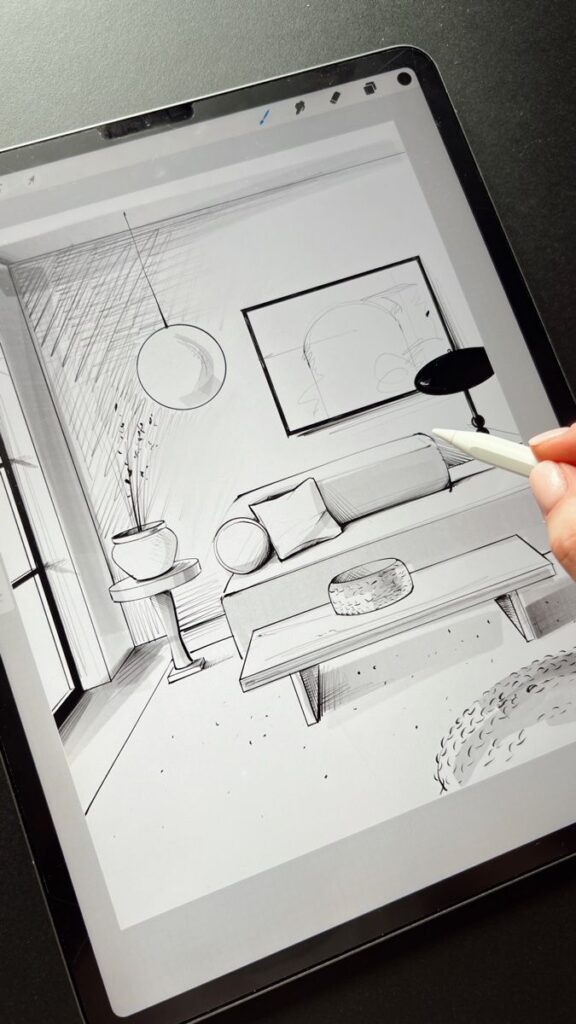
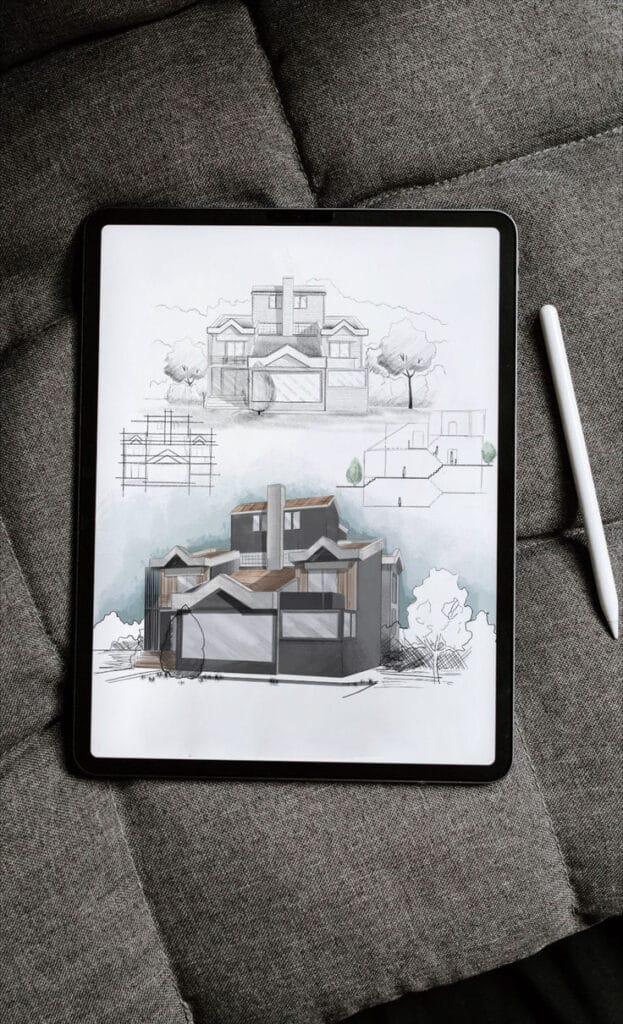
Digital tools are common in modern architecture. Tablets with pressure-sensitive styluses offer natural drawing experiences. Devices like the iPad Pro or Wacom tablets run sketching apps that simulate pencils and pens.
Digital sketching allows easy editing, undoing mistakes, and layering. Files can be shared instantly, which is helpful for teamwork. Stylus pens vary; some have tilt and pressure sensitivity that mimic real drawing tools well.
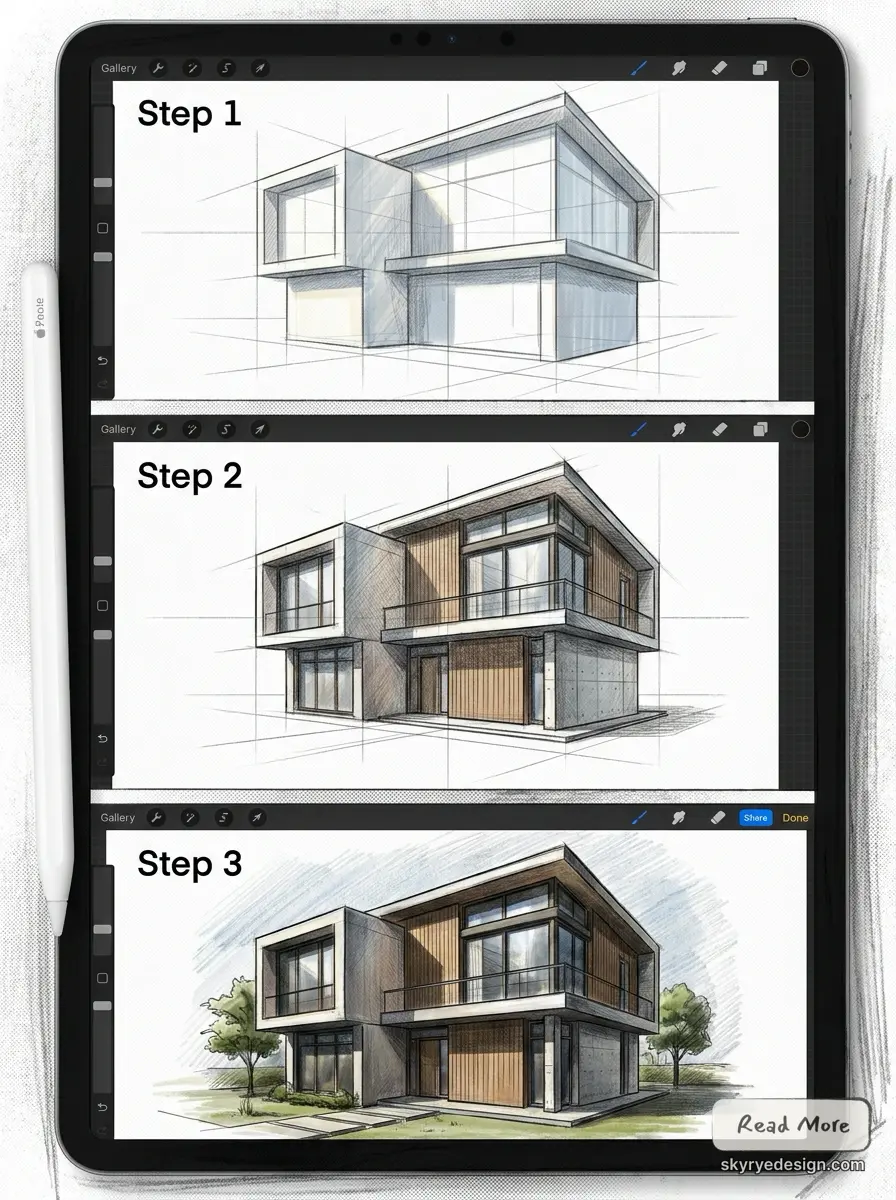
Popular apps include Procreate, AutoCAD mobile, and Sketchbook. Using digital devices helps in refining sketches faster while keeping hand-drawing skills sharp.
Key techniques for better architecture sketching
Effective architectural sketches rely on how lines are drawn, how perspective is handled, and how the elements are arranged on the page. Paying attention to these details helps create clear, believable, and engaging visuals.
Line Quality and Shading
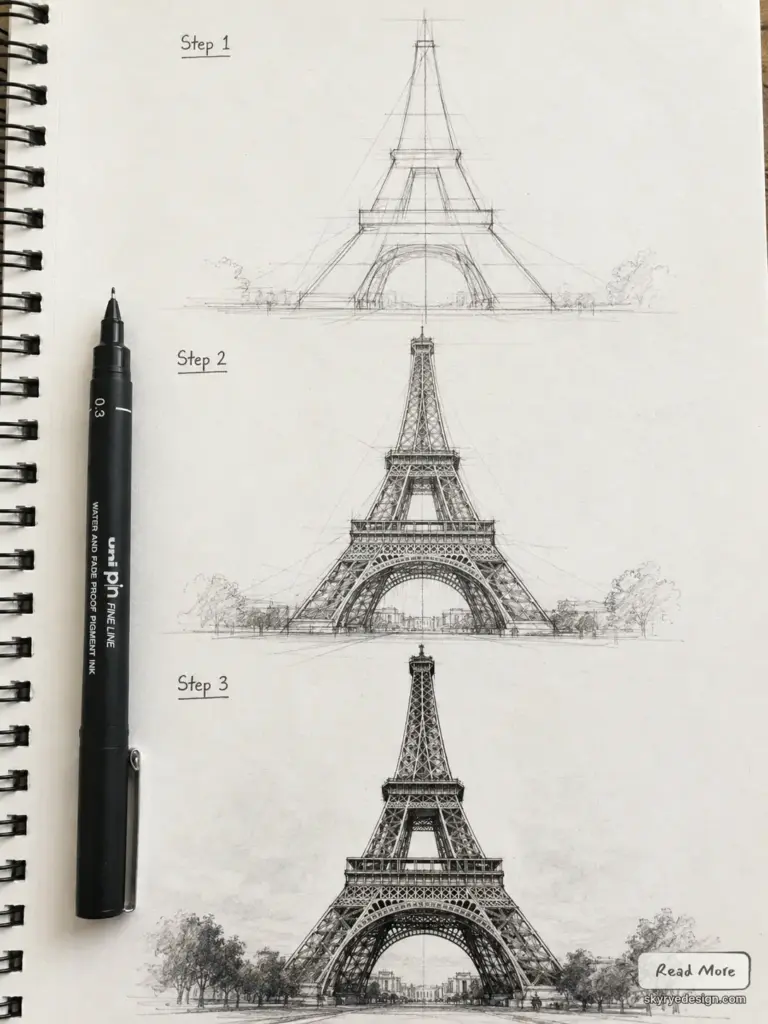
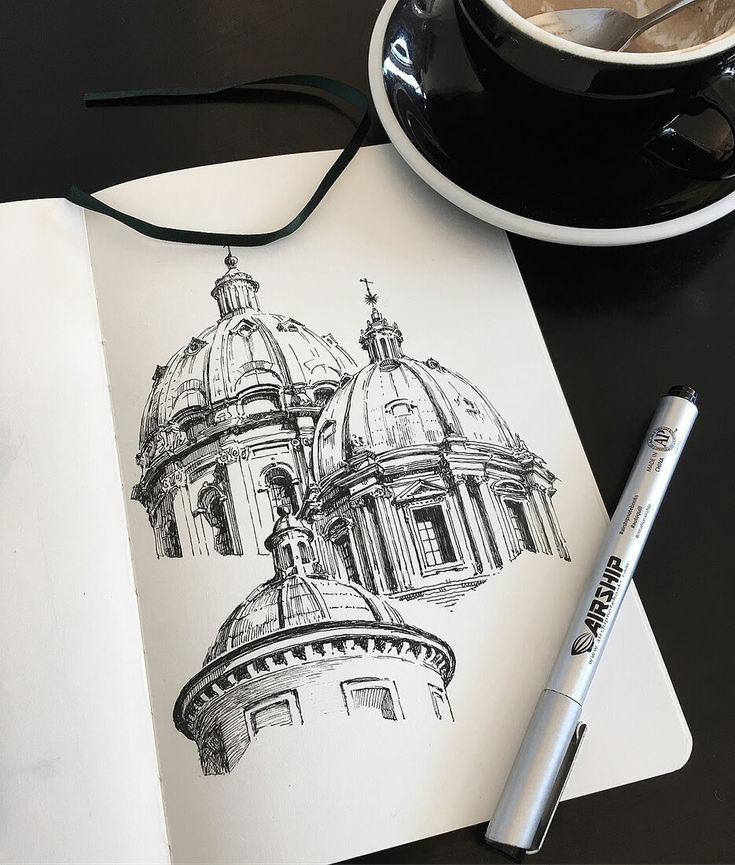
Line quality controls the mood and clarity of a sketch. Thin, light lines are good for initial structure and guides, while darker, thicker lines emphasize important features. Varying line weight helps show depth by separating foreground from background.
Shading adds volume and texture by showing how light hits surfaces. Simple techniques like hatching or cross-hatching can give a three-dimensional feel without complicating the drawing. It’s important to know where the light source is to keep shading consistent.
These tools together create sketches that are easy to read and visually rich. Practicing control over line pressure and shading style will improve the expressiveness of any architectural drawing.
Perspective Drawing Steps
Perspective makes two-dimensional sketches look three-dimensional. The first step is setting one or two horizon lines, depending on whether the sketch uses one-point or two-point perspective.
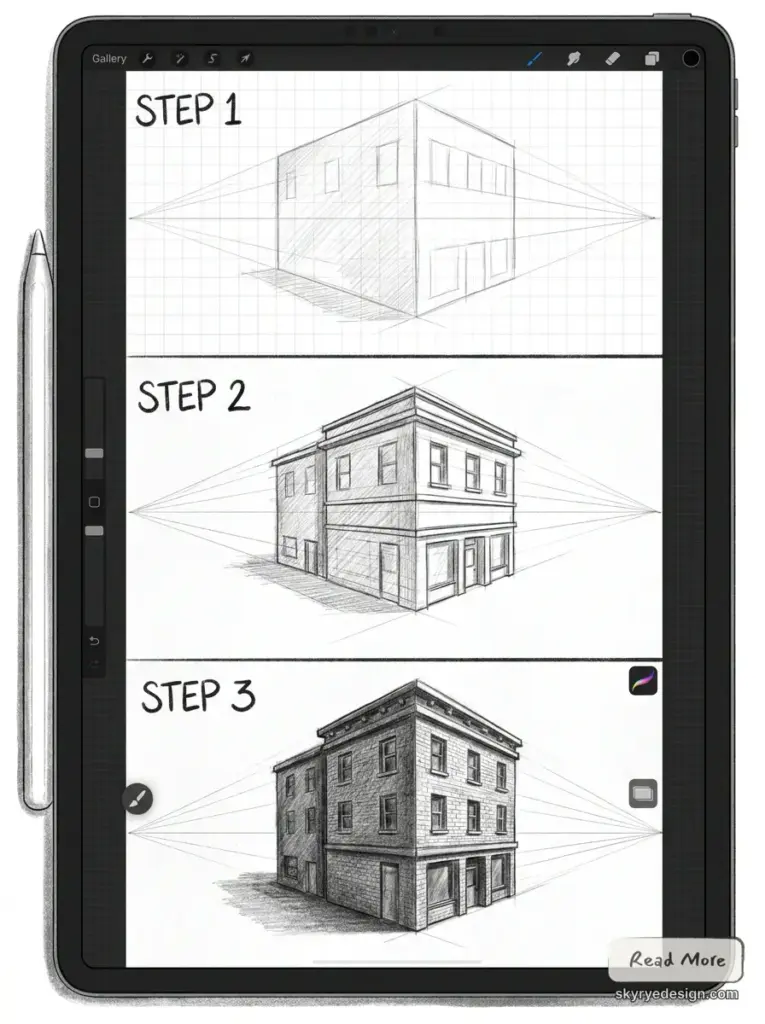
Next, vanishing points are placed on the horizon line. These are where all parallel lines appear to meet. The artist draws construction lines from the edges of objects toward these points.
After outlining the main framework, details are added, always keeping in mind the angle and scale provided by the perspective. This method ensures that buildings and spaces look realistic and proportionate.
Composing a Dynamic Sketch
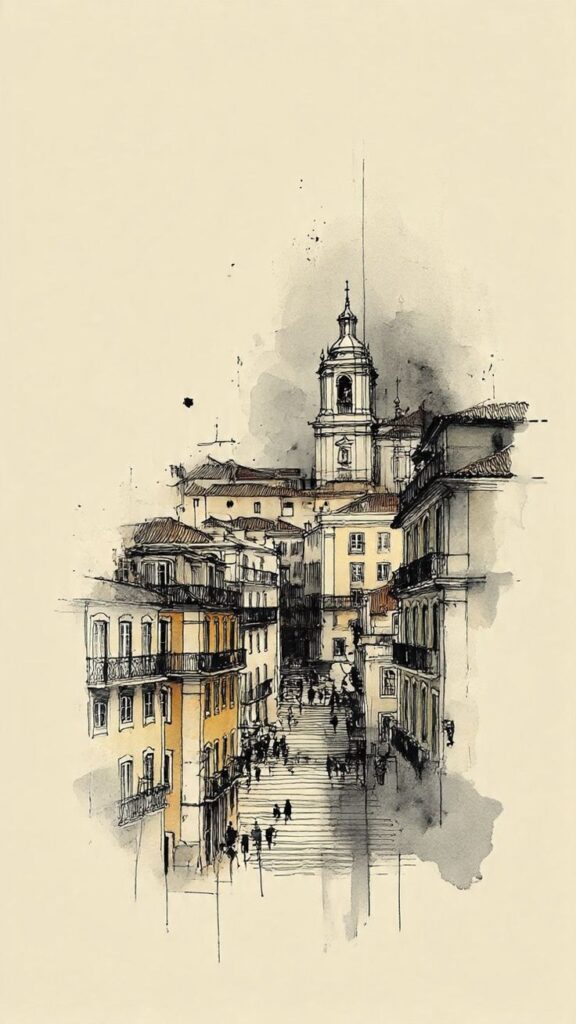
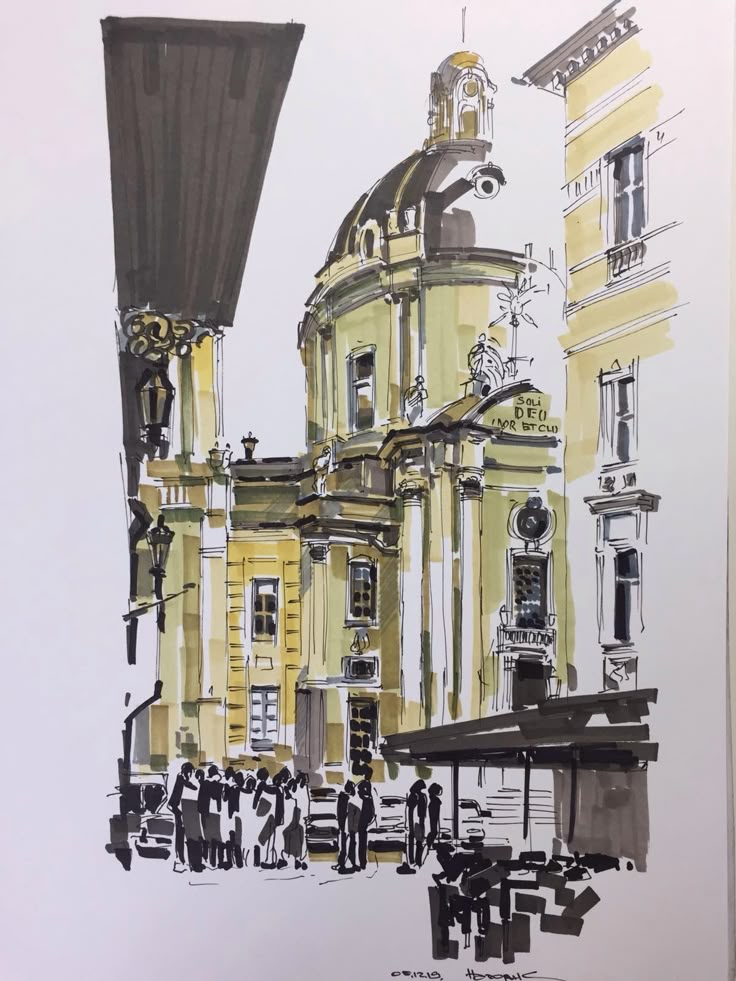
A dynamic sketch captures attention by organizing elements thoughtfully. The artist starts with a focal point, often the most interesting architectural feature or a strong shape.
Balance is important. Items should be arranged so the sketch doesn’t feel too crowded on one side or too empty on another. Using repetition of lines or shapes helps guide the eye across the sketch.
Including areas of contrast, like dark shadows next to lighter spaces, creates energy and movement. The sketch should feel lively but remain clear and understandable. Good composition ties the whole drawing together smoothly.
Visualizing Concepts and Ideas
Architecture sketches help turn ideas into clear visuals by quickly capturing thoughts and sharing design goals. They range from fast, rough drawings to detailed renderings used for technical planning. Understanding how sketches evolve can improve both creativity and communication in design.
Quick Ideation Sketches
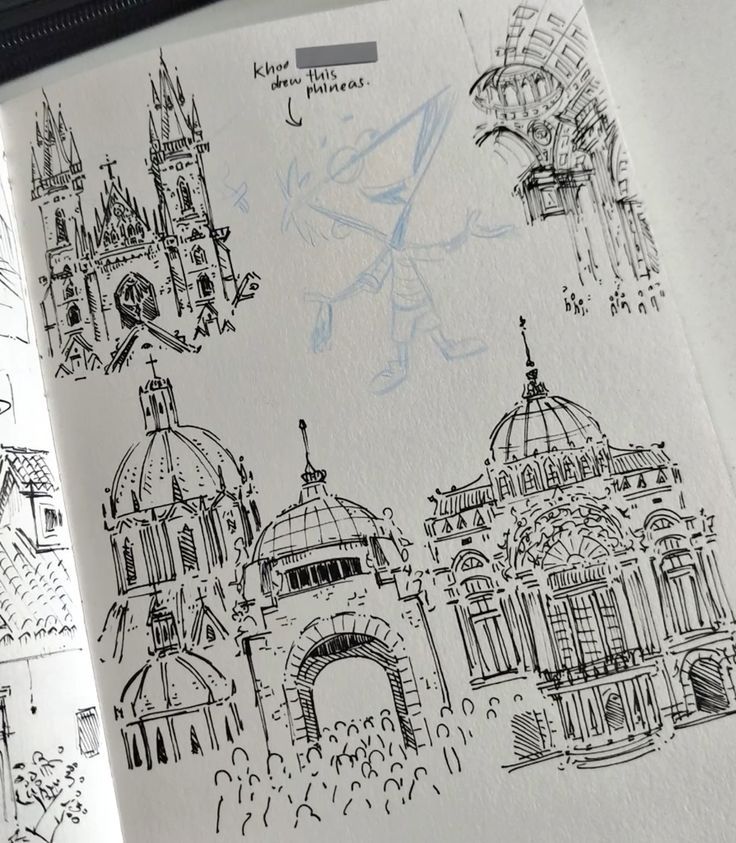
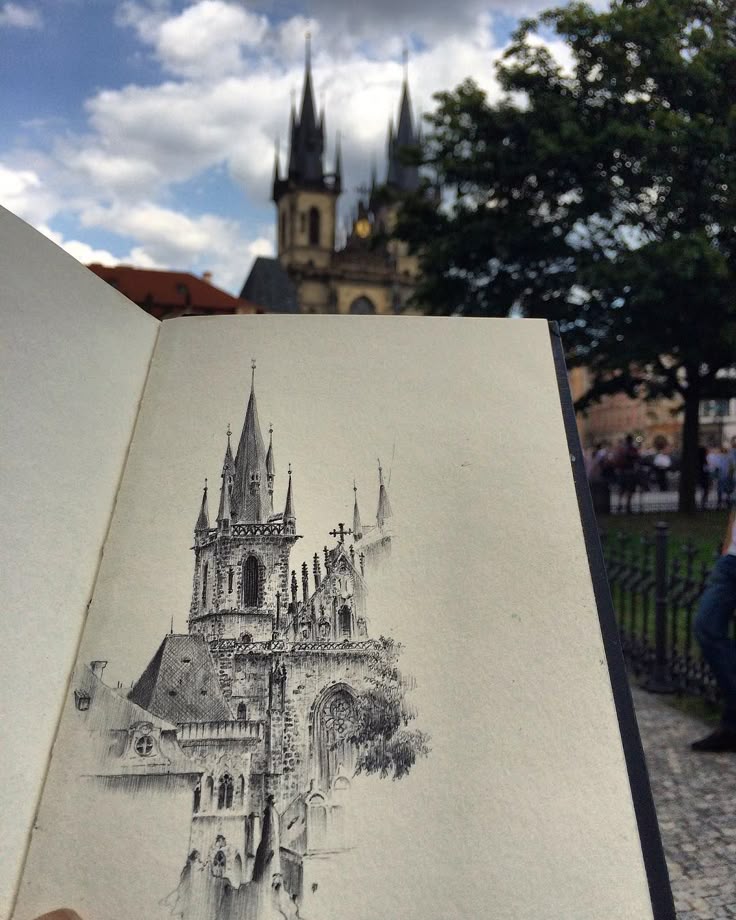
Quick ideation sketches are rough, fast drawings that capture first ideas. They let designers explore many possibilities without worrying about detail or precision. These sketches often use loose lines and simple shapes to show basic forms and spatial relationships.
Because they are done by hand, these sketches feel spontaneous and can reveal unexpected solutions. They are useful in early meetings with clients or team members to discuss concepts clearly and make changes easily before moving to more precise work.
Communicating Design Intents
Sketches are a strong tool for sharing design intent. They show the look, feel, and function of a space without complex technical language. Architects can use them to explain ideas simply to clients who might not understand blueprints or technical drawings.
Good sketches highlight key features like scale, materials, or lighting. They also help teams agree on how a building should work and look. Combining hand sketches with digital visuals adds clarity, making the design easier to review and approve.
Conceptual vs. Detailed Sketching
Conceptual sketching focuses on big ideas and overall form. It uses broad strokes to express shape, mass, and layout. These sketches are fast and flexible, guiding the creative process during design development.
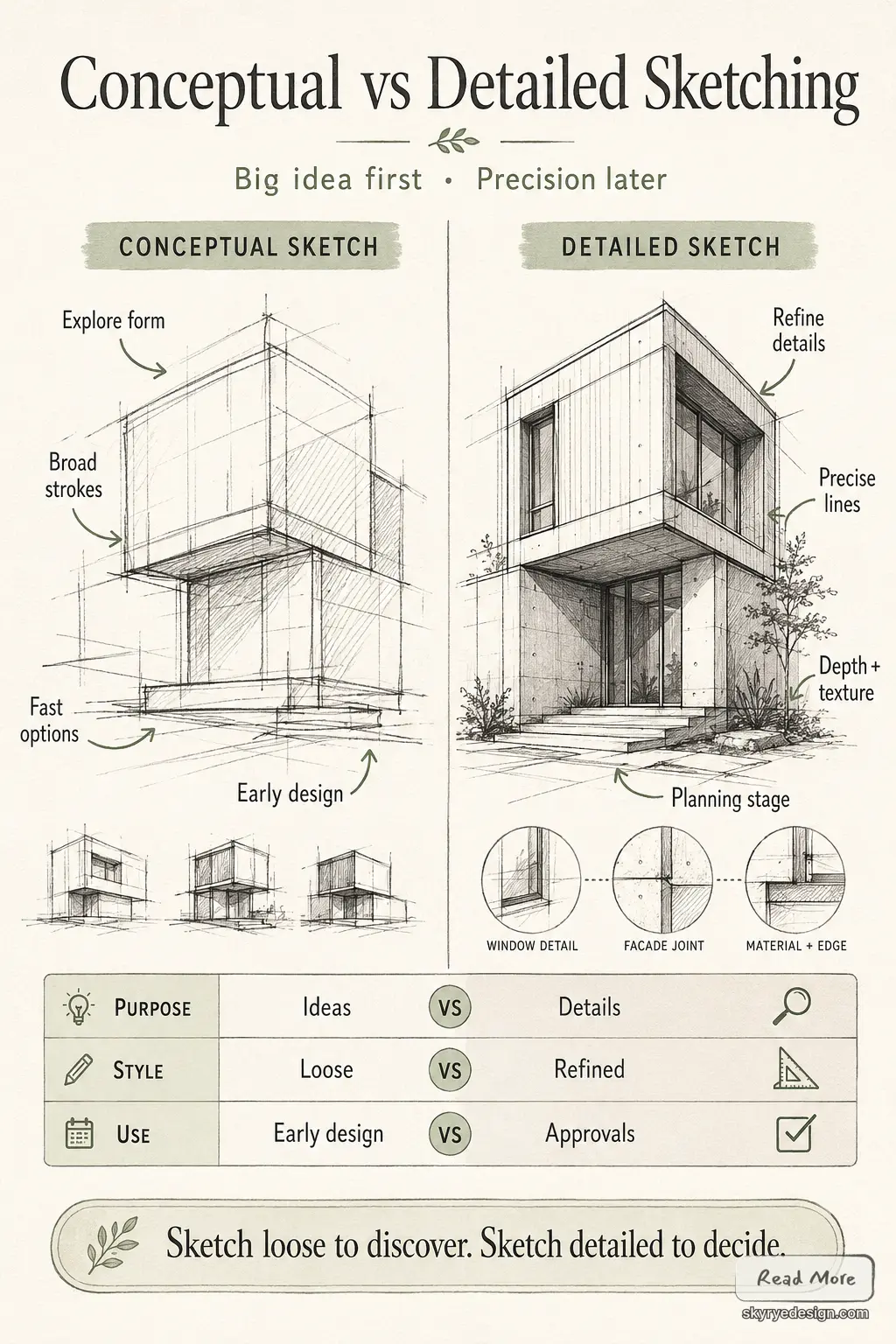
Detailed sketching, in contrast, zooms in on specific elements like windows, doors, or decorative features. It is more precise and refined, often adding color or shading to show depth and texture. These sketches prepare projects for technical drawings, permits, and construction.
| Sketch Type | Purpose | Style | When Used |
|---|---|---|---|
| Conceptual Sketches | Explore main ideas and forms | Loose, broad strokes | Early design stages |
| Detailed Sketches | Focus on fine details and finish | Refined, precise lines | Planning and approvals |
Inspiring Famous Architecture Sketches
Architecture sketches have shaped many iconic buildings and helped architects share radical ideas. They vary from quick napkin doodles to detailed drawings, showing creativity and technical skill side by side. These sketches not only guide construction but also capture the essence of design.
Iconic Architectural Sketches in History
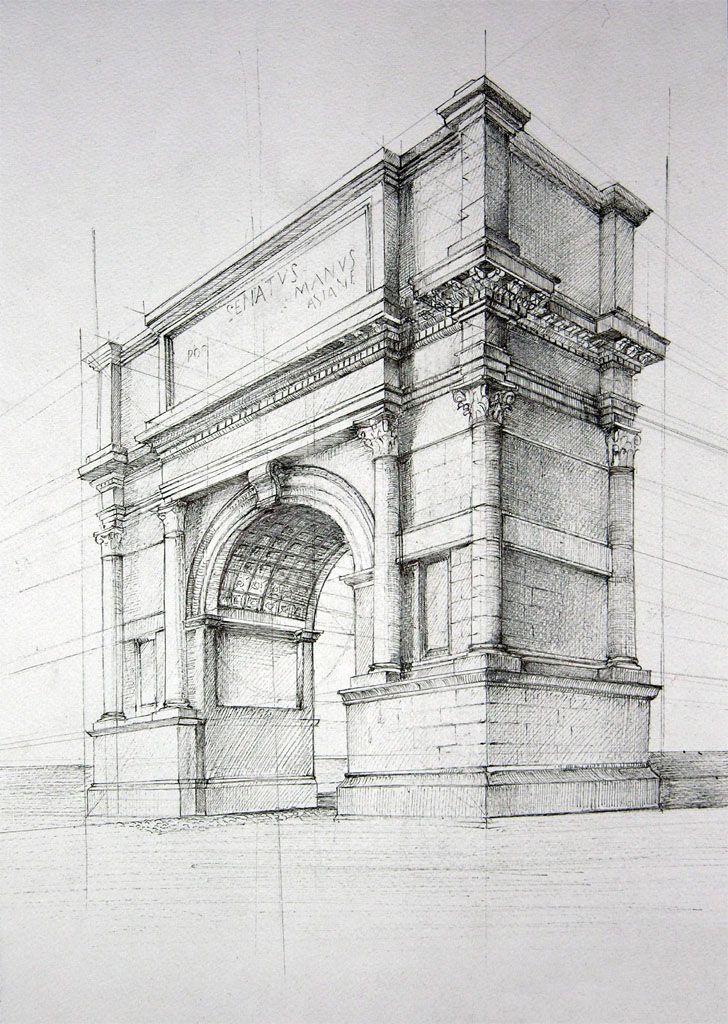
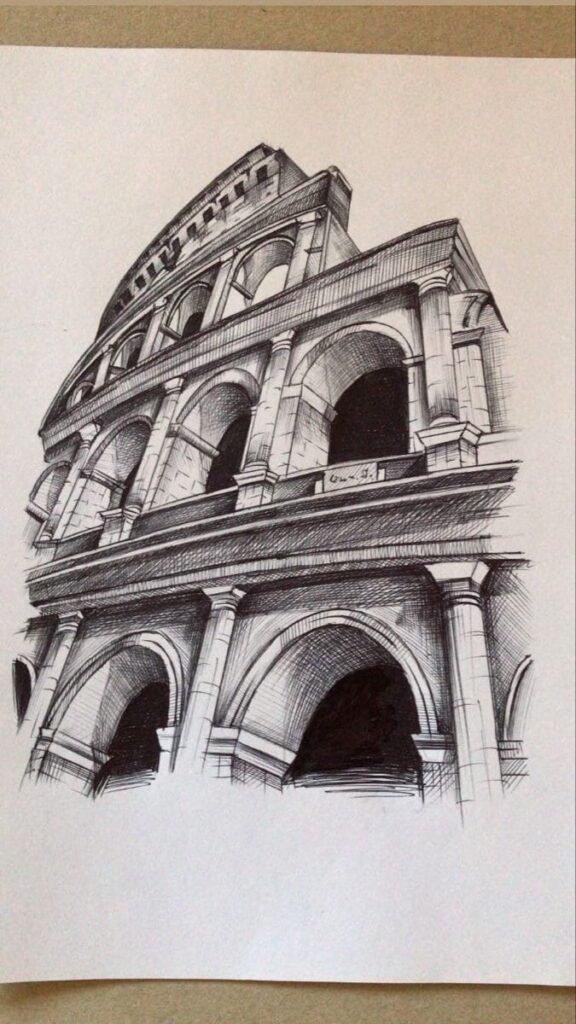
Some sketches stand out because of their historical importance. The Sydney Opera House’s early drawings showed bold shapes that seemed simple but held complex engineering ideas. Eliel Saarinen’s Helsinki Parliament House sketches, though unbuilt, revealed innovative visions that influenced future architects.
Napkin sketches have also played a big role. These rough sketches often capture initial ideas, bridging imagination and reality quickly. They inspire architects to explore new paths without limits. Such sketches have helped create architectural masterpieces known worldwide.
Influential Architects and Their Process
Famous architects use sketches as key tools in their design process. Frank Lloyd Wright, for example, used freehand sketches to explore organic forms, blending buildings with nature. Zaha Hadid’s drawings show dynamic lines and bold shapes, capturing movement before any building takes shape.
For these architects, sketches are a mix of art and engineering. They begin with rough ideas that evolve into detailed plans. Sketching allows them to communicate clearly with clients and builders while keeping creativity alive. This approach helps turn complex visions into real structures.
Tips for improving your architecture sketches
Improving architecture sketches depends on consistent practice, learning from others’ input, and using helpful resources. Developing good habits, being open to critique, and studying real-life examples all play important roles. Small, focused efforts lead to better skills over time.
Daily Practice Suggestions
Daily sketching helps build control and confidence with lines and shapes. It’s a good idea to set aside 15 to 30 minutes each day for quick sketches. Focusing on basic elements like lines, shading, and perspective will strengthen foundational skills.
Sketching buildings or objects in the environment also sharpens observational skills. Using simple tools like pens and pencils allows for easy practice anywhere. Trying different techniques, such as hatching for shading or varying line weight, adds depth to sketches.
By practicing specific exercises regularly—like drawing straight lines, basic shapes, and simple architectural forms—sketches become more precise and expressive. The key is consistency, not perfection.
Learning from Feedback
Getting feedback helps identify areas that need improvement. Sharing sketches with teachers, peers, or online communities can provide fresh perspectives. It’s important to listen carefully and be open to constructive criticism.
When sketching out layout proposals, integrating the principles of passive solar design early can dictate window placements and roof lines.
Feedback often points out issues with proportion, perspective, or clarity. Once those areas are known, focused practice can address them. Keeping a sketch journal also helps track progress and highlights repeated mistakes to work on.
When receiving advice, it’s good to ask specific questions. For example: “How can I improve the scale in this drawing?” This encourages clear, helpful responses. Over time, using feedback effectively leads to stronger, more confident sketches.
Using Reference Images
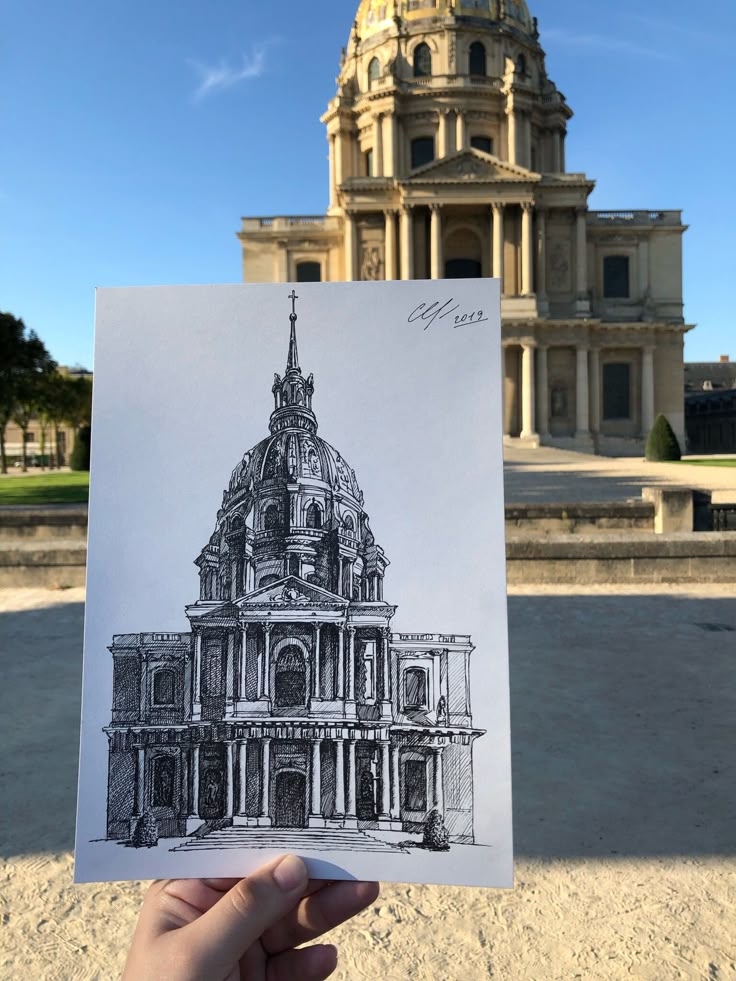
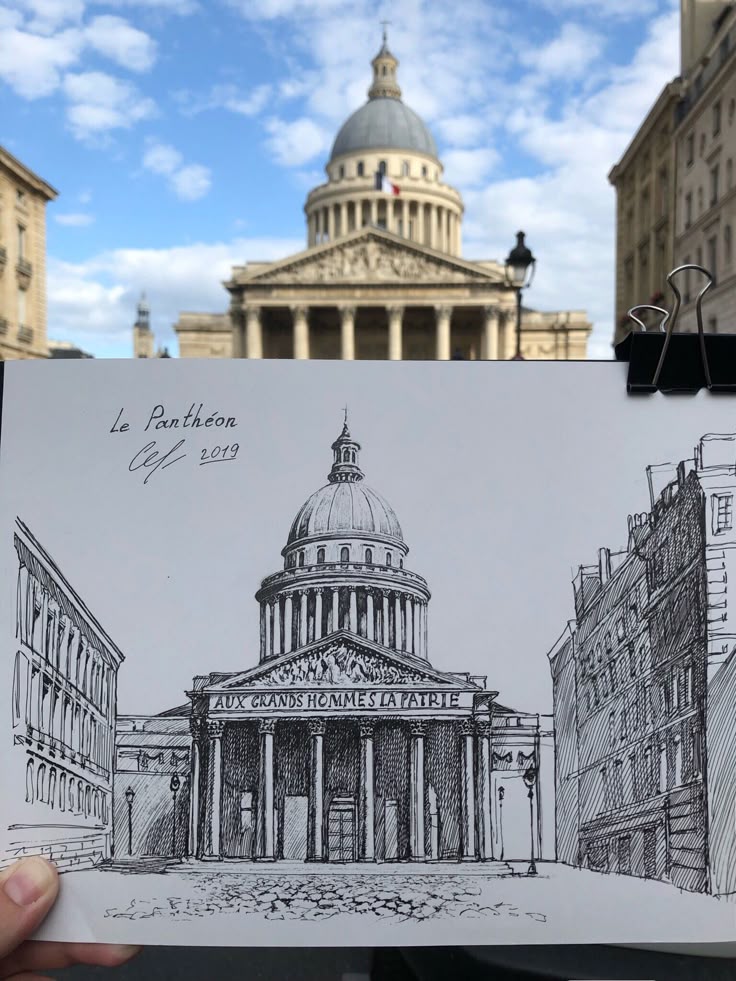
Reference images are valuable tools for learning architecture sketching. They show real buildings, materials, and details that might be hard to imagine. Using photos or printed images helps understand proportions and textures.
Studying references closely improves observation skills. Sketchers can break down complex buildings into simpler shapes. Copying details from images builds familiarity with common architectural elements like windows, arches, and roofs.
It’s helpful to use a variety of references: different styles, angles, and lighting conditions. Combining this with personal sketches creates a deeper understanding and more accurate drawings. However, references should guide—not replace—original creativity.
Showcasing and Preserving Your Work
Keeping architectural sketches organized and safe is important for both learning and sharing. Presenting sketches clearly helps others understand the design process. This involves storing sketches thoughtfully and turning hand drawings into digital formats for portfolios or presentations.
Organizing a Sketchbook
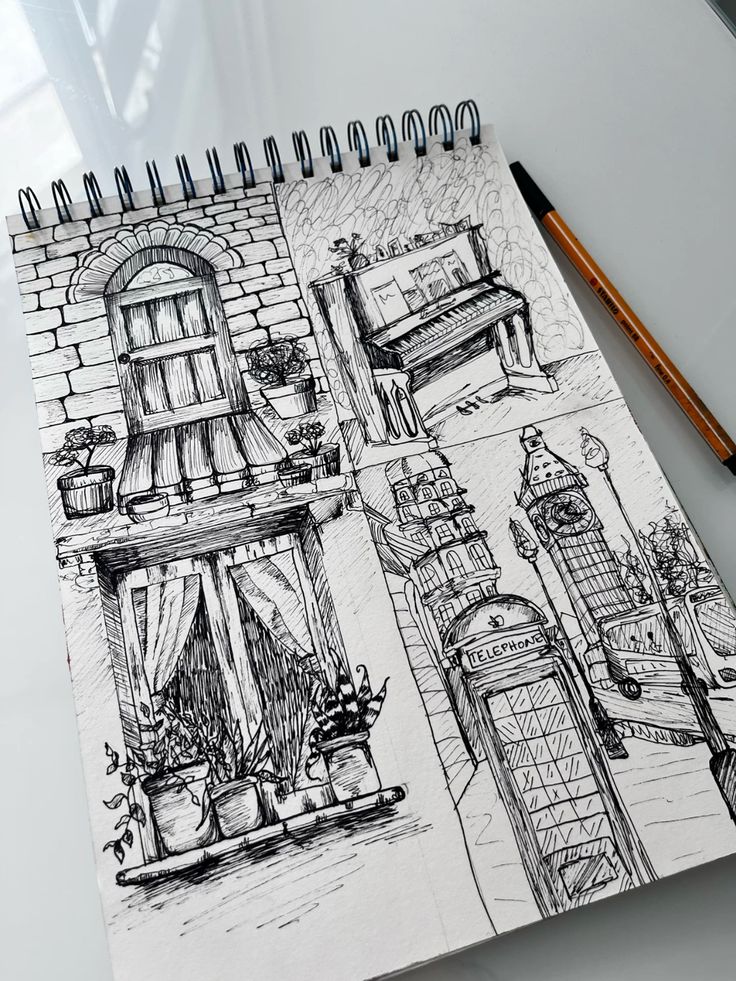
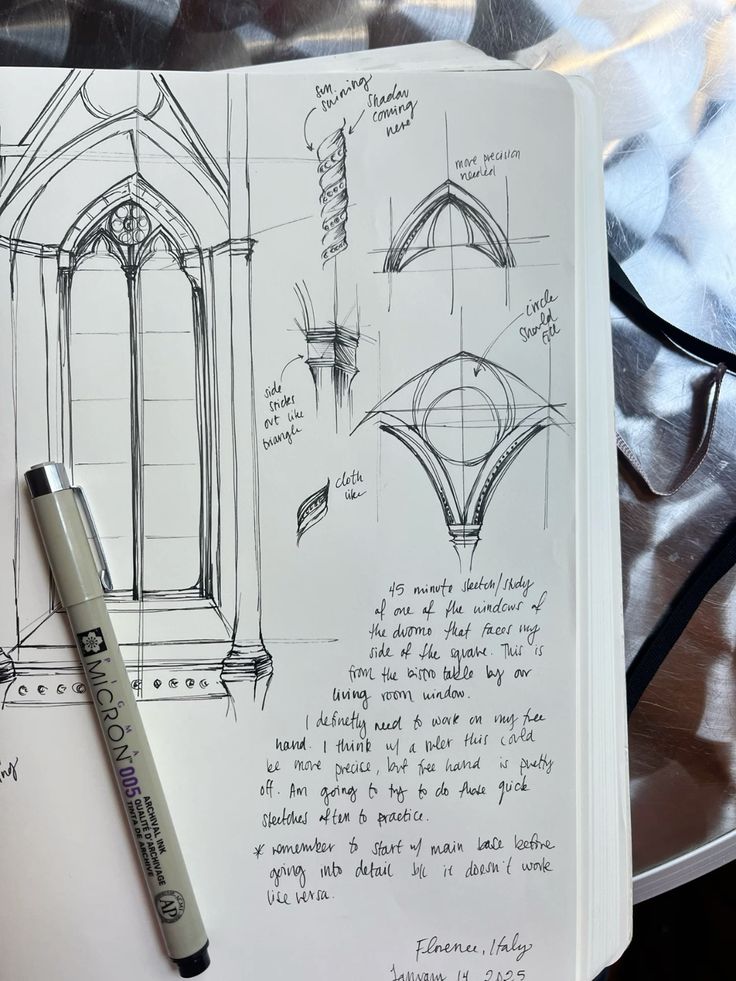
Using a sketchbook helps keep designs in one place. It’s best to date each page and write short notes about ideas or techniques used. This creates a clear record of progress and thought. Sketchbooks can be divided by project or style to find work quickly.
Keep sketches easier to review by using consistent paper sizes, dating the pages, and protecting softer graphite from smudging. Tabs or colored markers can mark important pages, making it easier to find key sketches later. If you want to organize your drawings and tools, learning how to setup a home art studio with proper storage helps maintain a productive workspace.
Digitizing Sketches for Portfolios
Digitizing sketches makes sharing easier and protects originals from damage. A high-quality scanner or a good camera is needed to capture clear images. Adjusting lighting avoids shadows and ensures lines are sharp.
Once digitized, sketches can be cleaned up with simple editing tools to fix brightness or contrast without changing the design. Organizing files with clear names and folders helps locate sketches quickly when building a portfolio. Digital copies can be combined into presentations or shared online, widening their reach.
Architecture sketching is also good training for perspective illusion drawing, because both depend on a clear viewing angle.
Before you begin modeling, refine your final drafts by studying these key architectural rendering tips to capture depth, shadow, and realistic materials.
For a focused cultural building study, practice a Japanese architecture drawing after your basic facade sketches; the roof rhythm, posts, and garden edges make perspective errors easier to spot.
Related practice for architecture sketches
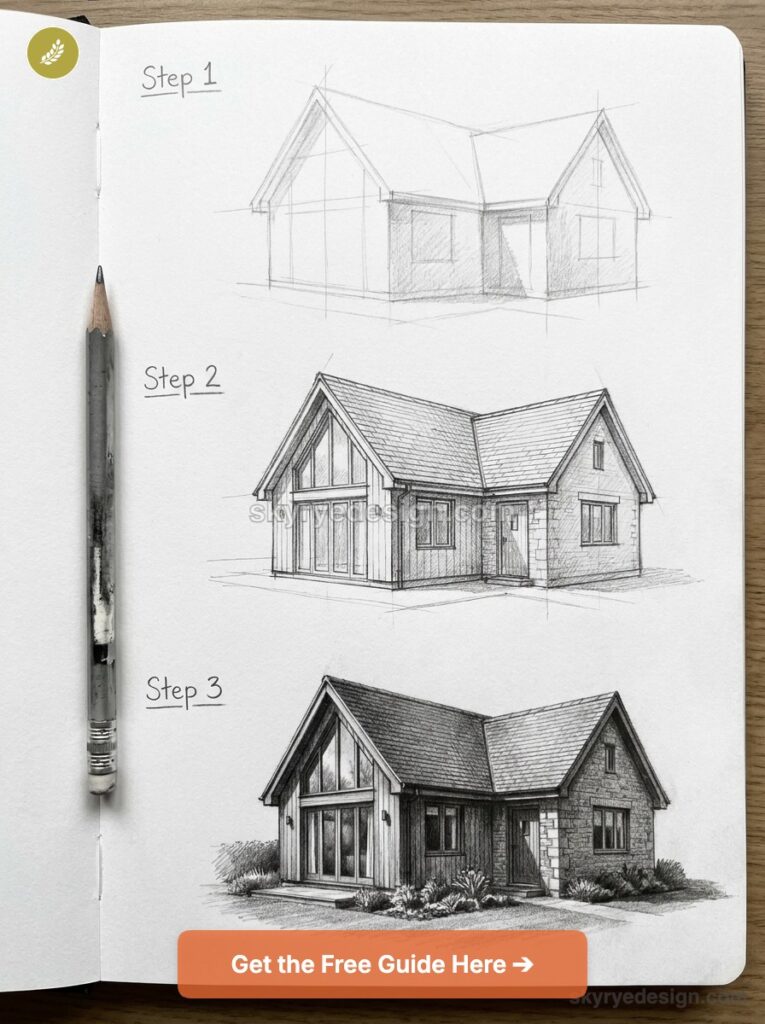
Once the basic building sketch feels readable, move sideways into nearby exercises: compare loose architectural drawings and sketches, practice technical drawing for designers, study interior perspective sketching, and build confidence with drawing buildings. For general drawing control, work through sketching tips for beginners, sketching techniques, shading practice, sketchbook drawing ideas, and sketchbook inspiration.
References worth studying
For real architectural reference, study archival drawings and built examples rather than only polished social-media sketches. The Historic American Buildings Survey collection, RIBApix architecture image library, and MoMA architecture and design collection are useful starting points for proportion, facade rhythm, and drawing conventions.
What are architecture sketches?
Architecture sketches are quick freehand drawings that explore a building, room, facade, or spatial idea before it becomes a precise technical drawing. They can be rough, but they should still show proportion, perspective, light direction, and the main design decision.
How do you start architecture sketches for beginners?
Start with the largest shape, not the windows. Draw the building as a simple box or group of planes, mark the horizon line, and lightly aim major edges toward a vanishing point. When the form reads clearly, add darker edges, shadows, openings, and small details.
What tools do you need for architecture sketching?
A basic kit is enough: an HB pencil for structure, a 2B pencil or fineliner for darker edges, a kneaded eraser, and smooth sketchbook or marker paper. A ruler can help with clean guides, but try not to let it make the sketch feel mechanical.
How are architecture sketches different from architectural drawings?
Architecture sketches are exploratory and flexible. They help test a concept, composition, or detail quickly. Architectural drawings are more exact, usually scaled, and prepared for planning, construction, or documentation. A sketch can be expressive; a construction drawing must be precise.
What is the best way to practice sketching buildings?
Choose one small subject, such as a doorway, roofline, stair, corner facade, or window bay. Draw it for five to ten minutes, then repeat it with a different line weight or viewpoint. Short repeated studies build better observation than one overworked sketch.
How do you make architecture sketches look more dimensional?
Use perspective, overlap, and a simple value plan. Darken the nearest edges, keep background lines lighter, and put one clear shadow side on the building. Small people, trees, or furniture can also show scale if they are placed in the same perspective.
Can digital tablets replace hand architecture sketching?
When moving from raw hand-drawn drafts to digital visualization, learning how 3D printing in architecture is utilized can help you bridge the gap between 2D sketches and physical assets.
A tablet can replace paper for many workflows, especially when you need layers, undo, and fast sharing. The drawing habits are still the same: block in the form lightly, check perspective, control line weight, and save detail for the end.
For a looser graphite warm-up before architectural studies, use pencil drawing ideas for buildings, city corners, and historical facades.
For a structured step-by-step introduction to these foundational concepts, check out our comprehensive guide on architecture drawing for beginners guide to practice your skills.
To understand how sketches translate to real-world forms, check out our comprehensive architectural style guide.
When a building sketch feels stiff, study architectural rhythm and check whether windows, columns, shadows, and openings create a readable beat across the facade.
Related architecture drawing practice
Once the basic sketch feels steady, move into a full how to draw architecture practice session so the same horizon line, massing, and line-weight decisions turn into a complete building study.
- 11.6Kshares
- Facebook0
- Pinterest11.6K
- Twitter0
- Reddit0