Beginner drawing exercises work best when they are simple, repeatable, and a little bit boring in the right way. You are not trying to make a finished masterpiece every day. You are training your hand to move with control, your eye to compare shapes, and your brain to stop guessing so much.
The ten drills below fit into a short 15-minute routine: lines, shapes, quick sketches, value studies, perspective, gesture thumbnails, and hand drawing. I would rather see a beginner do three focused exercises every day than spend one heroic Sunday copying a complicated reference and feeling defeated.
- How to use these beginner drawing exercises
- Practice basic strokes
- Practice basic shapes
- Draw quick sketches
- Try the five-minute burn
- Do blind contour exercises
- Study crumpled paper
- Practice straight and curved lines
- Explore perspective practice
- Create gestural thumbnails
- Draw your non-dominant hand
- A simple weekly practice plan
- Frequently asked questions
- References
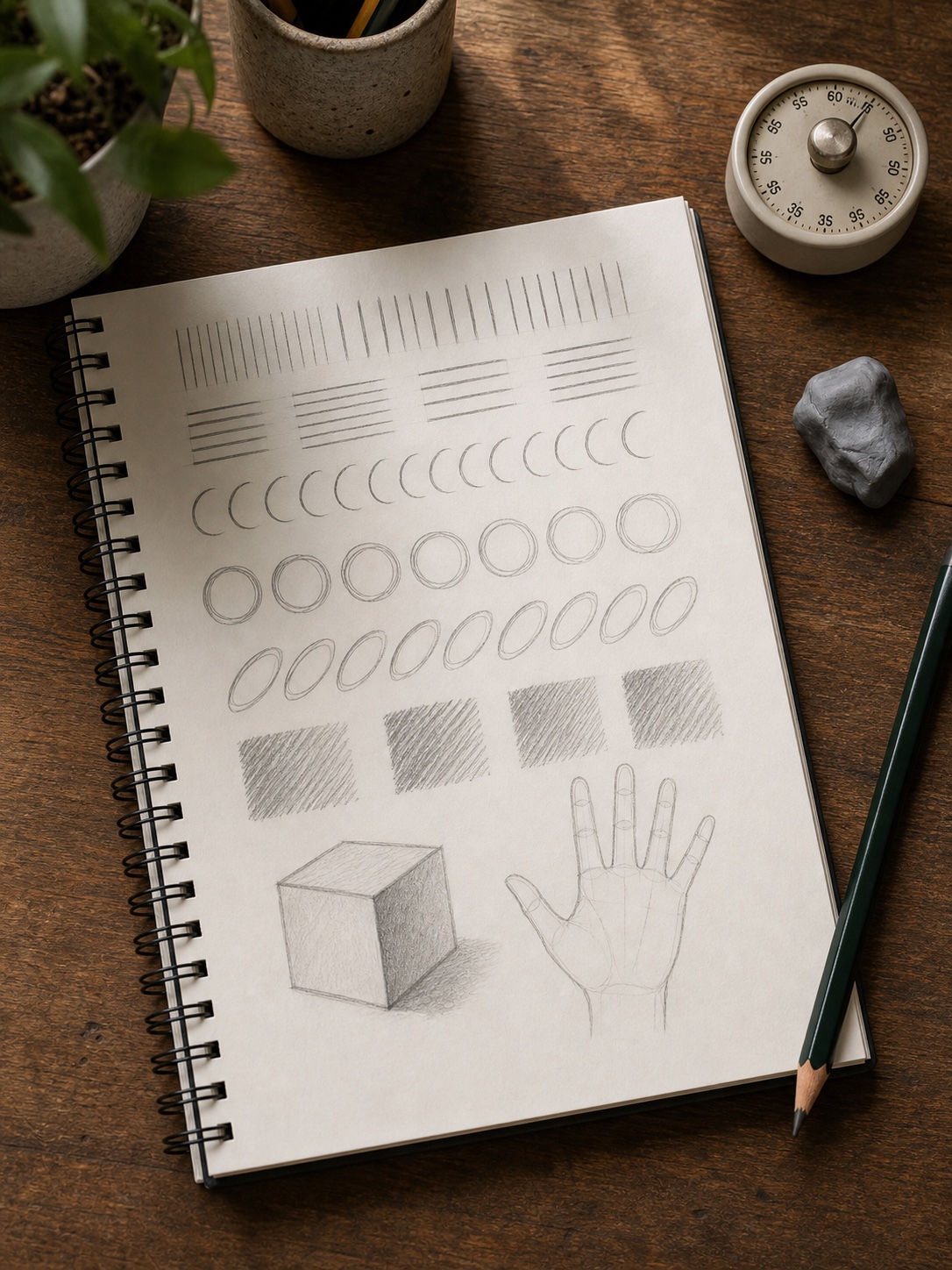
How to use these beginner drawing exercises
Use the exercises like a small menu, not a punishment list. Pick one control drill, one observation drill, and one small sketch. Stop before you are completely drained, because the point is to come back tomorrow.
| Time | Exercise | What to watch |
|---|---|---|
| 2 minutes | Lines, curves, or ellipses | Smooth pressure and confident direction |
| 5 minutes | One object study | Big shape first, details second |
| 5 minutes | Value or texture drill | Three clear value groups |
| 3 minutes | Thumbnail or gesture sketch | Readable silhouette and movement |
Practice basic strokes
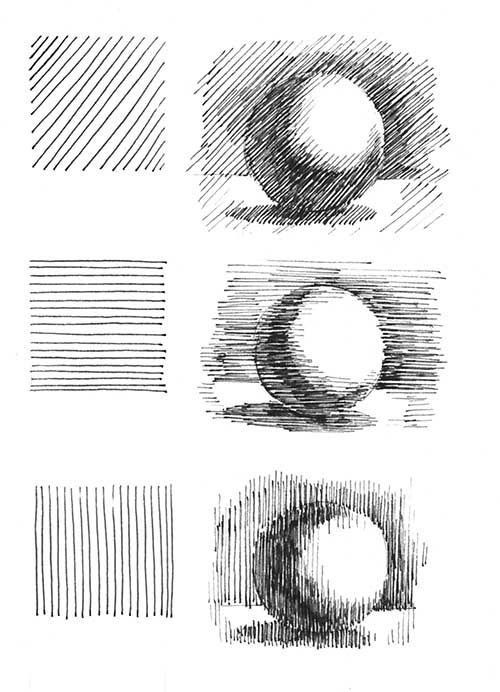
Start with two minutes of hatching, cross-hatching, stippling, scribbling, and contour lines. Keep the marks slow enough that you can feel the pencil pressure change. This is boring in the same way scales are boring for a musician: it gives your hand a cleaner vocabulary.
Turn these ideas into real sketchbook practice
Why this helps
- Builds pencil control before you try a full subject
- Makes later shading and texture less random
How to practice it
- Use a timer and switch mark types every 30 seconds
- Repeat the same sheet once with HB and once with 2B so you feel the pressure difference
Practice basic shapes
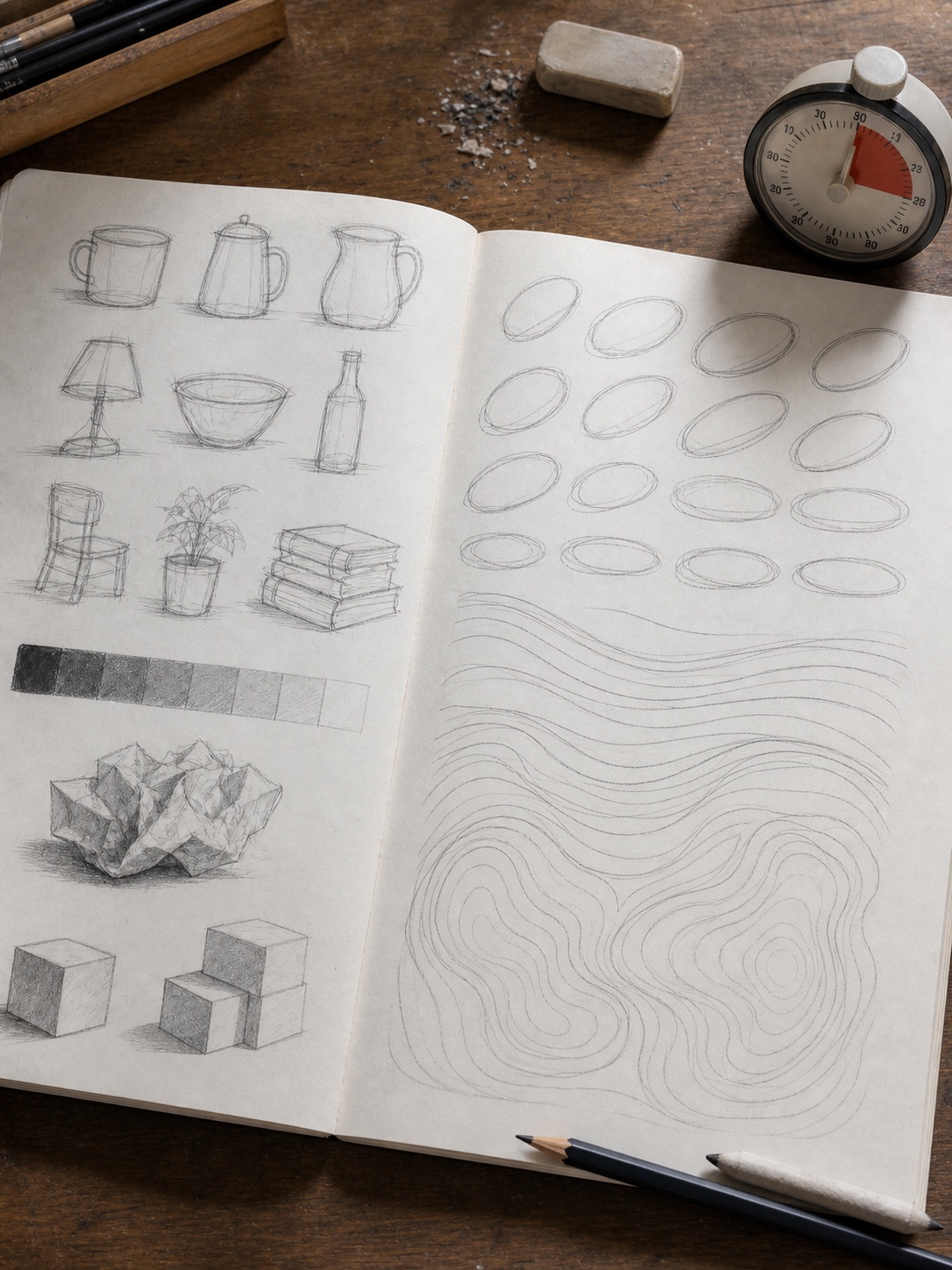
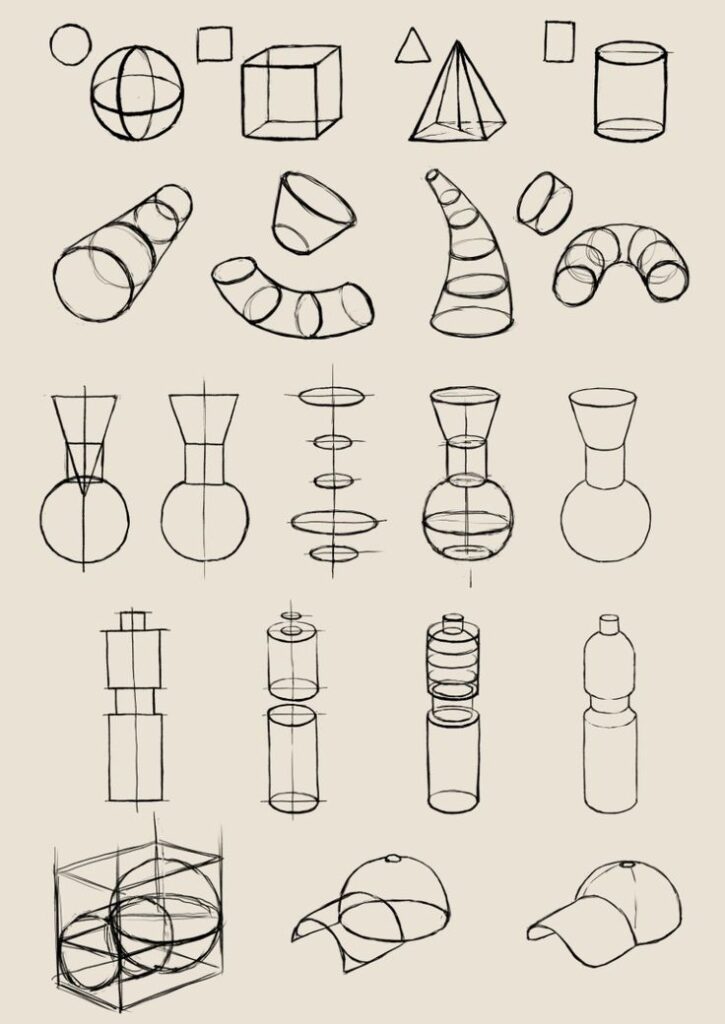
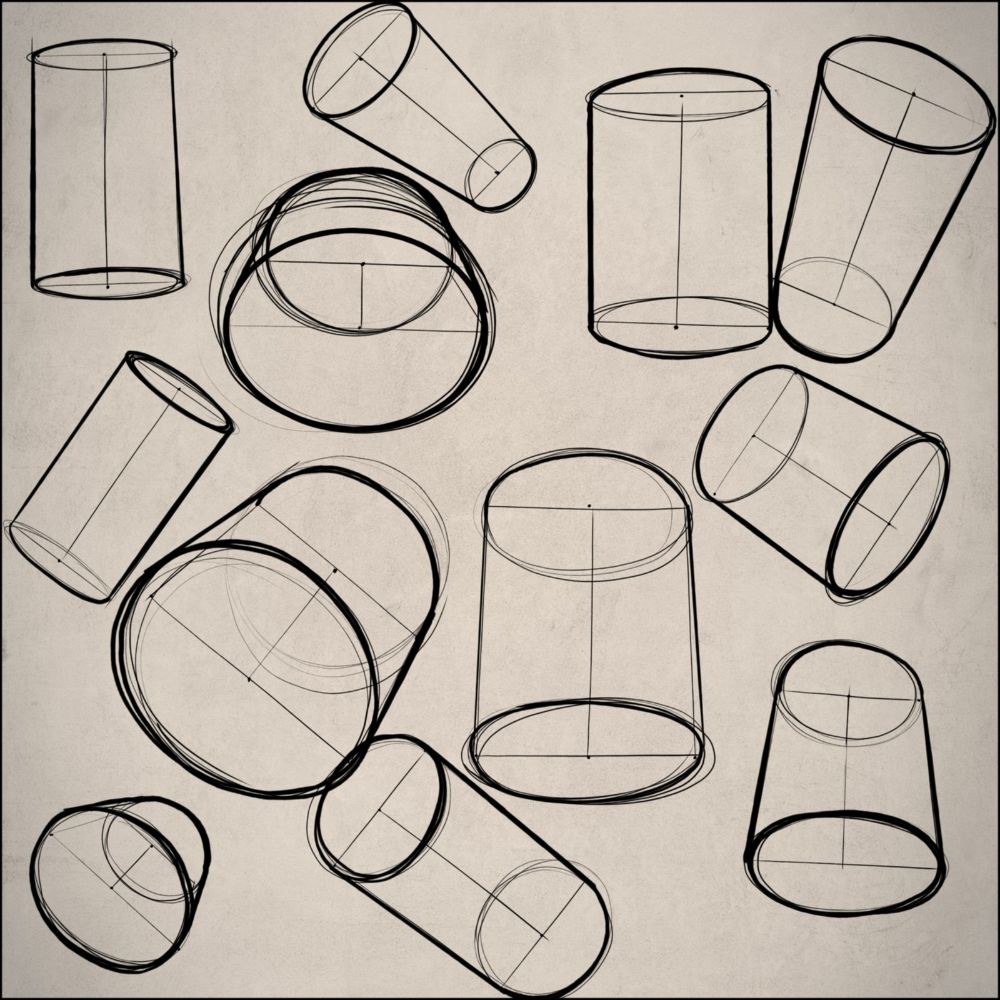
Fill a page with circles, ellipses, rectangles, cubes, and cylinders. Vary the size and angle instead of drawing the same shape again and again. Most beginner drawings improve as soon as the artist can see the simple form hiding inside the subject.
Why this helps
- Improves proportion and construction
- Helps you simplify objects before adding detail
How to practice it
- Draw each shape lightly, then correct it with a darker pass
- Turn a few shapes into simple objects, such as a cup, box, book, or plant pot
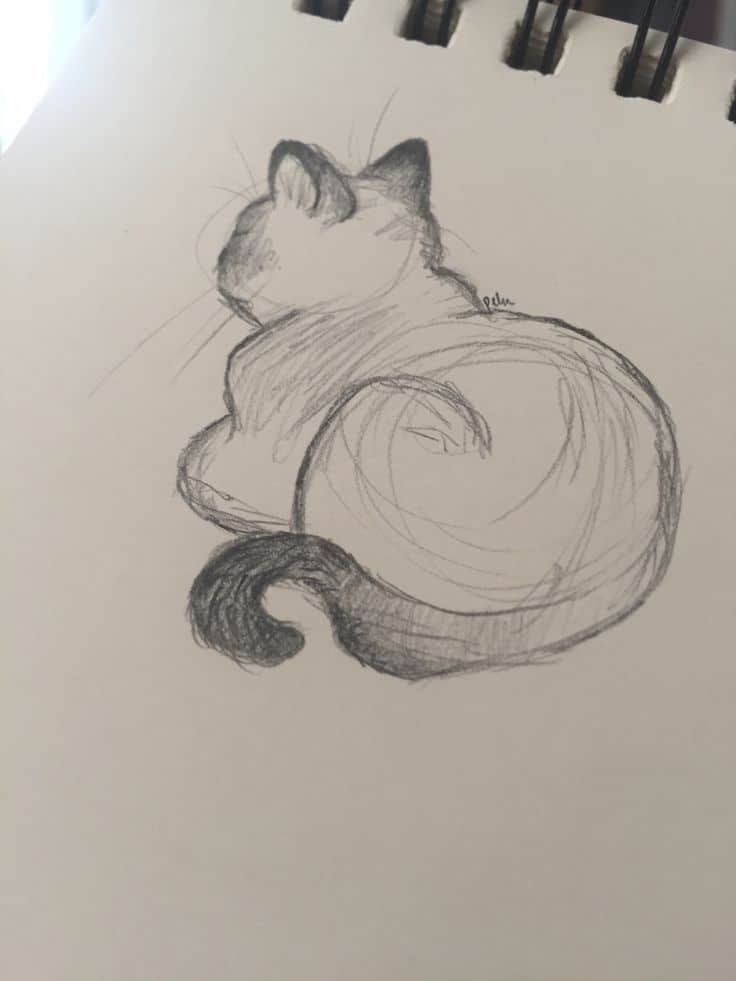
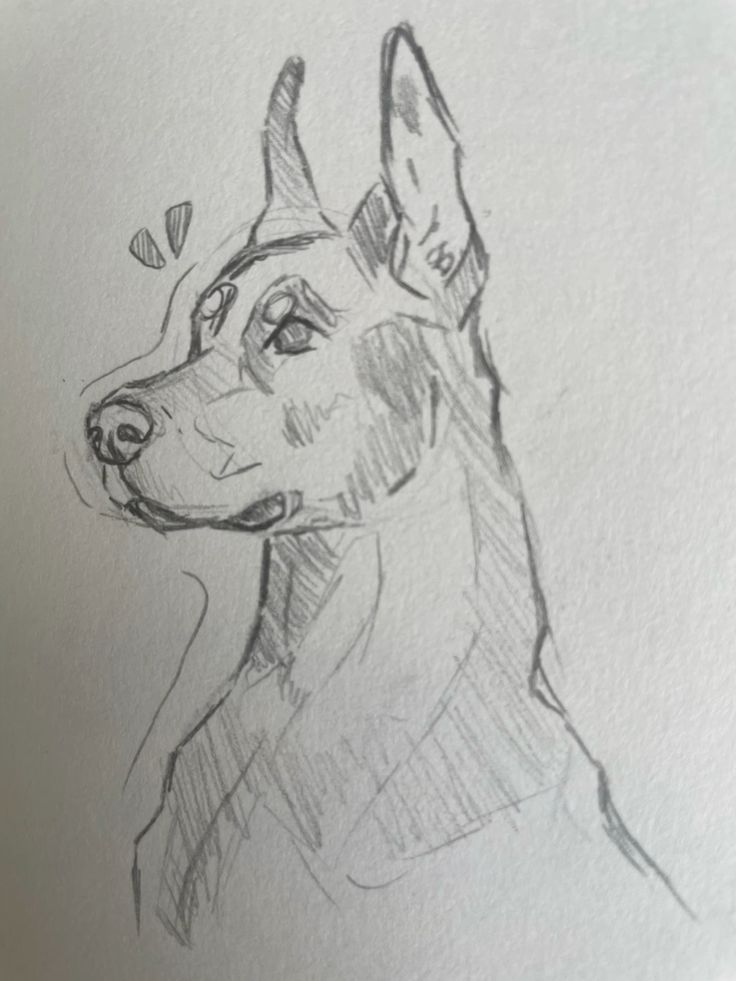
Draw quick sketches
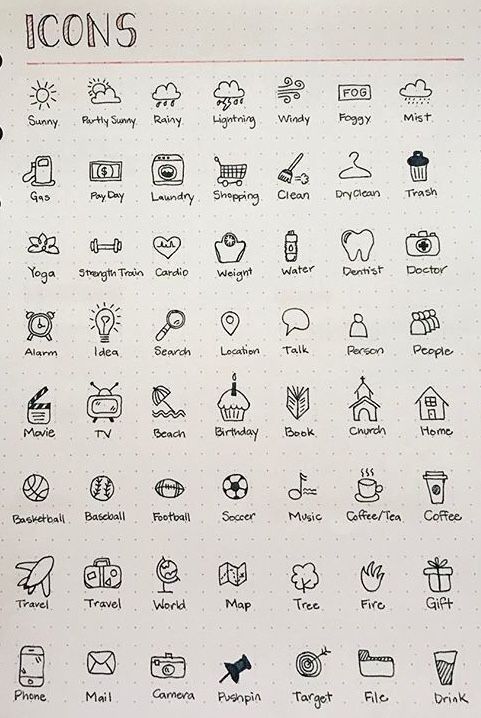
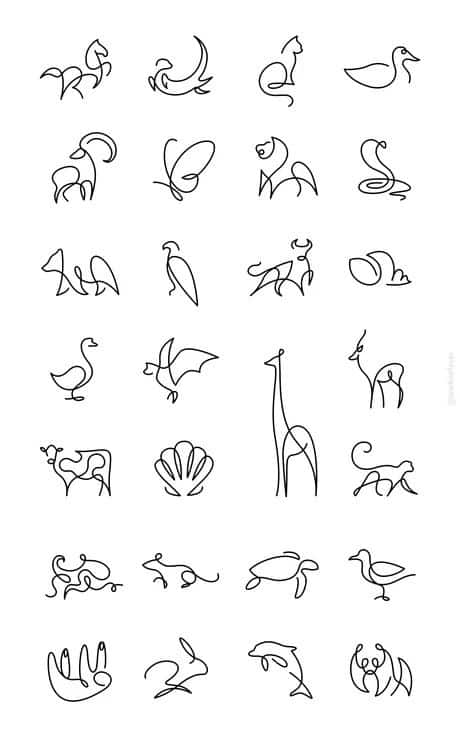
Make eight tiny sketches in four minutes. The point is not polish; it is choosing the big angle, shape, and movement fast. If people or poses are hard, use a few gesture drawing poses and keep each thumbnail smaller than your palm.
Why this helps
- Trains your eye to ignore tiny details at first
- Builds confidence because the stakes stay low
How to practice it
- Use household objects, hands, shoes, plants, or figure references
- Circle the strongest thumbnail and redraw only that one for five more minutes
Try the five-minute burn
Pick one object in front of you and draw it for exactly five minutes. No pausing to hunt for the perfect reference. In academic drawing, this is where you learn to compare angles quickly instead of guessing from memory.
Why this helps
- Sharpens observation under gentle time pressure
- Keeps you from polishing one tiny corner while the whole drawing is still wrong
How to practice it
- Spend the first minute on the outline only
- Use the last minute to darken just three shadow areas
Do blind contour exercises
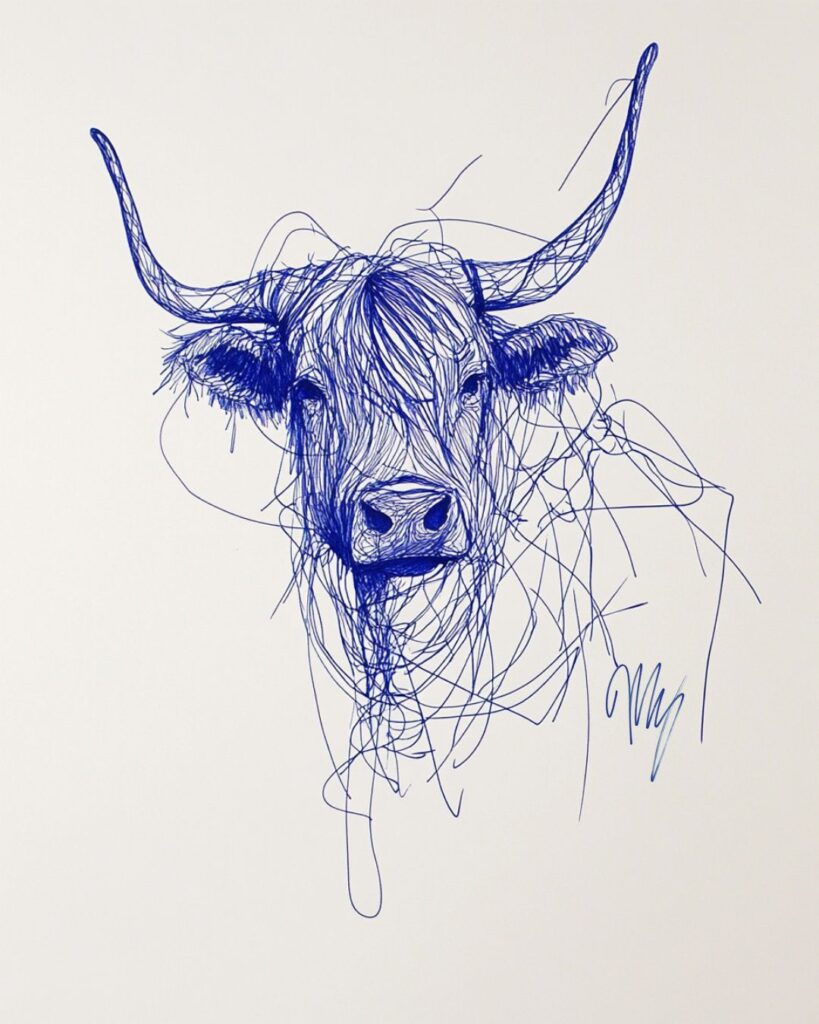
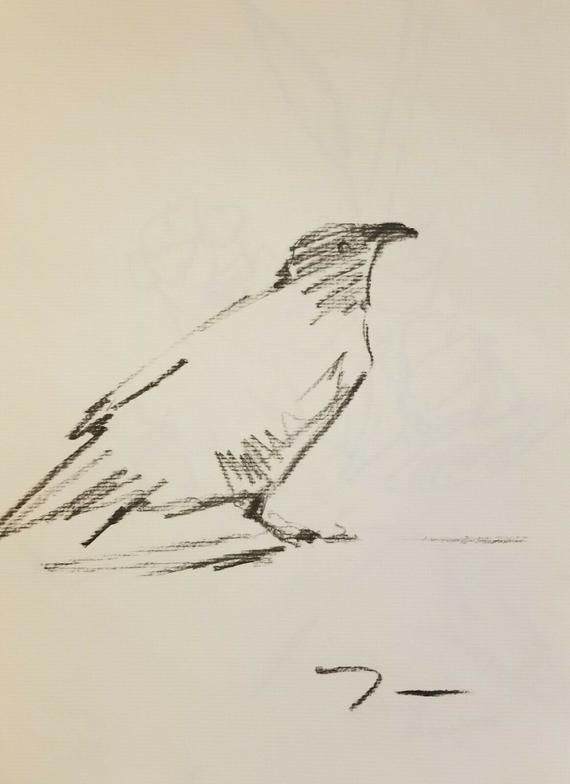
Blind contour drawing means looking at the subject, not the page, while your pencil follows the edge. The result will look strange. That is fine. The exercise is for seeing, not for making a pretty sketch.
Why this helps
- Forces close observation
- Strengthens the connection between eye movement and hand movement
How to practice it
- Try your hand, a shoe, a mug handle, or a plant leaf
- Do one blind version, then one normal version and compare what you actually noticed
Study crumpled paper
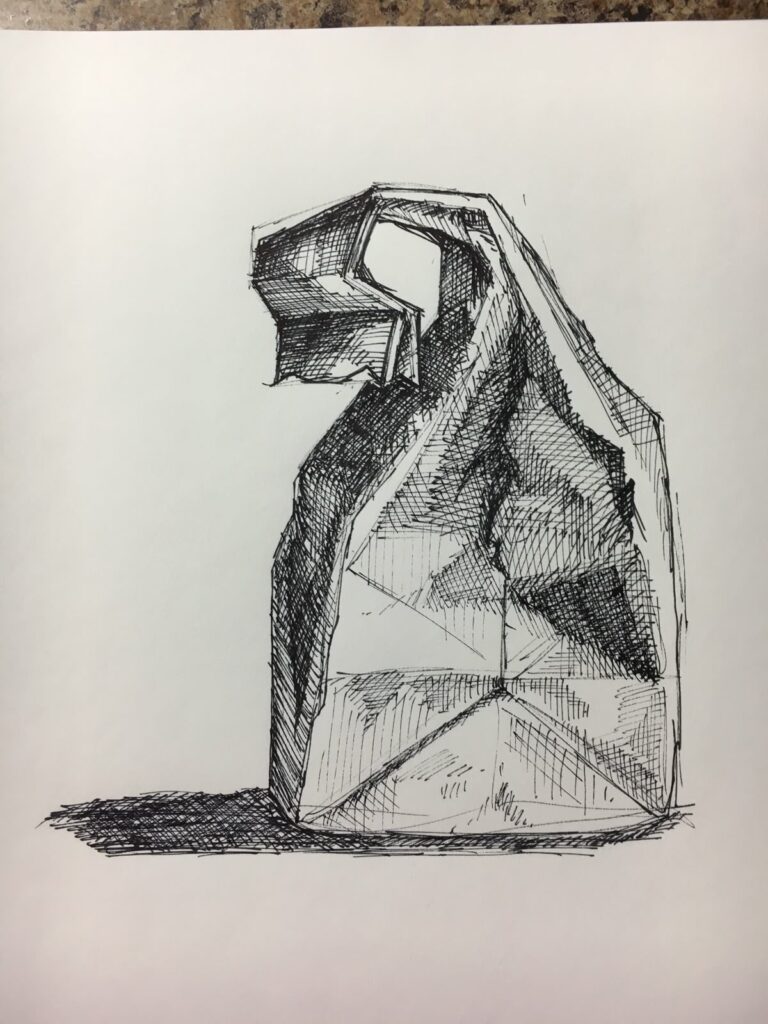
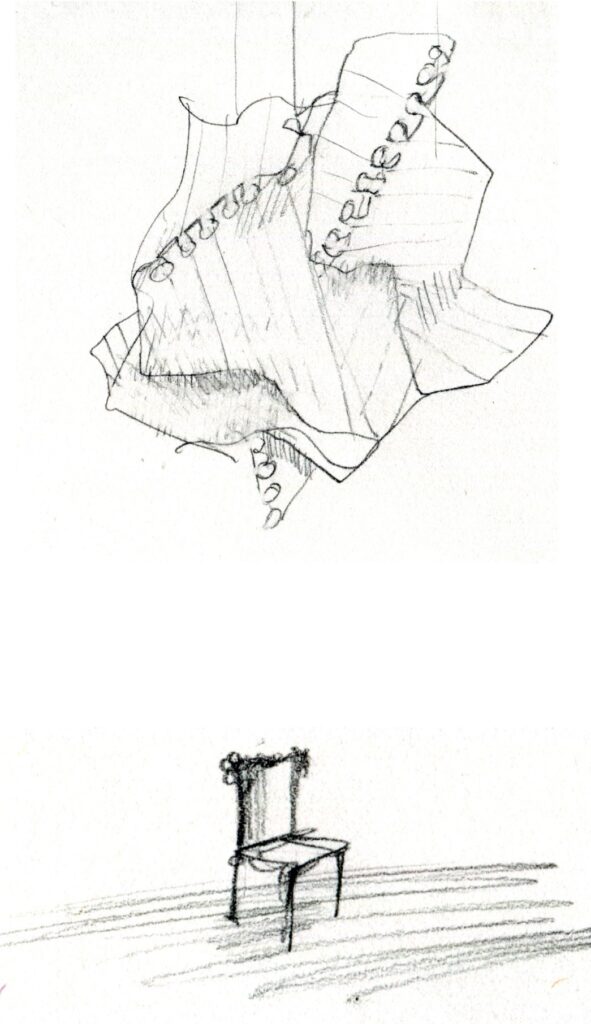
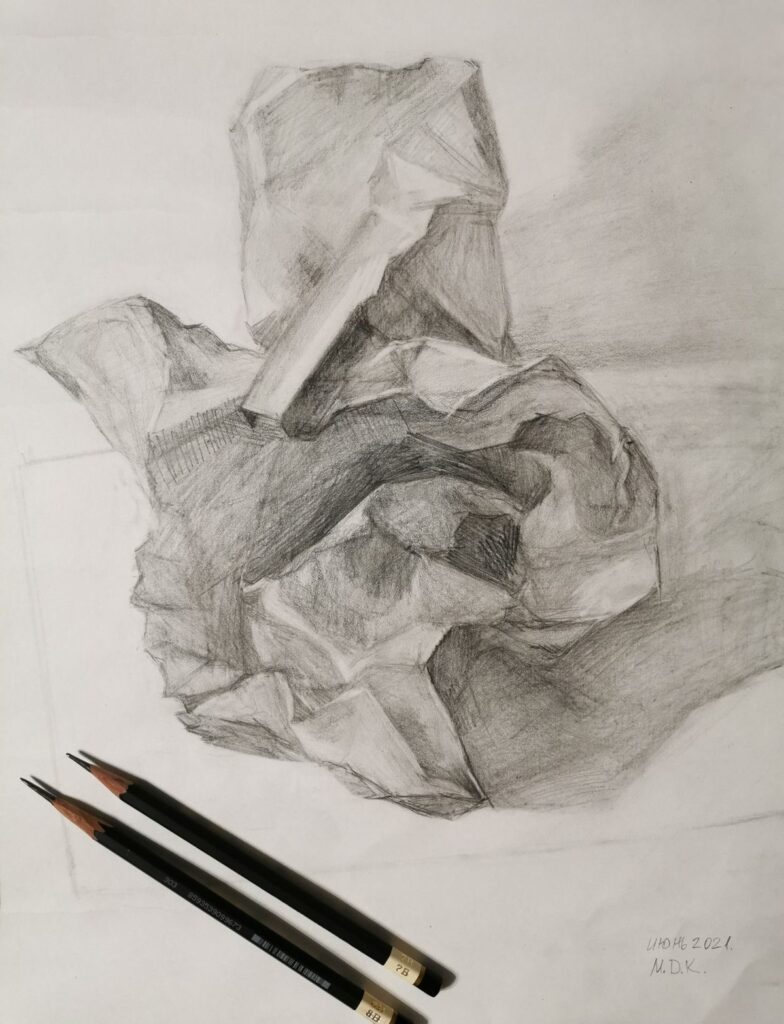
Crumpled paper is one of the best beginner value studies because it has clear planes, sharp creases, soft shadows, and no pressure to make it look beautiful. If values still feel muddy, pair this with a basic shading techniques practice sheet.
Why this helps
- Teaches light, shadow, and edge control
- Makes you separate big shadow shapes from small texture marks
How to practice it
- Use one lamp so the shadow direction is obvious
- Block three values first: light, middle, and dark
Practice straight and curved lines
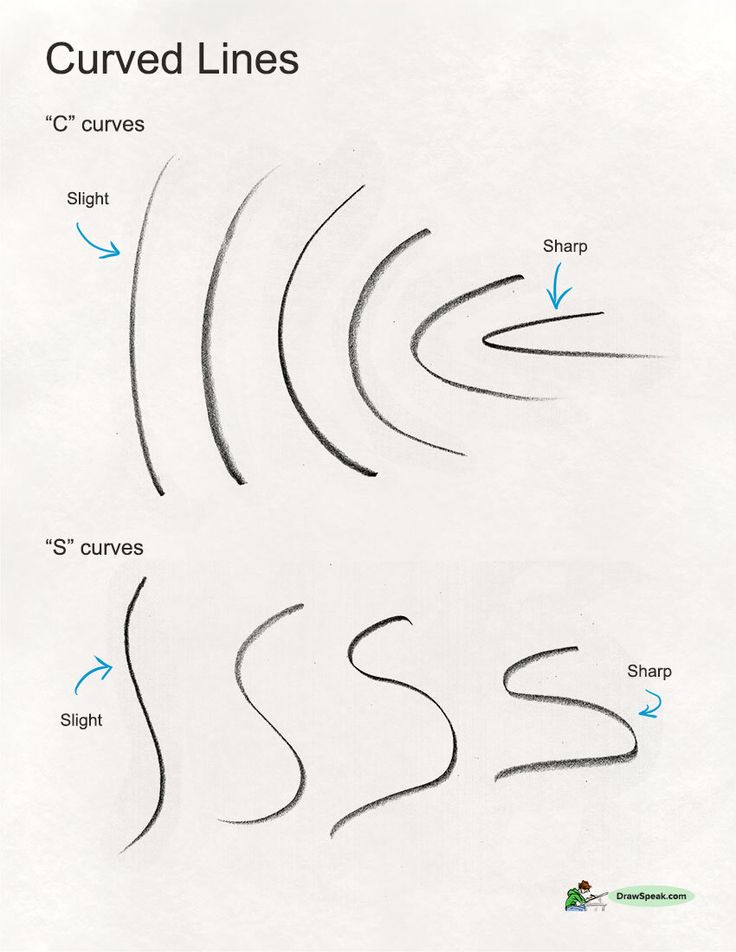
Draw long straight lines across the page, then rows of C-curves and S-curves. I like this drill because it exposes hesitation immediately. A nervous line usually has little speed bumps; a confident line can still be imperfect, but it has direction.
Why this helps
- Reinforces line weight and direction
- Transfers well to buildings, hair, fabric, plants, and lettering
How to practice it
- Pull lines from your shoulder, not just your wrist
- Draw curves in both directions so one side does not become your only comfortable motion
Explore perspective practice
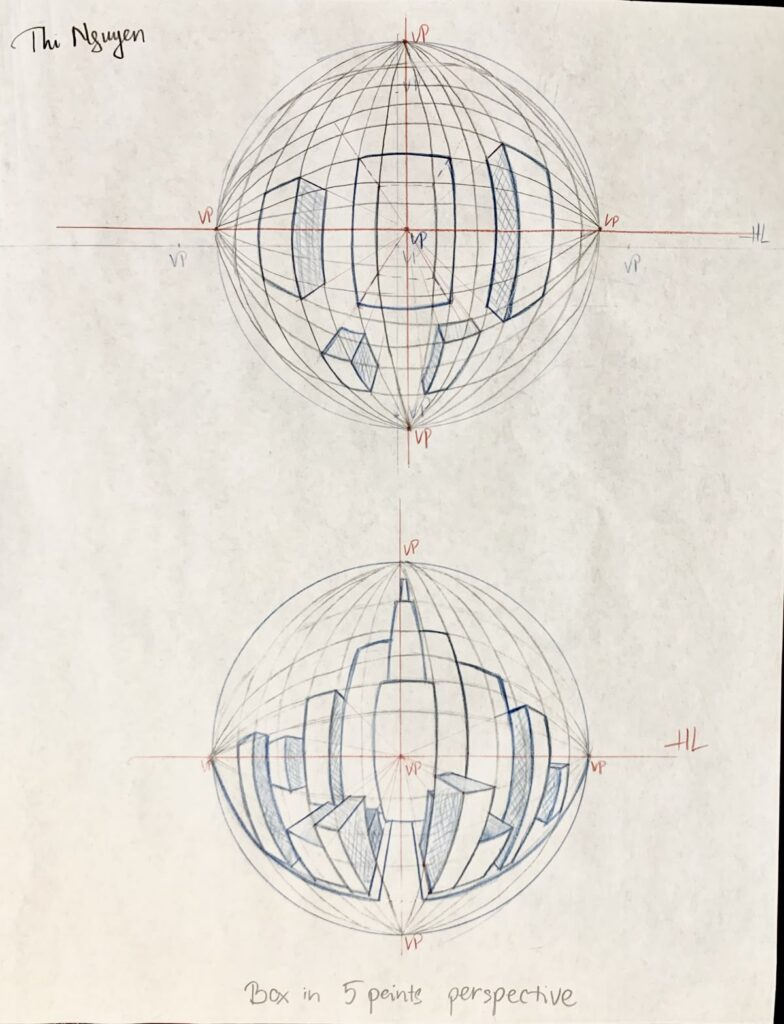
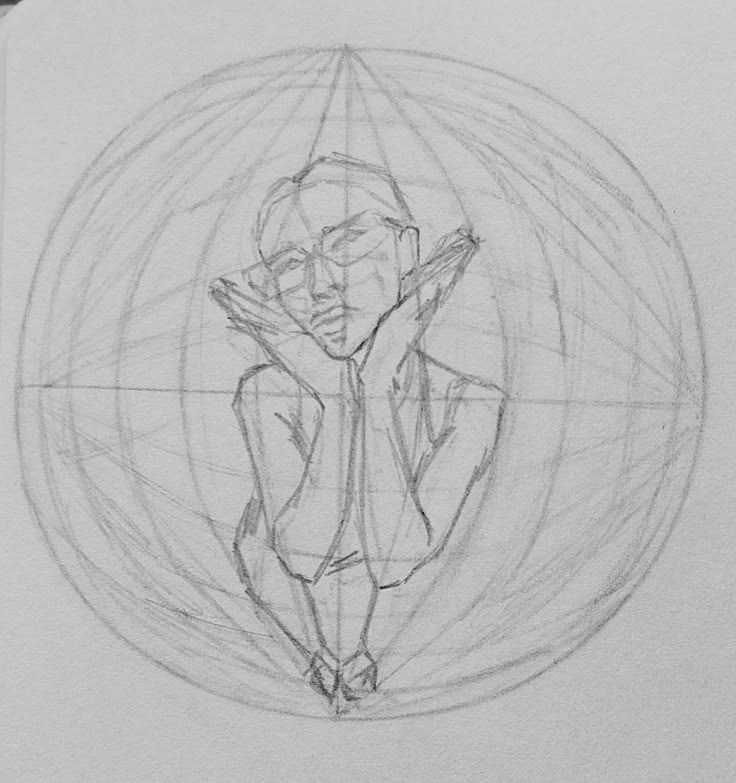
Start with boxes in two-point perspective before jumping into rooms or streets. Perspective looks technical because it is technical, but the payoff is huge: your drawings stop floating. For a deeper landscape angle, use this perspective in landscape drawing guide after the box drill feels manageable.
Why this helps
- Teaches space, depth, and believable object placement
- Fixes many beginner scene drawings that feel flat
How to practice it
- Draw five boxes above, on, and below the horizon line
- Add one cylinder or arch after the boxes are working
Create gestural thumbnails
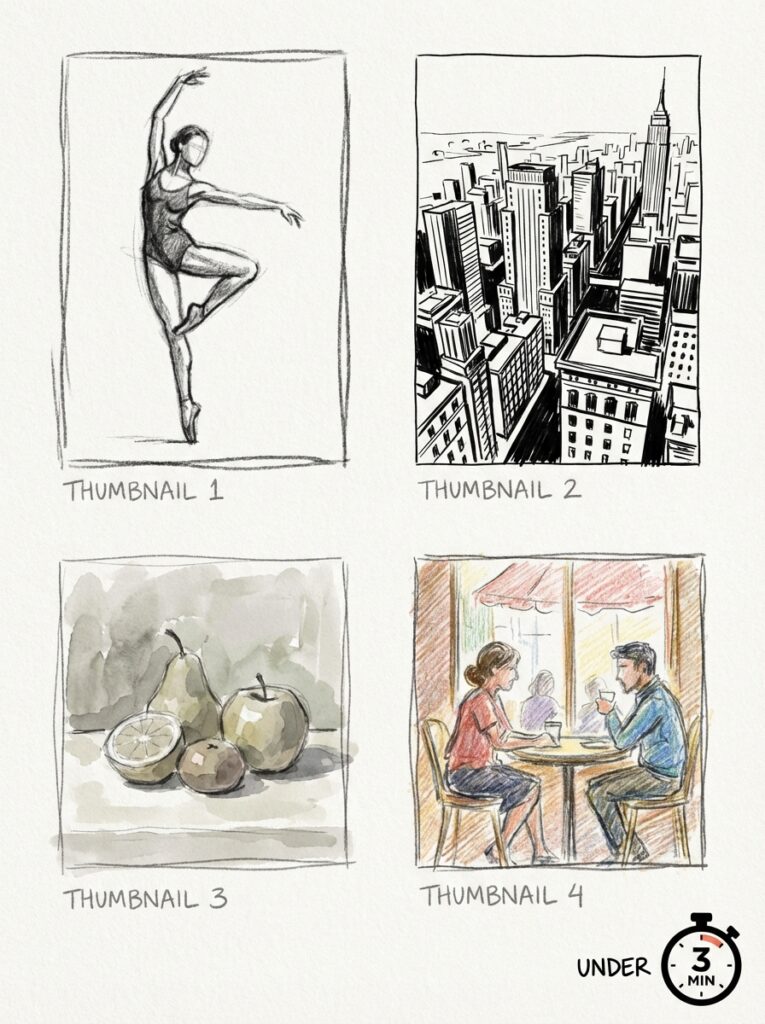
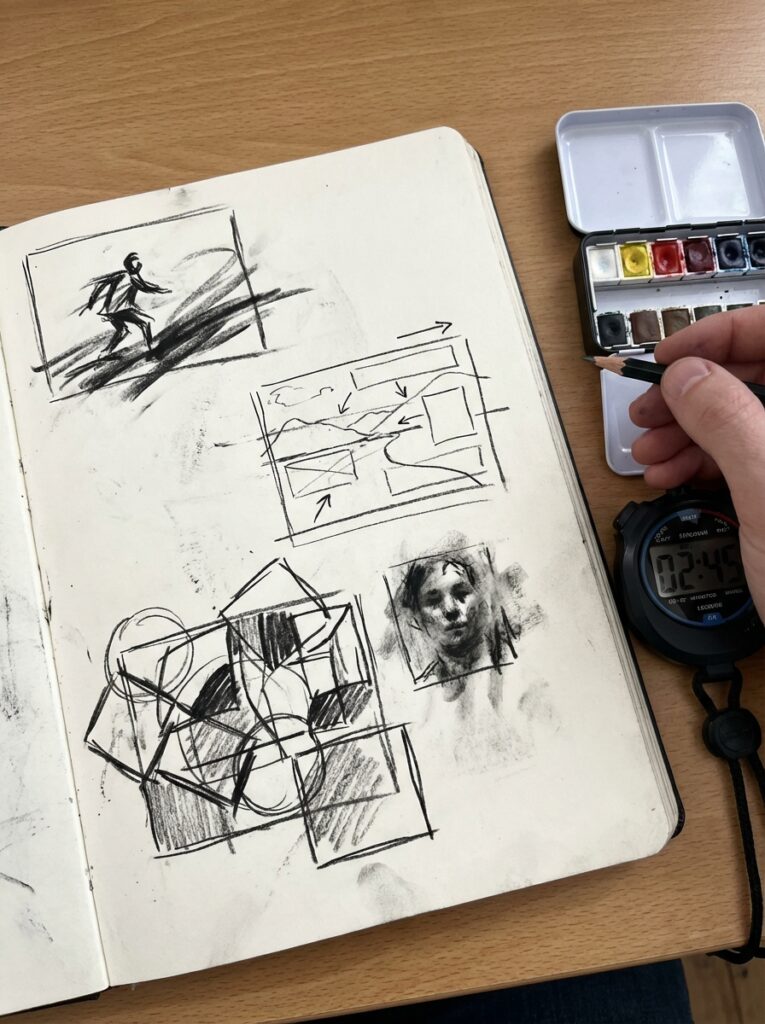
Thumbnail sketches are tiny planning drawings. Use them before a finished sketch to test the composition, value pattern, and main silhouette. Industrial design training made me picky about silhouettes; if the small version reads badly, details will not rescue the large one.
Why this helps
- Speeds up composition decisions
- Helps you choose the drawing before committing to a full page
How to practice it
- Make six thumbnails, then pick the one with the clearest light/dark pattern
- Try one black-and-white version before adding color
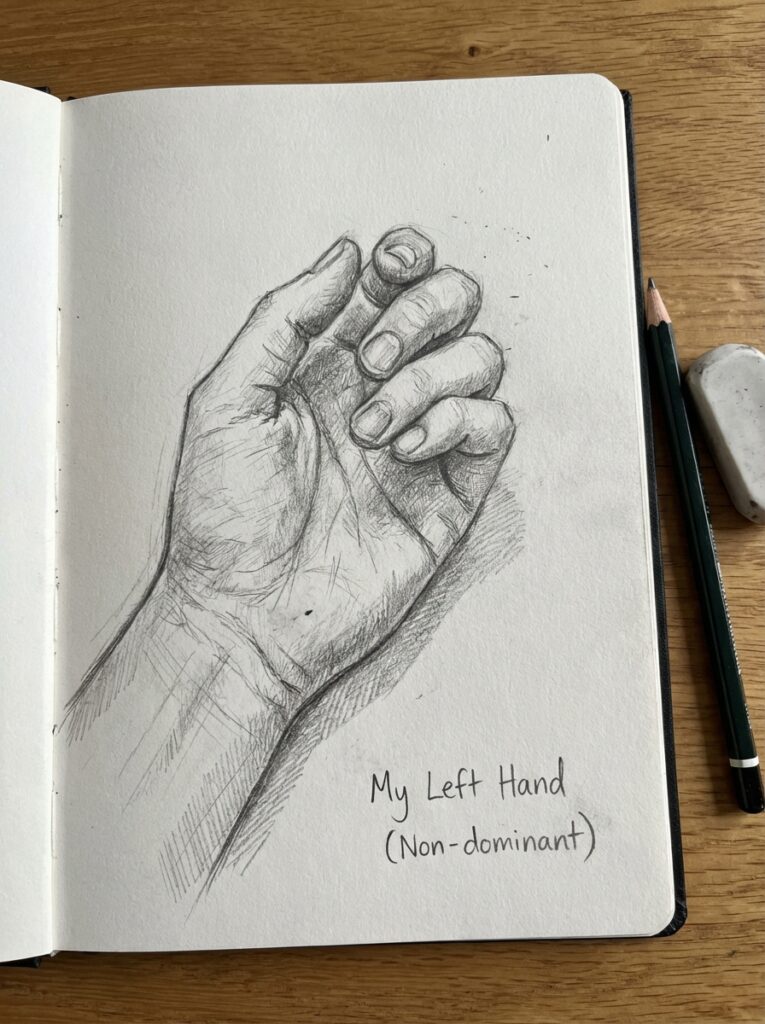
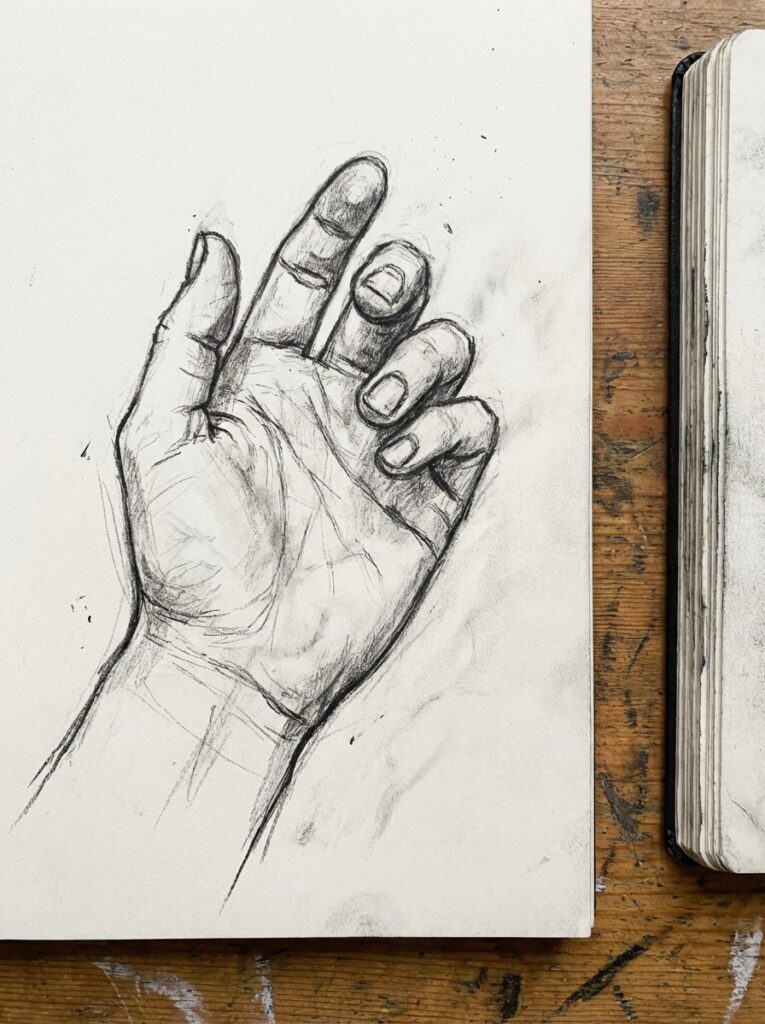
Draw your non-dominant hand
Your non-dominant hand is always available and annoyingly complex, which makes it a useful study. Keep the pose simple at first. If you need a slower breakdown, this how to draw a hand tutorial pairs well with the exercise.
Why this helps
- Improves observation of anatomy, angles, and overlaps
- Shows you where you rely on symbols instead of looking
How to practice it
- Draw the hand as boxes and cylinders before adding knuckles
- Focus on the negative shapes between fingers; they catch proportion mistakes quickly
A simple weekly practice plan
If you want structure, rotate the drills instead of doing all ten every day. Monday can be lines and shapes, Tuesday observation, Wednesday values, Thursday perspective, Friday gesture thumbnails, and the weekend can be one longer sketch that combines the week.
| Day | Focus | Tiny assignment |
|---|---|---|
| Monday | Control | Lines, curves, ellipses, and one shaded cube |
| Tuesday | Observation | Blind contour plus one five-minute object study |
| Wednesday | Values | Crumpled paper or a simple value scale |
| Thursday | Space | Boxes in two-point perspective |
| Friday | Composition | Six thumbnails before one small sketch |
Frequently asked questions
What are beginner drawing exercises?
Beginner drawing exercises are short drills that train one skill at a time: line control, basic shapes, observation, values, perspective, or gesture. They are useful because they remove the pressure of making a finished artwork and let you practice the mechanics of drawing directly.
How long should beginners practice drawing each day?
Fifteen minutes is enough if the session is focused. A good split is five minutes of line or shape warm-ups, five minutes of observation, and five minutes of a small sketch. Longer sessions are fine, but consistency matters more than one exhausting practice day.
What drawing exercise should a beginner start with?
Start with basic strokes and shapes. Draw straight lines, C-curves, circles, ellipses, boxes, and cylinders for a few minutes. These drills look simple, but they train the hand control you need for portraits, animals, landscapes, buildings, and nearly every other subject.
Which exercises improve observation the fastest?
Blind contour drawing, five-minute object studies, crumpled paper, and hand studies usually help the fastest. They force you to compare angles, edges, proportions, and value shapes instead of drawing from a symbol in your head.
Do beginner artists need warm-ups?
Yes, short warm-ups help. They loosen your hand, settle your focus, and make the first real sketch less stiff. Two minutes of lines and ellipses is often enough; the goal is not to fill a perfect page, just to wake up your hand and eye.
How do I know if my drawing practice is working?
Look for smaller improvements: cleaner lines, fewer proportion guesses, better shadow grouping, and faster starts. Keep a dated sketchbook page once a week. Comparing those pages after a month is more honest than judging one drawing while you are tired.
References
- Drawing practice routine idea: Crave Painting
- Artist practice discussion: Reddit ArtistLounge
- Beginner exercise examples: The Beginner Drawing Course
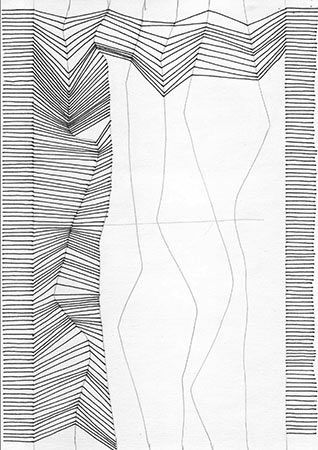
After the basic control drills, try a session of black and white abstract drawing practice. The seven prompts make you combine line, value, shape, and negative space without relying on a realistic subject.
- 22.1Kshares
- Facebook0
- Pinterest22.1K
- Twitter0
- Reddit0