The best outdoor spaces don’t feel like afterthoughts added to the back of a house. They feel like deliberate extensions of the interior architecture—sharing the same material language, the same proportional logic, and the same level of craft in their execution. A raw concrete retaining wall that echoes the poured concrete floors inside. A slatted timber privacy screen that references the horizontal rhythm of the interior joinery. An architectural pergola that continues the roofline geometry into the garden.
For outdoor spaces that need a real site strategy, the private island design checklist is a useful next step beyond patio-scale planning.
- The Top 10 Modern Outdoor Architectural Structures
- 1. Minimalist Slatted Privacy Screen
- 2. Geometric Concrete Retaining Wall
- 3. A-Frame Style Garden Shed
- 4. Modern Pergola with Retractable Shade
- 5. Architectural Outdoor Shower
- 6. Corten Steel Fire Pit Surround
- 7. Built-in Concrete Planters
- 8. Custom Hardwood Decking with Integrated Drainage
- 9. Poured Concrete Pathway with Aggregate Finish
- 10. Floating Cantilevered Entry Steps
- The Precision Toolkit: Mastering Your DIY Execution
- Frequently Asked Questions
- Building the Outdoor Architecture First
That level of coherence between indoor and outdoor architecture is what separates a designed outdoor space from a furnished one—and increasingly, it’s achievable through serious DIY construction rather than requiring a full landscape architect brief. The ten structures in this guide represent the permanent, hardscaping layer of outdoor design: the fixed architecture that defines the space before any other decision is made.
Each of these projects demands precise execution. Formwork that isn’t perfectly level produces concrete walls that read as amateur. Miter cuts that are a degree off produce joinery that catches the eye for the wrong reason. Once the built environment is right, you’ll want furnishings to match—that’s where projects like 15 DIY Outdoor Furniture Projects become the natural next step. But the architecture comes first.
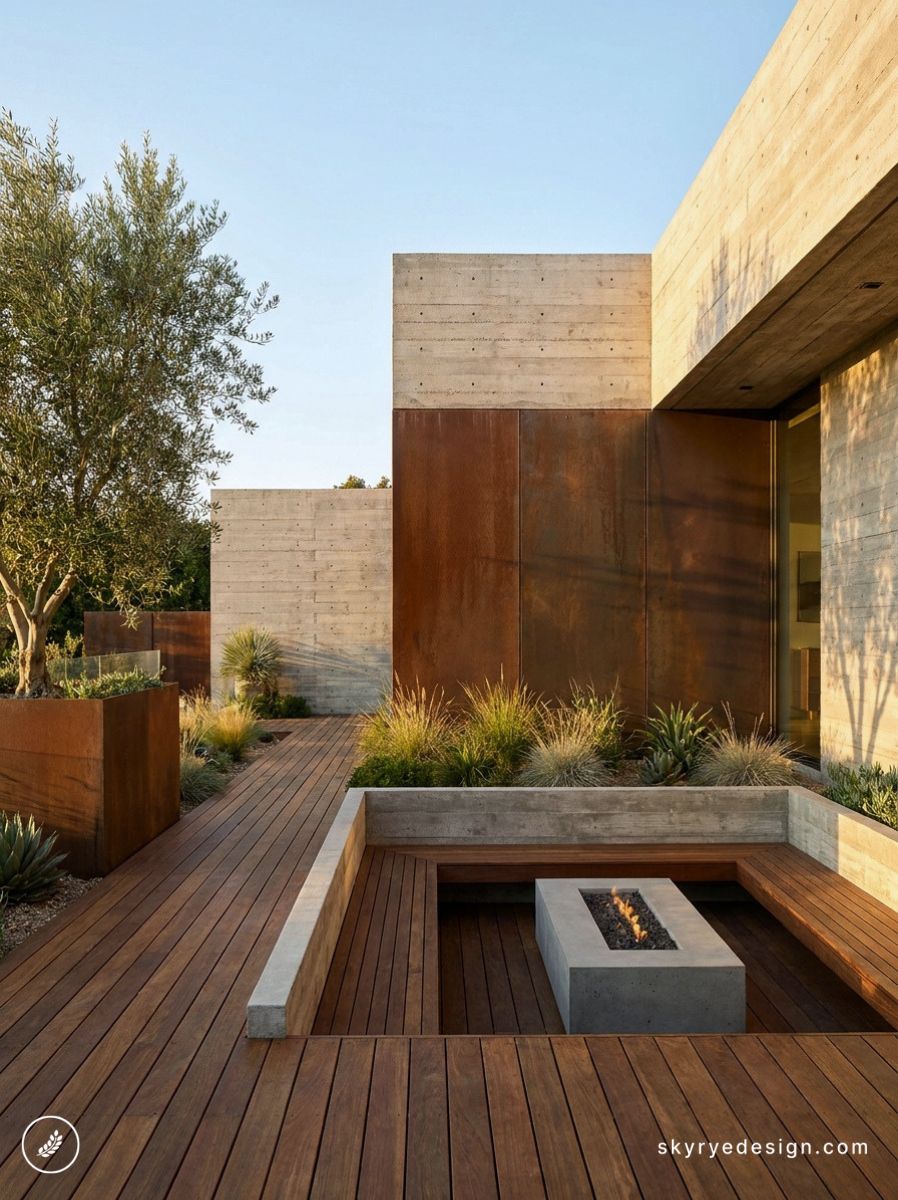
These ten projects are ordered by construction complexity—starting with structures that a confident weekend builder can complete, and finishing with projects that require significant planning, material sourcing, and in some cases professional consultation for permits or structural elements. Every one of them is achievable with the right preparation, the right materials, and the right tools.
Once the outdoor structure is planned, the furniture should follow the same material language. These DIY furniture woodworking projects are useful for matching benches, tables, shelves, and patio seating to the build.
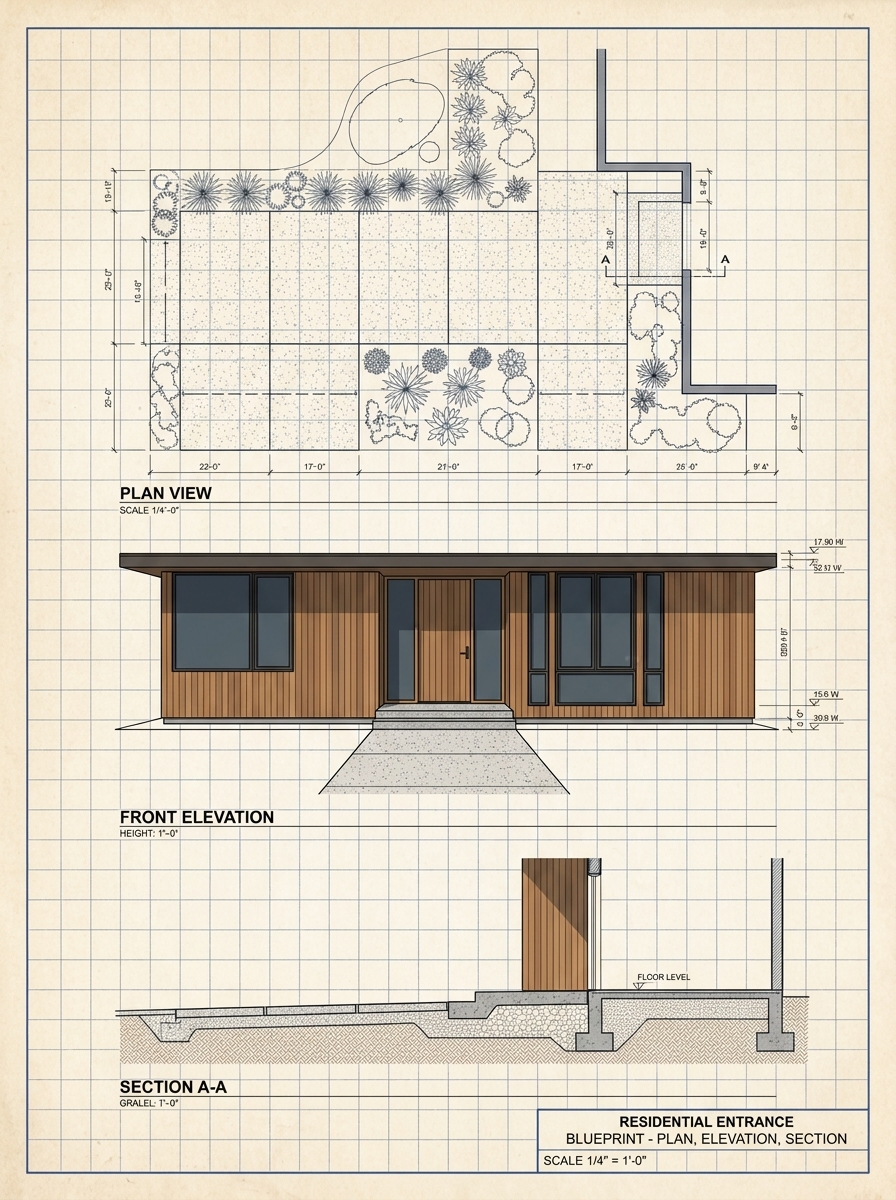
Before you treat a modern house blueprint as a finished idea, compare the plan against timber spans, roof drainage, window placement, and future maintenance access.
The Top 10 Modern Outdoor Architectural Structures
1. Minimalist Slatted Privacy Screen
| Hardscaping · Fencing Aesthetic: Horizontal rhythm, graphic shadow patterns, Japanese fence influence Materials: Ipe wood, powder-coated steel posts, stainless M8 bolts, linseed oil finish Best for: Narrow side returns, pool surrounds, boundary definition without a solid fence mass Difficulty: ★★★☆☆ | Approx. cost: $800–$1,800 depending on length |
The slatted privacy screen is the entry-level architectural project in this list—and one of the highest-impact visual changes you can make to an outdoor space relative to the effort involved. The design principle is horizontal rhythm: evenly spaced timber slats mounted to a steel post frame, with consistent gap-to-slat ratio that creates both privacy and the dramatic shadow-stripe effect that defines the look.
Ipe is the material of choice for serious execution. It’s the hardwood used on the Coney Island boardwalk and numerous commercial applications—rated for 25+ years of outdoor service without treatment, naturally resistant to rot, insects, and fire. The trade-off is that Ipe requires pre-drilling for every fastener (it will split without it) and dulls standard drill bits faster than softer woods. Tungsten carbide-tipped bits are mandatory. The steel post frame (50mm square hollow section, powder-coated matte black) provides the rigid structure that prevents the slat assembly from racking over time.
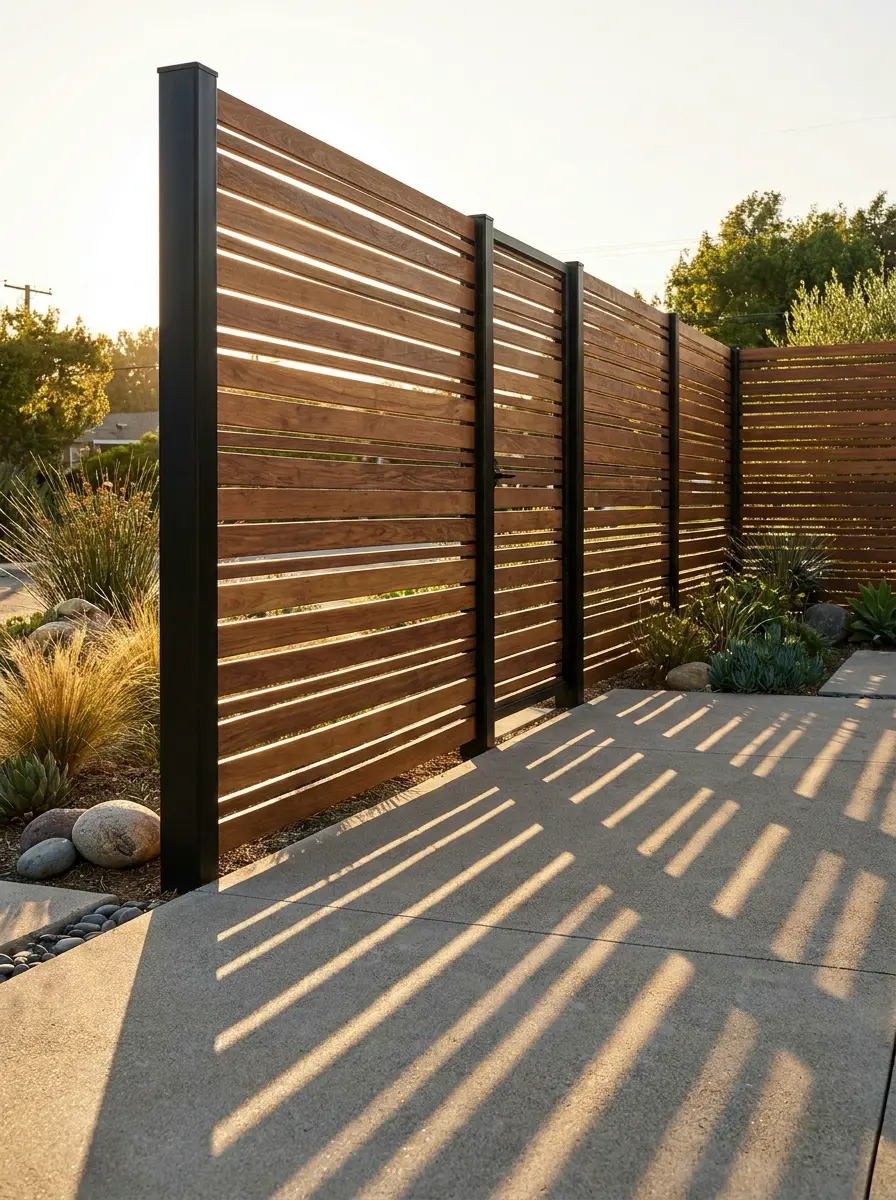
The critical measurement is the gap-to-slat ratio. A 90mm slat with a 20mm gap produces approximately 80% privacy at eye height while maintaining airflow and the visual lightness that distinguishes a slatted screen from a solid fence. Deviation from consistent spacing is immediately visible—set up a consistent spacer block before beginning installation and use it without exception.
| 🛠 Build Tip Pre-treat cut ends of Ipe with boiled linseed oil immediately after cutting—the end grain is the most vulnerable point for moisture penetration. Three coats on cut ends before assembly prevent the grey weathering that can make cut surfaces look neglected against the rich brown of treated faces. |
2. Geometric Concrete Retaining Wall
| Hardscaping · Structural Aesthetic: Raw board-formed concrete, visible formwork texture, monolithic mass Materials: 25MPa concrete mix, 200mm hollow-core block or poured-in-place, form-release oil, D12 rebar Best for: Sloped gardens, terrace creation, level change definition Difficulty: ★★★★☆ | Approx. cost: $1,200–$4,000 depending on height and length |
Board-formed concrete—raw concrete poured against timber formwork that leaves its grain impression in the cured surface—is the signature material of contemporary landscape architecture. Designed correctly, it has a weight and permanence that no cladding product can replicate. The horizontal grain lines left by the form boards read as a deliberate texture rather than a construction artifact, connecting the wall visually to the timber elements elsewhere in the garden.
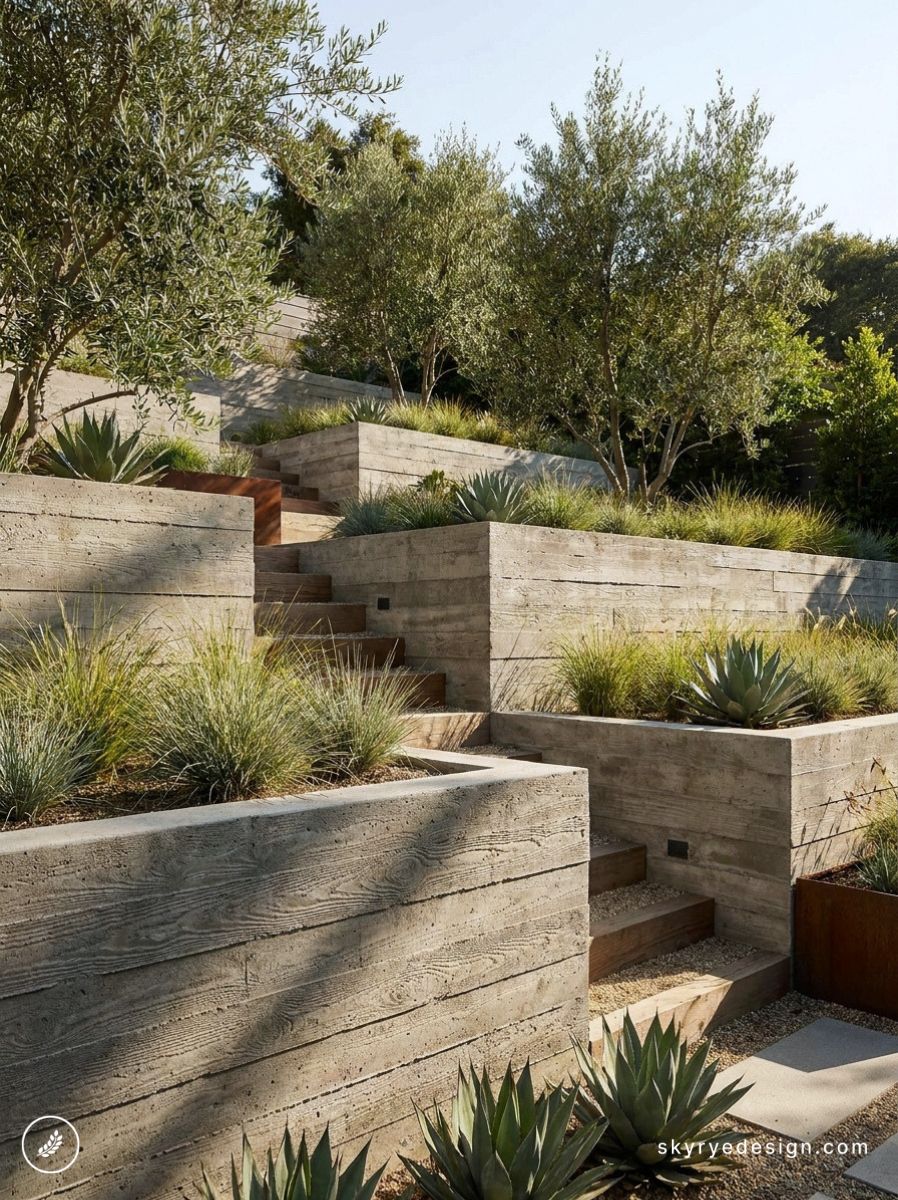
Retaining walls above 600mm in height typically require engineering sign-off in most jurisdictions—check local council requirements before committing to a design. Below that threshold, a well-constructed concrete block wall with proper footing and drainage is within the scope of a careful DIY builder. The footing is where most amateur walls fail: undersized footings in inadequate depth allow frost movement or soil pressure to crack the wall. For a 600mm wall, a 300mm × 300mm footing at 450mm depth (below the typical frost line) provides a stable base.
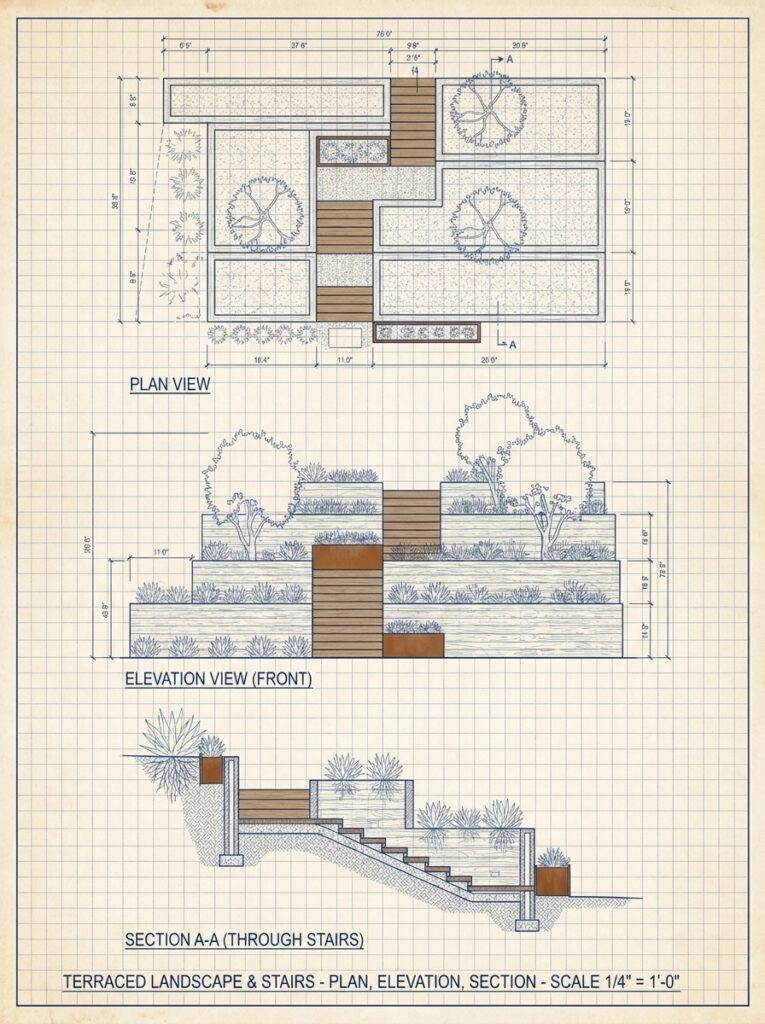
The formwork texture is the detail that makes or breaks this project aesthetically. Use rough-sawn pine boards in consistent width (100mm or 150mm) for a uniform grain impression. Treat the form boards with form-release oil (diesel in a pinch, but purpose-made release agents produce cleaner separation) and secure form ties at 400mm centres to prevent blowout during the pour.
3. A-Frame Style Garden Shed
| Structure · Storage Aesthetic: Steeply pitched roof to ground, Nordic influence, graphic triangular silhouette Materials: CCA-treated pine frame, corrugated Corten steel or zinc roofing, black-stained cedar cladding Best for: Medium to large gardens, storage, studio space, guest accommodation Difficulty: ★★★★☆ | Approx. cost: $3,500–$9,000 depending on size and fitout |
The A-frame structure has had a design renaissance in the past five years, moving from retro camping reference to a genuine architectural form for backyard outbuildings. The appeal is structural logic made visible: the steeply pitched roof that extends to near-ground level eliminates the need for separate wall framing and distributes the roof load along a long rafter to footing connection, making it structurally efficient as well as visually distinctive.
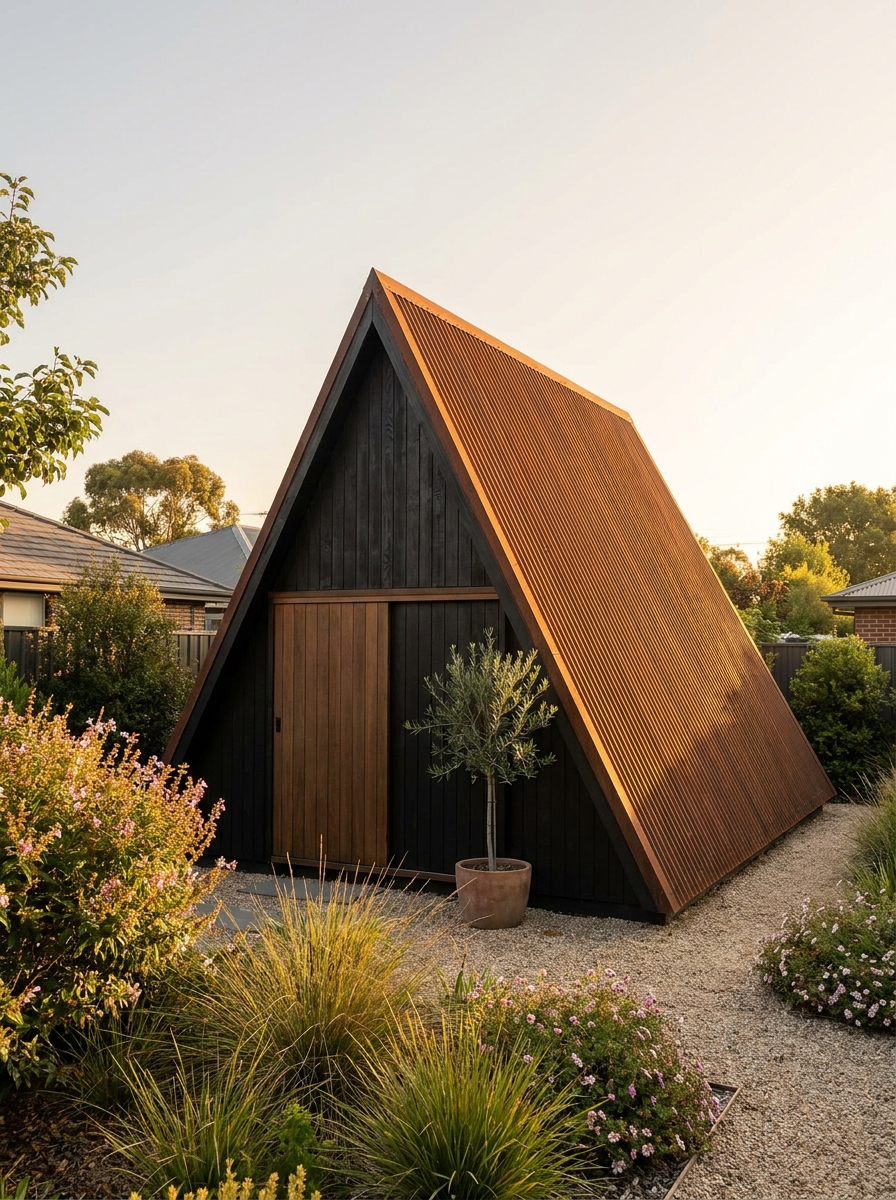
The material combination that produces the most compelling contemporary A-frame is black-stained cedar cladding on the gable ends with corrugated Corten steel on the roof planes. The Corten weathers to a warm rust-orange that ages beautifully and requires no maintenance after the initial weathering period (typically 12–18 months in a standard climate). Black cedar is achieved with Shou Sugi Ban technique—charring the surface with a torch then brushing and oiling—or with black exterior stain if the charring process isn’t practical.
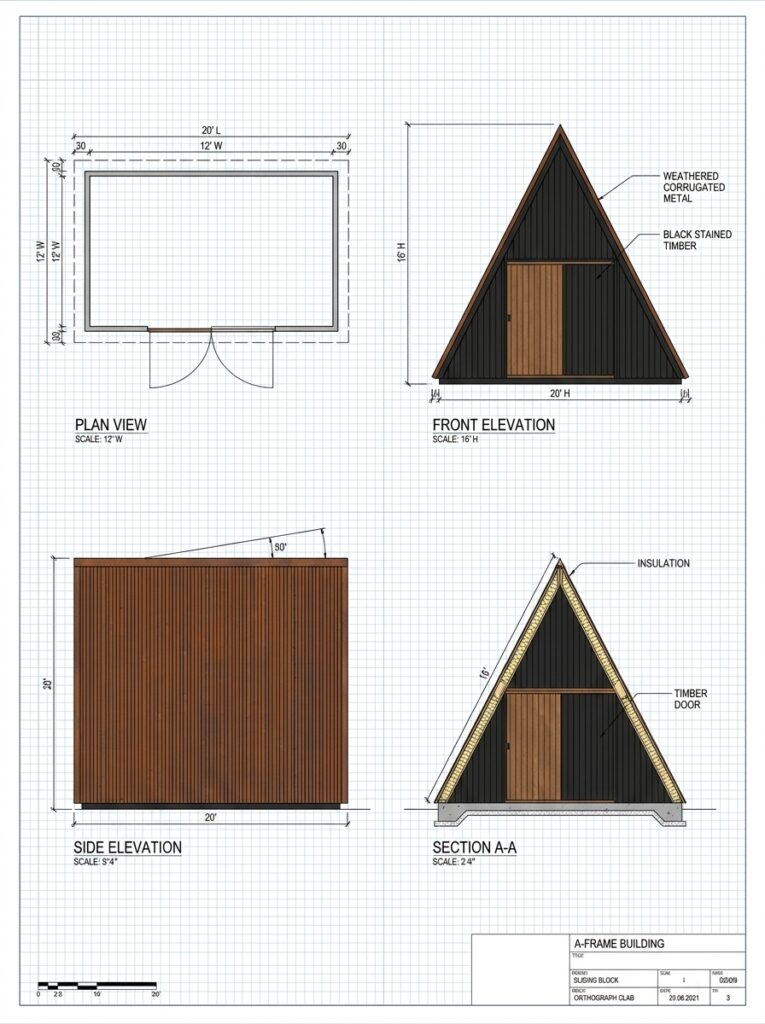
Foundation options vary by jurisdiction, but a timber bearer-and-joist floor on adjustable steel posts is the most flexible approach: it elevates the floor above ground moisture, doesn’t require a concrete slab pour, and can be levelled on uneven ground without excavation.
4. Modern Pergola with Retractable Shade
| Structure · Shade Aesthetic: Architectural beam-and-post structure, clean lines, integrated functionality Materials: Powder-coated aluminium box section (150×150mm posts), hardwood beam infill, Sunbrella fabric shade system Best for: Alfresco dining areas, pool surrounds, entertaining zones Difficulty: ★★★★☆ | Approx. cost: $4,000–$12,000 depending on span and shade system |
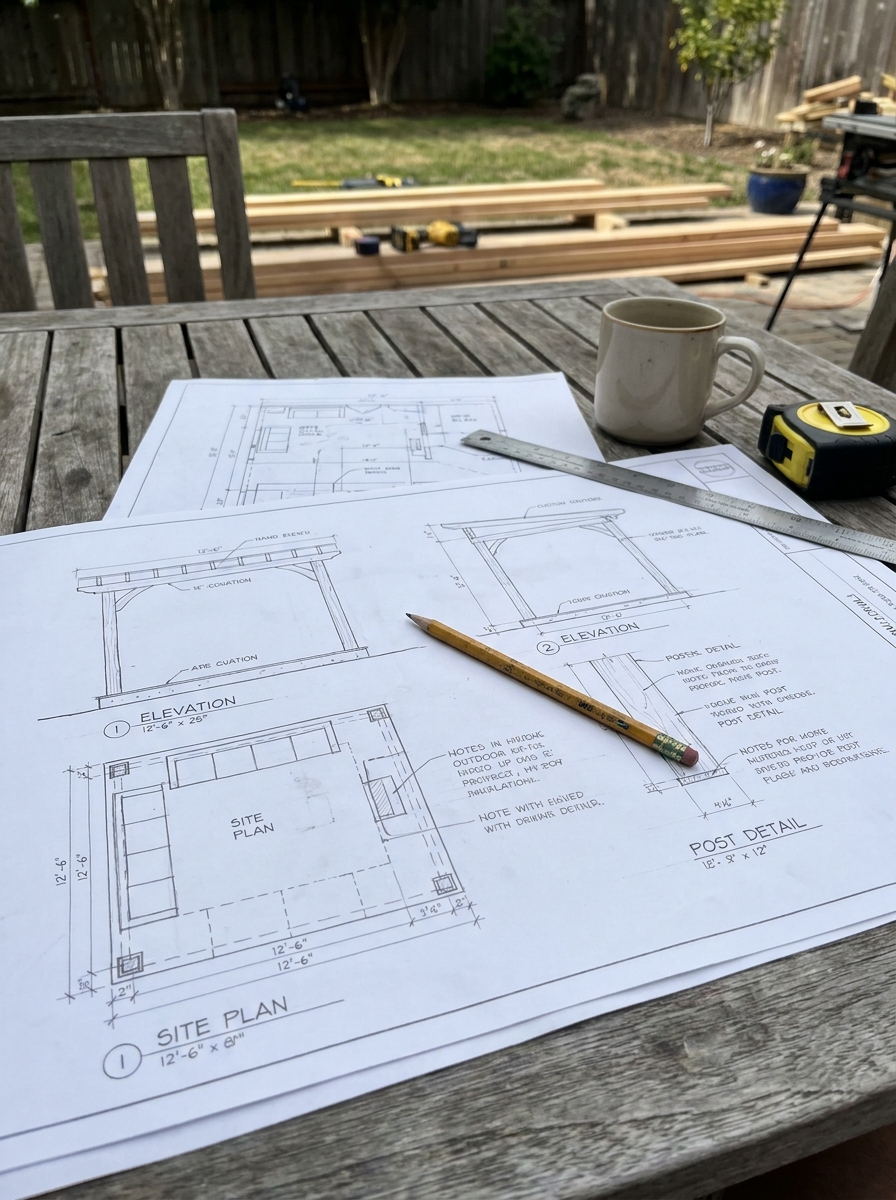
The modern pergola is the most structurally demanding freestanding structure in this list short of the full shed build, and it’s also the project with the highest impact on outdoor livability. A pergola that provides reliable shade and anchors an outdoor entertaining zone transforms how a backyard functions—it creates a defined room in the landscape rather than an undefined open area.
Powder-coated aluminium box section is the material of choice for the primary structure: it doesn’t rust, doesn’t require painting, and achieves the slim profile dimensions that make a contemporary pergola look designed rather than built. Posts at 150×150mm in matte black powdercoat disappear against a dark fence line or appear deliberately graphic against a light wall—either way, they read as intentional. Beams at 200×100mm aluminium span up to 4 metres without intermediate support at standard residential loading.
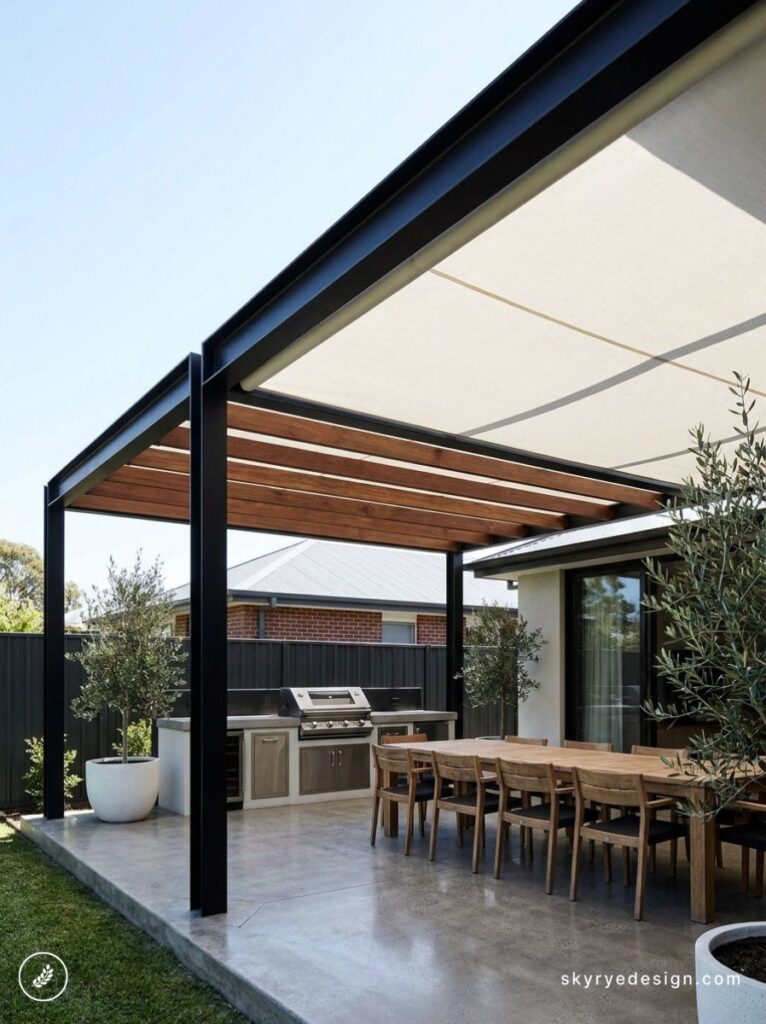
The retractable shade system is where the project’s livability is determined. Motorised Sunbrella sail shade systems (around $800–$1,400 per bay from specialist suppliers) can be deployed in under 10 seconds and handle light rain as well as sun. Fixed shade cloth is cheaper but eliminates the flexibility that makes a retractable system genuinely more useful than a permanent roof.
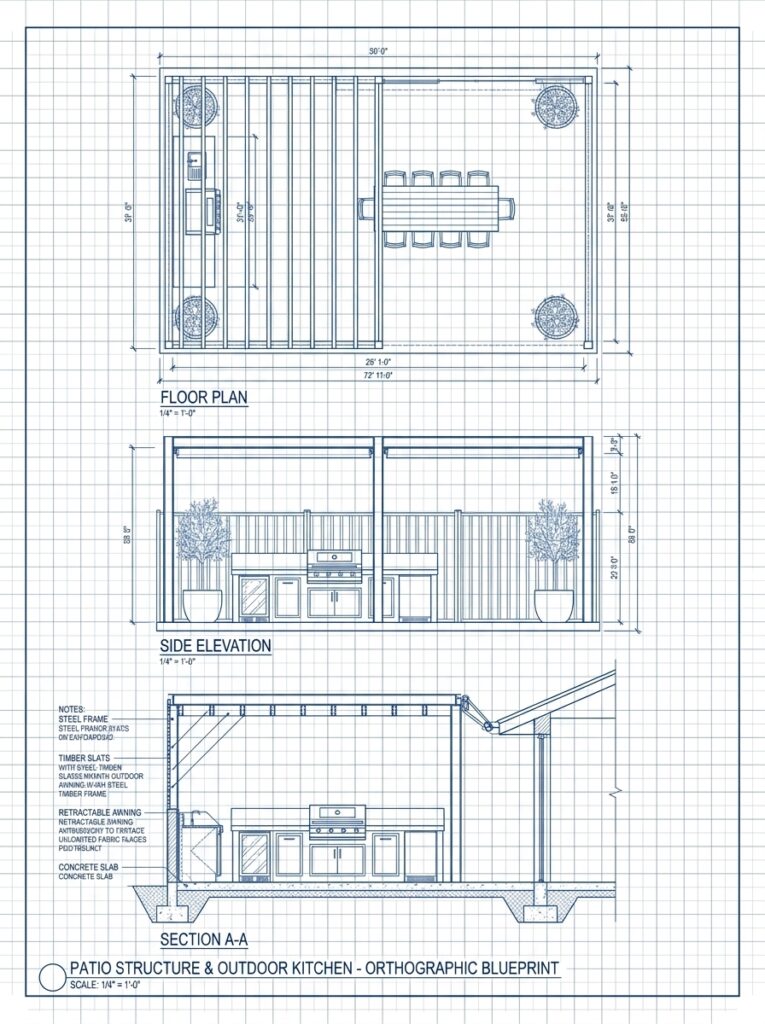
| 🛠 Build Tip Post foundations for a freestanding pergola should go to a minimum depth of 600 mm with a concrete plug in the base of the hole. Shallow footings in heave-prone soils produce posts that rack visibly within 2–3 seasons. Over-investing in footings is the best insurance for a structure you intend to use for decades. |
5. Architectural Outdoor Shower
| Plumbing · Structure Aesthetic: Minimal enclosure, exposed fixtures, raw material palette Materials: Corten steel screen panels, matte black PVD shower fixtures, smooth render or concrete base Best for: Pool surrounds, coastal properties, indoor-outdoor master bathroom adjacency Difficulty: ★★★☆☆ (structure) + licensed plumber for connections | Approx. cost: $1,800–$4,500 |
The outdoor shower has moved from a pool-house utility to a genuine architectural feature—particularly on coastal and tropical properties where indoor-outdoor movement is frequent and the shower functions as a transition space between pool or beach and interior. Done with material intentionality, an outdoor shower can be one of the most considered elements of an outdoor space.
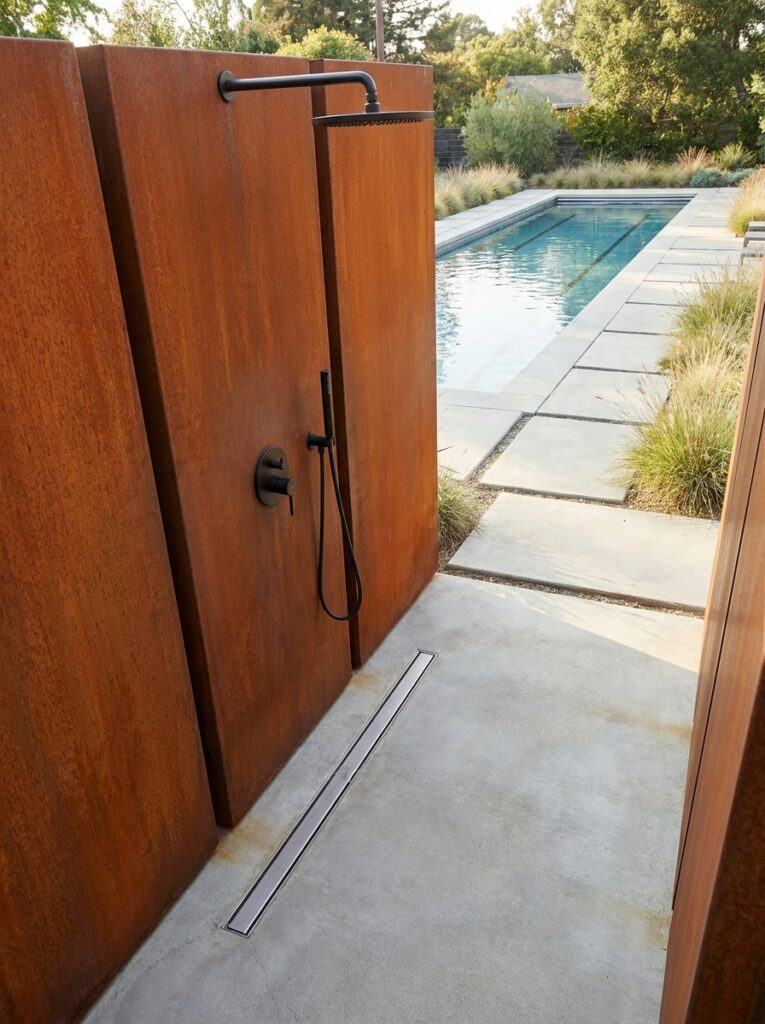
The enclosure design is where the architectural decision lives. Corten steel panels at 1,800mm height provide privacy while aging to a warm rust patina that references the natural landscape. Gap between panels is the detail to consider carefully: 20mm gaps at eye height balance privacy against the claustrophobic quality of a completely sealed enclosure, while allowing light and air movement that prevents the damp-smell problem of poorly ventilated outdoor wet areas.
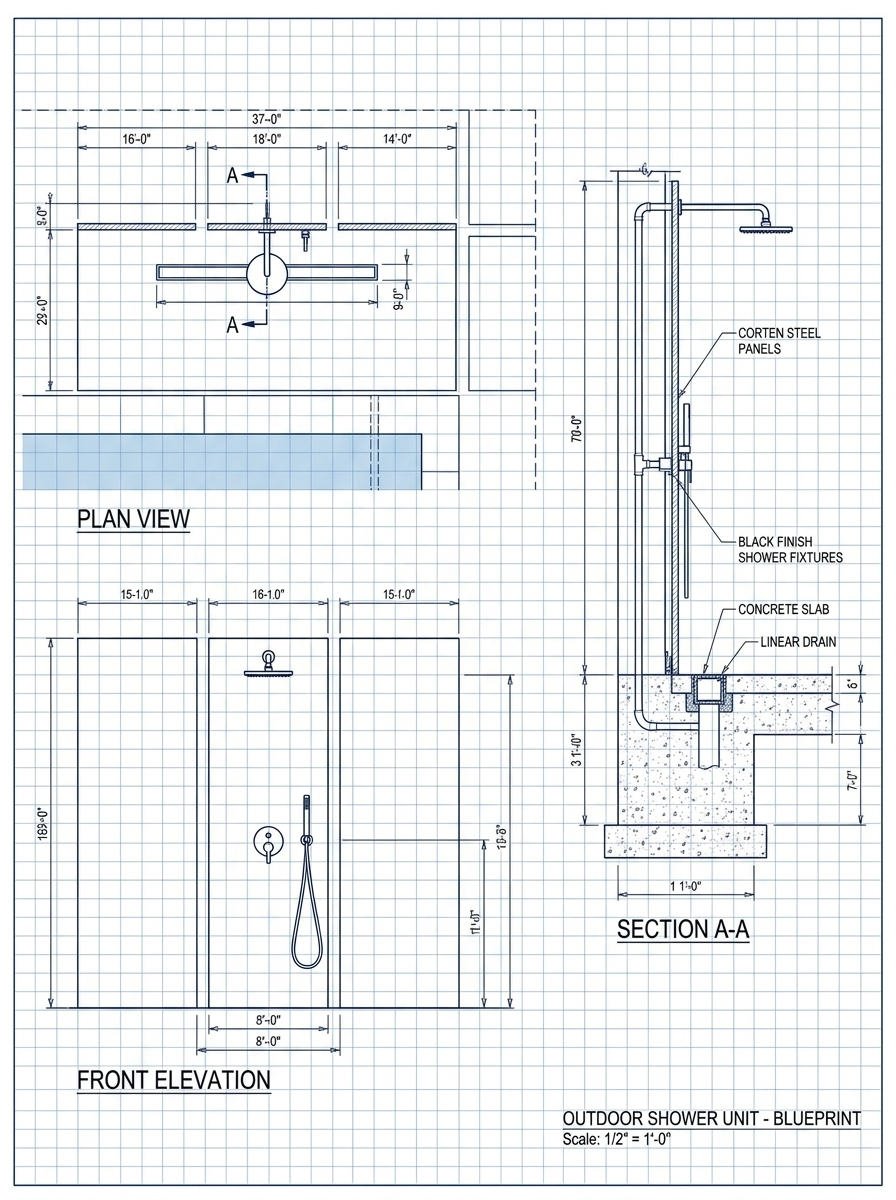
Fixtures: matte black PVD-finished shower head and controls from Brodware, Sussex Taps, or equivalent quality supplier. The fixture quality is visible at close range in a way that a pergola post isn’t—specify products with genuine PVD coating rather than painted finishes, which fail within 12–18 months in an outdoor wet environment. The base should be either a ground-level grate over a gravel drainage pit (simplest) or a flush-to-ground concrete slab with a 10mm fall per metre to a discrete drain point.
6. Corten Steel Fire Pit Surround
| Hardscaping · Feature Aesthetic: Industrial warmth, sculptural geometric form, material contrast with landscape Materials: 5mm Corten steel plate (folded or welded), refractory concrete base Best for: Large gardens, fire-permitted zones, architectural accent feature Difficulty: ★★★☆☆ | Approx. cost: $600–$2,200 (custom fabrication) |
Corten steel—the same weathering steel used in sculptural art installations and architectural cladding worldwide—produces its distinctive rust patina through a self-protecting oxidisation process: the rust layer seals the surface and prevents further corrosion, rather than progressing the way standard steel rust does.
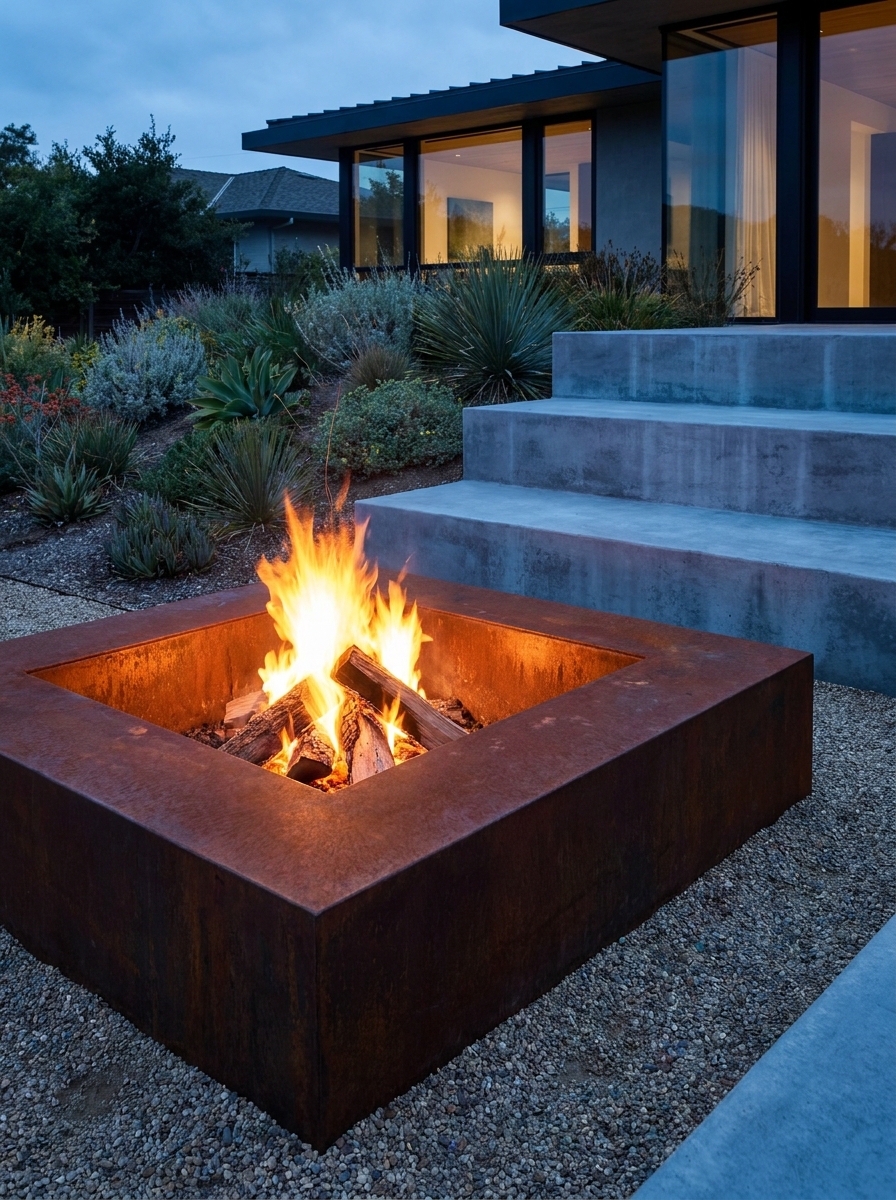
For a fire pit surround, this material is aesthetically and practically ideal: the warm rust tone reads against green landscape planting better than almost any other hard material, and the 5mm plate thickness handles fire-adjacent temperatures without distortion.
The design of the surround is a geometric decision. A simple square or rectangular form with clean 90-degree folds is the most architecturally coherent approach—it reads as an element from the same design vocabulary as board-formed concrete and powder-coated steel. Circular fire pit surrounds are more common but less distinctive. A 900mm square with 400mm height creates a surround that frames the fire without dominating the surrounding paving.
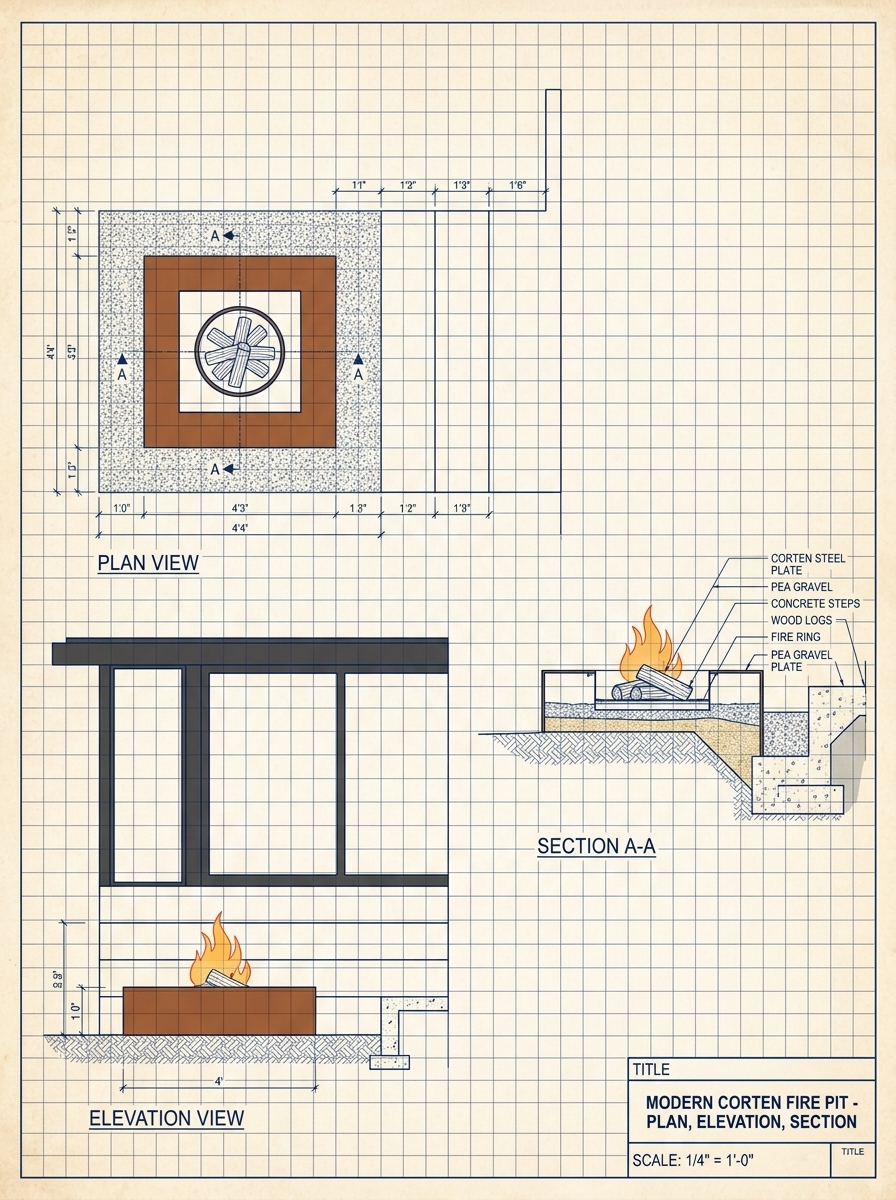
Refractory concrete (heat-resistant concrete mix, available from specialist suppliers) forms the base and inner bottom of the fire area. Standard concrete will crack under repeated thermal cycling from fire temperatures—refractory mix handles up to 1,200°C without damage. The base should be raised 100mm from the ground on steel feet to allow air circulation beneath and prevent staining of the paving below.
7. Built-in Concrete Planters
| Hardscaping · Landscape Aesthetic: Monolithic architectural plant containers, continuous with paving or retaining walls Materials: 25MPa concrete (poured or block), waterproofing membrane, drainage layer aggregate Best for: Entry gardens, terrace edges, privacy screening with planting Difficulty: ★★★☆☆ | Approx. cost: $400–$1,500 per linear metre |
Built-in concrete planters are the project that most effectively blurs the line between hardscaping and planting—they’re permanent architectural elements that introduce organic life into the material palette. At their best, they read as extensions of the ground plane or retaining wall system rather than as pots placed on a surface, which is the distinction between landscaping that looks designed and landscaping that looks decorated.
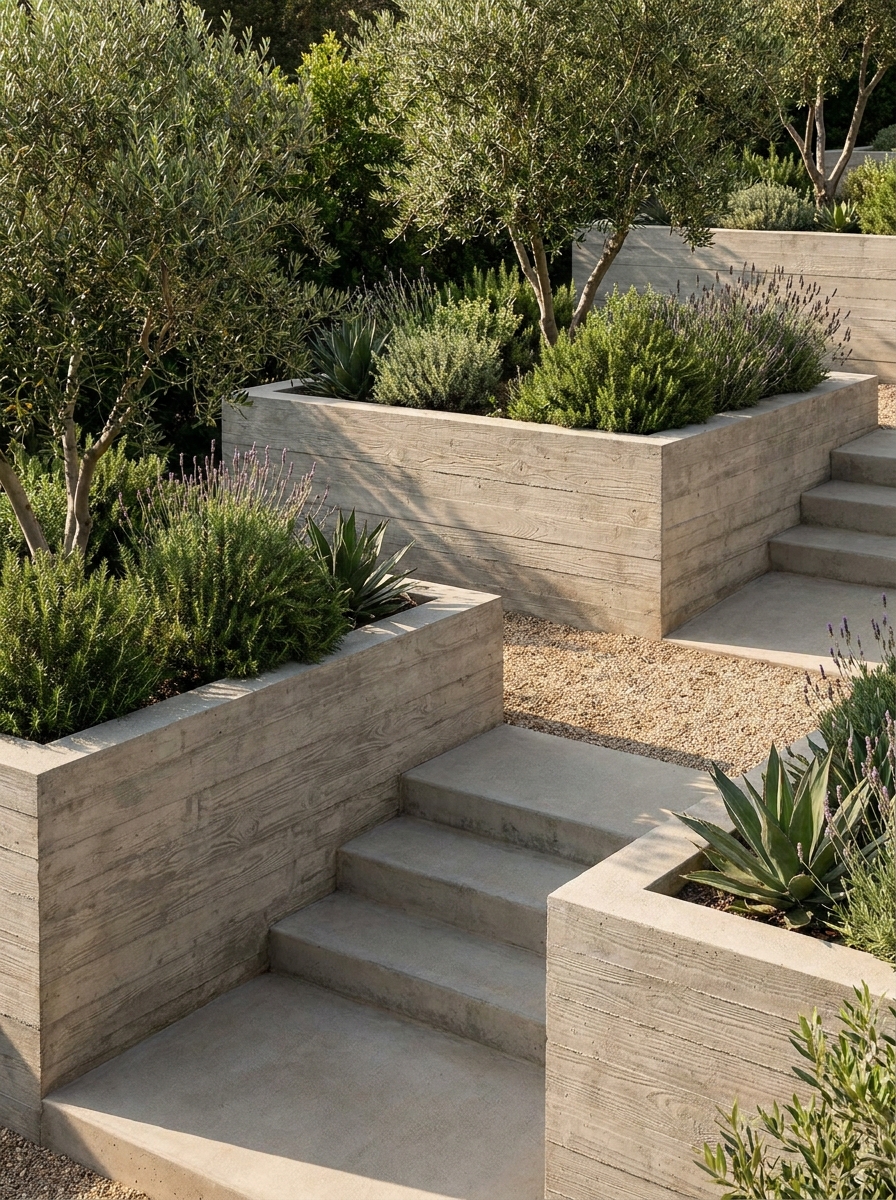
The waterproofing and drainage detail is what determines whether a built-in planter performs well or becomes a problem. Concrete is naturally porous, and without a waterproofing membrane on the interior faces, moisture will wick through the walls and stain the exterior face within a season. Apply two coats of crystalline waterproofing compound (Xypex or equivalent) to all interior surfaces before filling. On the floor of the planter, a 100mm drainage aggregate layer (washed gravel or scoria) below the growing medium prevents waterlogging that kills root systems.
The aesthetic decision is whether the planter faces match the adjacent paving or contrast with it. Board-formed concrete planters beside a smooth-rendered wall create visual interest through texture contrast. Planters that continue the exact formwork texture of an adjacent retaining wall read as part of a single designed system—the more architecturally coherent choice.
8. Custom Hardwood Decking with Integrated Drainage
| Hardscaping · Decking Aesthetic: Warm natural material, precise board spacing, flush-to-ground minimalism Materials: Spotted Gum or Ipe decking boards (90×19mm), galvanised bearer-and-joist frame, stainless hidden fixings Best for: Pool surrounds, alfresco zones, level change resolution Difficulty: ★★★★☆ | Approx. cost: $180–$280/m² installed |
Hardwood decking is one of the most labour-intensive projects in this list relative to its visual simplicity—and that’s precisely why it reads as quality when done well. The gaps are even. The board ends are flush. The surface is level. None of these things happen automatically, and the cumulative effect of getting every one of them right is a deck that looks like it belongs to the house rather than having been added to it.
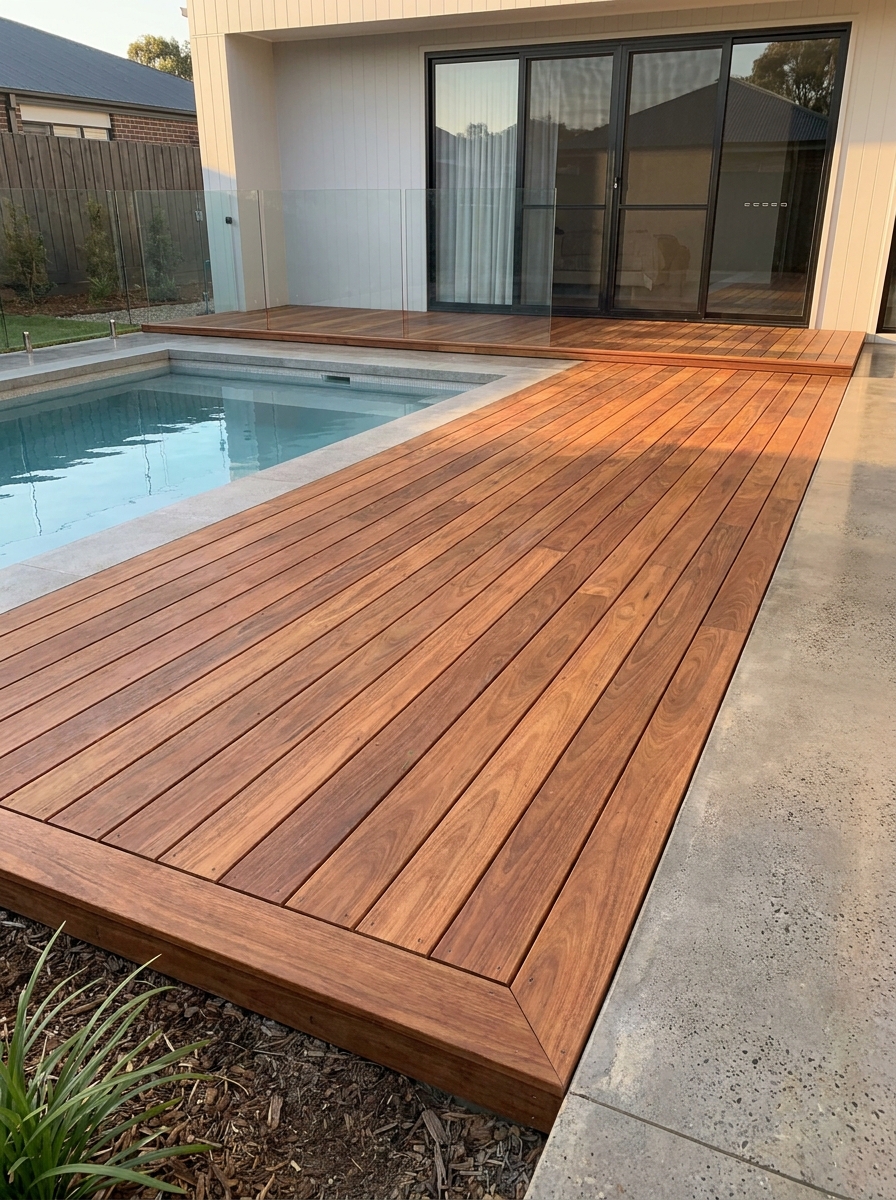
The structural decision is bearer-and-joist sizing relative to span. For a standard residential deck at ground level: bearers at 140×45mm treated pine spanning to piers at 1,800mm centres, joists at 90×45mm at 450mm centres. This combination handles residential loading without visible deflection. The deck boards themselves should be 90×19mm in Spotted Gum (a warm mid-brown that weathers gracefully) or Ipe (darker, denser, but harder to source and work).
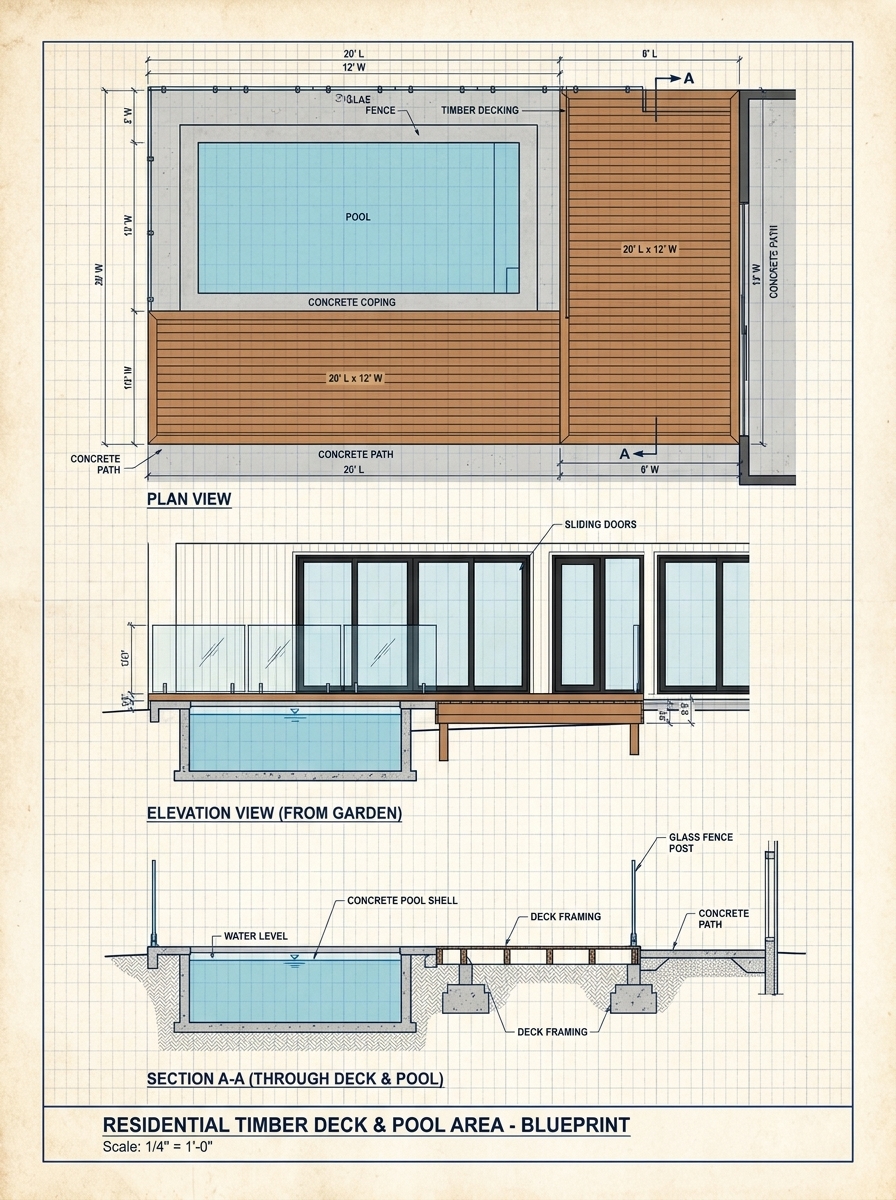
Hidden stainless fixings—Deckfast or Invisifix systems—eliminate surface fastener holes and produce the clean face that distinguishes a custom deck from a standard build.
Drainage beneath the deck is an architectural detail worth specifying carefully: a 10mm fall per metre away from the house in the bearer-and-joist frame ensures water doesn’t pool under the deck structure, which accelerates timber rot and creates a mosquito habitat. Over concrete slabs, drainage channels at 1,200mm centres allow water to clear effectively.
9. Poured Concrete Pathway with Aggregate Finish
| Hardscaping · Paving Aesthetic: Architectural paving, material continuity with house base, subtle texture Materials: 25MPa concrete, exposed aggregate or broom finish, control joint saw cuts Best for: Entry paths, garden circulation, connecting built elements Difficulty: ★★★★☆ | Approx. cost: $90–$160/m² depending on finish and thickness |
A poured concrete pathway is the hardscaping element that most directly connects the house to the garden—and the one most compromised by inadequate formwork, incorrect mix design, or absent control joints. Done right, it’s one of the most durable and beautiful paving surfaces available. Done wrong, it cracks within two winters and looks like a pavement repair.
The control joint is the detail that prevents random cracking: saw-cut joints at 3-metre intervals in a pathway (or at 4m × 4m grid in a larger paved area) create deliberate weak planes where the concrete will crack predictably if thermal movement requires it, rather than randomly across the surface. Joints should be cut to one-third the slab depth within 24 hours of pouring, before the concrete reaches full hardness.
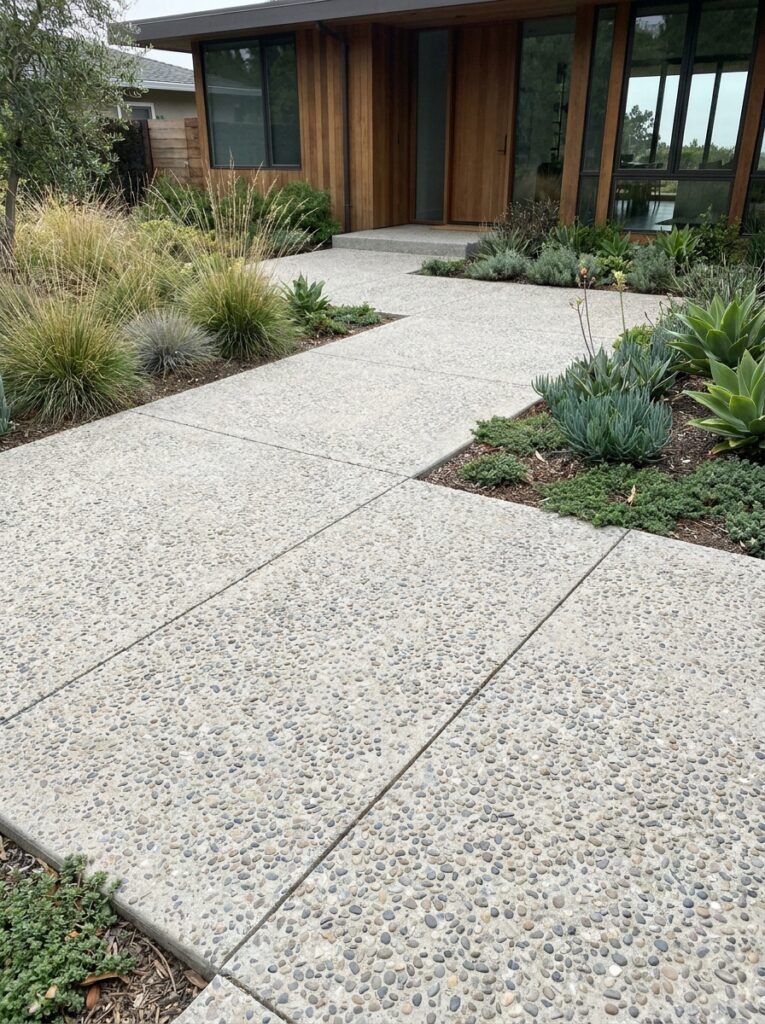
Exposed aggregate finish—seeding the surface with decorative stone (bluestone, quartz, or river pebble) before the initial set, then washing the cement paste off to expose the aggregate—produces a textured surface with better grip in wet conditions and a visual warmth that plain concrete lacks. Broom finish is the lower-cost alternative: dragging a stiff broom across the surface just before final set creates a directional texture that breaks up the flatness of plain grey concrete.
10. Floating Cantilevered Entry Steps
| Structural · Architectural Aesthetic: Gravity-defying horizontal planes, monolithic material, architectural statement Materials: Reinforced concrete treads (200mm thick minimum), Corten or powder-coated steel stringers, or cantilevered from the wall Best for: Main entry, split-level garden access, architectural statement feature Difficulty: ★★★★★ | Approx. cost: $1,800–$5,000 per flight (engineering required) |
Floating steps—where each tread appears to project from a wall with no visible support beneath—are the highest-difficulty structural project in this list and the one with the most unambiguous architectural impact. When executed correctly, they are the feature that defines the entry experience of a house. They require structural engineering for any cantilevered span over 600mm, and the engineering calculation is not optional—an undersized cantilever in a concrete step can fail catastrophically under point load.
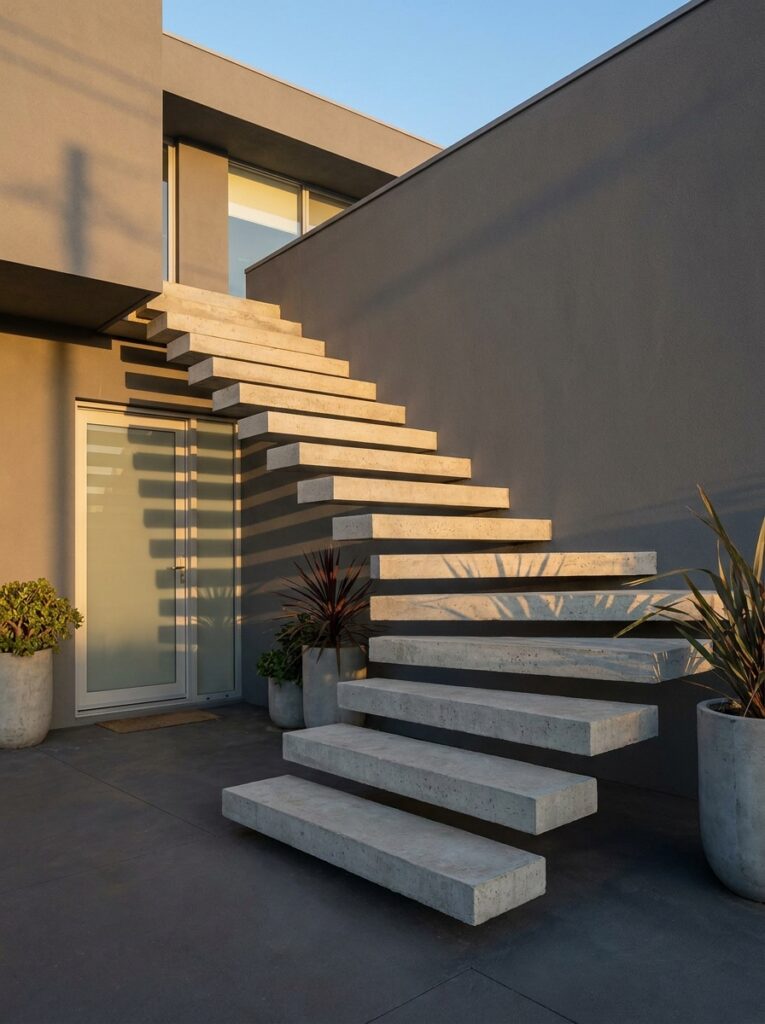
The two primary construction methods are true cantilever (each tread is a reinforced concrete element cast into the wall, with the rebar extending horizontally into the wall structure) and steel stringer with concrete or stone cladding (a structural steel spine is bolted to the wall, and treads are cantilevered from it with the steel hidden by cladding). The true cantilever produces the purest floating appearance but requires the wall to be structural concrete or masonry—it cannot be achieved on a timber frame wall without significant structural modification.
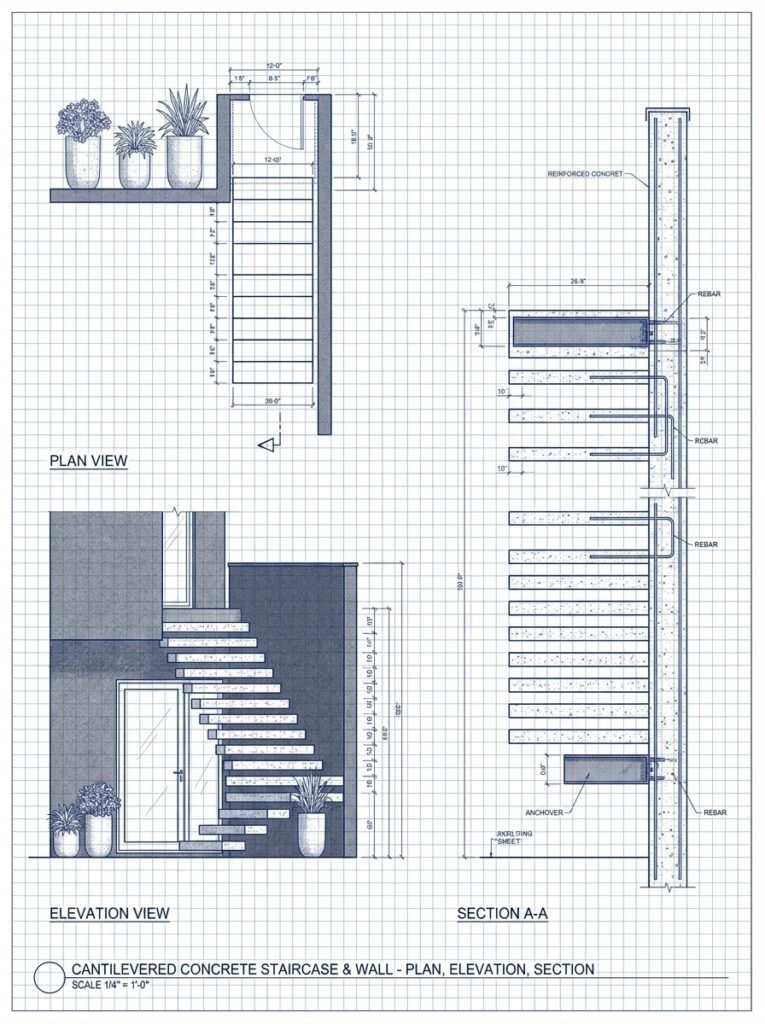
The finish of the tread face is the material detail that determines aesthetic register. Board-formed concrete treads in matching texture to an adjacent retaining wall read as part of a continuous designed element. Natural stone (bluestone, granite, or travertine) cladding over a steel structure produces a premium finish. The critical practical detail: a 5mm drip groove on the underside of each tread prevents water running back under the tread to the wall face, which causes staining over time.
The Precision Toolkit: Mastering Your DIY Execution
The gap between a DIY outdoor structure that looks built and one that looks designed is almost always in the execution precision—and execution precision is a function of having the right tools for each specific operation. A pergola post that’s 2mm out of plumb is invisible on the day. Six months later, when the beam connections have shifted with seasonal movement, it’s the thing you see every time you look at the structure.
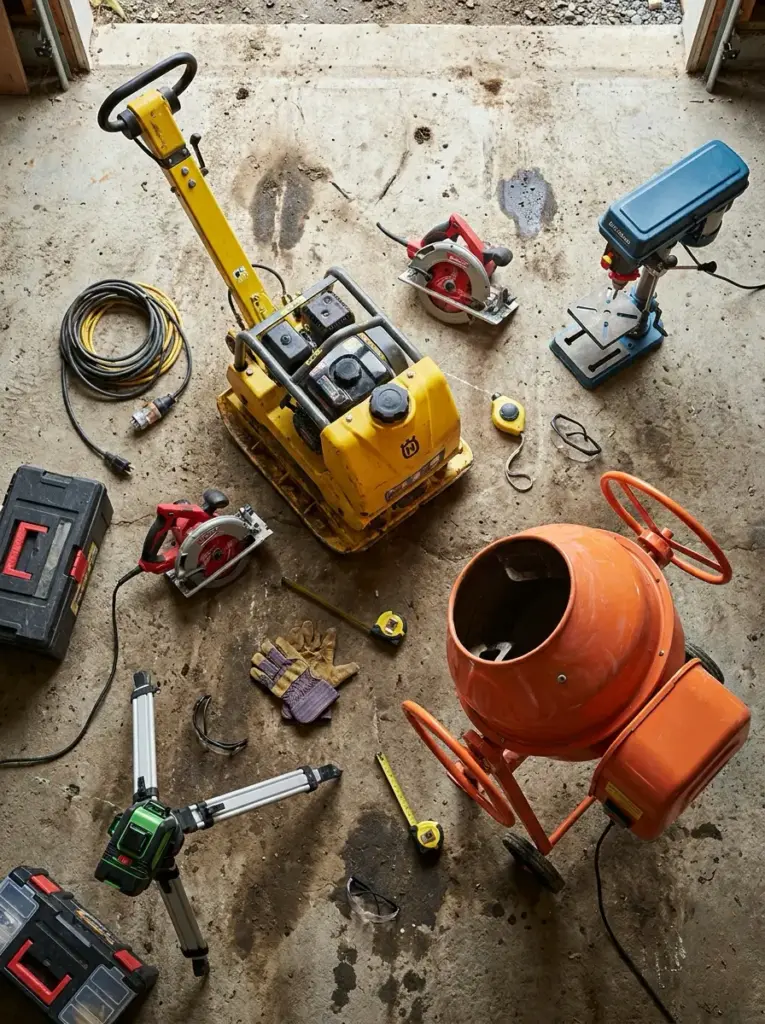
The tool strategy that separates serious architectural DIY from general home improvement is knowing which tools are worth owning and which are worth hiring for specific jobs. A good cordless drill is worth owning—you’ll use it on every project for years. A plate compactor for base preparation is worth hiring—you’ll use it for the one day of base prep on a specific project, and owning one means storing a 70kg machine in a garage that was designed to be minimalist.
This is the calculus that, for DIY enthusiasts running serious outdoor building projects, makes the most sense: own the precision hand tools and quality power tools you’ll reach for constantly, and hire the heavy machinery for the specific operations that require it. For homeowners in New South Wales, tool hire in Sydney has become one of the most searched terms in the home improvement space, precisely because the calculation has become obvious to anyone who’s priced out storing a concrete mixer versus hiring one for a weekend.
The Essential Own List
Tools Worth Owning for Architectural DIY
Laser level (Bosch GLL 3-80 or equivalent) — non-negotiable for decking and paving
Cordless drill/driver set (18V with 5Ah battery minimum) — used on every project
170mm circular saw with guide rail system (Makita or Festool) — precision crosscuts
Angle grinder with diamond blade — cutting concrete block, Corten, hardwood
Digital angle finder — essential for compound miter cuts on pergola connections
Random orbital sander (125mm) — finishing hardwood decking and screen elements
Chalk line and quality tape measure (25m) — setting out any large project
The Smart Hire List
The heavy machinery that produces professional results on one or two operations in a project—but that no minimalist homeowner needs to own permanently—is exactly what the tool hire model exists to serve. For projects in this list, the critical hire items are:
Concrete mixer (120–160L drum)
Manual mixing of more than two bags of concrete produces inconsistent water-to-cement ratios that compromise structural strength and surface finish. Hire a drum mixer for any pour over half a cubic metre. Tool hire in Sydney typically offers 120L drum mixers from $80/day — the cost is negligible against the quality difference in your pour.
Plate compactor
Sub-base compaction is the foundation of any paved surface — inadequate compaction produces settling that cracks concrete within two seasons. A plate compactor achieves the 95% Proctor density required for stable sub-base in a way that hand tamping cannot. One day’s hire produces the correctly prepared base for any project in this list involving paving or decking footings.
Concrete saw / angle grinder with wet-cutting diamond blade
Control joint saw cuts in fresh concrete require a diamond blade on a concrete saw, not a standard circular saw. The precision of the cut depth (exactly one-third of slab thickness) determines whether the joint functions correctly. Hire rather than buy for a single-project application.
Post hole digger / auger
For pergola posts, privacy screen posts, and deck footings, a petrol auger produces 600mm × 200mm diameter holes in 90 seconds per hole. Hand-digging equivalent holes in clay soil takes
The underlying principle is this: the quality of your finished structure is determined by the quality of the processes that produce it, and the processes that most benefit from professional-grade machinery are precisely the ones that happen before anything is visible — sub-base preparation, concrete mixing, post hole formation. Homeowners who have access to the right equipment for these foundational operations consistently produce structures that last decades and look intentional rather than improvised.
The economics of architectural DIY in 2026 make the hire model increasingly compelling. A concrete mixer hire for a weekend costs approximately $80–$120. A plate compactor costs $90–$150/day from most equipment hire operators. For a project like the geometric retaining wall or poured concrete pathway in this list, the total equipment hire cost for a weekend build is typically $200–$350—a fraction of what a single day of contractor labour costs for equivalent work.
The smart approach to tool hire in Sydney and other major urban centres is to plan the build sequence so that all heavy machinery operations happen in a single hire period, minimising hire costs while maintaining the precision those tools provide.
Frequently Asked Questions
Do I need council approval for any of these structures?
In most Australian states and territories (and most international jurisdictions), permanent structures above a certain size threshold require development approval or building permits. Common thresholds: sheds and pergolas over 10m² typically require approval; retaining walls above 600–1,000mm height (varies by council) require engineering sign-off; any structure within a setback from a boundary requires assessment. Check your local council’s exempt development provisions before committing to any project over 10m². Most states have online portals where you can determine permit requirements by postcode and structure type.
What concrete mix is appropriate for outdoor structures?
For most structural outdoor applications in this list: 25MPa compressive strength is the standard residential structural specification. This means the concrete achieves 25 megapascals of compressive strength at 28-day cure. Pre-mix concrete delivered by truck is specified this way. For bag mix (small projects), N25 bags from Boral or Cement Australia achieve equivalent strength when mixed to correct water-to-cement ratio — which is the critical variable. Too much water in the mix for workability is the most common DIY error and the leading cause of weak, porous concrete.
How long does Corten steel take to weather?
In a standard outdoor environment with regular wet/dry cycles, Corten steel reaches its characteristic protective rust patina in 12–18 months. In coastal environments with salt air, the weathering is faster — 6–8 months. In very dry inland climates with limited rainfall, the process takes longer. During the weathering period (before the protective patina is established), Corten steel produces rust runoff that will stain concrete, timber, and paving below it. Design drainage so weathering runoff falls away from adjacent surfaces, or apply a temporary rust-inhibiting wash-down to surrounding areas during the weathering period.
Can Ipe wood be painted or stained?
Ipe’s extraordinary density (approximately 1,050 kg/m³ — it sinks in water) makes it difficult to accept penetrating stains or paints. The recommended finish is boiled linseed oil or a transparent hardwood oil (Cutek Extreme CD50 is the preferred product among decking professionals) applied twice annually. The oil maintains the timber’s natural colour and prevents the surface greying that occurs when hardwood dries out. Painted or opaque-stained Ipe is not recommended — the paint adhesion on such a dense substrate is poor and will fail within 2–3 seasons in an outdoor environment.
How do I calculate how much concrete I need?
Volume in cubic metres = length (m) × width (m) × depth (m). Add 10% for waste and form variation. For a 6m long, 1m wide, 150mm thick pathway: 6 × 1 × 0.15 = 0.9m³, plus 10% = 0.99m³, so order 1.0m³. Ready-mix concrete is ordered by the cubic metre (minimum order typically 0.5–1.0m³ depending on supplier). Below minimum order quantities, bag mix is more economical: a 20kg bag yields approximately 0.010m³ of mixed concrete, so 100 bags = 1.0m³. At approximately $10–$12 per bag retail, 100 bags cost $1,000–$1,200 versus $180–$250 for 1.0m³ of ready-mix delivered — for any project over 0.5m³, ready-mix is almost always cheaper.
Building the Outdoor Architecture First
The ten projects in this guide share a common design principle: they’re permanent decisions that define the spatial structure of an outdoor area before any other decision is made. The privacy screen determines where the view is directed. The retaining wall determines where the levels change. The pergola determines where the outdoor room is. These are architectural decisions, and they deserve the same level of considered specification that an interior renovation does.
The material choices in contemporary outdoor architecture—Corten steel, board-formed concrete, Ipe and Spotted Gum hardwood, powdercoated aluminium—are not trend-driven. They’re the materials that have proven themselves in outdoor conditions over decades of application in residential and commercial landscape architecture. They’re specified here because they work, not because they’re fashionable.
Build the architecture first. Get the levels right, the materials right, the structural details right. Then, once the permanent framework is in place, the furnishing and planting decisions—the movable layer—have a context that makes them read correctly. The architecture is what makes everything else look intentional.
- 932shares
- Facebook0
- Pinterest932
- Twitter0
- Reddit0