
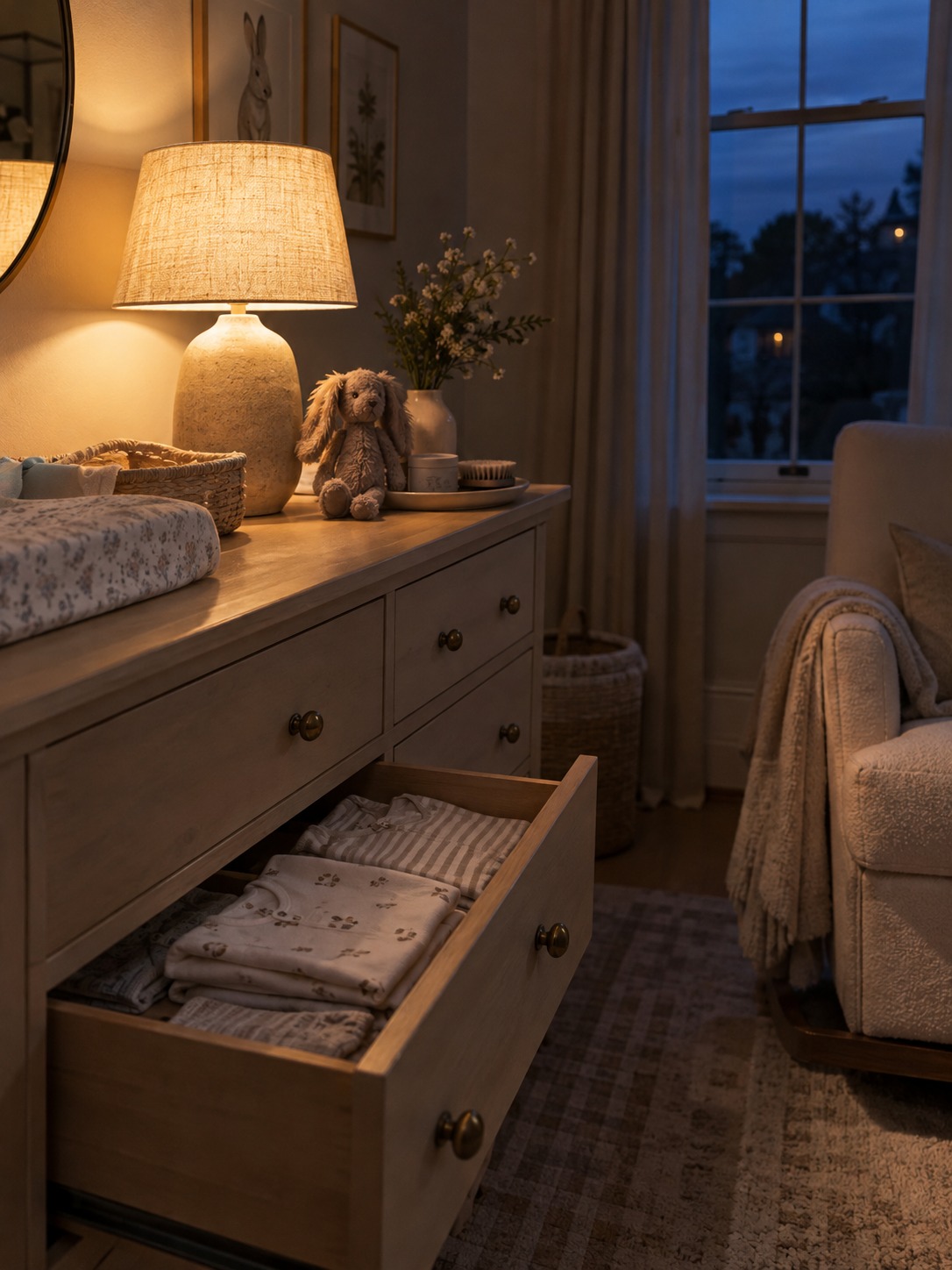
In car design there’s a discipline called packaging. Before anyone draws a beautiful trunk, someone decides what the trunk must hold, how often each thing gets taken out, and which things must never be buried. Dresser drawers work the same way. A nursery dresser is a tiny storage system with a hard schedule: clothes get changed at 2 a.m., in half light, with one hand free. If the drawer fails then, nothing else about it matters.
So this guide is about the inside of the dresser, not the look of the outside. You’ll get a drawer map, a way to measure before you buy a single divider, an example of a drawer shared by a baby and a toddler, and simple rules for folding onesies and keeping two-piece sets together. If you’re still planning the room around the dresser, my guide to kids room design comes first.
I’m a designer, not a parenting expert, so I won’t tell you how many outfits a baby needs or what to put them in for sleep. I’ll show you how to organize whatever you already own.
How should you organize a nursery dresser?
Organize a nursery dresser by how often you reach for each thing, not by clothing type alone. Put daily clothes in the drawers at the easiest height, sleepwear in its own drawer or section, and spare or next-size clothes in the lowest or highest drawer, labeled by size. Sort everything by current size first, then by type (bodysuits, sleepwear, pants, layers).
Measure the inside of each drawer and size the dividers to your folded clothes, so nothing slides or topples. Keep one clean backup outfit within reach, return laundry to fixed zones, and review sizes every season. If one dresser serves two children, give each a clearly marked section and let the amount of clothing, not an even split, decide how much room each gets. The test of a good layout is simple: someone who has never seen the drawer should find the right outfit in the dark.
Sort by size and use before planning the drawers
Don’t start with baskets. Start with the clothes. Pull everything out and make piles, because you can’t plan drawers for things you haven’t counted.
Three piles that matter
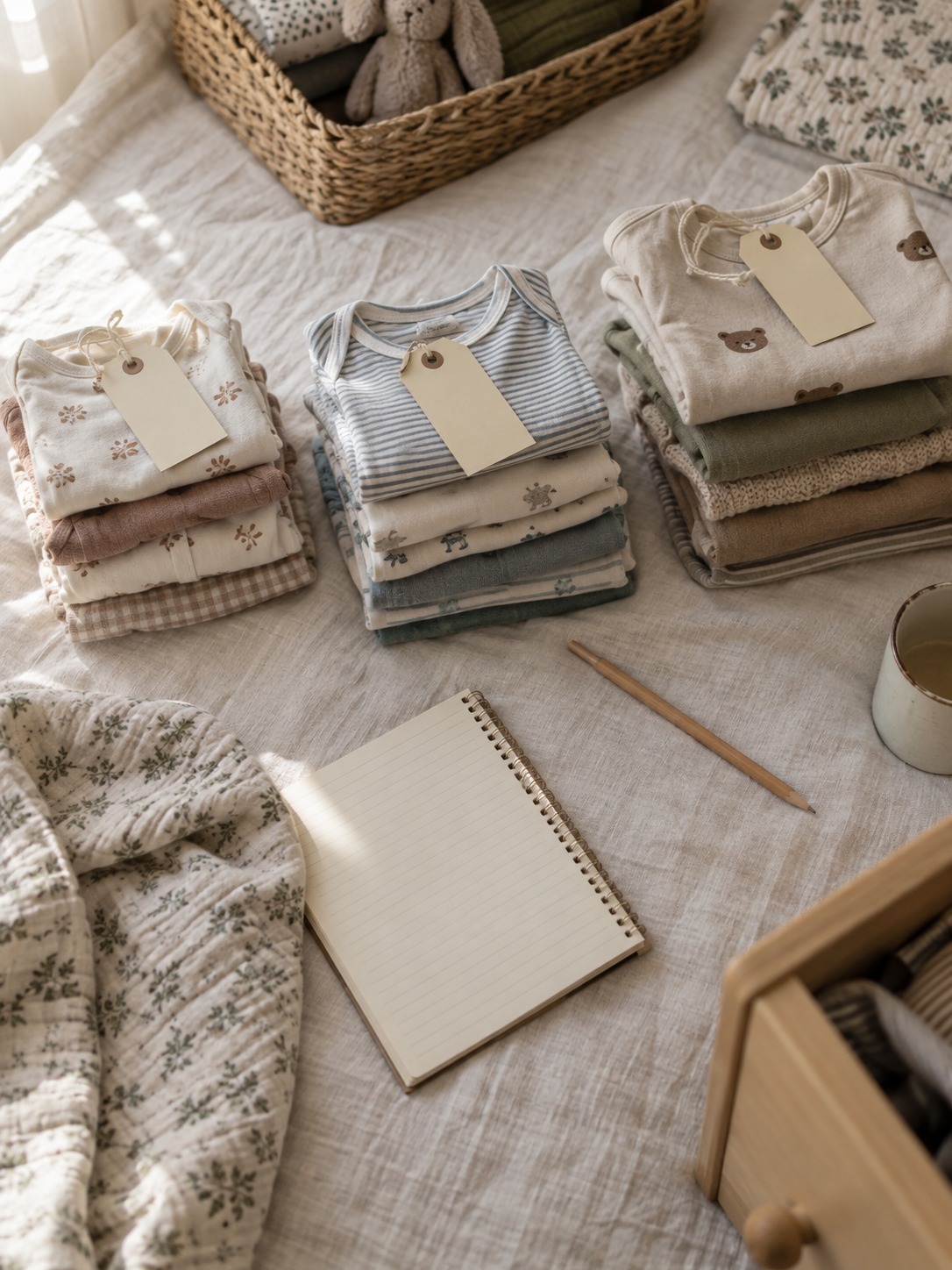
Make one pile for what fits now, one for what’s too small or worn, and one for what’s coming, meaning the next size up. The too-small pile leaves the room. The coming pile goes in storage, in a labeled bin, or in the least-reached drawer. Only the first pile belongs in daily drawers.
Then split the current pile by type: bodysuits, sleepwear, pants, tops, layers, socks and accessories. Finally, count how many of each you reach for in a normal week. That number is your real working set.
Match the set to your laundry cycle
How many sets do you need in the drawer? There’s no universal number. It depends on how often you do laundry, how much your baby spits up, and how quickly you can reach the machine. If you wash every two days, a smaller working set is enough. If you wash weekly, you need more. Use your real cycle, not the empty drawer space, as the guide. An overfull drawer hides what you own, and a hidden outfit is as good as missing.
Plan a nursery dresser layout around what you use daily
Once you know the working set, assign it to drawers by how often you use it. A typical dresser has three to five drawers, and the height of each one decides what lives there. The most-used items go in the drawers you can open without bending, and the least-used go at the bottom or the very top.
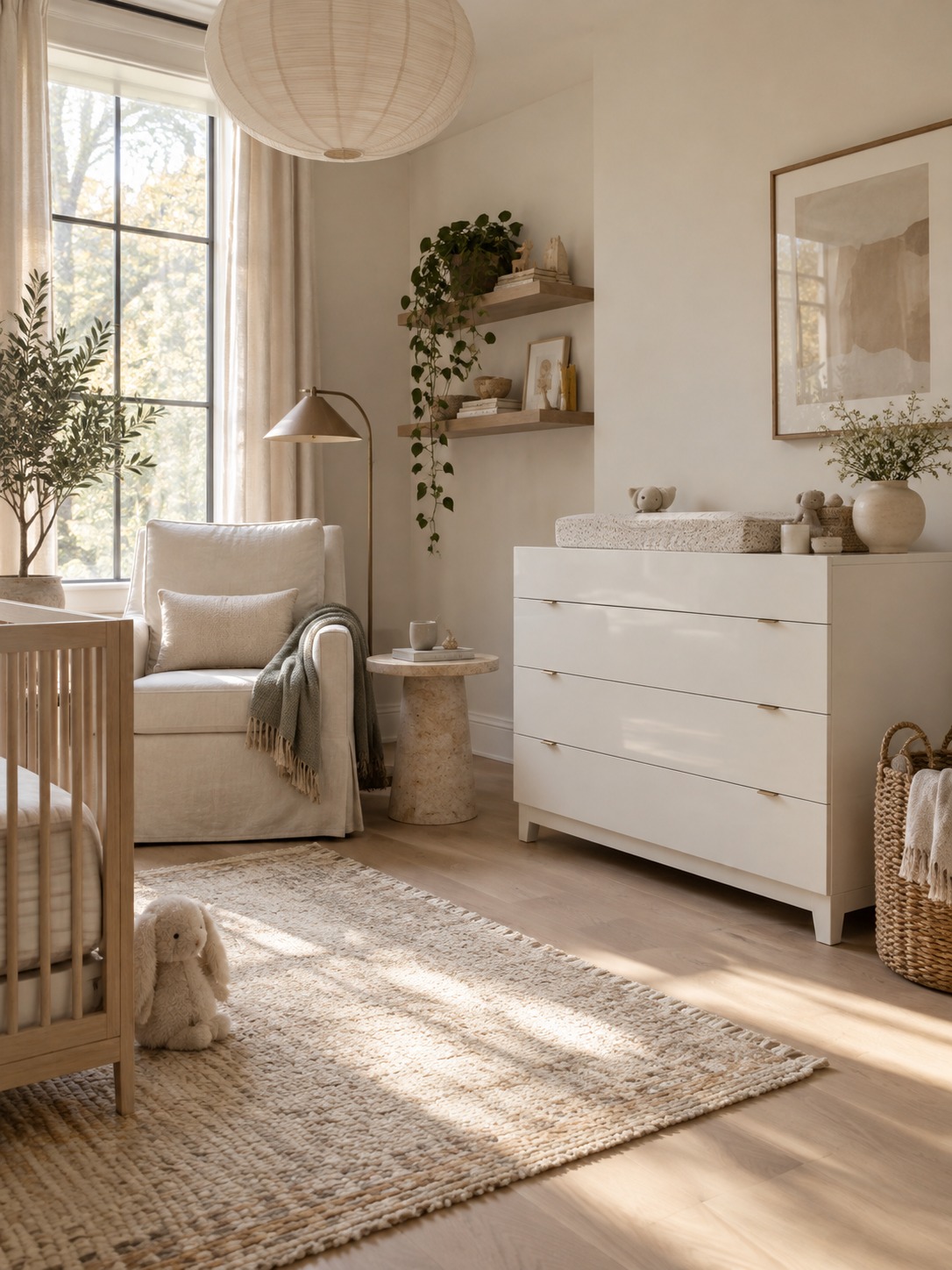
Here’s an example layout for a four-drawer dresser. It’s an illustration, so change it to suit your own clothes.
| Drawer | What goes in it | Why |
|---|---|---|
| Top | Bodysuits, socks, hats, small accessories | Reached most often, and small items are easy to find at eye level |
| Second | Sleepwear and one spare set | Used every evening, and the spare is there for night changes |
| Third | Pants, tops, layers | Used daily but not at every change |
| Bottom | Next size up, out-of-season items | Rarely reached, labeled by size |
If you have a smaller dresser with only two or three drawers, combine. Bodysuits and socks share the top drawer, sleepwear and pants share the second, and the third holds reserves. If the changing supplies, such as diapers and wipes, live in the dresser too, give them their own drawer or a basket on top so they never get mixed with clothes.
For how the dresser fits into the room as a whole, such as where it stands relative to the changing area and the crib, see my kids room design guide. For general habits that keep a home orderly, I’ve collected home organization habits in another article, and this one adds the clothing-specific layouts.
Dividers and liners: what to choose
You don’t need a set of matching organizers. Look for dividers that adjust, so you can move them as sizes change. Shallow open boxes work well for small items like socks and hats. Fabric bins are quiet and soft, which matters in a sleeping child’s room, while hard plastic tends to rattle when a drawer closes.
A thin non-slip liner stops everything from sliding when you open the drawer quickly. Keep the look calm and consistent, with two or three colors at most, so the drawer reads as one system. Buy only after you’ve measured, and buy one set first to test it. If it fits, order the rest.
Plan for night changes
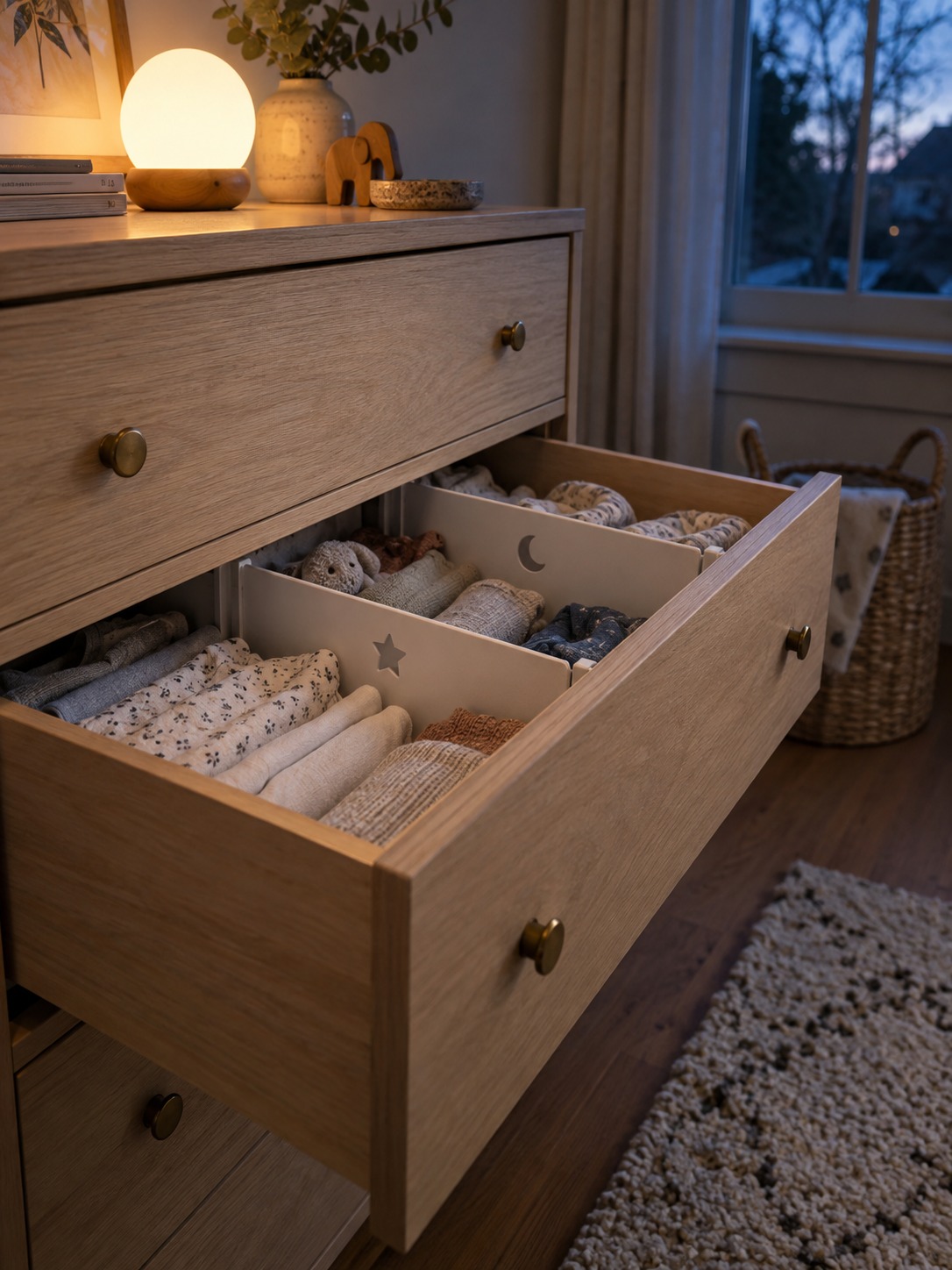
Think about the moment you’ll use the drawer most: a tired adult, low light, one free hand. Put the sleepwear drawer and the spare set where you can reach them without turning on the main light. A small night light near the dresser helps, and so does a drawer that opens fully and quietly. Test it once with the lights off. If you have to search, move the sleepwear up one drawer or add a label with a large, simple mark.
Measure the inside of each drawer before adding dividers
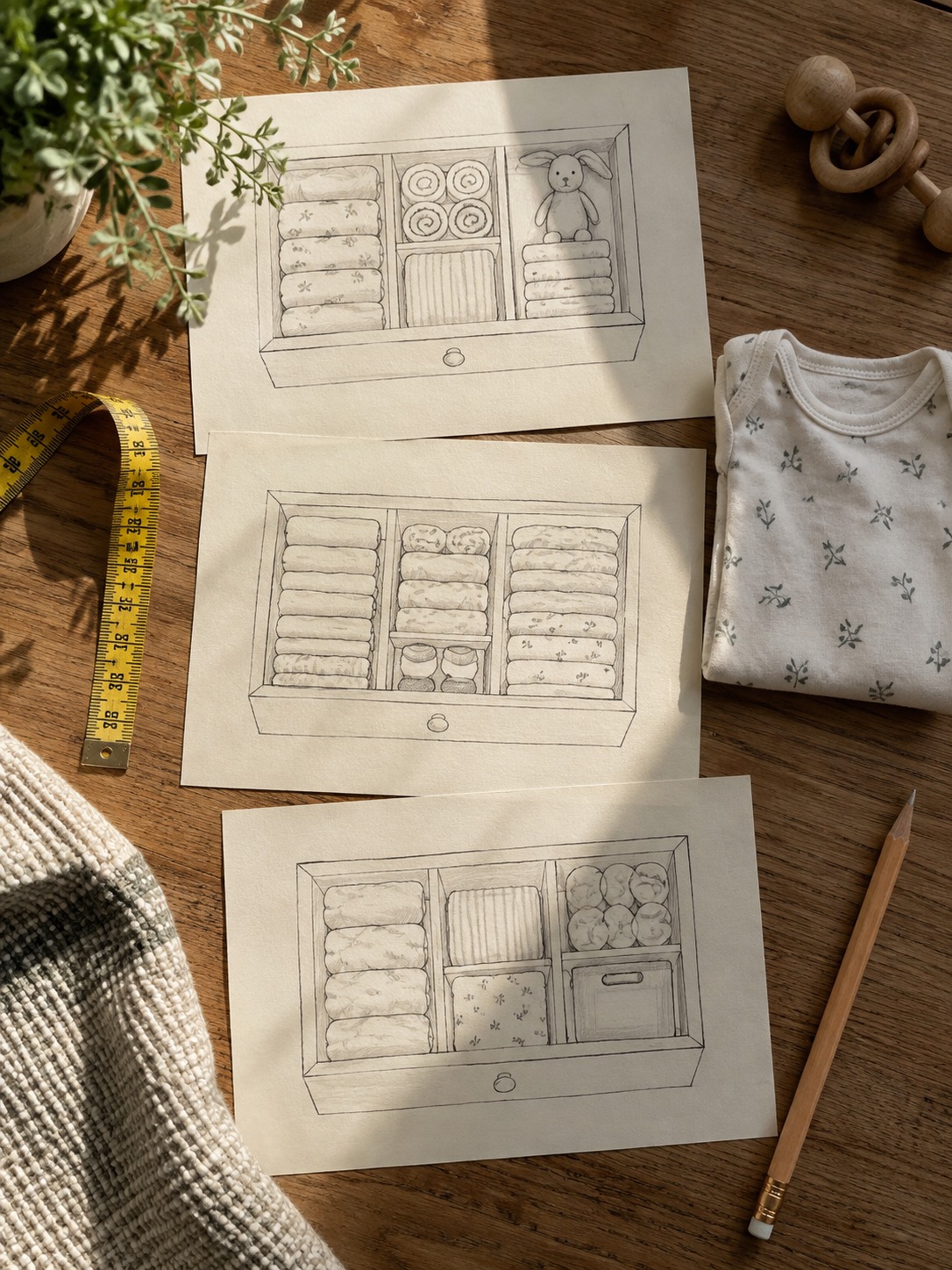
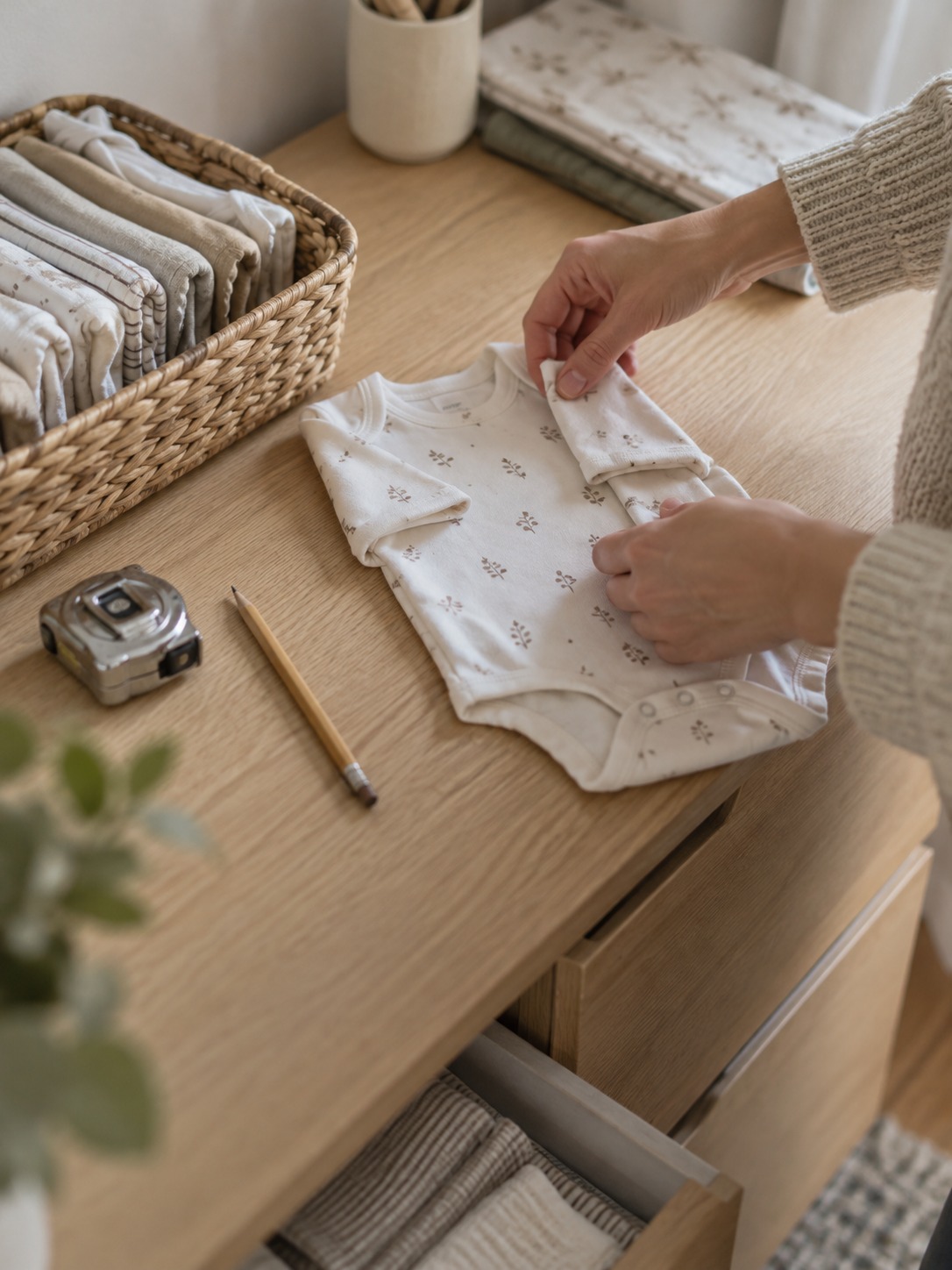
This is the step most people skip, and it’s why so many divider sets don’t fit. The visible front of a drawer isn’t its usable space. Measure the inside width and depth with a tape, and measure the height you can use before the folded clothes touch the underside of the drawer above.
Write the three numbers on a piece of paper for each drawer. Then fold a few real garments the way you’d keep them and measure the folded size. Divide the drawer width by the folded width to see how many columns you can fit. A drawer that’s 28 inches wide with folded bodysuits 4 inches wide holds seven columns, in theory. In practice, you want some slack so you can pull one out without disturbing the neighbors.
Close the drawer with everything inside. If it catches, the stack is too high or a divider is too tall. That check takes ten seconds and avoids returns.
Keep current-size clothes separate from future sizes
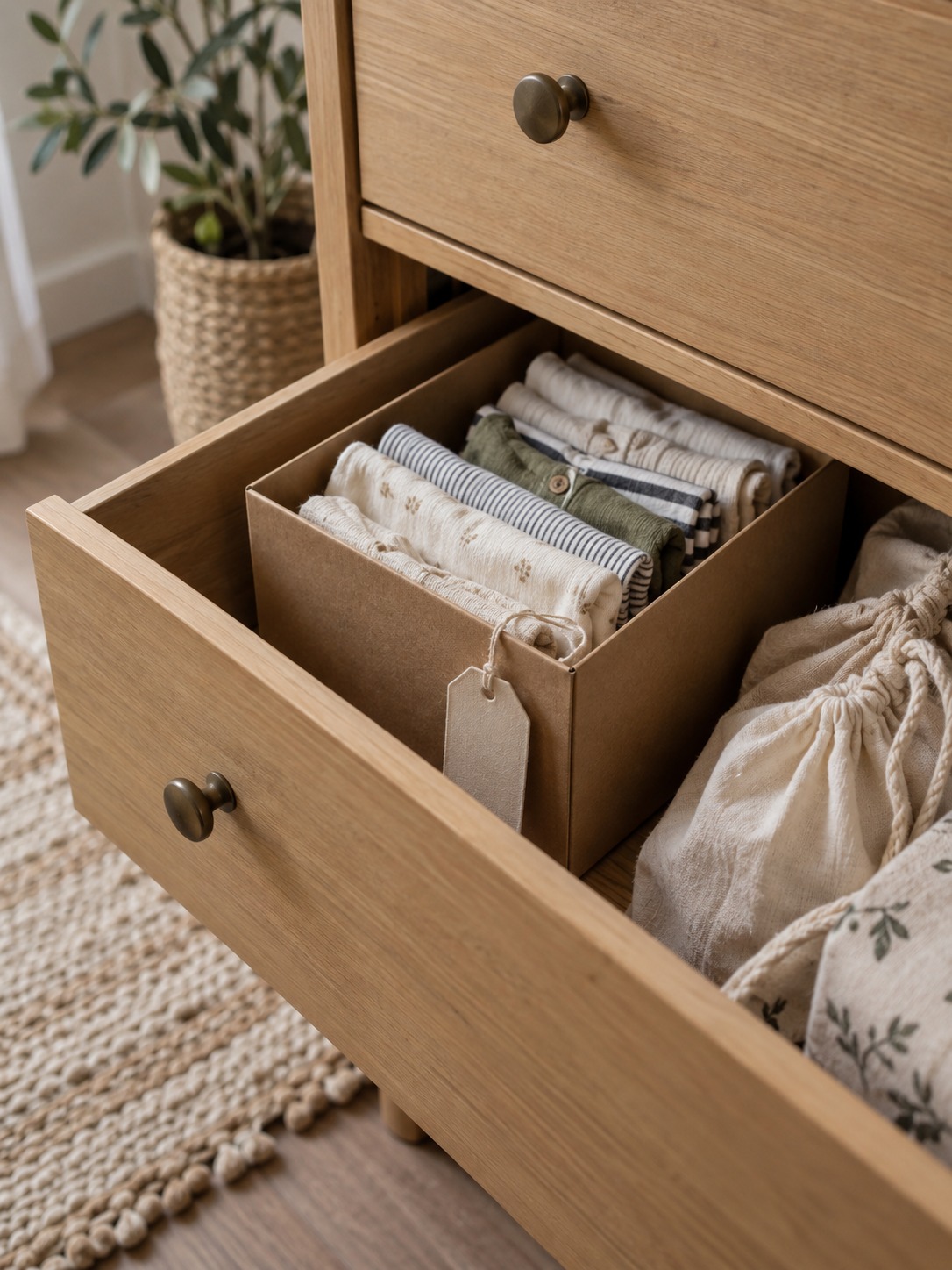
Babies change size fast, so the mix of sizes in a drawer changes fast too. Keep the current size at the front or top, and the next size at the back or in another drawer. Add a simple label, a size tag on the divider or a strip of masking tape, so another adult can see the rule without being told. A label such as “3-6 months” is easy to change when the size changes.
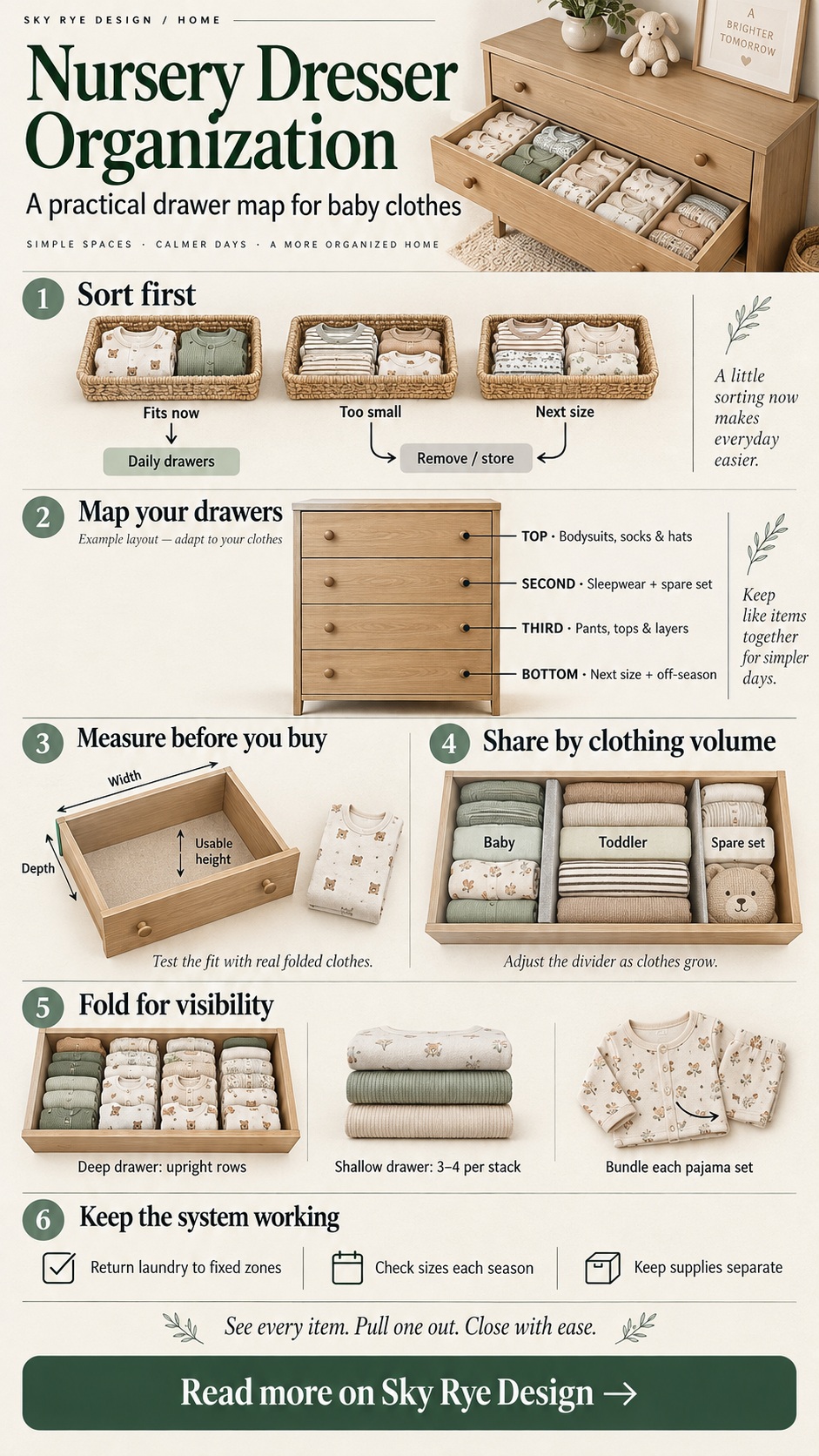
Design a shared sleepwear drawer for a baby and a toddler
Two children, one dresser, is common. It’s possible to share one sleepwear drawer, as long as each child’s clothes have a clearly marked home. The trick is to plan the drawer in zones.
Give each child a recognizable section
Divide the drawer into two zones, one per child. Use a divider, a different color of basket, or a label with a name or a small symbol. A pictogram works for a toddler who’s learning to help: a star for one child, a moon for another. Keep the marking independent of clothes size so it stays valid as the children grow.
Inside each zone, sort by type. In the baby’s zone, for example, bamboo onesies can sit in one column and spare sets in another. In the toddler’s zone, bamboo pajamas in two pieces can sit side by side with the top and bottom together. Those are only examples of garments you might own. The same logic works for any fabric, and I’d follow each label’s care guidance rather than any general claim.
Decide the split by volume, not by fairness
Don’t divide the drawer in half just because there are two children. Measure by the volume of the clothes. A baby’s garments are small, so a zone of a third of the drawer may be enough. A toddler’s sets are bigger, so they may need two thirds. Fold the clothes, lay them in the drawer and see how much room each pile takes. Then place the divider.
Also reserve a spot for each child’s spare set. When there’s a leak or a spill at bedtime, a parent shouldn’t have to search for a clean outfit. A single set on top of each zone, or in a small basket at the front, solves it.
Adjust the layout when one child needs more space
Use adjustable dividers, such as tension dividers or a set of small boxes that can be moved. You’ll use them, because the layout will change. A child grows, bigger pajamas take more space, and the zone has to expand.
How do you know a zone is overfull? Use three simple tests. Can you see everything in it at a glance? Can you pull out one garment without disturbing the neighbors? Does the drawer close without effort? If the answer to any of them is no, remove clothes that no longer fit or move the divider.
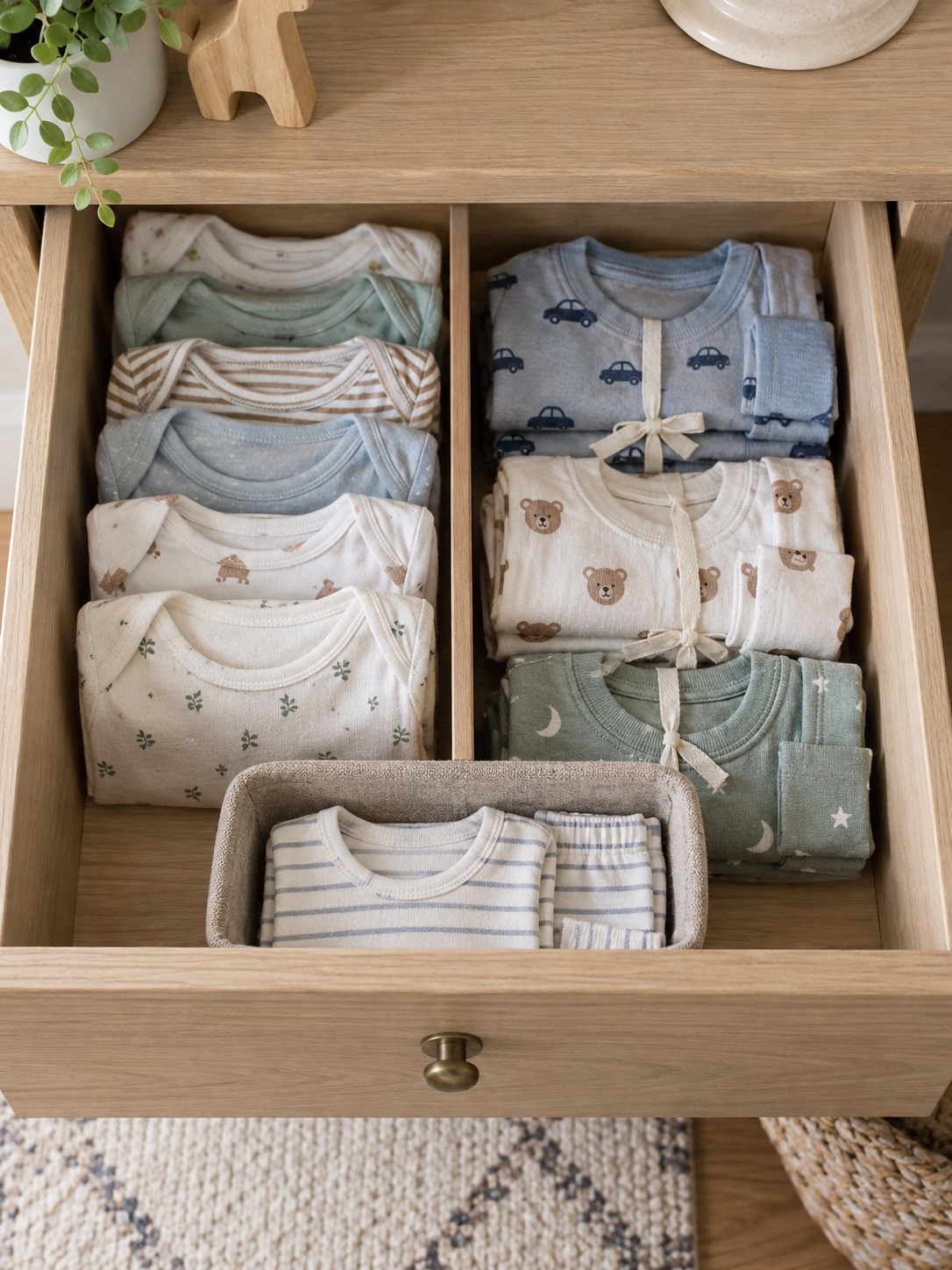
Fold onesies and keep pajama sets together
Folding is a design problem with a clear goal: each garment should stand on its own, show what it is, and come out without taking the rest with it. Two folds cover most nursery drawers.
Folding a onesie so it stands up
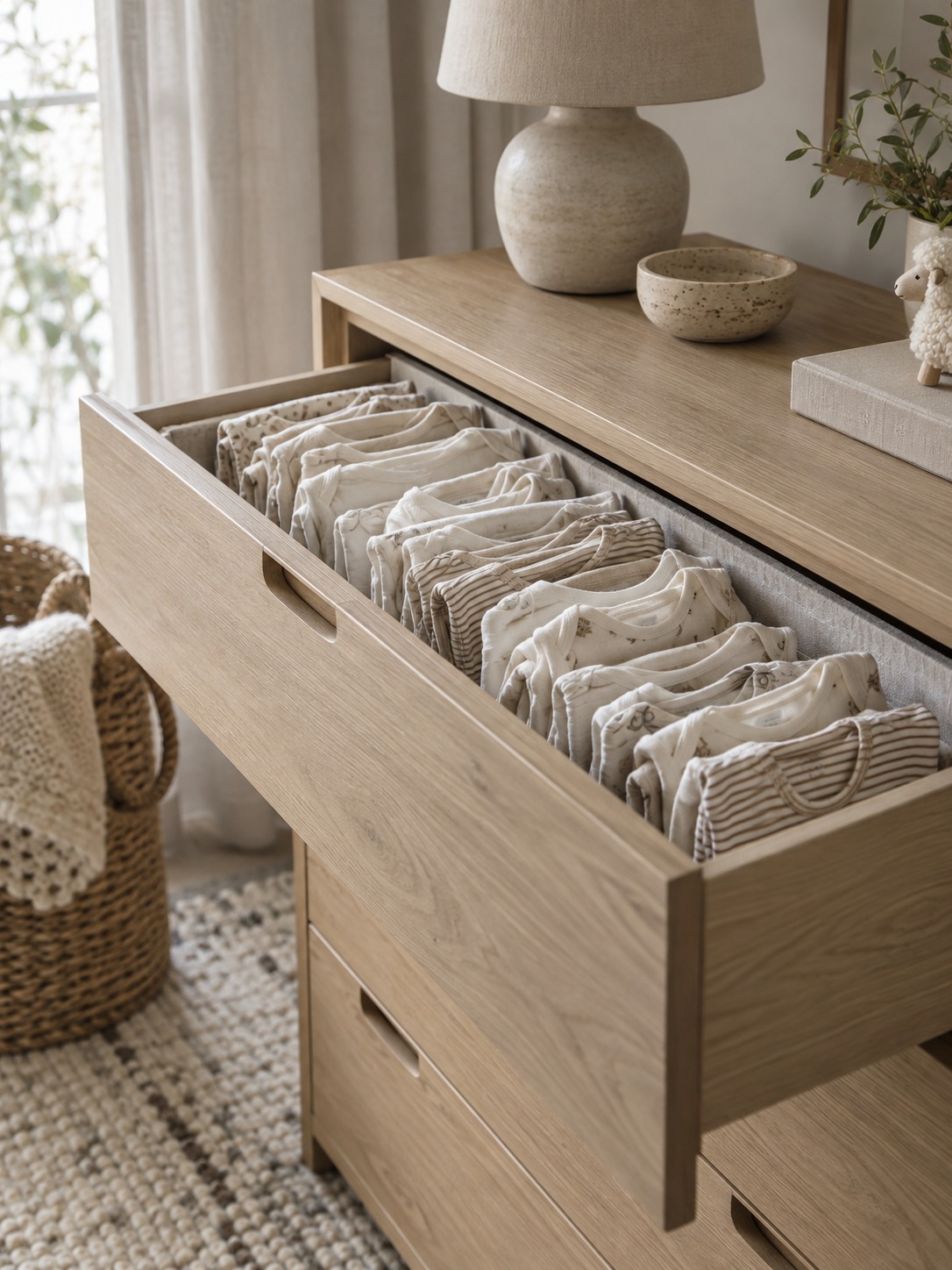
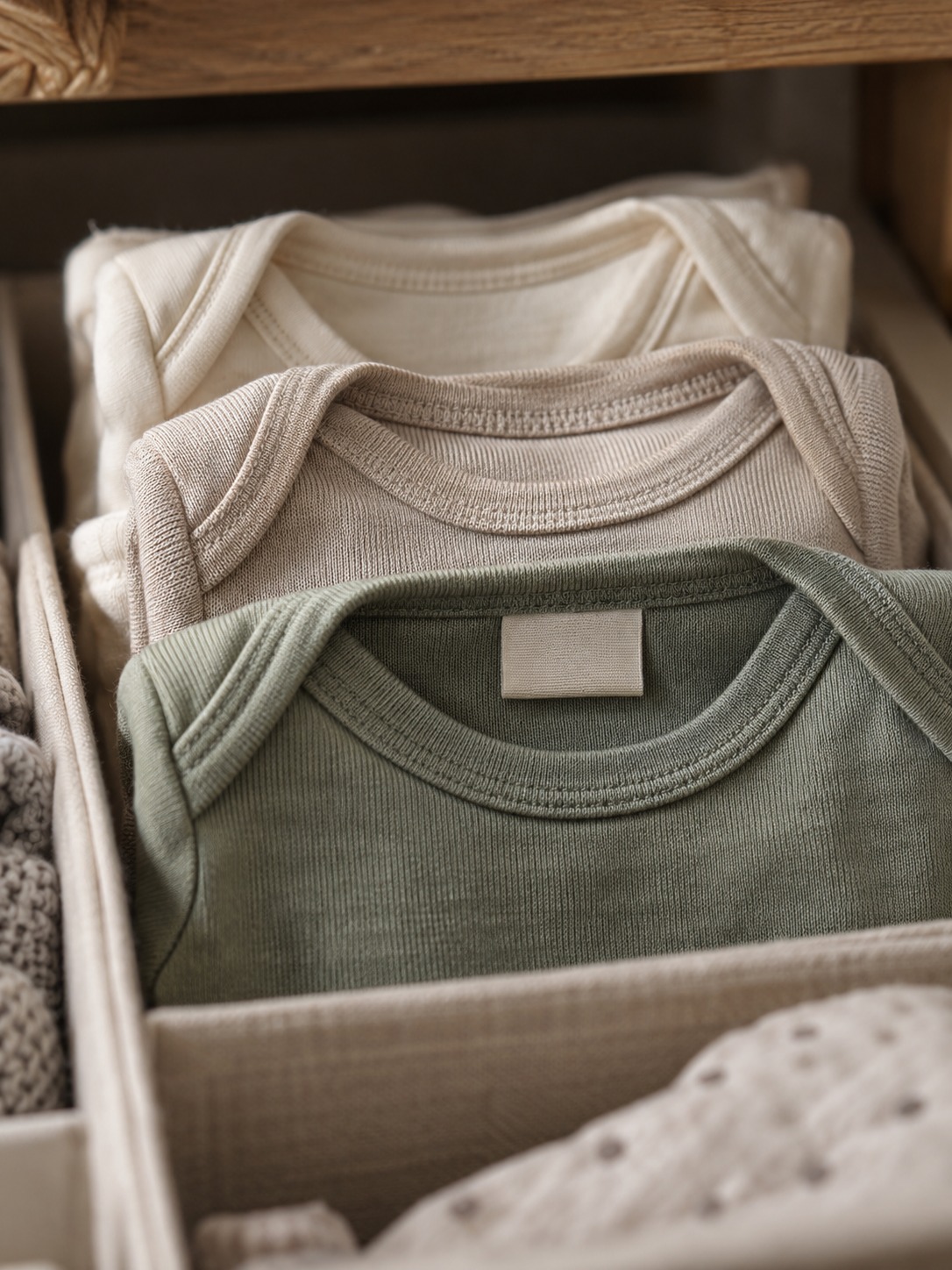
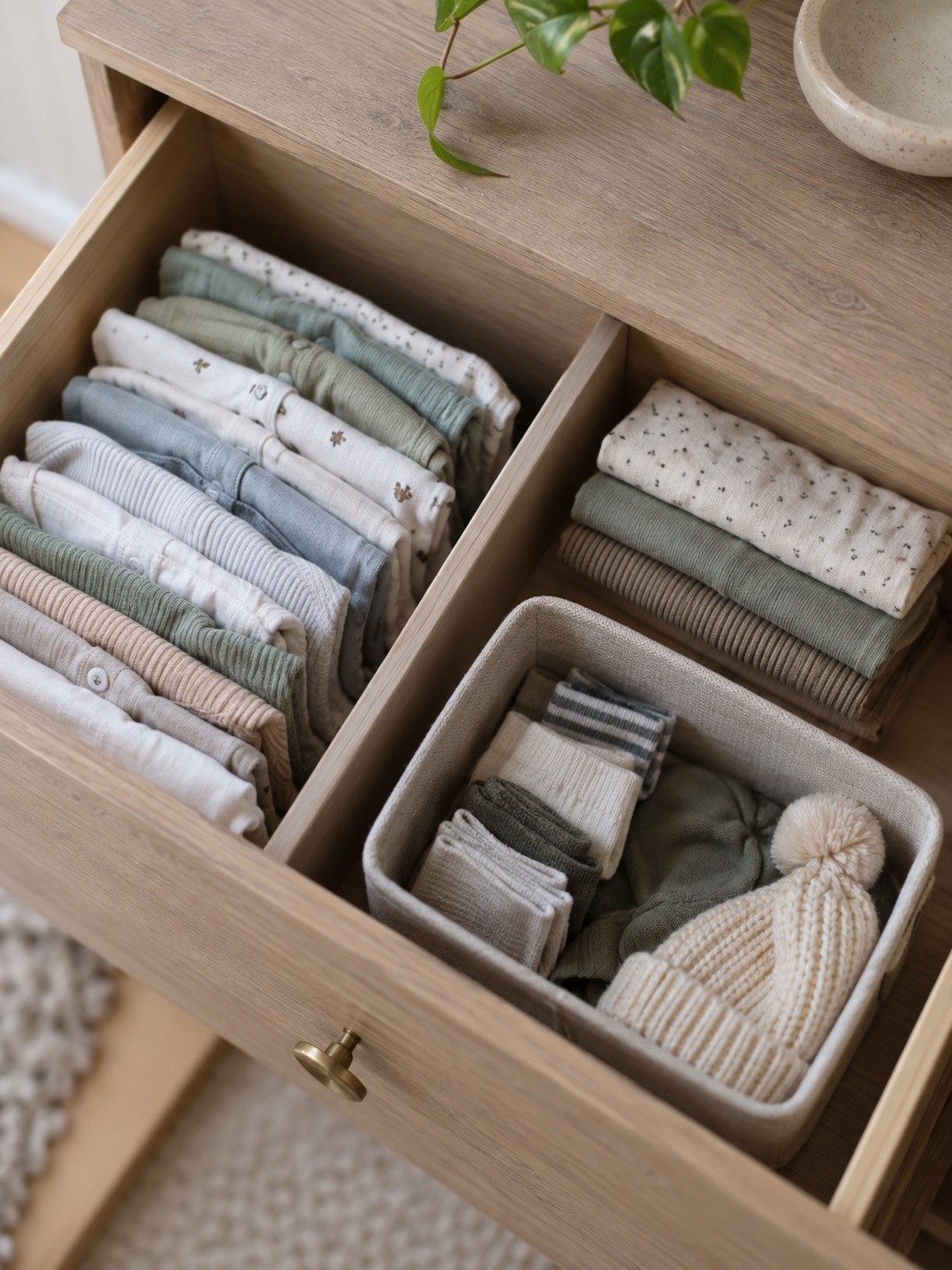
Lay the bodysuit flat, front up. Fold each side in toward the middle, so the sleeves end up folded inside. Then fold the bottom up to the neckline, or in thirds if the drawer is shallow. The result is a small rectangle with the neckline at the top, so you can see the size tag or the pattern from above.
If the folded bodysuit is soft and falls over, add a small support, such as a shallow box or a divider on one side. The goal is a row of upright rectangles, like books on a shelf, not a pile.
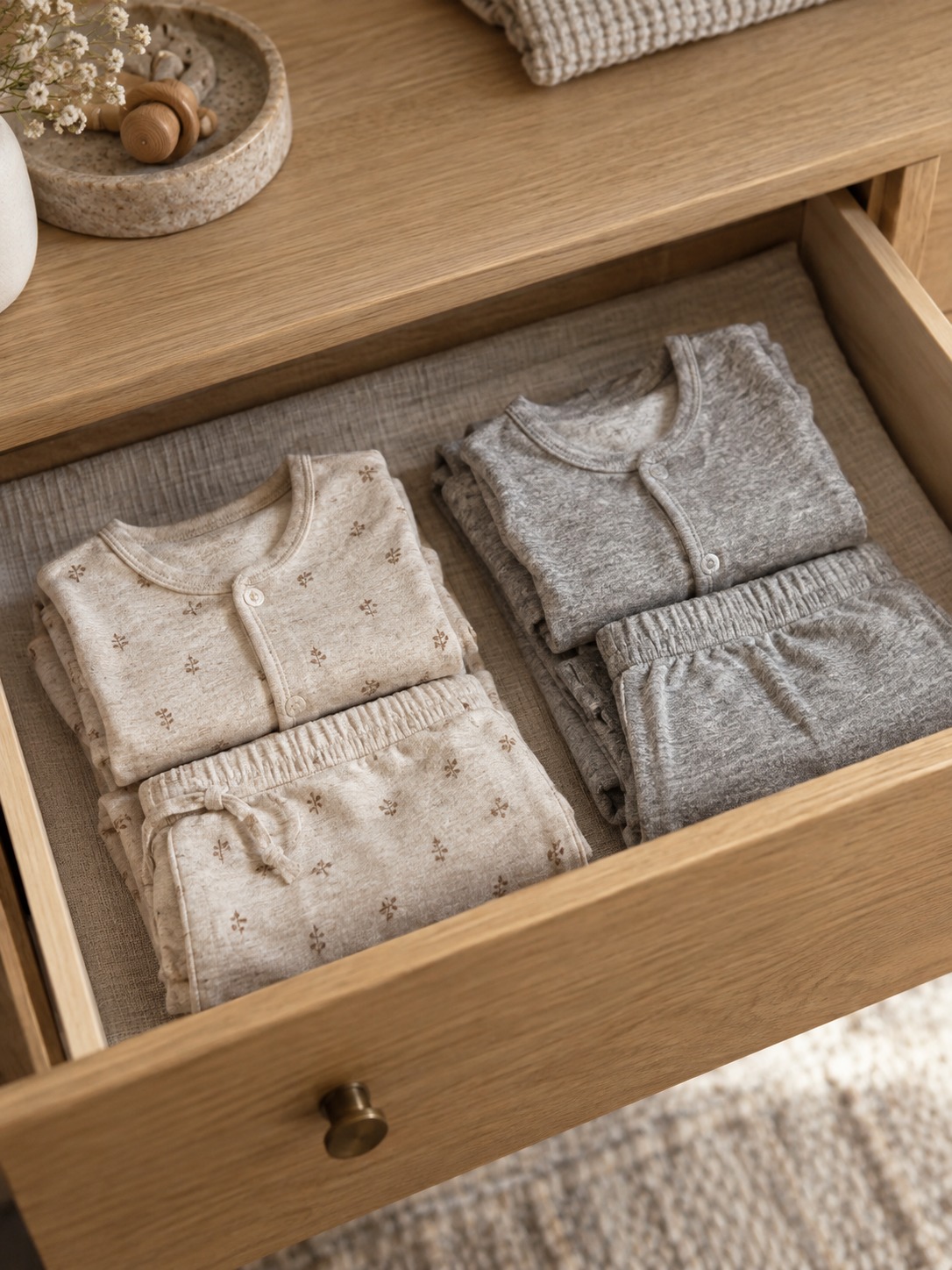
Keeping two-piece sets together
For a top and bottom set, put the bottom on top of the top, or fold the top around the bottom so they form one bundle. Another approach is to place the folded pair in a small fabric bin. Either way, the set stays together, so no one is hunting for a missing half at 8 p.m. Two-piece sets, such as bamboo onesies for a baby and two-piece pajamas for a toddler, are just examples of how a set can be bundled, so use the same trick with whatever you own.
Vertical rows or small stacks?
| Method | Good for | Watch out for |
|---|---|---|
| Vertical rows | Seeing every item at once, small garments, deep drawers | Soft items that flop, so add a divider |
| Small stacks | Shallow drawers, bulky layers | The bottom item gets forgotten, so keep stacks to three or four |
I prefer rows in a deep drawer and short stacks in a shallow one. Whichever you choose, put the most used pieces at the front.
Make laundry returns and size changes easy
A tidy drawer is easy to build and hard to keep. The way to keep it is to make returning laundry a routine with fixed places.
Return the clean laundry to fixed zones
When you bring clean clothes back, put each type into its zone, newest at the back. That way the oldest garments get used first, and nothing sits at the bottom for months. If you used the spare outfit, replace it in the same load. A drawer works best when every item has one address.
Another adult should be able to restore it too. A label on each section helps: “Sleep”, “Bodysuits”, “Spare”. A grandparent or a babysitter then needs no explanation.
Check sizes each season
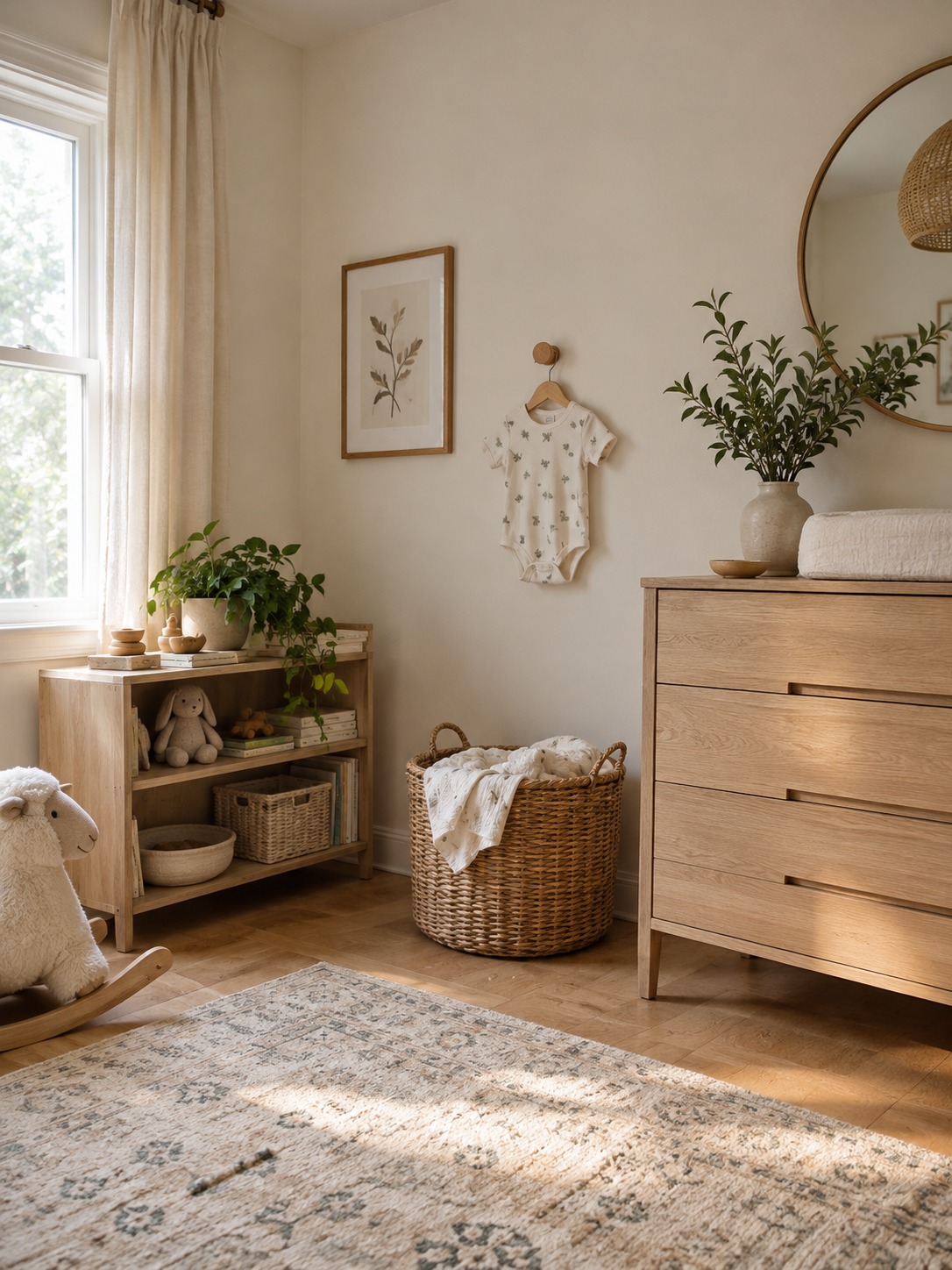
Once in a season, take everything out and check sizes. Remove what doesn’t fit, move the next size forward, and store off-season items elsewhere. It’s also a good moment to check for damage and to adjust the divider widths. Fifteen minutes is enough.
Keep the “coming” bin up to date, too. When you put something in it, add a note with the size, so you don’t have to unfold everything later.
Keep supplies out of the clothing drawers
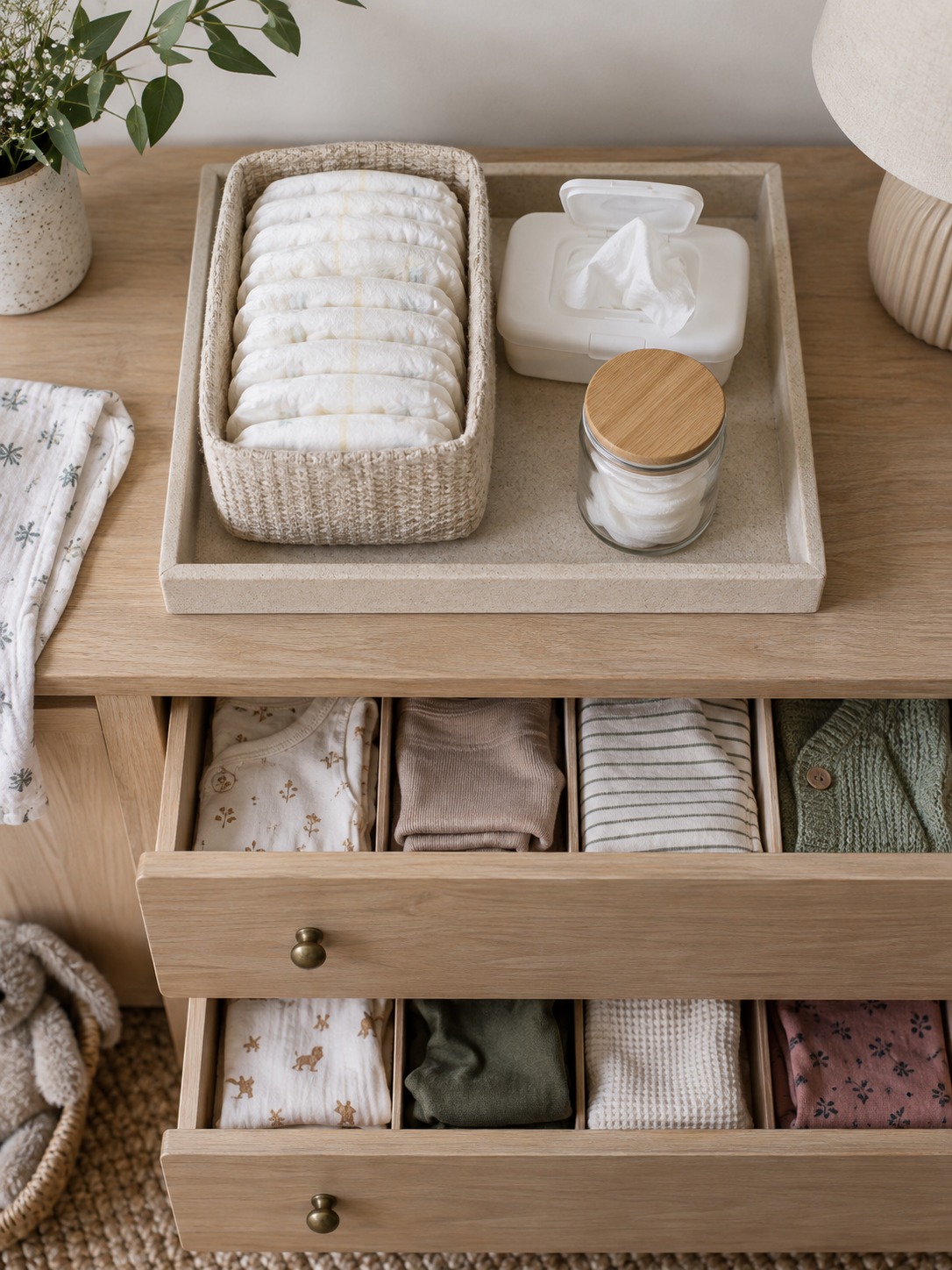
If diapers, wipes and creams share the dresser, give them their own space: a top basket, one shallow drawer or a tray. When supplies and clothes mix, the supplies run out unnoticed, and clothes get stained. A simple rule: soft goods in drawers, and things that can spill on top or in a lined basket.
Common mistakes in nursery dresser organization
Four mistakes come up in almost every setup. The first is buying organizers before measuring, which leads to boxes that almost fit. The second is keeping every size in the daily drawers, so the useful pieces are buried. The third is dividing a shared drawer evenly, so one child’s section overflows while the other’s is half empty. The fourth is a layout that only the person who built it understands. If another adult can’t restore it without asking, add labels.
None of these is a big problem, and all of them are quick to fix. A short review once a season catches most of them before they turn into a drawer you avoid opening.
Frequently asked questions
How should I arrange clothes in a nursery dresser?
Sort by current size, then by type, and assign each type to a drawer by how often you use it. Daily items such as bodysuits go at easy reach, sleepwear gets its own drawer or section, and next-size clothes go in the lowest drawer or a labeled bin. Measure each drawer first, and size dividers to your folded clothes.
Can a baby and a toddler share one sleepwear drawer?
Yes. Divide the drawer into two marked zones with dividers or baskets, and base the size of each zone on the volume of clothes, not an even split. Put a spare set at the front of each zone, label the zones so they stay valid as sizes change, and use adjustable dividers so you can move the boundary later.
Is it better to fold or stack baby clothes in drawers?
Fold small garments into upright rows when the drawer is deep, because you can see every piece at once. Use short stacks of three or four in a shallow drawer. Avoid tall stacks, since the bottom items get forgotten. If soft garments flop over, add a divider or a small box to support them.
How can I keep two-piece pajama sets together?
Fold the top around the bottom to make one bundle, or place the pair in a small fabric bin or a labeled section. When you put laundry away, put both pieces back as a set. Bundling means that at bedtime you pick up one thing and the set is complete, which helps when you’re tired.
Where should I store clothes in the next size up?
Keep them outside the daily drawers: the lowest drawer, the top shelf of the closet or a labeled bin. Mark each one with its size and put a note on the bin so you know what’s inside. Check the bin when you do the seasonal review, and move items forward as your child grows.
One drawer, planned once
Start with one drawer. Measure it, sort the clothes that belong in it, fold a few pieces and see how they fit. Then do the same for the next. The result isn’t a perfectly arranged dresser, it’s a system you can run in the dark, one-handed, without thinking. That’s the only test it needs to pass.
Vlad is a product and industrial designer with 15+ years of experience across automotive, jewelry, and digital design, based in Kyiv. He writes the design and home-planning guides at Sky Rye Design.
- 0shares
- Facebook0
- Pinterest0
- Twitter0
- Reddit0