Fifteen years of composition and industrial-design work taught me to test silhouette, hierarchy, and information order before polishing a surface. That habit carries straight into storyboards, and it is why I care how AI screenwriting software handles shot order.
I have not directed films, and I won’t pretend storyboarding is my daily trade. My background is drawing and life painting, then product and automotive concepts, jewelry, architecture, and later portals, apps, and enterprise dashboards, working from Kyiv and for a time in Germany. What those jobs share is one discipline: decide what the viewer should understand first, then build the image to say exactly that.
- Write the information change before drawing frames
- Separate surprise, suspense, and premature disclosure
- Give three shots three different viewing jobs
- Check every frame for leaks and continuity breaks
- Why AI screenwriting software should keep shots tied to the scene
- Choose camera details after the sequence works
- Read the board at an unfamiliar viewer's pace
- A repeatable pass for each scene
- Run this test on your next three frames
A storyboard can look finished while telling the audience the wrong thing. Three attractive drawings of a sealed box may reveal its contents too early, repeat the same information, or hide the action that explains why someone opens it. The problem sits in the sequence. Better rendering makes that sequence prettier without making the reveal work.
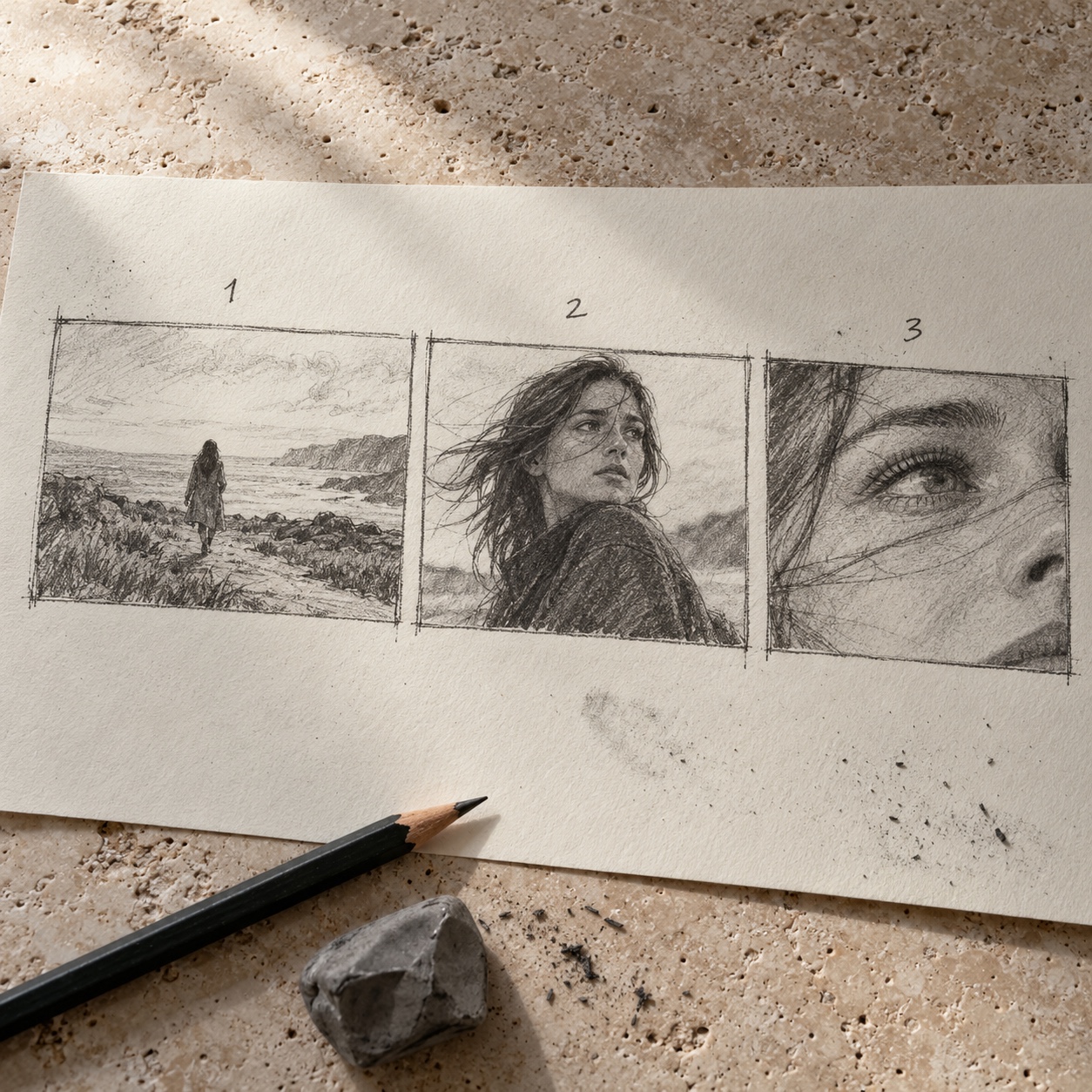
If you are an illustrator moving into short films, plan what viewers know after each shot. Drawing skill gives you control over composition. A screenplay gives that composition a reason to appear at a particular moment. Build that connection before you decide how polished the frames should be.
Write the information change before drawing frames
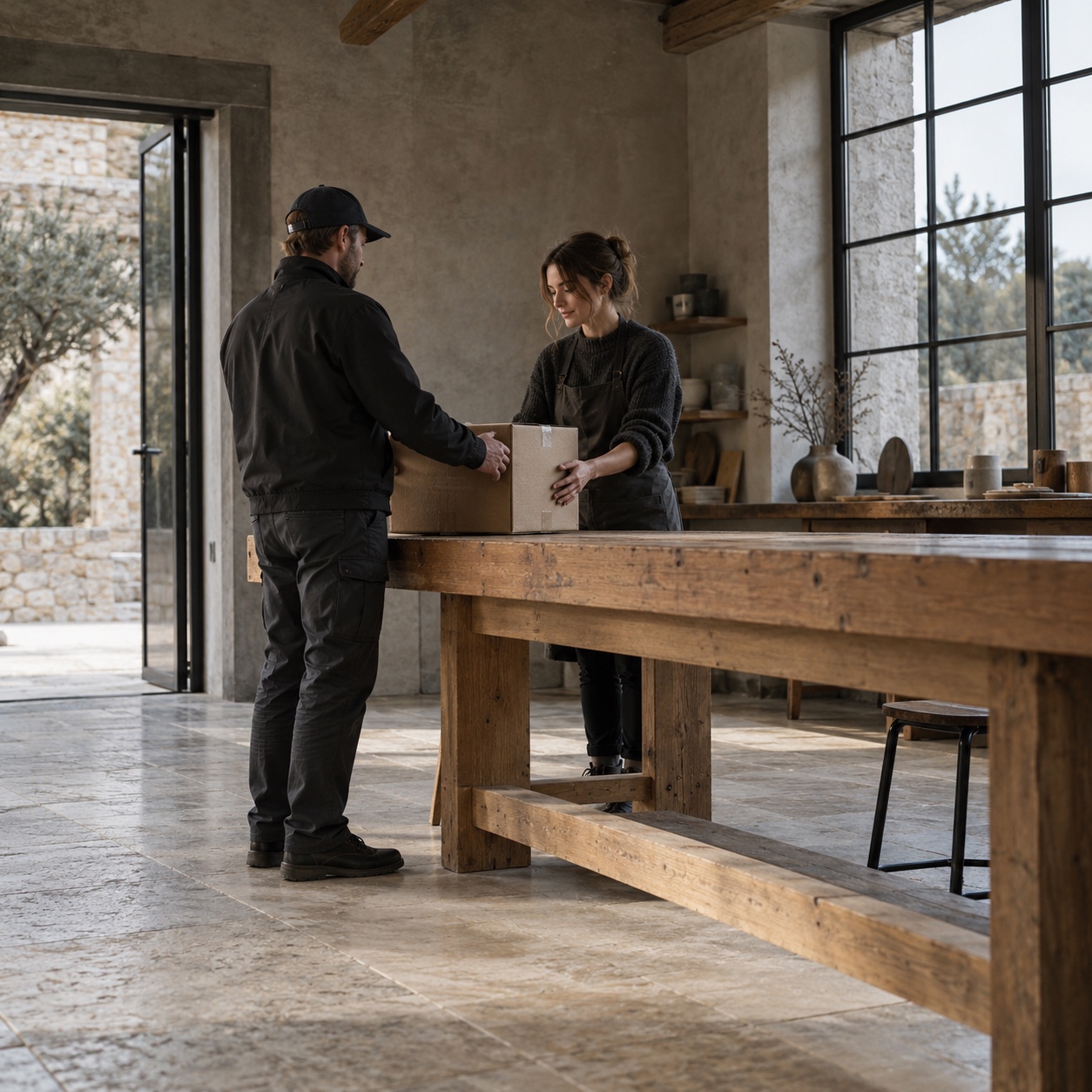
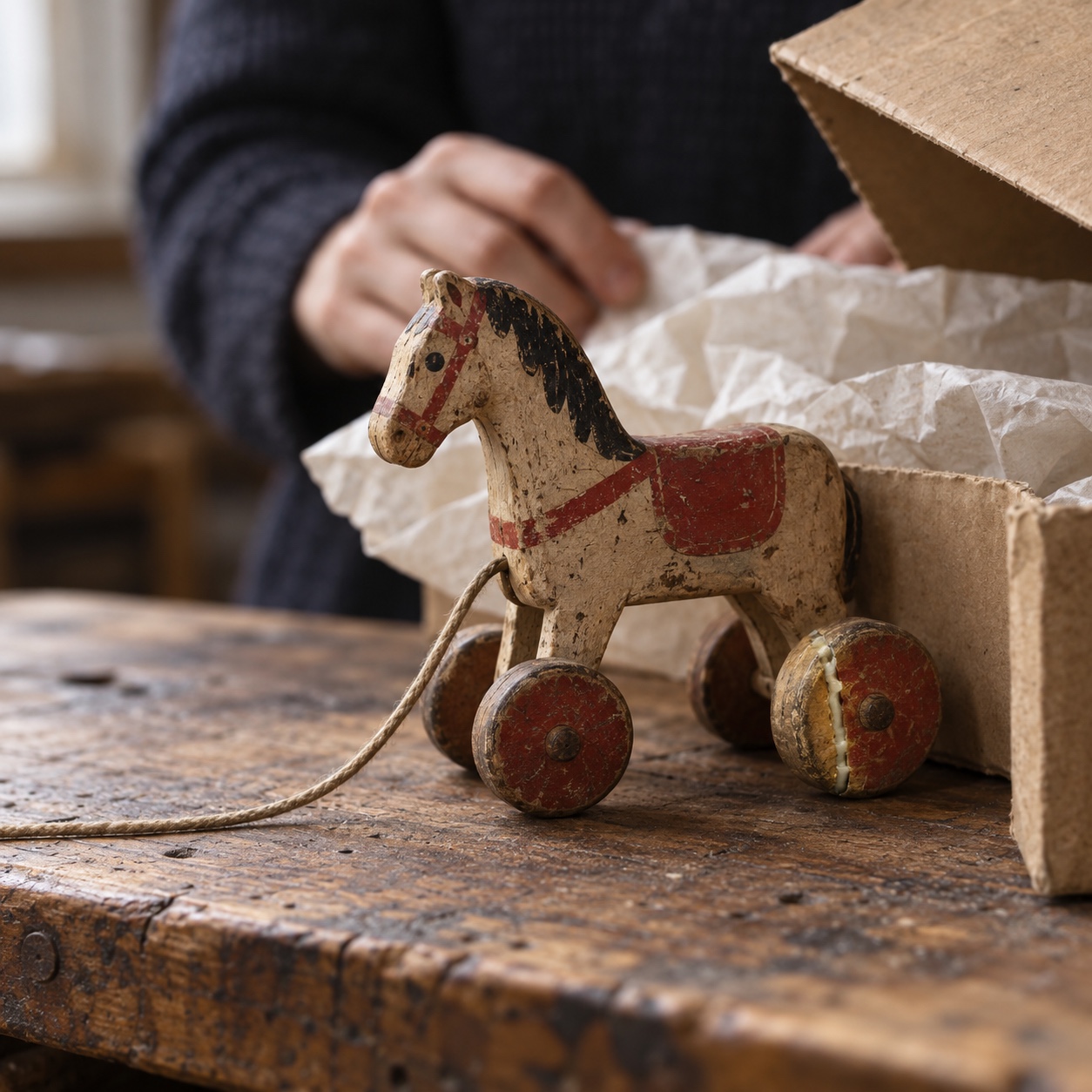
Imagine a short scene in which a courier delivers a package to a quiet workshop. The recipient expects replacement parts. Inside is a repaired toy they believed had been discarded years ago. This is a hypothetical example I’m using for teaching, not a case from a real production, and the scene could play as warm, unsettling, or comic. In every treatment, you have to choose when the viewer first suspects the package is personal.
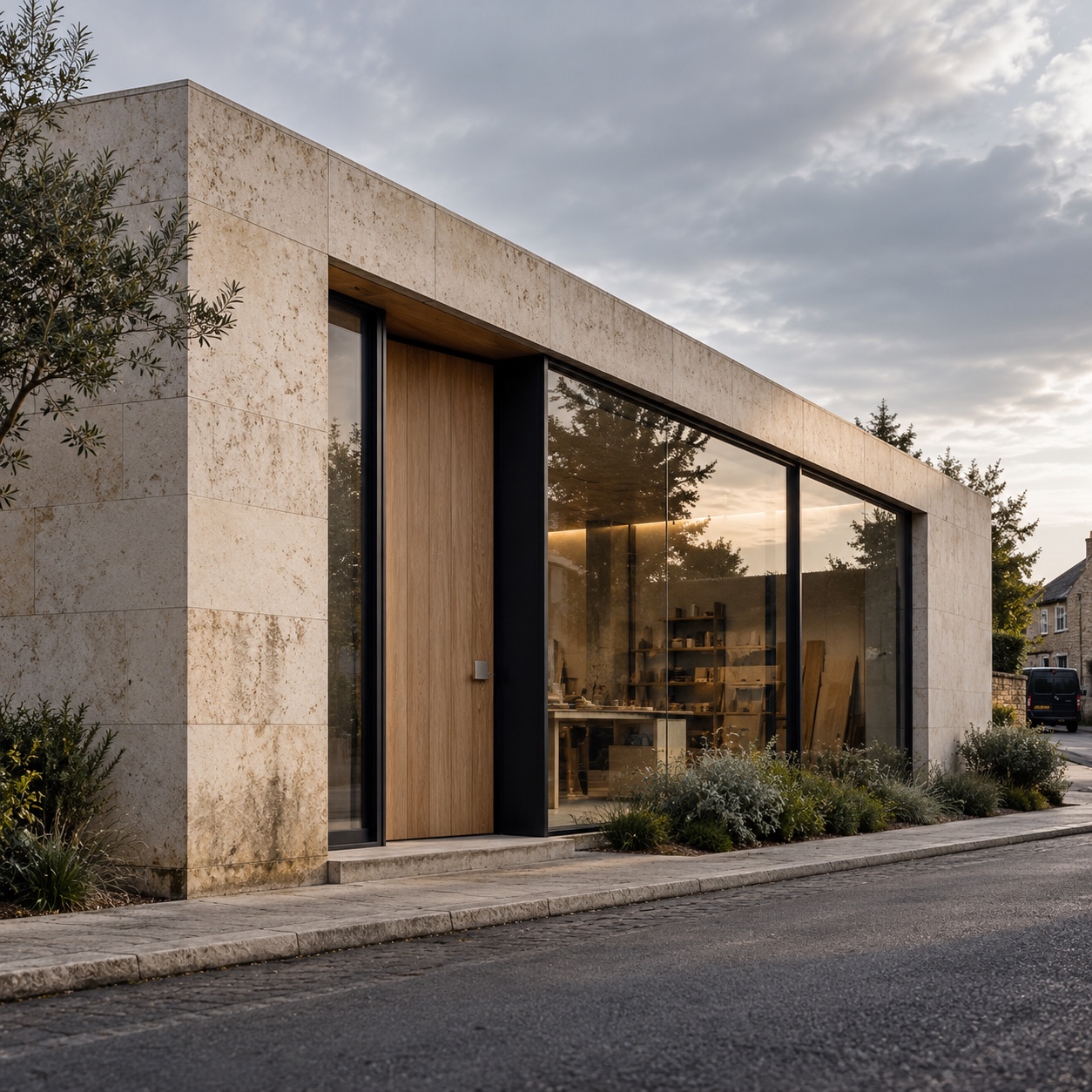
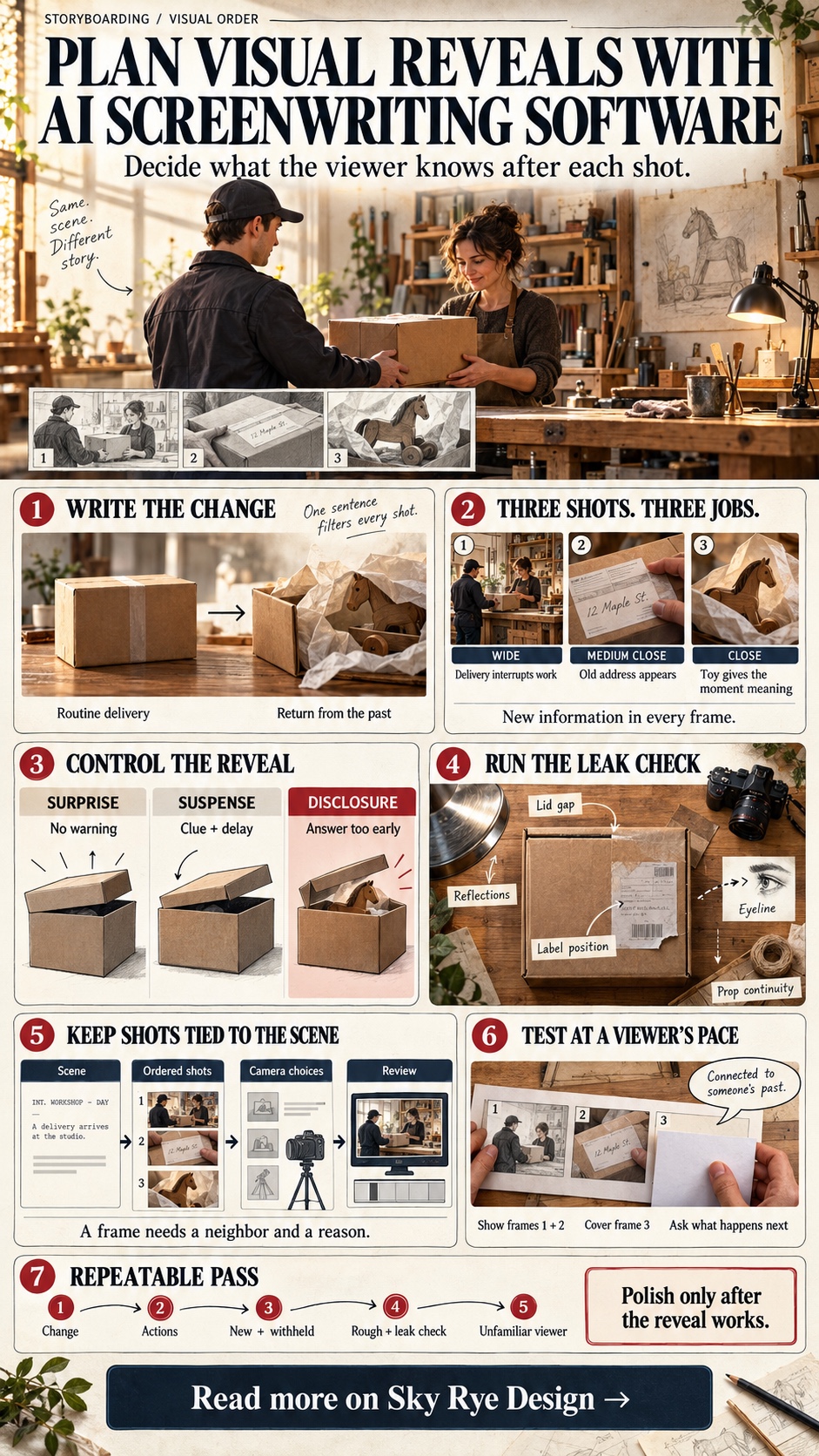
Start with one sentence describing the scene’s change: a routine delivery becomes an unexpected return from the past. That sentence is not dialogue or a caption. It is the filter that lets you reject shots. A lingering image of the workshop shelves may establish place, but three of them would postpone the action without adding anticipation.
I treat that sentence the way I treat the single hard constraint in a product brief. “Must read as one carved volume” kills a dozen attractive sketches in a minute, and “routine becomes personal” does the same here. When a frame can’t point to that change, it’s decoration.
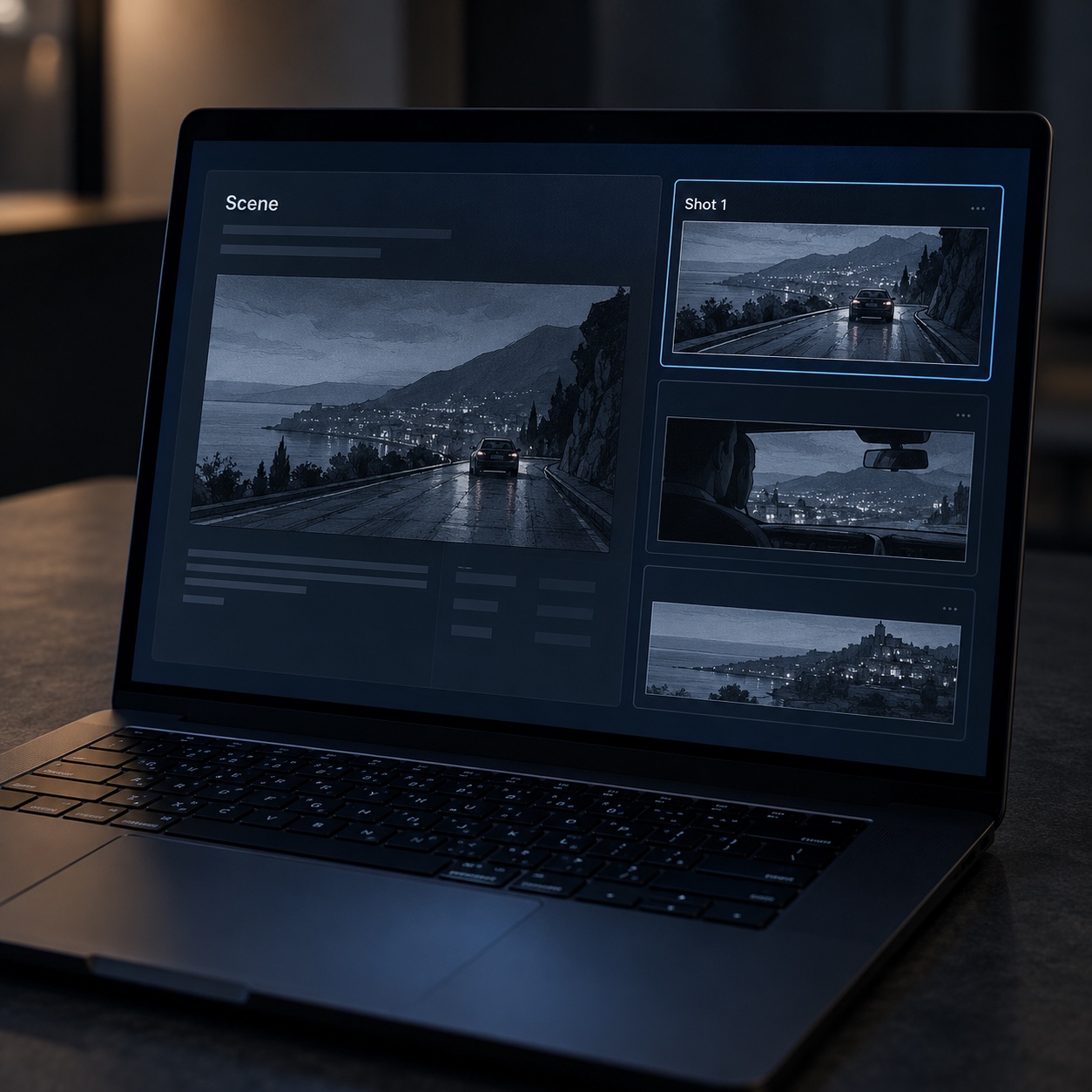
Laper keeps storyboard shots within a screenplay scene, which gives a visual sequence a defined piece of action to interpret. Use the scene as your reference when deciding whether a frame belongs, rather than treating every image generated from the premise as a candidate for the finished film.
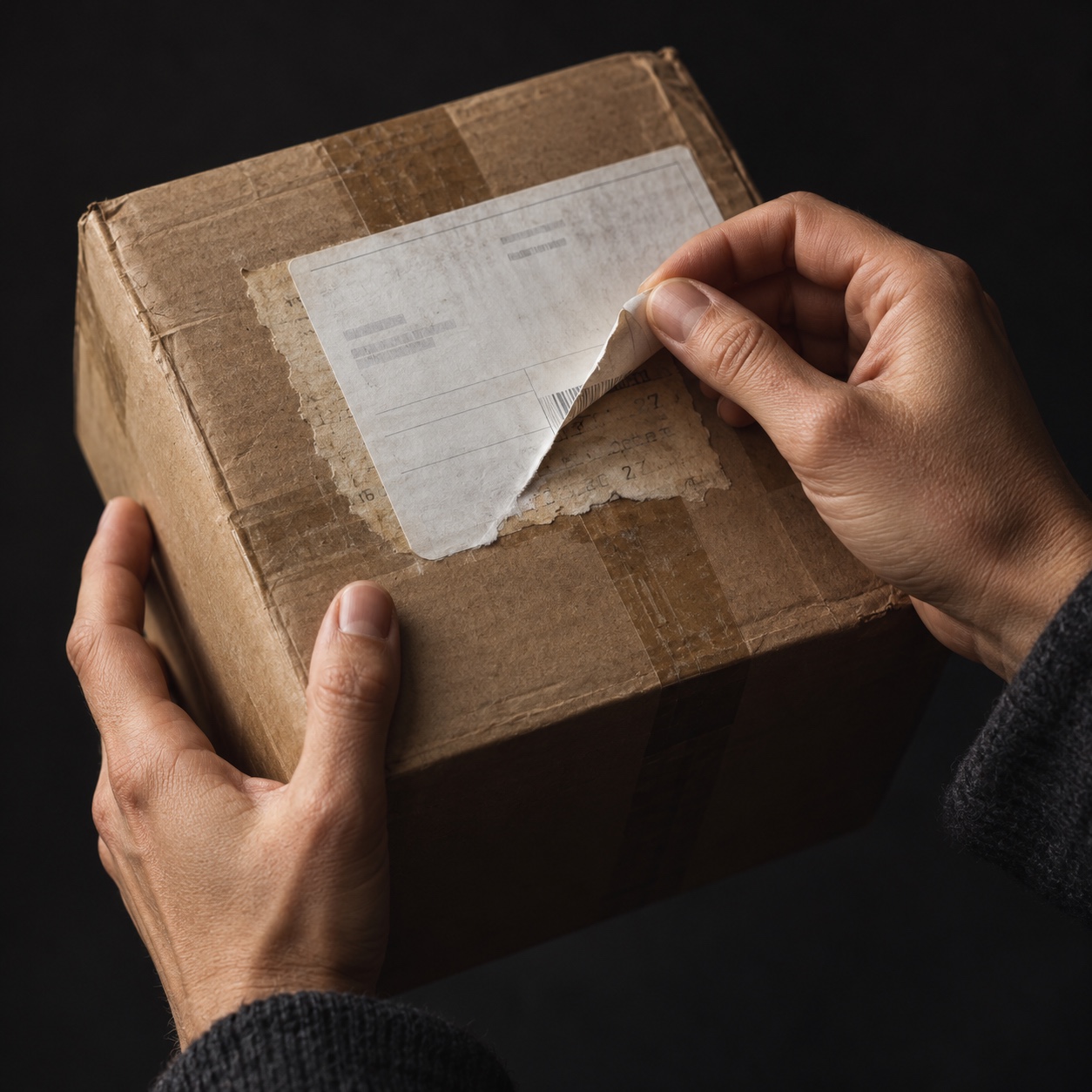
Then write the physical action plainly. The courier sets the package on the bench. The recipient turns it over and notices an old address under the current label. The lid opens. Each action introduces information, and the old address creates a question before the object answers it. Remove that intermediate clue and the scene becomes a surprise with little preparation. That may be the right choice, but make it on purpose.
Separate surprise, suspense, and premature disclosure
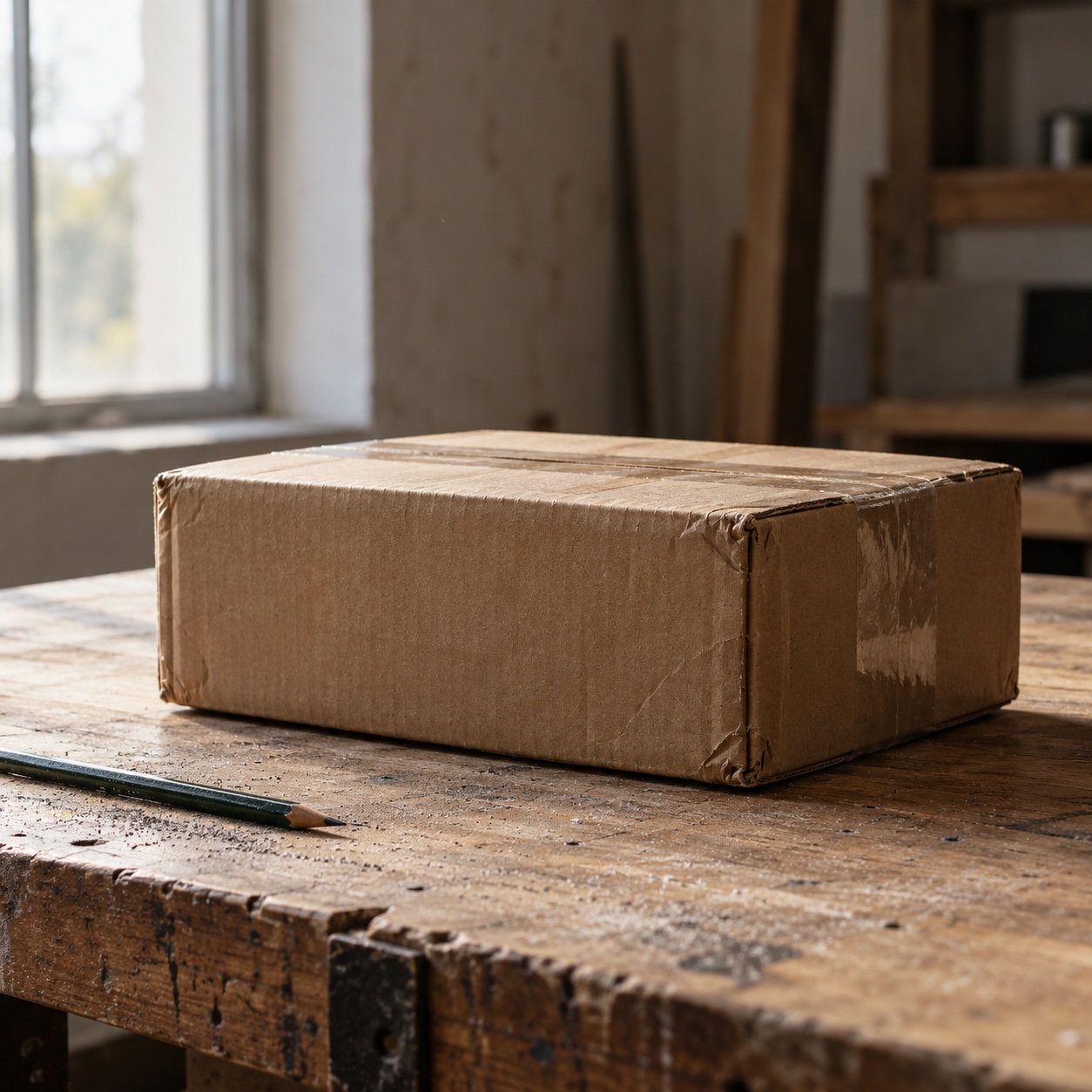
These three get blurred on boards, so pull them apart using the box. Surprise happens when the viewer gets no warning: the lid lifts and a toy appears. Suspense happens when the viewer senses something coming and waits: the old address, a hesitation, a hand resting on the lid. Premature disclosure happens when a frame answers the question before the scene has asked it.
Surprise is cheap to stage and expensive to repeat. It works once, and it works best when the next beat gives it meaning. Suspense needs a clue and a delay, so you need at least two pieces of visible information separated by time. Premature disclosure is the accident. It usually comes from a good drawing doing too much, such as a toy’s ear poking into the edge of the frame because it made a pleasing shape.
Here is the practical version. Decide which of the three you want at the lid-opening moment. If you want suspense, the old address must land before the lid moves. If you want surprise, you can cut the address and let the opening carry the weight, but then the recipient’s reaction has to explain what the viewer just saw. If the toy is already visible in frame two, you have drifted into disclosure, and no amount of rendering repairs that.
I changed my mind on this while thinking through the example. My first instinct was to show the toy’s silhouette through the lid gap in the middle shot, because the shape was lovely and it promised payoff. Then I asked what the viewer would be waiting for in shot three, and the answer was nothing. The silhouette had spent the whole reveal early.
Give three shots three different viewing jobs
A small sequence is easier to reason about when each shot has a distinct job. For this example, an opening wide view establishes the workbench and the ordinary delivery. A closer view lets the viewer notice the old address as the recipient turns the box. A final view reveals enough of the toy to make the recipient’s reaction understandable.
The plan below describes one possible treatment. It is not a universal shot recipe, and the number of drawings can change once performance and editing enter the picture.
| Shot | Camera distance | New information | Information withheld |
|---|---|---|---|
| 1. Package reaches the bench | Wide, bench and doorway in frame | The delivery interrupts ordinary work | Why the package matters |
| 2. Box turns in the recipient’s hands | Medium close, hands and label | An old address connects it to the past | The object inside |
| 3. Lid opens and the toy appears | Close on hands and lid, with the face close by | The delivery has personal meaning | The full history of the toy |
Read down the information column without looking at the images. If two rows say the same thing, consider combining them. Then read the withheld column. A withheld detail should support curiosity or a later understanding, not force the audience to guess a basic action such as who opened the box.
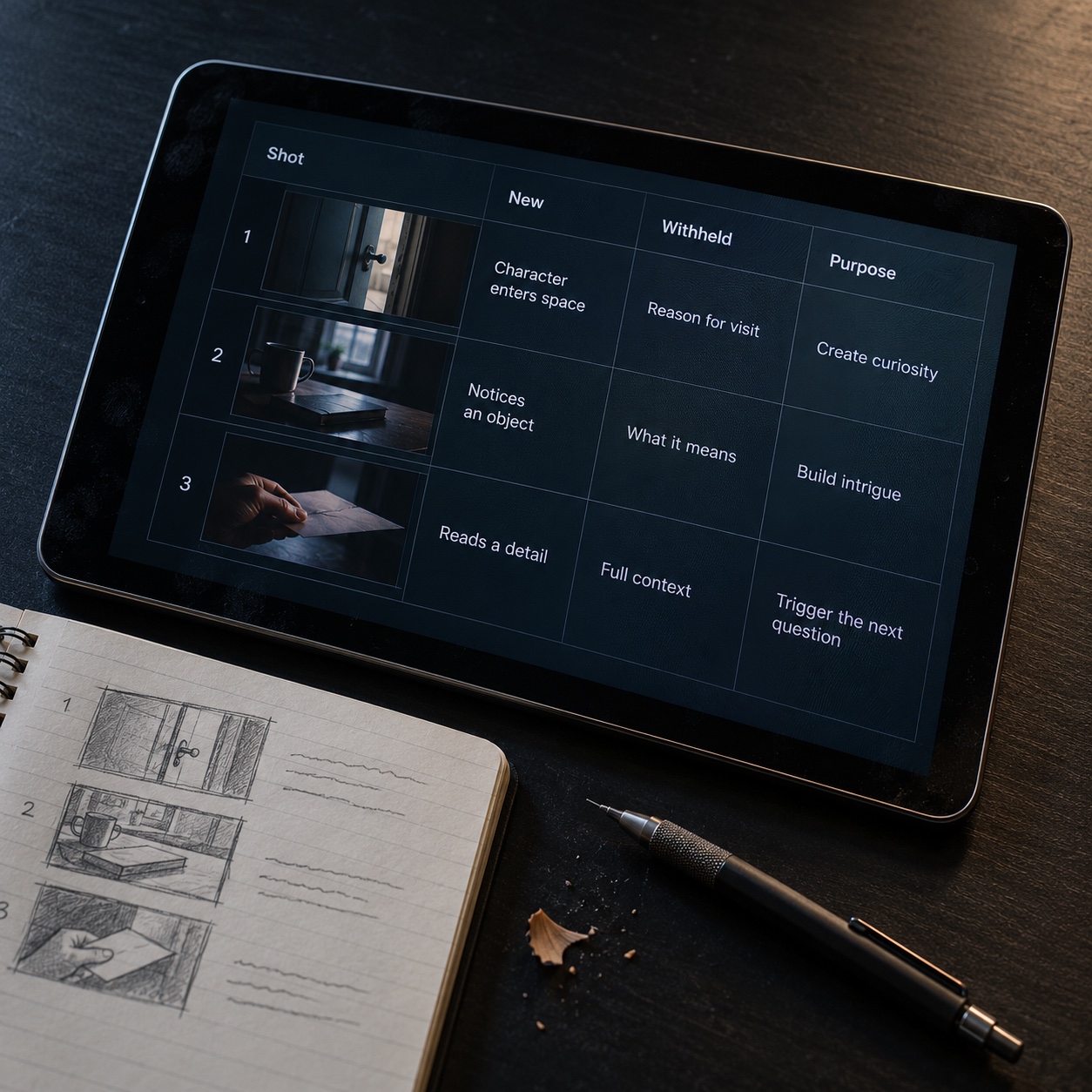
The camera-distance column is there for a reason. If all three rows say “medium shot,” you probably have one shot drawn three times. Distance is the cheapest way to give frames different jobs, and it is the first thing I check when a board feels flat.
Check every frame for leaks and continuity breaks
Continuity covers information as well as appearance. A beautifully drawn second shot can undermine the plan if the lid gap exposes a patch of painted wood. So I run each frame through a short list of leak checks, the same way I would check a product render for a reflection that exposes the hidden mechanism.
Start with the wide. Check blocking: where the courier stands relative to the door, and where the recipient stands relative to the bench. The package should sit with the old address facing down or away from camera, since the clue belongs to shot two. Check scale as well. If the box reads as large enough to hold a toy, good. If it looks like a carton of bolts, the later image will feel like a cheat.
Check the recipient’s eyeline in that first frame. Looking at the courier says the delivery is a social moment. Looking at the box says the box already has their attention. Pick the one that matches the scene’s change and draw it that way, even in rough marks.
The second shot carries the clue, so legibility is its whole job. The current label should sit over the old address, with a torn corner or a lifted strip of tape that lets the old lettering show. Look at where the thumbs land. A thumb covering the only readable line defeats the shot. Then check prop continuity against shot one: same tape, same dented corner, same orientation relative to the bench edge. If the box has a crushed corner on the left in the wide, it can’t be crushed on the right in the close.
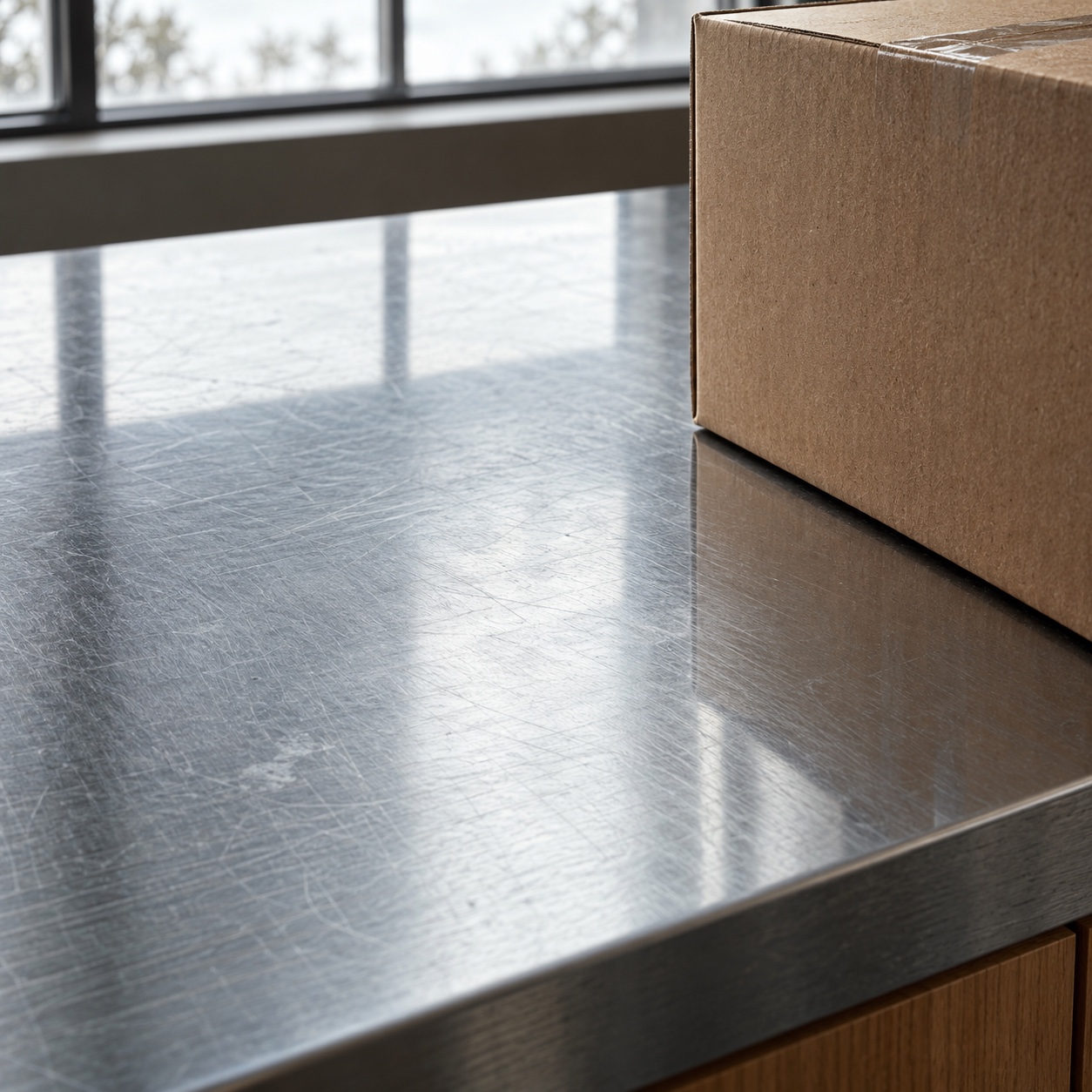
Reflections need their own pass. A steel bench top or a glossy tape strip can mirror the lid side of the box and show more than you meant. A window behind the camera can do the same. I have lost afternoons in product renders to a chrome edge that revealed exactly what I was hiding, and the problem is identical on a board.
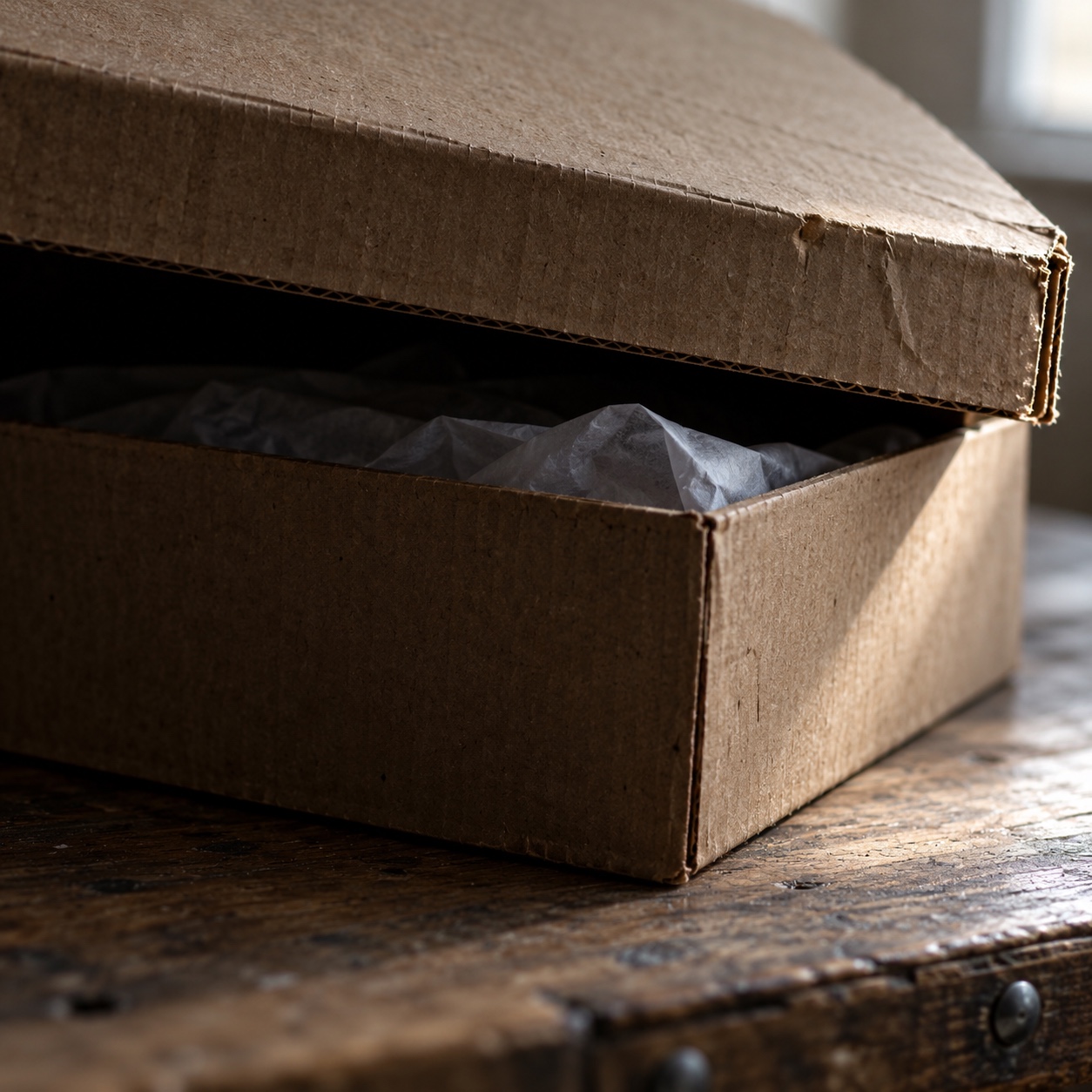
Shot three turns the lid gap into a question of degree. Decide how far the lid has lifted at the cut, and whether the camera sees inside or only the face receiving what’s inside. A two-centimeter gap seen from a high angle shows the contents. The same gap from table height shows darkness and a sliver of tissue. Camera distance then sets the emotion: close on the hands makes the moment private and tactile, while a mid shot that holds face and box together lets reaction and object share the frame.
Also check where the recipient looks after recognizing the toy. A glance toward an empty chair can introduce a remembered relationship. A glance back toward the courier suggests someone nearby arranged the delivery. These endings make different promises, so sketch both roughly and decide which question the next scene can actually answer before investing in a detailed final frame.

Finally, read the cuts. Between two and three, does the hand that turns the box also lift the lid, with the same sleeve and the same wrist angle? Does the camera stay on the same side of the action, so the recipient doesn’t flip screen direction? And how long will each frame hold? Shot two needs time for the address to register, so keep the readable text short, a street number or a single line, rather than a full postal block.

Why AI screenwriting software should keep shots tied to the scene
Most image tools treat each picture as a standalone request. That works for a mood board and fails for a reveal, because a reveal depends on what comes before and after. A frame needs a neighbor and a reason.
For creators evaluating AI Screenwriting Software, the useful question is whether that intention stays attached to the scene and its ordered shots. A gallery of unrelated frames cannot tell you whether the clue precedes the reveal. If a rewrite removes the old-address clue, the second shot needs a new purpose or should be cut. The writing setup should make that relationship easy to review.
Scene context matters to reviewers as much as to the person drawing. Picture a producer, a cinematographer, and an editor opening your board a week later. If each image sits beside the screenplay scene it interprets, they can ask what a frame is for and find the answer in the action line instead of in your memory. Without that link, the review drifts into arguments about taste.
Ordered shots do the same job for sequence. Shot numbers let a reviewer say “frame two gives away too much” and everyone knows which image that is. It sounds trivial until you have sat in a review where three people each carry a different version of the order in their heads.
Choose camera details after the sequence works
With the information order clear, framing decisions become easier to justify. A closer view of the old address earns its place because the viewer must notice it. A locked view may let the recipient’s hands turn the box and bring the label into view. A camera move adds value only if it changes what the viewer can discover. Decide what the shot must communicate before decorating it with movement.
Laper supports ordered storyboard shots and explicit camera choices, and its AI assistance can propose a breakdown or reference frames from scene context. Treat those as candidates for a director to assess. They do not establish that a particular camera angle conveys the intended emotion, or that a generated image can be reproduced on the available set.
A useful request might ask for two ways to show the old address while keeping the contents hidden. That leaves a meaningful visual decision open without inviting a rewrite of the scene’s purpose. One option might sit over the recipient’s shoulder with the label tilted toward the window. Another might drop to bench height and catch the lettering as the box rotates.
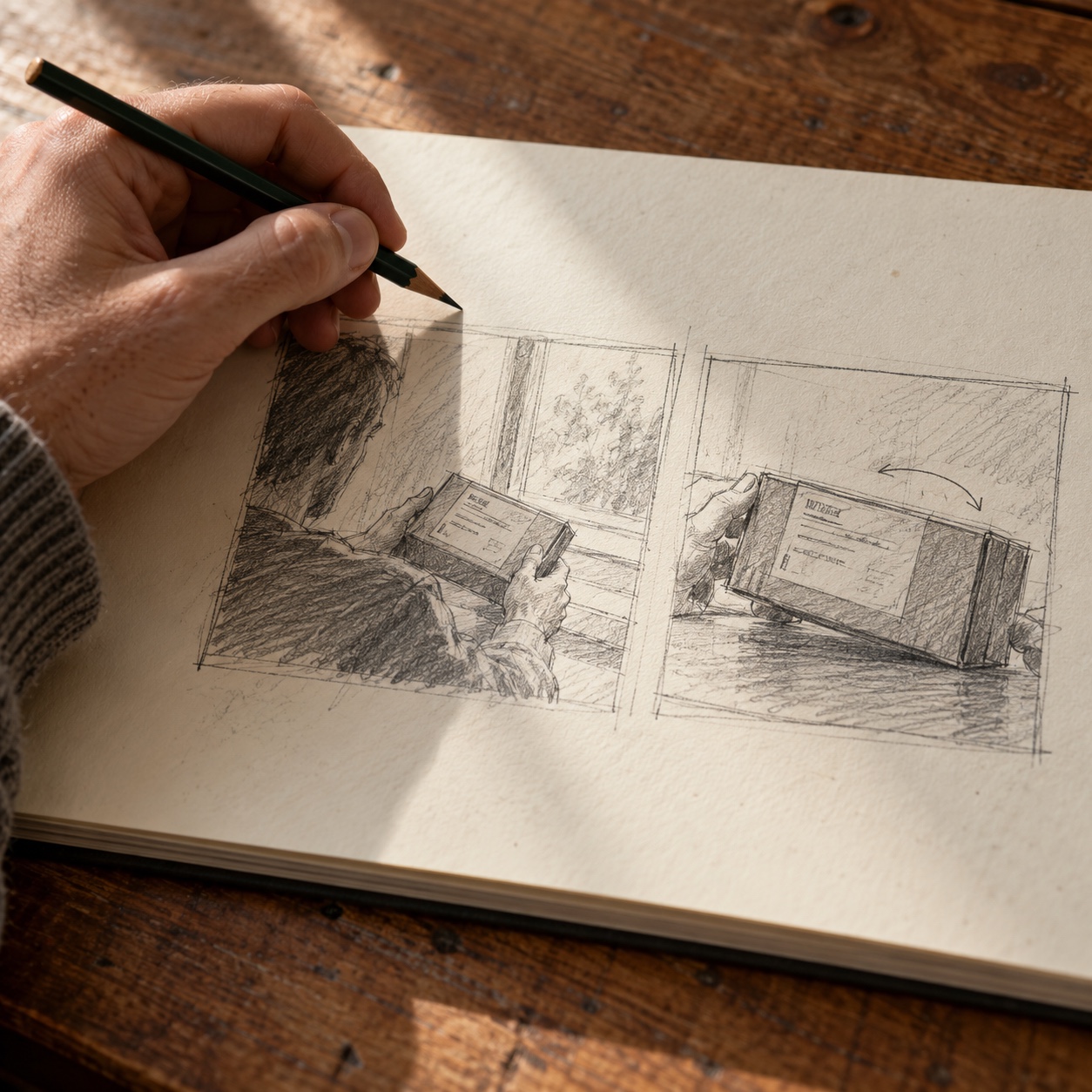
Compare the options by what a viewer would notice first, how the hands hold the box, and whether the next shot can follow naturally. Then ask the producibility questions no suggestion can answer for you. Does the bench leave room for the camera at that height? Does the workshop allow that lens distance? Can the label be dressed to read at that size? A suggestion is a prompt for your judgment, and the judgment stays yours.
Read the board at an unfamiliar viewer’s pace
Put the drawings in order and show them to someone who has not read the premise. Ask them to describe what happened, then ask when the package stopped feeling ordinary. Avoid explaining the intended emotion first. Once someone knows the answer, they may supply connections the images never made clear.
This is a proposed review method, not a reported audience test. I haven’t run it on a production and I’m not citing results. It’s a cheap check, and it gives you something better than a general feeling that a board seems fine.
Interpreting the feedback takes some care. If the viewer names the toy after frame two, you have a leak, so go back to the lid gap, the reflections, and the edges of the box. If they can’t say when the package became personal, the clue is too faint or the reaction comes too late. If they say the courier seemed threatening, look at blocking and eyeline before touching anything else.

A confusing response also gives you a concrete place to look. If the old address went unnoticed, improve that shot’s legibility. If the viewer could not tell whether the toy was inside the package or already on the bench, clarify the physical action before adding another reaction frame. One reviewer is a prompt for investigation, not a verdict, so look for repeated confusion across several people before you redraw anything.
After revising a scene in Laper, revisit the associated shots for changes in action and order. Keeping them close to the script helps locate the work, but a person still has to judge what the board communicates. A deleted clue should not survive in an old image merely because that image took time to make.
A repeatable pass for each scene
Once you’ve done this a few times, the method shrinks into a routine you can run on any scene.
- Write the scene’s change in one sentence, such as routine delivery becoming an unexpected return from the past.
- List the physical actions in order and mark which action introduces each clue.
- Give each planned shot one new piece of information, one withheld piece, and a distinct camera distance.
- Rough the frames at thumbnail size and run the leak checks: lid gap, reflections, label position, eyeline, and prop continuity.
- Show the sequence to someone who hasn’t read the premise, revise, and only then decide how much polish each frame deserves.
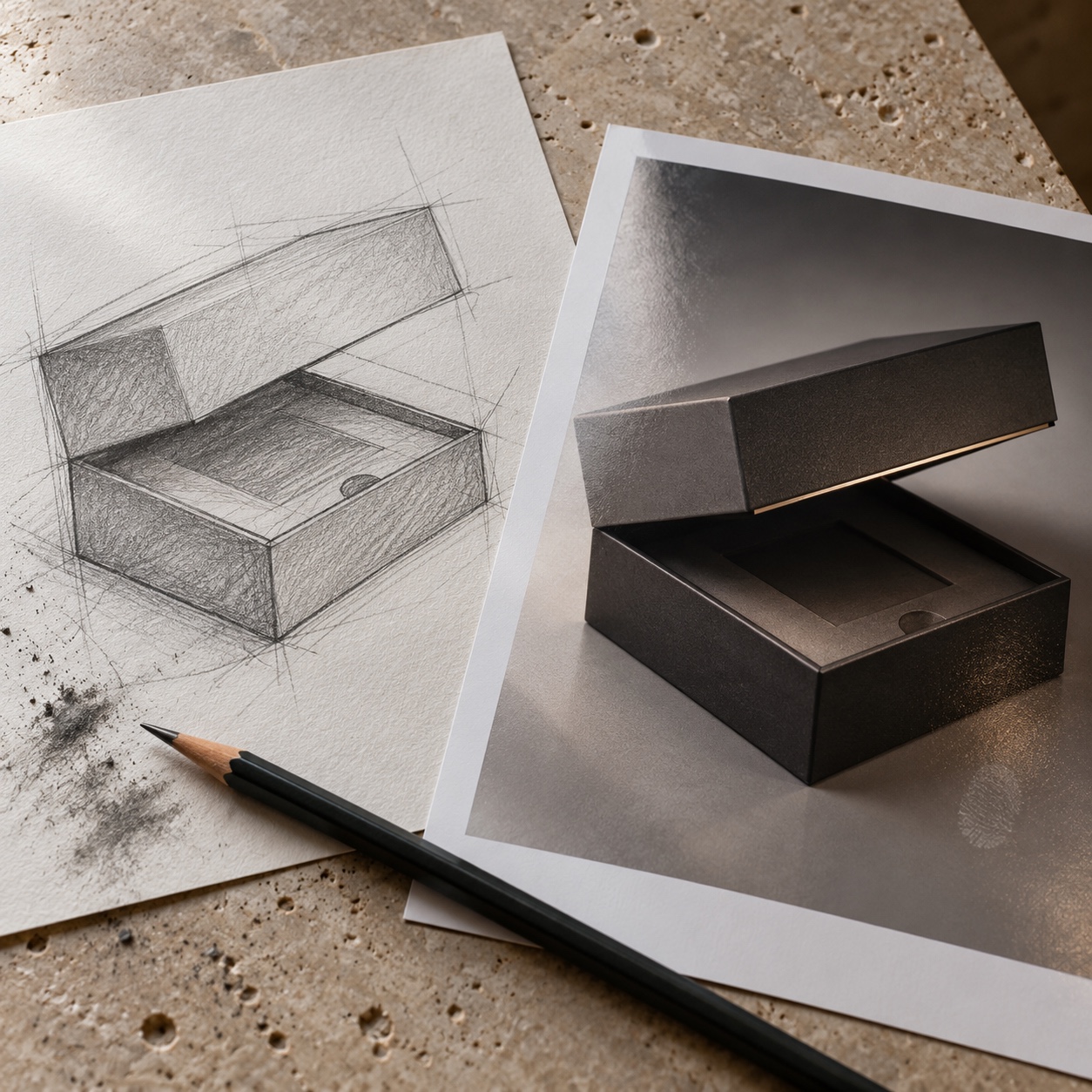
Stop polishing when the scene’s information is clear enough to discuss staging and performance. The board has done its job when a collaborator can say where the reveal lands and why. A rough frame that preserves that decision is more useful at this stage than a finished image that tells the secret one shot too soon.
Run this test on your next three frames
Take your next three-frame sequence and number the frames. Strip any captions. Cover frame three with a sheet of paper and show only frames one and two to someone who hasn’t read the script.
Ask them for a one-sentence guess about what happens next and what is in the box. A good result is a vague but pointed answer, something like “it’s connected to someone’s past.” A weak result is an exact answer, which means a leak, or an answer that has nothing to do with the scene, which means the clue is too faint.
Then uncover frame three and ask whether the recipient’s reaction made sense. Write down the frame number where they first said anything felt personal. If it isn’t frame two, you have a specific shot to fix, and you can fix it with a pencil in ten minutes before anyone spends an hour on rendering.
- 0shares
- Facebook0
- Pinterest0
- Twitter0
- Reddit0