
Drawing ideas for beginners work best when the subject is simple enough to finish, but still teaches one real skill. In this guide, each idea gives you a clear shape to start from, a small technique to practice, and a visual detail that makes the sketch feel worth keeping.
I would not start with a full portrait or complicated city scene on day one. Start with a cactus, bee, unicorn, heart, night sky, cat face, or mountain landscape. Those subjects let you practice line weight, proportion, shading, and composition without fighting a page full of tiny details.
How to choose drawing ideas for beginners
Choose beginner drawing ideas that have a readable silhouette, a simple construction shape, and one clear finish point. A cactus starts with an oval, a bee starts with a rounded body, a heart starts with symmetry, and a mountain starts with triangles. If you can explain the drawing in one sentence before you begin, it is probably beginner-friendly.
The practical rule is simple: sketch the largest shape first, keep the pencil light, then add only the details that identify the subject. When I thumbnail a drawing, I check the value pattern before I polish the outline. If the light and dark shapes are confused, more texture will not save it.
| Idea | Skill you practice | Beginner shortcut |
|---|---|---|
| Cute cactus | Oval forms and small texture marks | Use a pot to ground the shape |
| Smiling bee | Simple character expression | Tilt the body to show motion |
| Unicorn head | Curves and fantasy detail | Draw the horn before the mane |
| Shaded heart | Light direction and value | Keep one highlight clean |
| Starry sky | Pattern, spacing, and contrast | Vary star sizes |
| Cartoon cat face | Symmetry and expression | Make the eyes larger than real life |
| Mountain landscape | Composition and depth | Use overlapping peaks |
1) Cute cactus with tiny flowers
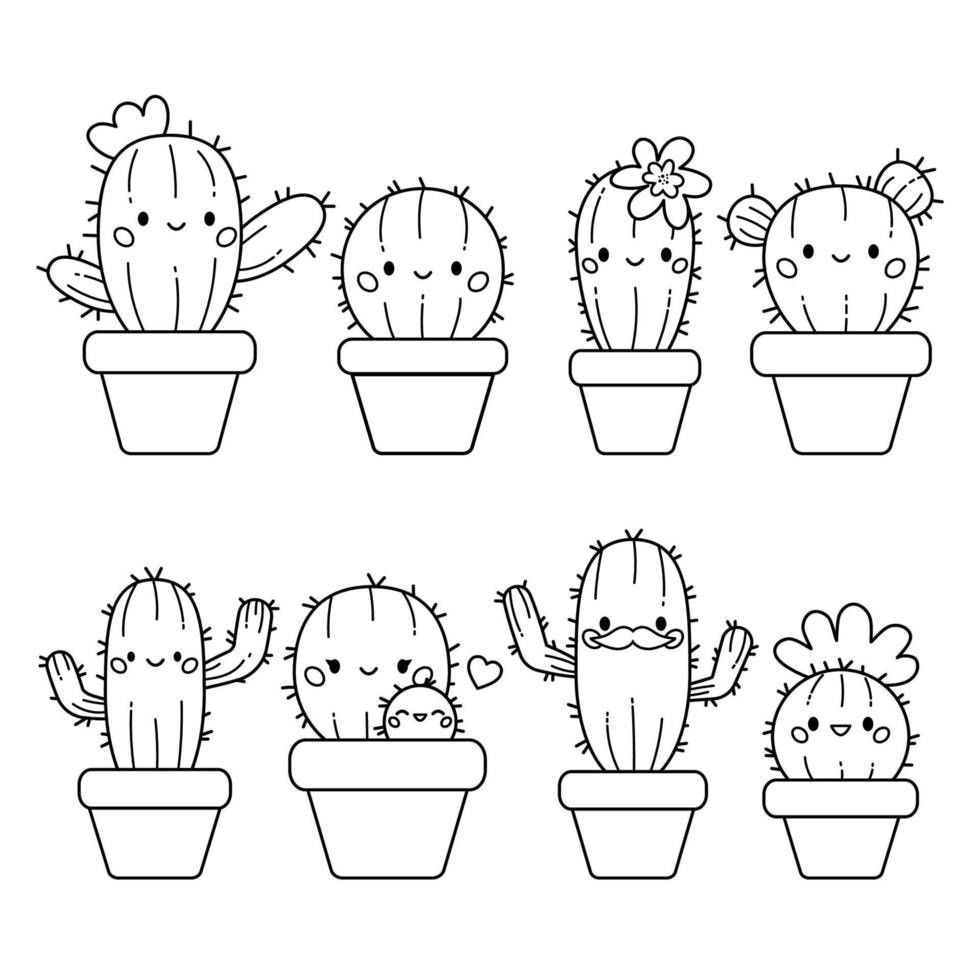
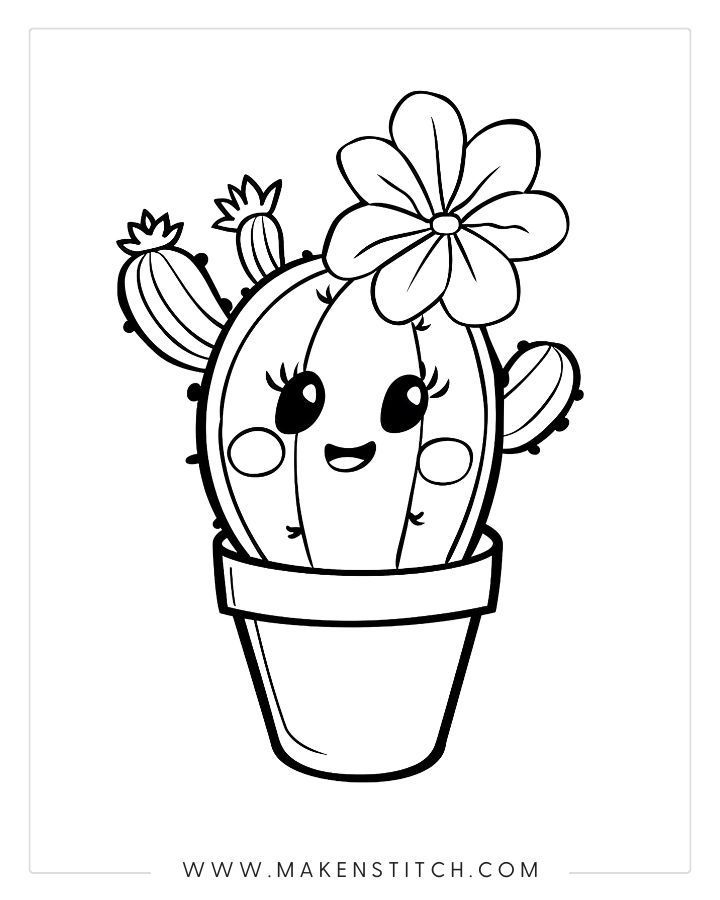
A cute cactus is one of the easiest drawing ideas for beginners because it starts with a soft oval and a small pot. The ridges, spikes, and flowers can be imperfect and still look charming.
Sketch the cactus body lightly, then add a cylinder-shaped pot underneath. Use small curved lines for the ridges, dots or tiny strokes for the spikes, and a few simple flower circles at the top. Keep the first version clean instead of decorating every empty space.
This idea teaches you how to repeat small marks without making the drawing messy. If you want more floral practice later, move from the cactus flowers into a step-by-step flower drawing guide.
2) Smiling bee buzzing around
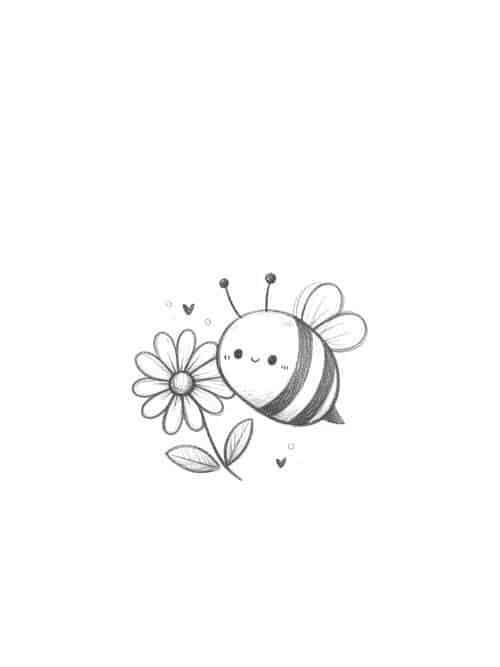
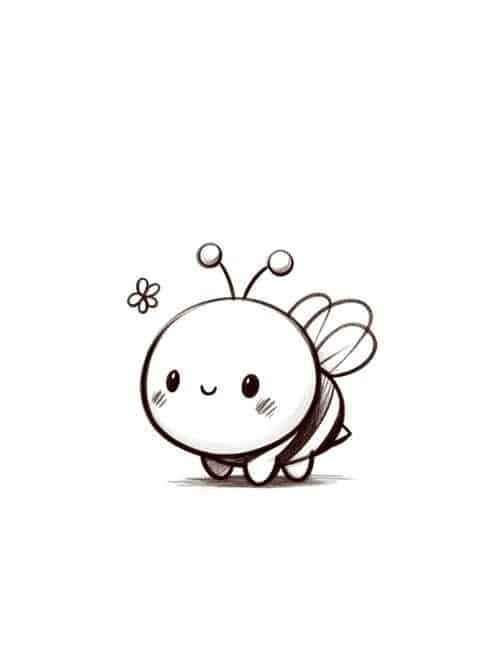
A smiling bee gives you a quick character drawing without complex anatomy. Start with one oval body, add round eyes and a curved smile, then place the stripes after the face feels friendly.
The wings can be simple teardrop shapes. If the bee looks stiff, tilt the body slightly and angle the antennae in the same direction. That small lean makes the drawing feel like it is buzzing instead of sitting flat on the page.
This beginner drawing idea is useful because it combines pattern, expression, and motion in one small sketch. Use yellow and black if you want a bright finish, or keep it as black-and-white line art for a sketchbook warm-up.
3) Sparkly unicorn head
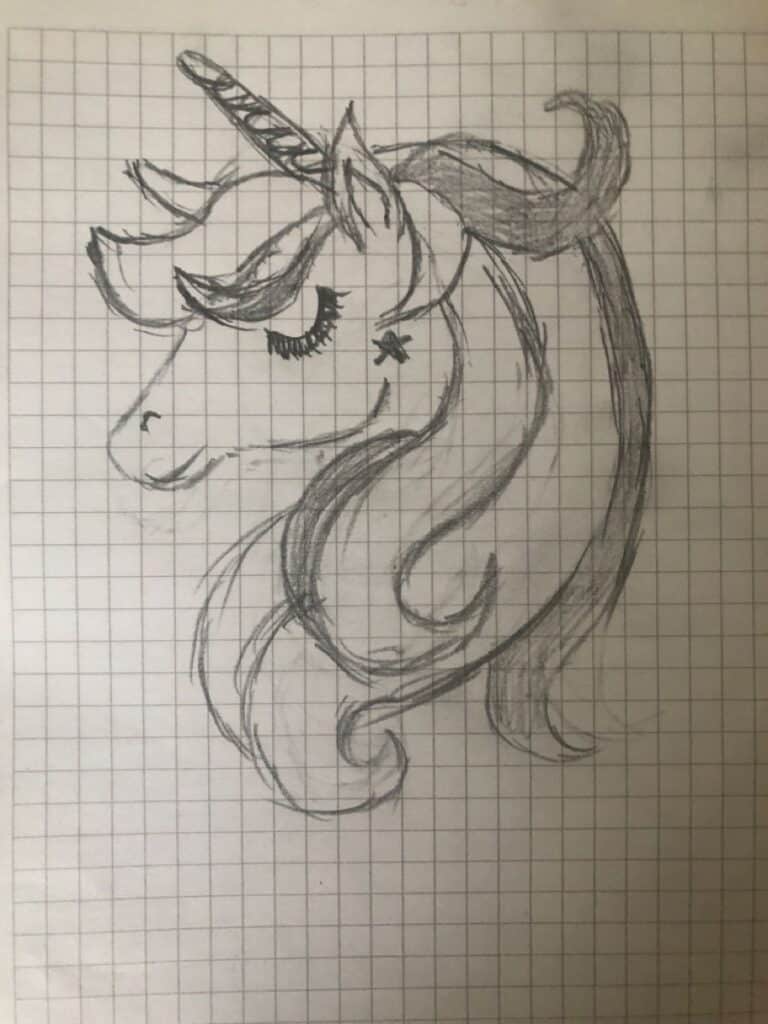
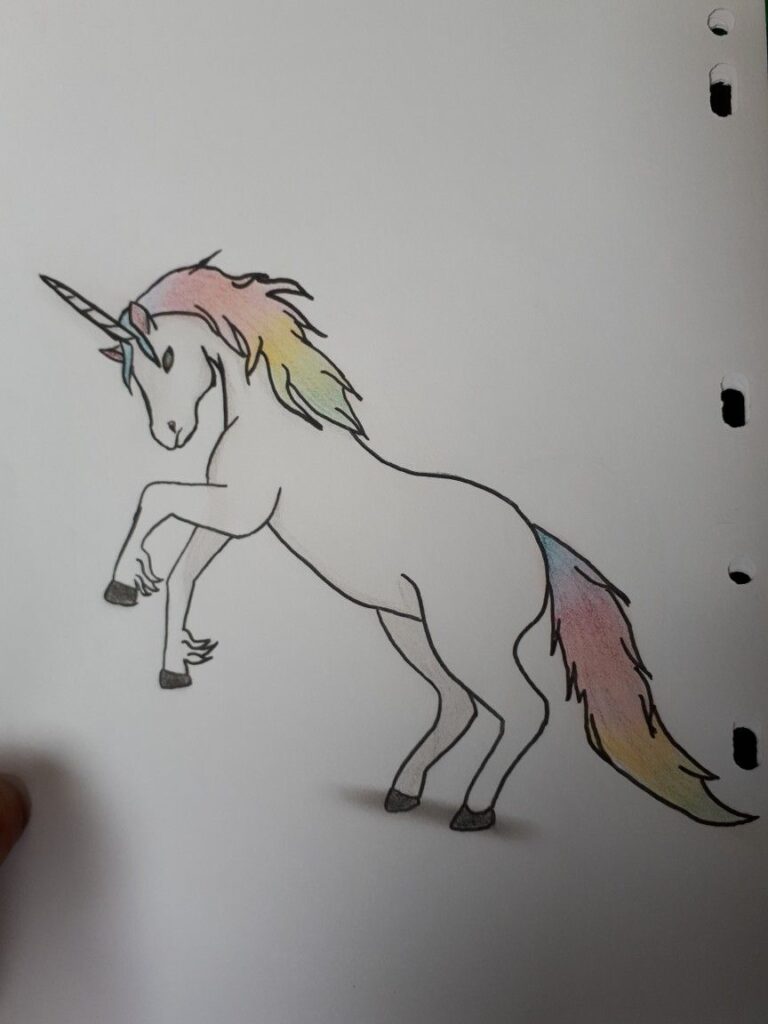
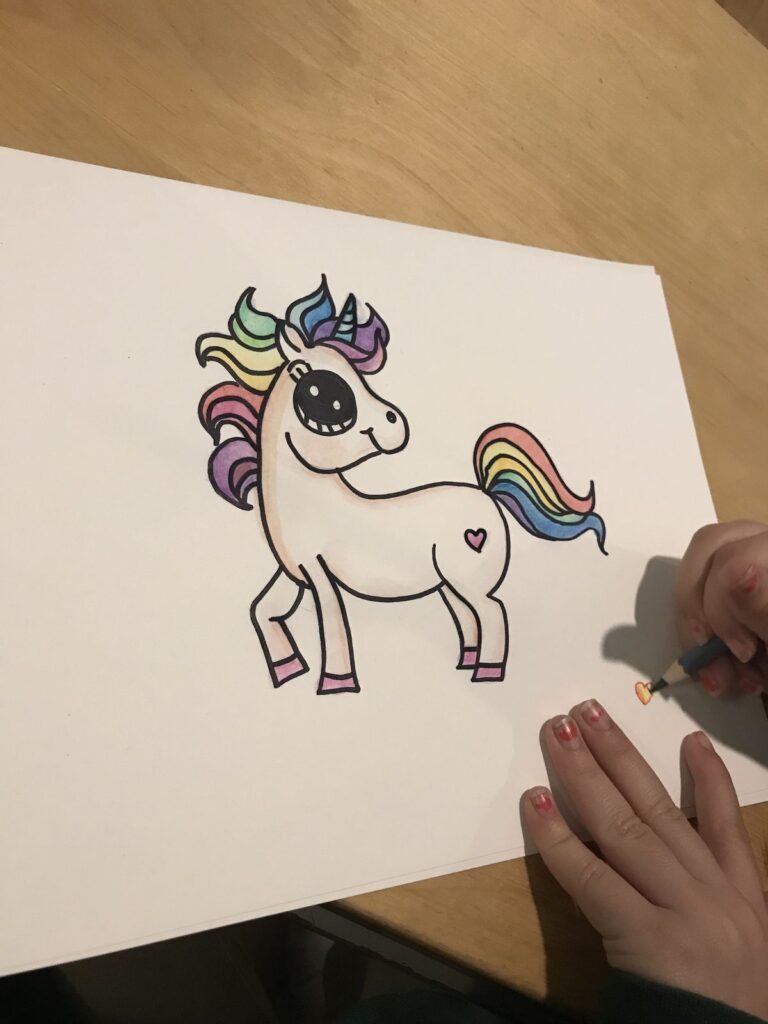
A unicorn head is easier than a full unicorn body because you can focus on the face, horn, mane, and expression. Draw the head as a rounded shape first, then place the horn between two simple ears.
The horn should be built before the mane. Add diagonal bands around it, then let the mane flow around the side of the face with loose curved lines. Stars, dots, and small sparkles work best when they support the face instead of covering the whole page.
Pastel pencils or markers are enough for the finish. If you want more variations after this one, the unicorn drawing ideas guide gives you more head, body, and fantasy scene prompts.
4) Simple heart with shading
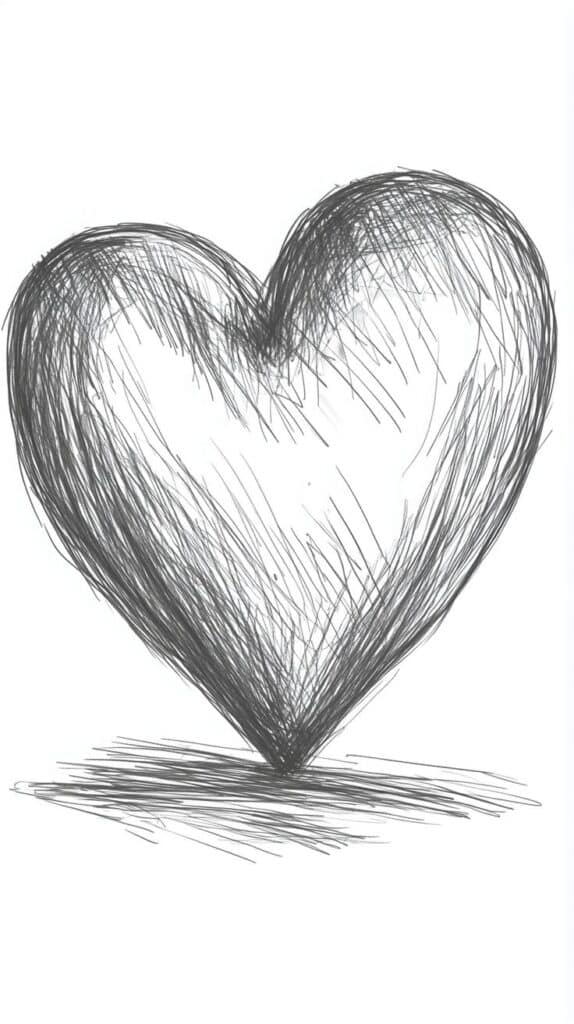
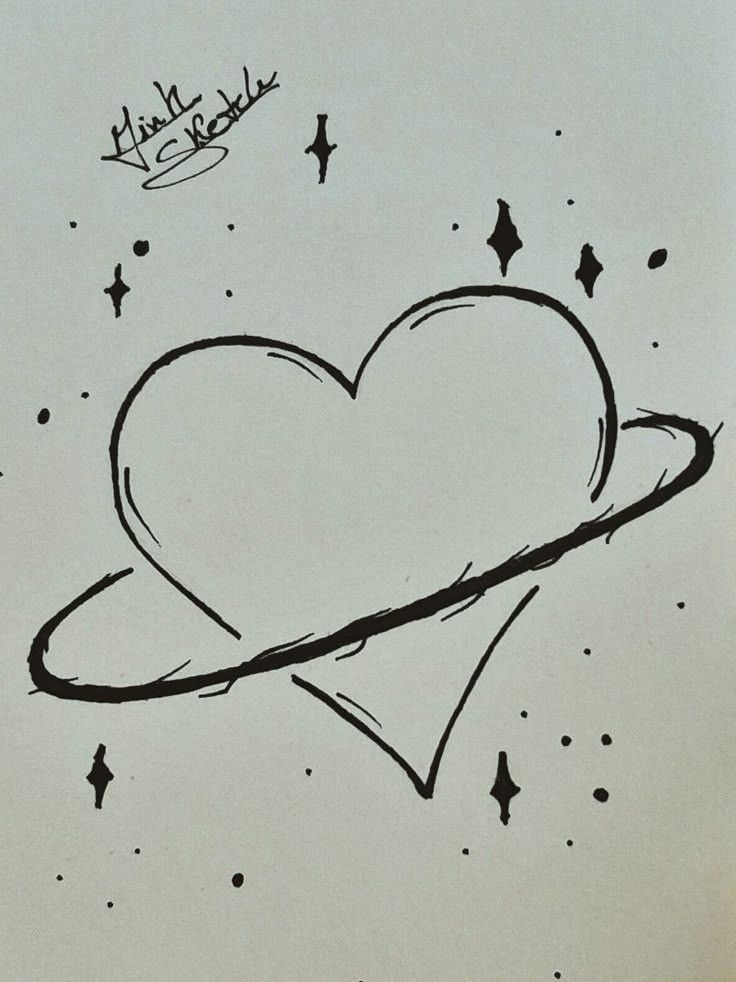
A heart looks basic until you add value. Start with a light heart outline, choose a top-left light source, then shade the lower-right side with soft pencil pressure.
Do not press hard right away. Build the dark side in layers and keep one highlight clean. A kneaded eraser or vinyl eraser can lift graphite where the highlight gets muddy, but even a regular eraser works if you dab gently.
This is a compact way to practice shading because the shape is familiar. Once you understand the soft transition, reuse the same light logic on fruit, stones, cartoon faces, and small objects.
5) Starry night sky doodle
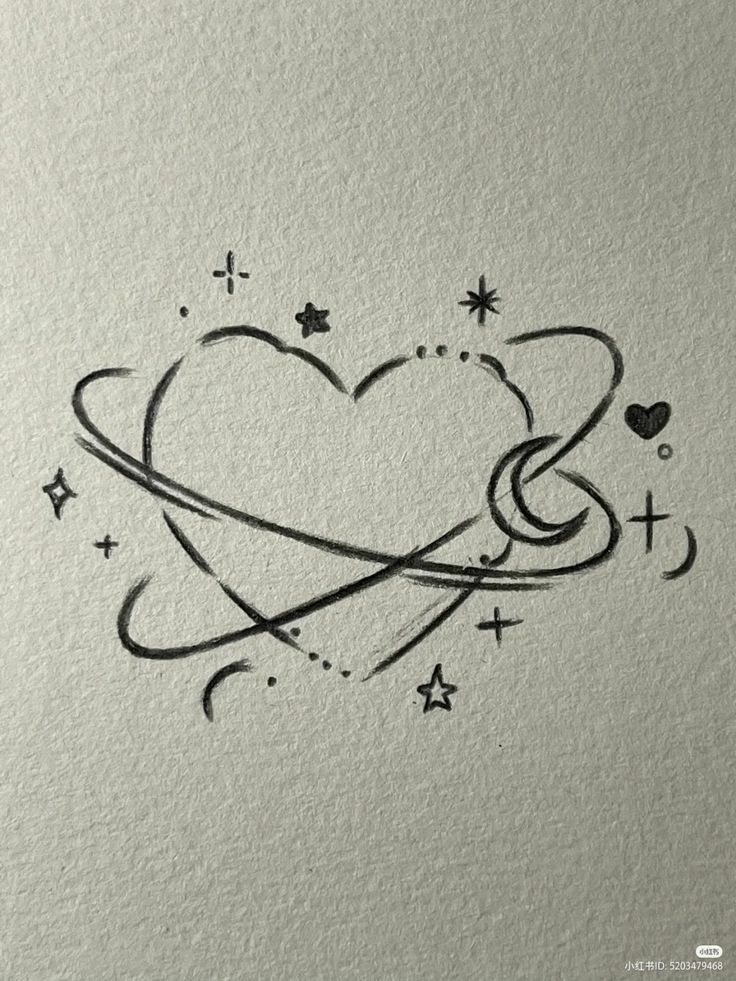
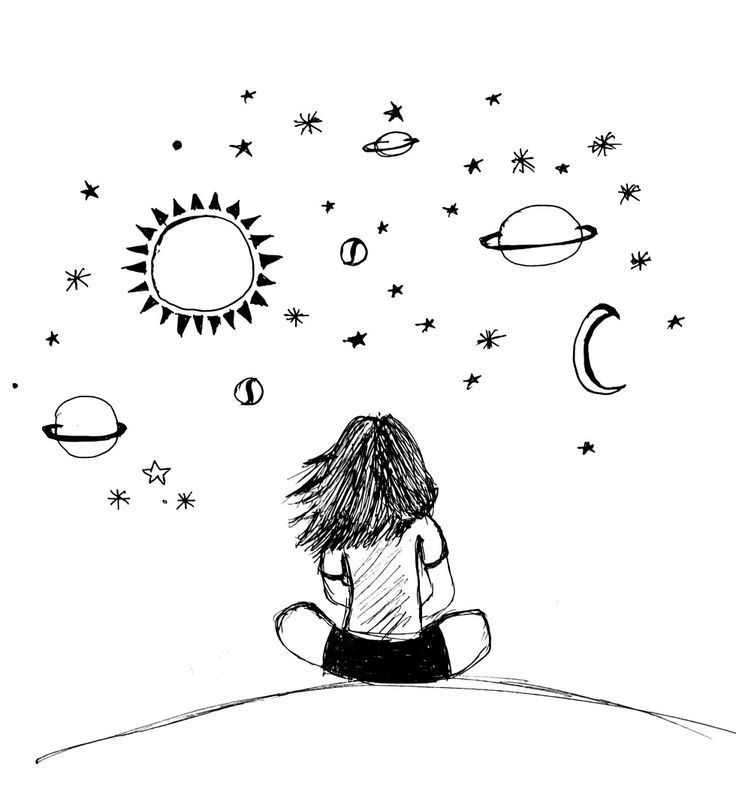
A starry night sky is a good beginner drawing idea when you want something calm and pattern-based. Start with the moon, then scatter stars in different sizes so the sky does not look mechanical.
Add clouds or a simple landscape silhouette only after the sky spacing feels balanced. A few larger stars, tiny dots, and one or two constellation lines are enough. Too many identical marks can make the drawing look like wallpaper instead of a night scene.
This idea also helps with composition. Leave one open area where the eye can rest, then place the moon or largest star away from the exact center. For more small-page prompts, try these cool and easy things to draw.

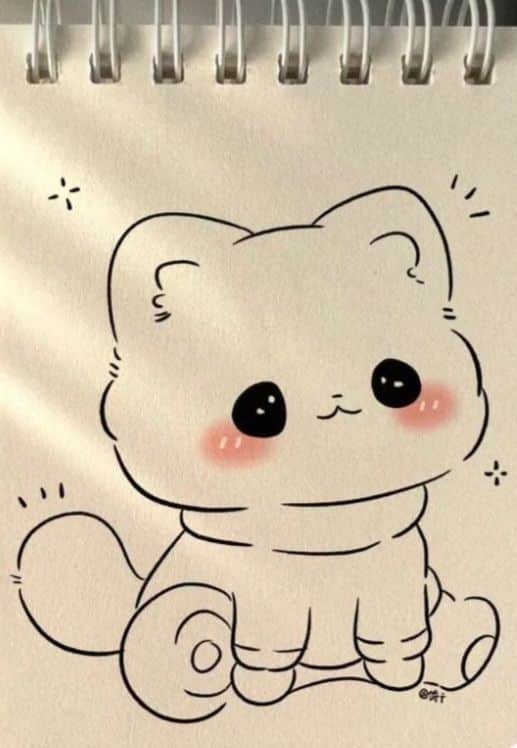
6) Cheerful cartoon cat face
A cartoon cat face is beginner-friendly because the proportions are flexible. Draw a large circle, add soft triangular ears, then place the eyes slightly larger than realistic eyes.
The expression comes from the eyes, nose, and mouth. Keep the nose small, use a gentle curve for the smile, and add three whiskers on each side. If the face feels blank, add blush marks, stripes, or a tiny heart nearby.
This drawing teaches symmetry without punishing tiny mistakes. For a fuller animal practice session, move into easy cat drawing after you finish the face.

7) Minimalist mountain landscape
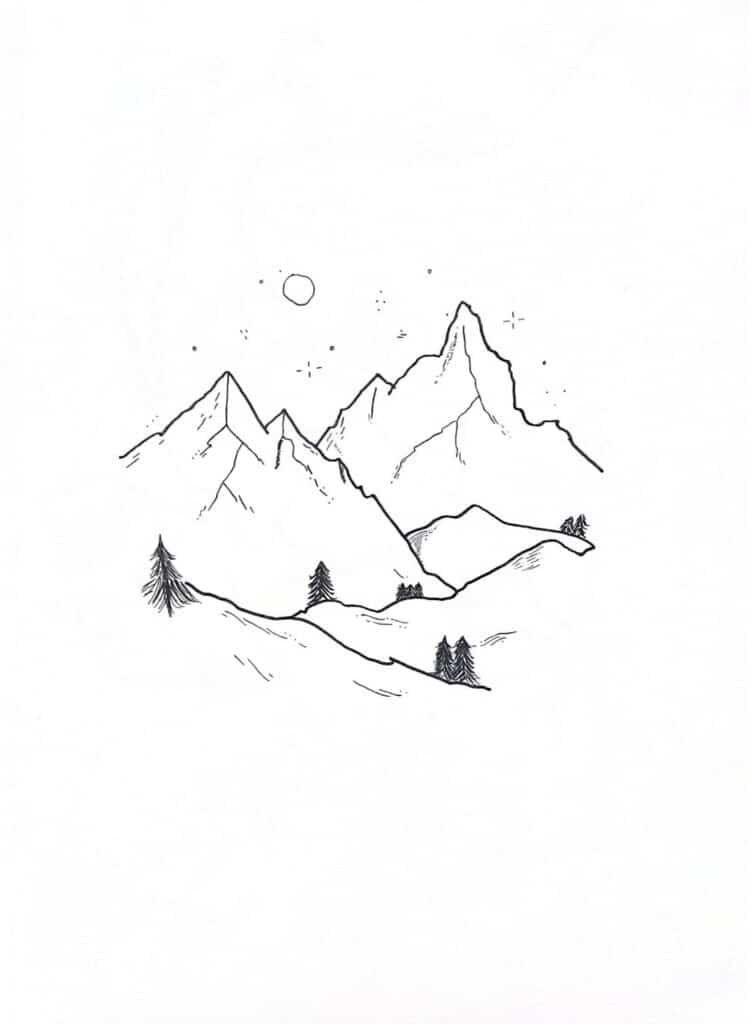
A minimalist mountain landscape teaches composition before detail. Draw two or three overlapping peaks, add a horizon line, then decide whether the foreground needs trees, water, or a small figure.
The trick is to avoid decorating every mountain. Keep the far peaks lighter, make the closest shape darker, and use clean edges. Real mountains are uneven, so a slightly imperfect line often looks better than a perfectly symmetrical triangle.
This is a good first landscape because it can stay as line art or turn into a shaded pencil scene. If landscape subjects interest you, keep practicing with mountain drawing and simple horizon studies.

Beginner tools that make these sketches easier
You do not need a large art kit for these beginner drawing ideas. A smooth sketchbook, an HB pencil, a 2B pencil, a white vinyl eraser, and a few colored pencils are enough for the whole list.
Use HB for light construction, 2B for darker outlines and soft shadows, and colored pencils or markers only after the sketch is stable. If you are unsure about paper, start with a basic sketch pad rather than thin copy paper; it handles erasing and light shading better.
| Tool | Use it for | Beginner note |
|---|---|---|
| HB pencil | Construction lines and clean outlines | Easy to erase if you stay light |
| 2B pencil | Shading and darker accents | Build value slowly |
| Vinyl eraser | Clean corrections | Press lightly to avoid paper damage |
| Kneaded eraser | Lifting highlights | Useful for the heart and mountain sketches |
| Colored pencils | Soft color finishes | More forgiving than markers |
Common beginner mistakes to avoid
- Pressing hard on the first outline, which makes corrections dirty.
- Adding texture before the large shape reads clearly.
- Using the same line weight everywhere, so the sketch looks flat.
- Filling every empty space with stars, flowers, stripes, or dots.
- Skipping the light source before shading the heart or mountains.
- Choosing a subject that needs advanced anatomy before building confidence.
The small diagnostic I use is this: squint at the sketch. If the main shape still reads, you can keep polishing. If it turns into visual noise, simplify the outline before adding more detail.
More beginner drawing practice
When you finish these seven sketches, keep the next practice step close to the same difficulty. Try sketching ideas for your sketchbook, 12 pencil drawing ideas, drawing tips for beginners, simple drawing exercises, cute drawing ideas, pencil drawing for beginners, coolest drawing ideas. These links stay in the drawing cluster and give the page a clearer practice path without forcing links into the intro.
Helpful drawing references
For external reference, compare your practice with Adobe easy things to draw guide, Strathmore drawing paper guide, Faber-Castell graphite pencil basics, Art Prof drawing basics library, Blick drawing supplies guide, MoMA line and drawing activities. Use these as supporting resources, then simplify the ideas back into your own sketchbook language.
Drawing ideas for beginners FAQ
Q: What are the best drawing ideas for beginners?
A: The best drawing ideas for beginners are simple subjects with clear shapes: a cactus in a pot, a smiling bee, a unicorn head, a shaded heart, a starry sky, a cartoon cat face, and a minimalist mountain landscape. These subjects are forgiving because you can build them from circles, ovals, triangles, and curved lines before adding detail.
Q: What should I draw first as a beginner?
A: Draw a small object or character with a simple outline first. A cactus, cat face, heart, or bee is easier than a full portrait because the proportions are flexible. Start with light pencil lines, check the silhouette, then add texture, color, or shading only after the main shape works.
Q: What is the easiest thing to draw for a beginner?
A: A cactus in a pot is one of the easiest things to draw because it starts with an oval body, a cylinder-like pot, and a few ridges or spikes. A heart, crescent moon, and cartoon cat face are also easy because small proportion mistakes still look charming instead of broken.
Q: How do I make beginner drawings look less flat?
A: Choose one light direction and keep it consistent. Put darker shading on the opposite side of the cactus, heart, cat face, or mountain. Use thicker lines under forms and thinner lines on the lit edge. Even a tiny shadow under a pot or cat chin can make the drawing feel more grounded.
Q: What supplies do I need for beginner drawing ideas?
A: You only need a sketchbook or smooth paper, an HB pencil, a 2B pencil, a white vinyl eraser, and optional colored pencils or markers. A kneaded eraser is helpful for lifting graphite gently, but it is not required. Start with a small kit so the focus stays on drawing, not buying supplies.
Q: How long should beginners practice drawing each day?
A: Ten to fifteen minutes a day is enough if you draw consistently. Use the first few minutes for circles, straight lines, and loose shapes, then spend the rest on one small subject. A short daily sketch teaches your hand more than one long session that leaves you frustrated.
Q: Can beginners use reference photos for drawing ideas?
A: Yes. Reference photos are useful as long as you do not copy them blindly. Use them to check the shape of cactus ridges, bee wings, cat eyes, mountain silhouettes, or moon placement. Then simplify what you see into beginner-friendly lines, values, and shapes.
Final practice note
Pick one idea from this page and draw it three times: once as a tiny thumbnail, once as a clean pencil sketch, and once with color or shading. That repetition matters more than chasing a perfect first attempt.
- 1.0Kshares
- Facebook0
- Pinterest1.0K
- Twitter0
- Reddit0