Artists inspired by the sea are useful to study because water exposes every weakness in composition. A sea painting needs a believable horizon, clear value groups, and light that feels wet instead of simply blue. This guide keeps the original image set, but gives each painting a practical note: what to notice, what the artist handles well, and what you can borrow for your own sketchbook or digital art practice.
What makes sea art worth studying?
Sea art is artwork where the ocean, coast, waves, ships, or marine atmosphere carries the main idea. It can be realistic, symbolic, surreal, or almost abstract, but the same visual questions keep returning. Where is the horizon? Is the water calm or heavy? Does the sky color reflect into the wave? Are the figures or boats giving the sea scale? When I thumbnail a seascape, I check the value pattern before I think about foam. If the big dark and light shapes do not work, extra sparkle will not save the drawing. That is why these artists are worth comparing side by side. They solve the same water problem in very different ways.
Artists inspired by the sea and ocean paintings
The list below mixes contemporary fantasy artists, pastel realists, and older marine painters. That range is useful. You can compare the exact observation of ships and waves with the more dreamlike way artists turn the ocean into mood, memory, and atmosphere.
| Artist | What to study |
| Zaria Forman | Pastel control, ice edges, cold light, and climate-focused ocean atmosphere |
| Ivan Aivazovsky | Moonlight, storm waves, ship scale, and luminous water |
| Jim Warren | Fantasy sea imagery, dolphins, surreal shapes, and strong focal points |
| Artem Cheboha | Digital atmosphere, glowing horizons, and dreamlike open space |
Artem Cheboha

Artem Cheboha, often known online as RHADS, makes sea art feel weightless. His ocean images usually lean into huge skies, glowing horizons, small figures, and a sense that the water is part of a dream rather than a measured landscape. If you study his RHADS portfolio links, notice how often the sea is treated as a stage for light. The practical lesson is composition: leave enough open space for the horizon to breathe before adding ships, clouds, or figures.
Paul David Bond Pesqueira
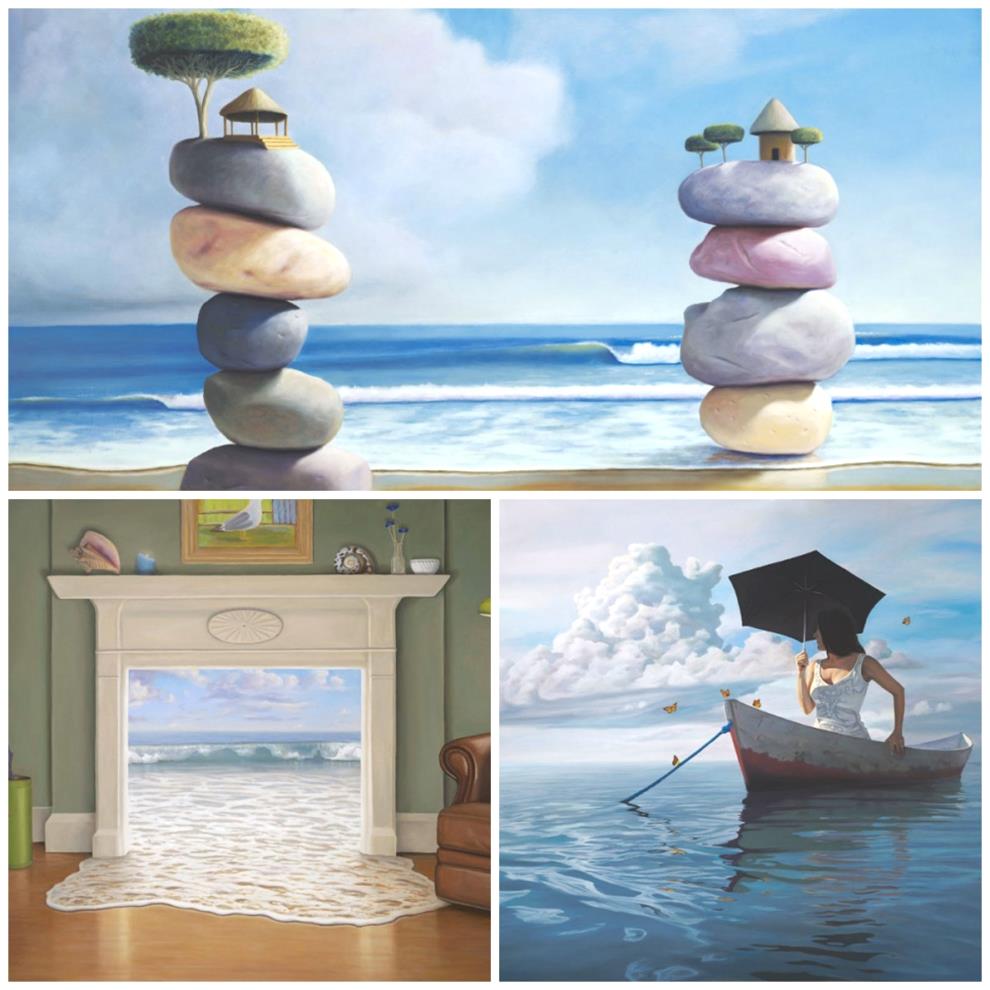
Paul David Bond Pesqueira works in a magic realist language, so the sea often feels symbolic before it feels geographic. Boats, islands, bridges, and quiet water can become emotional props, almost like objects in a dream you half remember. His artist biography describes that space between reality and imagination. For a sketchbook study, watch how he keeps edges controlled while letting the idea stay strange.
Zaria Forman

Zaria Forman is one of the strongest contemporary examples here because her ocean and ice drawings depend on patient observation. Her large pastel works often sit between beauty and environmental warning: cold light, broken ice, soft spray, and water that looks touchable. Forman’s official bio connects her work to climate-focused travel and field research. The useful drawing lesson is value control. The sea reads as water only when the darks, midtones, and lifted highlights are carefully separated.
Alexei Petrovich Bogolyubov

Alexei Petrovich Bogolyubov brings a more disciplined marine art tradition into the list. He was trained as both a naval officer and painter, which explains why many of his seascapes care so much about vessels, harbors, coastlines, and believable distance. The Russian Museum’s Bogolyubov exhibition notes point to his naval subjects and travel studies. When studying him, look at the horizon first. His water works because the ships have scale against it.
Ivan Constantinovich Aivazovsky

Ivan Aivazovsky is the obvious anchor for any list of sea artists. Even though he is not modern in the contemporary sense, his paintings still teach the problem every ocean painter meets: how do you make water feel transparent, heavy, moving, and lit from inside? The Metropolitan Museum of Art notes his lifelong affinity with the ocean in its entry for Ship by Moonlight. Study the glow around his waves before copying the details. The light pattern is doing most of the work.
Mikhail Alisov

Mikhail Alisov is a quieter name, but he fits this sea art cluster well because his work sits close to landscape observation. The Encyclopedia of Modern Ukraine entry describes him as a landscape painter who worked in Feodosia under Aivazovsky and painted Crimea, the Baltic region, the Caucasus, and sea subjects. That background matters because his seascapes are less theatrical than Aivazovsky’s. Look for coast, haze, and weather first. The mood comes from place, not spectacle.
Jim Warren
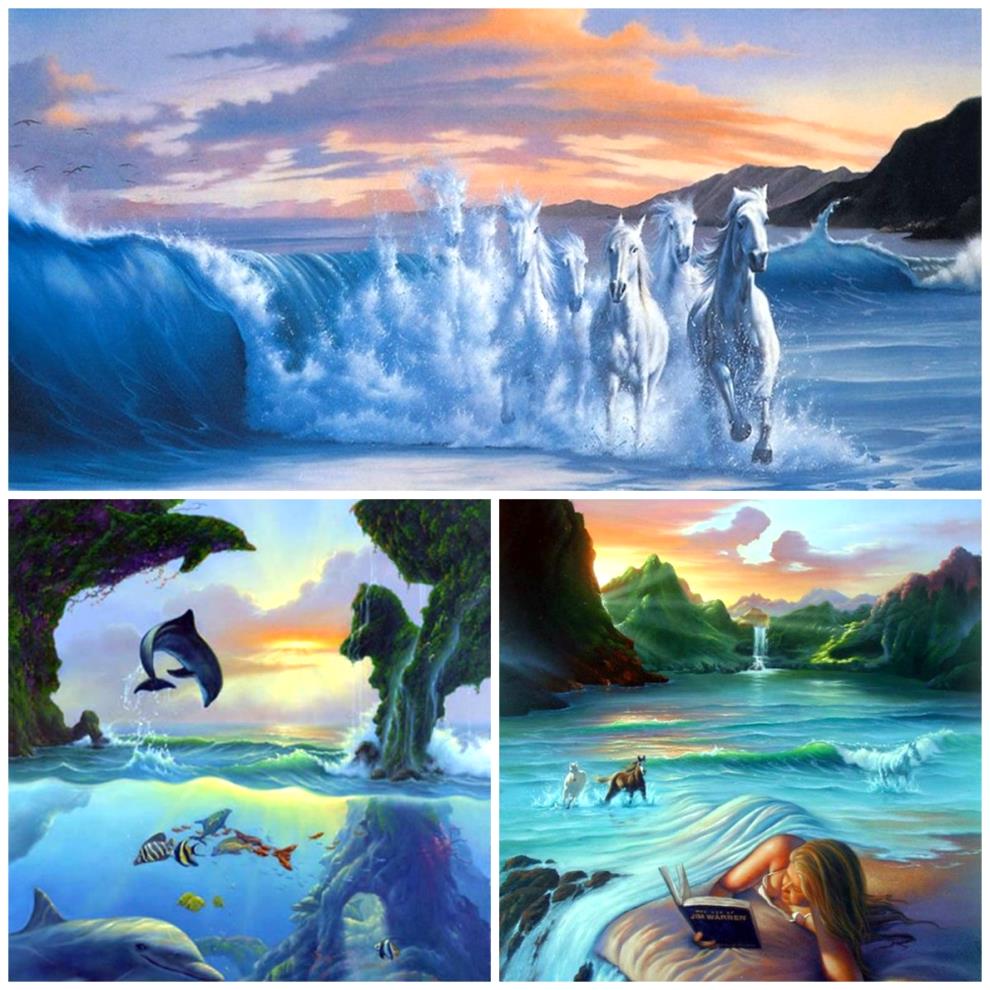
Jim Warren pushes ocean paintings toward fantasy and pop surrealism. His sea is often alive with dolphins, figures, impossible reflections, and bright theatrical color. The Jim Warren studio site shows how strongly his portfolio depends on imagination, storytelling, and instantly readable shapes. For artists, the main lesson is restraint inside exaggeration. Even a surreal sea scene needs a clear focal point, or the wave, animal, figure, and sky all start shouting at once.
Dehong He

Dehong He gives the page a softer ocean painting rhythm. The image here is useful because it asks you to slow down and compare temperature: cooler water, warmer light, and small shifts in saturation that keep the scene from turning into a flat blue rectangle. When I study sea paintings like this, I usually squint first and ignore the subject for a moment. If the large value shapes work, the smaller foam and reflection details have somewhere to sit.
Leonid Afremov

Leonid Afremov’s sea art is built around color temperature and palette-knife texture. His ocean scenes often use reflections as the main design device: orange against blue, yellow against violet, small broken strokes that make the water sparkle. This is easy to overcopy. If you want to learn from it, block the big color families first, then add bright strokes only where the light would actually catch the wave or wet surface. Too many highlights will flatten the scene.
Maggi Hambling
Maggi Hambling rounds out the list because her wave paintings show a modern, physical response to the sea rather than a postcard view. Her “Walls of Water” works are all impact: thick paint, close-up waves, and a feeling that the viewer is standing too near the surf. Put her beside Aivazovsky and the contrast is useful. Aivazovsky often gives the sea distance and glow; Hambling brings the wave almost into your chest.
How to study these sea paintings in your sketchbook
Do not start by copying every wave. Pick one image, make a two-inch thumbnail, and reduce the scene to four choices: horizon height, main dark shape, brightest highlight, and direction of movement. After that, make a second pass with pencil, watercolor, pastel, or digital brushes. This keeps the study practical instead of turning it into a slow tracing exercise.
If you want to keep practicing inside Sky Rye Design, pair this article with the ocean drawing guide, how to draw water, beach drawing ideas, fish drawing ideas, minimalist watercolor techniques, and digital art ideas. Those pages turn the same sea art ideas into waves, fish, beach scenes, watercolor restraint, and digital composition practice.
Sea art FAQ
Q: What is sea art?
A: Sea art is artwork where the ocean, coast, ships, waves, underwater life, or marine atmosphere carries the main visual idea. It can be realistic, like a careful seascape painting, or surreal, where water becomes a dream setting. The best sea art usually has a strong horizon, clear value structure, and believable light.
Q: Who are famous artists inspired by the sea?
A: Famous artists inspired by the sea include Ivan Aivazovsky, J.M.W. Turner, Claude Monet, Katsushika Hokusai, Zaria Forman, Maggi Hambling, and many contemporary ocean artists. This post focuses on a mixed set, from historical marine painters to modern fantasy and pastel artists, so you can compare observation, color, atmosphere, and imagination.
Q: What makes ocean paintings difficult?
A: Ocean paintings are difficult because water is always changing. A wave has form, transparency, foam, reflected sky color, and motion at the same time. Beginners often make the sea too flat by coloring everything blue. Start with the horizon, then separate dark wave masses, midtones, foam edges, and small highlights.
Q: Are sea artists the same as marine artists?
A: They overlap, but they are not always the same. Marine artists often focus on ships, naval scenes, harbors, coastlines, and accurate seafaring details. Sea artists can be broader: abstract waves, ocean fantasy, beach scenes, climate-focused ice drawings, underwater life, or symbolic water imagery. The useful question is what role the sea plays in the artwork.
Q: How can beginners study sea art from these artists?
A: Pick one painting or image and do a small value thumbnail before copying details. Mark the horizon, the largest dark shape, the brightest highlight, and the main direction of movement. Then make a second study in color or pencil. This teaches composition faster than trying to reproduce every wave, cloud, or boat.
Q: What are good search terms for finding more sea art references?
A: Useful search terms include sea art, ocean artists, ocean paintings, sea paintings, seascape artists, and marine art. Use them slightly differently. Sea art is broad, ocean paintings is more image-focused, and seascape artists often leads to painters who study coastlines, harbors, waves, and atmosphere.
Final note
The best way to learn from ocean artists is to compare decisions, not copy surfaces. One painter may build drama with moonlight, another with a flat horizon and pale ice, another with impossible fantasy color. Study the structure first. Then let the wave details arrive last.
- 9.9Kshares
- Facebook0
- Pinterest9.9K
- Twitter0
- Reddit0