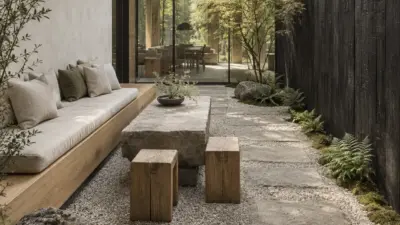
Wooden sleepers garden ideas work best when the timber has a real job: holding soil, edging a path, framing a patio, or giving a flat lawn some structure. Sleepers are heavy, simple and visually warm, so even one raised bed or border can make a garden feel more designed.
The trick is restraint. Use sleepers where the garden needs a line, a level change, or a strong edge, then let planting soften the timber. Too many beams can make a small space feel boxed in; a few well-placed pieces can make it feel intentional.

What are garden sleepers?
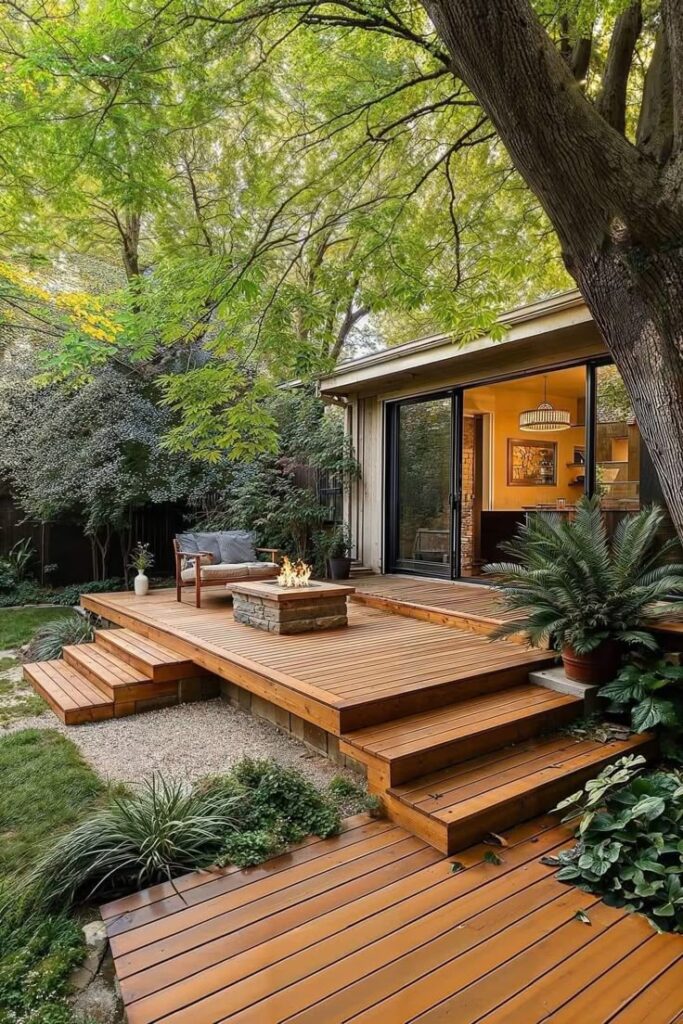
Garden sleepers are thick timber beams used for landscaping. Traditional railway sleepers were made to support tracks, but in garden design the same chunky format is used for raised beds, borders, steps, benches, retaining walls and path edging. You can buy reclaimed railway sleepers with weathered marks or new sleepers in oak, softwood, hardwood and treated timber.
From a design point of view, sleepers do two things at once. They add visual weight, and they create a practical edge. That makes them useful when a garden has plenty of plants but no clear shape.
Reclaimed vs new sleepers: which should you choose?
Choose reclaimed sleepers if you want knots, old weathering, dents and a more rustic garden style. They suit cottage gardens, informal borders, gravel paths and spaces where the timber is meant to look aged. Check the treatment history carefully, especially if the sleepers will sit near edible plants or children’s play areas.
Choose new sleepers if you want cleaner lines, predictable sizing and easier cutting. New sleepers are usually better for modern gardens, straight retaining walls, raised vegetable beds and projects where you need matching pieces. If food crops are involved, look for untreated or food-safe treated timber rather than old railway timber.
| Use | Best sleeper choice | Design note |
|---|---|---|
| Vegetable raised beds | New untreated or food-safe treated timber | Keep old creosote-treated sleepers away from edible soil |
| Rustic borders | Reclaimed sleepers | Weathering adds character without extra staining |
| Modern patio frame | New oak or clean softwood sleepers | Straight edges look calmer beside paving |
| Small garden steps | New sleepers | Consistent dimensions make the rise easier to control |
| Informal seating edge | Either | Sand rough corners where people will sit |

Wooden sleepers garden ideas that add structure
1. Raised garden beds
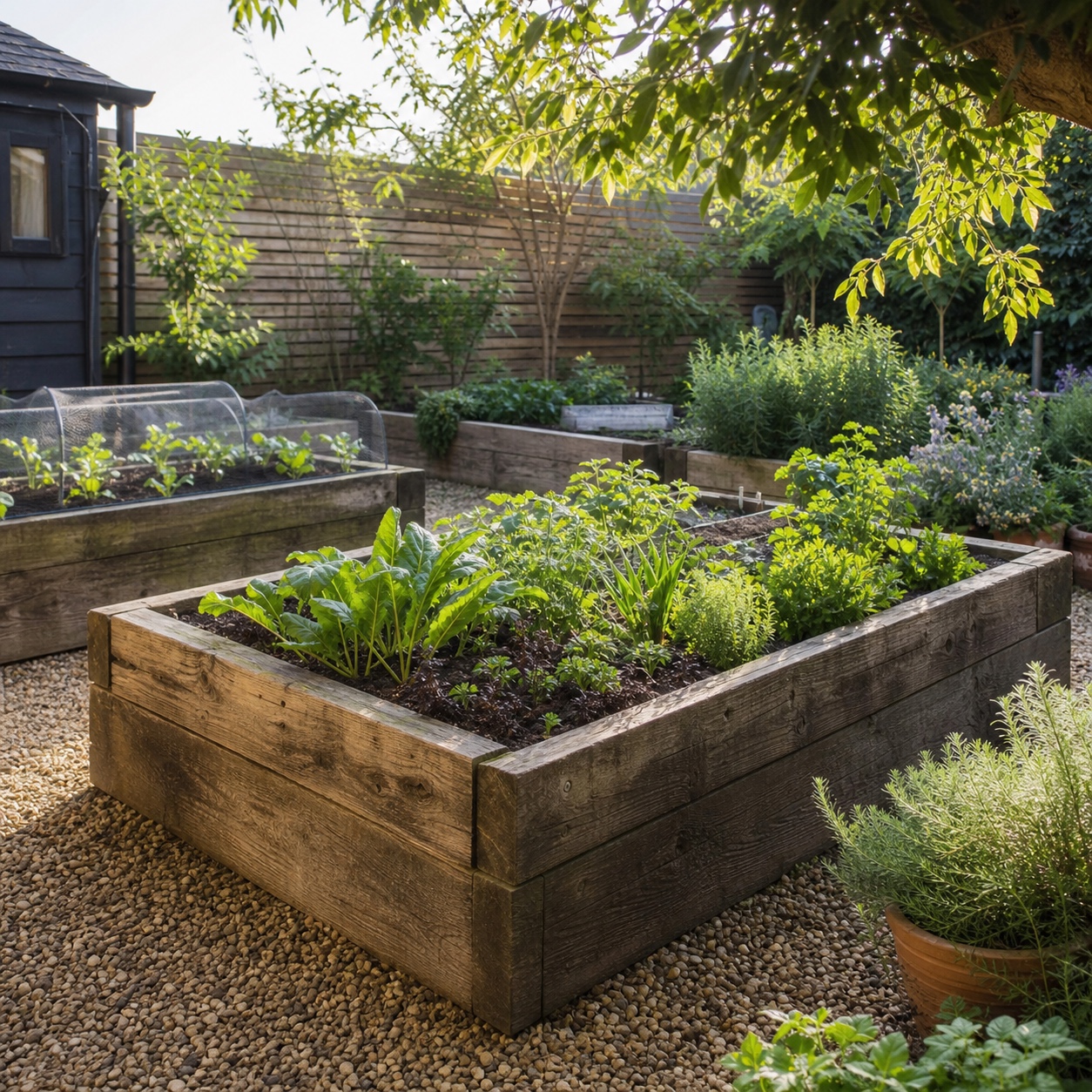
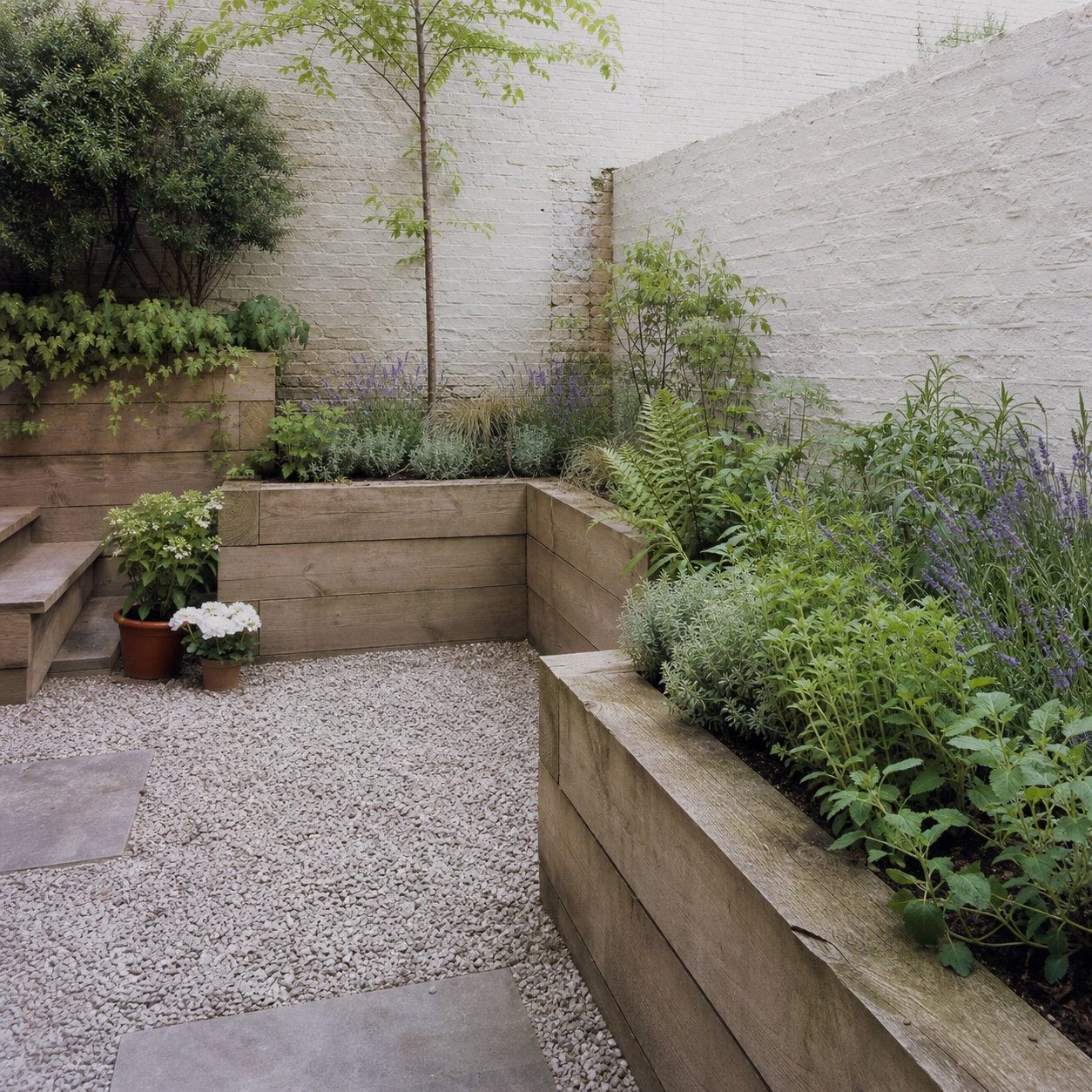
Raised beds are the most natural use for garden sleepers. The timber is thick enough to hold soil, compost and mulch, and the strong edge makes planting areas easier to read from a patio or window. Keep the bed narrow enough to reach from both sides, usually around 3 to 4 feet wide.
2. Sleepers for garden edging
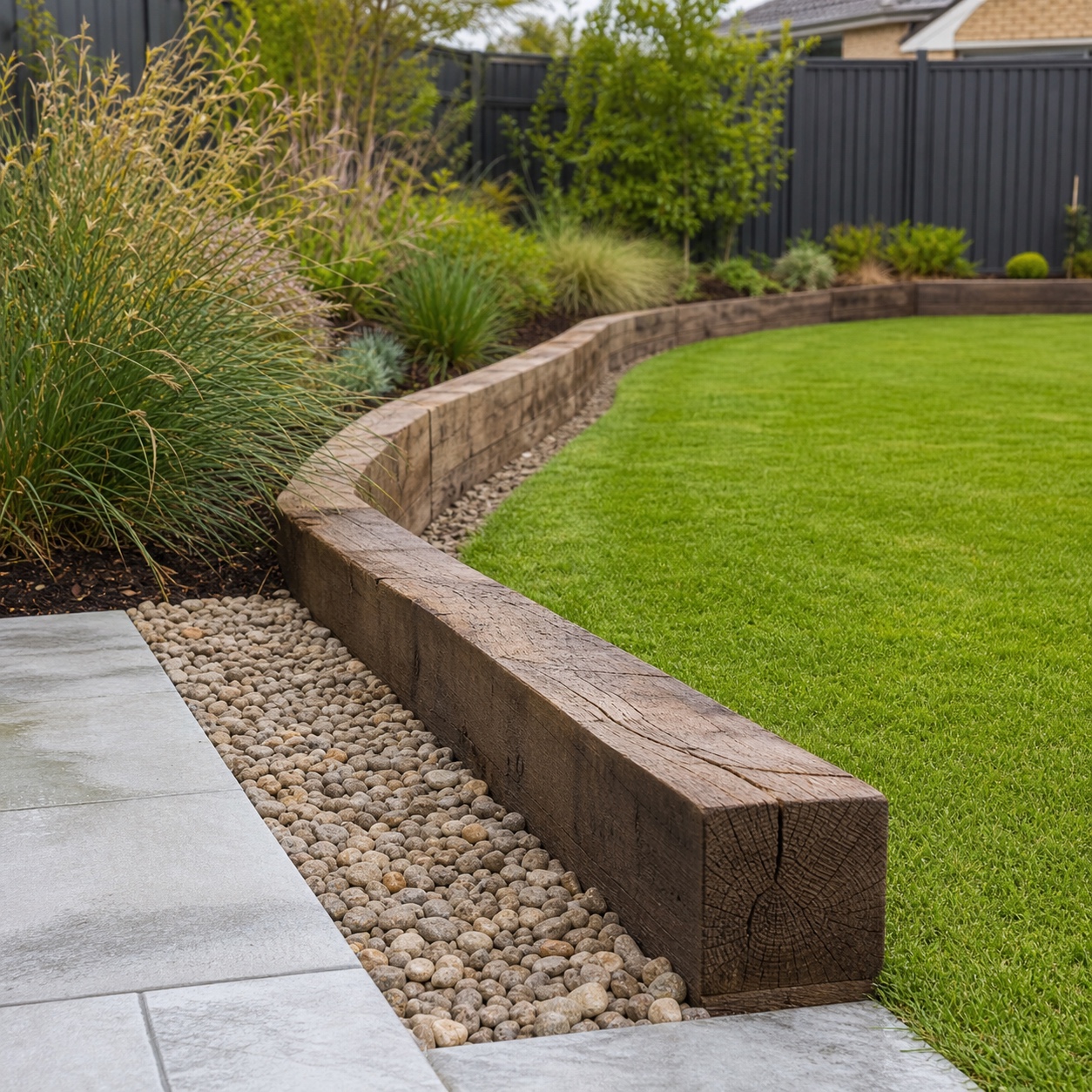
Sleepers for garden edging work well between lawn and planting, gravel and paving, or a path and a border. Lay them flat for a low edge, or set short lengths upright for a stronger rhythm. I like using upright pieces sparingly; too many can look busy, but a short run near a gate or step adds a nice handmade detail.
3. Retaining walls and level changes
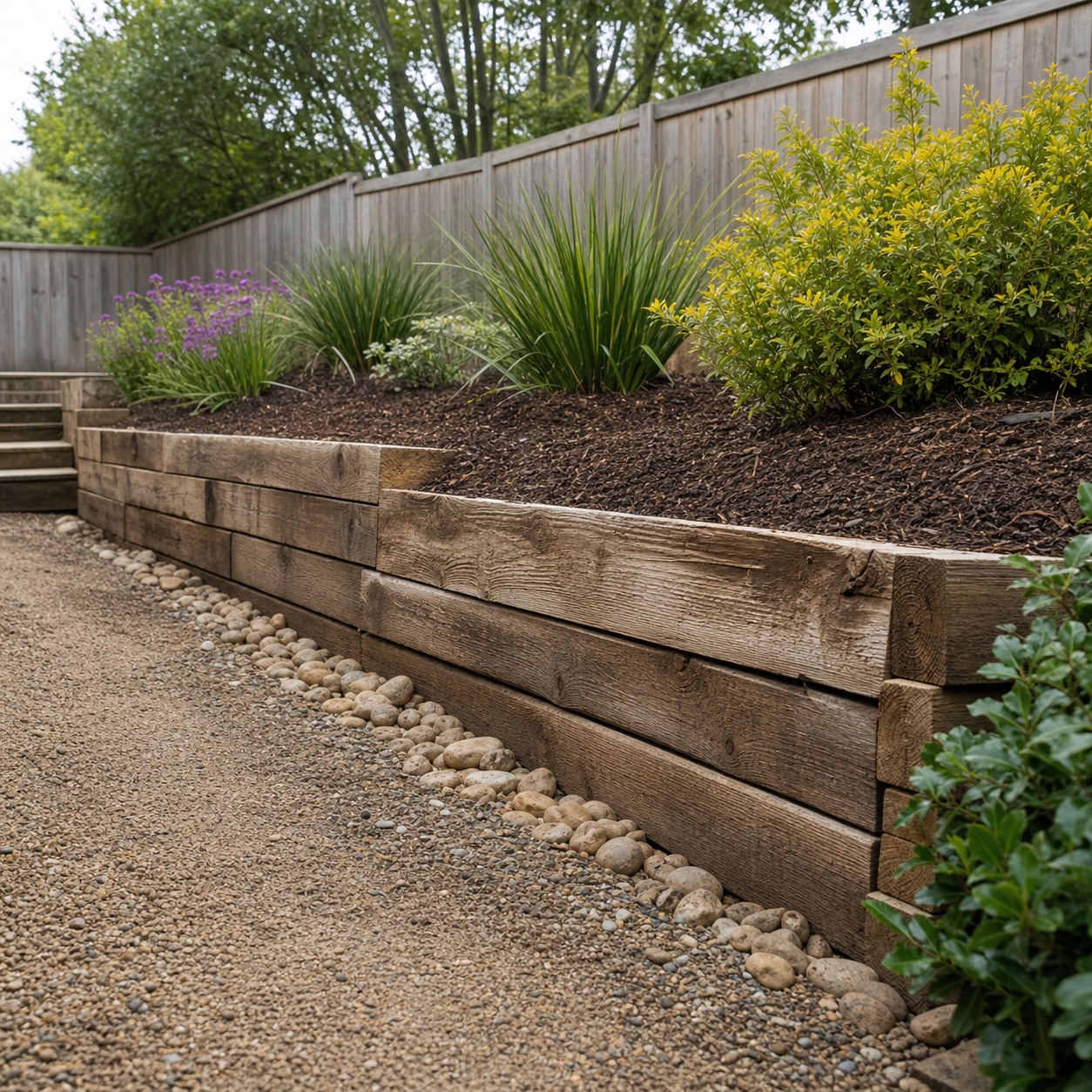
On a sloped garden, sleepers can hold back soil and turn awkward ground into usable terraces. This is where construction matters. Add drainage behind the wall, avoid trapping water against the timber, and get professional help for tall or load-bearing retaining walls.
4. Garden steps and pathways
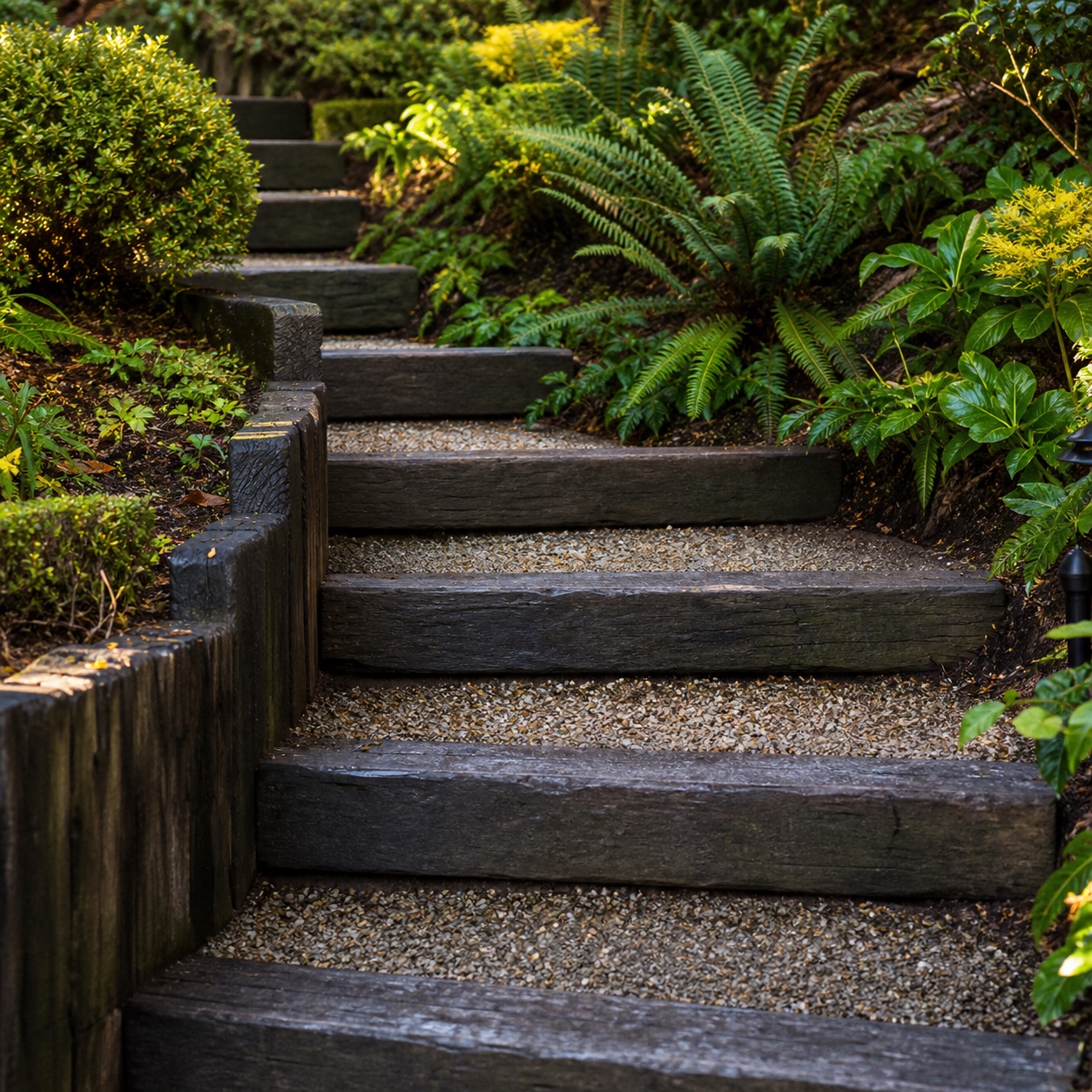
Railway sleepers in garden pathways give the eye a clear route. Use them as step risers with gravel, stone or compacted soil behind each tread. They look especially good when the path needs to feel slower and more natural than poured concrete.
5. Patio and fire pit frames
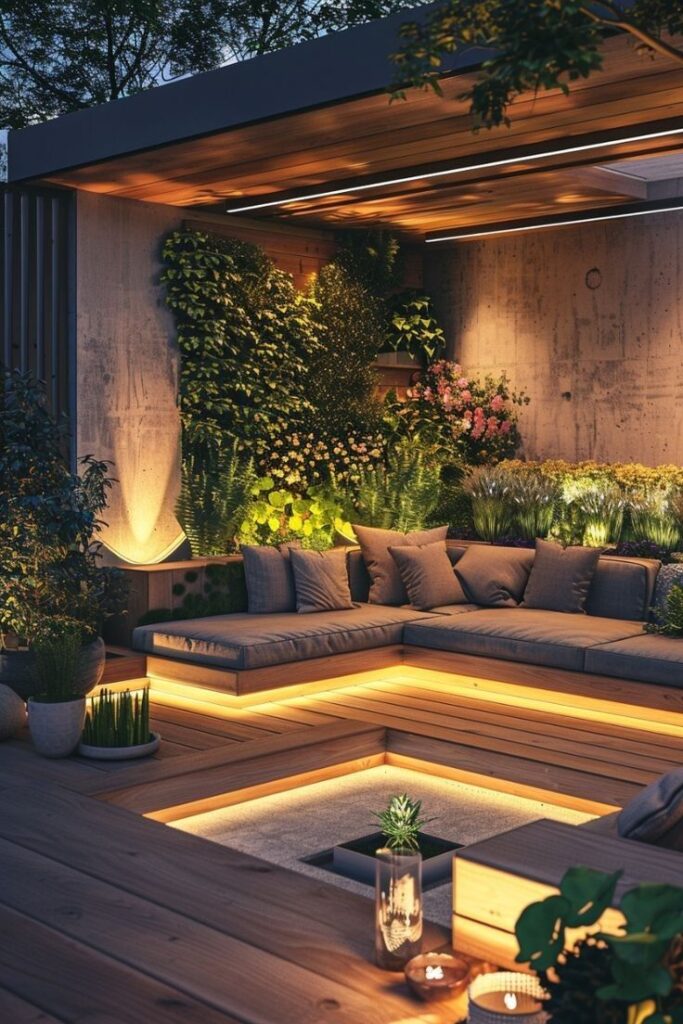
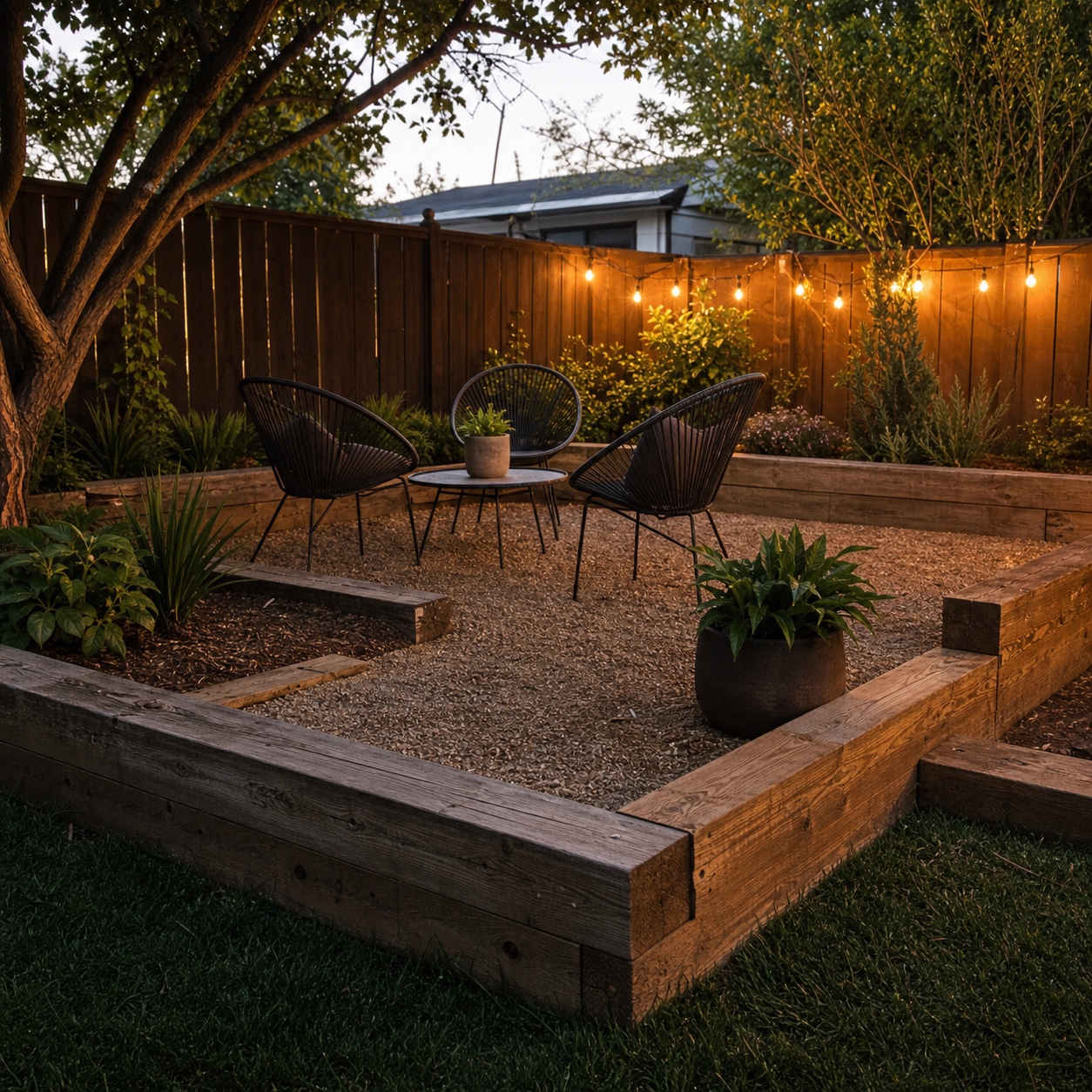
A single sleeper frame can make a patio, gravel pad or fire pit zone feel like a deliberate outdoor room. Keep timber well away from direct flame and use gravel or stone where sparks may fall. The sleeper edge should frame the area, not become the fireproofing.
6. Seating edges and planter walls
Stacked sleepers can create low seating or planter walls around a deck. For comfort, sand the top edge and keep the seat height close to a normal bench. If the wall is also holding soil, treat it as a structural element first and a design feature second.


Design rules for landscaping with sleepers
- Repeat the timber tone. If sleepers are the only wood in the garden, echo the color in furniture, decking, fencing or planters.
- Break long lines with planting. Grasses, trailing herbs and low shrubs stop heavy timber edges from feeling too rigid.
- Use gravel for drainage. Timber lasts longer when water can move away from it.
- Keep scale in mind. Thick sleepers can overpower a tiny courtyard, so use shorter runs or lower profiles in compact spaces.
- Plan the corners. Messy corner joints make sleeper beds look improvised. Decide whether the beams will overlap, butt together or be cut neatly before you start.
Buying and safety notes
Check size, treatment, weight and delivery before ordering sleepers. Large hardwood sleepers can be difficult to move without help, and reclaimed timber may have old fixings, splits or chemical treatments. If you are comparing suppliers, external product pages such as these hardwood sleepers can help you understand typical dimensions and material language, but always match the specification to your own garden use.
More wooden sleepers garden image ideas
These square references show a few extra ways sleepers can shape a garden without replacing the existing examples above.
Related garden and outdoor design guides
Use these next if you are planning the whole outdoor space, not only the timber work.
- garden decor ideas
- raised garden bed planning
- pallet garden ideas
- DIY raised garden beds
- DIY garden projects
- sustainable garden design
- front yard landscaping ideas
- expert landscaping ideas
- landscaping materials guide
- garden landscaping ideas
Wooden sleepers garden FAQ
Q: What are garden sleepers?
A: Garden sleepers are thick timber beams used in landscaping for raised beds, borders, steps, retaining edges, seating and path framing. Many people call them railway sleepers because reclaimed versions were originally used under railway tracks, but new landscaping sleepers are also widely available.
Q: Are wooden sleepers good for raised garden beds?
A: Yes, wooden sleepers are good for raised garden beds when you want a strong, long-lasting frame with a rustic look. For vegetable beds, choose new untreated or food-safe treated timber and avoid old creosote-treated railway sleepers around edible plants.
Q: Can you use railway sleepers for garden edging?
A: Railway sleepers work well for garden edging because they create a firm visual line between lawn, gravel, paving and planting beds. Lay them flat for a low edge, stack them for height, or set short sections upright when you want a chunkier border.
Q: Should I choose reclaimed or new sleepers for a garden?
A: Choose reclaimed sleepers when you want weathered texture and a more rustic look. Choose new sleepers when you need cleaner lines, predictable sizing, easier cutting, or safer material around food gardens, children or pets.
Q: How do wooden sleepers change garden design?
A: Wooden sleepers add weight, texture and structure. They help divide zones, hold soil, frame paths, lift planting beds and make patios or seating areas feel intentional instead of floating in the yard.
Q: Do garden sleepers need drainage?
A: Yes. Sleepers last longer when water can drain away from the timber. Use gravel behind retaining edges, avoid burying untreated wood directly in wet soil, and leave the layout slightly breathable so moisture does not sit against the same face all year.
Conclusion
Wooden sleepers are useful because they make a garden easier to read. They draw borders, lift planting, hold soil, frame paths and add a grounded timber texture that works with both rustic and modern outdoor spaces. Start with the place where your garden feels most shapeless. One clean sleeper edge or raised bed is often enough to change the whole layout.
- 223shares
- Facebook0
- Pinterest220
- Twitter3
- Reddit0