The first time someone pointed out a timber frame scarf joint to me, I had already walked past it twice. That was the point. A long ridge beam in a barn conversion looked like one continuous piece of oak until the joiner traced a faint diagonal shadow line with his finger and showed me where two separate timbers met. The joint was carrying real structural work, but visually it behaved like part of the beam.
Joinery shows why a timber frame is a structural system rather than a decorative look. These barndominium timber-frame kits help buyers compare complete kit packages, spans, species and what is actually included in the price.
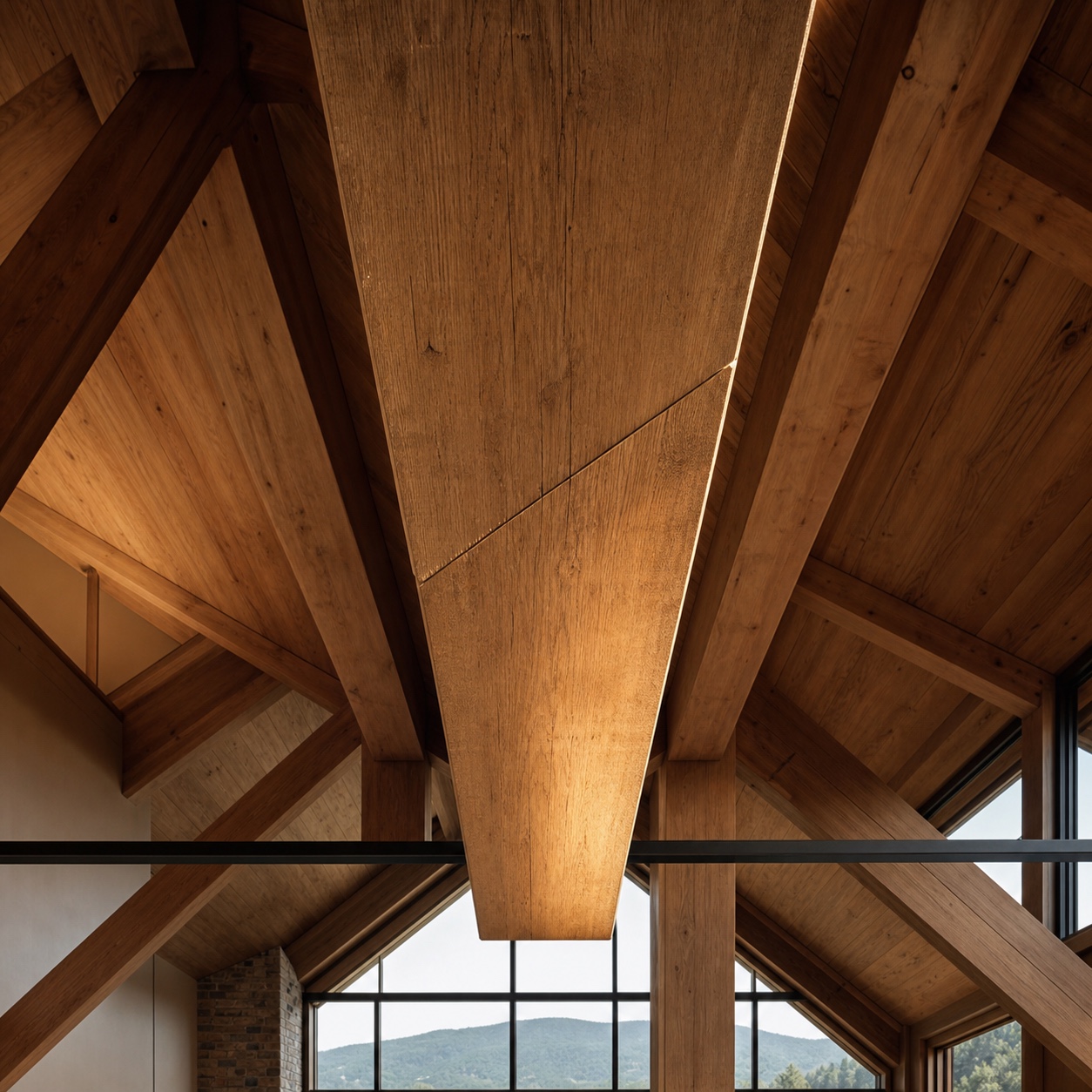
That is the quiet appeal of a well-cut scarf joint. It extends a timber member without turning the join into a visible mechanical patch. Most conversations about timber strength quickly jump to screws, plates, bolts, brackets, corrosion resistance, and fixing schedules. Those details matter, but they do not explain why the longest exposed beams in a timber frame are often joined by shaped wood-to-wood geometry instead of a metal plate across the face.
- What a timber frame scarf joint actually does
- Why scarf joints matter in modern timber architecture
- Common timber frame scarf joint types
- Design details that make the joint look intentional
- Scarf joint vs metal connectors: where each detail belongs
- Mistakes that make timber joints look weak or awkward
- FAQ
This guide looks at the scarf joint as both engineering and design: what it does structurally, which types are worth knowing, how the joint changes the rhythm of an exposed frame, and when a wood joint earns its place over a metal connector.
What a timber frame scarf joint actually does
A scarf joint joins two pieces of timber end to end along their length, so the combined member behaves more like one continuous beam than two pieces simply butted together. The cut is angled, stepped, or interlocked rather than square. That extra geometry increases the contact area between the two pieces and gives the joint far more resistance to tension and shear than a flat butt joint could manage on its own. our roundup of the best timber frame house designs shows this kind of joinery in context across finished projects, which is useful if you want to see how the detail reads once the full frame is standing.
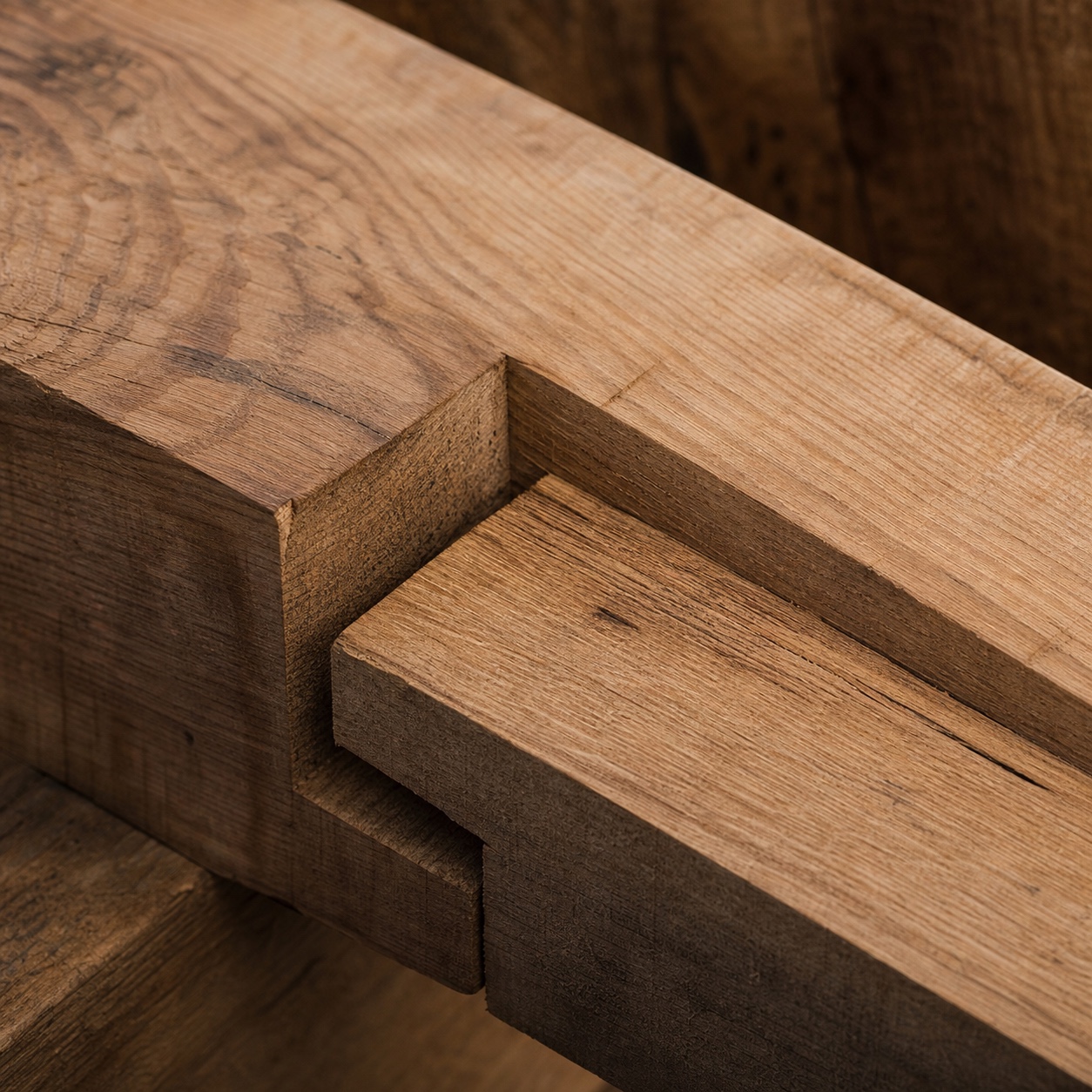
The basic problem is simple: timber only comes in finite lengths, while a ridge beam, wall plate, or long horizontal frame member often needs to run farther than a single stock piece can span. A scarf joint lets two shorter, more manageable timbers combine into one longer structural element without forcing an obvious splice into the room.
This is not a recent workaround. Traditional timber framing relied on scarf joints because long, straight, defect-free timbers were expensive and hard to source. our broader guide to wooden house architecture gives the wider architectural context for wood as both structure and finish, which is why joinery details carry so much visual weight in timber buildings.
Why scarf joints matter in modern timber architecture
Load transfer without visually breaking the beam
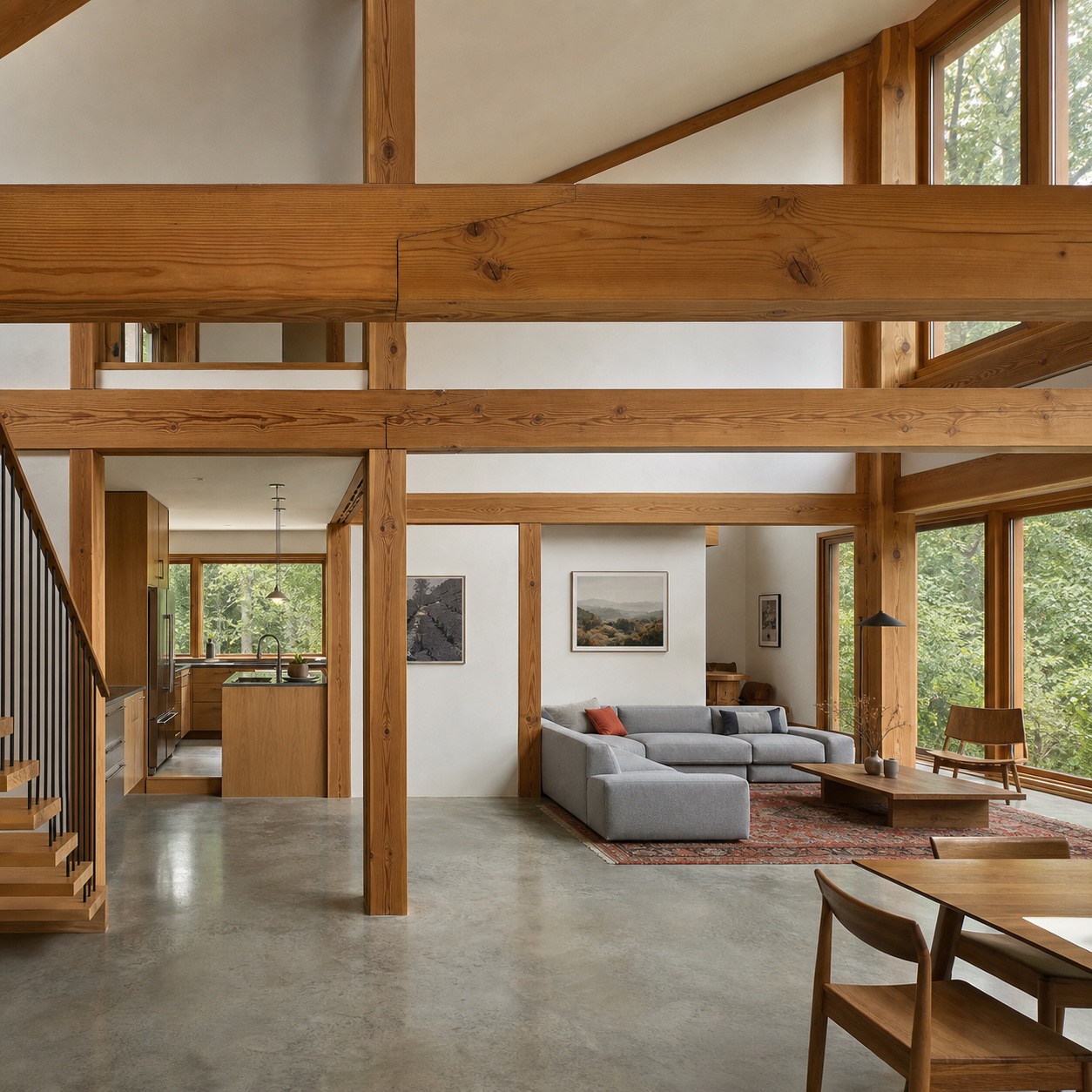
A well-cut scarf joint transfers load through geometry and contact area. The angled or stepped faces spread forces across a much larger surface than a square butt joint, which is why the joint can sit in structurally meaningful places such as ridge beams, plates, and long horizontal members.
That matters architecturally too. A steel plate bolted across an exposed beam reads instantly as hardware, repair, or intervention. A clean scarf joint reads closer to a seam in the material itself. The structure stays legible without interrupting the beam line.
When the joint becomes part of the design language
In exposed timber-frame architecture, the structure is also the finish. Every joint is on display whether the designer planned for that scrutiny or not. A scarf joint placed with intention can tell you where two timbers meet, how the frame was assembled, and how load moves through the structure.
That makes it a design opportunity rather than a detail to hide by default. Some contemporary timber interiors lean into this legibility, letting the joinery explain the building in the same way exposed steel can give an industrial interior its character.
Common timber frame scarf joint types
Scarf joints come in several forms, each with a different balance of strength, cutting complexity, and visual presence. Choosing one is less about finding the single strongest option every time and more about matching the joint to its actual load and its role in the finished space.
Stop-splayed scarf joint
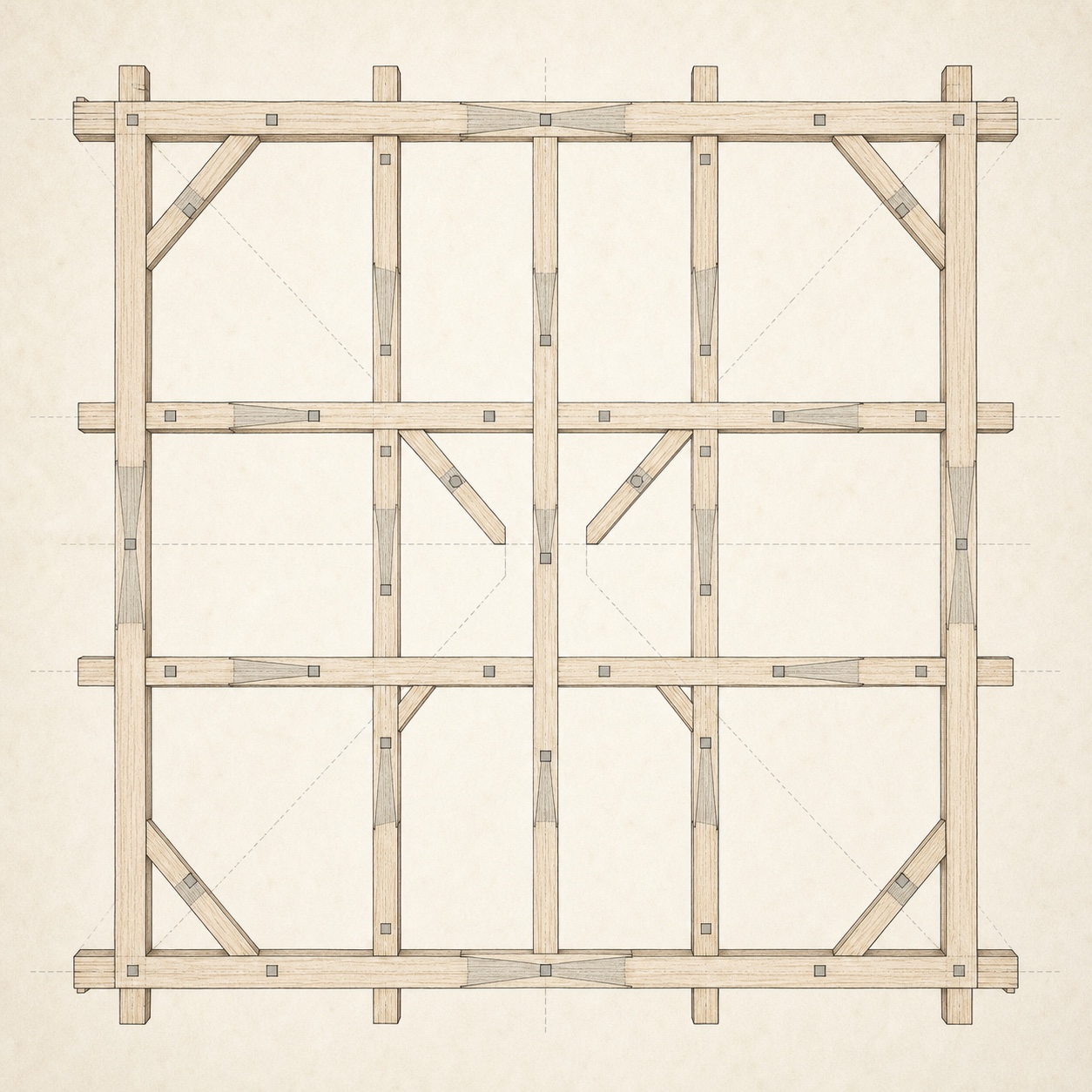
The stop-splayed scarf is one of the classic timber-frame forms. Its angled and stepped faces increase contact area while resisting sliding, compression, and tension along the joint. Because the joint does not rely on one flat plane of contact, it is more stable than a simple straight splay.
This form has stayed useful because it balances real structural performance with manageable cutting complexity. A skilled joiner can produce it reliably without the more demanding setup required by some interlocked forms.
Tabled scarf joint
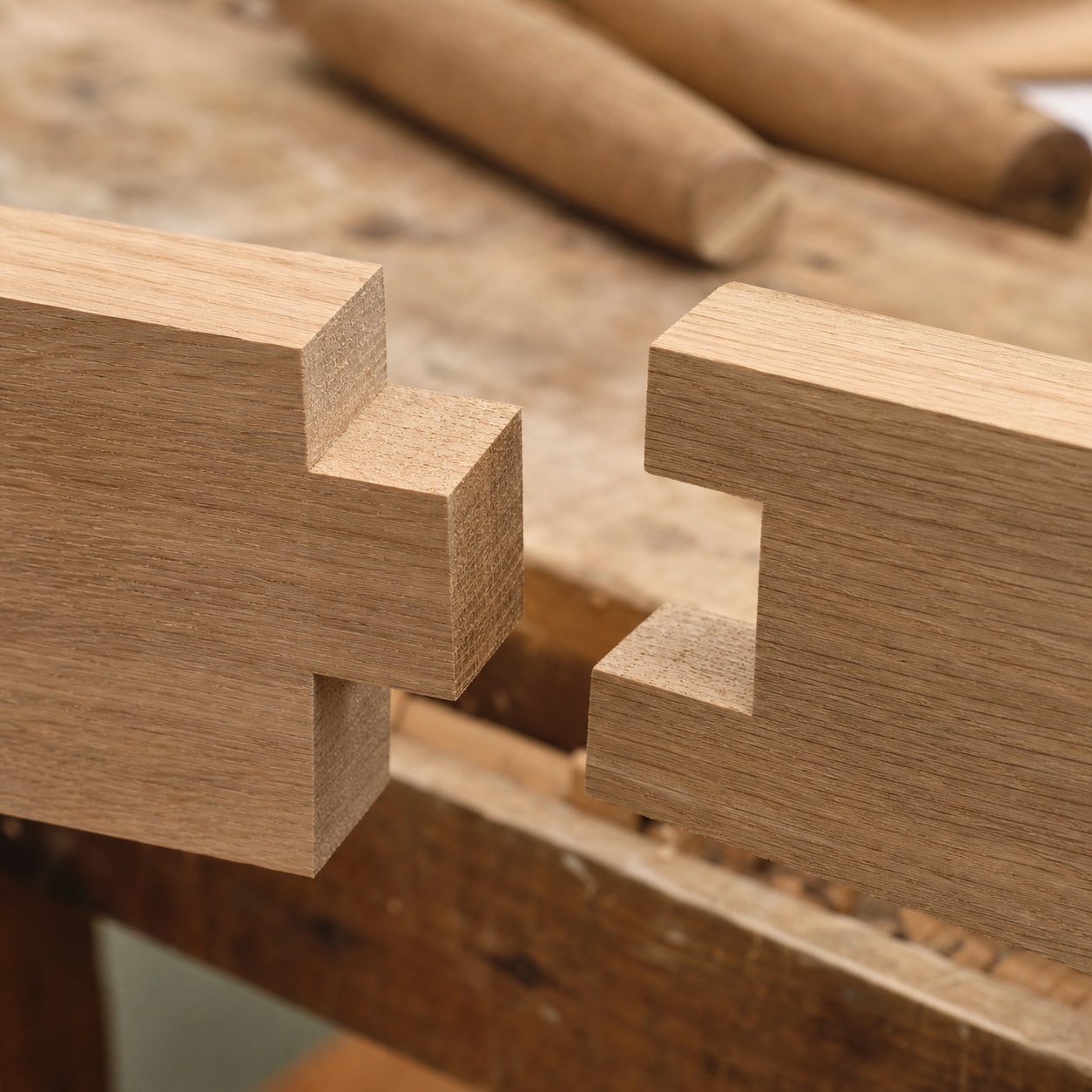
A tabled scarf joint adds an interlocking notched step, sometimes called the table, into the middle of the joint. That step mechanically resists the two timbers pulling apart under tension even before pegs or hidden fixings are added.
The trade-off is complexity. Specifying a tabled scarf everywhere can add cost and labor where a simpler joint would perform well. It makes the most sense where the joint location genuinely sees tension and where the added interlock has a structural reason to exist.
Scarf joint with pegs or concealed reinforcement
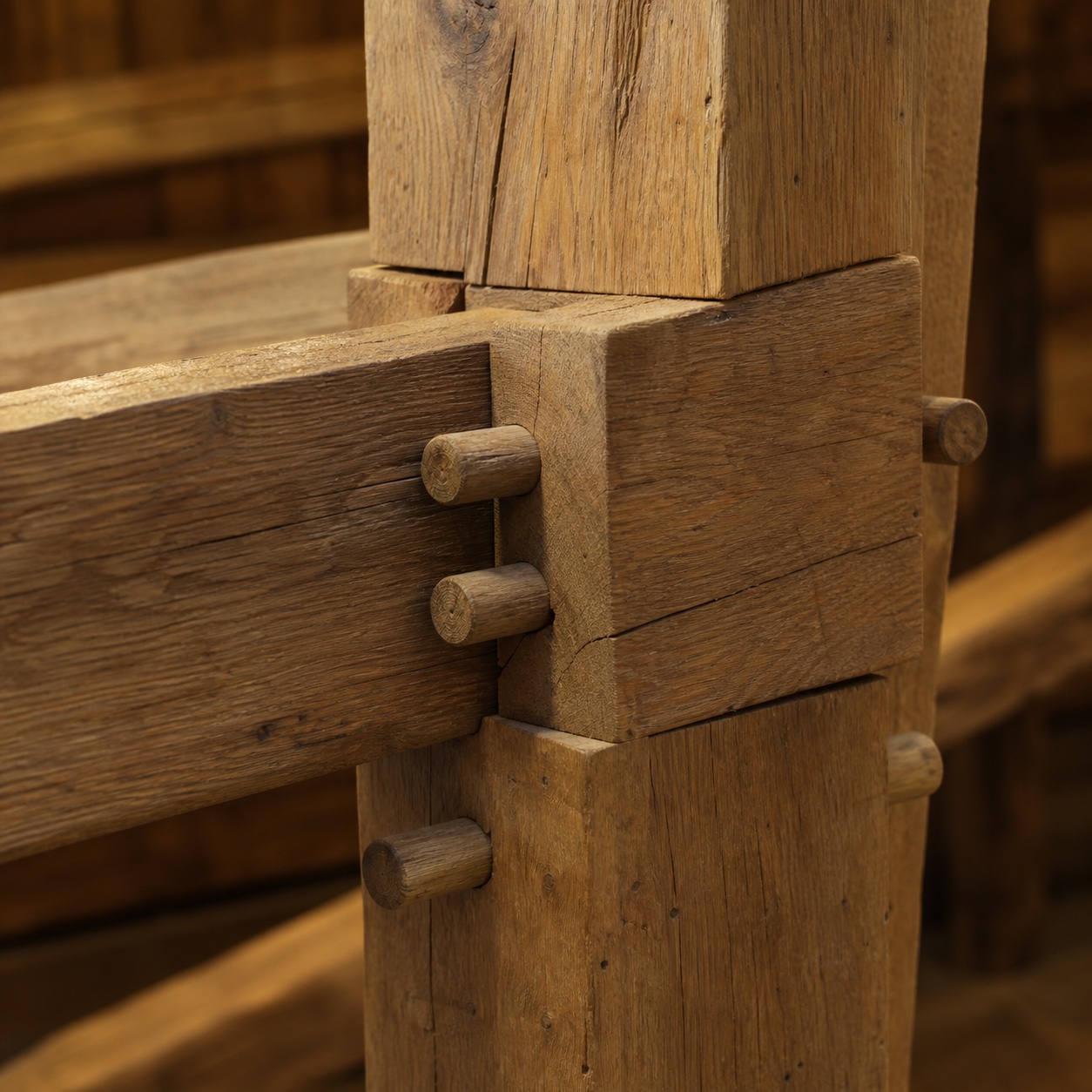
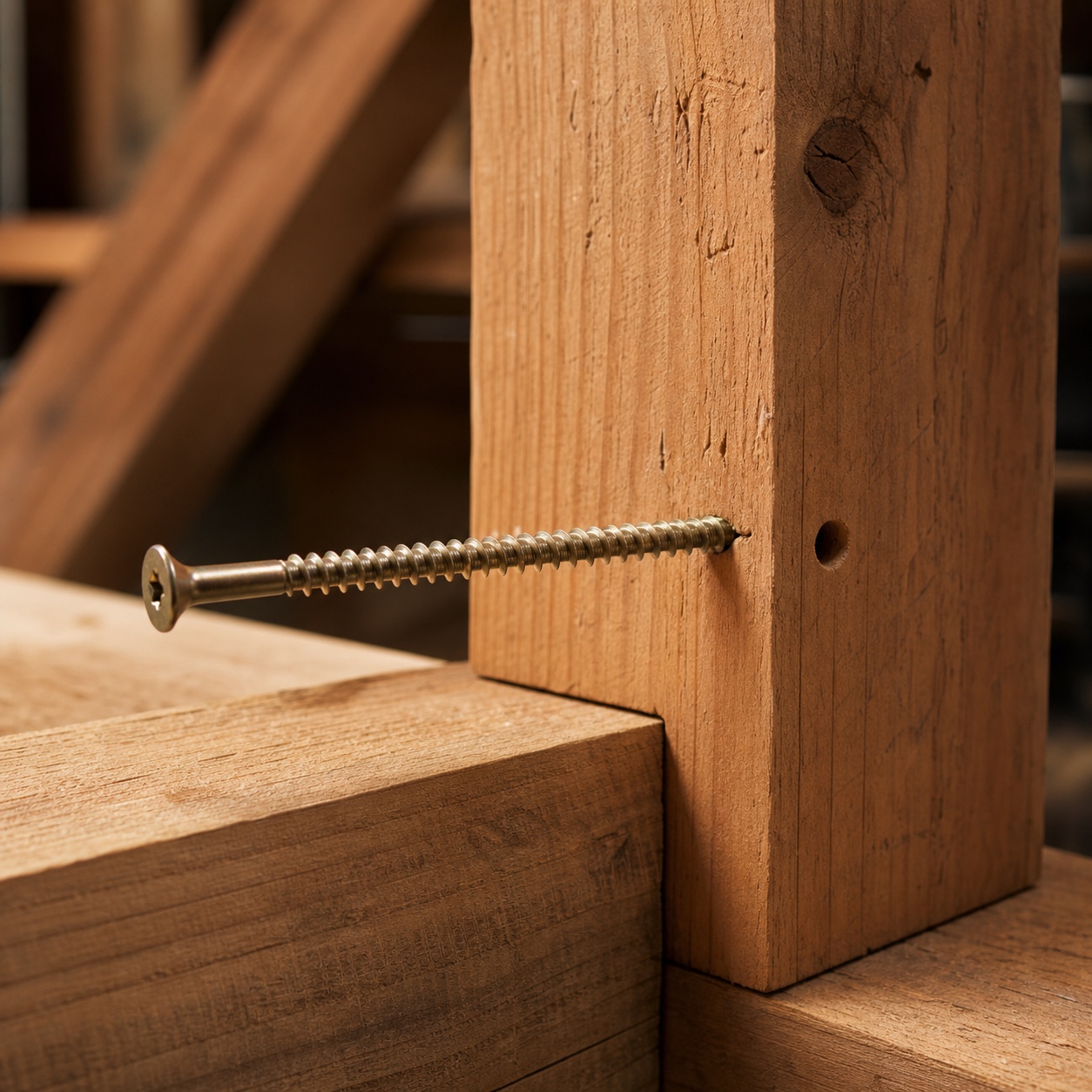
Traditional frames often tighten a scarf joint with wooden pegs driven through drilled holes. Modern work may add concealed plates, screws, or threaded rod inside the joint rather than across the visible face. Where a deep mechanical fixing is needed inside a joint, 200mm size screws can provide the length required for engagement through both timber sections without showing on the finished surface.
Design note: sketch the scarf joint’s cut line before choosing its final position. A joint centered in a room and catching direct light needs a higher visual standard than one tucked into a shadowed corner.
Design details that make the joint look intentional
The difference between a scarf joint that reads as deliberate craftsmanship and one that reads as a repair usually comes down to a few specific choices: grain match, shadow control, placement, and the level of visible reinforcement.
Grain direction, shadow lines, and exposed beam rhythm
Matching grain direction and color tone across the two timbers helps the joint avoid looking like a mismatch under raking light. timber grain direction affects both seasonal movement and the way the cut face catches light, so it is worth thinking about before the timber is cut.
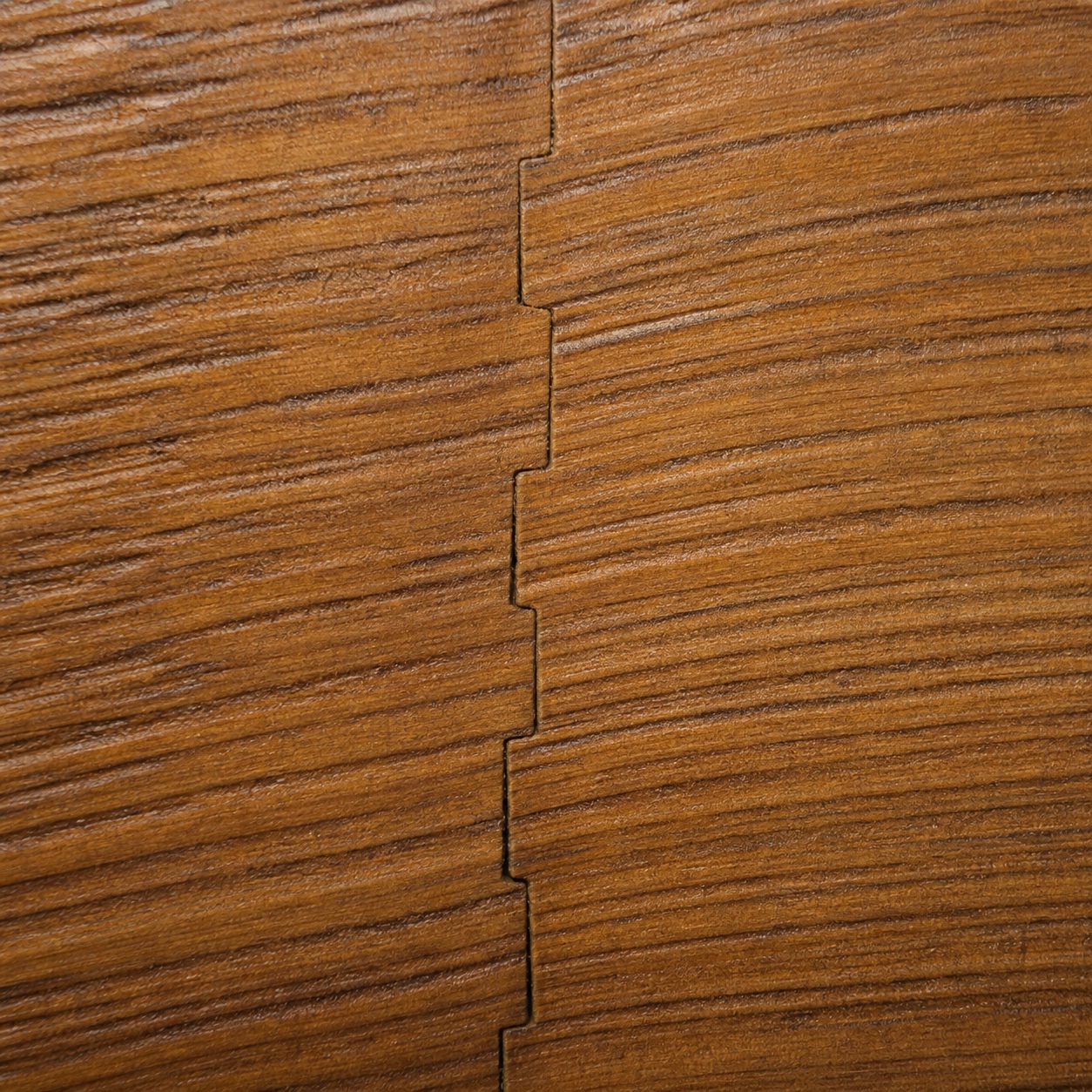
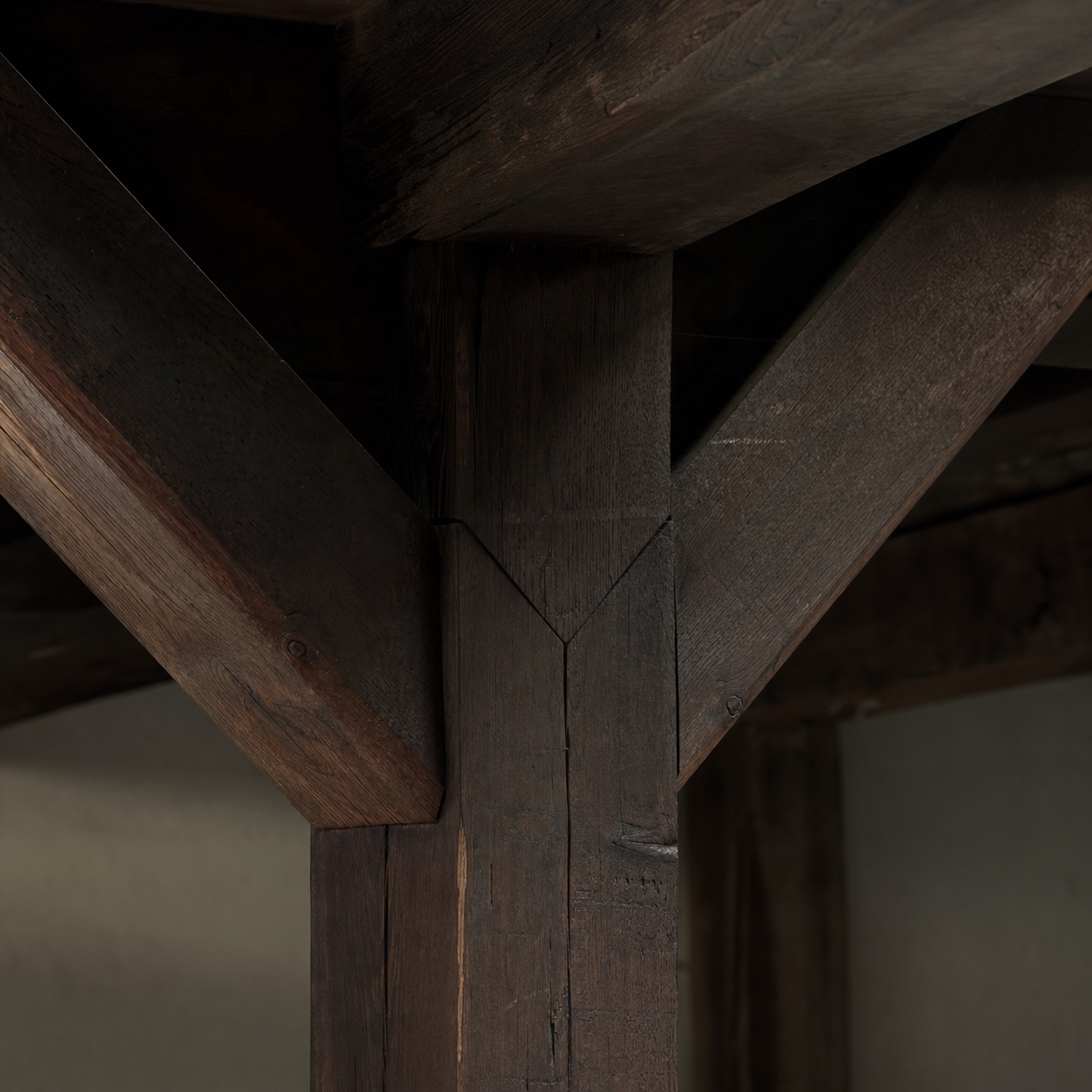
Shadow lines also need deliberate handling. The angled or stepped cut of a scarf joint naturally creates a fine line under directional light. If the fit is clean, that line can feel crisp and intentional. If the fit is rough, the same line becomes a visible gap.
Matching visibility to rustic, modern, or industrial interiors
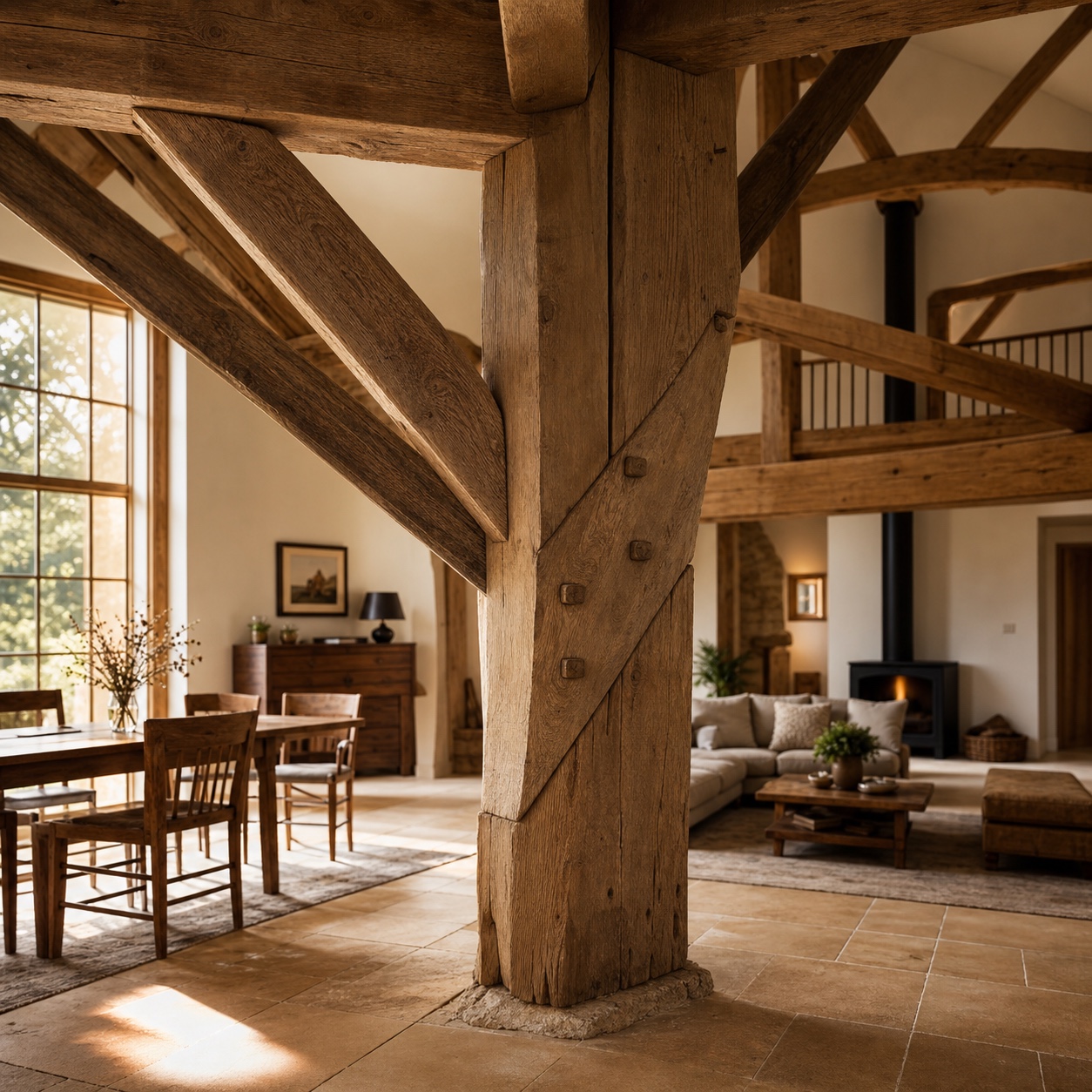
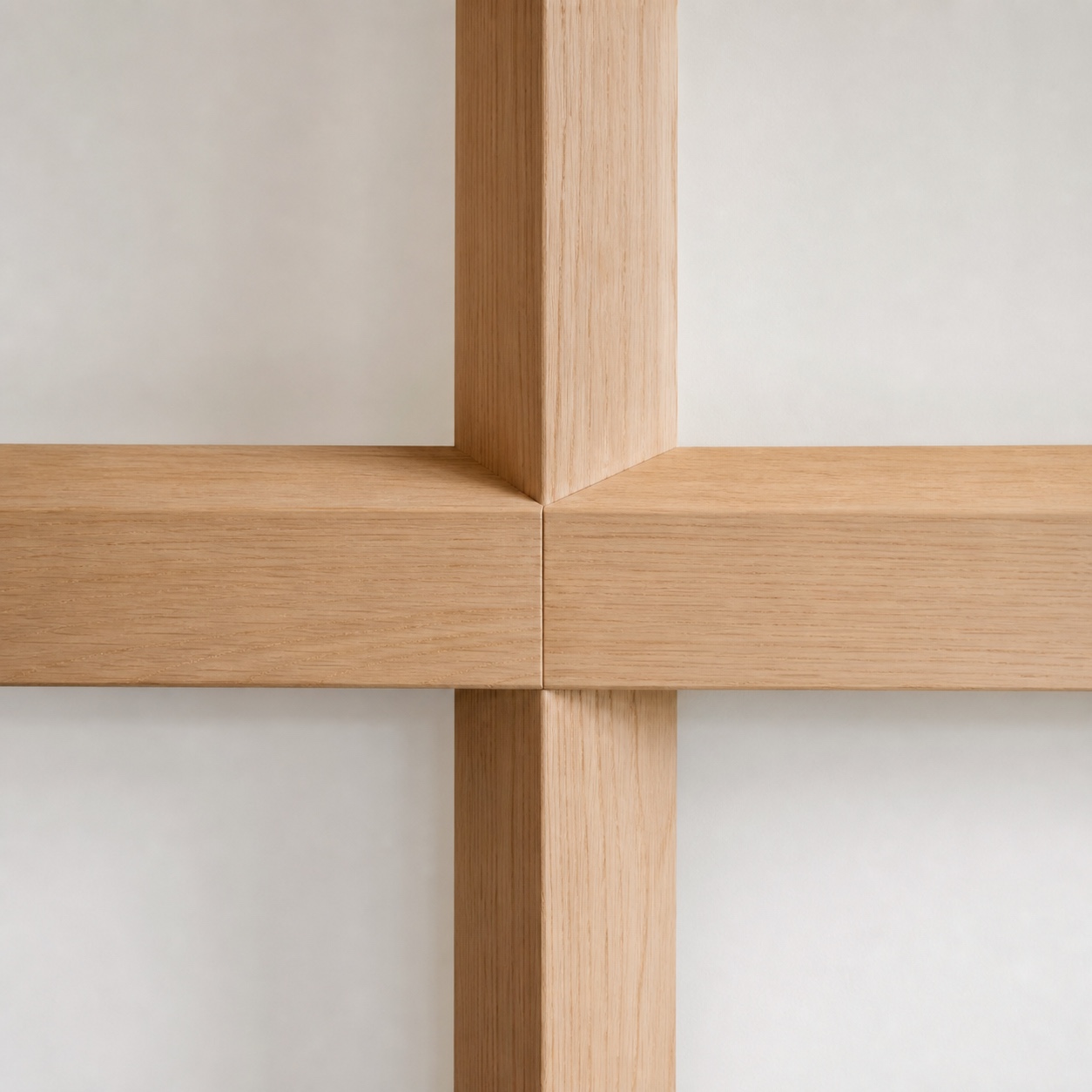
A heavily chamfered scarf joint with exposed pegs suits a rustic or traditional interior, where the joinery is part of the story. A tight joint with no exposed pegs suits a more contemporary space where the beam should read as a clean structural line. Neither approach is automatically better; the choice should follow the rest of the room’s material language.
Scarf joint vs metal connectors: where each detail belongs
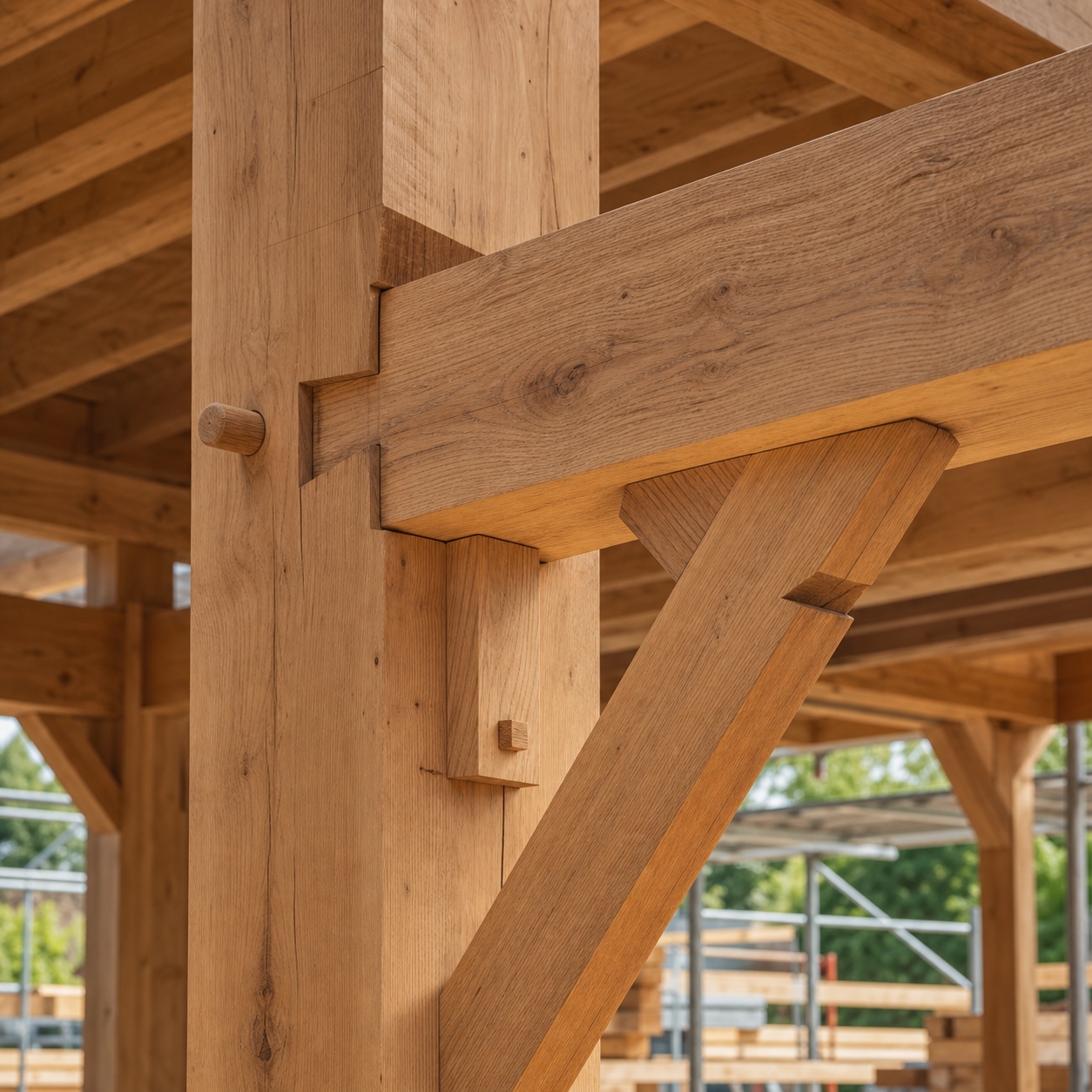
Scarf joints and metal connectors solve overlapping but different problems. A scarf joint is the better choice when the priority is visual continuity and when wood-to-wood contact can be cut precisely enough for the actual load. our guide to structural wood connectors covers the hardware side of the decision in more depth, including plates, brackets, bolted connections, and junctions where a rated mechanical connector is the right answer.
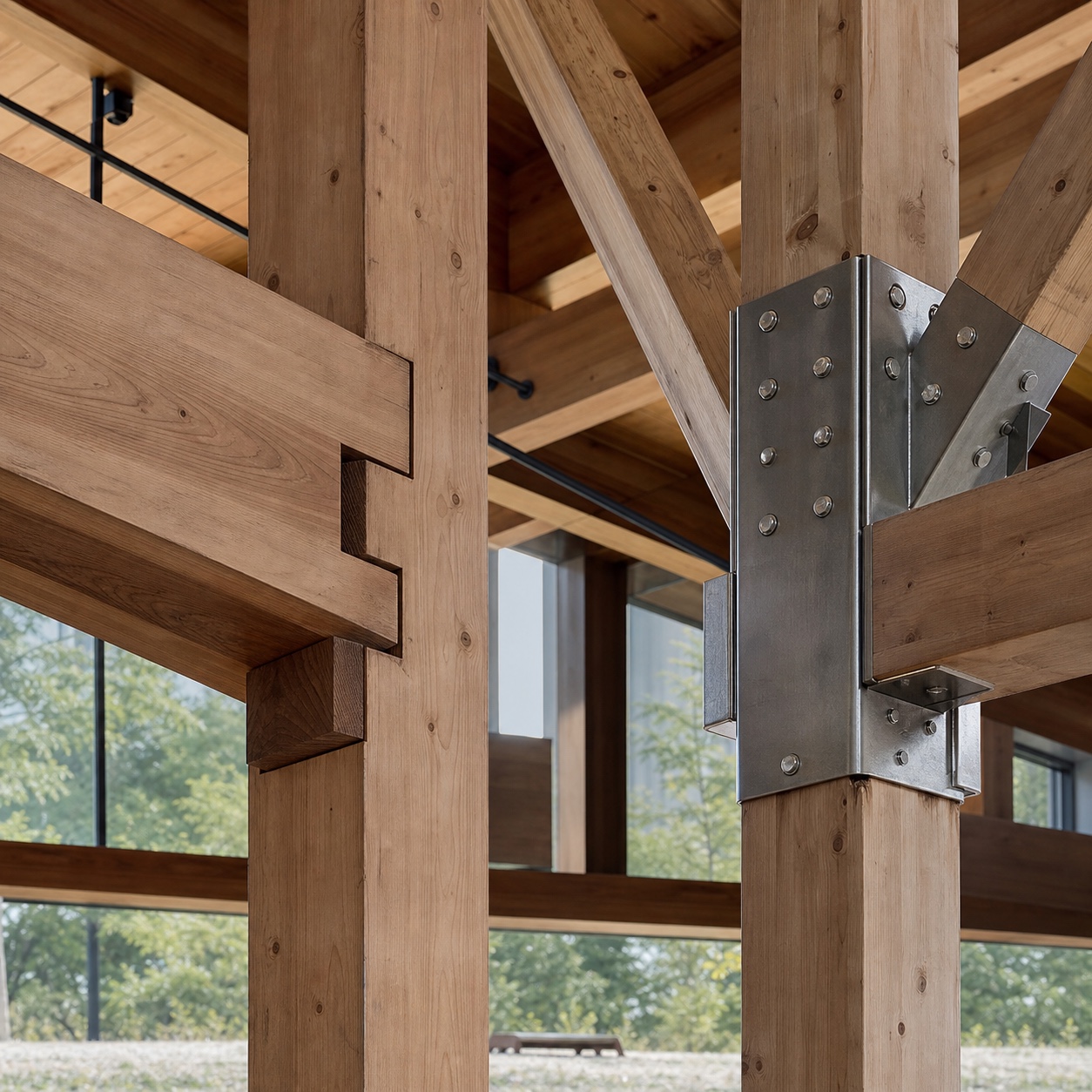
In practice, a good timber frame may use both. Scarf joints belong on long, visually prominent beams where continuity matters. Metal connectors often belong at complex junctions, high-load points, repairs, or situations where the engineer needs a fastening system with a documented rating.
The decision should happen early in the design phase. A structural engineer will want clear load calculations for any connection, and a traditional joint can meet that bar only when it is specified as a structural detail from the start rather than treated as an aesthetic preference after the frame is designed.
Mistakes that make timber joints look weak or awkward
One common mistake is cutting the joint without accounting for seasonal movement. A joint that looks tight on installation day can open visibly within a year if the timber dries, swells, or twists differently than expected. The risk grows when timber is exposed to moisture without enough drainage, ventilation, finish, or protection around the joint.
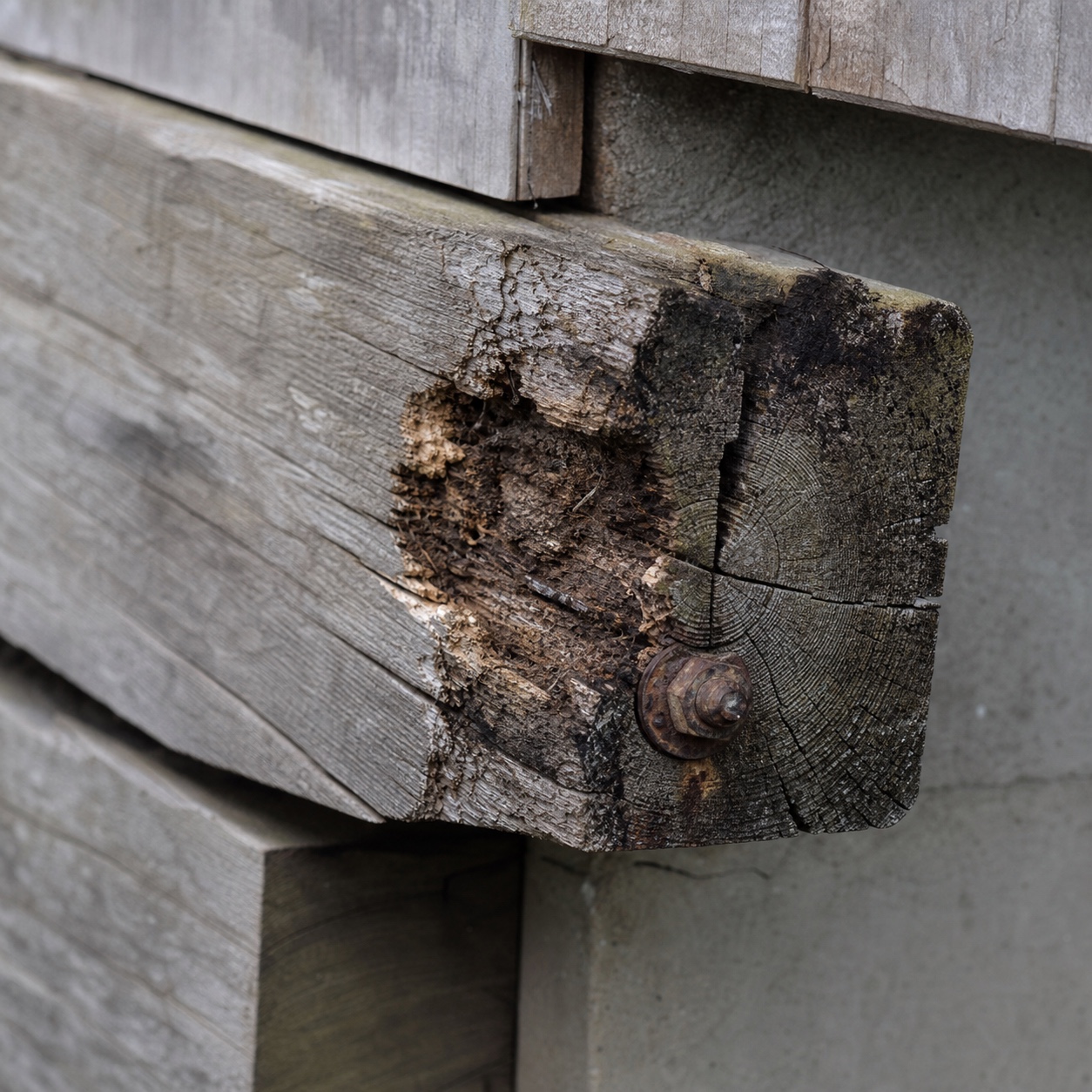
Another mistake is solving the engineering problem while ignoring the visual one. A structurally sound scarf joint can still look wrong if the grain match is poor, the shadow line is uneven, or the joint sits directly in the main sightline of the room without enough care in the cut.
Over-specifying reinforcement can be just as awkward. Adding visible plates or oversized fasteners to a joint that was already properly sized and cut does not necessarily improve performance in a meaningful way. It can simply undermine the continuity that made the scarf joint worth choosing in the first place.
FAQ
What is a timber frame scarf joint used for?
A timber frame scarf joint joins two pieces of timber end to end so the combined length behaves structurally like one continuous beam. It is commonly used on ridge beams, wall plates, and other long horizontal members where one stock timber is not long enough.
Is a scarf joint as strong as a solid beam?
A well-designed and correctly cut scarf joint can transfer tension and shear with minimal strength loss compared with a solid timber of the same section, but it rarely matches unjointed timber exactly. Joint type, fit, reinforcement, and location all matter.
What is the difference between a scarf joint and a metal connector?
A scarf joint is a shaped wood-to-wood connection that keeps a beam visually continuous. A metal connector is a separate mechanical fastening system, usually used where rated strength, speed, repair work, or complex junction loads matter more than a seamless timber face.
Which scarf joint type is strongest?
Tabled scarf joints generally offer strong resistance to tension because the notched profile mechanically resists the timbers pulling apart. Stop-splayed joints are useful under a broader mix of compression and tension. The right choice depends on the actual forces at the joint.
How do I stop a timber scarf joint from developing gaps over time?
Plan for timber movement before the cut is made. Match grain direction where possible, detail the joint so water sheds away rather than collecting, protect exposed timber with an appropriate finish, and place high-visibility joints where the fit can be maintained and inspected.
- 19shares
- Facebook0
- Pinterest19
- Twitter0
- Reddit0