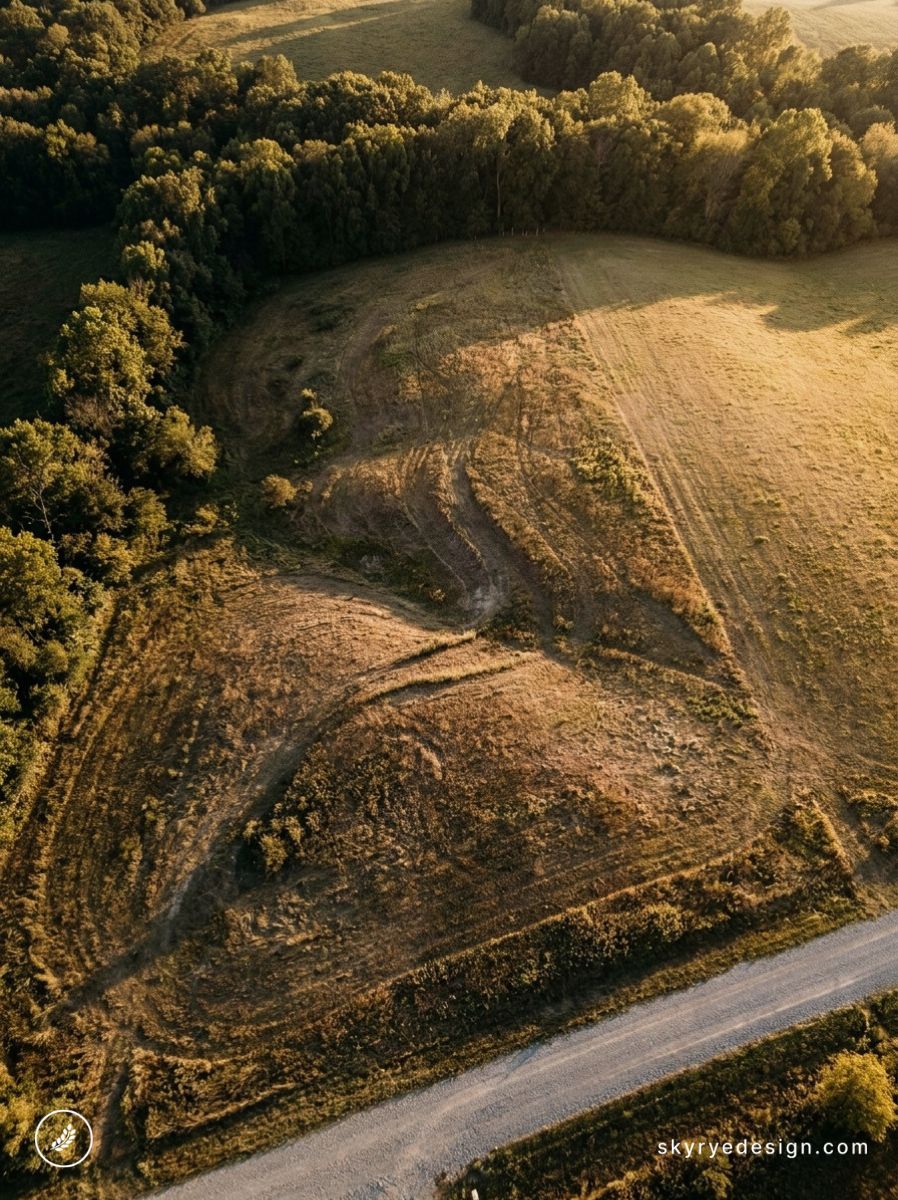
A parcel of land sat on the market for eleven months in our area — a genuinely good piece of land, well-located, correctly zoned for residential, reasonably priced. The listing description said: “4.2 acres, flat, good access, motivated seller.” The photograph was a single aerial shot taken on an overcast day that showed mostly a grey-green field and a road edge. The listing had been sitting on a general MLS platform that handled everything from apartments to commercial warehouses.
- What Architects and Custom Builders Actually Evaluate
- Translating Site Characteristics into Architectural Language
- The Documentation Package That Converts Interest to Offers
- Exposure Strategy: Reaching the Right Buyer Profile
- Positioning the Parcel as a Design Brief, Not an Acreage
- FAQ: Selling Land to Architects and Custom Builders
Three months after the original seller gave up and relisted through a specialist, it was under contract. The land itself was identical. What changed was the frame through which it was presented. The new listing described the site’s north-south orientation and the unobstructed western aspect. It noted that the topography allowed for a split-level design with a walkout basement on the eastern face.
Raw land only becomes valuable when the development story is believable. For a coastal version of that problem, read this private island architecture guide.
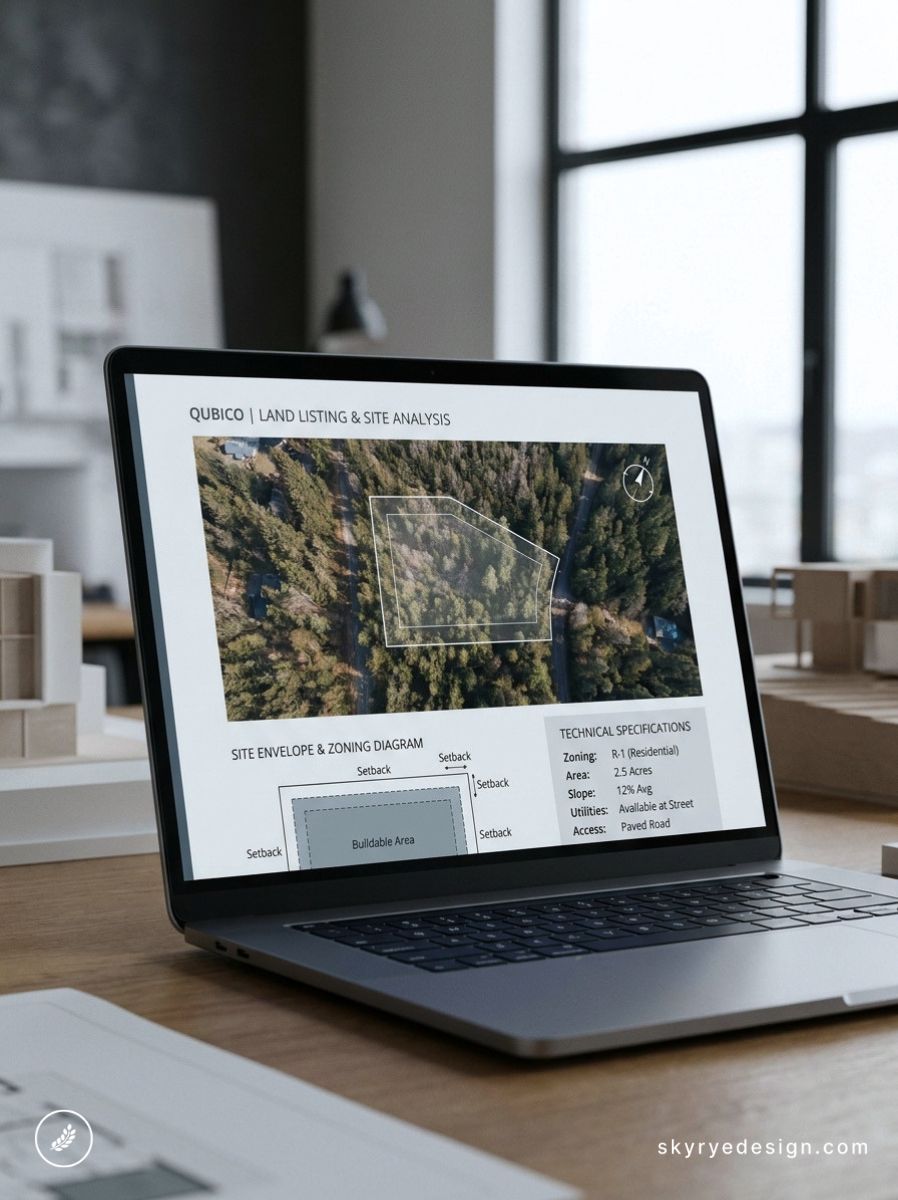
It specified the utility connections already at the boundary. It included a preliminary site envelope diagram showing the buildable area after applying local setbacks. The aerial photography was shot at low-light golden hour. The listing appeared on a platform where the buyer pool was specifically land purchasers and builders, not the general public browsing for homes.
Raw land does not sell slowly because buyers lack imagination. It sells slowly because most land listings fail to provide the specific technical and spatial information that design and build professionals need before they can evaluate a site seriously. This guide covers what custom builders and architects actually assess when they look at raw land, how to present those factors in the language that design professionals respond to, and how to position a parcel as an architectural opportunity rather than an undifferentiated acreage listing.
What Architects and Custom Builders Actually Evaluate
The single most important thing to understand about selling land to design and build professionals is that they evaluate sites analytically, not emotionally. A residential buyer purchases a house partly on the basis of how standing in the kitchen feels. A custom builder or architect purchases land by running a feasibility analysis: what can be built here, at what cost, generating what value? The purchase decision is driven by numbers and constraints, not atmosphere.
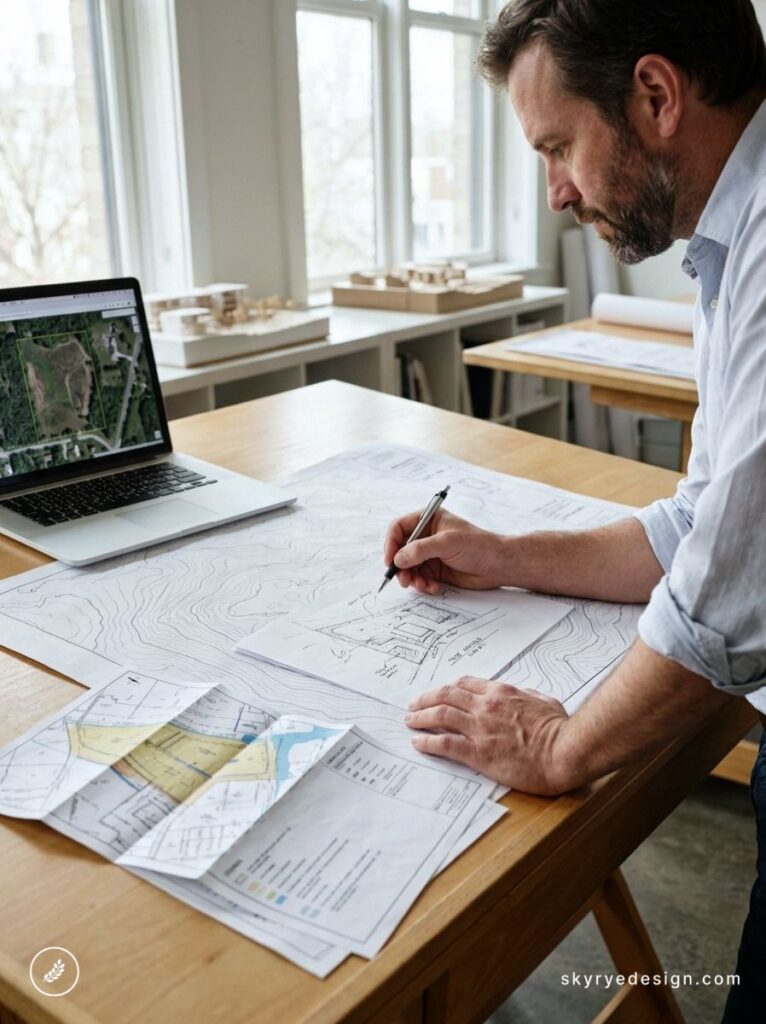
This means that land marketed exclusively on scenic appeal, acreage, or location proximity — “stunning views,” “minutes from the city,” “4.2 acres of opportunity” — communicates nothing useful to the buyer who matters most. These buyers need specific technical information to evaluate the site. When that information is not in the listing, they either spend time seeking it out through their own due diligence (which slows the process) or they move to a listing that already provides it (which means you lose them entirely).
The Builder’s Evaluation Hierarchy
- Zoning and permitted use: the first filter. Is the intended build type permitted? What are the setbacks, height limits, and lot coverage maximums? Can the desired programme fit within the site envelope these restrictions create? If this information is not clear in the listing, the builder’s first call is to the planning department — which introduces delay and uncertainty that may cause them to prioritise other parcels.
- Utility access: the second filter and the most significant variable in site development cost. Is water at the boundary or does it require a new connection? Is sewer available or does the site require a septic system? What is the electrical supply situation? Each of these variables has a direct cost implication that affects feasibility.
- Topography and soil: slope, drainage, and soil bearing capacity determine foundation type and earthworks cost. A gently sloping site that allows a split-level design with a walkout basement is an architectural asset. A steeply sloping site requiring extensive retention and fill is a cost risk. Clay soil with drainage issues may require engineered foundations at significant premium.
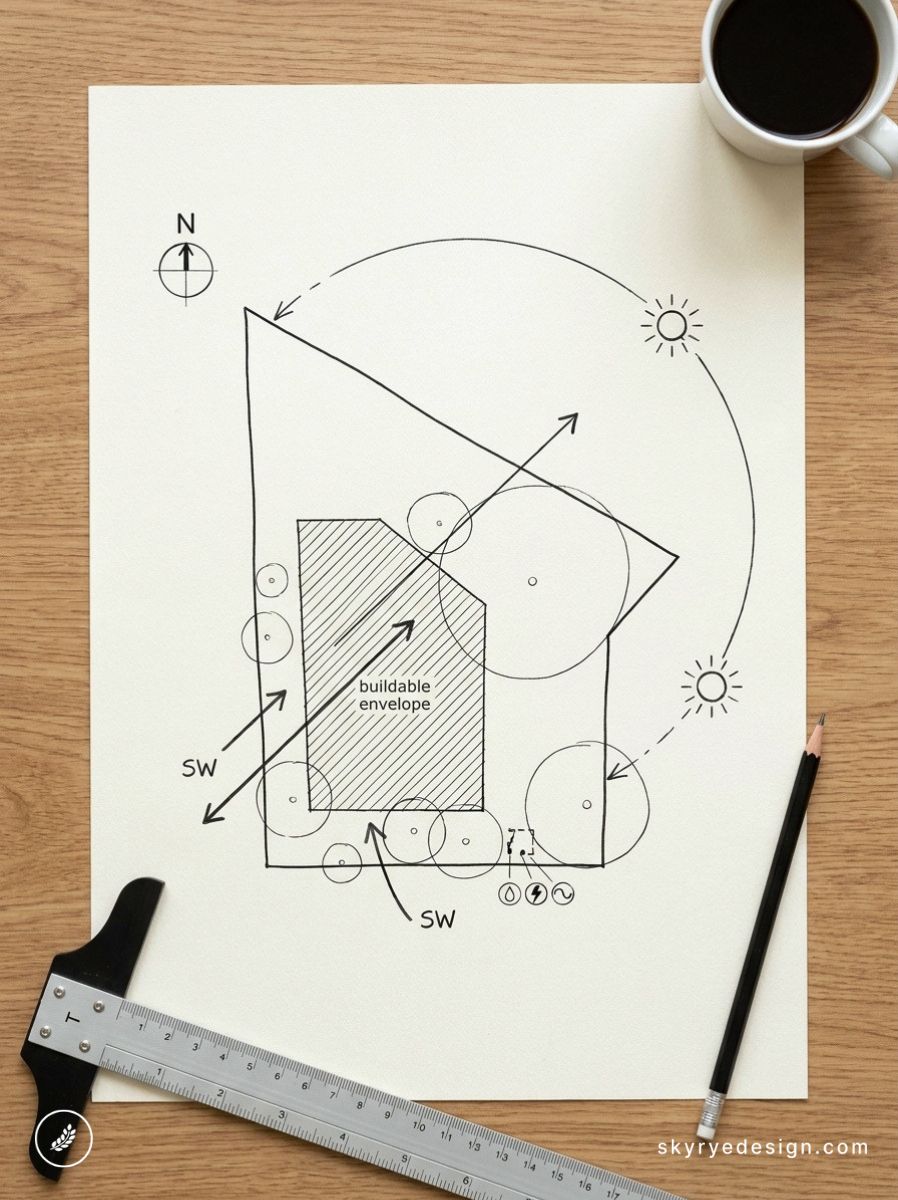
- Site orientation and solar access: custom builders and architects design around solar access, views, and prevailing winds. A north-south oriented site with an open southern aspect is a design asset in the northern hemisphere — it allows passive solar design and delivers the best daylighting quality. This is worth stating explicitly in the listing.
- Access and easements: legal road access is non-negotiable. Any recorded easements, rights-of-way, or development covenants that restrict use must be disclosed and explained. Ambiguity here creates risk that builders price into their offers.
✏ Positioning note: Buyers who are design professionals will commission their own geotechnical and survey work before settlement. But they need enough information in the listing to decide whether the site is worth investigating. A listing that answers the five evaluation questions above — zoning, utilities, topography, orientation, and access — will generate significantly more serious enquiries than one that answers none of them.
Translating Site Characteristics into Architectural Language
The gap between how most land is listed and how design professionals want to receive information is essentially a translation problem. The site has characteristics that are relevant to architectural design — orientation, slope, natural features, view lines, prevailing wind — but these are typically described in generic real estate language if they are described at all.
Translating these characteristics into the specific language of site analysis is the positioning shift that moves a land listing from the general pool to the shortlist of design-ready buyers.
Topography
What it is: The three-dimensional shape of the land surface: its slope, gradient, contours, and relationship to surrounding terrain.
Why builders care: Topography directly determines what design is possible and at what cost. A level site is simple to build on but offers fewer design opportunities. A gently sloping site enables split-level design, walkout basements, and visual separation between functional zones. Topographic variation creates opportunities for landscaping, water features, and spatial hierarchy that flat sites cannot achieve.
How to present it: Commission a topographic survey and present it as a contour plan in the listing documentation. Describe the slope direction and gradient in specific terms: ‘gentle east-facing slope of approximately 3-5%, allowing for a walkout lower level on the eastern elevation.’ This framing positions topography as a design asset rather than a site challenge.
Solar Orientation
What it is: The relationship between the site’s orientation and the path of the sun — which aspects receive morning, afternoon, and direct midday sun.
Why builders care: Passive solar design — positioning living areas and glazing to maximise winter solar gain while managing summer overheating — is a fundamental strategy in high-quality custom homes. A site that allows an optimal solar orientation delivers lower energy costs, better daylighting quality, and more comfortable interior spaces without additional cost. This is a direct value driver for energy-conscious builders and their clients.
How to present it: State the site’s primary aspect and solar orientation explicitly: ‘north-south long axis with open southern exposure, allowing south-facing principal rooms with passive solar access.’ Include a simple sun path diagram in the listing documentation showing solar angles at summer and winter solstice.
View Corridors and Privacy
What it is: The specific directions from which views are available, and the natural or constructed screening that provides privacy from adjacent properties and roads.
Why builders care: View lines and privacy are primary drivers of room orientation in custom home design. A site with a clear view corridor to the west allows the architect to position the living room for afternoon light and sunset views. Existing tree belts or landform that screens the site from neighbouring properties reduces the cost of creating privacy through built fencing or planting.
How to present it: Photograph the view from the site in each direction at the proposed building height (approximately 3-5 metres above grade). Include these in the listing with compass orientation labelled. Note any existing vegetation that provides screening and its approximate height and maturity.
Natural Features
What it is: Trees, rock outcrops, watercourses, native vegetation, and any other site elements that would remain after development.
Why builders care: Mature trees are significant site assets for custom home buyers — they provide immediate landscaping value that would take twenty years to replicate from a cleared site. A significant rock outcrop or water feature can become an architectural focal point. Native vegetation may also carry planning benefits in some jurisdictions, including reduced landscaping obligations.
How to present it: Map all significant natural features with their approximate size, species, and condition. Note any planning overlays or regulations that protect specific features. Frame retained trees and natural elements as design assets that add immediate value to the eventual build: ‘mature established canopy on the northern boundary provides privacy screening and creates a distinguished garden backdrop.
The Documentation Package That Converts Interest to Offers
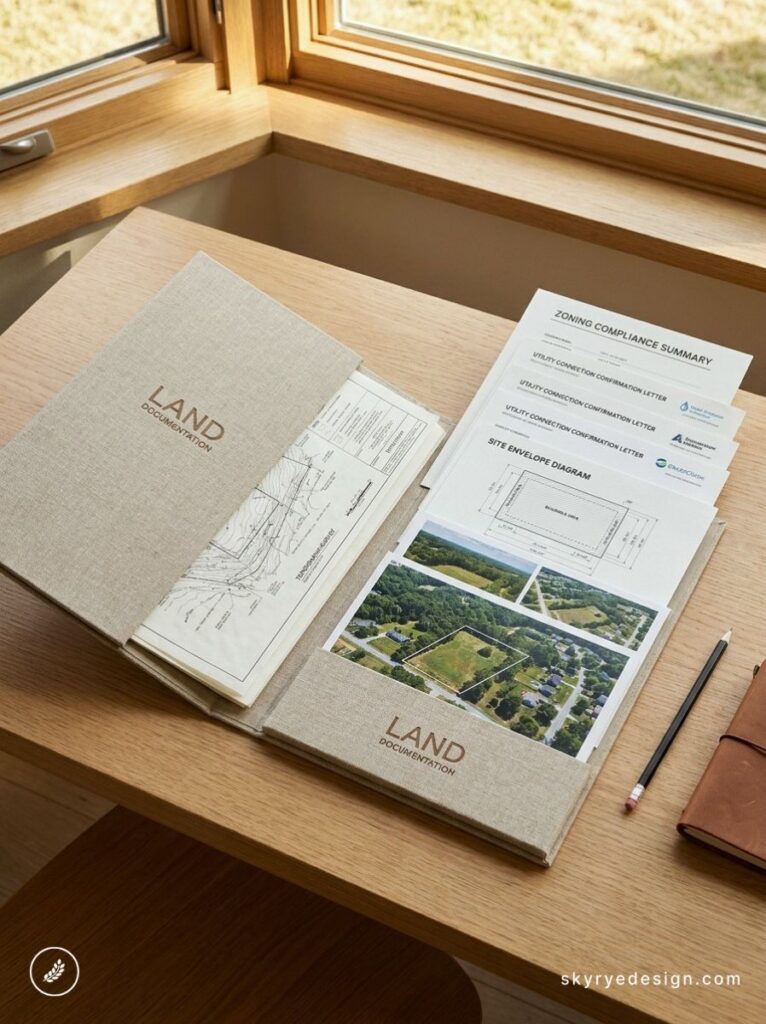
The fastest path from listing to offer for raw land sold to design and build professionals is removing the friction in their due diligence process. Every question a buyer has to answer through their own investigation is a reason to delay making an offer, and delay consistently leads to lost deals. Sellers who provide a complete technical documentation package at listing stage compress the timeline from interest to offer because the information that would otherwise take weeks to gather is already in the buyer’s hands on day one.
What the Package Should Contain
- Current survey: boundary plan confirming exact area, dimensions, and any recorded easements or rights-of-way. Without this, buyers cannot accurately calculate site coverage or buildable area.
- Zoning compliance summary: a written confirmation from the local authority stating the permitted use, density, setbacks, height limits, and any overlay controls that apply. This document removes the most common source of listing ambiguity.
- Utility connection confirmation: written advice from each relevant service provider (water, sewer, electricity, gas, telecommunications) confirming service availability at the boundary or the standard connection process and indicative cost. This converts the utility question from an unknown to a known.
- Preliminary site envelope diagram: a simple plan drawing — it does not need to be architect-drawn — showing the land boundary, the setback lines, and the resulting buildable envelope. This is the document that allows a builder to immediately assess whether their intended programme fits the site.
- Geotechnical preliminary: for sites with any topographic complexity, slope, or known soil conditions, a preliminary geotechnical assessment confirming soil bearing capacity and foundation suitability. This is the document that builders price into their feasibility analysis.
- Title search: confirmation of clean title and disclosure of any recorded covenants, encumbrances, or development restrictions. Any restriction not disclosed in the listing creates post-offer risk that kills deals.
✏ Positioning note: The documentation package does not replace professional due diligence by the buyer. It provides the baseline information that allows a serious buyer to decide whether the site is worth their own investigation cost. Think of it as the information a preliminary site visit by an architect would answer — presented in document form so that the buyer can complete their initial assessment without visiting the site.
Exposure Strategy: Reaching the Right Buyer Profile
Correct positioning and comprehensive documentation are only effective if the listing reaches the buyers who will respond to them. The custom builder and architect buyer pool does not browse general real estate platforms the way residential buyers do. They are actively seeking land through specialist channels — land-specific platforms, architect and builder networks, developer investor groups, and direct outreach from land specialists.
A listing on a general MLS system reaches a very large audience, the vast majority of whom are not relevant to a raw land parcel intended for custom development. The same listing on a specialist land platform or directly marketed to a targeted builder network reaches a much smaller audience — but one where a significantly higher proportion are qualified, motivated buyers who are actively looking for exactly what the parcel offers. For land intended to attract design-build professionals, specialist channel exposure consistently outperforms broad general exposure.
The Right Platforms and Networks
Land-specific listing platforms aggregate parcels by type, zoning, and development potential, which means buyers searching on them have already self-selected for land rather than arriving from a general property search. Platforms such as placeacre.com are built specifically for land buyers and sellers, positioning parcels in front of a buyer pool that understands land transactions and development potential — a qualitatively different audience from the general MLS.
Complementing platform listings with direct outreach to local custom builders, design-build firms, and residential architects through professional associations and local networks adds another layer of targeted exposure that generic listings cannot replicate.
Photography and Visual Presentation
Land photography for a design-build audience needs to communicate the site’s spatial qualities rather than simply document its existence. Drone aerial photography at low-altitude golden hour reveals topographic character, natural features, and site context in a way that flat midday overheads cannot.
Ground-level photography from the proposed building location in each view direction shows buyers what the eventual occupant will actually see. A short drone video following the site perimeter and then sweeping to show the surrounding context communicates scale and adjacency in a way that still photography cannot.
Positioning the Parcel as a Design Brief, Not an Acreage
The parcel that sold in three months after eleven months on the market did not become a better piece of land when it was relisted. The topography was the same. The zoning was the same. The utilities were the same. What changed was that the listing stopped asking buyers to imagine the potential and started showing them the site analysis that allowed them to evaluate it.
Custom builders and architects are not looking for an emotional connection to a piece of land. They are looking for a brief — a set of constraints and opportunities that their design process can respond to. A site with a clear orientation, a defined buildable envelope, confirmed utility access, and known soil conditions is not just better documented than a generic acreage listing. It is a fundamentally different product. It answers the questions that move a buyer from interest to offer without requiring them to spend weeks gathering the information themselves.
For land sellers who are serious about reaching the custom build market, the investment is not primarily in marketing spend. It is in the quality of the information package and the specificity of the positioning.
Prepare the documentation, present the site in architectural language, list through channels that reach design-build professionals, and use specialist platforms like placeacre.com that aggregate land listings for a buyer pool that understands development potential. The result is not just a faster sale — it is a better-qualified buyer, a cleaner transaction, and a price that reflects the actual design value of the land rather than the discount that uncertainty commands.
FAQ: Selling Land to Architects and Custom Builders
Q: What do custom builders look for when buying raw land?
In order of decision weight: zoning clarity (permitted use, setbacks, height limits), utility access (water, sewer, electricity at boundary or connection cost known), topography and soil (foundation type and earthworks cost), site orientation (solar access and view lines), and access and easements. Price matters last — only in relationship to the development cost variables above.
Q: How should raw land be marketed to architects and builders?
With technical information rather than emotional language. A site analysis document covering zoning, setbacks, utility availability, topography, and easements. Aerial photography showing site context and natural features. A preliminary site envelope diagram showing buildable area. Orientation and solar access described in architectural terms. Listed on specialist land platforms — not general MLS — where the buyer pool is already land-focused.
Q: What documents should a land seller prepare before listing?
Developing new plots requires careful historical context. Study how historic Victorian architecture in London integrated with local street plans.
Current survey, zoning compliance summary from the local authority, utility connection confirmation from each provider, preliminary site envelope diagram, geotechnical assessment if the site has topographic complexity, and a title search confirming clean title. Sellers who prepare this package proactively address the due diligence questions most buyers ask — significantly reducing time from interest to offer.
For undeveloped parcels, drone site analysis for raw land can turn slopes, vegetation, access, and drainage into clearer design decisions.
- 48shares
- Facebook0
- Pinterest48
- Twitter0
- Reddit0