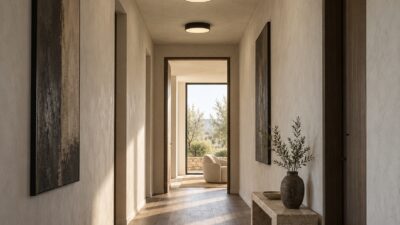
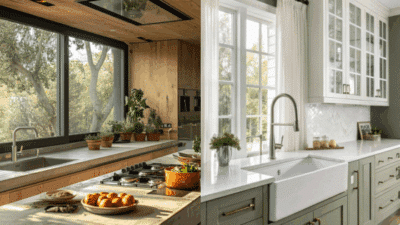
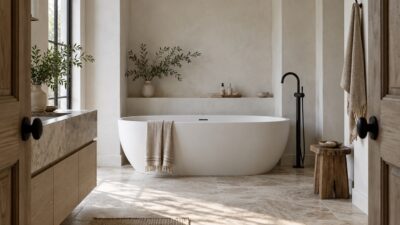
My first apartment in Germany was technically correct. Good location, right size, decent light. I moved in, arranged everything, and it never felt like mine. The proportions were off for the way I work. The materials were wrong for how I use a space. After about three months I understood what the problem was: I had chosen it on criteria that had nothing to do with how I actually live.
Most families buying a home run through the same checklist that I ignored: square footage, school district, commute time, storage. All of it matters. But the question that usually goes unasked is whether the place actually fits the way the family lives. Does it match the noise level of a household with young children? Does it accommodate the way weekends are spent? Does it feel right the moment you walk in, not just in the listing photos?
- Start with how your family actually lives, not how you want to live
- The main home aesthetic categories: what each one actually demands
- Architecture first: the constraint that simplifies every aesthetic decision
- Getting everyone in the household to the same decision
- Trends: use them carefully or they use you
- How to use viewings to gather real information
- The right aesthetic is the one that fits the family, not the photos
- Frequently Asked Questions
- What is a home aesthetic?
- How do I find my home aesthetic?
- Should the interior aesthetic match the exterior architecture?
- What is the most family-friendly home aesthetic?
- How do I avoid choosing an aesthetic that feels dated quickly?
- How do I involve my whole family in choosing a home aesthetic?
- Can I change a home aesthetic after buying?
Aesthetic fit is consistently underweighted in the home buying process, and it’s one of the primary reasons a house can take years to feel like home. Getting it right from the start requires a different sequence: lifestyle first, then architecture, then style. Here’s how that sequence works in practice.
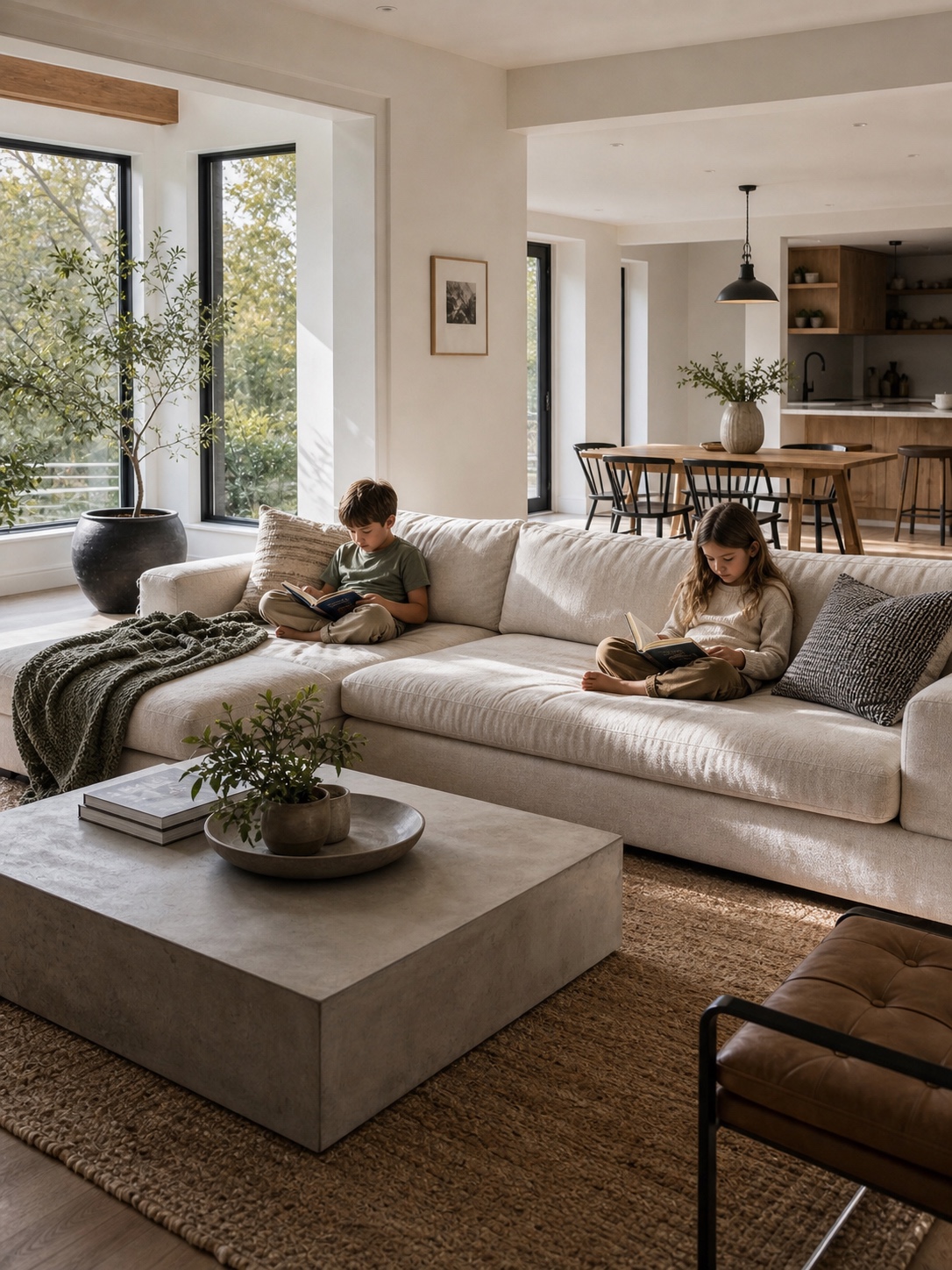
Start with how your family actually lives, not how you want to live
Every family has a gap between their idealized version of home life and the reality of it. The idealized version involves calm mornings, tidy surfaces, and spaces that always look like a staging photo. The reality involves homework at the kitchen island, sports equipment near the door, and a level of daily entropy that no staging photo captures.
The aesthetic that works for your family is the one that can absorb that reality without looking like it’s failing. A modern minimalist interior with white upholstery and open shelving works beautifully for couples or households where things genuinely stay organized. It stops working the moment it’s populated by three children under ten.
Map the actual daily routine before anything else
Before you fall in love with a home listing, map what a typical weekday looks like from 7am to 9pm. Where does breakfast happen? Where does homework land? Where do bags and shoes go when people come through the door? Where does the family actually spend time together versus where the floor plan suggests they will?
These patterns reveal the spatial requirements that no floor plan communicates directly. A family where children do homework in the kitchen needs an island or table large enough to absorb that, and a sightline from the cooking area. A household that entertains regularly on weekends needs a different flow between kitchen, dining, and living than one that keeps hosting minimal.
I find the most honest version of this conversation happens when you describe your current home critically: what about it creates friction every day, and what about it you’d preserve exactly. The friction points reveal what the new home needs to solve. The preserved elements reveal what the new aesthetic should keep.
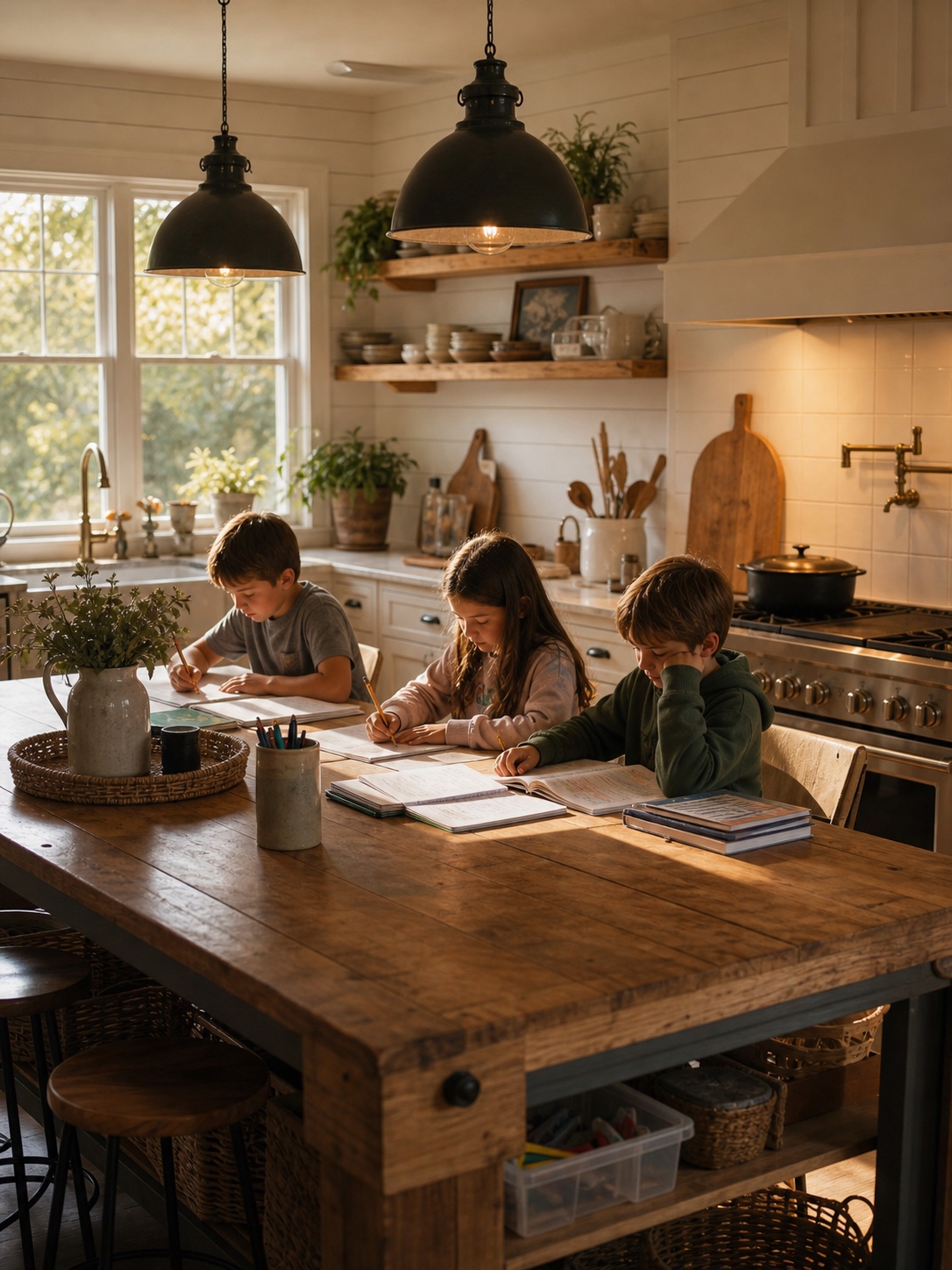
The main home aesthetic categories: what each one actually demands
Style categories get described in terms of what they look like. What’s more useful is understanding what they demand from the people living inside them, because that’s what determines whether a style fits a specific family.
Modern minimalist: requires active maintenance
Clean lines, neutral surfaces, open space. This aesthetic looks effortlessly calm and is genuinely satisfying when it works. What it demands is ongoing discipline about what enters the space and where things land when they come through the door. For families with young children, this isn’t a style problem, it’s a storage and habit problem that needs to be solved before the aesthetic can function.
Modern minimalist works well for smaller households, design-focused parents who find visual clutter genuinely stressful, and families whose children are older and independently tidy. It works less well where there are multiple ongoing projects, hobby materials, or the general material density of active family life.
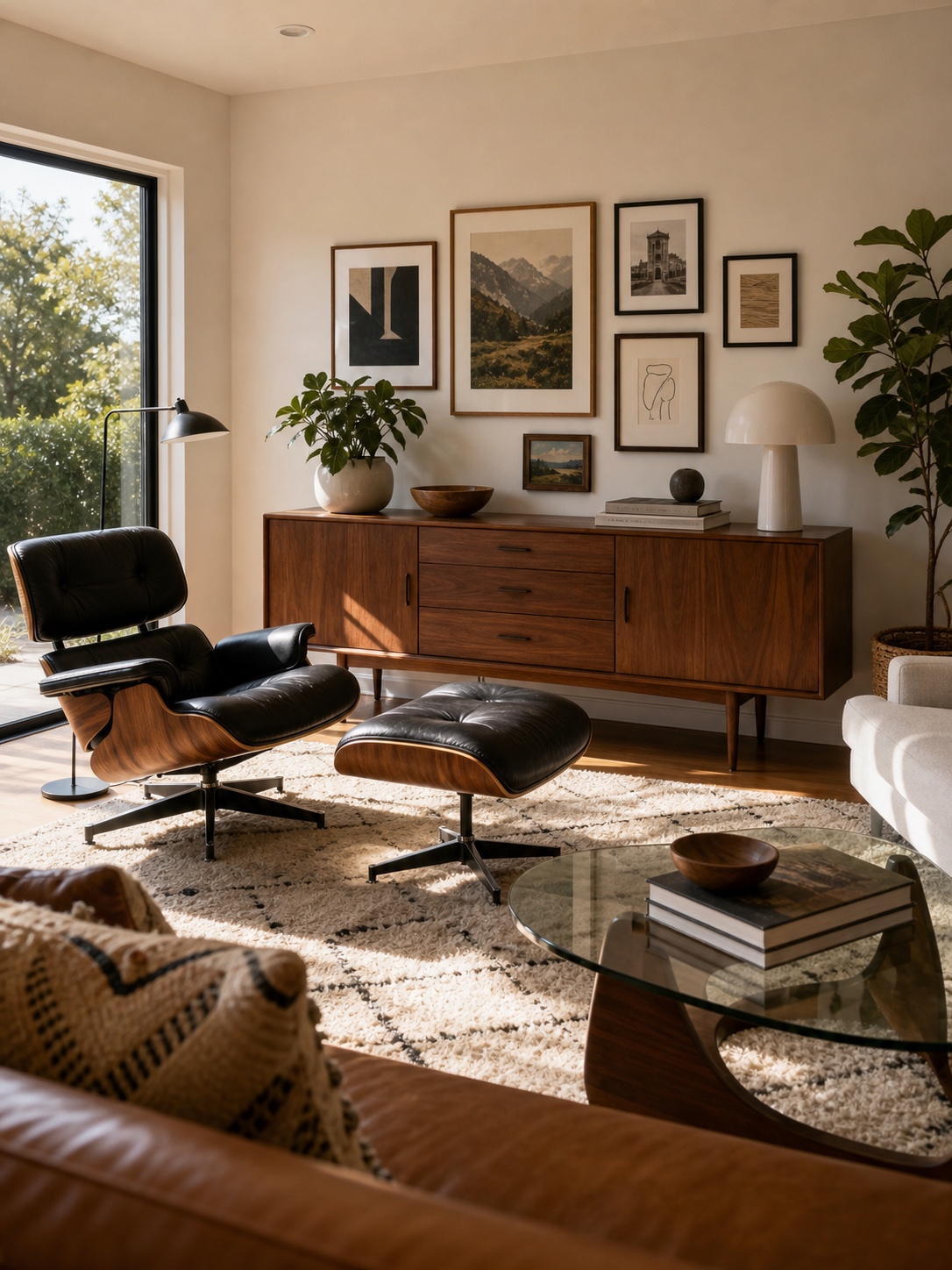
Farmhouse and rustic: forgiving and warm, but not neutral
Warm wood, textured surfaces, shiplap, and the kind of visual weight that makes a space feel inhabited rather than staged. Farmhouse aesthetics absorb daily life gracefully. A lived-in farmhouse kitchen looks right with activity on the counter. It looks intentional, not neglected.
What farmhouse demands is commitment to warmth over coolness, visual texture over graphic simplicity, and a tolerance for decorative detail that pure modernists find excessive. It doesn’t suit families whose taste runs toward spare, graphic, or industrial. And it requires more deliberate choices when the architecture is contemporary, because it can start to feel applied rather than native.
Mid-century modern: character without chaos
Bold organic shapes, earthy tones, walnut and teak, furniture that reads as design objects rather than background. Mid-century works well for design-conscious parents who want the home to have a point of view without being overwhelming. The palette is warm enough to feel livable, the shapes are distinctive enough to feel considered.
The challenge is that authentic mid-century pieces are expensive and reproductions vary enormously in quality. The aesthetic also requires some restraint with accessories: mid-century rooms can tip into museum territory if every surface is treated as a display. It suits families who edit deliberately and don’t accumulate.
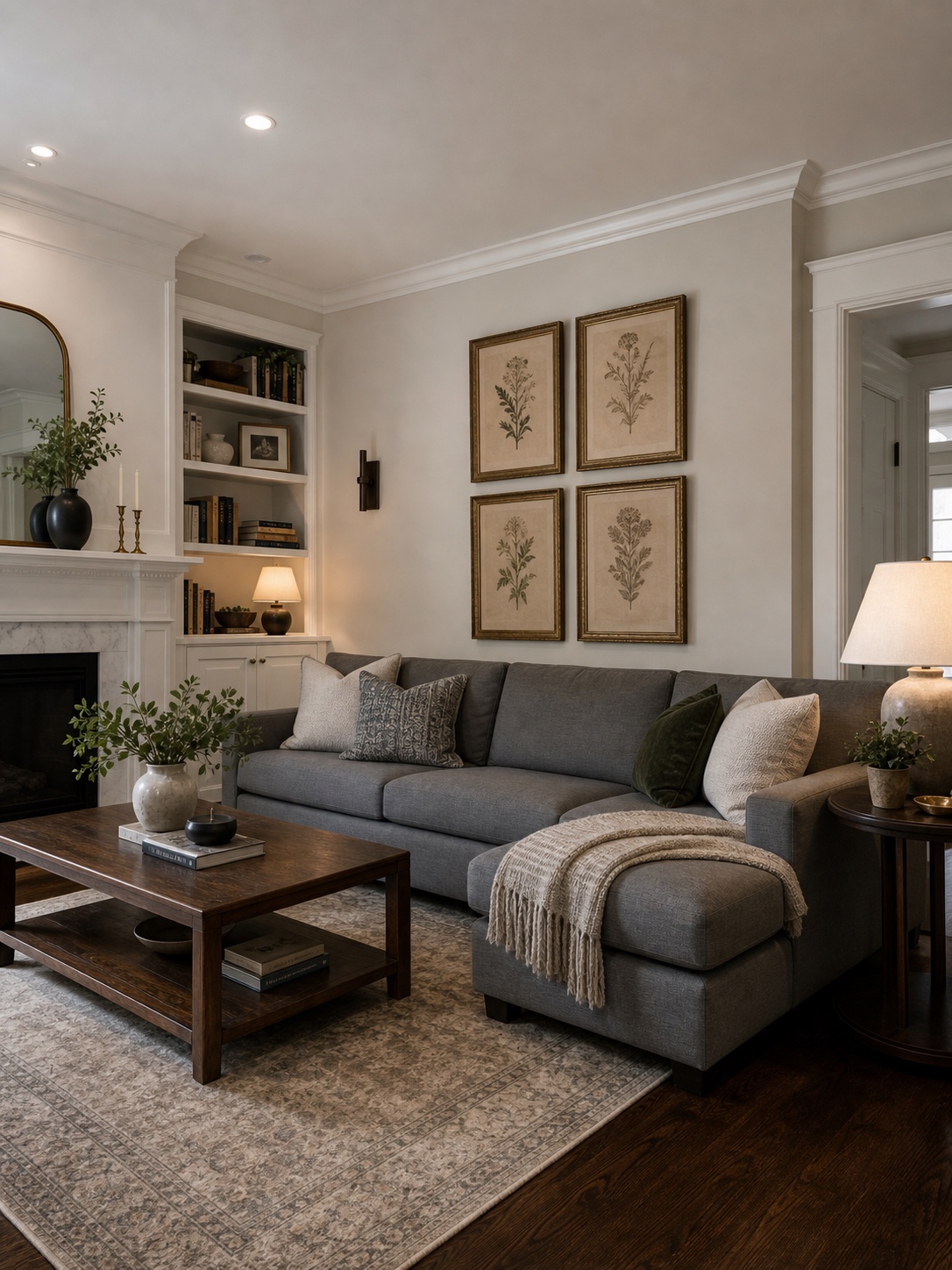
Transitional: the compromise that actually works
Transitional style blends modern and traditional elements: crown molding with contemporary furniture, classic floor materials with clean-lined cabinetry. It’s the most common choice for couples with different aesthetic preferences, and for good reason: it’s genuinely versatile.
The risk with transitional is blandness. Without a clear editorial point of view, it can feel like a collection of things rather than a considered design. The families who make transitional work are those who choose one dominant aesthetic and let the other provide contrast rather than treating both as equal.
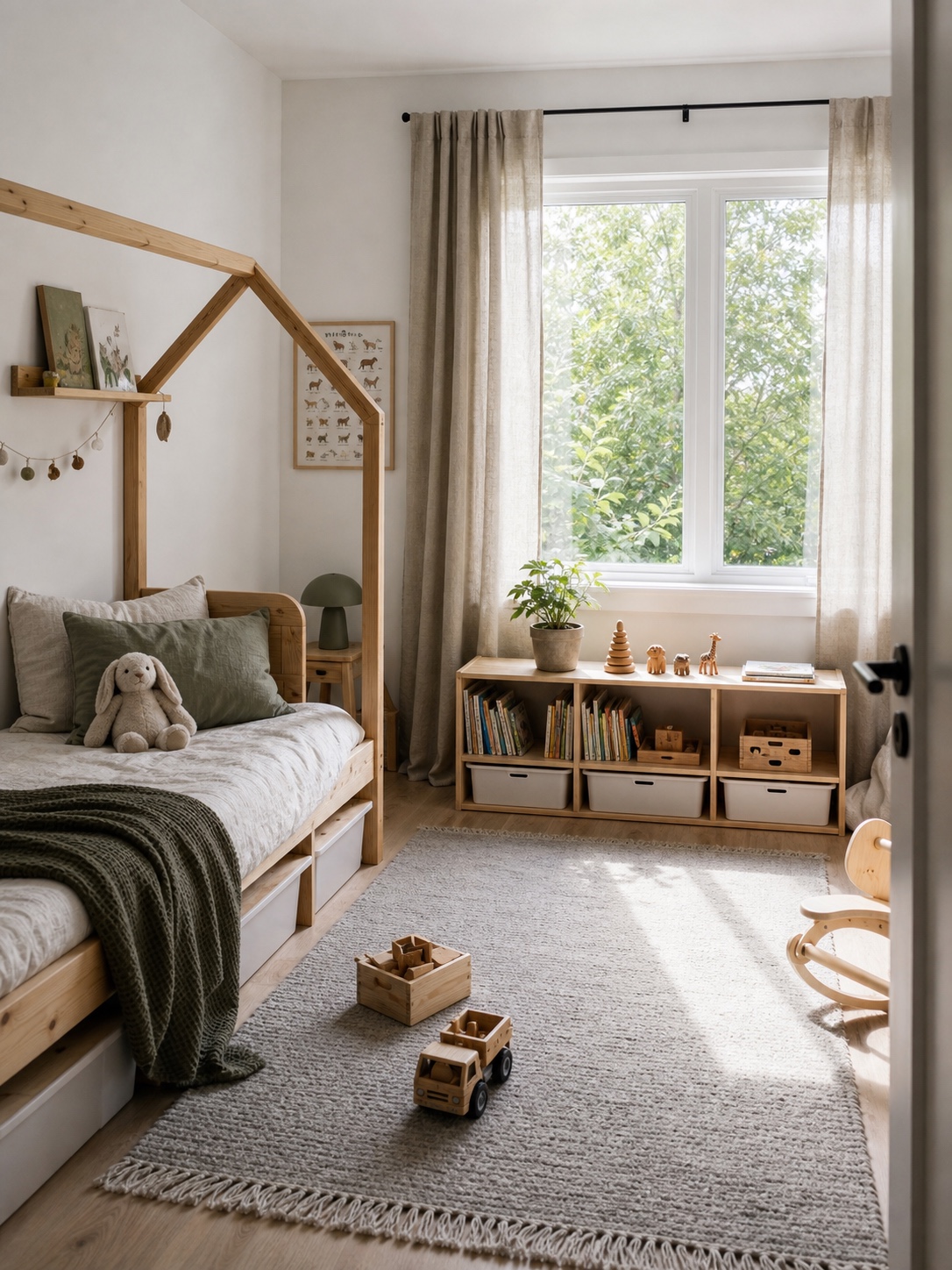
Scandinavian: function as the aesthetic
Light, airy, and prioritizing function without sacrificing warmth. Natural materials, white or pale walls, and furniture scaled for actual use rather than visual impact. Scandinavian aesthetics suit families who value simplicity and find visual complexity draining.
It’s also one of the most genuinely practical styles for families with children: the furniture is typically durable, the materials are honest, and the pale palette makes rooms feel larger than they are. The constraint is that it reads best in homes with good natural light. In darker homes or rooms with small windows, the palette can feel cold rather than calm.
Architecture first: the constraint that simplifies every aesthetic decision
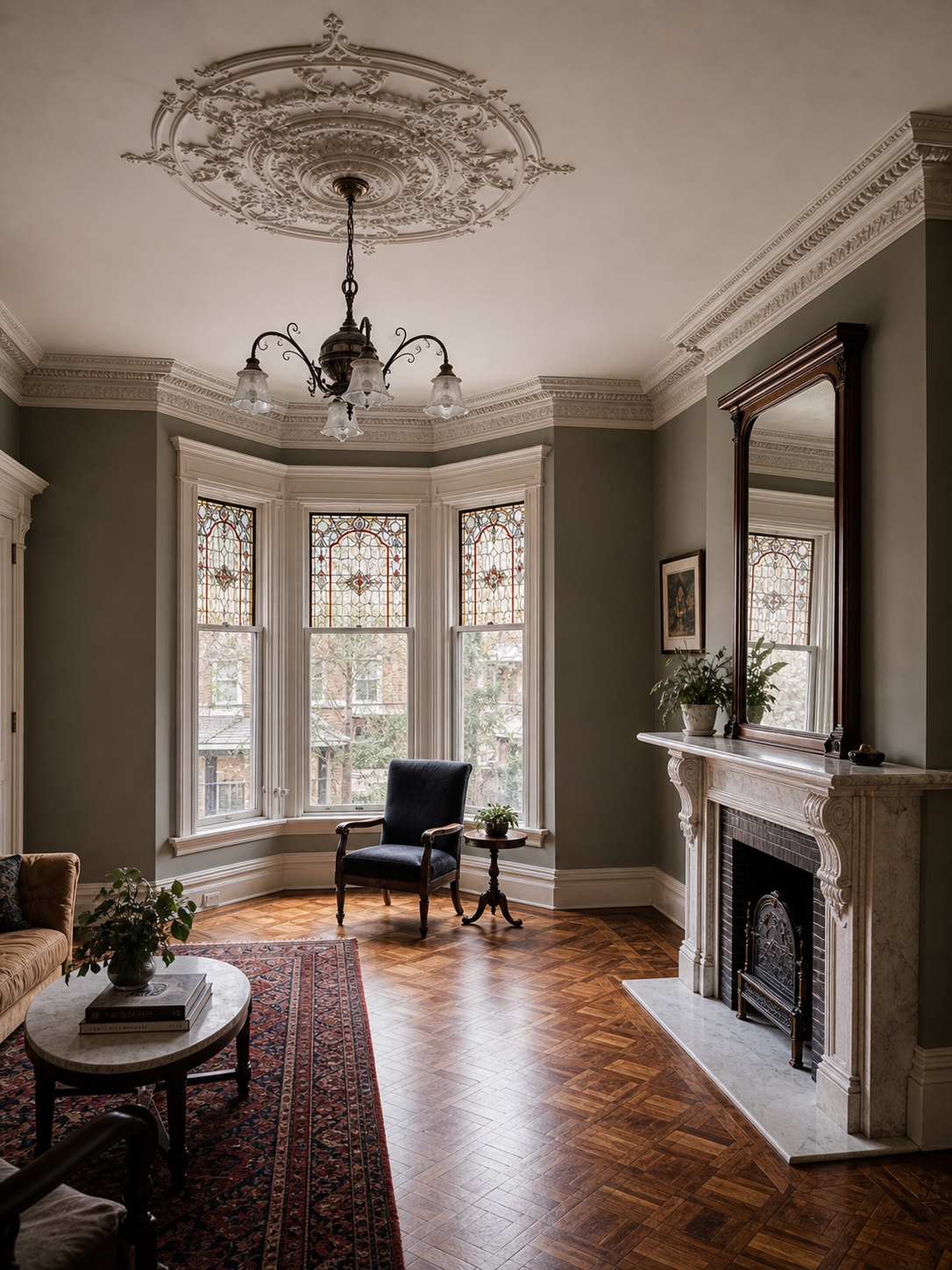
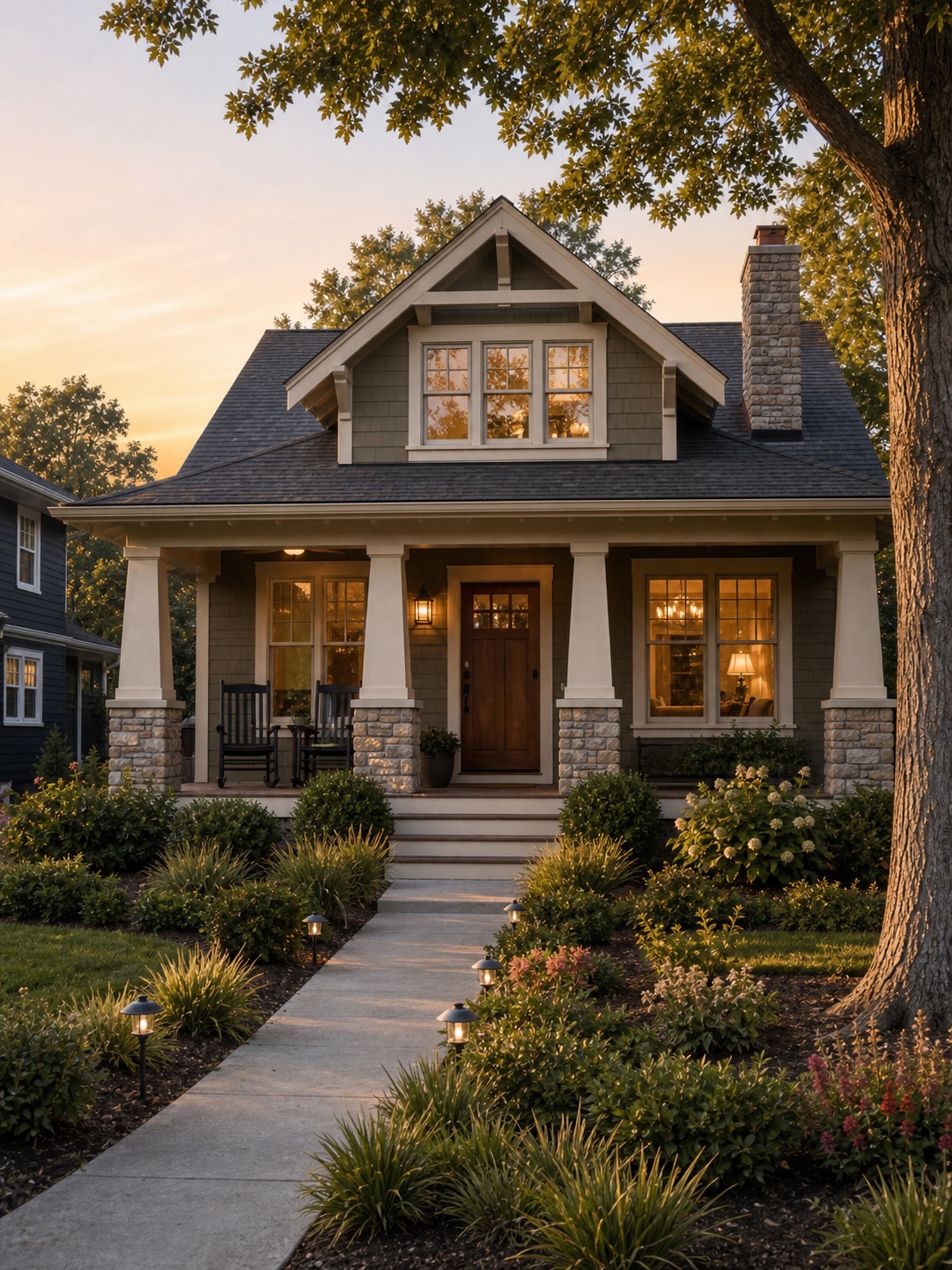
The bones of a house carry a logic that’s worth listening to before you decide what to do with them. A Victorian home with original plaster ceiling medallions, bay windows, and parquet floors is telling you something about scale, proportion, and material quality. A mid-century ranch with low ceilings, wide overhangs, and clerestory windows is telling you something entirely different.
Fighting that logic is expensive and rarely looks right. Working with it saves renovation budget and produces more coherent results. A craftsman bungalow naturally accommodates warm, artisan-inflected interiors: built-in cabinetry, wood wainscoting, fixtures with visible craftsmanship. Introducing ultra-minimalist furniture into that context requires either exceptionally skilled editing or a full renovation of the architectural detail.
Reading what the building is asking for
When I walk through a home professionally, the first thing I do is identify the dominant material and proportional logic. What are the ceiling heights? What’s the window-to-wall ratio? What are the floor materials? These elements set the scale of everything else and tell you which furniture proportions and finish types will feel native versus imported.
High ceilings with original moldings want furniture with some visual weight. Low ranch ceilings want horizontal forms and restrained scale. Wide-plank wood floors read best with furniture that has some warmth in its materials. Polished concrete works with a different material language entirely. The mismatch between architectural logic and interior aesthetic is one of the most common reasons a renovation fails to feel finished.
When the exterior and interior conflict
A sleek, contemporary interior inside a Victorian exterior can be a deliberate and sophisticated design choice. It can also look like two separate projects that never spoke to each other. The difference is usually the quality of the transition: how the front door, entry hall, and first interior space handle the shift from exterior character to interior logic.
If the exterior of a home doesn’t suit your aesthetic instincts, factor the renovation cost into the purchase decision rather than treating it as a future problem. Changing the exterior character of a home is a significant investment. Changing crown molding and paint is not.
Getting everyone in the household to the same decision
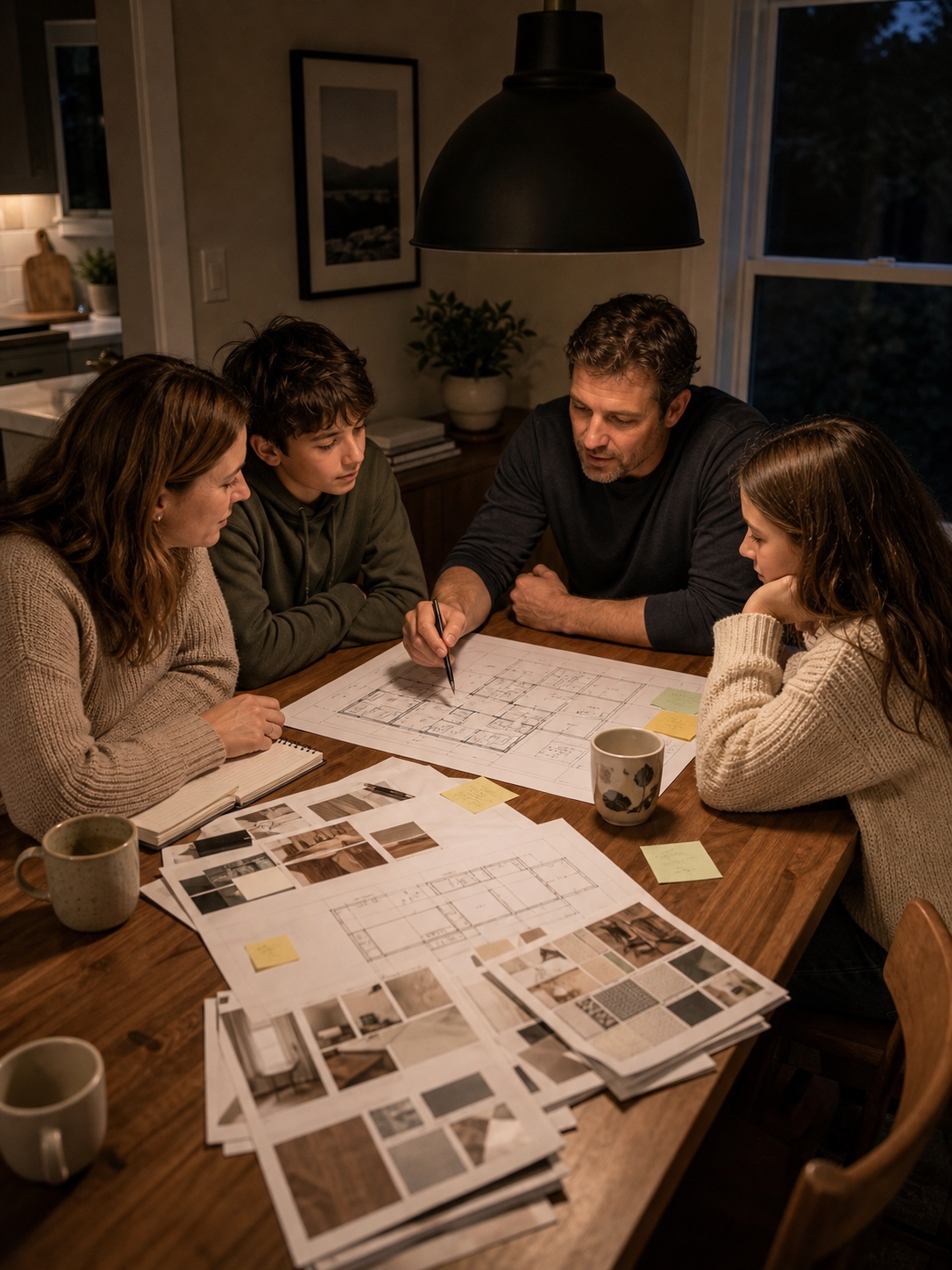
Aesthetic decisions in shared households are rarely unanimous. Partners often have different instincts: one gravitates toward warmth and texture, the other toward graphic simplicity. Older children have strong spatial preferences that are worth hearing. Even younger children respond to how spaces make them feel, even without the vocabulary to describe it.
The conversation that actually helps
Skip the mood board vote. It generates opinions about photos rather than about how people want to live. The more useful conversation is critical: ask each person what they liked and disliked about your current or previous home. What felt too dark? Too open? Too formal to touch? What felt genuinely comfortable and why?
These responses reveal spatial and material preferences that go deeper than style categories. Someone who says the current home feels cold is describing a thermal and material problem as much as a style one. Someone who says it feels cramped despite adequate square footage is describing a layout and color problem. These are actionable inputs that translate directly into aesthetic criteria.
Accessibility and comfort beyond style
For households with elderly parents or family members with mobility considerations, aesthetic choices have functional dimensions that go beyond preference. Flooring material affects how safely and comfortably people move through a space. Lighting intensity and color temperature affect both practical visibility and how restful a room feels. Room layout affects how easily different people can inhabit the same space simultaneously.
These considerations don’t eliminate aesthetic choice: they focus it. A Scandinavian aesthetic, for example, tends to produce well-lit, uncluttered spaces with clear pathways that work well for people with mobility considerations. Traditional aesthetics with layered rugs and dense furniture arrangements can work against them. Factor these requirements into the aesthetic criteria alongside preference.
Trends: use them carefully or they use you
Home design trends cycle faster than most people expect. What dominates interior design coverage in 2024 can read as obviously dated by 2028. Chasing a trending aesthetic when buying a home means making a decade-long financial commitment to a style that may have a three-year lifespan.
The Local Richmond Realtors team at Reynolds EmpowerHome put it plainly: chasing a trend when buying a home is risky because you are making a long-term investment, not redecorating a rental. That framing is exactly right. The structural and architectural decisions you’re committing to when buying a property need to be evaluated on a longer timeline than seasonal design trends operate on.
Separating permanent choices from changeable ones
The practical approach is to separate permanent choices from changeable ones and apply different criteria to each. Architectural details, floor materials, tile work, built-in cabinetry: these should be chosen against a long-horizon standard. A style that has maintained visual relevance for thirty years will likely maintain it for another thirty.
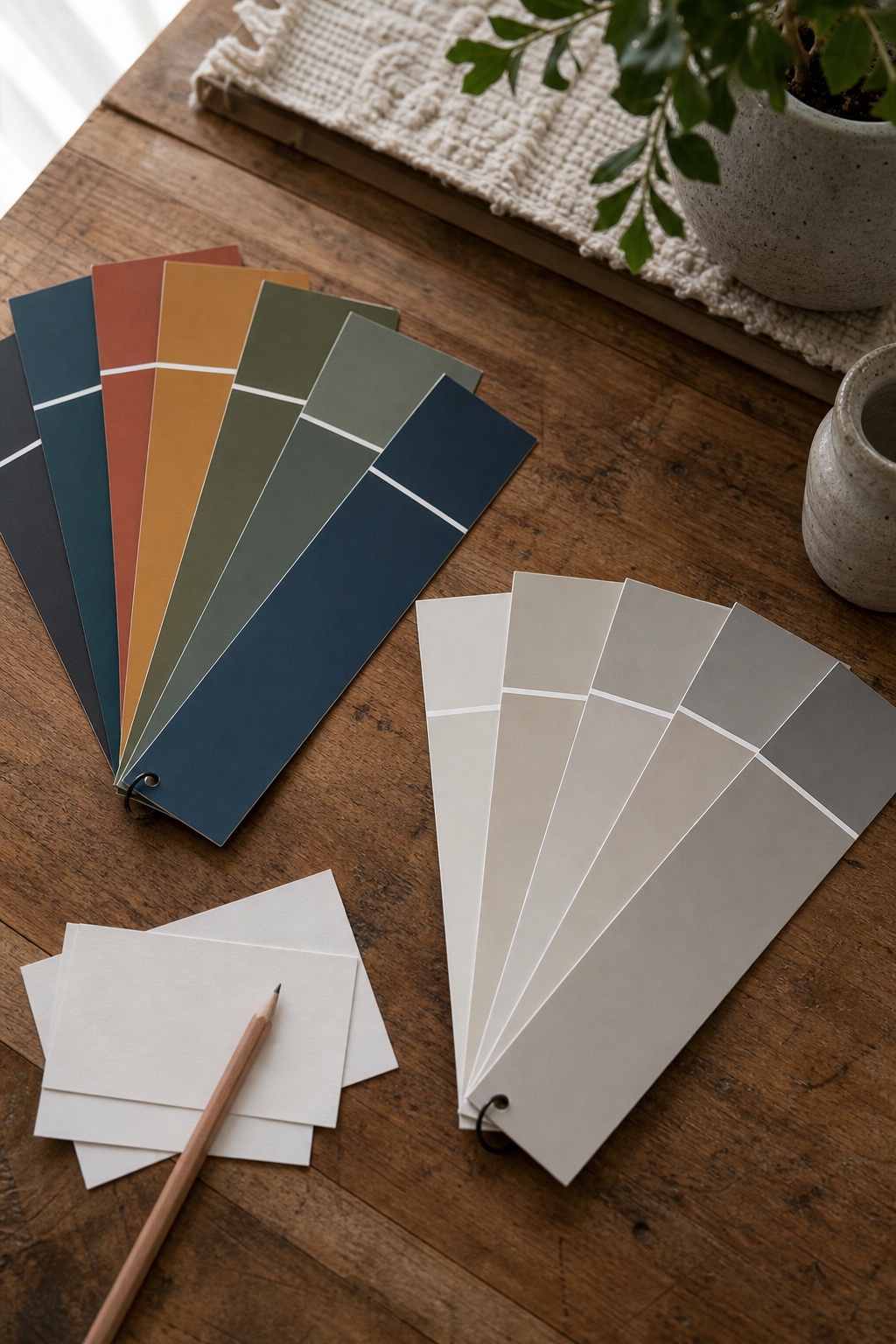
Soft furnishings, paint, decor, and lighting: these can absorb trend interest without commitment. A sofa in a classic profile can hold a trending fabric. A wall in a classic proportion can hold a trending color. The trend has somewhere to go when it cycles out, and the underlying structure remains.
The longevity test: look at the homes in your neighborhood built 20 to 30 years ago. Which ones still look intentional and well-chosen? Note what they have in common. Those are the characteristics with staying power, and they are almost never the ones that were trendy when the house was built.
How to use viewings to gather real information
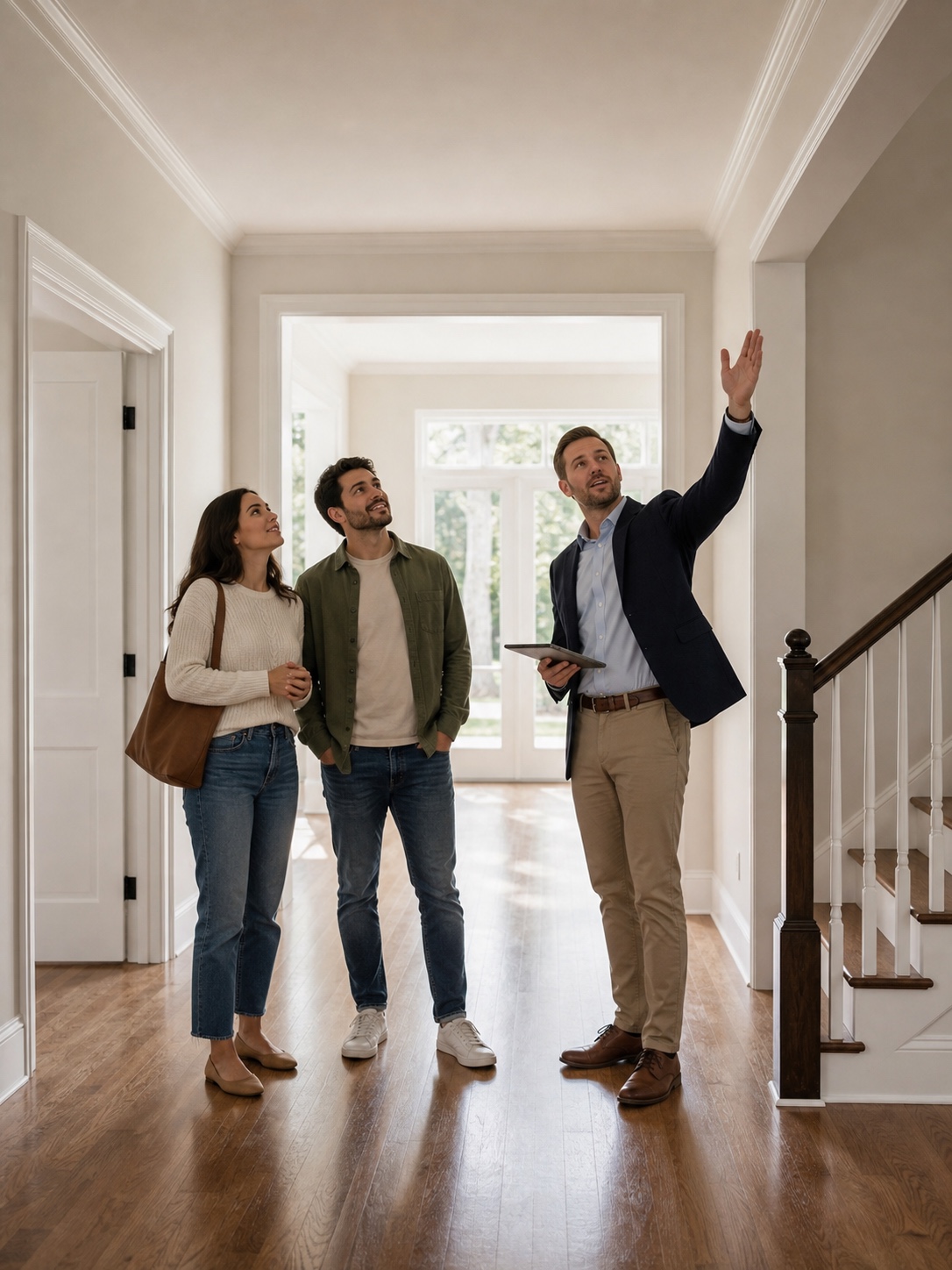
A home viewing is a data-collection exercise. Most buyers use it to evaluate condition and layout, which is correct but incomplete. The aesthetic information a viewing provides is equally valuable and easier to collect than it seems.
Keep the visual notes, but check the area separately. A practical UK property research checklist helps you compare sold prices, planning, environmental risk, and neighbourhood trends before the home’s style pulls the decision off course.
Investors have a stricter version of this problem: the aesthetic must appeal to someone else without feeling generic. This property investor interior design guide explains how to choose finishes and styling with resale or rental decisions in mind.
Walk in without narrating. Give yourself thirty seconds of silence before you say anything. Note your first physical response to the space: the quality of the light, the proportions of the entry, the temperature and feel of the floor material. These responses happen before you’ve evaluated anything consciously, and they are accurate. They’re telling you whether the home’s spatial character matches yours.
What to look at specifically
After the initial impression, look at the ceiling height-to-room-width ratio in the main living spaces. Look at where natural light enters and what time of day this viewing is happening. Look at the floor material continuity across zones. Look at whether the architectural detail is consistent from room to room or whether different spaces feel like they belong to different design eras.
Inconsistency isn’t automatically a problem. It can be the result of staged renovations where one area was updated before another. But it tells you where renovation budget will need to go if the aesthetic is going to read as coherent throughout.
Comparing reactions with your partner
Bring your partner on viewings and do not discuss the home while you’re inside it. Compare notes afterward, without either person influencing the other during the walk-through. The differences in what each person noticed and how they describe their response tell you a lot about which aesthetic requirements are shared and which ones belong to one person.
A shared vocabulary for what works and what doesn’t, developed through viewing real spaces together, is more useful than any mood board exercise. Real spaces produce real reactions. Photographs produce aspirational ones.
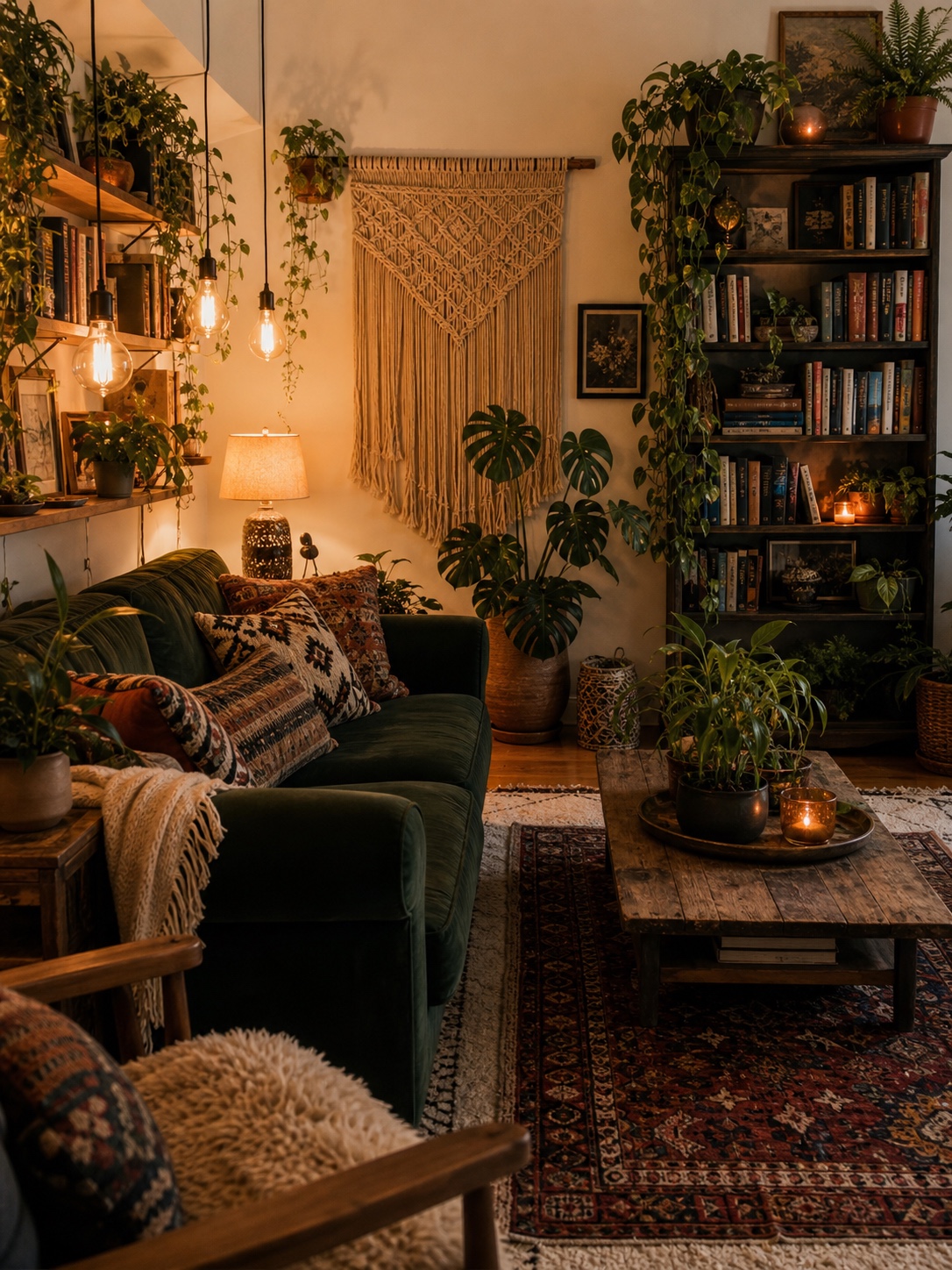
The right aesthetic is the one that fits the family, not the photos
No design style is objectively better than another. What matters is the match between the aesthetic and the specific family that will live inside it. A well-matched aesthetic doesn’t require discipline to maintain or performance to inhabit. It just works. Things land where they naturally belong. The space looks right at 8am on a Tuesday as well as in a photograph taken at golden hour with everything in place.
The families that get this right tend to have done one thing that most buyers skip: they described their actual life honestly before they started looking at listings. They knew what daily friction looked like in their current home and what they wanted to preserve. That information, combined with a close look at architecture and some honest conversations about individual preferences, narrows the field to homes that are genuinely compatible rather than just attractive.
Frequently Asked Questions
What is a home aesthetic?
A home aesthetic is the overall visual and spatial character of a house: the combination of materials, colors, proportions, and style that determines how a space looks and feels. It is set by both fixed architectural elements and movable ones like furniture and lighting. Choosing a home aesthetic means deciding which design language your family wants to live inside, not just look at.
How do I find my home aesthetic?
Start with how your family actually lives: the noise level, how often guests come over, whether daily life is structured or relaxed, and what materials feel comfortable to live with. Then look at the architecture of homes you are drawn to. The aesthetic that fits is almost always the one that matches both your lifestyle and the structural logic of the building.
Should the interior aesthetic match the exterior architecture?
Whenever possible, yes. A craftsman bungalow naturally suits warm, artisan-style interiors. A mid-century ranch is well-matched to period furniture and earthy tones. Working with the architecture rather than against it saves renovation budget and produces more coherent results. Deliberate contrast can work, but it requires a skilled designer and additional cost to execute well.
What is the most family-friendly home aesthetic?
Farmhouse, transitional, and Scandinavian styles consistently work well for families with children. All three tolerate visible use without looking neglected, offer durable material options, and stay flexible as children grow. Modern minimalist can work for smaller families or older children, but requires more deliberate material choices to stay livable under everyday conditions.
How do I avoid choosing an aesthetic that feels dated quickly?
Base permanent choices on styles with a long track record: craftsman, farmhouse, traditional, mid-century modern, and Scandinavian have all maintained visual relevance for decades. Use trendy elements only in soft furnishings and paint that can be changed without cost. Ask whether a home would have looked right in its current style 20 years ago. If yes, it will probably hold for 20 more.
How do I involve my whole family in choosing a home aesthetic?
Skip the mood board vote. Ask each person what they liked and disliked about your current or previous home: what felt too dark, too formal, too open, or not personal enough. These reactions describe lived experience rather than style taste, and they produce more actionable criteria. Older children in particular have strong spatial preferences worth hearing before committing.
Can I change a home aesthetic after buying?
Yes, but the cost depends on whether changes are cosmetic or structural. Paint, fixtures, furniture, and lighting are manageable. Changing the architectural character of a home, removing moldings, altering room proportions, or changing floor materials throughout, is a significant renovation. Factor those costs into the purchase decision rather than treating them as easy future projects.
When choosing a family-home aesthetic, this light oak flooring style guide helps decide whether the room should feel Scandinavian, warm modern, coastal, or classic.
Look at daily habits as well as visual style: a small coffee nook can become one of the most-used corners in a family home.
- 4.7Kshares
- Facebook0
- Pinterest4.7K
- Twitter0
- Reddit0