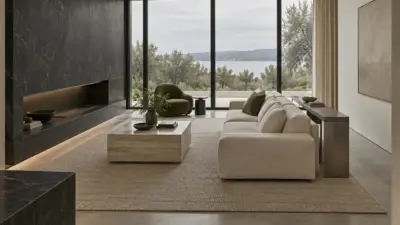
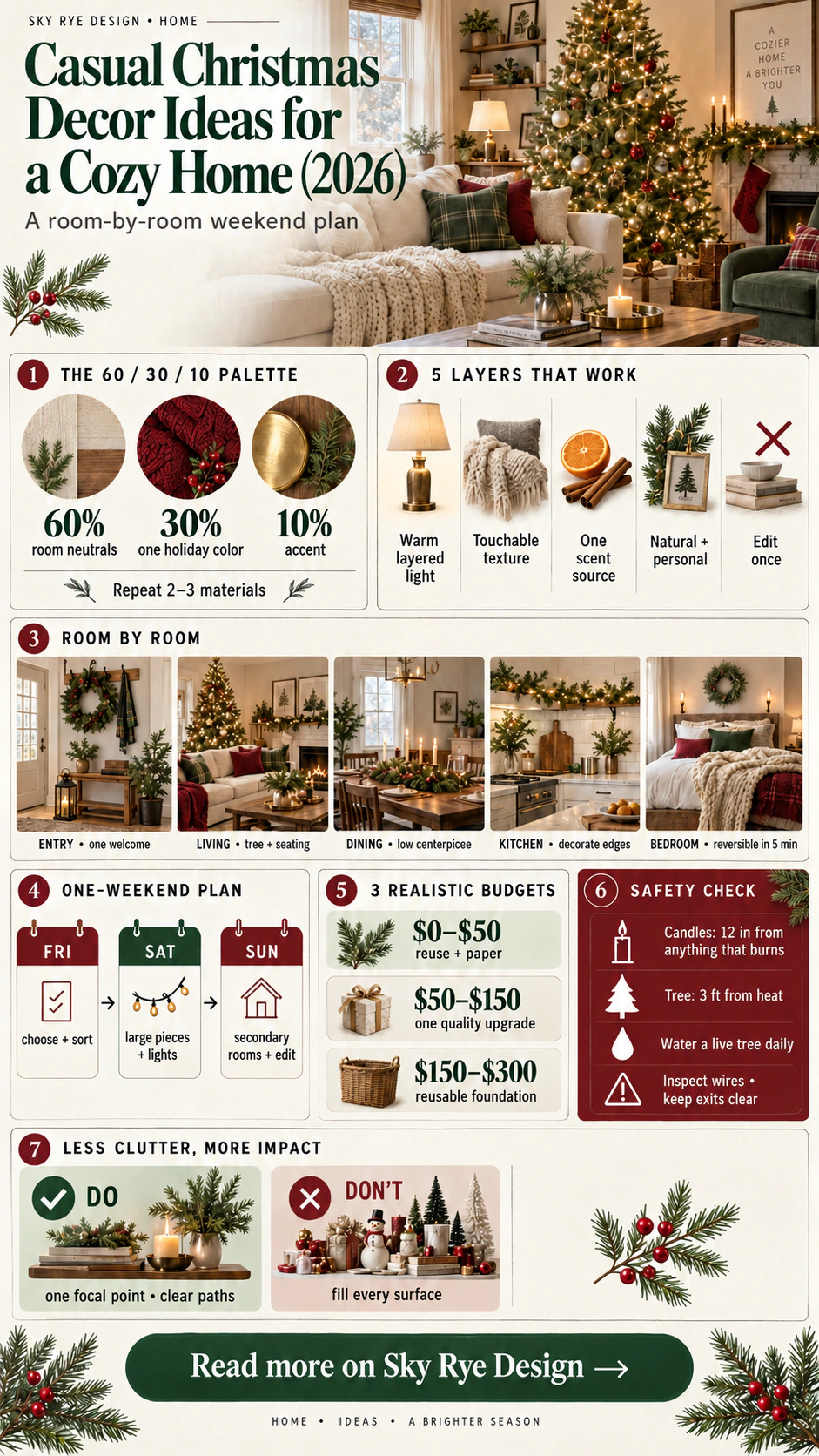
Casual Christmas decor works best when the room still feels easy to live in. Choose one restrained palette, repeat two or three materials, and decorate the places people actually notice: the entry, tree, sofa, dining table, and evening lighting. You do not need to fill every surface or replace your everyday furniture.
This 2026 update turns the ideas into a practical whole-home plan. It includes a room-by-room checklist, three budget levels, a one-weekend schedule, and clear safety notes for trees, lights, and candles. Use the full plan or stop after the first few high-impact changes.
- Casual Christmas decor at a glance
- Build the look with five repeatable layers
- Room-by-room Christmas decorating checklist
- Decorate the house in one weekend
- Three realistic Christmas decor budgets
- Simple handmade details that earn their space
- Holiday decorating safety check
- Common mistakes that make casual decor feel cluttered
- Casual Christmas decor FAQ
- A relaxed home is the finished look
Casual Christmas decor at a glance
| Decision | Simple rule | Why it works |
|---|---|---|
| Palette | Use one neutral, one main holiday color, and one small accent | Rooms connect without looking over-planned |
| Materials | Repeat greenery, wood or paper, and one soft textile | Repetition makes mixed decorations feel intentional |
| Lighting | Prefer several low, warm sources to one bright overhead light | The room feels calmer after dark |
| Focal points | Style one main area per room and leave breathing space around it | The display reads clearly instead of becoming clutter |
| Practicality | Keep doors, walkways, worktops, and frequently used seats clear | The home remains comfortable through December |
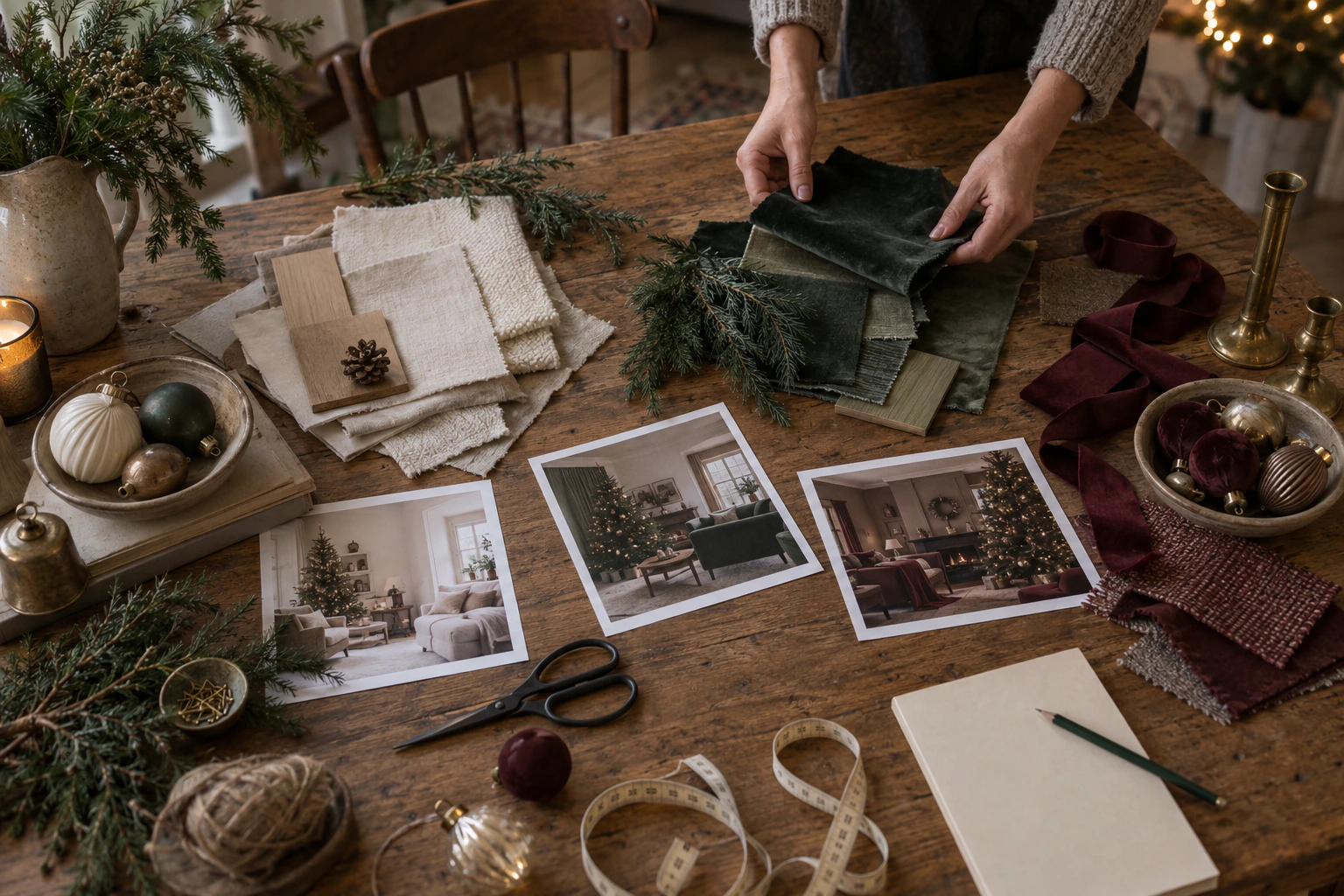
A useful starting formula is 60/30/10: let roughly 60 percent of the visible scheme come from the room’s existing neutrals, 30 percent from one Christmas color, and 10 percent from a brighter or metallic accent. It is a guide, not a measuring exercise. In a cream living room, for example, forest green could be the main seasonal color and muted brass the accent.


Build the look with five repeatable layers
Before buying anything, walk through the home and photograph each room from the doorway. The photo makes visual clutter easier to spot. Remove a few everyday accessories, then add Christmas pieces in the same locations rather than stacking seasonal decor on top of everything already there.
1. Start with warm, layered light


Use table lamps and floor lamps as the base, then add string lights only where they can outline a shape: a tree, window, shelf, or mantel. Warm-white lights usually sit comfortably beside wood, linen, red, green, and brass. Multicolor strands work better when repeated in two places rather than appearing once without a visual connection.
Hide battery packs in an opaque box or behind greenery, but keep them reachable. If a strand needs to cross a walking route or hang loosely near a handle, choose another position. For a brighter alternative, see these neon Christmas decoration ideas and treat the sign as the room’s single luminous focal point.
2. Add texture where people touch the room


A throw over the sofa arm, two cushion covers, and a runner on the dining table often do more than a collection of small ornaments. Choose textures that are pleasant to use, not only to photograph. A washable cotton throw is sensible for a busy family room; velvet or wool can be reserved for a quieter chair or bedroom.
Keep the mix controlled: one chunky texture, one smooth texture, and one natural texture are enough. If the room already contains a patterned rug or curtains, use mostly solid seasonal textiles. For a scheme that can remain after the holidays, borrow neutral layering ideas from this guide to cozy winter decor at home.
3. Use scent selectively


Choose one scent source for the main living area rather than using a different candle or diffuser in every room. Fresh evergreen, orange peel, cinnamon, or a gently heated simmer pot can establish the mood. Keep simmer pots attended and maintain enough water in the pan. If anyone in the home is sensitive to fragrance, let greenery, dried citrus, and cooking provide the seasonal association without added scent products.
4. Repeat natural shapes and personal objects
Evergreen branches, pinecones, paper stars, dried orange slices, and wood ornaments share simple shapes and matte finishes. Repeating them across two or three rooms creates continuity. Add family photographs, children’s artwork, collected ornaments, or handwritten place cards so the home does not look like a store display.
5. Edit every display once
After arranging a shelf or table, remove one item and look again. If the focal object is easier to identify, leave it out. A practical test is whether you can dust the surface, set down a drink, or open the nearby drawer without moving decorations. Casual should feel relaxed because the room functions well, not because objects were placed at random.
Room-by-room Christmas decorating checklist
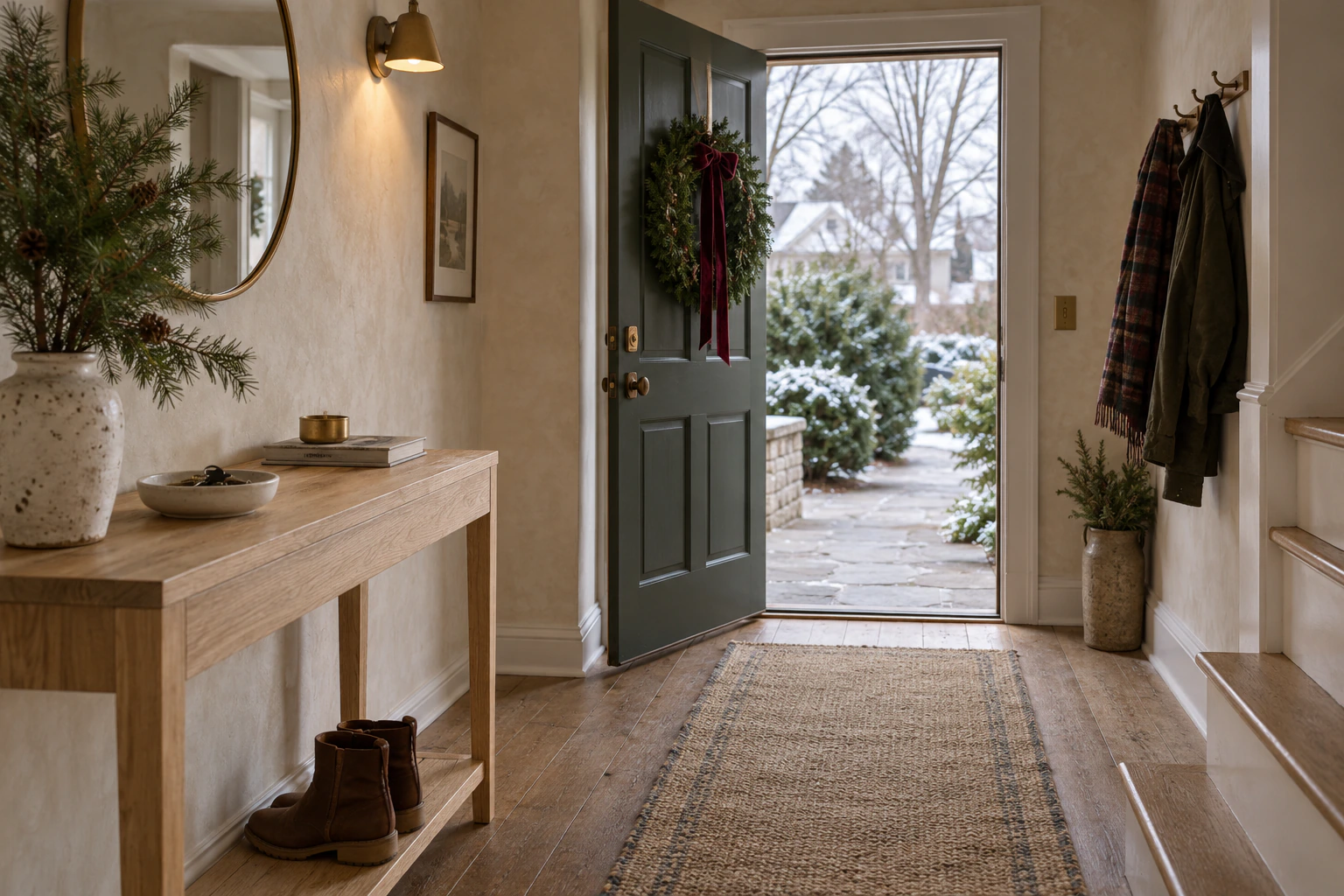
Entryway: create one clear welcome


- Hang one wreath or simple door decoration at eye level.
- Add a small bowl for keys so seasonal objects do not take over the landing zone.
- Repeat the wreath material on the console with one short branch or a few pinecones.
- Keep the door swing, stairs, and main path completely clear.
If the front door is your strongest focal point, use the more detailed placement ideas in this guide to front door Christmas decor. Indoors, stop at two or three elements so coats, bags, and shoes still have a place.
Living room: work from the largest object down


If you have a tree, place it where it can be seen from the main seating position without narrowing a route or blocking an exit. Choose the tree palette before opening every ornament box. Hang the most meaningful pieces first, fill obvious gaps with simpler ornaments, and stop while some branch tips remain visible. This step-by-step guide to decorating a Christmas tree covers spacing, lights, ornaments, and finishing touches.
If the palette is still undecided, this comparison of 15 Christmas tree decorating themes matches colors and materials to different room styles.
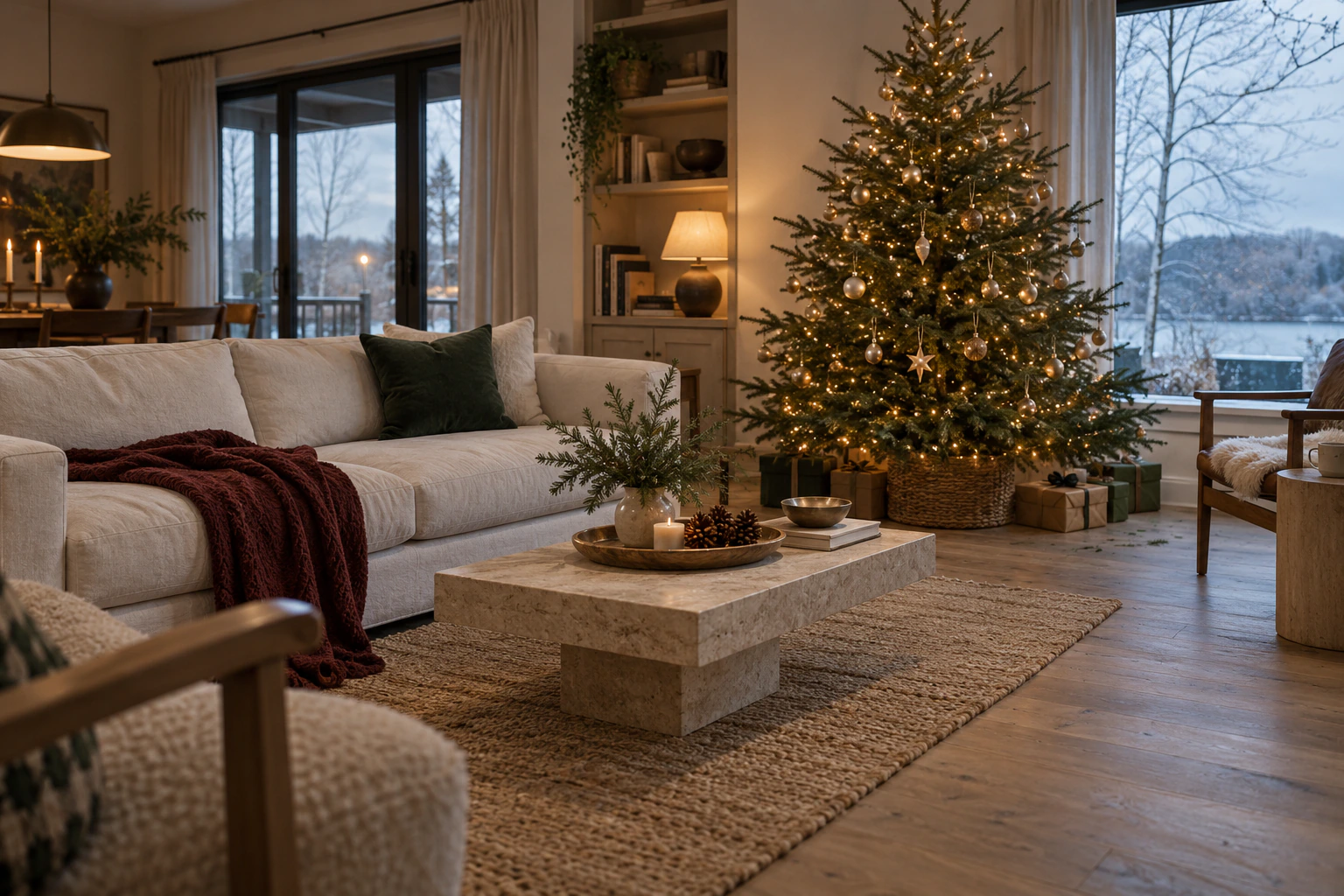
Next, connect the tree to the seating area with one repeated color on a cushion or throw. Style the coffee table with a low tray so sightlines remain open and the whole arrangement can move in one lift. On a fireplace, keep greenery and stockings away from the firebox; these fireplace and mantel styling ideas show how to create a focal point without filling the entire surface.
Dining room: protect space for the meal


Use a runner instead of a full tablecloth if you want the table to feel informal. Build a low centerpiece from greenery, fruit, battery candles, or a few small vessels; seated guests should be able to see one another across it. Set only the pieces needed for the meal, then add one personal detail such as a handwritten place card or a small ornament at each setting.
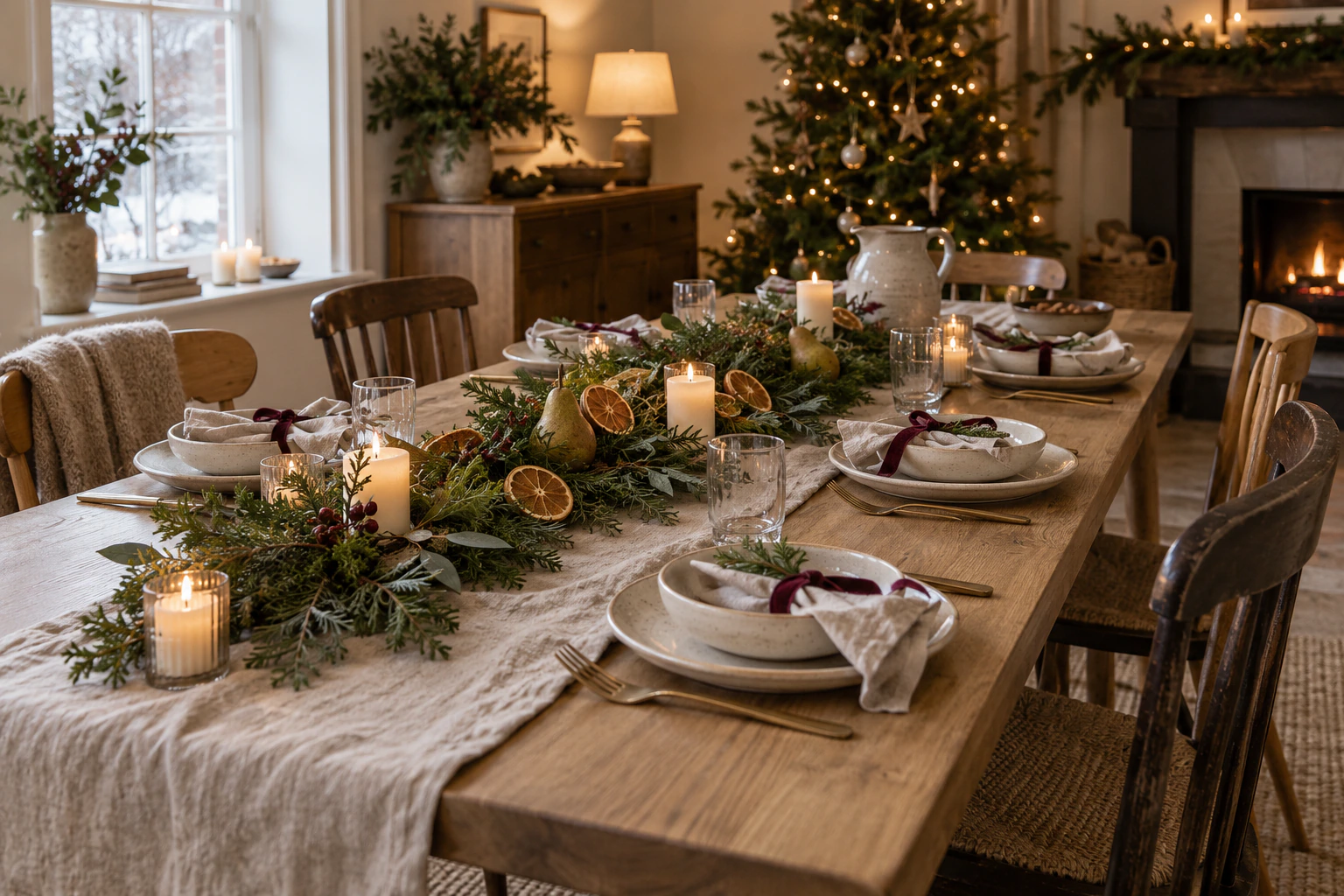
For a daytime gathering, the color and food can carry more of the visual load. These Christmas brunch table ideas offer a lighter alternative to a formal evening table.
Kitchen: decorate the edges, not the work zone


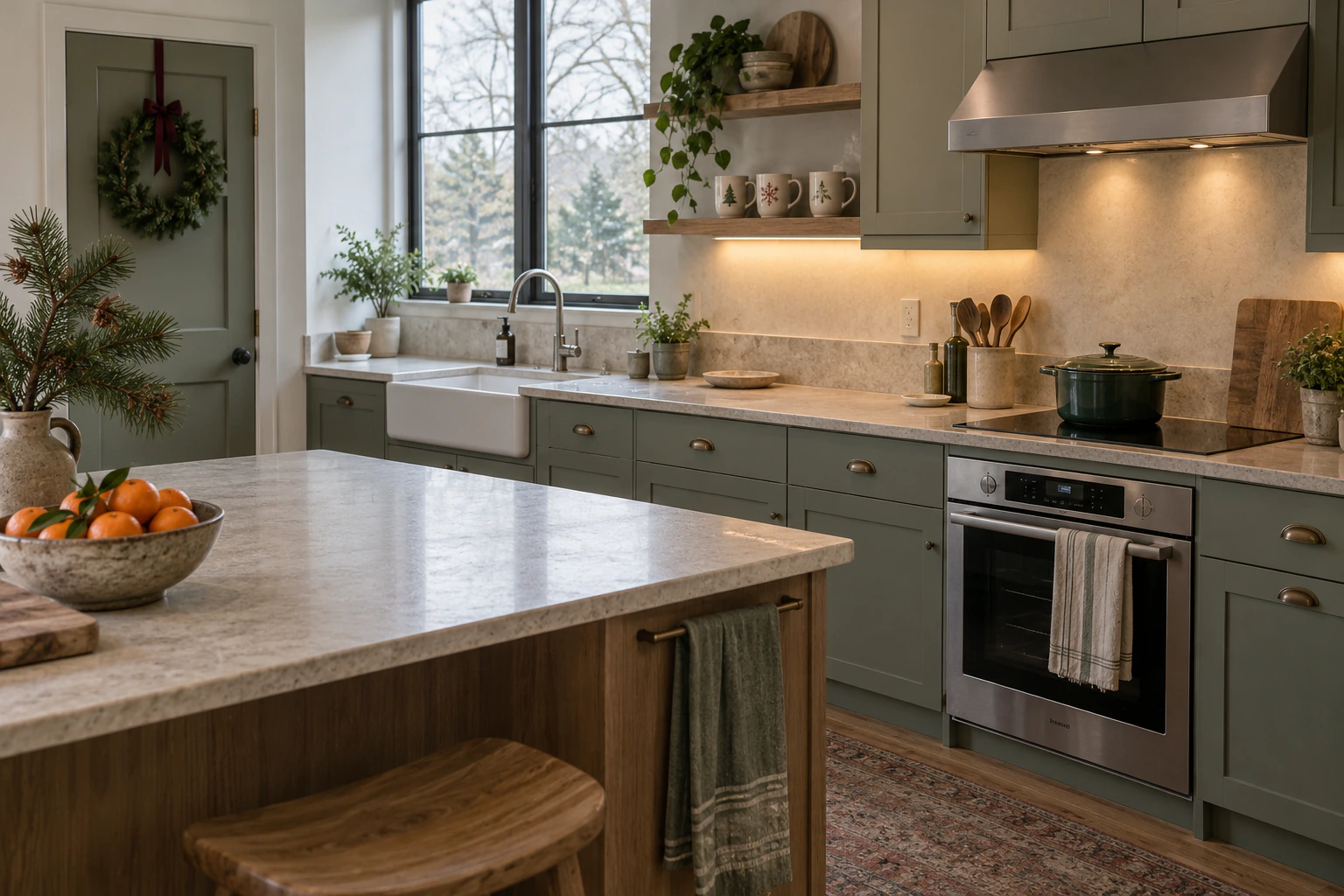
Keep the sink, hob, main prep area, appliance vents, and frequently opened cabinets free. A wreath on an unused door, holiday mugs on an existing rack, one bowl of clementines, or a small branch in a stable vase can be enough. Turn a tray into a cocoa or coffee station only if it replaces items already living on the counter; otherwise it becomes another obstacle.
Bedroom: make the change reversible in five minutes


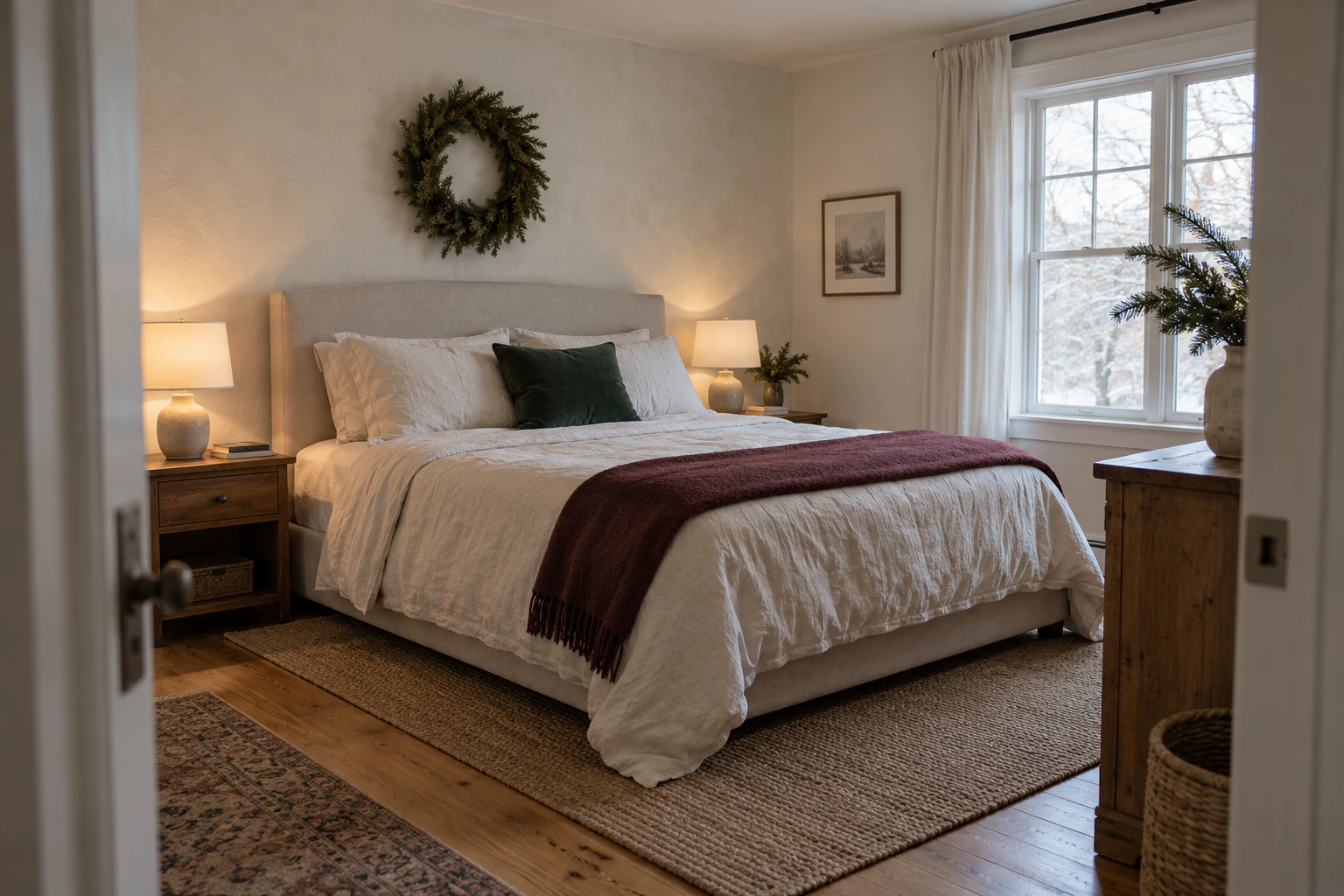
Swap one throw or pair of cushion covers, place a small unlit branch arrangement on a dresser, and let the bedside lamps provide the glow. Avoid loose light cords around the headboard or bedding. The room should still support sleep, so use fewer reflective ornaments and less visual contrast than in the living room.
Decorate the house in one weekend
| Time | Task | Stopping point |
|---|---|---|
| Friday evening | Choose the palette, photograph rooms, remove everyday clutter, inspect lights, and group decor by room | Clear surfaces and a written list; no styling yet |
| Saturday morning | Place the tree, wreath, and any large garland; confirm doors and paths remain clear | All large pieces are secure before small objects appear |
| Saturday afternoon | Add lights, textiles, and the living-room focal display | The most-used room is finished |
| Sunday morning | Style entry, dining room, kitchen edges, and bedroom | One focal point per room |
| Sunday afternoon | Make one simple craft, photograph each room again, edit displays, and pack unused decor | Storage boxes are closed and out of living areas |
Set a timer for each room and stop when its focal point, light, and one textural detail are in place. If time runs short, skip secondary rooms rather than rushing every surface. A partially decorated home with a clear visual idea looks more settled than a fully decorated home with no hierarchy.
Three realistic Christmas decor budgets
These are planning ranges rather than price promises; local costs and what you already own will change the total. Decide the cap before shopping and keep a short list of missing items.
| Budget | Prioritize | Skip |
|---|---|---|
| $0–$50 refresh | Reuse lights and ornaments; gather permitted natural material; add paper stars, ribbon, or one cushion cover | A new theme, full matching sets, and decor for low-traffic rooms |
| $50–$150 focused update | Replace unsafe light strands, buy one quality textile, and add a wreath or reusable tabletop piece | Several small impulse purchases that do not support the palette |
| $150–$300 reusable foundation | Invest in durable lights, a well-made faux garland or wreath, storage, and one strong focal item | Trend-led pieces that cannot mix with next year’s scheme |
If the goal is to make rather than buy, start with these budget-friendly Christmas DIYs. Count tools and consumables you need to purchase; a handmade project is not automatically the cheaper option.
Simple handmade details that earn their space


Choose one craft that can be finished in a single sitting and repeated across the house. Dried citrus can become a tree ornament, garland detail, and gift topper. Paper stars can hang in a window and reappear as place cards. Yarn tassels or fabric-strip garlands use soft color without introducing fragile pieces.
- Pinecones: brush away loose dirt and use them in bowls, wreaths, or hanging ornaments. Collect only where local rules permit.
- Dried citrus: slice evenly and dry completely before storing or using near textiles.
- Paper decorations: use one template in three sizes so the group has rhythm.
- Photo ornaments: print duplicates and keep the original photographs safely stored.
- Fabric scraps: repeat colors already present in the room instead of adding a new palette.
For projects that can become part of the room rather than temporary table clutter, compare these DIY Christmas garland ideas and handmade Christmas ornament steps.
Holiday decorating safety check
Safety decisions should shape the arrangement before the decorative details. The U.S. Fire Administration advises inspecting light strands, discarding those with frayed or pinched wires, following the manufacturer’s connection limits, keeping candles at least 12 inches from anything that burns, watering live trees daily, and keeping a tree at least 3 feet from heat sources. It also recommends keeping exits clear.
The U.S. Consumer Product Safety Commission says not to leave burning candles unattended and suggests flameless candles where practical. Check that lights are intended for indoor or outdoor use as applicable, and do not overload outlets or extension cords. In homes with children or pets, place breakable, sharp, edible-looking, or small detachable decorations out of reach.
Common mistakes that make casual decor feel cluttered
- Changing the palette in every room: repeat one material or color so the whole home reads as one story.
- Decorating before editing: remove ordinary accessories from a surface before adding seasonal ones.
- Using only small objects: one wreath, tree, branch arrangement, or grouped display has more presence than scattered trinkets.
- Ignoring daily routines: do not sacrifice a worktop, favorite chair, or storage drawer for a month-long display.
- Buying for an image rather than the room: check scale, outlets, doorway clearances, and storage before purchasing.
- Leaving the edit until January: remove pieces that shed, obstruct, or require constant resetting during the season.
Casual Christmas decor FAQ
How can I make my home feel Christmassy without clutter?
Choose one focal point per room, repeat a limited palette, and decorate vertical areas such as a door, tree, window, or mantel before filling tables. Remove some everyday accessories first and keep working surfaces and walking routes clear.
What colors work for casual Christmas decor?
Start with the colors already in the room. Add one main seasonal color such as forest green, burgundy, muted red, or deep blue, then use a smaller accent in brass, silver, wood, or paper white. Limiting the palette matters more than choosing a particular trend.
How do I decorate for Christmas on a small budget?
Reuse lights and ornaments, move existing textiles between rooms, and make one repeatable paper or natural-material decoration. Spend first on replacing damaged electrical items; then choose one visible upgrade rather than several small pieces.
Can I decorate the whole house in one weekend?
Yes, if you choose the palette and sort decorations on Friday, place large items on Saturday, and finish secondary rooms on Sunday. Limit each room to one focal point, one lighting change, and one textile or natural detail.
How do I make Christmas decor look cohesive from room to room?
Repeat two or three elements, such as the same greenery, ribbon color, warm-white light, or paper star shape. Let each room use a different amount of the theme while keeping those visual links consistent.
When should I stop adding decorations?
Stop when the focal point is obvious, the room still supports its daily use, and each display has some empty space around it. Photograph the room from the doorway; if several small objects compete for attention, remove or group them.
A relaxed home is the finished look
The strongest casual Christmas decor plan is easy to maintain after the first photo. Build around the home’s existing colors, make one clear decision in each room, and leave enough space for meals, guests, play, and quiet evenings. The result will feel festive because it supports the way you spend the season—not because every surface is full.
- 2.7Kshares
- Facebook0
- Pinterest2.7K
- Twitter0
- Reddit0