A cozy bedroom is more than good taste — it’s a personal sanctuary you retreat to at the end of a long day. Whether you gravitate toward warm wood, soft textiles, or a few nature-inspired touches, thoughtful cozy room designs balance practical function with details that feel like you. This guide covers layout, lighting, color, and the small-space tricks that make any bedroom feel intentional instead of crowded.
Your bedroom should feel relaxed, not staged. Swap harsh overhead lighting for a floor lamp. Layer in a rug and a throw blanket. Add a few objects that actually mean something to you. None of this needs a renovation budget — small swaps add up fast.


Key Takeaways
- Layer soft lighting, natural textures, and personal objects to build a warm, inviting bedroom.
- Mix textiles like rugs, curtains, and throws for depth and comfort.
- Balance smart storage with decor that reflects your style, not a showroom.
Smart Cozy Room Designs for Small Spaces
Cozy room designs in small spaces come down to managing scale and visual weight, not adding more furniture. Pick one strong focal point — a low-profile wooden bedframe or a plush armchair — instead of crowding the room with pieces that compete for attention. Leave real negative space around each item so the room can breathe. Keep furniture footprints small: a slim console beats a full dresser, and a wall-mounted shelf beats a floor unit. Skip harsh overhead lighting entirely.
Layer three warm-toned sources (2700K) at different heights instead: a floor lamp, a brass bedside light, and subtle LED strip accents. Stick to a low-contrast, earthy palette and lean into tactile fabrics — linen, brushed wool, cotton knits. One common mistake: hanging several small mirrors instead of one large mirror opposite a window, which reflects more light and reads far more intentional. Get the proportions right, layer your textures, and keep the light warm. Do that, and even a tiny room feels designed, not cluttered.
Creating a Cozy Bedroom Aesthetic
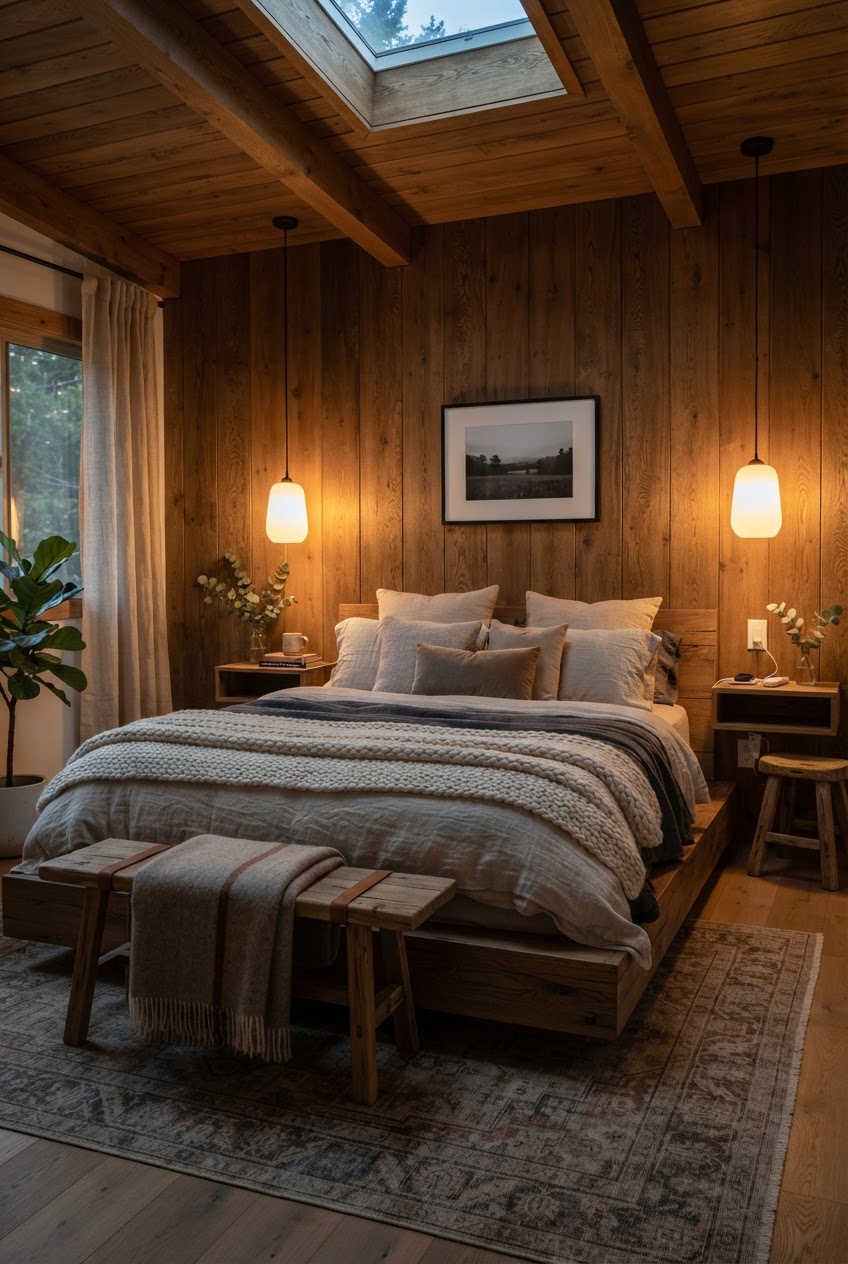
A cozy bedroom aesthetic reads through silhouette before it reads through color. Squint at the room from the doorway — the furniture outlines should feel calm, not busy.
In 15+ years of designing spaces, I’ve noticed most cozy rooms fail on silhouette, not color choice. When I thumbnail a layout, I check the outline first. If the furniture shapes fight each other, the room looks chaotic before you’ve even picked a throw blanket.
For a Pinterest cozy bedroom look, favor low, rounded forms: a platform bed, a curved accent chair, soft-edged nightstands. Skip sharp angles or bulky proportions — they add visual noise a small or medium bedroom can’t absorb.
Layer in low-contrast palettes and matte textures. Save one bold accent — a single patterned pillow, or a warm wall color — and let everything else stay quiet.
How to Design a Warm and Cozy Bedroom
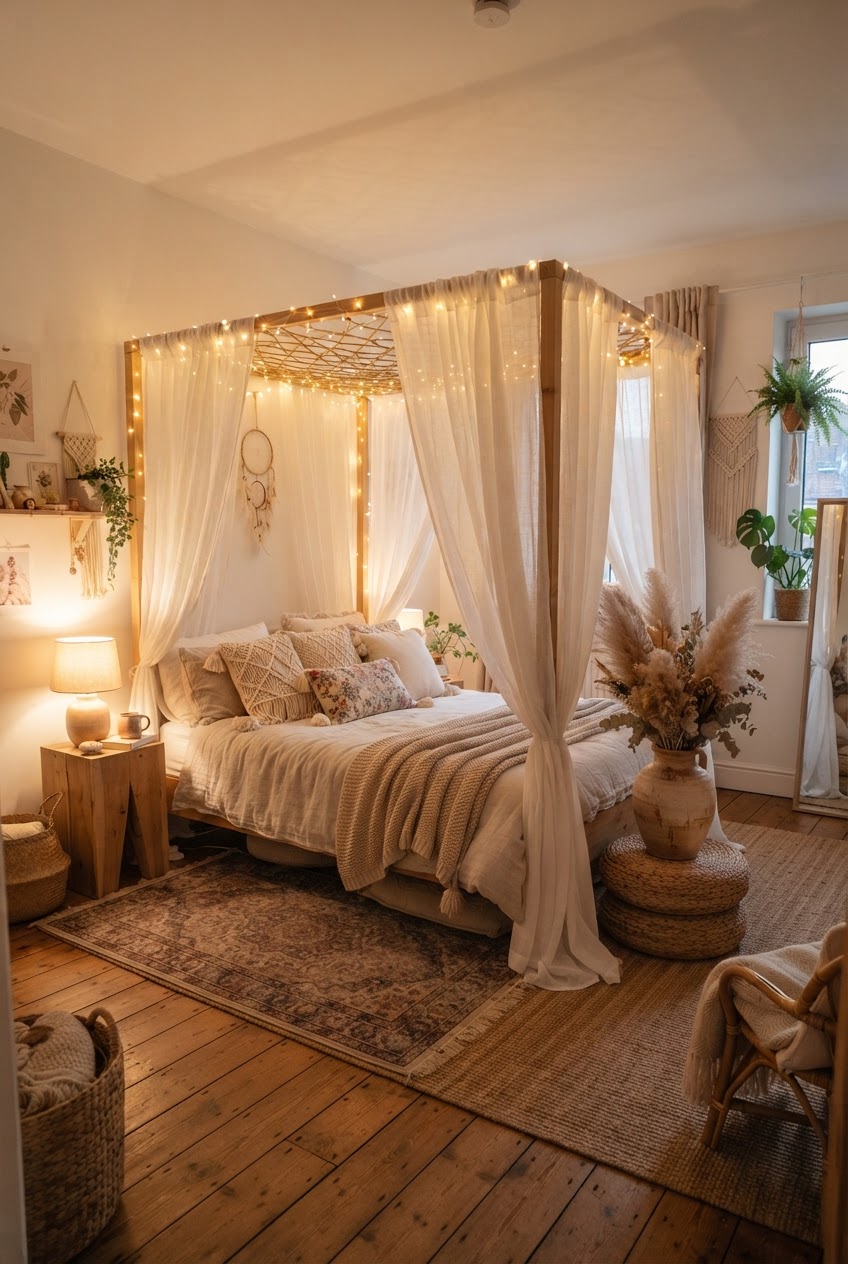
Warm and cozy bedroom ideas start with where you put the bed, not what’s on top of it. Center the bed on the wall opposite the door if you can — it grounds the room and gives you a clear sightline walking in.
For cozy bedroom ideas for couples, leave equal nightstand space on both sides, even in a tight footprint. It reads as considered, not cramped.
Lighting does more work than most people expect. My training in composition and life painting taught me that light builds form — flat white overhead light kills a room’s shape. Stick to warm 2700K sources instead. They throw softer shadows, which is what makes a corner feel intimate instead of just dim.
For cozy bedroom ideas for small rooms, carve out one intimate corner: a reading chair by the window, or a low bench at the foot of the bed. One well-lit corner does more for the mood than an evenly lit whole room.
Choosing the Right Cozy Bedroom Furniture
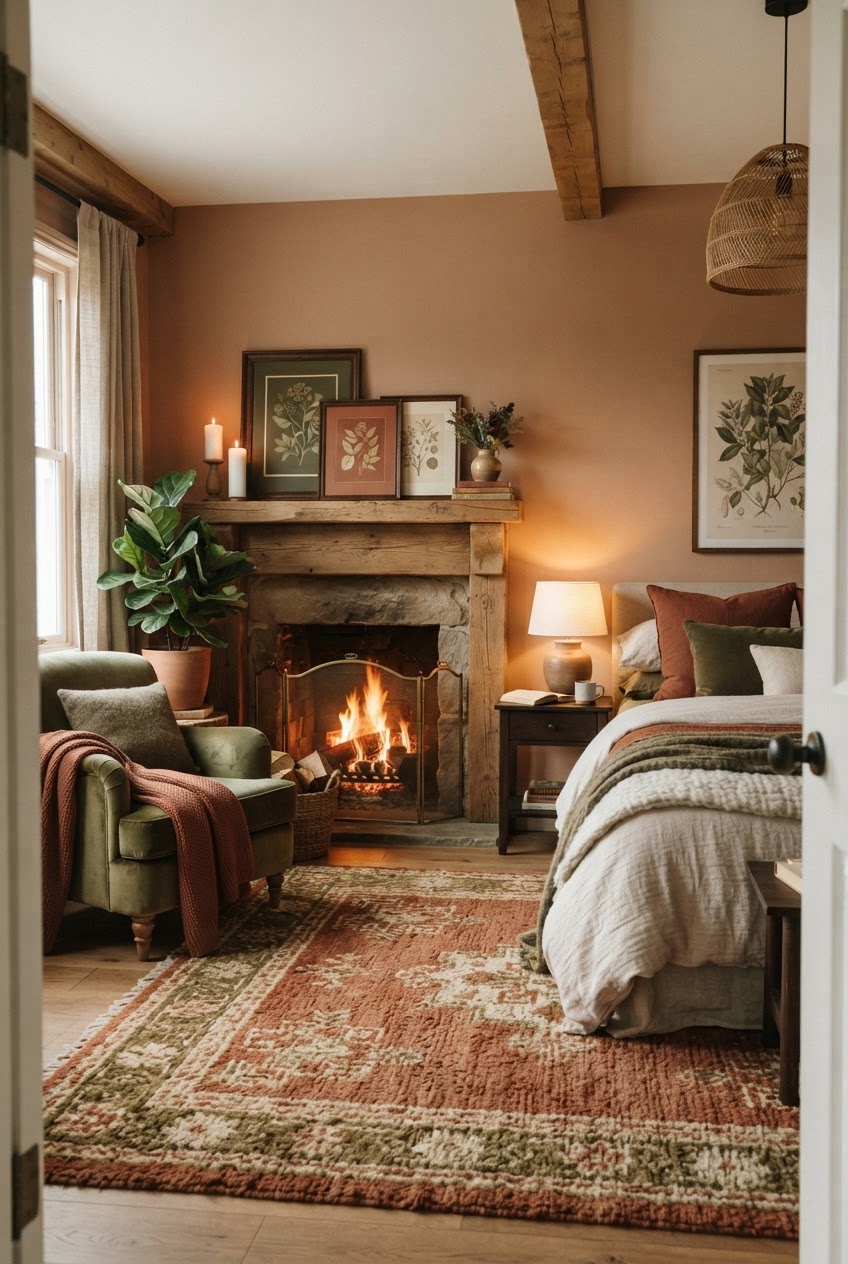
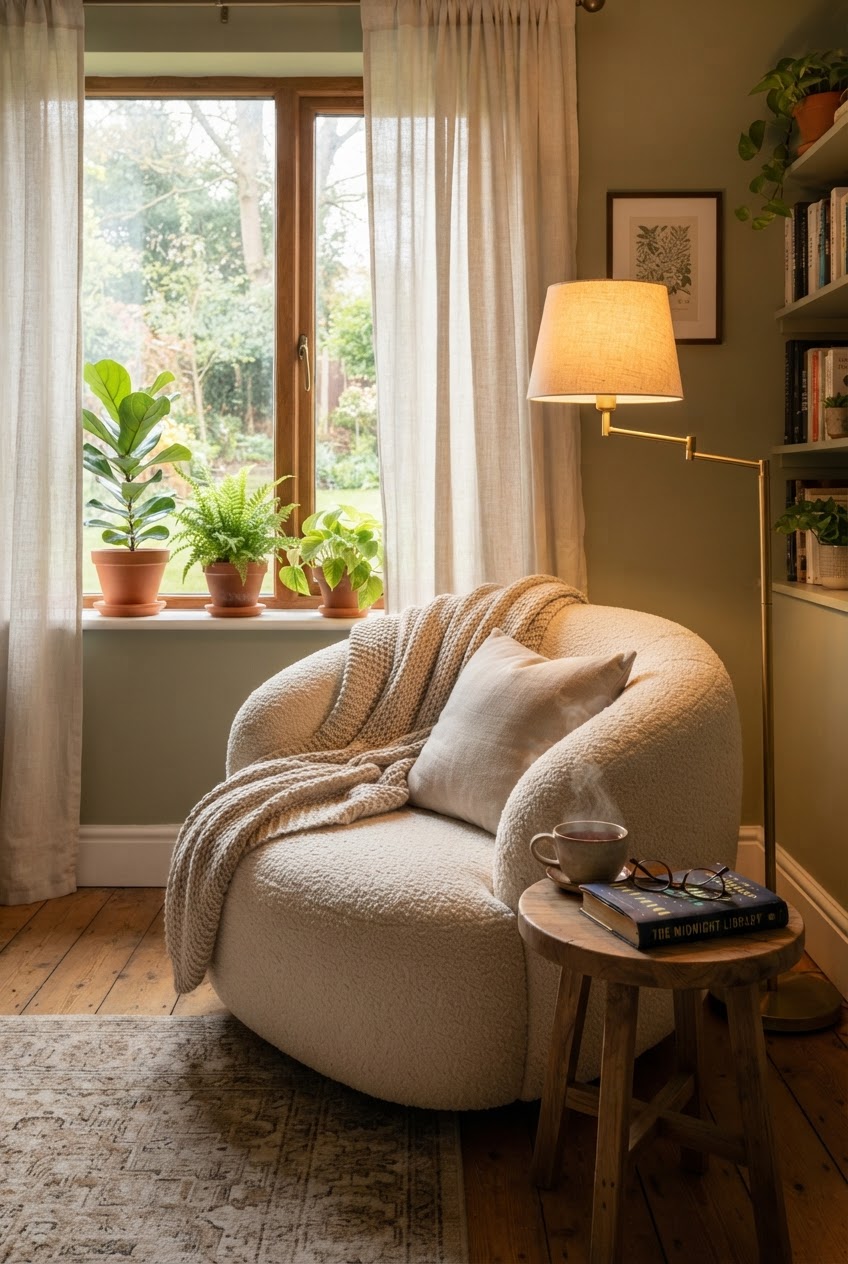
Good cozy bedroom furniture does two things: it looks warm, and it doesn’t overwhelm the room. Three pieces cover most of the work.
- A wooden bedframe — light oak or walnut reads warmer than dark stained wood in most rooms.
- A plush accent armchair — pick one with rounded arms; it softens the room’s overall silhouette.
- A wooden side table — small, simple, and easy to work a lamp and a book around.
Add pieces one at a time and live with each for a week before buying the next. It’s the fastest way to avoid a room that looks furnished but doesn’t feel like yours.
Setting the Cozy Foundation
A cozy bedroom starts with the foundation, not the finishing touches. Get the bedding, textures, and layout right, and the room does most of the work for you.
Choosing the Right Bedding
Your bedding is the centerpiece. Start with high-quality sheets in cotton or linen — natural fibers feel better against skin. Look for a thread count between 300 and 500; that’s the sweet spot between softness and durability.
Layer in a duvet weighted for your climate. Down or down-alternative both work — down-alternative is lighter if you run warm. Pick a duvet cover in a calm color that fits your palette.
Don’t skimp on pillows. Mix two sleeping pillows with two or three decorative ones. That ratio reads hotel-like without swallowing the bed.
Incorporating Textures
Texture is what makes a room feel touchable, not just look good. Mix materials so your hand finds something different everywhere it lands.
Add a chunky knit throw at the foot of the bed for cold nights. Wool, faux fur, and fleece all invite touch in a way flat cotton doesn’t.
A few easy additions:
- A woven wall hanging or macramé piece
- Velvet or linen curtains
- A plush area rug under the bed
- A textured lampshade or ceramic lamp base
Contrast does the heavy lifting here — pair something smooth with something rough, something soft with something firm.
Optimizing Bedroom Layout
Layout changes how cozy a room feels more than any single object does. Push the bed against the longest wall — it anchors the room and frees up floor space.
Leave two to three feet of walking space around the bed. Any tighter and the room starts to feel cramped, no matter how nice the décor is.
Keep your nightstand within arm’s reach. A lamp, a book, a glass of water — that’s really all it needs to hold.
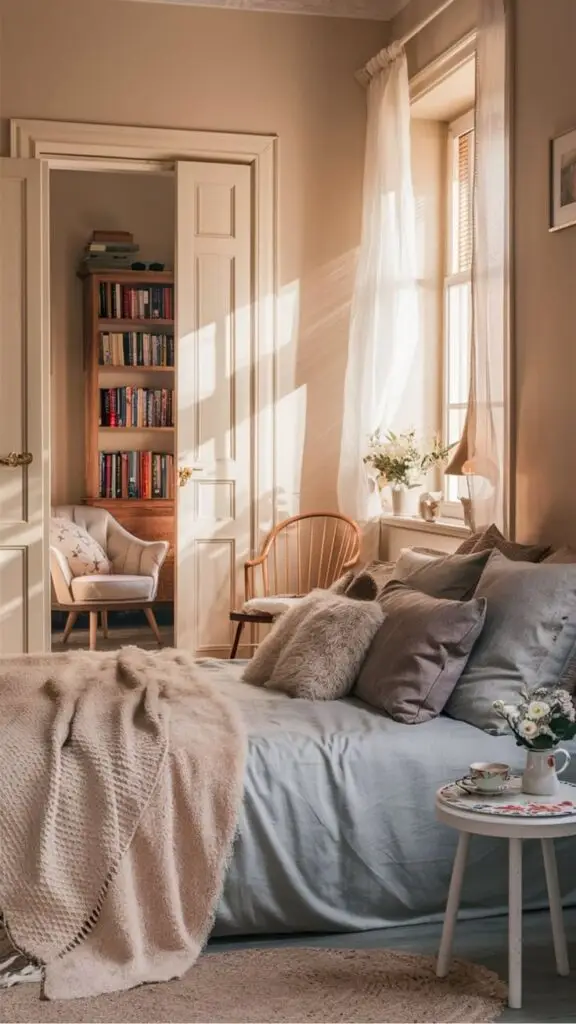
If a window gets good light, pull a chair over. A small reading nook in natural light beats one tucked in a dark corner.

Consider Finally Replacing That Old Mattress
If you’re already rearranging the layout, this is the moment to reconsider your mattress size too — you’re moving furniture anyway.
Plenty of online tools let you preview a mattress size in your actual room before you commit. Buying online has gotten a lot simpler too.
Even on a tight budget, watch for mattress sales around Memorial Day and Black Friday — the discounts are often real.
Mattress-in-a-box options mean you can order without setting foot in a showroom, which frees up your time for the parts of the redesign you actually enjoy.
Illuminating Coziness
Lighting changes a room faster than almost anything else. The right choices turn a space from stark to warm and inviting — cheaply, and usually in an afternoon.
Harnessing Fireplace Warmth
Nothing sets a cozy mood like a fireplace. The flicker casts a warm glow that makes a room feel instantly more intimate. If you have a working fireplace, arrange furniture to face it — let it be the focal point.
No real fireplace? Electric versions have gotten genuinely convincing, with adjustable flame effects and heat settings, and none of the maintenance.
Dress the mantel with a few decorative elements — framed photos, a small plant, seasonal pieces. It draws the eye to the warmest spot in the room.
Soft Lighting With Candles
Candles are the simplest fix for a flat-feeling room. Their soft, flickering light reads as intimate in a way overhead bulbs never will. Group candles at different heights for the best effect.
Go for warm scents — vanilla, cinnamon, sandalwood — if you want the fragrance to match the mood.
If you’re wary of open flame, battery versions flicker convincingly now, and most come with a timer.
Place them where you’ll actually see them: side tables, window sills, shelves.
Twinkling Fairy Lights
Fairy lights work year-round, not just for the holidays. Drape them across a headboard, around a mirror, or along a bookshelf for a subtle twinkle.
Hung overhead, they mimic a starry ceiling — especially effective in a bedroom, where you’ll actually lie back and notice it.
Stick to warm white, not cool white. Warm white mimics candlelight; cool white just looks like a phone screen.
Battery or USB-powered strings go anywhere an outlet can’t reach, and most remotes let you adjust brightness or add a slow twinkle effect.


Harmonious Color Schemes
A cozy space starts with color palettes that read as warm, not just pretty. Get the combination right, and the room feels like comfort and relaxation instead of a showroom.
Exploring Monochromatic Themes
A monochromatic scheme builds depth from a single color instead of several. It reads as cohesive without trying hard.
Pick a base you actually love — a warm taupe, a soft sage — then layer lighter and darker versions through the room. Charcoal walls, mid-tone gray furniture, light gray pillows: same color family, different weights.
Texture keeps it from going flat:
- Velvet pillows in your base color
- Knitted throws a shade lighter
- A mix of matte and glossy finishes
- Textured wallpaper or one accent wall
Simple doesn’t have to mean plain — texture is what keeps a monochrome room interesting.
Incorporating Earth Tones
Earth tones bring the outside in — terracotta, olive, ochre, deep brown. They read as secure and grounded almost automatically, because they mirror what you’d see outdoors.
Anchor the room with a deep brown sofa, then add mustard or olive accents. These pairings work because they already exist together in nature.
Pair earth tones with natural materials:
- Wooden side tables or shelving
- A jute or sisal rug
- Terracotta planters
- Woven storage baskets
They shine brightest in rooms with good natural light — sunlight pulls out the warmth in these colors. Even a rust throw pillow or an amber glass vase adds real warmth in small doses.
Accenting With Soft Blues
Soft blue balances warm and cool without tipping the room cold. Powder blue, blue-gray, pale aqua — all calm, none of them sterile.
Use blue as an accent against neutrals: one painted wall, or a few accessories against white or cream. It becomes a focal point without taking over the room.
Pair it with warm counterweights:
- Honey-toned wood furniture
- Cream or beige textiles
- Brass or gold accents
- Warm table-lamp light
Lean coastal with blue-and-white patterns, or go moodier with navy and silver — soft blue works in either direction.


Embellishing With Accessories
Accessories are where a room stops looking generic and starts looking like yours. Small details carry more weight here than people expect.
Stylish Plaids and Florals
Plaid adds coziness fast — a throw at the foot of the bed, or one accent pillow among solids. It works in both traditional and modern rooms.
Florals bring the outdoors in without committing to a full theme. Try floral curtains for a romantic edge, or just fresh flowers on the nightstand.
Vary the scale when you mix patterns — small florals against a larger plaid, not two prints of the same size. HomeGoods restocks seasonal options often enough to refresh this without much cost.
Velvety Touches
Velvet adds texture that reads as expensive even when it isn’t. A single velvet pillow can shift the whole feel of a bed. Jewel tones like emerald or sapphire read rich; soft pastels read delicate.
A velvet headboard is a bigger commitment but a real statement piece — the texture catches light in a way flat fabric can’t, and tufted versions add extra depth.
Velvet curtains also block light better than most fabrics, which helps with sleep. The heavy drape adds a cocoon-like feel that suits a cozy bedroom.
Creating a Gallery Wall
Walls are underused real estate. Start a gallery wall with five to seven pieces that actually mean something — photos, prints, even a framed textile scrap.
Lay everything on the floor first and move pieces around before you commit to a layout. Mix frame styles in complementary colors for a look that’s varied but still cohesive.
Don’t be precious about it — a small mirror or a wall sconce breaks up a wall of flat frames. Hang at eye level, roughly 57 to 60 inches from floor to center, for the most natural sightline.


Adding Character With Decor
Personal touches are what separate a decorated room from a lived-in one. None of this requires a renovation.
Natural Elements
Plants are the fastest way to add life to a bedroom. A few on the windowsill or nightstand do more than most decor purchases.
Spider plants, pothos, and snake plants handle bedroom light and low maintenance well. If you know you’ll forget to water, a good faux plant works too.
Wood adds warmth without trying — a driftwood piece, bamboo frames, a small wooden bowl for odds and ends.
Stone works the same way in smaller doses: a marble coaster, a quartz piece on a shelf. It’s a quiet nod to the outdoors that doesn’t compete with anything else.
Even a small desktop fountain adds something — the sound alone changes how a room feels at the end of the day.
Area Rugs for Comfort
A good area rug changes a bedroom more than almost any other single purchase. In a modern room, go geometric or a textured solid to complement what’s already there.
Size matters more than people think — the rug should extend past the edges of the bed. You want to step onto something soft in the morning, not cold floor.
Material matters too. Wool holds up and stays warm; cotton is lighter and cheaper. For real comfort, go high-pile or shag.
Layering rugs adds depth — a smaller statement rug at an angle over a larger neutral one reads intentional, not accidental.
And don’t skip the rug pad — it stops slipping and adds cushioning most people don’t think about until they’re barefoot on a cold floor.
Editorial & Artist Disclaimer: This guide is written and reviewed by practicing designers and artists at Sky Rye Design, drawing on academic training in composition, color theory, and interior space planning. Decor styling, lighting temperatures, and layout recommendations reflect common design studio standards, but individual taste and space requirements vary — treat these ideas as a creative starting point for your home.
- 132shares
- Facebook0
- Pinterest129
- Twitter3
- Reddit0