Behind the scenes movies are more than novelty photos. They show the physical decisions that make a cult film feel believable: the size of a creature suit, the awkward support under a superhero flight shot, the director standing inches outside the final frame, or the model work that makes a scene feel huge. I like these images because they turn film magic back into design work. You can study scale, lighting, costume, props, and composition without needing to pause the finished movie every five seconds.
What behind the scenes movies photos actually show
Behind the scenes movies photos show the craft that sits just outside the finished frame: actors waiting between takes, directors adjusting performance, camera crews building a shot, and practical effects teams making impossible things physical. For artists and designers, the useful part is not gossip. It is construction. A set photo tells you how large the prop really was, where the light came from, how a costume changed the body shape, and how much of the final image depended on framing. The best photos also make cult movies feel more human. You see the joke inside a monster suit, the engineering behind a fantasy world, and the ordinary people who made a scene look effortless.
How to read a cult movie set photo
Start with scale. Look for people, ladders, cables, camera height, and set edges because they tell you how the illusion was measured. Then look at materials: rubber, metal, fabric, smoke, water, paint, glass, and makeup all catch light differently. Finally, look for what the finished film hides. In a strong production photo, the trick is visible but the design still works. That is the sweet spot.
Cult movie set photos in this collection
Transformers
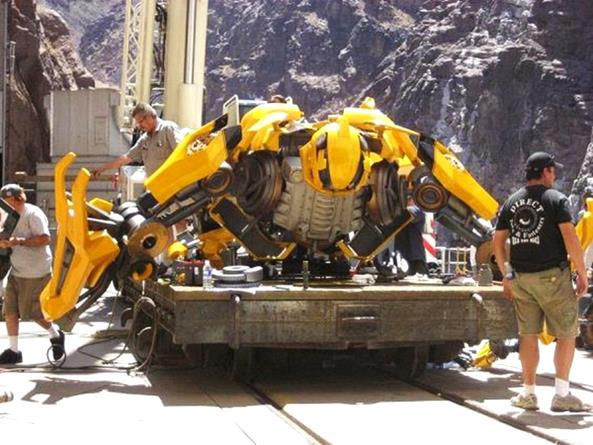
This Transformers shot is useful because it breaks the illusion of scale. The finished film sells machines as massive, polished, and almost weightless on screen. A set photo reminds you that the effect depends on people standing around physical rigs, partial builds, lighting marks, and camera position. For visual artists, it is a good reminder that a believable giant object usually starts with scale cues: nearby bodies, hard shadows, and clear perspective.
Back to the Future

The Back to the Future image works because the DeLorean is not just a prop; it is the film’s visual engine. In production stills, you can see how much of the fantasy is carried by surface detail: vents, cables, reflective metal, and the low wedge silhouette. That is why this car still reads instantly even outside the finished frame. If you study movie behind the scenes photos for design ideas, this is the kind of object where every added part supports story, not just decoration.
Jaws
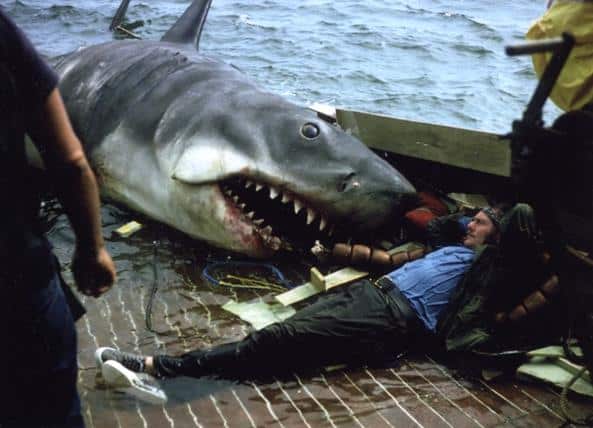
Jaws is a perfect example of how limitation can sharpen suspense. The mechanical shark famously became part of the production challenge, but that difficulty pushed the finished film toward suggestion, water movement, framing, and sound. Behind the scenes horror movies often look less frightening in daylight, yet they reveal the craft more clearly. The lesson is simple: the monster does not always need to dominate the frame. Sometimes the setup around it does the heavier work.
Titanic

The Titanic set photo is less about spectacle and more about control. A film this large depends on costumes, actor blocking, water effects, set edges, camera height, and continuity all lining up at once. In a still like this, the director becomes part of the composition because the image shows decision-making before the final emotional scene. It is a useful reminder that epic filmmaking is built from tiny practical checks repeated all day.
Ghostbusters
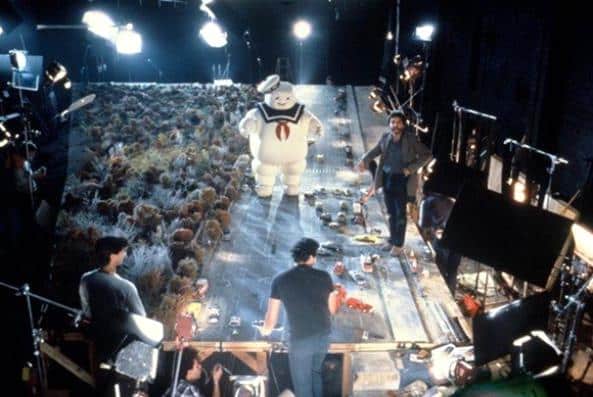
Ghostbusters shows how comedy and scale can live in the same design. The Stay Puft Marshmallow Man is absurd, but the full-size build gives the joke weight. That contrast is why practical effects still matter in cult movies: the audience can feel when an object has volume, texture, and awkward physical presence. For drawing or concept work, this is a strong lesson in silhouette. If the outline is memorable, the gag lands faster.
Practical effects make the images worth studying
If you want to keep researching movie behind the scenes work, start with archive-led sources rather than random image reposts. The Academy Film Archive is useful for production history, the AFI Catalog helps verify film details, and the BFI film features often gives stronger context around cinema history and craft.
Indiana Jones and the Kingdom of the Crystal Skull

This Indiana Jones production photo points to the adventure-film problem: everything has to look physical enough to be touched, but heightened enough to feel mythic. Props, dirt, worn fabric, and crowded set dressing all help sell that tone. The danger with adventure design is over-polishing. A good behind-the-scenes image usually shows the mess that makes the finished frame believable.
Leon: The Professional
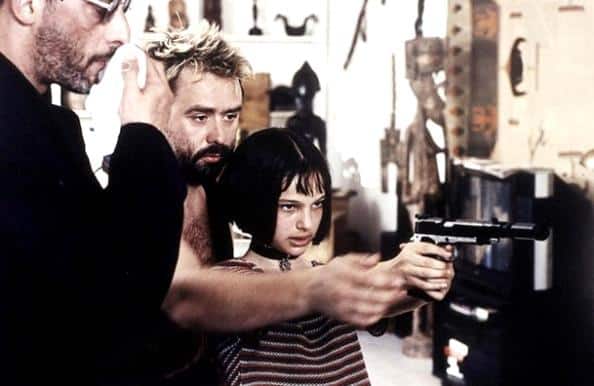
Leon is smaller in scale than many films in this list, which makes the set photo interesting in a different way. The appeal is not a giant prop or creature rig; it is proximity. You read the director, actor, costume, and location as a working triangle. These quieter movie set photos can be more useful for studying performance because they show how much a scene depends on where people stand, how close the lens is, and what the actor is carrying emotionally.
Gone With the Wind
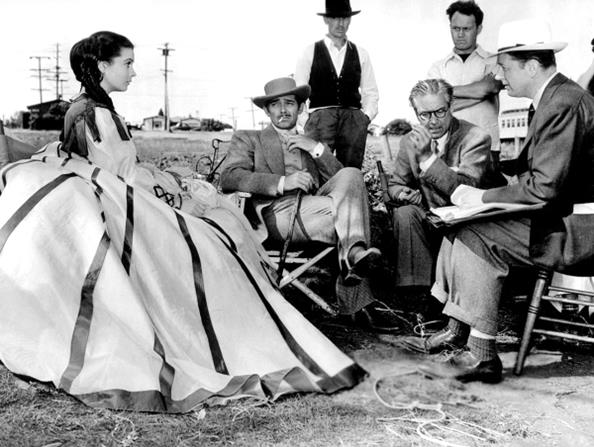
Gone With the Wind sits in the older studio tradition, where costume, lighting, and blocking were often arranged with a painterly sense of control. A behind-the-scenes photo from a classic like this is valuable because it shows how staged the image still had to be before the camera made it feel effortless. Period films depend on fabric weight, posture, and set depth. Those details are easy to miss when you only watch the final cut.
Alien

The Alien image is one of the strongest practical-effects examples here. The creature looks terrifying in the film because the design has a clear silhouette: long skull, exposed ribs, thin limbs, and a shape that feels part insect, part machine. On set, you can see the awkward physical reality behind that elegance. That gap between creature suit and finished nightmare is exactly why behind the scenes movies are so useful for artists. They expose the construction without ruining the design logic.
The Three Musketeers
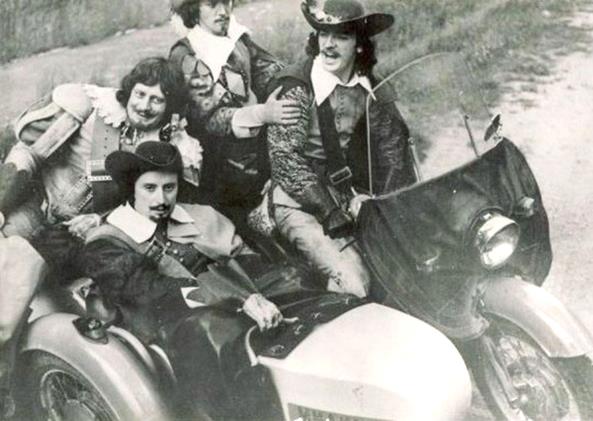
A swashbuckling film lives or dies by rhythm: sword movement, costume motion, camera distance, and bodies crossing the frame. Behind the scenes photos from films like The Three Musketeers show the less glamorous part of that rhythm: resets, marks, crew positions, and the careful spacing needed for action to read safely. If the blocking is unclear, even a beautiful costume cannot save the scene.
RoboCop
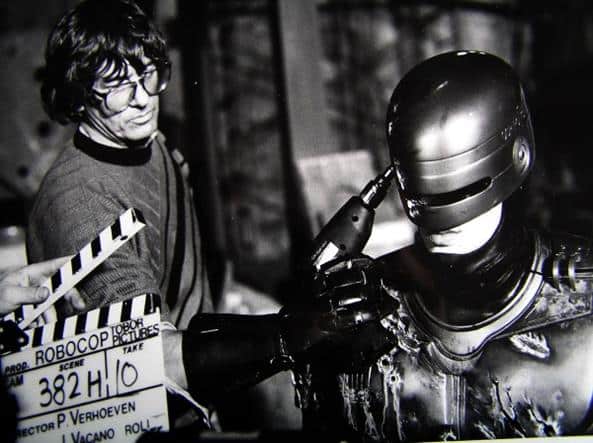
RoboCop is a design lesson hiding inside a violent satire. The suit works because it is readable as police armor, robot shell, and wounded body at the same time. A behind-the-scenes view makes the seams more obvious, but it also shows why the design holds up: broad chest plates, a narrow visor, heavy shoulders, and a controlled metallic value range. The costume has one strong idea before it has details.
Alien set build
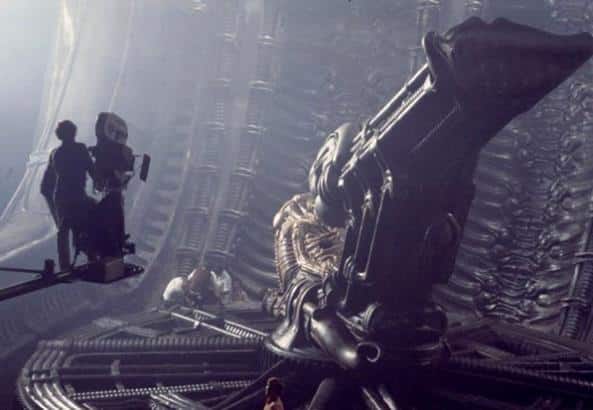
This second Alien-related image is more about environment than monster. Large-scale decoration gives science fiction its weight: pipes, walls, corridors, industrial surfaces, and enough repeated detail to make the world feel used. The trick is not adding detail everywhere. It is grouping detail so the eye still understands the main shape. That is true for set design, concept art, and even quick sketchbook studies.
The Silence of the Lambs
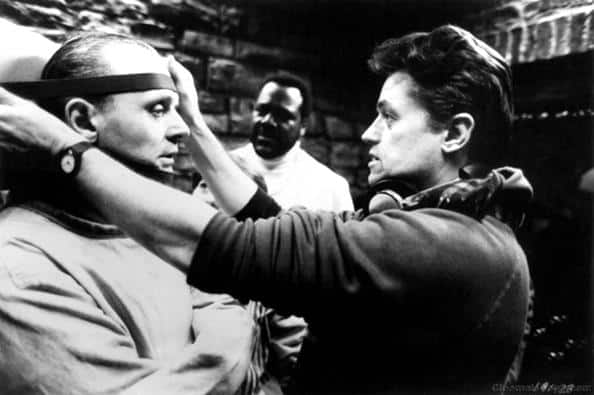
The Silence of the Lambs is a useful contrast to the creature and adventure films above. Its tension comes from faces, distance, stillness, and where the camera chooses to sit. A behind-the-scenes image with Anthony Hopkins and Jonathan Demme makes that collaboration visible. Horror and thriller scenes are often designed around restraint. One look, one pause, or one clean close-up can do more than a room full of props.
Superman
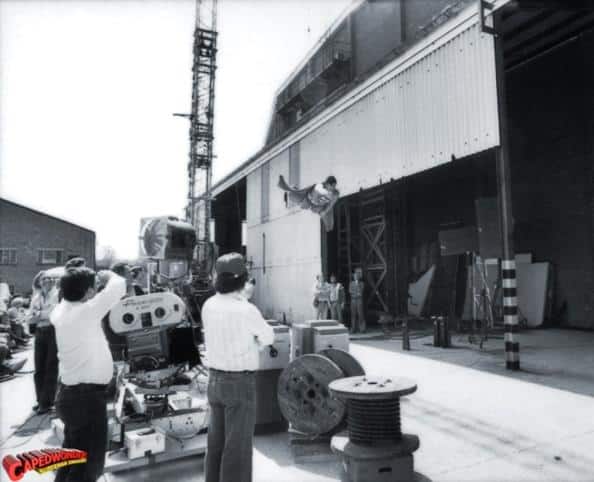
Superman behind the scenes photos are always a little charming because superhero illusion depends on the viewer accepting impossible body physics. Wires, supports, fans, and camera angles all disappear in the final version. What stays is posture. The chest, cape line, head angle, and lighting have to communicate lift before the effect does. That is why classic superhero imagery remains useful for composition study.
Terminator
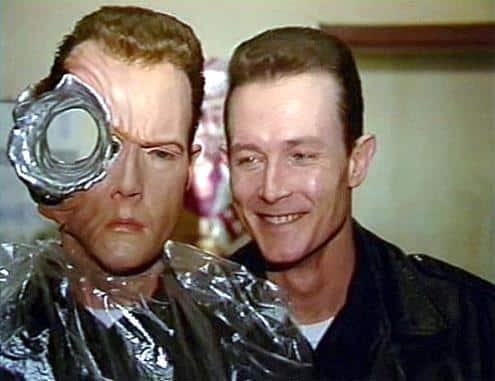
Terminator production imagery tends to show how much of sci-fi fear comes from machinery that looks functional. Chrome, pistons, exposed structure, and hard highlights all push the idea of a body reduced to mechanism. The best lesson here is material contrast. Skin, leather, metal, smoke, and hard light do different jobs in the same frame. If those values are separated well, the image reads even before the viewer catches every detail.
Star Wars
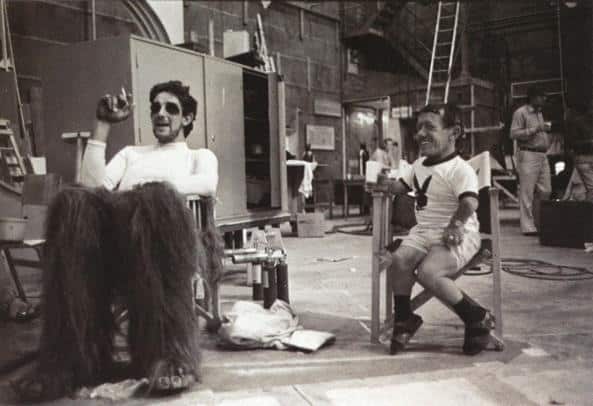
The Star Wars photo has the best kind of on-set weirdness: performers in creature masks relaxing beside camera gear. It shows how casual the studio floor can look while the finished scene becomes mythic. Star Wars worldbuilding works because background characters have strong silhouettes and textures, even when they only appear briefly. For artists, that is a useful rule: a secondary figure still needs a clear shape language.
The Lord of the Rings
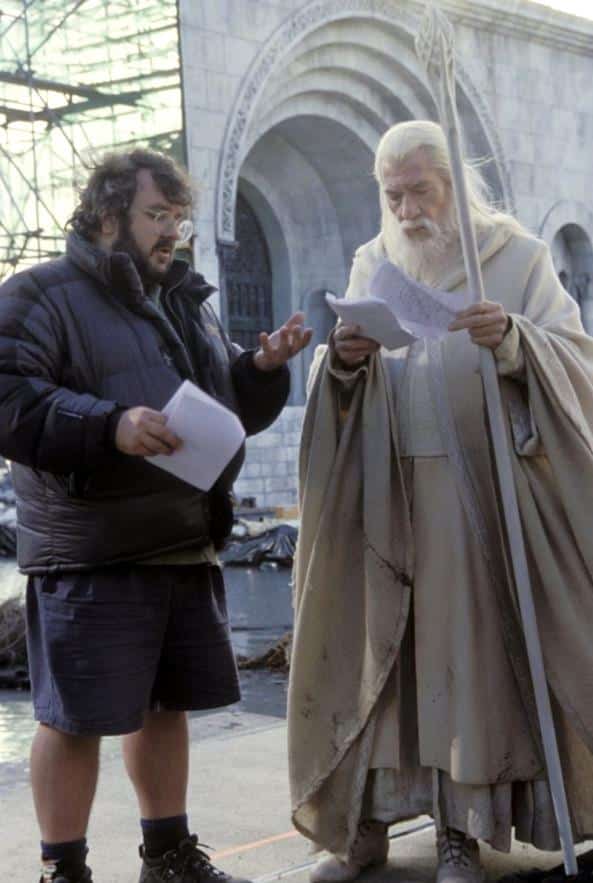
The Lord of the Rings image is a reminder that fantasy filmmaking is not only digital scale. Costume, architecture, papers in hand, actor posture, and a real set edge all help the world feel grounded. Gandalf reads as Gandalf before the visual effects arrive because the design language is already strong: staff, robe, beard, pale values, and a vertical silhouette. That is the part worth studying.
Planet of the Apes
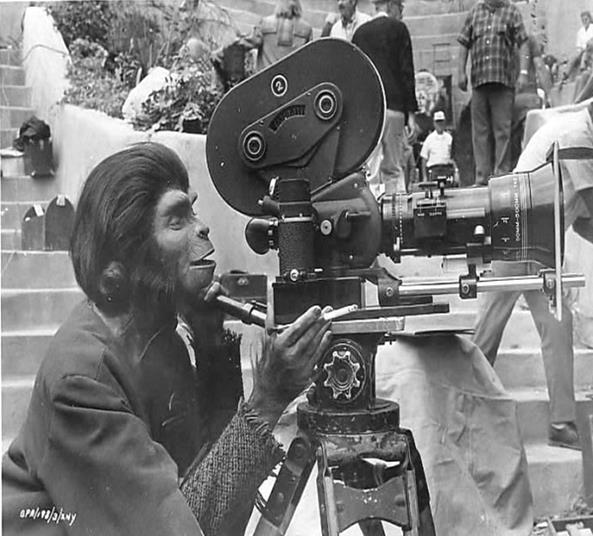
This Planet of the Apes photo is wonderfully direct: the performer is in full ape makeup, calmly operating or posing with the camera. It collapses the distance between character and crew. Makeup effects work best when they can survive this kind of close, practical contact. You can see the brow, muzzle, hairline, and hand texture as separate design problems that have to blend once the scene starts moving.
More visual inspiration after these behind the scenes movies
If you are using these images for mood, composition, or screen design ideas, continue with movie scene wallpapers, movie wallpaper ideas, and movies to watch in autumn. For design-specific study, the DeLorean DMC-12 design history, Disney drawing style, and 3D modeling for film effects guides connect this cinema material back to shape, character, and production design.
Film pages and reference links
For film-specific reference, use IMDb Back to the Future, IMDb Jaws, IMDb Alien, and IMDb The Lord of the Rings: The Fellowship of the Ring as starting points. I would still treat the set photos themselves as visual evidence: what matters most here is how the production choices show up in the frame.
Behind the scenes movies FAQ
Q: What are behind the scenes movies photos?
A: Behind the scenes movies photos are production stills taken on or around a film set. They can show actors between takes, directors giving notes, creature suits, miniatures, stunt rigs, camera setups, lighting equipment, and partial sets. The best ones are useful because they reveal how the finished illusion was built without needing a technical breakdown.
Q: Why do cult movie behind the scenes photos feel so interesting?
A: Cult movie behind the scenes photos feel interesting because they expose the gap between the finished myth and the practical work behind it. A monster can become a suit, a spaceship can become a model, and a dramatic scene can become a room full of crew members. That contrast makes the film feel more handmade, not less impressive.
Q: Which films in this collection use practical effects?
A: Several films here rely heavily on practical effects or physical production design, including Jaws, Ghostbusters, Alien, RoboCop, Terminator, Star Wars, and Planet of the Apes. The effect may be a creature, suit, puppet, model, set build, or camera trick. In each case, the physical object gives the final scene weight and texture.
Q: Are behind the scenes photos useful for artists and designers?
A: Yes. Behind the scenes photos are useful for artists and designers because they show scale, lighting, props, costume structure, material texture, and how people actually occupy a set. When I study a film still, I look for the value pattern first. When I study a set photo, I look for the construction choices that made that value pattern possible.
Q: What should you look for in a movie set photo?
A: Look for the practical clues: where the camera sits, how large the prop really is, how the actor is blocked, where the light comes from, and what the crew is hiding outside the final frame. These clues explain why a scene feels believable. A good movie set photo is often a tiny composition lesson.
Q: Do behind the scenes photos ruin movie magic?
A: Usually, no. Good behind the scenes photos make movie magic more impressive because they show the craft behind the illusion. Seeing a creature suit, miniature, or awkward rig does not weaken the film if the final image still works. It reminds you that cinema is a designed object, built by many hands before it becomes a story.
Q: What keywords fit this page naturally?
A: The strongest natural keyword cluster for this page is behind the scenes movies, movie behind the scenes, behind the scenes of movies, cult movie set photos, famous movie behind the scenes, practical effects, and behind the scenes photos. The article uses these phrases where they fit the reader, not as repeated filler.
Final notes on studying movie behind the scenes photos
The charm of these behind the scenes movies is that they make cinema feel handmade again. A creature becomes a suit. A spaceship becomes a set. A famous actor becomes someone waiting for the next cue. That does not kill the magic for me. It makes the finished frame more impressive, because you can see how many practical choices had to line up before the story could feel effortless.
- 59shares
- Facebook0
- Pinterest59
- Twitter0
- Reddit0