Angel tattoos work best when the meaning, placement, and level of detail line up. They can stand for protection, faith, grief, hope, or a private reminder to keep going. A guardian figure feels protective, wings can suggest loss or freedom, a cherub keeps the mood softer, and a fallen angel works when the story is more complicated.
- Angel Tattoo Meanings
- Popular Angel Tattoo Designs
- Choosing Your Angel Tattoo
- Aftercare and Long-Term Maintenance
- FAQ — Angel Tattoos
- Q: What does an angel tattoo symbolize?
- Q: Where is the best placement for an angel tattoo?
- Q: How painful is an angel tattoo?
- Q: How much does an angel tattoo cost?
- Q: What are the most popular angel tattoo styles?
- Q: What should I avoid when getting an angel tattoo?
- Q: Can angel tattoos be customized with meaning?
- Q: How do I take care of an angel tattoo after getting it?
if you want an angel tattoo that ages well, choose the meaning first, then scale the artwork to the body area. Tiny wings can survive on the wrist or collarbone, but realistic feathers, robes, faces, and halos need more skin so the shading does not close up over time.
The interesting part is how much the meaning changes depending on the artwork. A guardian angel feels comforting. Wings by themselves can mean freedom, loss, or just a reminder to keep moving. I’ve even seen people go for fallen angel designs when they want something darker or more complicated than the usual “good vs evil” symbolism.


Style changes everything with angel tattoos.
A fine-line wing tucked behind the arm feels quiet. Same with a tiny angel near the wrist or a soft collarbone piece with barely any shading. It is more like a hint than a statement.
Then you have the dramatic ones: robes, heavy shadows, massive wings, cloudy backgrounds, faces that look pulled from an old religious painting. Those tattoos need more space, usually the back, chest, thigh, or upper arm, because the detail is the whole point.
And then there are biblically accurate angels. The weird ones. Eyes inside wings, rings, halos, stacked shapes, forms that feel more cosmic horror than sweet guardian angel. Not everyone wants that on their body, obviously. But if you want an angel tattoo that does not look like every Pinterest reference, that direction has teeth.
That is why angel tattoos keep working. They can mean protection, grief, faith, memory, rebellion, beauty, or nothing you feel like explaining. Soft or dramatic, pretty or strange, the design just has to land right for you.
Use this quick guide before committing to a design:
| Angel tattoo style | Common meaning | Best placement | Design note |
|---|---|---|---|
| Guardian angel | Protection, faith, guidance | Back, chest, upper arm, thigh | Faces, hands, and robes need enough space to heal cleanly. |
| Angel wings | Freedom, grief, remembrance | Back, forearm, collarbone, shoulder | Too many tiny feathers can blur, so keep the feather groups readable. |
| Cherub | Love, innocence, softness | Forearm, shoulder, chest, ribs | Small cherub faces need a confident fine-line or black-and-gray artist. |
| Fallen angel | Struggle, rebellion, survival | Back, thigh, forearm, calf | Leave skin breaks and mid-tones so the tattoo does not become one dark patch. |
Angel Tattoo Meanings


Most angel tattoo meanings fall into three buckets: protection, remembrance, and spiritual direction. The exact feeling comes from the design choices. A wing with a date reads like a memorial, a guardian angel reads like protection, and a darker fallen angel can point to grief, guilt, or a hard chapter you survived.
Spiritual Symbolism
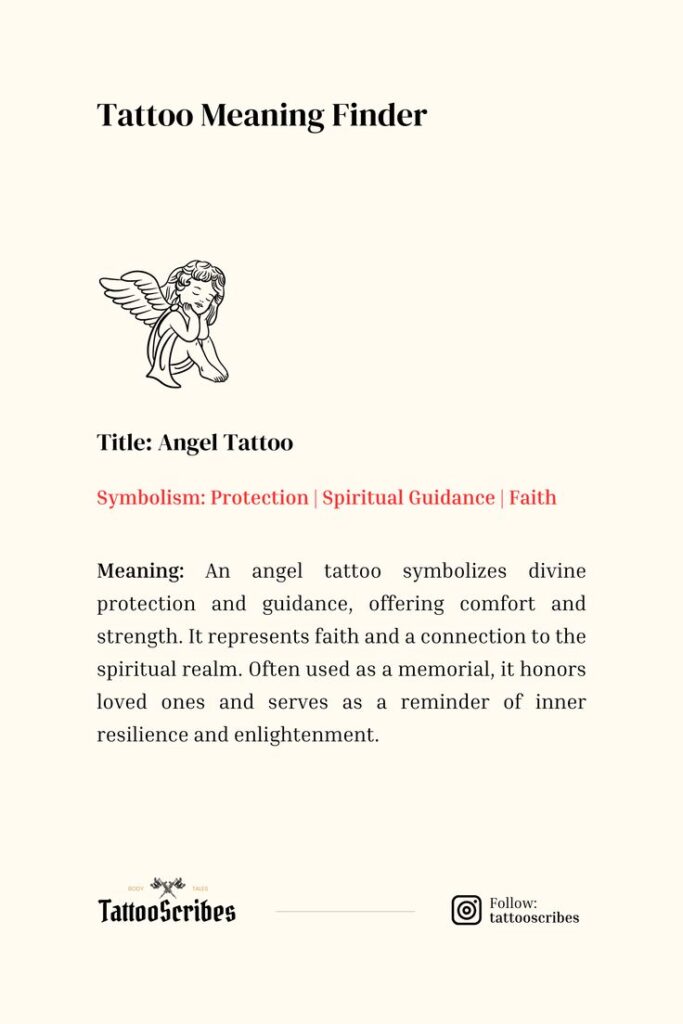

Angel tattoos tend to mean more than people expect. For some, it’s about feeling connected to something bigger — faith, spirituality, the idea that life isn’t entirely random. Angels have always been seen as messengers or guides, so the tattoo ends up carrying that same feeling. A reminder that you’re not completely on your own.
I’ve heard people describe them in very different ways. One person gets angel wings after a rough year because they needed something hopeful to look at. Someone else chooses an angel figure after losing a family member. Same tattoo category, different emotional reason.
And it doesn’t have to be deeply religious either. Sometimes an angel tattoo is just about staying grounded when life feels chaotic. Hope. Strength. Trying to keep the faith when things aren’t going great. Simple things, but the kind that matter when you actually need them.
If you are building a spiritual or celestial tattoo theme, pair angel references with these moon tattoo ideas for softer night-sky symbolism.


That flexibility is part of why angel tattoos never really disappear. They can feel deeply personal without having to explain the whole story to everyone who asks.
Protection and Guidance


Protection is probably one of the biggest reasons people get angel tattoos. The idea is simple: someone or something watching over you. A guardian. For people going through a hard time, that feeling can matter more than you’d think.
I’ve seen angel tattoos tied to all kinds of stories. Someone gets wings after a rough breakup. Another person chooses a guardian angel after losing a parent. It’s not always about religion either. Sometimes it’s just comfort — a reminder that maybe you’re not carrying everything alone.
Guidance comes up a lot too. An angel tattoo can feel like a quiet nudge to stay on the right path or make choices you’ll actually feel good about later. Sounds small, but symbols work like that. You glance at them on a bad day and remember what you’re trying not to lose sight of.
And the design doesn’t have to be dramatic to mean something. A tiny wing on the wrist can carry the same meaning as a full back piece. The story behind it usually matters more than the size or style.
Memorial Tattoos


Memorial angel tattoos need restraint. A name, date, small halo, or single wing often says more than a crowded scene. If you want a portrait-style angel, keep it large enough for the face and hands; those details are where weak tattoo work ages fastest.
A useful test: shrink the reference image on your phone. If the name, wing shape, or halo disappears at thumbnail size, the tattoo probably needs to be bigger or simpler.
Popular Angel Tattoo Designs
Angel tattoos come in many forms, each with its own meaning and style. Some show protection, while others focus on struggle or beauty. Designs often include detailed wings, spiritual figures, or playful cherubs.
Guardian Angels


Guardian angel tattoos almost always come back to the same idea: protection. Someone watching over you. For a lot of people, that meaning matters more than the design itself. I’ve seen people choose one after losing someone close, almost like carrying a reminder that the person is still with them in some way.
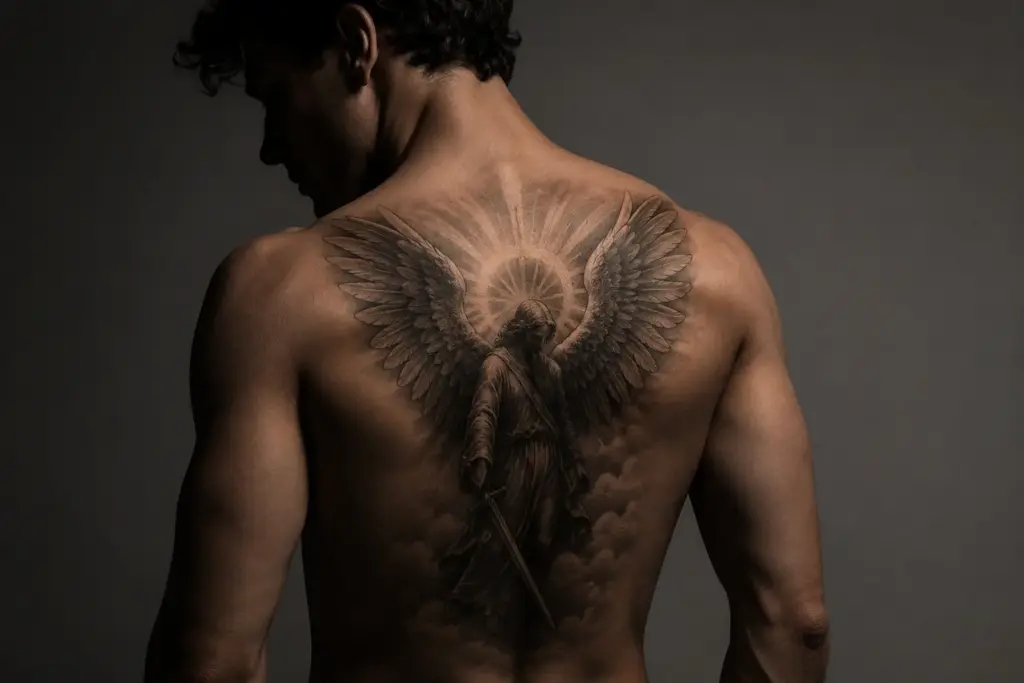
Visually, these tattoos usually feel calm. Soft facial expressions. Flowing robes. Wings wrapped around someone or something important. The goal isn’t normally to make the angel look powerful in an intimidating way — more comforting, like a quiet presence standing nearby.
Faith often shows up in the details. A small cross tucked into the design. A halo. Light breaking through clouds. Sometimes praying hands. And sometimes none of that at all. Not every guardian angel tattoo is deeply religious; some people just connect with the symbolism of guidance and protection.


Most artists lean toward softer styling too. Black and grey shading is common because it ages well and gives the tattoo that peaceful, almost old painting feel. Color happens, but usually in lighter tones — muted blues, soft whites, maybe a touch of gold if the person wants something more heavenly than dramatic.
Fallen Angels


Fallen angel tattoos work when they show conflict without turning into a muddy black patch. Broken wings, a lowered posture, cracked halos, storm clouds, or a sword can suggest loss, rebellion, guilt, or survival.
Ask the artist to leave enough skin breaks and mid-tones. If every shadow is pushed to black, the design may look dramatic on day one but flat after healing.
Angel Wings


Angel wings might be the most common angel tattoo out there. And honestly, I understand why. They’re one of those designs that can mean a lot without feeling overcomplicated. Freedom. Protection. Spirituality. Sometimes grief too — especially when someone gets wings to honor a person they lost.
What I like about wing tattoos is how flexible they are. A simple outline on the wrist feels quiet and personal. Full feathered wings across the back? That turns into the whole statement piece. Same concept, completely different mood.
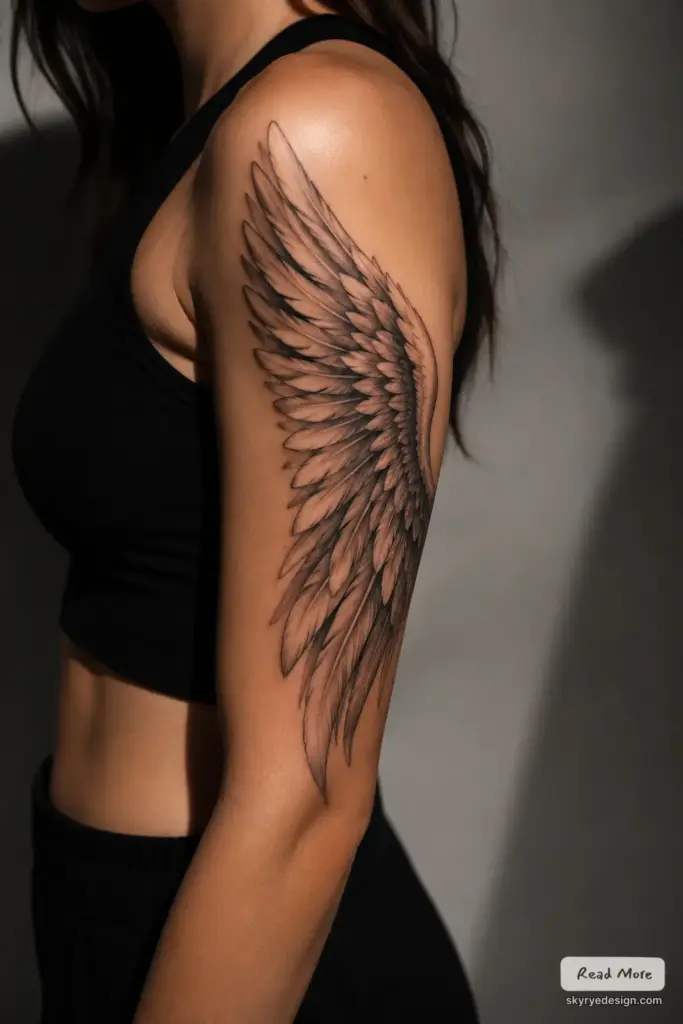
Placement changes everything. The back is the classic spot because, well, it makes visual sense. Arms and chest work if you want something smaller or easier to show off day to day. I’ve also seen people pair wings with other symbols to make the meaning more specific — a sword for strength, a heart for love, initials, dates, little details that turn a nice tattoo into their tattoo.
And feather detail matters more than people think. Too much tiny detail and it can blur over time. The best wing tattoos usually have enough texture to feel realistic without turning into a dark patch five years later.
Cherubs and Archangels


Cherubs bring a softer mood: love, innocence, mischief, or a memorial detail that does not feel too heavy. Fine-line cherubs can look beautiful on the forearm, shoulder, or chest, but the face still needs enough space.
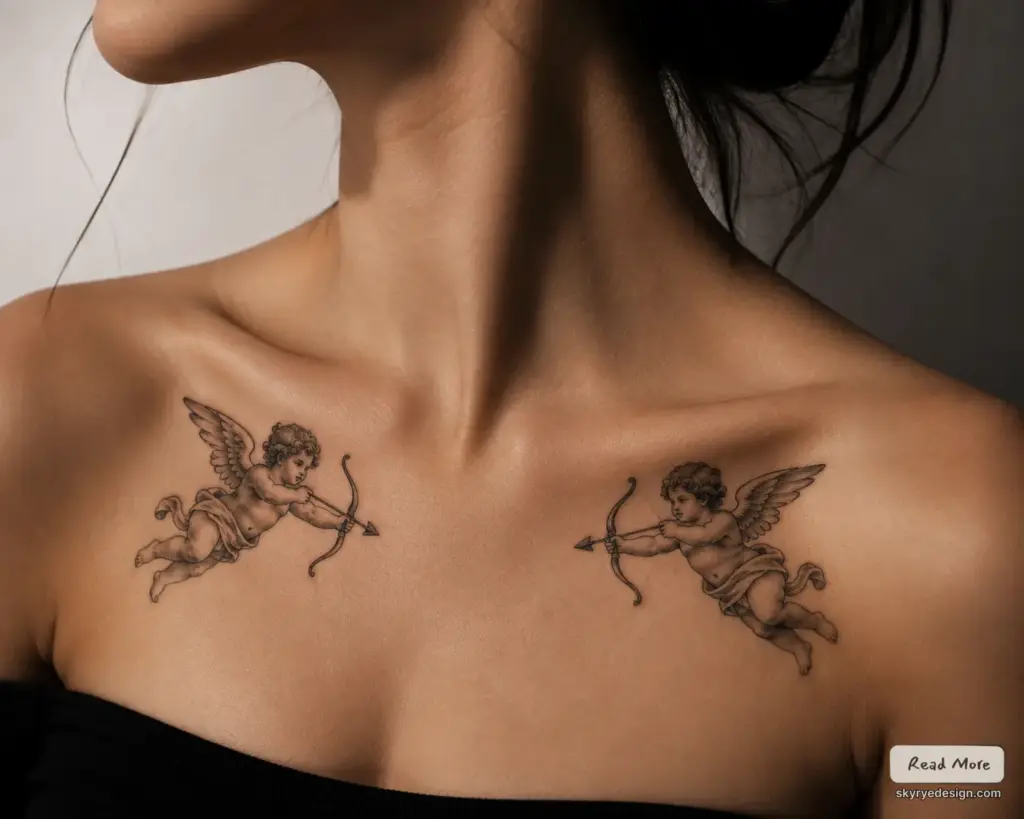
Archangels are the opposite. They need structure: armor, wings, sword, robe folds, and a strong silhouette. I would keep archangel designs medium to large so the pose reads clearly before anyone notices the tiny details.


Choosing Your Angel Tattoo
Start with the job the tattoo has to do. Is it memorial, protective, religious, decorative, or dark and symbolic? That answer should decide the style before you pick a placement.
Placement Ideas
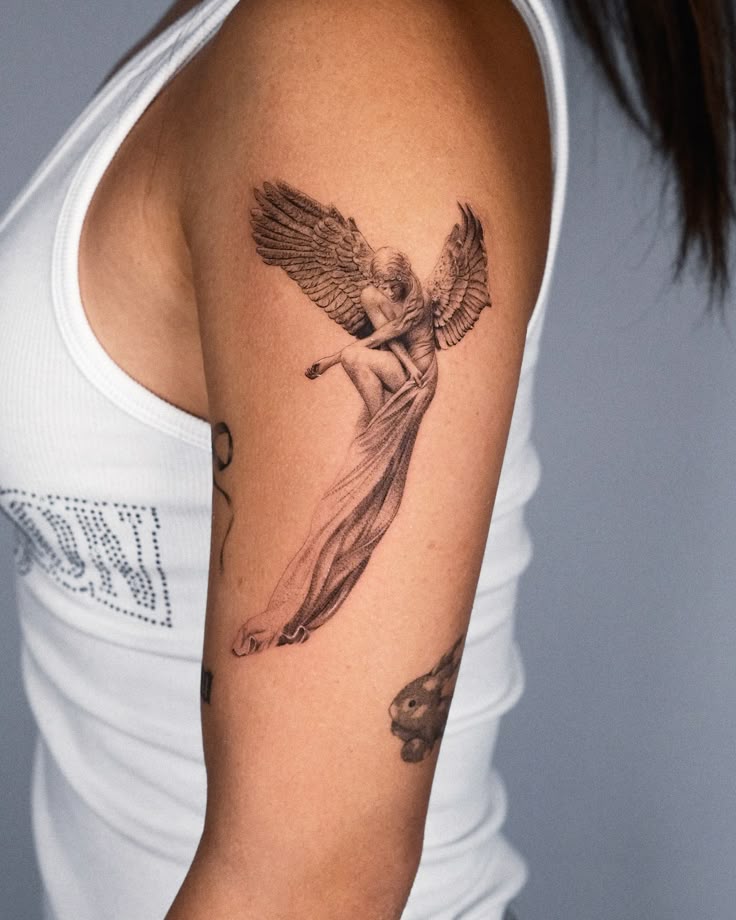


Placement affects readability as much as pain. The back, chest, thigh, and upper arm give you room for wings, robes, faces, and soft black-and-gray shading. A shoulder tattoo can feel protective because the wing or guardian shape naturally wraps the body.
Smaller angel tattoos work better when they are simplified: a single wing, tiny halo, small cherub outline, or clean symbolic detail. If you are leaning toward an arm placement, compare it with our forearm tattoo placement ideas or the arm tattoo guide for women before you lock the size.
Personalization and Customization


Personalization works best when every extra symbol earns its place. Names, dates, handwriting, a small cross, roses, swords, clocks, and short phrases can add meaning, but too many details make the design harder to read.
If words matter most, look at quote tattoo ideas before adding script around the angel. If the design is about love or grief, a small heart can work too; our heart tattoo designs guide has useful placement examples.
Working With Tattoo Artists


Do not choose an artist from fresh photos alone. Angel tattoos depend on soft shading, clean faces, readable hands, and feather texture, so ask to see healed work in the same style you want.
Bring references for mood, not an exact copy. A good consultation should cover size, placement, line weight, shading density, and which details should be removed so the tattoo still looks clear five years from now.
Aftercare and Long-Term Maintenance

Angel tattoos heal like any other tattoo — and the first few weeks matter. Keep it clean, don’t pick at scabs, and follow whatever aftercare your artist gives you. The peeling stage looks weird, but leave it alone.
Moisturizer helps, just don’t overdo it. A simple tattoo balm or gentle lotion keeps the skin from drying out and helps the tattoo settle in better.
Over time, some fading is normal, especially with detailed angel wings or soft shading. Touch-ups happen. Nothing unusual there.
The biggest thing people forget? Sun. UV rays fade tattoos faster than almost anything. If the tattoo gets a lot of exposure, sunscreen makes a bigger difference than most people expect.
Here’s a quick care checklist:
| Step | Tip |
|---|---|
| Clean | Use mild soap and lukewarm water |
| Moisturize | Apply tattoo balm 2-3 times a day |
| Avoid Scratching | Let scabs fall off naturally |
| Sun Protection | Use SPF 30+ sunscreen or cover up |
| Touch-ups | Visit artist if colors fade |
Good aftercare matters even more on angel tattoos with soft shading or small feather groups. Keep the skin calm while it heals, then use sunscreen after healing so the light gray values do not fade too fast.
Angel designs often sit close to ideas of protection and messages, which is why this psychic reading and spiritual signs can be helpful for readers comparing symbol work with spiritual reflection.
FAQ — Angel Tattoos
Q: What does an angel tattoo symbolize?
A: Angel tattoos usually represent protection, guidance, faith, hope, or remembrance. A guardian angel tattoo often symbolizes someone watching over you, while fallen angel designs can represent struggle, loss, or personal growth. Angel wings are popular for freedom and spirituality. Many people also get angel tattoos as memorial pieces for loved ones.
Q: Where is the best placement for an angel tattoo?
A: It depends on the design size. Large guardian angel tattoos look best on the back, chest, or thigh because there’s room for details like wings and shading. Smaller angel wings fit well on the forearm, wrist, collarbone, or shoulder. Rib and spine placements look dramatic but tend to hurt more during the session.
Q: How painful is an angel tattoo?
A: Pain depends on placement and size. Areas with more muscle, like the upper arm or thigh, are usually moderate pain (around 4–6/10). Bony areas like ribs, collarbone, and spine can feel much more intense (7–9/10). Detailed angel wings with lots of feather shading also take longer, which can make the session feel tougher.
Q: How much does an angel tattoo cost?
A: A small angel tattoo may cost around $100–$250 depending on the studio and detail level. Medium designs with wings or shading usually range from $300–$800. Large realistic guardian angel back pieces can cost $1,000–$3,000+ and often require multiple sessions. Artists specializing in realism or fine-line work usually charge premium rates.
Q: What are the most popular angel tattoo styles?
A: The most requested styles include realistic black-and-gray angels, fine-line cherubs, minimalist angel wings, and religious or Renaissance-inspired artwork. Some people choose neo-traditional styles with bold outlines, while others prefer soft, detailed realism inspired by sculptures or classical paintings. Black ink tends to age better than very light gray shading.
Q: What should I avoid when getting an angel tattoo?
A: One common mistake is choosing too much feather detail for a very small tattoo. Tiny feathers often blur over time. Another issue is copying Pinterest designs exactly instead of adapting them to your body shape. Always check healed photos of your tattoo artist’s work—especially if you want realism, wings, or soft shading.
Q: Can angel tattoos be customized with meaning?
A: Yes. People often personalize angel tattoos with names, dates, halos, crosses, roses, swords, hearts, or meaningful quotes. Memorial tattoos sometimes include birth dates or handwriting from loved ones. You can also combine angel wings with symbols like clocks, doves, or stars to make the design more personal.
Q: How do I take care of an angel tattoo after getting it?
A: Keep the tattoo clean and lightly moisturized for the first 2–4 weeks. Wash it gently with fragrance-free soap and avoid scratching or peeling skin. Stay out of pools, saunas, and direct sun while healing. After it heals, sunscreen (SPF 30+) helps protect detailed shading and prevents black ink from fading too quickly.
Next in the tattoo cluster: compare angel tattoos with the broader tattoo ideas archive, tattoo ideas for men, tattoo ideas for women, and quote tattoos if you are still deciding between symbol, placement, and wording.
For another design built around transformation and protection, a symbolic phoenix tattoo idea can sit close to angel, wing, and rebirth imagery.
- 4.7Kshares
- Facebook0
- Pinterest4.7K
- Twitter3
- Reddit0