
A lot of bee tattoo ideas look sharp in a fresh photo but lose definition as fine lines soften over time. Before I worked in product and jewelry design, I trained in academic drawing, where I learned that a small object has to survive being small. Tiny wings, hairline stripes, and a dozen leg joints may look fine at 10 cm on paper. On skin, they need more breathing room.
So this guide sorts bee tattoo ideas by what actually holds up. You’ll find 18 designs across fine line, bold, geometric, floral and symbolic styles, plus the history behind the bee as a symbol, a size and placement chart, and a simple way to brief your artist with your own sketch. I’ve also flagged the common mistakes, since many avoidable regrets start with an unclear brief.
- What makes a good bee tattoo?
- Honeybee or bumblebee: draw the right insect
- Bee tattoo meaning and history
- Fine line and minimalist bee tattoo ideas
- Bold bee tattoo ideas: blackwork, dotwork and traditional
- Honeycomb and geometric bee tattoo ideas
- Bee and flower tattoo ideas
- Symbolic bee tattoo ideas
- Color or black and gray?
- Best placements for a bee tattoo
- Size, detail and how bee tattoos age
- How to brief your tattoo artist
- Common bee tattoo mistakes
- Frequently asked questions
- Pick one bee, and test it
What makes a good bee tattoo?
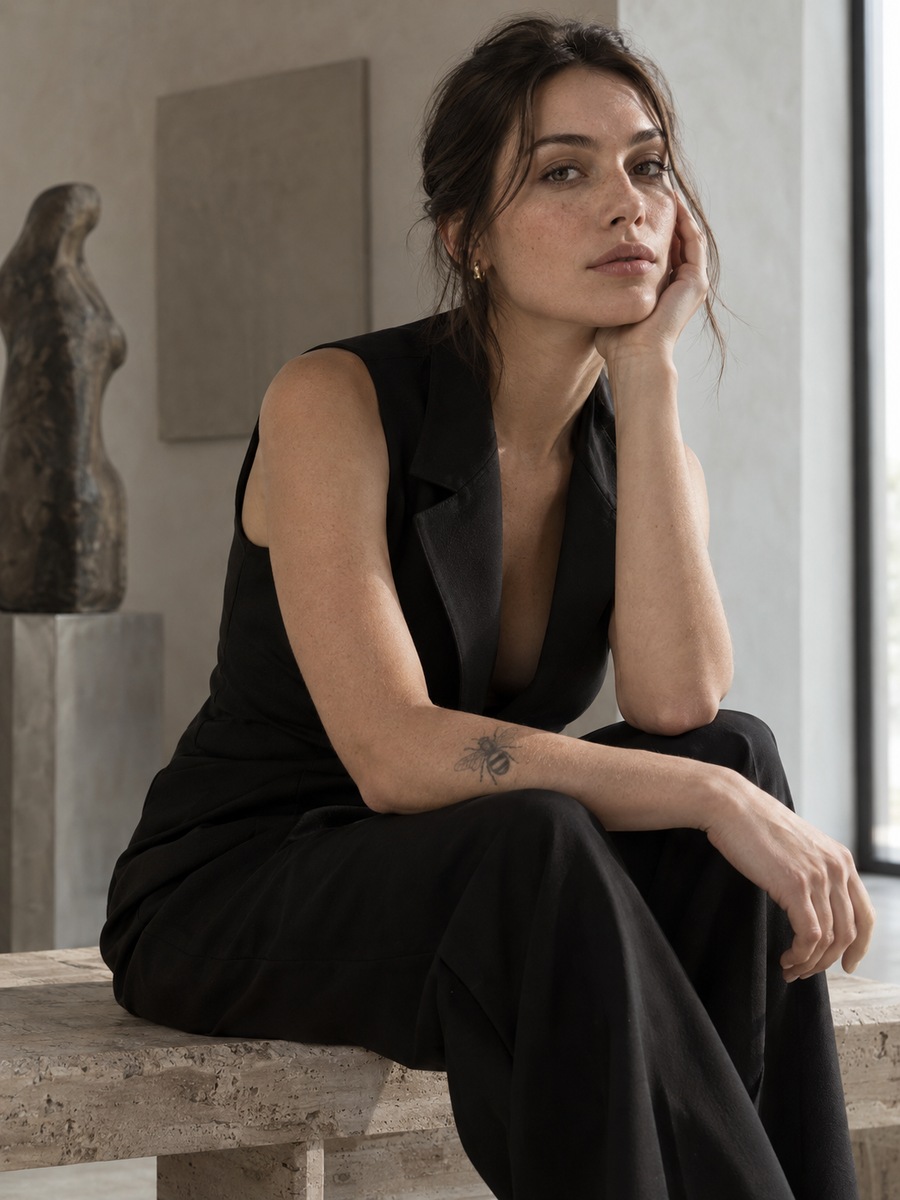
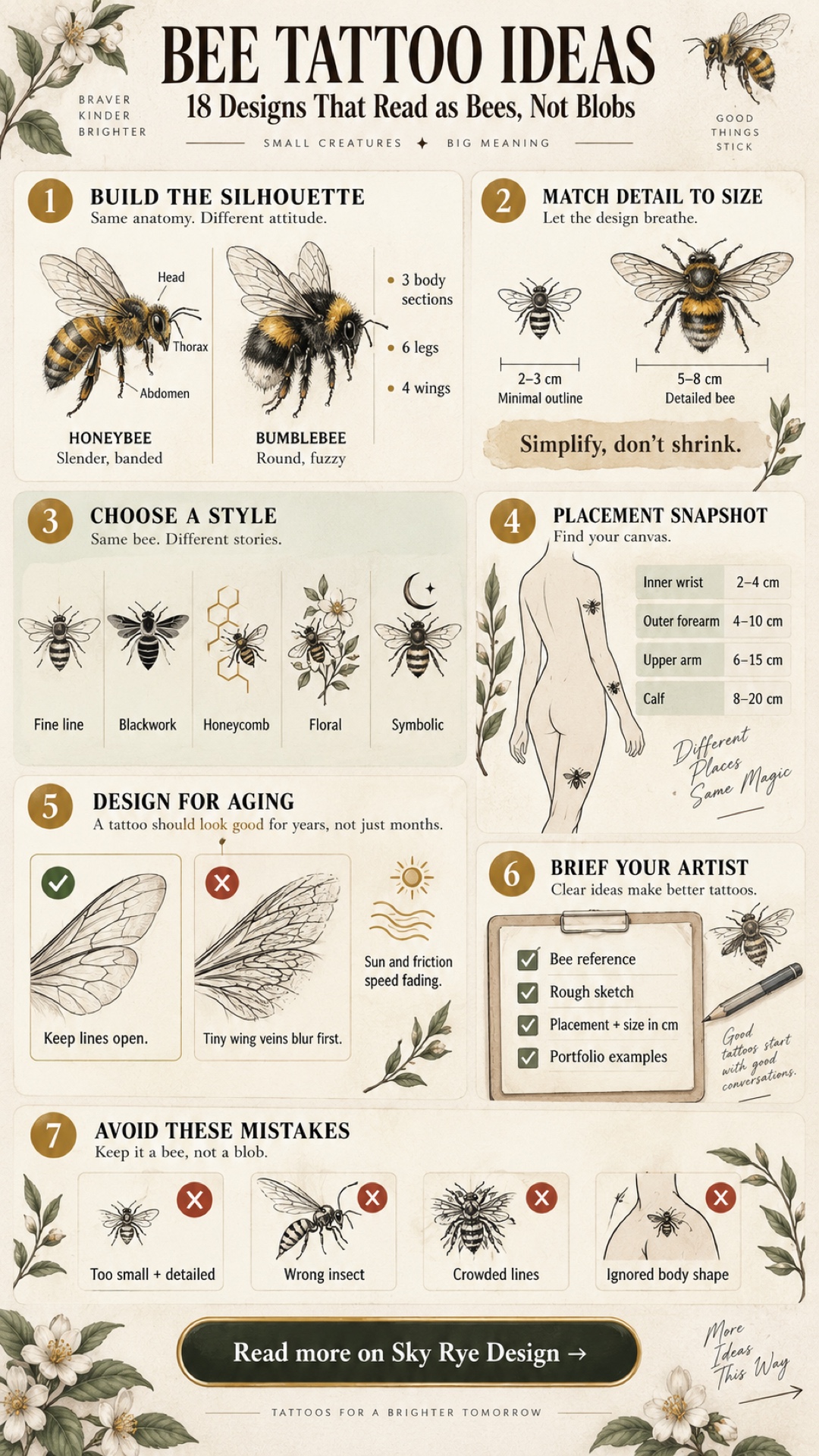
A good bee tattoo is a design that still reads as a bee when it’s small, healed and a few years old. That depends on four things: a clear silhouette (round fuzzy body, two pairs of wings, a visible pinch between thorax and abdomen), enough space between lines so they don’t merge as the ink spreads, a size that matches the level of detail, and a placement that suits the shape. Honeybees are slender with banded abdomens, bumblebees are round and furry, and the two need different linework. A detailed realistic bee usually needs about 4 cm (1.5 inches) or more. A minimalist outline can work smaller. If you can’t tell it’s a bee from across a room, simplify it before you book.
Honeybee or bumblebee: draw the right insect
This is the first decision, and many people skip it. A honeybee is slim, with a tapered abdomen and clear stripes. A bumblebee is rounder, covered in fuzz, with a blunt, stout shape. Both have three body sections (head, thorax, abdomen), six legs and four wings, with the front pair larger than the back pair.
For tattoos, that difference matters more than you’d think. A bumblebee’s soft, rounded body works well for cute, small designs and for watercolor or dotwork, because fuzz can be suggested with stippling. A honeybee suits clean linework and geometric designs, because its stripes and long wings give you strong lines to work with.
Here’s a trick from my drawing days. Before you choose, draw the bee yourself in three minutes, top view, using only a circle for the head, an oval for the thorax and a longer oval for the abdomen. Add the wings last. If your sketch reads as a bee, the shape is strong enough to tattoo. If it looks like a wasp or a fly, the proportions need work. Wasps have a narrower waist and no fuzz. Flies have two wings, not four. Getting that right in a sketch costs you nothing; getting it wrong on skin costs a lot.
Bee tattoo meaning and history
People get bees for different reasons: hard work, teamwork, community, sweetness, protecting nature. Those meanings come from how a hive behaves. But the bee also has an older, more interesting history as an emblem, and knowing it helps you choose a style.
In ancient Egypt, the bee was a royal symbol. One of the pharaoh’s titles, often translated “he of the sedge and the bee,” tied the bee to the kingship of Lower Egypt. In Greece, the word for bee is melissa, and the name was given to priestesses who served at certain shrines.
France gives the bee its most famous modern role. Golden bee ornaments were found in the tomb of the Frankish king Childeric I, discovered in 1653, and Napoleon adopted the bee as an imperial emblem in 1804 to link his rule to an older line of kings. That’s why the bee still turns up in French luxury. The jeweler Chaumet, which worked for Napoleon’s court, uses it today, and the perfumer Guerlain has produced bee-decorated bottles since the 1850s, originally for Empress Eugénie. If you like the idea of a bee that feels regal and a bit fashion-forward, that’s your reference point.
As a jewelry designer, I find this useful. A bee motif works as an emblem when it’s drawn with confidence and a bit of formality, with the wings spread and the body centered, rather than as a cartoon. Look at how a bee appears on a brooch or a perfume bottle: it’s almost always symmetrical, slightly stylized and sized to be read at a glance. That’s a good template for a tattoo too, because the same qualities that make an emblem recognizable on a small piece of metal make a tattoo recognizable on skin.
Fine line and minimalist bee tattoo ideas
Fine line is one of the most popular styles, and the one that most needs careful planning. Thin lines look elegant when new. They also spread slightly over the years, so the trick is generous spacing.
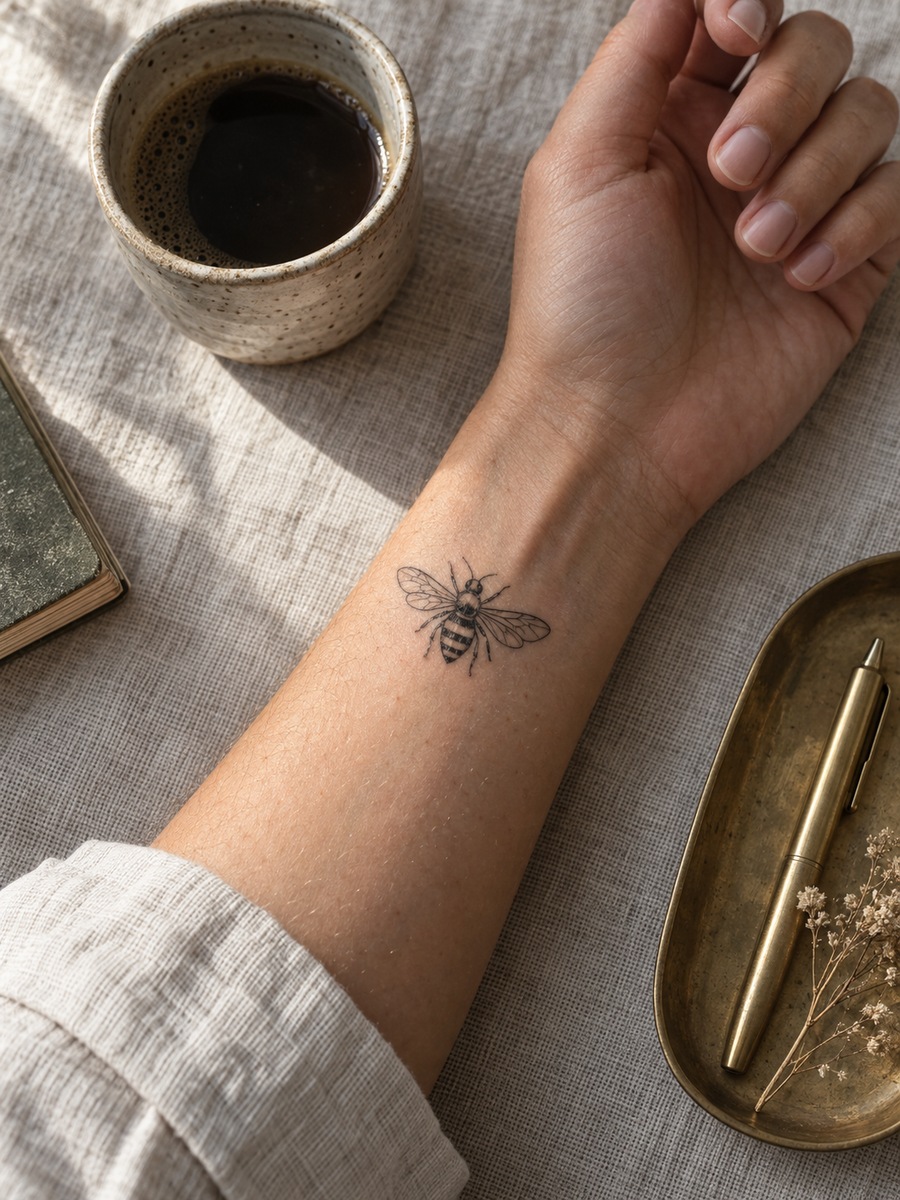
1. Single-line honeybee on the wrist
One continuous line forms the body and wings. Keep it about 3 cm wide. Choose a spot with flat skin and little movement, like the inner wrist, and ask for slightly heavier lines than your instinct says.
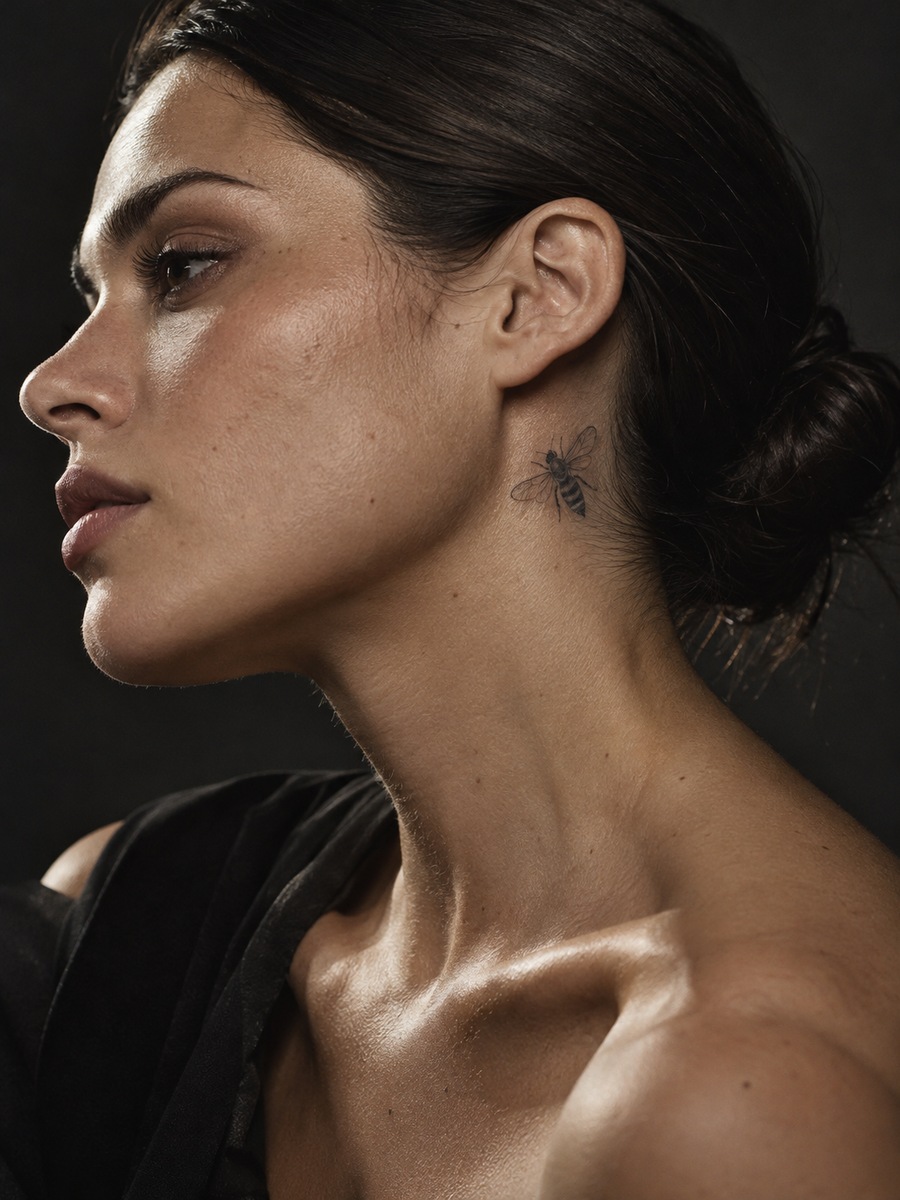
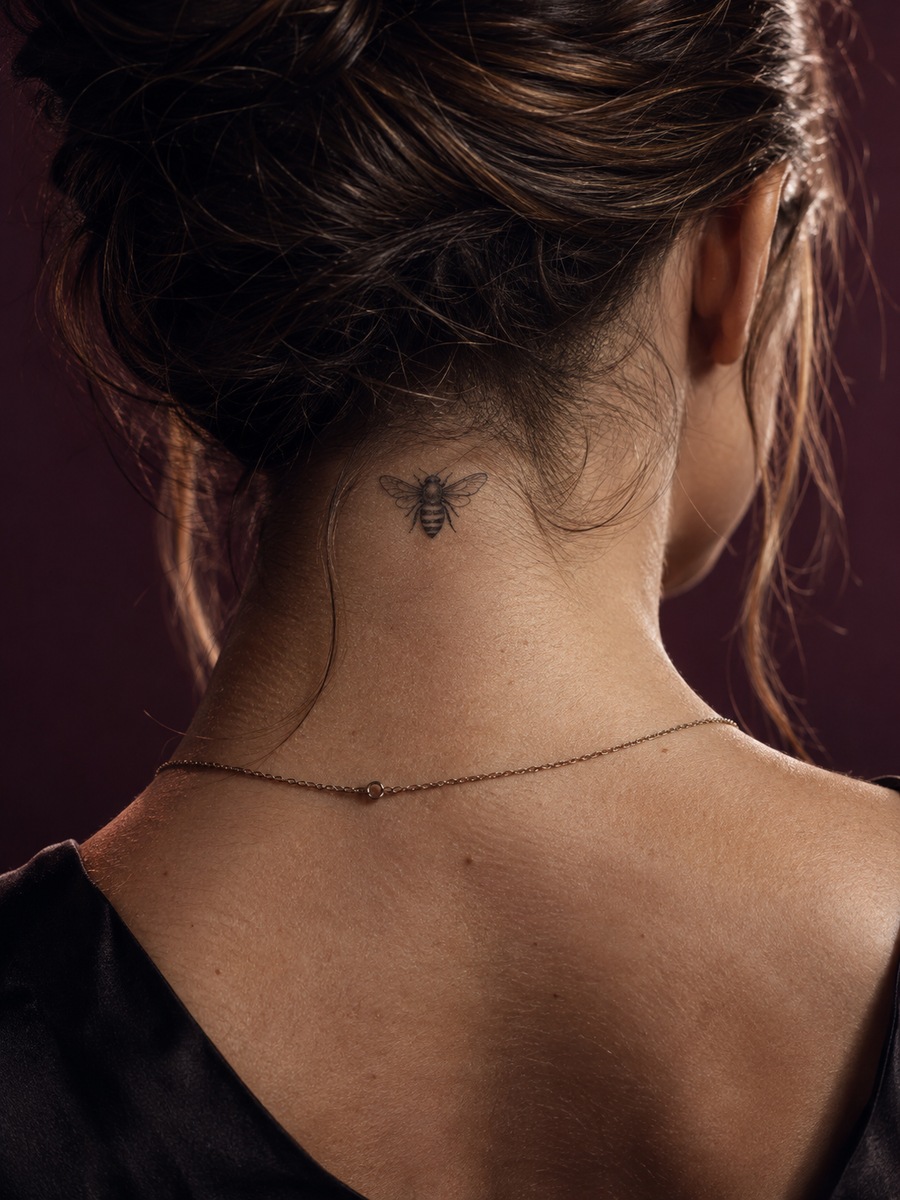
2. Tiny outline bee behind the ear
A very small bee, outline only, no stripes. This one works because it’s a symbol, not an illustration. Expect to need a touch-up, since this skin area changes more than most.
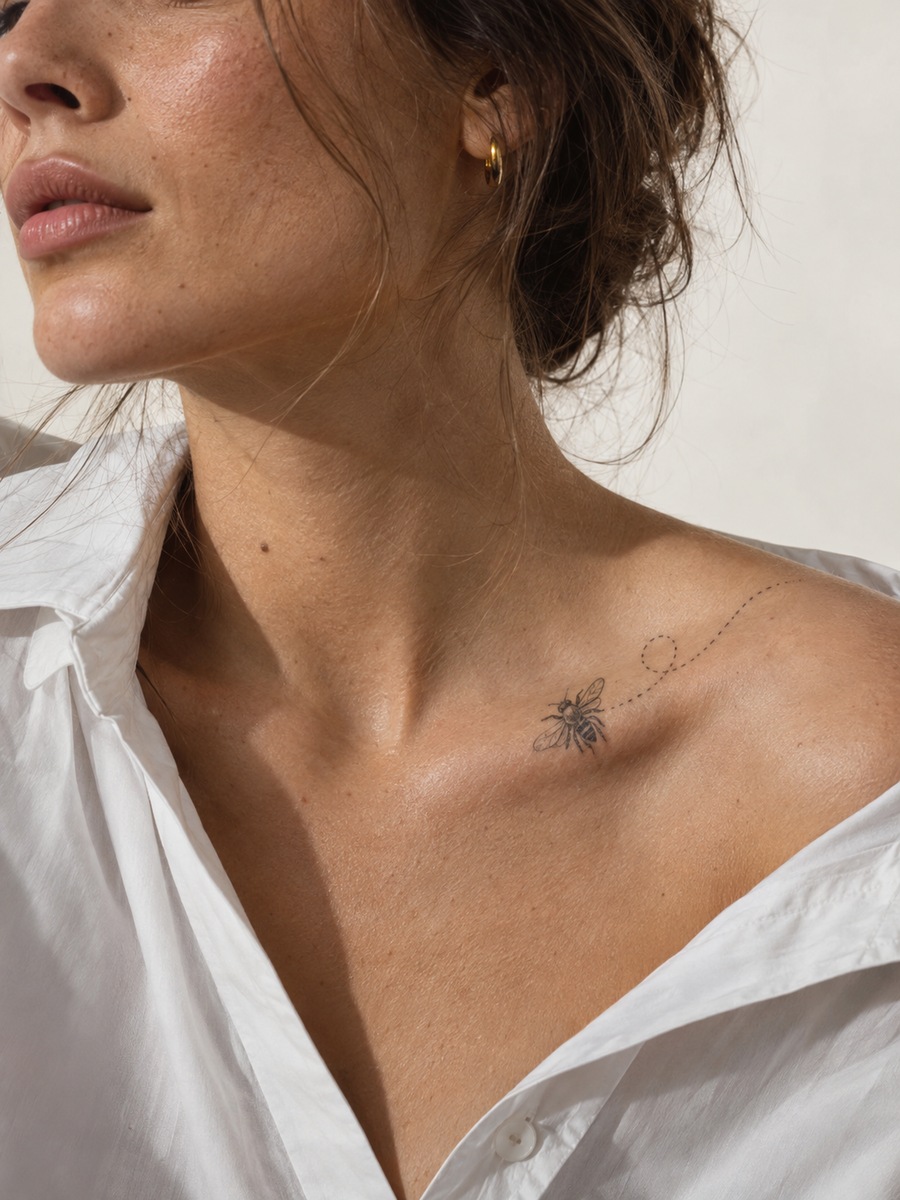
3. Bee in flight with a dotted trail
A small bee followed by a loose dotted path. The dots add movement and give the eye somewhere to go. Works on the outer forearm or along the collarbone.
4. Honeybee with negative-space stripes
Instead of filling the abdomen stripes with ink, leave them as bare skin between dark bands. This is one of my favorites because it uses the skin as part of the design, much as a good logo uses white space.
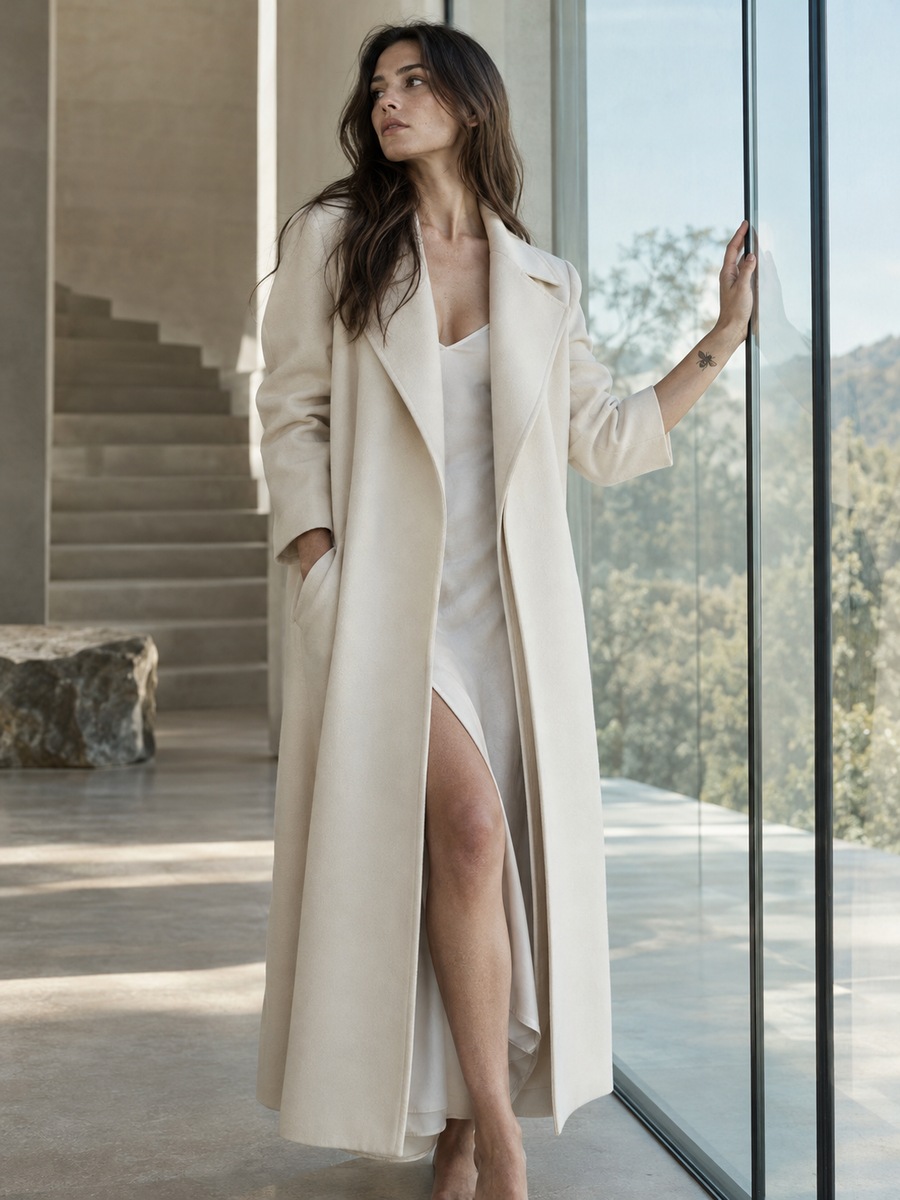
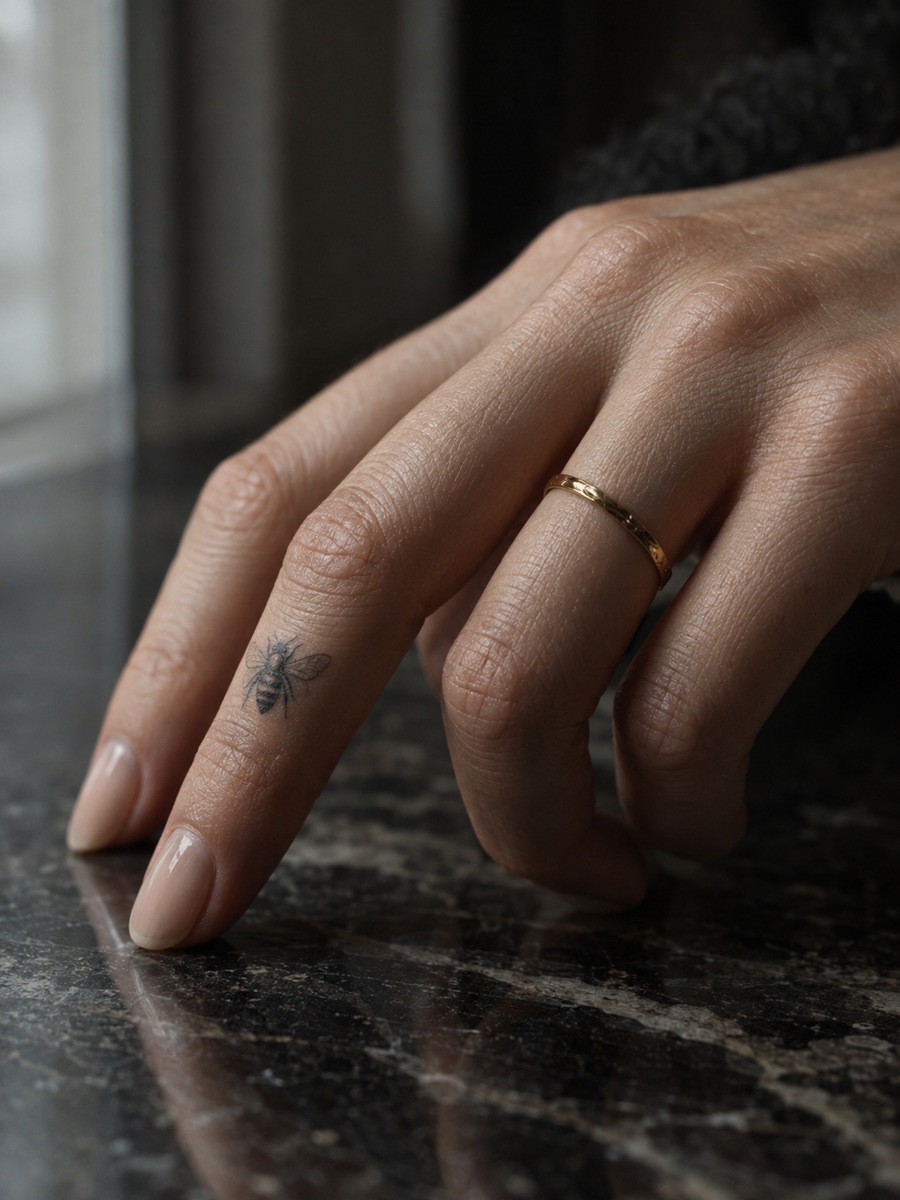
5. Micro bee on the finger or ankle
Small and quiet. These spots fade faster because of friction and sun, so pick this only if you’re fine with a touch-up in a few years.
Bold bee tattoo ideas: blackwork, dotwork and traditional
If you want a tattoo that stays crisp for decades, go bolder. Thicker lines and solid fills age better than hairlines.
6. Blackwork honeybee on the upper arm
Solid black abdomen stripes, graphic wings with clear outlines. Bold shapes survive time, and this style reads at a distance. Leave a thin gap between the wings and body so they don’t blur together.
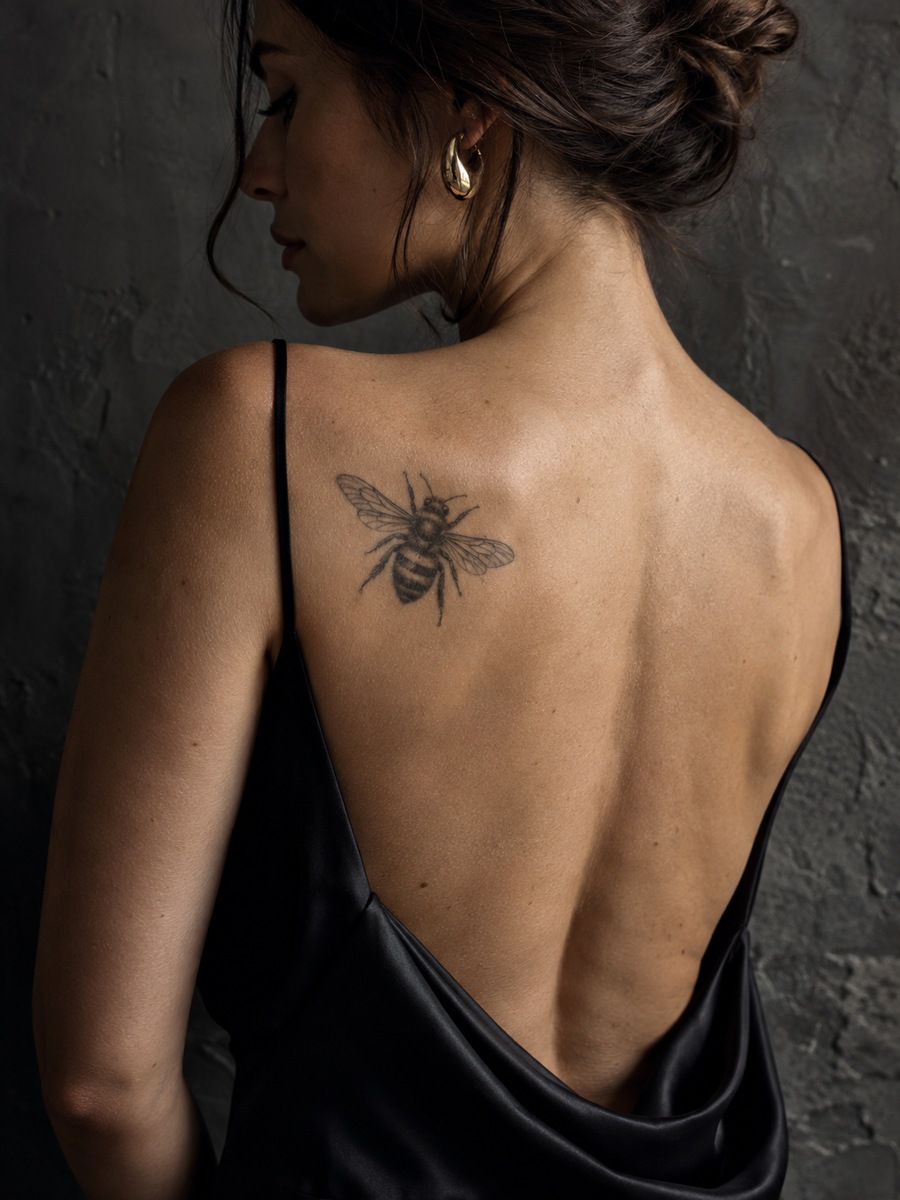
7. Dotwork bumblebee
A bumblebee built from stippled dots, denser at the thorax and lighter at the edges, to suggest fuzz. If you like this approach, my dotwork tattoo ideas guide covers how dot density works and how it heals.
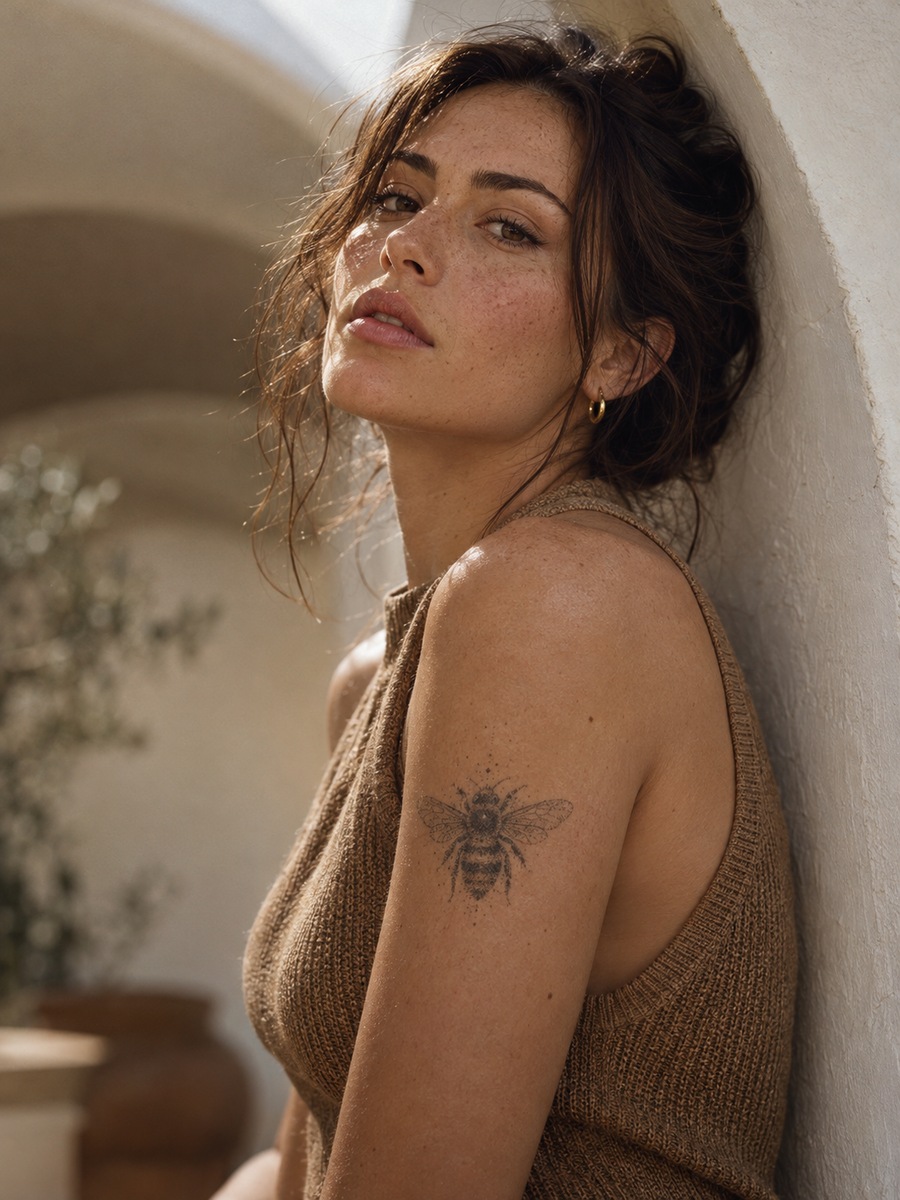
8. American traditional bee with thick outlines
Heavy black lines, a limited palette of yellow, black and a touch of red, and often a banner or a flower. It’s a style that has changed relatively little over a century, and that’s the point. These tattoos are designed to last.
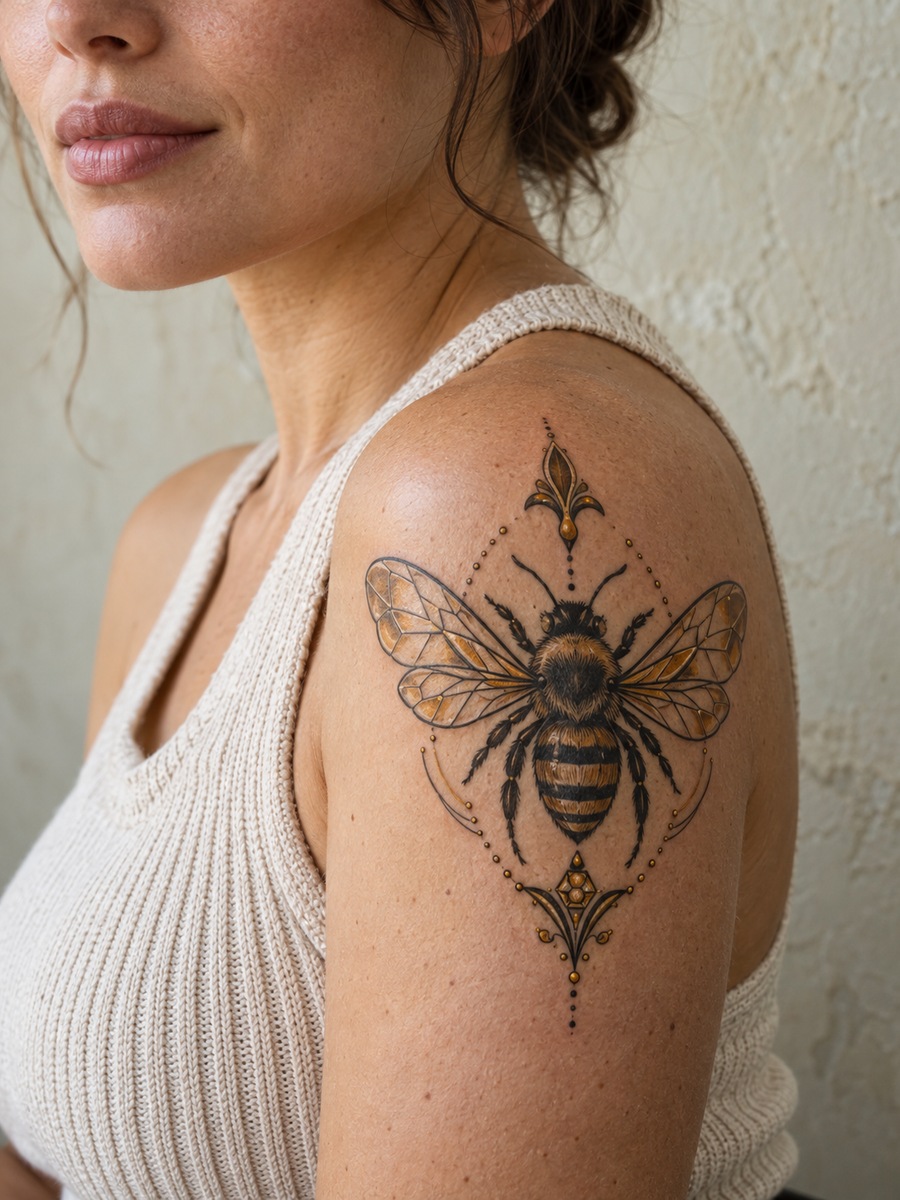
9. Neo-traditional bee with ornament
Same thick outline, but with richer color gradients, jewel-like wings and decorative patterns. Works well on the shoulder or thigh, where there’s room.
Honeycomb and geometric bee tattoo ideas
Hexagons are the bee’s natural pattern, and they make for tidy, modern designs.
10. Bee over a honeycomb fragment
A bee resting on three to five hexagons, with the cells fading out at the edges. Keep the hexagon lines the same weight as the bee’s outline, or the two will fight.
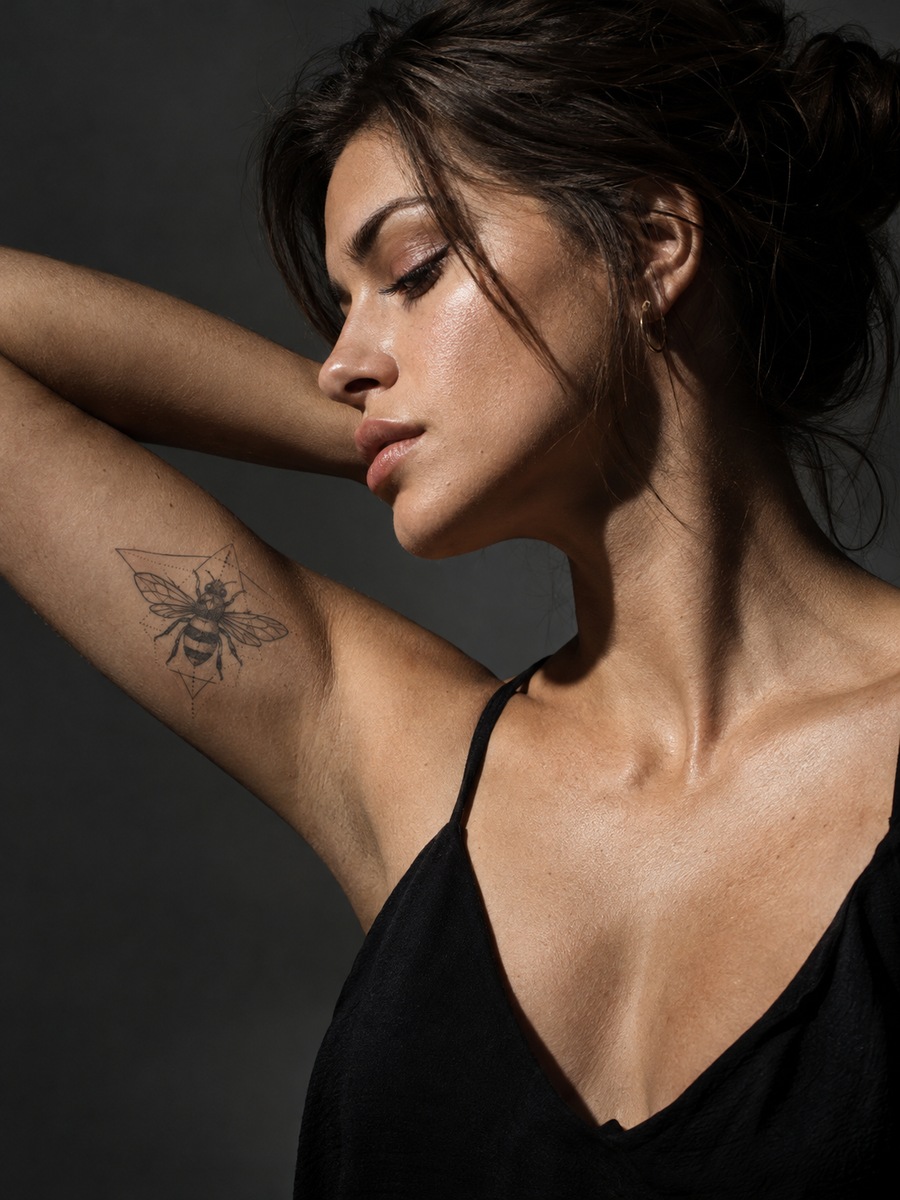
11. Geometric bee built from triangles
The body and wings are made of straight lines and angular shapes. It’s a good fit if you like architecture or graphic design. Precision matters, so find an artist with clean, consistent linework.
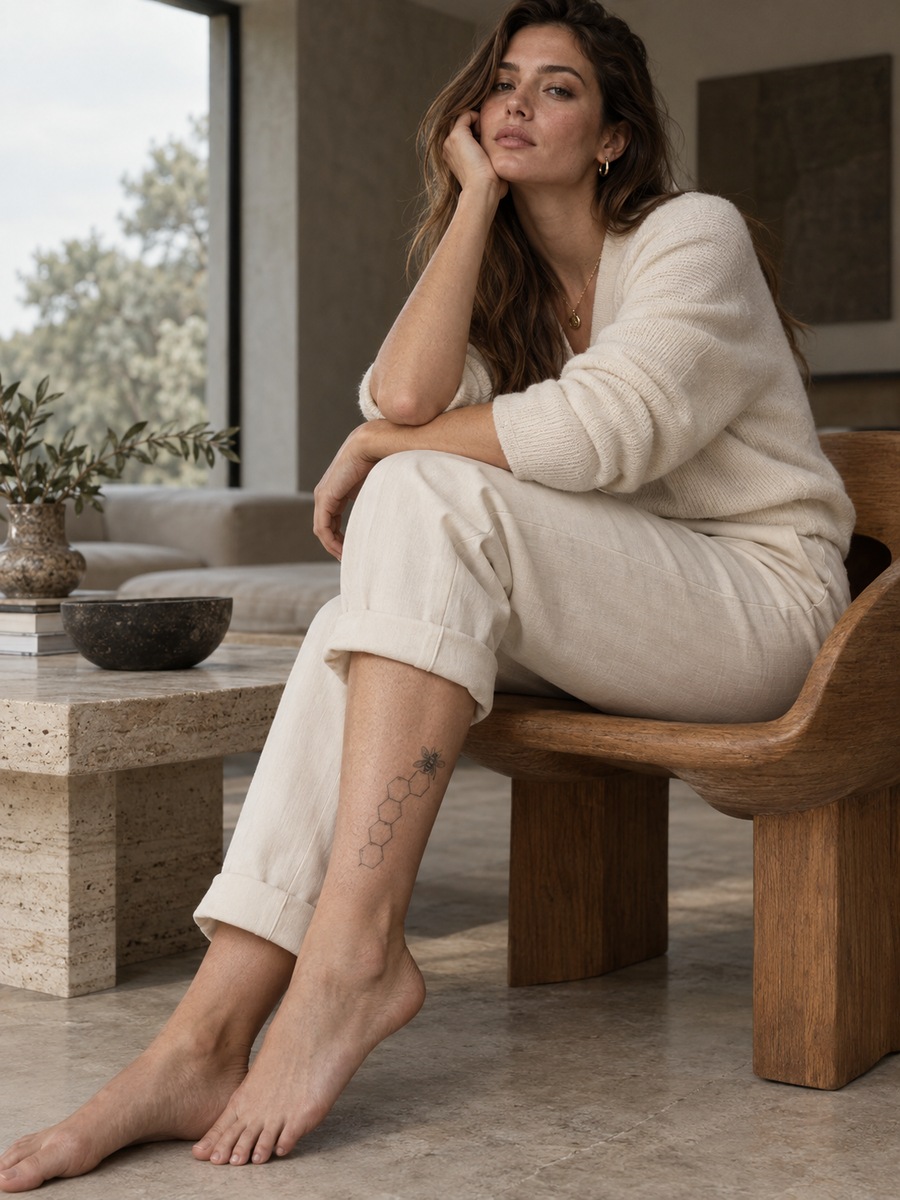
12. Honeycomb sleeve band
A band of hexagons wrapping the upper arm or calf, with one bee tucked in. I like this for people who want a larger piece without a big central image. For sizing and flow, the tattoo placement chart is worth a read first.
Bee and flower tattoo ideas
Bees and flowers belong together, and the pairing gives you more composition options.
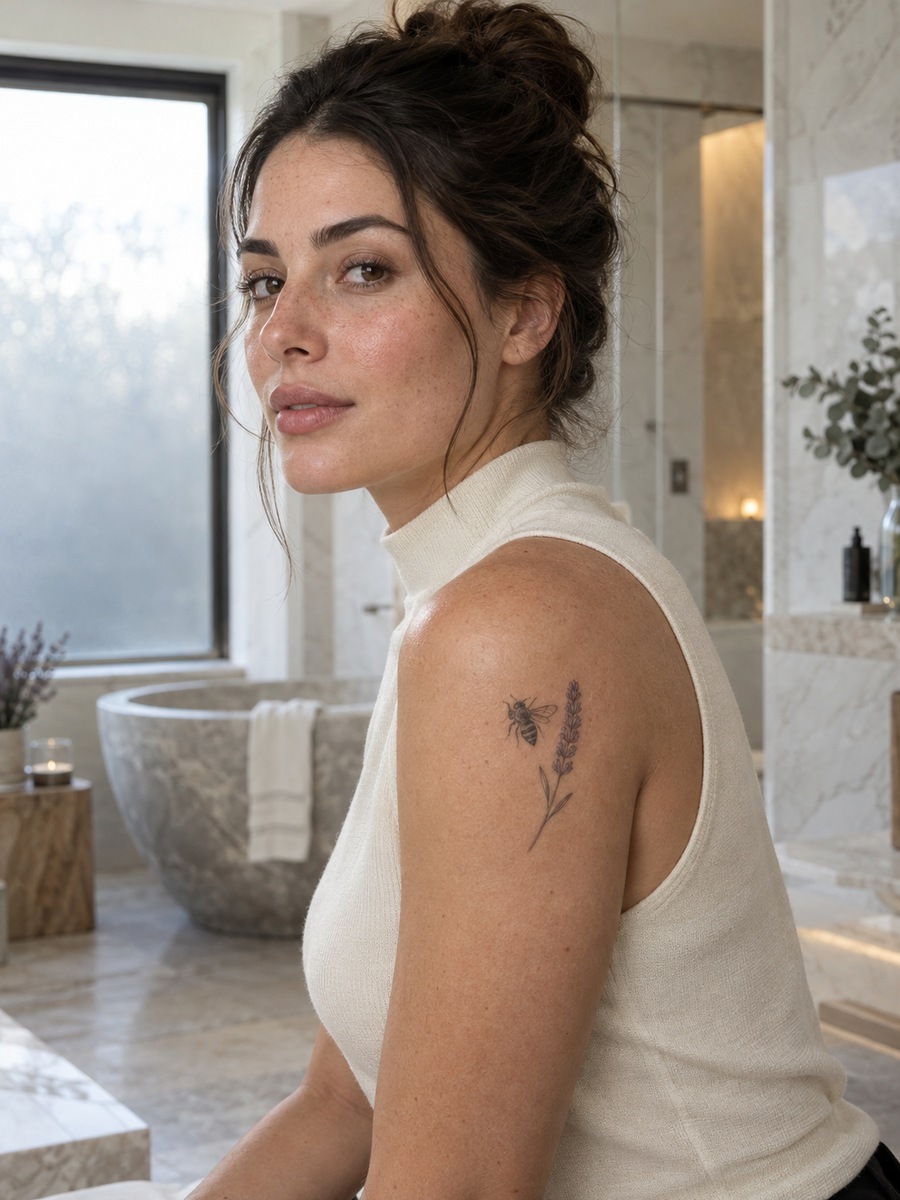
13. Bee on a single wildflower
One bee, one stem. Simple, readable and easy to place along the forearm or calf. Pick a flower with a clear shape, like a daisy or a lavender sprig, since fine petals add clutter.
14. Bee among botanical sprigs
A small bee in the middle of a loose bouquet. If you’re thinking about a larger botanical piece, take a look at the floral sleeve tattoo ideas for how flowers are arranged along an arm.
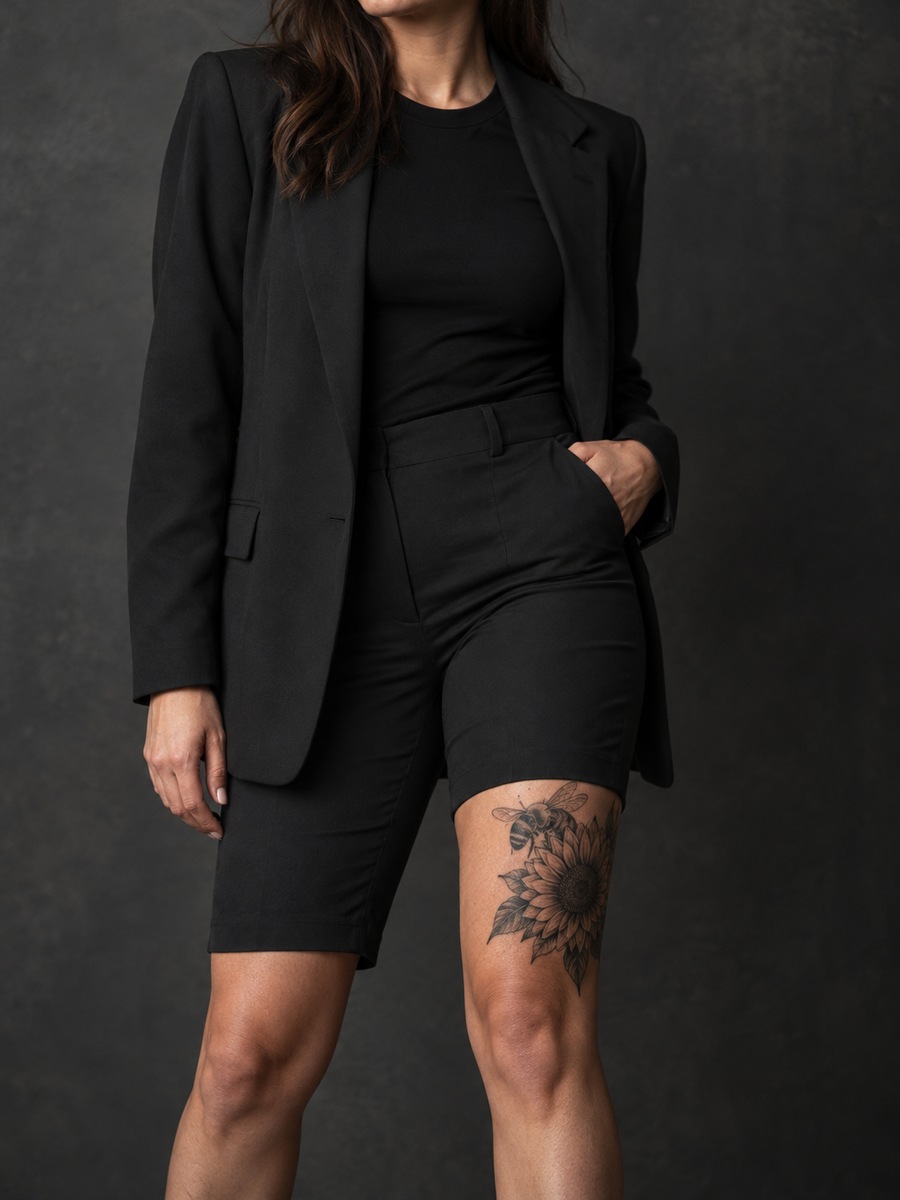
15. Bee and sunflower
A bold pairing in color or black and gray. The sunflower’s large round head gives the bee a strong contrast in scale. Best on the shoulder blade or thigh.
Symbolic bee tattoo ideas
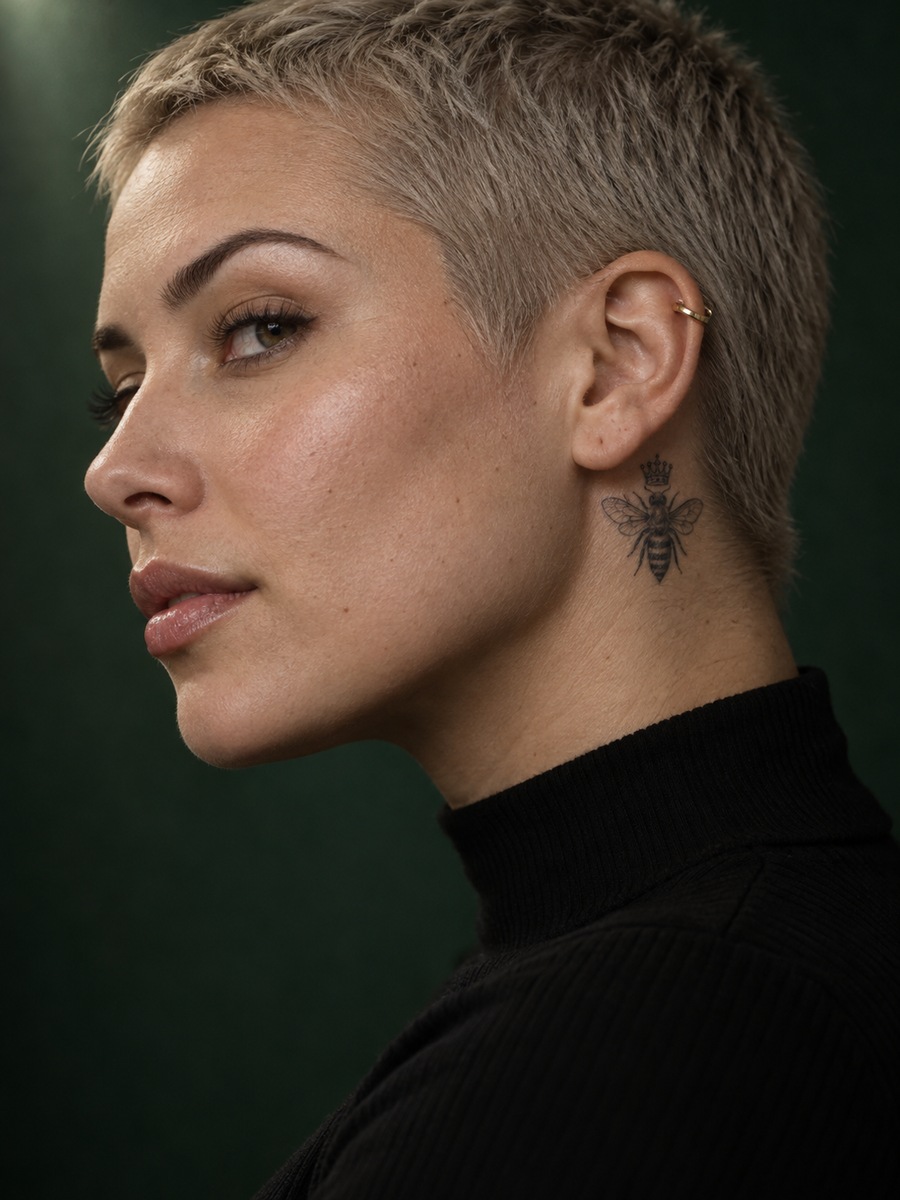
16. Queen bee with a crown
A bee wearing a small crown, drawn in a more elaborate style. The crown works as a status marker without being loud. If you want to dig into crown designs, the crown tattoo ideas article goes deeper.
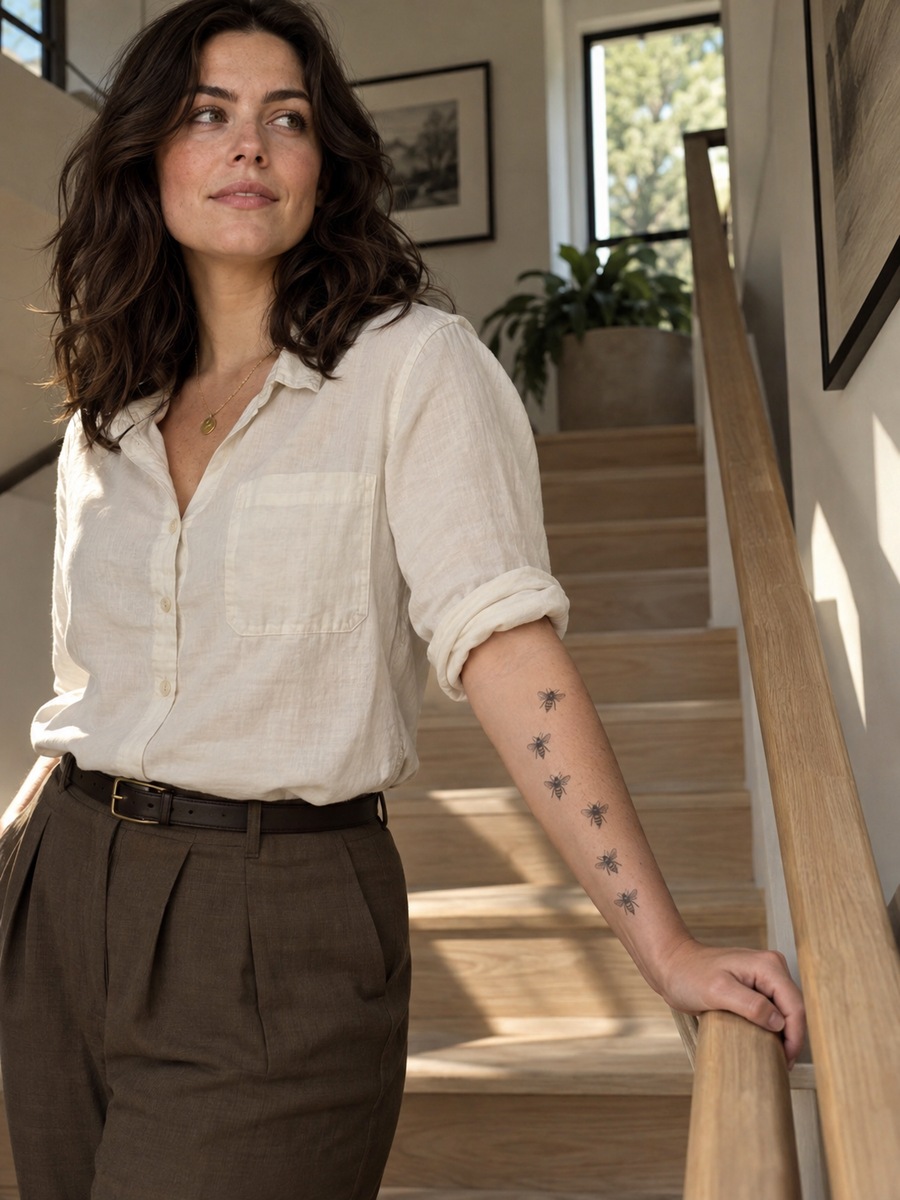
17. Swarm of three to five bees
A loose cluster of small bees drifting in one direction. Vary their sizes, and avoid placing them in a tight circle, which makes them look like a pattern. This works well wrapped around the calf or along the ribs.
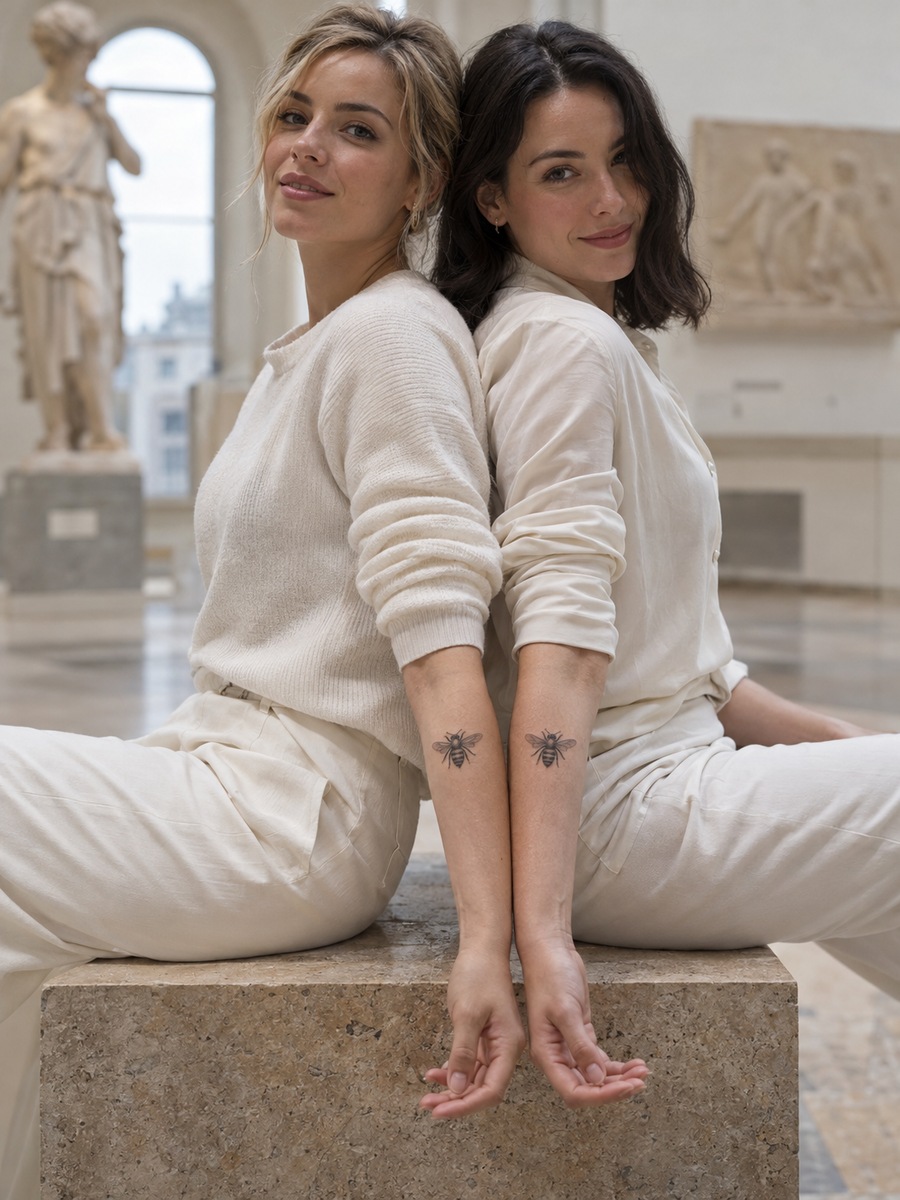
18. Matching bee tattoos
Two bees in the same style, one for each of two people. Keep it simple so both can age gracefully. Mirror them (one facing left, one facing right) for an extra touch.
If you’re also drawn to other nature-based motifs, the bird tattoo ideas roundup shows how wing detail is handled in other species.
Color or black and gray?
Yellow is the obvious choice for a bee, and it can look wonderful, but it’s also the color that behaves least predictably. Yellow and orange tones tend to look softer and lighter than black on most skin tones, and they can fade faster in the sun. That doesn’t rule them out. It just means color works best when it’s supported by a dark outline, as in traditional and neo-traditional styles.
Black and gray, or pure black, is the safer route for a bee you want to keep crisp. The contrast between the dark stripes and the pale wings does the work that color would otherwise do. If you can’t decide, a good compromise is a black design with one small accent, such as a single amber wash on the abdomen. I use the same approach on brand projects: one accent color, used with restraint, usually beats five.
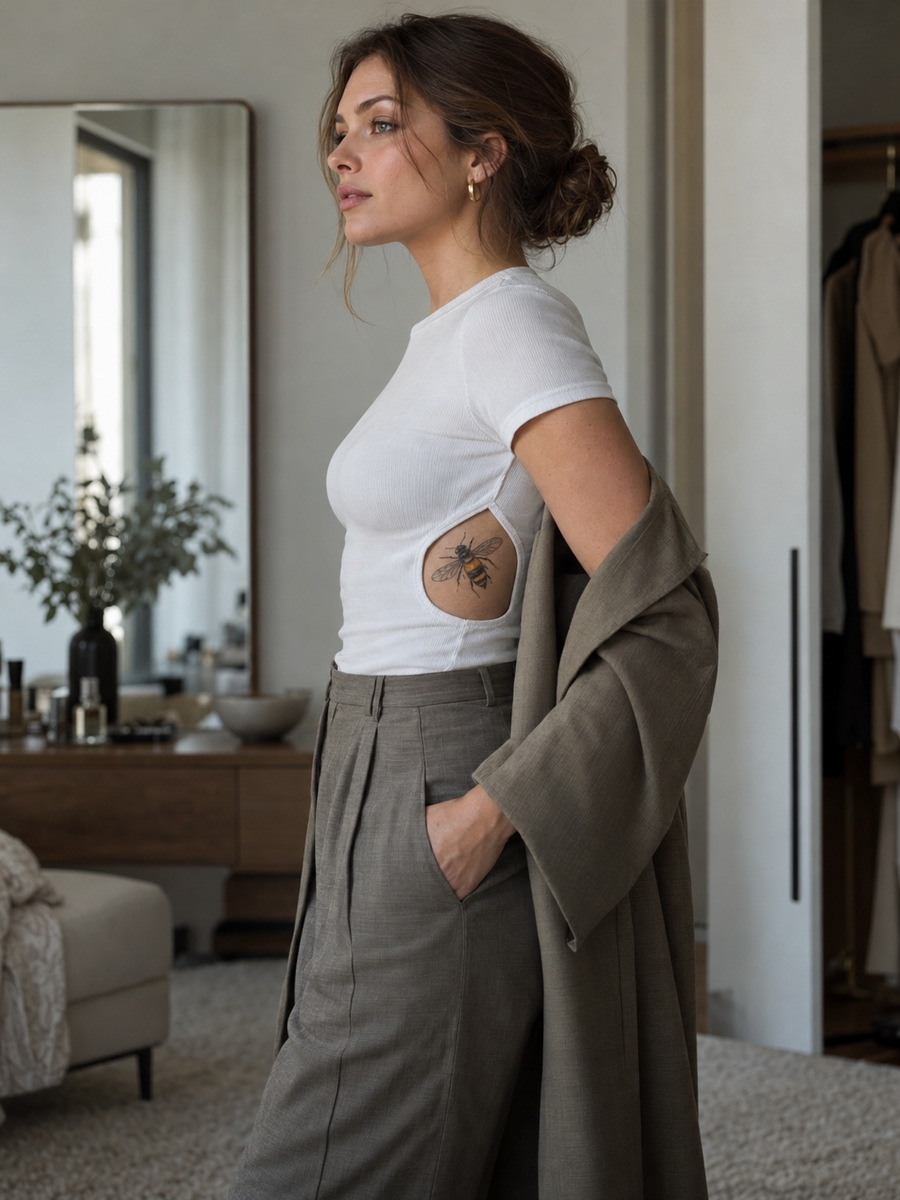
Ask your artist to show you healed examples in the colors you’re considering, not just fresh photos. A healed photo tells you far more than a glossy one taken right after the session.

Best placements for a bee tattoo
Placement changes how a bee looks and how it ages. Here’s a quick guide, with the general consensus on discomfort and durability.
| Placement | Best style | Typical size | Discomfort | Aging |
|---|---|---|---|---|
| Inner wrist | Fine line, single-line | 2 to 4 cm | Moderate | Fades with sun and friction |
| Outer forearm | Most styles | 4 to 10 cm | Low to moderate | Holds well |
| Behind the ear | Tiny outline | 1.5 to 2.5 cm | Moderate | Needs touch-ups |
| Collarbone | Fine line, flight trail | 4 to 8 cm | Moderate to high | Moves with the body |
| Upper arm or shoulder | Bold, traditional, dotwork | 6 to 15 cm | Low to moderate | Holds very well |
| Calf | Swarm, honeycomb | 8 to 20 cm | Low to moderate | Holds well |
| Ribs | Larger flowing pieces | 8 to 15 cm | High | Moves with breathing |
Discomfort varies a lot between people, and artists will tell you the same. Generally, fleshy areas hurt less than bony ones. If you want help matching a design to a body area, my longer tattoo placement chart covers anatomy and flow.
Size, detail and how bee tattoos age
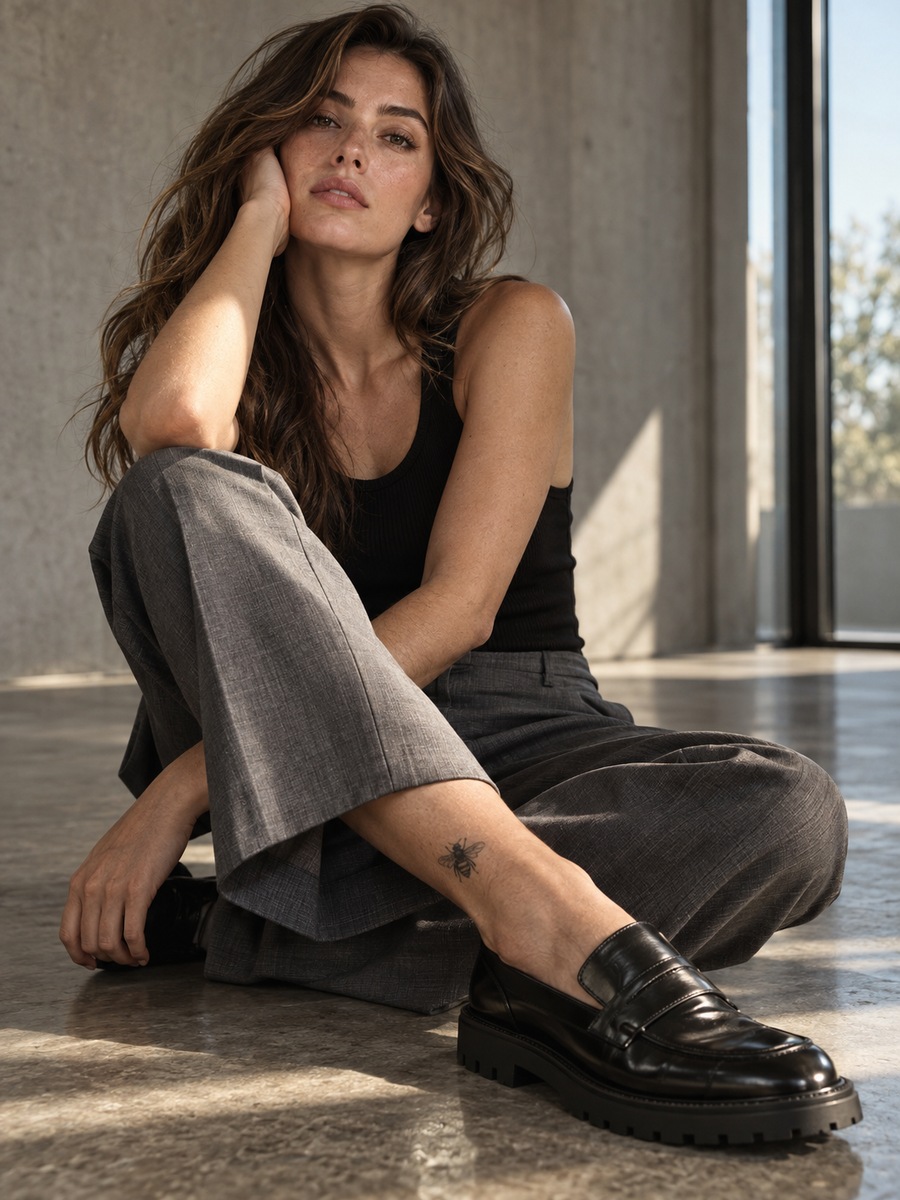
Here’s the honest part. Ink spreads slightly under the skin over the years, and fine details blur first. In a bee, the first things to go are the wing veins, the leg joints and the hairline gaps between the stripes.
That’s why I follow a simple rule: the more detail you want, the larger the tattoo needs to be. A realistic bee with visible wing veins and fuzz often needs 5 to 8 cm to stay legible. A minimalist outline can sit at 2 to 3 cm. If you want something very small, drop details instead of shrinking them. Remove the legs, merge the wings into two simple shapes and widen the stripes.
Sun is the other factor. UV light fades ink, so once the tattoo has healed, sunscreen on exposed spots makes a real difference. And place a tattoo with friction in mind: fingers, feet and the inner wrist rub against things all day.
How to brief your tattoo artist
A good brief saves a lot of time. Bring four things: a reference image of the bee type you want (honeybee or bumblebee), your own rough sketch, the placement and approximate size in centimeters, and the style you’re after, with two or three examples from the artist’s own portfolio.
The sketch matters more than most people expect. It doesn’t need to be good. It tells the artist what you see in your head, and artists often redraw it in their own line anyway. I do this with any client project: a rough sketch beats a paragraph of description. If you’d like a warm-up with another small winged subject first, my hummingbird drawing guide is a good place to practice.
Ask the artist to show the stencil on your skin before inking, and move it. Tilt it, shift it a centimeter, step back and look at it in a mirror. Ten minutes at this stage is cheap.
On cost: shop minimums are common, sometimes around 80 to 200 US dollars for small pieces, but prices vary by city and artist, so ask. Follow your artist’s aftercare instructions closely, since they know their own technique.
Common bee tattoo mistakes
A few mistakes appear again and again.
- Too small, too detailed. This is the big one. If you want a tiny tattoo, choose a simpler design.
- Wrong insect. A bee drawn with a narrow waist or a pointed tail reads as a wasp. Check the reference.
- Lines too close together. Stripes and wing veins packed tightly will merge. Leave space.
- Ignoring the body’s shape. A long bee design on a curved area may distort. Ask the artist to place the stencil while you move.
- Copying a photo exactly. A tattoo is not a photograph. Simplify, and let the design suit the skin.
- Choosing by trend. Fine line is popular right now, but it’s not the only style, and a bold bee might suit you better.
Frequently asked questions
What does a bee tattoo mean?
Most often hard work, teamwork, community and sweetness, because of how a hive operates. Historically the bee was also a royal emblem, in ancient Egypt and again under Napoleon. Many people also choose it to honor pollinators and nature. Pick the meaning that fits you, not the one that’s trending.
How big should a small bee tattoo be?
A minimalist outline can work at about 2 to 3 cm. A detailed bee with wing veins and fuzz usually needs 4 cm or more to stay clear as it heals and ages. When in doubt, ask your artist to place a stencil at two sizes and compare them.
Where is the best place for a bee tattoo?
The outer forearm and upper arm hold detail well and heal predictably. The inner wrist and fingers are popular but fade faster. The collarbone suits a flight trail. Choose based on how much detail the design has and how much sun and friction the spot gets.
Does a bee tattoo hurt?
Discomfort depends on the person and the area. Fleshy spots like the outer arm and calf are usually easier, while ribs, collarbone and ankles tend to hurt more. A small bee is quick, often under an hour, so the discomfort doesn’t last long.
How much does a bee tattoo cost?
Small pieces often run from about 80 to 200 US dollars because many shops have minimum prices, but rates vary widely by city, artist and size. Ask for a quote after sharing your sketch, placement and size, and don’t choose purely by price.
Honeybee or bumblebee for a tattoo?
Honeybees suit clean linework, geometric designs and fine-line styles. Bumblebees are rounder and suit cute, soft designs, dotwork and watercolor. Draw both quickly and see which sketch you like more.
Pick one bee, and test it
Choose one idea from the list, draw it yourself in three minutes and put it on your skin with a washable marker or a stencil first. Live with it for a week. If you still like it, you’ve got a design worth bringing to an artist.
Good tattoos start as good sketches, and a bee is a great subject for practice.
Looking for more inspiration? Browse all our tattoo ideas.
- 17shares
- Facebook0
- Pinterest17
- Twitter0
- Reddit0