Anime coloring pages work best when the line art gives you clear, satisfying spaces to fill. The 50 original concepts below range from action heroes to chibi companions; each pairs a character idea with a black-and-white illustration. These are AI-generated concept images, not hand-drawn or licensed character printables. Check any outline you plan to print, since small gaps and awkward details can still occur.
The design basics make the biggest difference: expressive eyes with closed shapes, hair grouped into readable sections, and clothing folds that help tell the story without filling every space. You can use the same checks when drawing a page yourself or choosing one to color.
Browse the 50 ideas across eight categories, then use the line-weight, proportion, and complexity tips to decide which style suits the colorist. The examples use broad character archetypes rather than named franchise characters.
- What Makes an Anime Coloring Page Actually Work
- 50 Anime Coloring Page Ideas by Category
- Common Mistakes When Drawing or Choosing Anime Coloring Pages
- Choosing the Right Complexity Level
- Tools, Paper and Printing Tips for Anime Linework
- Picking a Color Palette That Reads as Anime
- FAQ
- Are these anime coloring pages based on real characters?
- What’s the difference between anime and manga coloring pages?
- What age group are anime coloring pages best for?
- How do I make an anime coloring page look less like it was AI-generated?
- What’s the best medium for coloring anime-style pages?
- Can I turn my own anime fan art into a coloring page?
- Why do some anime coloring pages feel more satisfying to finish than others?
- Final Thoughts
What Makes an Anime Coloring Page Actually Work
Before the idea list, it’s worth understanding why some anime coloring pages feel great to color and others feel like a chore.
Line weight tells the eye where to look
Anime art leans hard on variable line weight: thick, confident outlines around the silhouette and hair, thinner lines for interior details like fabric folds or facial features. On a coloring page, that hierarchy matters even more, because the colorist’s eye follows the boldest lines first. A page where every line is the same thickness reads as flat and directionless once it’s filled in with color.
Big eyes need clean, closed shapes
A common problem in hurried line art is an eye shape with a tiny gap where two lines should meet. That may be unobtrusive in a finished drawing, but a digital fill can leak through the opening. Check both eyes and close the boundaries before calling the page finished.
Negative space is part of the design, not an accident
Anime hair, in particular, works in big simplified chunks rather than individual strands. Leaving deliberate white gaps between hair sections gives the colorist room to show highlights and layering with color alone, which is a much more satisfying result than a page where every strand is pre-outlined and there’s nothing left to interpret.
Proportion sets the mood before a single line is colored
Anime characters run on a handful of proportion systems, and mixing them without meaning to is a common tell. A shonen hero is usually drawn at six to seven head-heights tall, which reads as athletic and action-ready. A chibi character compresses that down to two or three heads, with the head itself taking up nearly half the total height. A magical girl or shoujo character often sits in between, five to six heads, with longer limbs than the shonen proportion but softer, rounder facial features. Pick one system per page and stay consistent through the whole figure; a character with a chibi head on a shonen body reads as a mistake rather than a style choice.
50 Anime Coloring Page Ideas by Category
These ideas describe general anime archetypes rather than named franchise characters. If you adapt one, develop your own costume, face, props, and pose instead of copying a recognizable design.
Shonen Action Heroes (7)
1. A spiky-haired protagonist mid-punch, motion lines trailing from the fist
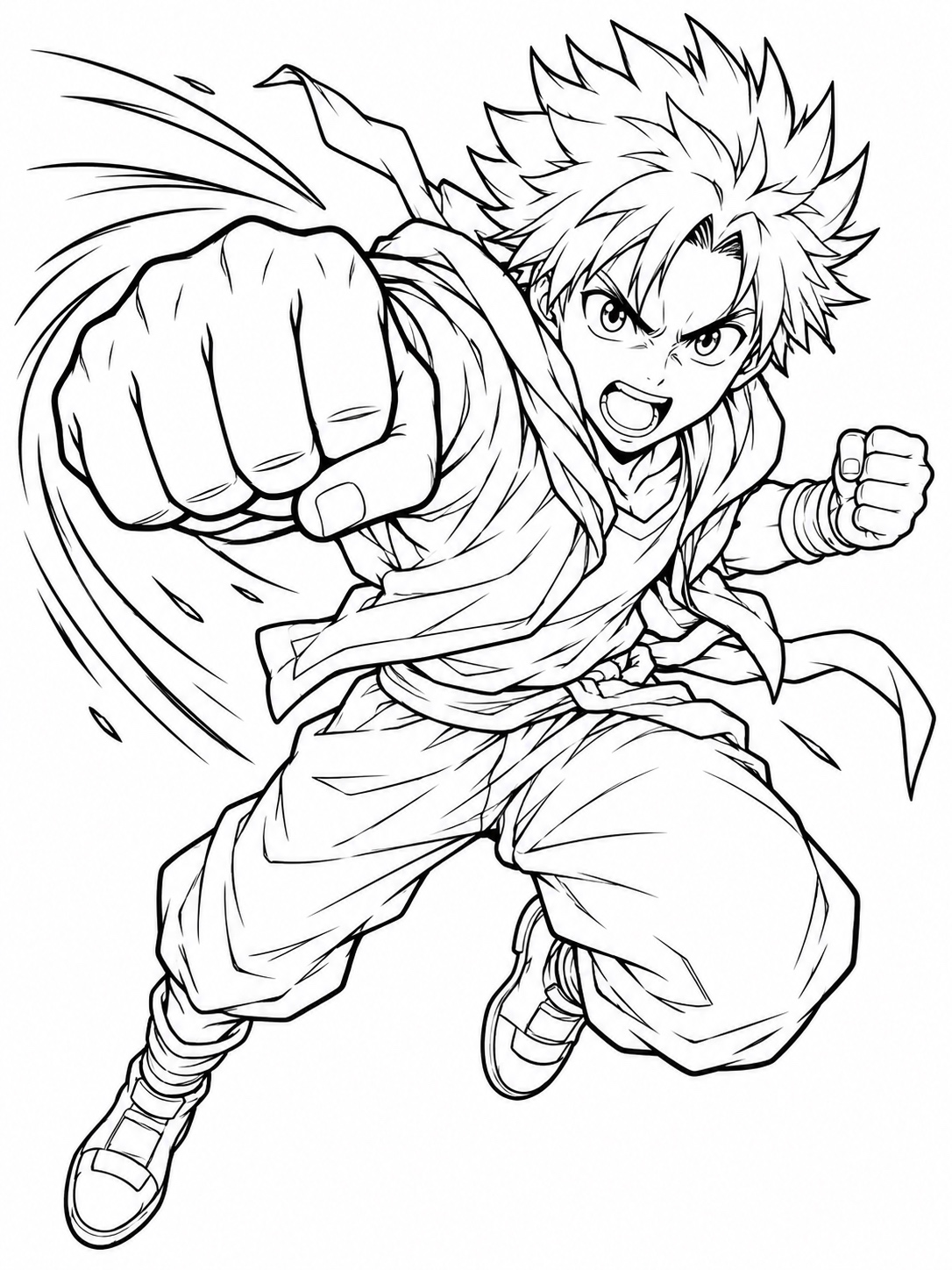
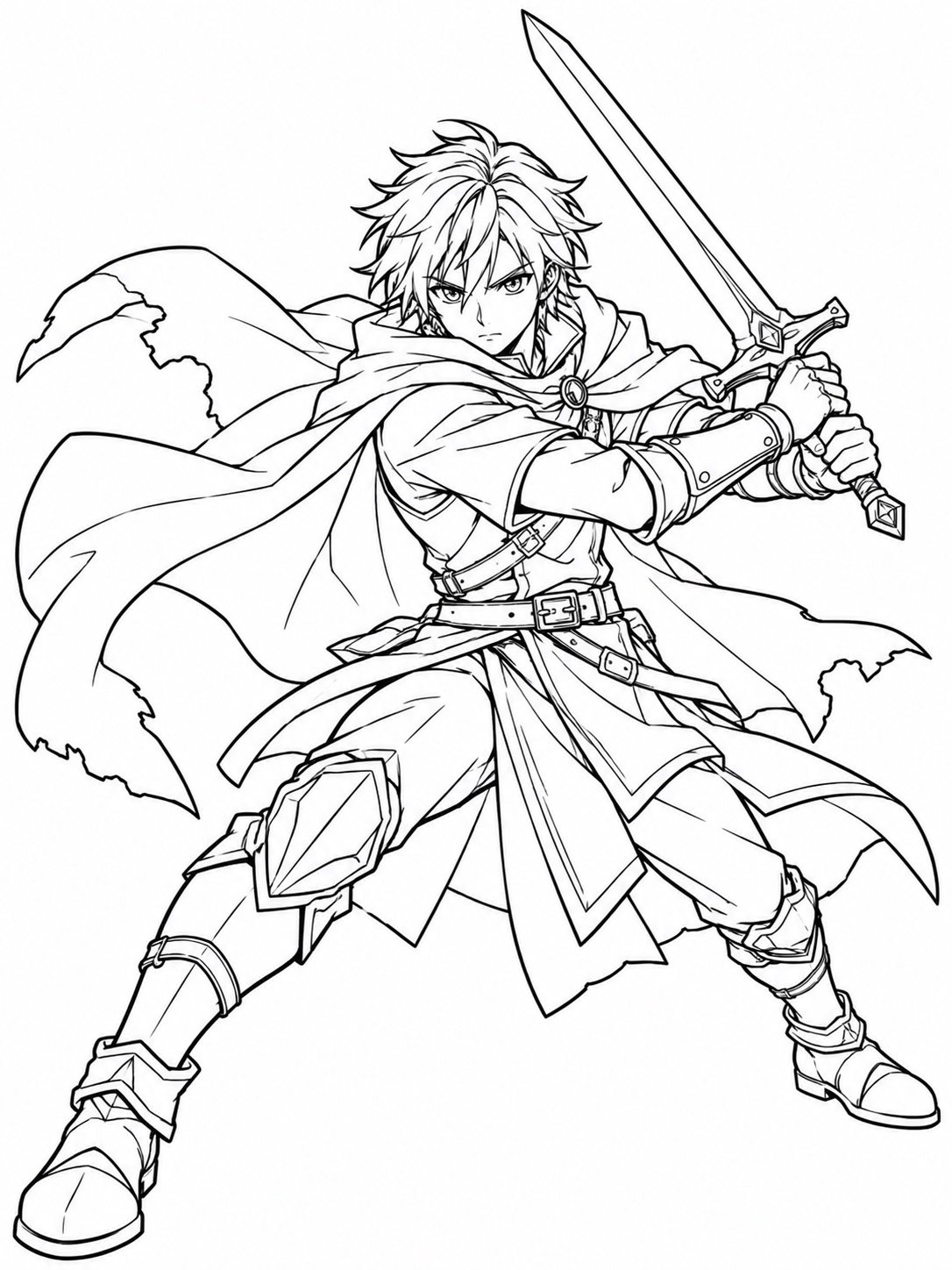
2. A sword-wielding fighter in a wide battle stance, cape caught mid-swing
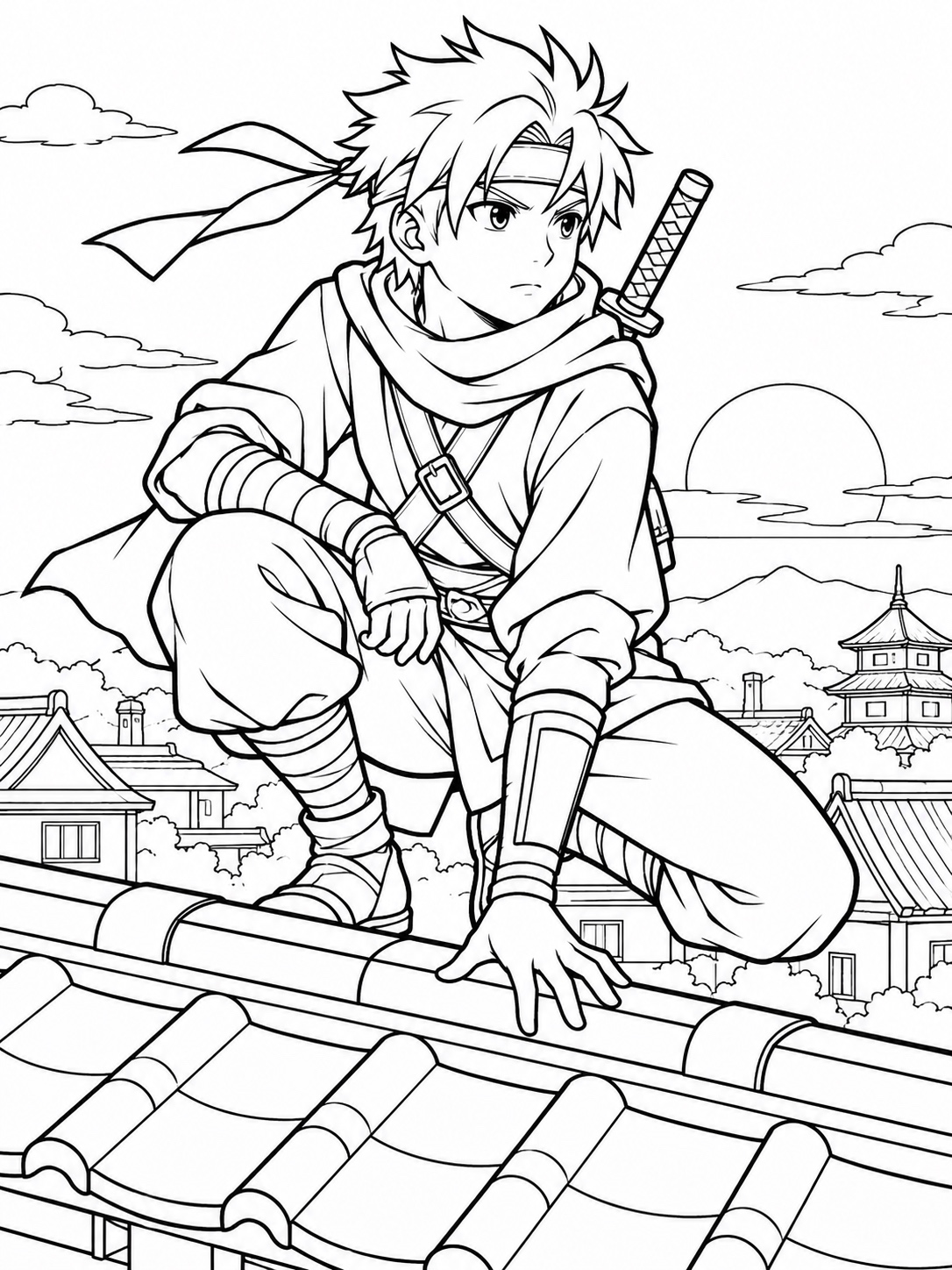
3. A young ninja crouched on a rooftop silhouette at dusk
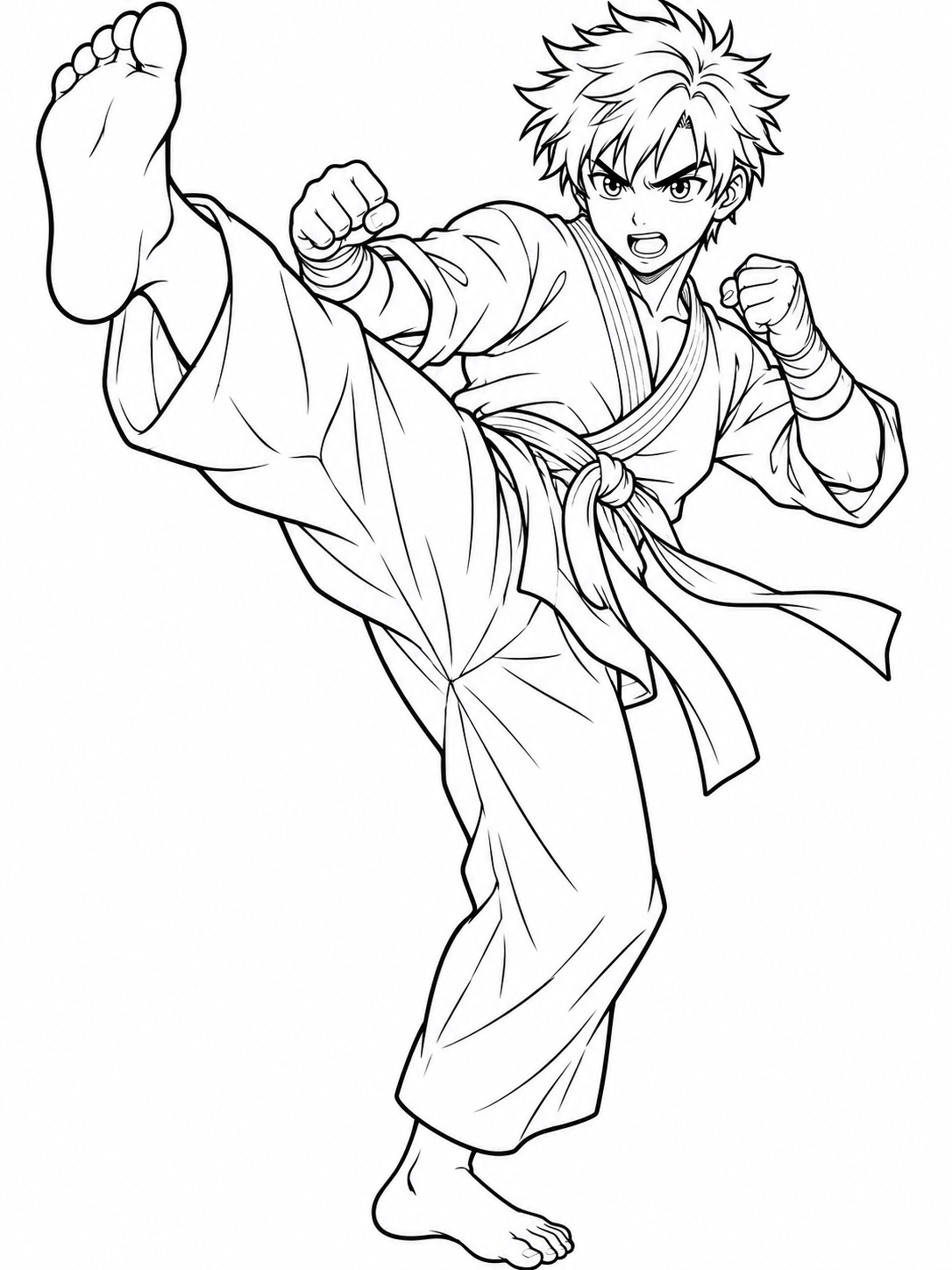
4. A martial artist mid-kick with a determined expression and clenched fists
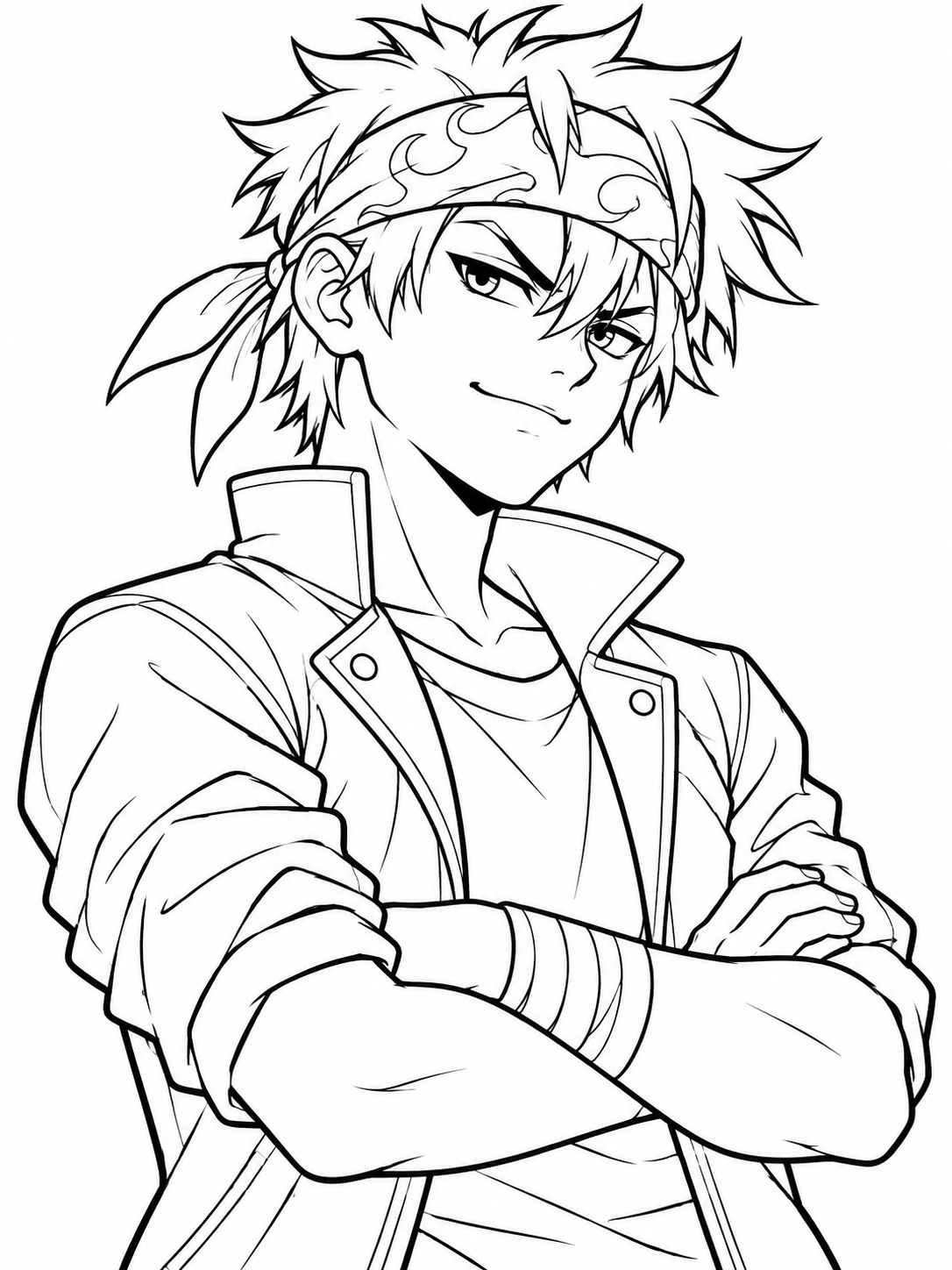
5. A bandana-wearing rival character with crossed arms and a smirk
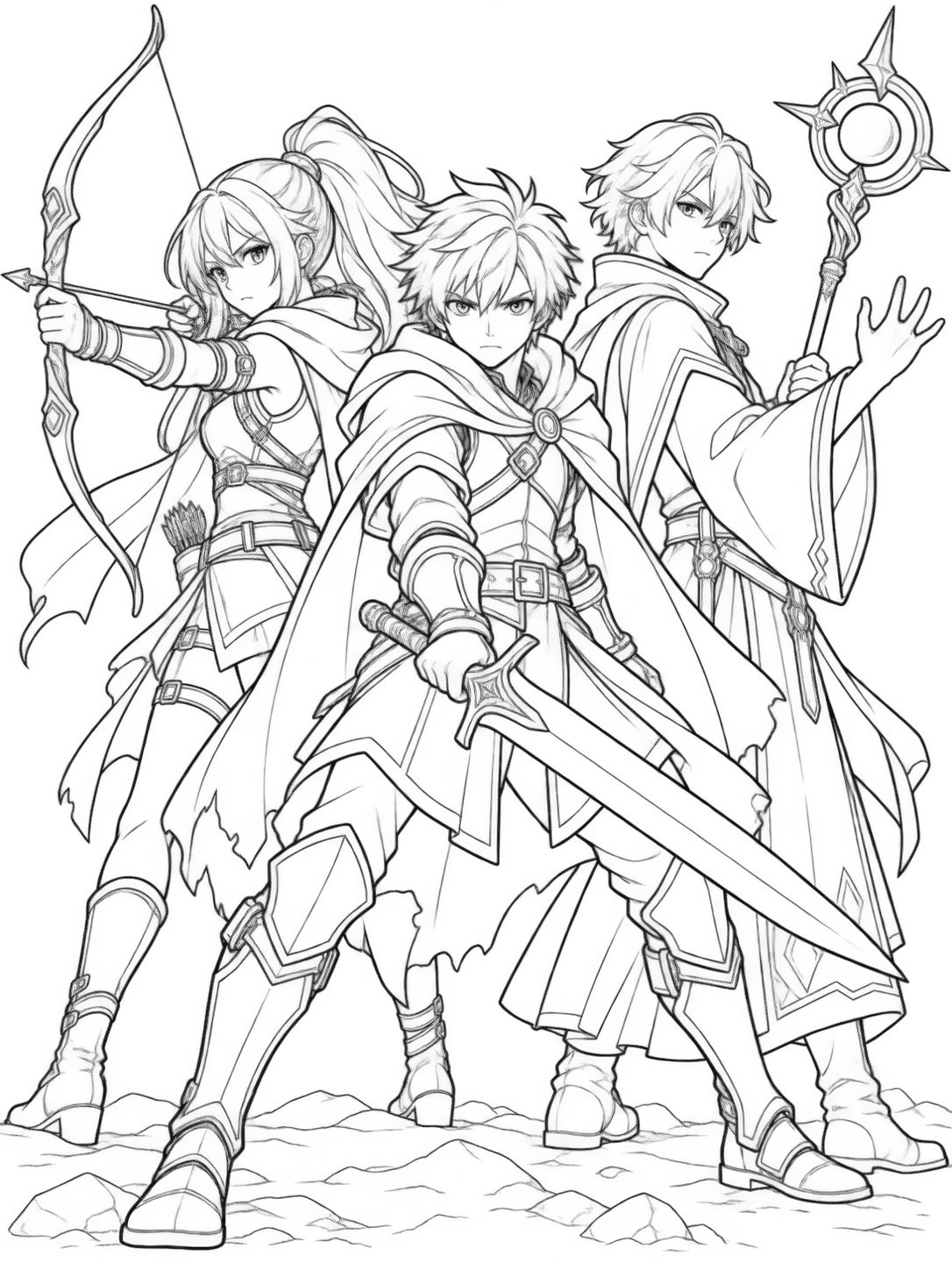
6. A team of three heroes standing back-to-back, weapons drawn
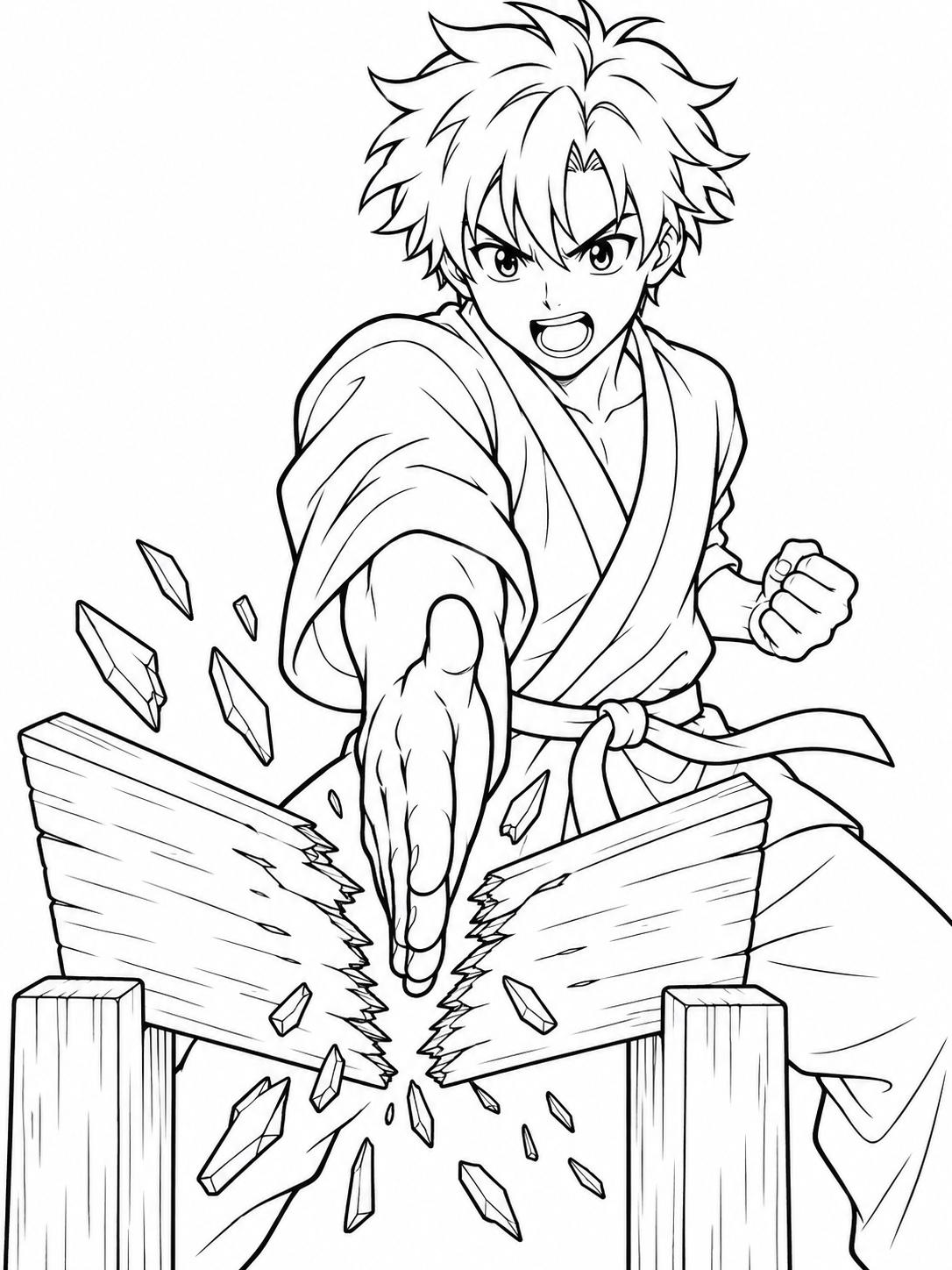
7. A training-arc scene: a character breaking a wooden board with one strike
Shoujo and Magical Girls (7)
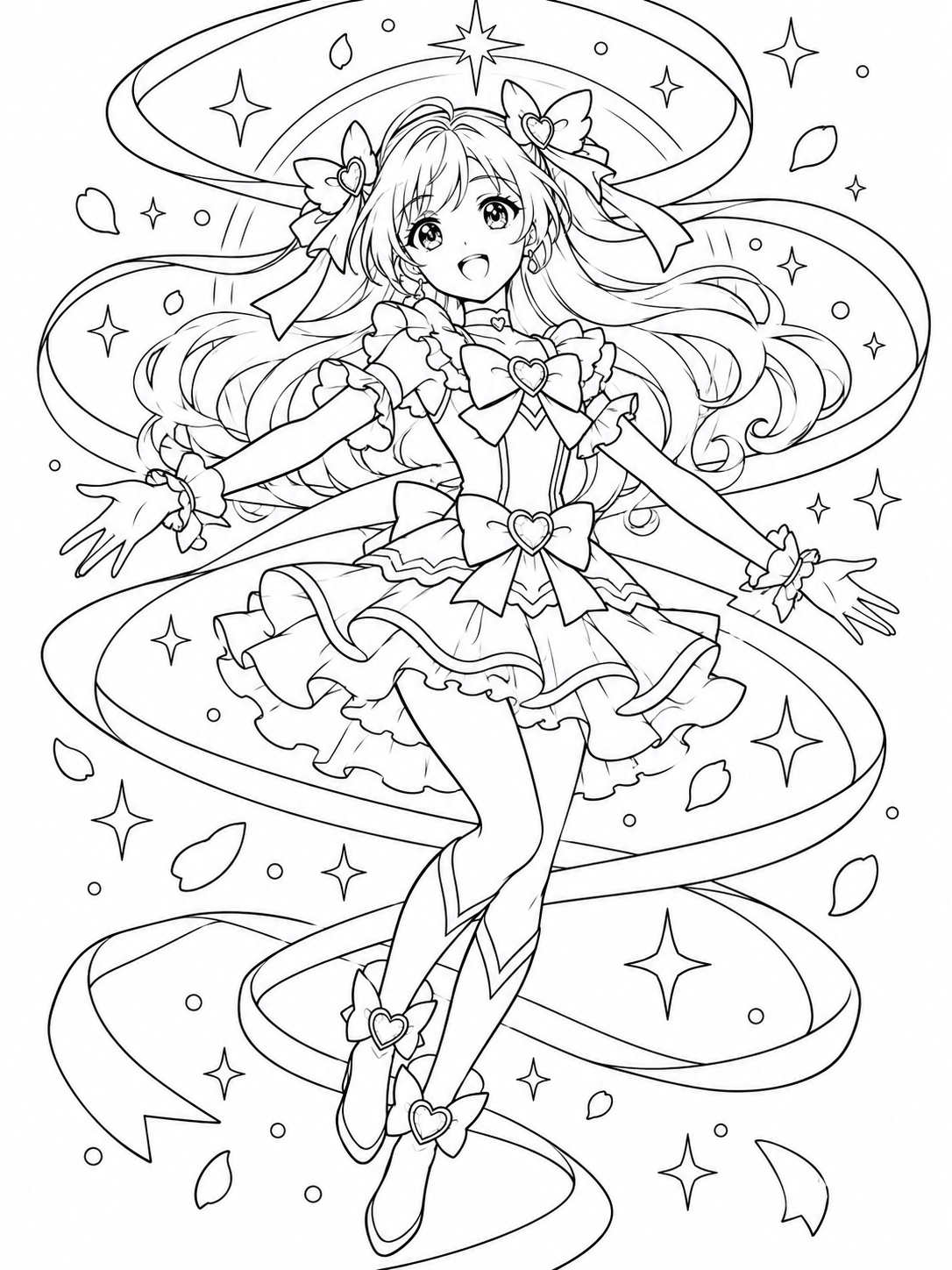
8. A magical girl mid-transformation, ribbons and sparkles spiraling around her
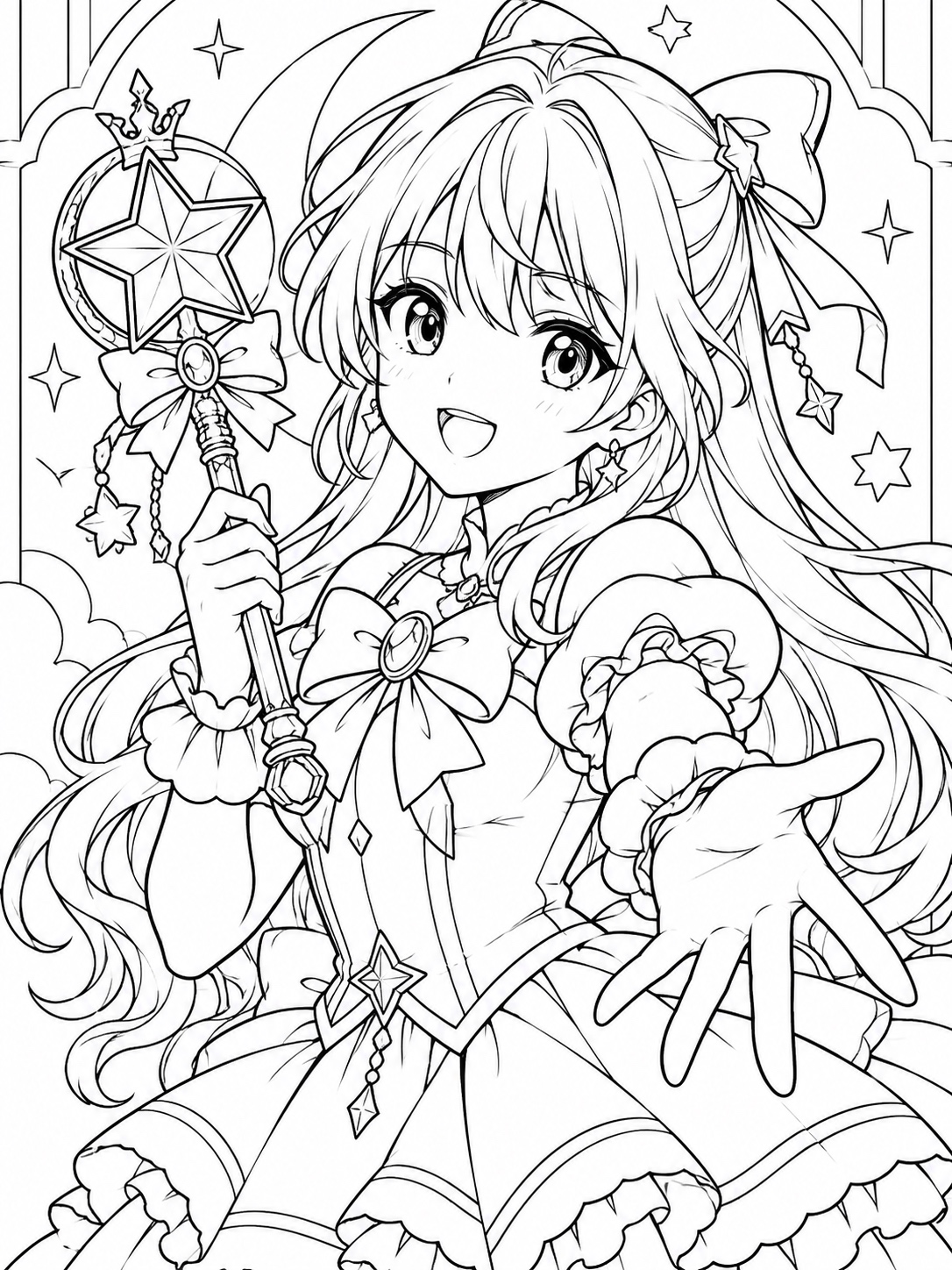
9. A character holding an ornate wand topped with a star or heart charm
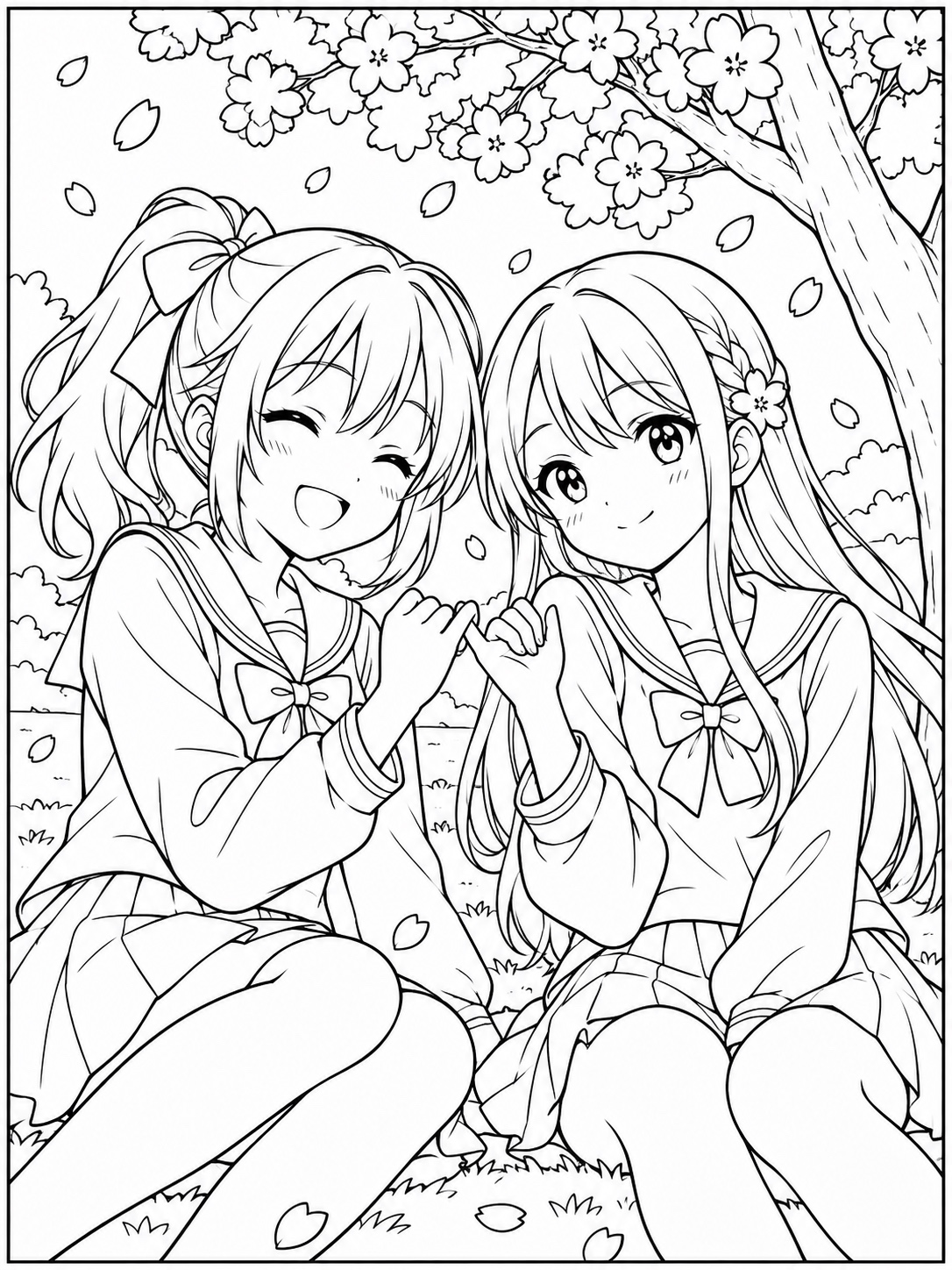
10. Two best friends linking pinky fingers under a blossoming tree
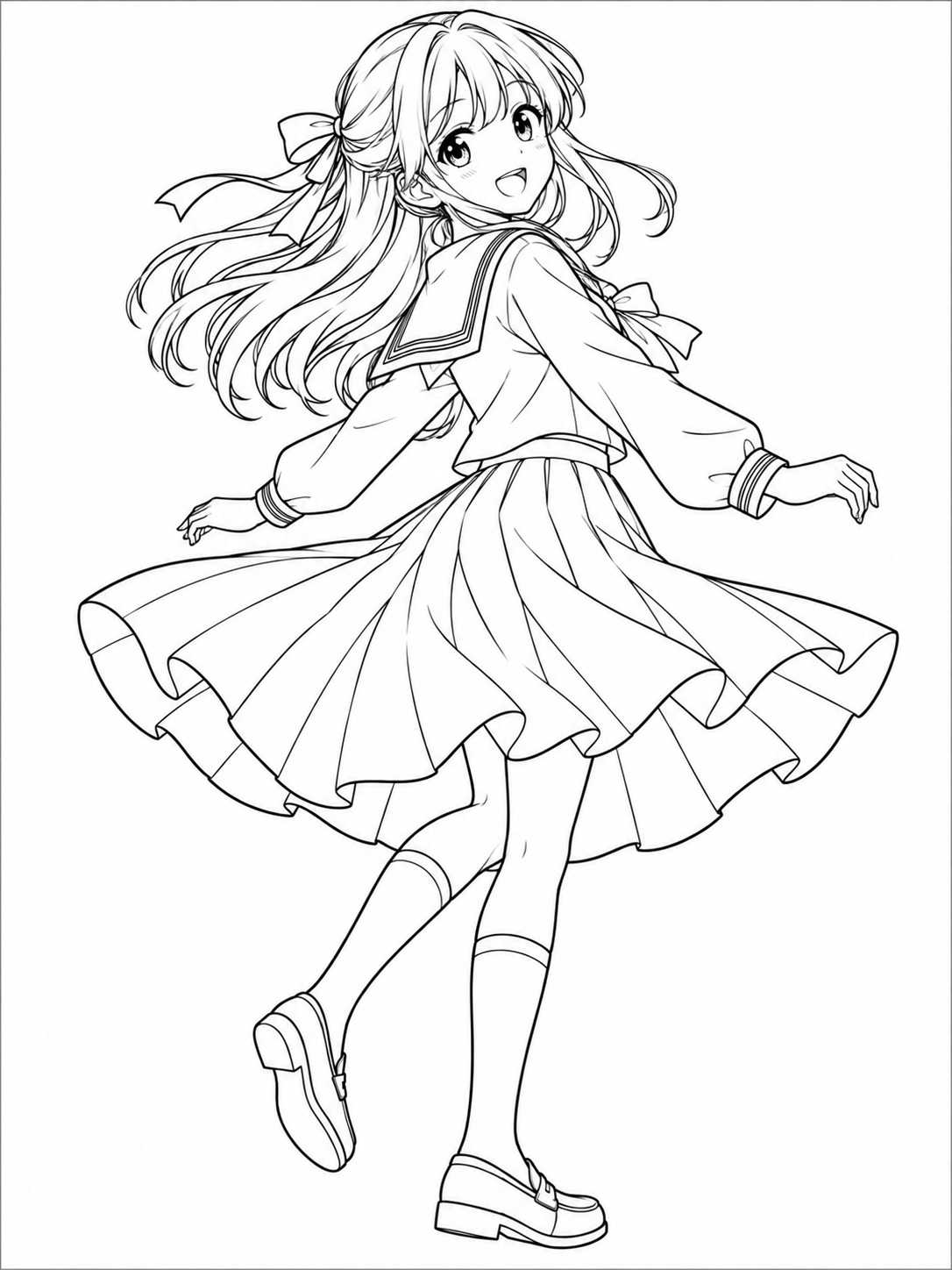
11. A girl in a flowing school uniform skirt caught mid-spin
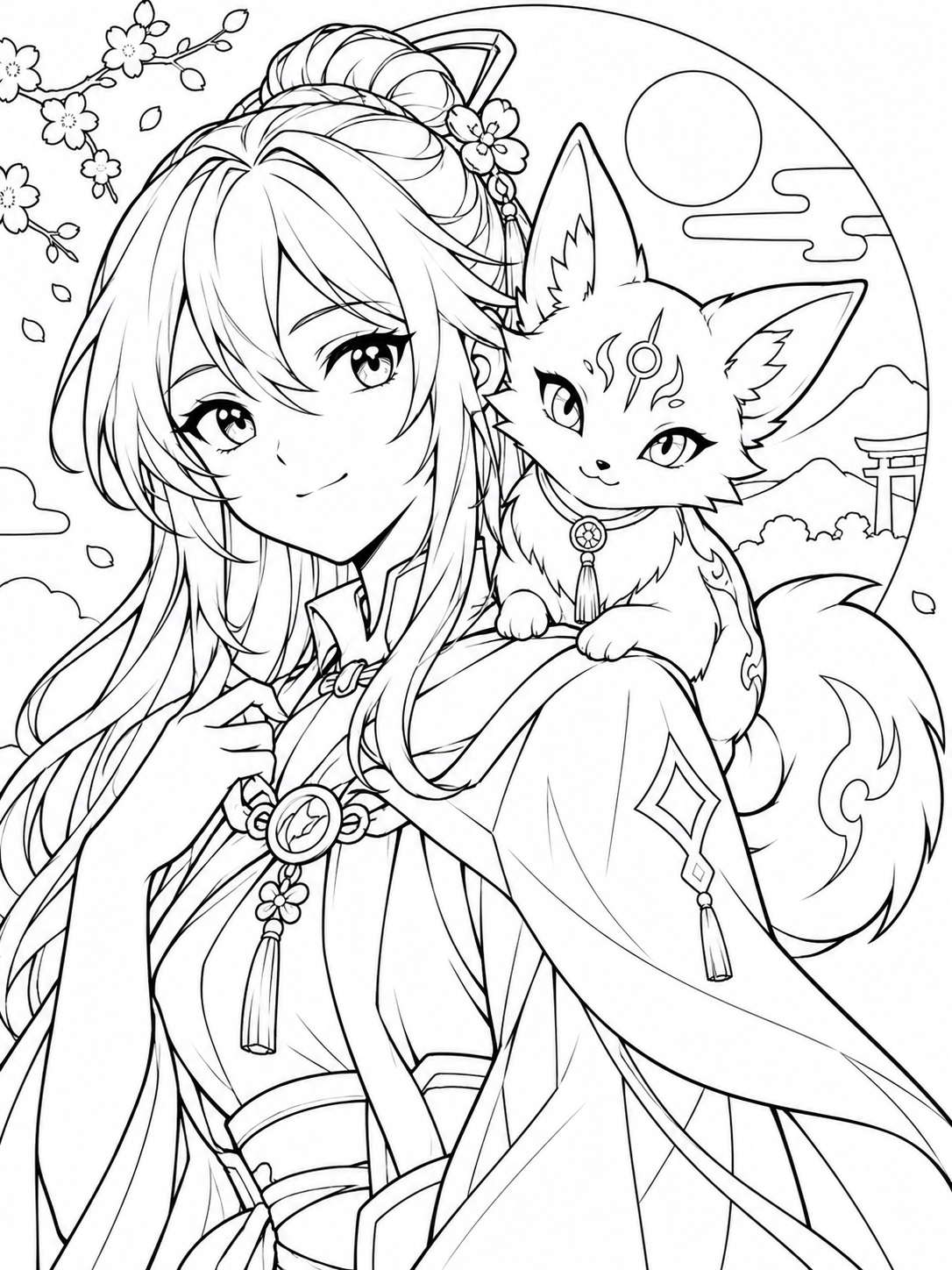
12. A magical familiar (cat, rabbit, or fox spirit) perched on a shoulder
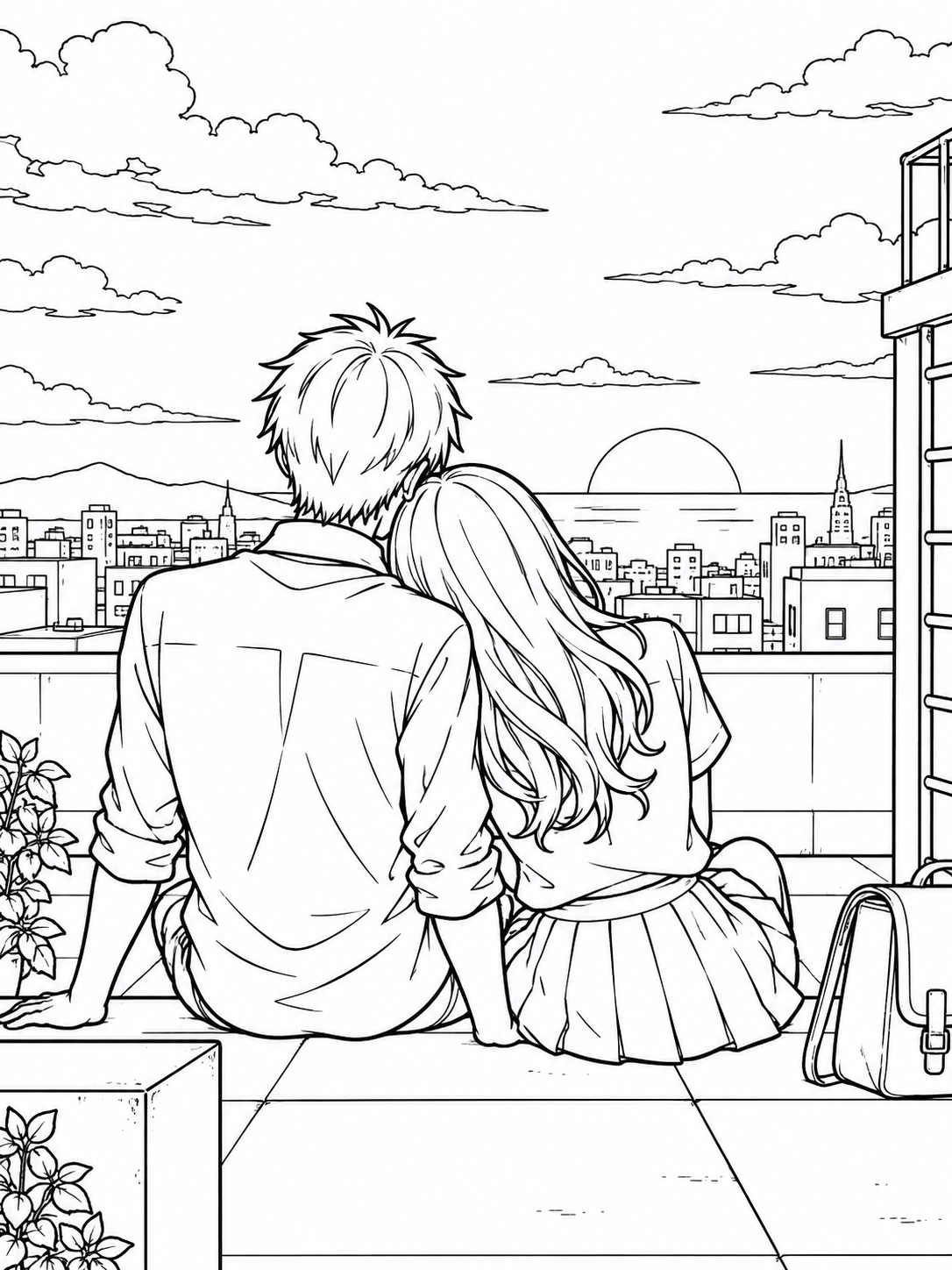
13. A romantic rooftop scene with two characters watching the sunset
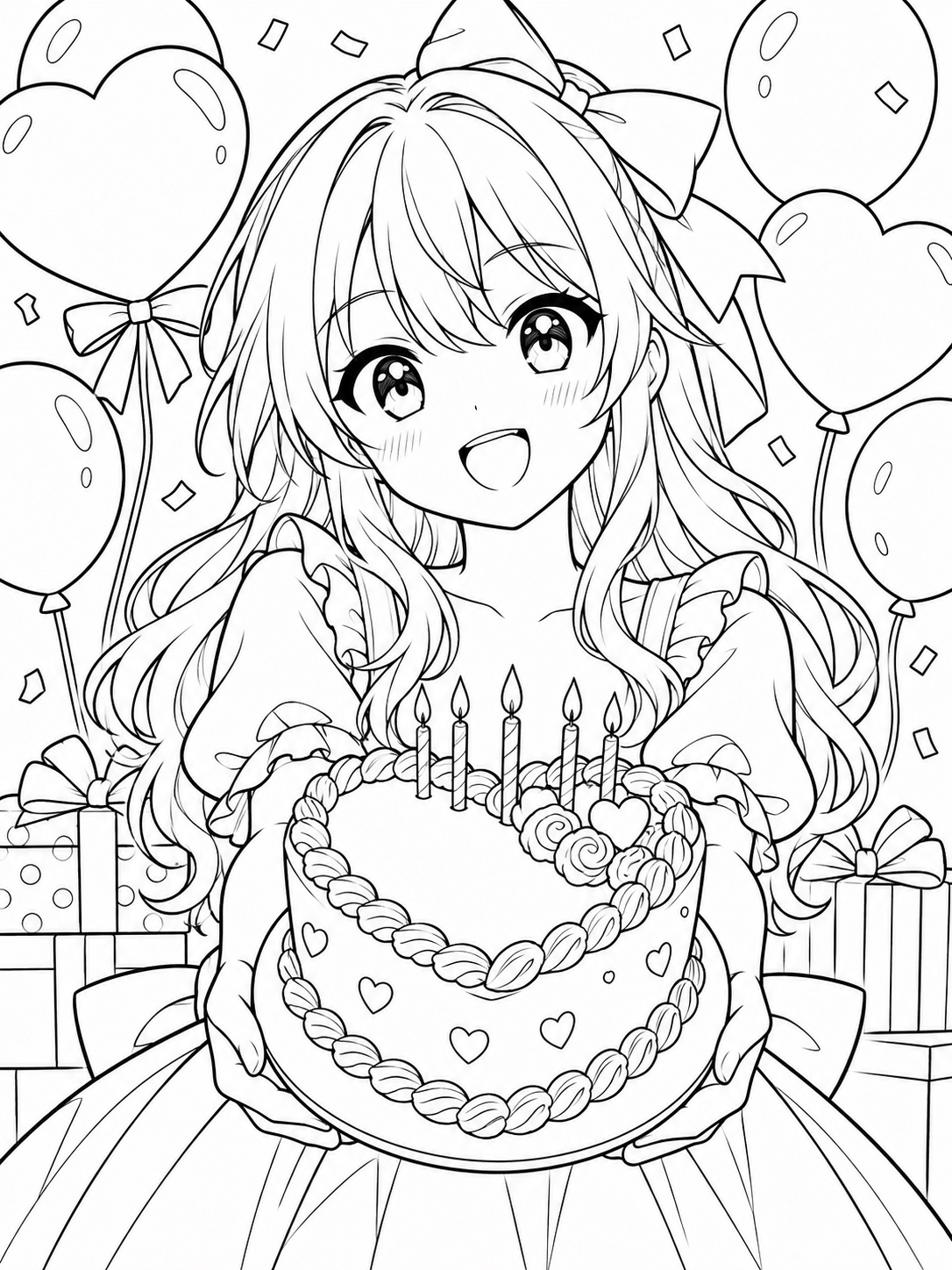
14. A birthday-themed page with a character holding a heart-shaped cake
Chibi and Kawaii Characters (7)
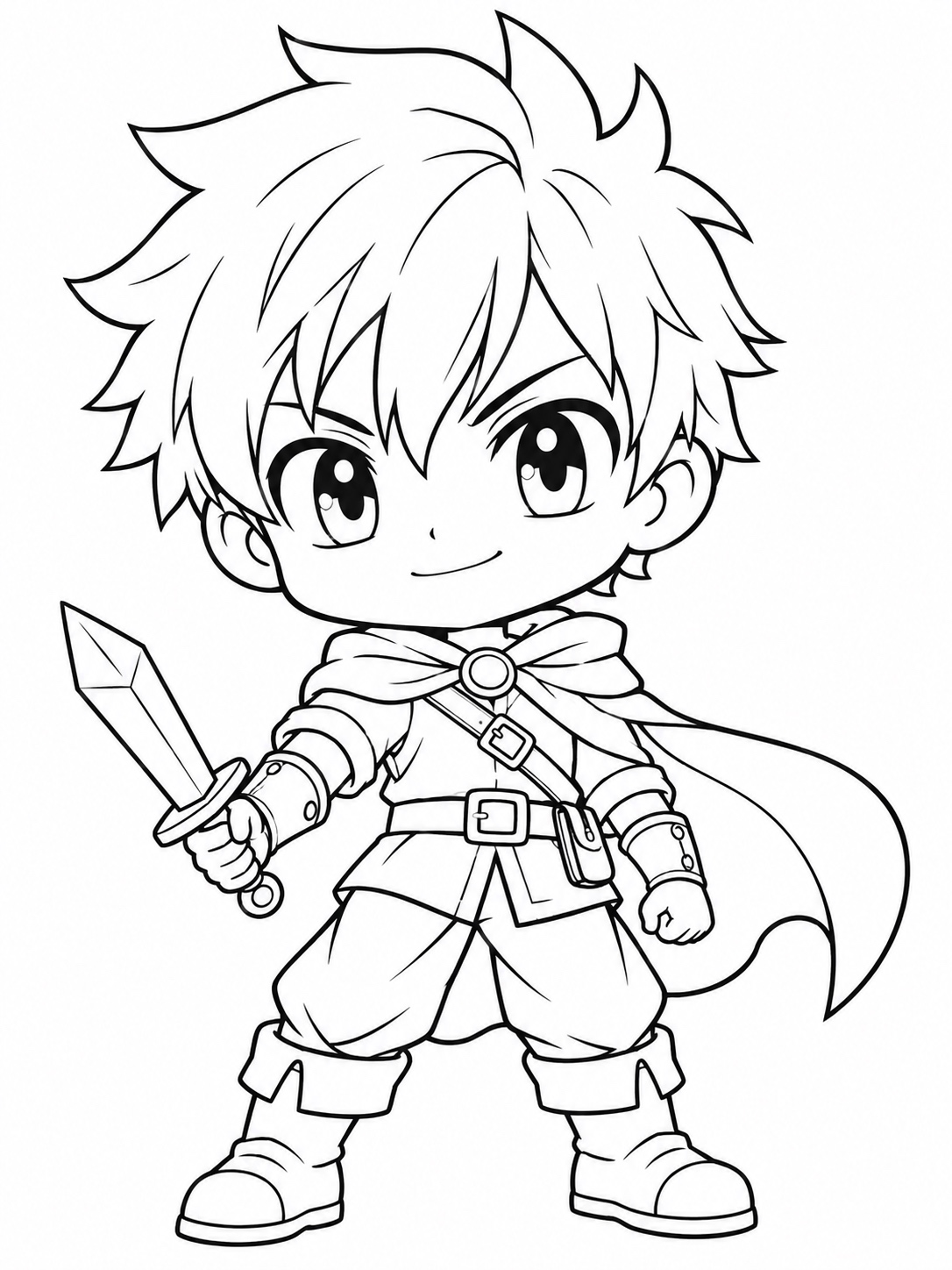
15. A chibi version of a shonen hero, oversized head and tiny sword
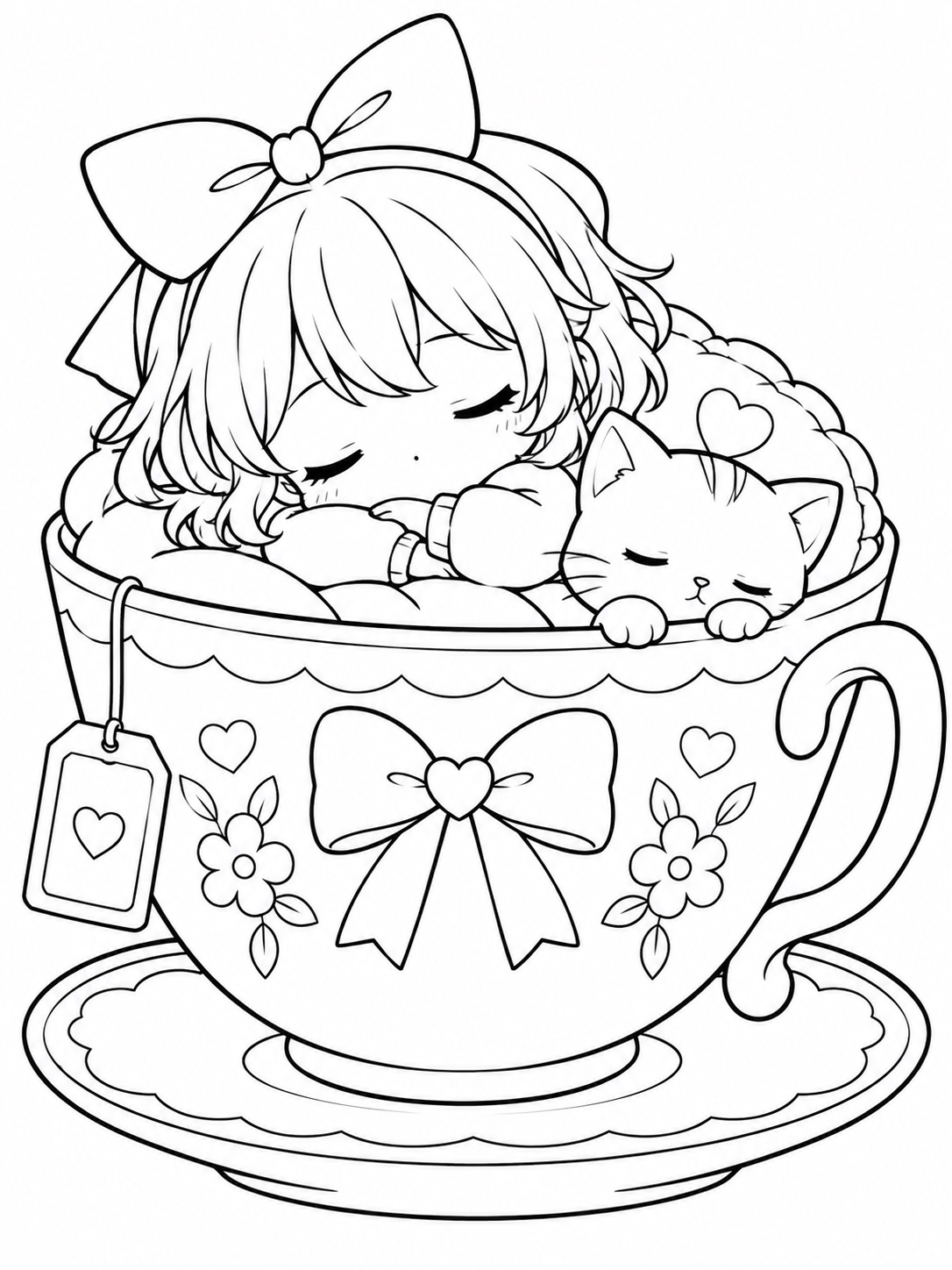
16. A chibi character napping inside a giant teacup
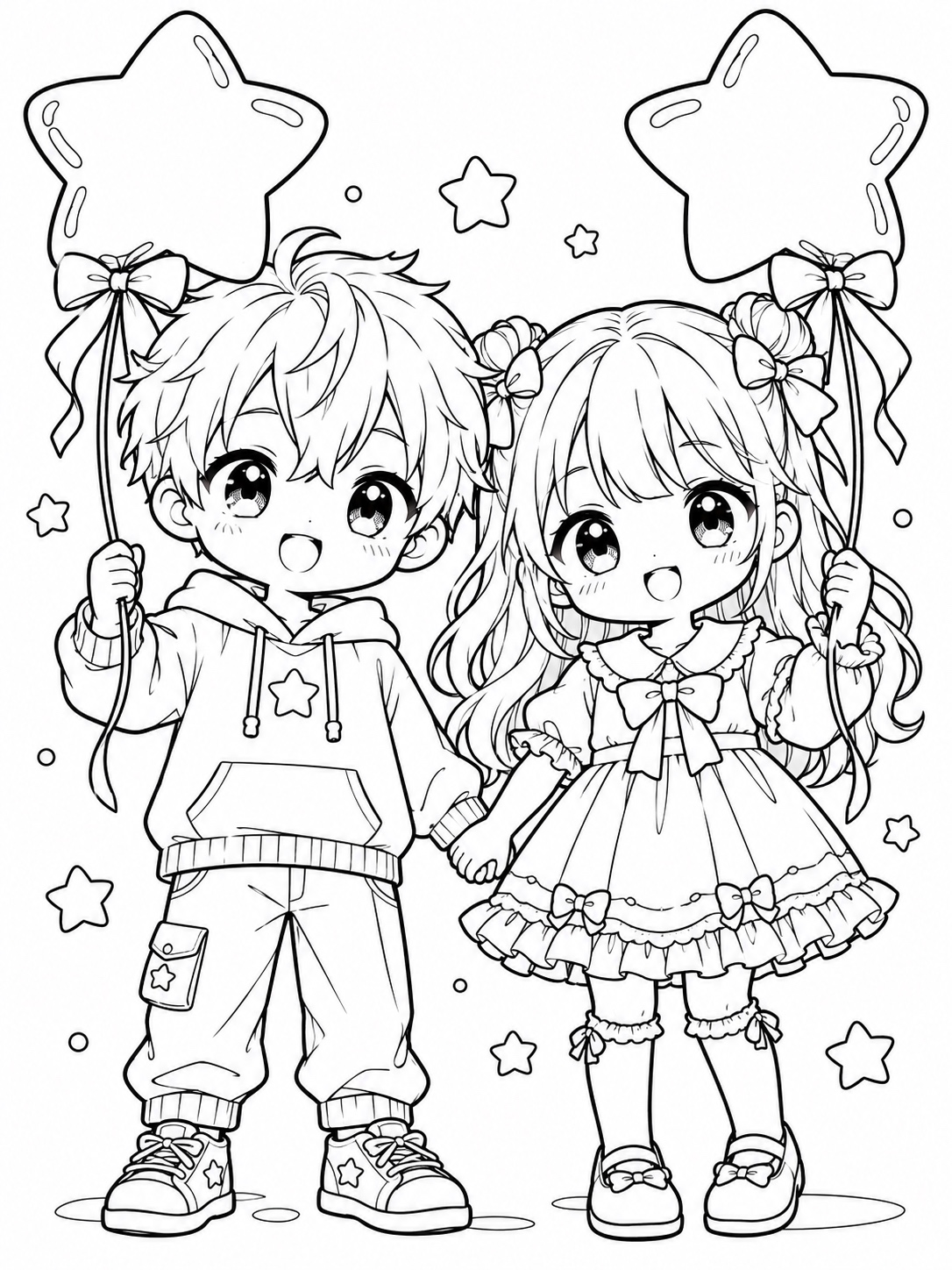
17. A pair of chibi twins holding matching star-shaped balloons
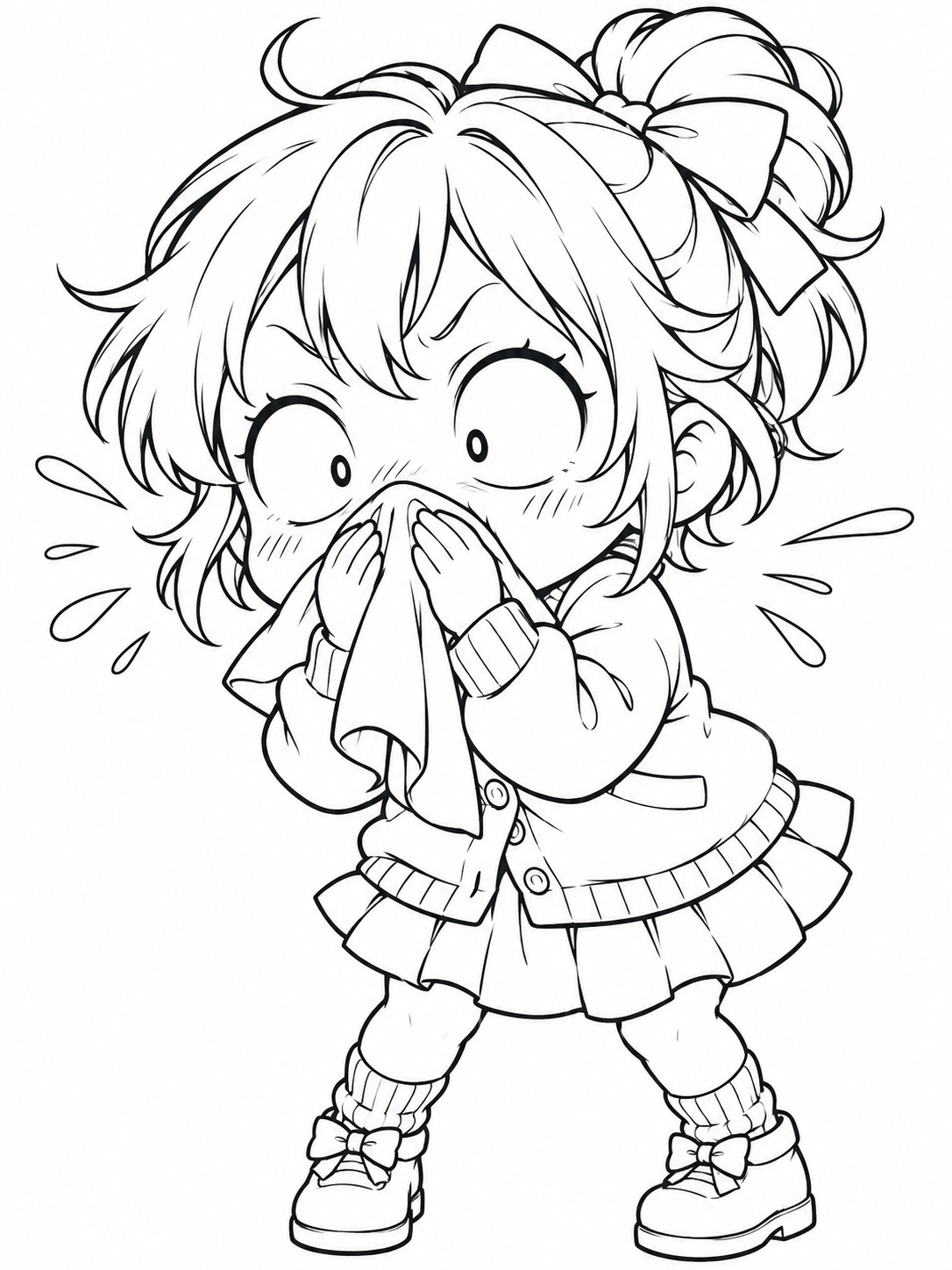
18. A chibi character mid-sneeze with comically wide eyes
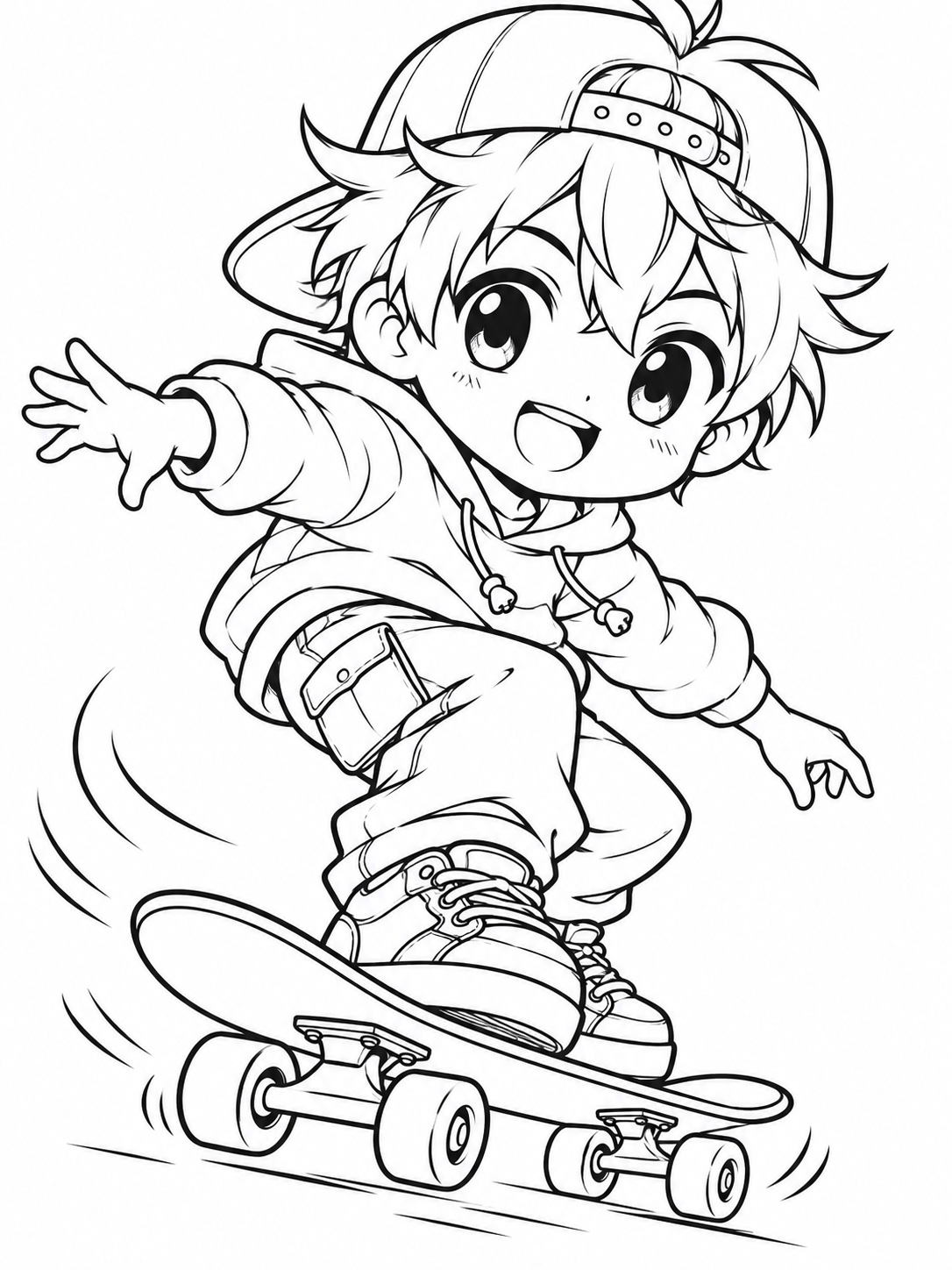
19. A chibi mascot character riding a skateboard
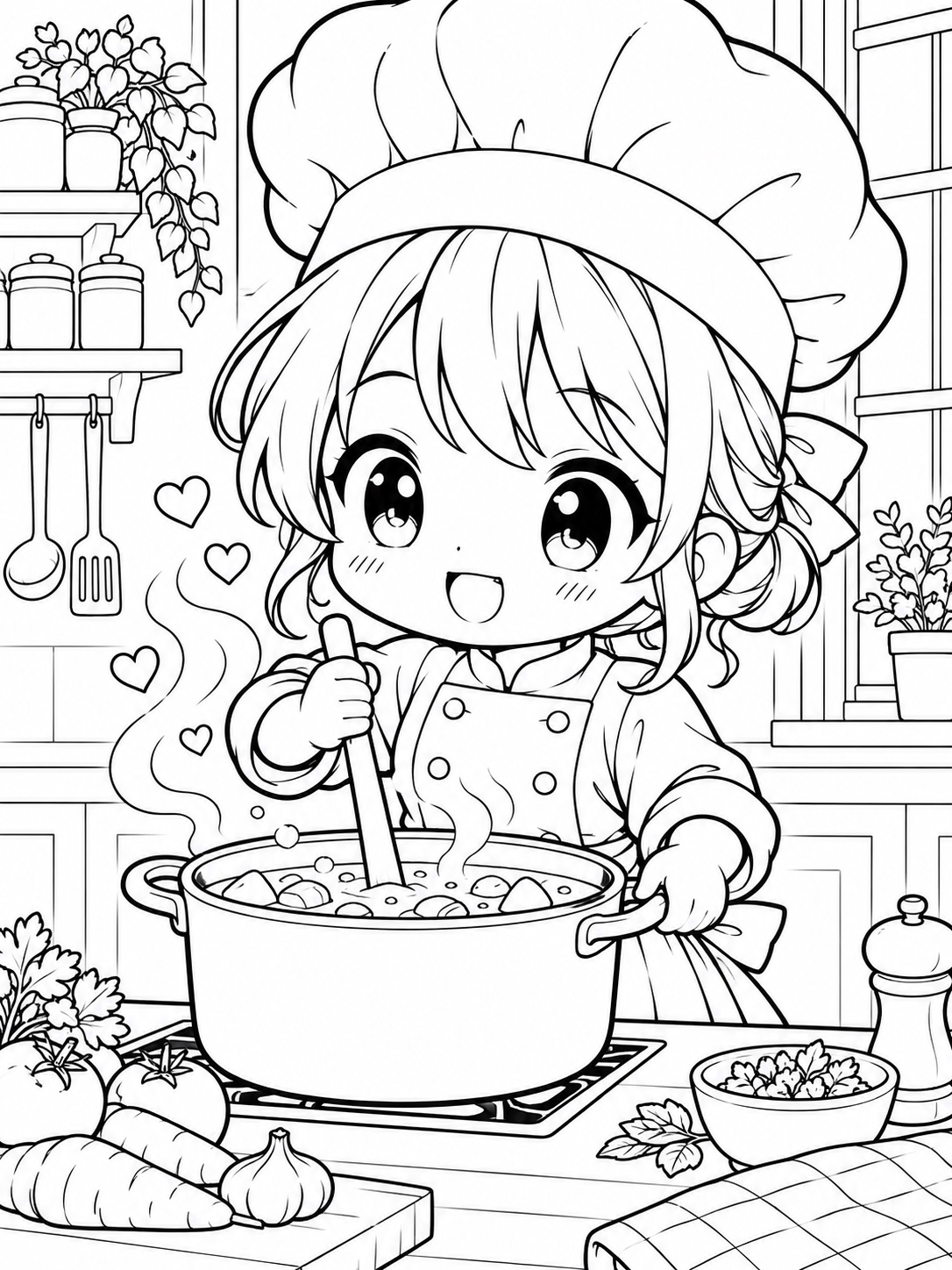
20. A chibi chef stirring a pot with hearts floating above it
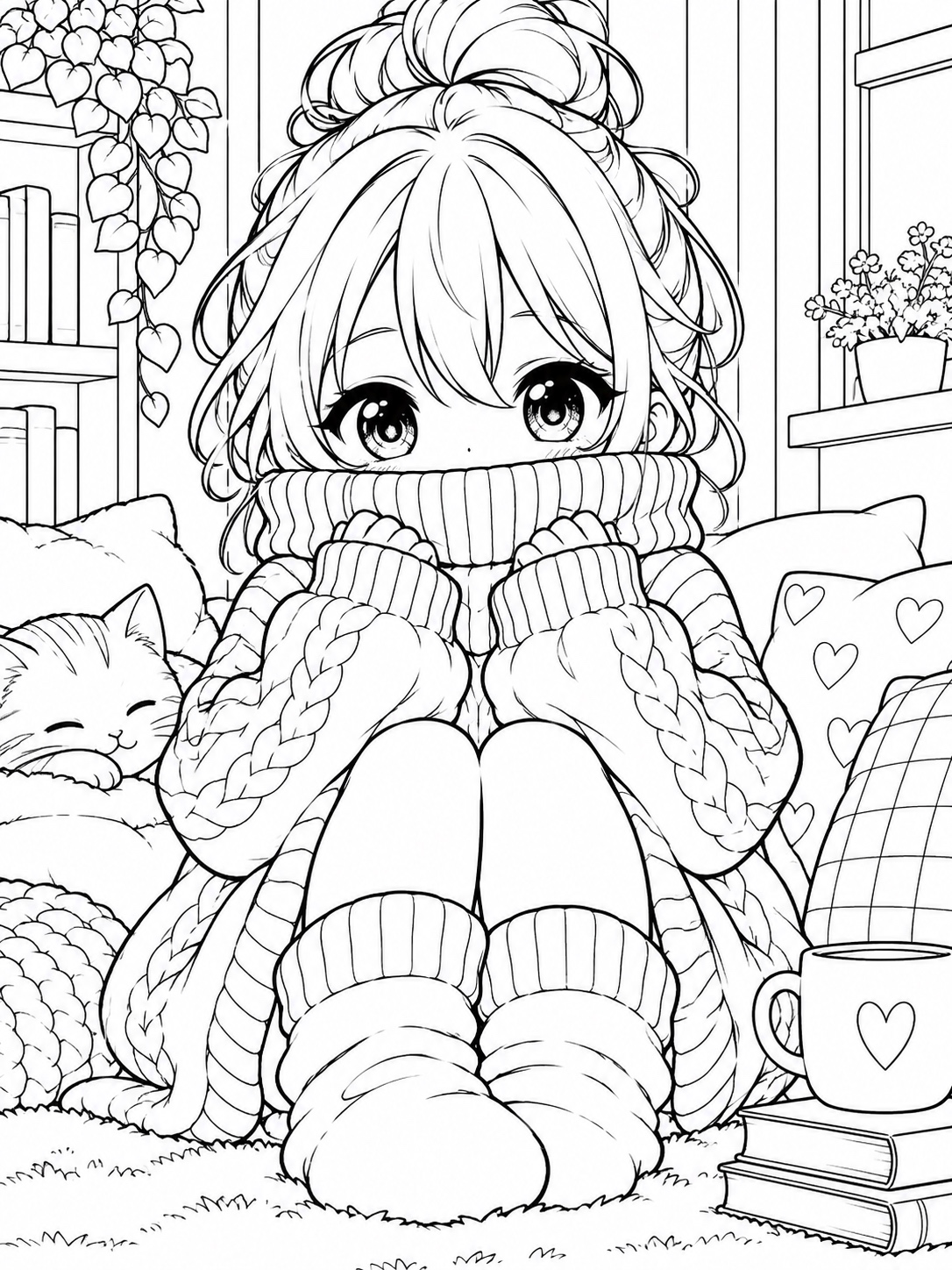
21. A chibi character bundled in an oversized sweater, only eyes and nose showing
Mecha and Sci-Fi (6)
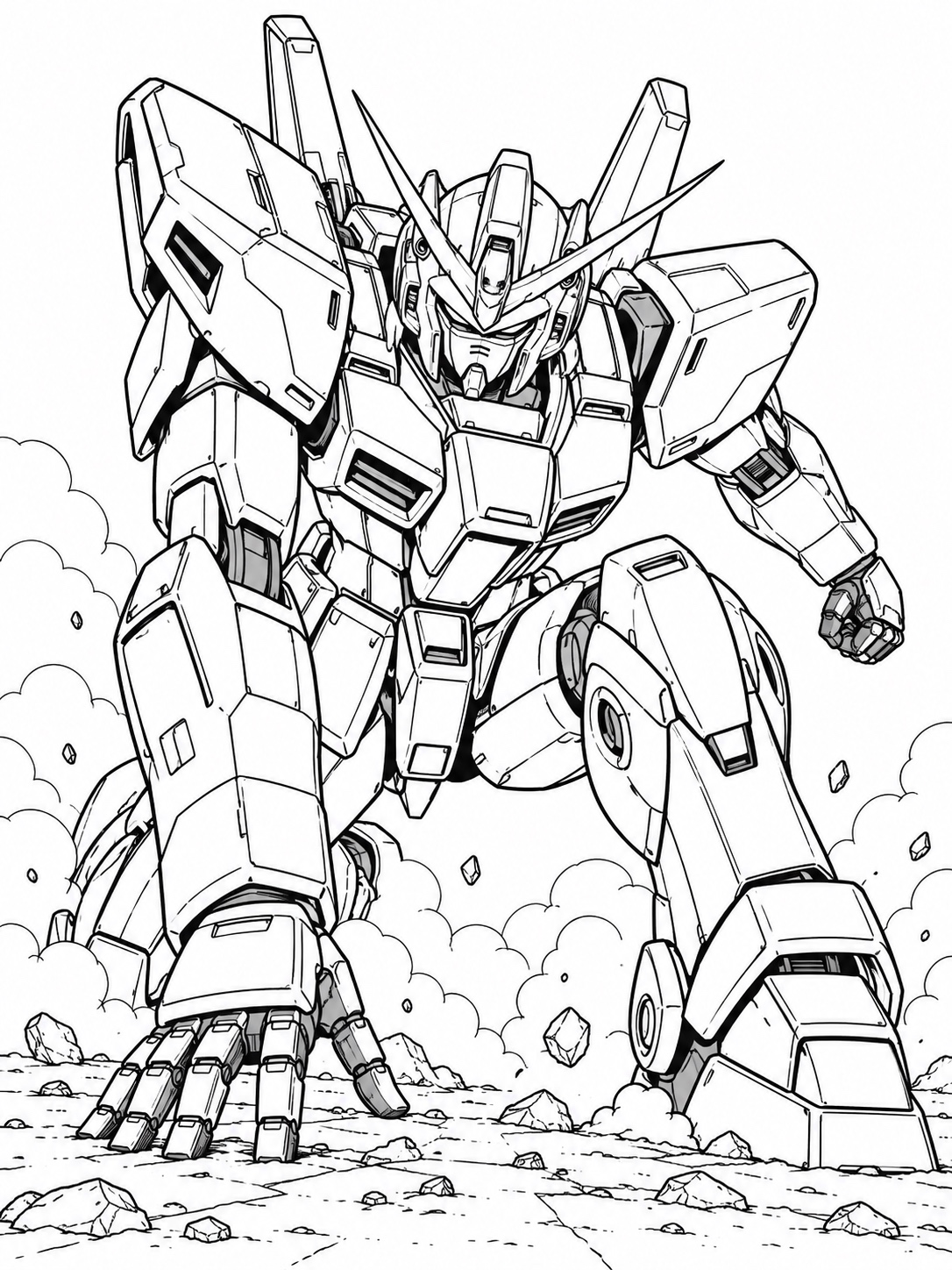
22. A humanoid mech crouched in a hard landing pose, dust clouds at the feet
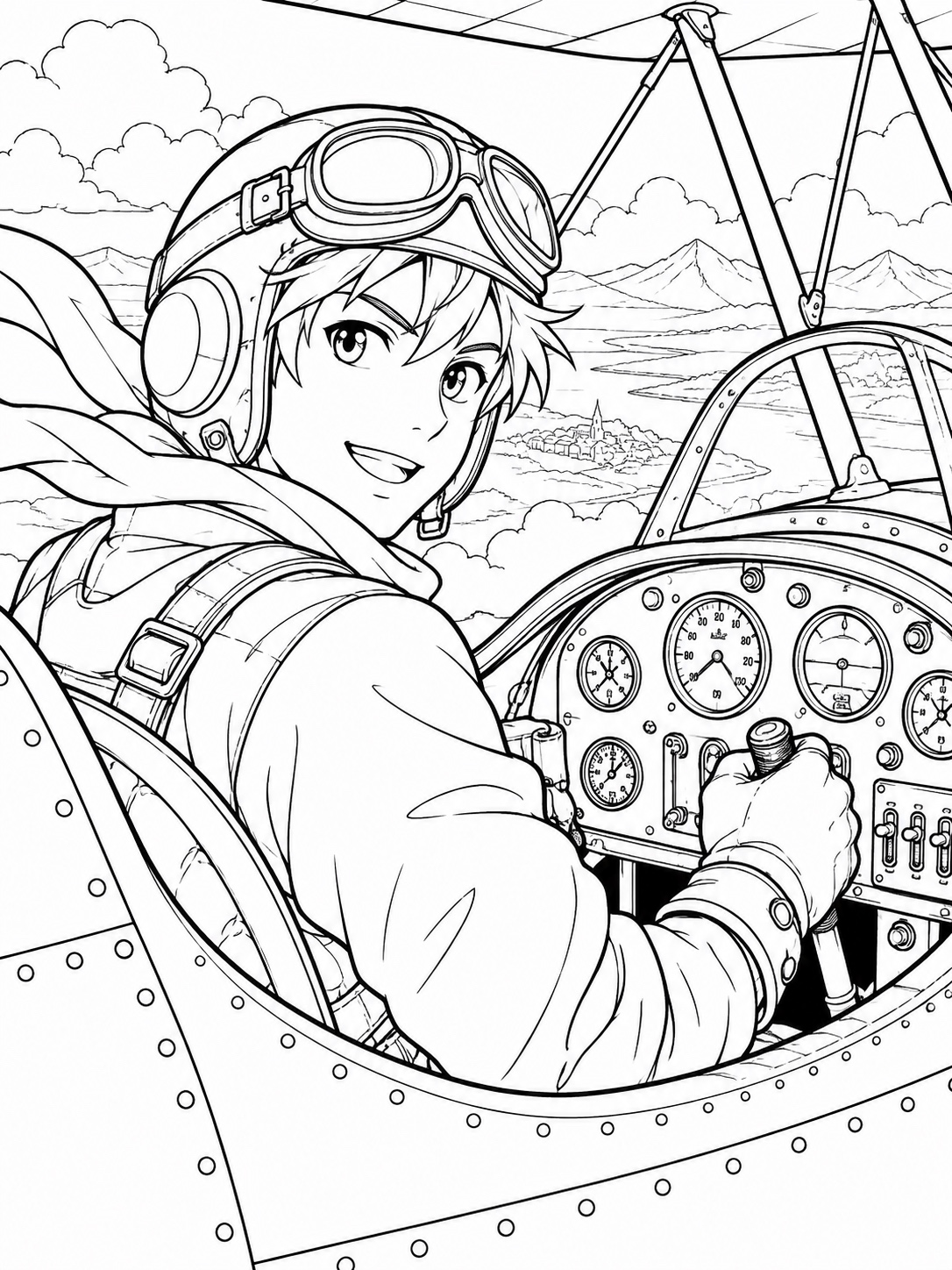
23. A pilot character seated in an open cockpit, control panel visible
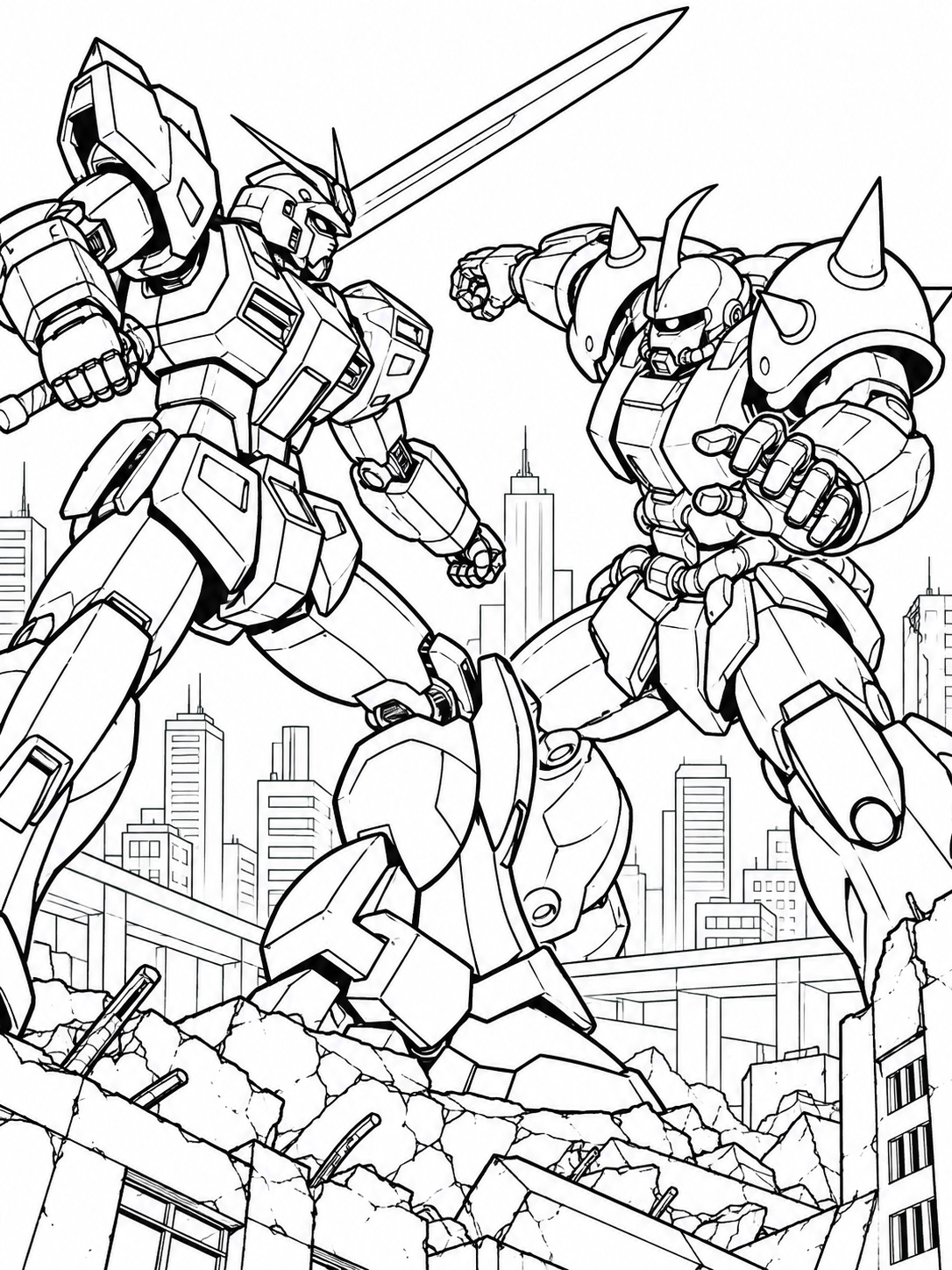
24. A city skyline battle scene between two mechs, minimal background detail
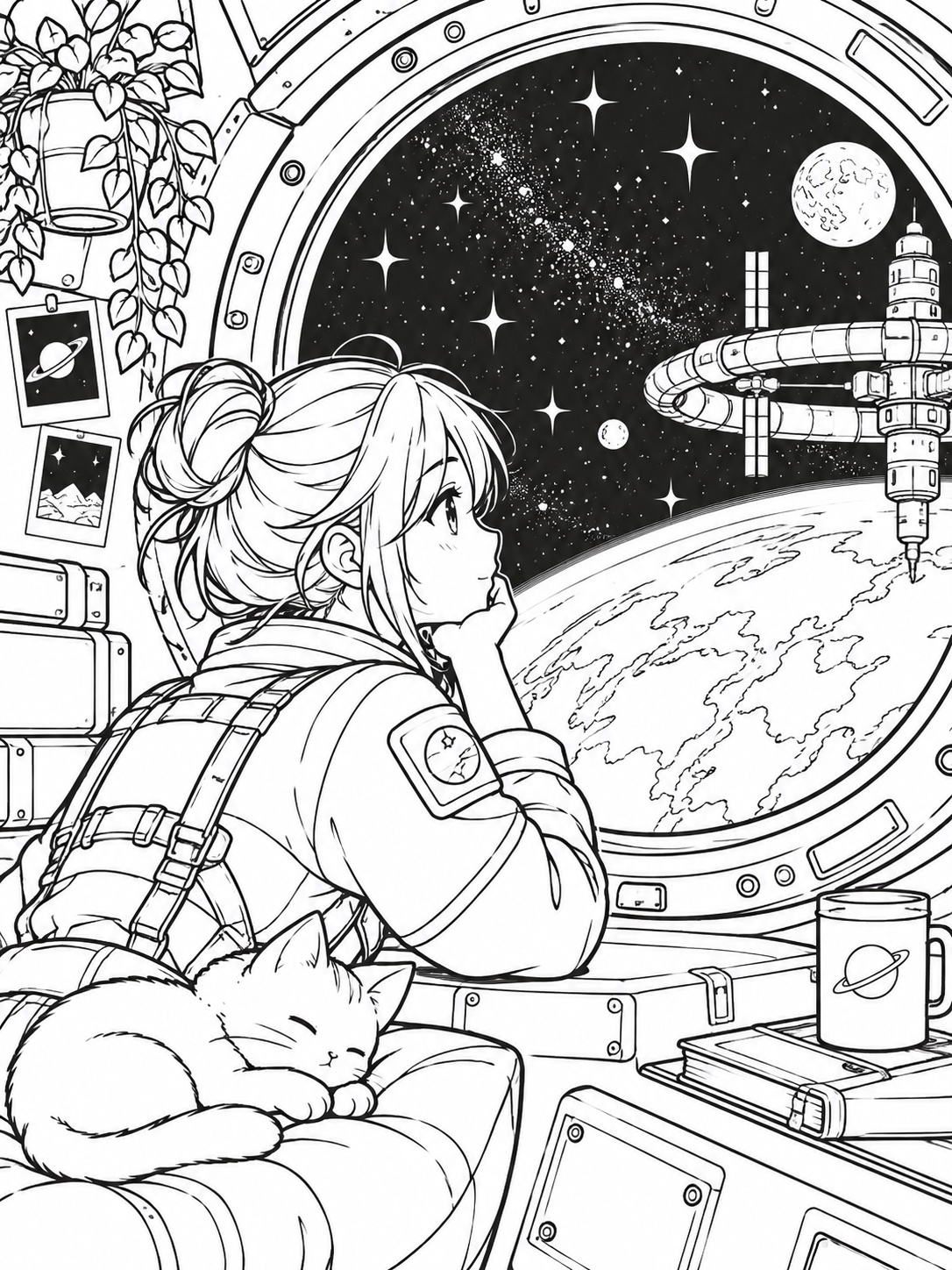
25. A floating space station window with a character looking out at stars
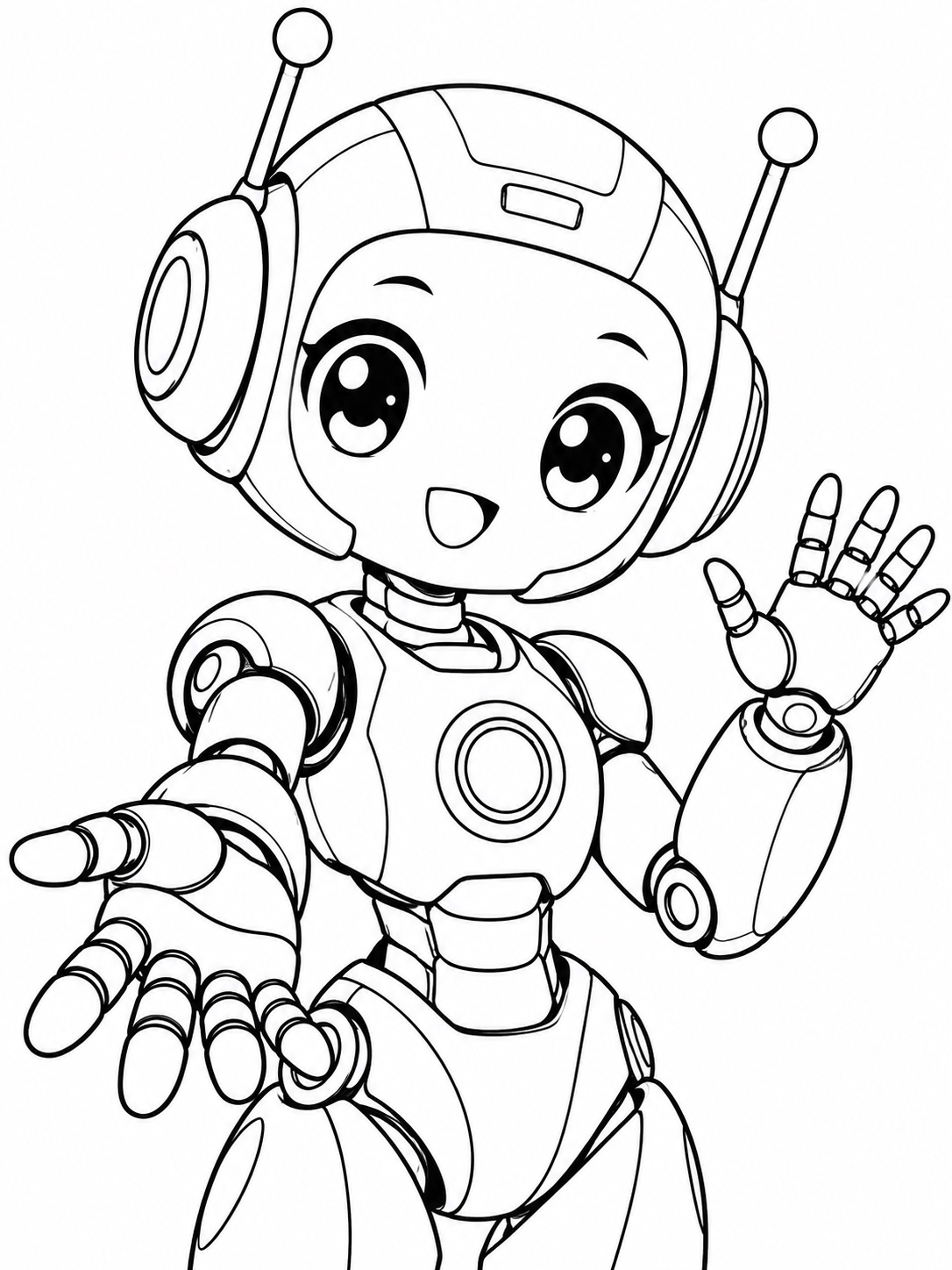
26. A robotic companion character with visible joint segments and antennae
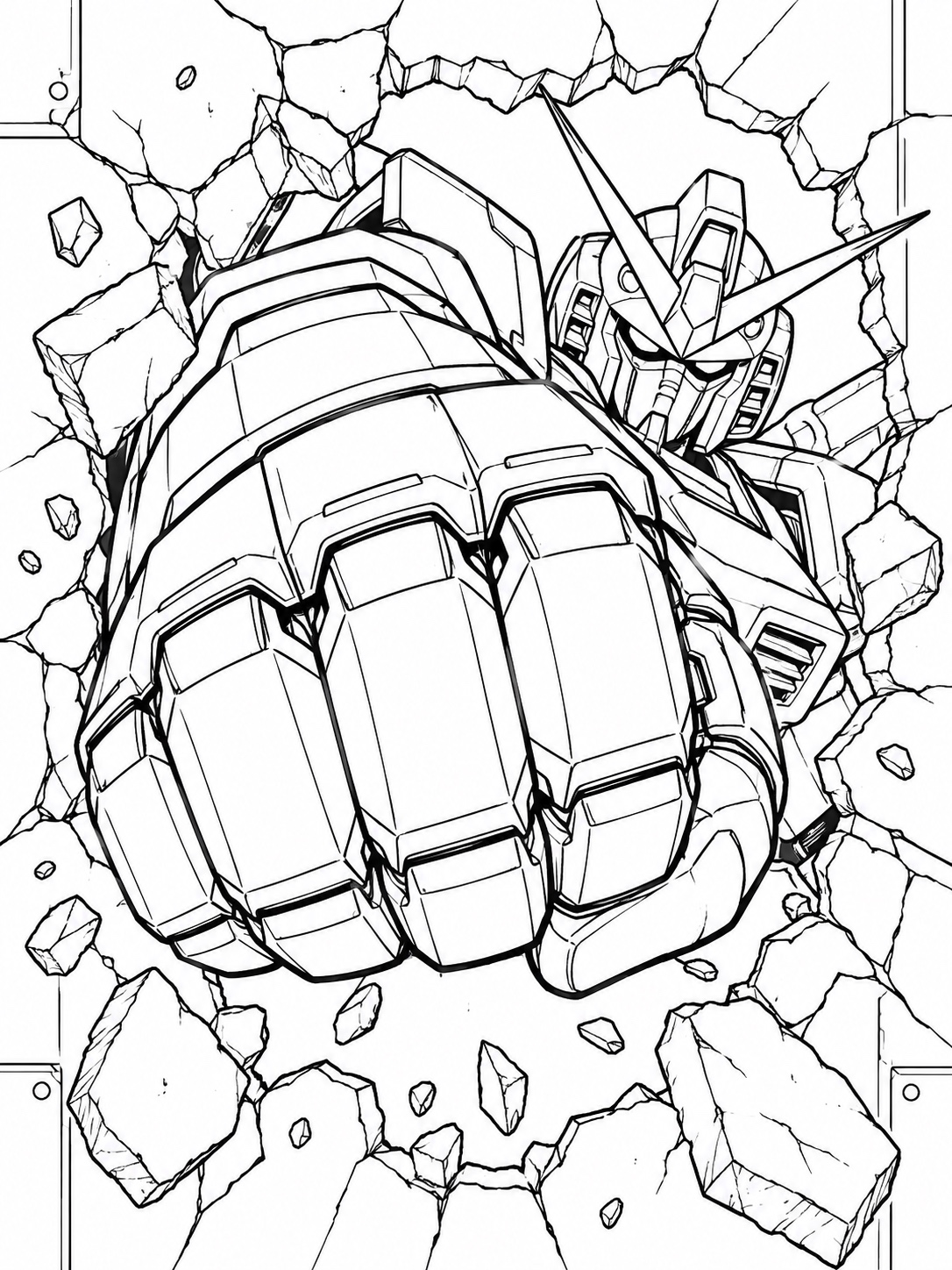
27. A mech’s oversized fist punching through a cracked wall panel
Yokai, Spirits and Fantasy Creatures (6)
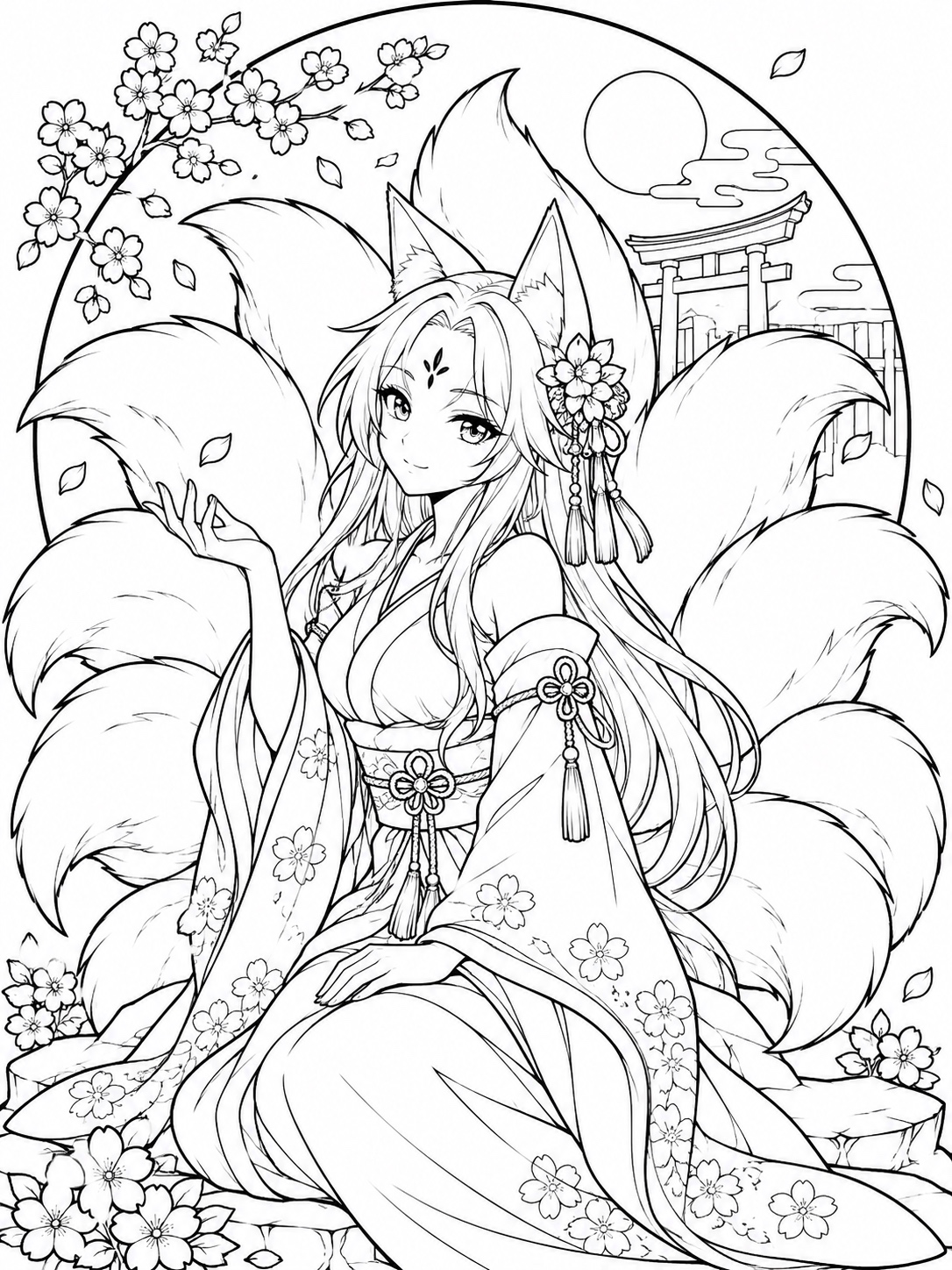
28. A fox spirit with multiple tails fanned out in a circular composition
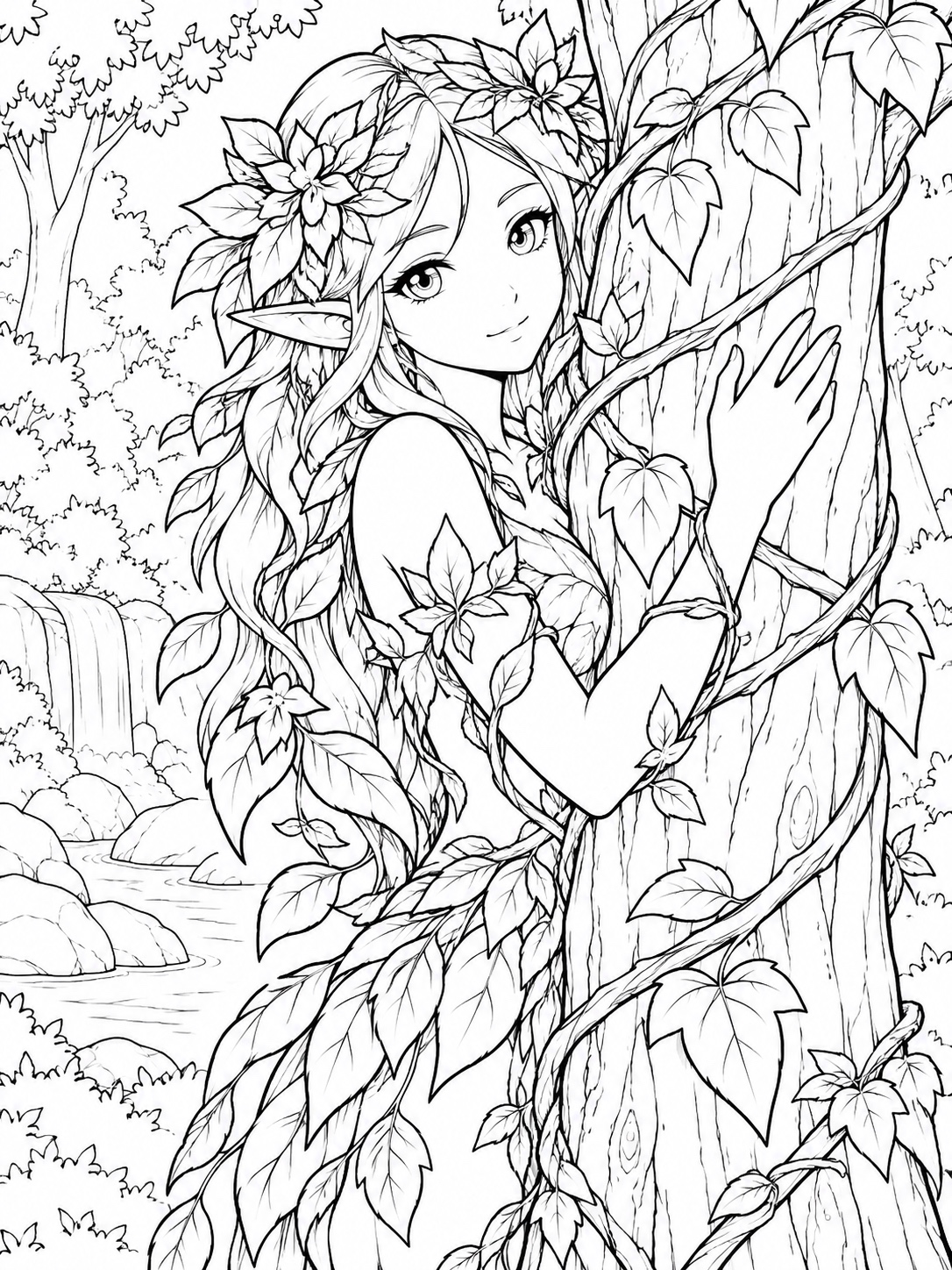
29. A forest spirit made of leaves and vines curling around a tree trunk
30. A lantern-carrying ghost character drifting above a cobblestone street
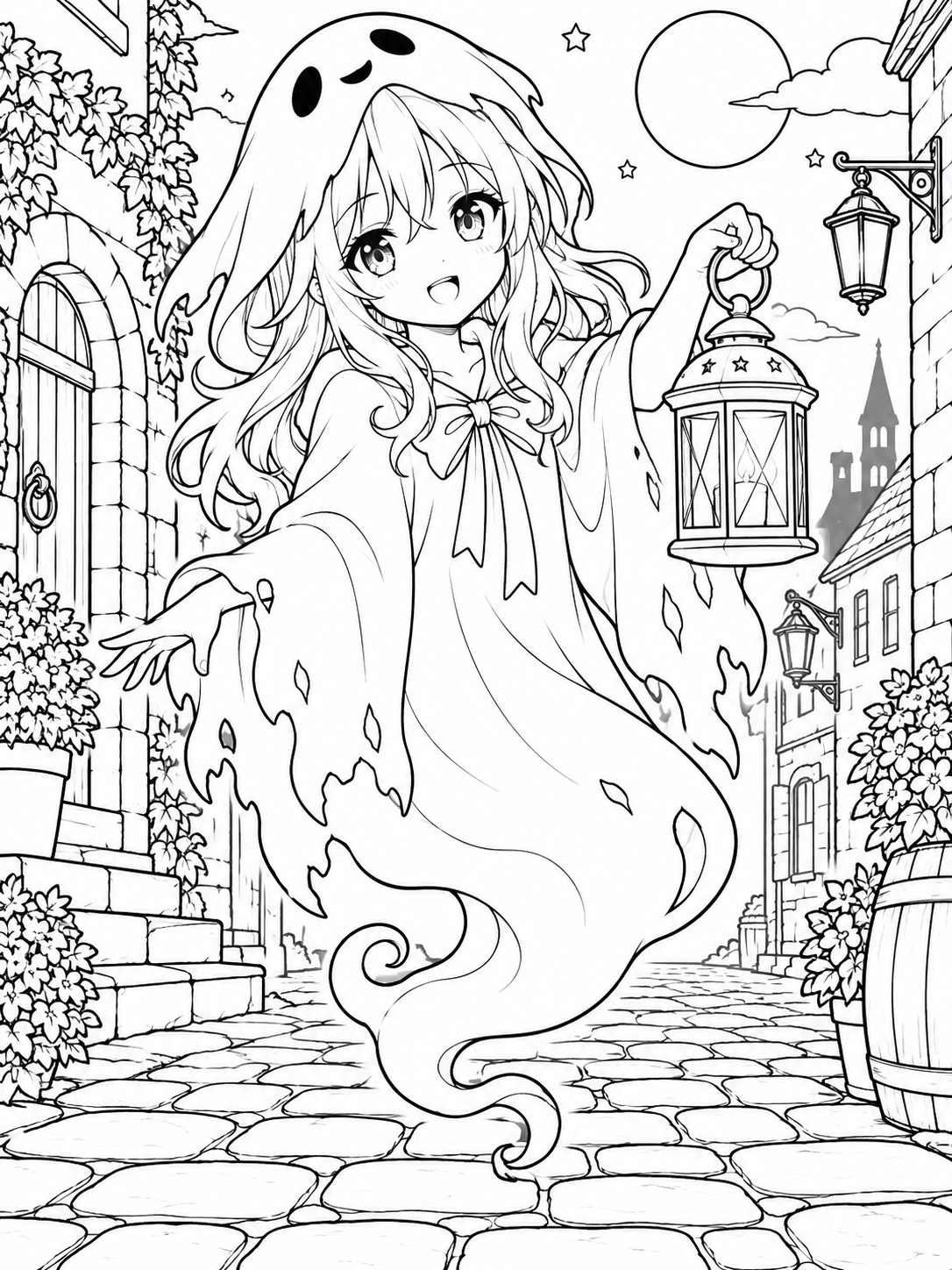
31. A dragon spirit coiled around a mountain peak, clouds at its base
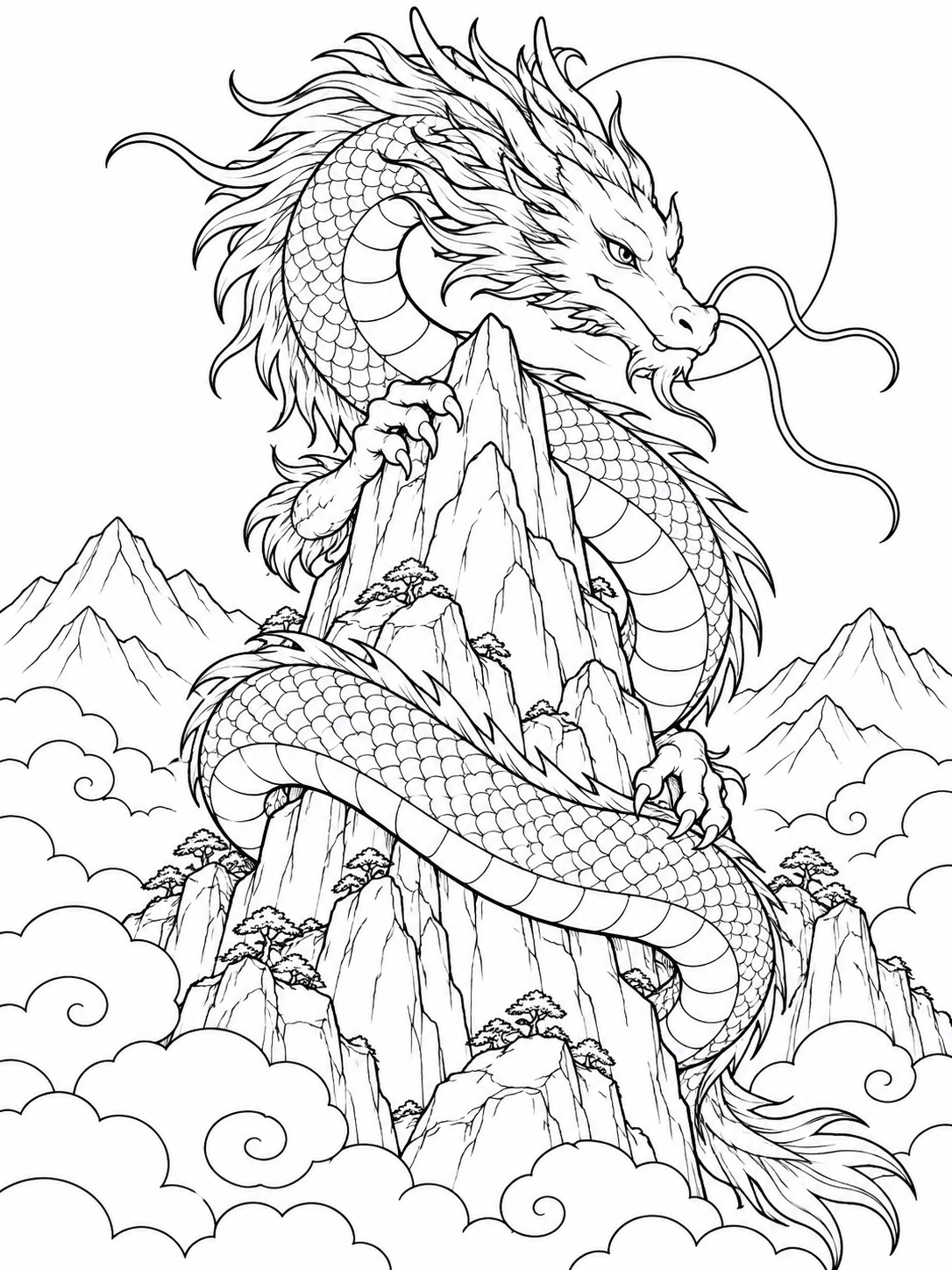
32. A tanuki-style trickster character mid-transformation into a teapot
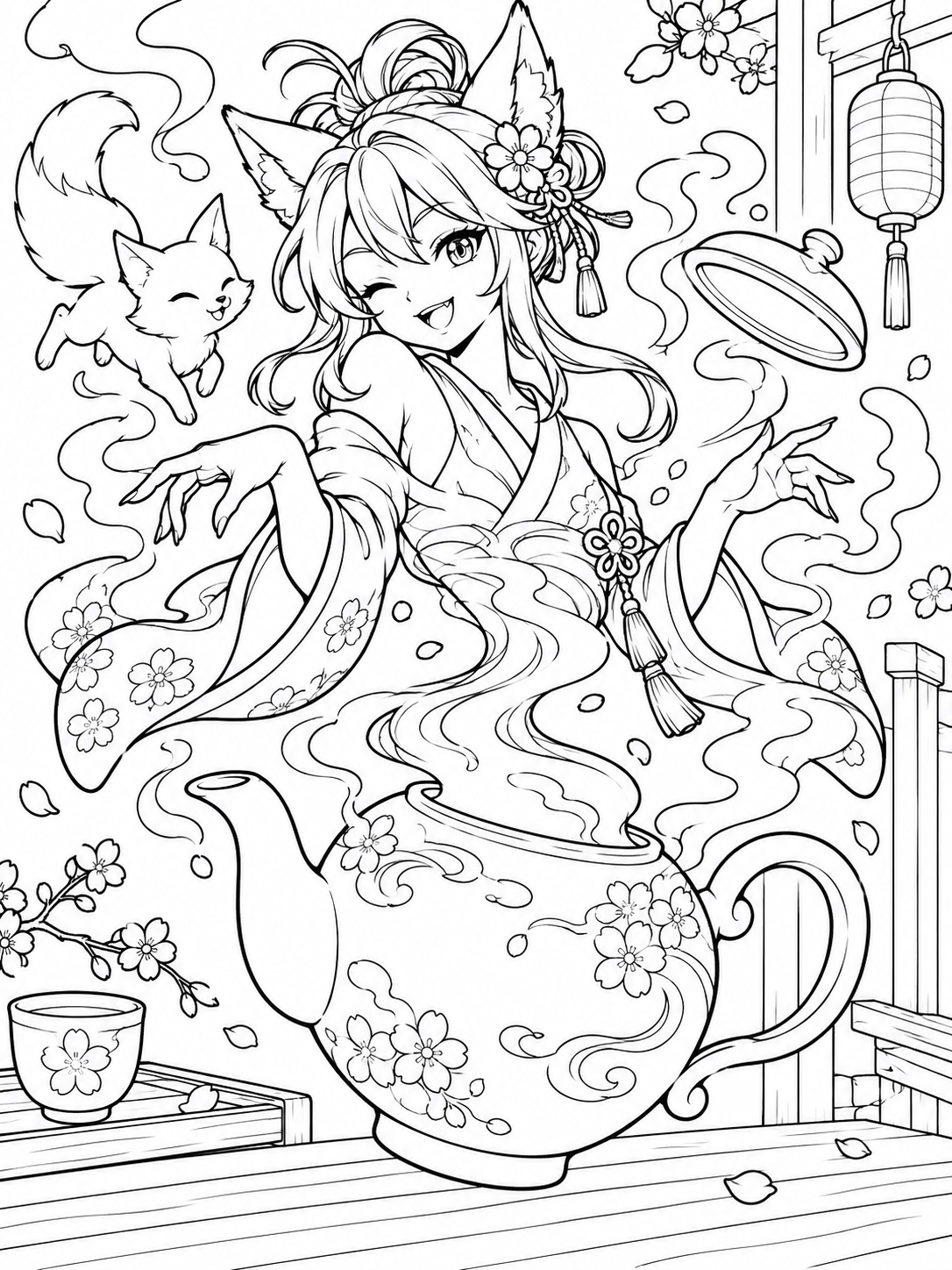
33. A shrine guardian statue character come to life, one paw raised
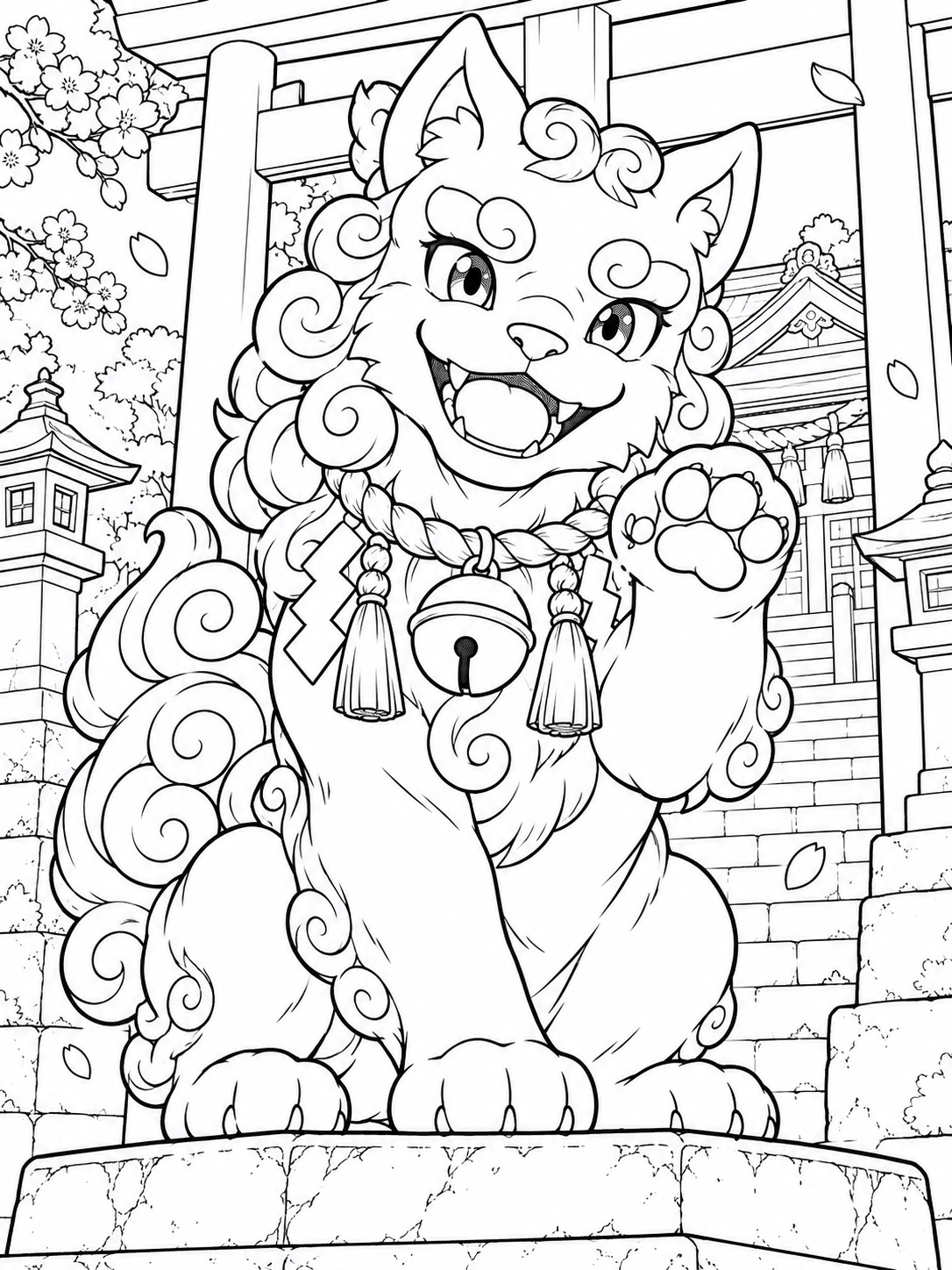
School Life and Slice-of-Life Scenes (6)
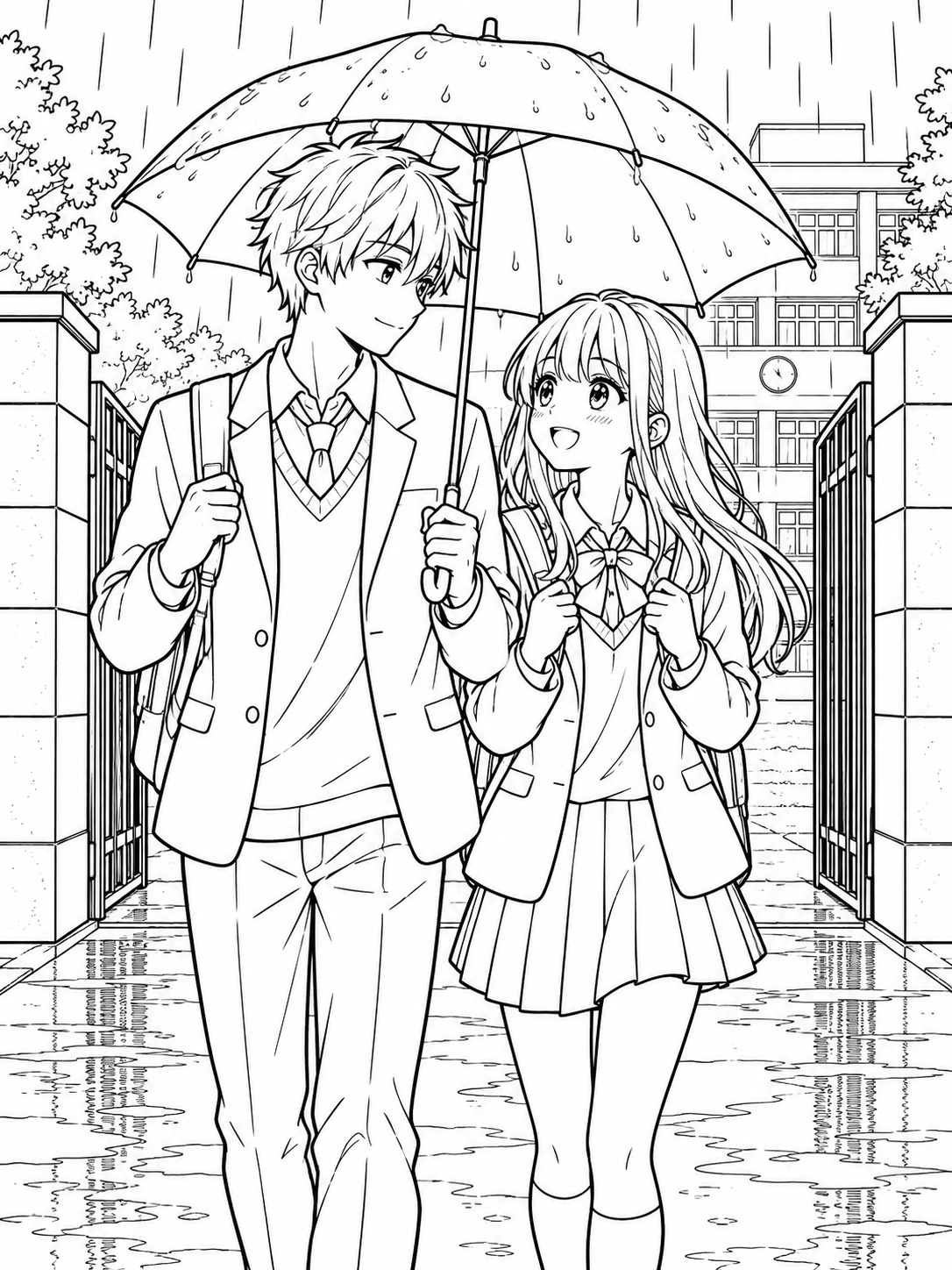
34. Two characters sharing an umbrella in the rain outside a school gate
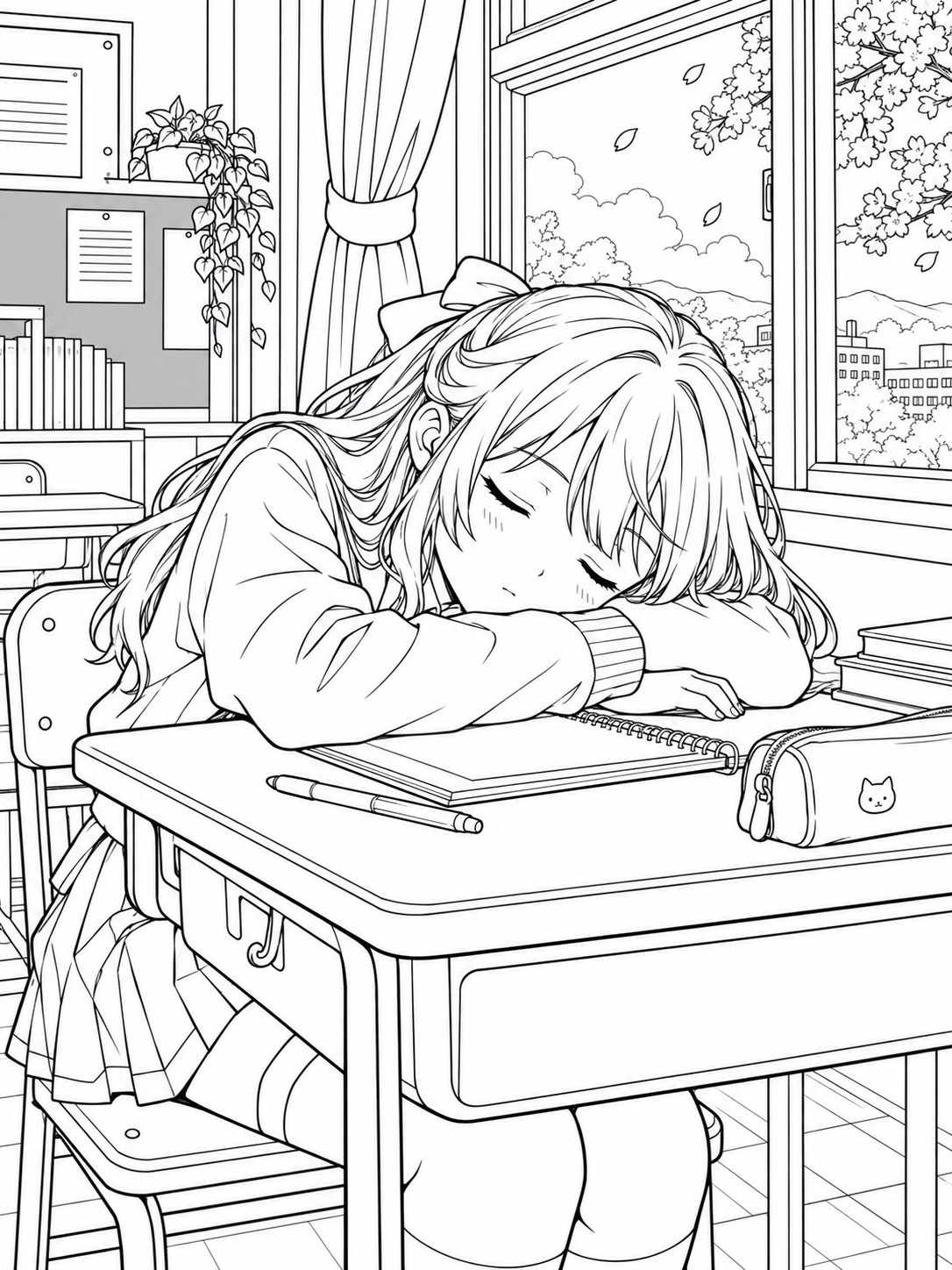
35. A classroom scene with a character asleep on a desk by the window
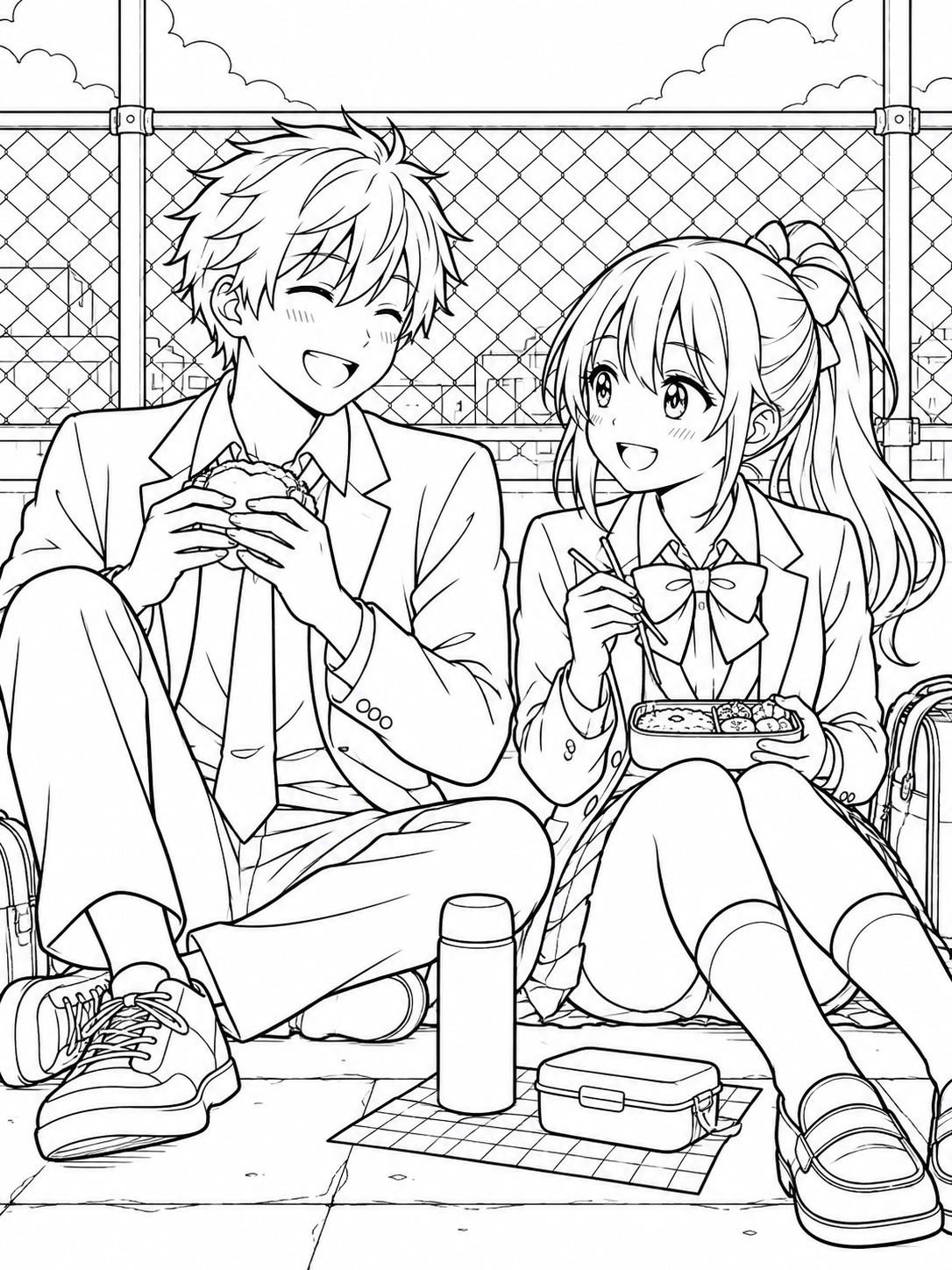
36. A rooftop lunch scene, two characters sitting against a chain-link fence
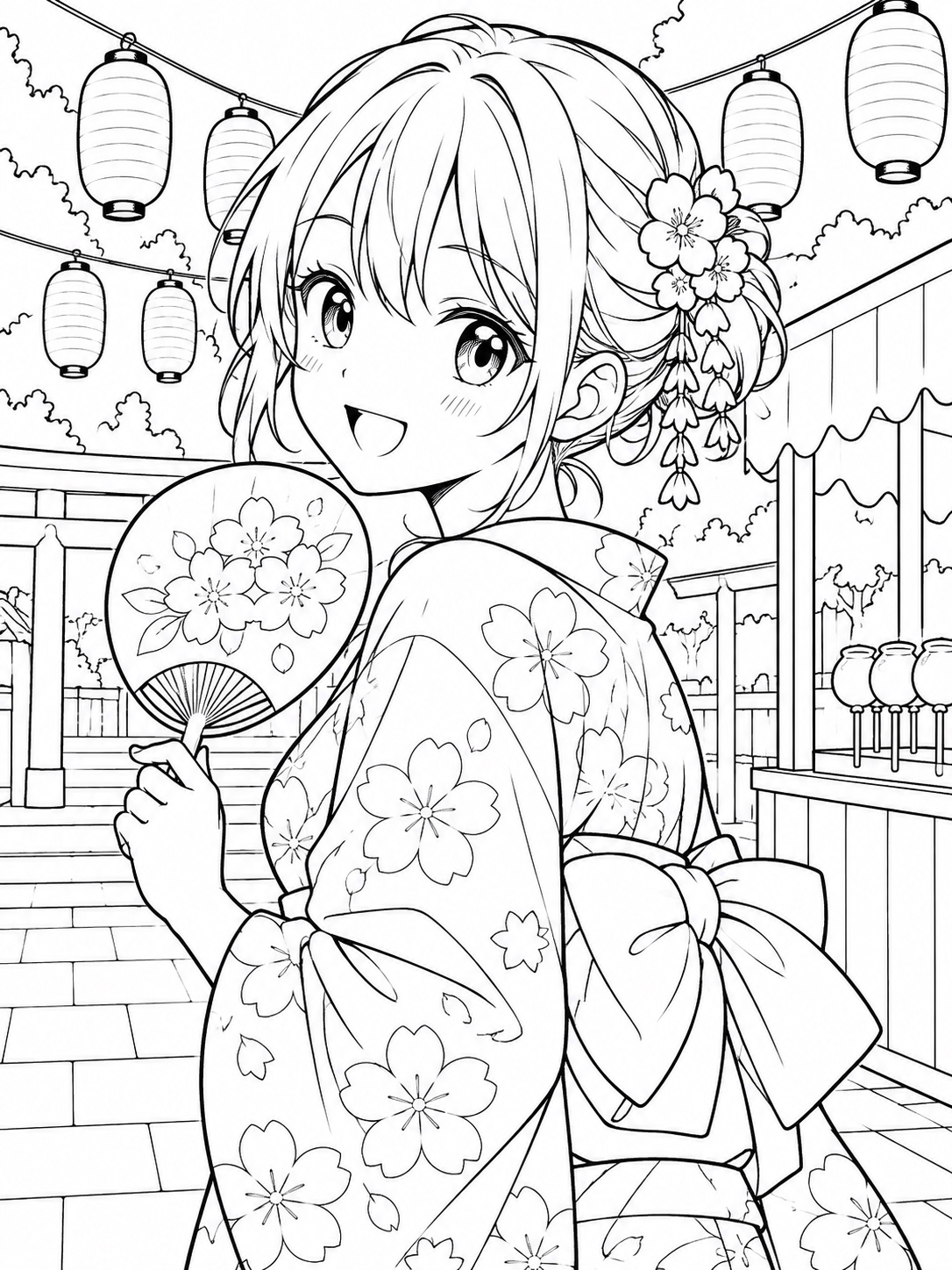
37. A festival scene with a character in a yukata holding a paper fan
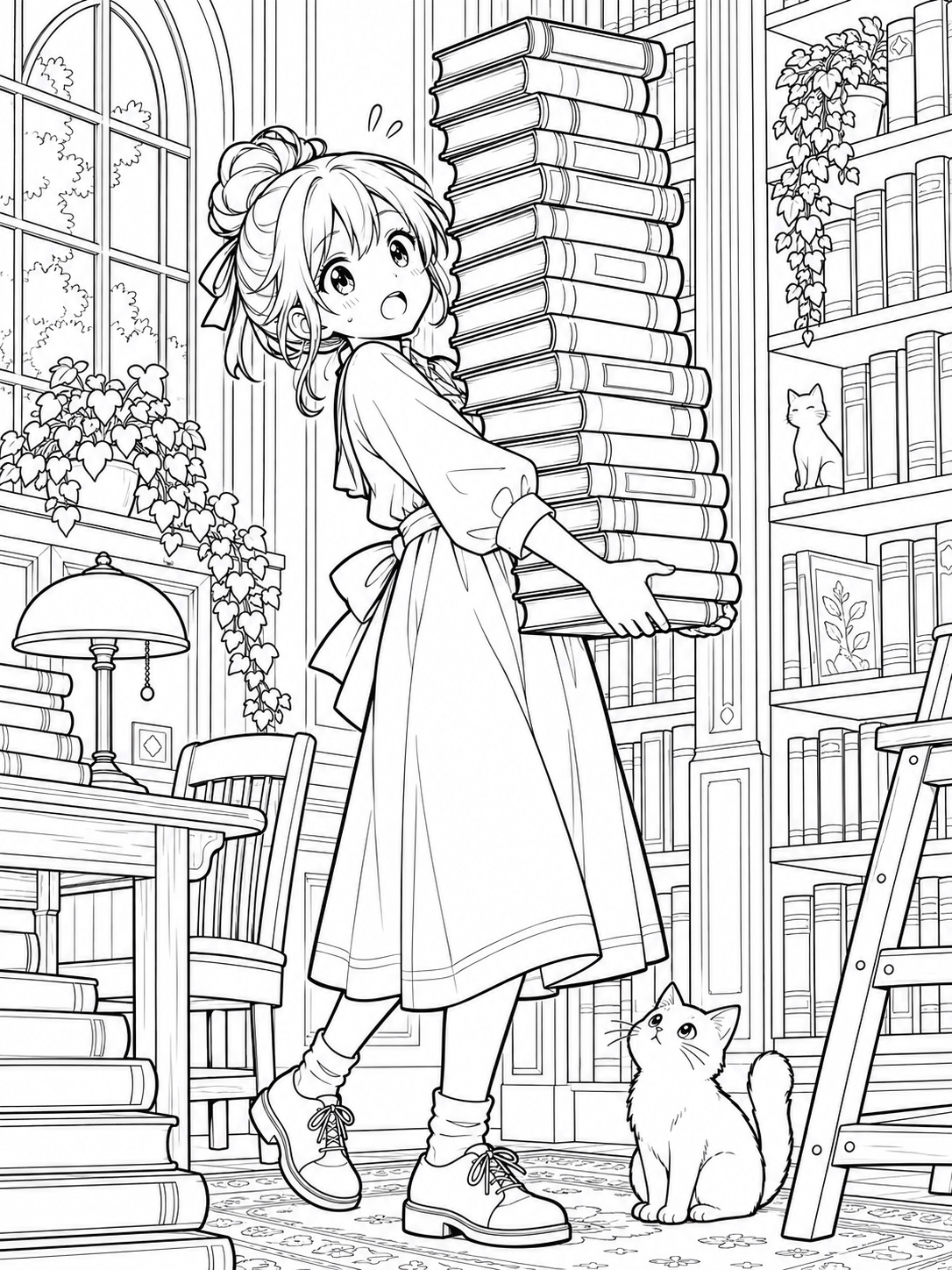
38. A library corner with a character stacking books taller than their head
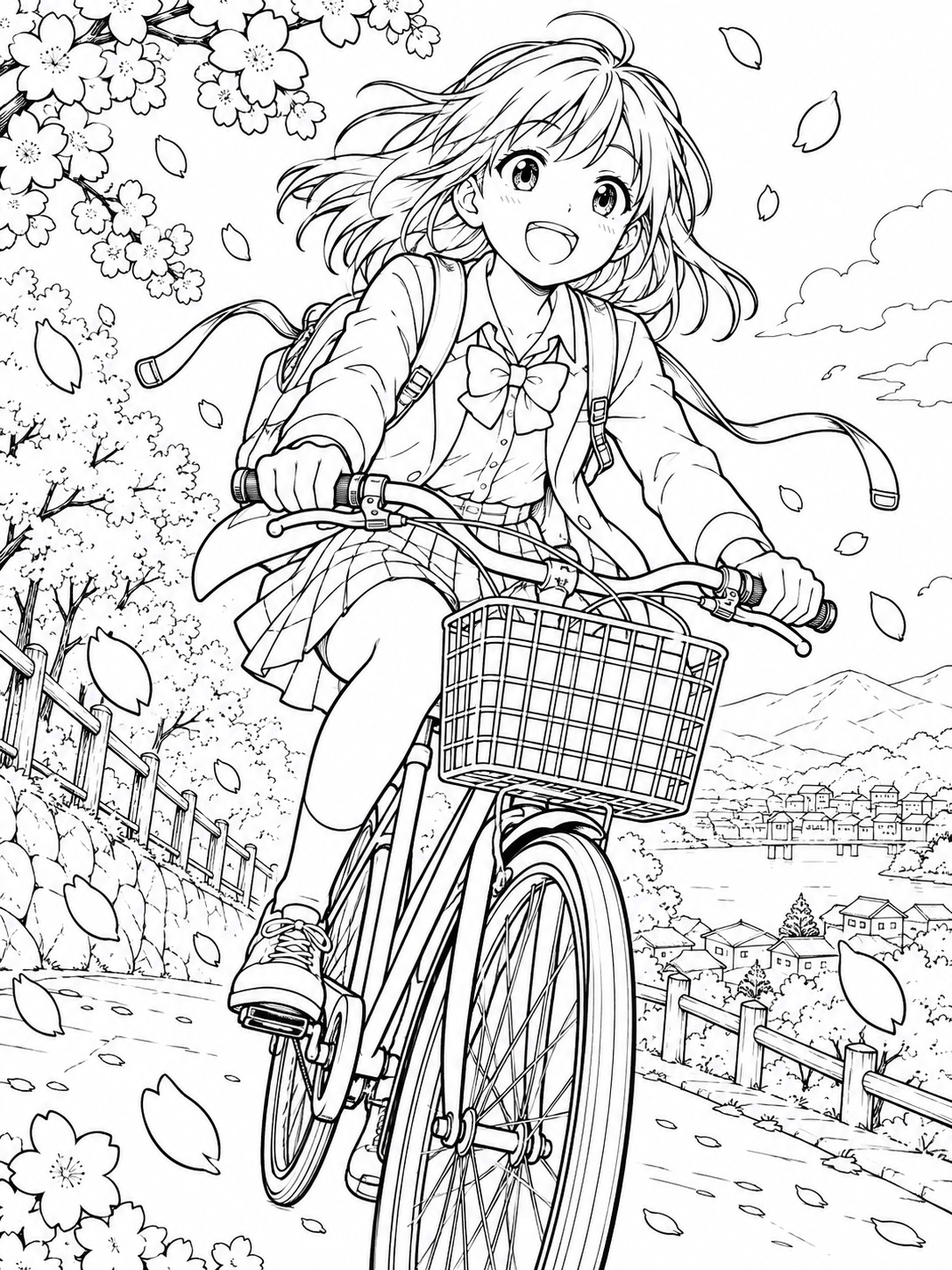
39. A bicycle ride scene, backpack straps flying, cherry blossoms falling
Anime Animals and Companions (6)
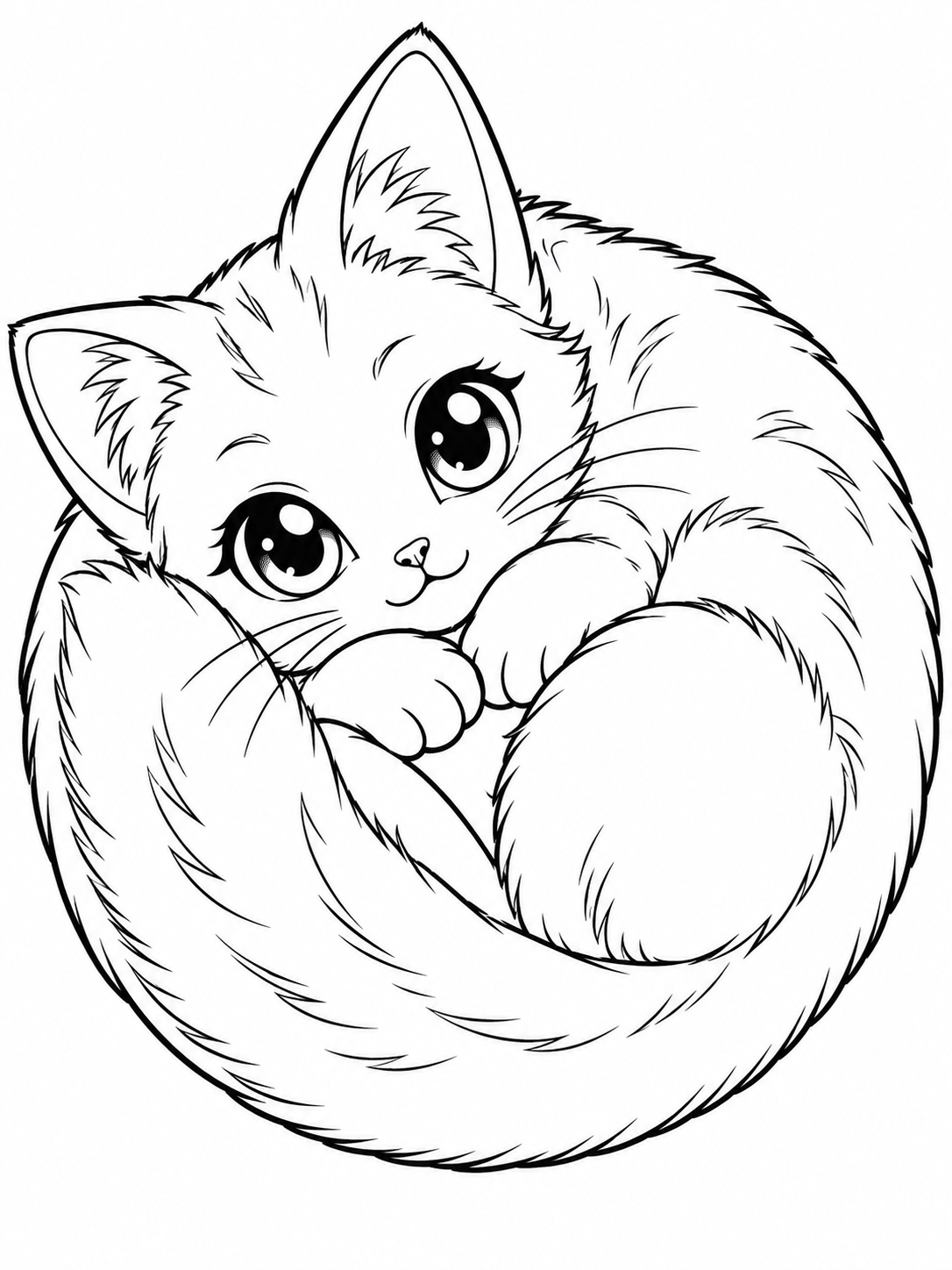
40. A big-eyed anime-style cat curled into a perfect circle
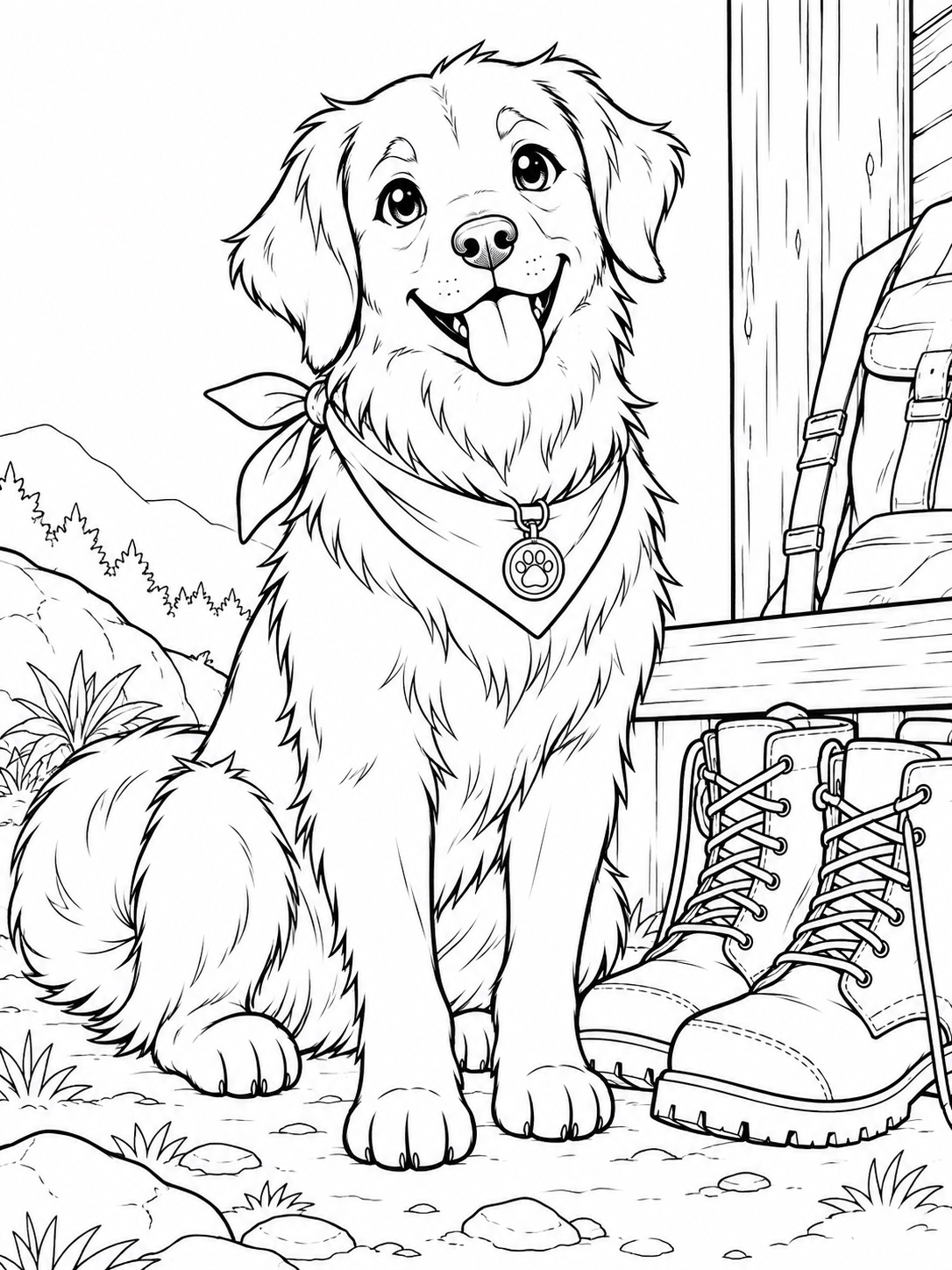
41. A loyal dog companion character sitting beside a pair of boots
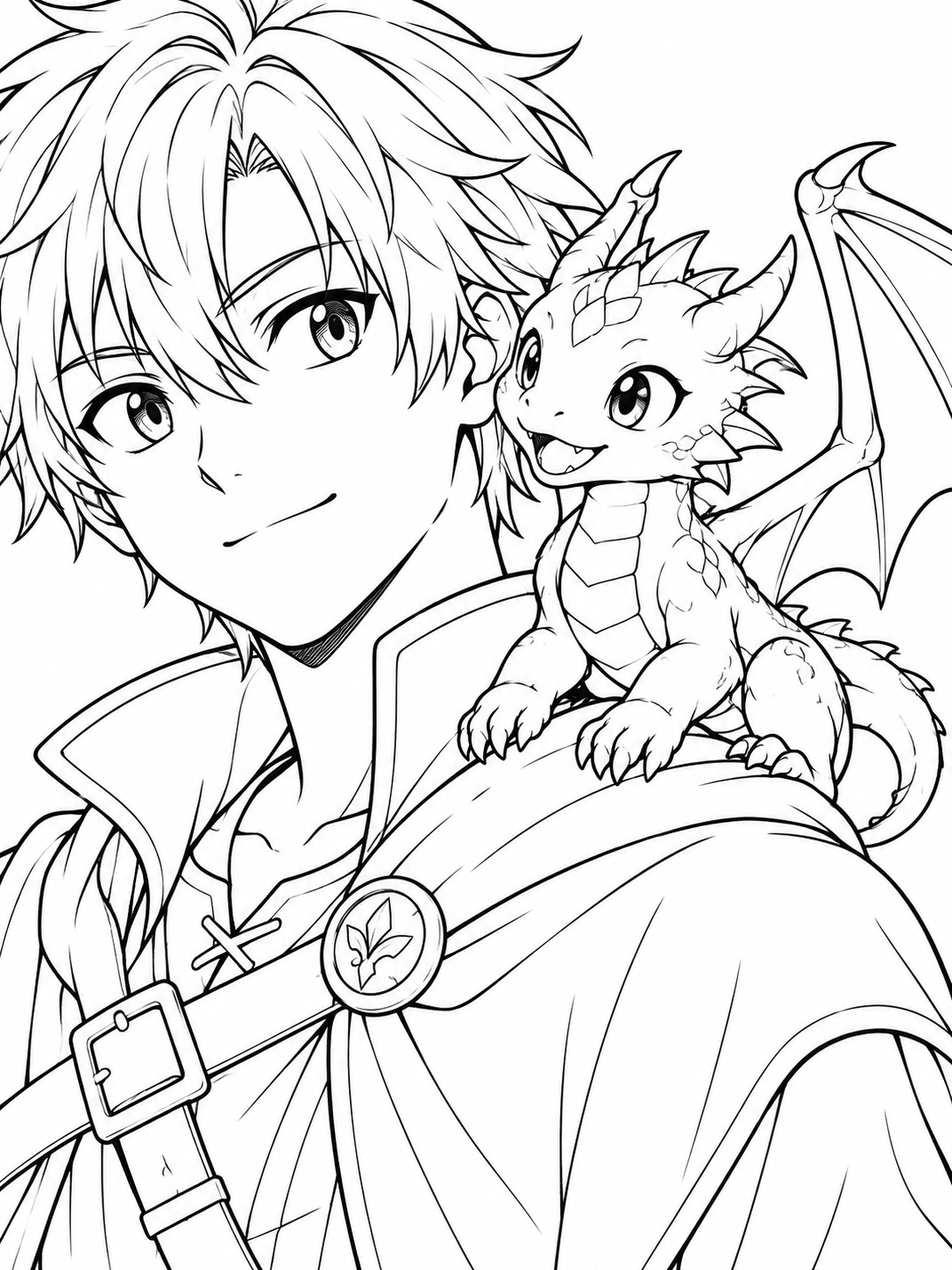
42. A tiny dragon perched on a character’s shoulder, wings half-open
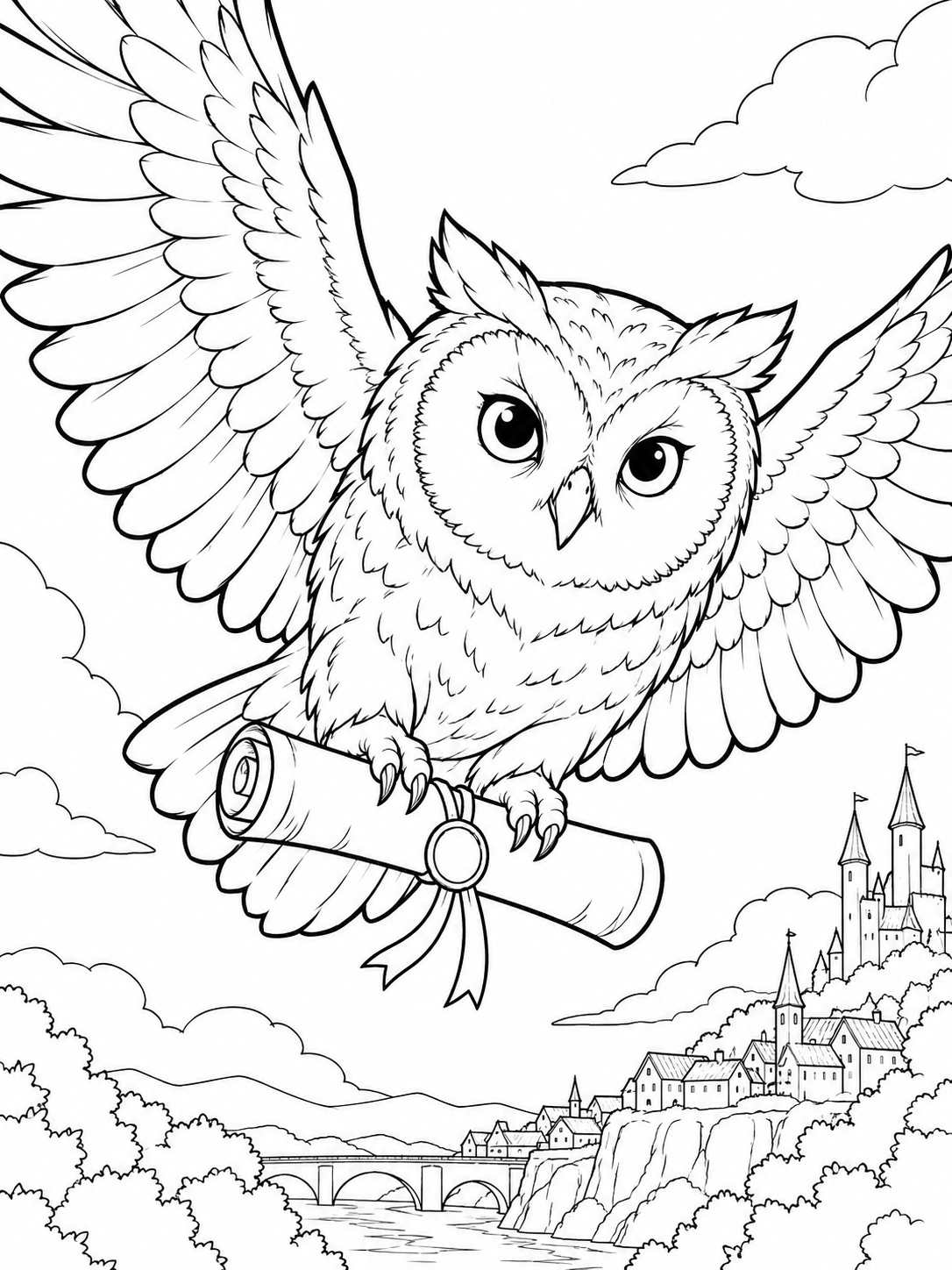
43. An owl messenger character mid-flight with a scroll in its talons
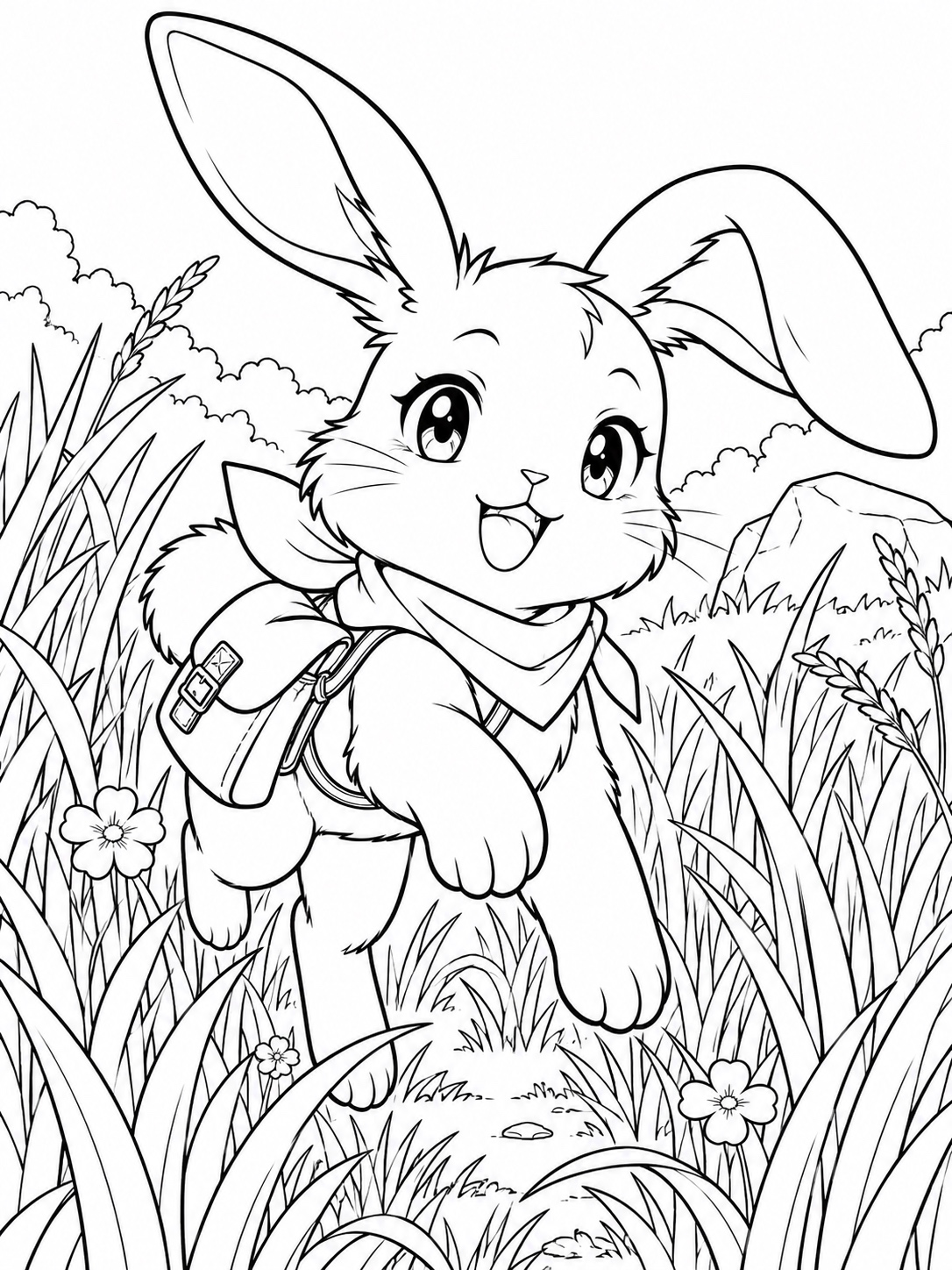
44. A rabbit-eared companion character hopping through tall grass
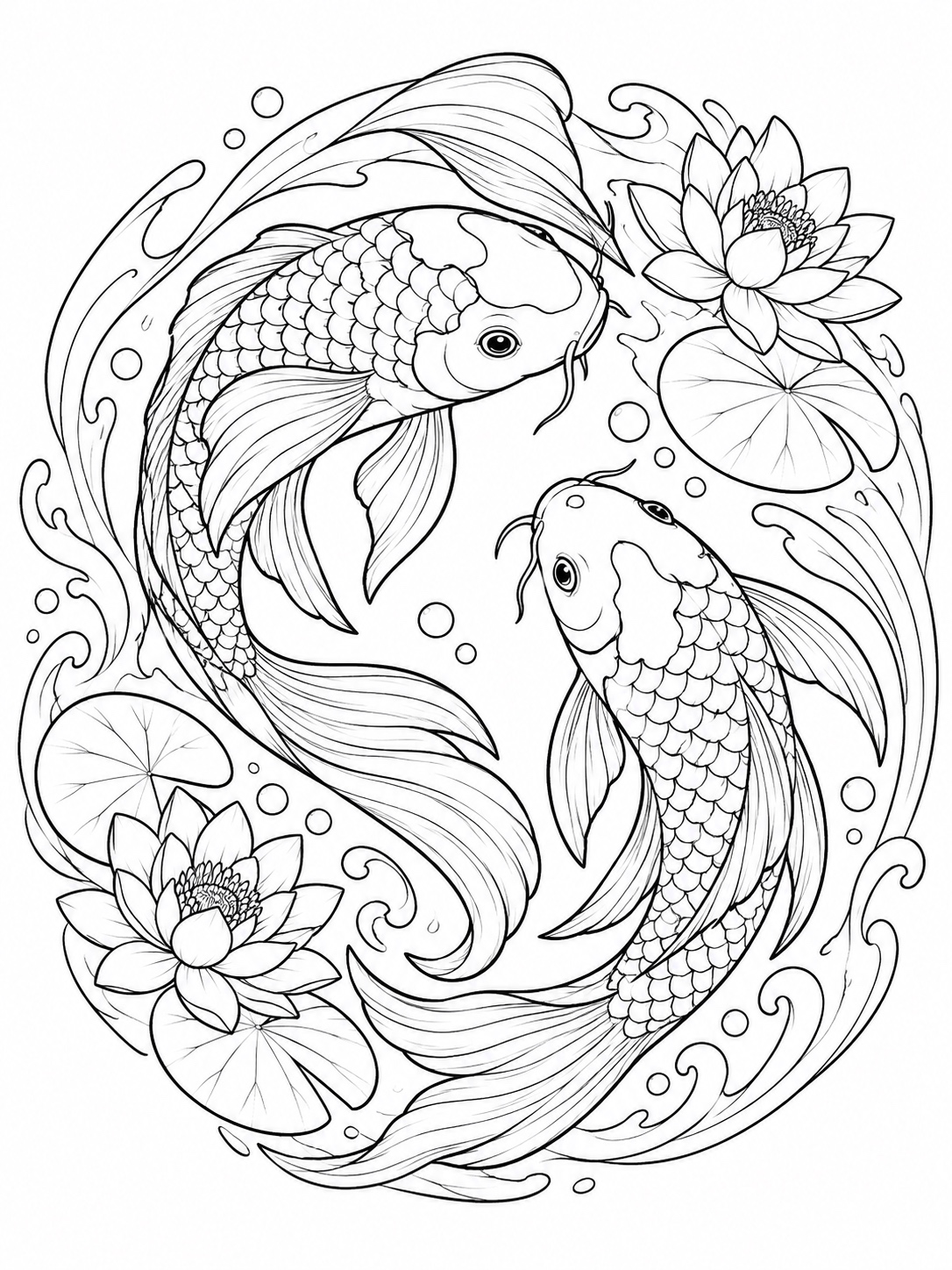
45. A koi fish pair swirling in a yin-yang composition
Seasonal and Holiday Anime Scenes (5)
46. A character under a full cherry blossom tree, petals mid-fall
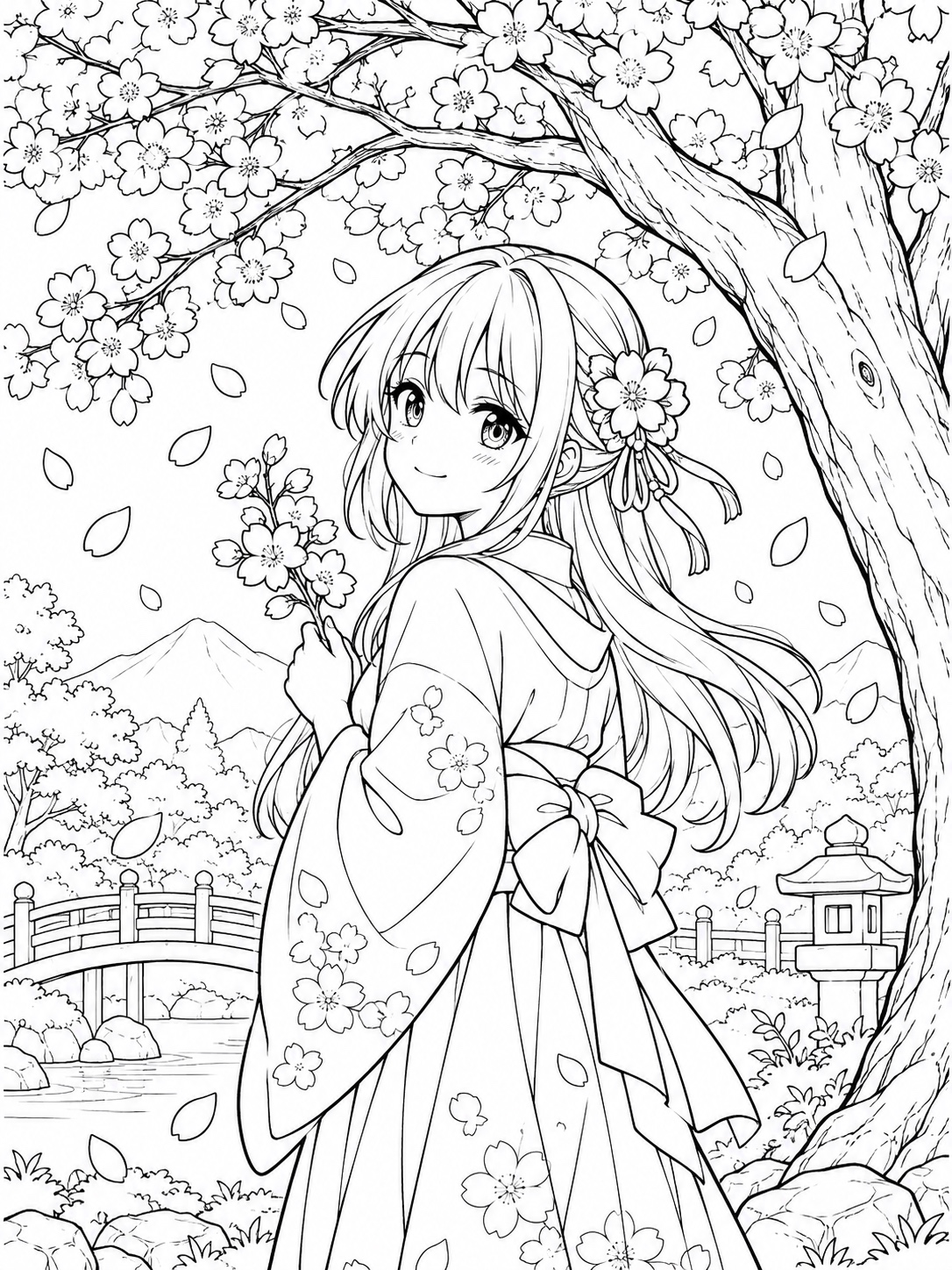
47. A winter festival scene with a character holding a paper lantern
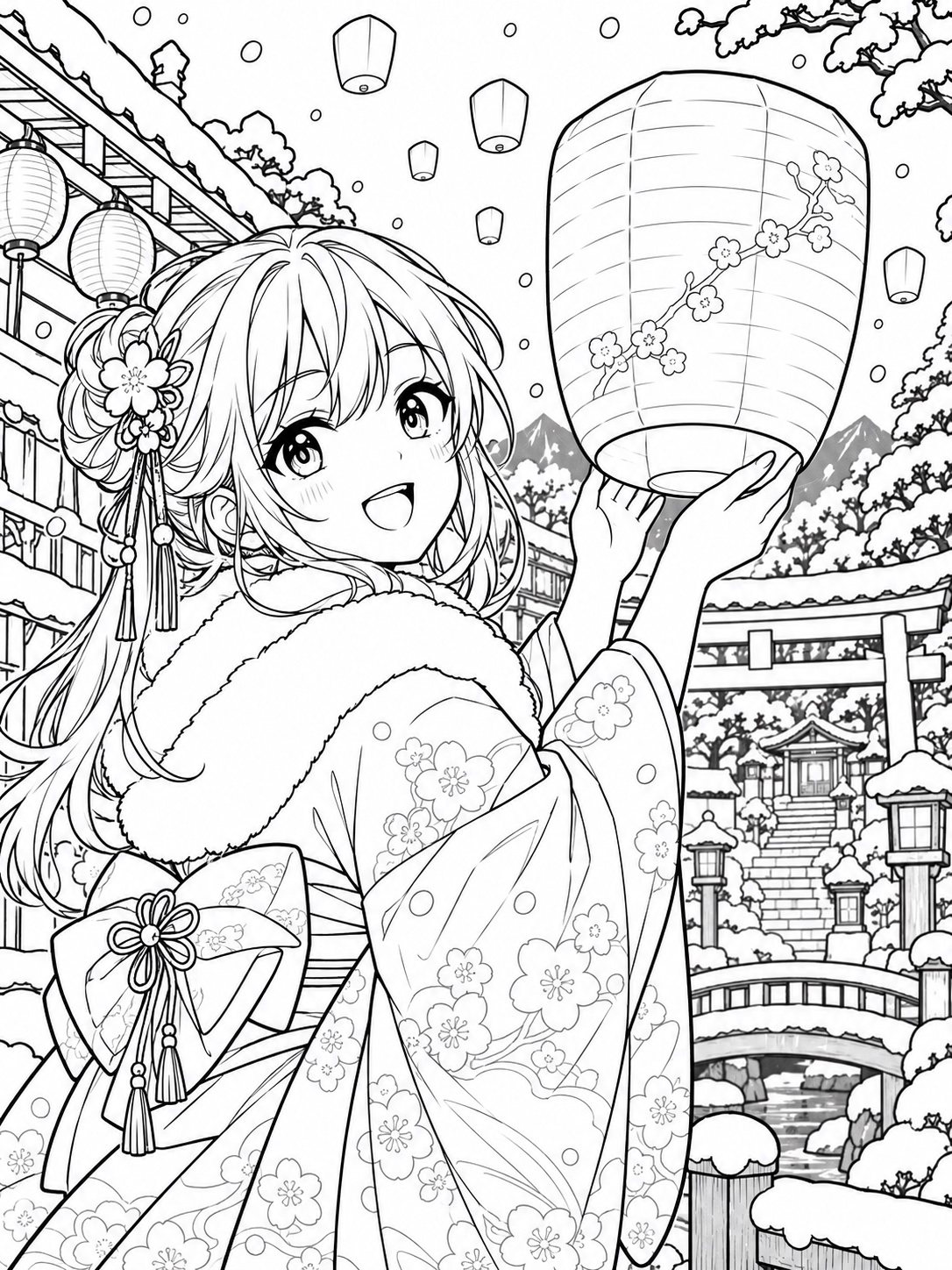
48. A summer fireworks scene viewed from a rooftop, two silhouettes watching
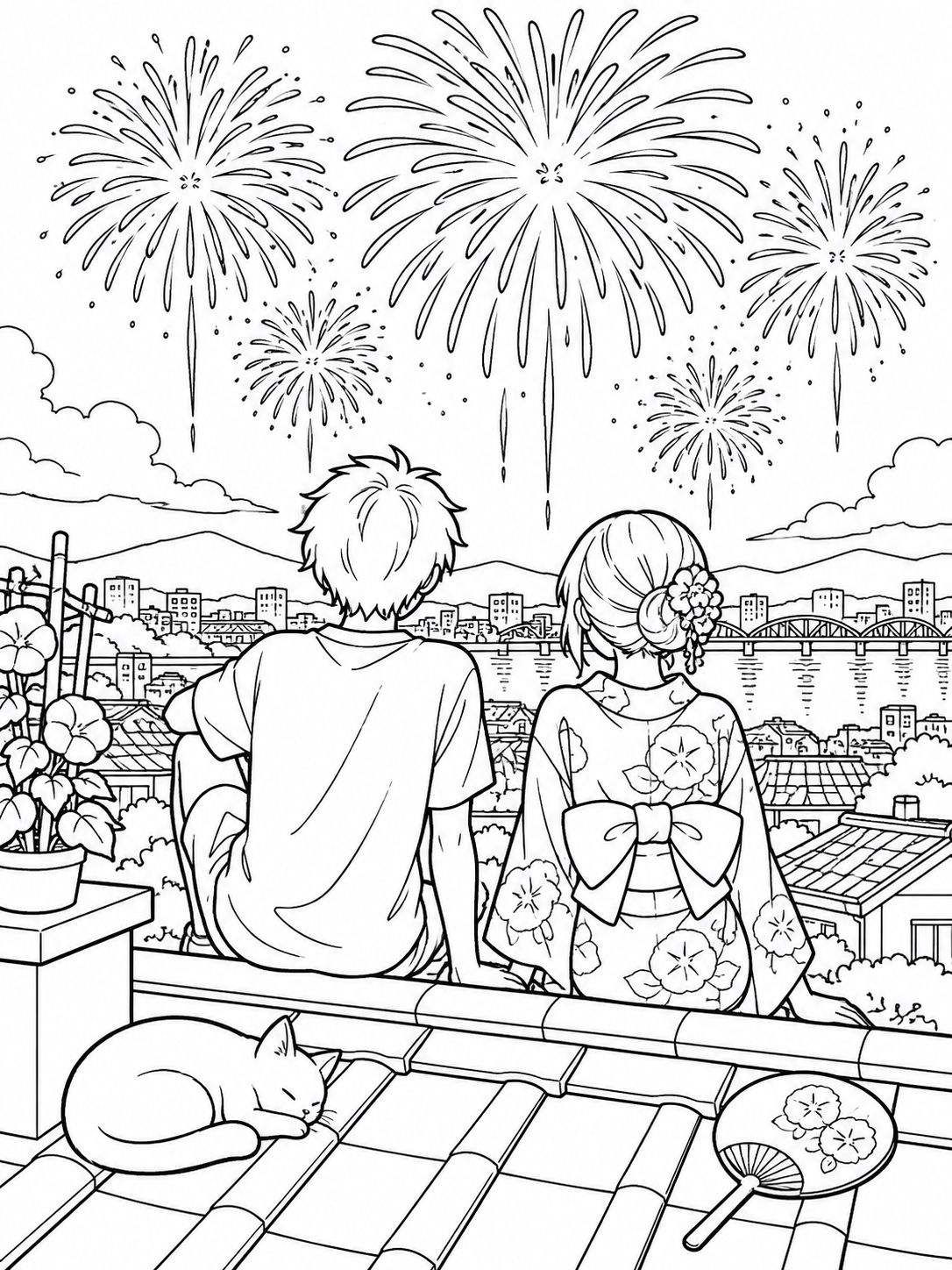
49. An autumn scene with a character raking leaves into a spiral pile
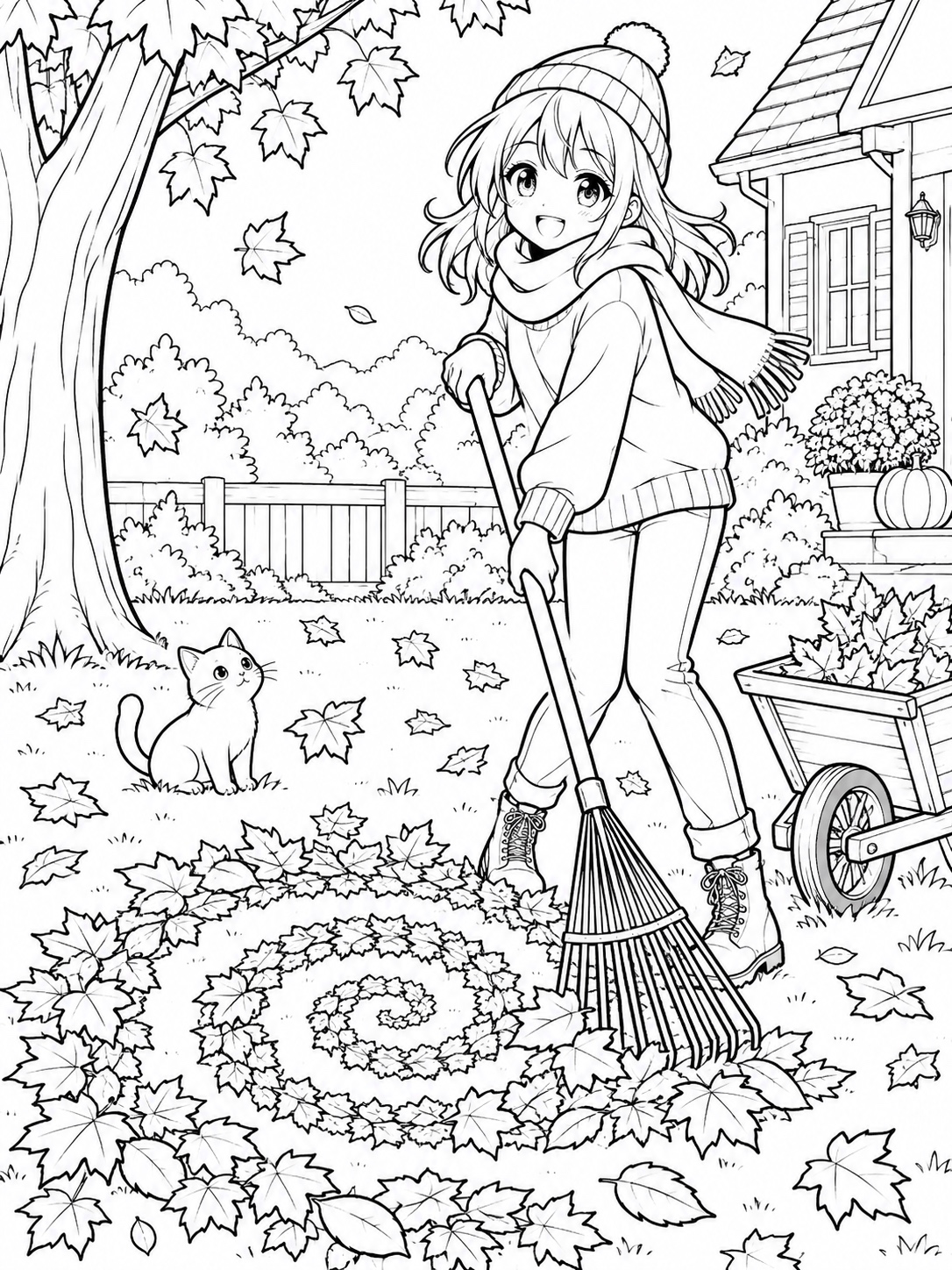
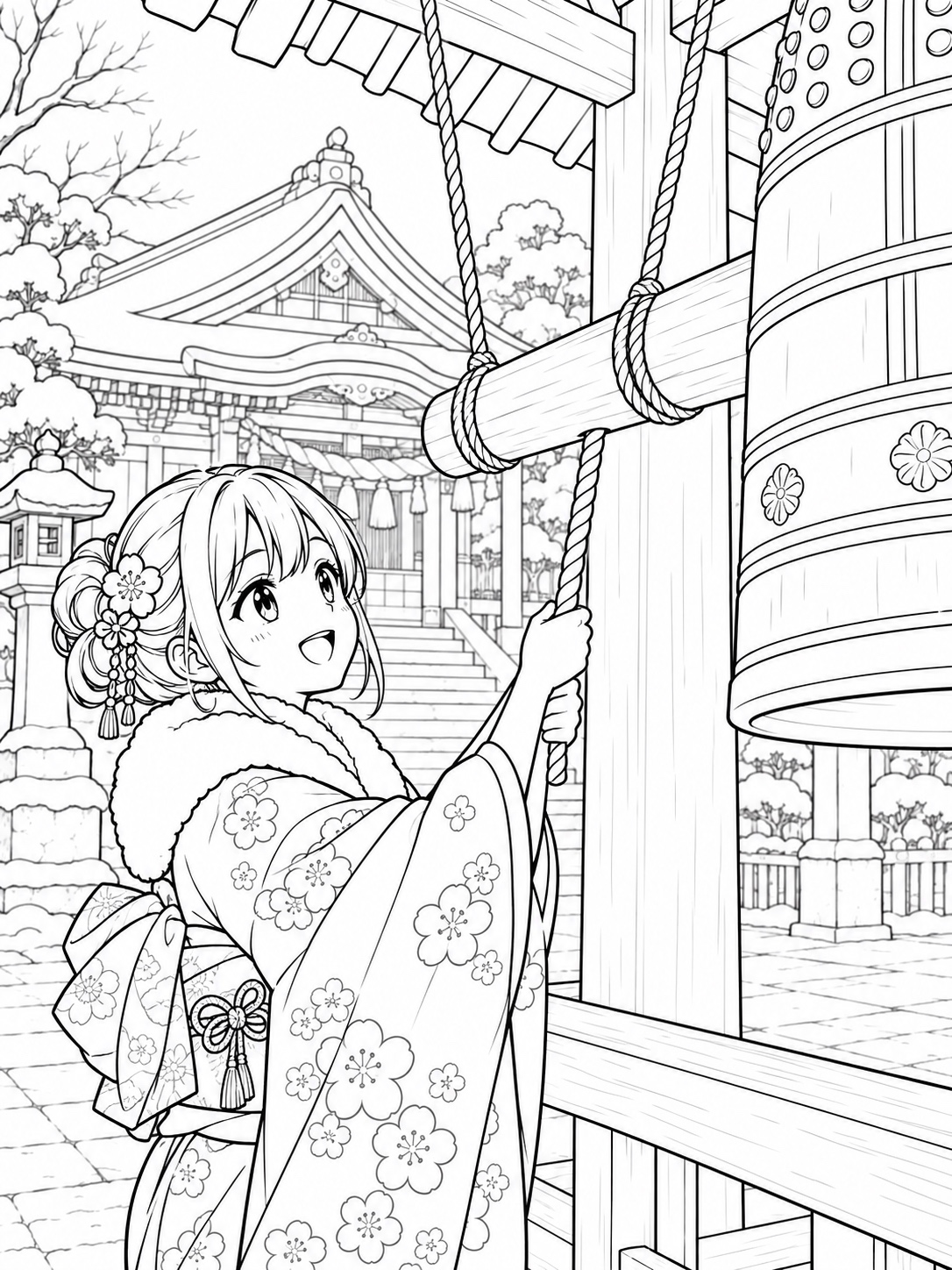
50. A New Year’s shrine visit scene, character ringing a temple bell
If you’re building a themed set rather than one-off pages, pick one category and stay in it for at least five to six pages. A consistent line weight and character proportion across a set reads as intentional, while mixing wildly different styles in one PDF makes the whole set look thrown together.
Common Mistakes When Drawing or Choosing Anime Coloring Pages
A few mistakes show up constantly in free printable dumps, and knowing what to look for, or avoid, saves a lot of frustration.
Inconsistent line weight across one figure
When hair, face, and clothing all use the same pen width, the figure can feel flat. Keep the silhouette and larger hair shapes bold, step down for facial features and folds, and reserve the thinnest marks for small texture.
Overcrowded backgrounds that fight the character
A festival or skyline background can add atmosphere if its lines stay quieter than the character outline. When both layers carry equally bold detail, the page becomes tiring to color because there is no obvious starting point.
Facial features that don’t sit on a believable structure
Big anime eyes are forgiving of a lot of stylization, but they still need to sit on an actual head shape with a believable jaw and cheek structure underneath. Pages where the eyes are drawn first and the head is built around them afterward tend to look slightly “off” in a way that’s hard to pin down but easy to notice. Block in the head shape and a simple center-line cross first, then place the eyes on that structure.
Skipping the closed-shape check before finalizing
This is worth repeating because it’s the single most common technical failure: every enclosed area, eyes, hair sections, clothing panels, needs a fully closed outline. Zoom in on a finished page at 200% before exporting or printing and trace each shape with your eye. A single gap of even a millimeter will let color spill into the wrong area once someone starts filling it in with marker.
Choosing the Right Complexity Level
Not every anime coloring page should carry the same amount of detail, and matching complexity to the colorist makes a real difference in how finished the result feels.
For younger kids
Keep hair in two or three large sections instead of individual strands, simplify clothing folds to two or three lines maximum, and avoid background detail entirely. A chibi character against a plain border is a better fit here than a full battle scene.
For teens and adults
This is where the shonen action poses, mecha designs, and detailed school scenes earn their keep. Layer in fabric folds, background elements like cherry blossoms or city skylines, and finer hair strand detail within the larger shape groups. More lines mean more decision points for the colorist, which is exactly what an experienced colorer is looking for.
A quick complexity check
Count the enclosed shapes in a single section, like the hair or the torso. Under eight shapes reads as easy, eight to fifteen as intermediate, and anything past twenty starts to feel like a proper illustration project rather than a quick coloring session.
Matching complexity to the scene type
Character-only pages, a single figure with minimal or no background, naturally sit at the easier end regardless of style, because there’s less total area to fill. Full scenes with multiple characters, background elements, and props push into intermediate or advanced territory fast, even if each individual shape is simple, because the total shape count across the page adds up. If you’re building a coloring set for a specific age group, it’s often better to keep the scene type consistent and vary the character complexity instead, rather than mixing single-character and full-scene pages in the same set.
Tools, Paper and Printing Tips for Anime Linework
Anime coloring pages have specific needs that differ slightly from general coloring pages, mostly because of how much area is often left as flat negative space.
Paper weight matters more here
Because anime pages often have large open sections, like hair chunks or clothing panels, that get filled with a single bold color, bleed-through is more visible than on a densely detailed page. Use at least 32 lb paper if you’re printing at home, and go heavier if you’re working with markers or alcohol-based pens rather than colored pencils.
Line contrast for scanning and printing
If you’re drawing these by hand before printing, keep your final linework at a minimum of 0.5mm pen width for the outer silhouette. Anything thinner tends to wash out slightly in home printer toner, and the eyes in particular lose their crispness first.
Digital coloring considerations
If the page will be colored digitally, export at 300 DPI minimum and keep the line layer separate from any background tone. Anime-style flat coloring, where a whole hair section gets one base color plus a single shadow tone, works best when the line art underneath is clean enough to use the “fill inside lines” tool without leak-through at open corners.
File formats worth keeping around
Keep a layered master file, such as PSD or a drawing app’s native format, if you create your own line art. That makes it easier to export a transparent PNG for digital coloring or a PDF at the intended print size with a safe margin. The images shown here are web illustrations, so inspect resolution and line closure before treating them as full-page print files.
Picking a Color Palette That Reads as Anime
Line art gets a page most of the way there, but the color choices someone eventually makes are what separate a page that looks anime-inspired from one that looks like a generic cartoon.
Flat color with one shadow tone, not gradients
Traditional anime cel-shading uses one base color and a single darker shadow tone per surface, applied as a hard-edged shape rather than a soft gradient. If you’re coloring by hand, this means picking your shadow color before you start and committing to clean edges rather than blending. It’s a more graphic, poster-like look than realistic shading, and it’s part of what makes a colored page instantly read as anime-style rather than generic.
Hair color doesn’t have to be realistic
Anime hair regularly goes bright blue, pink, or silver, and that’s expected rather than a mistake. If you’re building a themed set, picking two or three signature hair colors across the set, one for each character archetype, gives the whole collection a cohesive feel even when the scenes and poses vary widely.
FAQ
Are these anime coloring pages based on real characters?
named franchise characters are intended. The concepts use general archetypes, but a finished design should still avoid recognizable costumes, logos, and distinctive character features when you plan to share or distribute it.
What’s the difference between anime and manga coloring pages?
h terms can describe black-and-white pages. For practical coloring, focus less on the label and more on clear line separation, readable shapes, and enough open space for the medium you want to use.
What age group are anime coloring pages best for?
They work across a wide range, but simpler chibi and single-character pages suit younger kids, while detailed shonen, mecha, or slice-of-life scenes suit teens and adults who want more time invested in one page.
How do I make an anime coloring page look less like it was AI-generated?
iew the line art rather than relying on a style label: keep thick silhouette lines and thinner interior detail, inspect hands and facial features, and close the shapes that will be filled digitally. The illustrations in this article were generated with AI and should be checked before printing or reuse.
What’s the best medium for coloring anime-style pages?
Alcohol-based markers or colored pencils both work well because anime coloring relies on smooth color blocking with occasional shadow tones, rather than heavy texture or blending across large areas.
Can I turn my own anime fan art into a coloring page?
can simplify your own artwork into closed outlines for personal coloring. If the original depicts a licensed character, permission and the intended use matter before sharing, selling, or distributing a derivative page; an original character is the safer starting point.
Why do some anime coloring pages feel more satisfying to finish than others?
It usually comes down to shape variety. A page with a good mix of large open areas (hair, clothing) and smaller detailed zones (accessories, facial features) gives a colorist both quick wins and a chance to slow down, which keeps the whole page engaging start to finish.
Final Thoughts
The anime coloring pages worth revisiting are not simply the most detailed. A clear silhouette, closed color zones, and deliberate white space make each scene easier to read and more enjoyable to fill. Choose a category above, start with a manageable composition, and check the hair and eyes before building a larger scene.
If you’re building out a broader coloring collection, 40+ Easy Coloring Pages covers the same design principles for simpler, all-ages themes, and 40+ Adult Coloring Pages Printable goes deeper into complexity levels for detailed, non-anime styles. If you’d rather learn to draw anime characters from scratch instead of coloring them, How to Draw Anime Girls: Step-by-Step Guide for Beginners is the natural next stop.
- 0shares
- Facebook0
- Pinterest0
- Twitter0
- Reddit0