Most home security guides read like a shopping list: buy a camera, buy a smart lock, buy motion lights. I’ve spent years working across architecture, interior spaces, and exterior design on projects in several countries, and the pattern I keep seeing is different — the homes that actually feel secure are the ones where protection was designed in from the start, not bolted on afterward. A steel gate welded onto a soft, romantic facade reads as fear. The same gate integrated into the facade’s material language reads as intention.
- Why home security should start with exterior design, not gadgets
- Entry points: front doors, side doors, garage access, and visible hardware
- Window security ideas that preserve light and curb appeal
- Perimeter design: fences, gates, and clear property boundaries
- Outdoor security lighting that still feels warm
- Security landscaping: plants, sightlines, and maintenance
- Smart security as part of a renovation plan
- Exterior security details worth checking
- The takeaway
- Frequently asked questions
This isn’t a checklist of devices to buy. It’s a way of thinking about your entry points, your perimeter, your lighting, and your landscaping as one connected system — one that happens to also keep your home safer.
Why home security should start with exterior design, not gadgets
Security experts who study break-ins consistently find that burglars are opportunists reading visual cues, not planners cracking a vault. That’s worth sitting with, because it means your home’s exterior design is already doing security work whether you’ve thought about it or not — every unmowed lawn, every dark corner, every flimsy-looking door is a signal, and so is every well-lit path and solid frame. I covered the psychology side of this in more depth in the psychology behind burglary and home security, but the short version is: visibility and apparent effort matter more than any single device.
That reframes the whole project. Instead of asking “what security product should I buy,” the better question is “what does my exterior already communicate, and does it match what I actually want to communicate.” A camera bolted crookedly to a beautiful facade undercuts both the design and the security message. A well-placed light fixture that also happens to be motion-activated does the job without looking like it’s trying to.
Entry points: front doors, side doors, garage access, and visible hardware
Entry points are where security and design decisions collide most directly, because a front door has to do double duty — first impression and first line of defense — every single day.
Solid doors, deadbolts, strike plates, and smart locks without ruining the facade
The numbers here are worth knowing: 34% of burglars enter through the front door, which makes it the single most important point to get right on the entire property. A solid-core or metal door with a quality deadbolt and a reinforced strike plate closes most of that gap, and none of those upgrades have to look like a security decision. I’ve specified matte black hardware on warm wood-tone doors more than once specifically because the contrast reads as intentional design, not an afterthought.
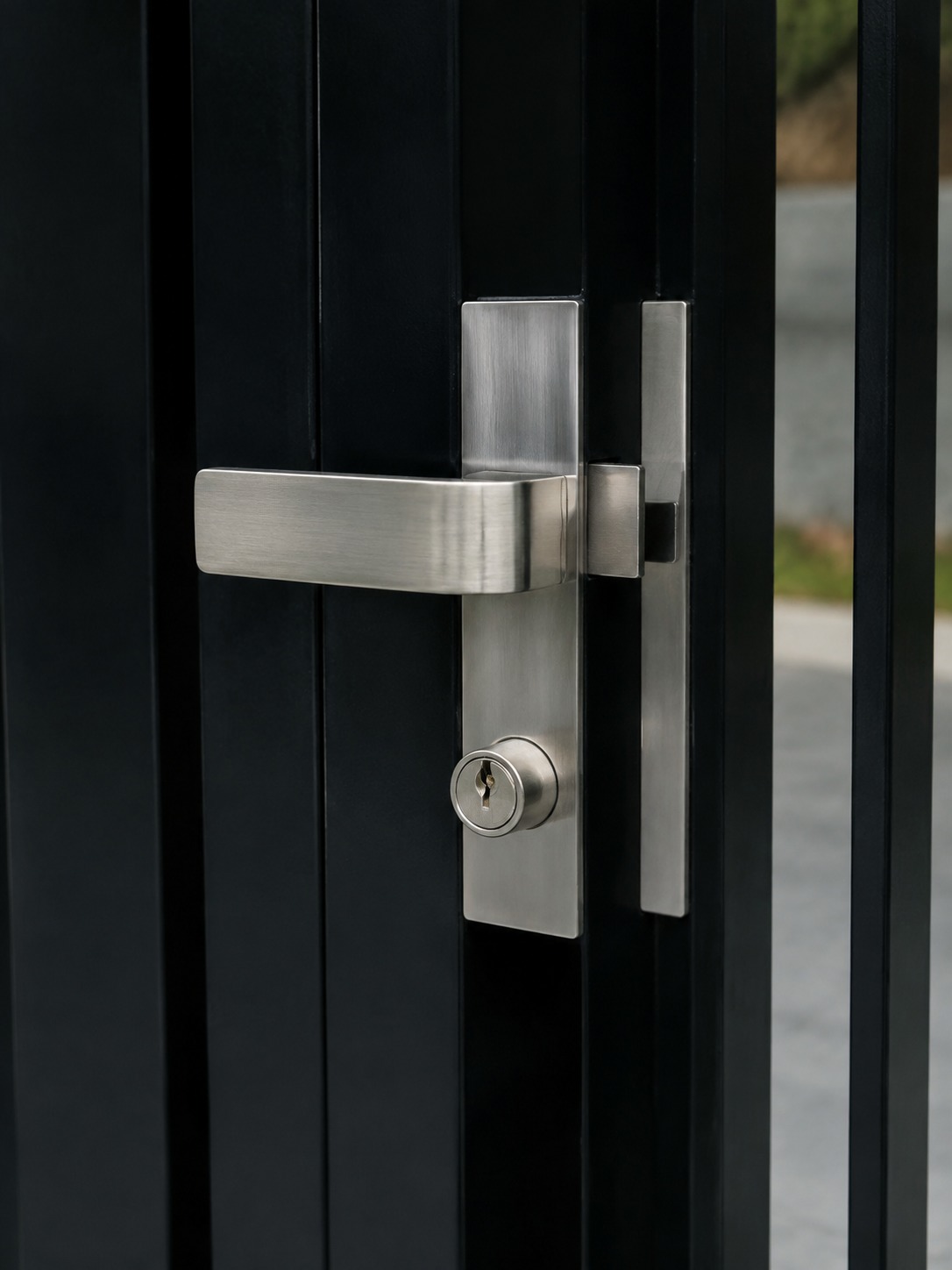
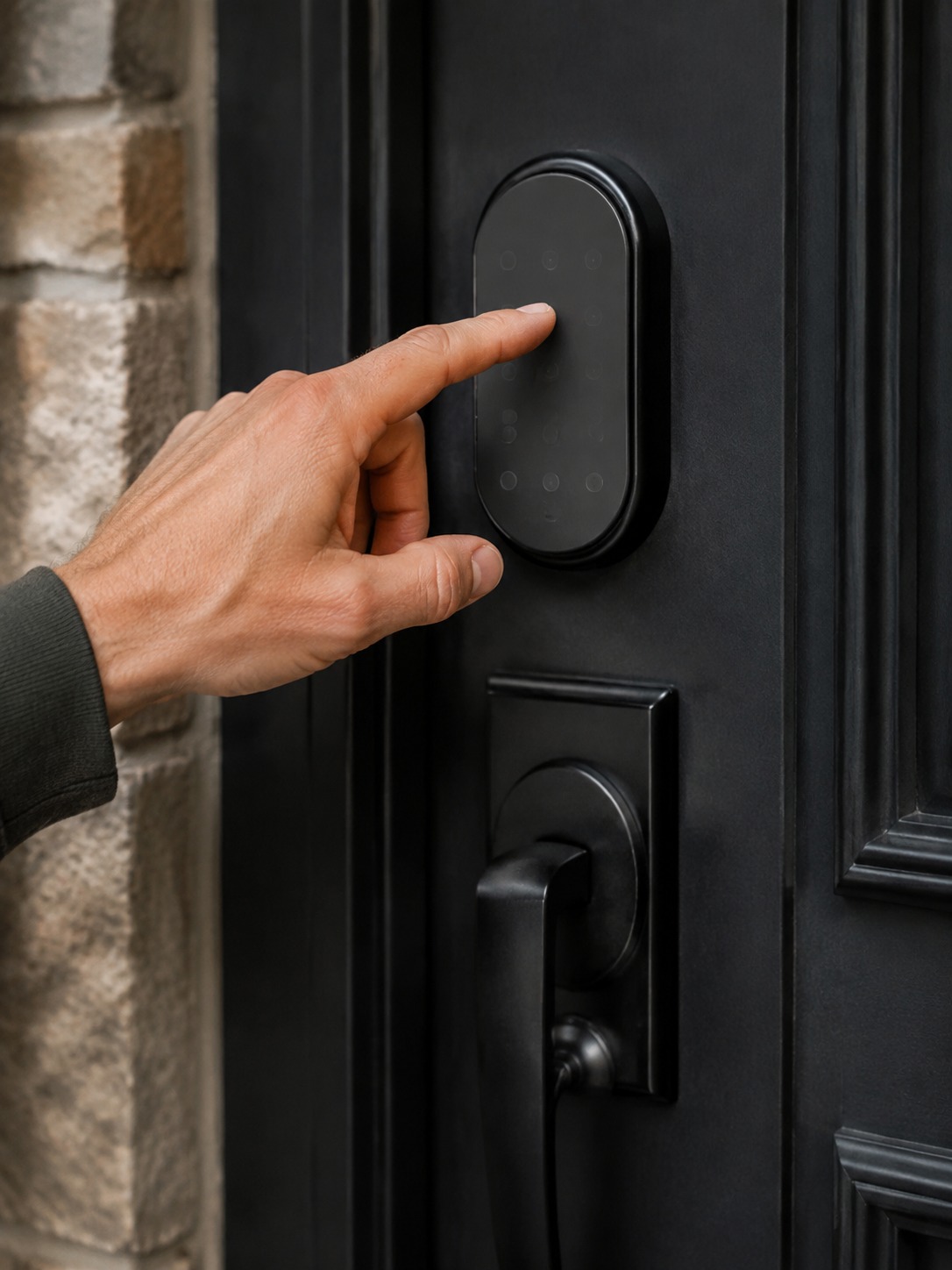
Smart locks are where I see the most facade damage done in the name of security — keypads and touchscreens bolted on with visible wiring, mismatched finishes against original hardware. If you’re adding one, match the finish to your existing door hardware and mount it where it replaces rather than duplicates the existing lock. For more on getting the entry composition right from the start, my piece on front entry door ideas goes into material and proportion choices in more depth.
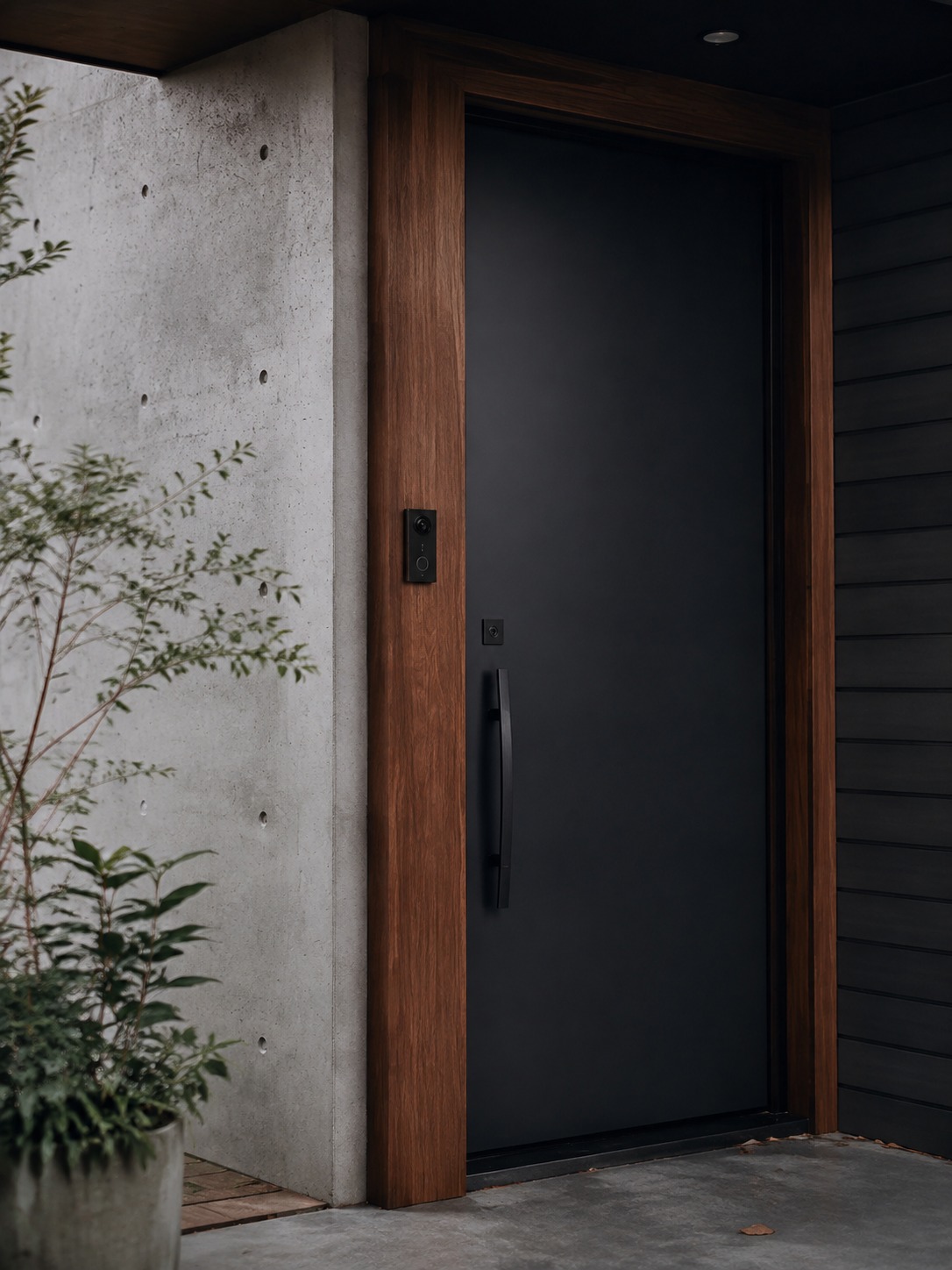
Where doorbell cameras and sensors should sit in a clean entry composition
A doorbell camera centered awkwardly above a door, wires visible, throws off the whole entry’s visual balance — and I mean that as a design observation, not just an aesthetic complaint. Entry compositions read as calm or chaotic based on symmetry and clutter, and a poorly placed device breaks that read instantly. Mount it at the standard door-viewer height, aligned with existing hardware, and route any visible wiring along an existing trim line rather than across open siding.
Window security ideas that preserve light and curb appeal
Windows get less attention than doors in most security conversations, but they’re often the softer target — especially the ones nobody thinks to check.
Locks, reinforced glass, security film, and basement-window visibility
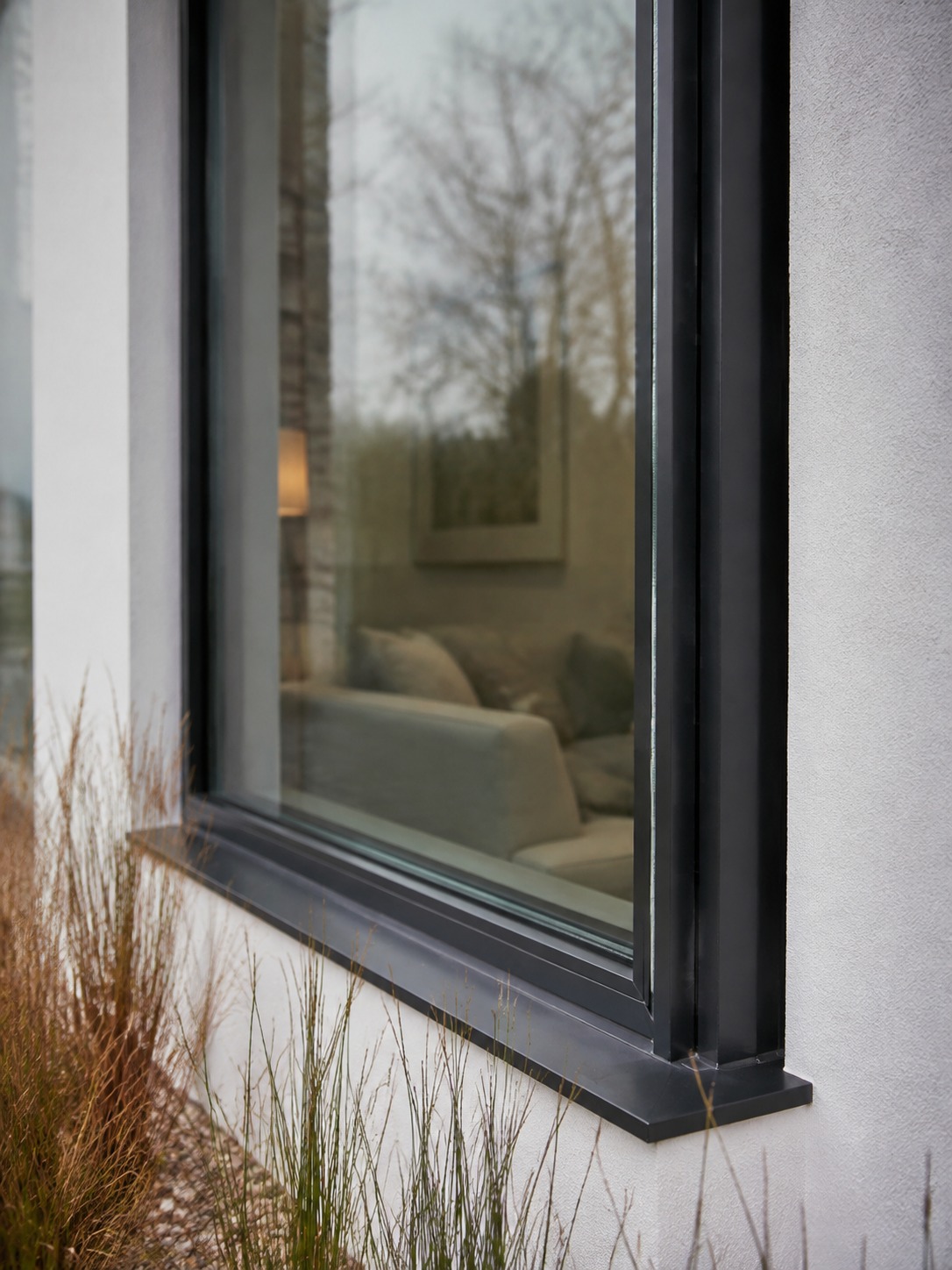
Loose or damaged window locks are an easy fix that gets skipped constantly, simply because they’re not visible from the street the way a door is. Security film and reinforced glass add real resistance without changing how a window looks from either side — I’d recommend these over decorative security bars almost every time, since bars read as a fortress even when that’s not the intent. Basement windows and any windows partly hidden by landscaping deserve particular attention; they’re exactly the low-visibility spots that get exploited precisely because homeowners forget they’re there.
Avoiding safety upgrades that block emergency exits
Every security upgrade to a window needs to pass one test: can someone still get out in an emergency. Bars, film, and secondary locks that can’t be released quickly from inside solve one problem while creating a worse one. If a window is a legally required emergency exit — most bedrooms — any lock you add needs a fast, obvious release mechanism, full stop.
Perimeter design: fences, gates, and clear property boundaries
The perimeter is where security and landscape design overlap most, and it’s also where I see the most contradictory advice — taller isn’t always better, and solid isn’t always safer.
Why visibility matters as much as height
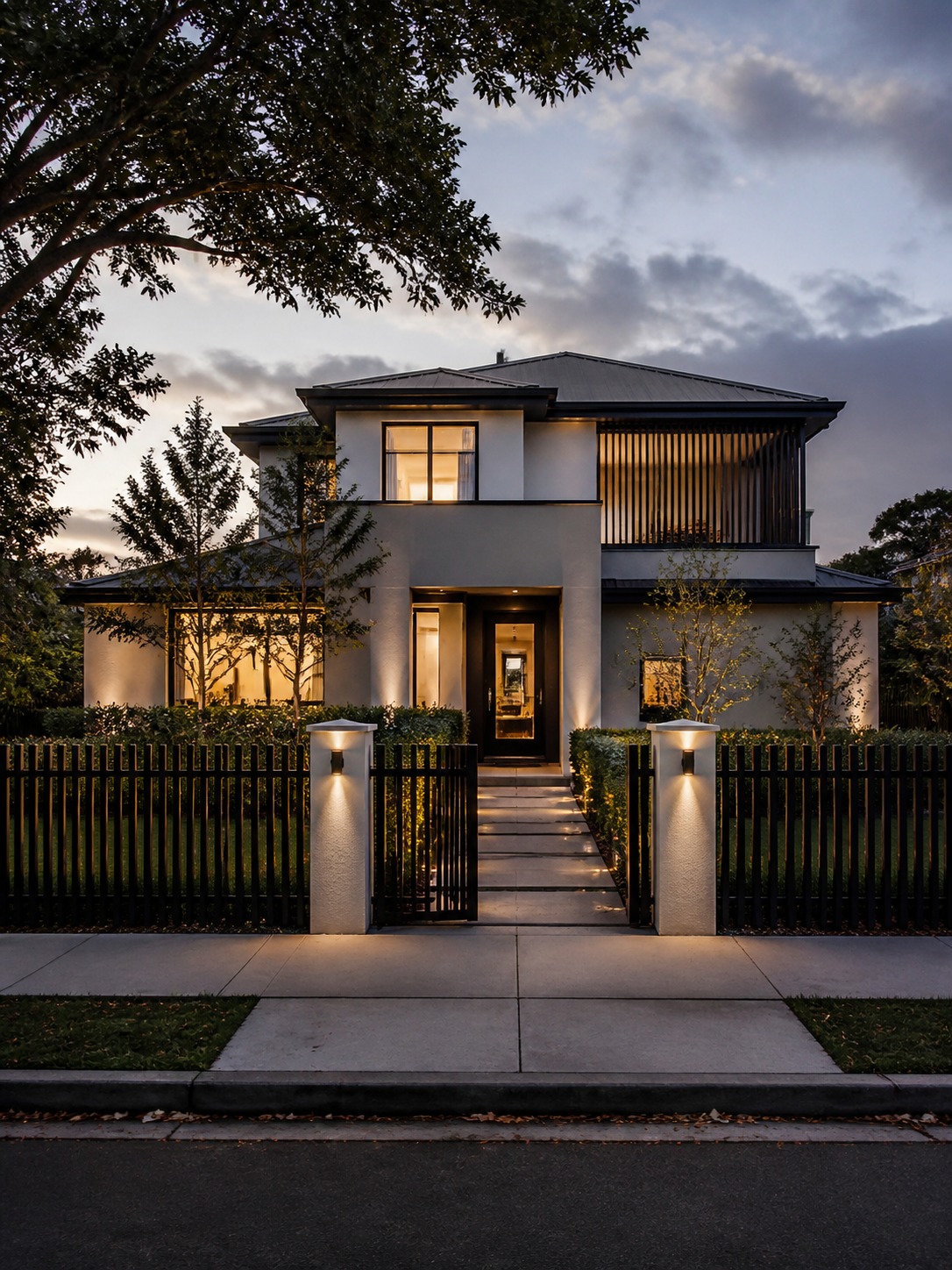
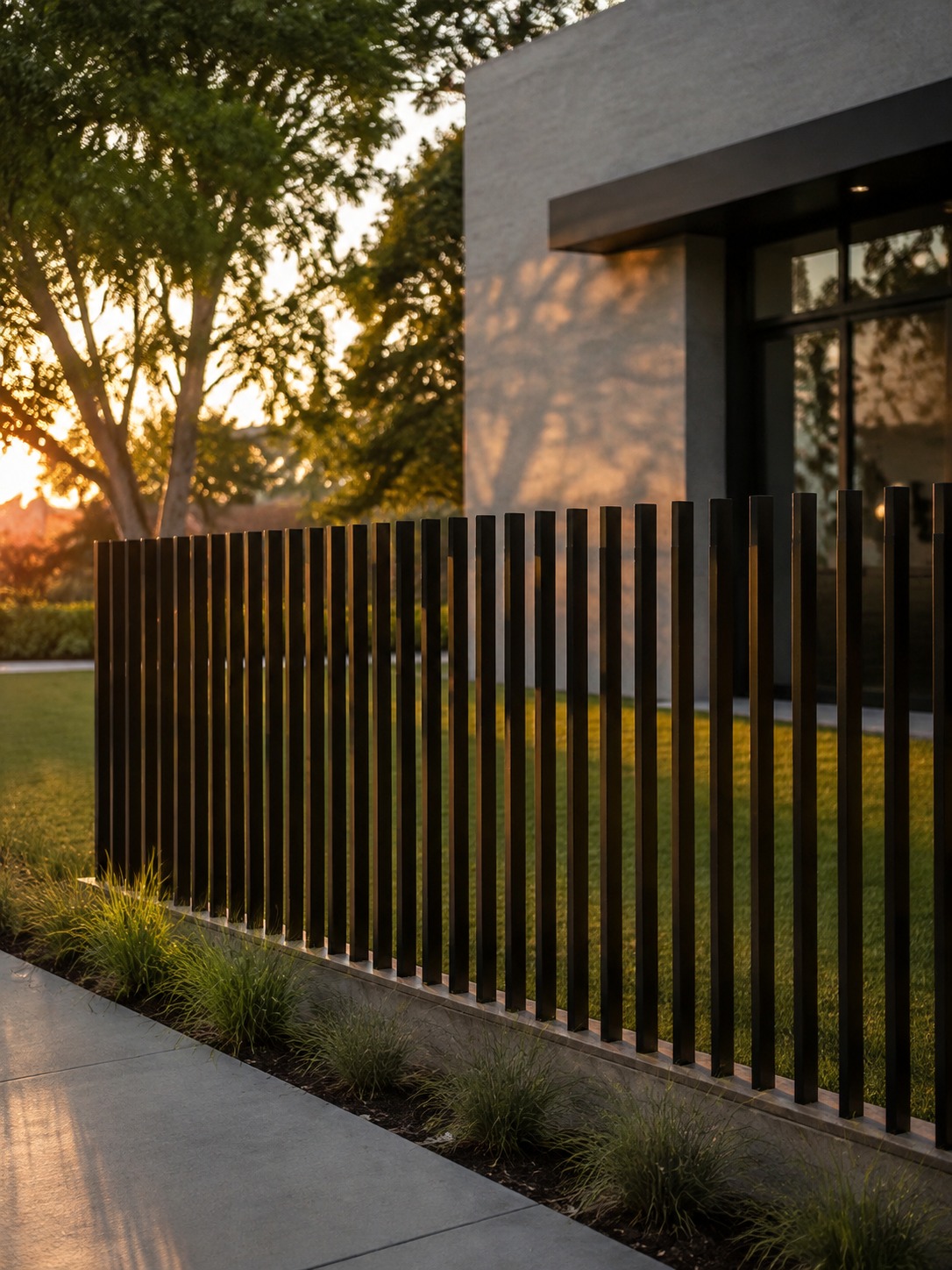
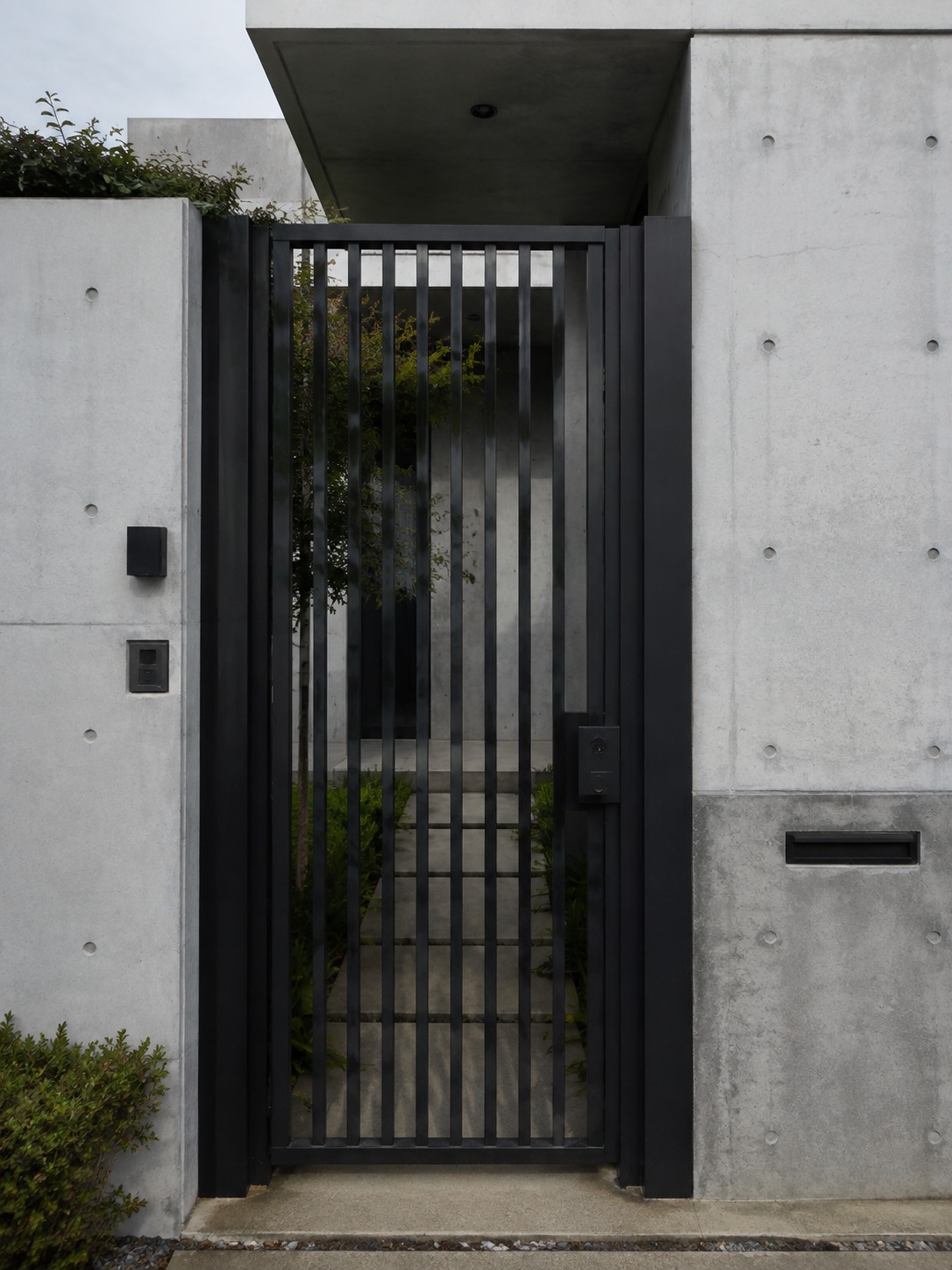
A fence that fully blocks sightlines gives an intruder privacy to work once they’re inside the boundary, which somewhat defeats the point. The strongest approach I’ve seen combines a fence that’s difficult to climb with sightlines that stay open enough for neighbors or passersby to notice movement. Metal fencing with vertical pickets does this well — solid enough to deter, open enough to see through. I go into this trade-off in more detail in metal fencing as a long-term investment in home security.
How to avoid blind spots and climbable details
The core principle worth remembering here is no blind spots and no footholds for climbing — horizontal rails on the outside face of a fence turn into a ladder, decorative caps become handholds, and dense hedges along a fence line create exactly the hidden corner you were trying to design out. Gates need latching hardware that actually holds under pressure, not just a decorative catch. Walk your own perimeter at dusk sometime and notice where you’d choose to hide if you were trying to avoid being seen — that’s your blind spot, and it’s usually obvious once you’re looking for it.
Outdoor security lighting that still feels warm
Lighting is probably the single highest-impact, lowest-cost security upgrade available, and it’s also the one most likely to get done badly — either too harsh to live with or too sparse to matter.
Motion lights for entries, walkways, driveways, and dark corners
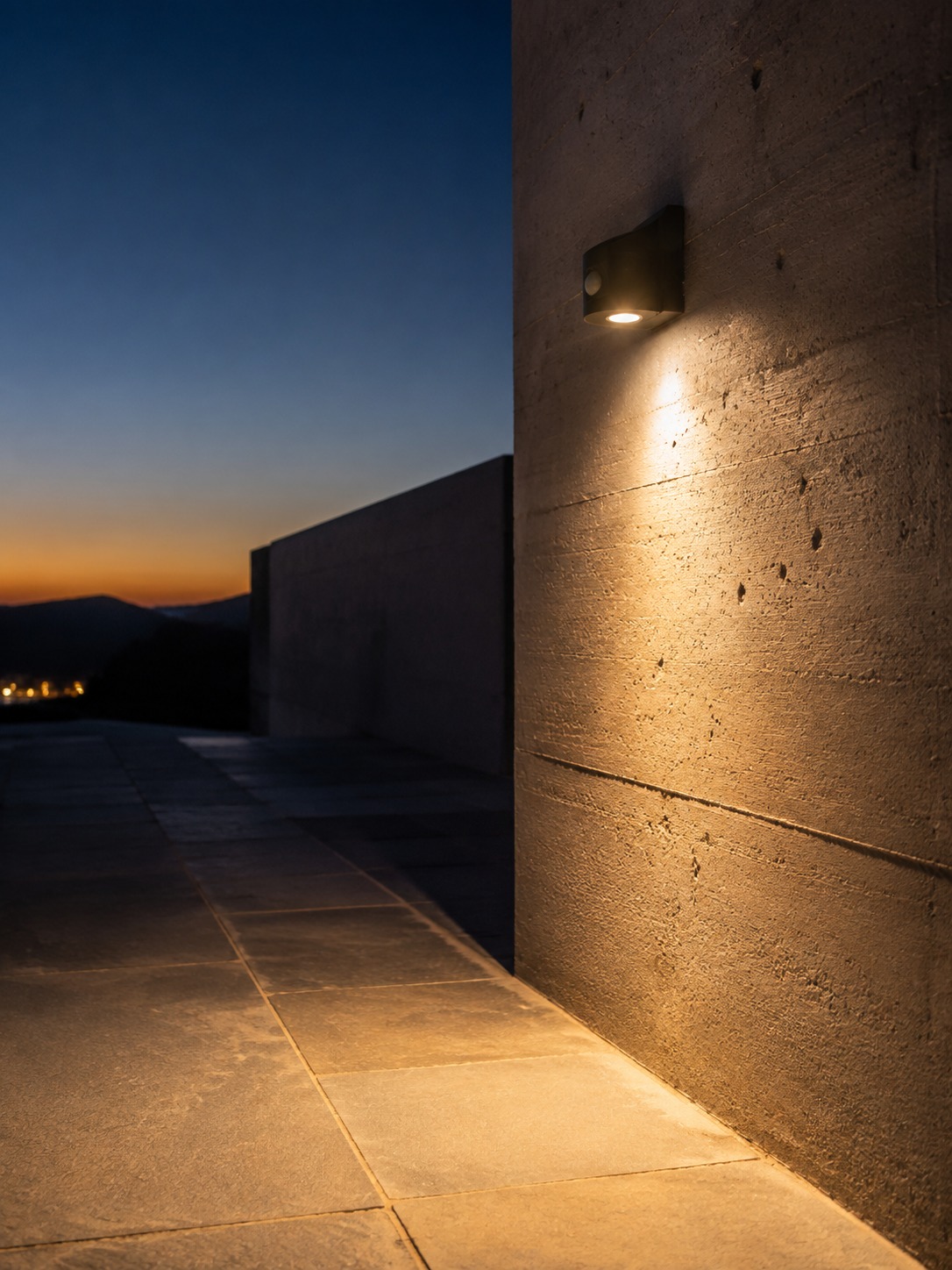
Motion-activated fixtures at entries, along walkways, and covering driveways and dark corners do two things at once: they make movement noticeable, and they make the property easier to navigate after dark for the people who actually live there. Dark corners along the side yard or behind a garage are exactly where these fixtures earn their keep, since they’re the spots most likely to be overlooked in a standard lighting plan.
Layering ambient, path, and security lighting without glare
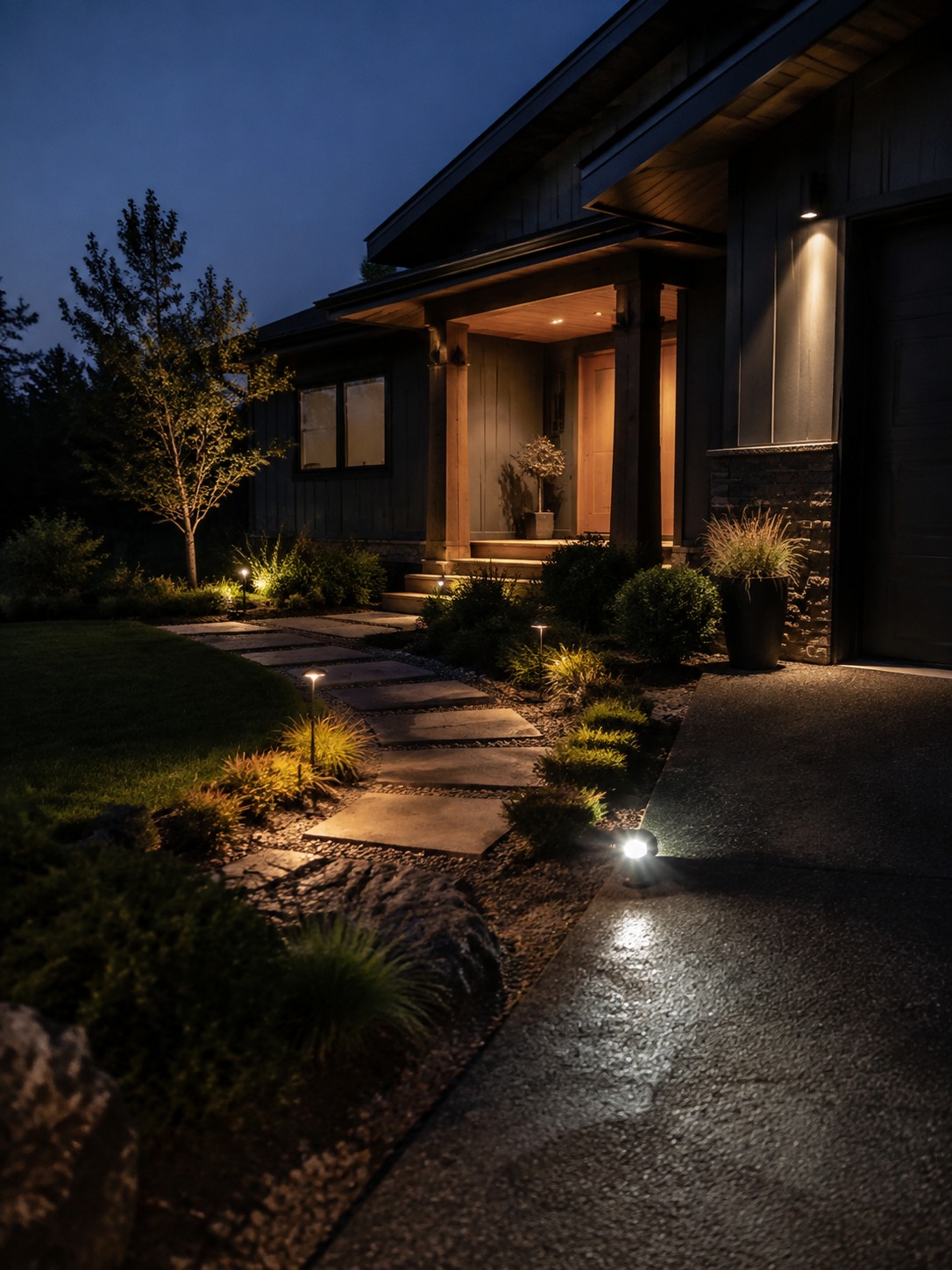
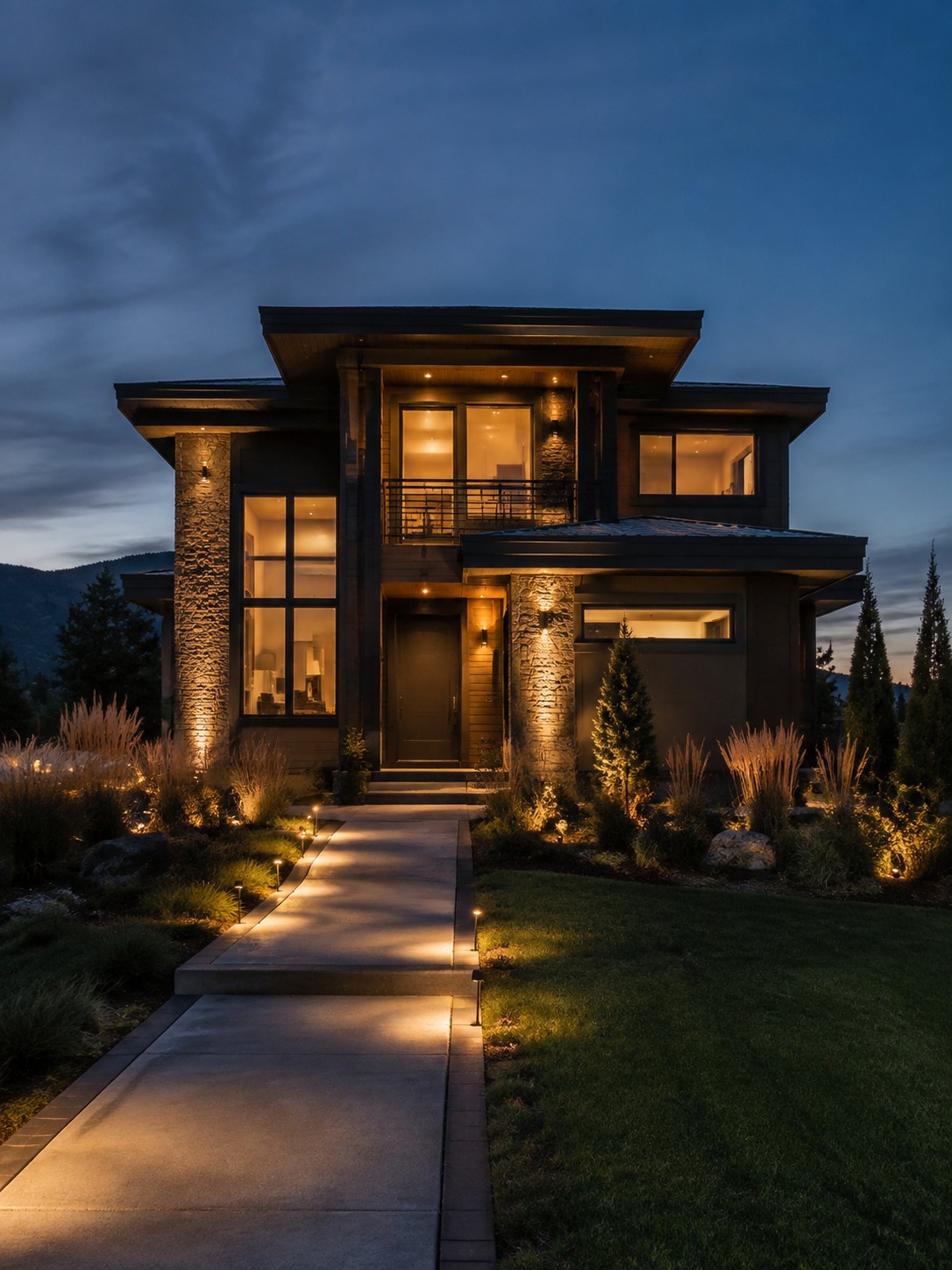
The mistake I see most often is treating security lighting as a separate system bolted onto the ambient lighting plan, which usually results in one blinding floodlight fighting with warm porch sconces. Layer them instead — ambient light for the entry itself, low path lighting along walkways, and motion-triggered fixtures aimed at approach zones rather than at eye level, which avoids the glare that actually makes it harder to see who’s there. I cover the layering approach itself in outdoor lighting and security, and house exterior lighting ideas has more on fixture selection if you’re planning the whole scheme at once.
Security landscaping: plants, sightlines, and maintenance
Landscaping is security infrastructure whether or not anyone thinks of it that way, and a few hours of seasonal maintenance often does more than a new device would.
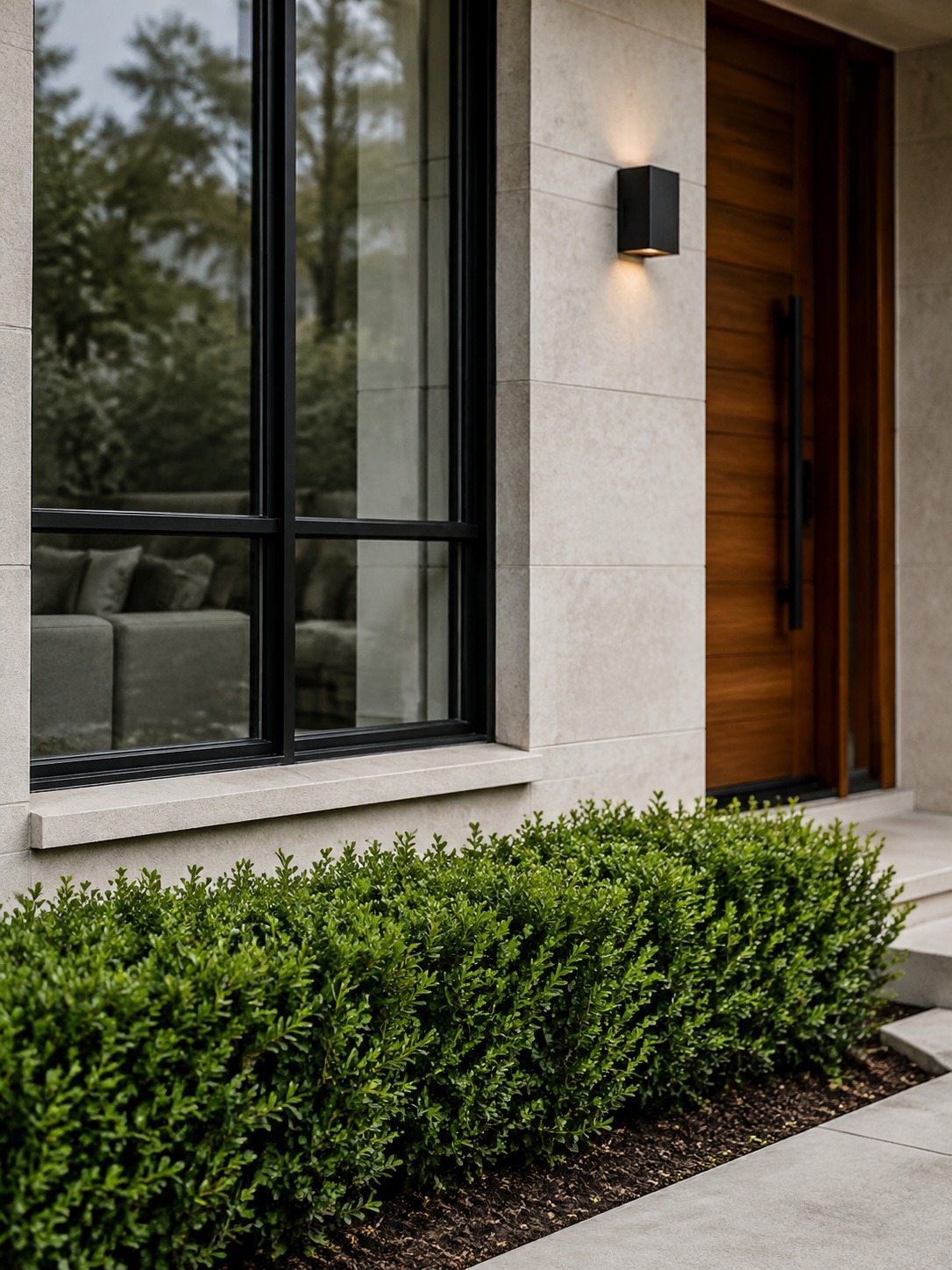
Trimming shrubs around windows and doors
Overgrown shrubs near windows and doors create exactly the concealment a burglar would want — cover to work unseen, right next to the point they’re trying to access. Keep plantings near ground-floor windows and entry doors trimmed low enough that they can’t hide someone crouched behind them. This is maintenance, not redesign, and it costs almost nothing beyond attention.
Keeping lighting, cameras, and paths unobstructed
A camera with a tree branch drifting into frame, or a motion light with a shrub blocking its sensor, stops doing its job the moment the plant grows past a certain point — and it usually happens gradually enough that nobody notices until it’s a real gap. Build a seasonal check into your yard maintenance routine specifically for this: walk the property and confirm every light, camera, and path is still clear.
Designer’s tip
Walk your own property at dusk once a season and check three things: is every light still unobstructed, does every camera have a clear line of sight, and can you spot a hiding spot near any window or door. Fix what you find before it becomes a habit to ignore.
Smart security as part of a renovation plan
If you’re already renovating, the cost of planning security in from the start is close to nothing compared to retrofitting it later — the wiring, the mounting points, and the sightlines are all far easier to solve before the walls close up.
Camera placement, alarms, sensors, Wi-Fi, updates, and passwords
A modern system that ties together cameras, door and window sensors, and motion alarms only works as well as its weakest link, and that weak link is usually the network it runs on. Use a strong, unique password on your home Wi-Fi and on every connected device, and keep firmware updated — most smart-security breaches trace back to skipped updates or reused passwords, not sophisticated attacks. For a broader look at how monitoring systems fit into a considered design rather than sitting on top of it, see smart homes need smart security.
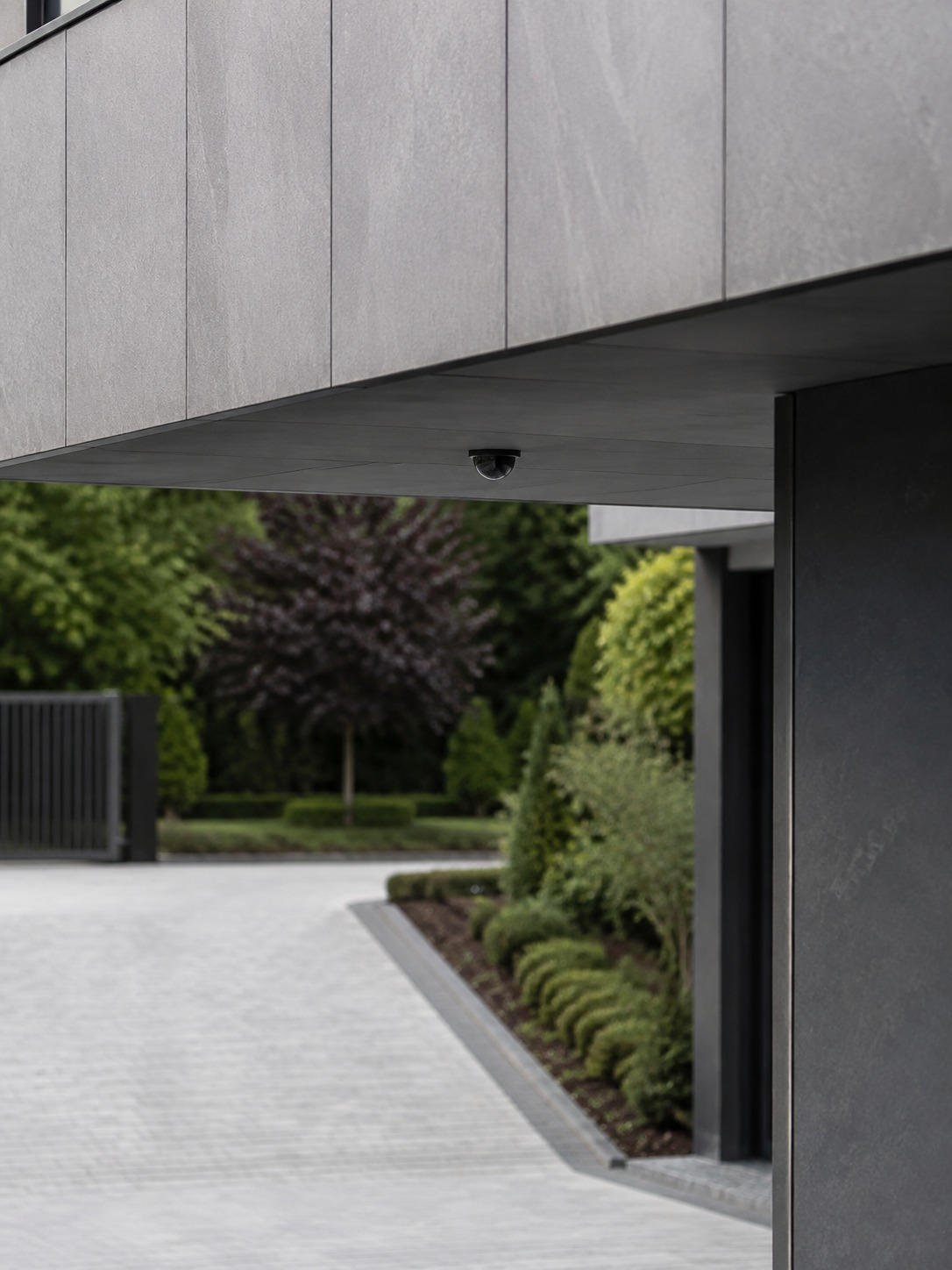
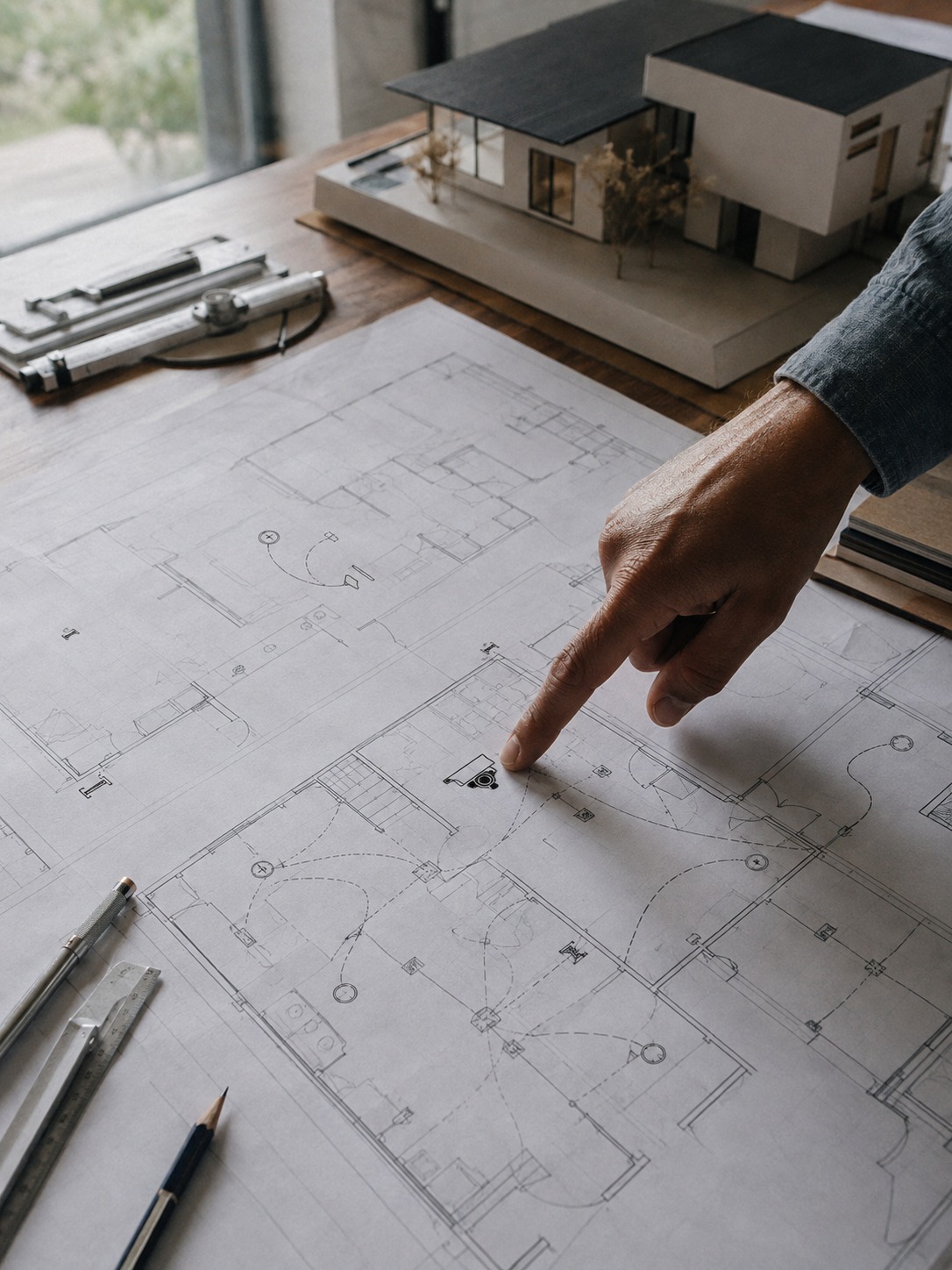
Planning wiring and device locations before remodeling
Roughly 1.5 million new homes go up in the U.S. every year, and every one of them is a chance to run conduit for cameras and sensors before the drywall goes up instead of surface-mounting everything afterward. If you’re renovating rather than building new, the same logic applies at smaller scale: decide where cameras, sensors, and lighting will live before you finalize the electrical plan, not after the walls are already closed.
Exterior security details worth checking
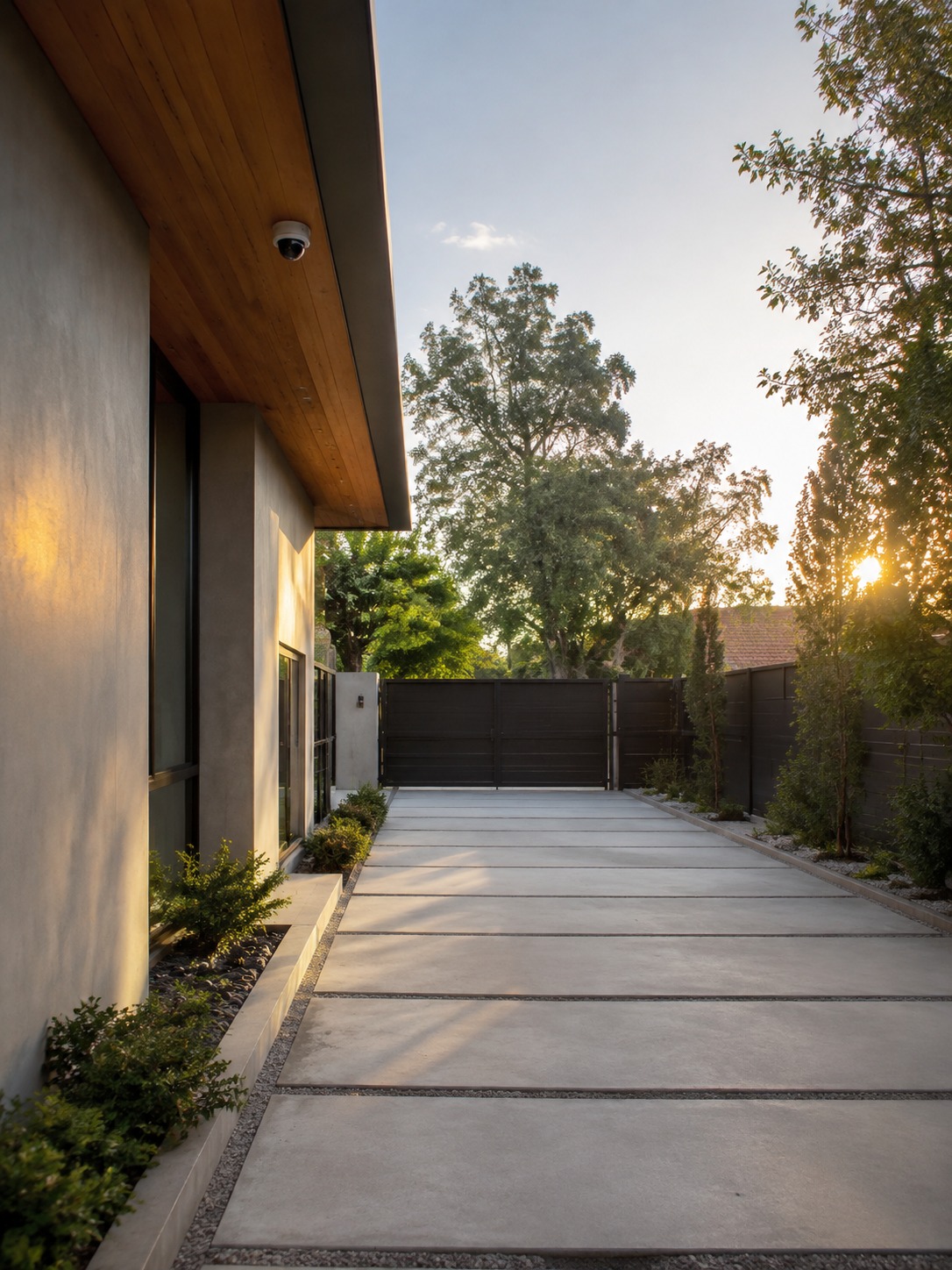
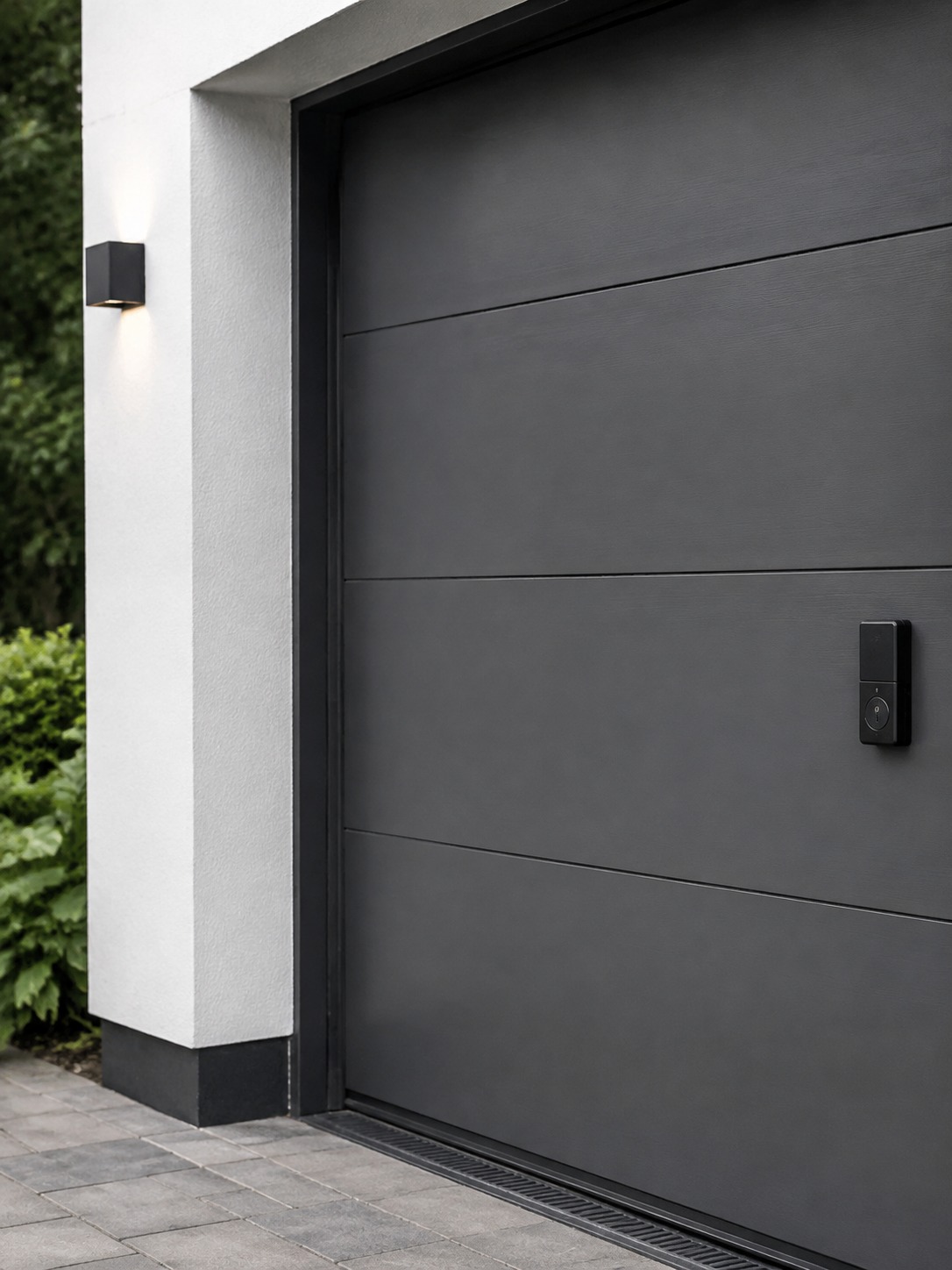
Once the main system is planned, the small details are what keep security from looking accidental: gate hardware, camera sightlines, garage access, and smart locks that share the same finish language as the rest of the exterior.
The takeaway
None of this works as a checklist you complete once. A secure exterior is a design system — entry points, windows, perimeter, lighting, and landscaping all reinforcing the same message, and all maintained the same way you’d maintain any part of your home’s design. Start with your front door, since it’s the point that matters most and the easiest to assess honestly. Then work outward: windows, perimeter, lighting, landscaping, and finally the smart layer that ties it together. Do it in that order and the security stops looking like security — it just looks like a well-designed home. For the broader style-versus-safety balance, balancing style and safety rounds out this guide with more on the trade-offs homeowners weigh most often.
Frequently asked questions
What is the best first upgrade for home security?
Reinforcing the front door — a solid-core door, a quality deadbolt, and a reinforced strike plate — since it’s the entry point used most often and the one that gives the fastest security return for the effort involved.
Do fences really improve home security?
Yes, when they’re designed for visibility as well as height. A fence that’s hard to climb but still allows sightlines through it deters access without creating a hidden zone once someone’s inside the boundary.
Where should outdoor security lights be placed?
At entries, along walkways, over driveways, and in any dark corners along the side or back of the property — the spots most likely to be overlooked in a standard ambient lighting plan.
How can landscaping make a home safer?
By keeping shrubs near windows and doors trimmed low enough that they can’t offer concealment, and by making sure plant growth never blocks a camera’s view, a motion sensor, or a lit pathway.
Can smart locks and cameras fit a stylish home design?
Yes, as long as finishes and mounting are treated as design decisions — matching hardware finishes, aligning devices with existing trim lines, and avoiding visible wiring across a clean facade.
- 0shares
- Facebook0
- Pinterest0
- Twitter0
- Reddit0