Bathroom renovations used to be judged almost entirely on surface decisions: tile pattern, vanity style, which finish caught the light best. Water usage and material sourcing rarely entered the conversation at all. That’s shifted meaningfully, and it’s shifted for a reason that has nothing to do with trend cycles: the bathroom is quietly the most water-intensive room in most homes, which makes it the room where sustainable design choices make a measurable difference.
I’ve spent years working across interior and spatial design projects, and the bathrooms that read as genuinely well-designed today share something specific — sustainability isn’t bolted on as a feature, it’s built into the material palette and fixture specification from the first sketch.
- Why Bathroom Renovation Trends Are Moving Toward Sustainability
- What Sustainable Bathroom Design Actually Includes
- How Eco-Friendly Fixtures Can Still Look High-End
- Materials, Finishes, and Layout Choices That Lower Long-Term Impact
- The Designer's Checklist for Specifying Sustainable Bathroom Fixtures
- Long-Term Value: Lower Bills, Better Durability, Better Design Decisions
- FAQ
That’s a different design language than what our eco-friendly interior design guide describes as “eco-friendly” used to mean broadly across a home, and it’s worth understanding the bathroom-specific version of that difference.
Why Bathroom Renovation Trends Are Moving Toward Sustainability
Showers, faucets, and toilets account for a disproportionate share of a household’s daily water use, which means even modest efficiency gains in this one room compound into real savings over the life of a fixture. As utility costs climb and water scarcity becomes a more visible concern in a growing number of regions, water-efficient fixtures have shifted from optional upgrade to practical baseline expectation — not because it’s fashionable to say so, but because the math genuinely works out that way.
Designers have absorbed this shift into how renovation projects actually get planned. Efficiency ratings and material sourcing now sit in the same early-stage conversation as color palette and layout, rather than getting bolted on at the end as a compliance checkbox. That’s a real change in process, not just messaging — sustainability moved from a marketing angle to a genuine specification criterion somewhere in the last several years, and it shows in how projects get briefed from day one.
What Sustainable Bathroom Design Actually Includes
Sustainable bathroom design covers more ground than most people initially expect — it’s not one product category, it’s a set of decisions that touch water systems, materials, and manufacturing all at once.
Water-efficient faucets, showerheads, and dual-flush toilets
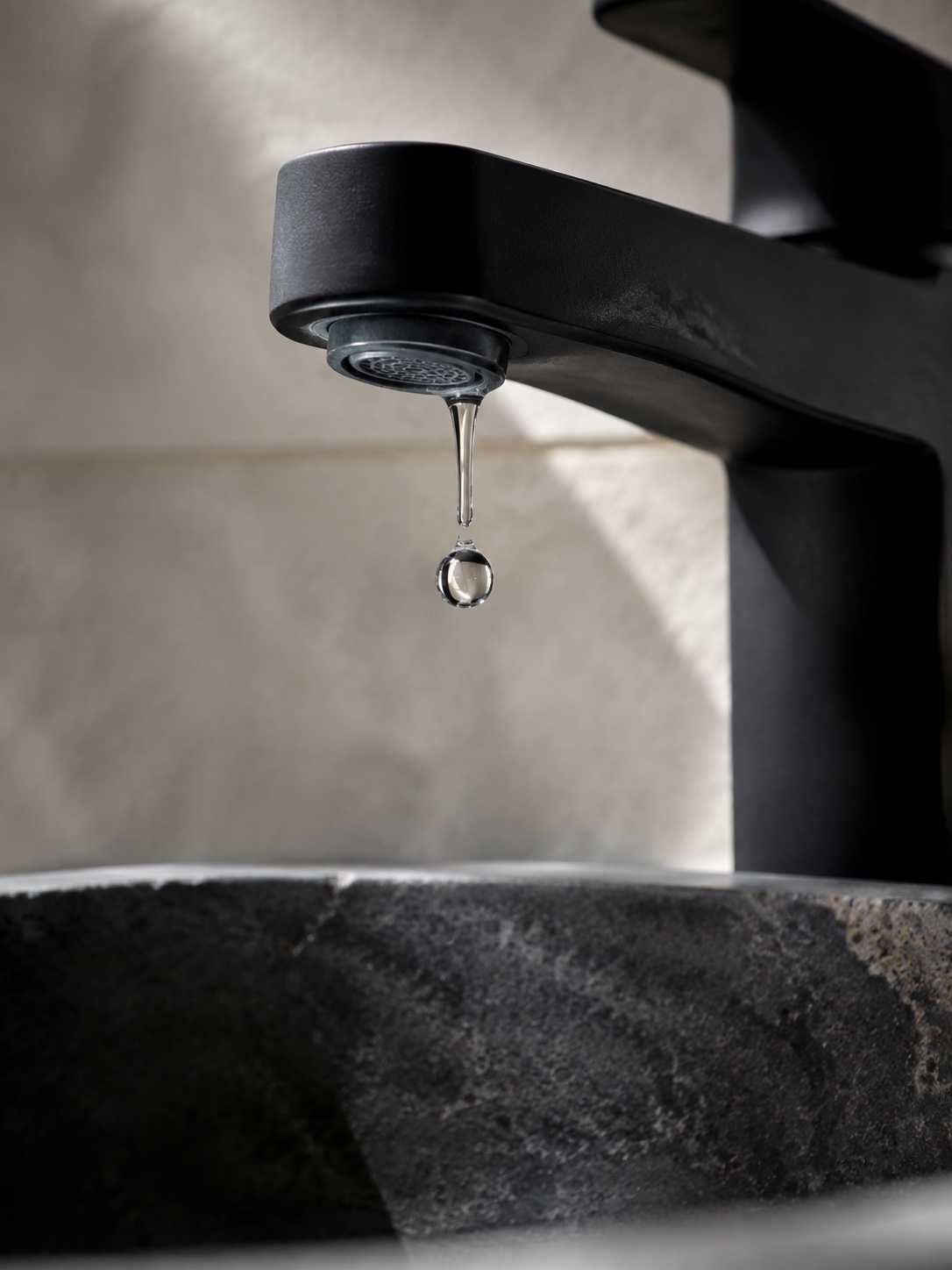
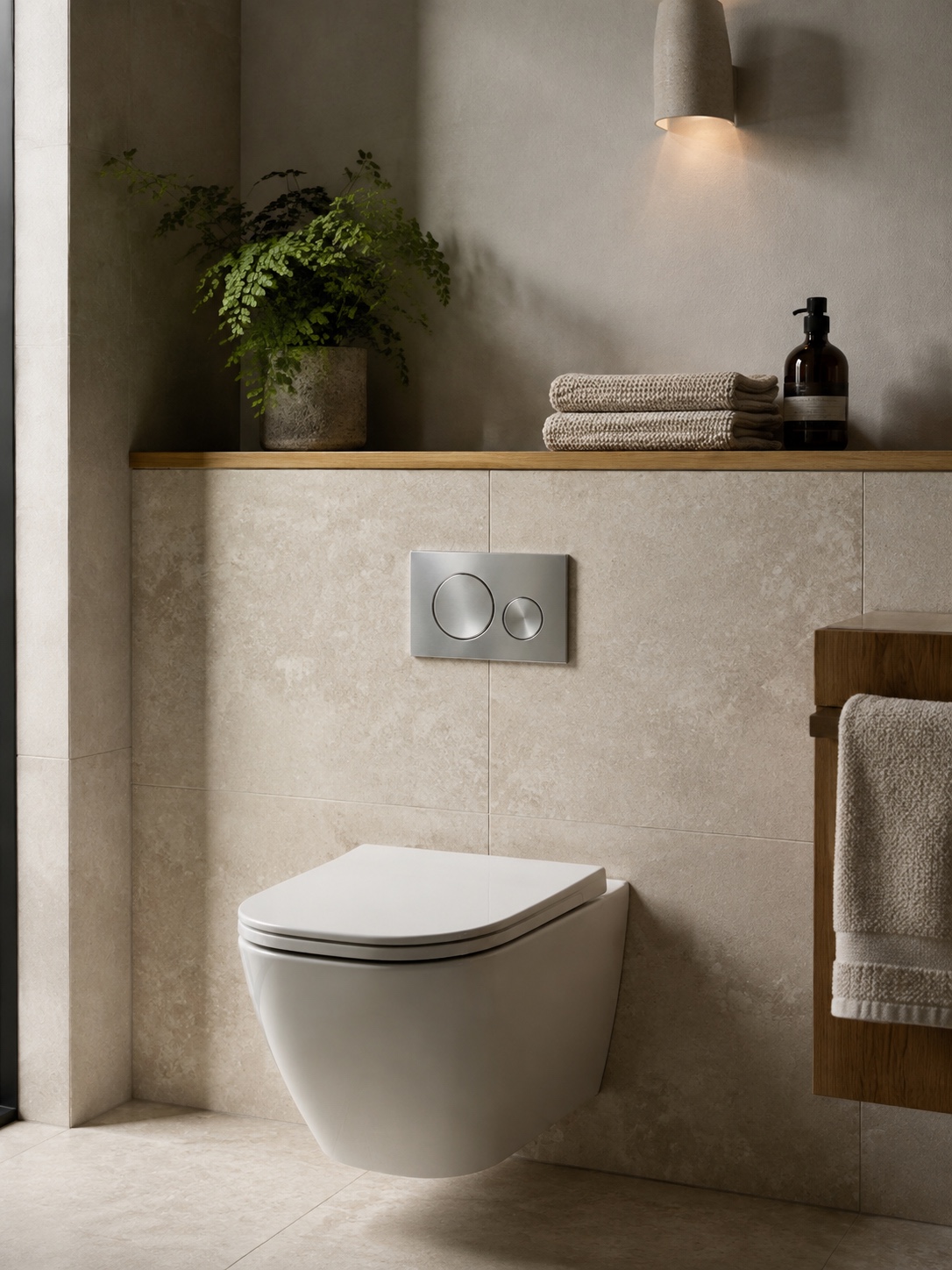
Low-flow showerheads and faucets cut water usage without the pressure sacrifice people still associate with early-generation eco fixtures, thanks largely to improved aerator technology that mixes air into the water stream rather than simply restricting flow. Dual-flush toilets — offering a lower-volume flush for liquid waste and a stronger flush when needed — have moved from niche add-on to a standard specification in most renovation projects I’ve seen recently, which tells you something about how normalized this technology has become. When I’m evaluating sustainable bathroom fixtures for a project, I’m looking at aerator design and flush mechanics as closely as finish and silhouette, because the engineering underneath the fixture is what actually determines whether the water savings hold up under real daily use rather than just a spec sheet claim.
Recycled, durable, and low-waste fixture materials
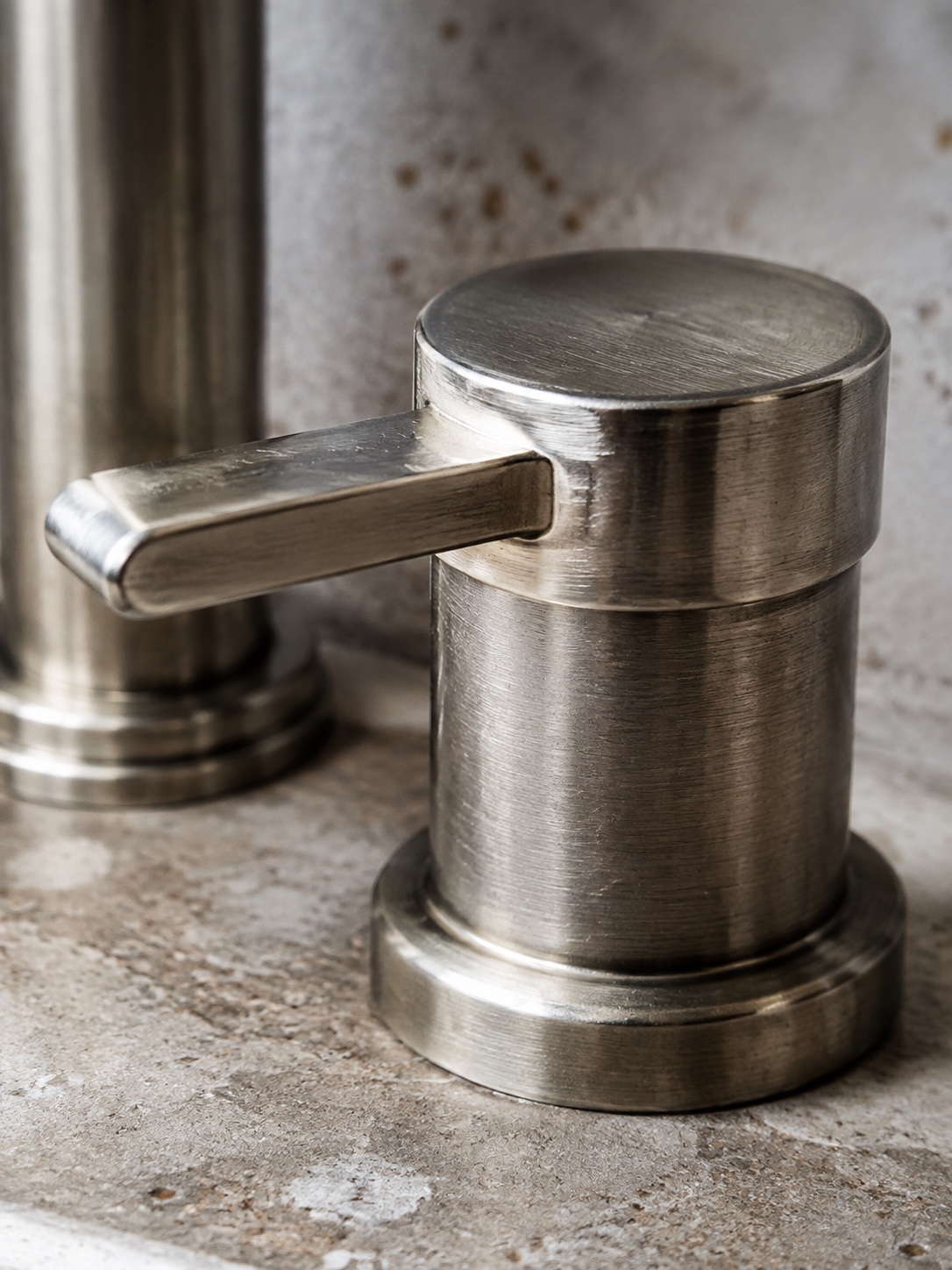
Material choice matters as much as function here, and it’s the part of sustainable bathroom design that gets discussed least. Fixtures made from recycled metals, or manufactured through processes that reduce waste and energy consumption during production, are increasingly preferred over conventional options — especially among homeowners who want their renovation choices to genuinely reflect an environmental commitment rather than just look like they do. I think about this the same way I’d think about material sourcing in any design discipline: the visible finish is only half the story, and the manufacturing process behind it is where the real sustainability case becomes credible or falls apart.
How Eco-Friendly Fixtures Can Still Look High-End
The assumption that held back sustainable choices for years was simple: eco-conscious meant sacrificing style. That perception has largely collapsed, and it’s worth understanding why, because the shift changes what a designer can actually recommend without compromise.
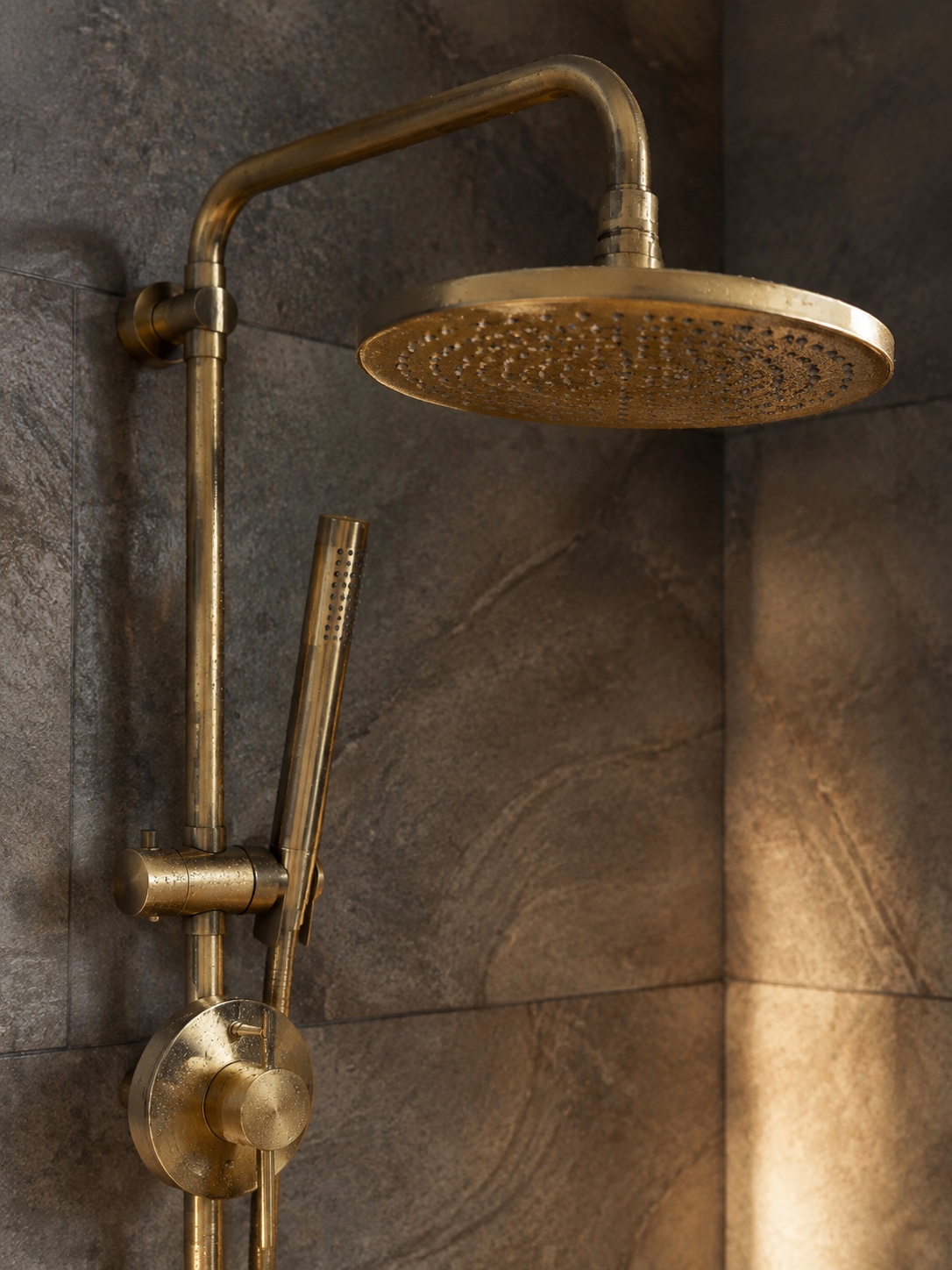
Matte black, brushed nickel, brass, and minimalist silhouettes
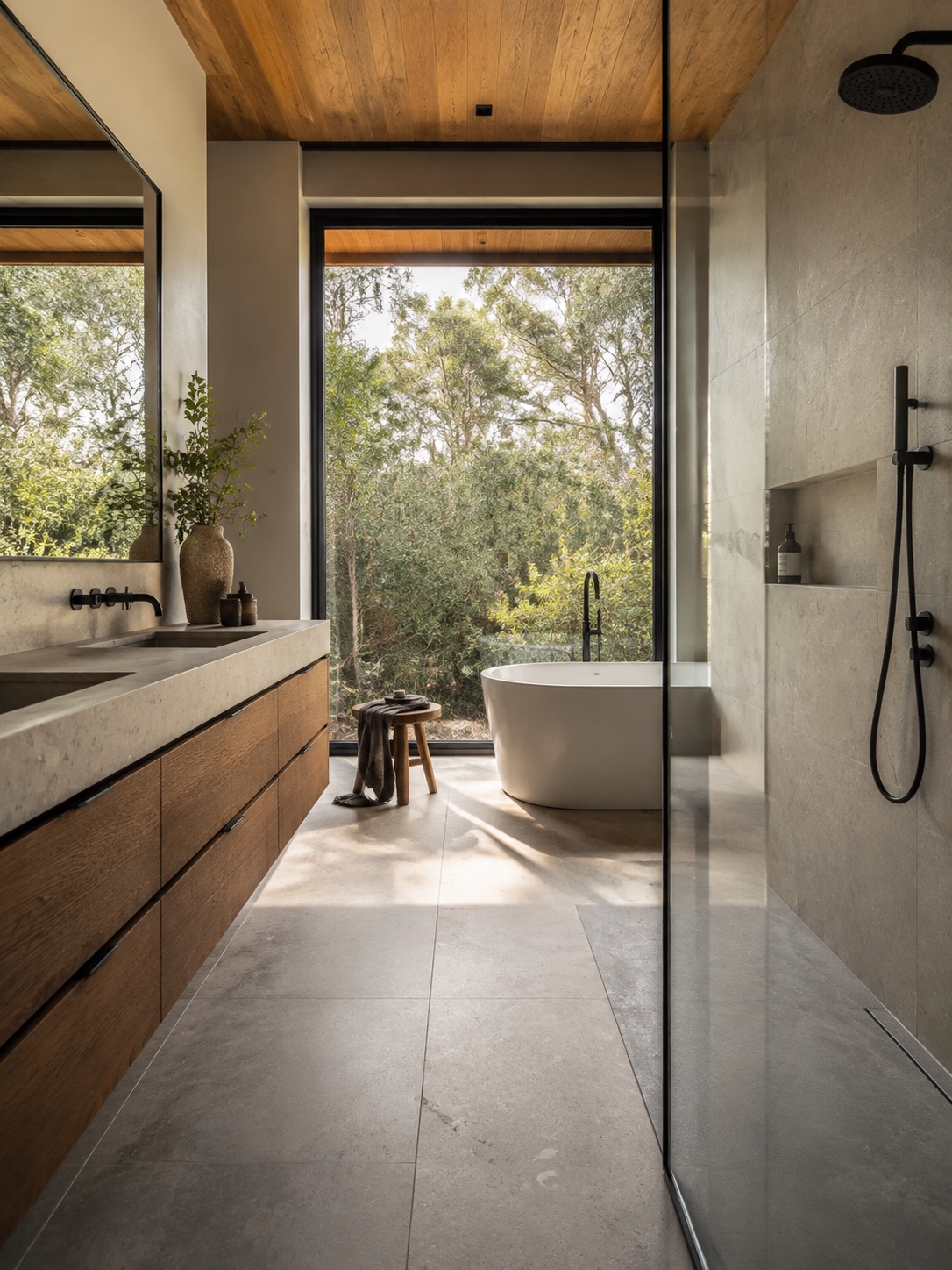
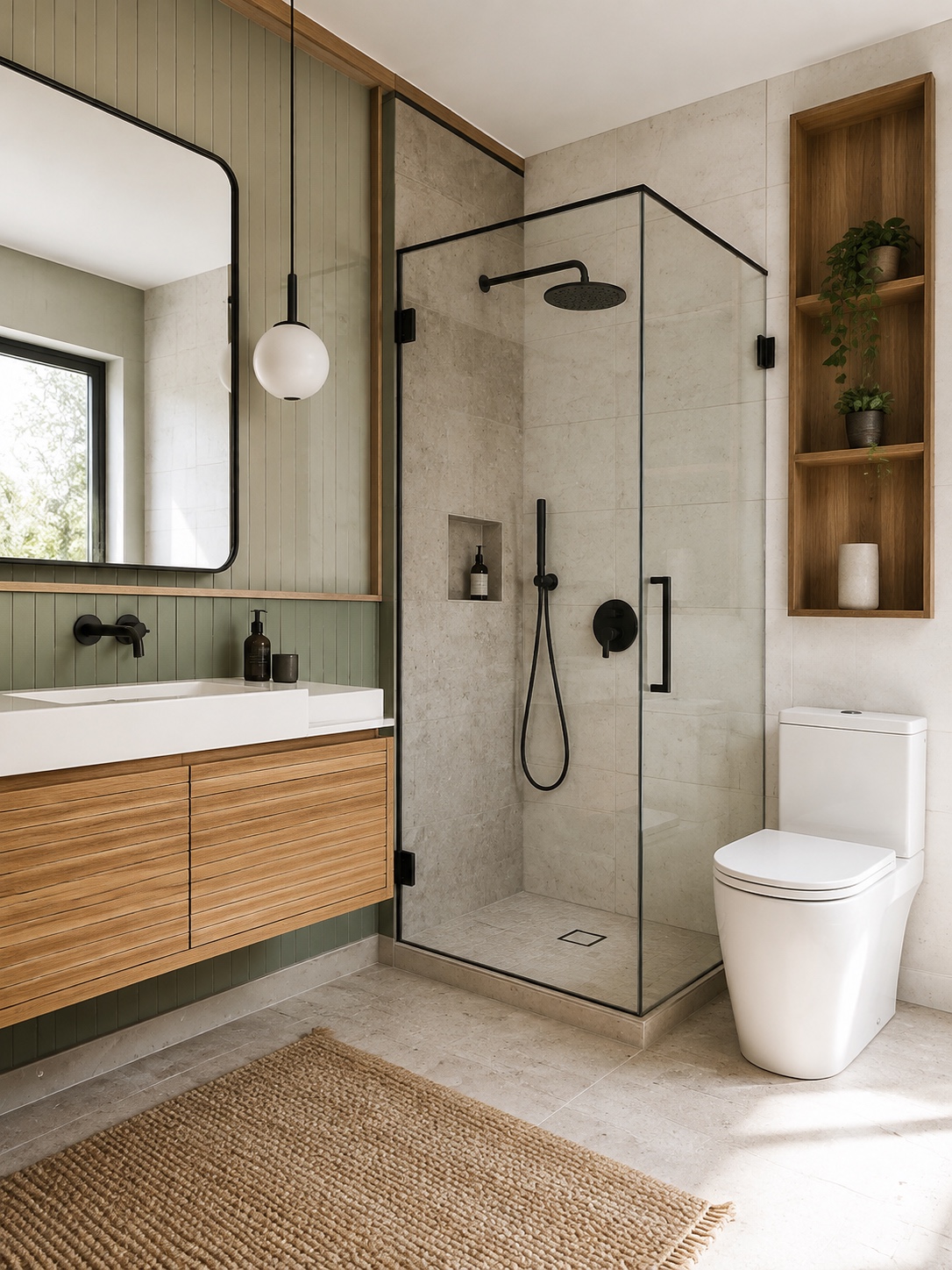
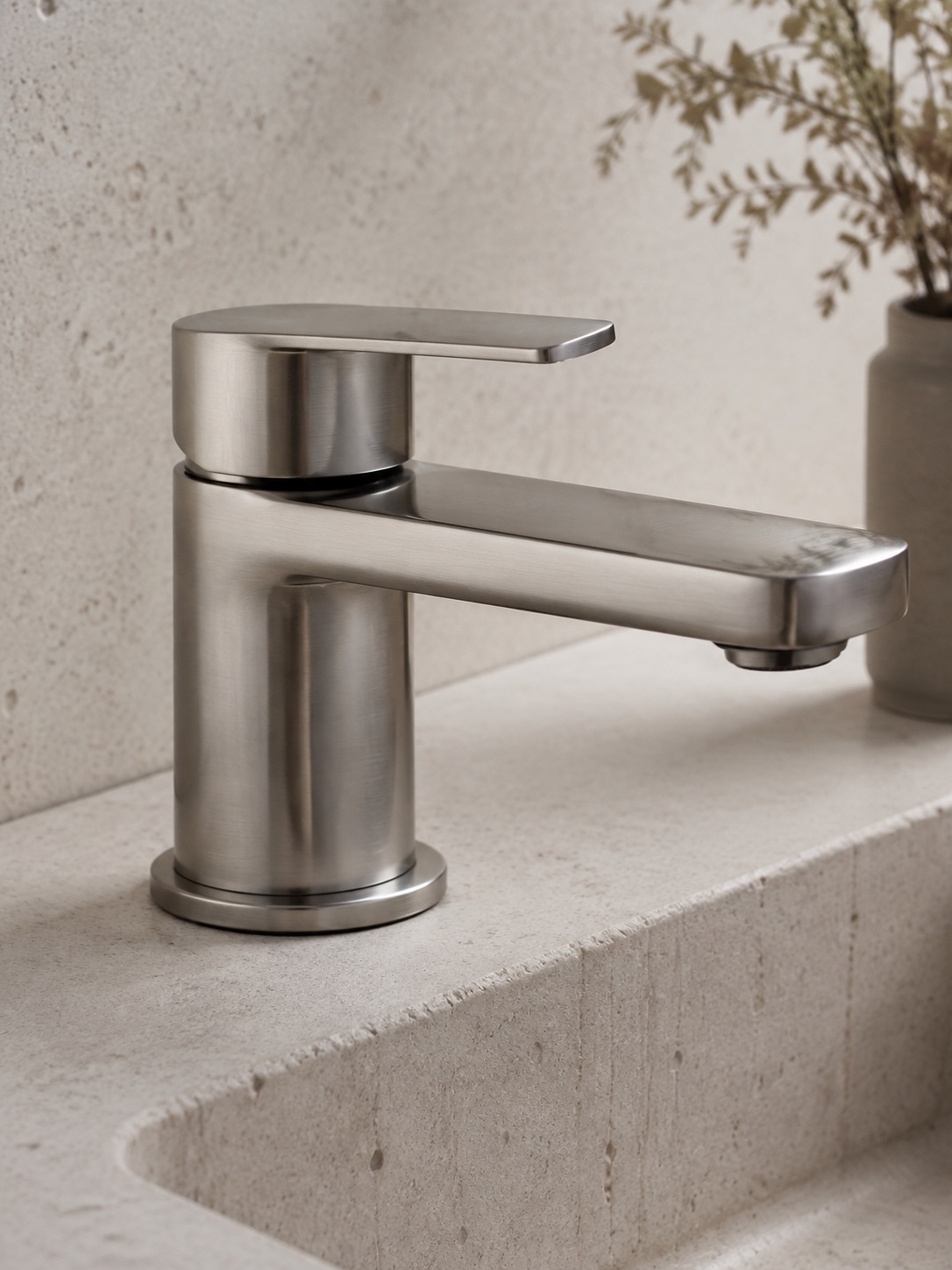
Modern water-efficient fixtures now come in the full range of finishes a design-conscious client actually wants — matte black, brushed nickel, warm brass, minimalist lever designs, and genuinely sculptural silhouettes are all available across sustainable product lines. This matters more than it may seem at first, because it means a designer no longer has to choose between environmental responsibility and visual impact in the same conversation.
The client asking for a specific finish and a client asking for water efficiency used to be two separate briefs; now they’re frequently the same brief, which changes how a project actually gets specified from the start. Our modern bathroom design guide and our roundup of the best modern bathroom faucets both cover finish and silhouette options worth pairing with sustainable specifications.
Using “green bathroom design” as a visual language, not just a color trend
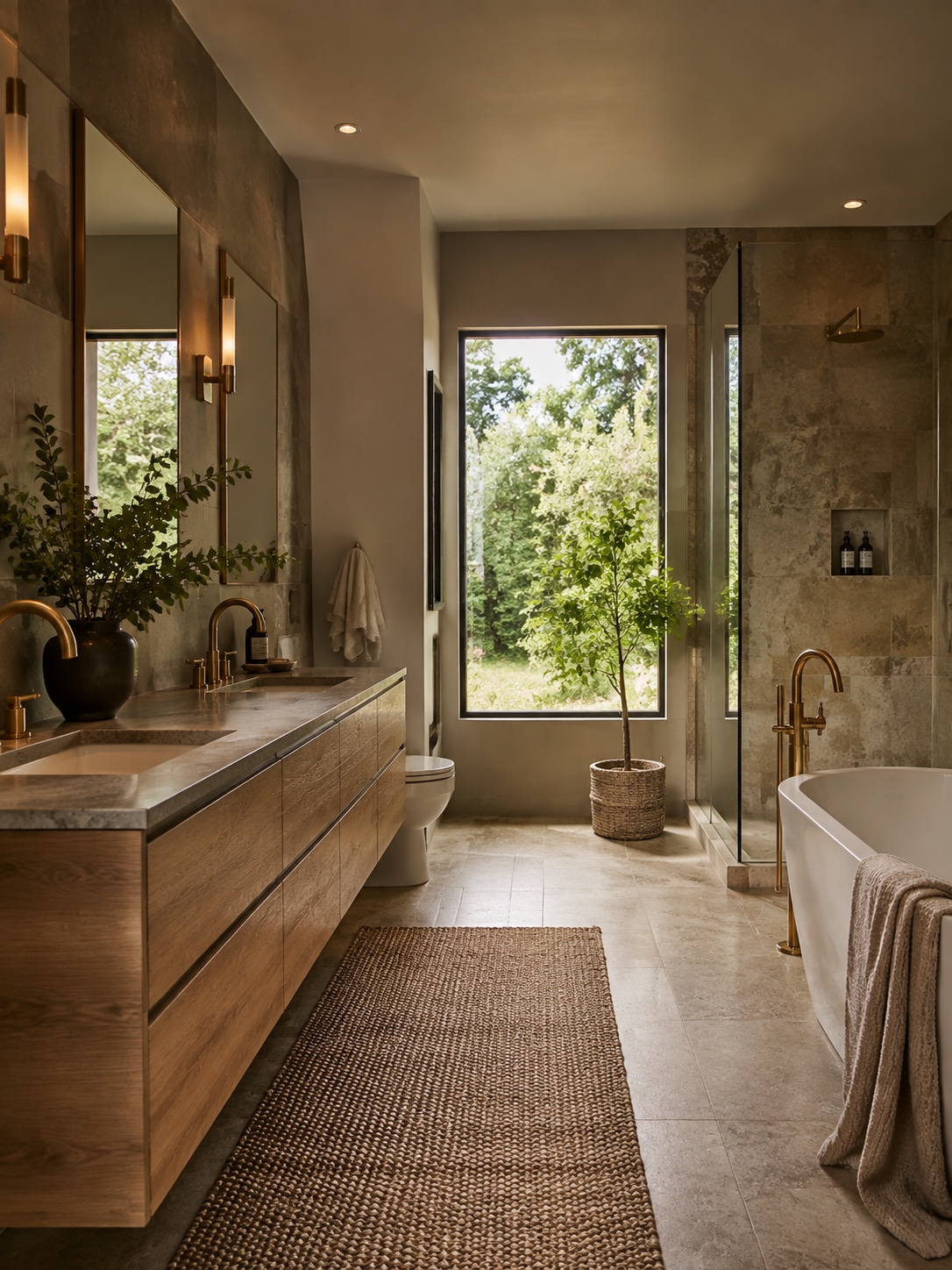
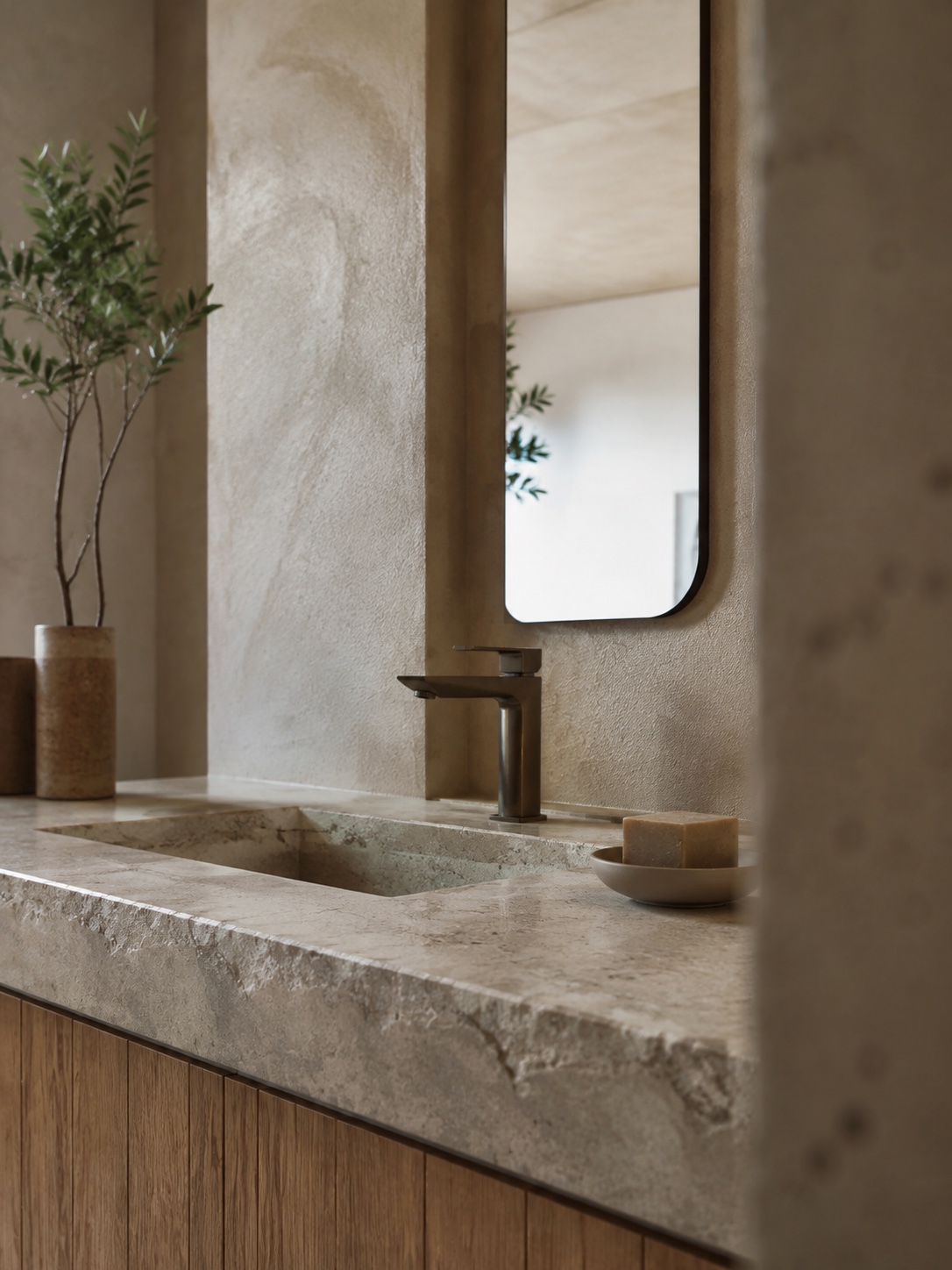
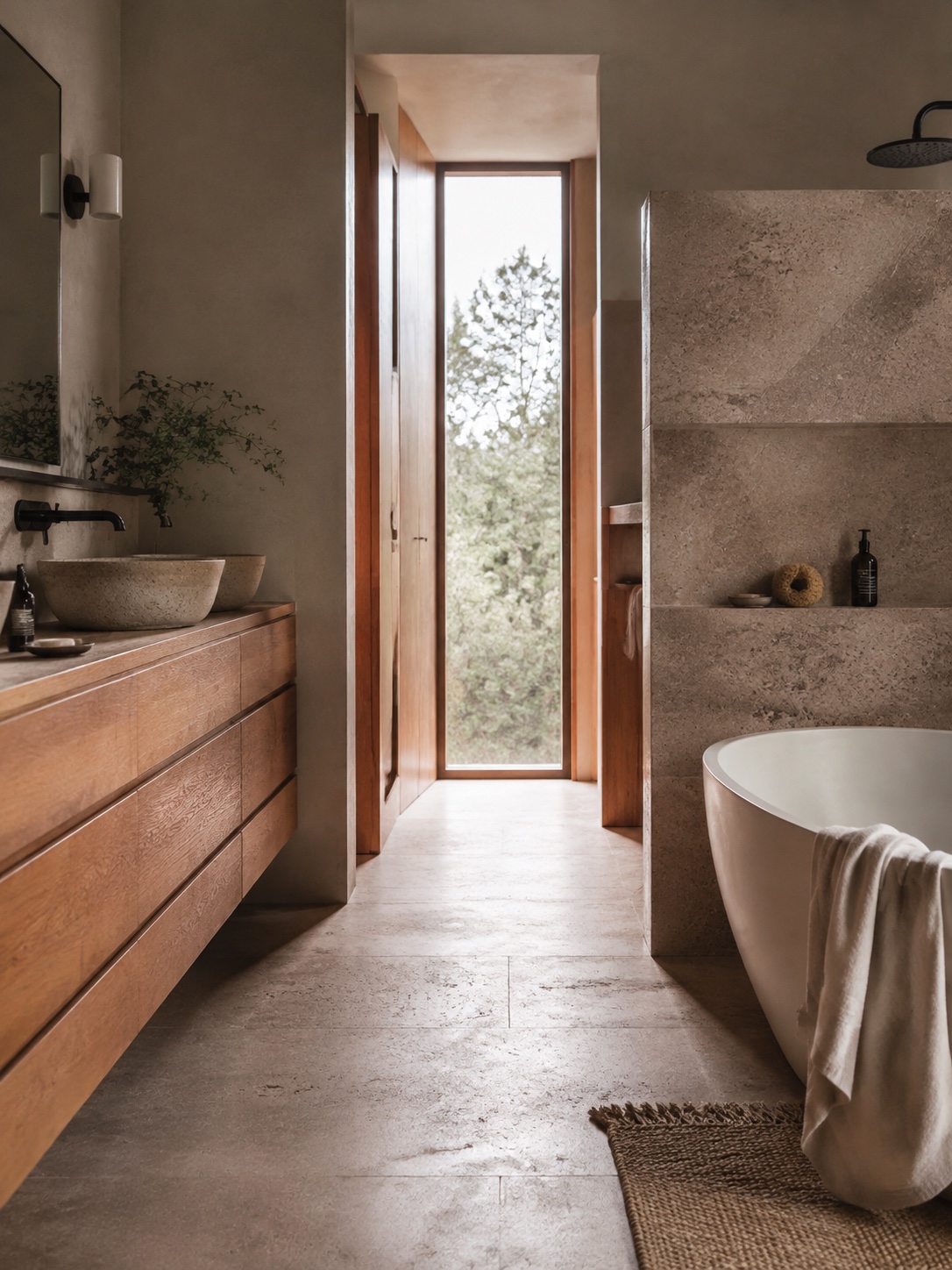
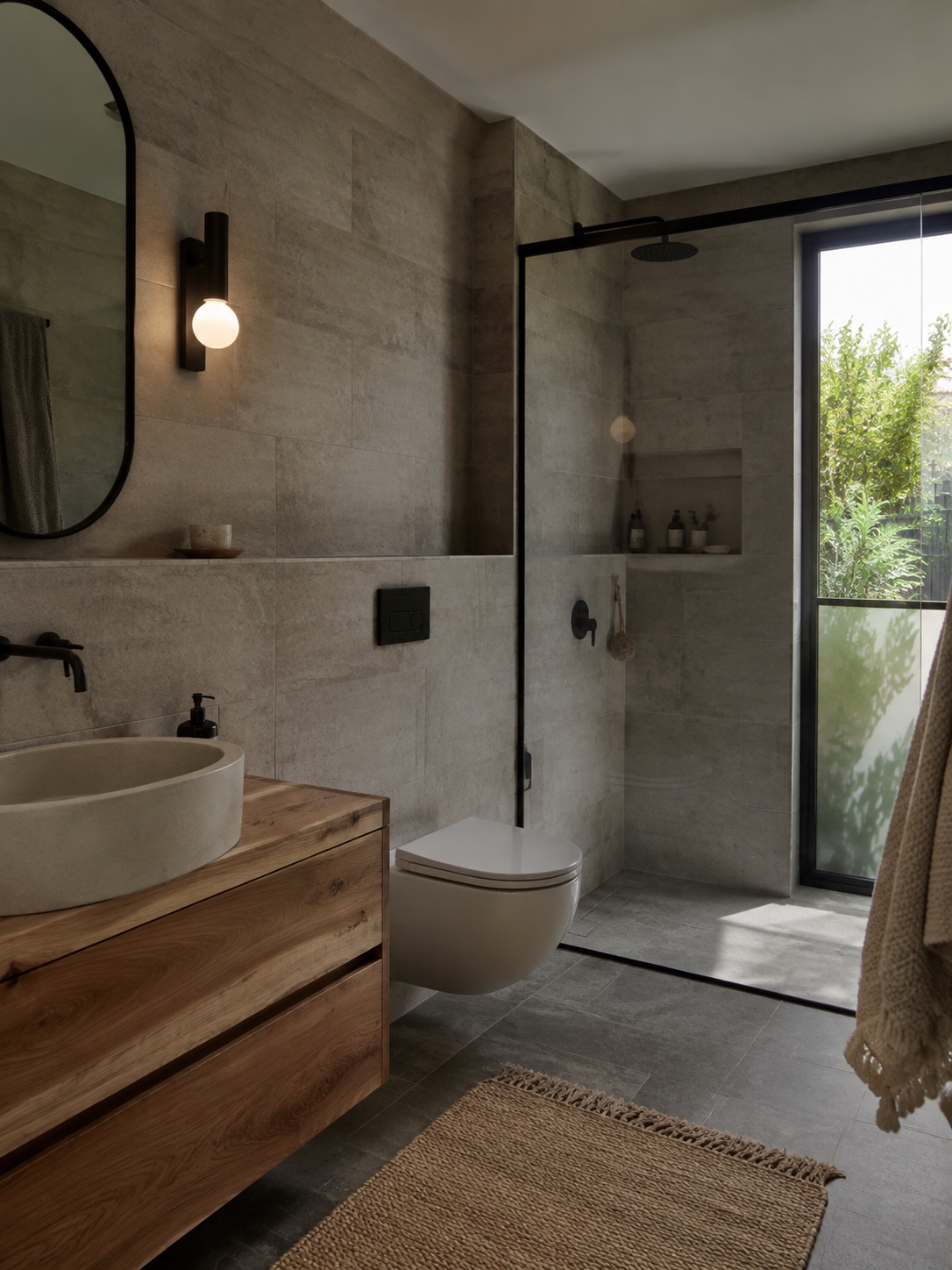
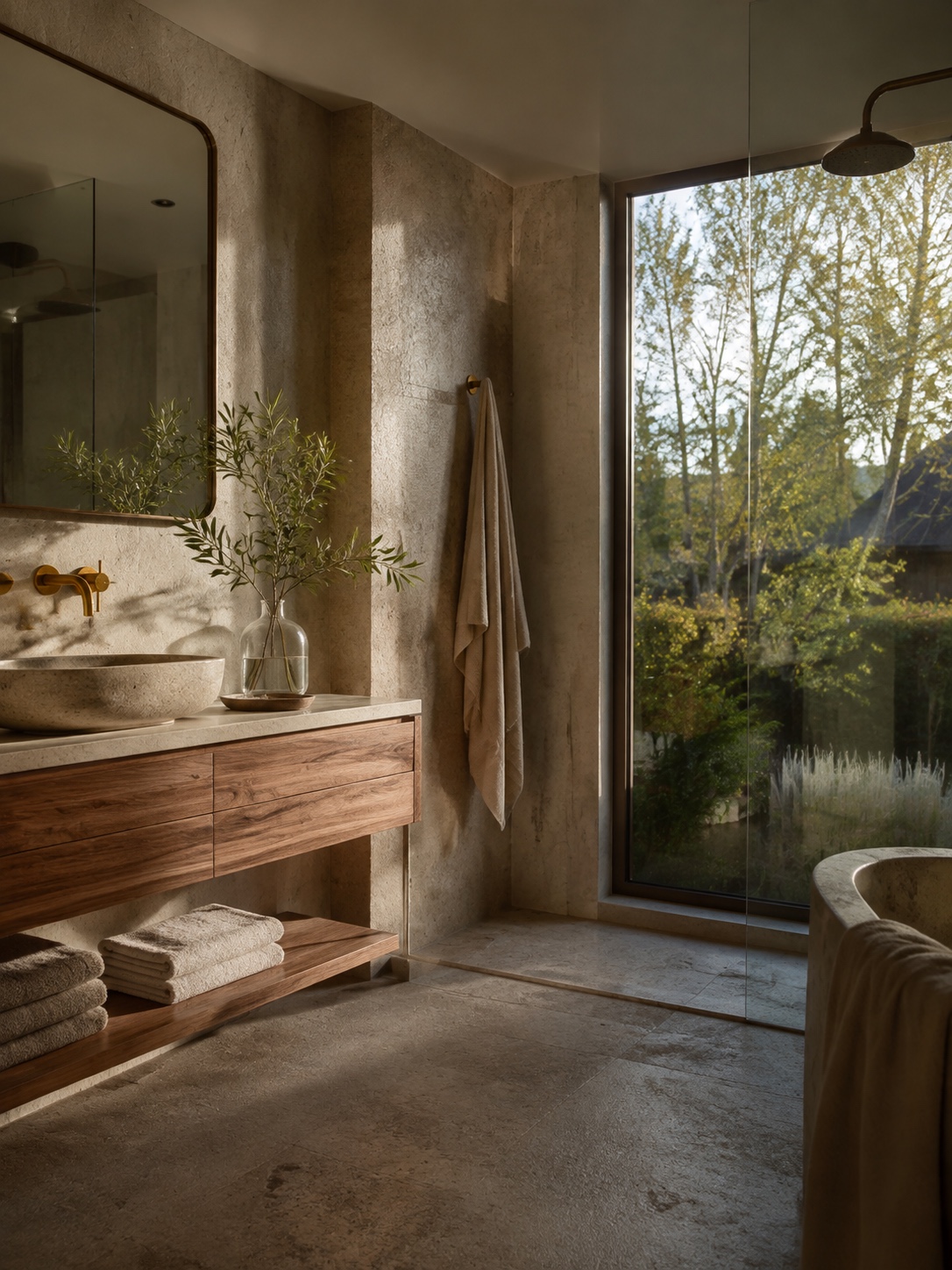
“Green bathroom design” is often used loosely to mean literal green tones and potted plants, which undersells what the phrase should actually describe. The more useful reading treats it as a visual language — natural material tones, tactile stone and wood-adjacent finishes, a restrained palette that reads as calm and considered rather than performatively “eco.” A bathroom can carry that visual language convincingly without a single literal green surface in it, the same way a genuinely sustainable material choice doesn’t need to announce itself with obvious signaling. If you’re building toward this feel specifically, our spa-like bathroom retreat guide covers the material and lighting choices that create that calm, considered mood without leaning on literal green cues.
Materials, Finishes, and Layout Choices That Lower Long-Term Impact
Beyond individual fixtures, the broader material and layout decisions in a bathroom renovation matter for long-term impact — and this is where a lot of otherwise well-intentioned projects miss a useful opportunity.
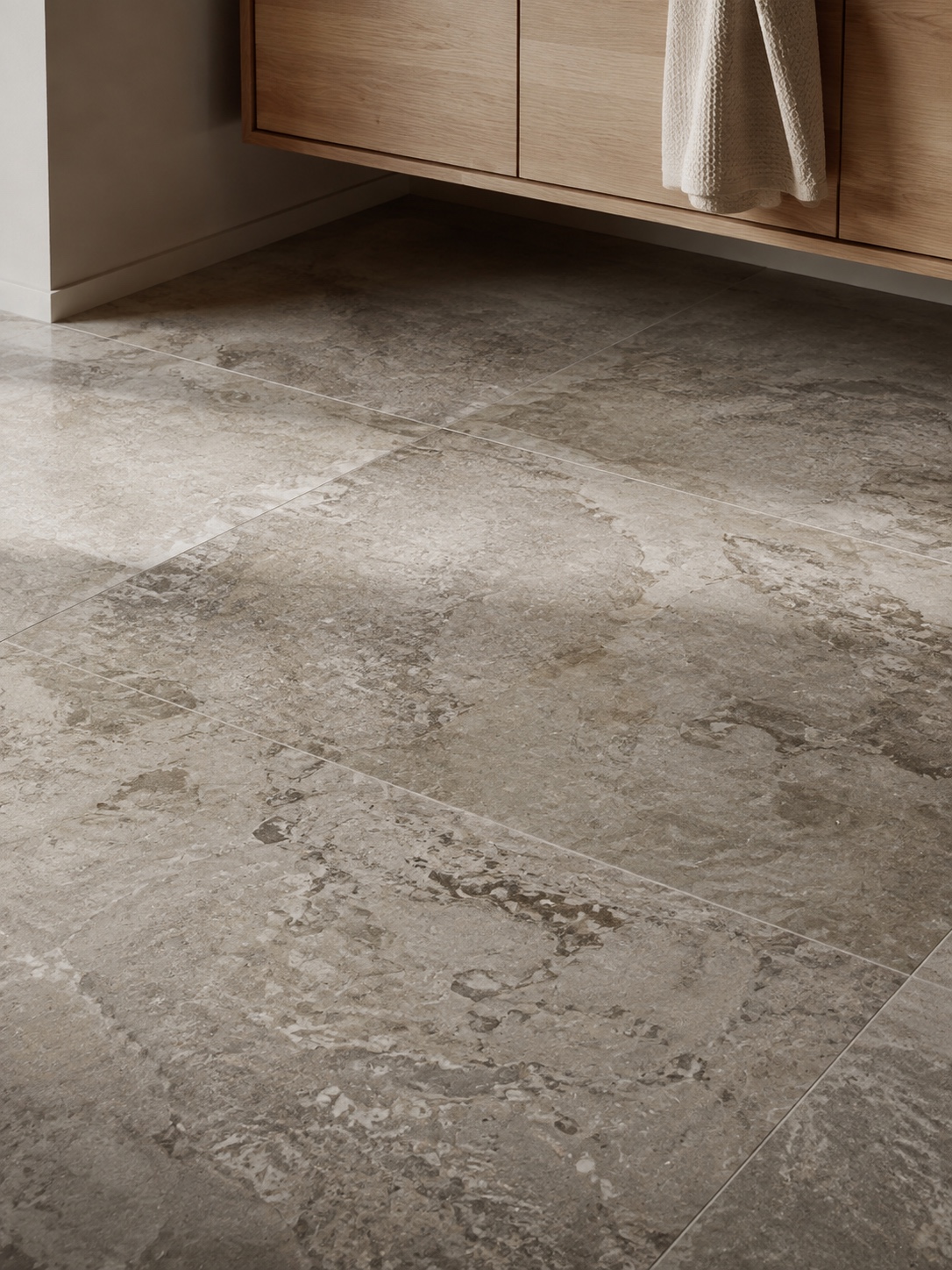
Durable, well-sourced surface materials reduce how often a bathroom needs to be touched again, which matters more than it may seem. Every renovation cycle carries embedded waste: old material torn out, new material manufactured and shipped, installation labor repeated. so a material that genuinely lasts two or three decades instead of one is doing quiet sustainability work simply by not needing replacement. Our guide to incorporating sustainable materials in a home renovation covers this principle across a full home, and the same logic applies with particular force in a bathroom because the room absorbs so much moisture and daily wear.
Layout decisions matter too, in a way that’s easy to overlook. Positioning plumbing fixtures to minimize the length of hot water runs reduces the water wasted waiting for temperature to arrive at the tap — a practical efficiency gain that has nothing to do with the fixture itself and everything to do with how the room is planned. This is the kind of decision that only gets made when sustainability is part of the initial layout conversation rather than retrofitted after the fixtures are already chosen.
The Designer’s Checklist for Specifying Sustainable Bathroom Fixtures
When I’m specifying fixtures for a sustainability-led bathroom project, a few criteria carry more weight than a glossy spec sheet:
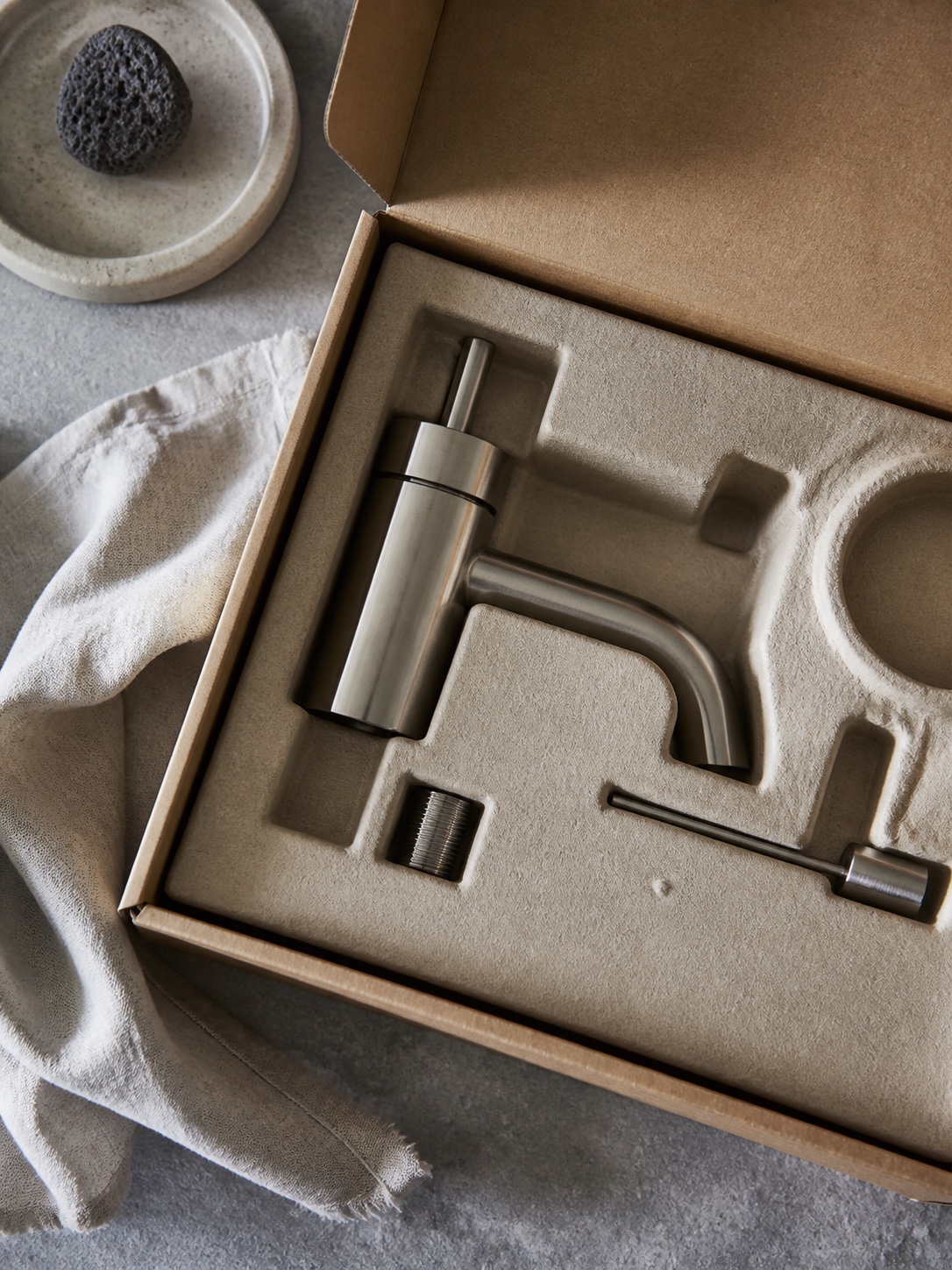
Aerator technology and verified flow rate — not just a “low-flow” label, but the actual gallons-per-minute rating and how it compares to a standard fixture. Manufacturing transparency: whether a brand can speak specifically to recycled material content and production energy use, rather than offering vague sustainability language without substance behind it. Finish durability: a finish that wears or tarnishes quickly forces an earlier replacement cycle, which undercuts the sustainability case regardless of how efficient the fixture was on day one. Water pressure performance: verified through real installations rather than lab conditions alone, since a fixture that technically meets an efficiency standard but frustrates daily use tends to get replaced early out of simple annoyance. And packaging and shipping footprint, which rarely gets asked about but is a real and measurable part of a fixture’s total impact before it’s even installed.
Running a project against this checklist produces a different shortlist than shopping by finish and price alone — and it tends to surface fixtures that hold up better over time regardless of the sustainability angle.
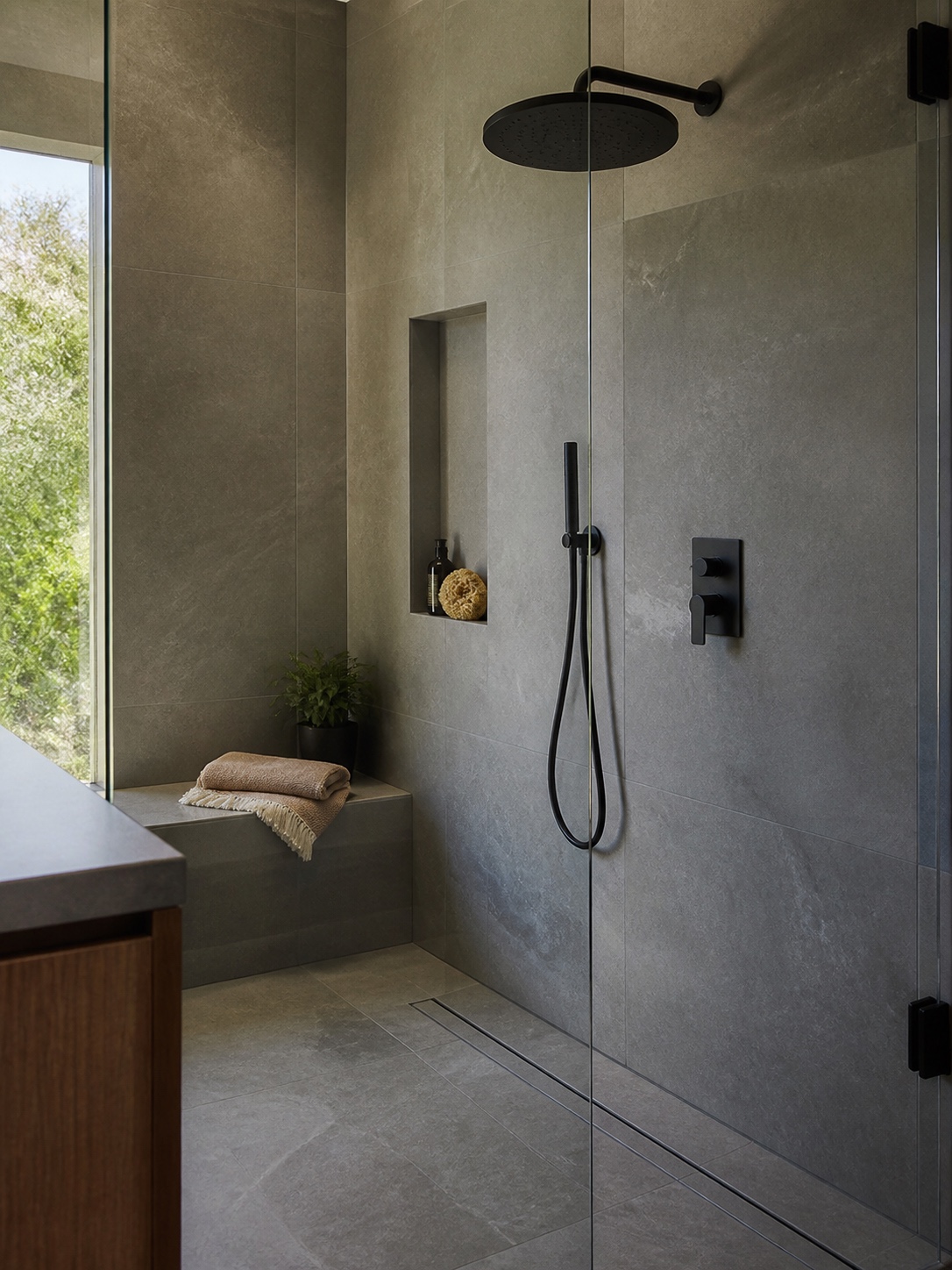
Durable specification also means choosing finishes that tolerate a realistic care routine. Use this safe shower cleaning routine to compare the needs of tile, natural stone, acrylic, glass, and plated fixtures.
Long-Term Value: Lower Bills, Better Durability, Better Design Decisions
Sustainable fixtures tend to deliver long-term value beyond the immediate environmental case — reduced water usage translates directly into lower utility bills over time, and higher-quality materials generally mean less maintenance and a longer usable life before anything needs replacing. Homeowners increasingly treat this as a practical value proposition rather than a sacrifice, particularly as awareness of resource conservation continues to build across renovation projects generally.
The broader shift is that sustainability is becoming a standard specification criterion rather than a specialized request bolted onto an otherwise conventional project. Designers who build real fluency in sourcing and specifying eco-conscious fixtures are working ahead of a trajectory that looks durable. Clients are asking more informed questions about water usage and material sourcing now than they were even a few years back, and that shift in baseline awareness is shaping how renovation projects get briefed from the very first consultation, not just how they get finished.
FAQ
What is sustainable bathroom design?
It is an approach to bathroom renovation that treats water efficiency, material sourcing, and manufacturing impact as core specification criteria from the start of a project, not as an add-on layered onto an otherwise conventional design. It covers fixtures, materials, finishes, and even layout decisions like minimizing hot water run length.
Are eco-friendly bathroom fixtures more expensive?
Upfront pricing varies by brand and finish the same way conventional fixtures do, and sustainable options are not inherently pricier as a category. Where cost differences exist, they tend to reflect genuine differences in material quality and manufacturing process rather than a flat “eco” premium.
Do low-flow fixtures reduce water pressure?
Modern aerator technology has largely resolved the pressure trade-off that used to define early low-flow fixtures. Well-engineered options mix air into the water stream to maintain a strong feel while genuinely reducing volume used. Pressure complaints today usually trace back to a poorly engineered specific product rather than the low-flow category as a whole.
What materials are best for a sustainable bathroom?
Recycled metals for fixtures, durable natural or natural-look surfaces for countertops and flooring, and finishes verified for genuine longevity rather than just an attractive day-one appearance. The best material choice is usually the one that will not need replacing in five years, regardless of how it is marketed.
- 16shares
- Facebook0
- Pinterest16
- Twitter0
- Reddit0