Search “shark tattoo ideas” and you’ll get the same 12 stock photos recycled across a dozen listicle sites, each with a paragraph about “power and fearlessness” bolted on top. Nobody’s actually talking about whether the design works — whether a hammerhead’s wide, flat silhouette reads clearly at wrist size, or turns into a gray smudge by year three.
I spent years in academic life-drawing before I ever touched a tablet, and one lesson carries straight over to tattoos: silhouette and line-weight matter more than detail. A shark tattoo that’s built around its actual shape — not just a stock photo traced at a random size — is the difference between something that still reads clearly a decade out and something that fades into an ambiguous blob.
- What a shark tattoo actually symbolizes (species by species)
- Reading the silhouette — why some shark shapes work better small
- Style breakdown: traditional, fine-line, tribal/Polynesian, realism
- Great white, hammerhead, mako, tiger, and whale shark tattoo ideas
- Placement that respects the shape
- What to bring to your consultation
- Final thoughts
- More shark tattoo ideas to save for your consultation
- FAQ
I’ll walk you through what each species actually symbolizes (they’re not interchangeable), which styles hold up and which don’t, and how to pick placement based on the shark’s real shape instead of “wherever looks cool in the reference photo.” By the end you’ll know exactly why most gallery pages give you options without giving you any reasoning.

What a shark tattoo actually symbolizes (species by species)
Most gallery sites treat “shark tattoo meaning” as one generic idea — power, fearlessness, done. But a great white and a hammerhead don’t carry the same symbolism, and lumping them together is exactly why so many of those pages feel interchangeable.
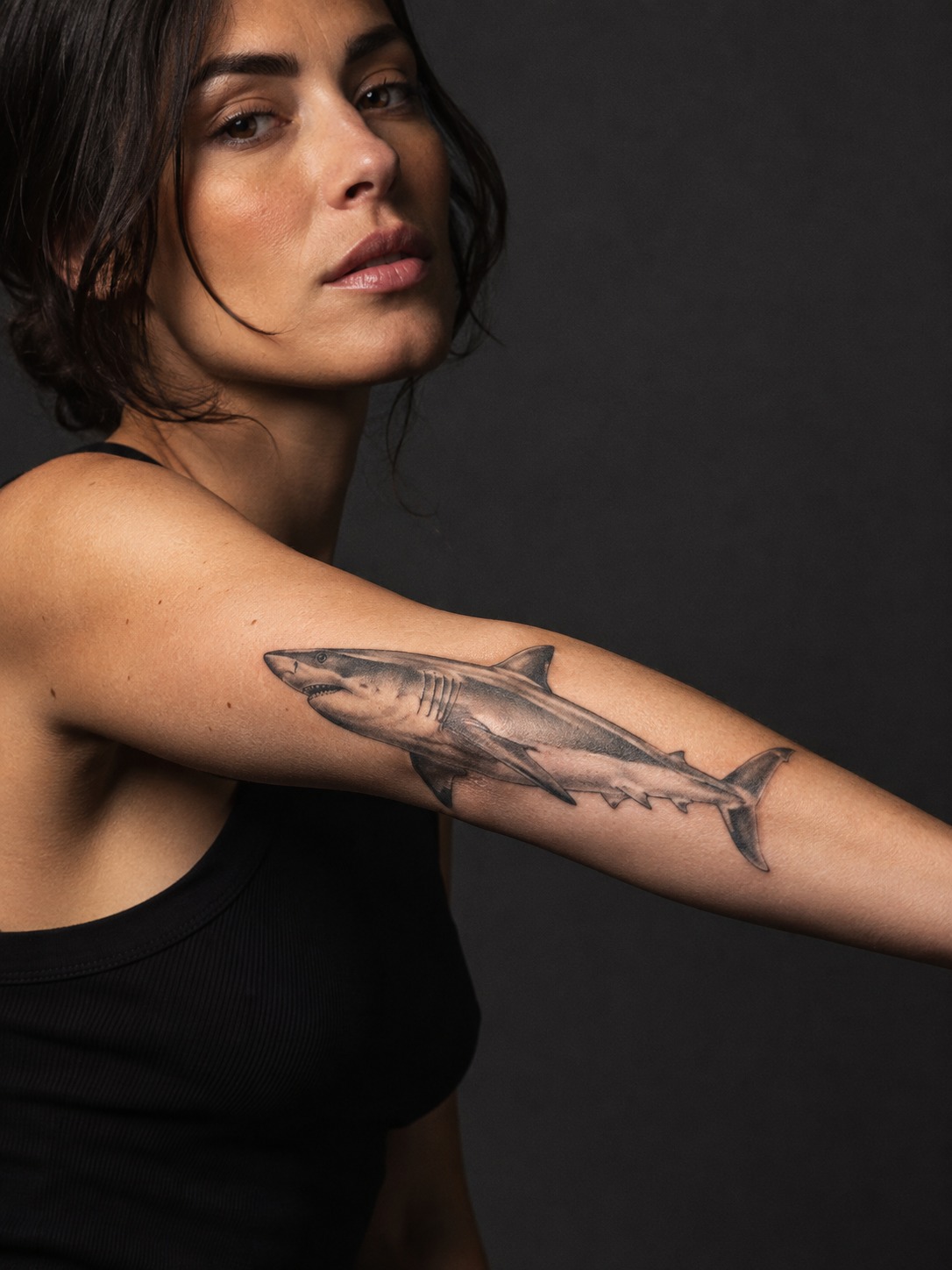
Great white shark — raw power and fearlessness, full stop. This is the one people default to when they want something that reads as strength without ambiguity. It’s also the most searched shark tattoo by a wide margin, which tells you something about what people actually want when they say “shark tattoo”: not subtlety, but presence.
Hammerhead shark — perception and clear vision. The wide-set eyes aren’t just a visual quirk; they’re the reason this species gets chosen by people who want to signal seeing things others miss, or navigating complexity with a broader field of view. I like this one for people who want meaning that isn’t just “toughness” — it’s a smarter symbol than it gets credit for.
Tiger shark — adaptability. Tiger sharks eat almost anything and thrive across wildly different environments, which is exactly the metaphor people reach for after a major life change or a period of reinvention.
Mako shark — speed and precision. Makos are the fastest sharks in the ocean, capable of bursts that outpace nearly everything else in the water. This one tends to appeal to competitive people — athletes, in my experience, more than any other species.
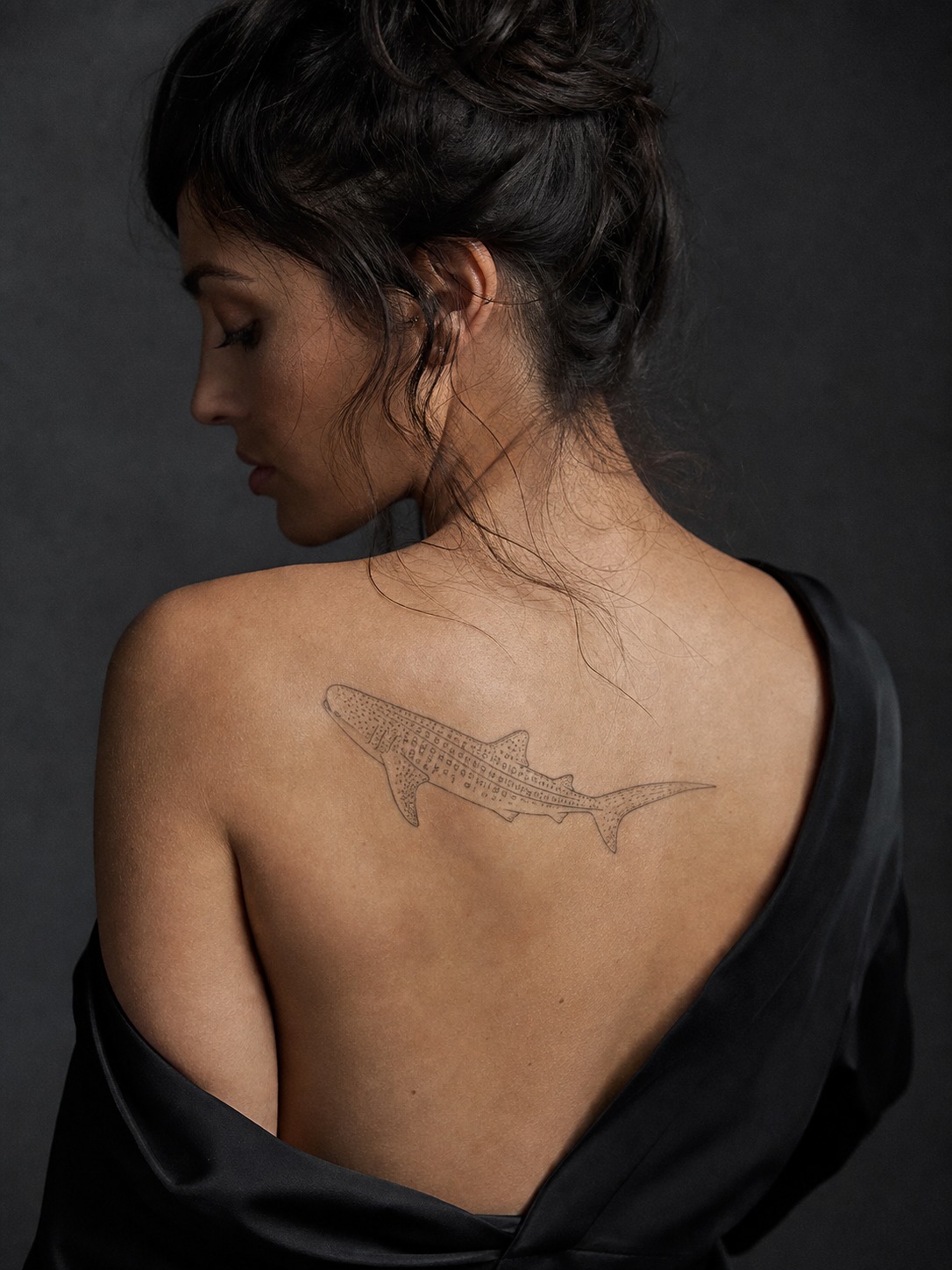
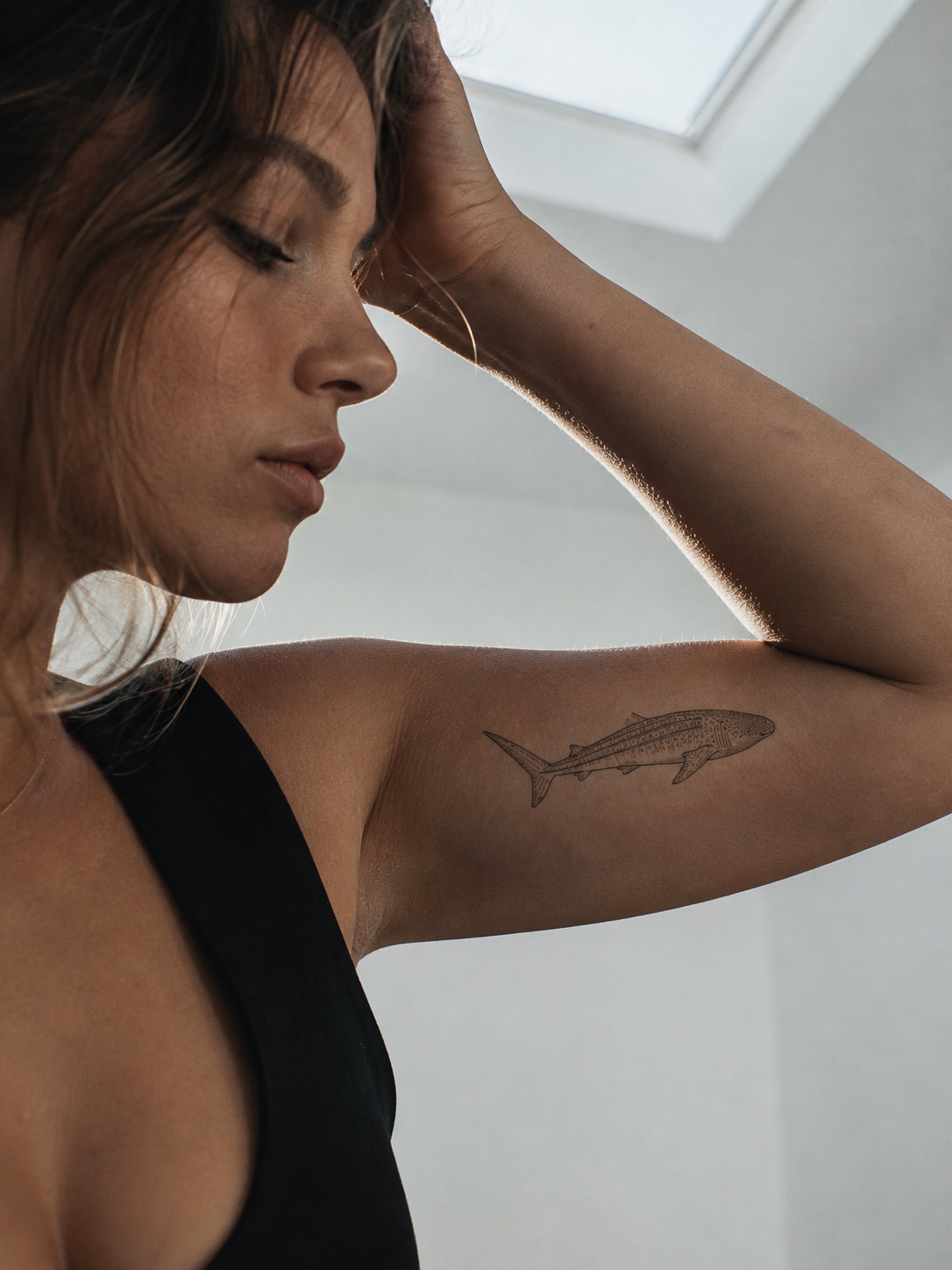
Whale shark — calm strength and gentle power. This is the one that trips people up, because whale sharks are enormous but harmless filter feeders. The symbolism here is deliberately different: size and presence without aggression. I’ve noticed this species pulling real search interest lately, likely because it offers a way into shark imagery for people who want the visual weight without the predator connotation.
Reading the silhouette — why some shark shapes work better small
This is the part nobody covers, and it’s the single biggest factor in whether a shark tattoo still looks good five years out. A shark’s silhouette isn’t interchangeable — the shape you pick has to survive being shrunk down to fit an arm, and not every species shrinks well.
I think about this the way I’d think about a surfacing pass on a car body — you’re not drawing every panel line, you’re deciding which two or three shapes carry the whole read from ten feet away. A great white’s torpedo body with that single dorsal fin is about as clean a silhouette as exists in nature; it holds up small because there’s nothing extra to lose definition.
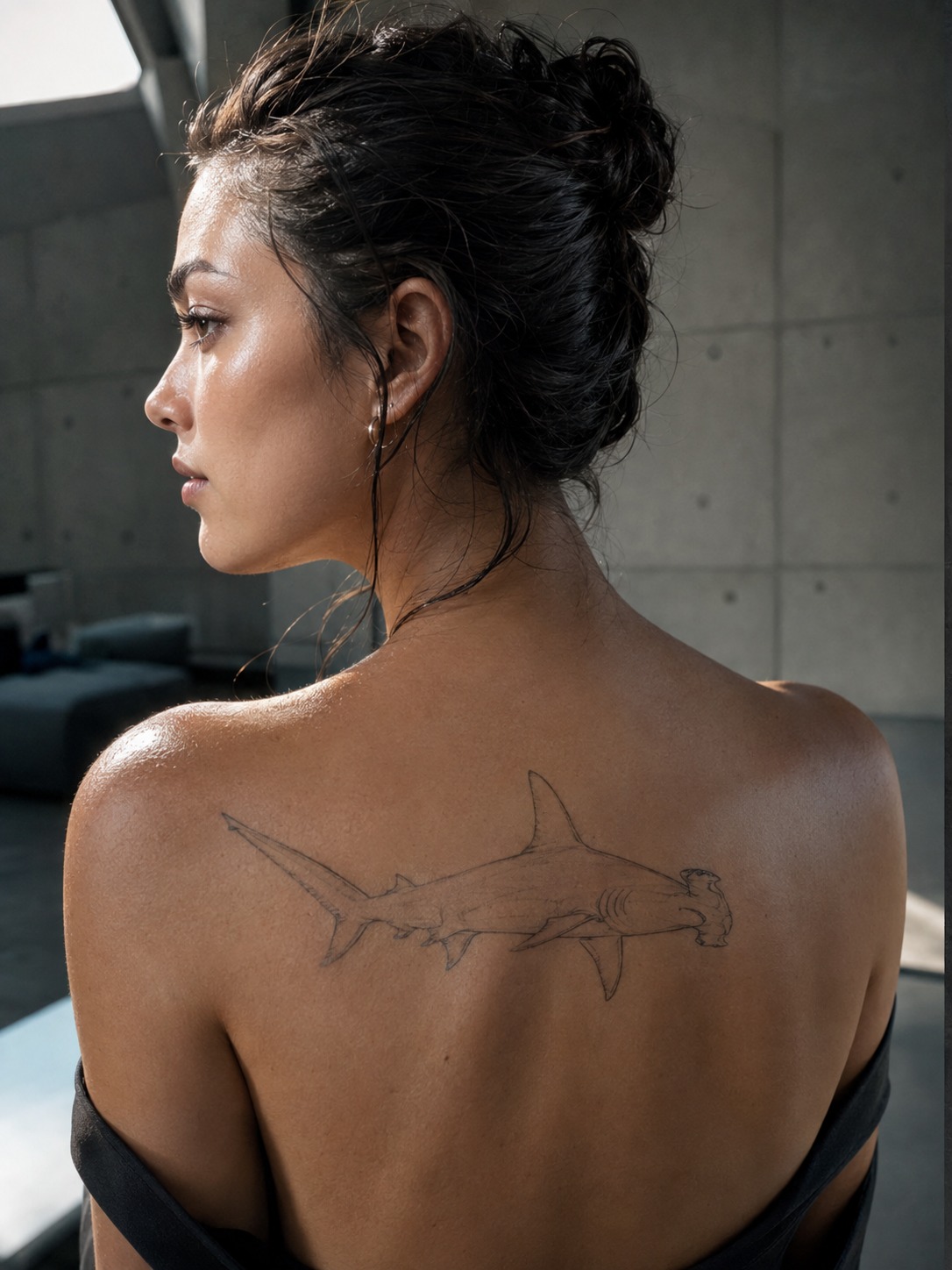
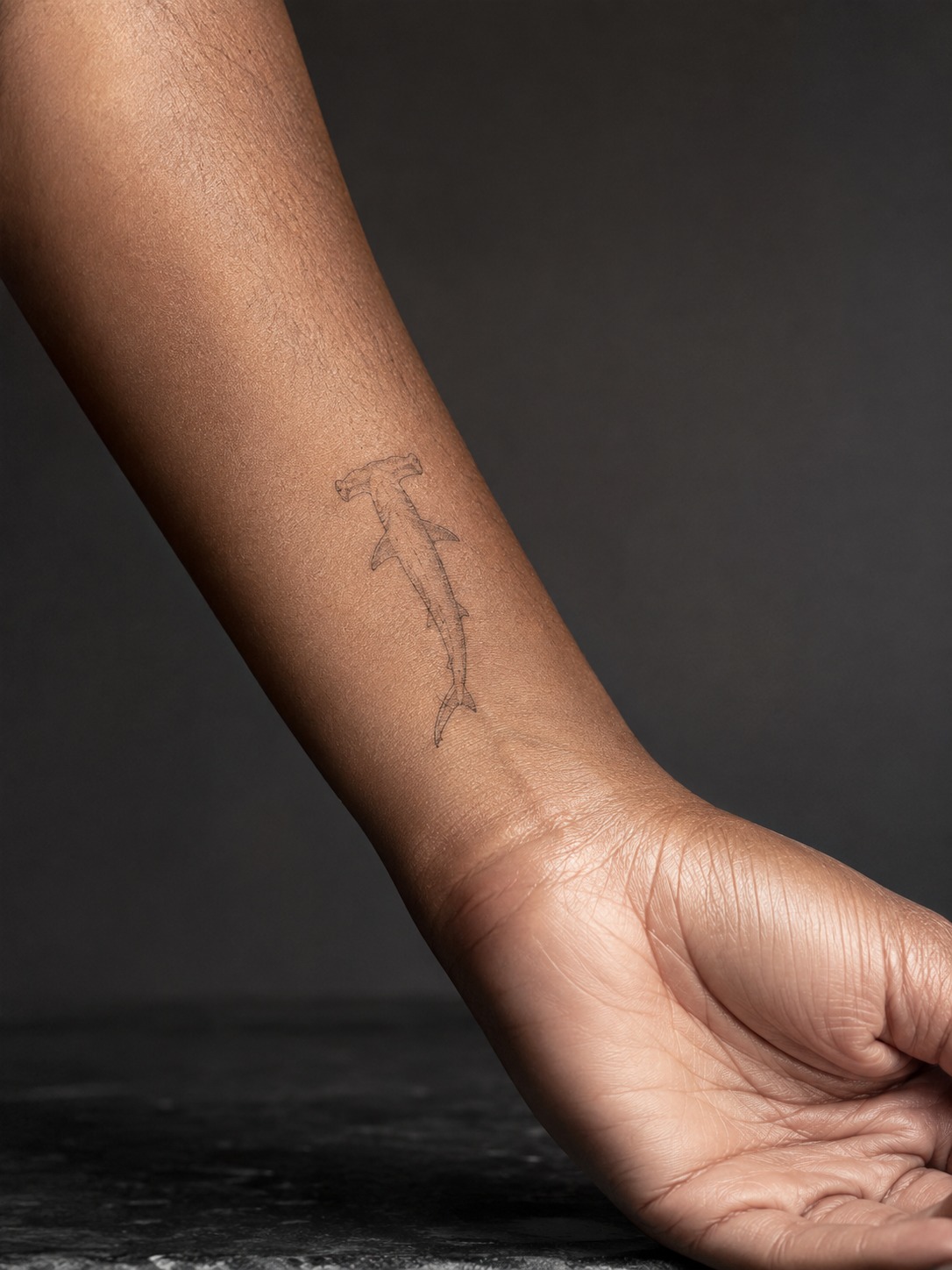
A hammerhead is the opposite problem. That wide, flat head is the entire point of the design — it’s what makes the tattoo recognizably a hammerhead instead of a generic shark. Shrink it too far and the width-to-body ratio collapses, and you lose the exact feature that made you choose the species in the first place. If you want a hammerhead, commit to a size that lets the head stay wide relative to the body — forearm or larger, not a coin-sized wrist piece.
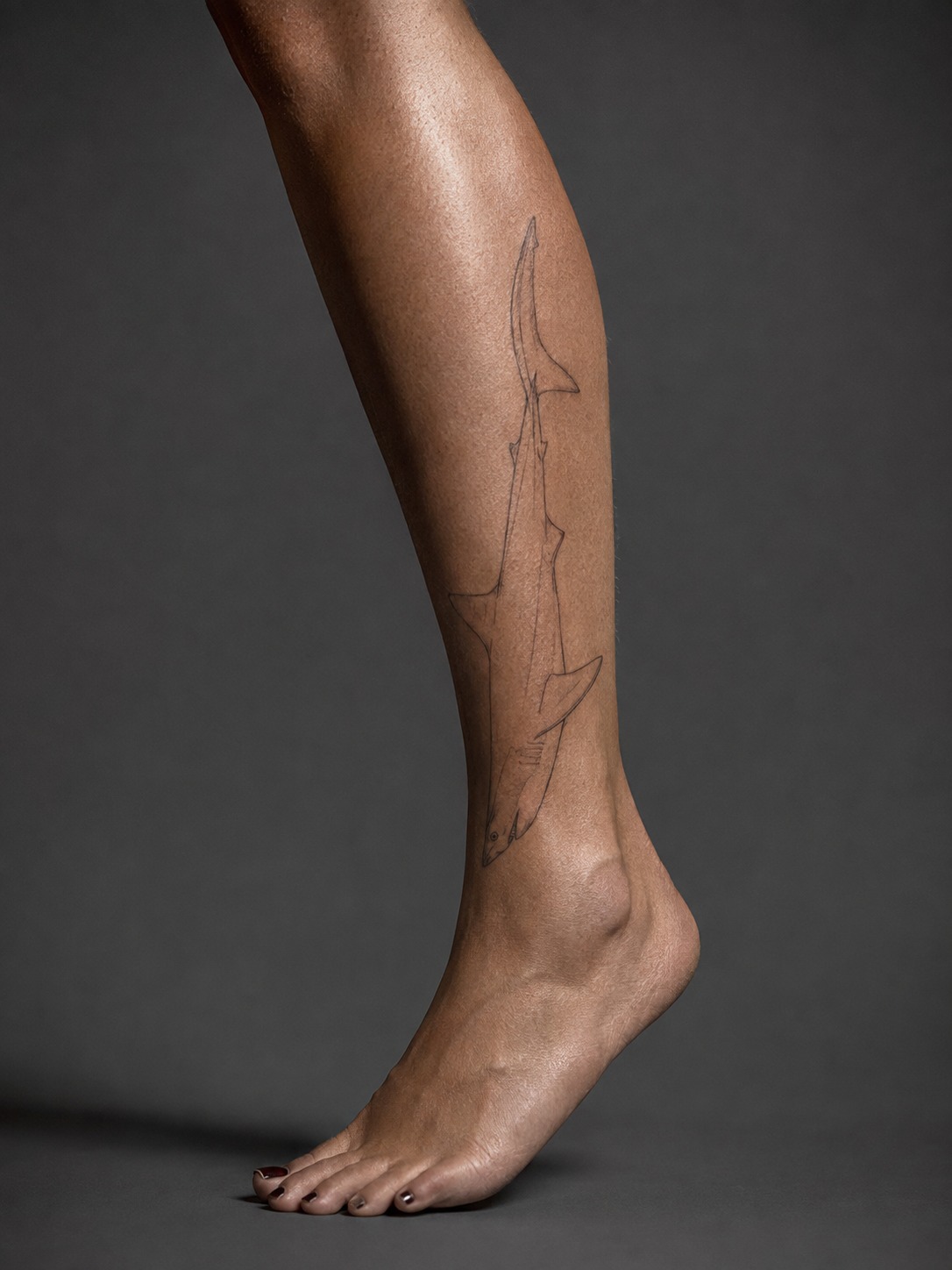
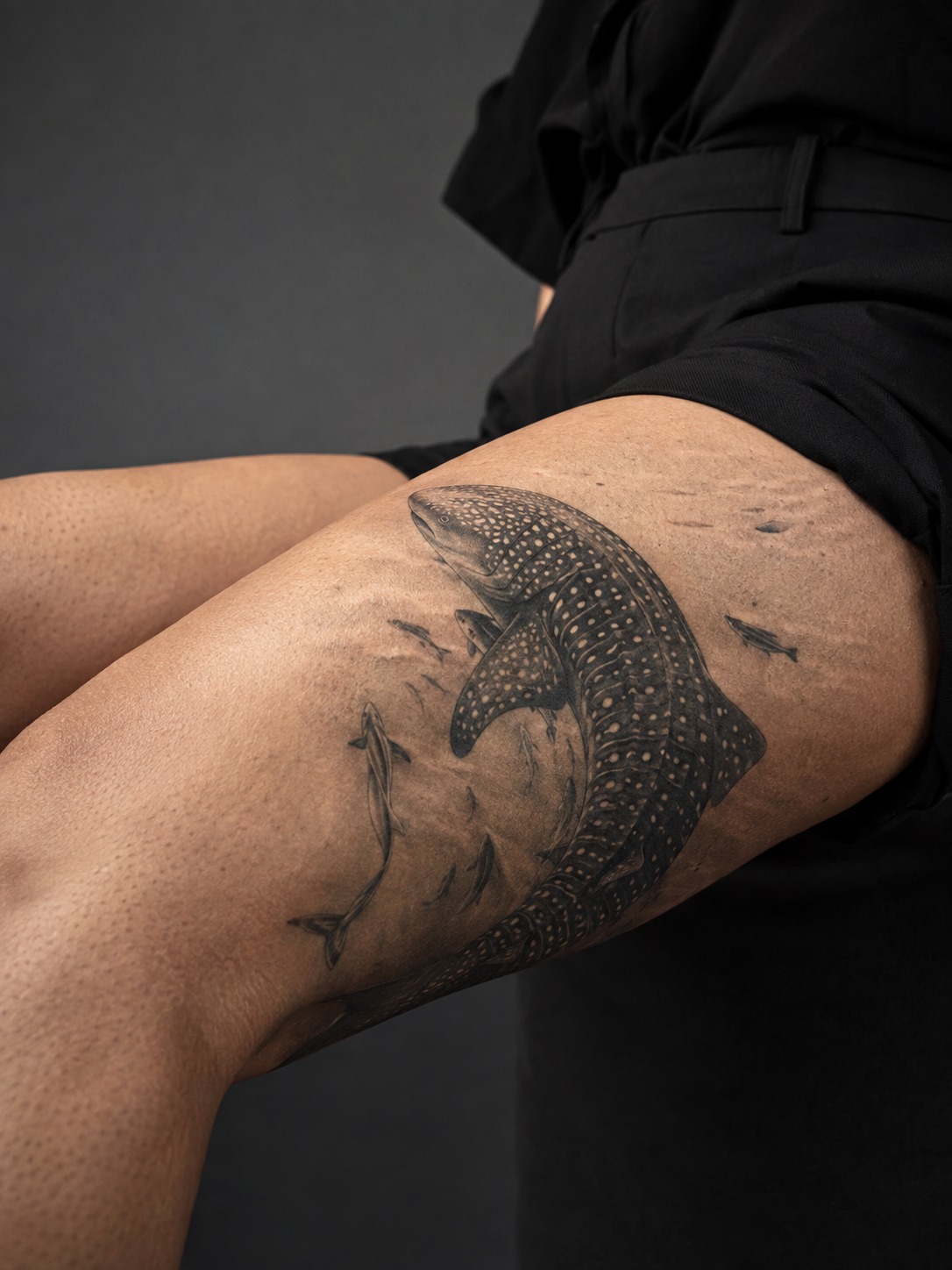
Mako sharks have a long, tapering body built for speed, which reads beautifully at length — a calf or forearm piece that runs with the limb’s natural line — but compresses awkwardly into a square or circular space. Whale sharks carry a lot of surface pattern (those pale spots), which is gorgeous in a large realistic piece but turns to noise at small scale; simplify it or size up.
Before you commit to a design, hold the reference at arm’s length and squint. If the silhouette still reads as that specific species — not just “shark” — at a blur, it’ll hold up on skin. If it turns into a shape with fins, it won’t.
Style breakdown: traditional, fine-line, tribal/Polynesian, realism
Every gallery site shows you all four styles side by side like they’re interchangeable preferences. They’re not — each one has real trade-offs that affect how the tattoo looks in year one versus year ten, and almost nobody mentions that part.
Traditional (bold-line)
This is the safest long-term bet, and it’s not close. Thick black outlines and a limited color palette (usually just blue-gray and black) are built to hold ink over decades — the heavy linework resists the blurring that thinner styles suffer as skin ages. If you want a shark tattoo you won’t think twice about at 50, this is it. The trade-off is detail: you’re working in bold shapes, not fine texture, so subtlety isn’t really on the table.

Fine-line
Fine-line is having a real moment right now, and it looks fantastic fresh — delicate, precise, almost illustrative. Here’s what most fine-line galleries don’t tell you: those thin lines are the first thing to blur as skin ages and stretches, and a hammerhead’s already-thin outline (see the silhouette problem above) makes this a genuinely risky combination. Fine-line works best on species with simpler, bolder shapes — a great white or a simplified whale shark — not ones that depend on delicate width-to-length ratios to read correctly.
Tribal / Polynesian (niho mano)
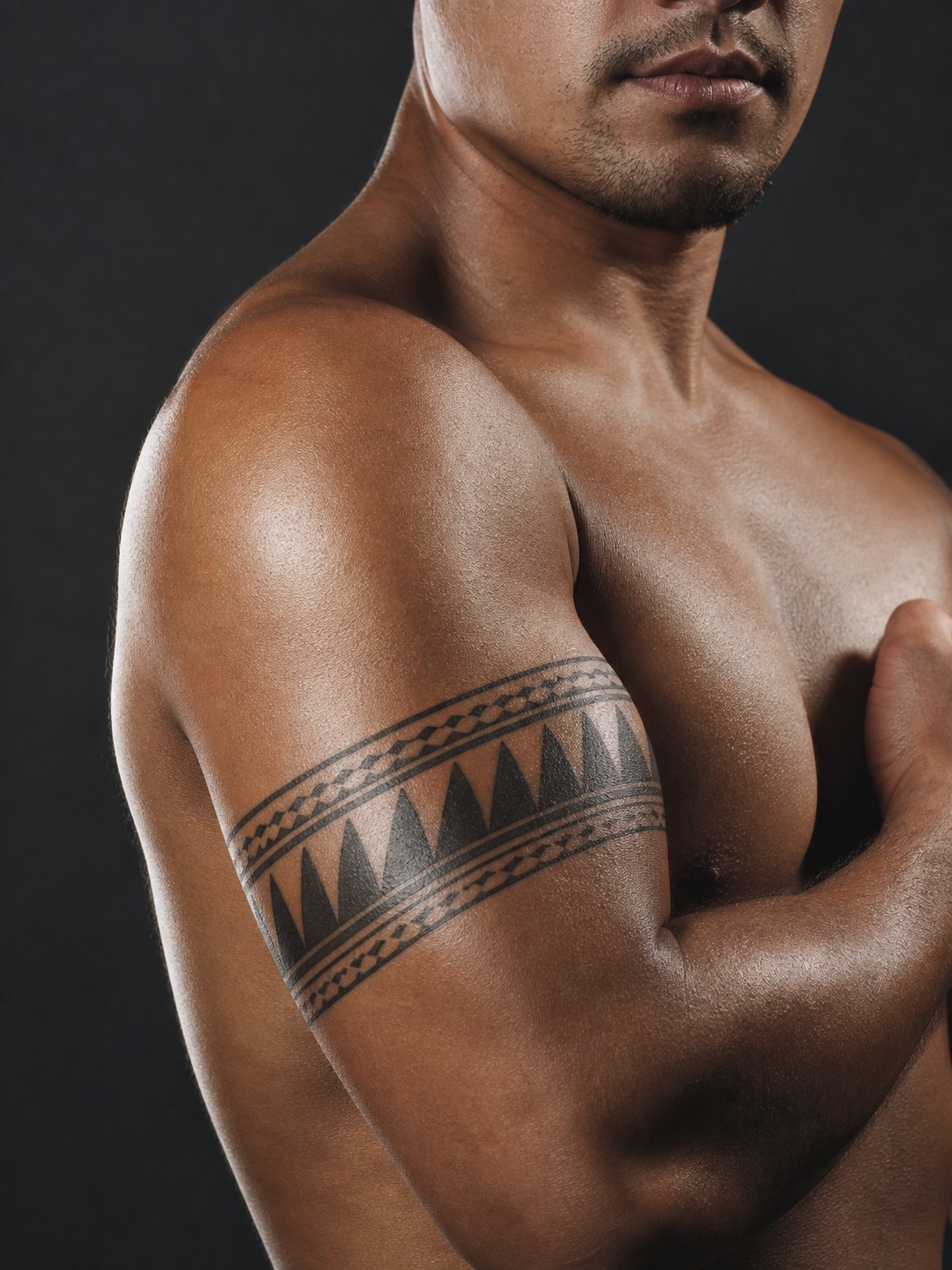
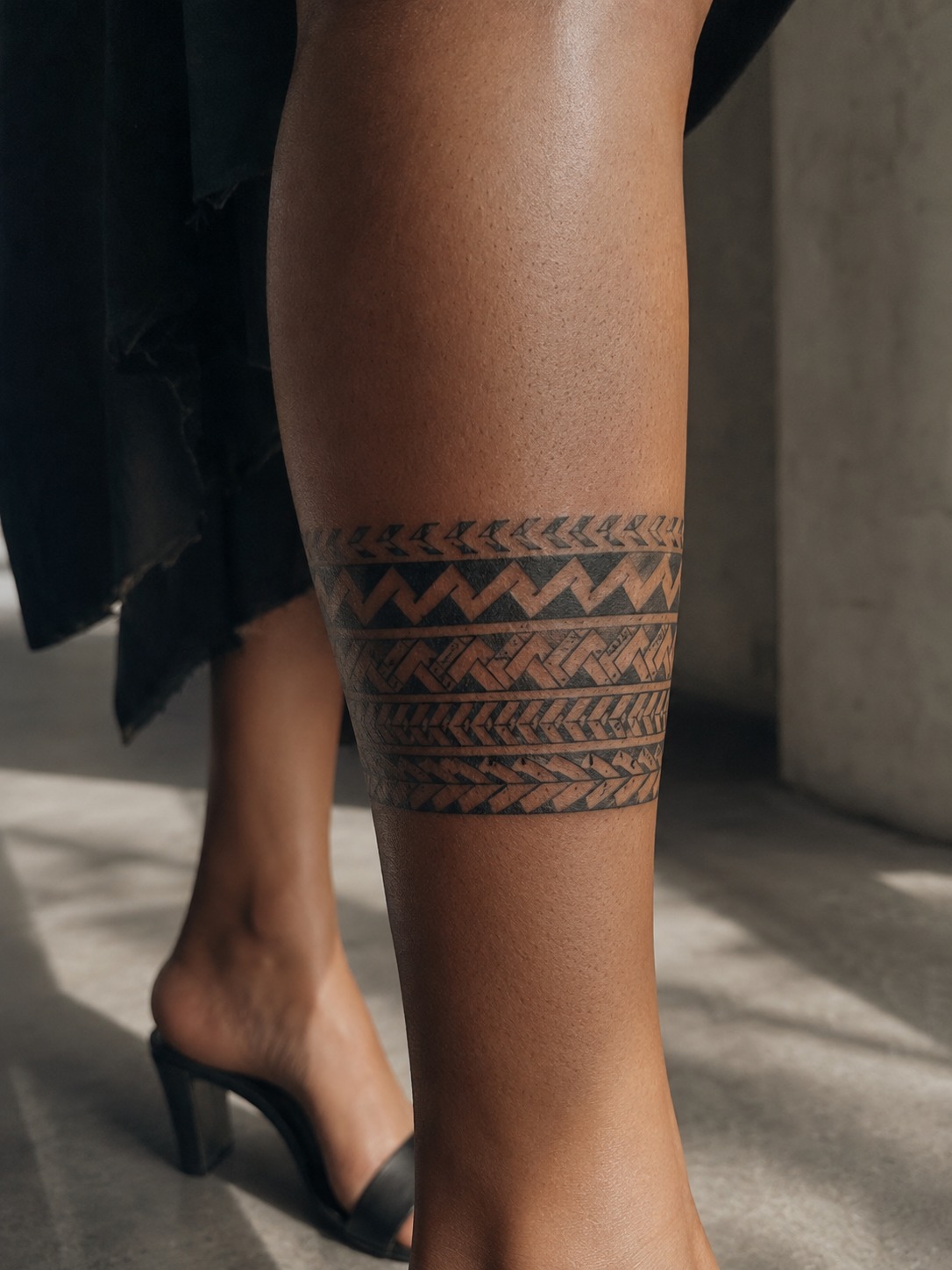
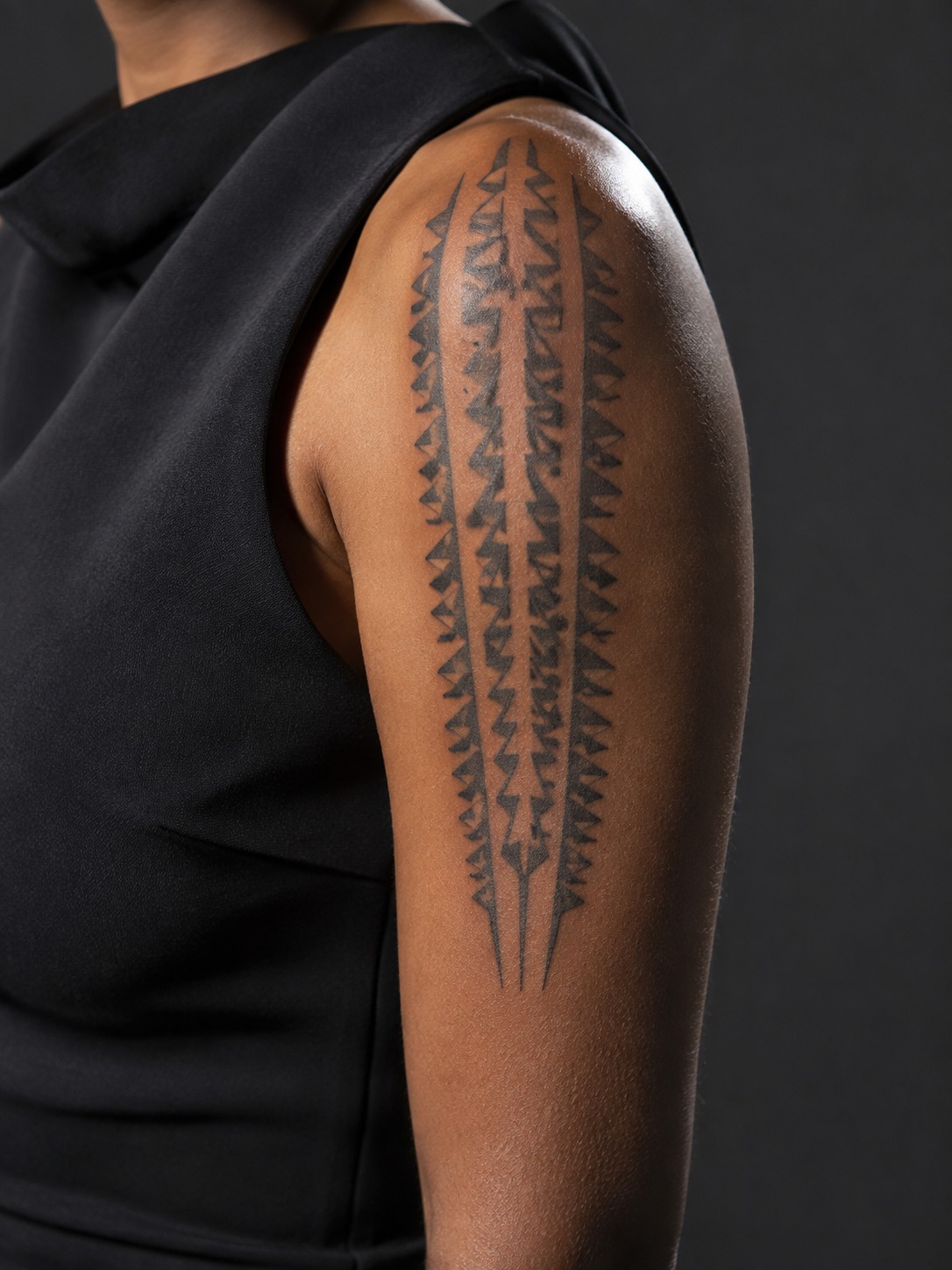
This style deserves better treatment than it usually gets. The niho mano — literally “teeth of the shark” — is a real motif in Polynesian tattooing tied to protection, guidance, and connection to ancestors associated with the ocean. It’s not just a generic “tribal shark shape”; the triangular tooth pattern carries specific cultural weight. If you’re drawn to this style, it’s worth understanding the motif’s actual origin rather than treating it as an aesthetic option among four — and worth finding an artist who works specifically in Polynesian tattooing rather than someone freehanding a “tribal-style” shark.
Realism
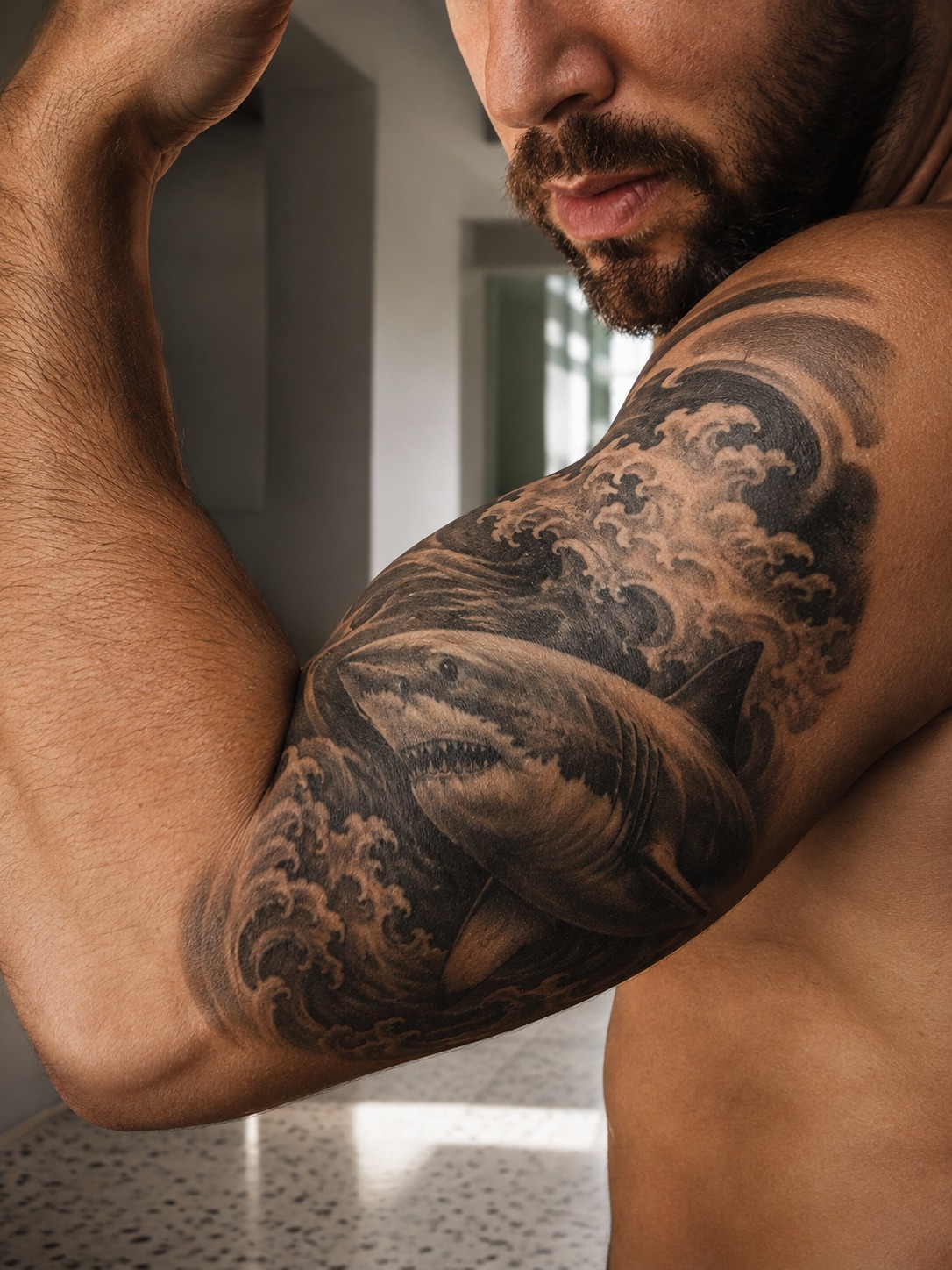
Realism is the most demanding and the most rewarding when it’s done well — full gradient shading, accurate proportions, genuine depth in the eye. This is where the proportion work from the silhouette section actually matters most: a realistic great white with the head-to-body ratio even slightly off reads as wrong in a way a stylized version never would, because realism invites that level of scrutiny. It also fades the least gracefully of the four — grays and blacks blending into skin tone over time is a real risk, so this style benefits from planning touch-ups into the timeline from day one rather than treating it as a one-and-done piece.
Great white, hammerhead, mako, tiger, and whale shark tattoo ideas
With meaning, silhouette logic, and style trade-offs covered, here’s how those actually translate into designs worth bringing to a consultation.

Great white shark ideas
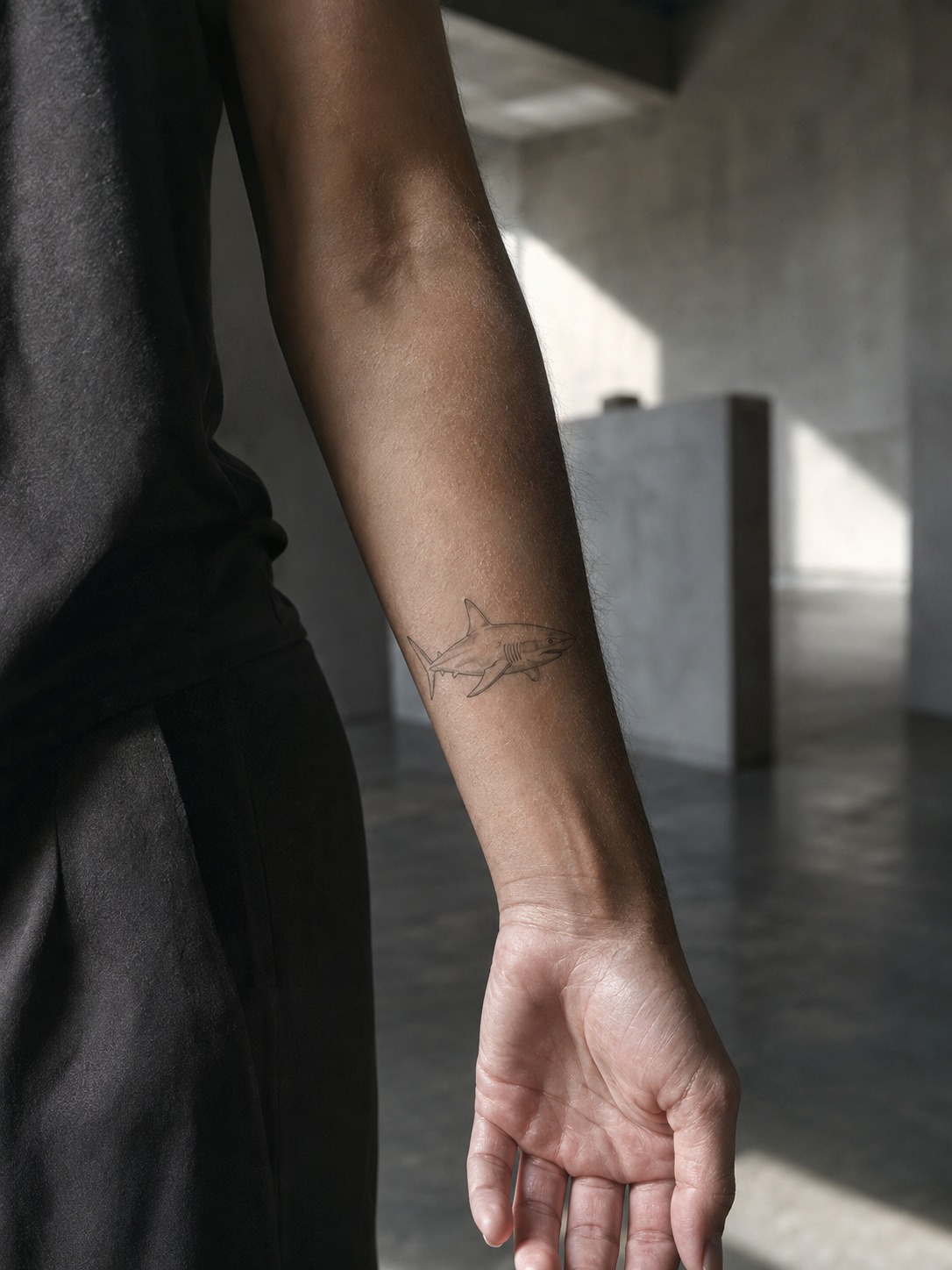
The classic is a three-quarter breach shot — jaw open, mid-lunge out of the water — which reads as dramatic but genuinely struggles at smaller sizes because the open jaw adds detail your silhouette can’t afford to lose. I’d steer most people toward a profile view instead: full body, mouth closed, single dorsal fin catching the eye. It’s the design that holds up at every size, from a two-inch forearm piece to a full back panel. For anyone wanting the meaning without the aggression, a stylized outline swimming calmly rather than mid-attack works just as well symbolically.
Hammerhead shark ideas
Given the width problem from earlier, I’d commit to a front-facing or three-quarter angle that actually shows off that distinctive head shape — it’s the whole reason you’re choosing this species over a great white. A hammerhead swimming directly toward the viewer, rendered in traditional bold-line, is one of the more striking designs in this entire category precisely because so few people commit to showing the head-on angle.
Mako shark ideas
Lean into the speed symbolism with a dynamic, elongated pose — body slightly arched, as if mid-strike. This species genuinely benefits from a wrap-around forearm or calf placement that lets the natural taper follow the limb. A mako rendered static and straight-on loses most of what makes it visually interesting.
Tiger shark ideas
The stripe pattern is your best design asset here — it adds visual texture without threatening the silhouette’s readability the way a whale shark’s spots do, since stripes follow the body’s natural lines rather than scattering across the surface. A tiger shark in fine-line actually works better than most species in that style, because the stripes read as intentional detail rather than something that blurs into noise.
Whale shark ideas
Given the spot-pattern problem, I’d recommend either a large-scale realistic piece (ribs, back, thigh — somewhere with real room) where the pattern can breathe, or a heavily simplified outline version that drops the spots entirely and relies on the distinctive wide mouth and flat head to carry the design. There’s not much middle ground with this species — go big and detailed, or go simple.
If you like marine symbolism but want something calmer, compare this direction with our sea turtle tattoo ideas guide before you settle on the final mood.
Placement that respects the shape
Placement advice on most gallery sites amounts to “shark tattoos look great anywhere,” which isn’t wrong exactly — it’s just not useful. The actual question is whether a given body part’s proportions match the shark’s natural shape, the same logic that decided your silhouette choice back in the second section.
Forearm
Suits torpedo-shaped species best — great white, mako, tiger shark. The limb’s natural length gives an elongated body room to stretch without compression, and it’s visible enough that fine detail (where the style allows for it) doesn’t go to waste hidden under a sleeve.
Ribs and back
This is where width-heavy designs get to breathe — this is your hammerhead’s best home. The flat, broad canvas lets that distinctive head shape stay wide without fighting a curved or narrow surface, and it’s forgiving enough for a realism piece that needs room for gradient shading.

Calf
Works well for a swimming pose with some dynamic curve to it — a mako mid-strike, or a great white banking through a turn. The leg’s natural taper mirrors a shark’s body narrowing toward the tail, which is a detail I don’t see discussed anywhere else, but it’s the same principle as matching a car’s rear haunch surfacing to the way weight actually sits over the wheel.
Shoulder or upper arm
Handles smaller, simplified designs well — a tiger shark’s striped silhouette, a stylized whale shark outline, anything where you’re not asking the space to hold a lot of fine detail. It’s also the most forgiving spot for a first shark tattoo if you’re not sure yet how large you want to go.
One placement mistake I see constantly: choosing a spot for visibility alone and forcing the design to compress or stretch to fit. Pick the shape first, then find the body part that already matches it — you’ll get a cleaner result and spend less time negotiating with your artist over a design that’s fighting its canvas.
What to bring to your consultation
This is the step every gallery site skips entirely — they’ll show you 50 photos and leave you to figure out the rest alone. A good consultation is where the meaning, style, and placement decisions from the last five sections actually turn into a design that works.
Bring healed photos, not just fresh ink. Any artist can make a tattoo look sharp on day one. What you actually need to see is how their traditional linework holds up at the two-year mark, or whether their fine-line work is already softening on other clients. Ask directly: “Can I see healed photos of shark or similar wildlife pieces?” A good artist will have them ready.
Bring your silhouette reasoning, not just a reference photo. Instead of walking in with a single Pinterest image, bring two or three references at the size you’re actually planning to get the tattoo — not full-page prints. If you’ve settled on a hammerhead based on the width logic from earlier, say so; it helps the artist understand you’ve thought about scale, not just aesthetics.
If you plan to sketch rough references before the appointment, the shark drawings guide can help you simplify the body shape before an artist turns it into tattoo-ready linework.
Ask about their species-specific experience. Not every tattoo artist who’s great at traditional work has actually studied shark anatomy closely enough to get proportions right on a realism piece. If you’re going realistic, ask to see their previous marine-life work specifically, not just their portfolio generally.
Talk timeline if you’re going realism. Given the fading risk covered earlier, ask directly whether they build touch-up sessions into their process or treat it as a one-time piece. This is a fair question, and any experienced realism artist will have a clear answer.
Don’t skip the size conversation. Bring the placement and size you’re leaning toward and ask your artist to confirm it’ll actually hold the detail level you want. This single question resolves more of the “silhouette collapsing at small size” problem than anything else in this guide — a good artist will tell you honestly if your hammerhead needs to be bigger than you’re picturing.
Final thoughts
The shark tattoos that still look sharp a decade out share three things most gallery pages never mention: a species chosen for meaning that actually fits the person, a style picked with its long-term fade behavior in mind, and a placement that respects the shark’s real shape instead of fighting it. Get those three right and the specific pose or artist becomes a much easier decision.
If you’re ready to move forward, bring your species and style choice into a consultation and let an experienced artist help you nail the sizing — that’s the step that determines whether this still looks good in ten years, not just on day one.

More shark tattoo ideas to save for your consultation


FAQ
FAQ
What does a shark tattoo symbolize?
It depends heavily on species — a great white symbolizes raw power and fearlessness, a hammerhead represents perception and clear vision, a tiger shark signals adaptability, a mako represents speed and precision, and a whale shark carries calm strength without aggression. Treating “shark tattoo” as one generic meaning misses most of what makes the symbolism interesting.
What’s the difference between a great white and hammerhead tattoo meaning?
A great white leans into raw, unambiguous power and fearlessness — it’s the choice for people who want strength read instantly. A hammerhead is subtler: its symbolism centers on perception and seeing things others miss, tied directly to its distinctive wide-set eyes. They’re both “strong” symbols, but one is about force and the other is about awareness.
Do shark tattoos fade fast?
It depends entirely on style. Traditional bold-line work holds up best over decades because thick outlines resist the blurring skin undergoes with age. Fine-line and realism fade less gracefully — fine-line linework thins first, and realism’s gradient shading can blend into skin tone over 10+ years without occasional touch-ups.
What does a 3-shark tattoo mean?
Multiple sharks grouped together often represent family, loyalty, or a close circle — similar to how a trio of any animal in tattoo tradition frequently signals protection of specific people rather than a general trait. The exact meaning tends to be personal to the wearer more than it follows a fixed convention.
Is a shark tattoo bad luck?
No — sharks carry protective and power-based symbolism across most tattoo traditions, including Polynesian niho mano work, where the shark’s teeth motif is specifically tied to guidance and protection rather than misfortune. Any “bad luck” association is more internet myth than tattoo tradition.
Best placement for a small shark tattoo?
Shoulder or upper arm handles small, simplified designs best — a stylized outline or a species with a clean silhouette like a great white in profile. Avoid going small with a hammerhead specifically; its wide head shape needs enough room to stay proportionate, so a coin-sized wrist piece will lose the exact feature that makes it recognizable.
What does a Polynesian shark tooth tattoo mean?
The niho mano — literally “teeth of the shark” — is a genuine Polynesian tattooing motif tied to protection, guidance, and connection to ocean-associated ancestors. It’s a specific cultural design with real meaning, not just a generic “tribal shark” aesthetic, so it’s worth seeking an artist who actually works in Polynesian tattooing traditions if this style draws you in.
For a wider look at placement, style, and symbolism across different designs, use the Sky Rye Design tattoo ideas hub as your next stop.
- 0shares
- Facebook0
- Pinterest0
- Twitter0
- Reddit0