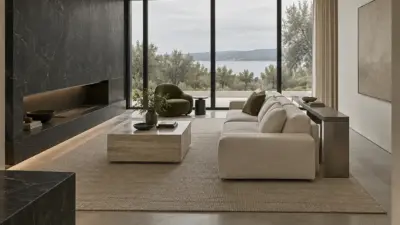
A professional audit of building envelope performance, passive cooling strategies, and high-efficiency mechanical specification — for Australian homes that overheat.
A client brought me into a renovation project in late autumn with a brief that was essentially a complaint: the house is unbearable in summer. Two split systems running from eleven in the morning until midnight, every day from December to March, and the master bedroom still hitting thirty-two degrees by three in the afternoon. The systems were only four years old and worked correctly. The problem was not the cooling — it was everything the cooling was fighting against.
- Passive Cooling First: How the Thermal Envelope Determines Your Comfort
- Upgrading to High-Efficiency Cooling Systems
- The Correct Upgrade Sequence: Envelope Before Equipment
- Comfort as a Design Outcome, Not an Energy Cost
- FAQ: Home Cooling Architecture Design and Summer Comfort
- Q: What is the most effective way to keep a house cool without air conditioning?
- Q: What is bioclimatic design and how does it apply to Australian homes?
- Q: What is the government air conditioning rebate in Victoria?
- Q: What star rating should I look for in a split system?
- Q: Is it worth insulating before installing air conditioning?
- Q: What is the best insulation for Australian homes in hot climates?
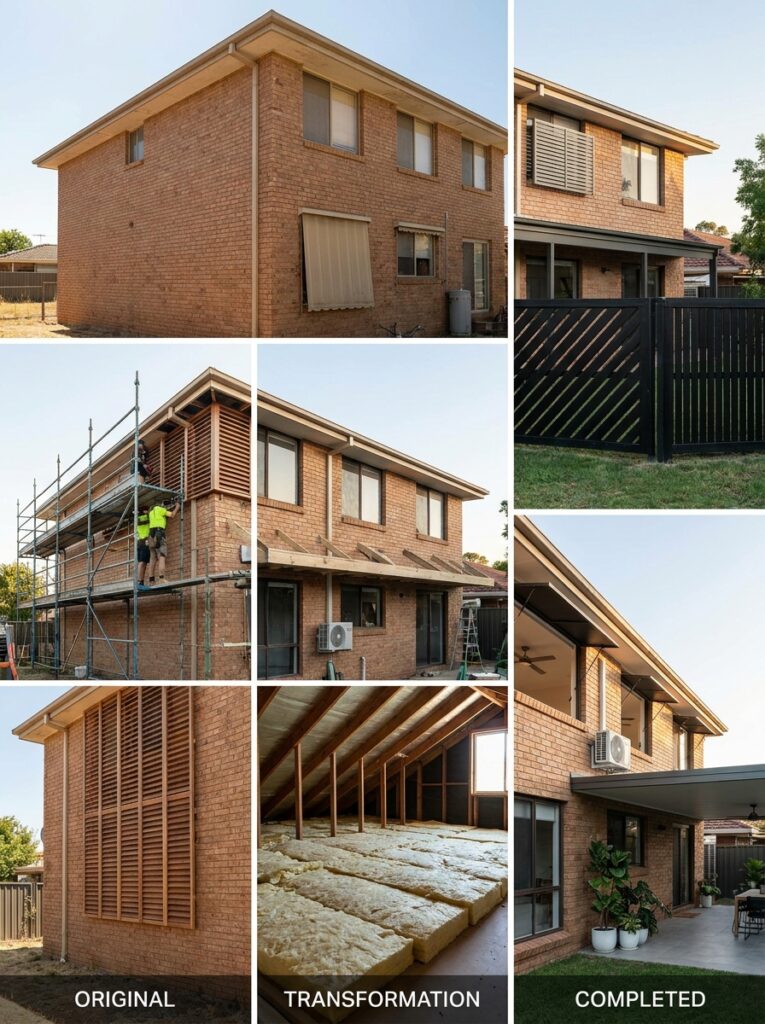
The north-facing living room had no external shading on its full-width glazing. The ceiling insulation was original — R1.5 fibreglass batts installed in 1988, compressed and degraded to the point of being nearly ineffective. The west-facing bedroom wall was dark brick that had been absorbing solar radiation all day and radiating it back into the room through the evening. The split systems were trying to cool a building that was architecturally designed to overheat. No amount of mechanical cooling capacity was going to solve that problem efficiently.
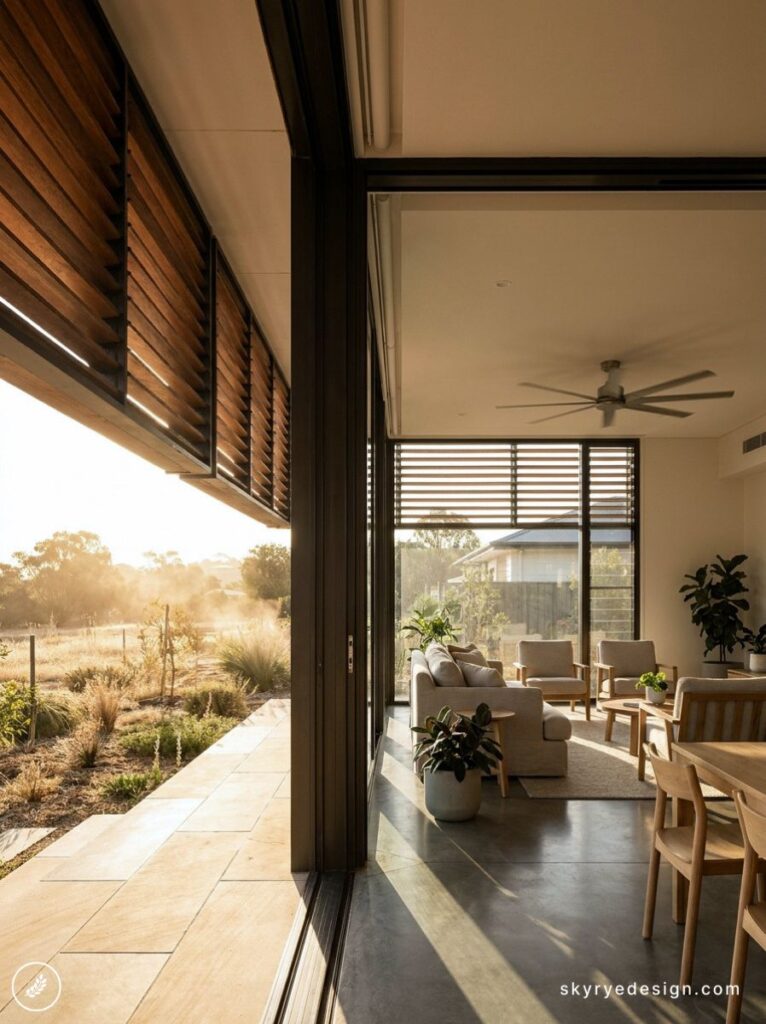
Summer comfort is a home cooling architecture design problem before it is a technology problem. The correct sequence follows the logic of bioclimatic design: address the building’s thermal envelope first — the surfaces, shading, insulation, and ventilation pathways that govern how much heat enters and how easily it leaves — before specifying the mechanical cooling that handles whatever residual load remains. Done in this order, the result is a house that stays significantly cooler passively, requires a smaller and less expensive cooling system, and costs far less to run across its lifetime. This guide covers both layers.
Passive Cooling First: How the Thermal Envelope Determines Your Comfort
The fundamental principle of bioclimatic design for residential architecture is this: heat that never enters the building requires no energy to remove. Every degree of passive temperature reduction through shading, insulation, and ventilation directly reduces the size, running time, and energy cost of any mechanical cooling system. The architectural interventions below are not alternatives to air conditioning — they are the conditions that allow air conditioning to perform efficiently rather than constantly.
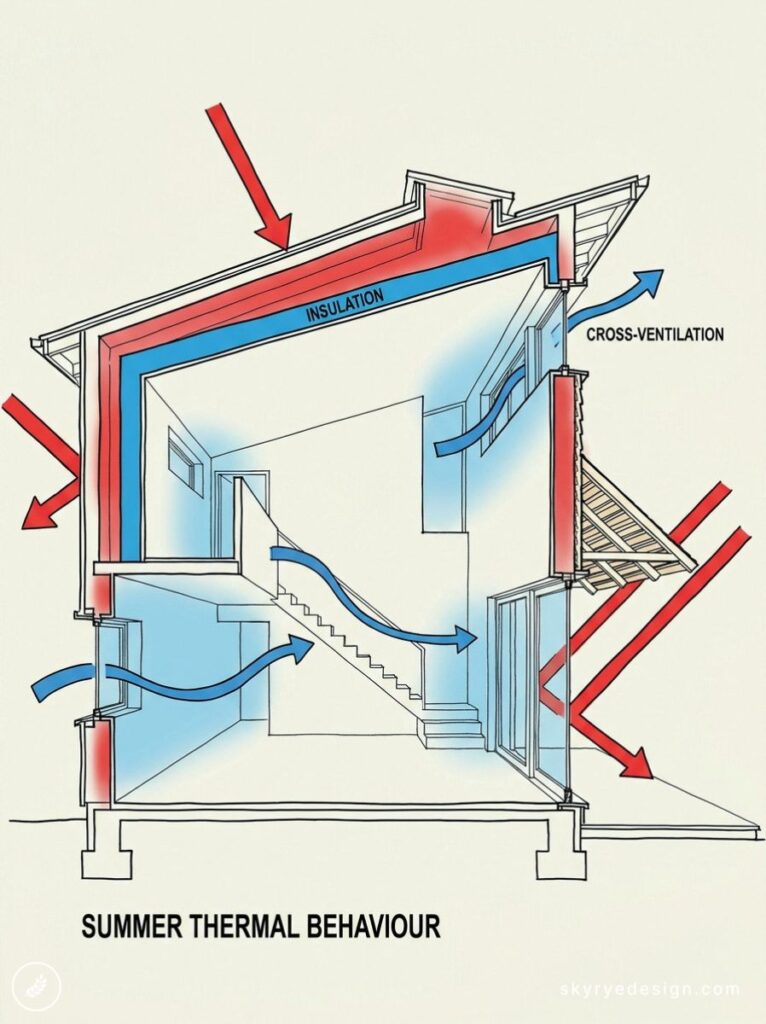
Australian residential buildings gain heat through three primary pathways: the roof plane (responsible for 25–35% of summer heat gain in a poorly insulated home), unshaded glazing (particularly east, west, and north-facing windows, which admit direct solar radiation and convert it to trapped heat inside), and air infiltration through unsealed penetrations and gaps. Addressing these three pathways in sequence produces the greatest thermal improvement per dollar of any whole-of-house performance upgrade.
External Solar Shading
How it works: Physical barriers — eaves, pergolas, external blinds, louvres, or vegetation — intercept solar radiation before it reaches the glass surface. External shading works because it blocks the sun before it converts to heat inside the glazing. Once sunlight passes through glass, it shifts to long-wave infrared radiation that cannot pass back out — the mechanism behind greenhouse heat trap. Glazing with a low Solar Heat Gain Coefficient (SHGC of 0.4 or below, common in quality double-glazed low-e units) reduces this effect, but external shading remains 5–10× more effective than any glazing specification alone.
Cooling impact: External shading on north-facing glazing can reduce solar heat gain through that window by 70–90%. Internal blinds and curtains reduce heat gain by only 10–25% because the heat is already inside the glass layer when the blind intercepts it. East and west-facing windows receive the most intense low-angle summer sun and benefit most from external shading — often more than north-facing glass.
Specification: Fixed eaves with a minimum 600mm projection on north-facing glazing (correct for NCC Climate Zone 6, Melbourne) block high summer sun while allowing low-angle winter sun to reach the glass for passive solar heating. For east and west elevations, external roller blinds or vertical louvres in a light colour (reflectance value 0.6+) are the most effective solution.
Ceiling and Roof Insulation
How it works: Thermal insulation in the ceiling plane resists the transfer of heat from the hot roof space into the living areas below. The roof space of an unshaded Australian home reaches 60–70°C on a 38°C day. Without adequate insulation, that heat radiates directly into the rooms below — a load no split system was designed to offset continuously.
Cooling impact: Upgrading ceiling insulation from R1.5 (standard in pre-2000 Australian homes) to R4.0 reduces summer heat gain through the ceiling by approximately 60–70%. R6.0 is the correct specification for NatHERS-assessed projects targeting 6+ stars or homes in Climate Zones 2 and 3.
Specification — recommended products:
| Product | Specification |
| Bradford Gold glasswool | R4.0 or R6.0 batts at ceiling joist level |
| Knauf Earthwool | R4.0 or R6.0 — low-itch polyester alternative |
| Reflective foil sarking | Under roofing material; requires air gap above and below |
Cross-Ventilation and Night Purging
How it works: Deliberate use of natural airflow removes accumulated heat during the cooler parts of the day. Cross-ventilation requires openings on both the windward and leeward sides of the building. Night purging involves opening the building fully once outdoor temperature drops below indoor temperature and closing it before the outdoor temperature rises above indoor again the following morning.
Cooling impact: A well-ventilated house reduces indoor temperature to within 2–3°C of the overnight low by morning. DC ceiling fans extend the effective comfort range by approximately 3–4°C through evaporative cooling of the skin.
Recommended DC ceiling fan specifications:
| Model | Power Draw |
| Martec Precision DC | 3–15W across speed range |
| Big Ass Fans Haiku L | 3–14W — premium residential spec |
| Generic DC 5-blade | < 20W — verify Energy Star rating |
Thermal Mass Management
How it works: Thermal mass — the heat-absorbing capacity of concrete floors, brick walls, and stone surfaces — acts as a thermal flywheel, moderating interior temperature swings. In summer, exposed mass receiving direct solar radiation stores that heat and radiates it back into the interior through the evening. Managed correctly, shaded mass becomes an asset; mismanaged, it extends uncomfortable indoor temperatures well past sunset.
Specification note: For homes with significant thermal mass (exposed polished concrete, double-brick, or stone), summer management means keeping mass surfaces out of direct sunlight and maximising night-time cooling of the mass. For lightweight construction (timber framing, lightweight metal cladding), the priority shifts entirely to insulation and external shading.
Design note: The correct diagnosis before any cooling upgrade: stand in the hottest room at the hottest time of day and identify the primary heat source. Is it direct sunlight through unshaded glazing? Radiant heat from a degraded ceiling? Hot air trapped with no ventilation path? Each cause has a different architectural fix — and fixing the right cause first makes every subsequent intervention more effective.
Upgrading to High-Efficiency Cooling Systems
Passive design strategies reduce the load that mechanical cooling must handle. But for most Australian homes — particularly in Victoria, where summer temperatures regularly exceed 35°C and heatwaves above 40°C are increasingly common — mechanical cooling remains essential for a significant portion of summer. The question is not whether to have it, but how to specify it so it performs efficiently, runs at minimum cost, and is sized correctly for a building that has already been improved by the passive interventions above.
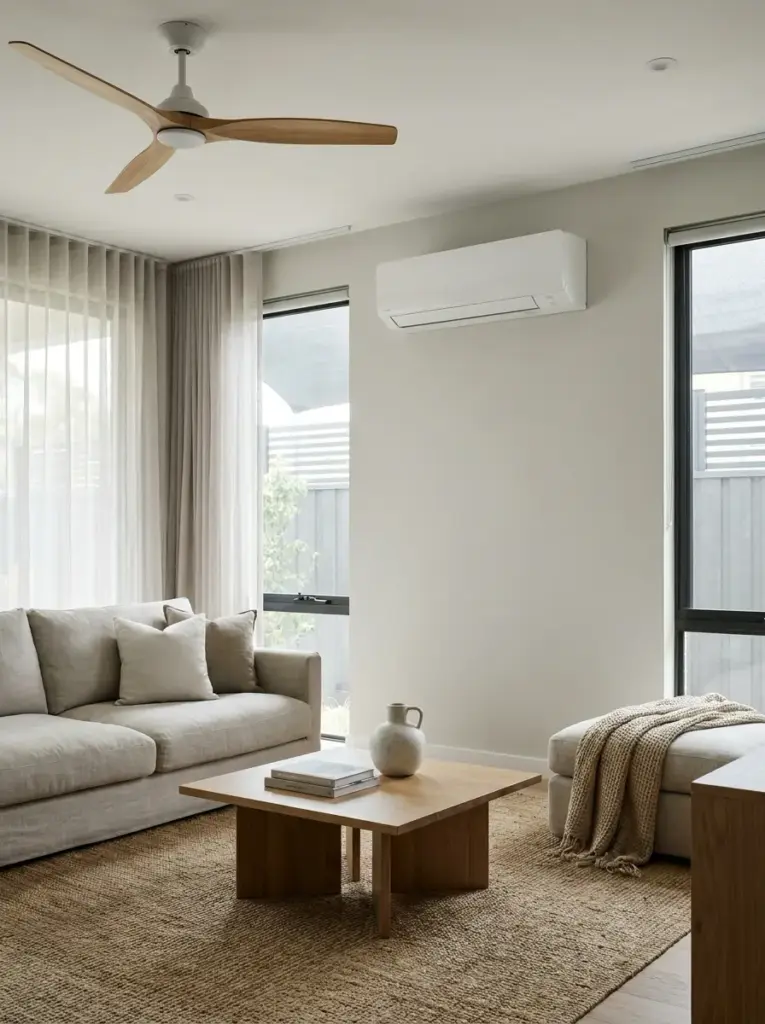
The most common error in air conditioning specification is sizing the system for the building’s current thermal performance rather than its post-improvement performance. A house currently requiring 5kW of cooling capacity at peak conditions may require only 3.5kW after proper ceiling insulation and external shading. Oversized systems run in short cycles, never reaching their efficiency optimum.
Always complete the envelope work before sizing the system.
What Makes a Split System High-Efficiency
Modern inverter-driven reverse-cycle split systems are the benchmark for residential cooling efficiency in the NCC’s climate-responsive design framework. The inverter drive allows the compressor to modulate continuously rather than switching on and off at full power — maintaining a stable setpoint temperature at a fraction of the energy cost of older fixed-speed units.
For Victorian conditions — NCC Climate Zone 6 — a minimum 5-star cooling / 5-star heating system is a reasonable baseline. The following models consistently achieve 6-star+ ratings and represent the current specification standard for premium residential installations:
| Brand / Model | Rating / Notes |
| Daikin FTXZ (Ururu Sarara) | 6-star+; heat recovery humidity control |
| Mitsubishi Electric MSZ-AP | 6-star+; ultra-quiet operation; preferred bedroom spec |
| Fujitsu ASTG-KMTC | 6-star+; strong cold-climate heating performance |
Zoning and Room-by-Room Control
A single large ducted system conditioning the entire house simultaneously is frequently less efficient in practice than a zoned multi-head system cooling only occupied rooms. For smaller homes and apartments, a well-placed single split system in the primary living zone — combined with passive cooling in secondary spaces — often outperforms a ducted whole-house system on both upfront cost and running efficiency.
For larger homes, a multi-head system with individual room control (Daikin VRV or Mitsubishi Electric City Multi for larger footprints; standard multi-split configurations for 3–4 room zoning) allows the cooling load to concentrate where it is needed.
For summer living, passive solar cooling is often the quiet partner to good shading, cross-ventilation, and exterior landscape choices.
The Victorian Rebate Opportunity
The Victorian Energy Upgrades program provides point-of-sale discounts on qualifying high-efficiency reverse-cycle split systems. The rebate applies at purchase — no separate application required — and is applied directly as a discount at installation. Systems must be installed by a VEU-accredited provider to qualify.
The government air conditioning rebate Victoria is designed to lower the barrier to replacing older inefficient systems with high-star-rated models that cost significantly less to run across their lifespan. The combination of reduced upfront cost and reduced ongoing running cost makes this the most financially compelling moment in recent years to complete the upgrade.
Design note: Confirm VEU rebate eligibility before purchasing. Rebate amounts are updated periodically. Request written confirmation of the installer’s VEU accreditation status and the specific rebate amount for the system you are purchasing — a straightforward step that prevents post-installation complications.
The Correct Upgrade Sequence: Envelope Before Equipment
The sequence of upgrades matters as much as the upgrades themselves. Installing a larger air conditioner before addressing the building’s thermal envelope is the most common — and most expensive — error in residential cooling upgrades.
It produces an oversized system sized for an unimproved building that runs inefficiently and generates higher running costs than a correctly sized system installed after envelope improvements.
Stage 1 — Reduce Heat Gain ($2,000–$8,000)
Address the primary sources of summer heat gain first. For most Australian homes, this means external shading on unshaded east, west, and north-facing glazing, and ceiling insulation upgrade to at least R4.0. These two interventions deliver the largest reduction in peak indoor temperature per dollar of any improvement available and form the foundation of effective home cooling architecture design.
Stage 2 — Improve Ventilation
Install DC ceiling fans in primary living and sleeping spaces and establish the night-purging ventilation routine. DC motor fans with variable speed control draw 3–15 watts at low and medium speeds, compared to 50–75 watts for older AC motor fans. Ceiling fans in bedrooms carry the highest value-to-cost ratio because they extend the range of comfortable sleeping conditions significantly.
Stage 3 — Size and Specify the System
After Stage 1 and Stage 2, commission a proper cooling load calculation for the improved building. A qualified building performance consultant or accredited installer calculates the peak cooling load based on the building’s actual post-improvement thermal performance — factoring in the new insulation R-value, shading geometry, glazing SHGC, and infiltration rates.
This calculation produces a lower required capacity than the same exercise on the unimproved building: a smaller, cheaper-to-purchase, cheaper-to-run system. Specify the highest star rating achievable within budget and confirm VEU rebate eligibility before purchasing.
Comfort as a Design Outcome, Not an Energy Cost
The client whose house I started with had both split systems running an average of eleven hours a day across summer. After the renovation — external louvres on the north-facing living room glazing, R4.0 Bradford Gold batts replacing the original degraded R1.5 insulation, Martec DC ceiling fans in the living room and three bedrooms, and a new 5kW Mitsubishi Electric MSZ-AP inverter system replacing the two older units — the single replacement system ran for an average of four hours per day across the following summer.
The house was cooler on the hottest days than it had been the previous year. Running costs dropped significantly. The occupants stopped thinking about the air conditioning because it worked quietly and predictably in the background rather than running constantly against heat the building itself was generating.
That is what comfort as a design outcome means: not a more powerful system fighting harder against poor envelope performance, but a well-considered thermal envelope that requires less mechanical intervention to remain habitable.
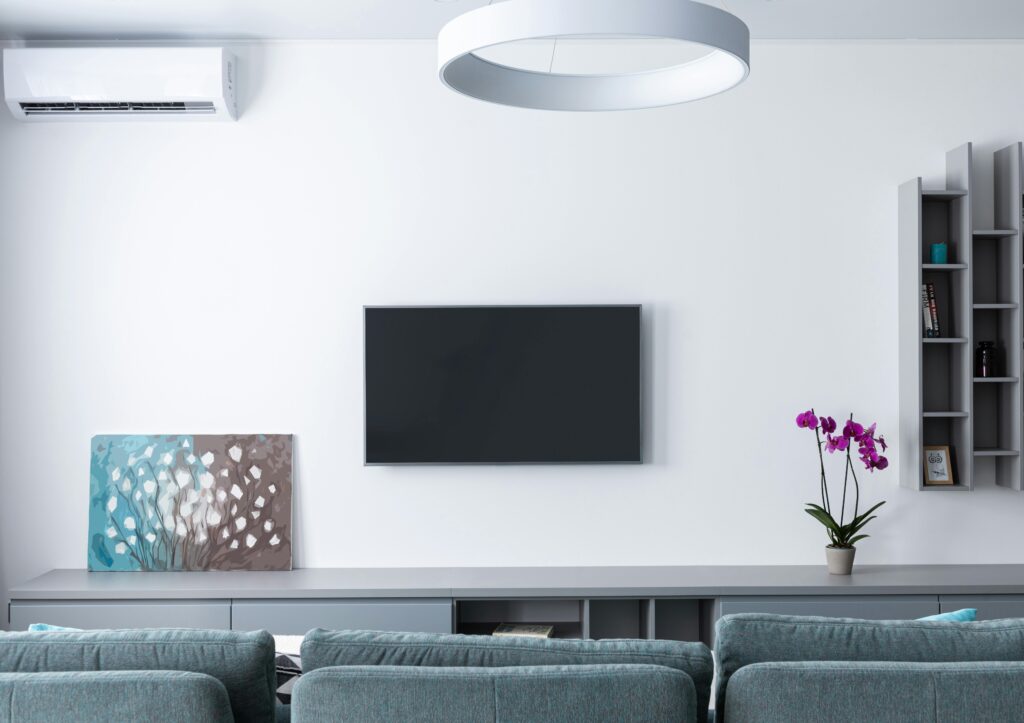
For Victorian homeowners ready to make this transition, the path is clear: address shading and insulation first, add DC ceiling fans for the shoulder seasons, then upgrade the mechanical system with Victorian Energy Upgrades program support once the building is ready to use it efficiently. The result is a home that is genuinely more comfortable across the full range of summer conditions — and one that costs significantly less to keep that way.
FAQ: Home Cooling Architecture Design and Summer Comfort
Q: What is the most effective way to keep a house cool without air conditioning?
Three strategies in combination: external solar shading on east, west, and north-facing glazing (5–10× more effective than internal blinds), ceiling insulation at R4.0 or above (reduces radiant heat gain by 60–70%), and cross-ventilation with night purging. A Martec Precision DC ceiling fan running on low draws around 3 watts, extending the comfort range by approximately 3–4°C.
Q: What is bioclimatic design and how does it apply to Australian homes?
Bioclimatic design is the practice of using a building’s orientation, massing, shading, insulation, and ventilation to respond to local climate conditions — reducing the need for mechanical heating and cooling. In Australian residential architecture, it means designing the thermal envelope first and specifying mechanical systems second. A home designed to NatHERS 7-star performance or above achieves this integration; most existing homes can be substantially improved through the staged retrofits described in this guide.
Q: What is the government air conditioning rebate in Victoria?
The Victorian Energy Upgrades program provides point-of-sale discounts on qualifying high-efficiency reverse-cycle split systems. The rebate applies at purchase — no separate application required. The system must be installed by a VEU-accredited provider to qualify. Rebate amounts vary by system star rating and capacity and are updated periodically. Confirm current eligibility with your installer before purchasing.
Q: What star rating should I look for in a split system?
Minimum 5 stars cooling / 5 stars heating for a modern residential split system. 6-star and super-efficient models deliver the lowest running costs and are most likely to qualify for VEU rebates. Each additional star represents approximately 10% improvement in energy efficiency. Top performers: Daikin FTXZ Ururu Sarara, Mitsubishi Electric MSZ-AP, and Fujitsu ASTG-KMTC.
Q: Is it worth insulating before installing air conditioning?
Yes, consistently. Upgrading ceiling insulation to R4.0–R6.0 before specifying the system allows you to size the system for the improved building performance, not the current under-insulated state. A house upgrading from R1.5 to R4.0 typically requires 20–30% less cooling capacity at peak conditions — a compounding financial benefit over the system’s 15–20 year lifespan.
Q: What is the best insulation for Australian homes in hot climates?
For ceiling insulation in NCC Climate Zones 4–6, R4.0 bulk insulation batts — Bradford Gold Hi-Performance, Knauf Earthwool, or Fletcher Pink Batts — combined with reflective foil sarking under the roofing material is the standard high-performance specification. For Climate Zones 2 and 3 (subtropical and tropical northern Australia), R6.0 at the ceiling is the appropriate target.
Summer comfort depends on orientation, shading, and material choices. This modern wooden house planning adds timber-specific notes on layout, insulation, and ventilation.
- 40shares
- Facebook0
- Pinterest40
- Twitter0
- Reddit0