If you want to learn how to draw glasses for portraits or character art, start with placement, not decoration. Glasses are small objects sitting on a curved head: the bridge rests on the nose, the lenses follow the eye line, and the arms travel back toward the ears. When those three things line up, the frames feel believable before you add reflections or tiny screws.
How to draw glasses step by step
To draw glasses, sketch the head and eye line first, block the lenses as simple shapes, connect them with the bridge, then angle the temples back toward the ears. Keep the frame light until both lenses feel balanced on the face. After that, add frame thickness, nose pads, hinges, and only a few lens reflections. I usually check the drawing by covering the glasses with my finger: if the eyes and face still align underneath, the frames are supporting the portrait instead of hiding a construction problem.
- Draw the head, eye line, nose bridge, and ear placement.
- Place two light lens shapes across the eye line.
- Connect the lenses with a bridge that follows the nose.
- Add temples that angle back in perspective toward the ears.
- Finish with frame thickness, small contact shadows, and restrained highlights.
- Why Drawing Glasses Is Harder Than It Looks
- Start With the Head: Foundation Before Frames
- Breaking Glasses Into Simple Shapes
- Understanding Perspective: Glasses in 3D Space
- Drawing Glasses on Different Face Shapes
- Popular Glasses Styles (And How to Draw Them)
- Glasses and Facial Anatomy: What Touches What
- Drawing Eyes Behind Glasses
- Light, Reflection, and Transparency
- Common Mistakes (And How to Fix Them)
- Practice Exercises for Rapid Improvement
- Pro Tips From Illustrators
- Final Thoughts: Glasses as a Design Tool
- Frequently asked questions about how to draw glasses
- Q: What makes glasses hard to draw in portraits?
- Q: How do you start drawing glasses on a face?
- Q: Why should you draw the frames before detailing the eyes?
- Q: What is the best way to draw lens reflections?
- Q: How many guidelines do you need for drawing glasses?
- Q: What are the most common mistakes when drawing glasses?
- Q: Which glasses style is easiest for beginners to draw?
This guide keeps the process practical: simple lens shapes, head construction, perspective, reflections, and the small contact points that make frames feel attached to the face. It works whether you are sketching from life, designing characters, or building a more polished portrait.
By the end, you should know where the glasses touch the face, how to keep the lenses even, and how much reflection is enough.
Why Drawing Glasses Is Harder Than It Looks
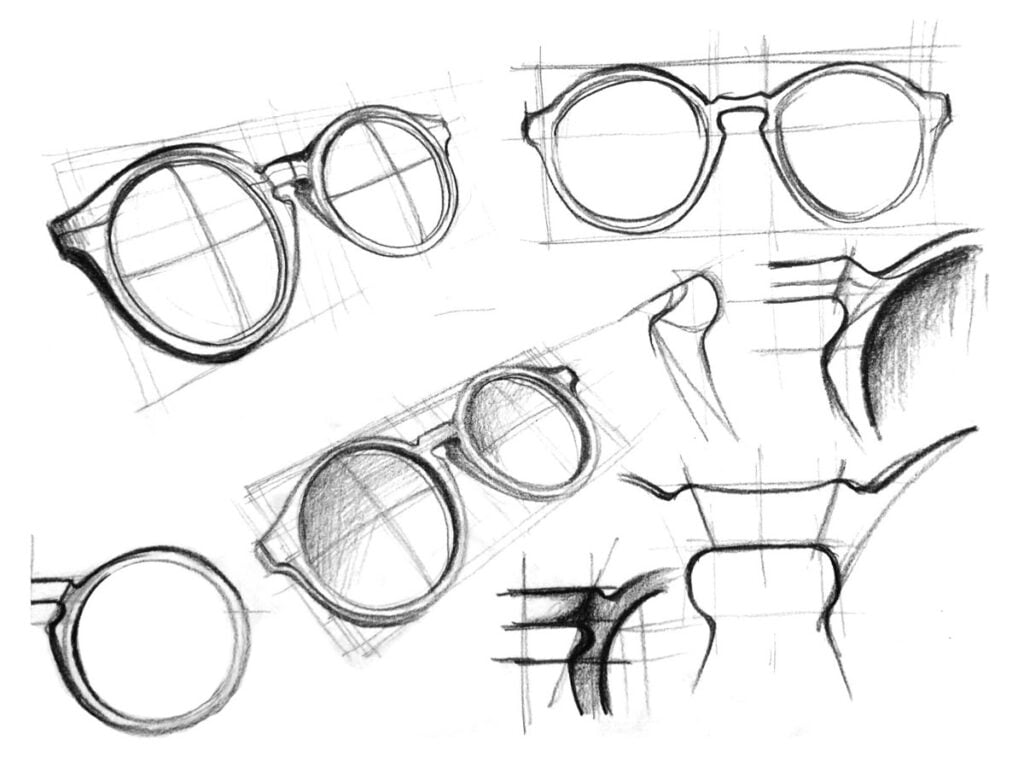
At first glance, glasses look like two shapes and a bridge. The problem is that those shapes have to sit in perspective on a face. They create three drawing challenges:
- They sit in perspective on a curved surface (the face)
- They interact with anatomy (nose, eyes, ears)
- They’re both transparent and reflective
Most mistakes come from treating glasses like flat stickers instead of three-dimensional objects that wrap around the head.
Once you understand that structure, glasses become much easier to control. They stop floating and start acting like part of the portrait.
Start With the Head: Foundation Before Frames
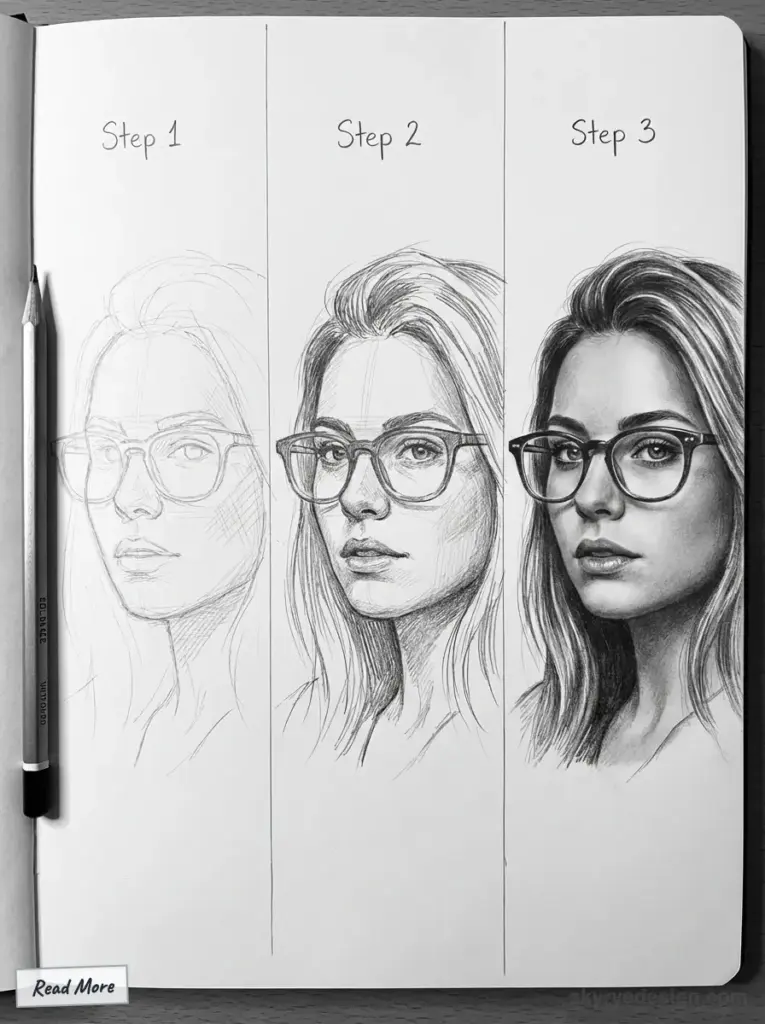
Before drawing glasses, you must establish the head correctly. Glasses follow the structure of the skull—they don’t float independently.
Key placement rules:
- Glasses sit on the bridge of the nose, not the eyes themselves
- The lenses align roughly with the eye line
- The temples (arms) wrap back toward the ears along the side of the head
If your head construction is off, your glasses will always feel wrong.
Draw the head first, even if you plan to erase most of the guides later. If face construction is still shaky, warm up with this how to draw a face guide before adding frames.
Breaking Glasses Into Simple Shapes
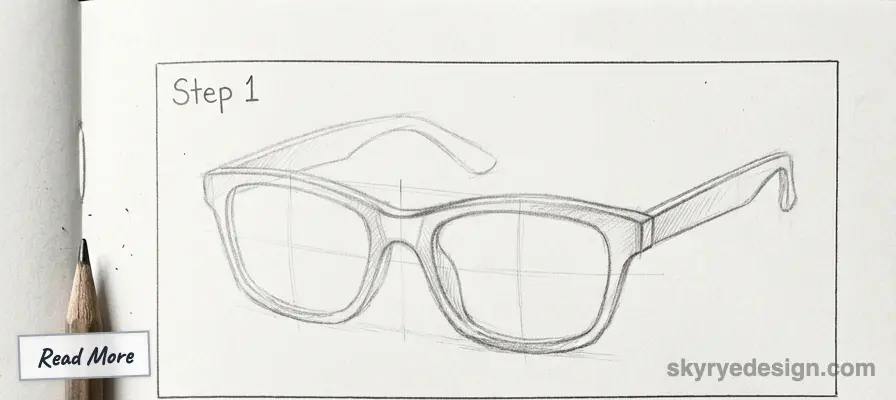
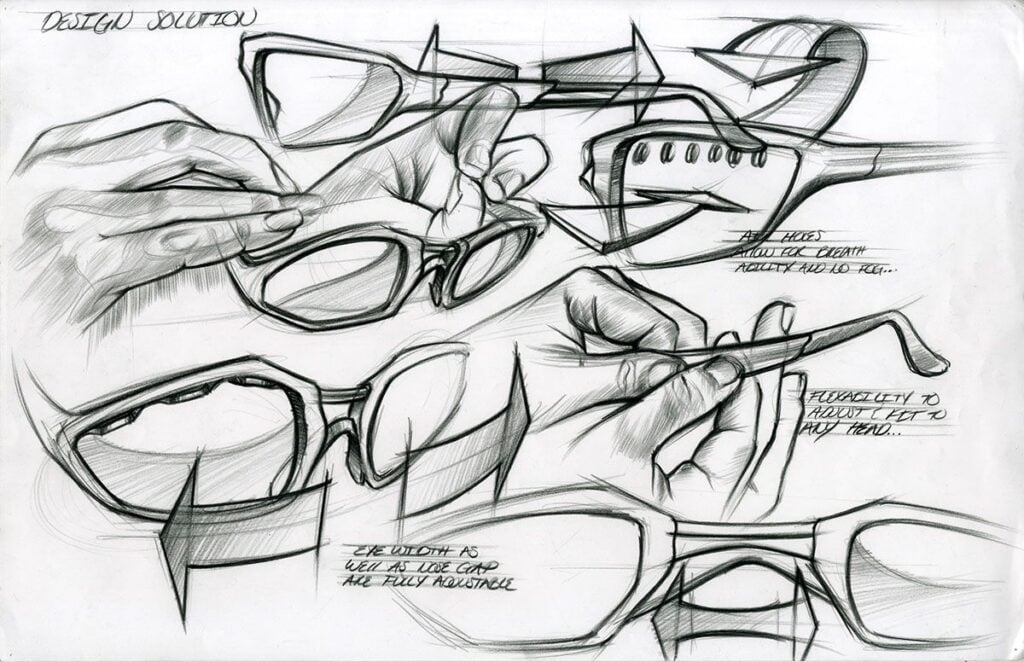
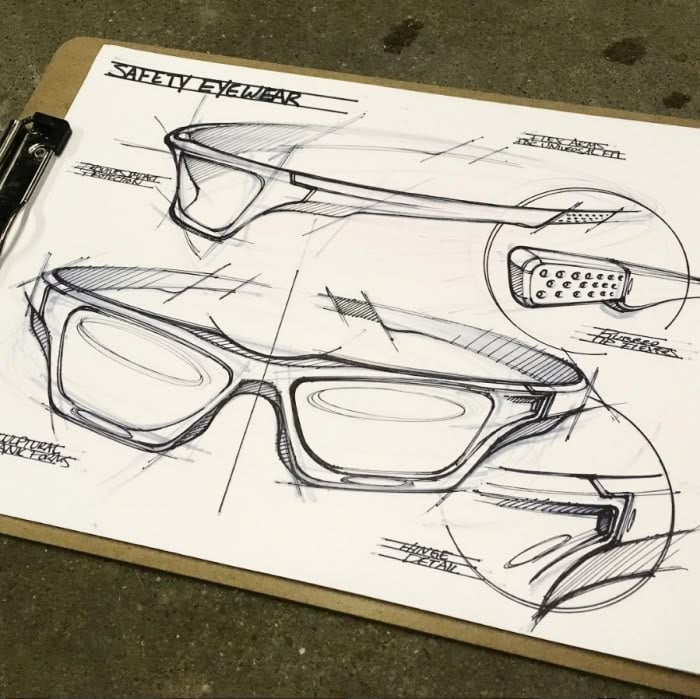
The fastest way to improve your glasses drawing is to simplify the frame before you render it. Think like a product sketch: lens shape, bridge, hinge, arm, then material.
Step 1: Lenses as Basic Shapes
Most lenses can be reduced to:
- Circles
- Ovals
- Rectangles
- Rounded rectangles
Draw them lightly across the eye line. In front view, symmetry matters. In a three-quarter view, the far lens should be slightly narrower because it is turning away from you.
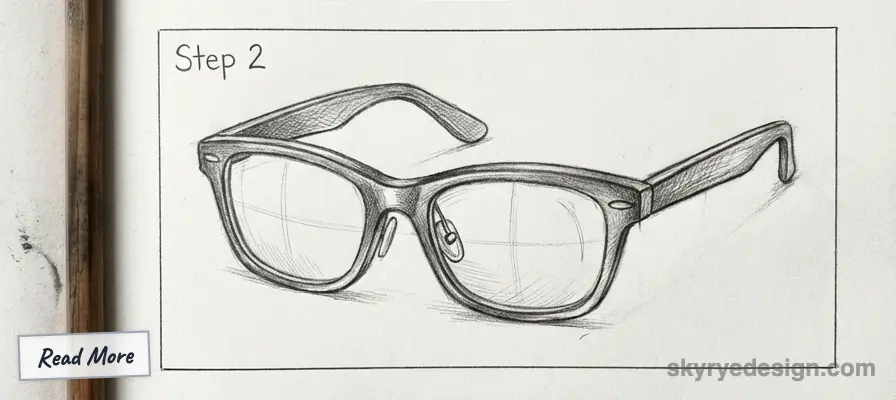
Step 2: Add the Bridge
The bridge connects the lenses and rests on the nose. Its shape varies:
- Thin metal curve
- Thick plastic bar
- Keyhole shape (vintage styles)
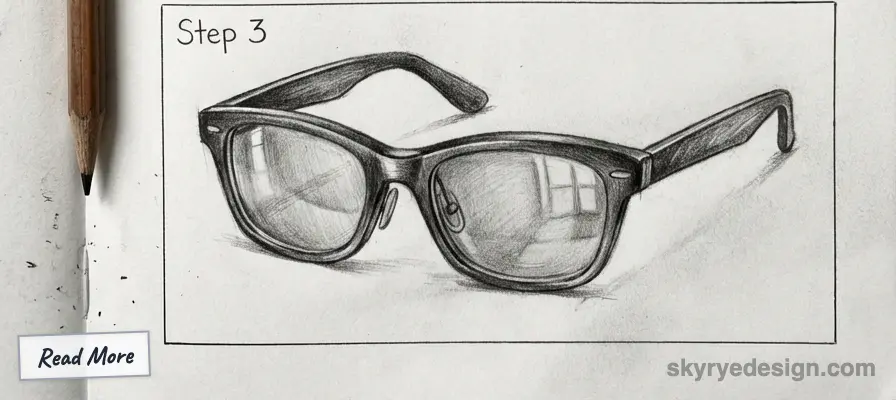
Step 3: Draw the Temples (Arms)
The arms:
- Extend backward in perspective
- Slightly angle downward
- Curve gently around the ears
Understanding Perspective: Glasses in 3D Space
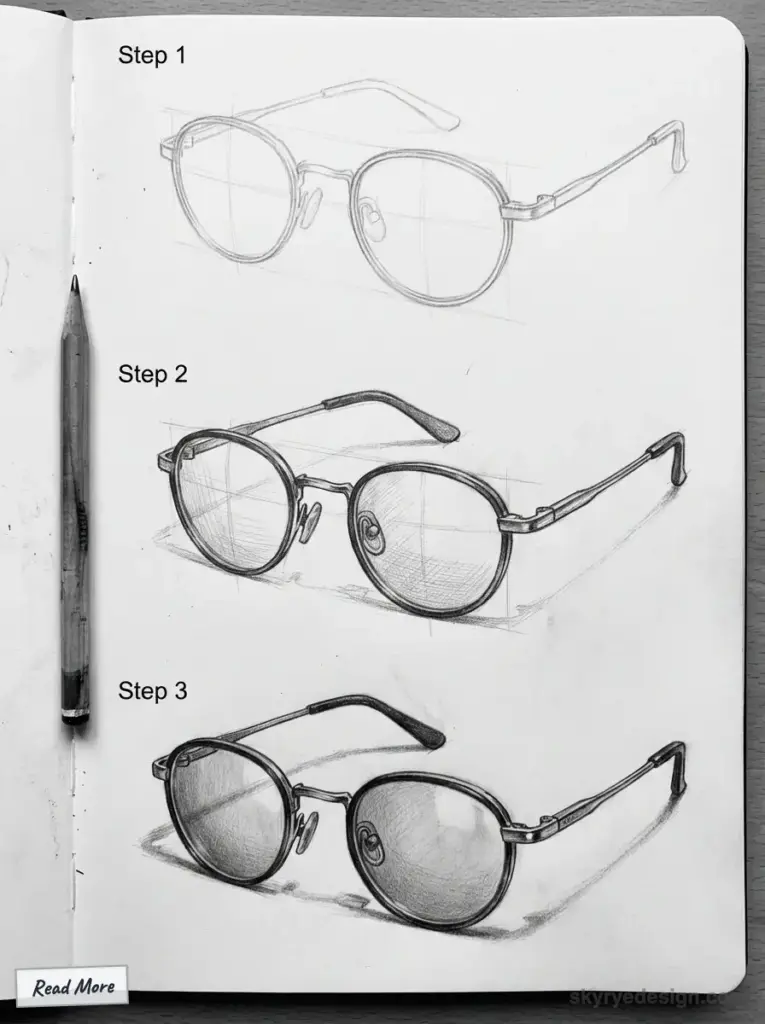
One of the biggest beginner mistakes is drawing both lenses the same size in angled views.
Key perspective rules:
- The lens closer to the viewer appears slightly larger
- The far lens is partially foreshortened
- The bridge curves with the face
Try this exercise:
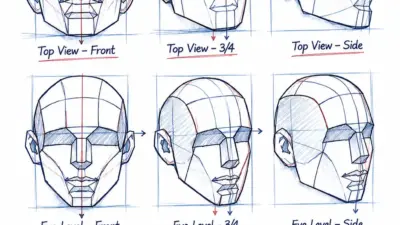
- Draw a head turned ¾ view
- Sketch a curved guideline across the face
- Place both lenses along that curve
This instantly makes glasses feel wrapped around the head instead of pasted on.
Drawing Glasses on Different Face Shapes
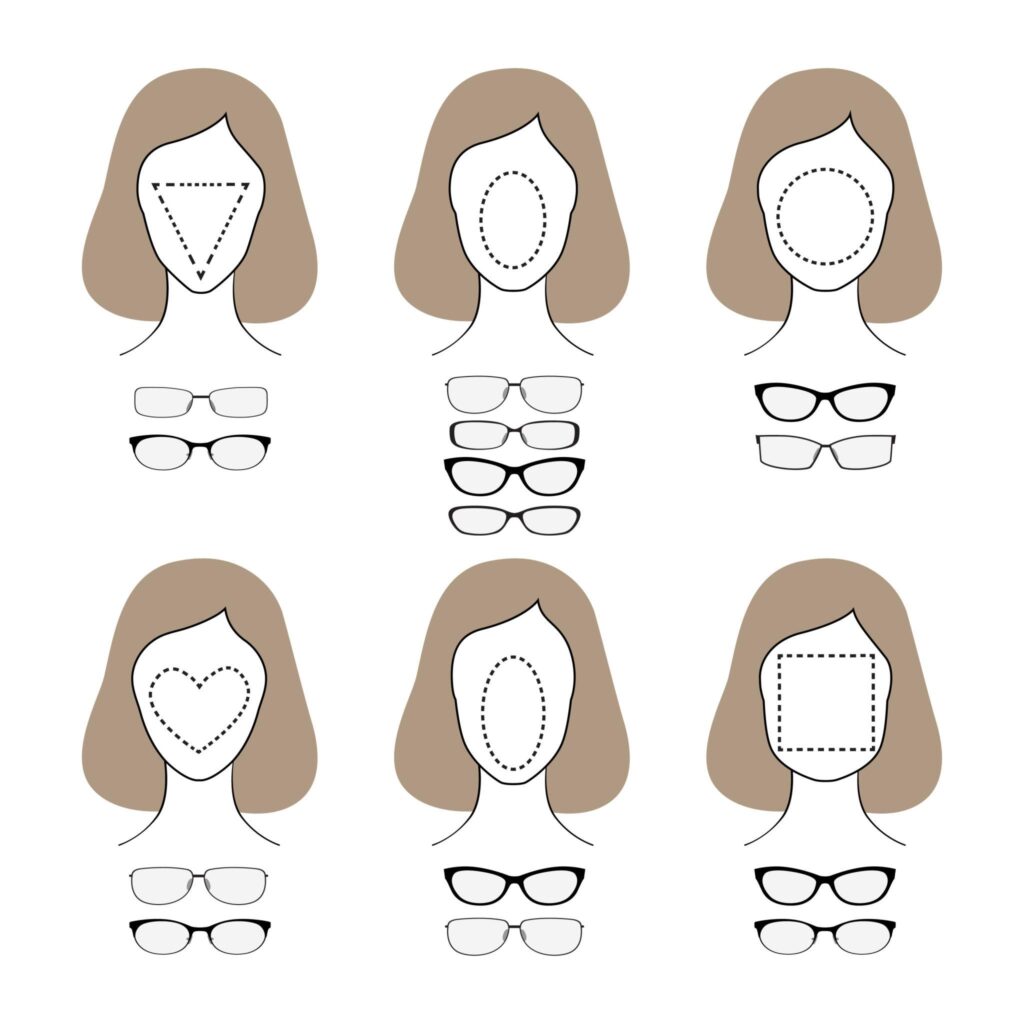
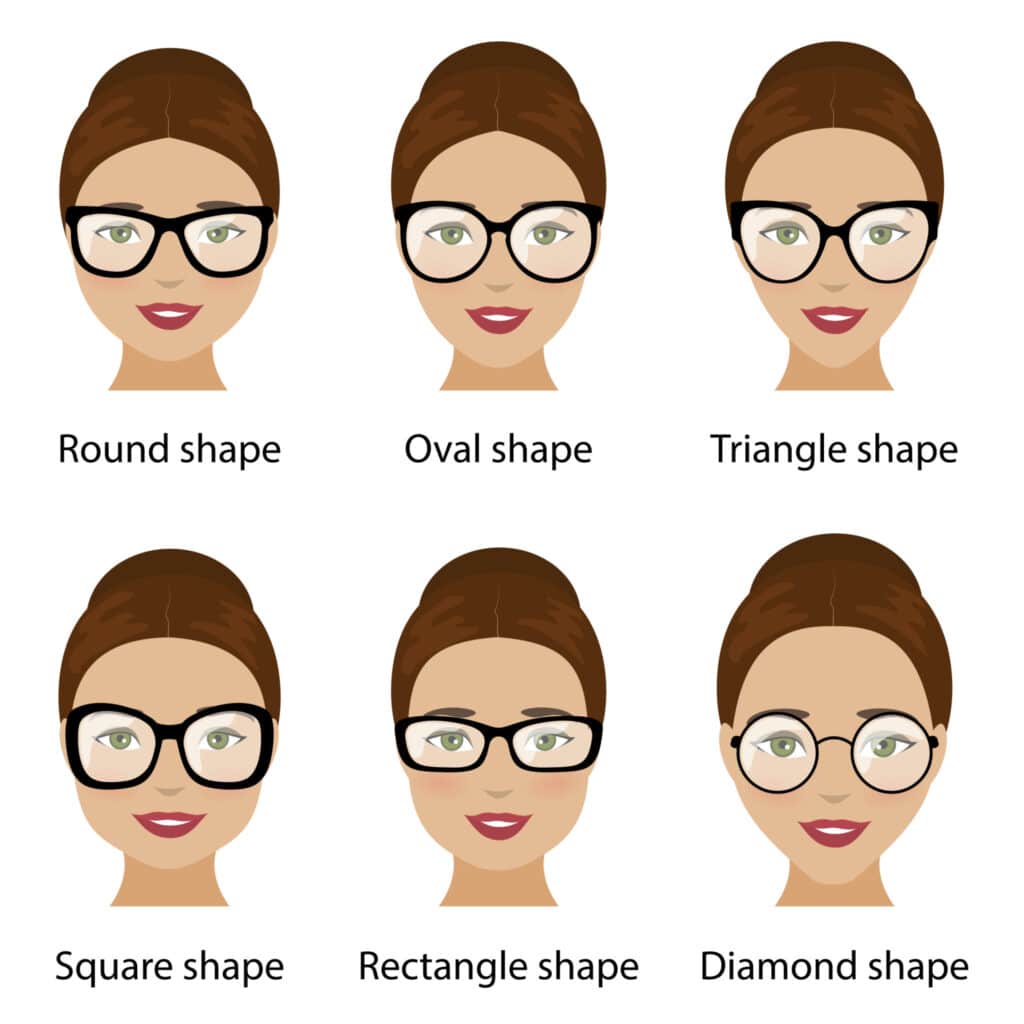
Faces are not universal, and the glasses should respond to the face underneath. Do not paste the same frame shape onto every portrait.
Round Faces
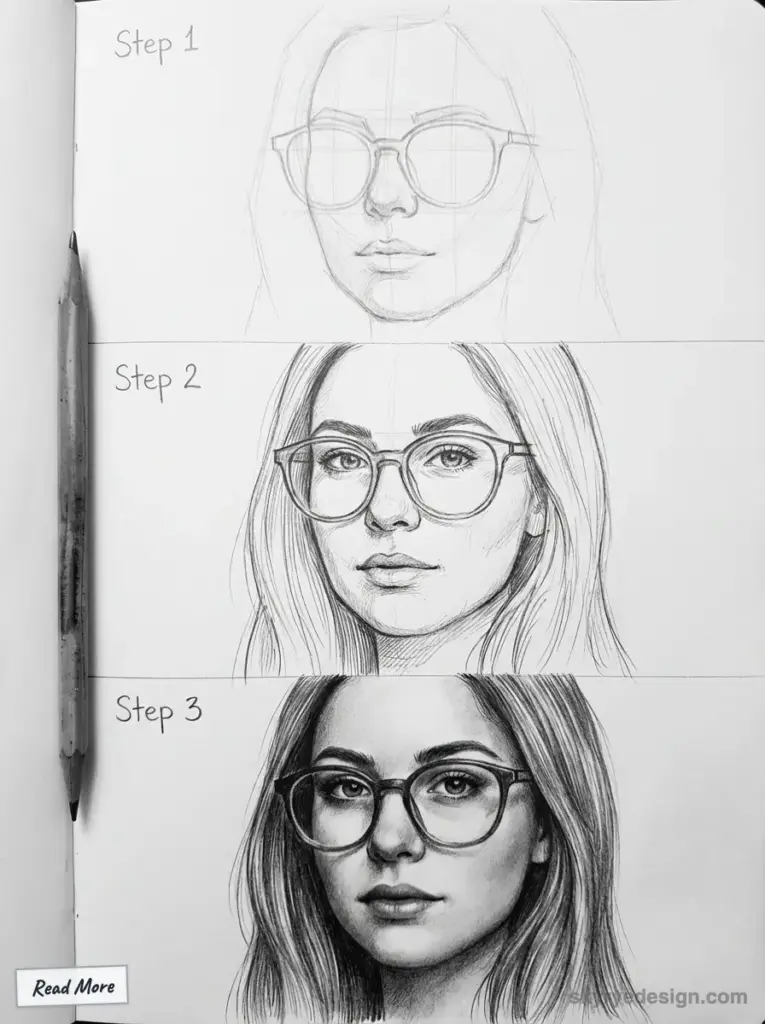
- Frames often sit wider
- Glasses may appear flatter across the face
- Emphasize contrast between soft face and structured frames
Angular Faces
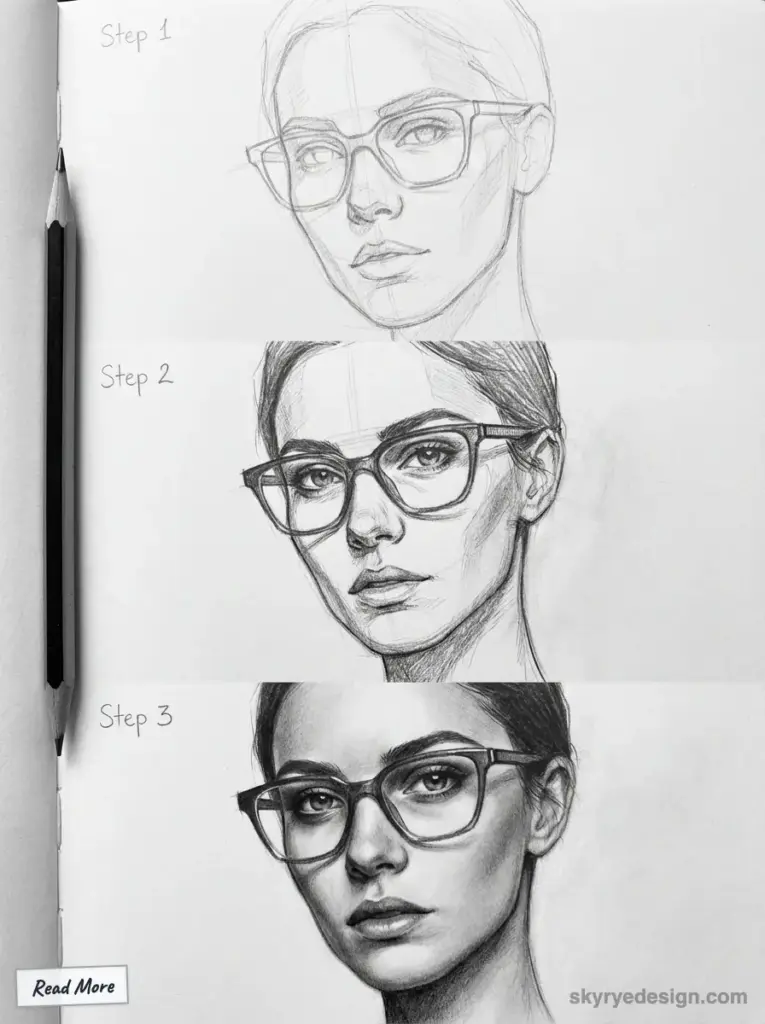
- Glasses follow sharper cheekbones
- Frames may tilt slightly with the plane of the face
Narrow Faces
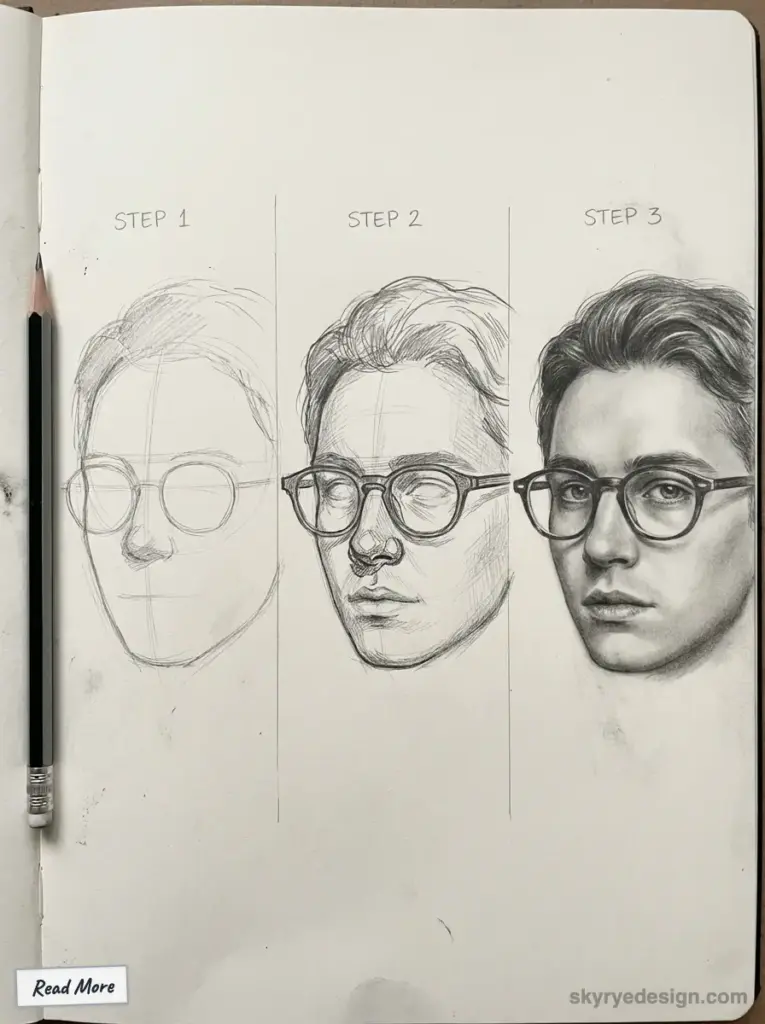
- Lenses sit closer together
- Bridges tend to look more compressed
Artist insight: Small adjustments to frame width, bridge height, and lens shape can change the whole personality of the portrait.
Popular Glasses Styles (And How to Draw Them)
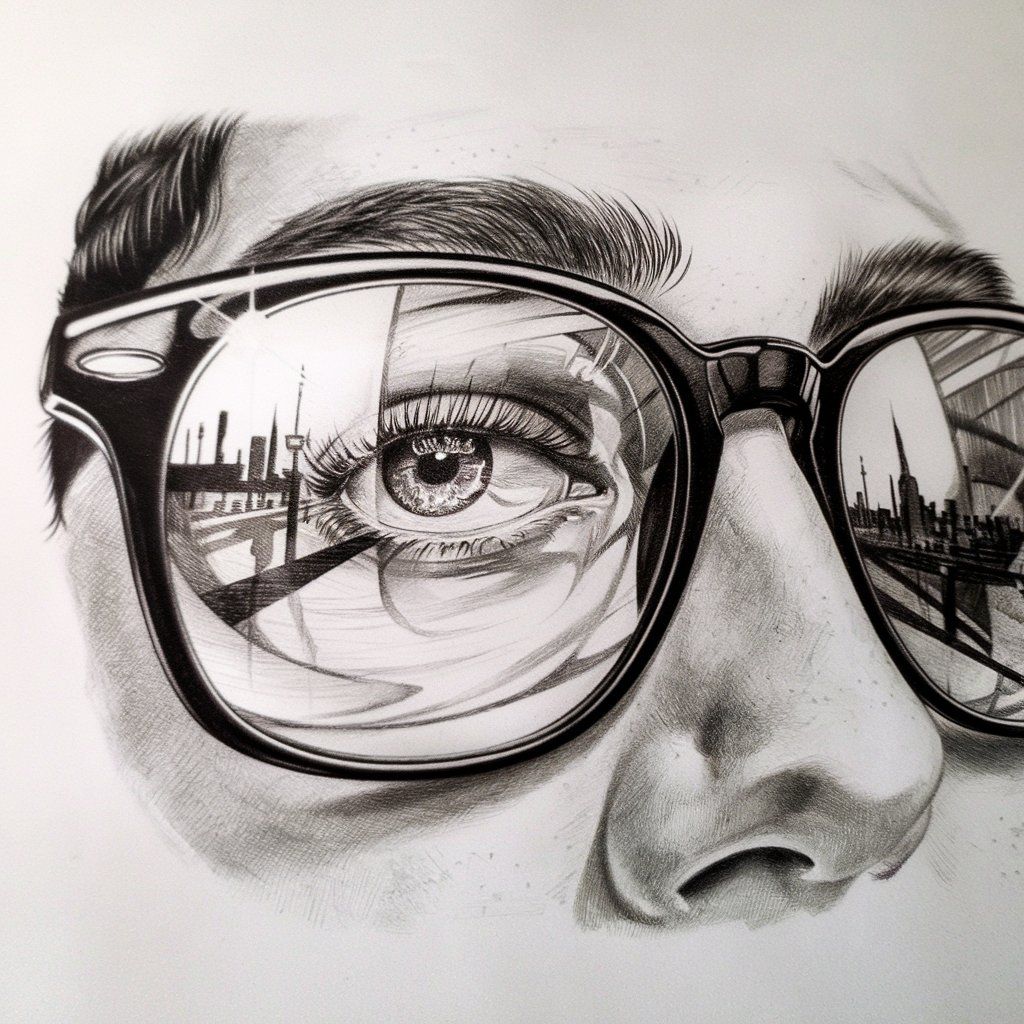
Different frame styles communicate different personalities, but draw the structure first. Style should sit on top of correct placement, not replace it.
Round Glasses
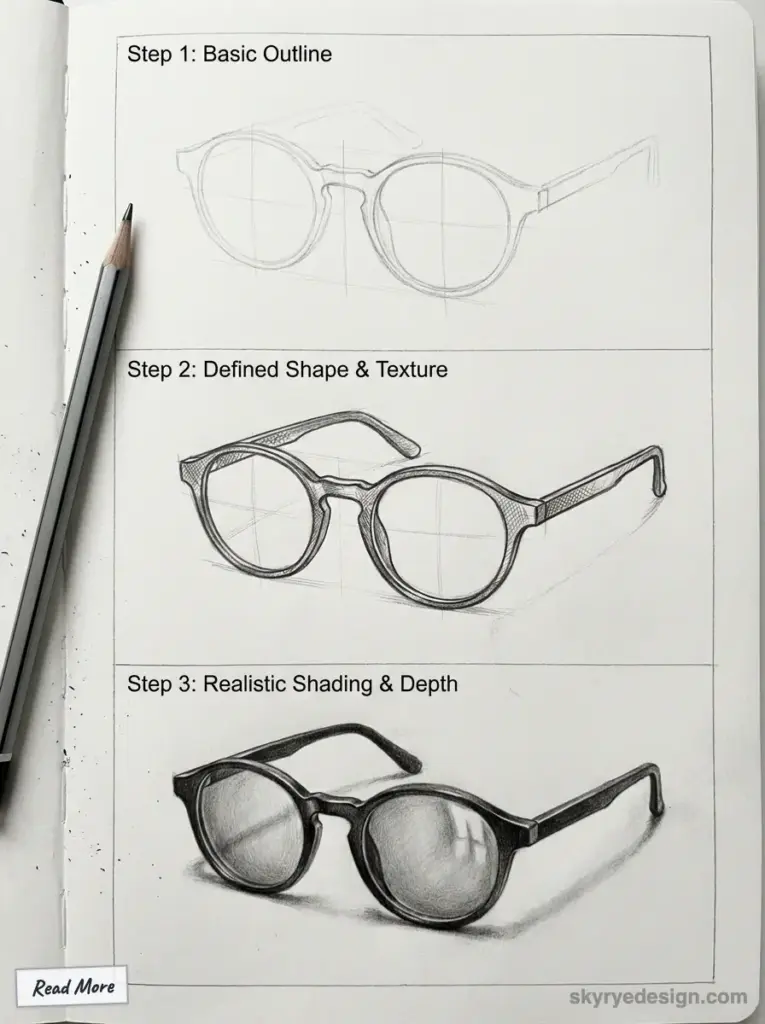
- Perfect or slightly oval lenses
- Thin bridges
- Great for intellectual or retro characters
Square & Rectangular Frames
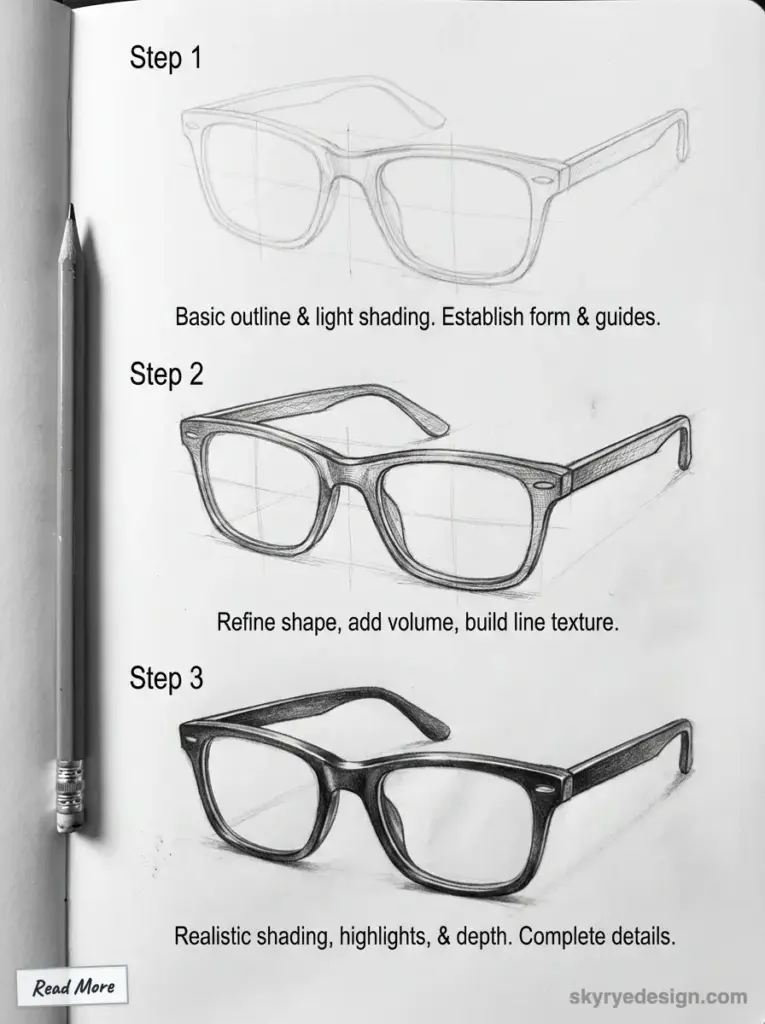
- Straight edges
- Heavier visual weight
- Emphasize jawlines and structure
Cat-Eye Glasses
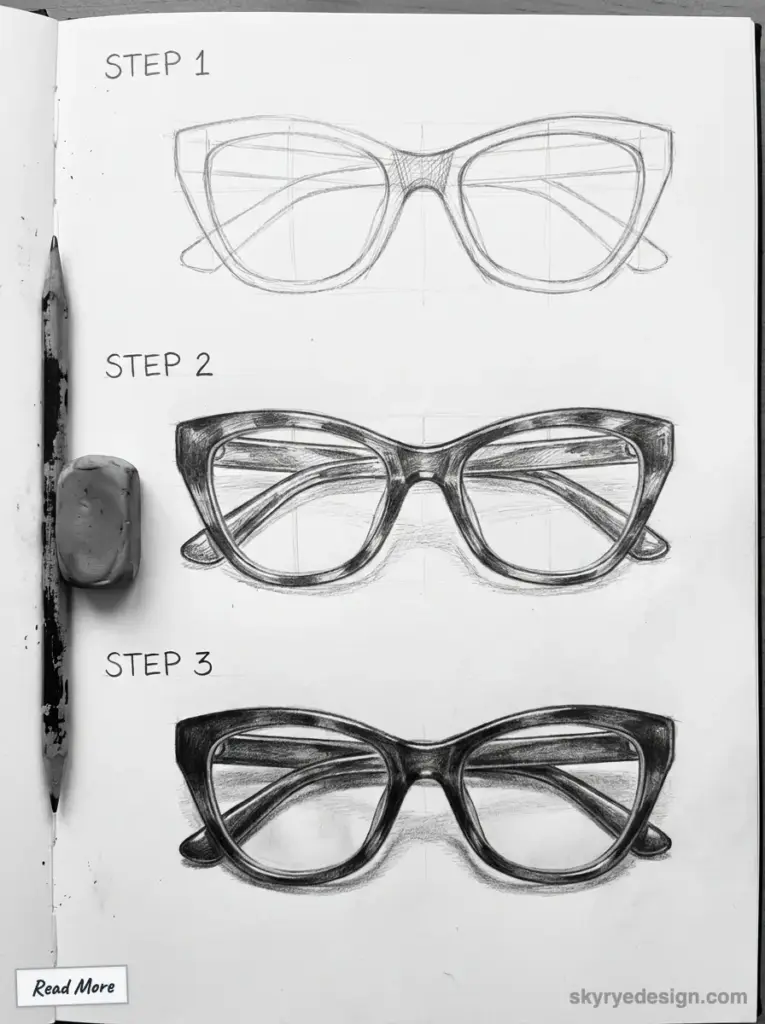
- Upturned outer corners
- Thicker upper frames
- Express confidence and flair
Aviator Glasses
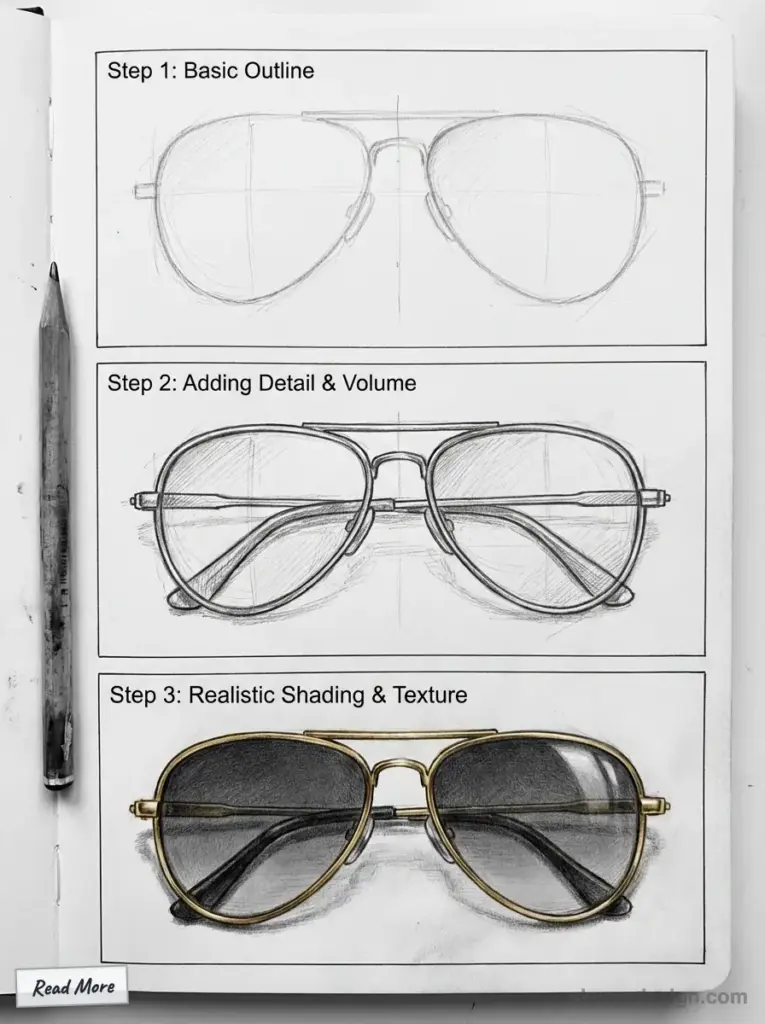
- Large lenses
- Thin metal frames
- Often tinted or reflective
Glasses and Facial Anatomy: What Touches What
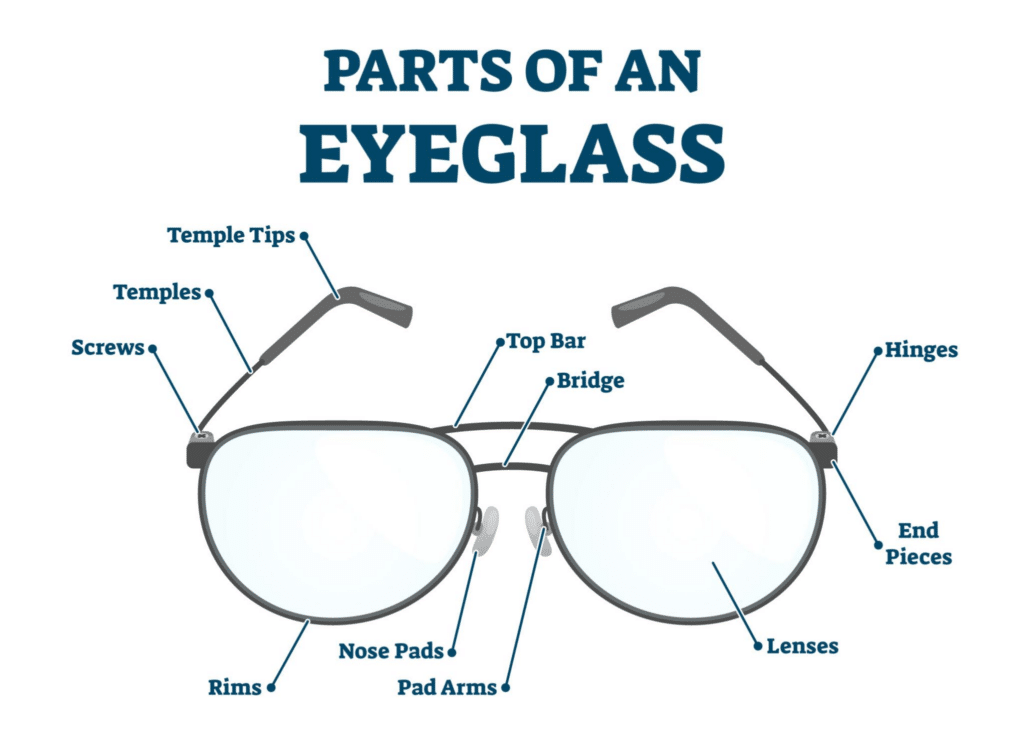
Glasses don’t float—they rest.
Key contact points:
- Bridge sits on the nose cartilage
- Nose pads (if visible) press slightly inward
- Arms rest on the tops of the ears
When you draw this, think of the frame as a small structure touching skin at only a few points. Leave tiny gaps where the rim floats away from the cheek, then add pressure only where the bridge, pads, or arms actually make contact.
Adding tiny overlaps or pressure points (like a slight indentation on the nose) makes glasses feel physically present.
Drawing Eyes Behind Glasses
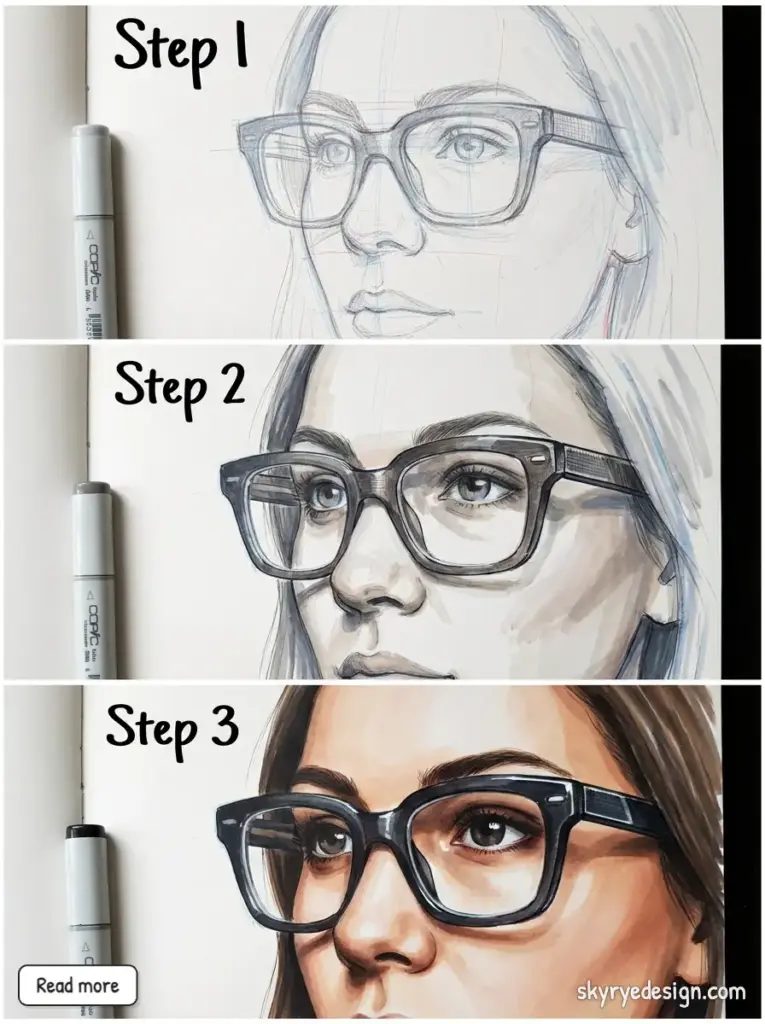
This is where many artists panic—but it’s easier than you think.
Important rules:
- Eyes are fully visible, just slightly altered
- Lenses may subtly enlarge or distort the eyes
- Frames should never cut awkwardly through pupils
Keep the eyes clear and confident. Overcomplicating lens distortion usually hurts more than it helps.
A useful test is to cover the frames with your finger. If the eyes still look aligned and expressive, the glasses are supporting the portrait instead of carrying it. Then uncover the frames and check that no rim slices awkwardly through the pupil or eyelid.
Light, Reflection, and Transparency
Glasses are a mix of solid and invisible—handle with restraint.
For Sketches
- Minimal reflection lines
- Thin highlights on frames
- Avoid heavy shading over lenses
For Finished Art
- Soft white highlights
- Slight opacity over eyes
- Consistent light source
Less reflection = more readable faces, especially in character art.
For pencil work, lift one or two highlights with a kneaded eraser instead of filling the lens with white streaks. In digital art, keep reflection layers low-opacity so the viewer still reads the eyes first and the glass second.
Common Mistakes (And How to Fix Them)
| Mistake | Why it looks wrong | Quick fix |
|---|---|---|
| Floating glasses | The bridge, nose pads, and arms do not touch the face. | Anchor the bridge to the nose and angle the temples toward the ears. |
| Uneven lenses | The lenses ignore the eye line or head turn. | Use a center line and eye-line guide before darkening the rims. |
| Over-rendered reflections | Bright streaks cover the eyes and flatten the portrait. | Use one or two controlled highlights and keep the eyes readable. |
| Flat frames | The rims look like a single line instead of an object. | Add subtle thickness to the outer edge, bridge, and hinges. |
Before moving on, flip the drawing or look at it in a mirror. Crooked lenses and floating temples show up fast when the image is reversed, and they are much easier to fix before you add heavy shading.
Practice Exercises for Rapid Improvement
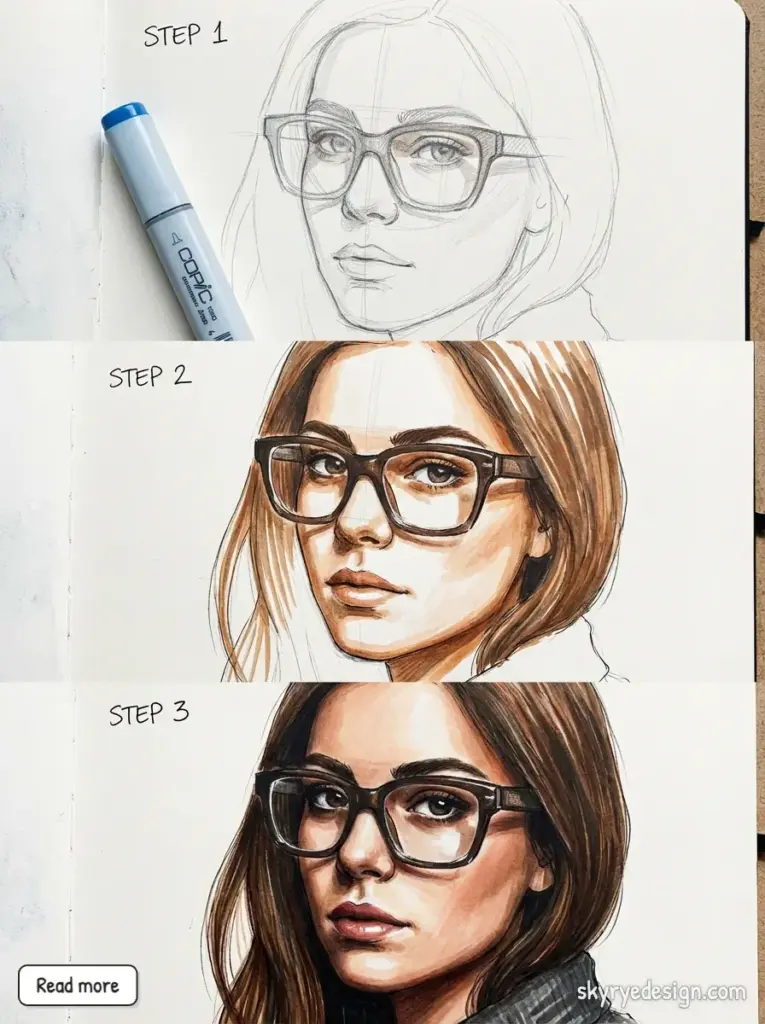
Keep these exercises small: 5-10 minute studies work better than one overworked drawing. The goal is to train placement, angle, and frame thickness before you worry about a polished portrait.
Exercise 1: Style Sheet
Draw the same head wearing:
- Round glasses
- Square glasses
- Cat-eye glasses
Exercise 2: Angle Study
Draw glasses from:
- Front view
- ¾ view
- Profile view
Exercise 3: Real-Life Observation
Sketch glasses from photos or real people—not imagination alone.
Pro Tips From Illustrators
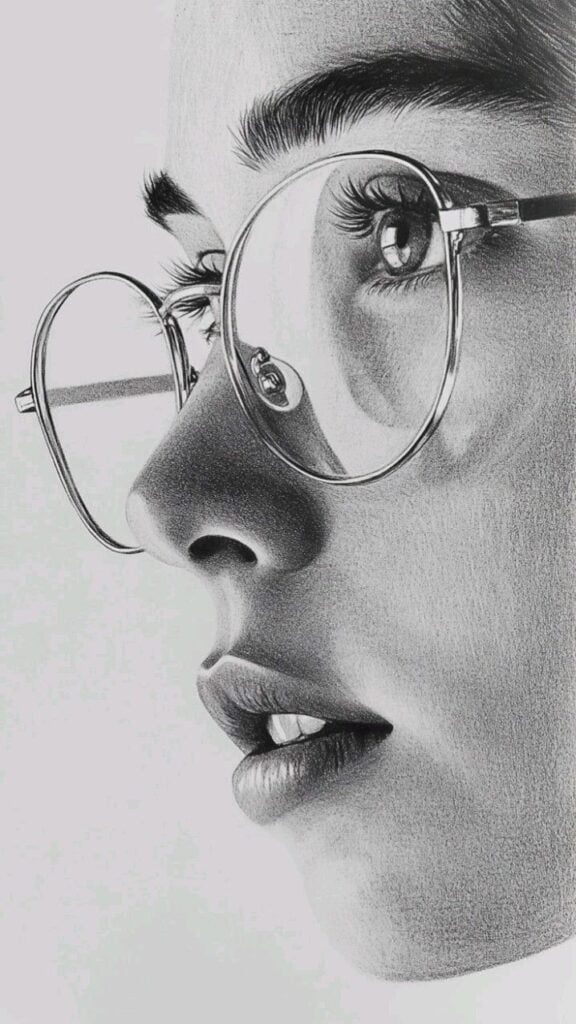
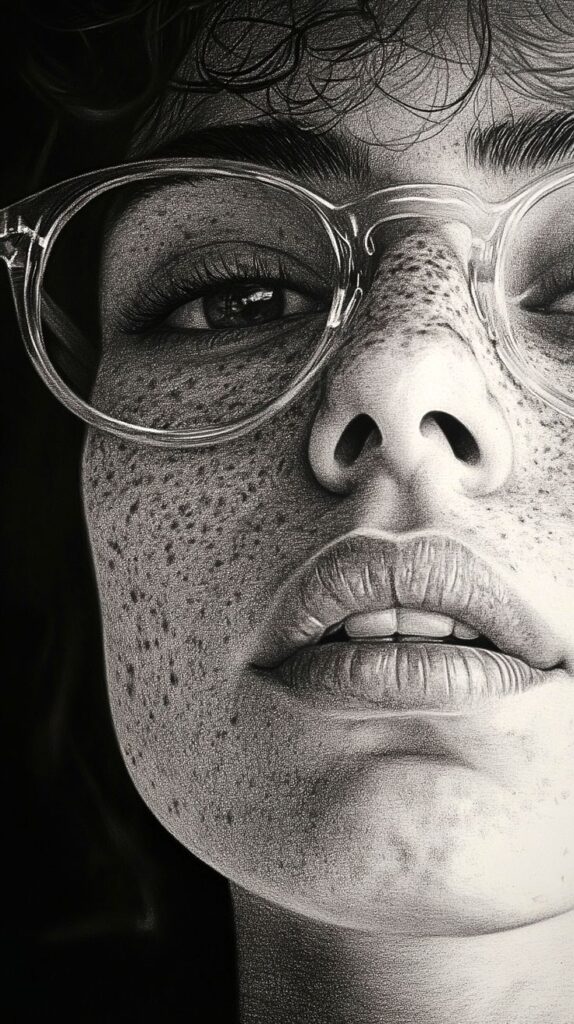
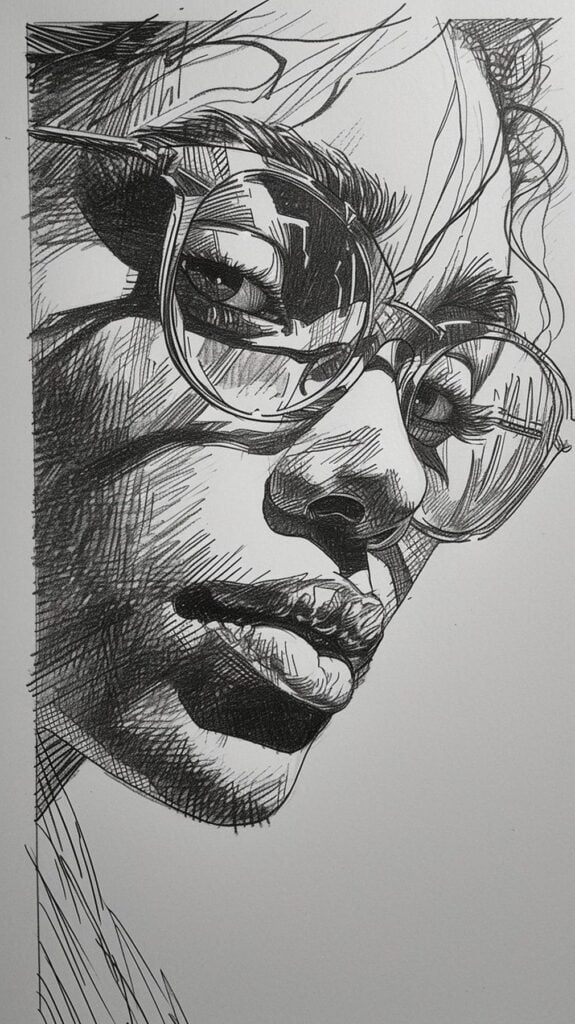
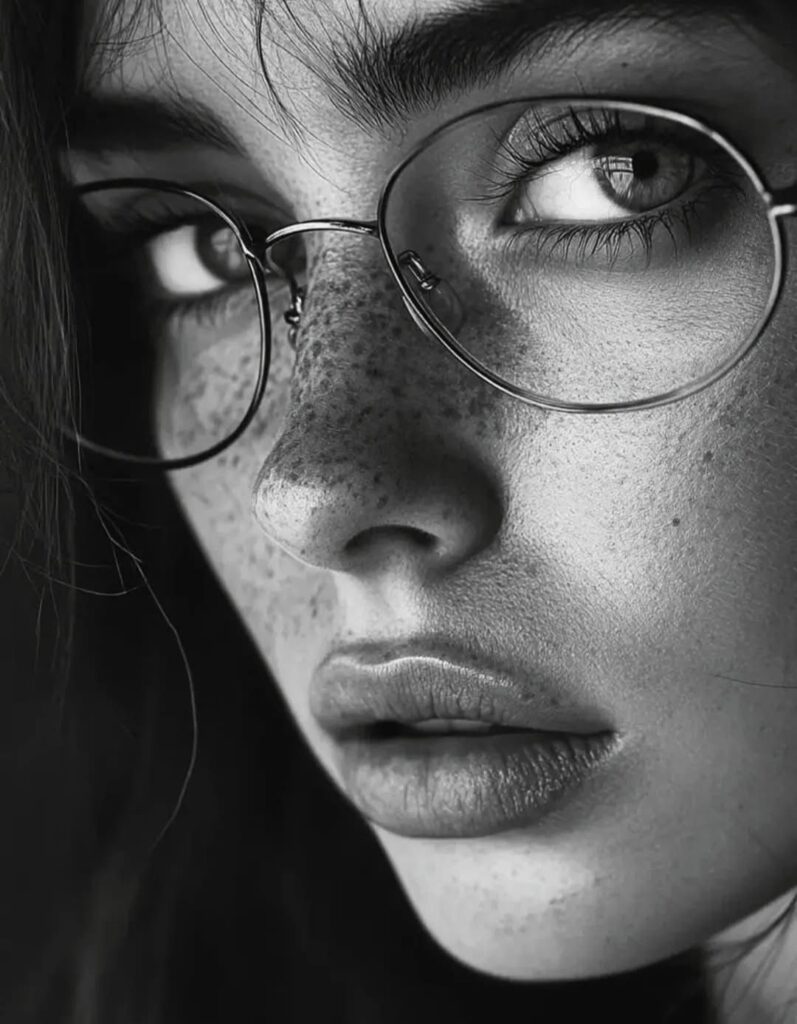
Before adding final details, check the silhouette of the frames. Strong glasses read clearly even as a simple outline; the rendering should support that shape, not hide it under texture.
- Always draw frames before detailing eyes
- Thicker frames require stronger line weight
- Slight asymmetry makes glasses feel worn and real
- Glasses are part of character design—not an afterthought
Final Thoughts: Glasses as a Design Tool
Learning how to draw glasses is not only a technical exercise. Frames can change the age, mood, profession, or style of a character with a few lines.
Once you understand their structure, perspective, and contact points, they stop being intimidating. They become a design tool you can use deliberately.
Practice small: one sheet of round frames, one sheet of angled frames, one portrait where you focus only on the bridge and temples. That kind of repetition fixes more than one overworked finished drawing.
For the next step, draw the same face with round glasses, rectangular frames, and aviators. You will feel how much frame design changes the whole portrait.
Related portrait drawing practice
If the glasses placement still feels off, strengthen the face underneath first. Start with face drawing techniques, then practice nose drawing for the bridge area and drawing portraits for cleaner head structure.
For transparent objects beyond eyewear, the glass drawing section in this material texture guide is a useful next step because it separates highlights, refraction, rim thickness, and cast shadows.
Frequently asked questions about how to draw glasses
Q: What makes glasses hard to draw in portraits?
A: Glasses are hard to draw because they sit on a three-dimensional head, not on a flat face. The lenses need to follow the eye line, the bridge has to wrap across the nose, and the temples angle back toward the ears. If those parts ignore the head perspective, the frames start floating even when the eyes and features look right.
Q: How do you start drawing glasses on a face?
A: Start with the head shape, eye line, and nose placement before drawing the frames. Block each lens as a simple oval, rectangle, or rounded rectangle, then connect them with the bridge. Once the basic placement feels right, add frame thickness, hinges, temples, and small asymmetries so the glasses feel worn instead of pasted on.
Q: Why should you draw the frames before detailing the eyes?
A: Draw the frames first because glasses change how much of the eyes you can actually see. Thick rims may cover part of the eyelids, while clear lenses can distort small details behind them. If you finish the eyes first, you may end up drawing beautiful details that should be hidden, softened, or interrupted by the frame.
Q: What is the best way to draw lens reflections?
A: The best way to draw lens reflections is to keep them selective. Use a few clean highlights, soft diagonal streaks, or small reflected shapes instead of shading the entire lens. In pencil, a kneaded eraser works well for lifting thin highlights. In digital art, use a low-opacity white or pale blue layer so the eyes still read clearly.
Q: How many guidelines do you need for drawing glasses?
A: You usually need three main guidelines: the eye line, the center line of the face, and the angle from the bridge toward the ears. For a front view, those guides keep the lenses balanced. For a three-quarter view, they help you make the far lens narrower and the temple angle more believable.
Q: What are the most common mistakes when drawing glasses?
A: The most common mistakes are making both lenses perfectly symmetrical in a turned pose, placing the bridge too high, and drawing the temples as flat sideways lines. Another big one is overdoing lens reflections. A small highlight can sell the glass effect, but too many bright streaks will hide the eyes and make the portrait look busy.
Q: Which glasses style is easiest for beginners to draw?
A: Round glasses are usually the easiest starting point because the lens shape is simple and forgiving. Rectangular frames are useful too, but they expose perspective mistakes faster. Once you can place round or square lenses on the face correctly, try cat-eye frames, aviators, or thicker character-design frames with stronger line weight.
- 1.4Kshares
- Facebook0
- Pinterest1.4K
- Twitter0
- Reddit0